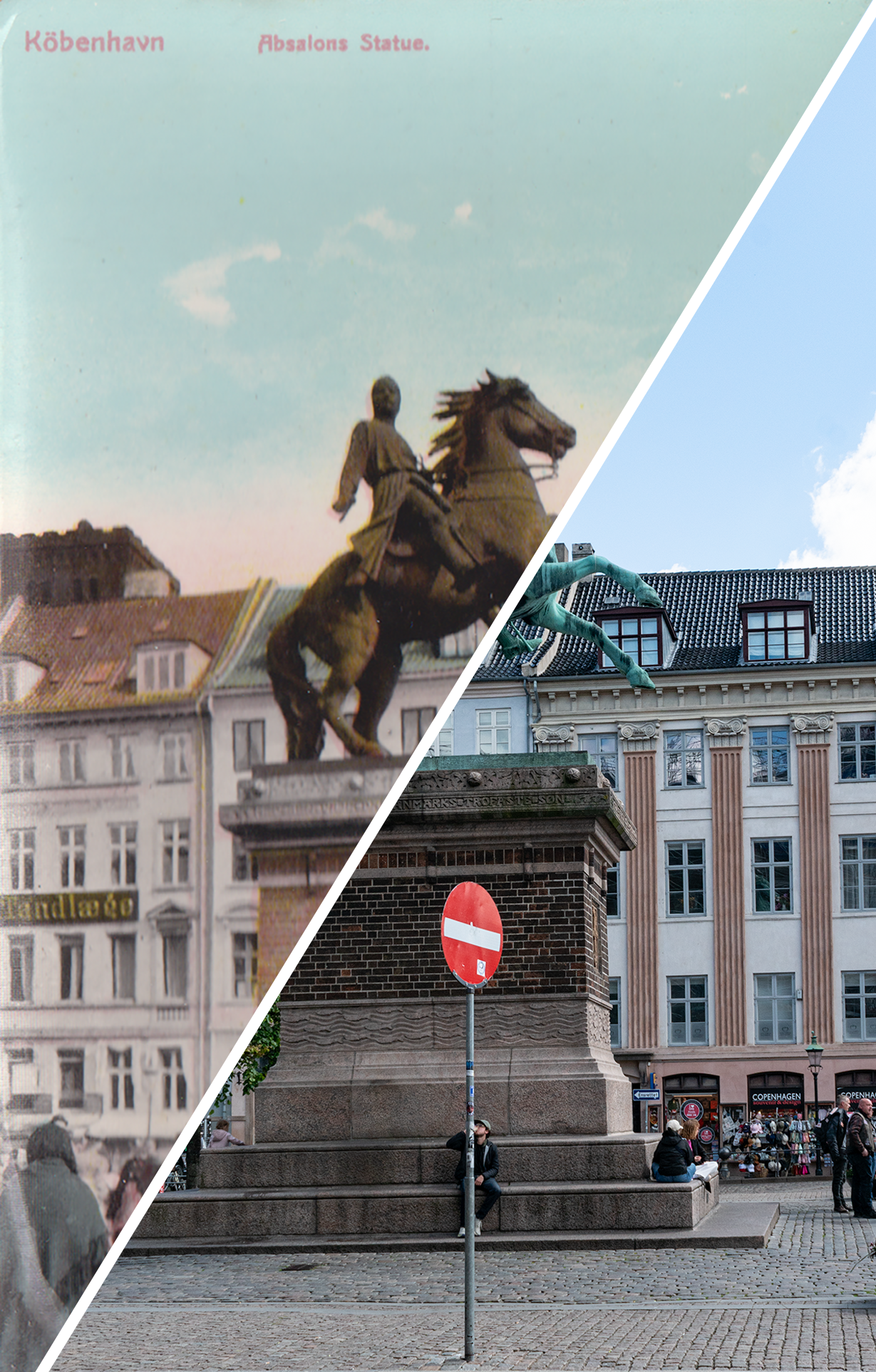
The 700th anniversary of Absalon’s death was a big moment for both the warrior bishop credited with founding Copenhagen (he didn’t) and sculptor Vilhelm Bissen, who snagged TWO commissions for the septicentennial. This one, installed on a National Romantic style plinth designed by Martin Nyrop that looks as if it was quarried out of the architect’s Copenhagen City Hall, is perhaps the more honest of the two, depicting Bishop Absalon as a crusading conqueror rather than a holy man. Donated by financier Axel Heide of Privatbanken, he invited scholar Georg Brandes to speak at the unveiling in 1902. The idea that Brandes—a Jewish liberal—would speak at the dedication of the Bishop’s statue so incensed Crown Princess Louise and the Danish conservative elite that they threatened to pull their money out of Heide’s bank. Heide caved to the pressure, disinvited Brandes, and it ended up a sedate affair (Brandes published his [utterly innocuous] planned speech anyway).
The fiasco around the dedication notwithstanding, the Absalon came to anchor one of Copenhagen’s most high-profile squares, Højbro Plads, over the next 120+ years—a square that regained a spire in 1909, when Carl Jacobsen funded the reconstruction of the one atop Nikolaj Church, which had burned in the Copenhagen Fire of 1795.
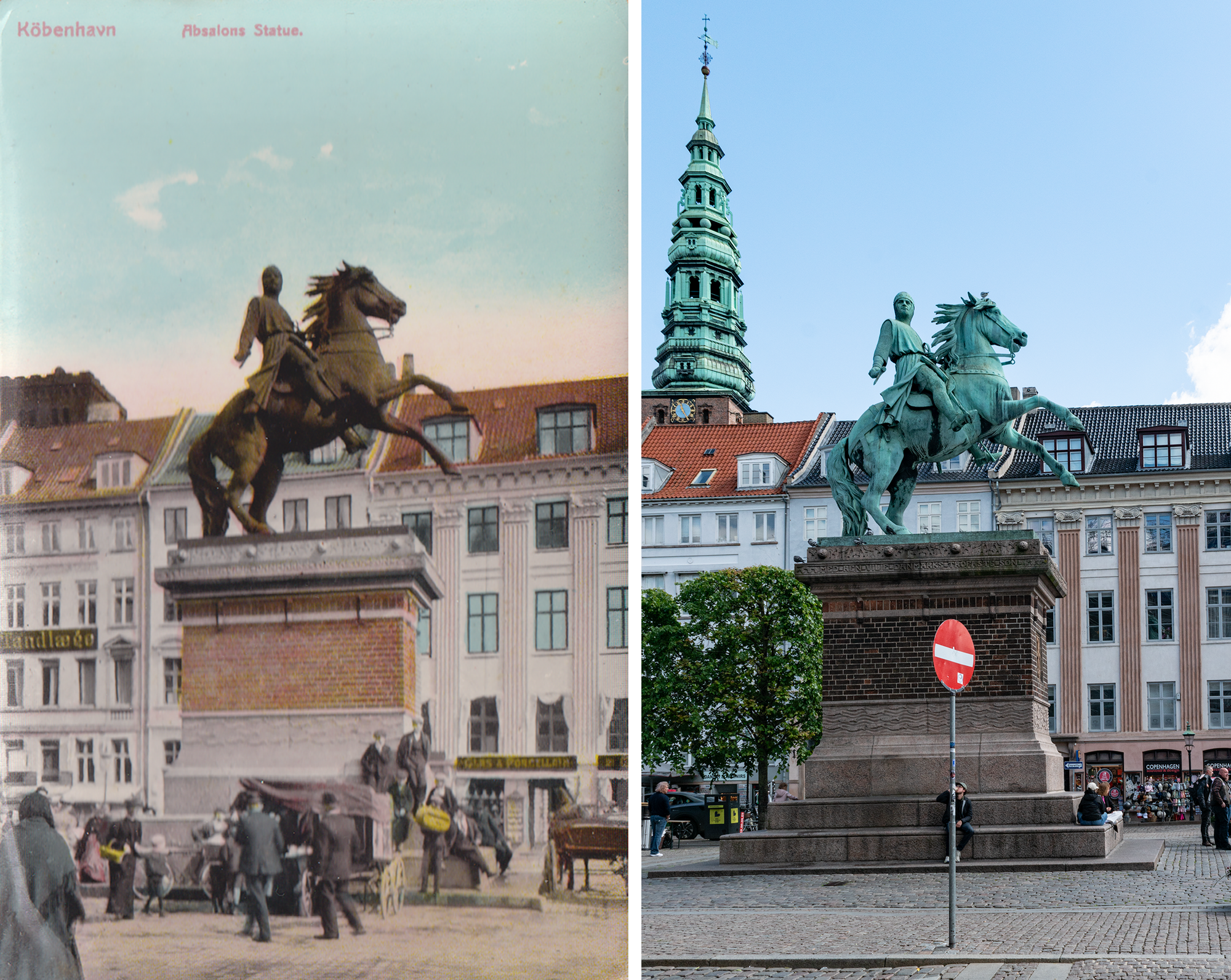
So, what’s changed?
- Big-ass Neo-Baroque copper spire added to the Nikolaj Kirke in the background, which is now Nikolaj Kunsthal, along with that quirky clock.
- More foliage, less commerce, fewer suits.
- Patina, fewer facade signs, more street signs.
As the modern nation-state truly became a thing in the late 1800s, Denmark embarked on its own Grundtvigian nation-building project. Bishop Absalon—mythical city founder and powerful warrior priest—was an obvious focal point for that work, and the 700th anniversary of his death was as good an excuse as any to do some mythmaking.
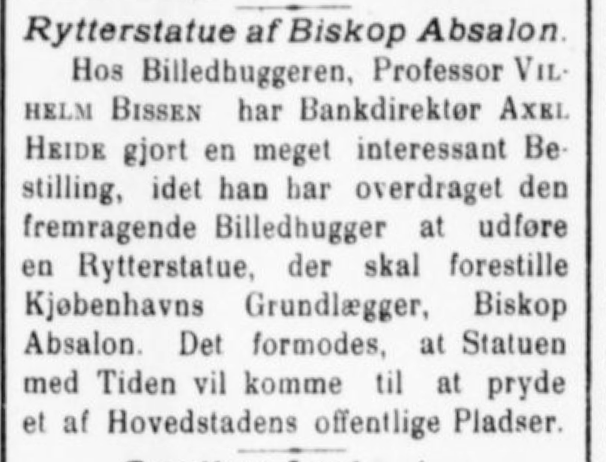
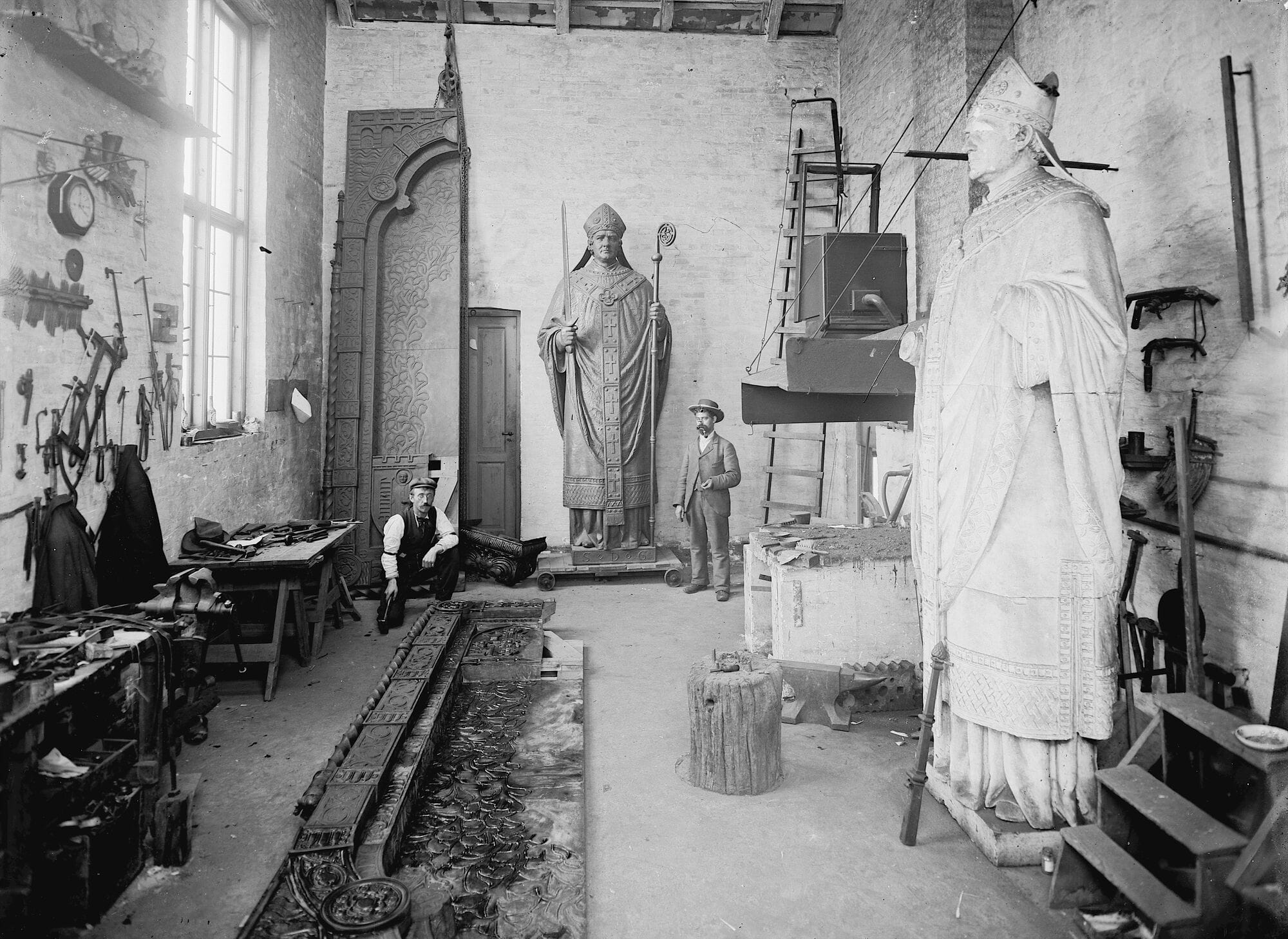
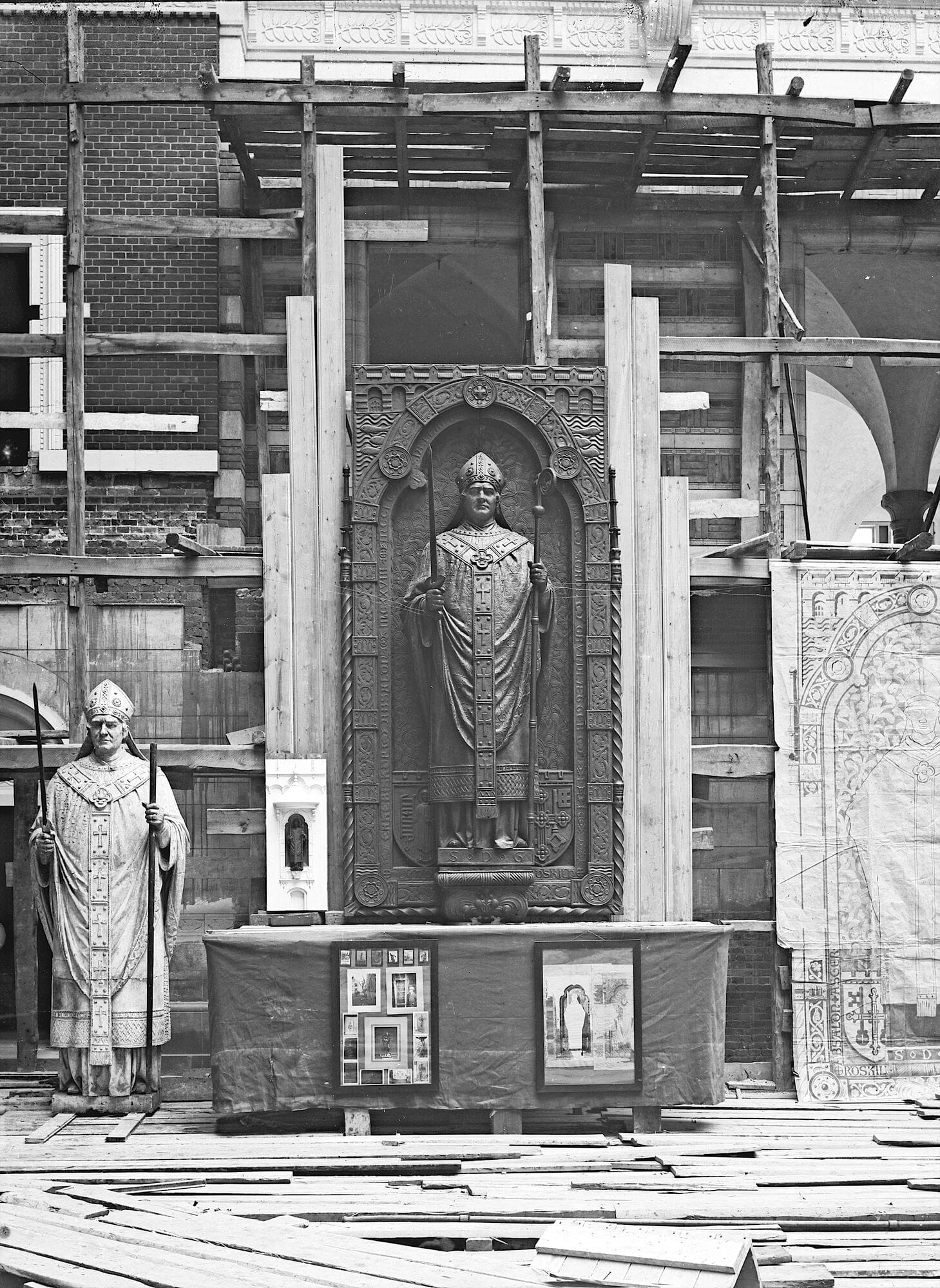
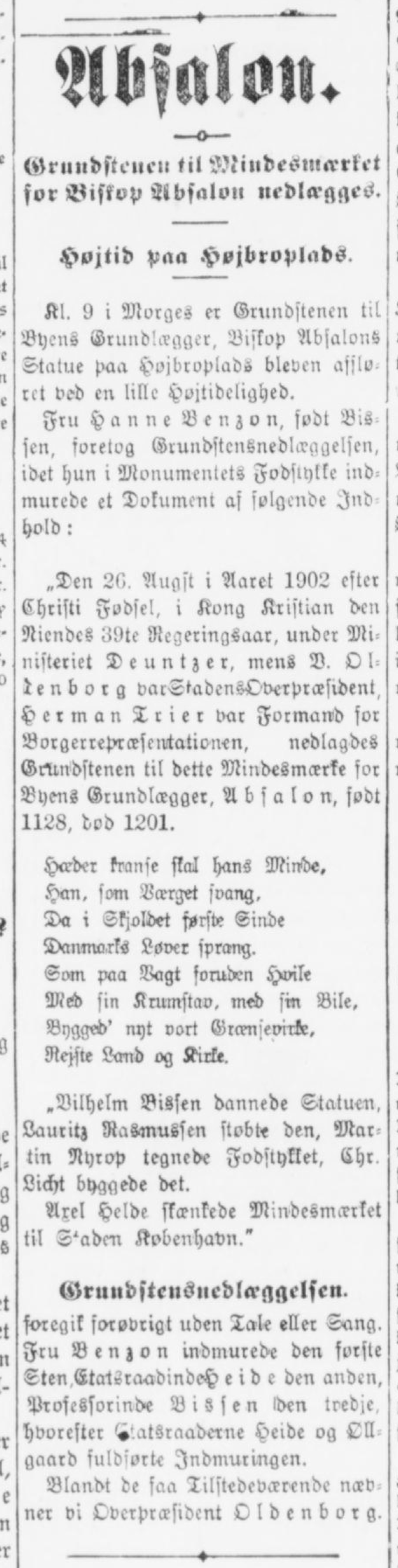
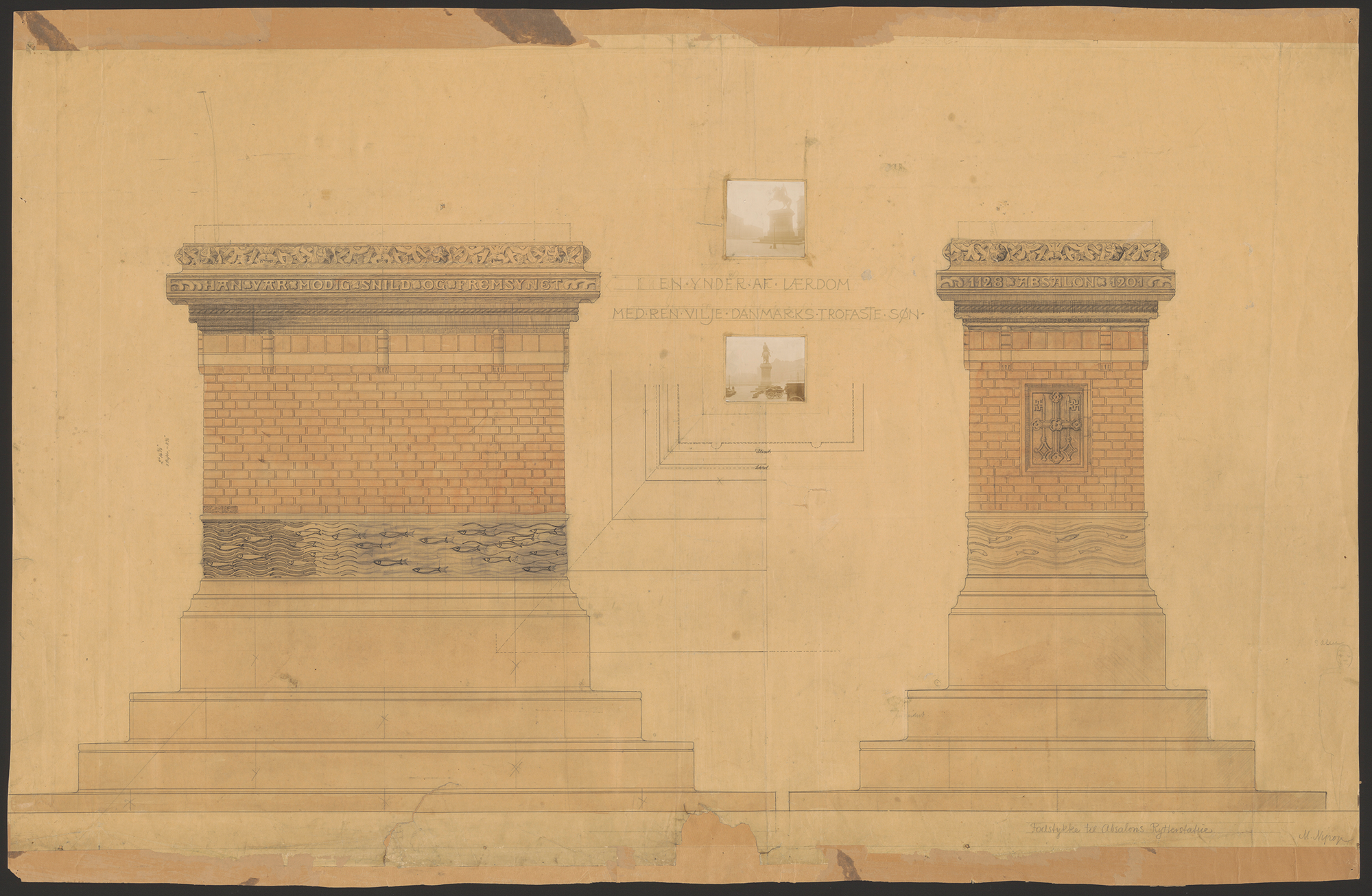
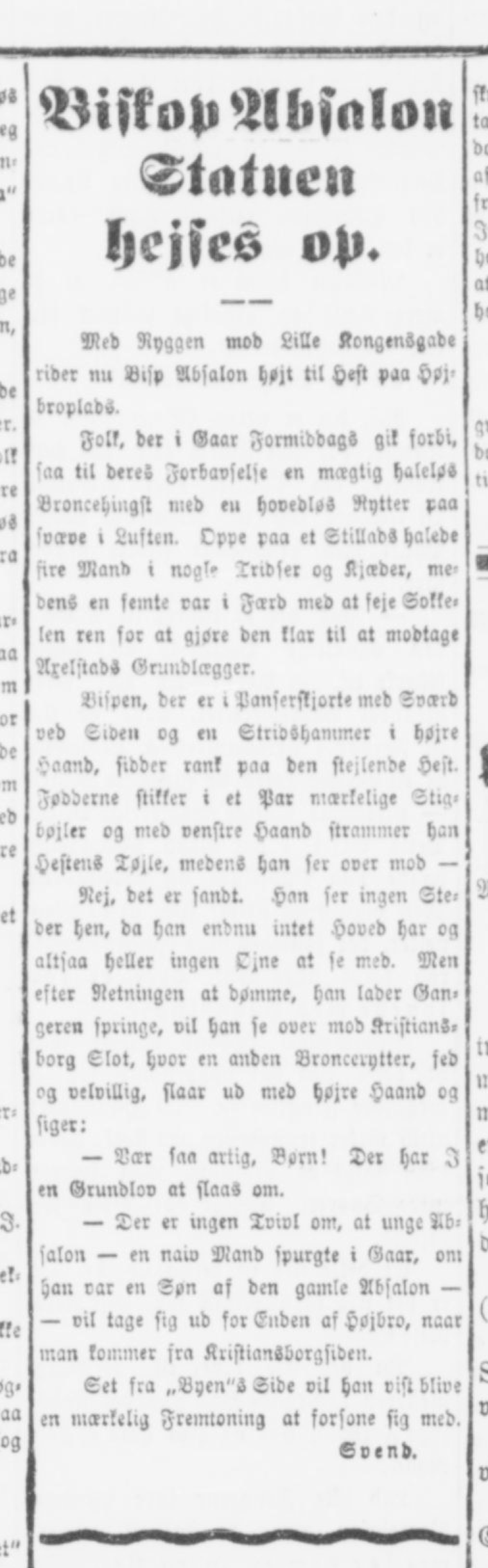
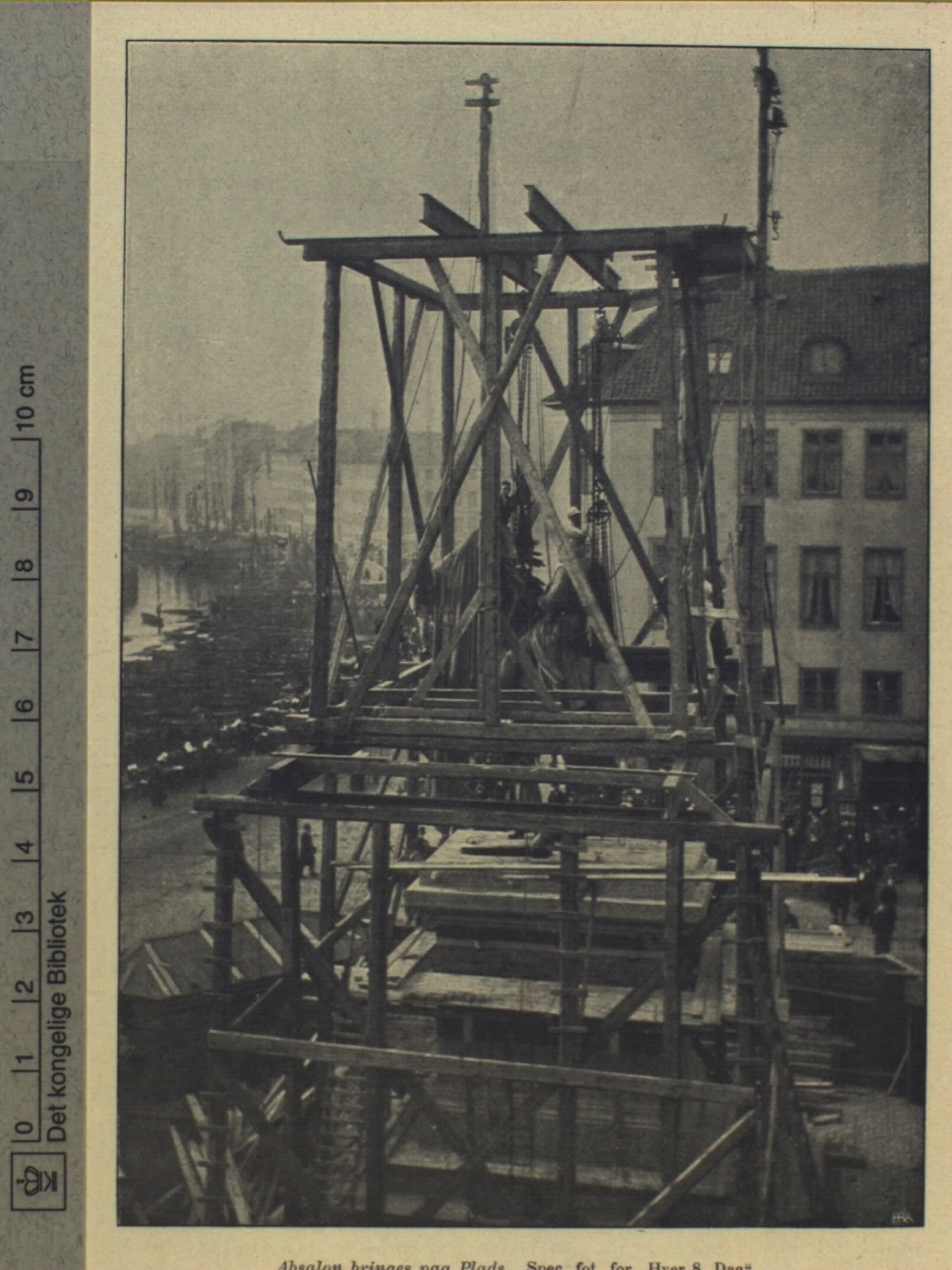
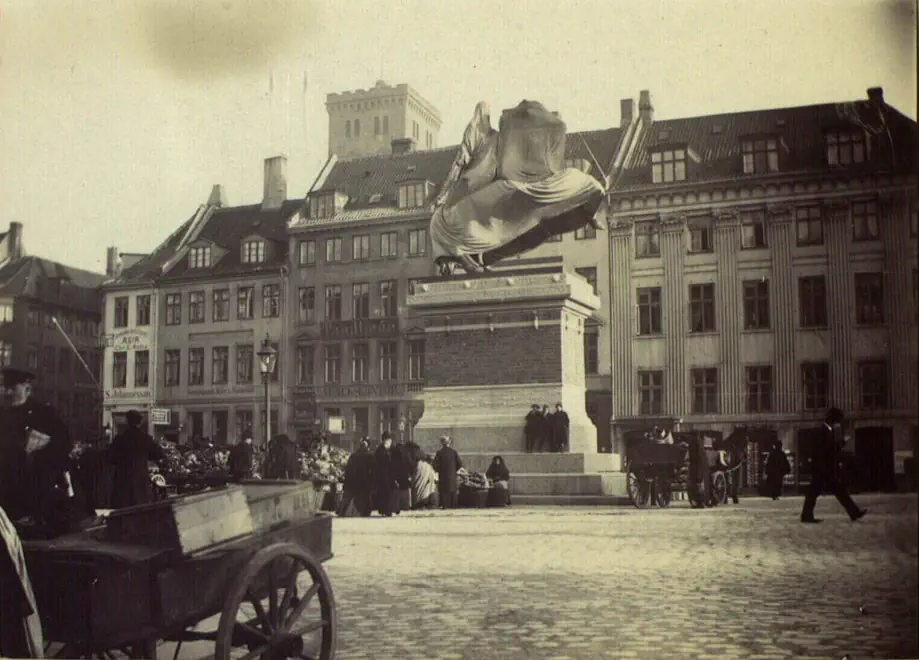
1899, Heide commissions Bissen | The other Absalon statue by Bissen in a studio, the Museum of Copenhagen | The other Absalon statue by Bissen at Copenhagen City Hall, the Museum of Copenhagen | 1902, cornerstone laying | Nyrop plinth sketch, Det Kgl. Bibliotek | 1902, hoisted into place | 1902, installation, Det Kgl. Bilbiotek | Wrapped for unveiling, Det Kgl. Bibliotek | 1902, Unveiling
Artist Vilhelm Bissen, who’d inherited his family's workshop upon the death of his sculptor dad, stood ready to sculpt some myths. First, he was commissioned to create a sculpture of Absalon the Bishop for the facade Copenhagen City Hall, cast in copper and executed by H.C. Viggo Hansen.
Axel Heide of Privatbanken then commissioned him for the second one, this one, in 1899. A large equestrian statue of Bishop Absalon the warrior (he's holding a warhammer), it was cast in bronze by Lauritz Rasmussen. Nyrop’s plinth, made of brick and granite and decorated with schools of fish and waves, is National Romanticism writ small—basically a bite-sized example of the architectural movement that defined the first decade or so of the 20th century in Denmark, exemplified by Copenhagen City Hall and Copenhagen Central Station.
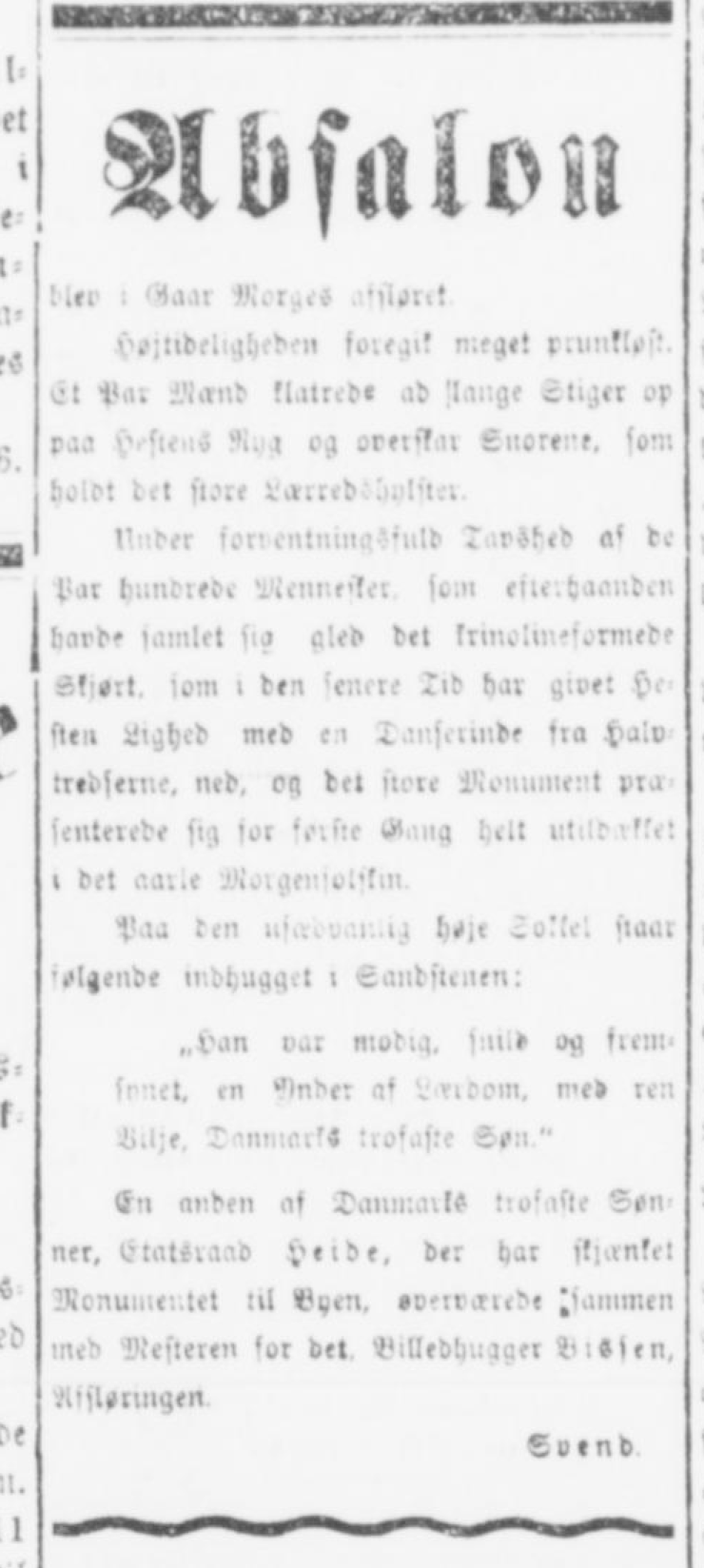
The statue's dedication was a mess. Basically, Heide appears to have attempted to burnish his intellectual bonafides by inviting Brandes to speak, but even that mild nod towards liberalism was too much for the Crown Princess, the Danish State Church, and their allies (they were also unhappy a Jewish man would speak at an event honoring a Christian bishop). When they threatened to pull their money out of Heide's bank, Brandes' speech was canceled.
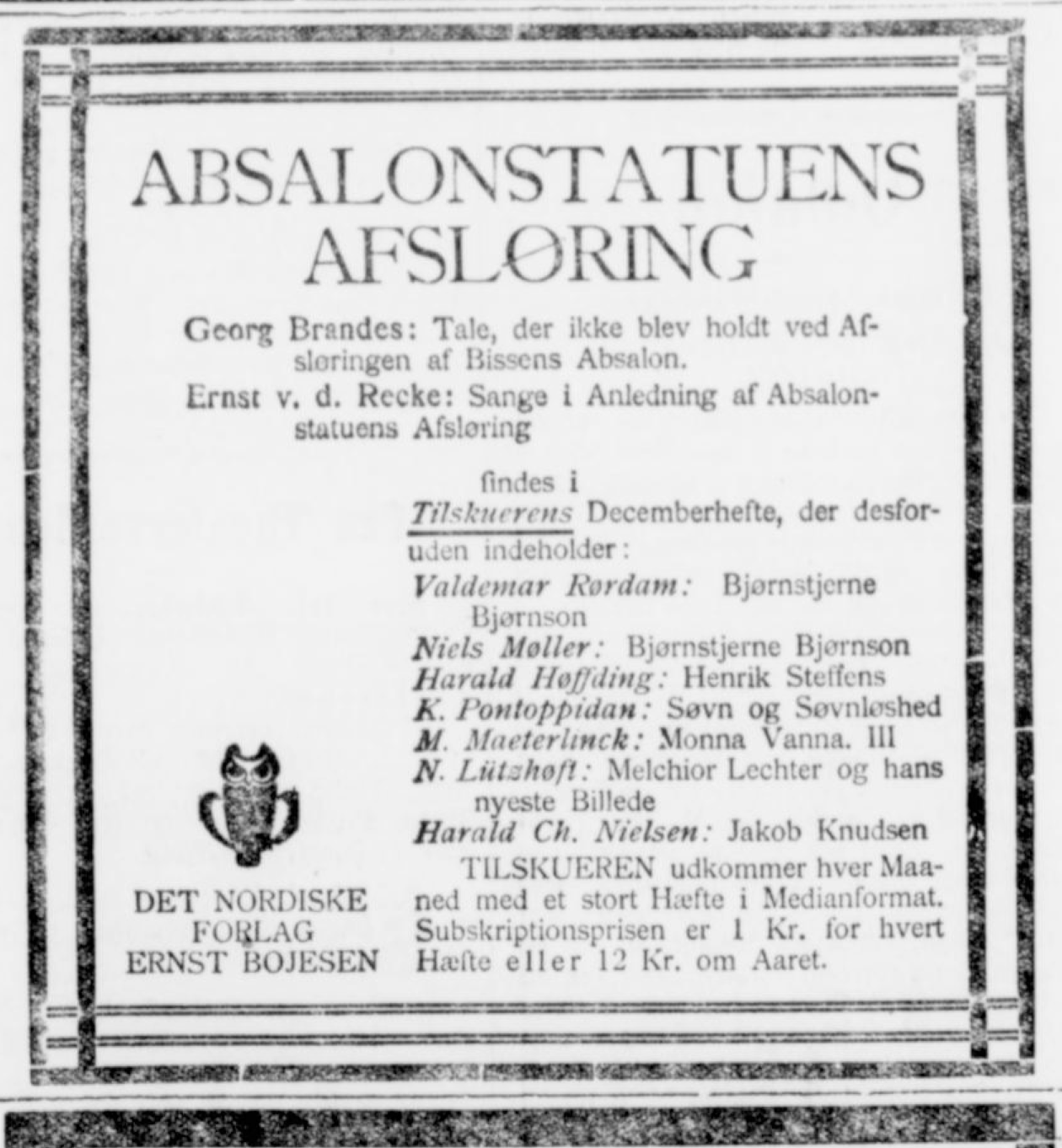
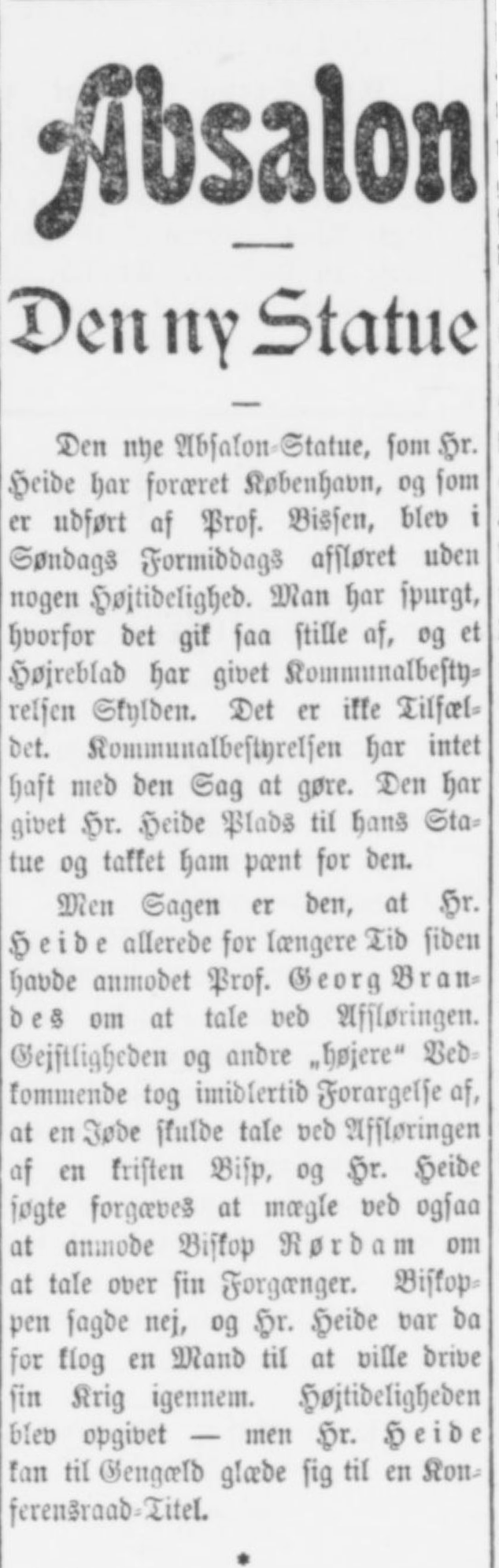
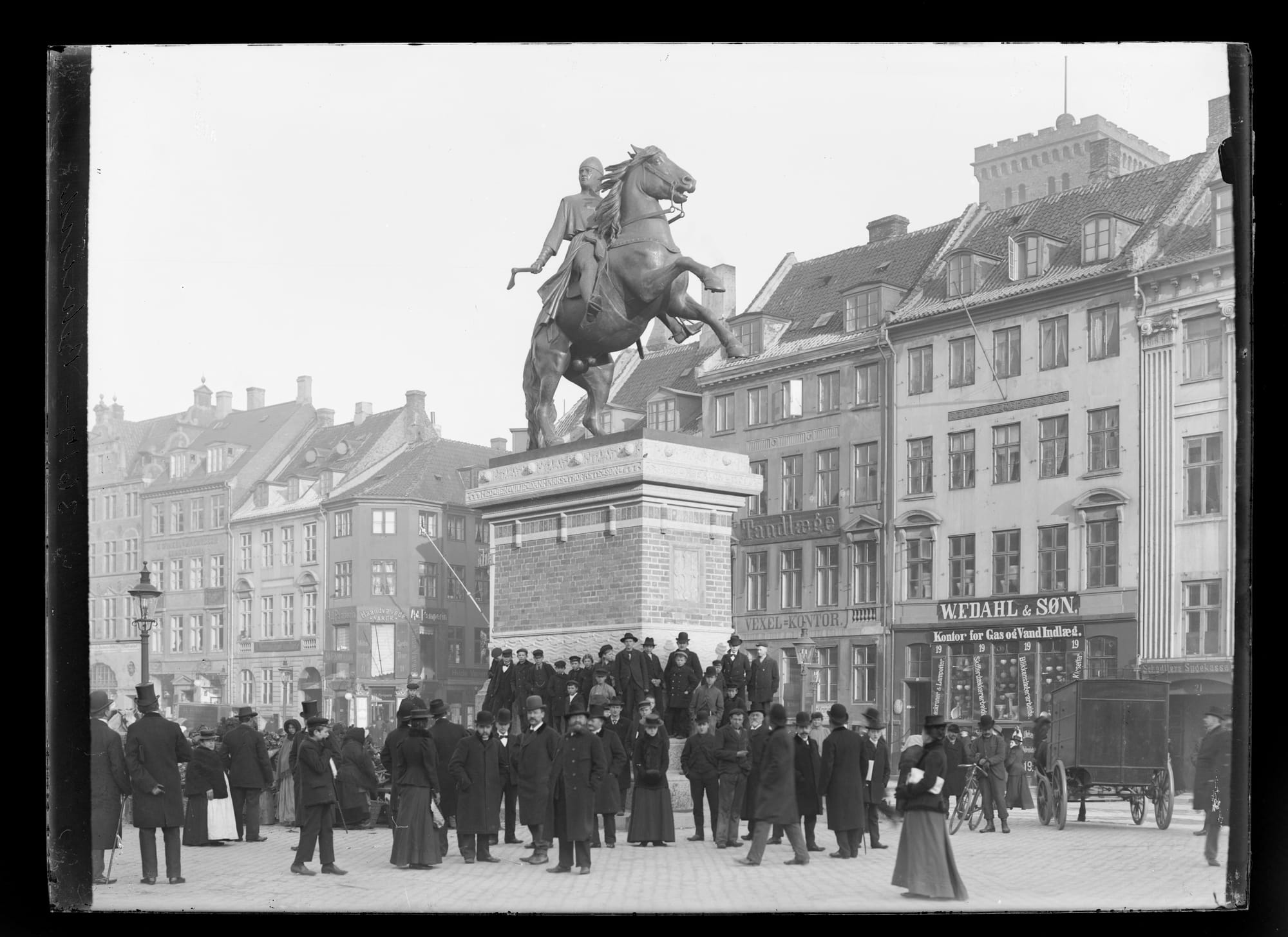
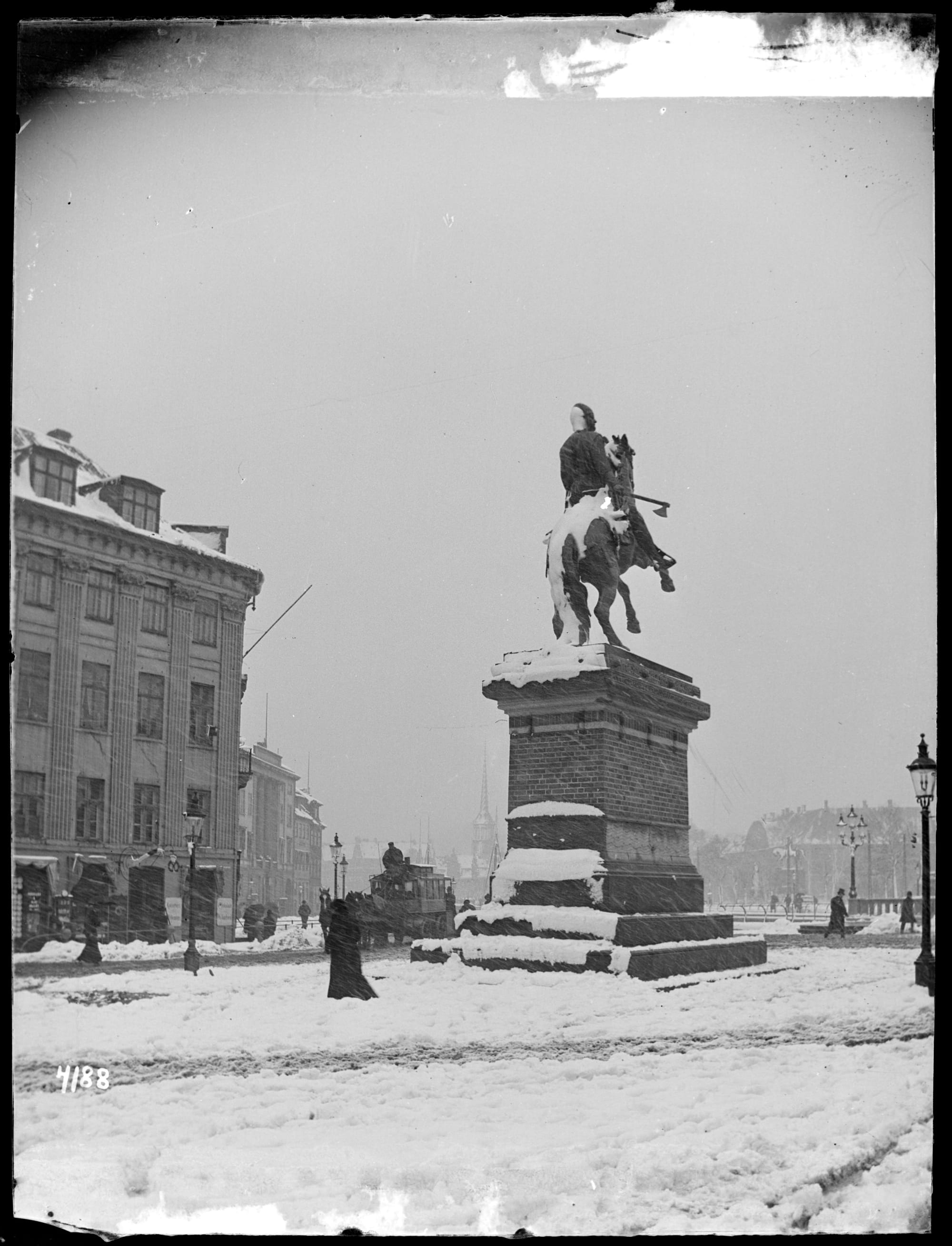
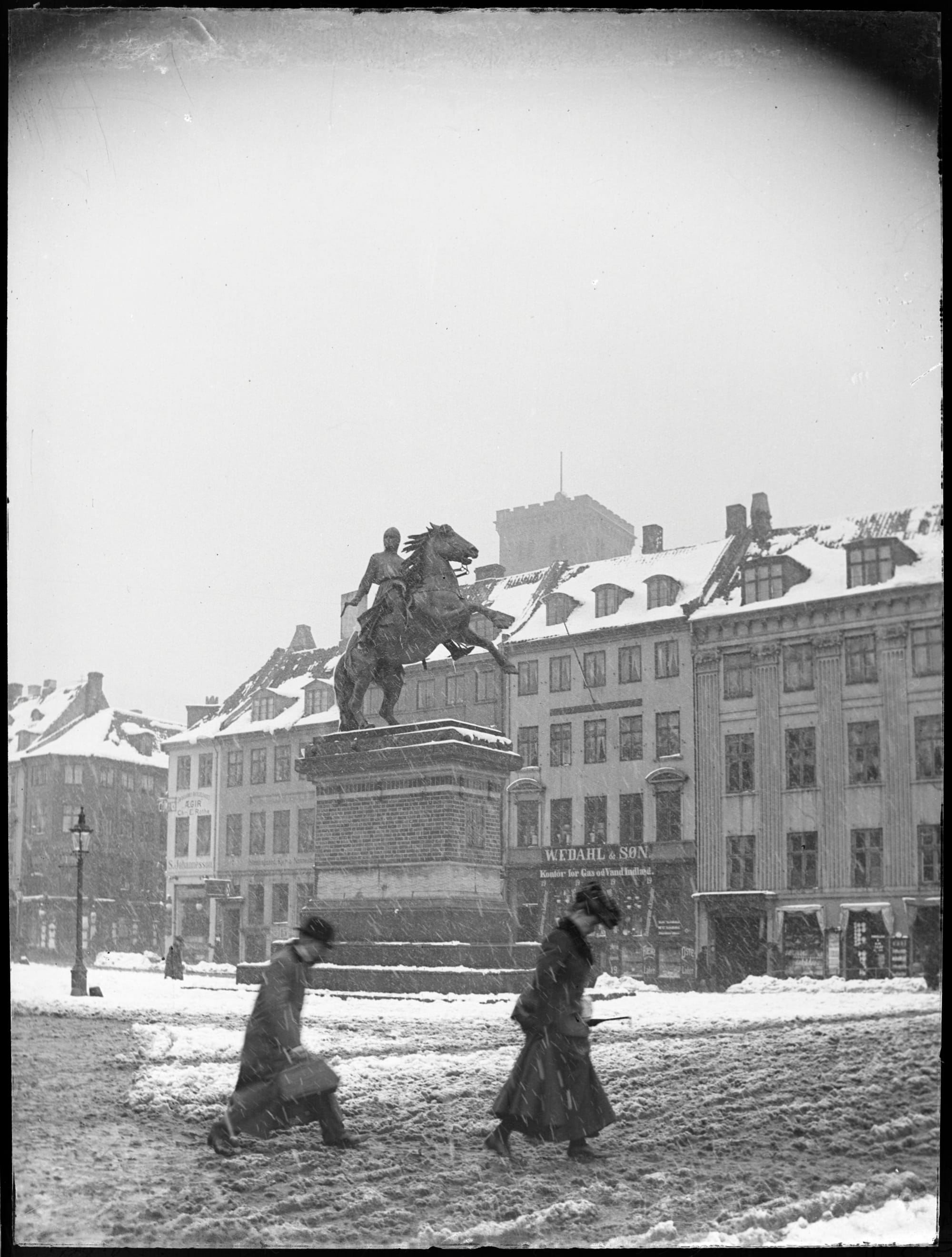
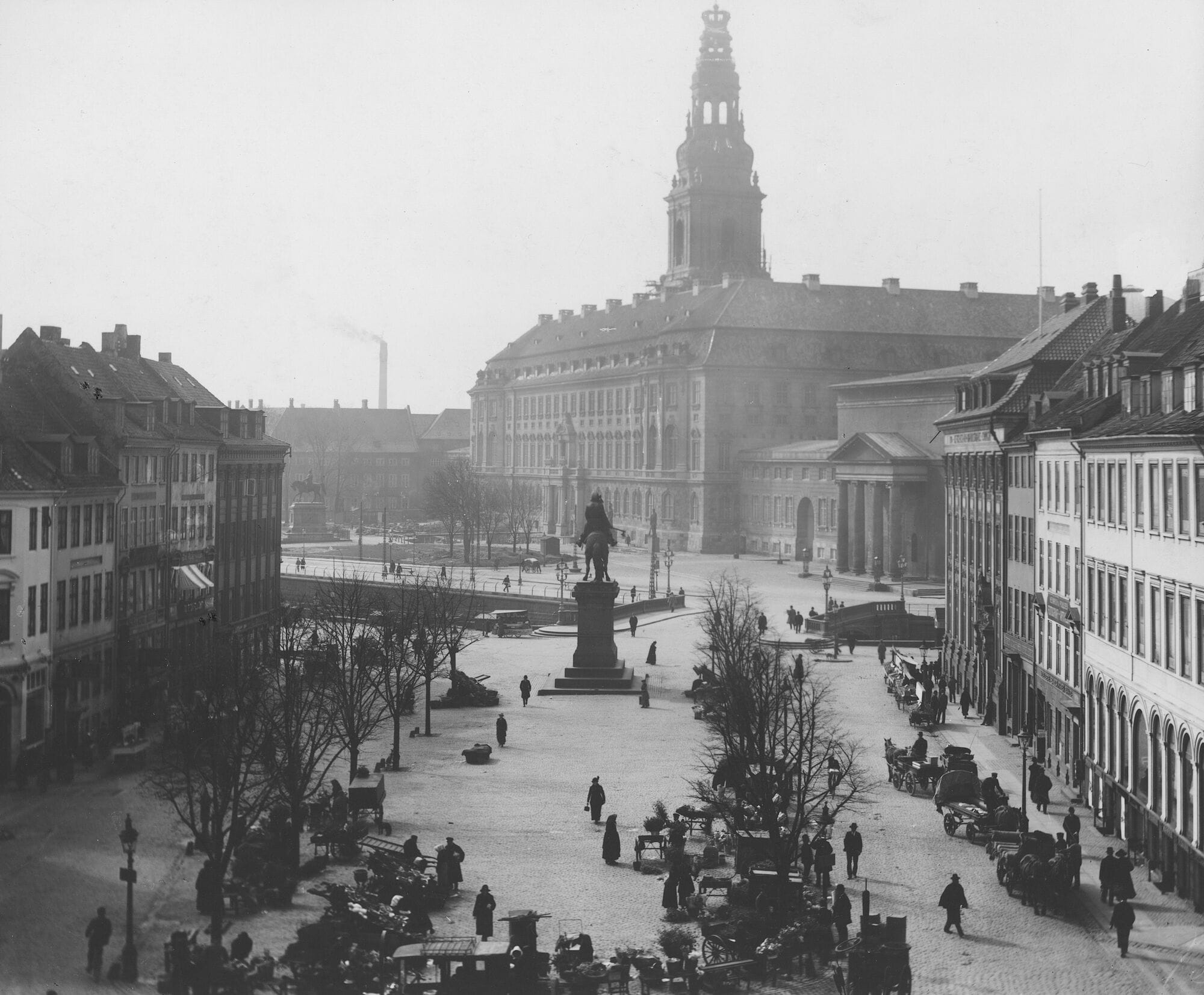
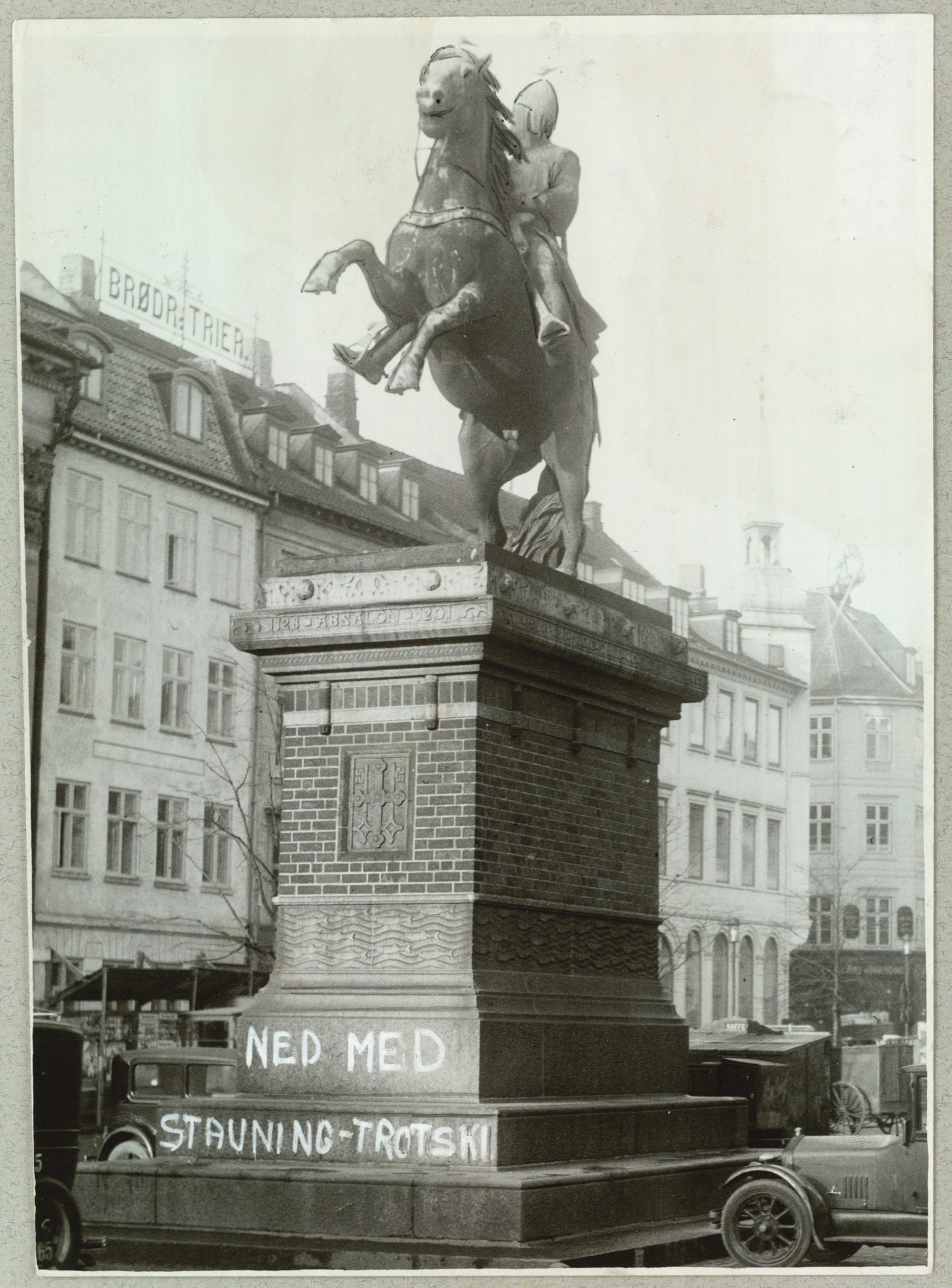
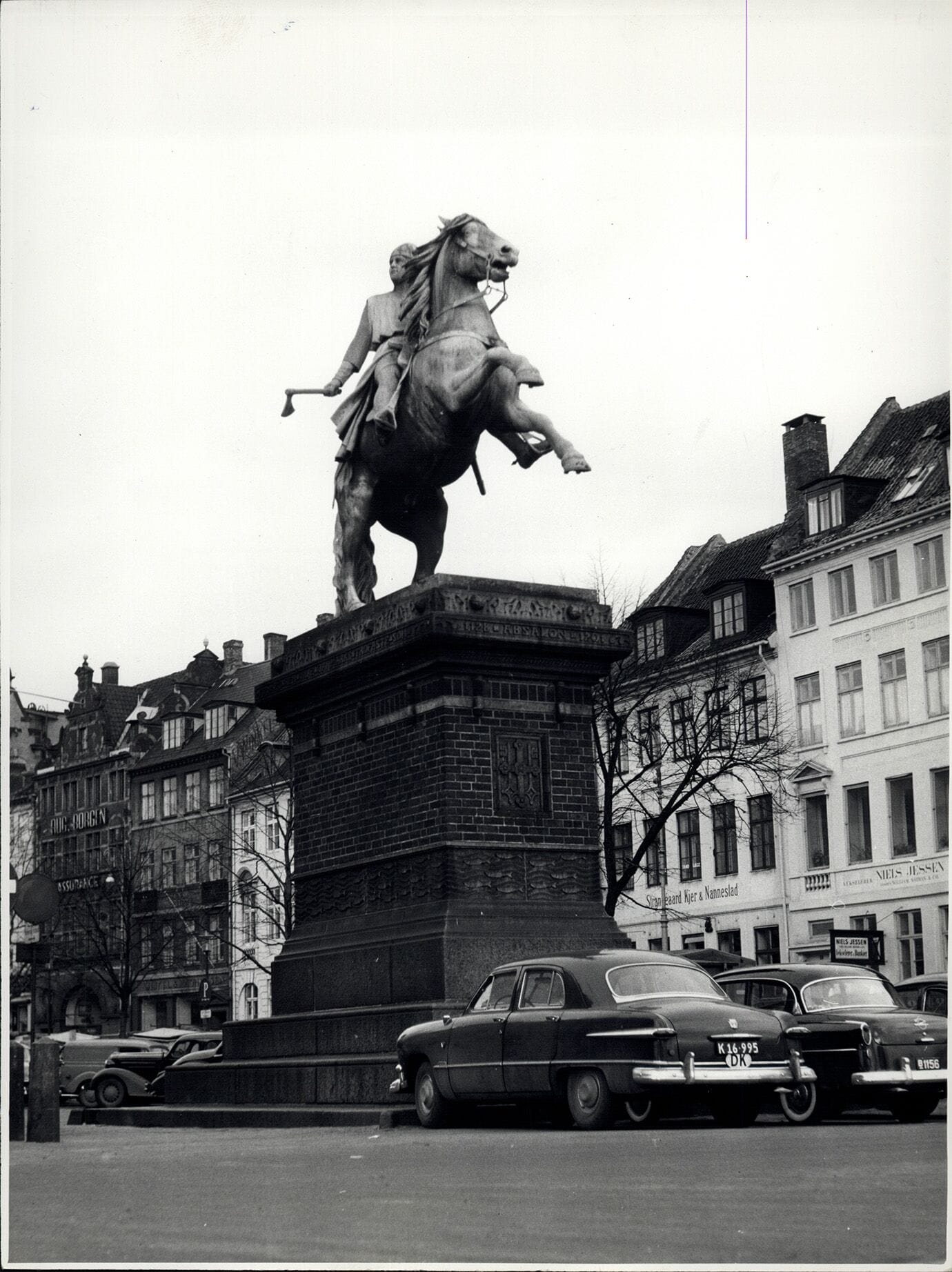
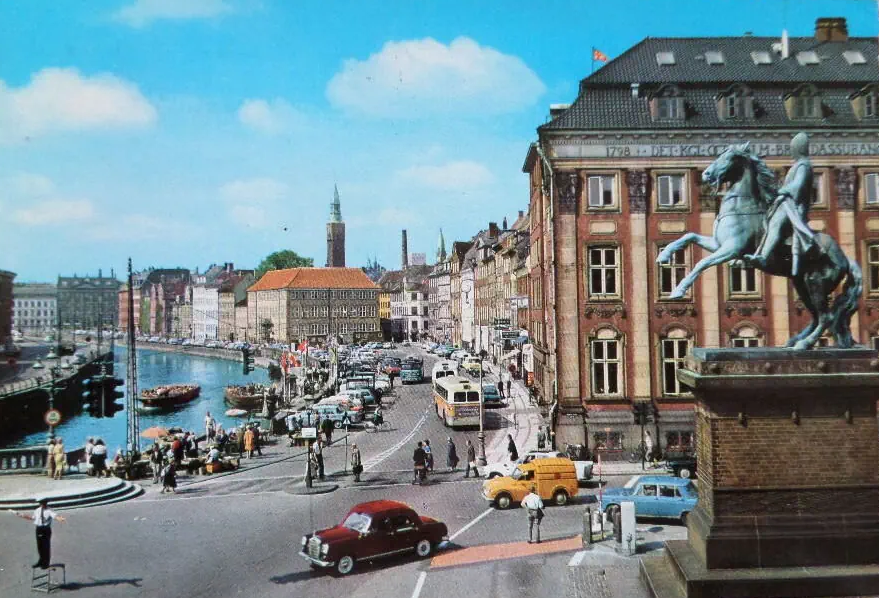
1902, ad for Brandes' canceled speech | 1902, the new statue | 1902, Lars Peter Elfelt, Det Kgl. Bibliotek | Undated in the snow, Lars Peter Elfelt, Det Kgl. Bibliotek | Vilhelm Tryde, the Museum of Copenhagen | Graffiti, 1932, Det Kgl. Bibliotek | 1956, Mogens Falk-Sørensen, the Museum of Copenhagen | 1960s postcard
The neoclassical buildings lining Højbro Plads behind the Absalon were all built in the late 1790s, part of the rebuilding push after the neighborhood burned in the Copenhagen Fire of 1795. That fire also destroyed most of Nikolaj Kirke, which was demolished save for its tower (although the tower's spire was destroyed). The tower spent the next century as an odd vestigial thing, a gangly flat-topped reminder of what was once there. In 1905 Carlsberg tycoon Carl Jacobsen committed to financing construction of a replica of the church's second spire (the first had blown down in the 1640s), and construction was completed in 1909.
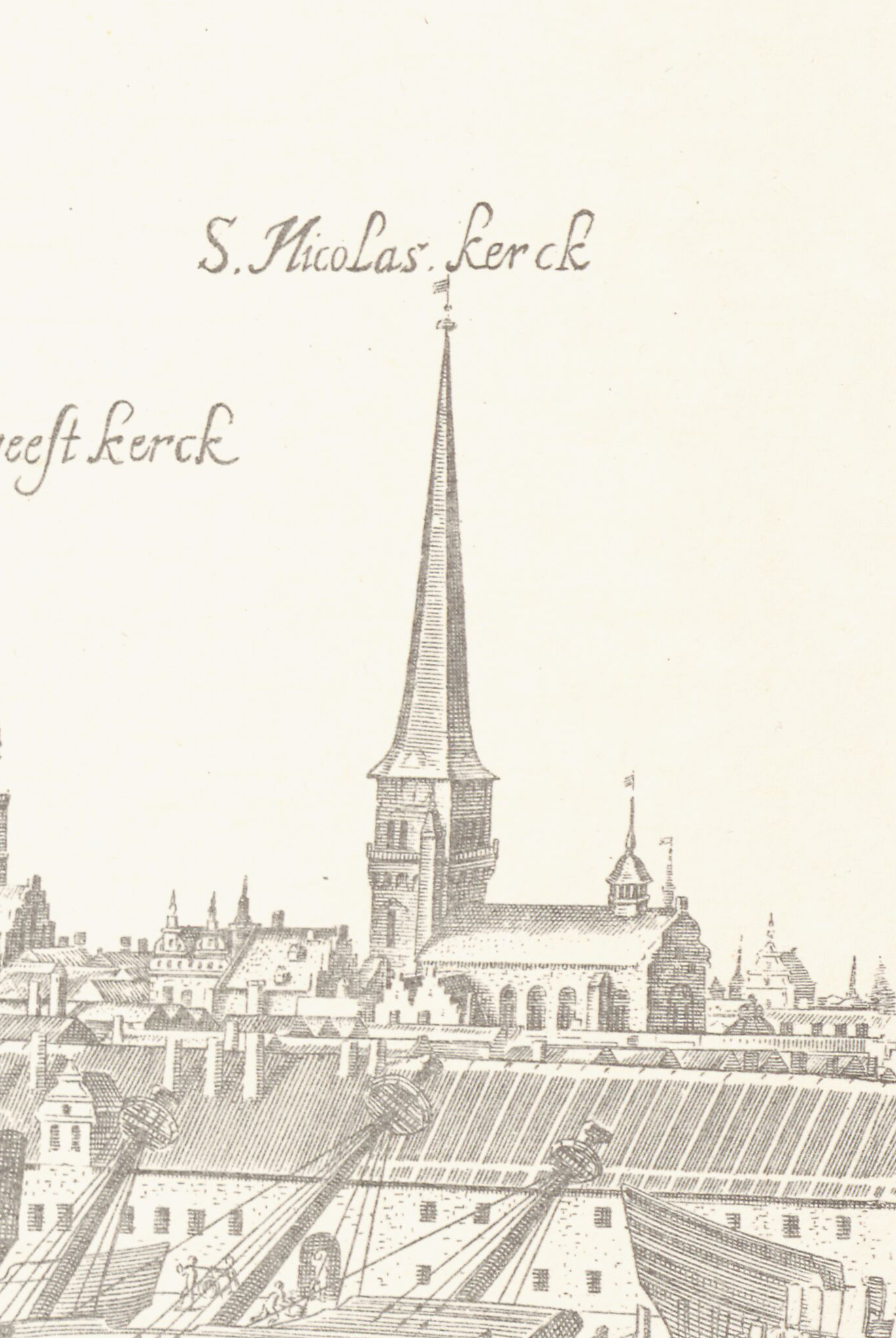
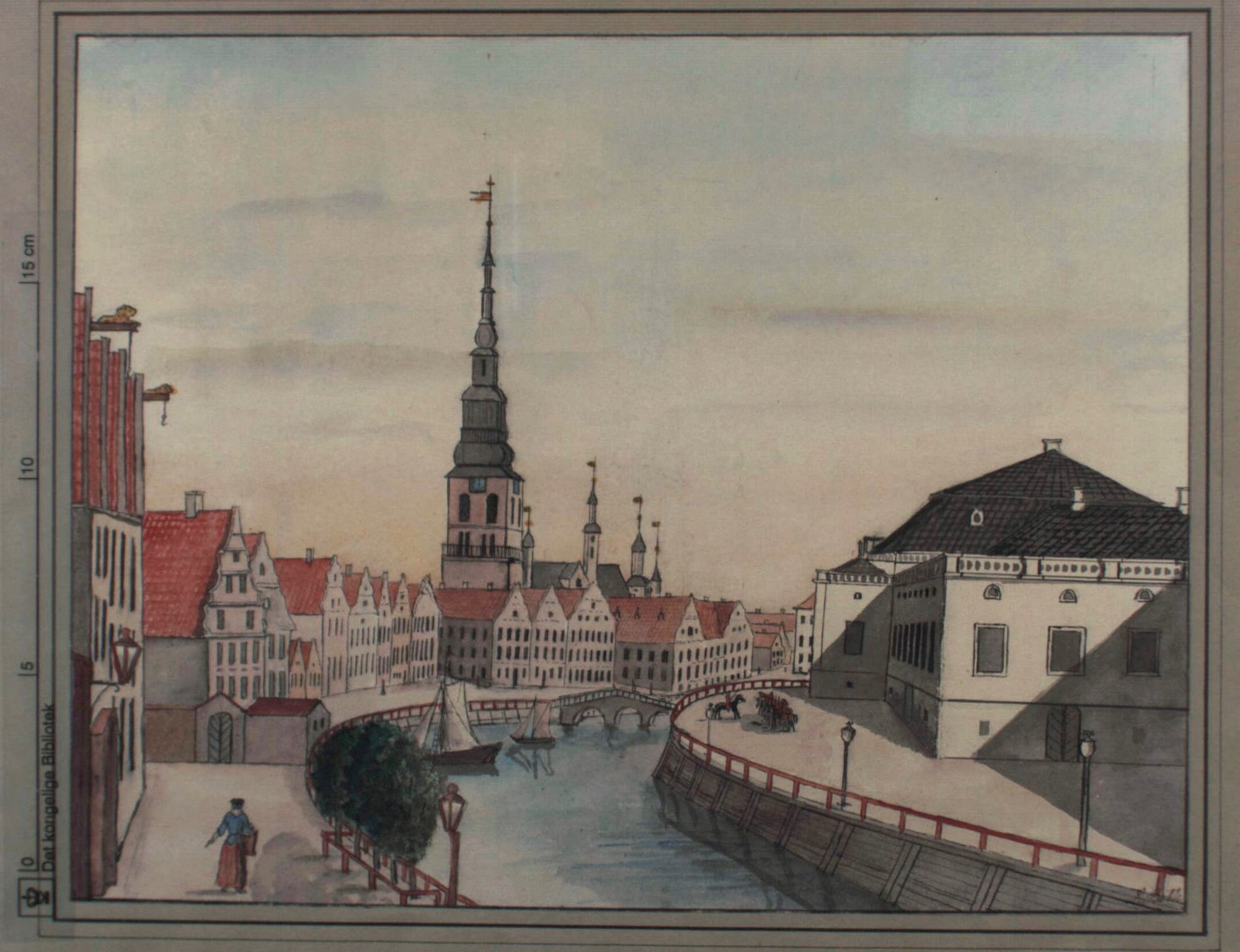
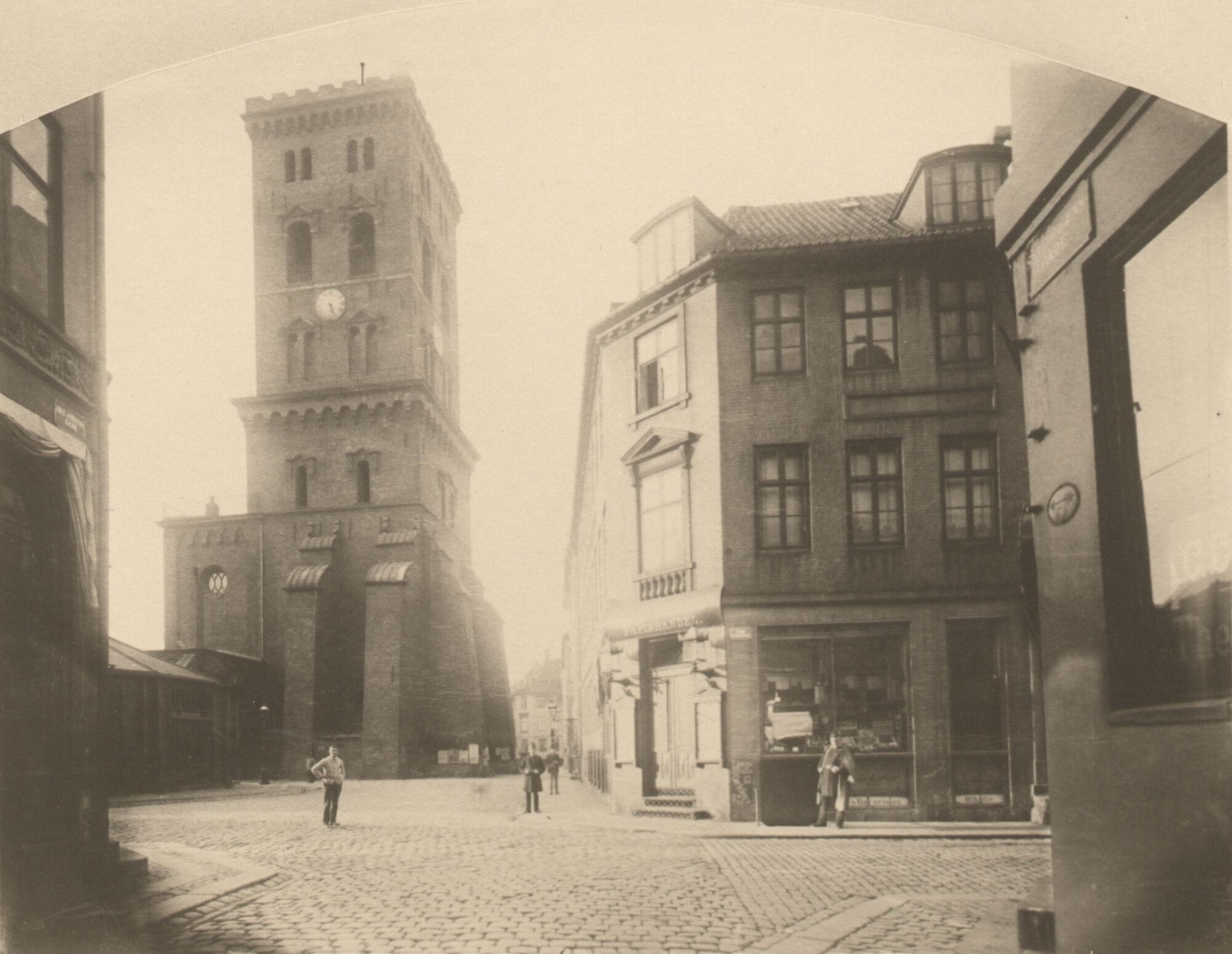
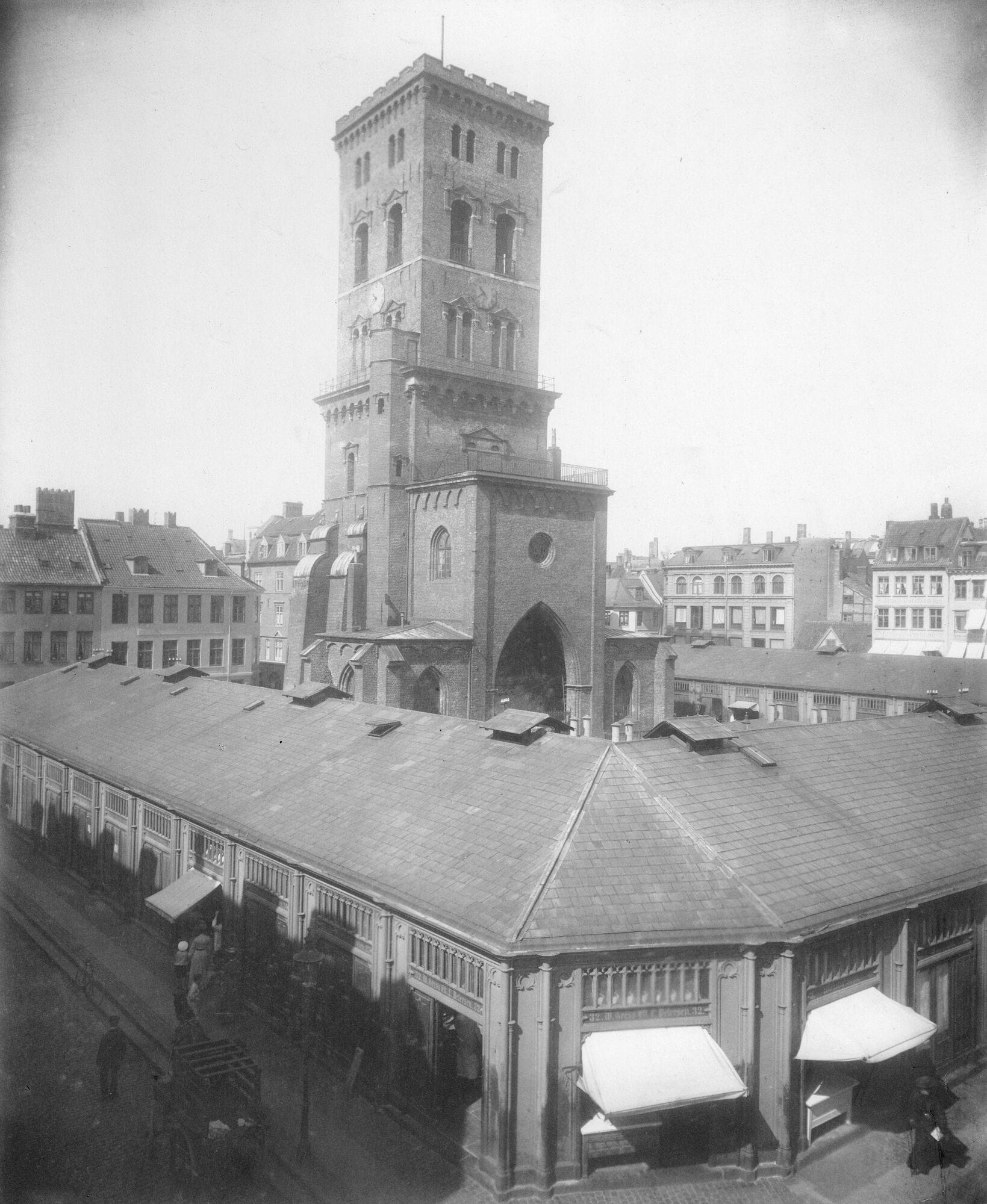
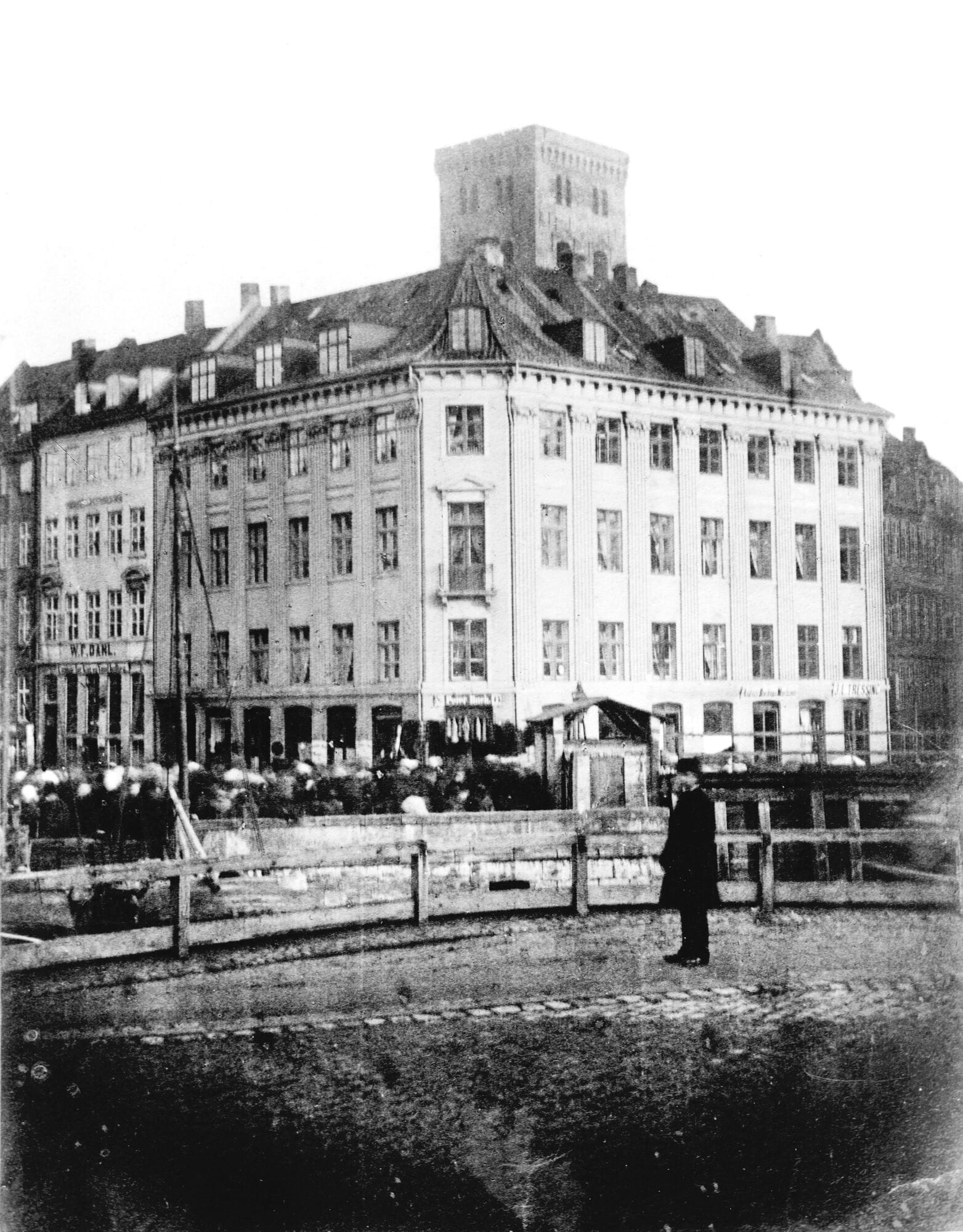
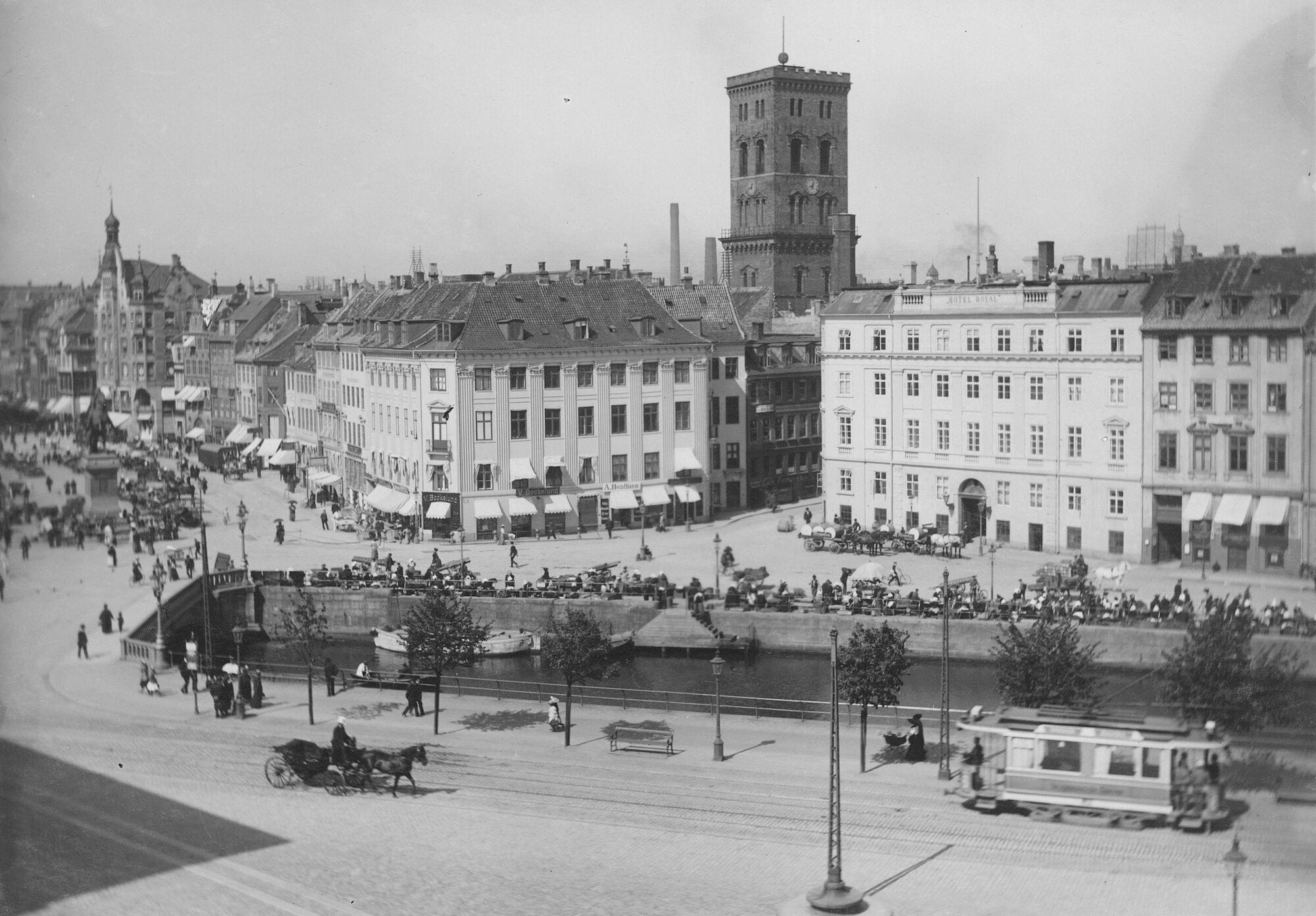
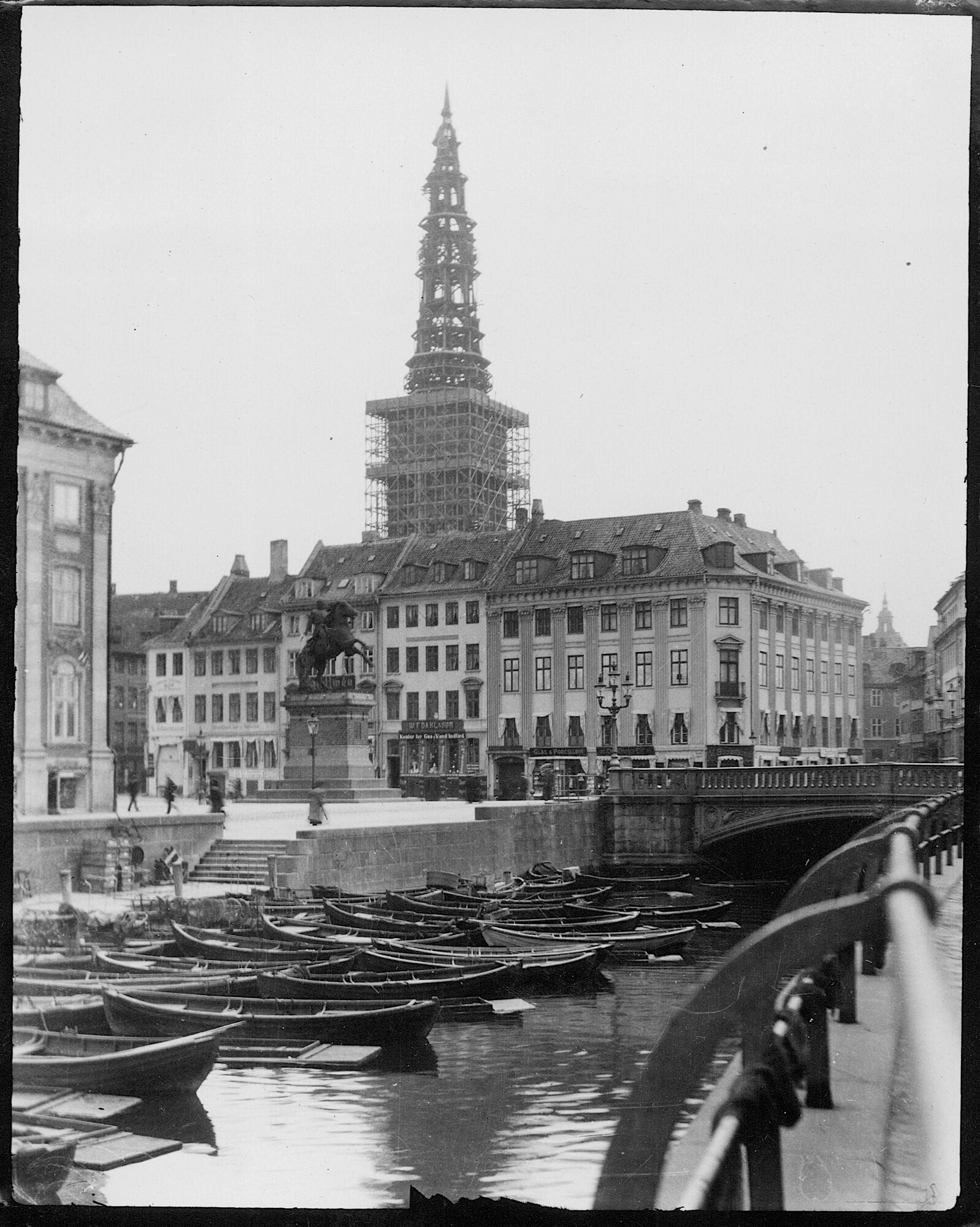
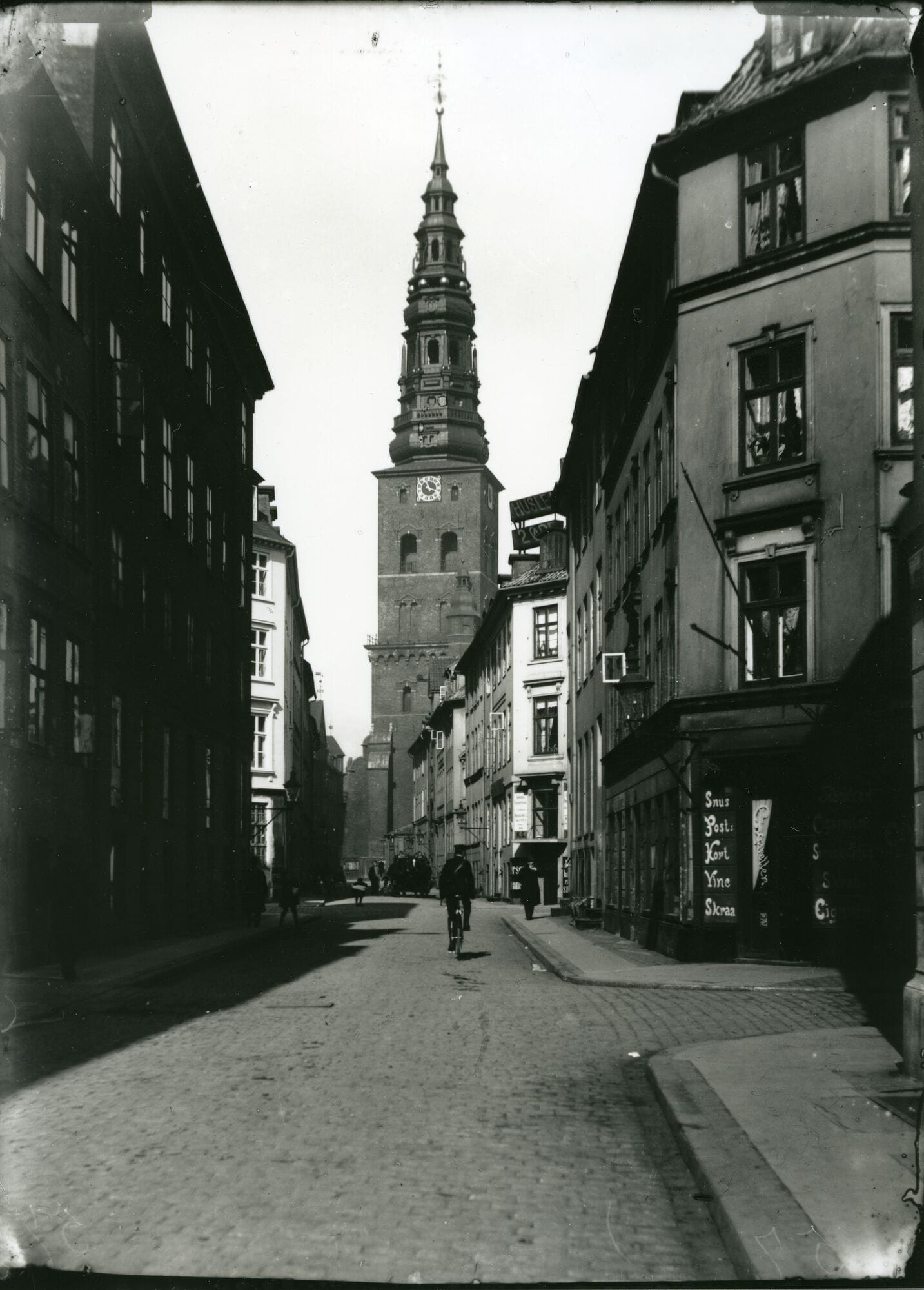
First Nikolaj Kirke spire, 1620 map by Hugo Allard, the Museum of Copenhagen | Second Nikolaj Kirke spire, 1756 illustration by Ludvig Frederik Both, DT013232, Det Kgl. Bibliotek | 1890s, Lars Peter Elfelt, the Museum of Copenhagen | 1907, Frederik Riise, the Museum of Copenhagen | Undated, the Museum of Copenhagen | Undated, the Museum of Copenhagen | 1909, the Museum of Copenhagen | Lars Peter Elfelt, 1918, the Museum of Copenhagen
Production Files
Further reading:
 Sybille Hildebrandt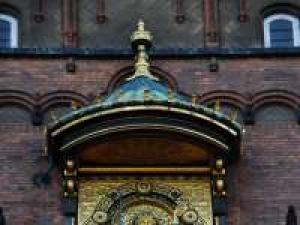
 Georg Metz
Højbro Plads in 1934.
These neoclassical buildings—17, 19, and Plougs Gård–were all built in 1798 and 1799, with two of them designed by Andreas Hallander.
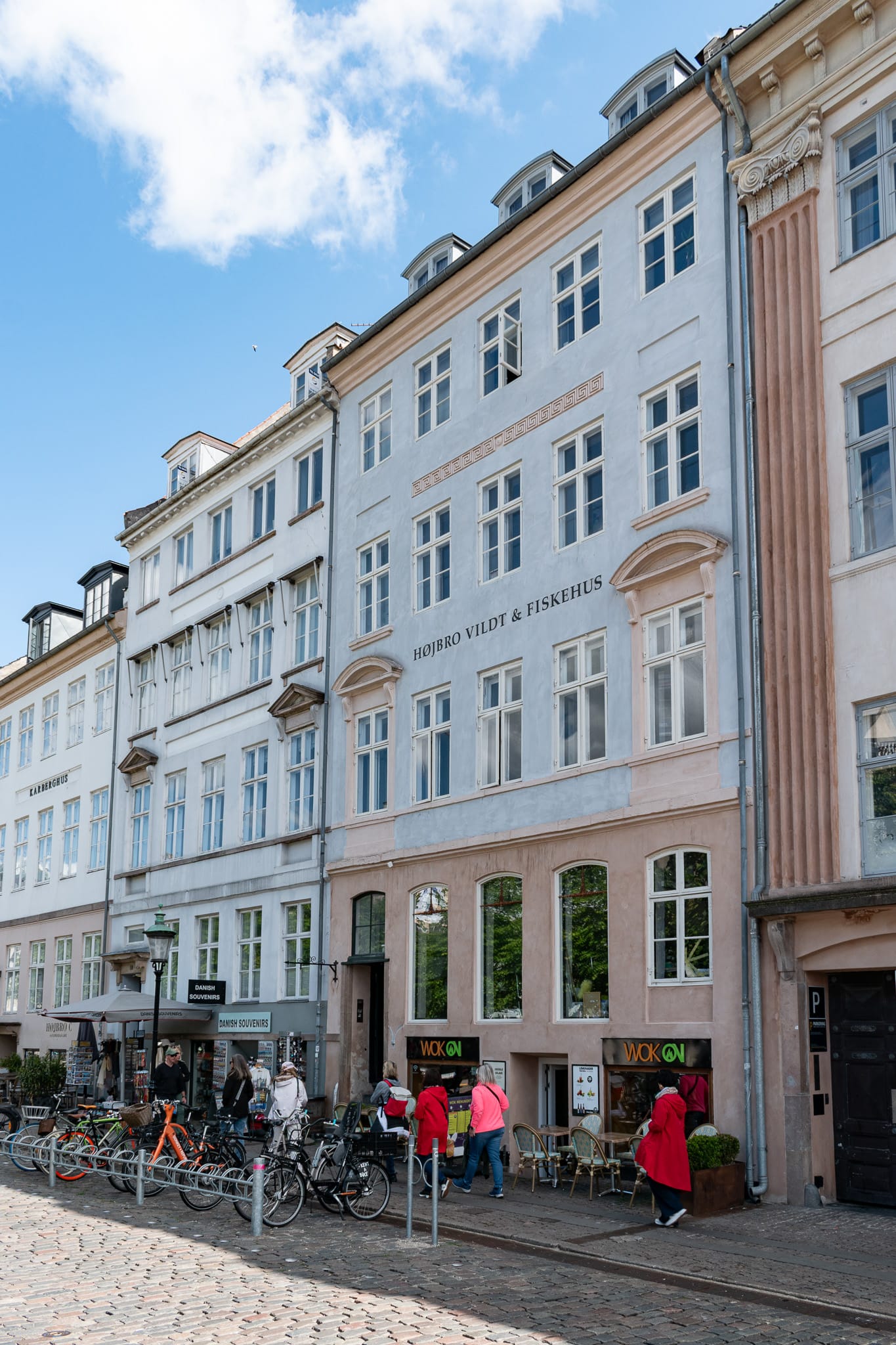
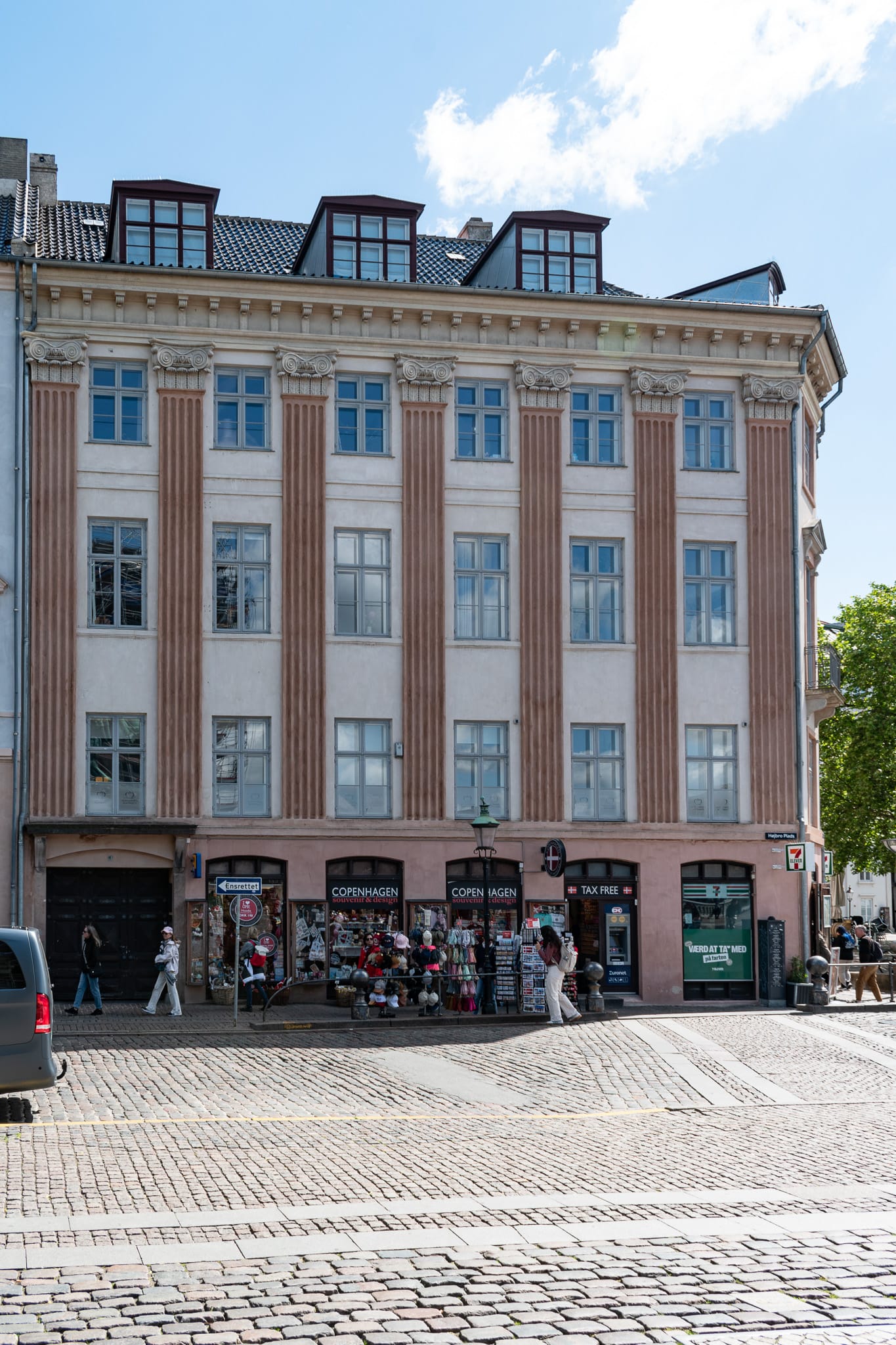
17 and 19 Højbro Plads | Plougs Gård
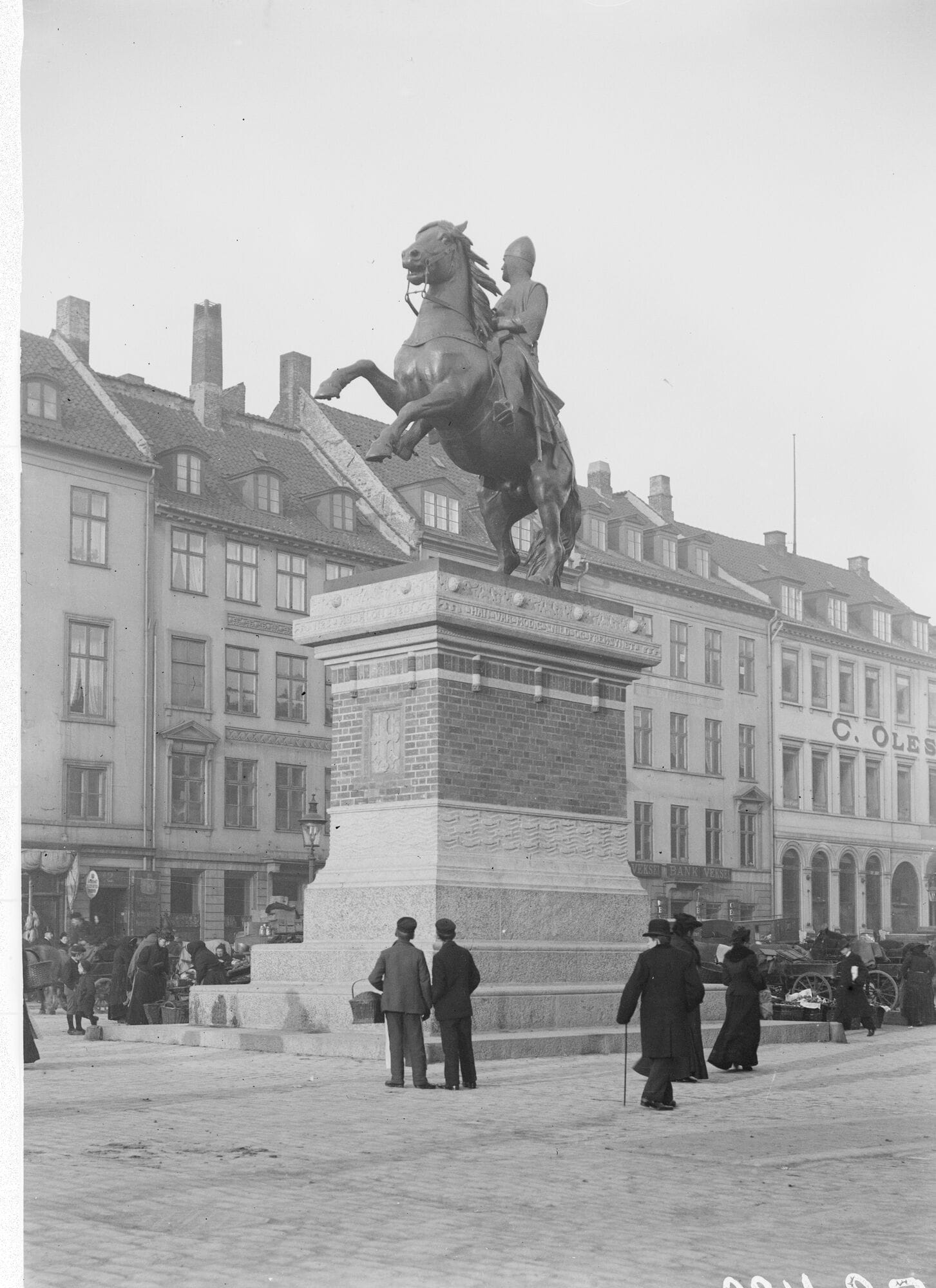
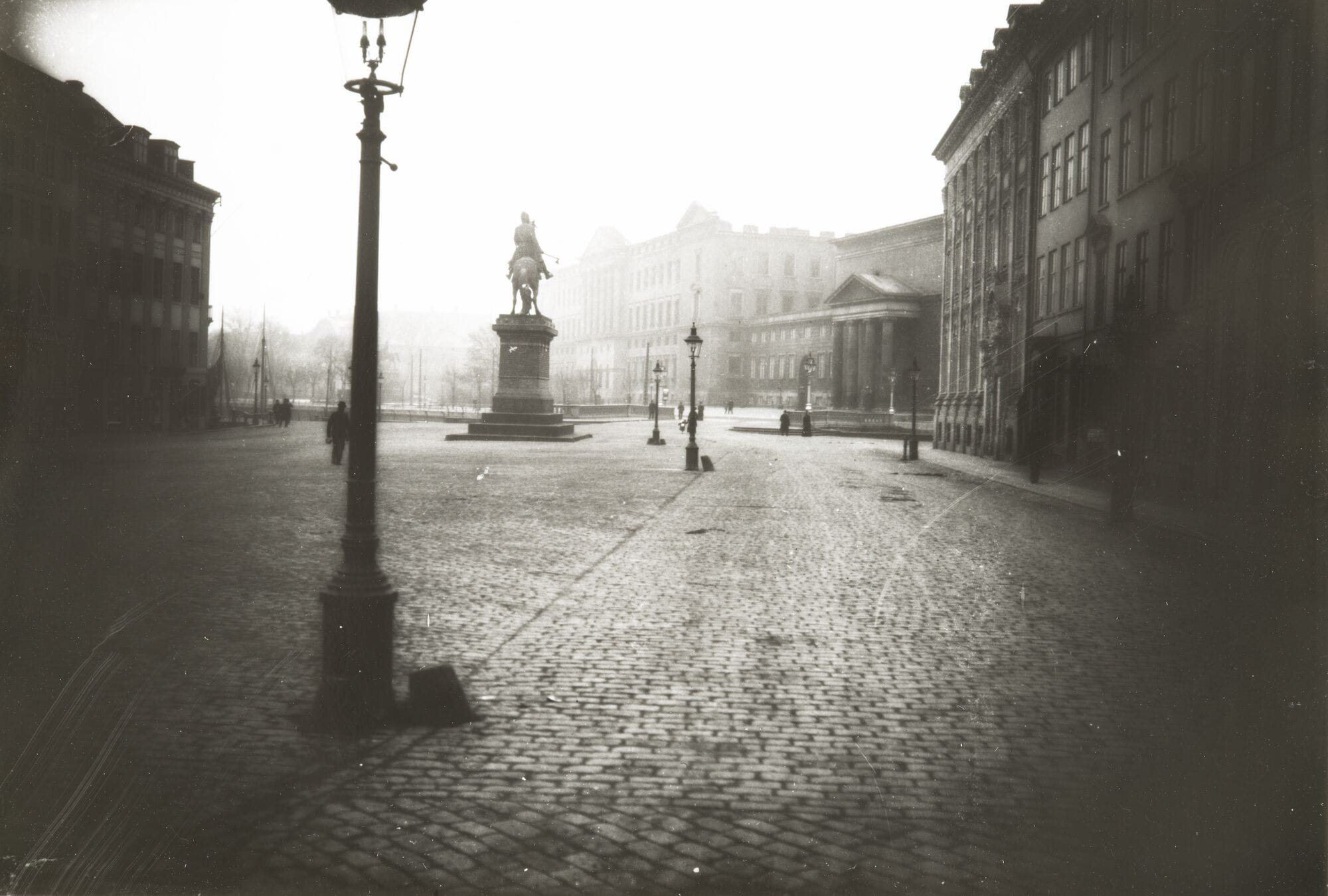
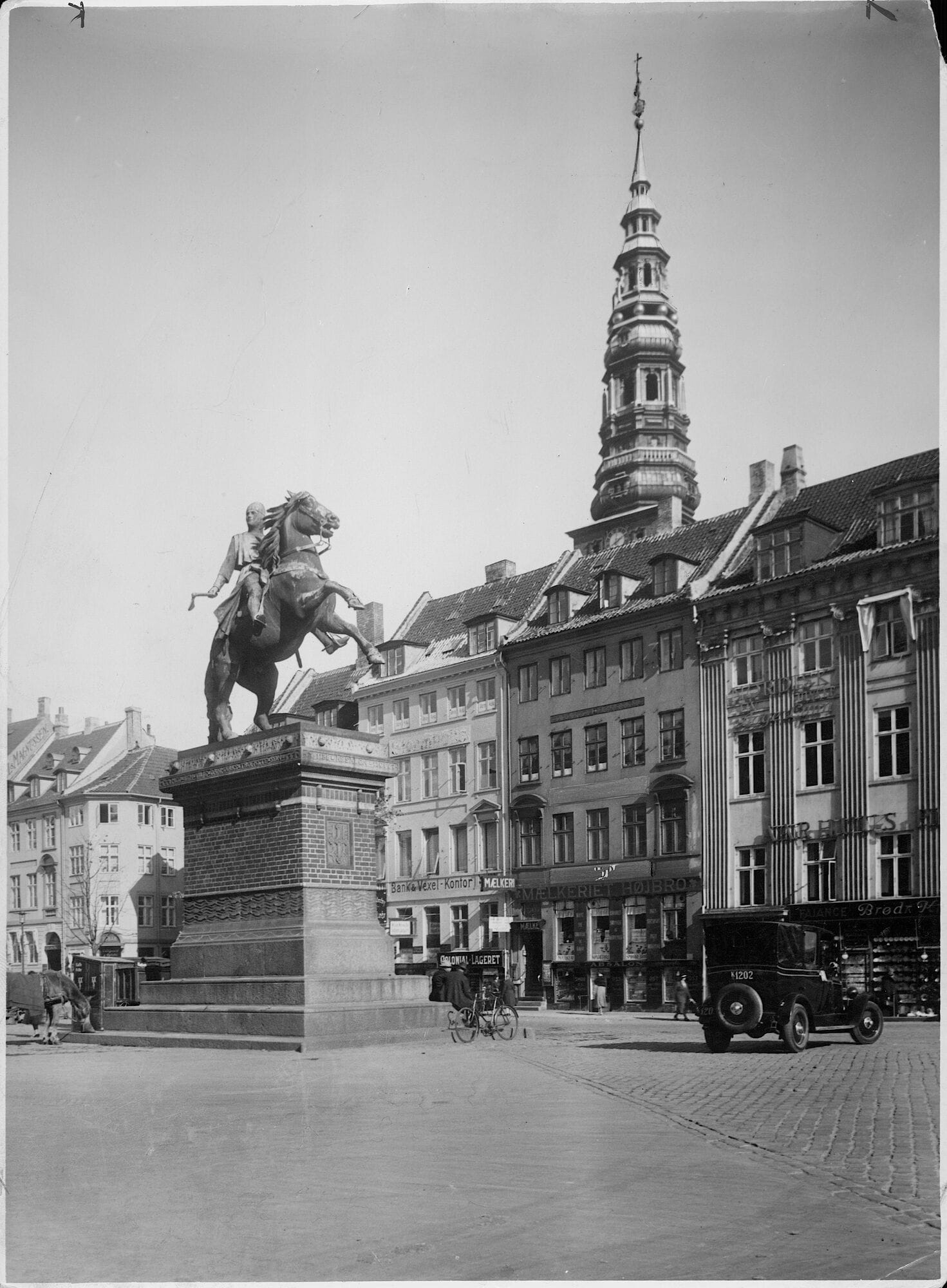
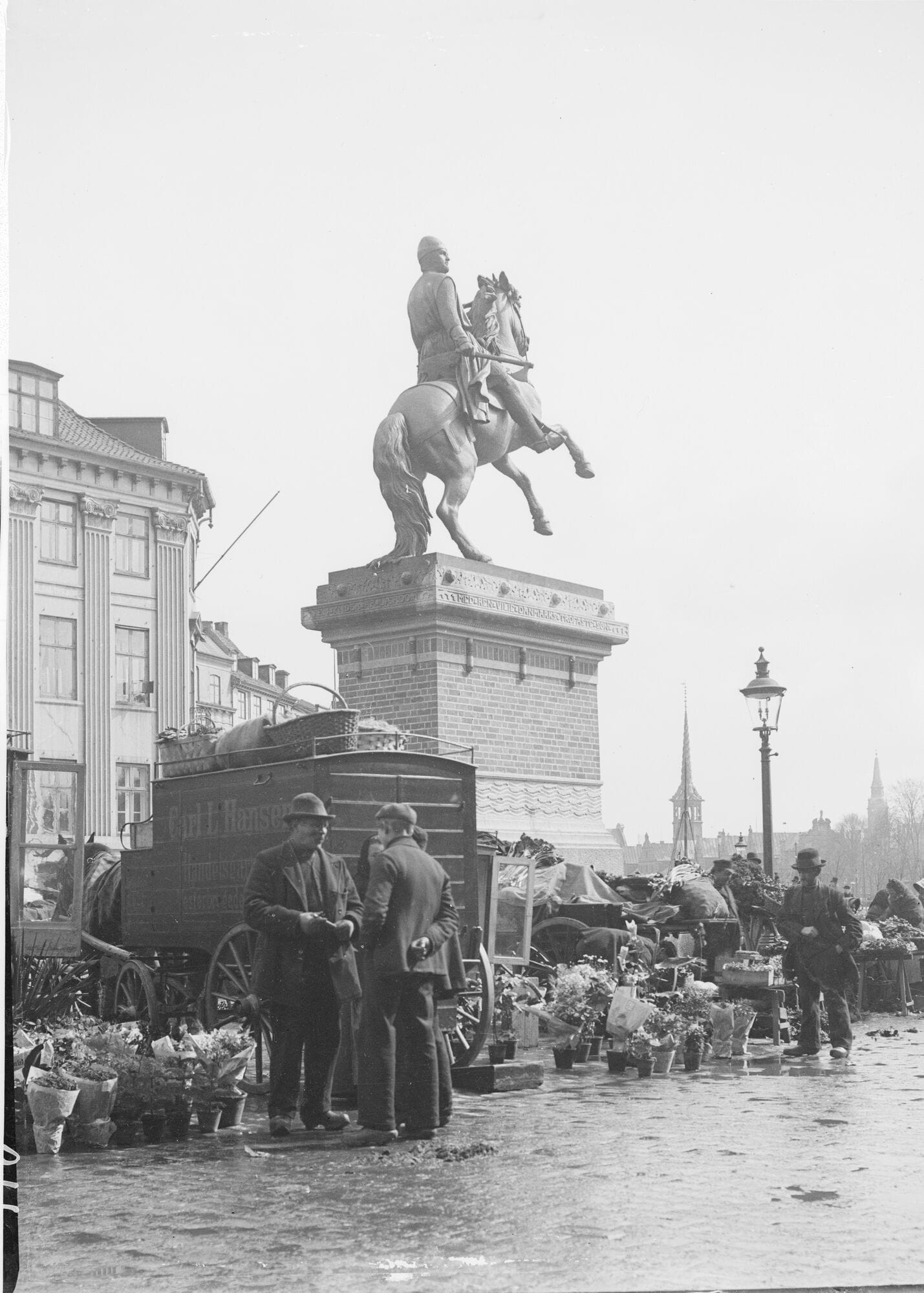
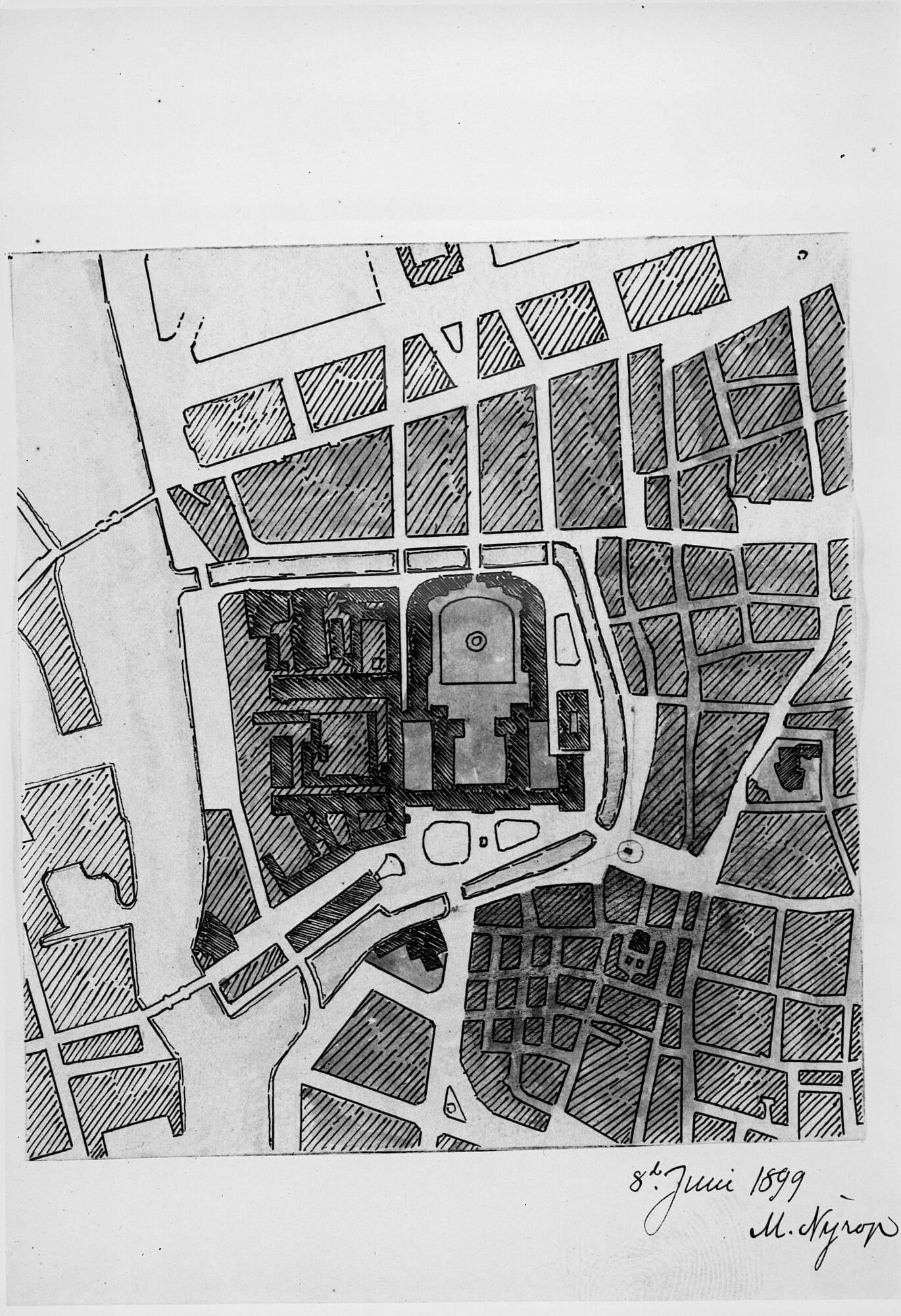
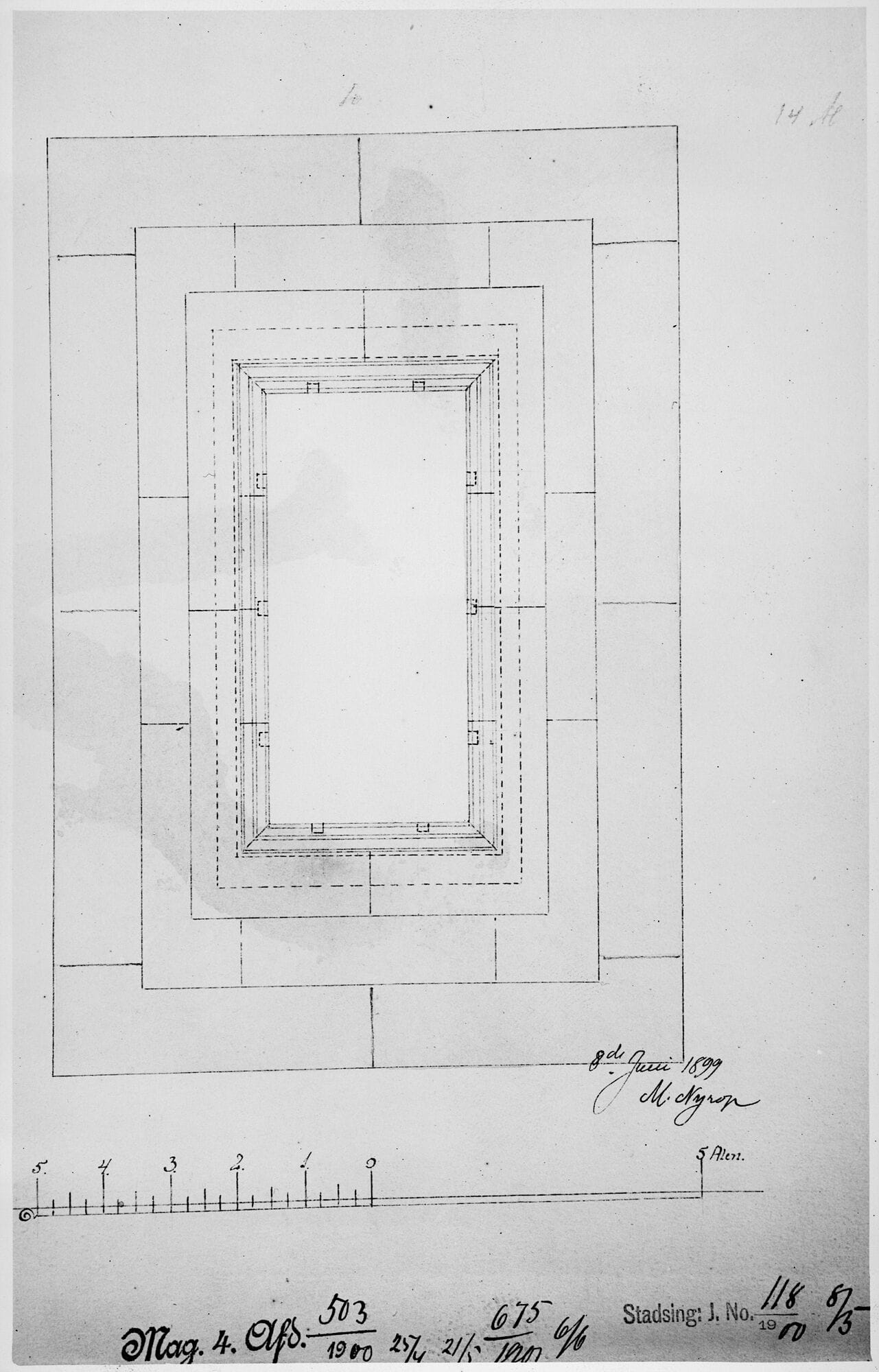
Fritz Theodor Benzen, the Museum of Copenhagen | Paul Fischer, the Museum of Copenhagen | Sven Turck, the Museum of Copenhagen | Fritz Theodor Benzen, flower market, the Museum of Copenhagen | Site plan, the Museum of Copenhagen | Plinth sketch, the Museum of Copenhagen
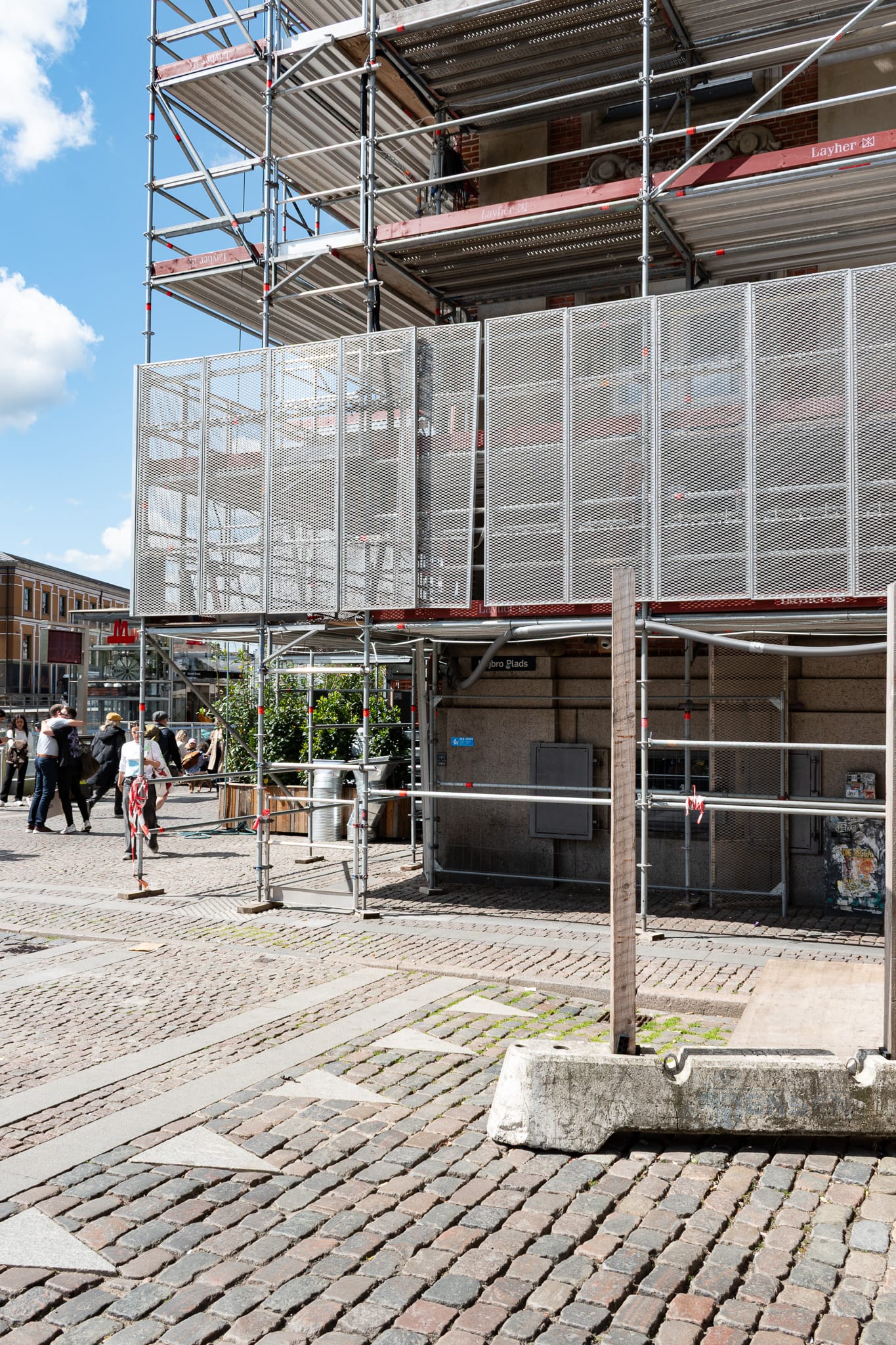
Here's where I took the photo from.
Member discussion: