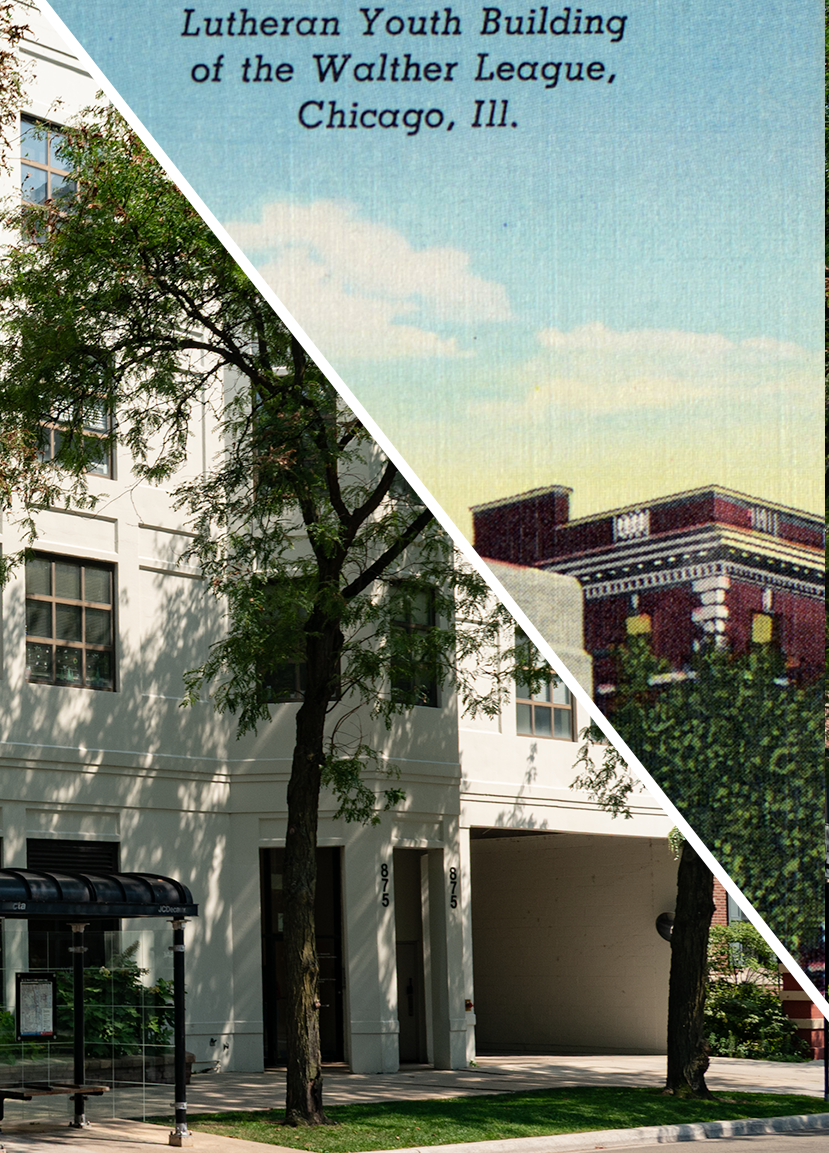
A nifty bit of Gothic Moderne designed by Jansson and Venning, the Walther League of the Lutheran Church–Missouri Synod opened their national headquarters here in 1942, but you’d only know that from the brick and beige sliver of the old Lynch Residence next door. The Walther League served as the LCMS’ youth organization, focused on keeping teens and young adults involved with the church (by, say, meeting a future spouse). I assumed this building’s disappearance—and that of the Walther League itself—was a story of the wider decline in mainline Protestant denominations in the US over the last fifty years, but it turns out 1) the Lutheran Church–Missouri Synod isn’t considered part of the Protestant Mainline, and 2) the collapse of the Walther League, who sold this building to the Salvation Army in 1971, slightly predates that phenomenon. Some LCMS Lutherans blame the Walther League’s demise on its increasing focus on social justice issues (including a big bout of pearl clutching when the Walther League invited Pete Seeger to play their convention in 1965), but the 1960s saw youth-adult fissures fracture chapter-based organizations across the country—broader societal dynamics sank the Walther League.
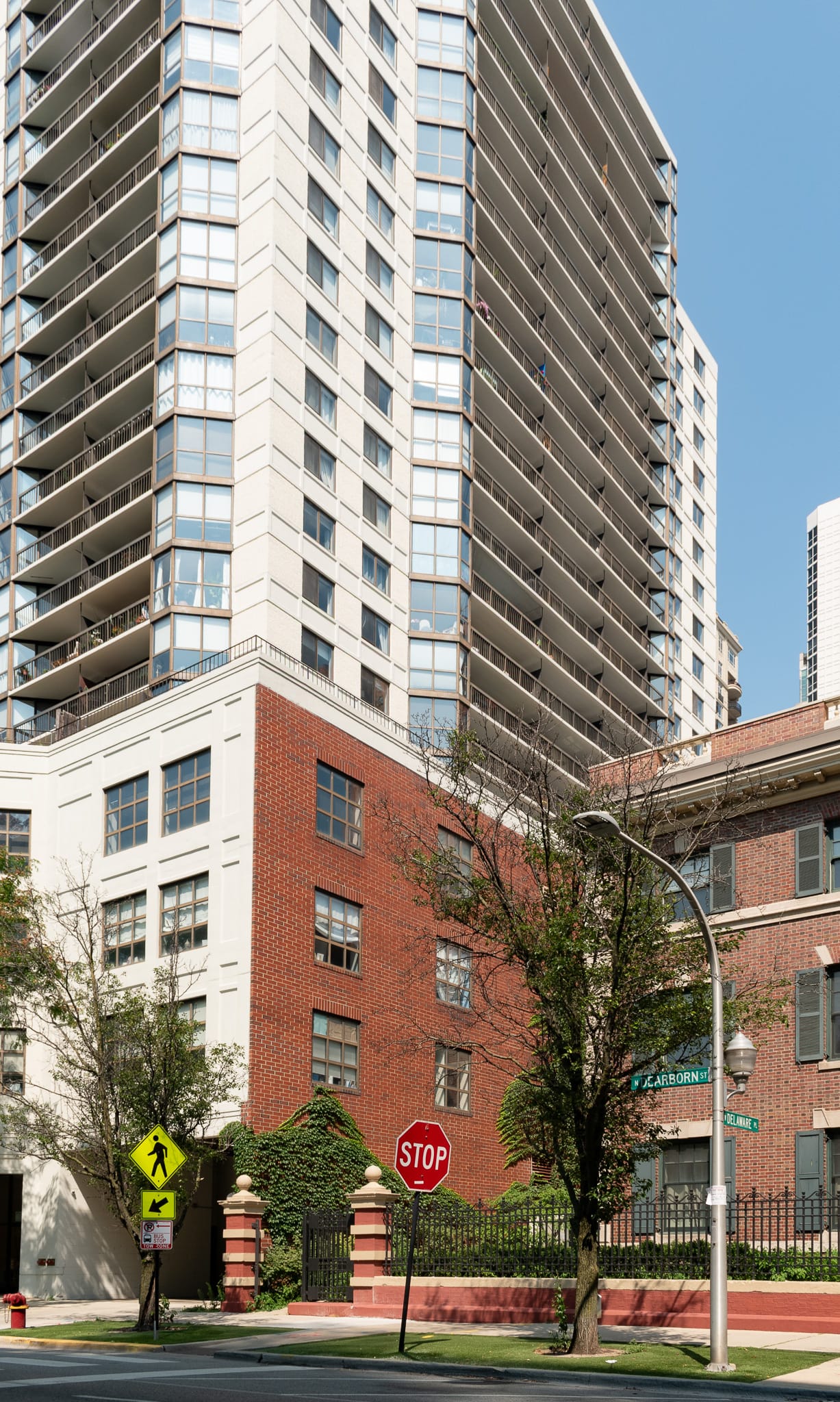
Demolished in 1985, the building’s replacement—Delaware Place on the Park, a Loewenberg special, the work of the prolific developer-architect who redefined River North with bland but financially successful residential towers—is, well, less architecturally compelling. But hey, it did add 185 homes to a site where none stood.
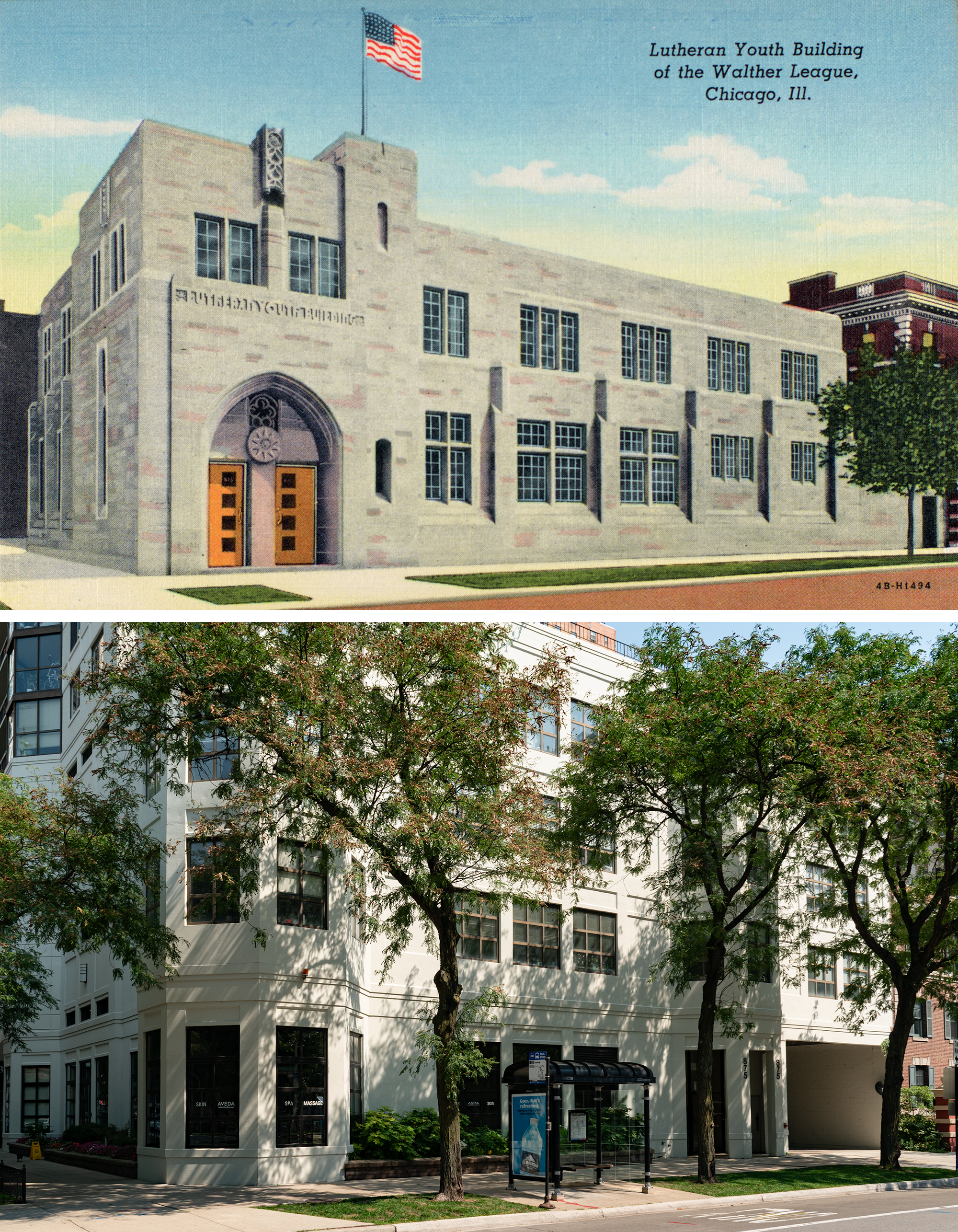
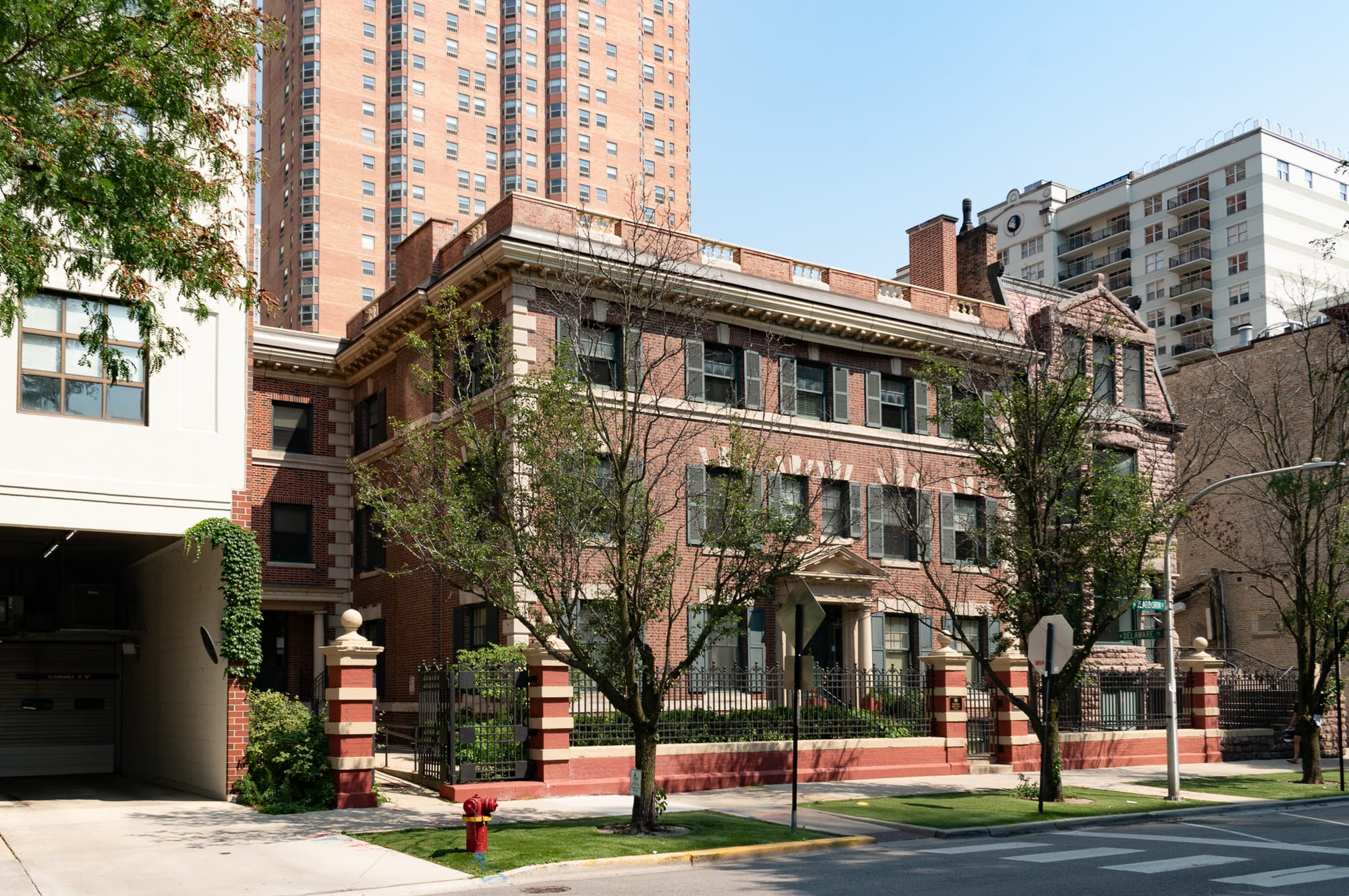
So, what’s changed? Pretty straightforward one here, both blindingly obvious—the Lutheran Youth Building is gone and the building next door is still there—and mundane: a shelter for the 22 bus, street trees, etc.
Before the Lutherans moved in, the southeast corner of Dearborn and Delaware was home to the New England Congregational Church. The Congregationalists rebuilt it once, after it was gutted by the Great Chicago Fire in 1871, but when it burned again in 1936, they sold the cleared lot to the Walther League.
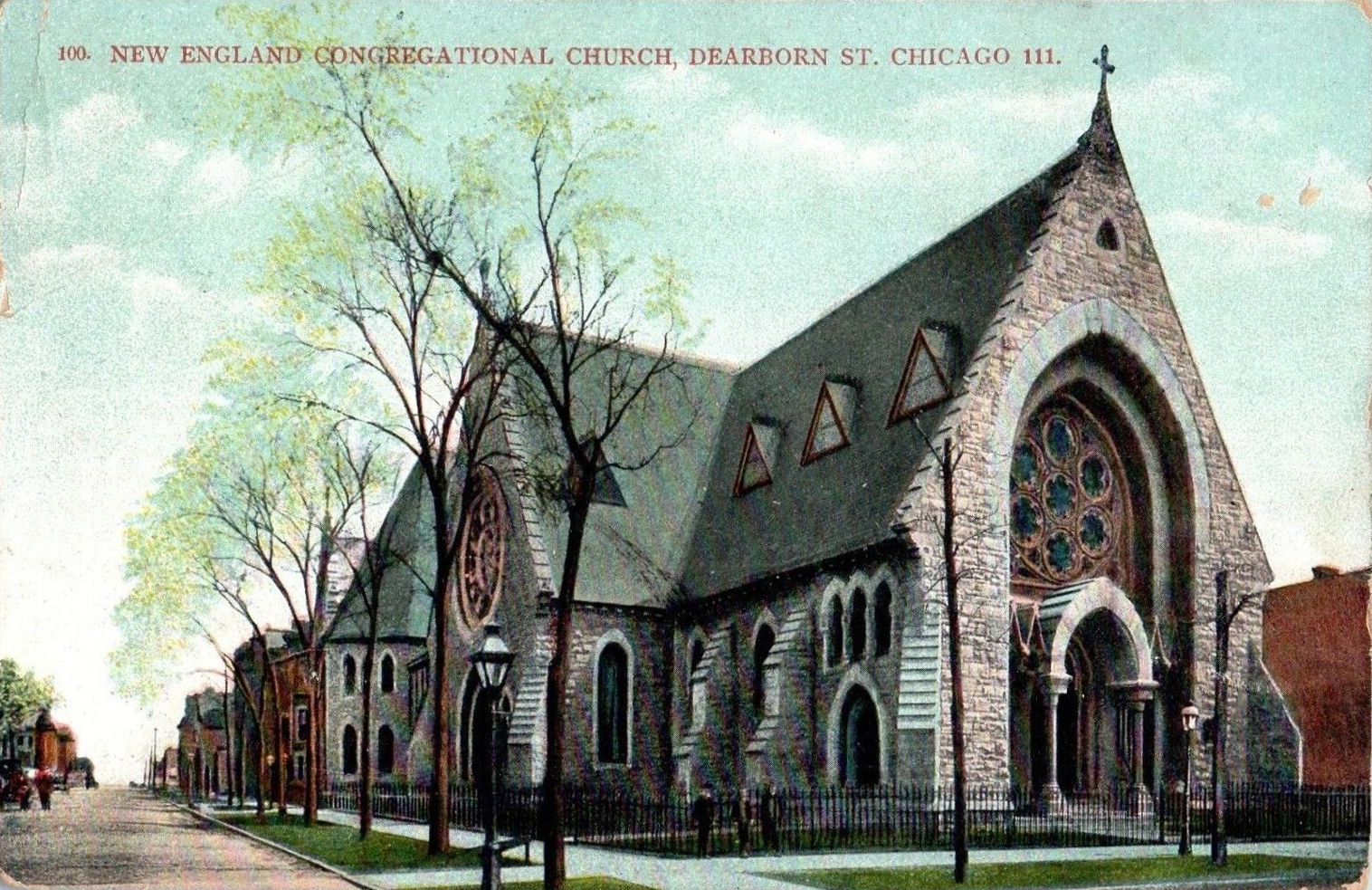
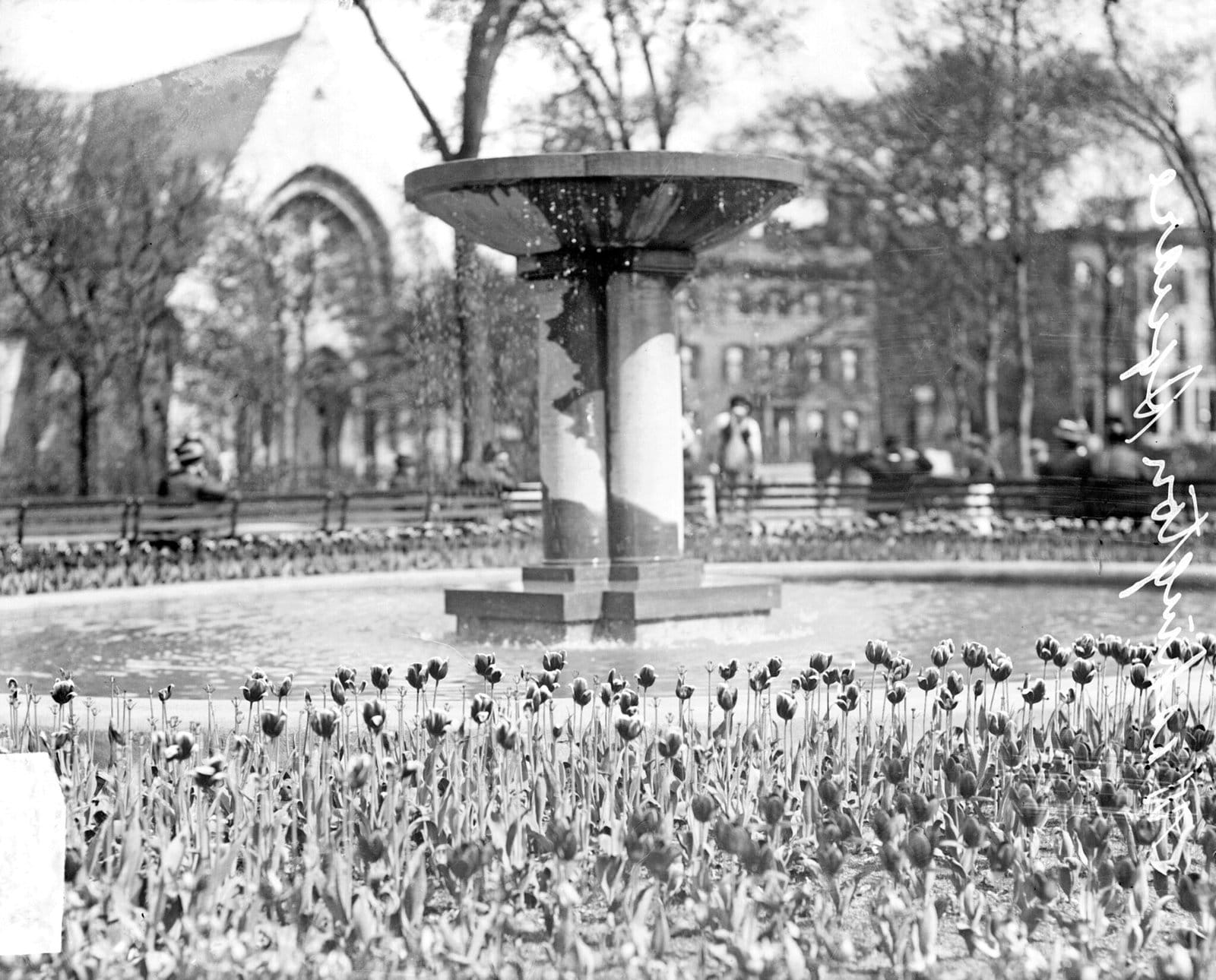
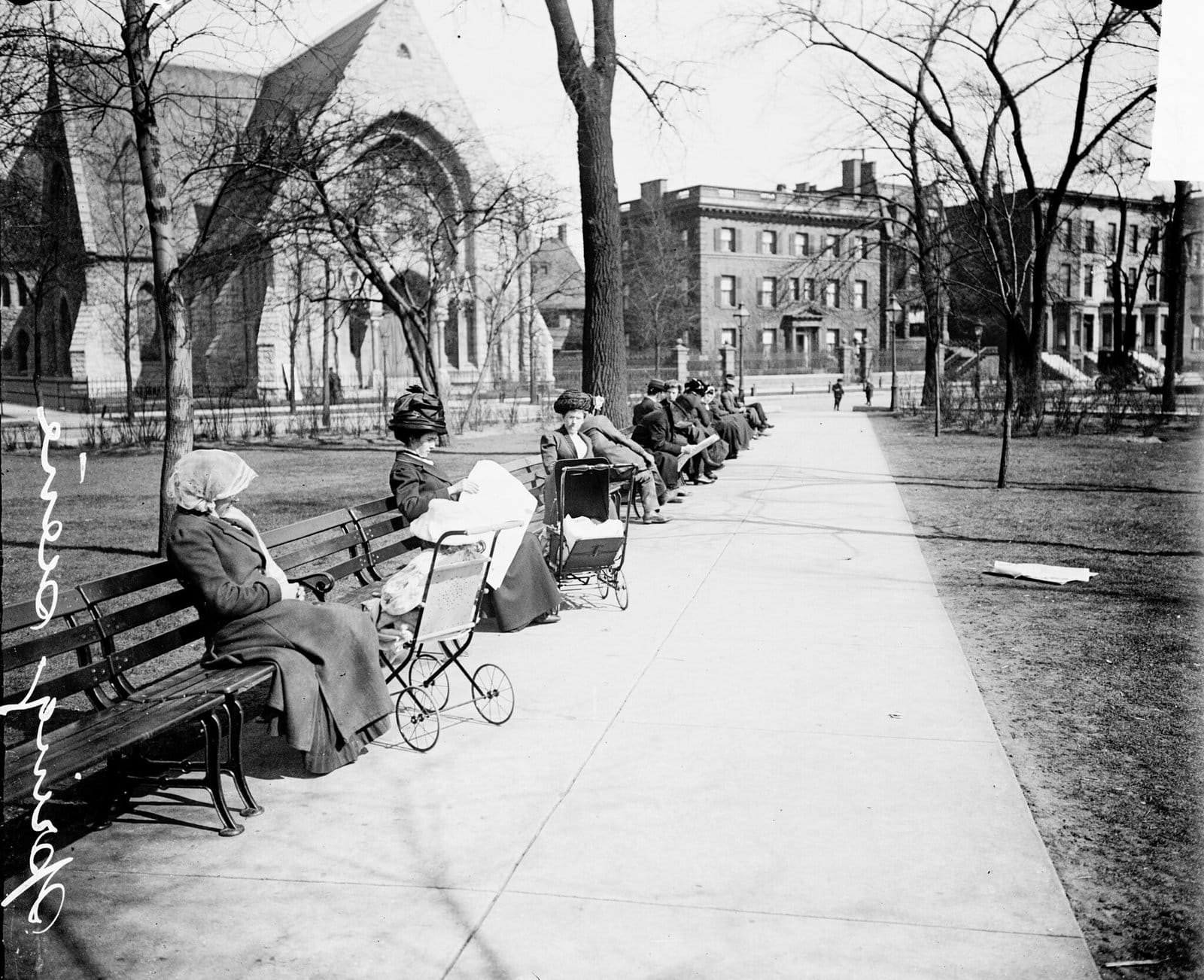
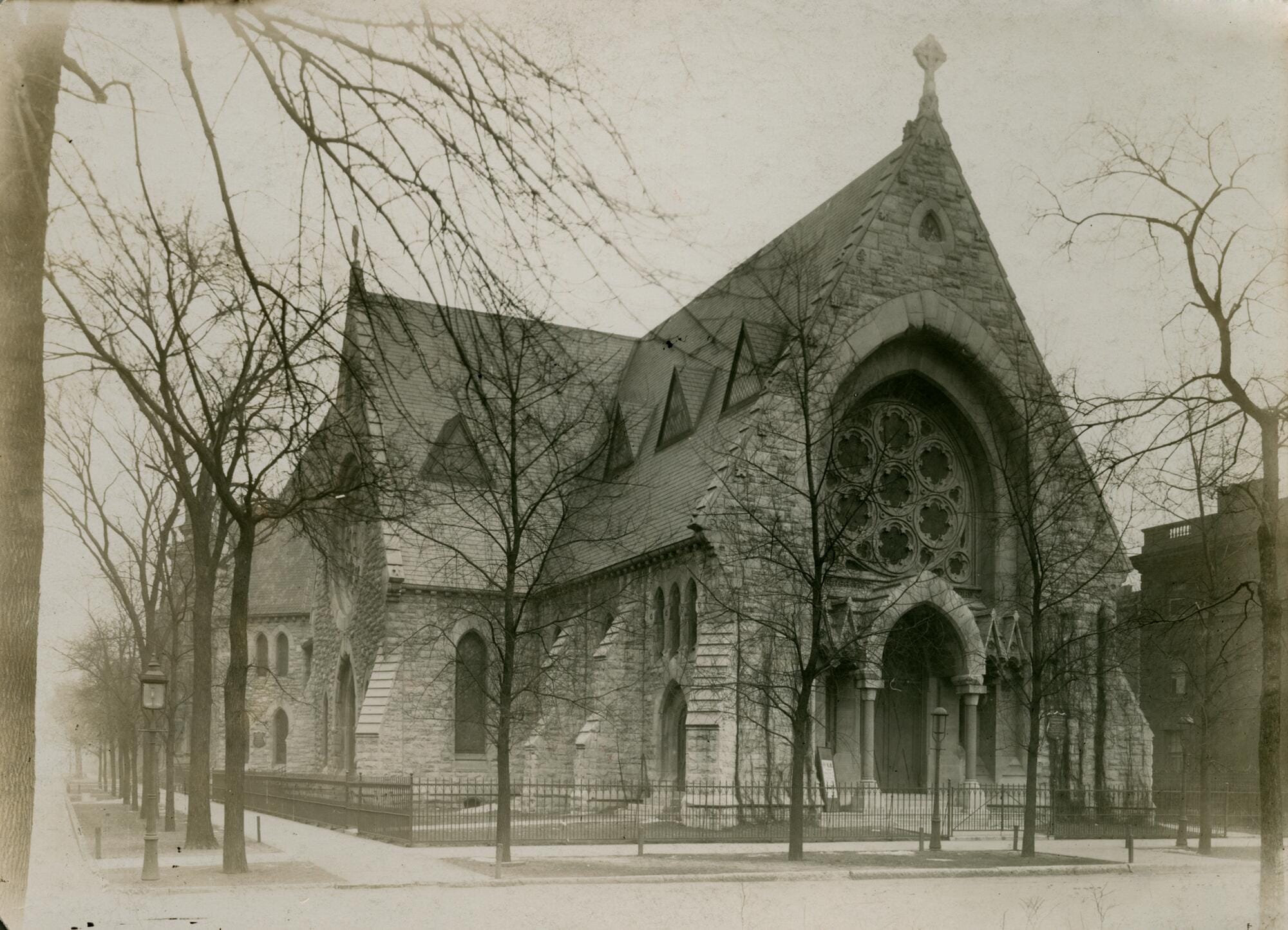
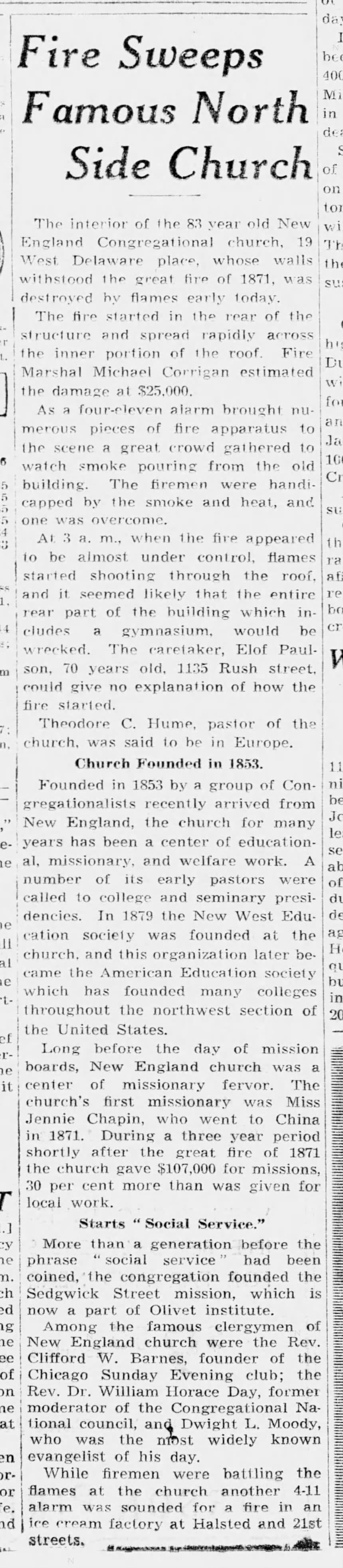
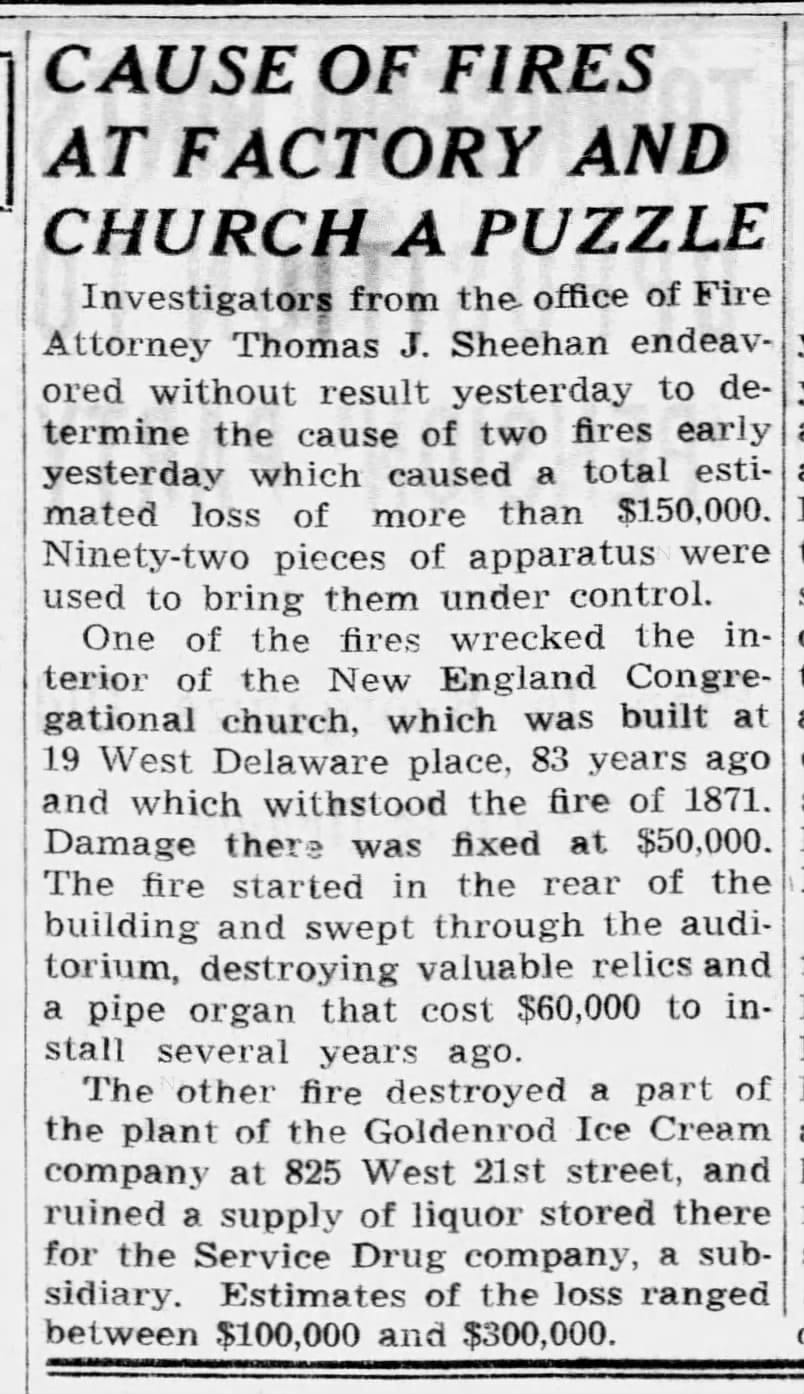
New England Congregational Church, 1907 postcard, Wikimedia Commons | 1909, DN-0054377, Chicago Daily News collection, Chicago History Museum | 1911, DN-0056869, Chicago Daily News collection, Chicago History Museum | 1913, Percy H. Sloan, Newberry Library | 1934 articles on the fire that destroyed the New England Congregational Church

The Walther League was the official youth auxiliary of the Lutheran Church—Missouri Synod, but it was an independent body with its own permanent staff and funding. Dedicated to keeping LCMS youth and young adults engaged in the church, the Walther League owned campgrounds, operated sanatoriums and hospices, and organized sports leagues and activities—a vessel for young Lutherans to have some fun, perform some service, and (ideally) meet a future spouse within the faith.
By 1940, the Walther League claimed nearly 100,000 members—they’d earned a purpose-built headquarters of their own, hiring architects Jansson and Venning to design it. Frank Venning specialized in (often gothic) church and university buildings. Working for Lowe & Bollenbacher, in the 1920s Venning managed a young Paul Schweikher, who’d become an accomplished modernist and Dean of the Yale School of Architecture. Schweikher would later compliment Venning’s work, “very well done Gothic churches, of Venning’s design, in limestone. Venning was very good…”. A limestone-clad Gothic ecclesiastical building, the Lutheran Youth Building fits right in that oeuvre, while also incorporating a bit of Moderne styling that Venning deployed on buildings like the Winnebago County Courthouse in Oshkosh.
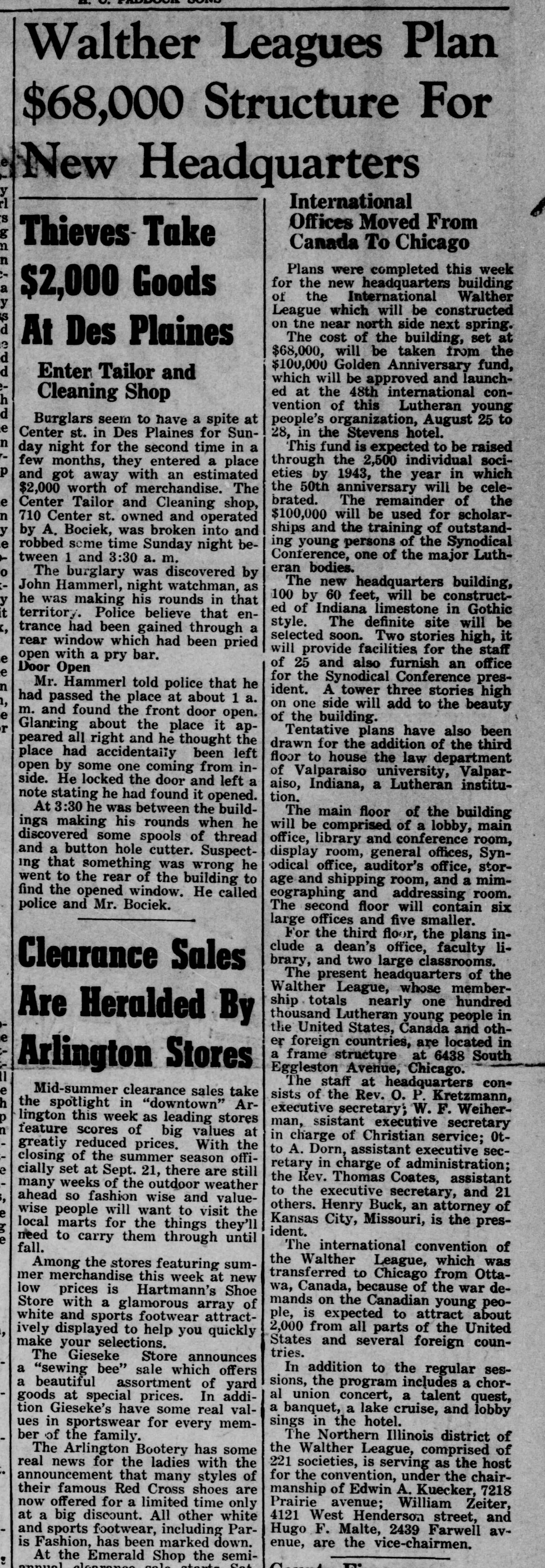
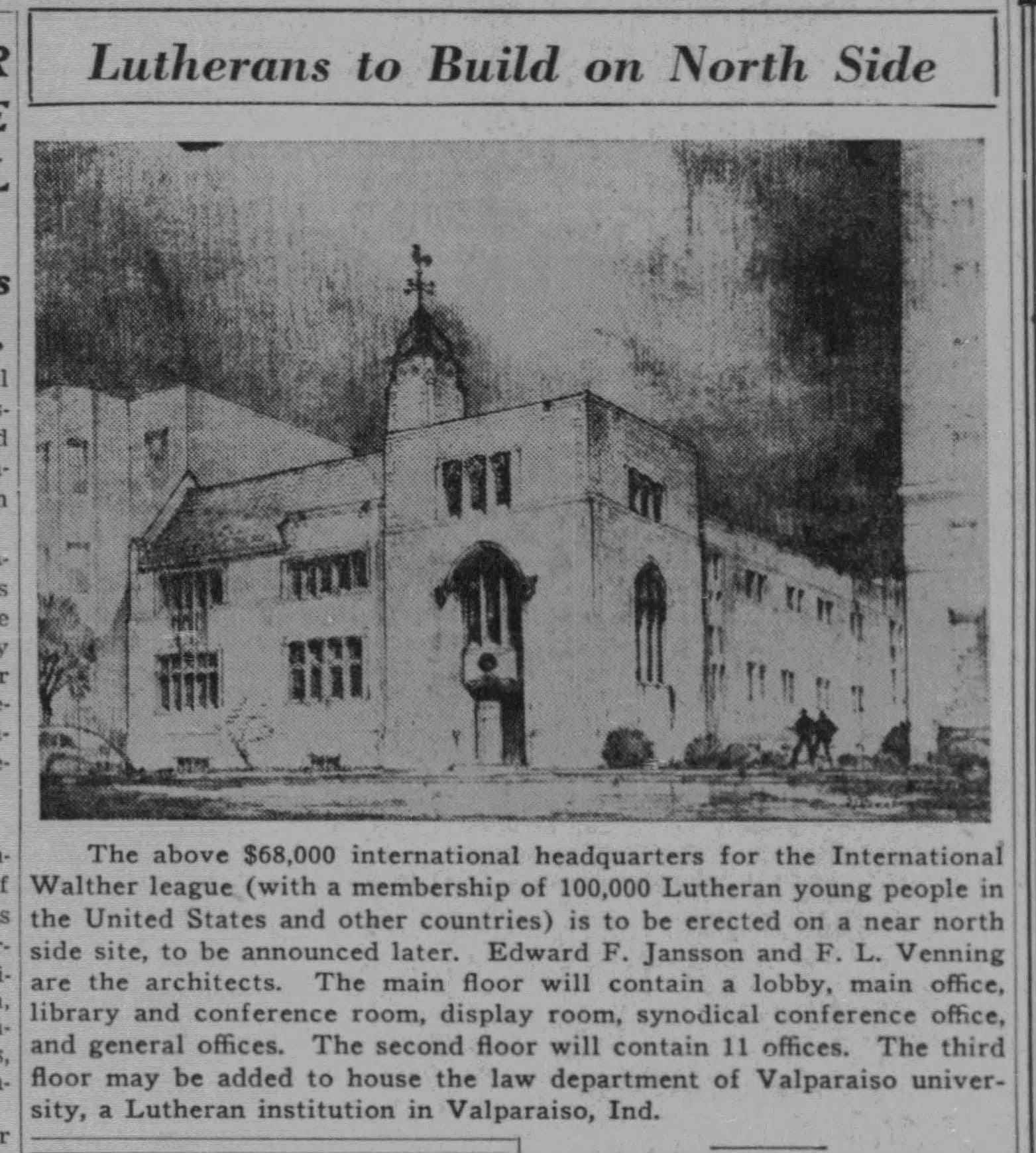
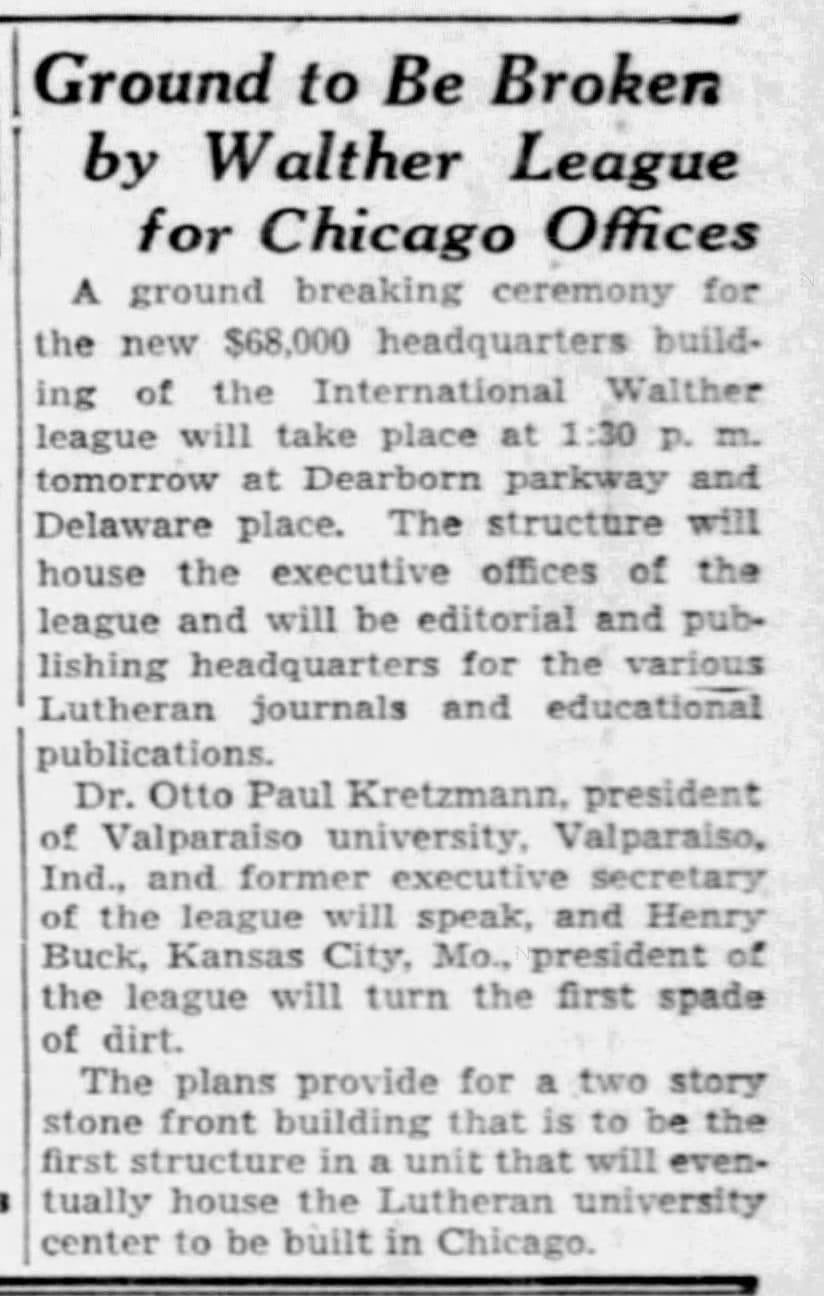
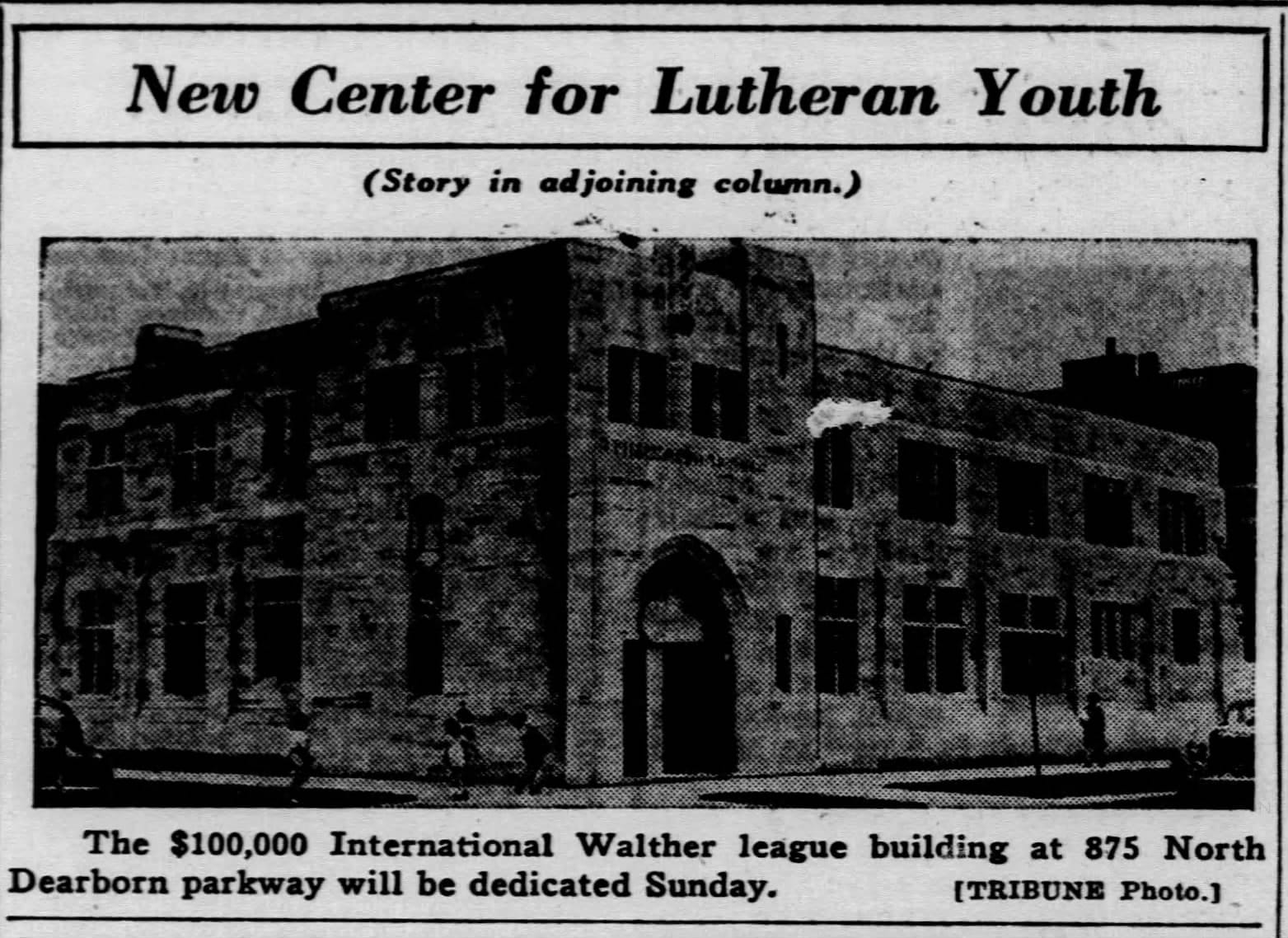
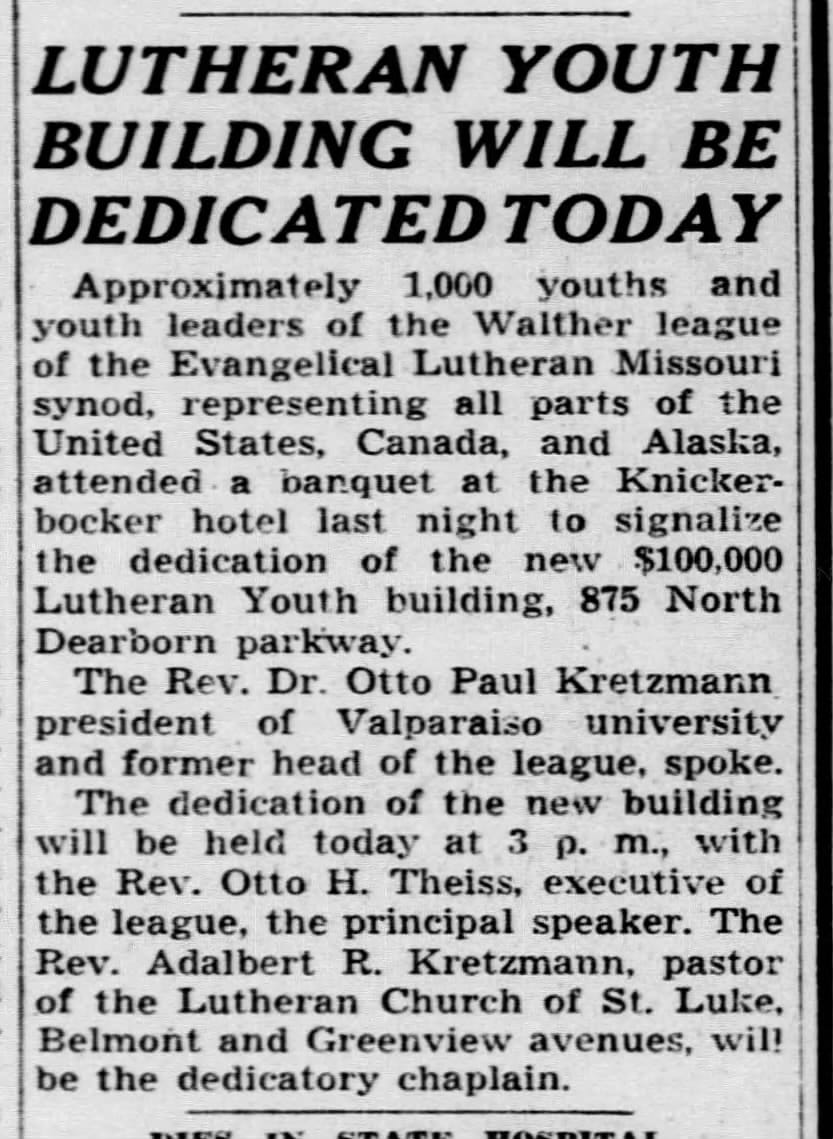
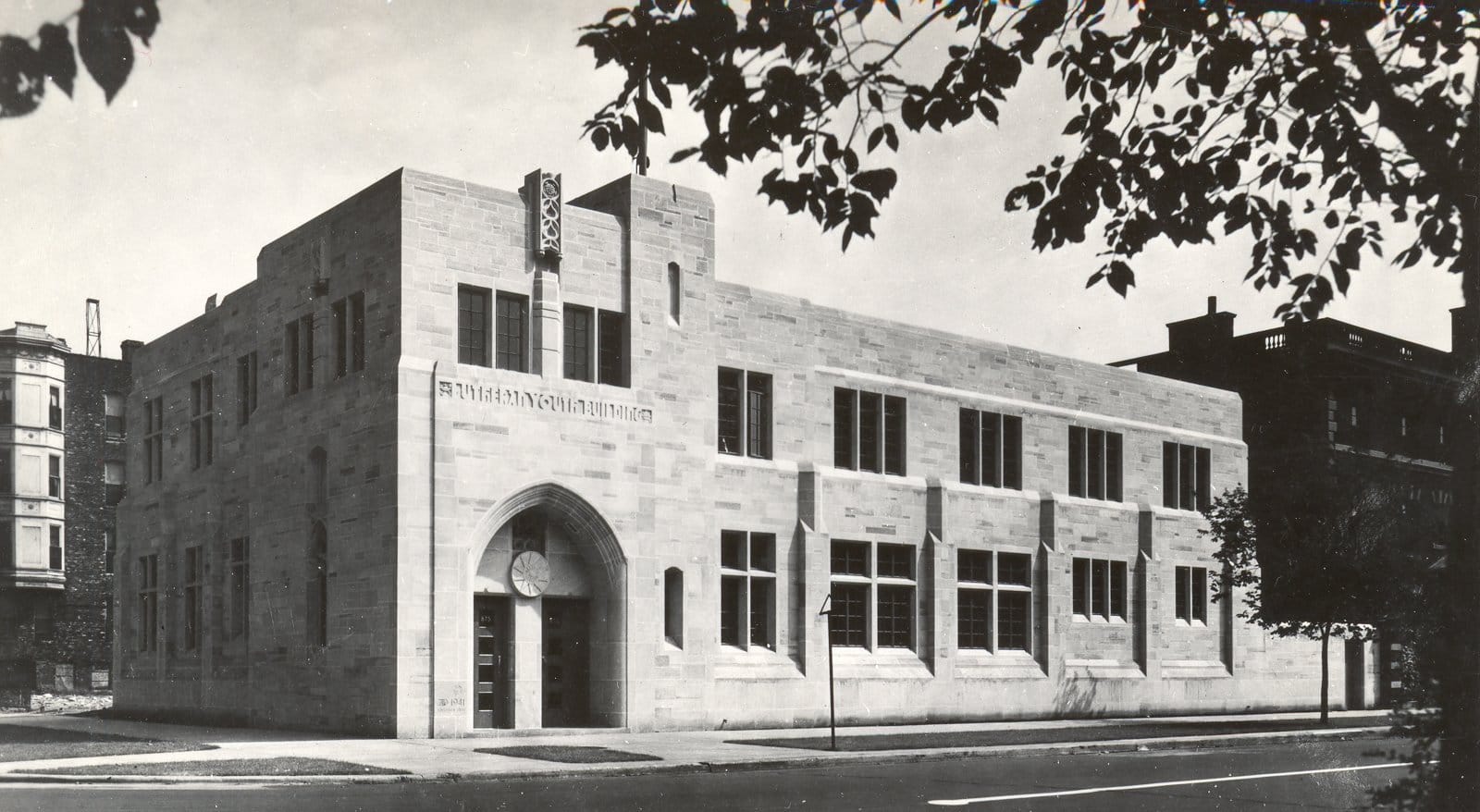
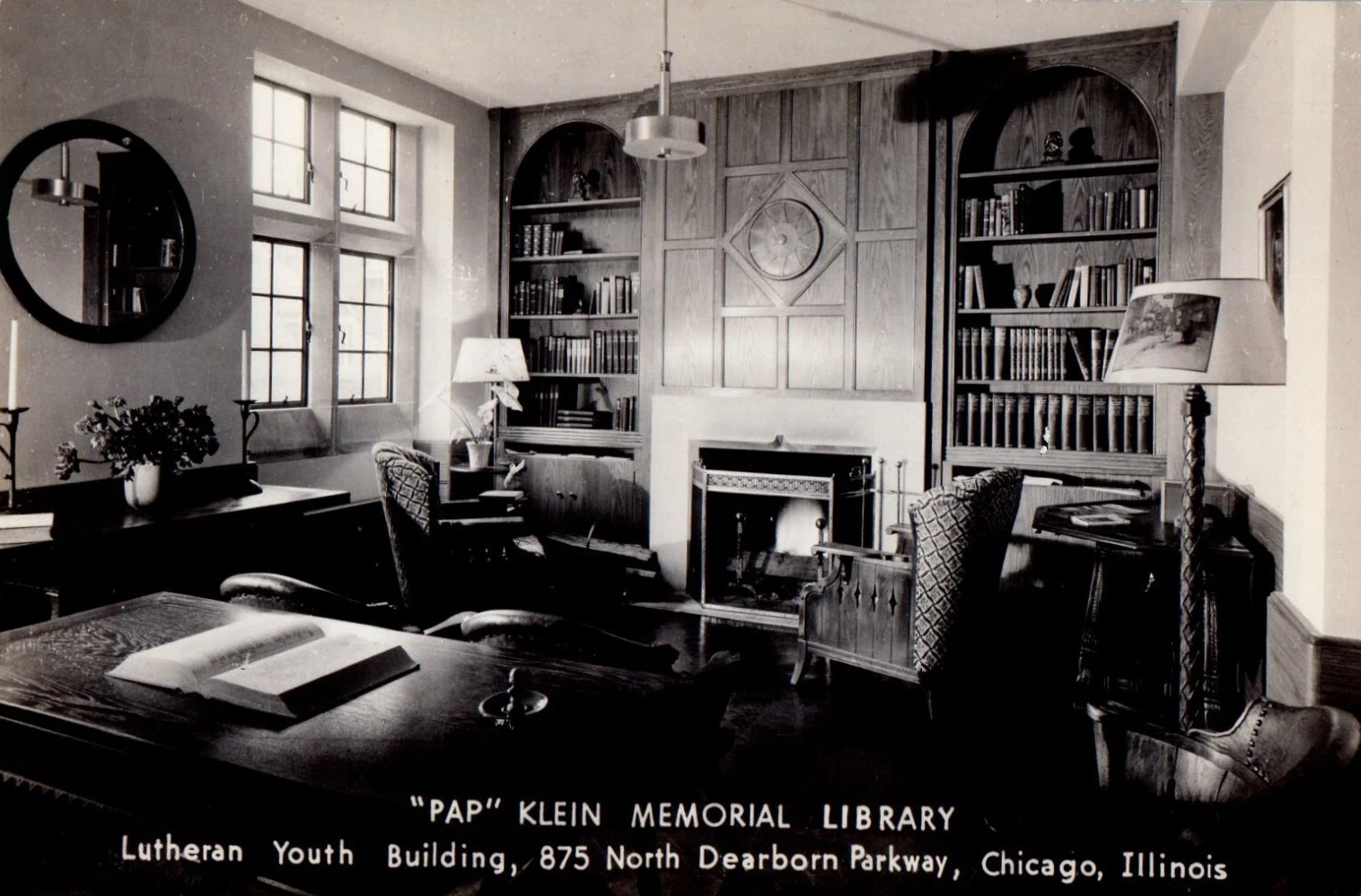
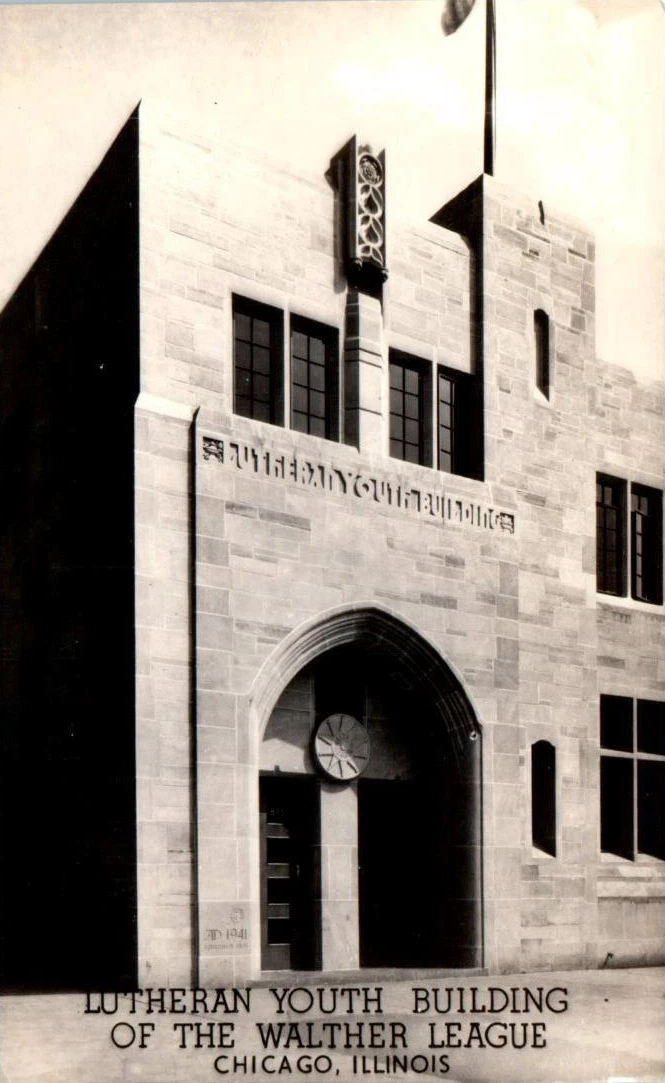
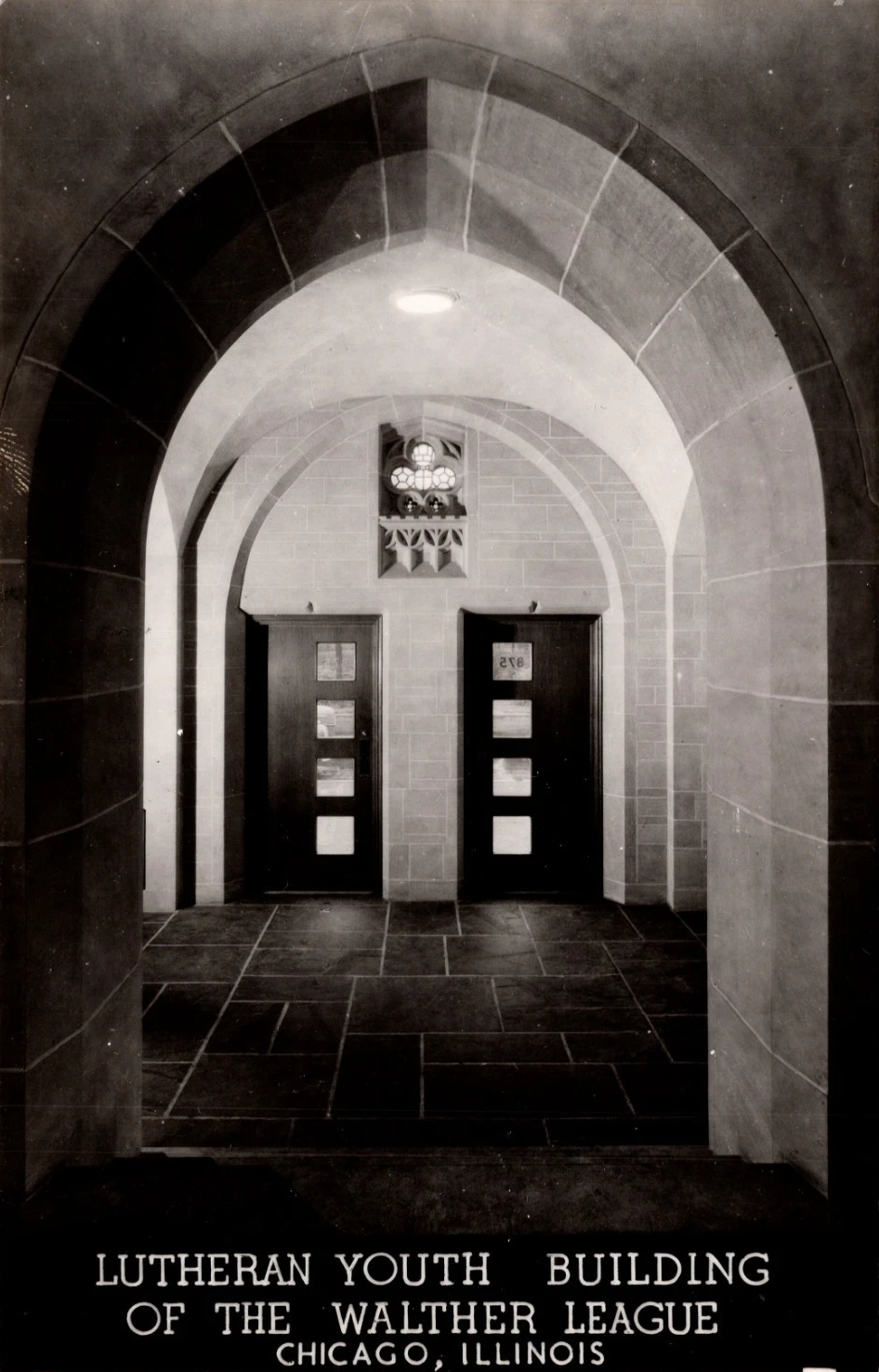
1940, plan for Walther League HQ | 1940, rendering | 1941, ground to be broken | 1942, rendering and dedication | Undated 1940s photos and real photo postcards of the building
When it opened in 1942, the Lutheran Youth Building contained offices for Walther League staff, a library, and editorial space for Walther League publications like the Messenger. The building was designed to support a never-realized addition on top, and there were also plans to open a branch of Valparaiso University on the site (the LCMS-affiliated Lutheran University Association had taken over the school in 1925).
While Walther League membership originally included everyone from teens to young adults in their mid-20s, by the 1950s and 1960s members leaned heavily towards teens and college students. As member composition grew younger, the organization developed a sharper political focus on issues of social justice—anti-racism, peace, poverty alleviation—and a political rift opened up between the League and parts of the Synod. A high-profile symptom of the conflict was the furor that erupted around the Walther League’s decision to invite Pete Seeger, a communist folk singer, to perform at their conference in 1965. By the late 1960s, the official connection between the Walther League and the church was splintering, membership was shrinking, and in 1977 the LCMS dropped their affiliation in full. To conservative LCMS Lutherans, this was a story of liberal overreach—it’s easy to imagine them parrotting a 1960s iteration of “go woke, go broke” or a religious version of “stick to sports”—but the Walther League had been politically engaged from the beginning.
The League had survived an enthusiastic dalliance with the Nazis in the 1930s (the Lutheran Church—Missouri Synod was most the intensely German major American religious group, which made the World Wars and the rise of the Nazis a challenge, and one that they did not handle particularly well, with the Walther League’s the Messenger publishing editorials like “Hitler Shows the Way”). If an incredibly embarrassing, multi-year embrace of Hitler didn’t dent Walther League membership growth, it’s hard to believe that an increasing focus on fighting racial segregation, the war machine, and poverty would be so detrimental to organizational health that it would destroy the Walther League within a decade. However, combine all the structural dynamics of the 1960s—a broad-based decline of chapter-based organizations, old-guard institutions struggling to absorb growing youth activism—with a portion of conservative LCMS Lutherans turning away from an organization they disagreed with, and the Walther League was in trouble.
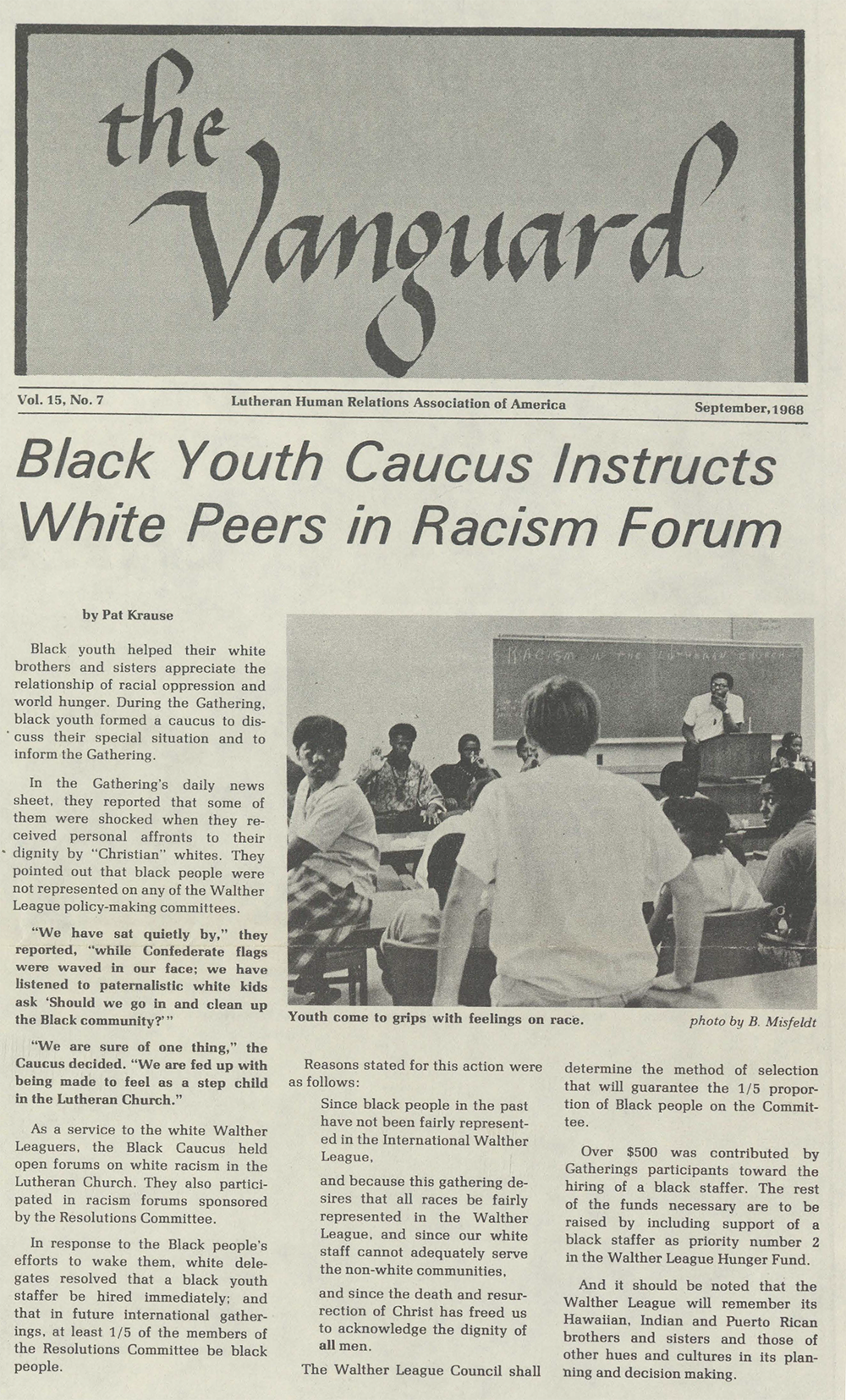
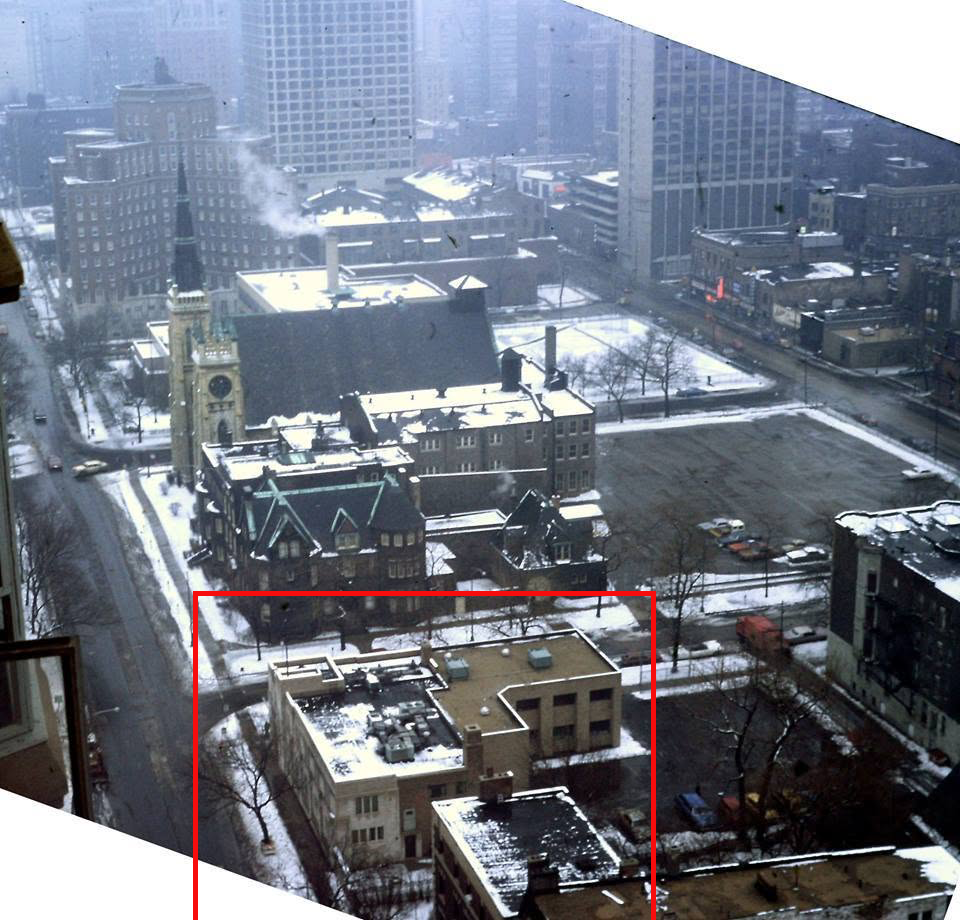
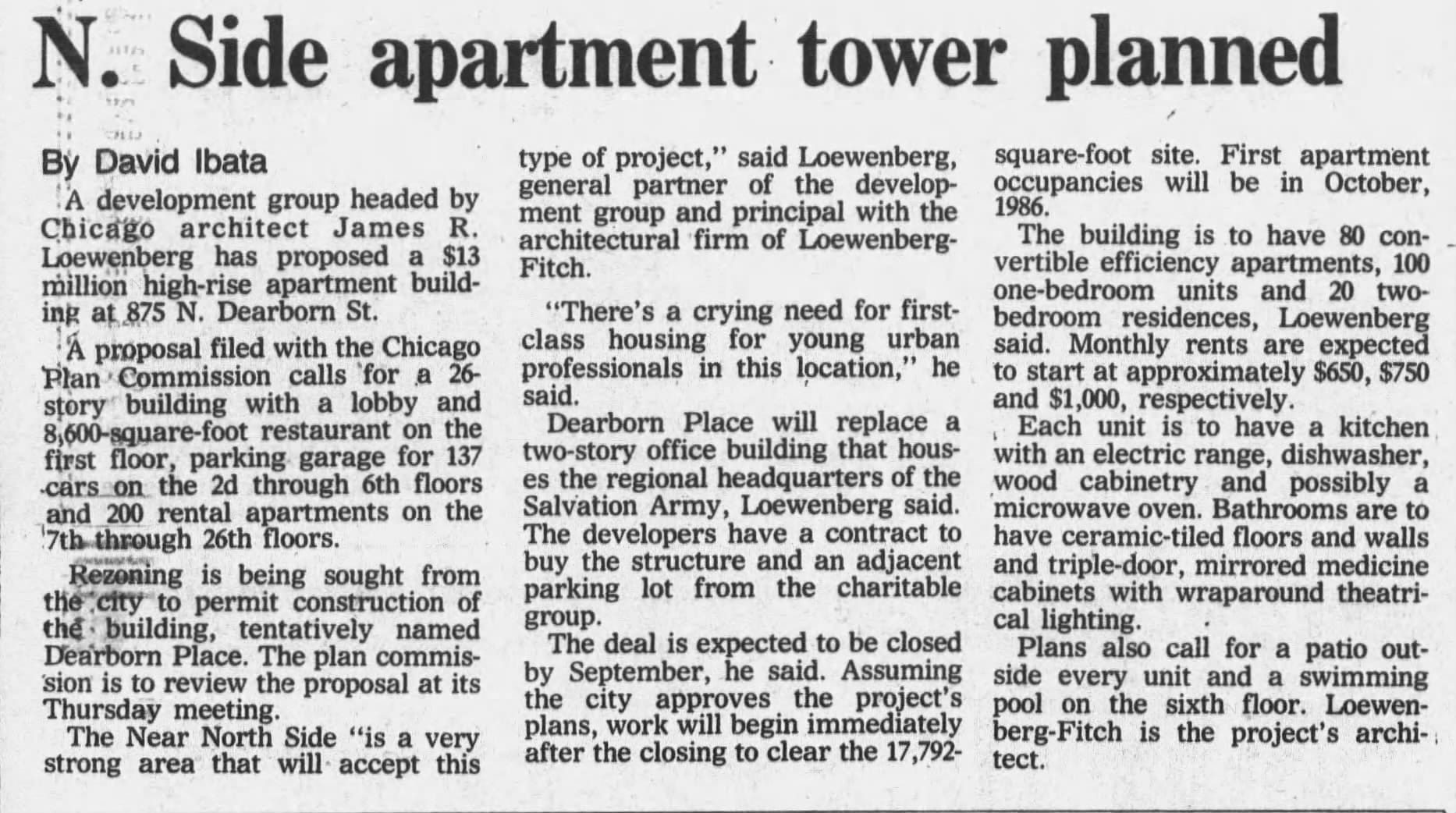
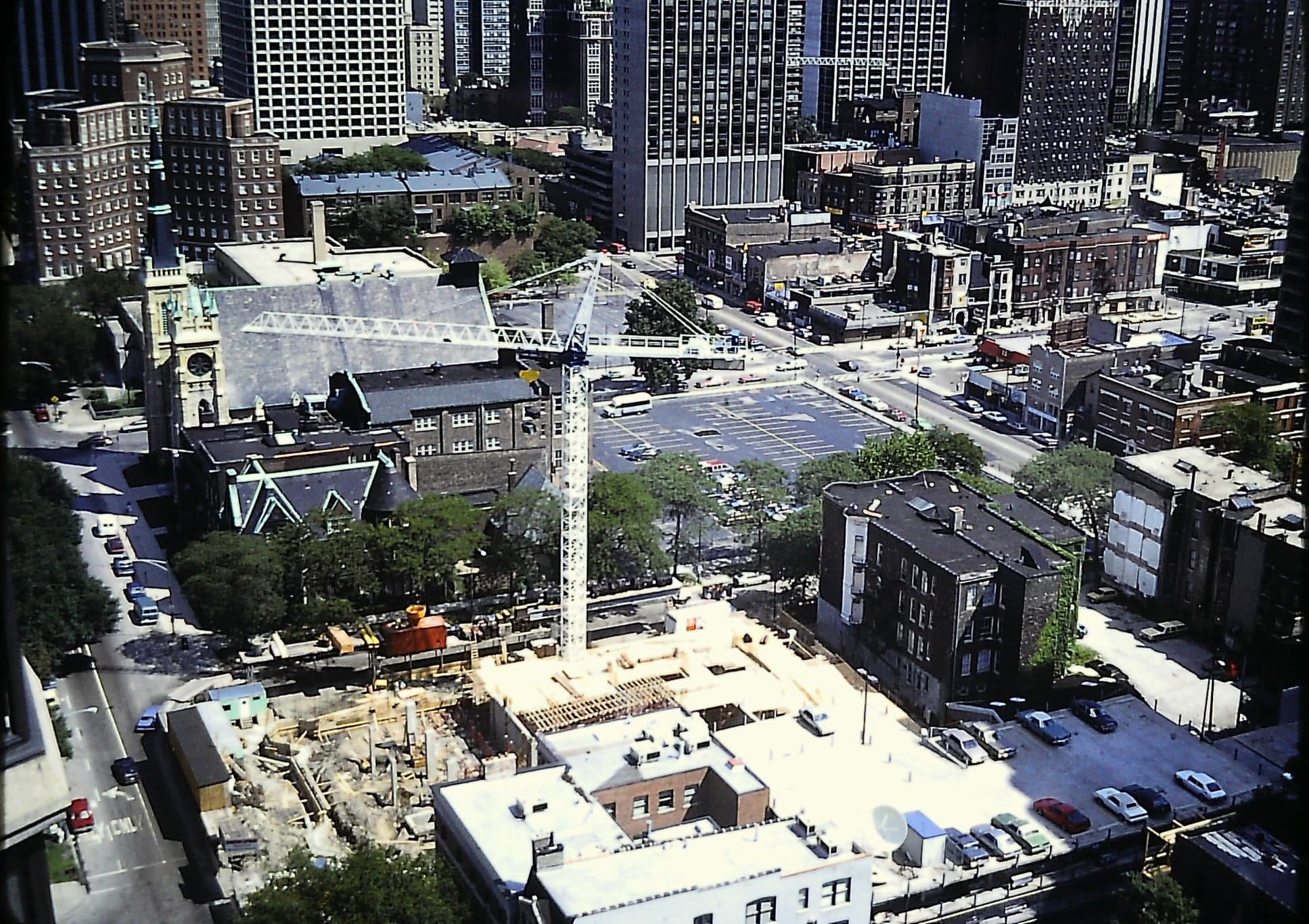
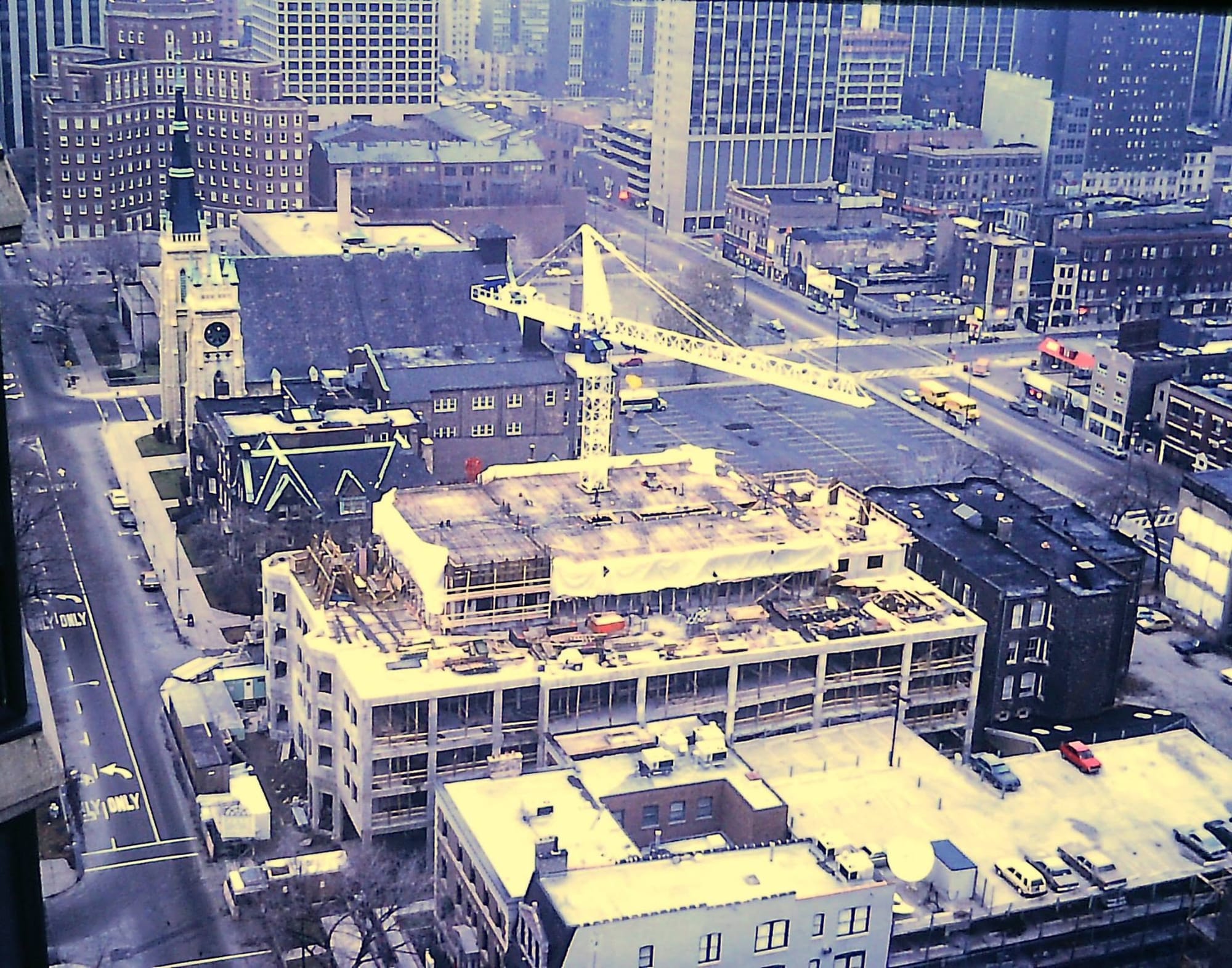
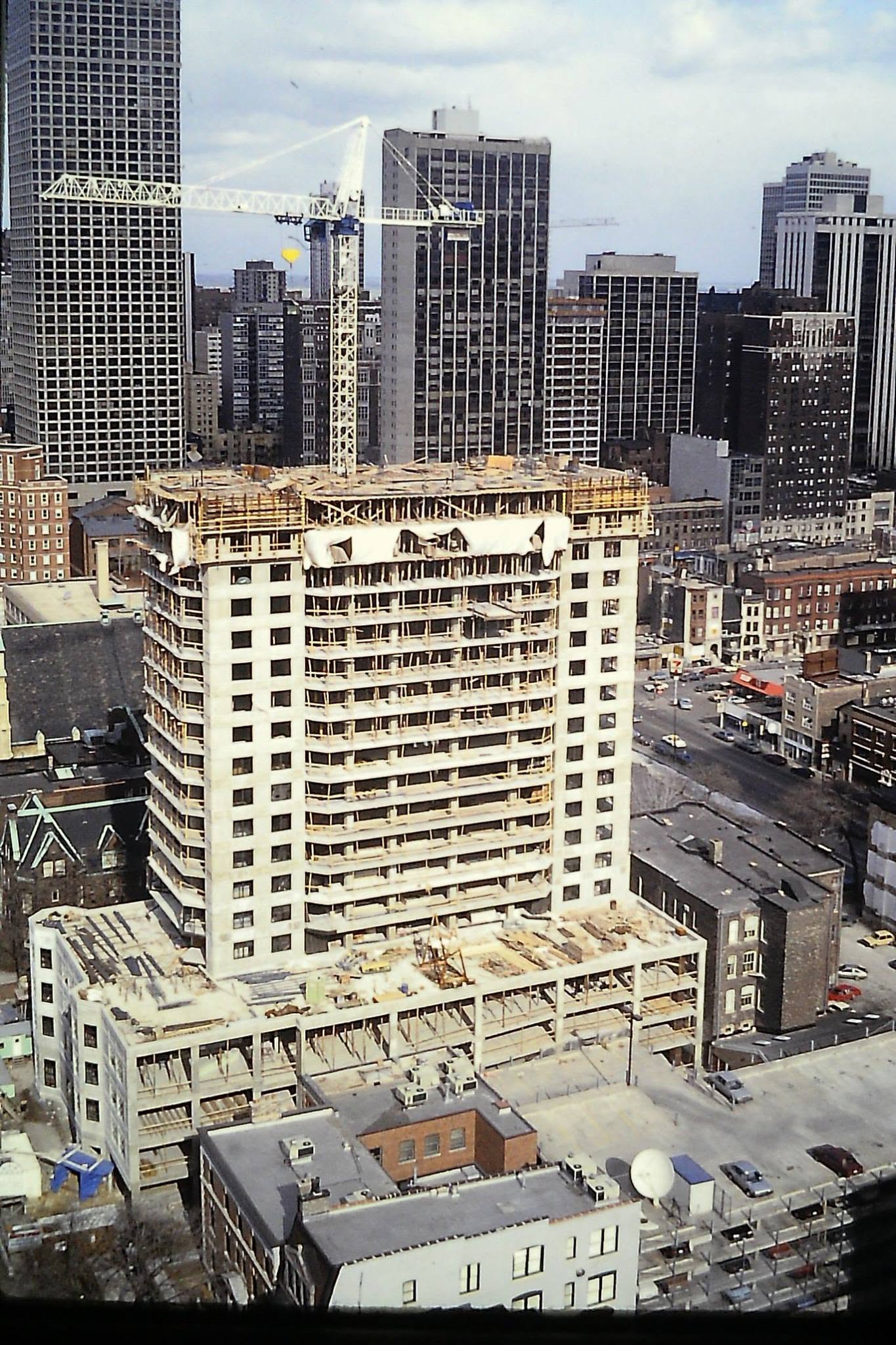
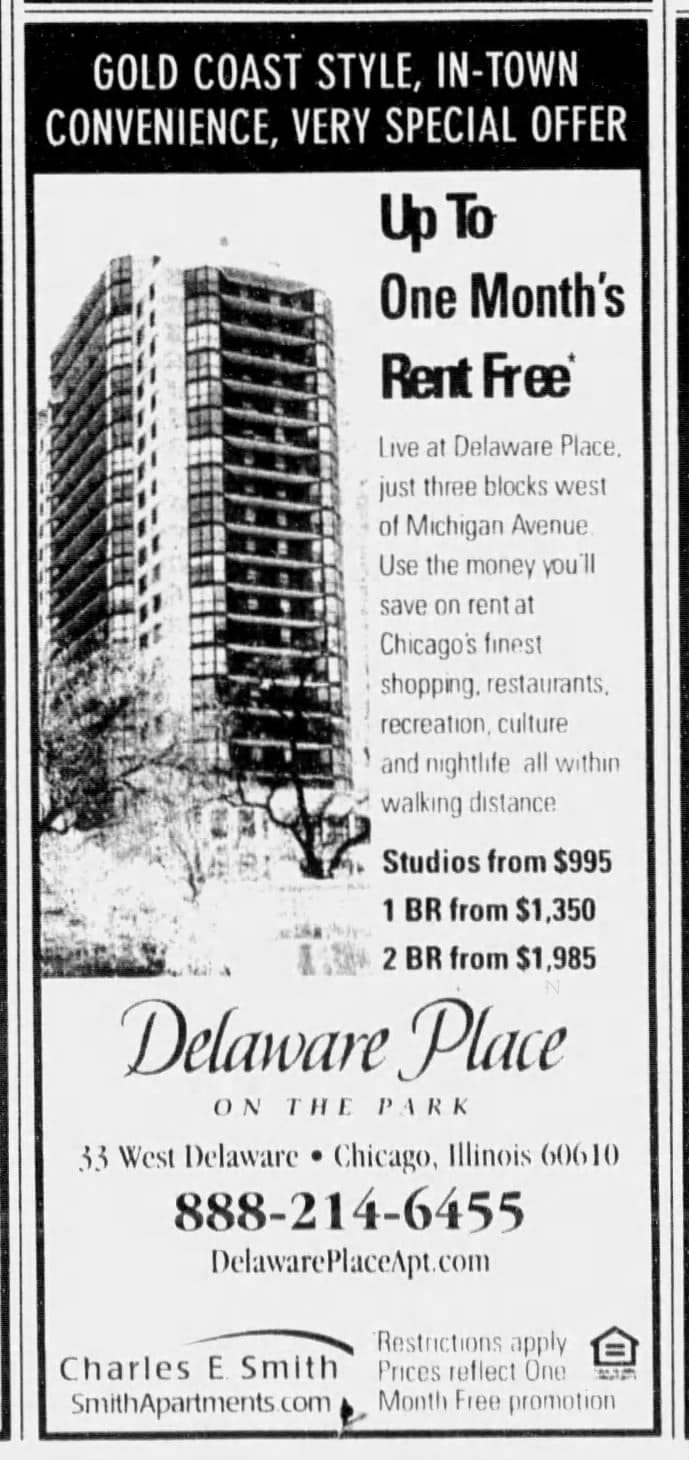
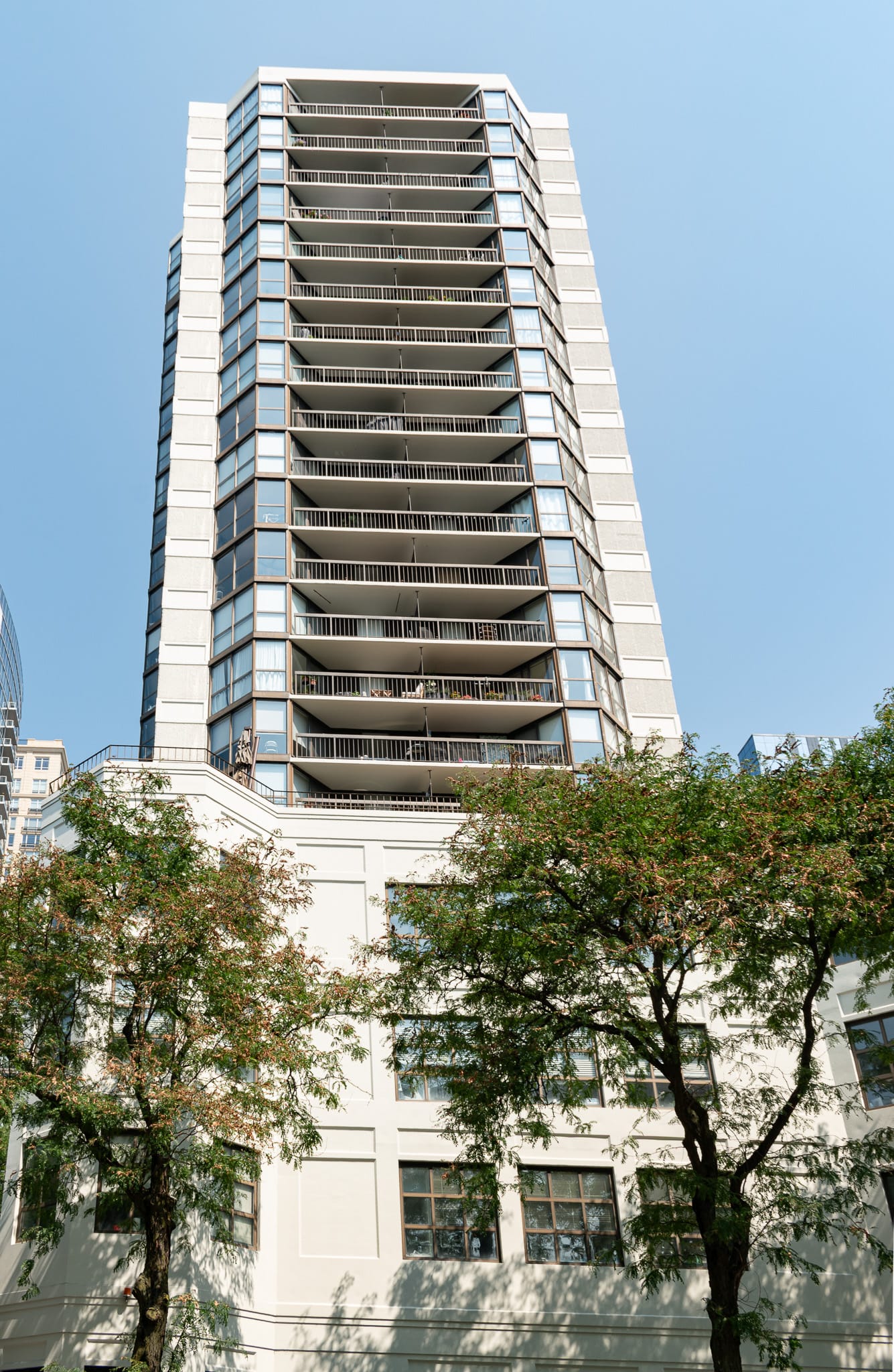
Walther League Racism Forum, 1968, The Vanguard, Valparaiso University Libraries | 1975, John P. Keating Jr. | 1985, apartment tower planned | 1986 and 1987 photos, John P. Keating Jr. | 2001 apartment ad | 2003, building sold for condo conversion | 2026
The Salvation Army bought the building from the rapidly declining Walter League in 1971, adding to its expansive real estate holdings in the area, which included a large housing complex across the street. They used the old Lutheran Youth Building to house offices for their regional headquarters for fifteen years before flipping the building in 1985 to developer James Loewenberg.
A prolific developer responsible for building nearly 40,000 residential units in Chicago over the course of his career, Loewenberg’s company completely reshaped the Near North Side in the 1980s and 1990s with buildings that were financially successful but mostly critically reviled (Studio Gang’s Aqua the most notable exception). Profitable floor plans first, aesthetics and a building's effect on the streetscape second. While it was once handsome, by the 1980s the Lutheran Youth Building was small, fortysomething years old, and—given the turmoil of its last 20 years and nonprofit ownership—probably not particularly well maintained. Loewenburg was always going to knock it down.
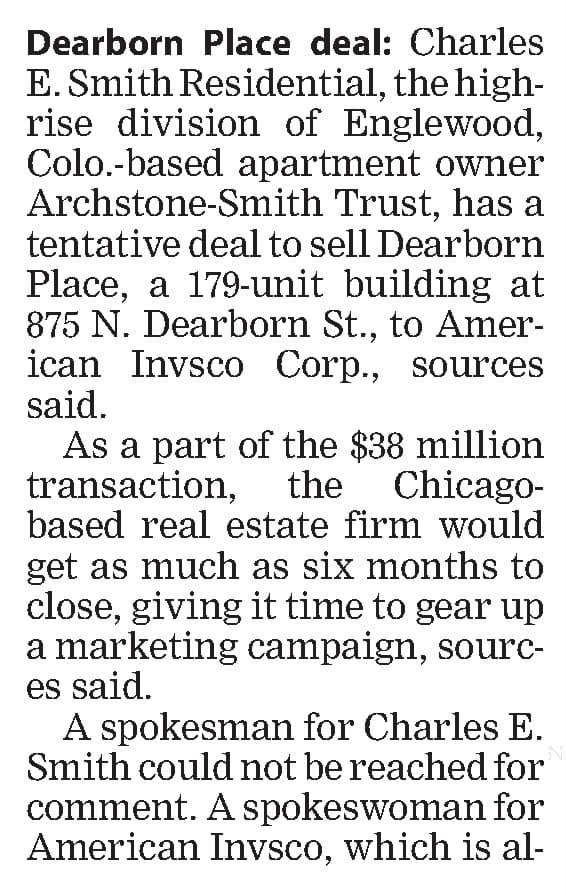
A $13m rental tower designed by the developer’s in-house Loewenberg-Fitch Architects, Delaware Place on the Park opened in 1987. A 25-story rental building with 185 apartments, rents started at $600 for studios ($1750 in 2026 dollars), $815 for one-bedrooms ($2400 in 2026 dollars) and $1,100 for two-bedrooms ($3200 in 2026 dollars). American Invsco bought the building for $38m in 2003, converted it to condos, and sold off the units.
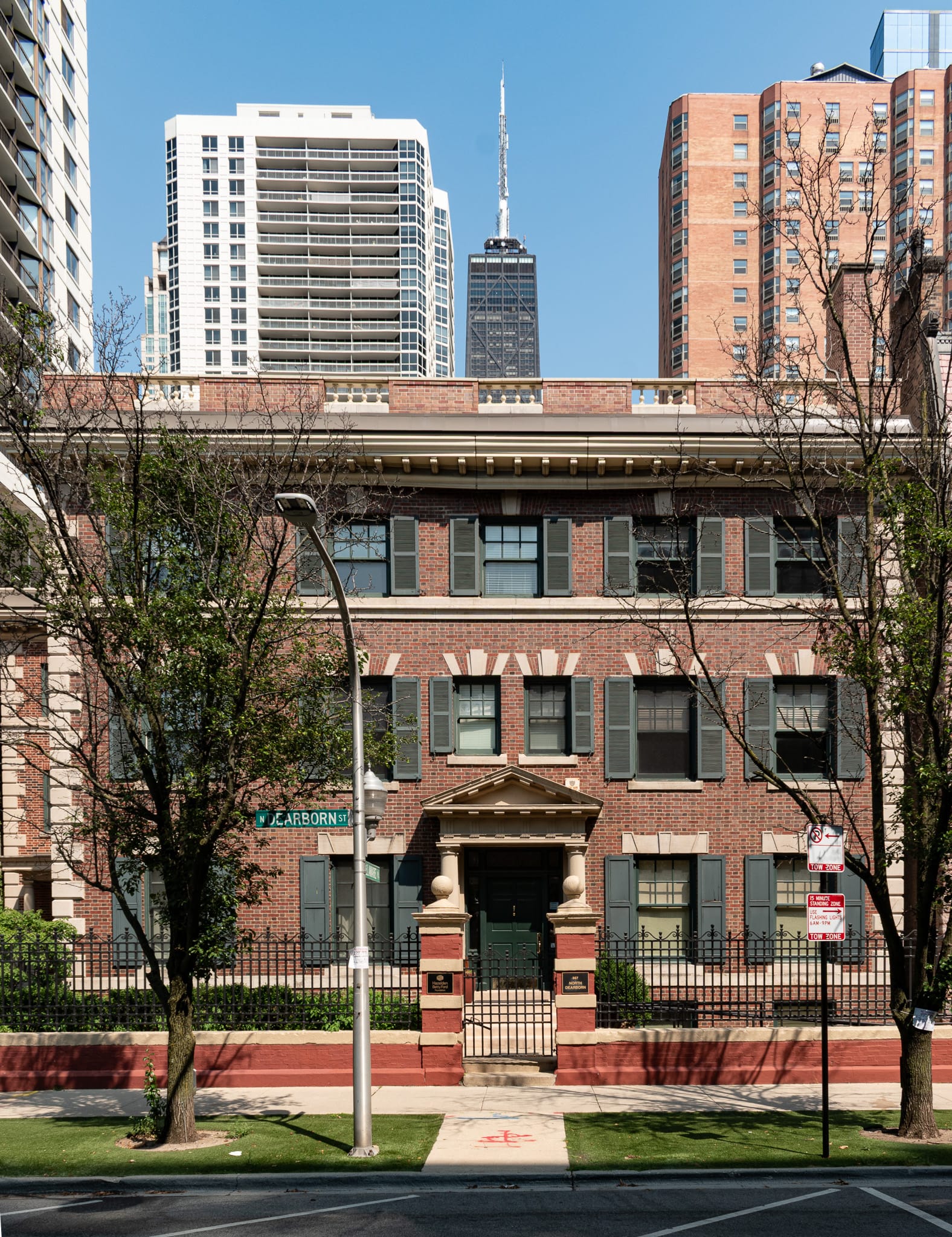
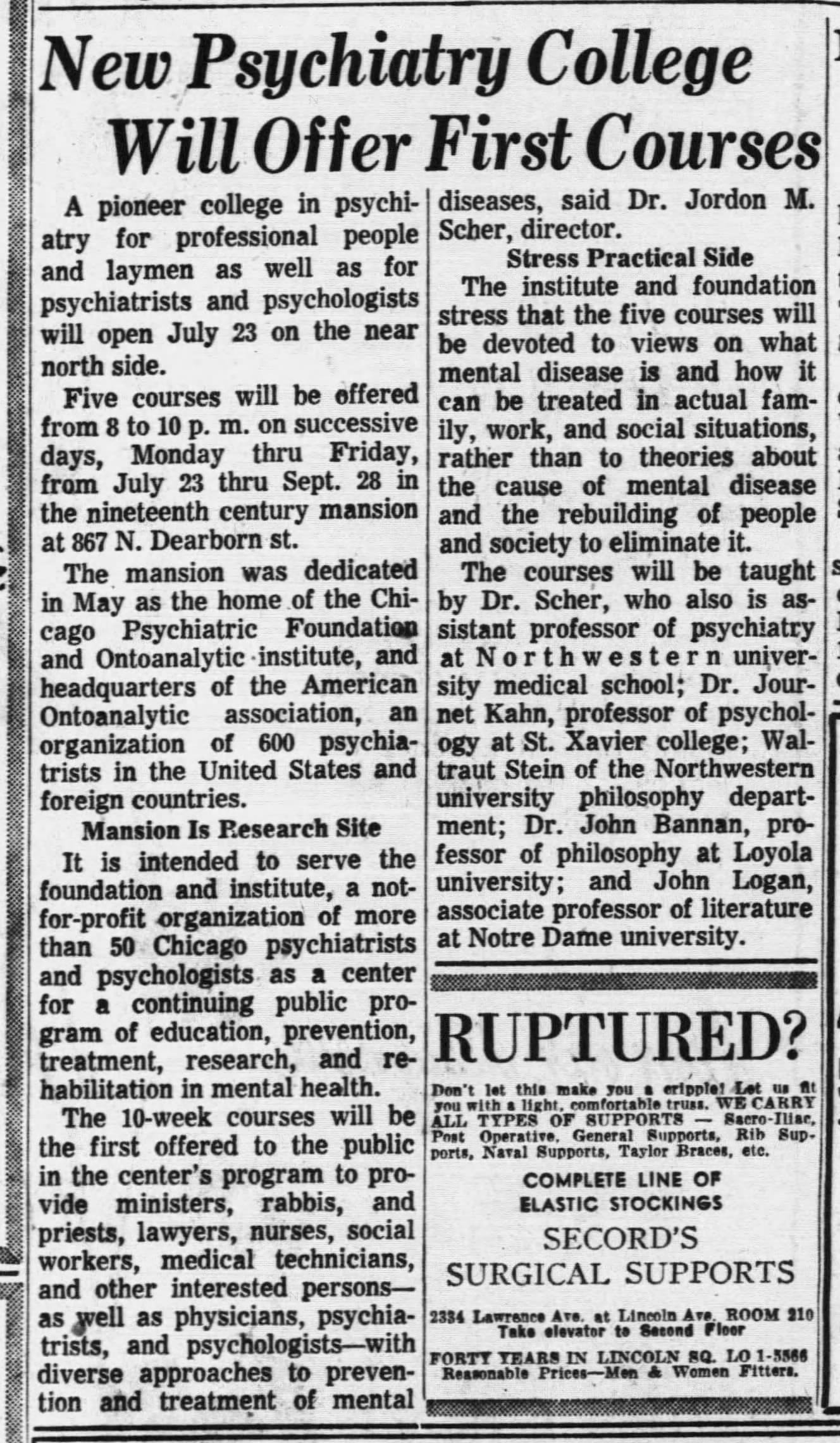
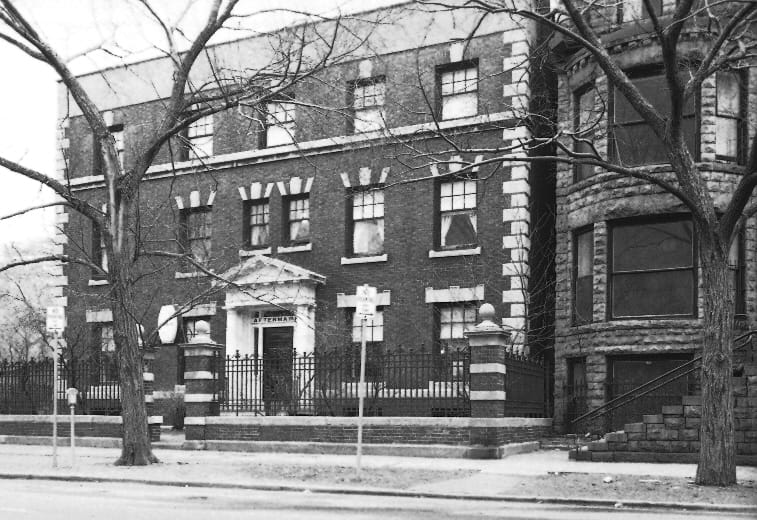
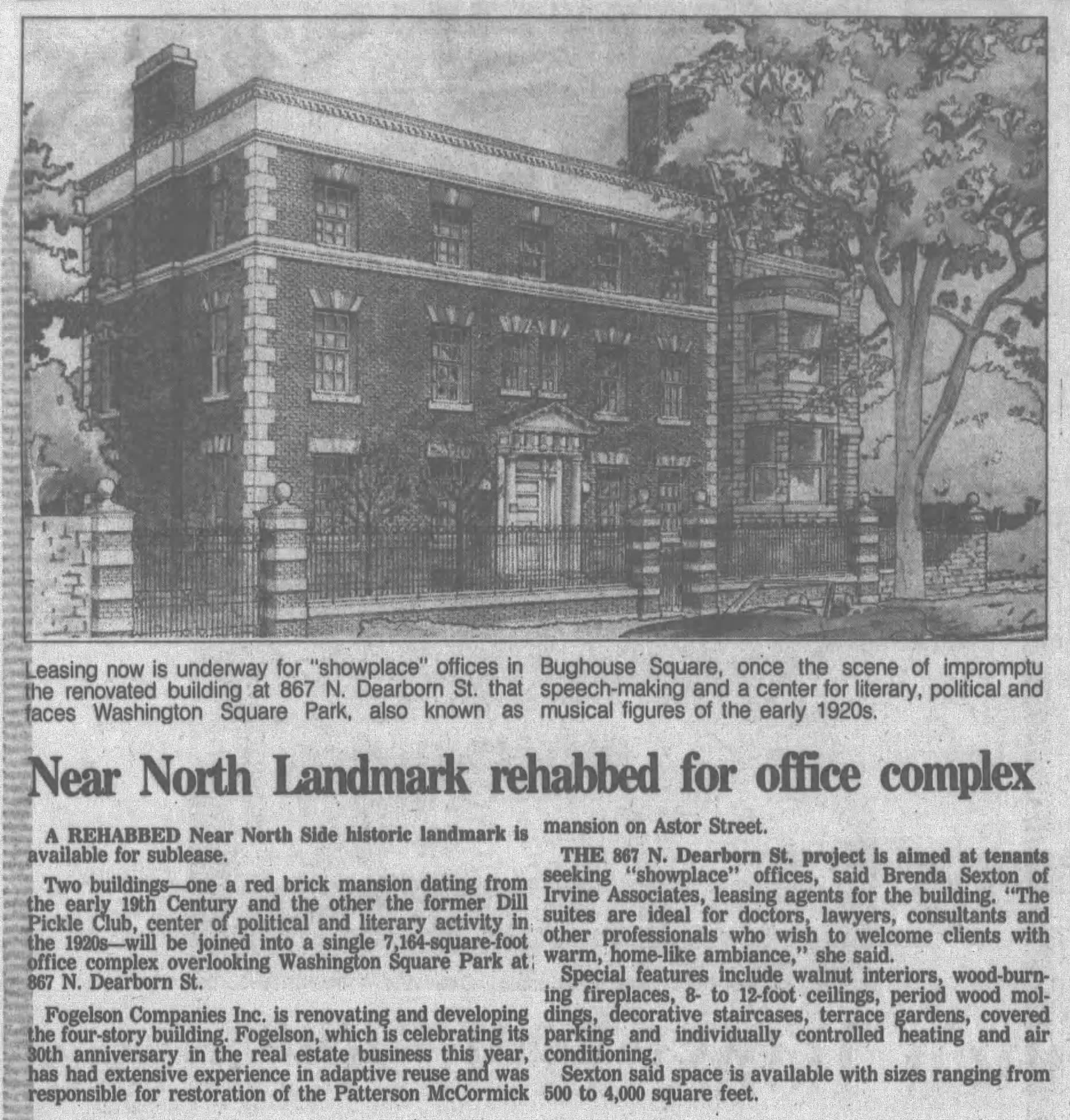
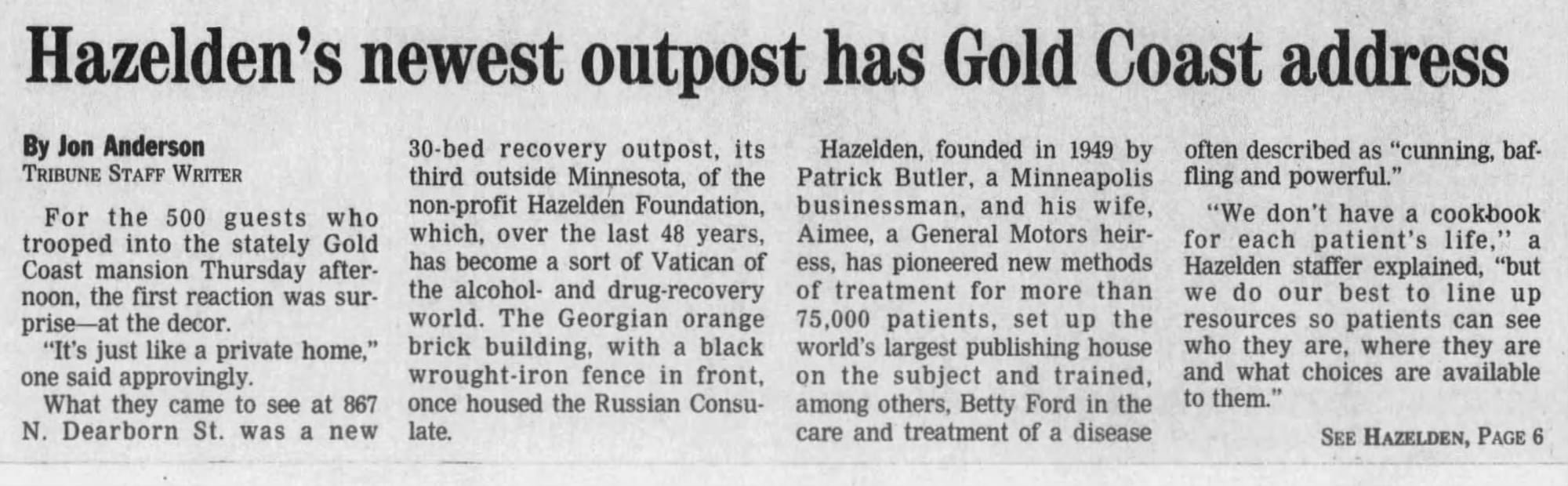
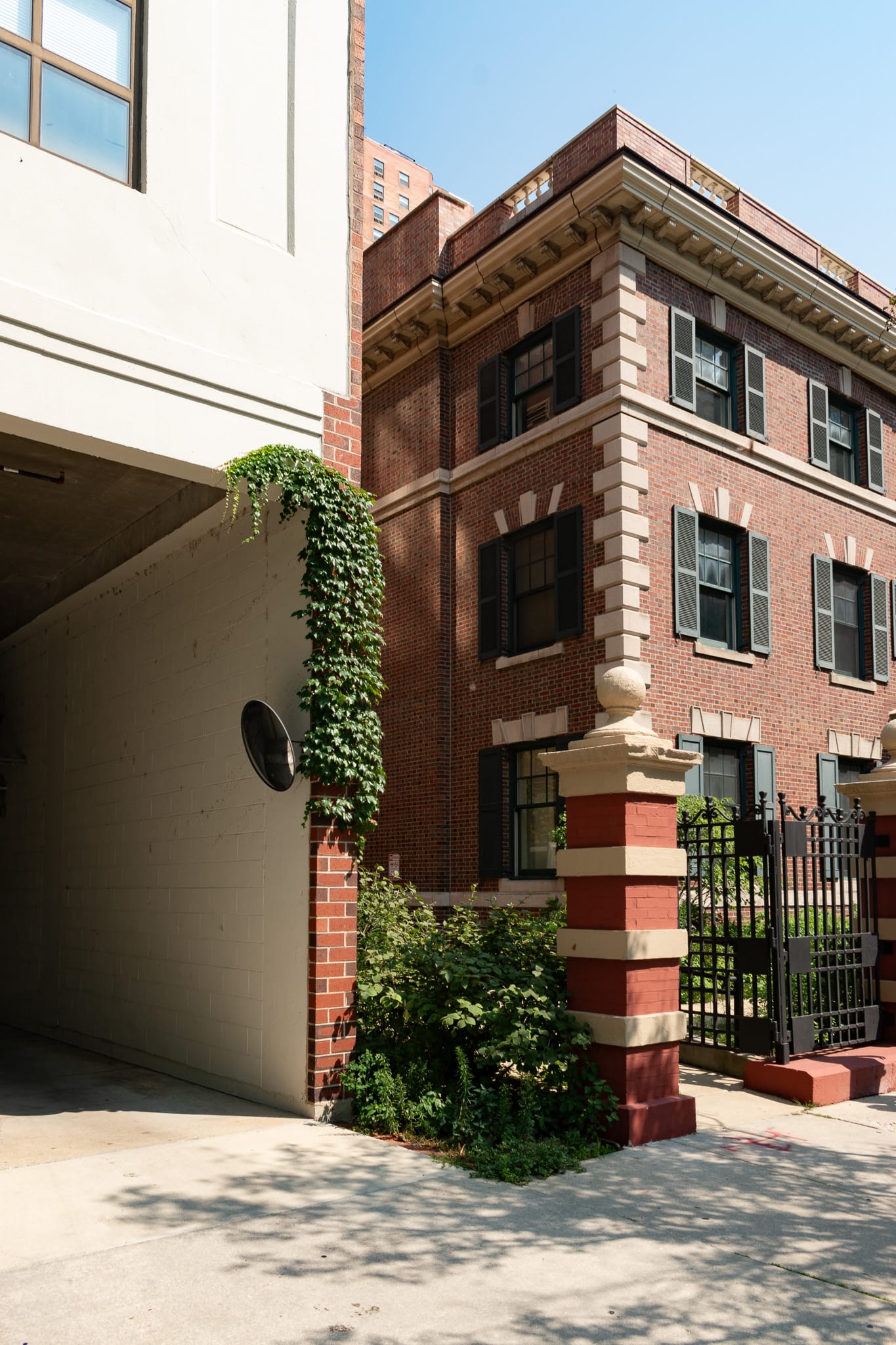
867 N. Dearborn, 2026 | 1962, psychiatrists move in | 1970s, Illinois State Historic Preservation Office | 1984, rehabbed for office use | 1997, Hazelden moves in | 2026
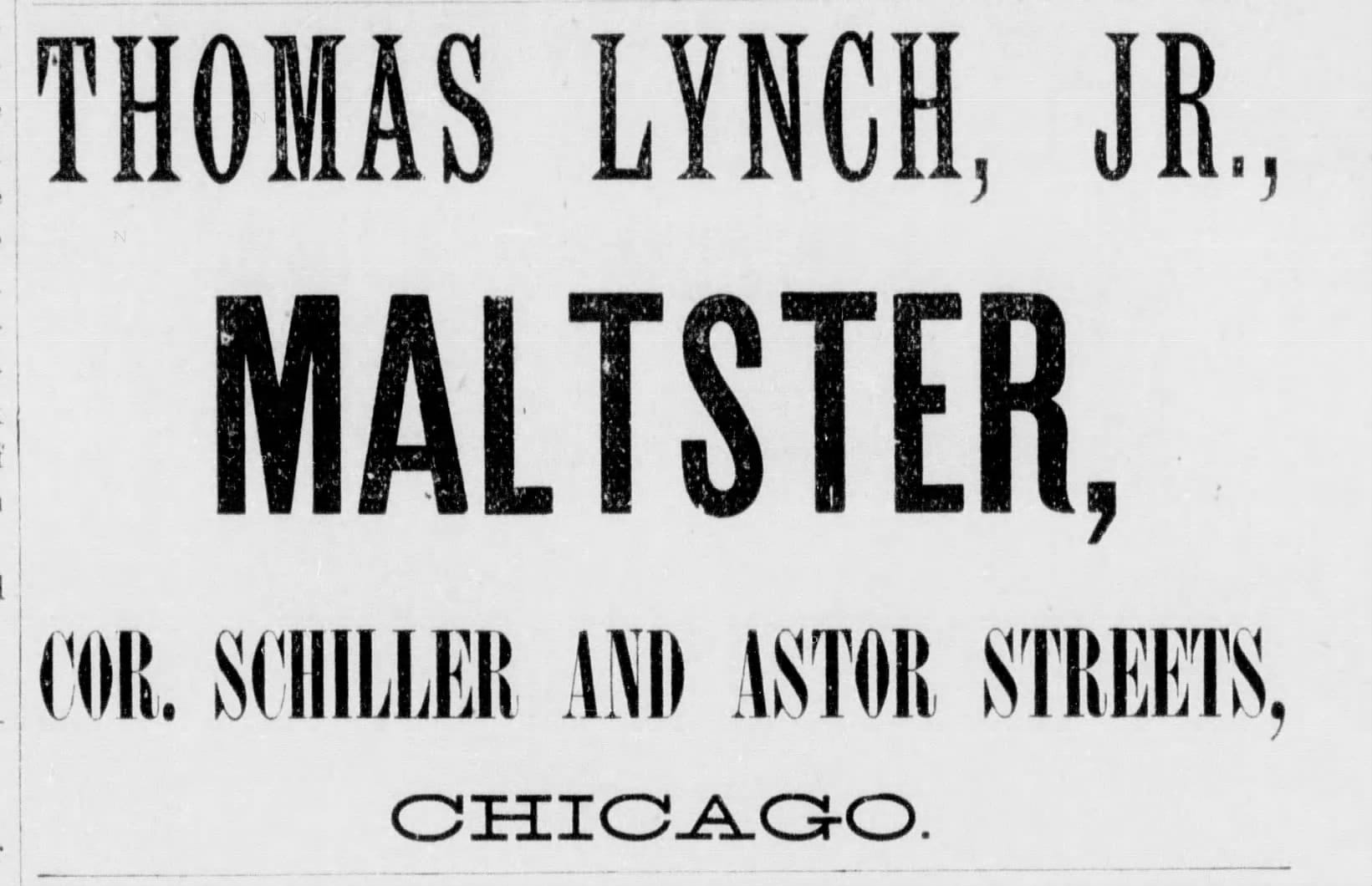
The surviving neighbor, at 867 N. Dearborn, was built in 1902 as a home for Thomas Lynch Jr., a “maltster” with a family fortune from the distilling business. Georgian Revival, it was designed by Jenney & Mundie. Over a colorful 125 years, it has housed the Consulate of the Russian Empire (well, sort of—this was in the 1910s when these things were just, like, one guy in his mansion), rubbed shoulders with the Dill Pickle Club next door as the neighborhood (“Tower Town”, then) became the Bohemian heart of Chicago, and served as the headquarters of the American Ontoanalytic Association and the Chicago Psychiatric Foundation in the 1960s. Included as a contributing structure in the National Register of Historic Places listed Washington Square Historic District, Hazelden Betty Ford opened their Chicago Treatment Center here in 1997, at the time a 30-bed inpatient rehab facility. Hazelden Betty Ford is still there 30 years later, operating as a dual diagnosis drug and alcohol rehab center with day treatment and intensive outpatient treatment.
1910 - 2015
Production Files
Further reading:
- "The Rise and Fall of the Walther League", the Lutheran Clarion, 2010
- "The Missouri Synod and Hitler's Germany" by KC Barnes
- "Evaluating the Whirlwind: The American Lutheran Theological Interpretations of Pre-war Nazi Germany" by JP Hellwege Jr
- Washington Square Historic District NRHP Nomination Form
- Oral history of Robert Paul Schweikher interviewed by Betty J. Blum, Chicago Architects Oral History Project, Department of Architecture, the Art Institute of Chicago
 Down By The Riverside – The Pipes Family Foundation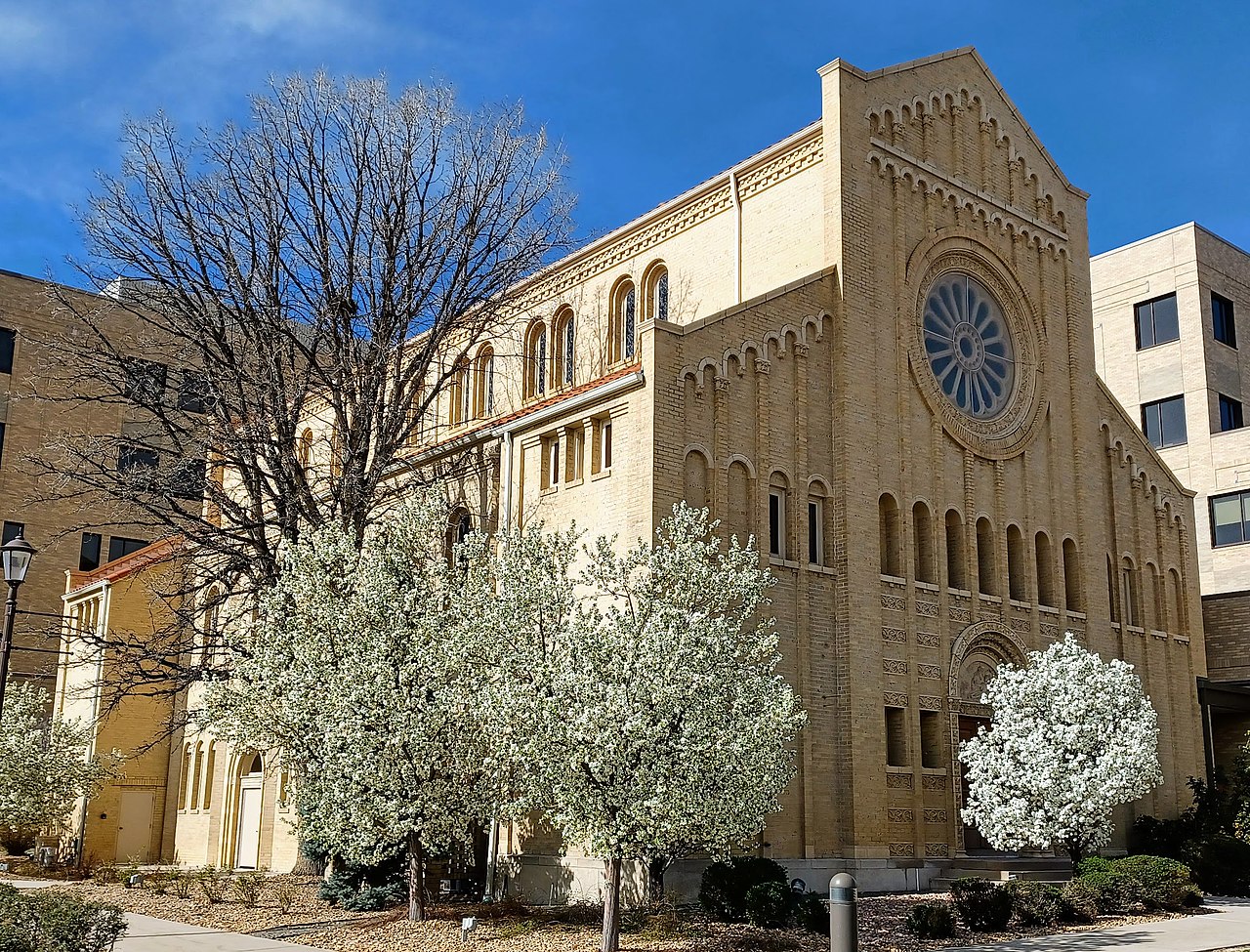
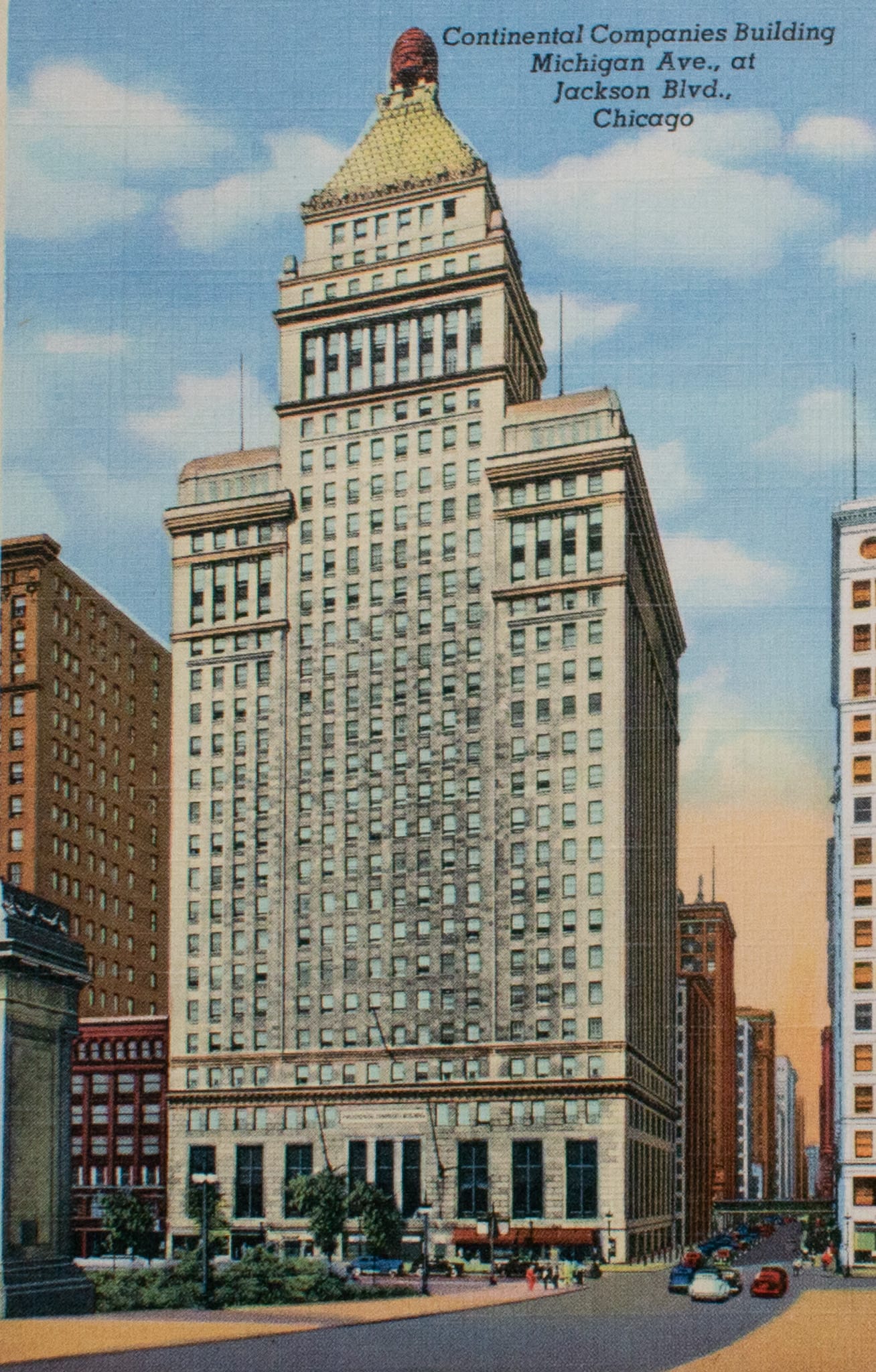
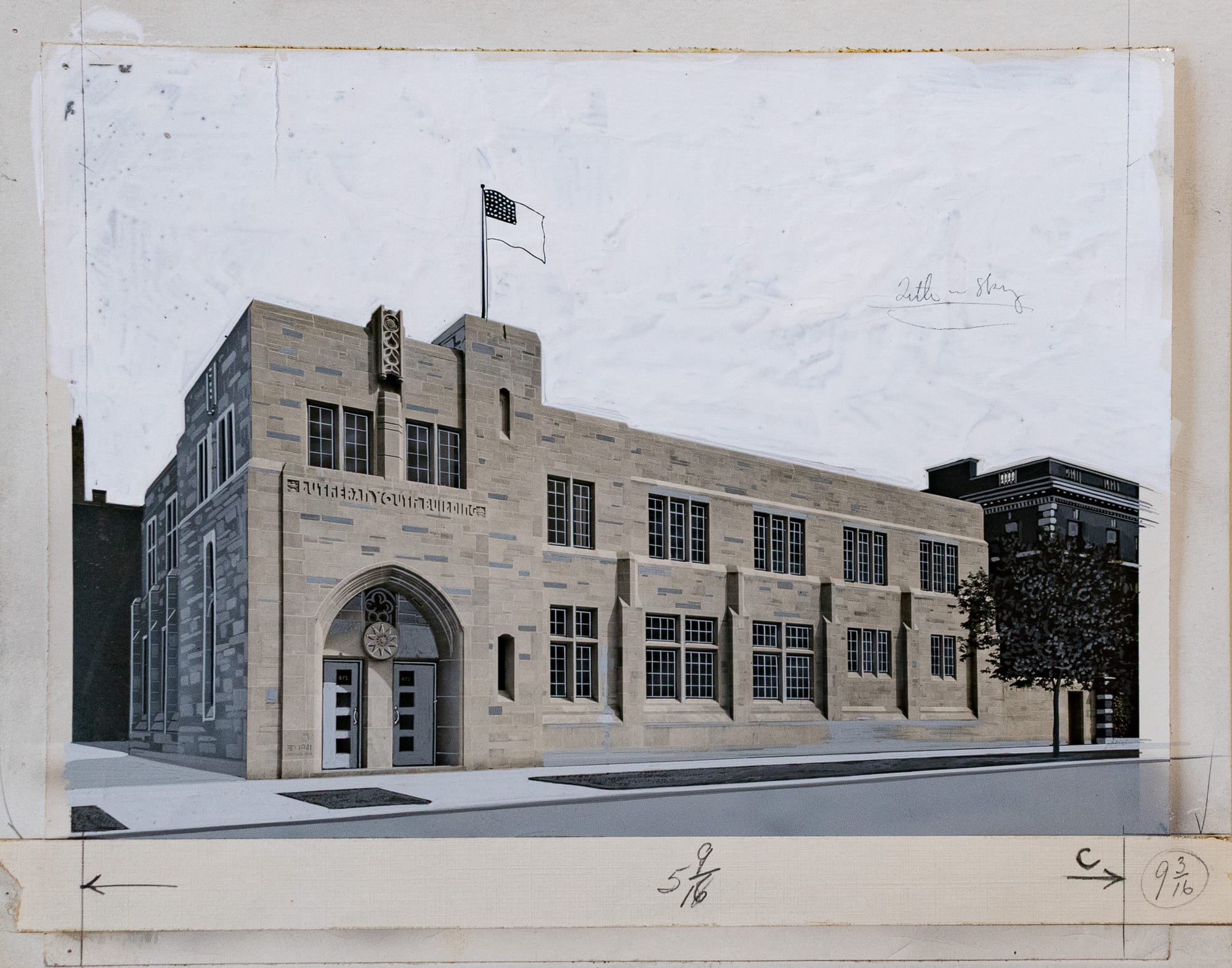
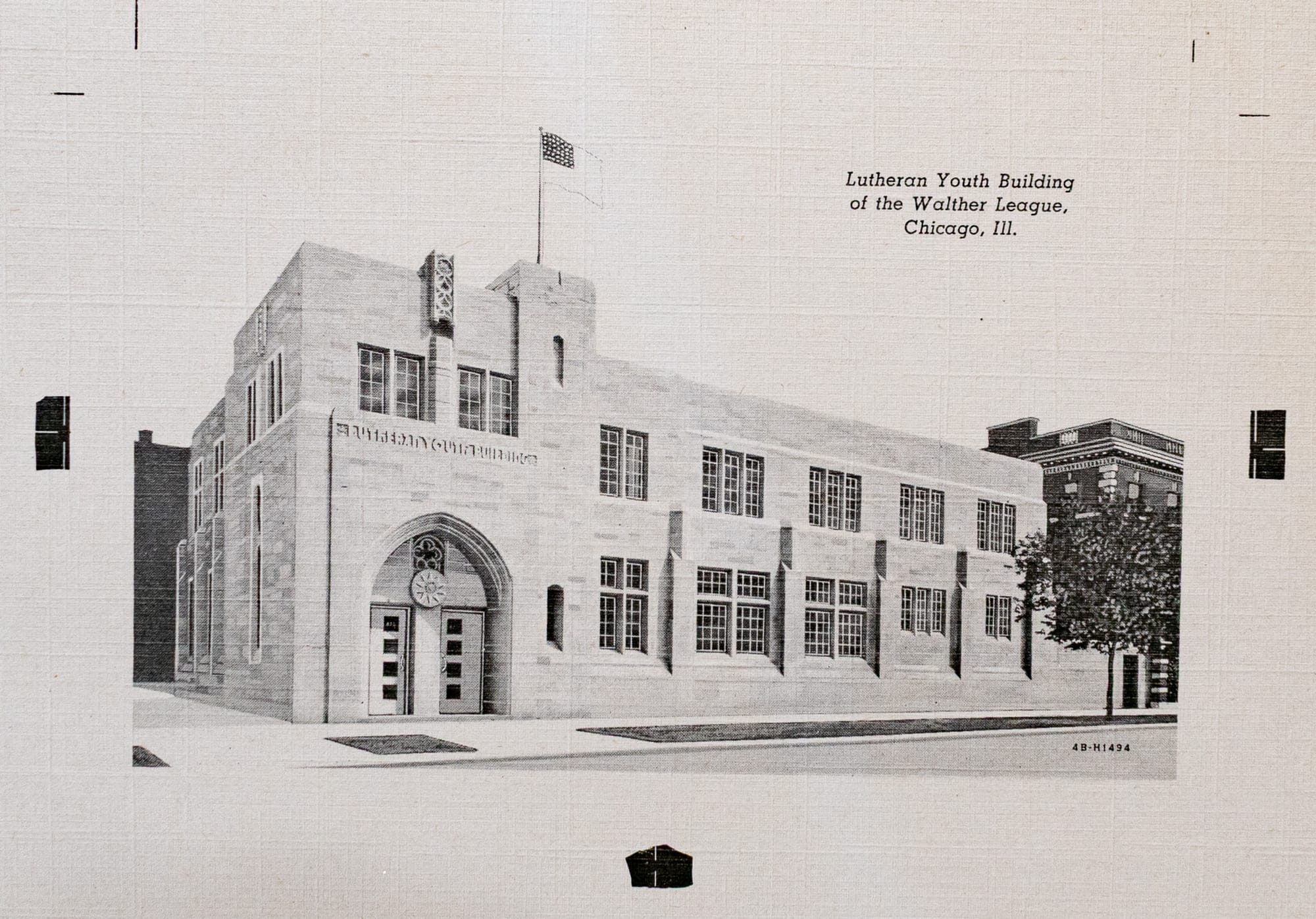
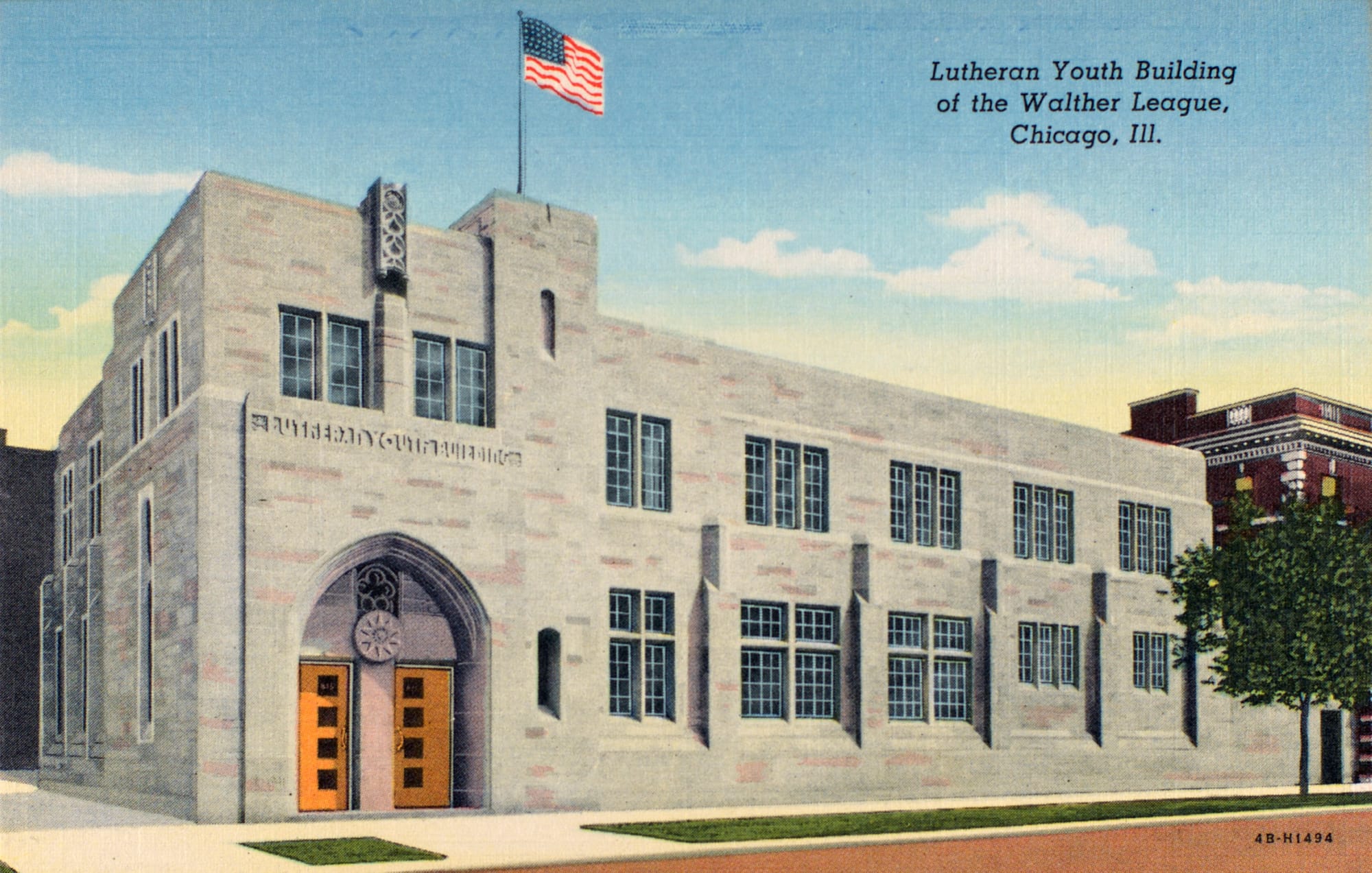
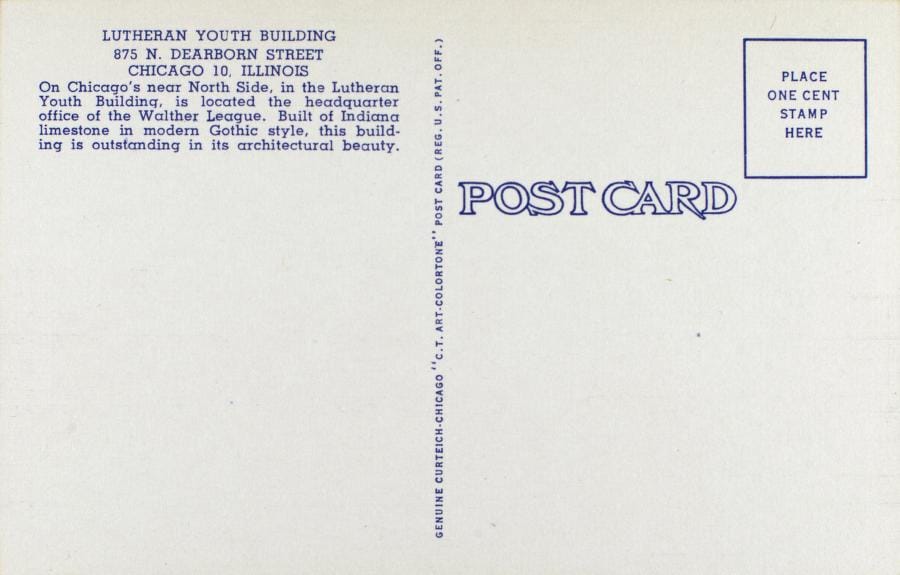
Contents of the production file from the Curt Teich Postcard Archive at the Newberry Library—this postcard of the Continental Companies Building was used as a comparison postcard and the postcard was commissioned in 1944 (so soon after the building opened).
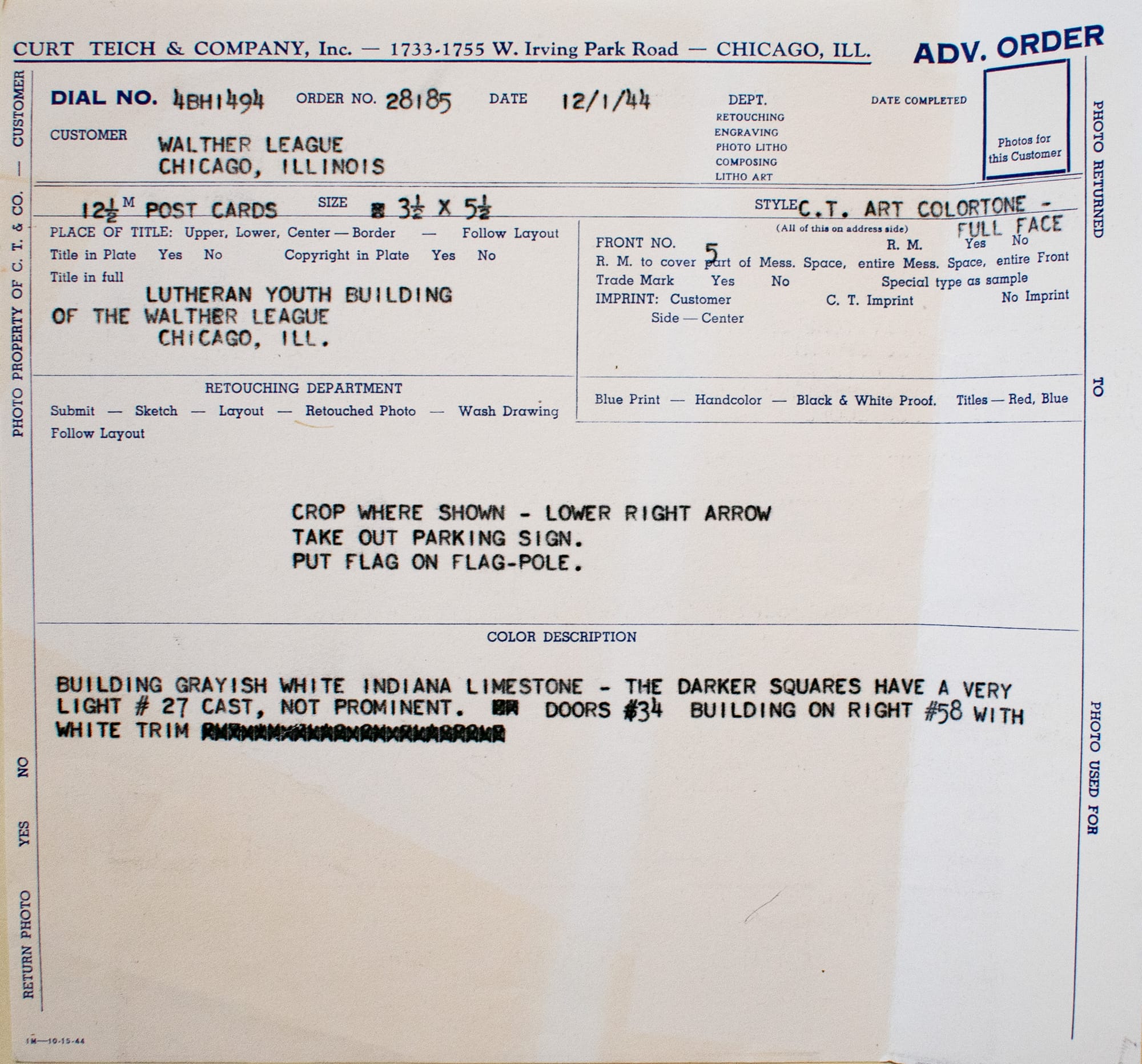
Retouching to black print proof to final product.
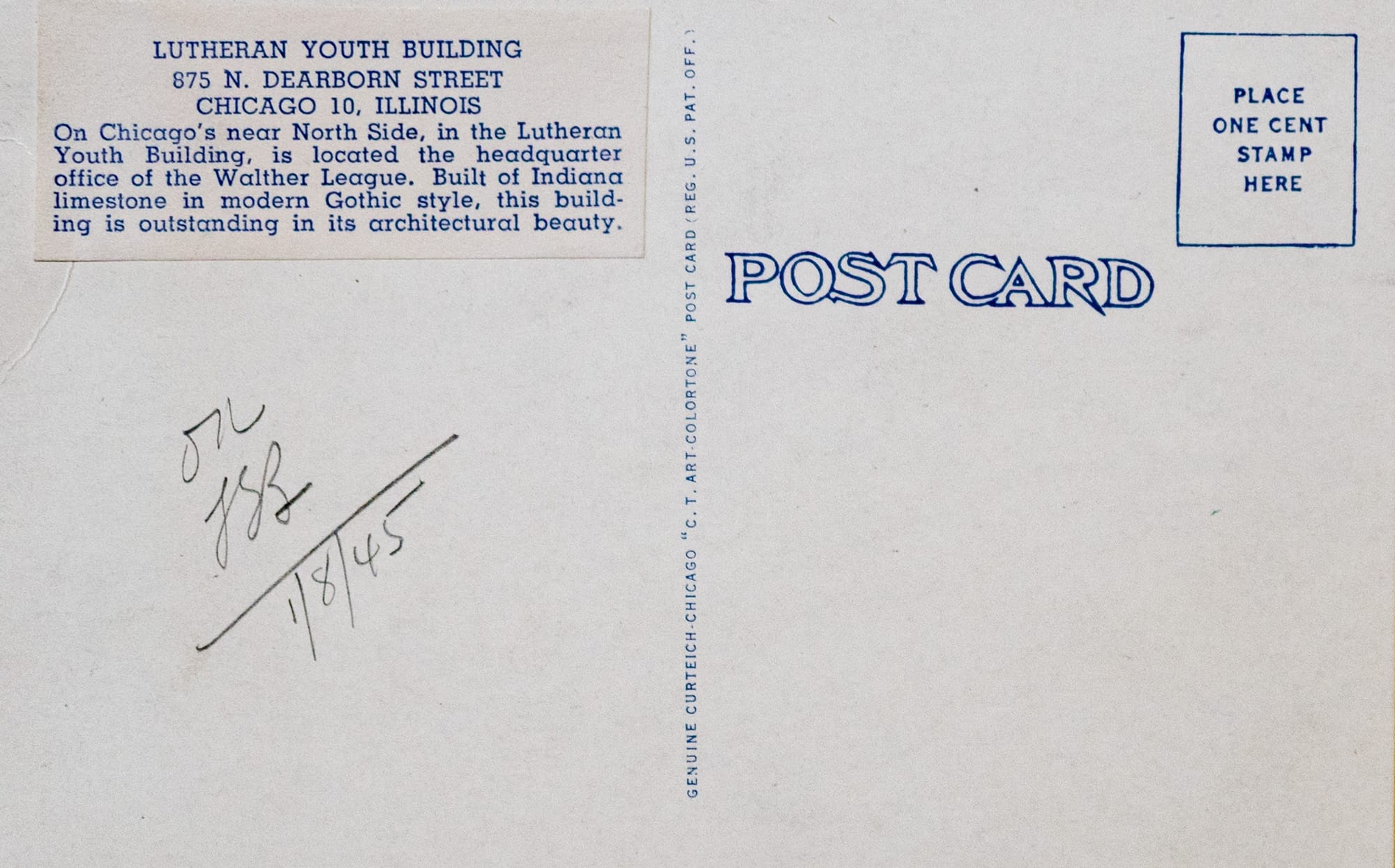
And the mockup and final product for the postcard verso.
Some of the maps and aerials I used to make that little video.
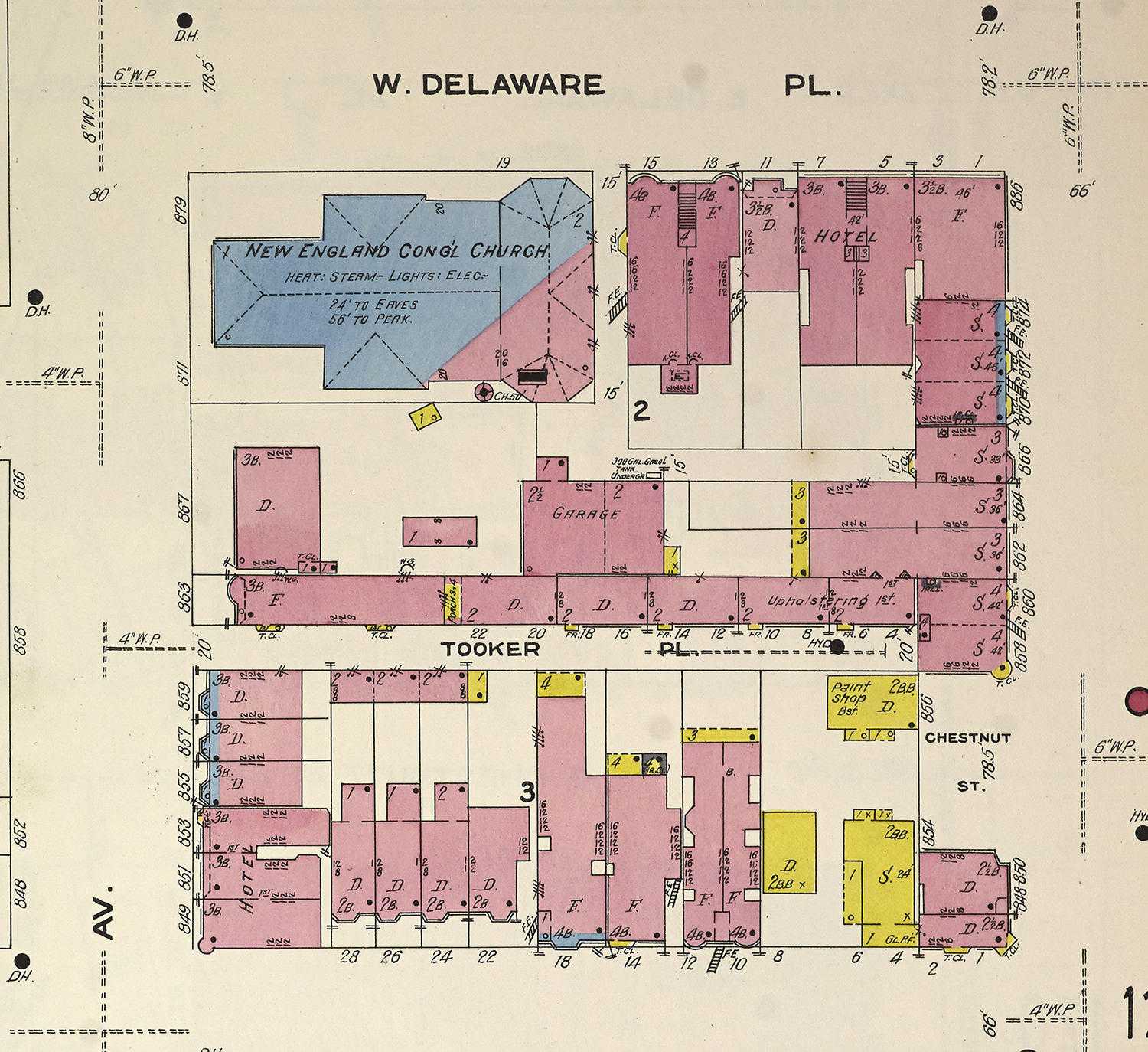
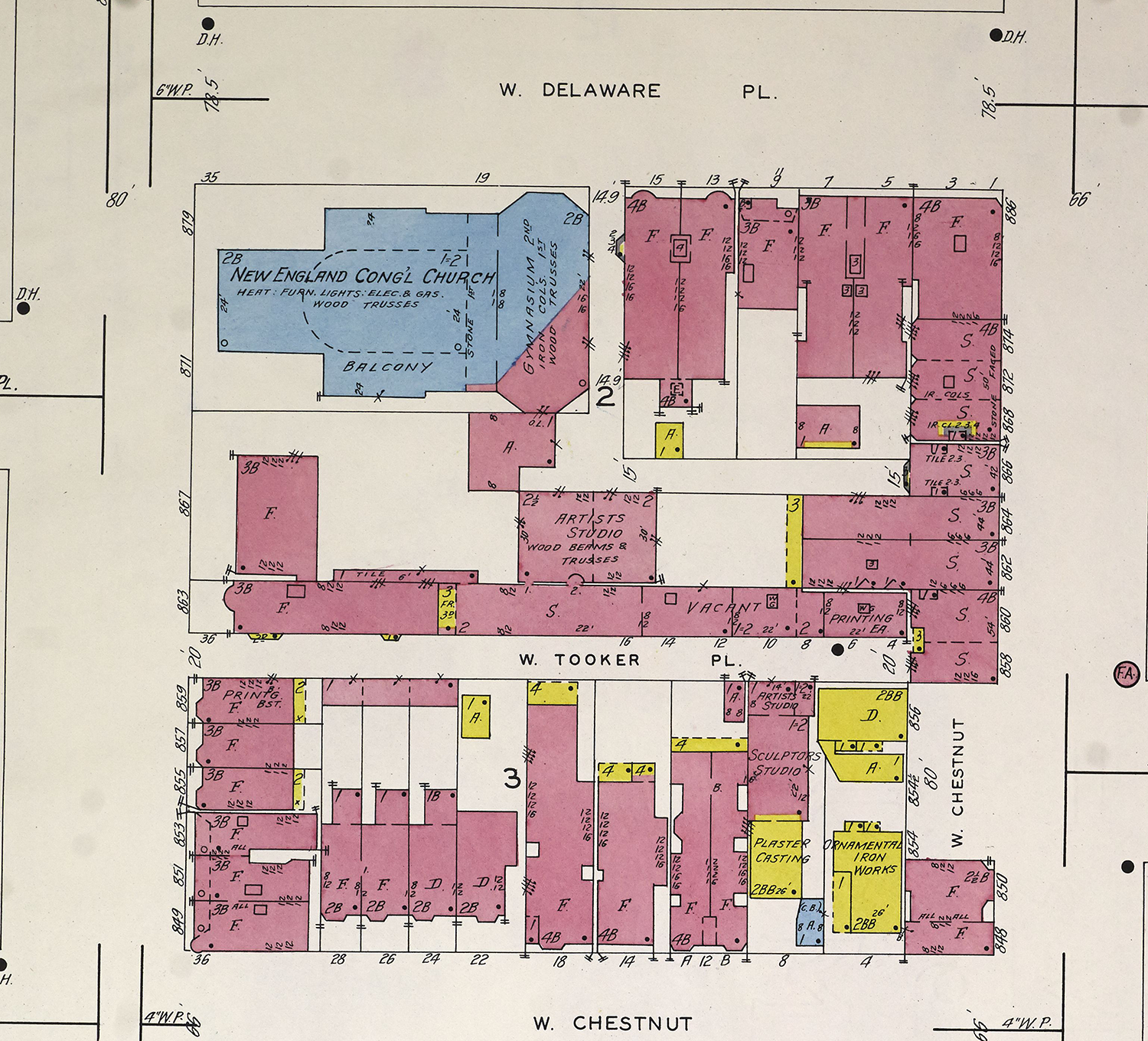
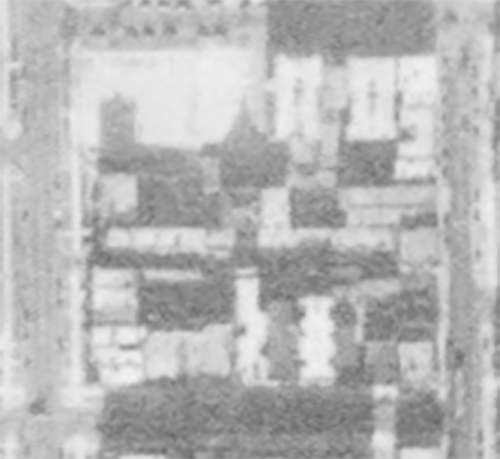
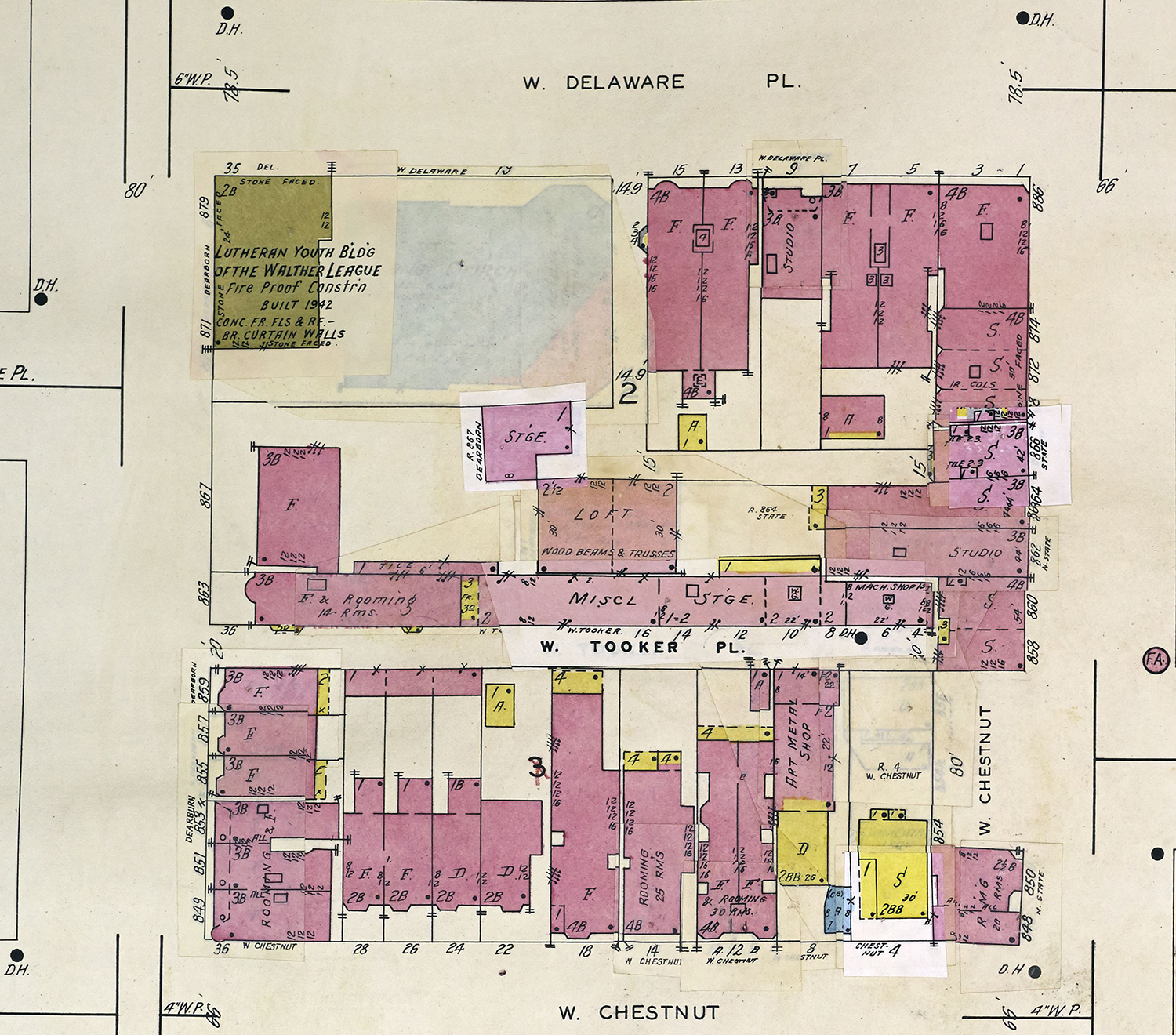
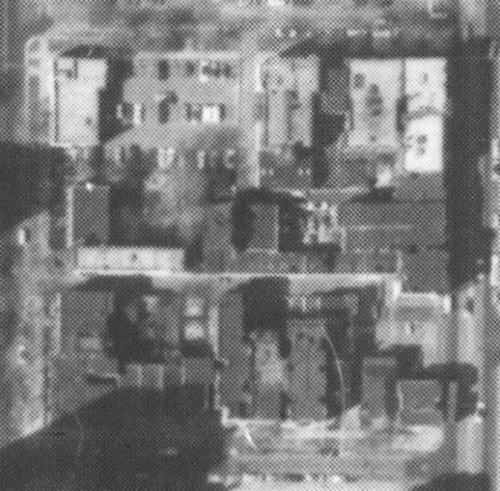
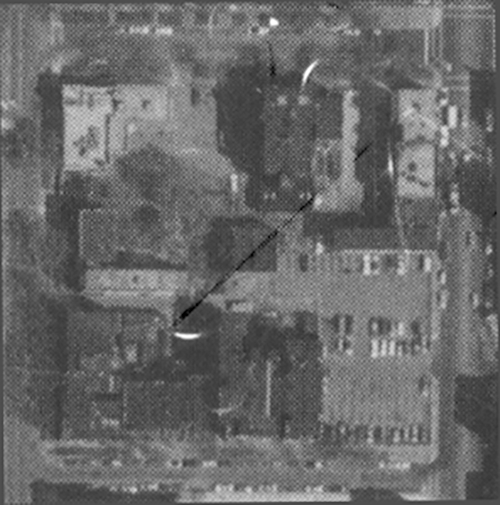
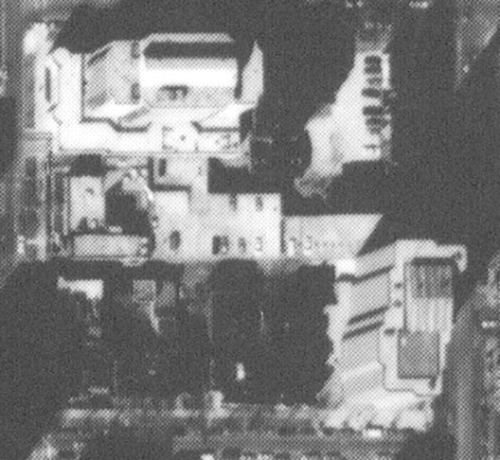
1910 Sanborn Fire Insurance Map | 1935 Sanborn Fire Insurance Map | 1938 aerial, Illinois State Geological Survey | 1950 Sanborn Fire Insurance Map | 1970, 1980, and 1990 aerials, Chicago Metropolitan Agency for Planning
2026
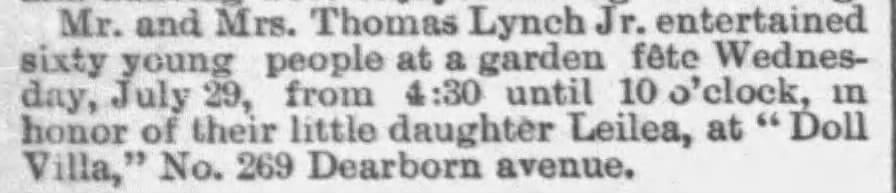
The Lynches bought the lot here in 1889, but didn't build this mansion until 1902—before that, it had a barn and they used it for parties and their daughter's (weirdly well reported on) doll house.

1889, Thomas Lynch Jr. Maltster ad | 1891, the Lynches hold a garden party here | 1902, building permit

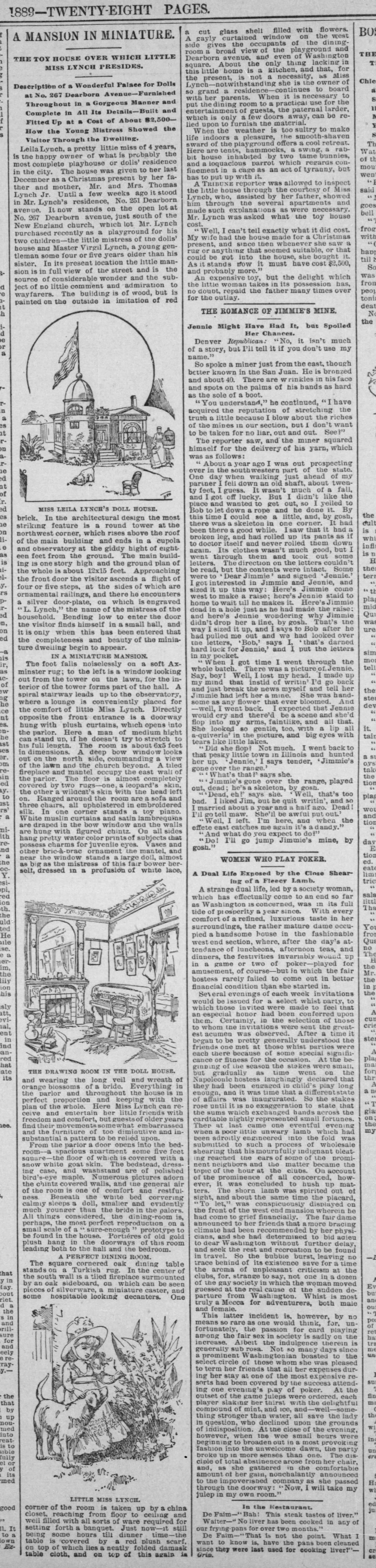
1889 articles about Leila Lynch's doll house
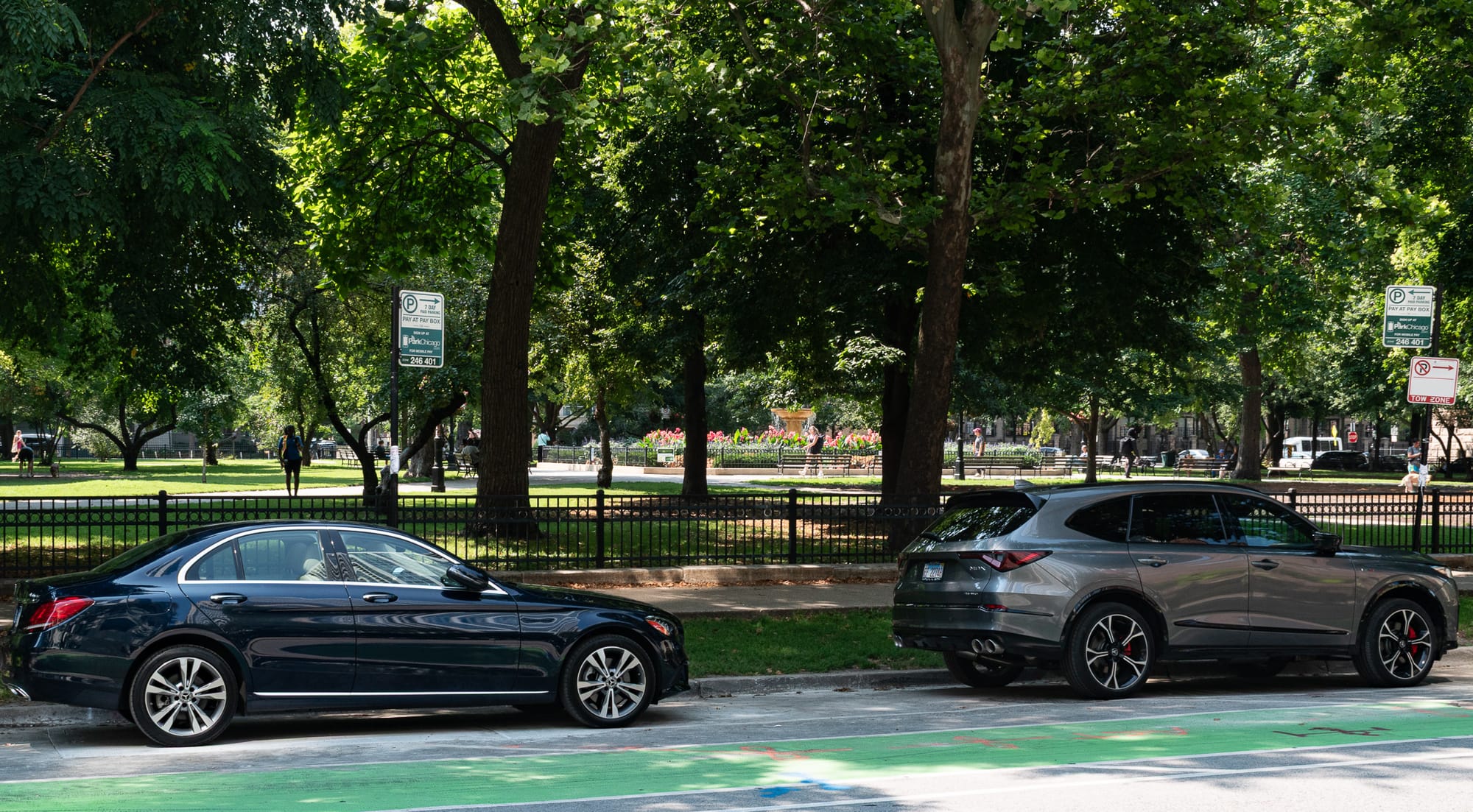
Here's where I took the photo from.
Member discussion: