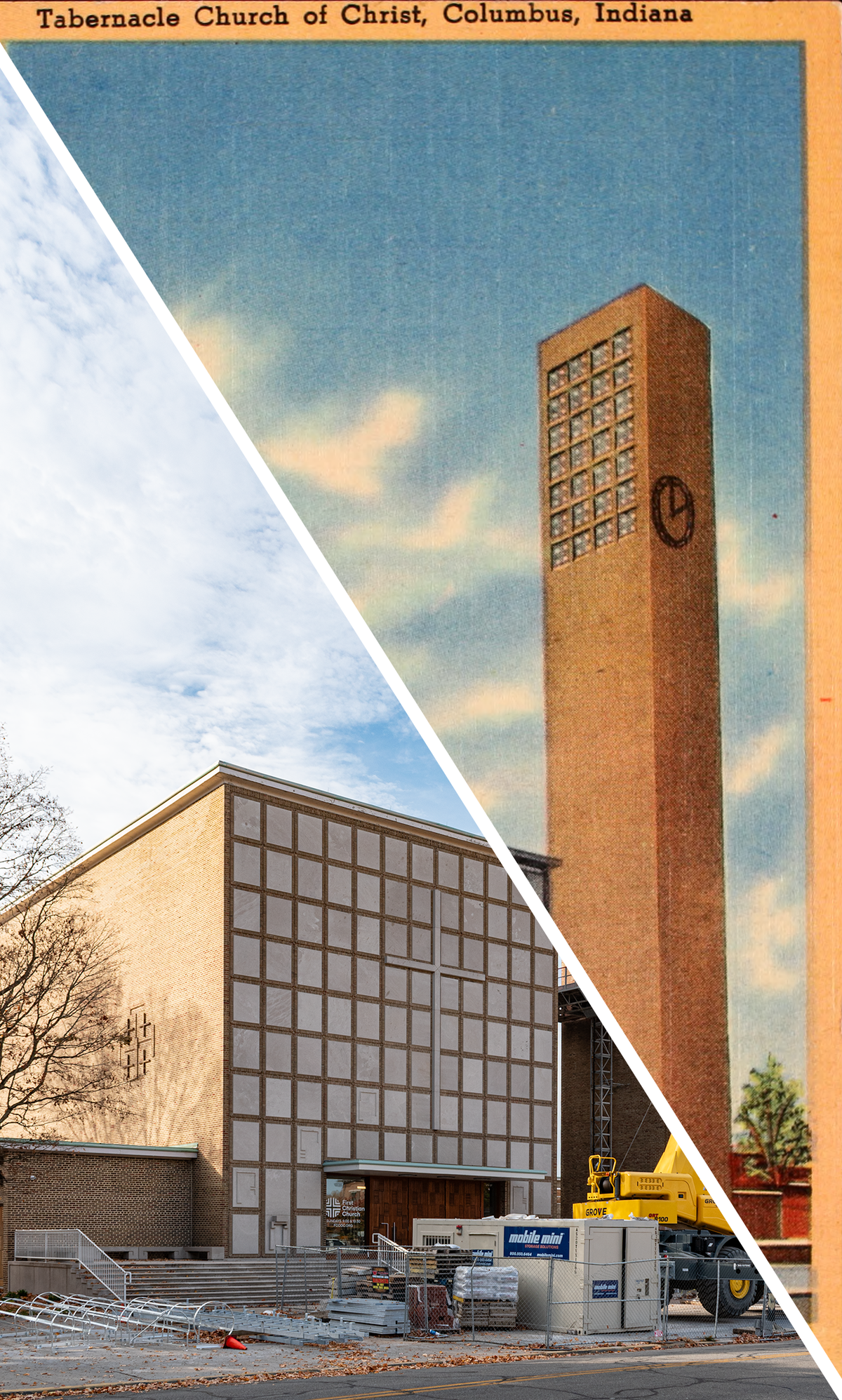
The Saarinens’ Tabernacle Church of Christ set off the Big Bang of modernism that turned Columbus into an improbable showroom of American architectural ambition. None of this was inevitable—Eliel Saarinen wasn’t interested in designing an American church, the congregation had no particular commitment to modernism, and another architect initially received the commission—but vision, persistence, luck, and trust meant that the first modernist church in the United States was built in, of all places, a small-but-bustling Indiana city in 1942.
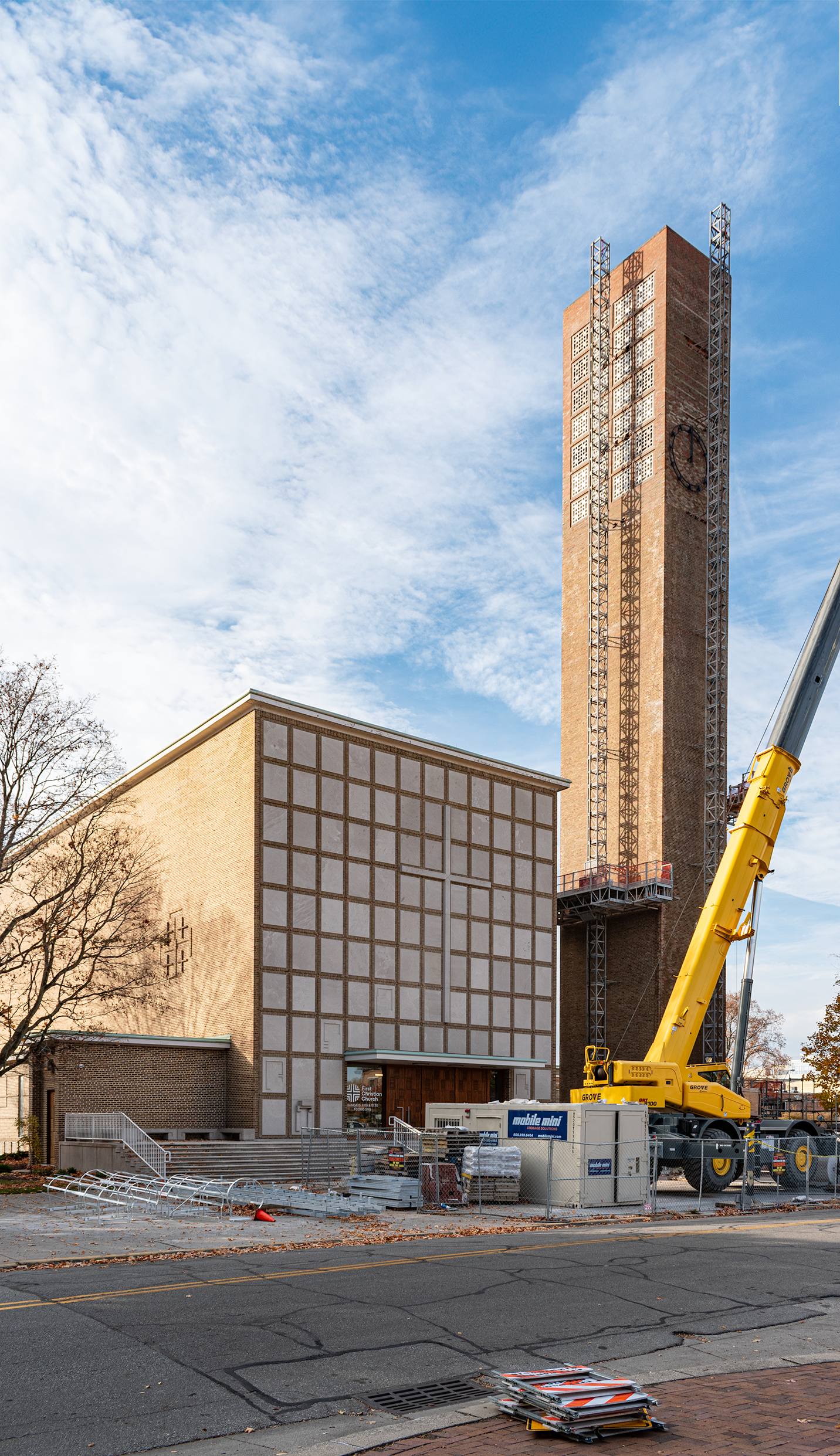
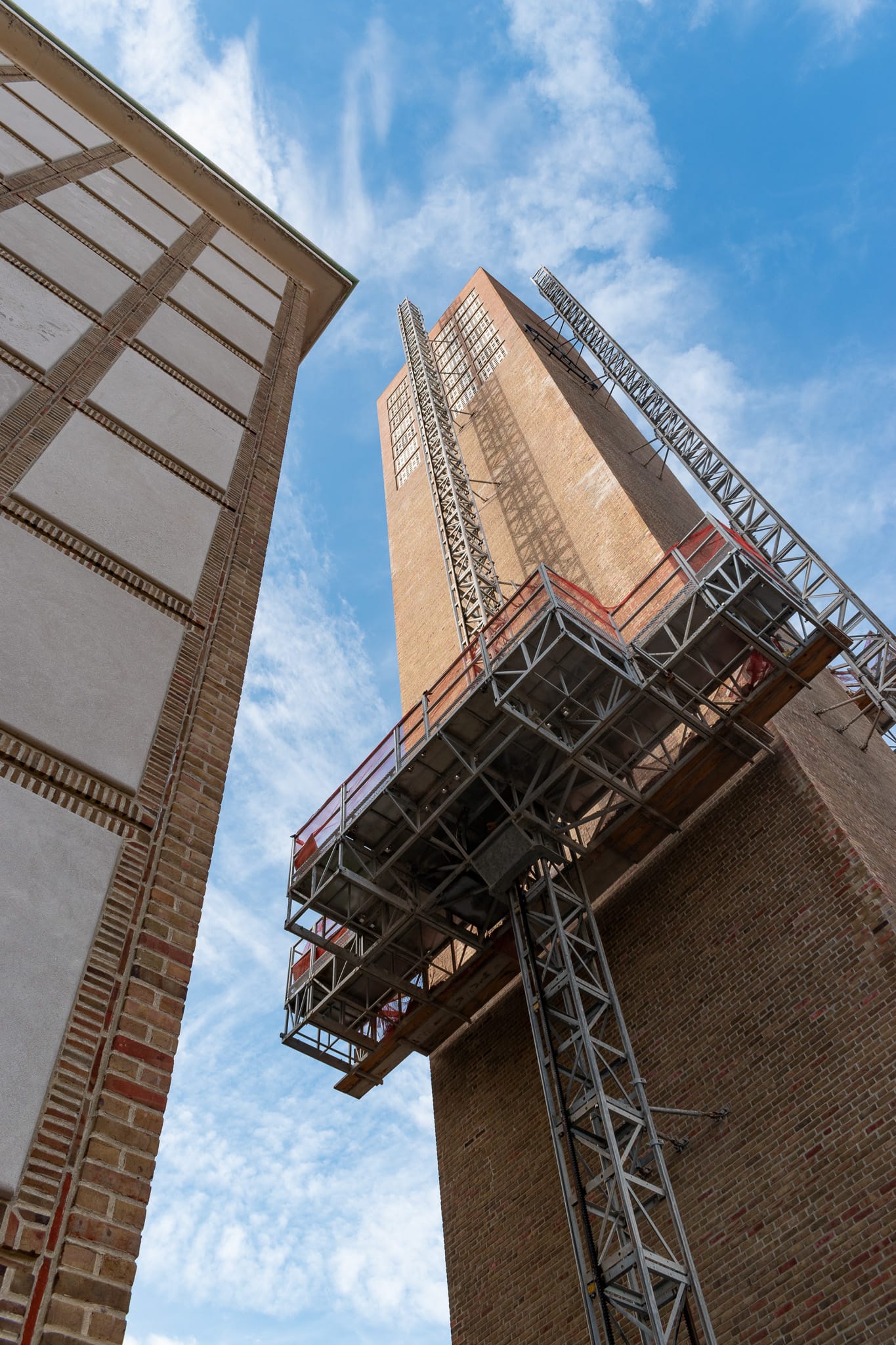
Decades of water infiltration and the elements had taken their toll on the church’s striking campanile, with cracks worsening on the east and west walls of the 166-foot-tall tower. In 2023 a $3m, eight-month-long restoration effort led by Louis Joyner Architects repaired the masonry, improved interior ventilation, and swapped out the 1970s-era plastic panels with limestone ones.
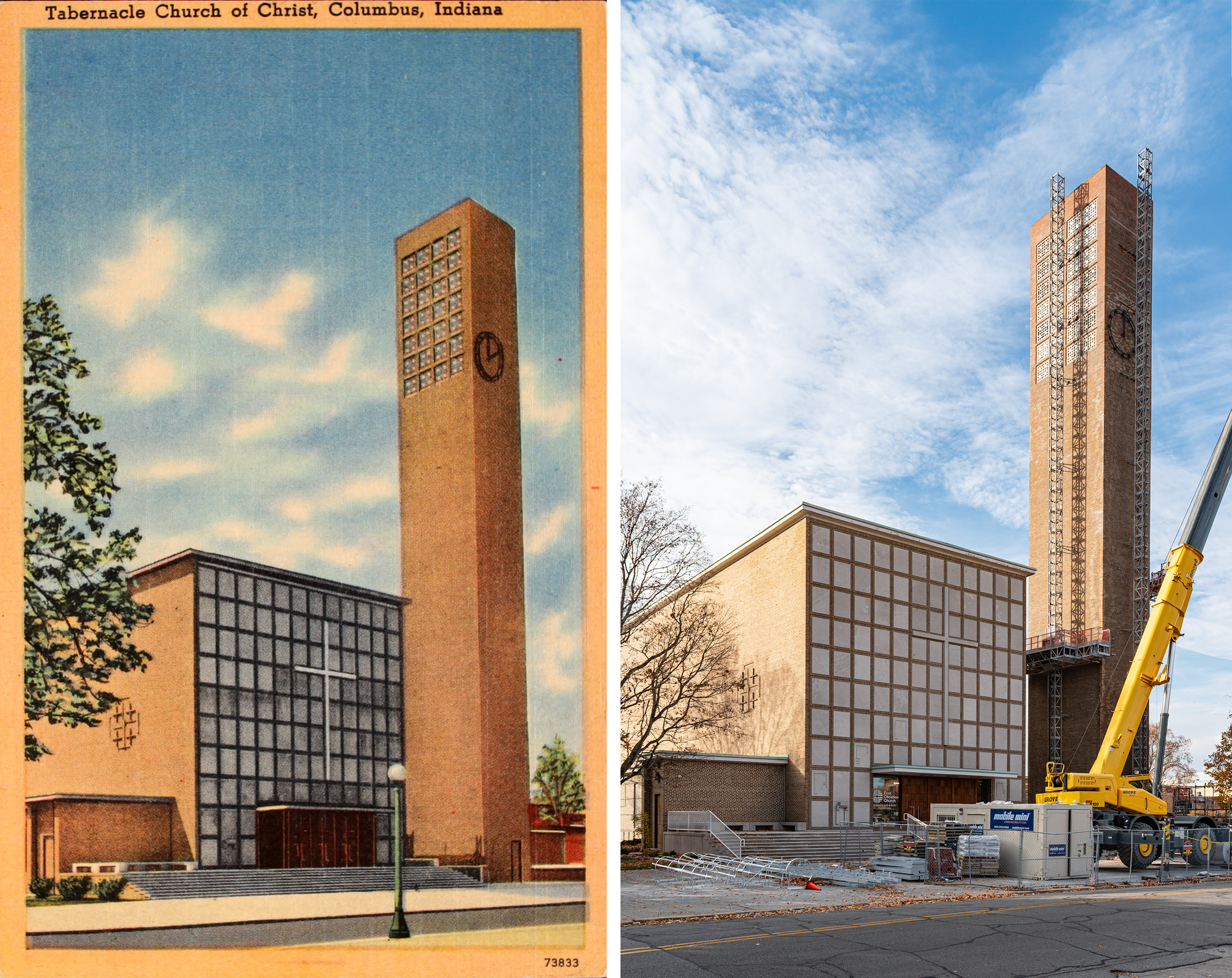
So, what’s changed? An instant icon, included as a contributing property in the Columbus Historic District NRHP listing 40 years after it opened, it was designated a National Historic Landmark in 2001…so, basically nothing that can’t be explained away by the restoration work occurring in 2023.
Now known as the First Christian Church of Columbus, this congregation first organized in 1855. Growing rapidly along with the industrializing city with membership nearing 1500, the church needed a bigger building. Siblings William G. Irwin and Linnie I. Sweeney donated this site—Railroad Square—for the new building in 1937. To design the new church the congregation went ahead and hired…Edmund Beaman Gilchrist.
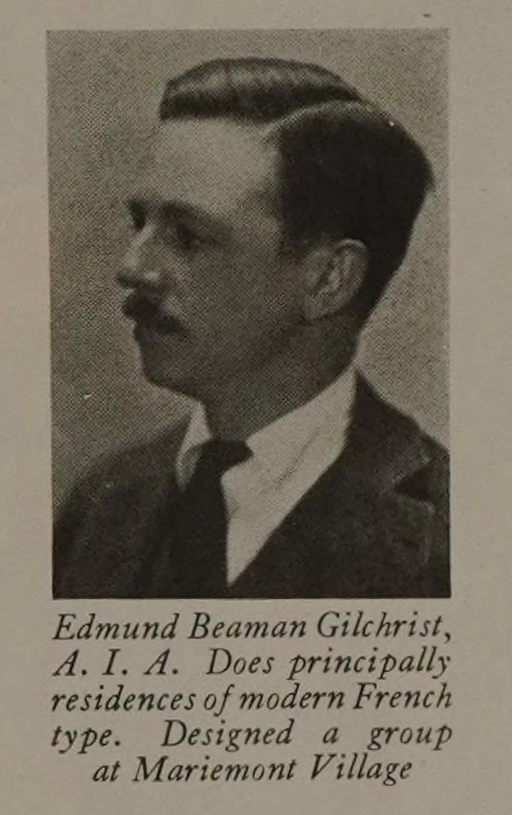

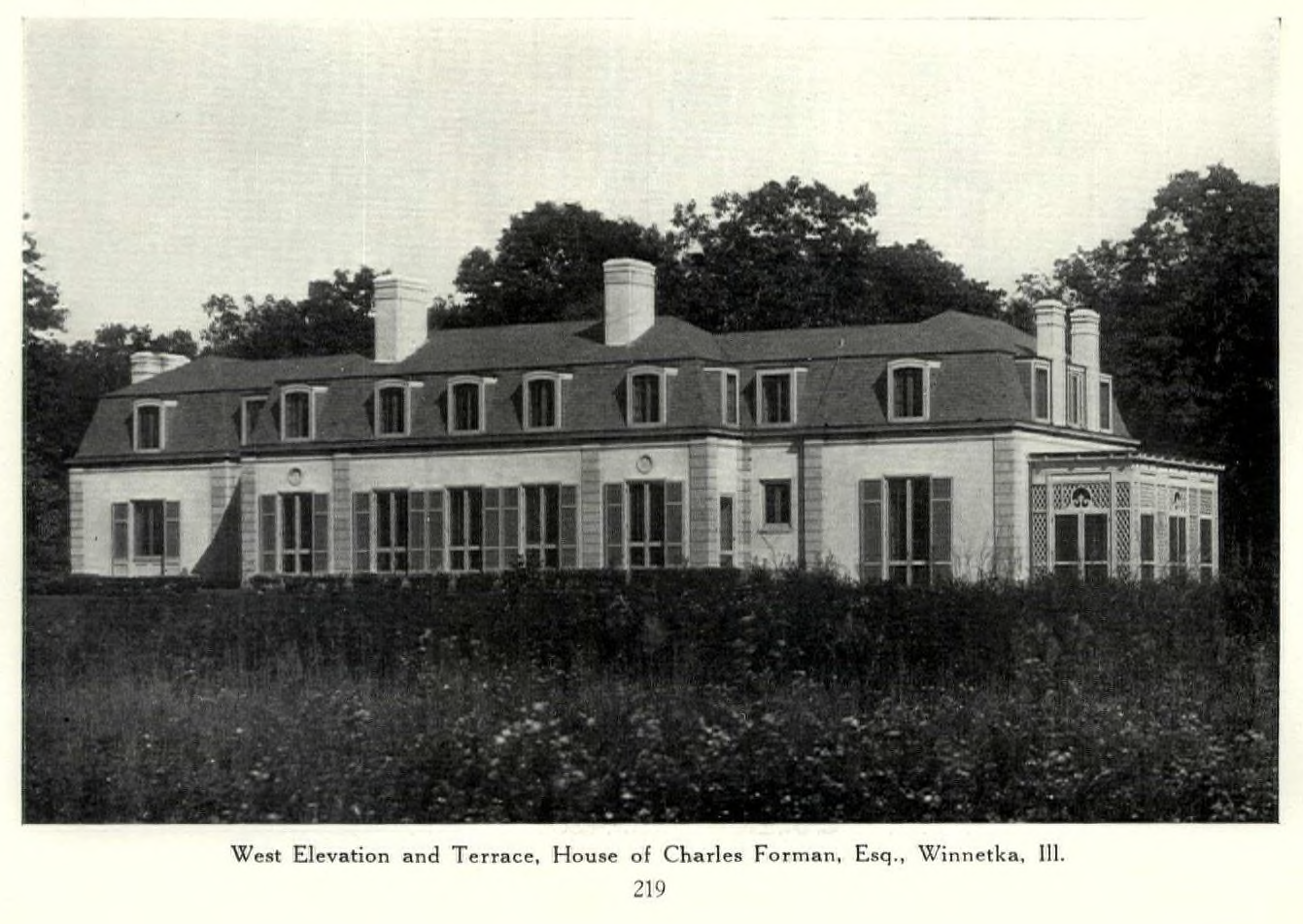
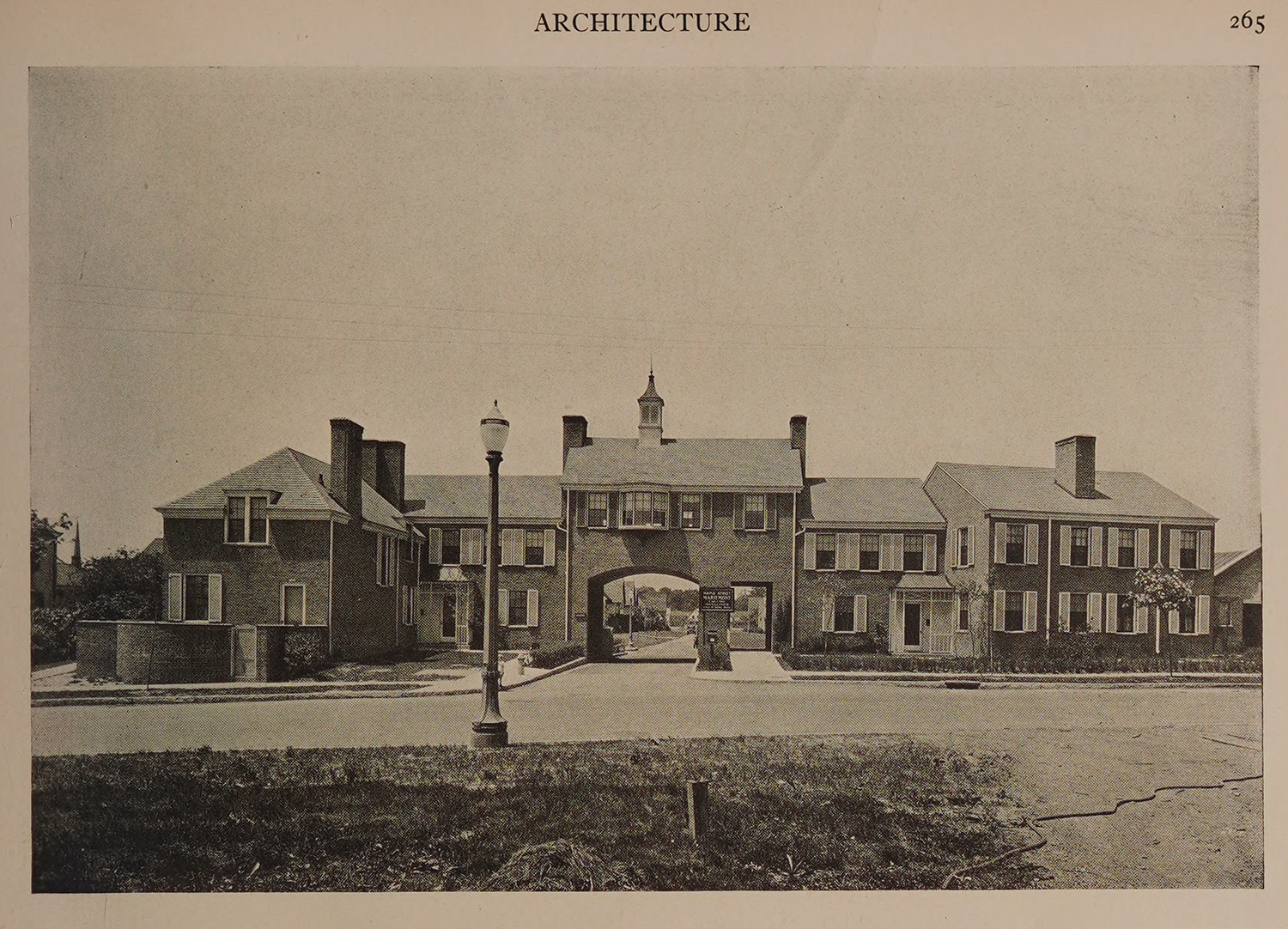

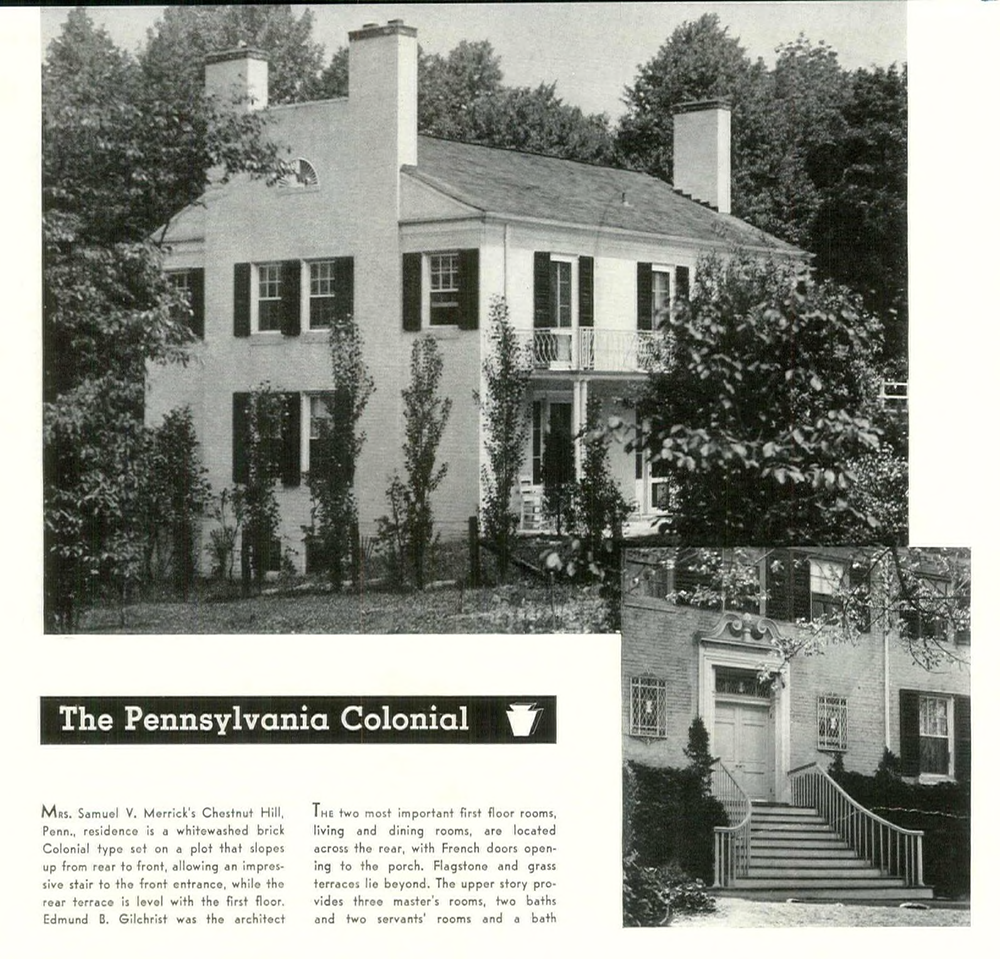
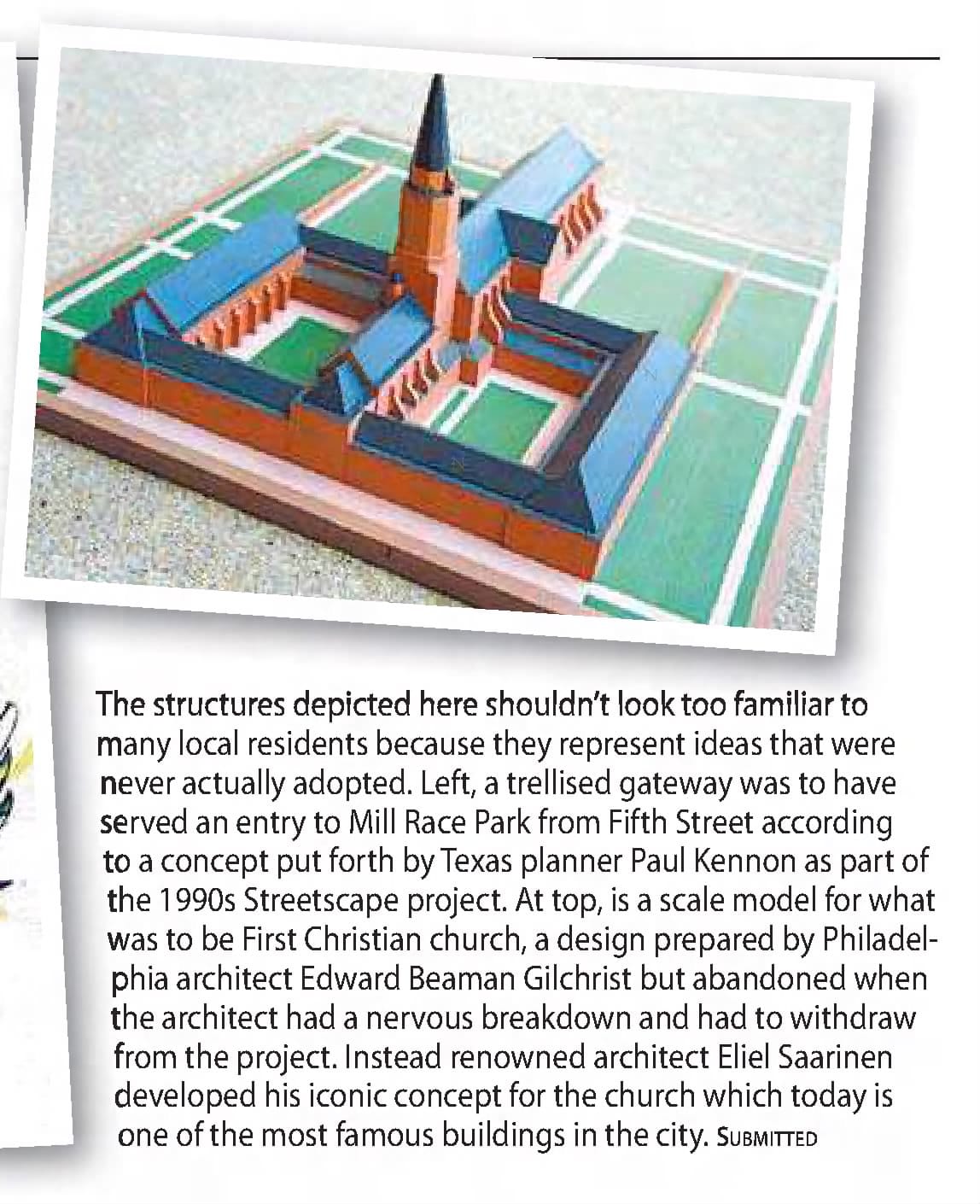
E.B. Gilchrist in 1927, Architecture, the Internet Archive | Gilchrist-designed building in Philadelphia, 1917, Architectural Forum, the Internet Archive | Gilchrist-designed home in Winnetka, 1925, Architectural Forum, the Internet Archive | Gilchrist-designed apartments in Ohio, 1926, Architecture, the Internet Archive | Gilchrist-designed church, 1928, Architectural Forum, the Internet Archive | Gilchrist-designed home, 1933, Home & Garden, the Internet Archive | Model of the Gilchrist proposal for Tabernacle Church of Christ
…who?
E.B. Gilchrist was a Philadelphia architect of minor renown winding down his career, known for designing mansions and apartments across a variety of revival styles (and a smattering of Art Deco), so when the congregation hired Gilchrist, he got to work designing a relatively traditional new church. Had Gilchrist stayed healthy, that’s what Tabernacle Church of Christ would’ve built—at the very least, delaying the development of Columbus’ cluster of modernism—but Gilchrist had a mental breakdown and pulled out of the project.
With the congregation building committee looking for a replacement, a young J. Irwin Miller—who’d later become president of Cummins and create the foundation that paid architects’ fees for new public buildings in Columbus—suggested they change tack and consider something modern for their new church building. His mother, Nettie Sweeney Miller, ran with it, proposing and pursuing the Michigan-based Finnish modernist Eliel Saarinen, president of the Cranbrook Academy of Art.
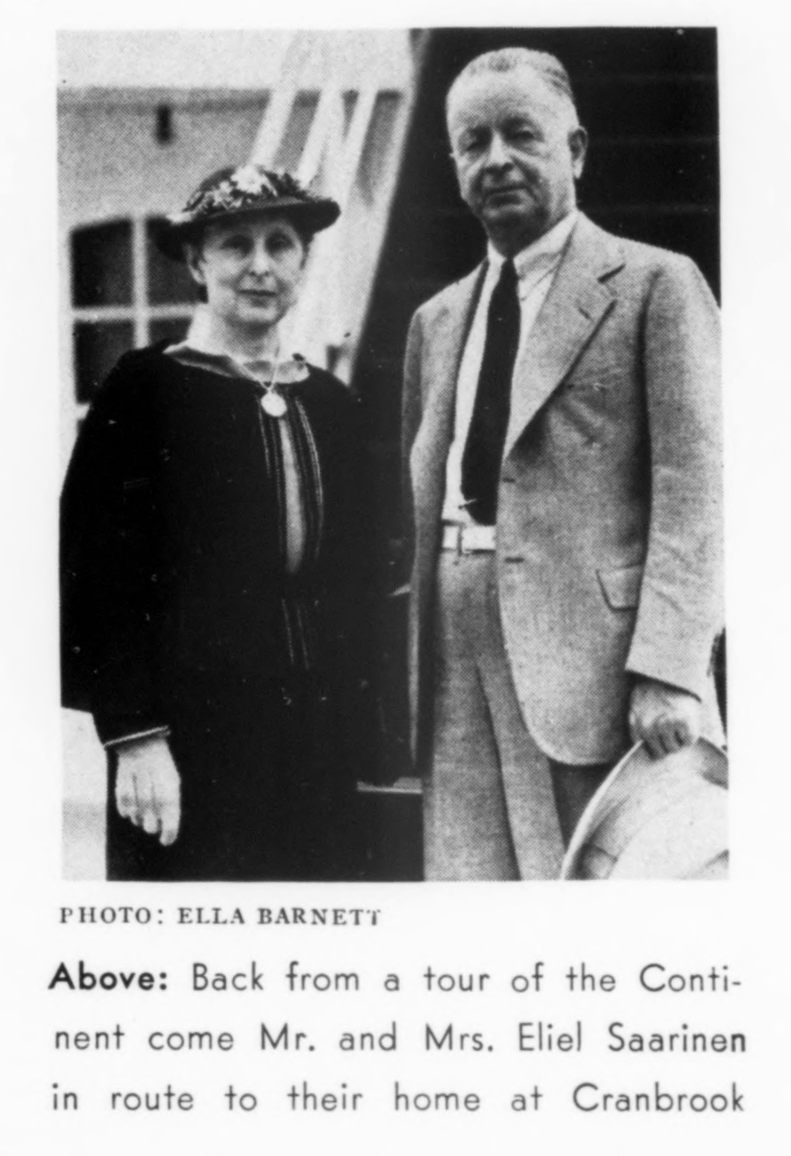
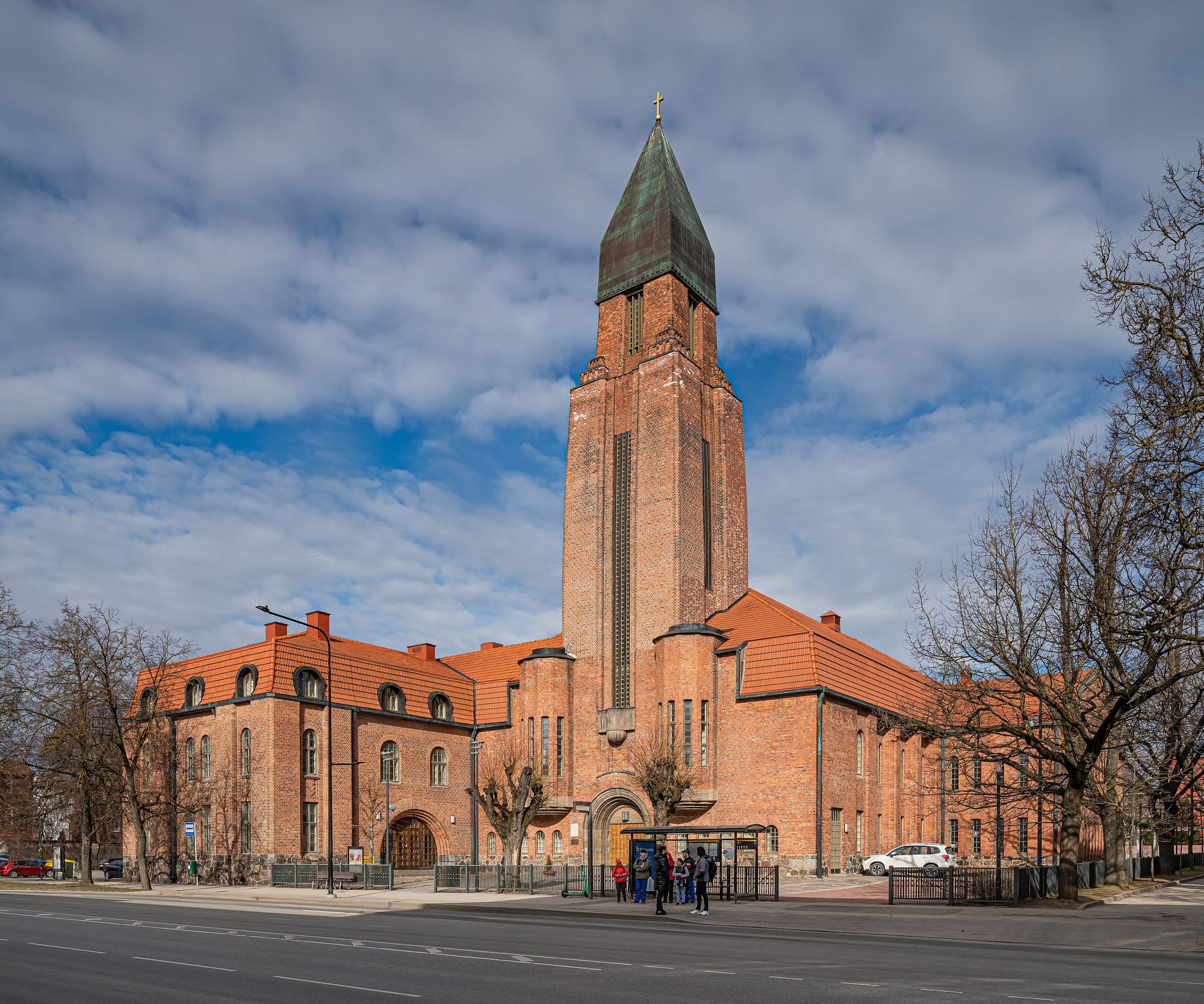
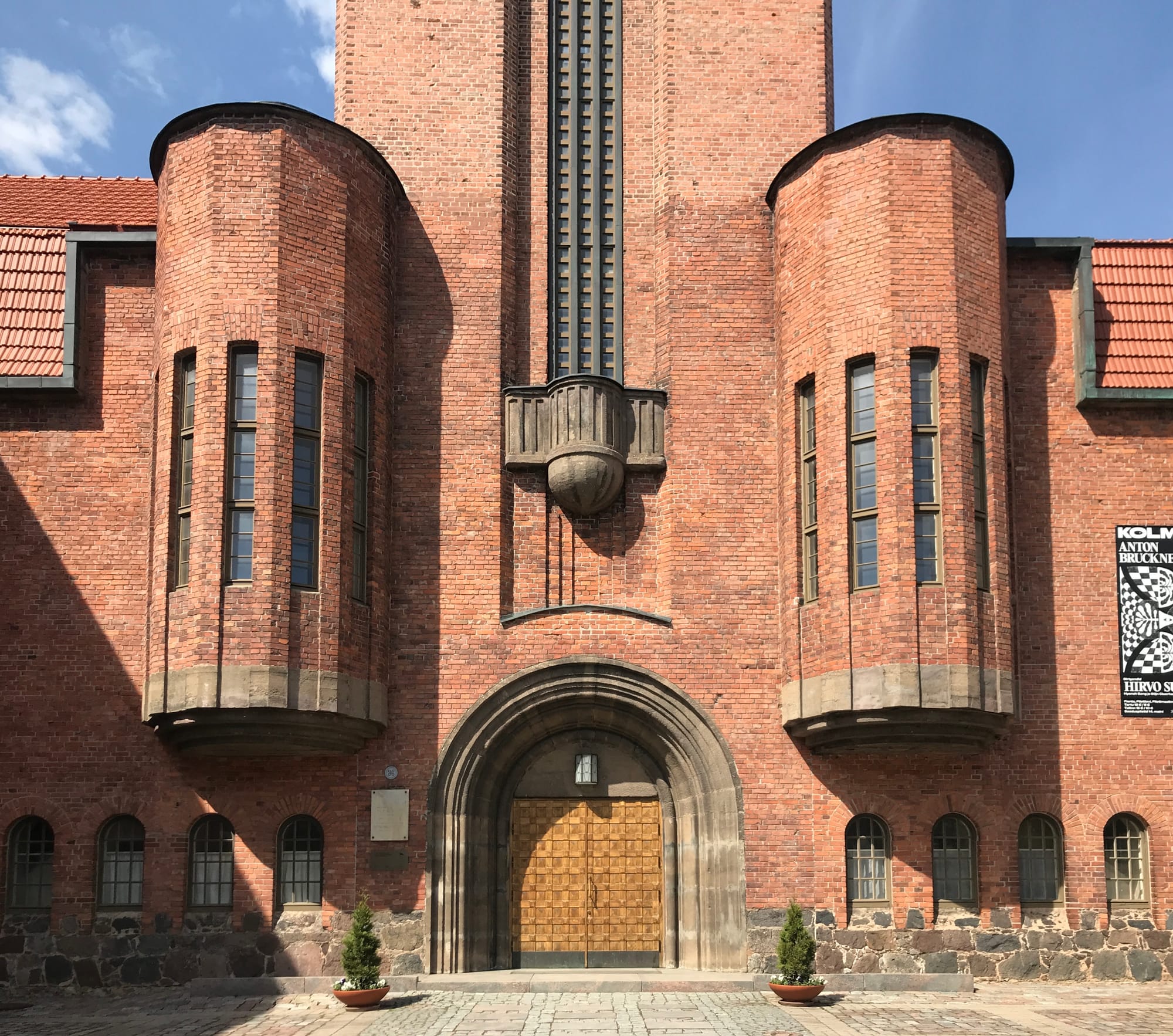
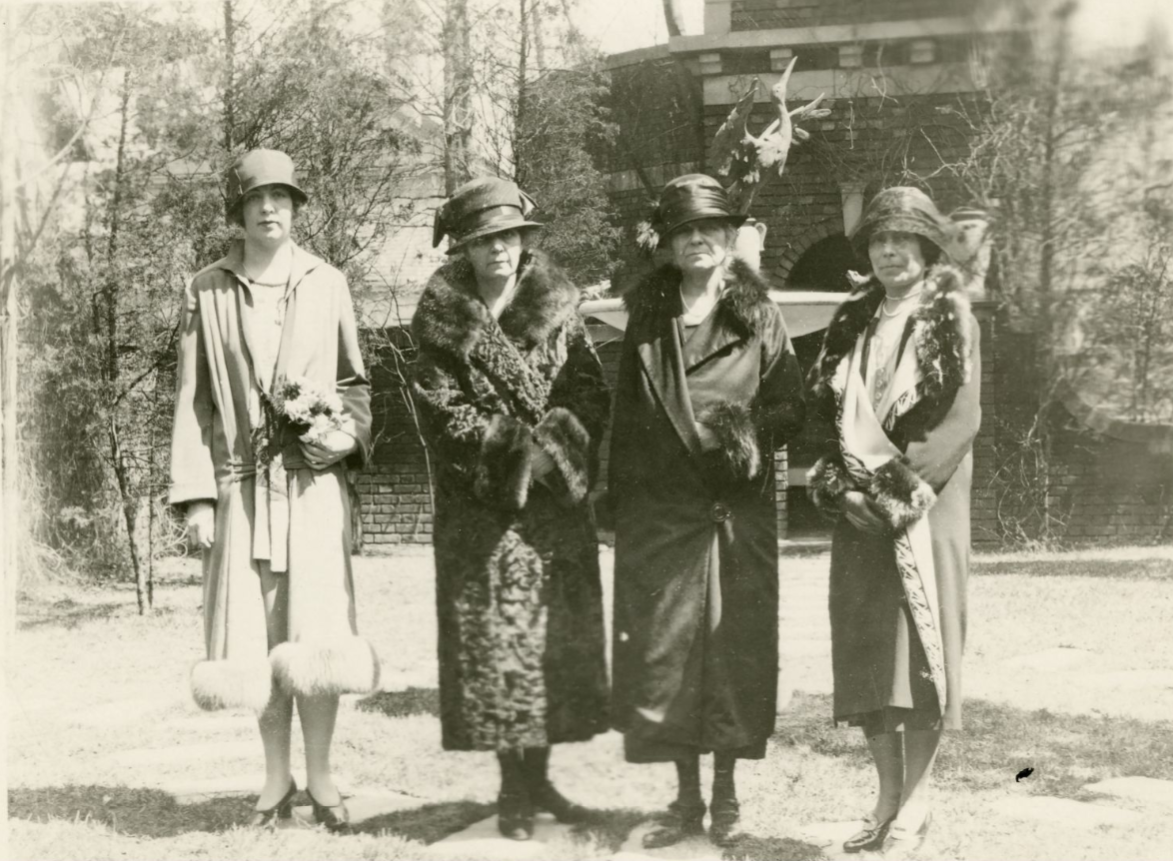
Eliel and Loja Saarinen, 1935, American Architect and Architecture, the Internet Archive | Saarinen-designed St. Paul's Church in Tartu, 2022, A. Savin, Wikimedia Commons | Entrance to St. Paul's Church, 2023, Wikimedia Commons | Nettie Sweeney Miller second from left, 1920s, Irwin-Sweeney-Miller Family Collection, Indiana Historical Society


Nettie traveled to Michigan to meet Saarinen in 1939, but there was a problem, though—he wasn’t interested in designing an American church, which he considered too theatrical. Saarinen wasn’t exactly an experienced ecclesiastical architect, either. He’d only designed a single church before, the Estonian Evangelical Lutheran St Paul's Church in Tartu, two decades earlier. Nettie Sweeney Miller persisted and sold Saarinen with a vision of a church that was timeless, approachable, and beautiful. Together—leaning on Saarinen’s stature and Sweeney Miller’s influence in the community—Eliel and Nettie won the trust of a cautious building committee and the Tabernacle Church of Christ embarked on a building project unlike any other at the time.
Nettie Sweeney Miller remained the project’s most committed booster as construction kicked off in 1939, navigating continued skepticism from parts of the congregation to enable the Saarinens to realize their vision. And it really was the Saarinens, plural—Eero played a major role in the design, and Eliel’s wife Loja created a tapestry for the sanctuary (...in a neat bonus, Charles Eames worked on the interiors).
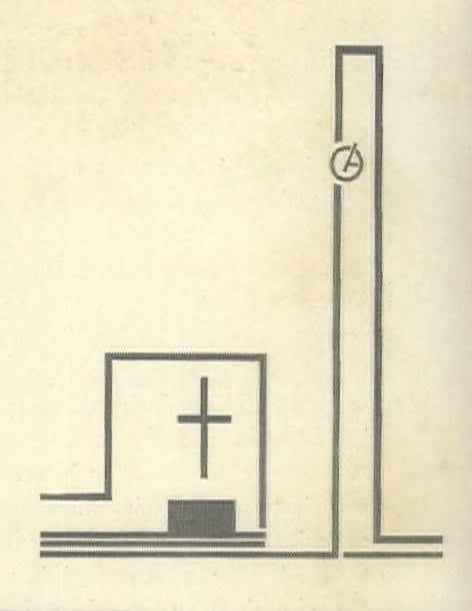


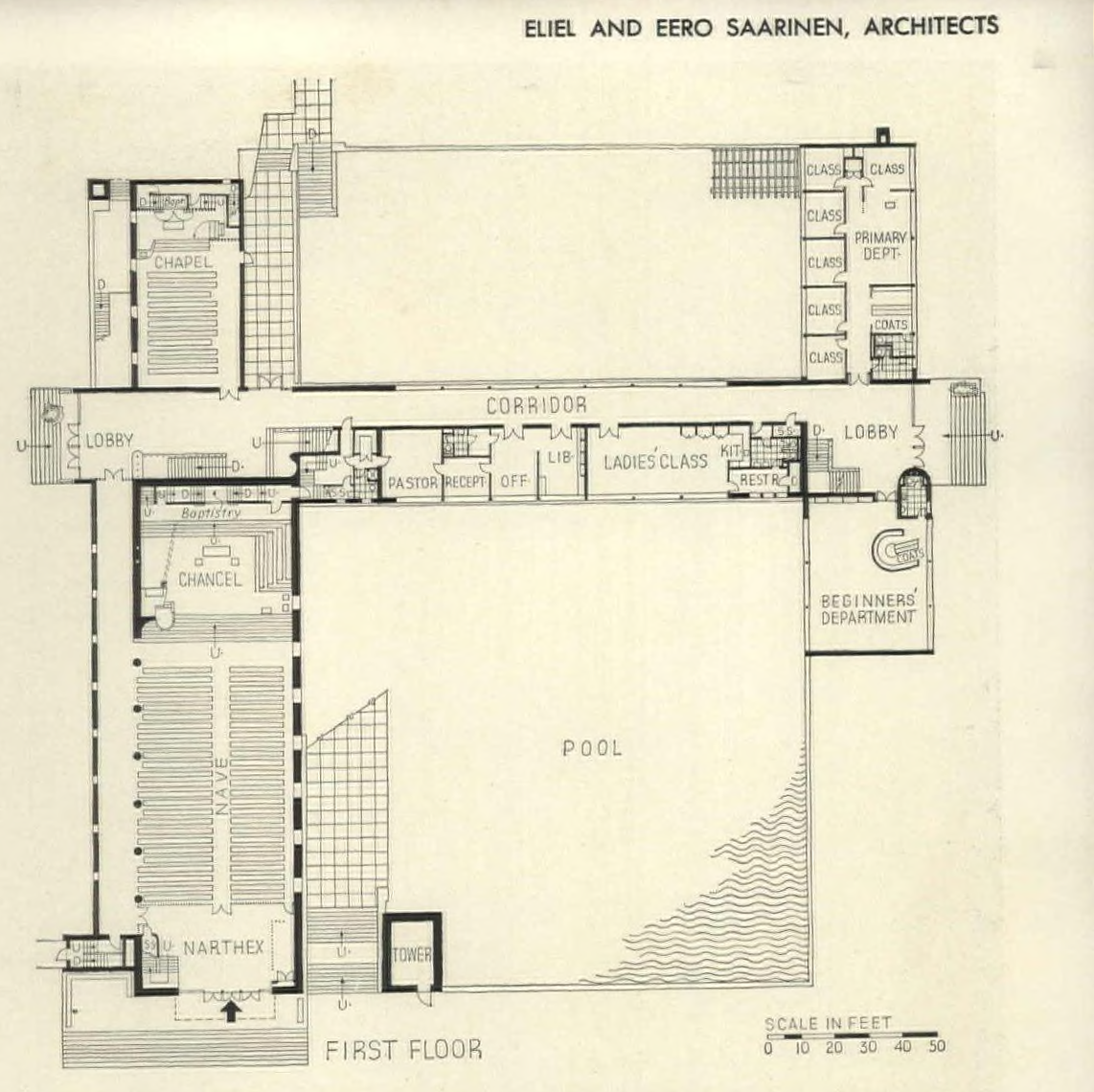

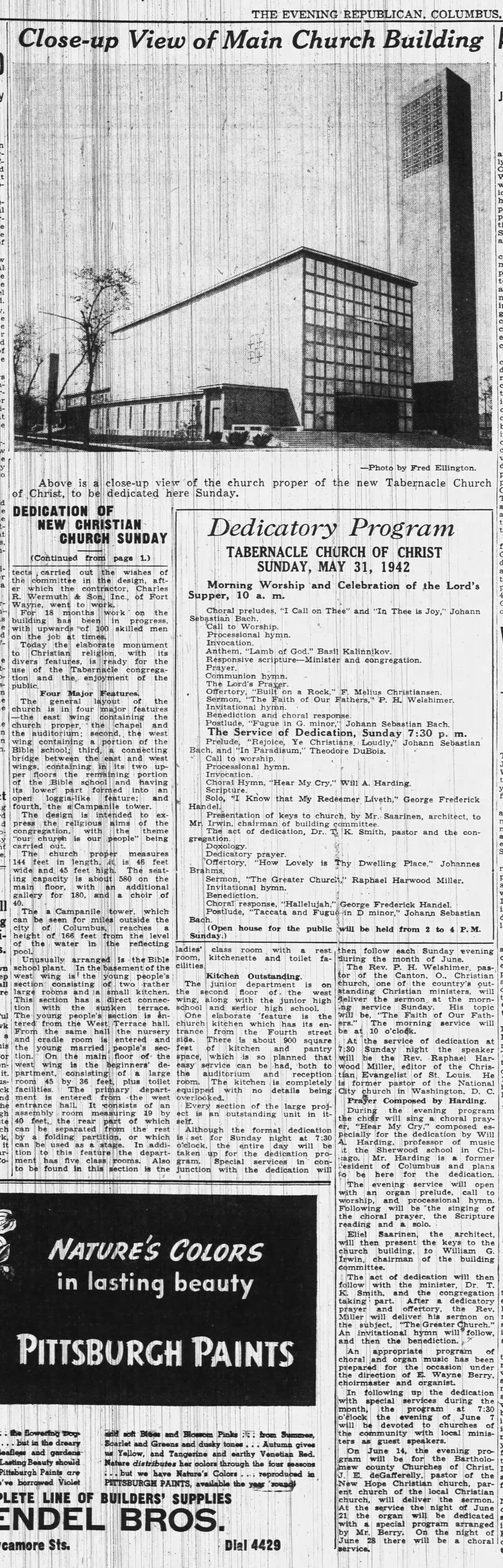

Diagram, 1942, Architectural Forum, the Internet Archive | 1941, Saarinen in town | 1941, construction | Floor plan, 1942, Architectural Forum, the Internet Archive | 1942 articles on the dedication of the new church
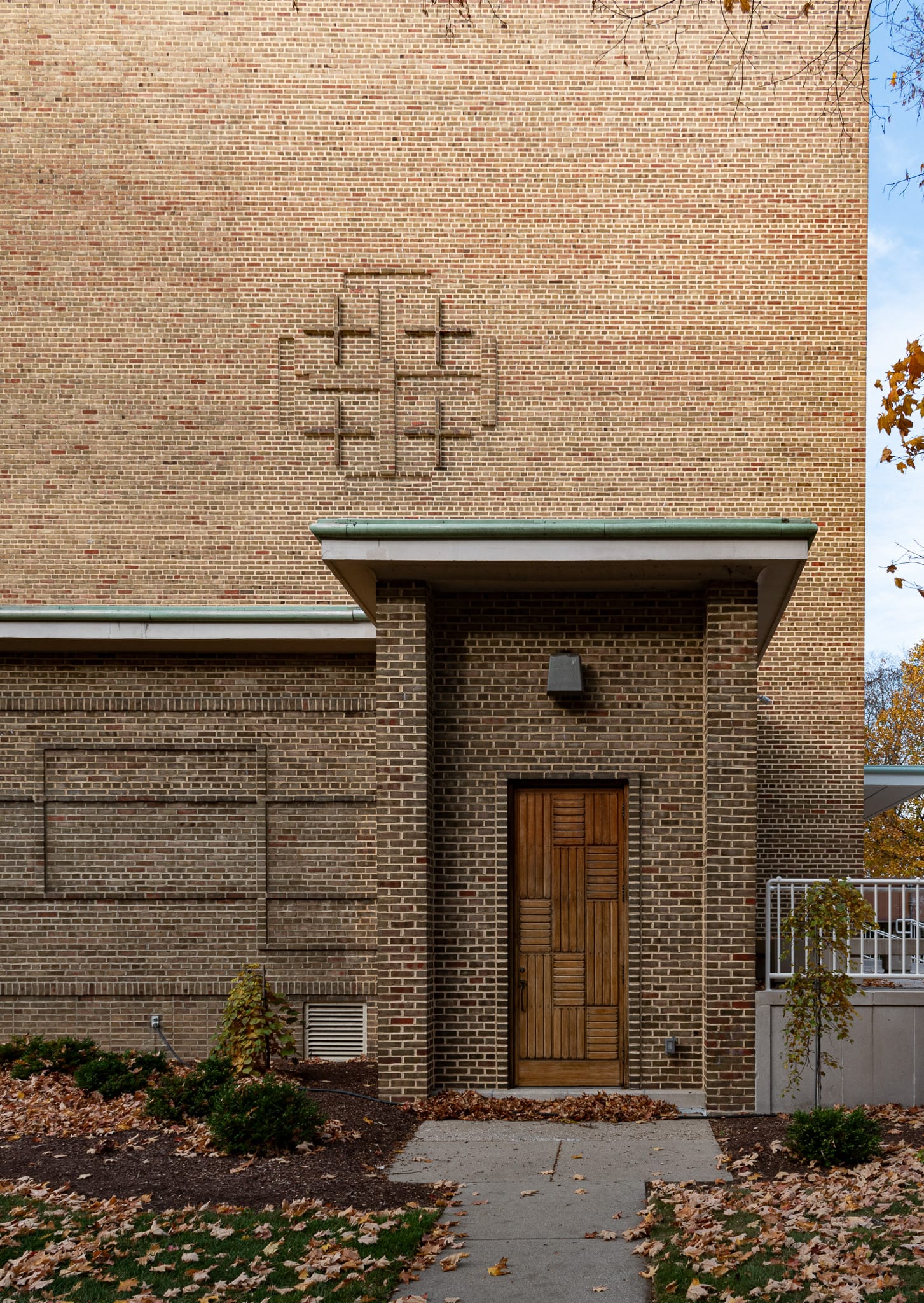
Rejecting “the dead styles of alien cultures”, the Saarinens designed a church that paired contrasting horizontal and vertical forms. Influenced by the work of architects Alvar Aalto and Erik Bryggman, the building is intentionally asymmetrical, alternatively both warm and austere, brick and limestone block. The informal irregularity of the limestone grid system on the front facade, the earthy geometry of the rowlock brick, the heavenly rise of the campanile—First Christian Church is special.
Tabernacle Church of Christ made national news when it opened in 1942. Through the 1940s and 1950s, it appeared on the cover of architectural publications like Architectural Forum, of course, but also on the cover of ecclesiastical publications like the United Church Herald—the building was a quiet triumph both architecturally and spiritually.
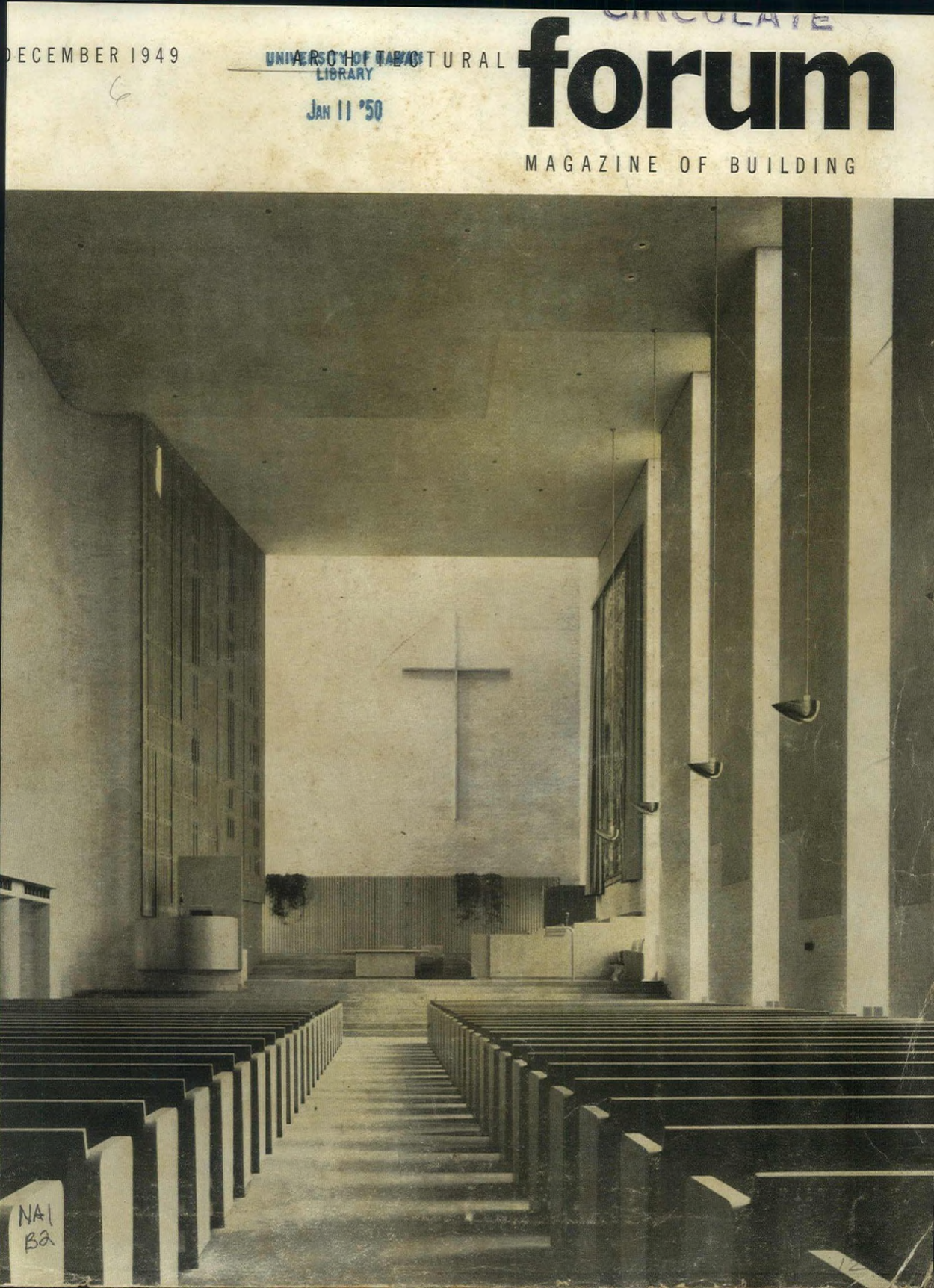
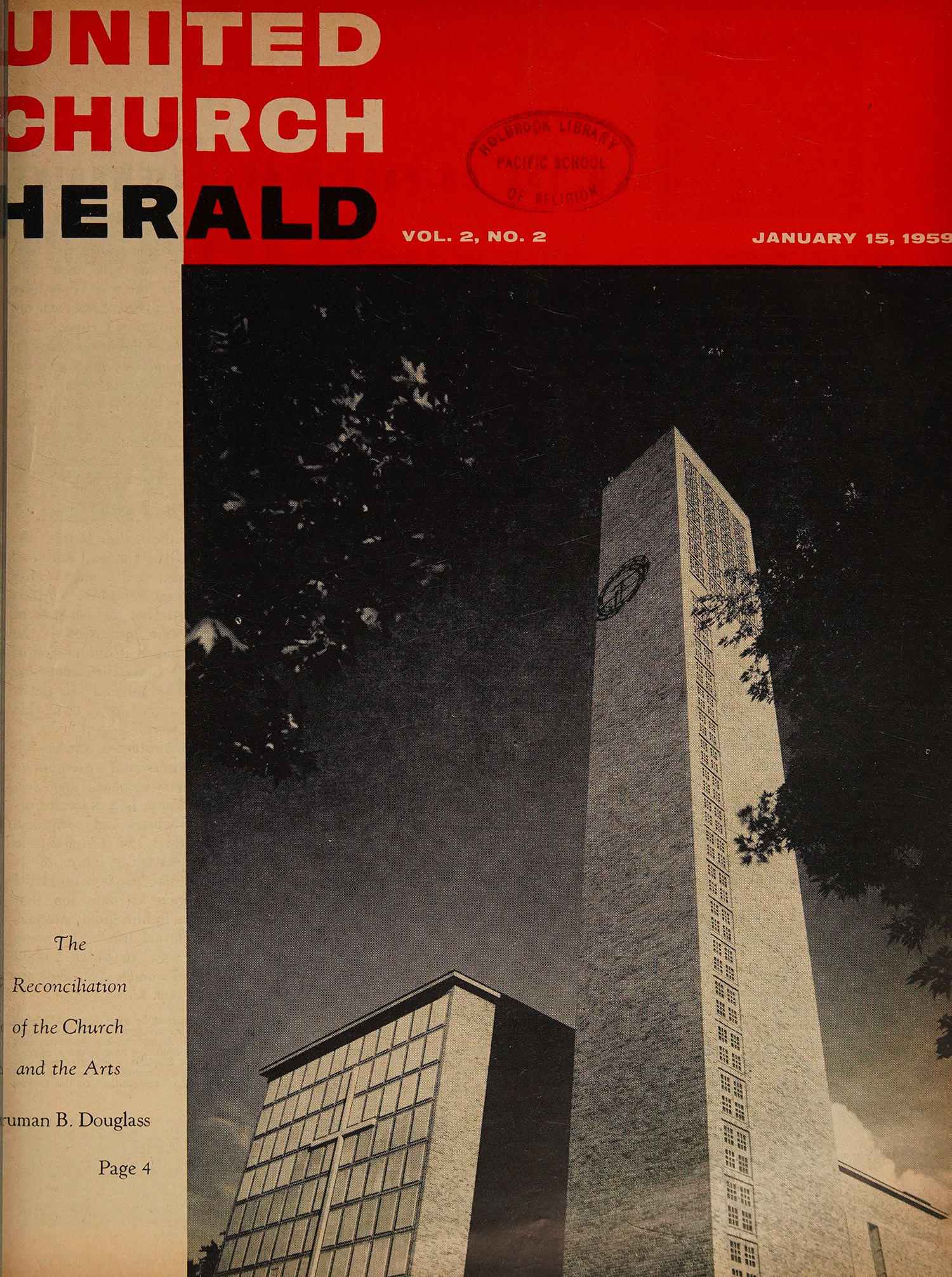
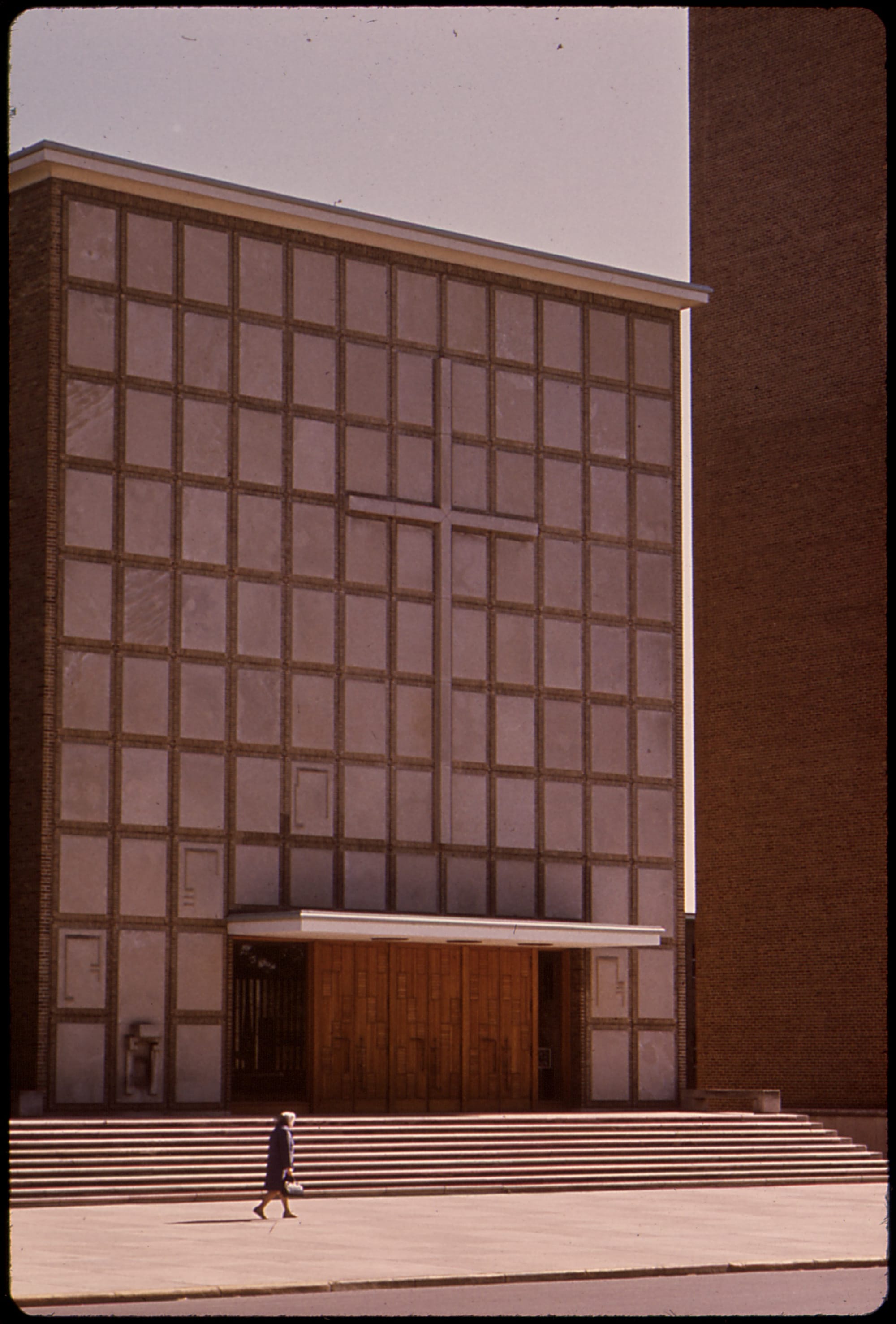
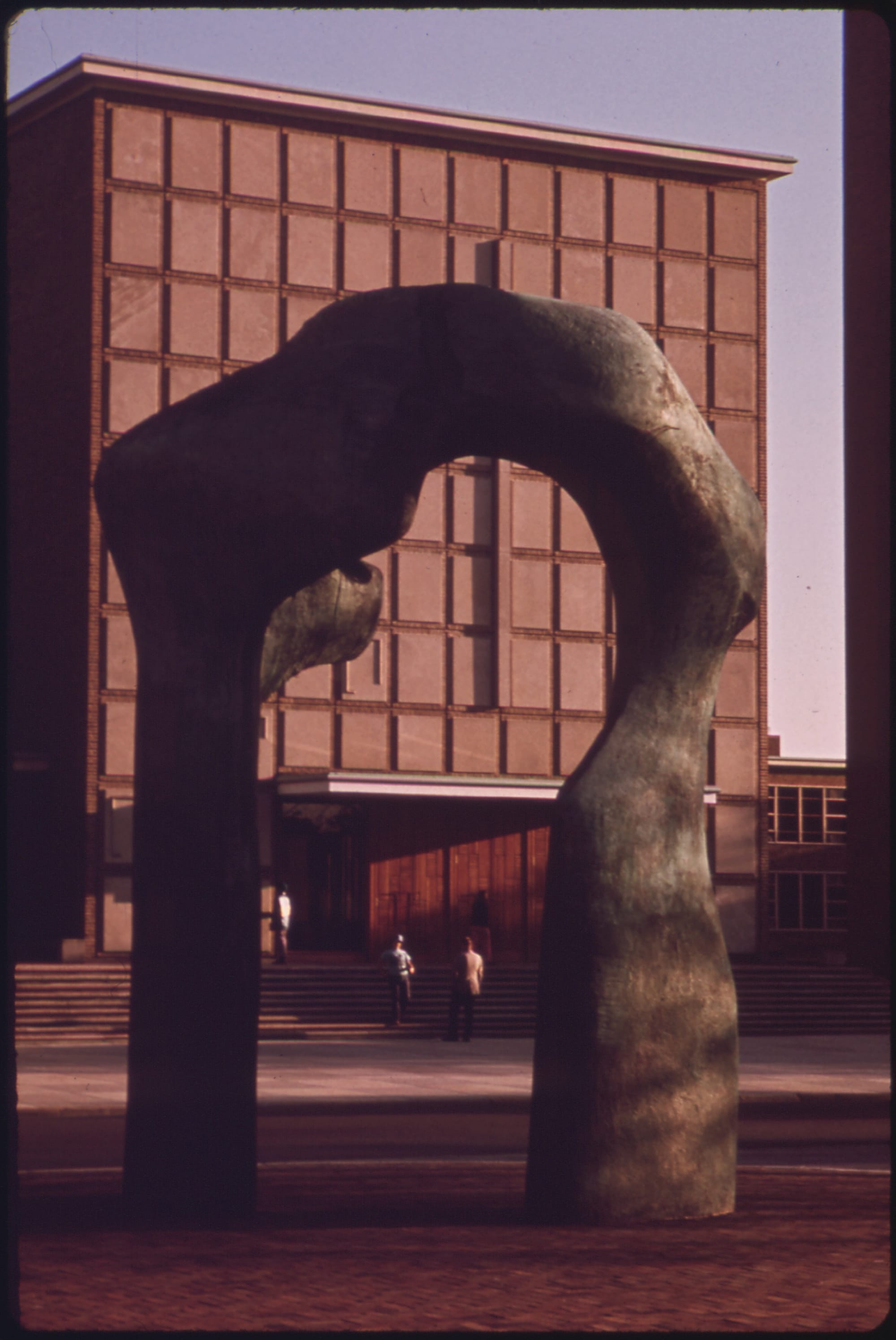
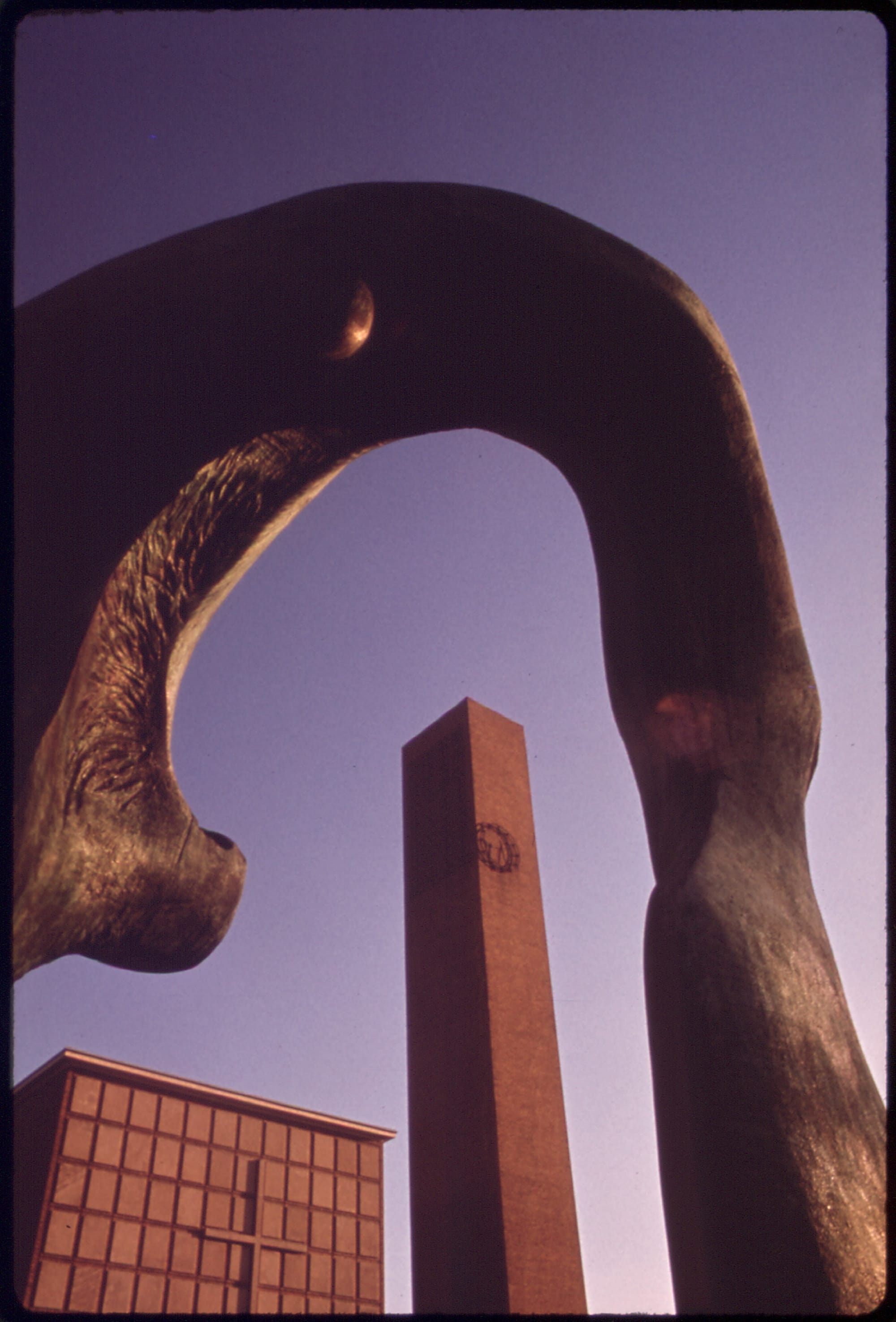
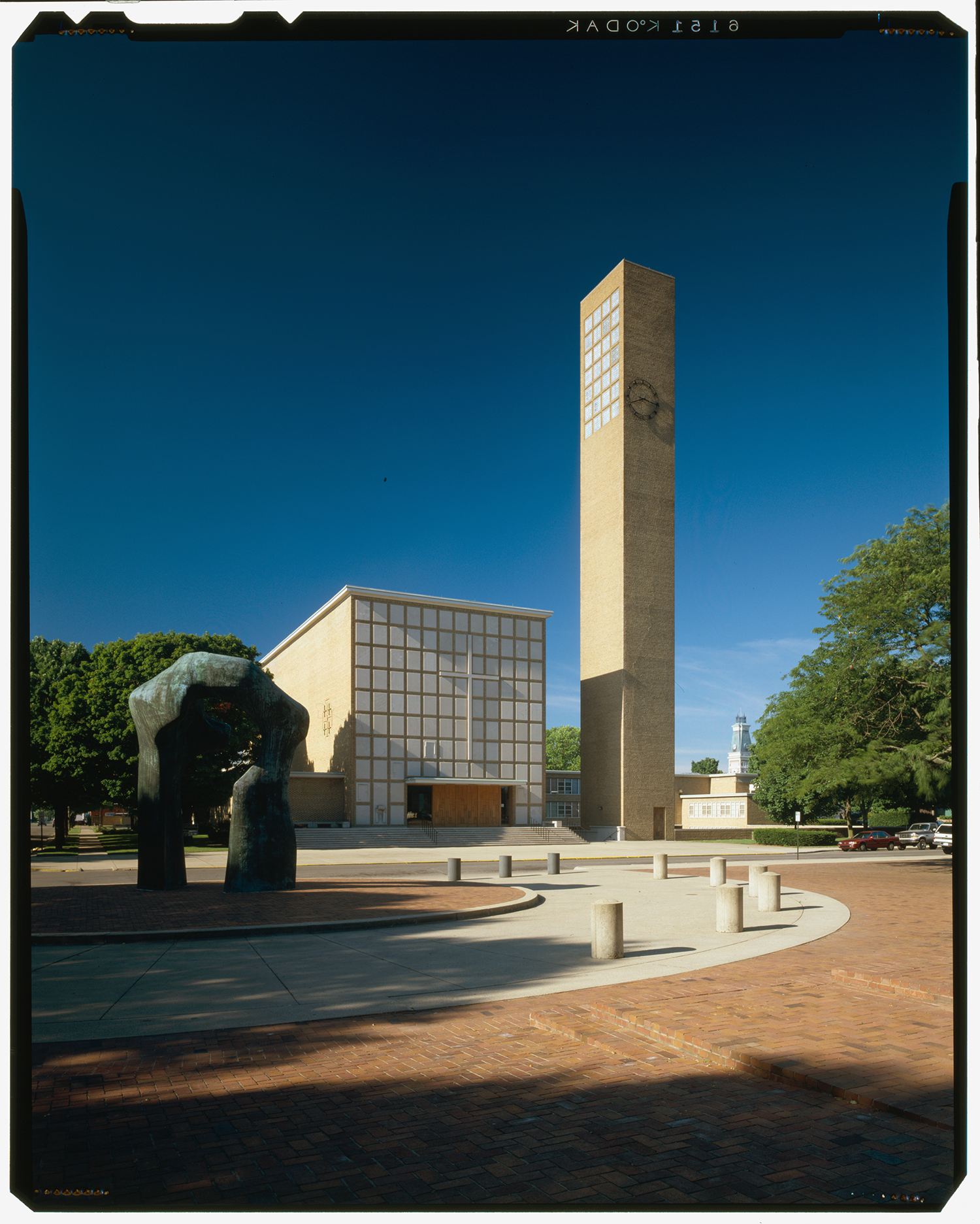
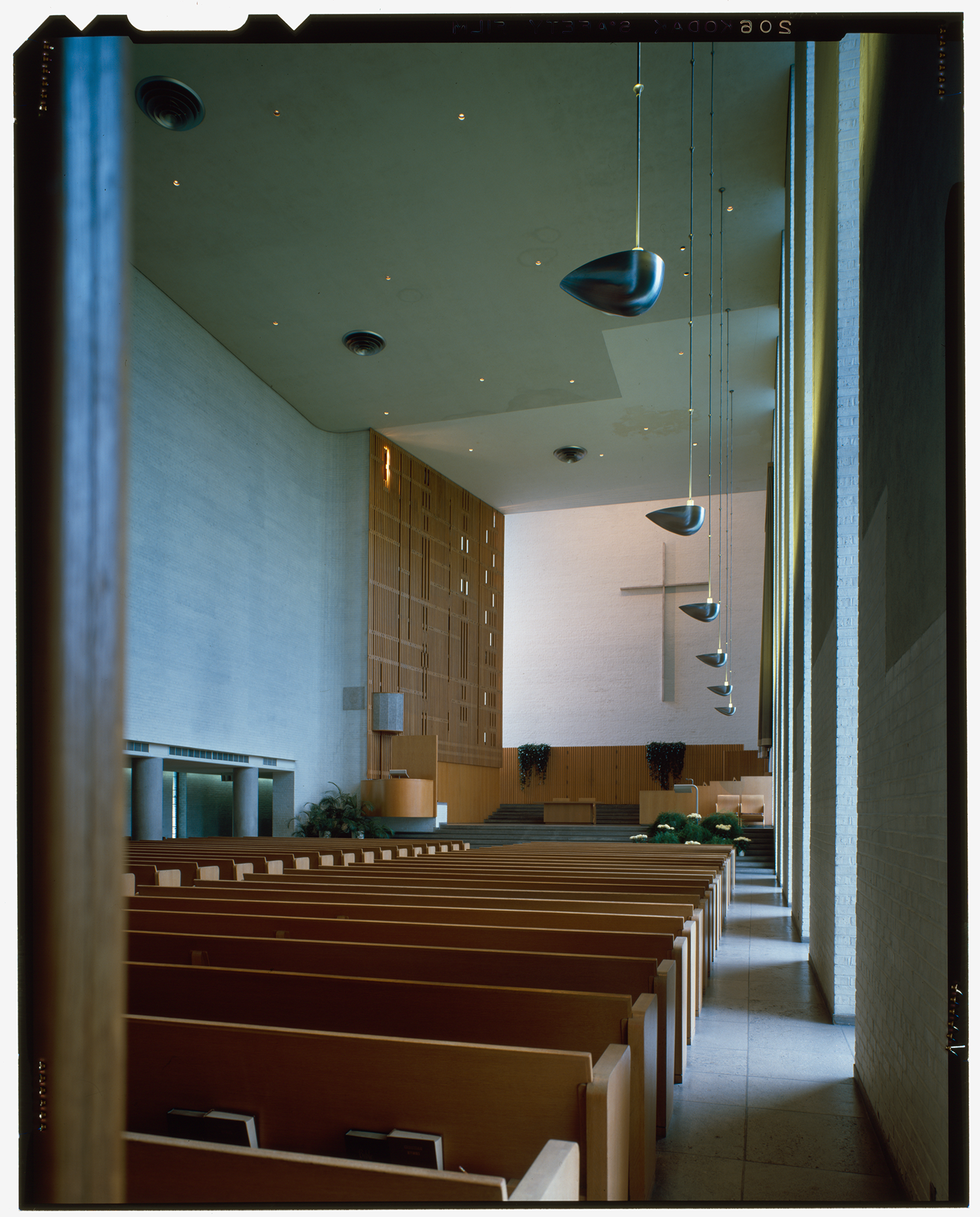
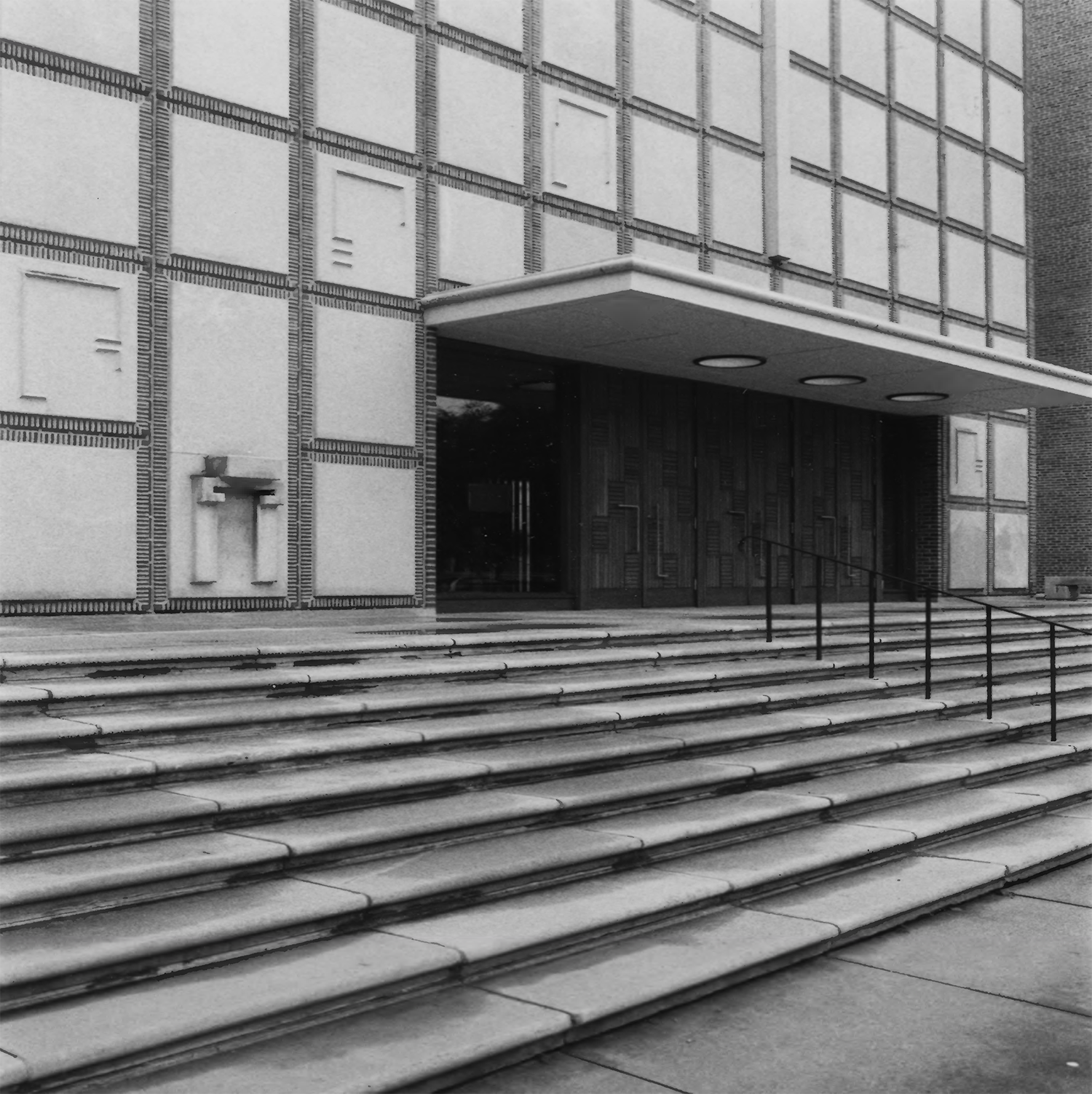
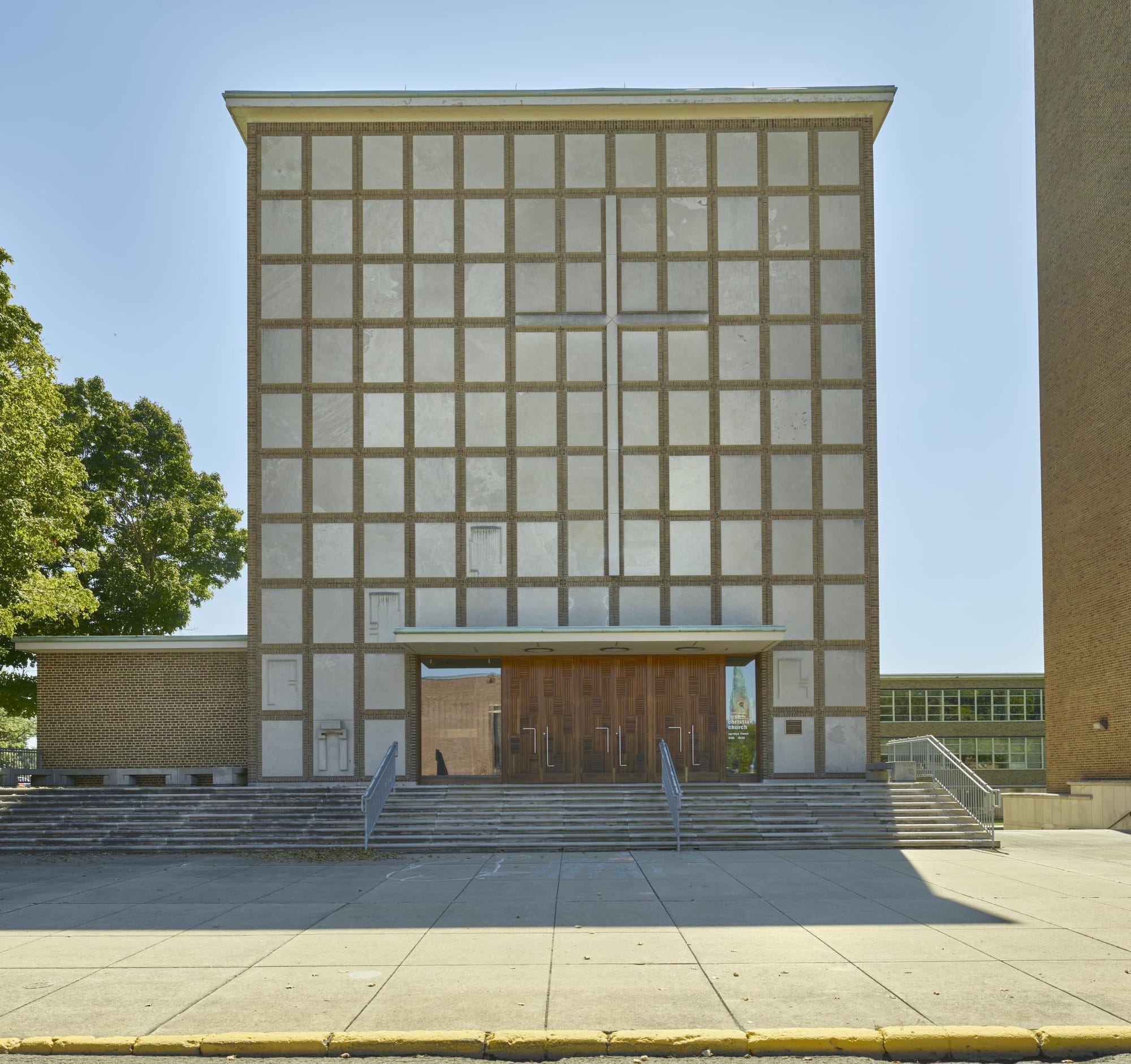
1949, on the cover of Architectural Forum, the Internet Archive | 1959, on the cover of United Church Herald, the Internet Archive | 1973, Declan Haun, Wikimedia Commons | 1973, Declan Haun, Wikimedia Commons | 1973, Declan Haun, Wikimedia Commons | Balthazar Korab, Library of Congress | Interior, Balthazar Korab, Library of Congress | Steps, 1999, National Historic Landmark Nomination | 2016, Carol Highsmith, Library of Congress


The first foray into architectural modernism for Columbus and the Millers, the success of Tabernacle Church of Christ would radically shift the character of both the city and the family. Over the course of the project, J. Irwin Miller would become close friends with Eero Saarinen, commissioning him to design four more buildings including their family home in Columbus, and deepen a passion for architecture. In the 1950s, that passion led the Cummins CEO to endow a foundation to pay architects’ fees for new public buildings in the city, turning Columbus into a hotbed of architectural experimentation, incredible creativity, and an unlikely pilgrimage site.
What would modern-day Columbus have looked like if Gilchrist had been healthy enough to build his more traditional design? What if Nettie Sweeney Miller picked another architect or was a little less persuasive in her pursuit of Eliel Saarinen? What if the Saarinens dropped the ball and designed a clunker?
(thankfully [well, not for E.B. Gilchrist] they all did and those questions are moot)
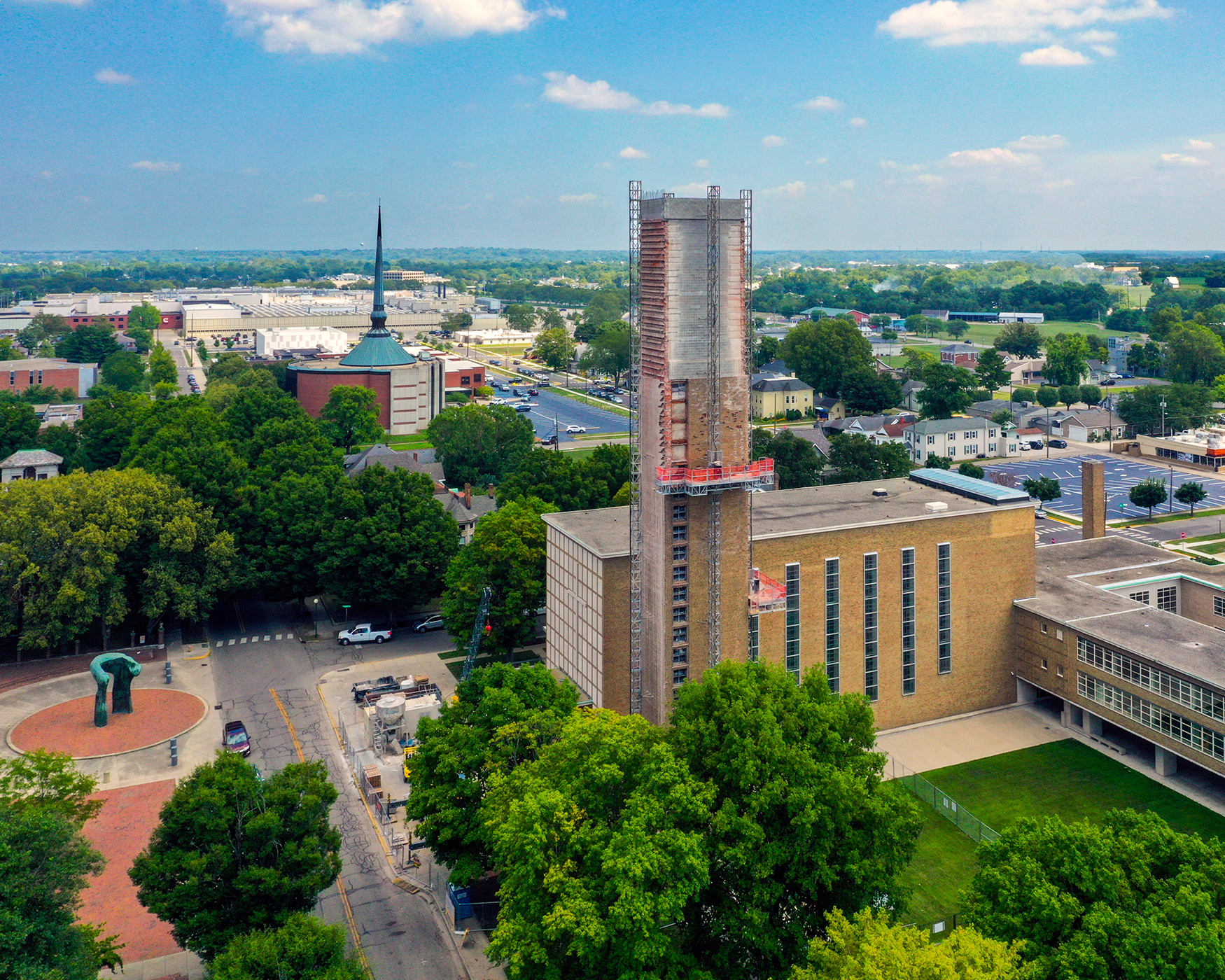
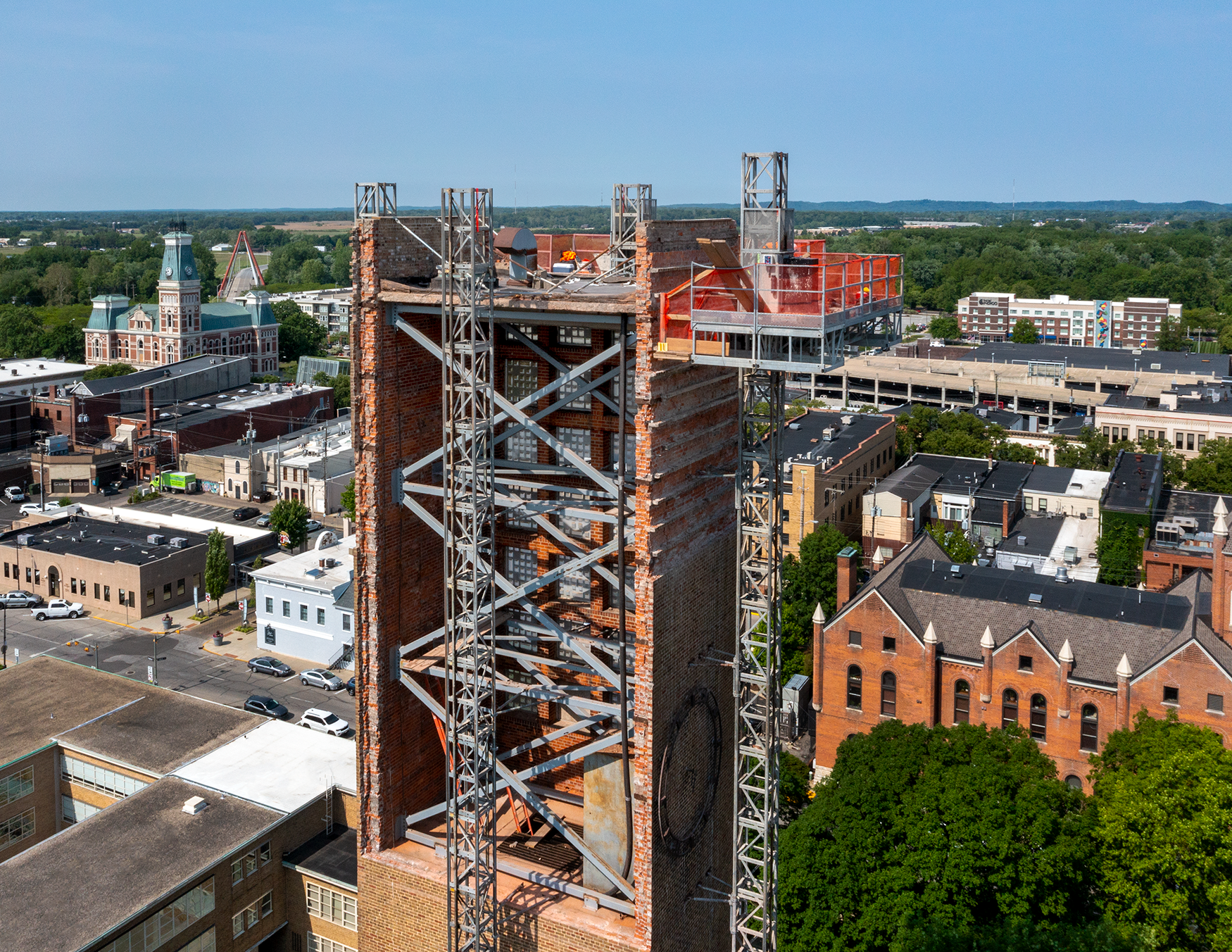
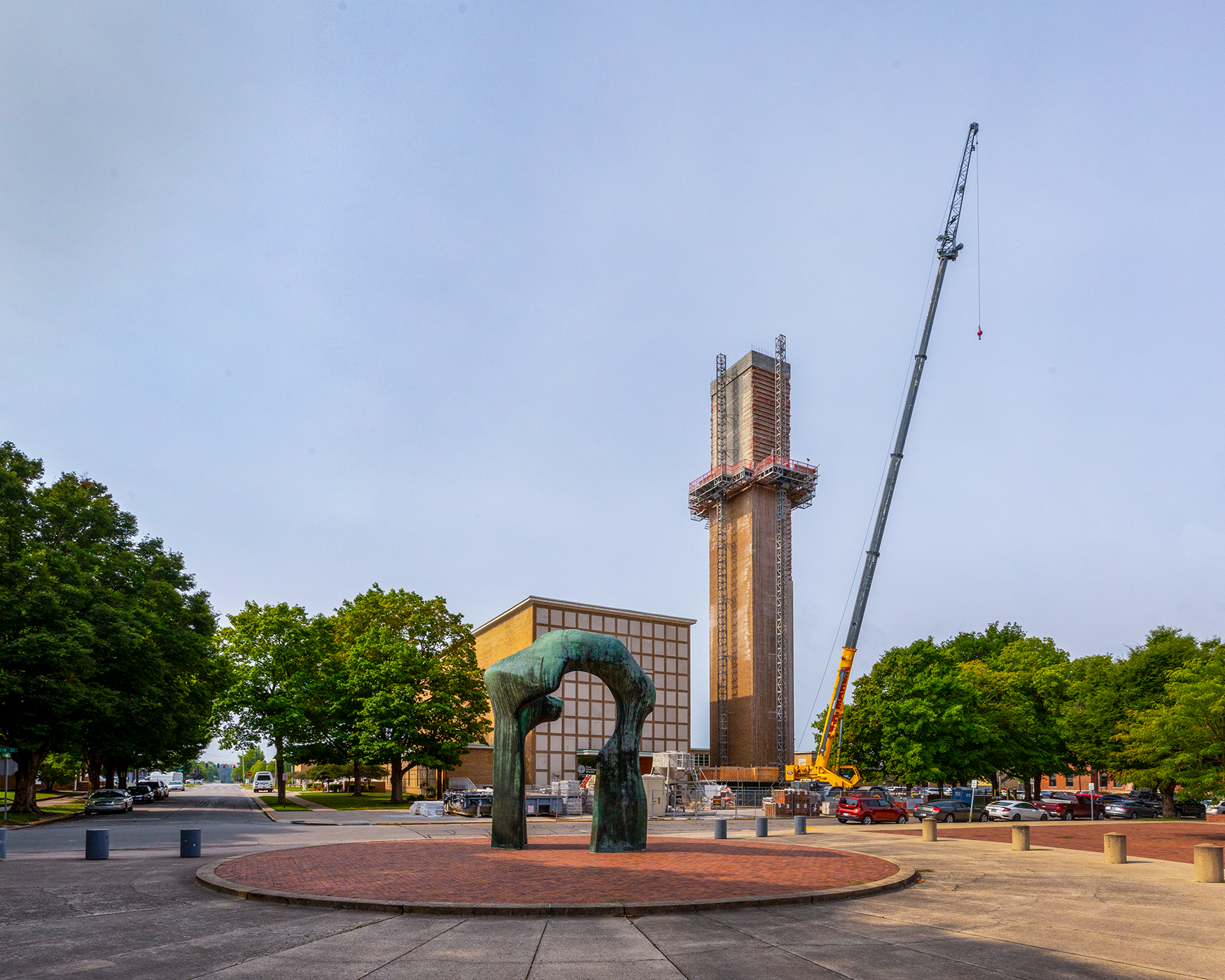
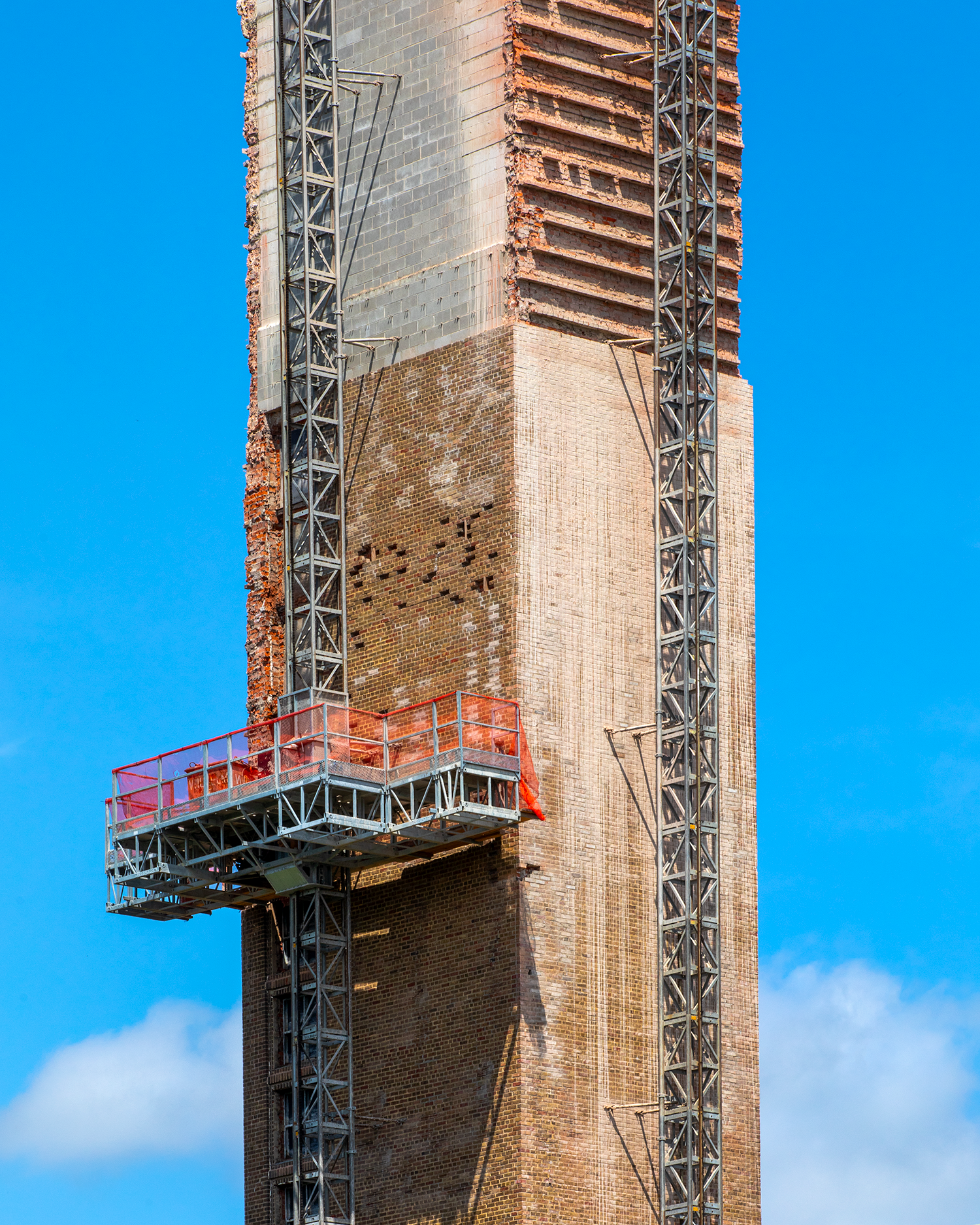
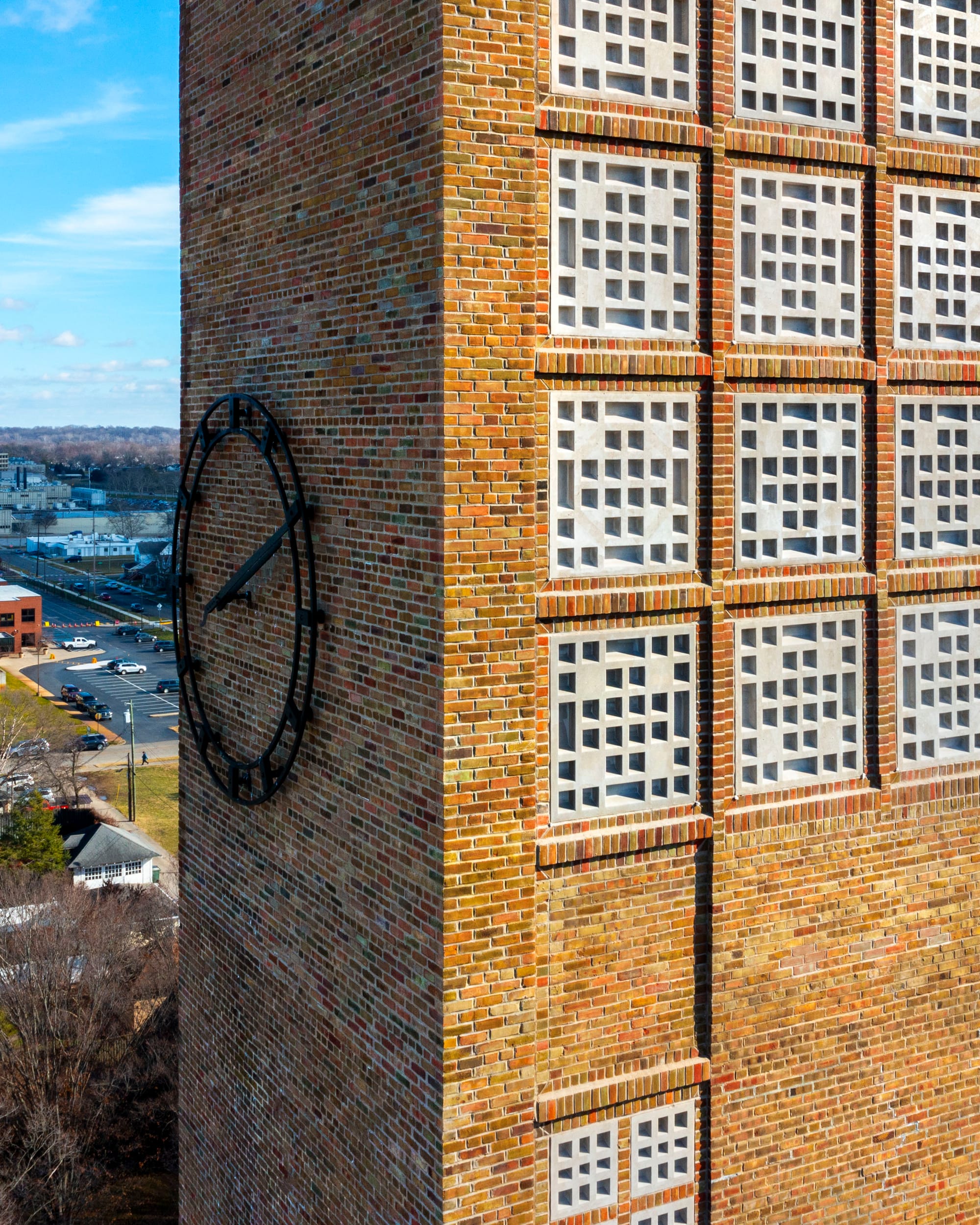
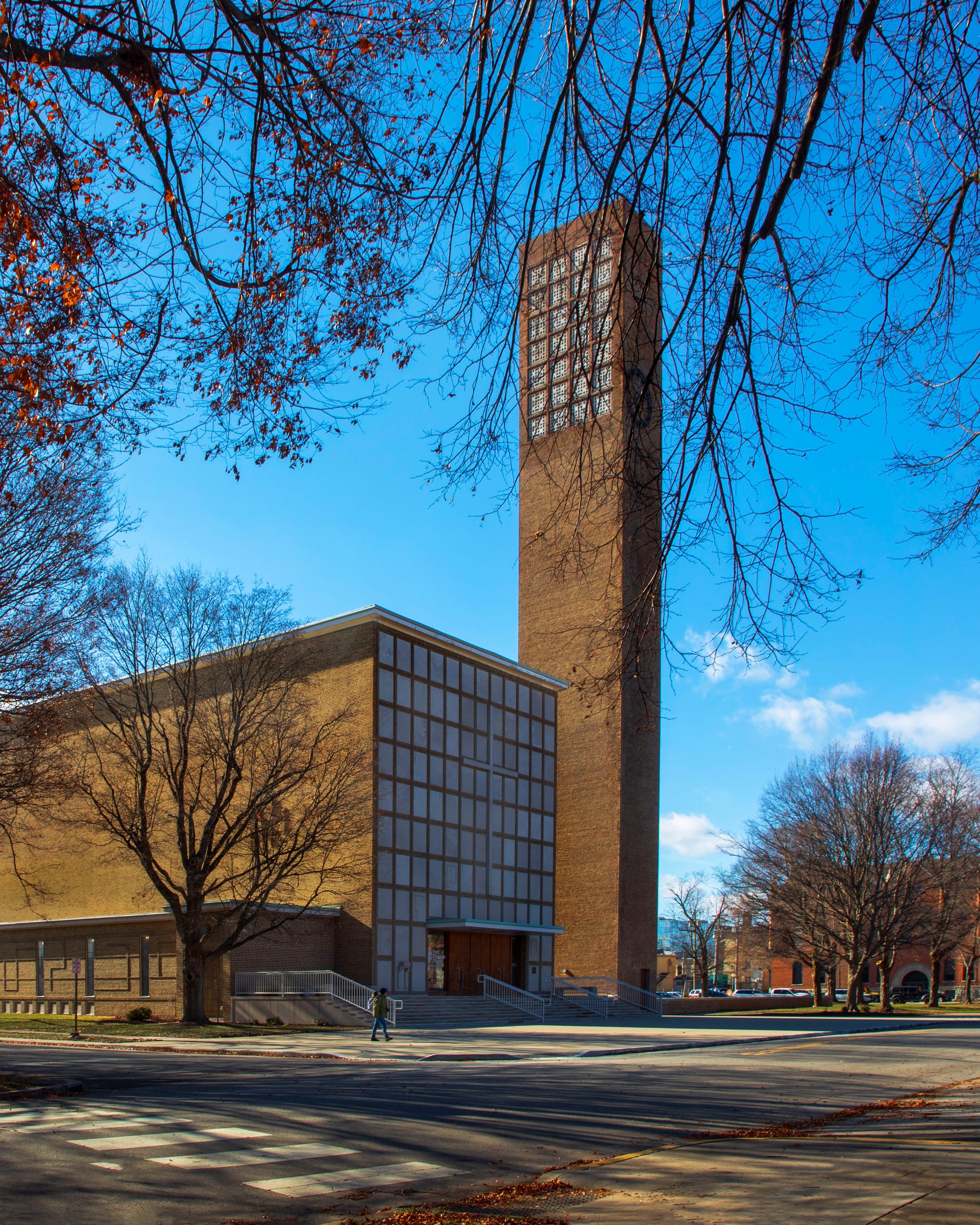
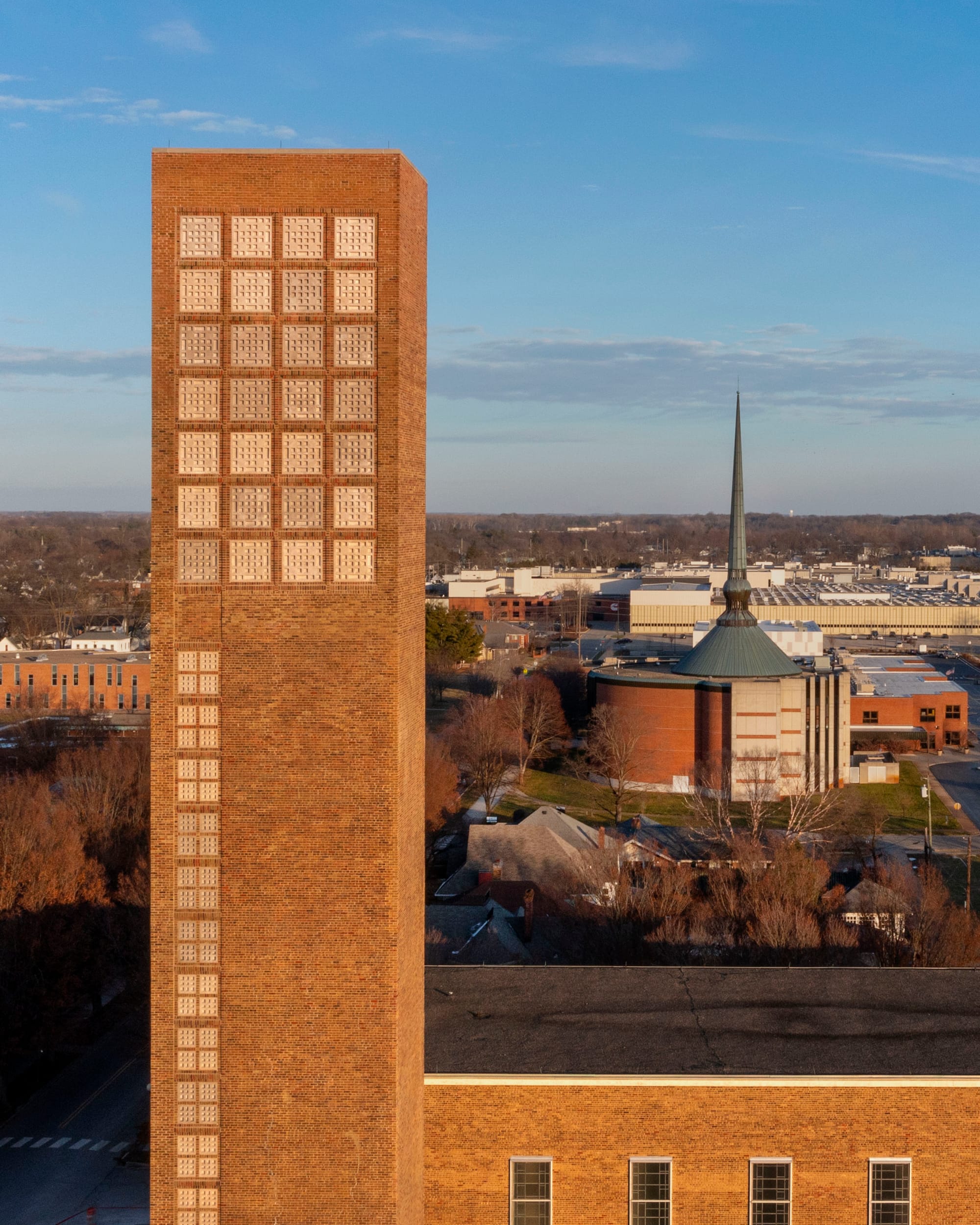
With the successful 2023 restoration of the tower—led by Louis Joyner Architect, working with Ratio Design, Arsee Engineers, and The Engineering Collaborative—complete, First Christian Church looks as fresh and groundbreaking as it did when it changed Columbus forever in 1942.
Production Files
Further reading:
- National Historic Landmark Nomination Form
- In Architectural Forum, 1942
- Symbolism of the First Christian Church by Elsie Irwin Sweeney
- First Christian Church Tower Renovation
 Author: Gretchen Buggeln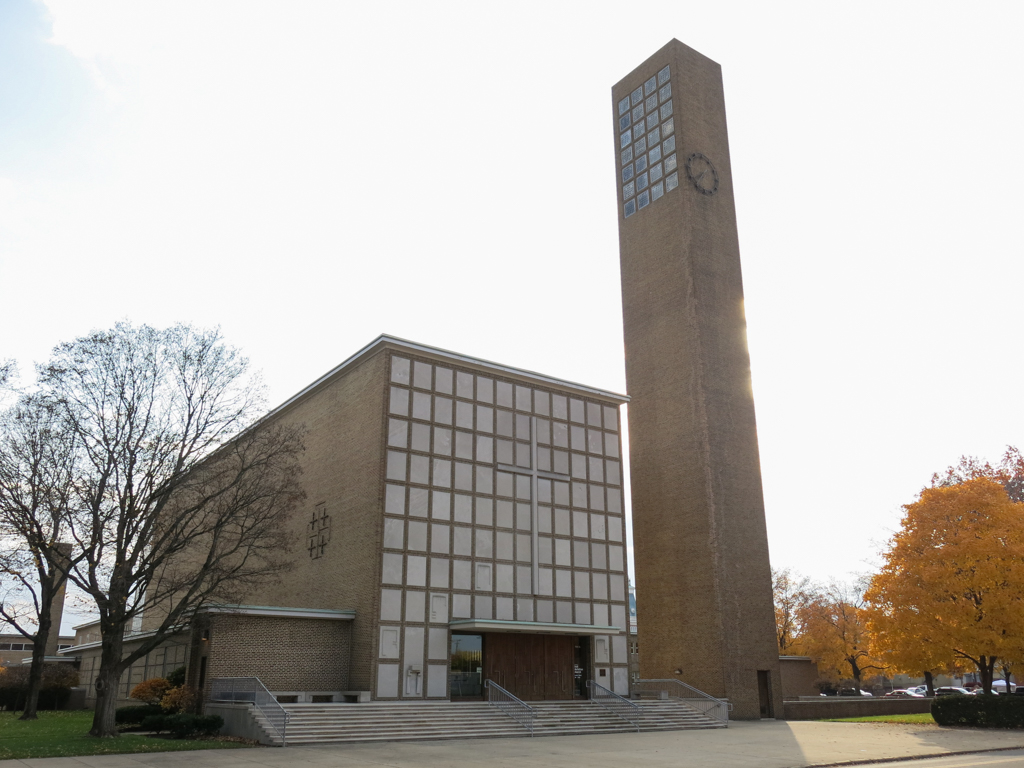
 Kathy Mulder
 Email
Email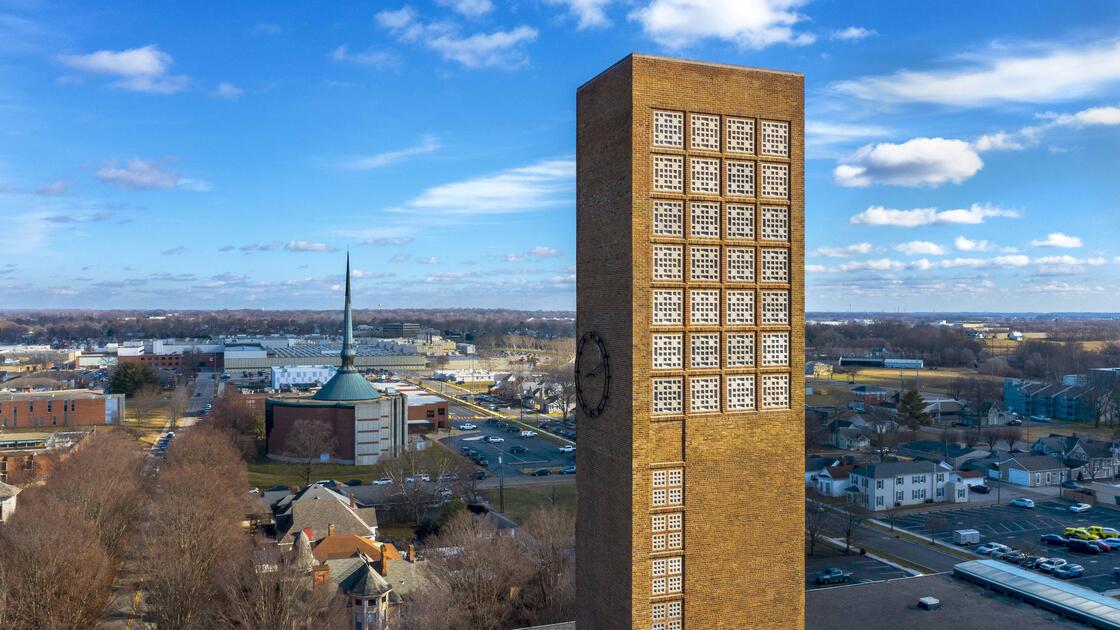
A few other articles from May 1942.



2023
Member discussion: