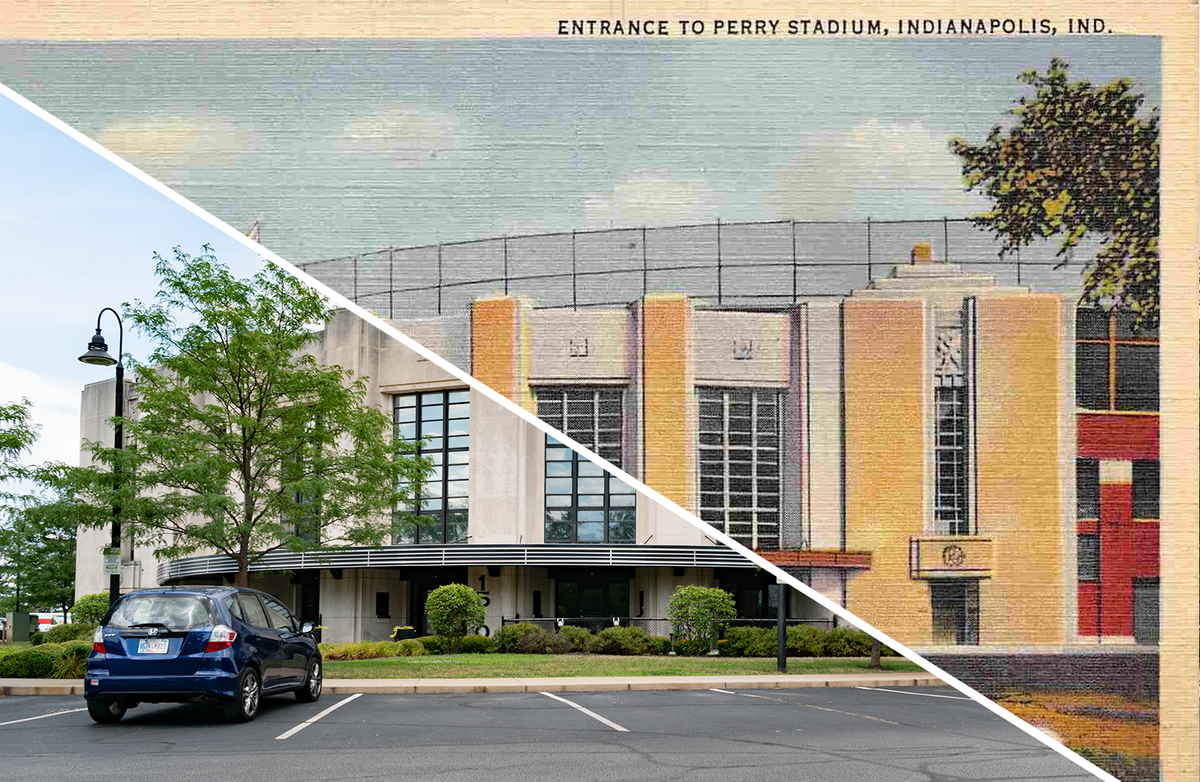
One of the quirkier examples of adaptive reuse you’ll ever see: you can now live in the ballpark where baseball Hall-of-Famer Henry Aaron played for the Indianapolis Clowns in the Negro Leagues. Designed by architects Pierre & Wright, this fantastic Art Deco stadium opened in 1931 as the home of the Indianapolis Indians. Vacated by that AAA team in 1996, Bush Stadium sat vacant for years—literally serving as an auto dump during the Obama administration's Cash-for-Clunkers program—until an unlikely apartment conversion saved it. Financed partially with a $5m grant from the City of Indianapolis, the Stadium Lofts opened in 2013.
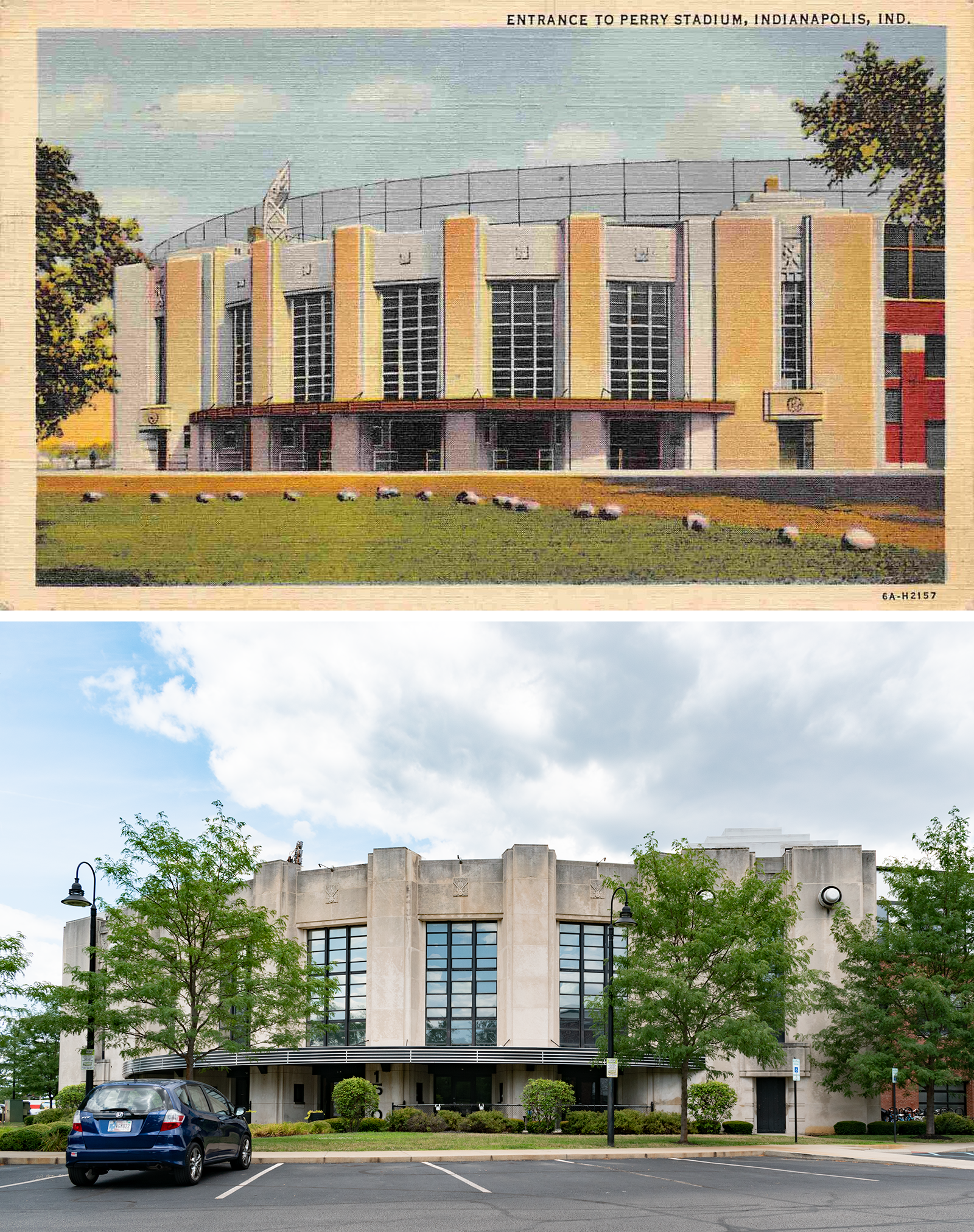
So, what’s changed? Given the total switch in use, impressively little on this elevation.
- I guess your HVAC needs change when you actually need to create a building envelope, rather than a grandstand open to the elements.
- Fewer baseballs flying around means no need for fencing and netting to keep them in.
- More trees, more bikes, more convenient parking.
Norman A. Perry, son of the founder of Indianapolis’ electric utility, assumed control of the Indianapolis minor league baseball franchise after his brother James died in a plane crash in 1929. Baseball was booming even if the United States—deep in the throes of the Great Depression—was not, and Perry hired Indiana architects Pierre & Wright to design a new stadium for his team. The new concrete and steel stadium could hold 17,000 fans and cost $350k to build ($7.3m in 2026 dollars). Norman Perry named it after his brother, selflessly dubbing it…Perry Stadium. The ivy-covered brick walls in the outfield may have been a source of inspiration for Wrigley Field.
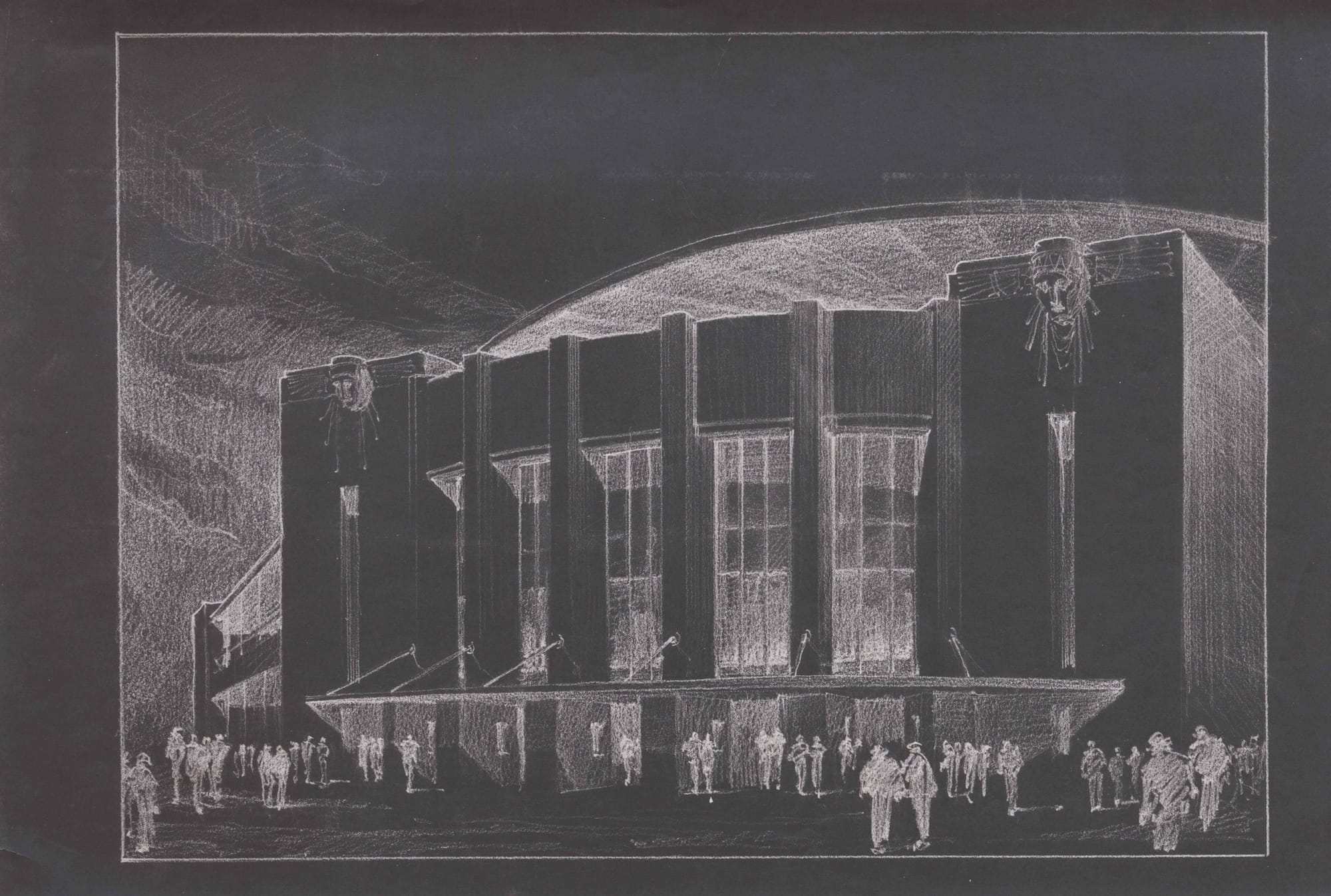
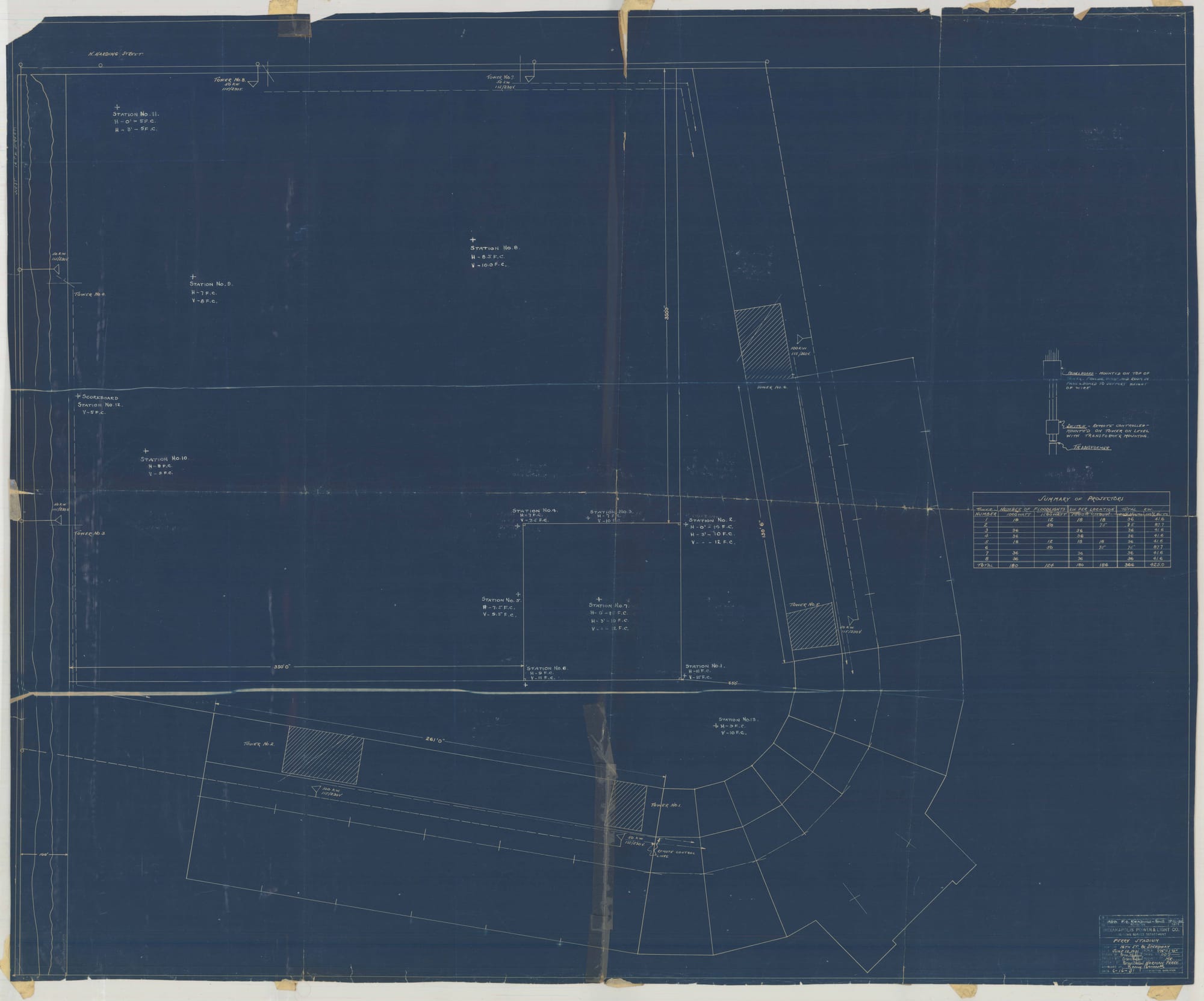
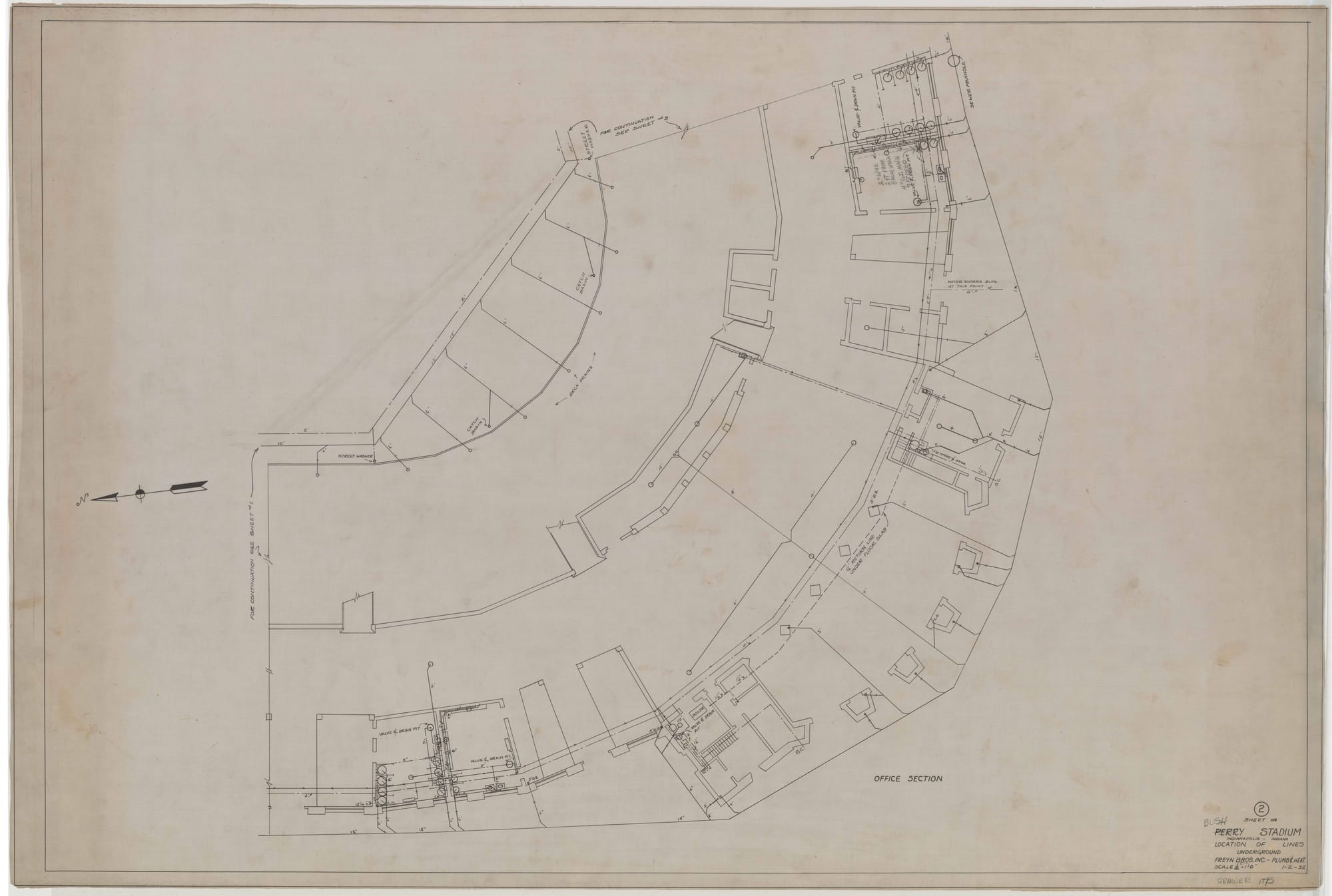
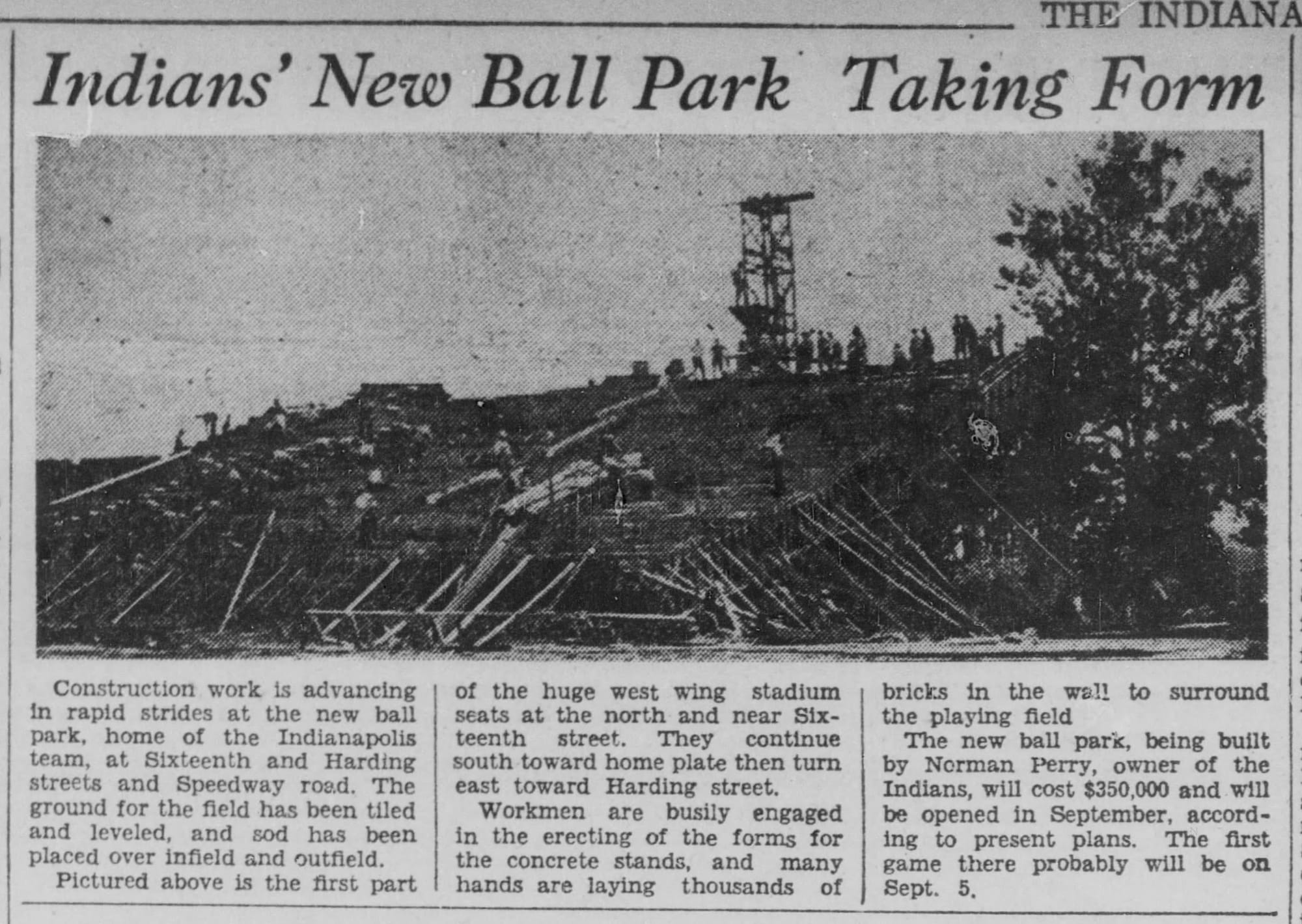
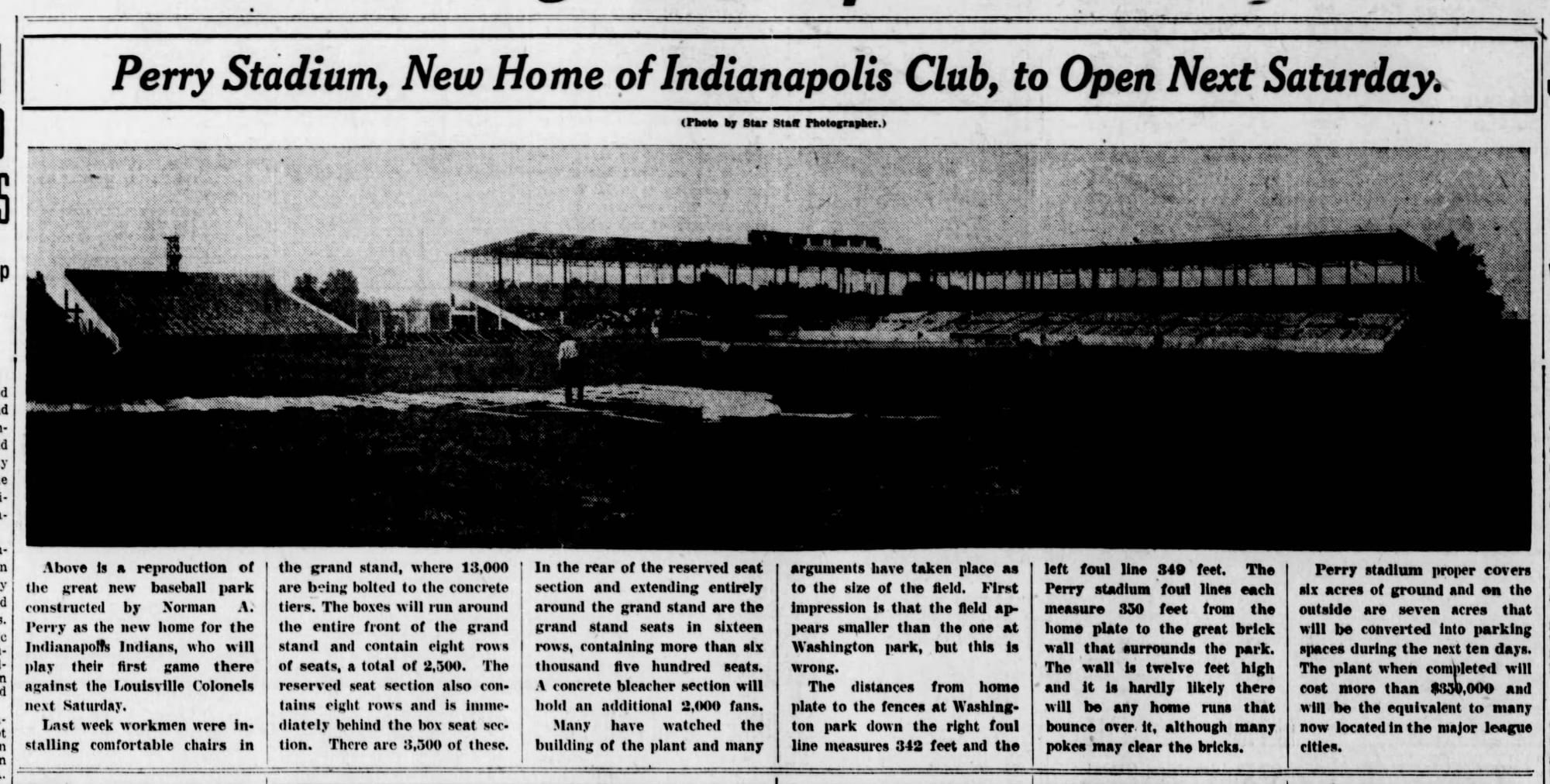
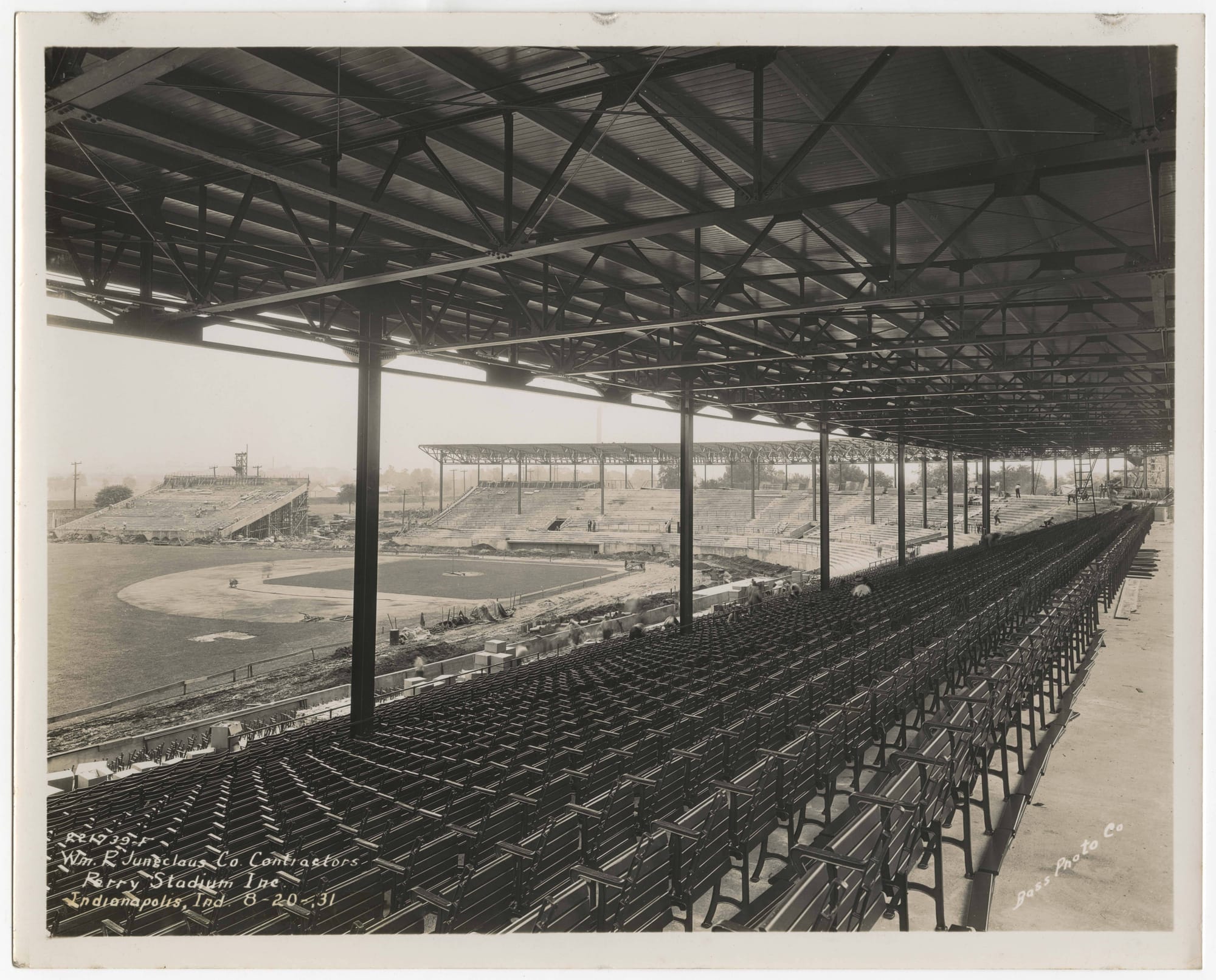
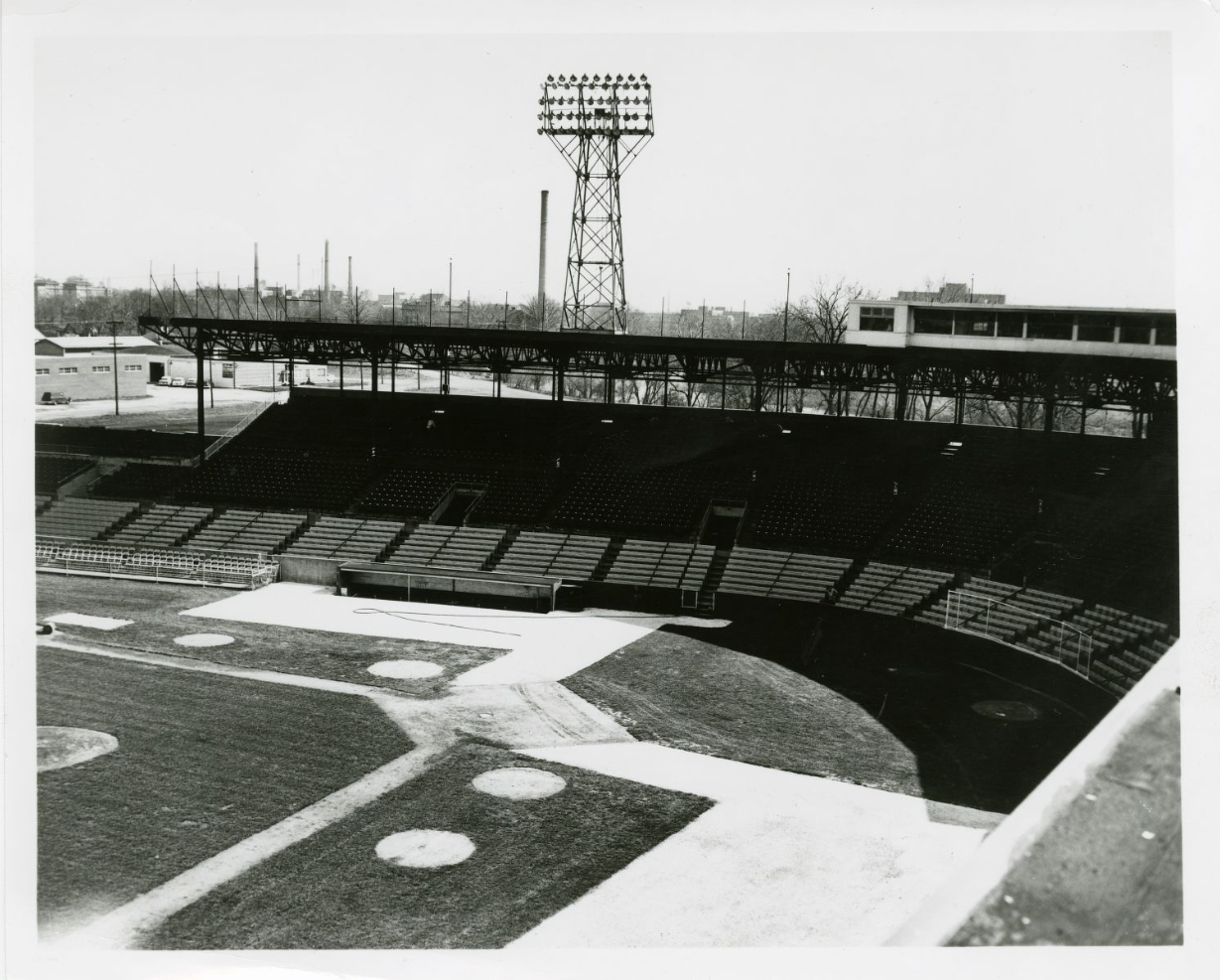
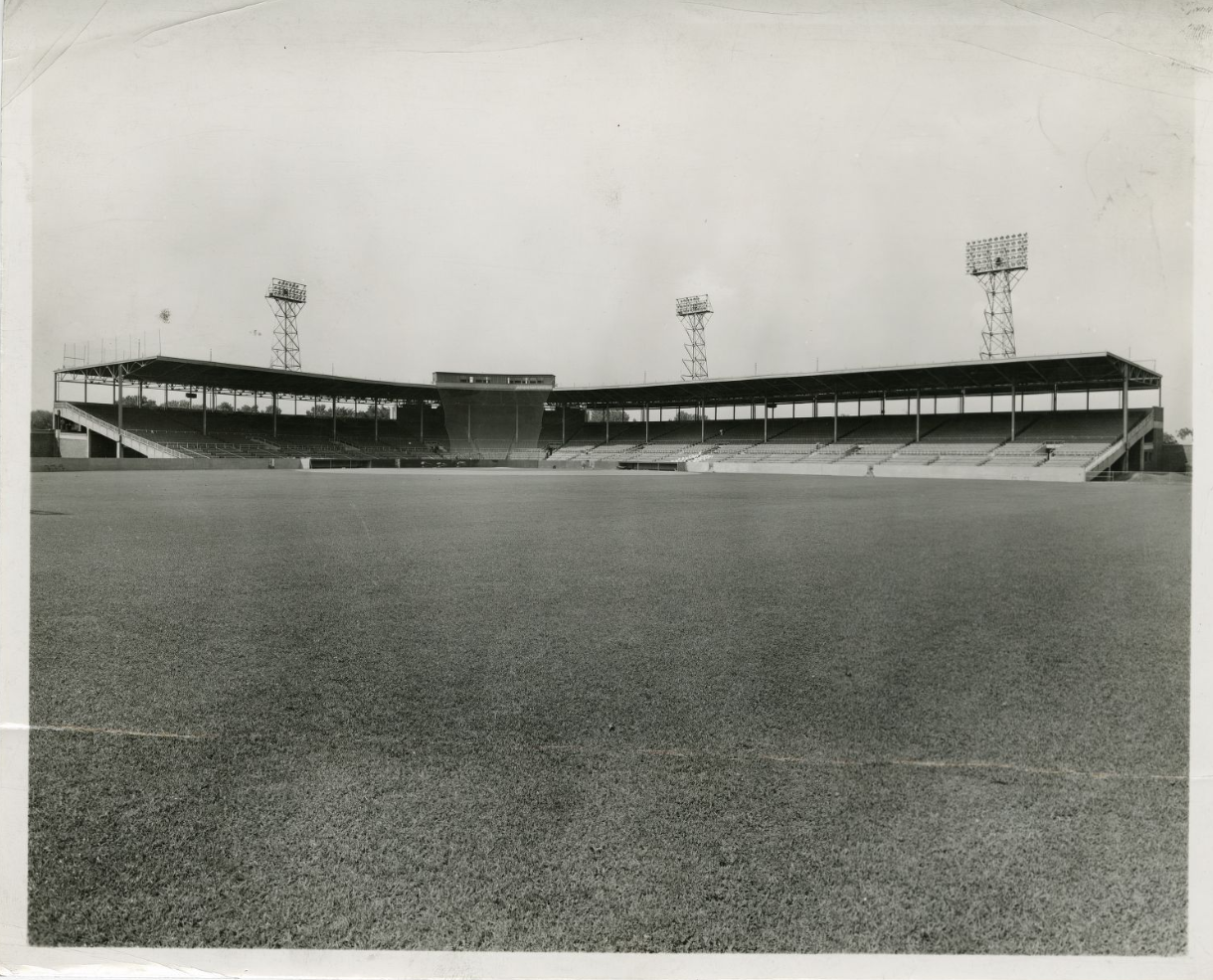
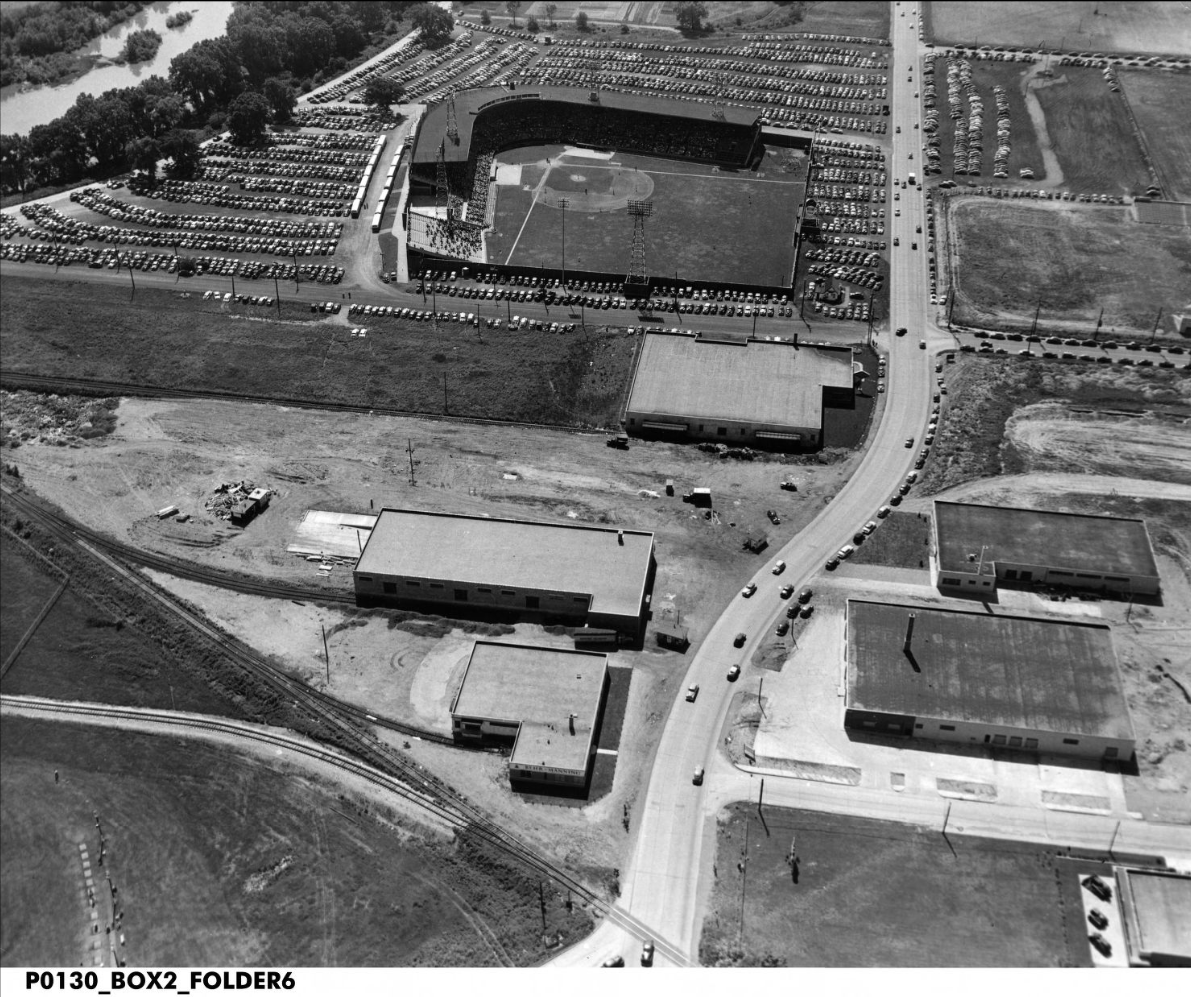
Pierre & Wright rendering, Pierre and Wright Architectural Records Collection, Ball State University Libraries | Lighting and electrical plan, 1931, Indianapolis Department of Parks and Recreation Landscape Architectural Drawings Collection, Ball State University Libraries | Location of underground lines, 1932, Indianapolis Department of Parks and Recreation Landscape Architectural Drawings Collection, Ball State University Libraries | 1931, ballpark taking shape | 1931, ballpark to open | 1931, Fran E. Schroeder Architectural Records, Ball State University Libraries | 1930s, W.H. Bass Photo Company Collection, Indiana Historical Society | 1938, W. H. Bass Collection, Indiana Historical Society | 1930s aerial view, W. H. Bass Collection, Indiana Historical Society
Looking at everything from affiliated minor-league baseball to the Negro Leagues, to barnstorming exhibition matchups, the list of people who played here is impressive: Oscar Charleston, Josh Gibson, Cool Papa Bell, Buck Leonard, Ray Brown, and Jud Wilson. Game Six of the 1943 Negro Leagues World Series was played here, and the Indianapolis ABCs, the Indianapolis Crawfords, and the Indianapolis Clowns sometimes called this ballpark home. In 1932, soon after it opened, Babe Ruth and Lou Gehrig played an exhibition here with the Yankees. Decades later, Randy Johnson, Larry Walker, Minnie Miñoso, Dave DeBusschere, and Bob Uecker would all play here for the Indianapolis minor league team.
Renamed Victory Field in a fit of patriotism in the 1940s, the Perry family estate sold the stadium to the City of Indianapolis in 1967 for $350k (equivalent to $3m today). The city promptly renamed it for Donie Bush, Indiana’s “Mr. Baseball”, who spent decades playing and managing in the Major Leagues before buying the Indianapolis Indians from Norman Perry in 1941.
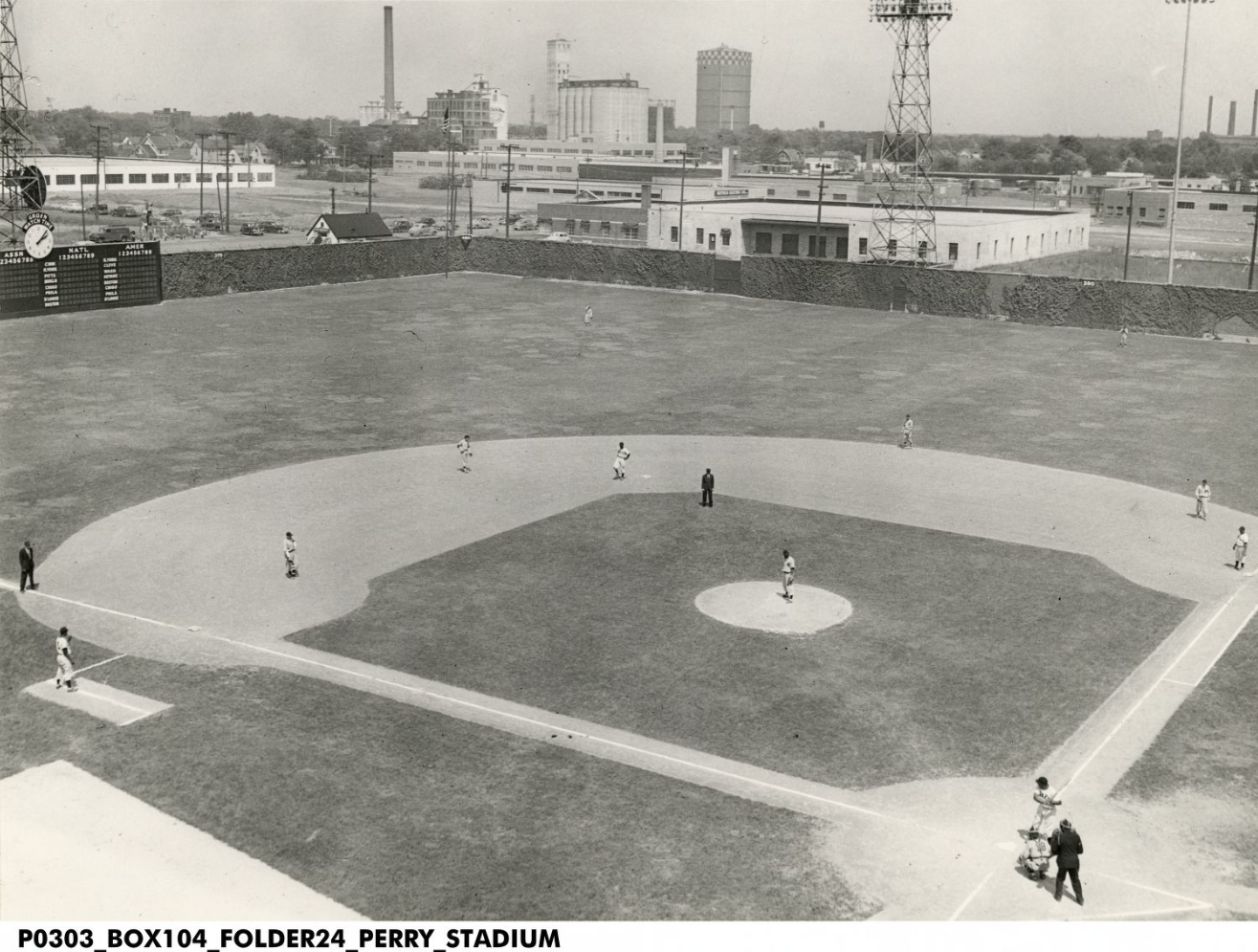
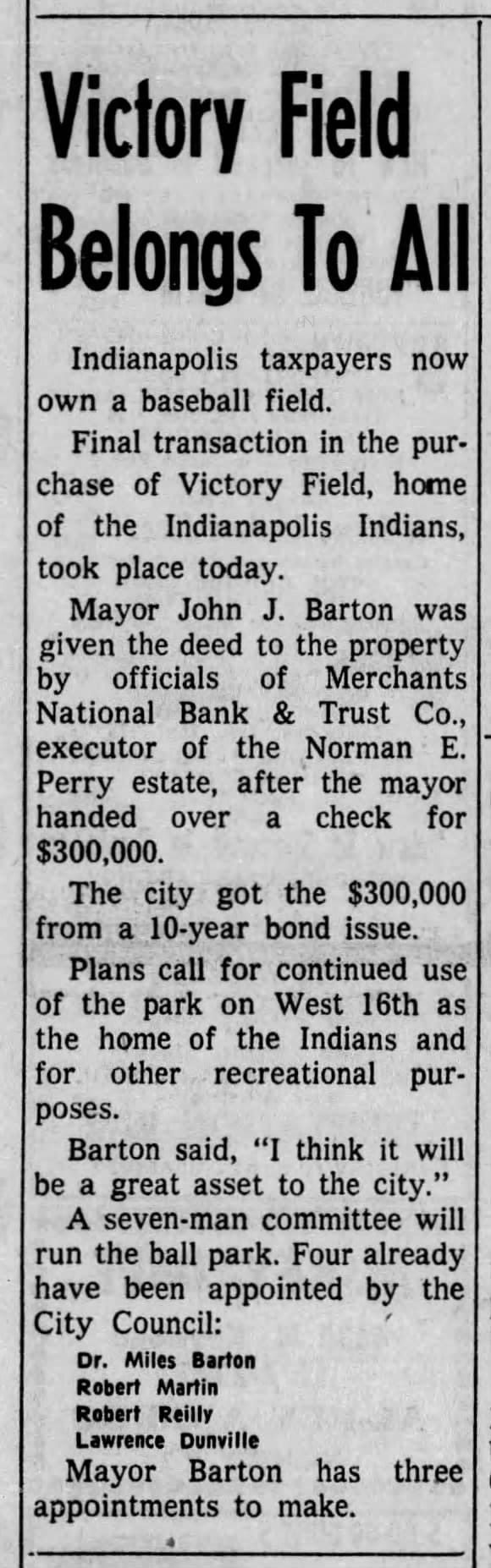
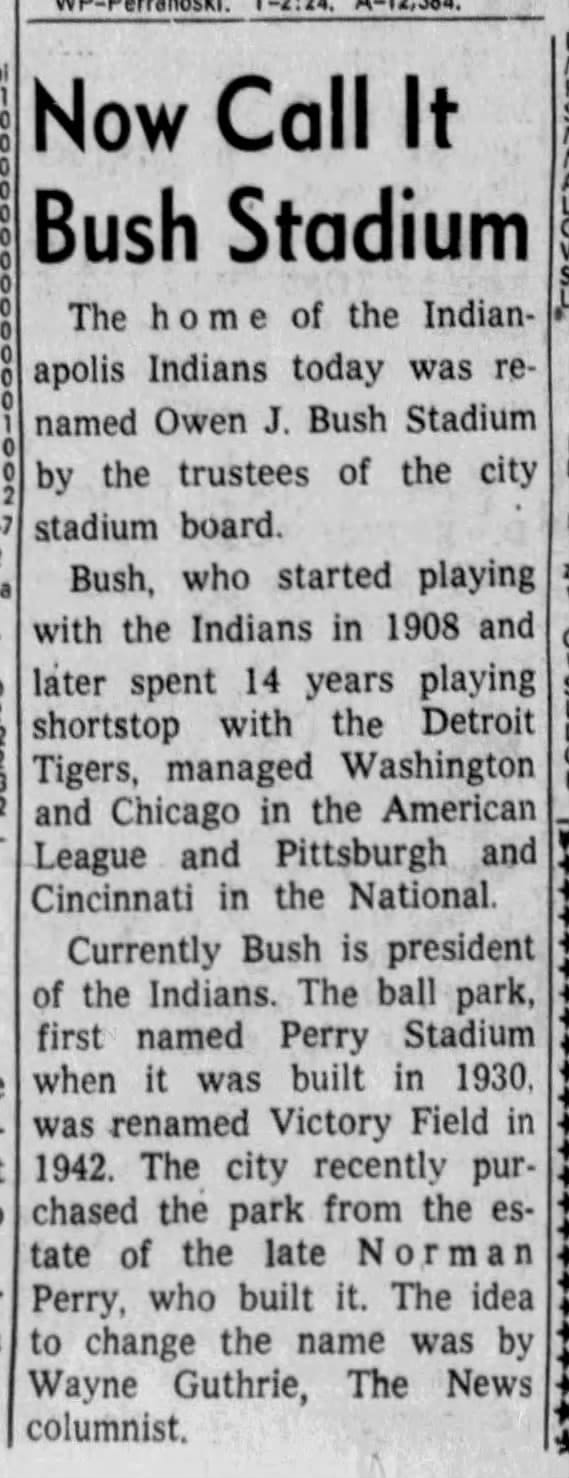
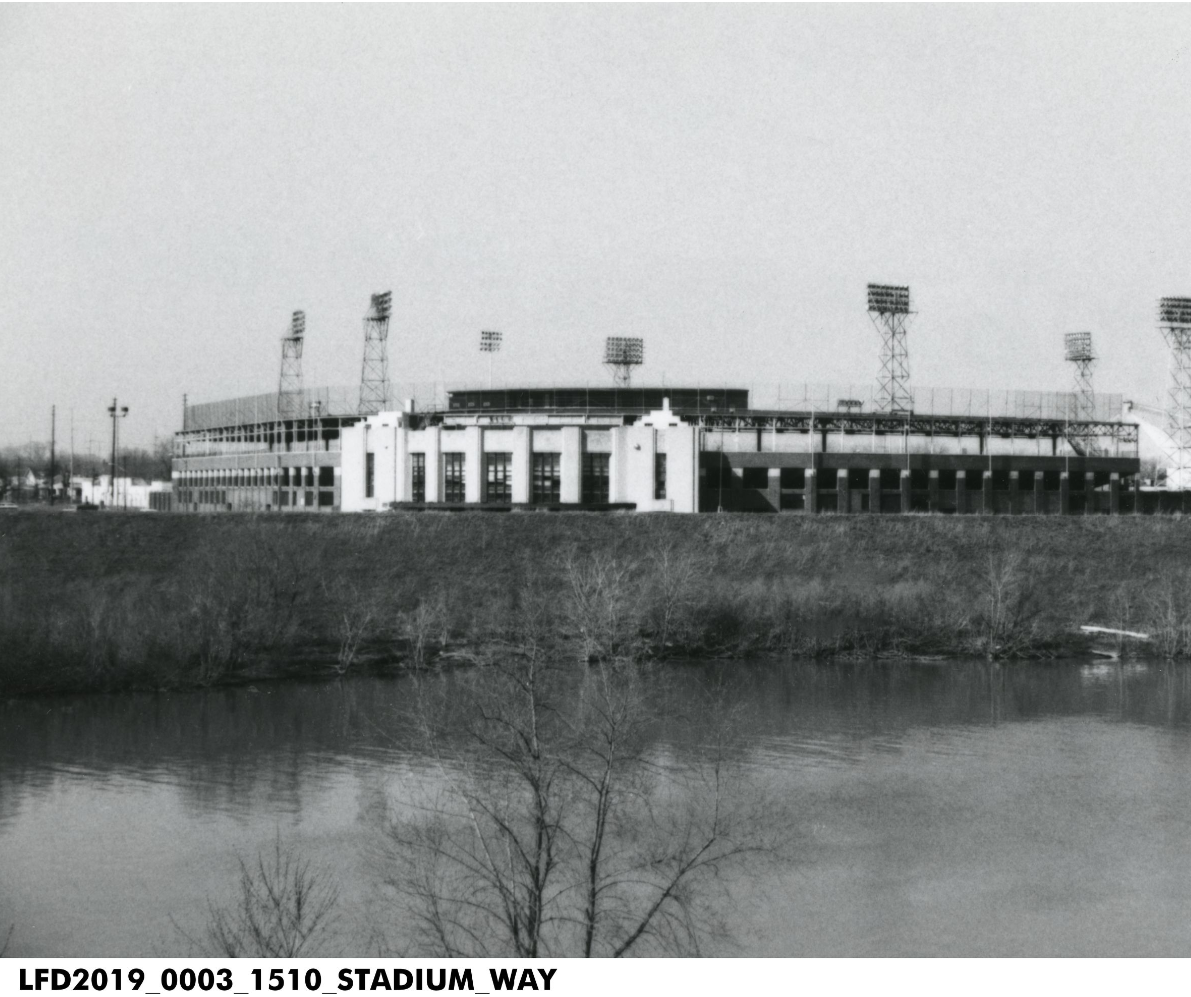
1949, Indiana Historical Society | 1967 articles on the city's purchase and renaming | 1975, City of Indianapolis, Department of Metropolitan Development Materials, Indiana Historical Society

By the 1990s the Indianapolis AAA team wanted out of the old ballpark, which was cramped and creaky with deferred maintenance. Even major league peers with illustrious histories like Comiskey Park and Tiger Stadium (both also designed by Osborn Engineering) were crumbling towards the landfill—there wasn’t a whole lot of hope for a minor league stadium of Bush’s age and pedigree, especially one owned by a municipal government. Deploying what has become a tired script at this point, the Indianapolis Indians bullied the government into paying for half of their new ballpark, with the Capital Improvement Board as their vehicle. They played their last game here in July, 1996, moving to the new Victory Field downtown.
By that point a preservation battle was well underway—the stadium was added to the National Register of Historic Places in 1995. With the owner—the Indianapolis Parks Department—and the rest of the Indy city government looking for new uses, they leased the complex to an operator who turned it into a midget car racing track, the 16th Street Speedway. The speedway flamed out quickly and closed in 1999.
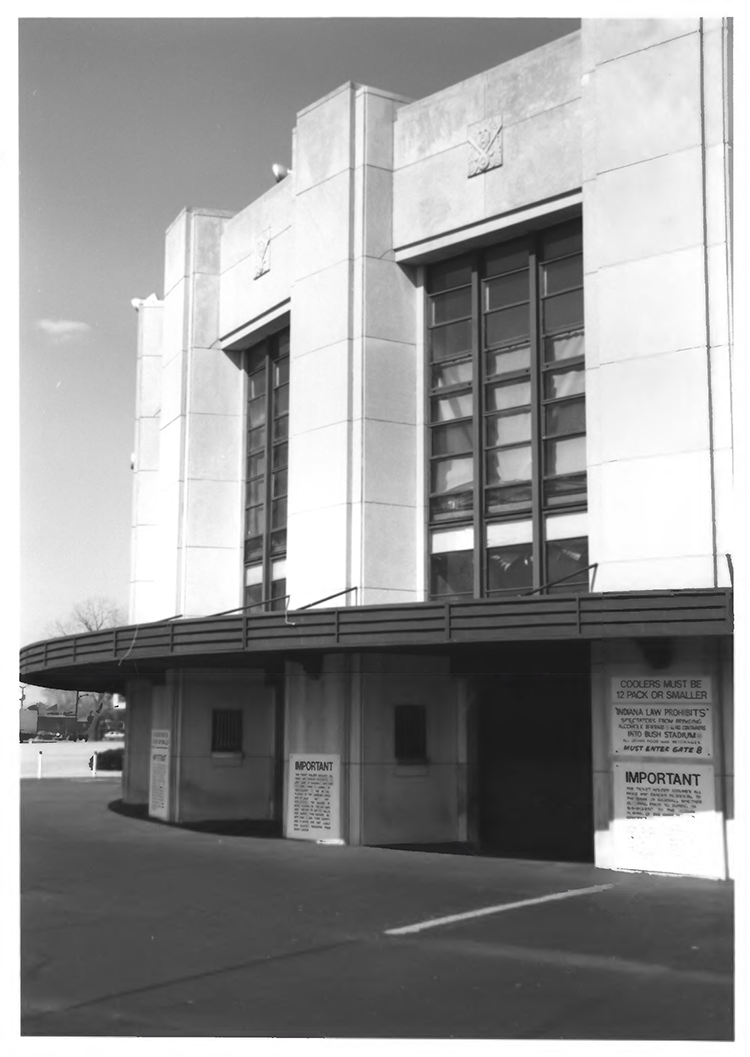
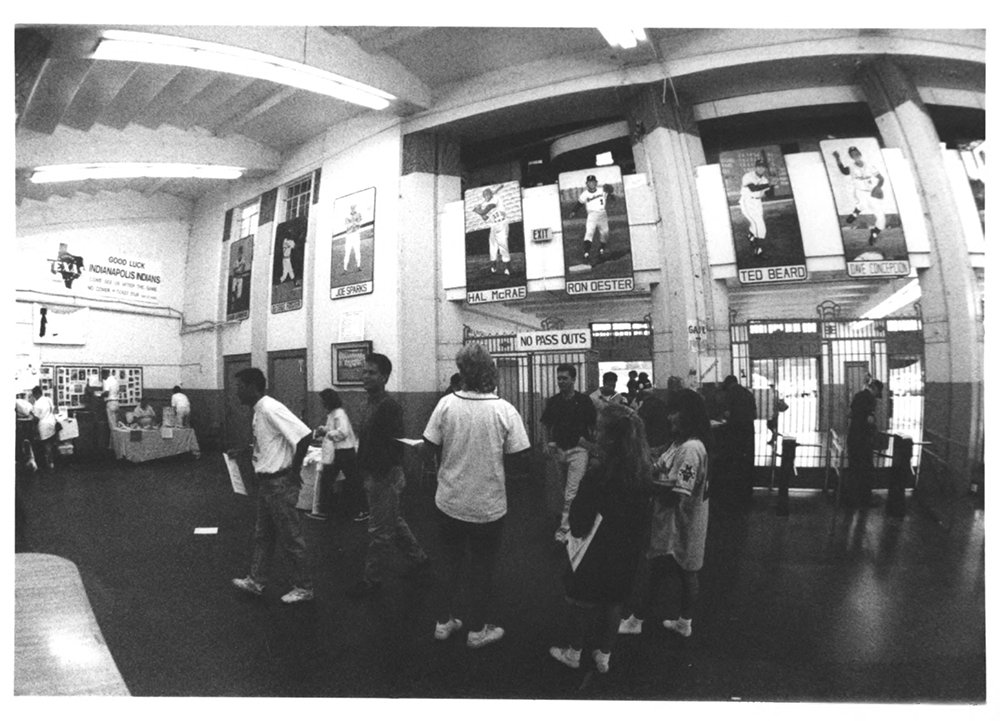
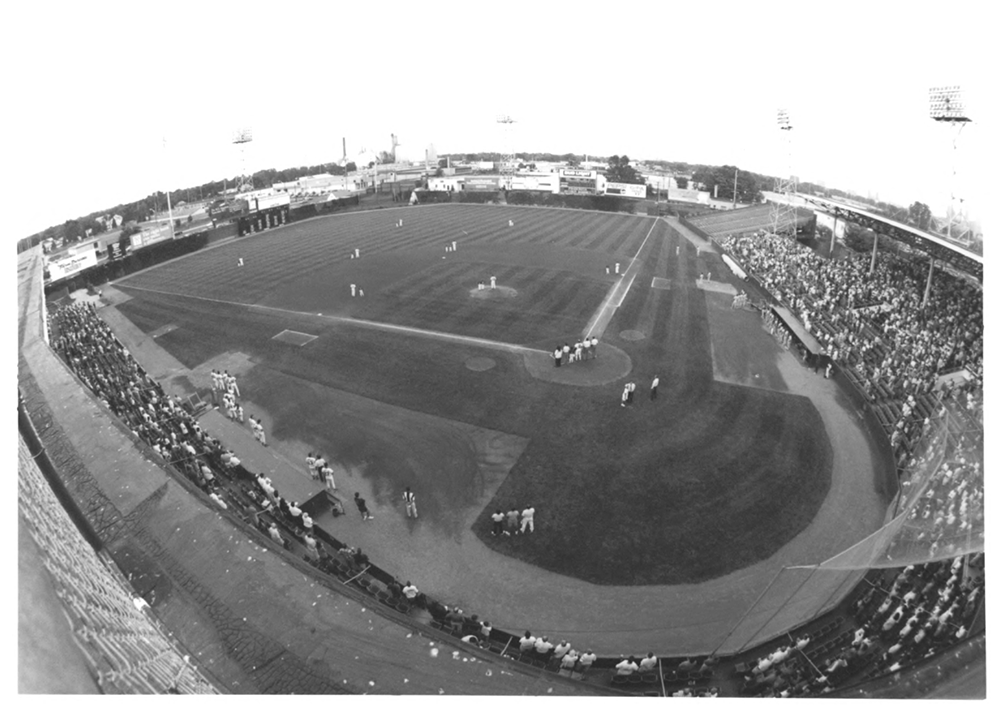
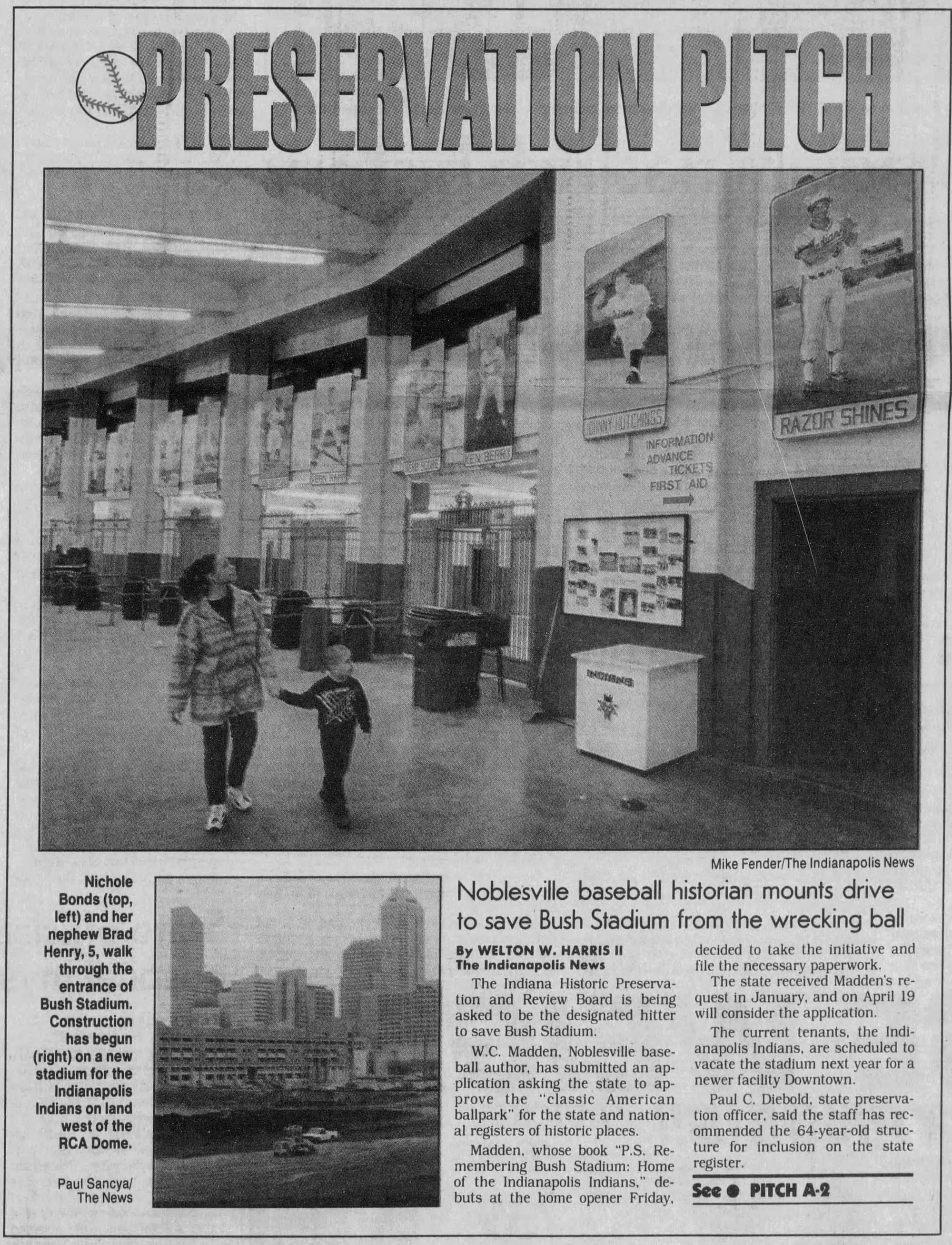
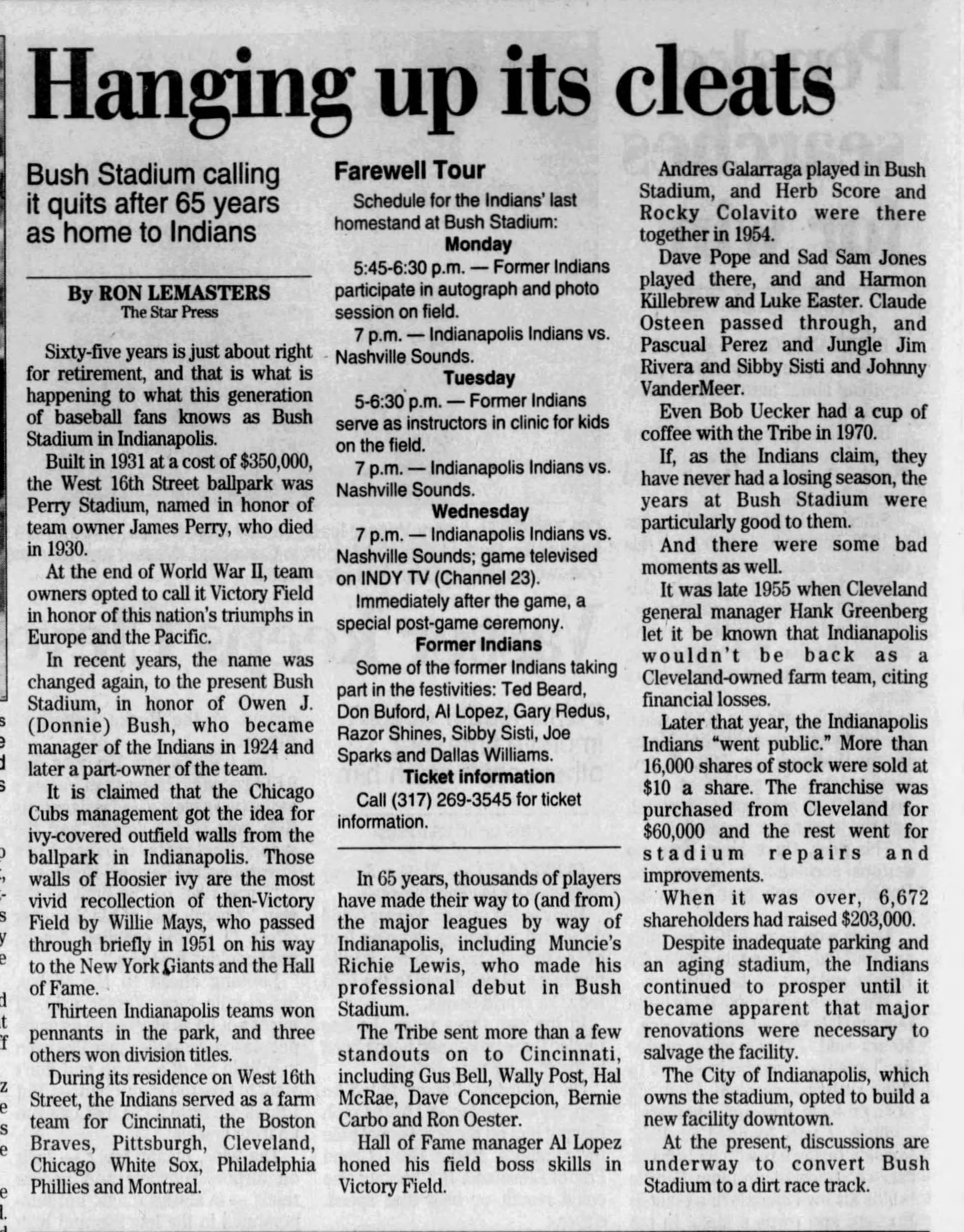
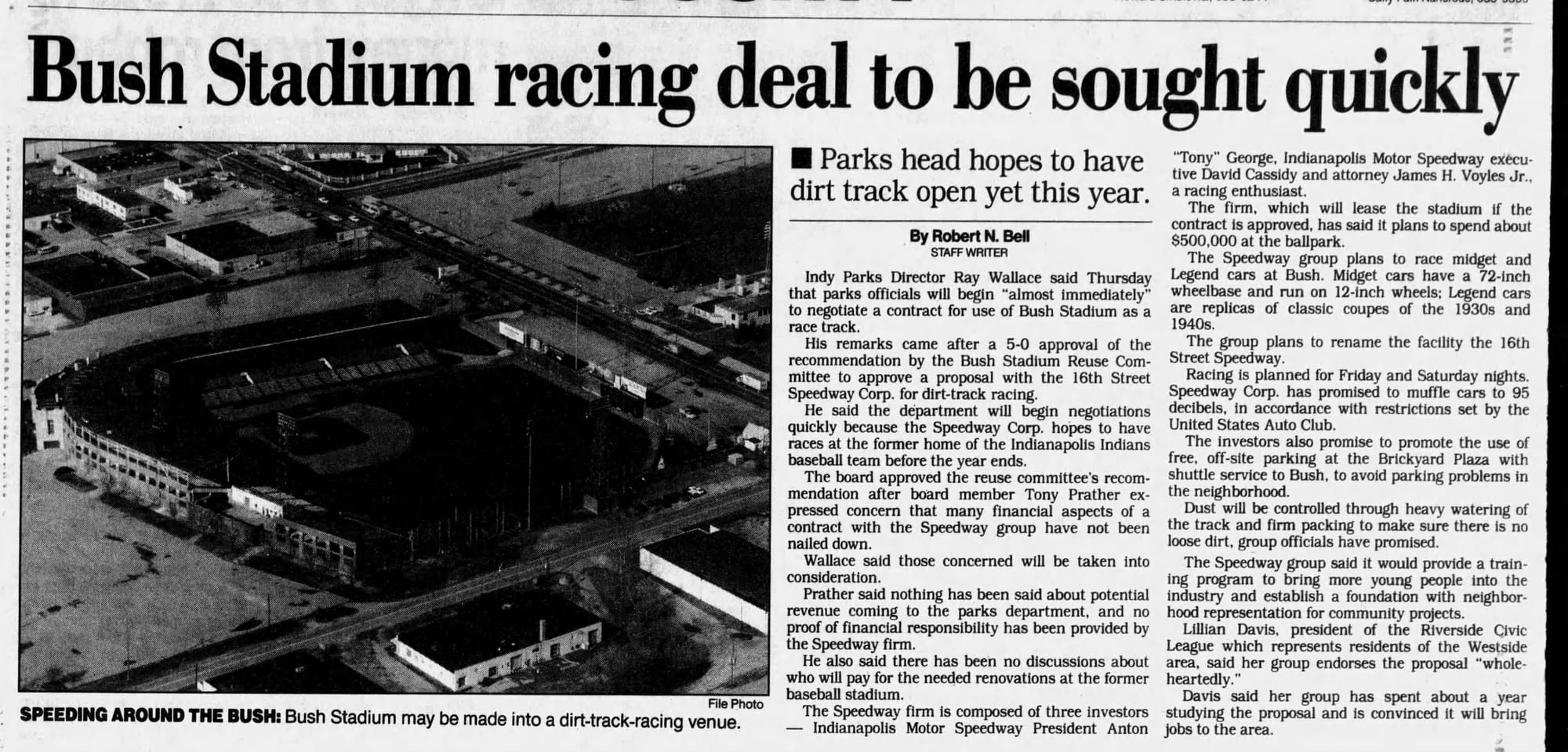
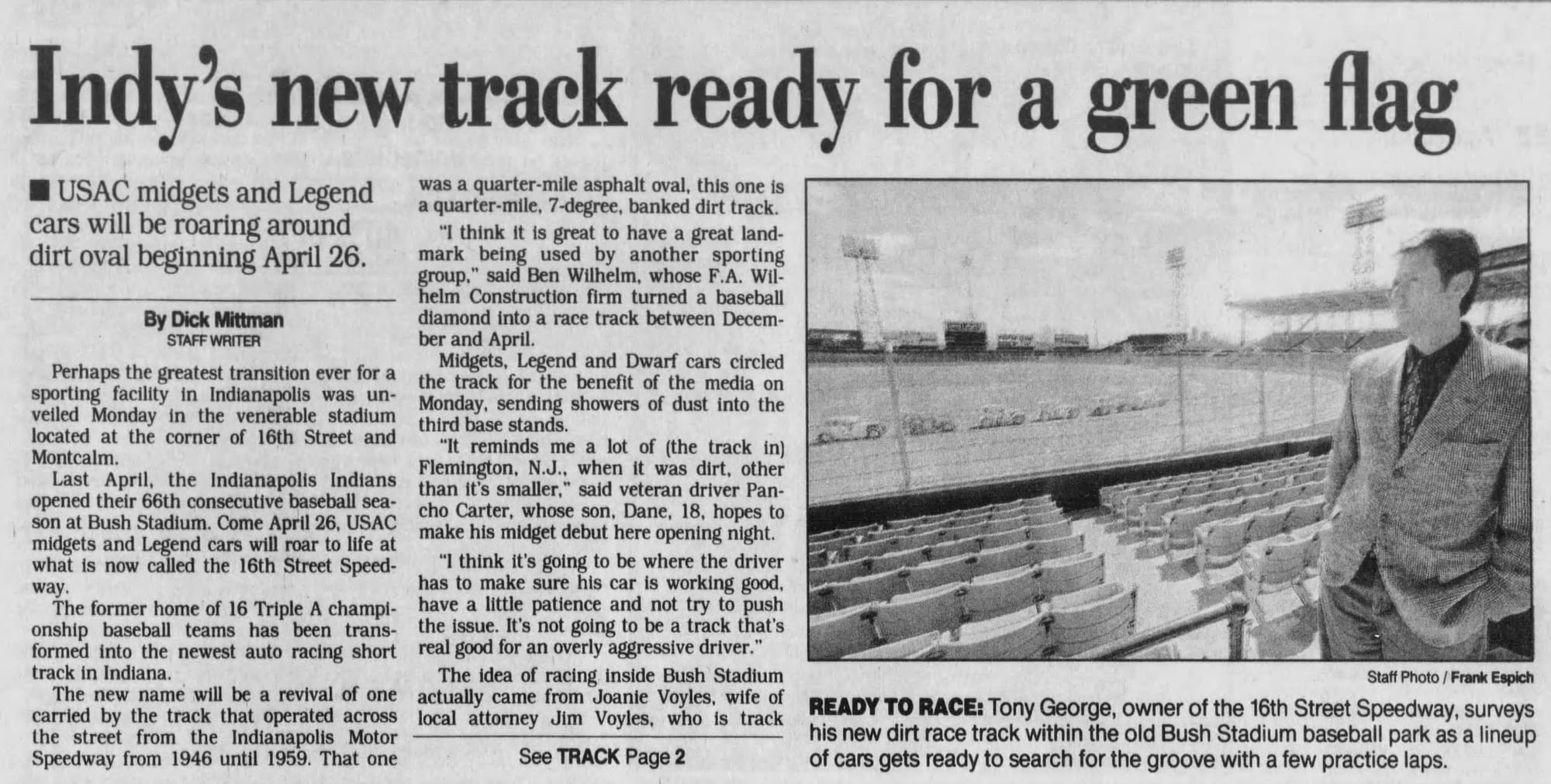
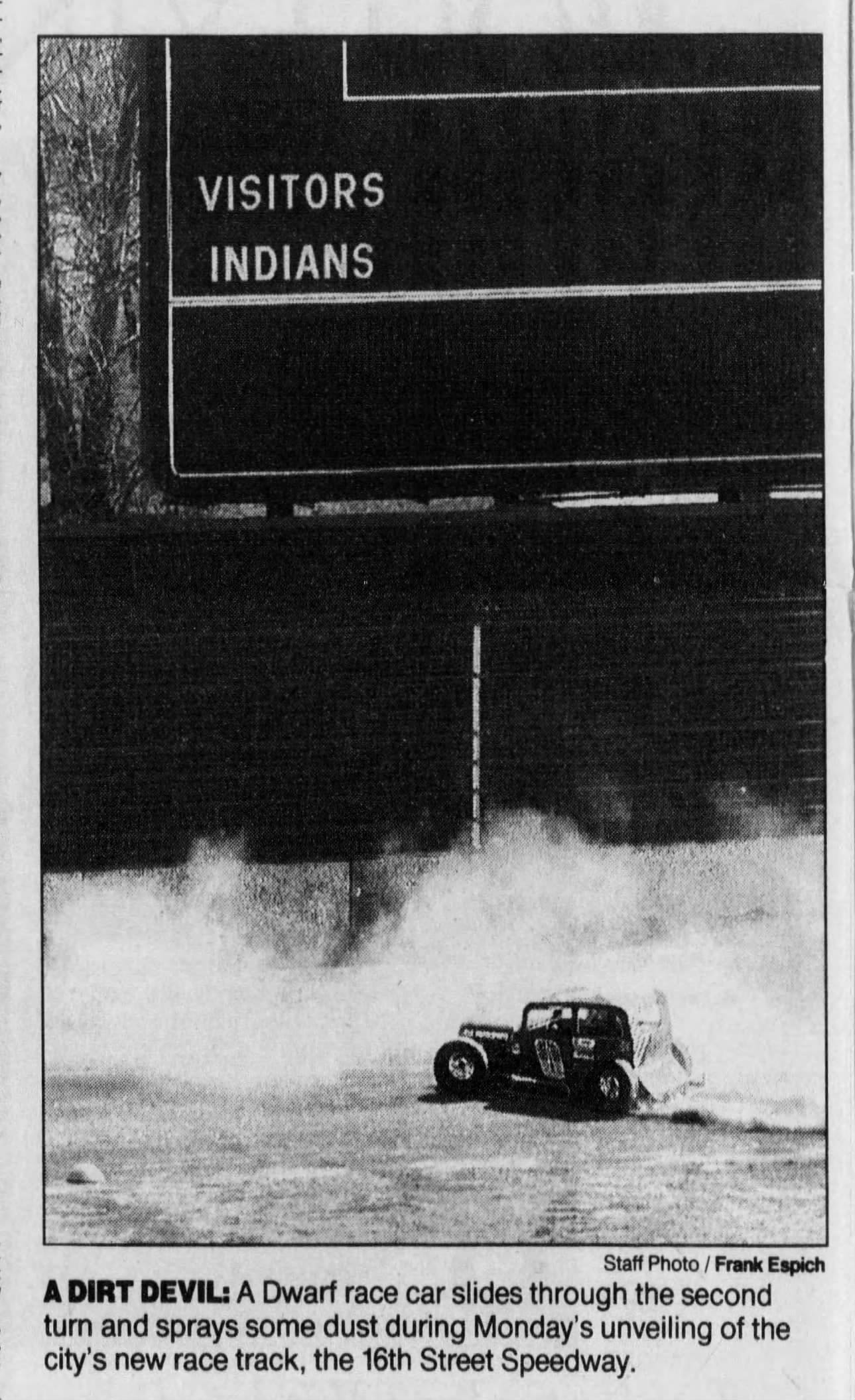
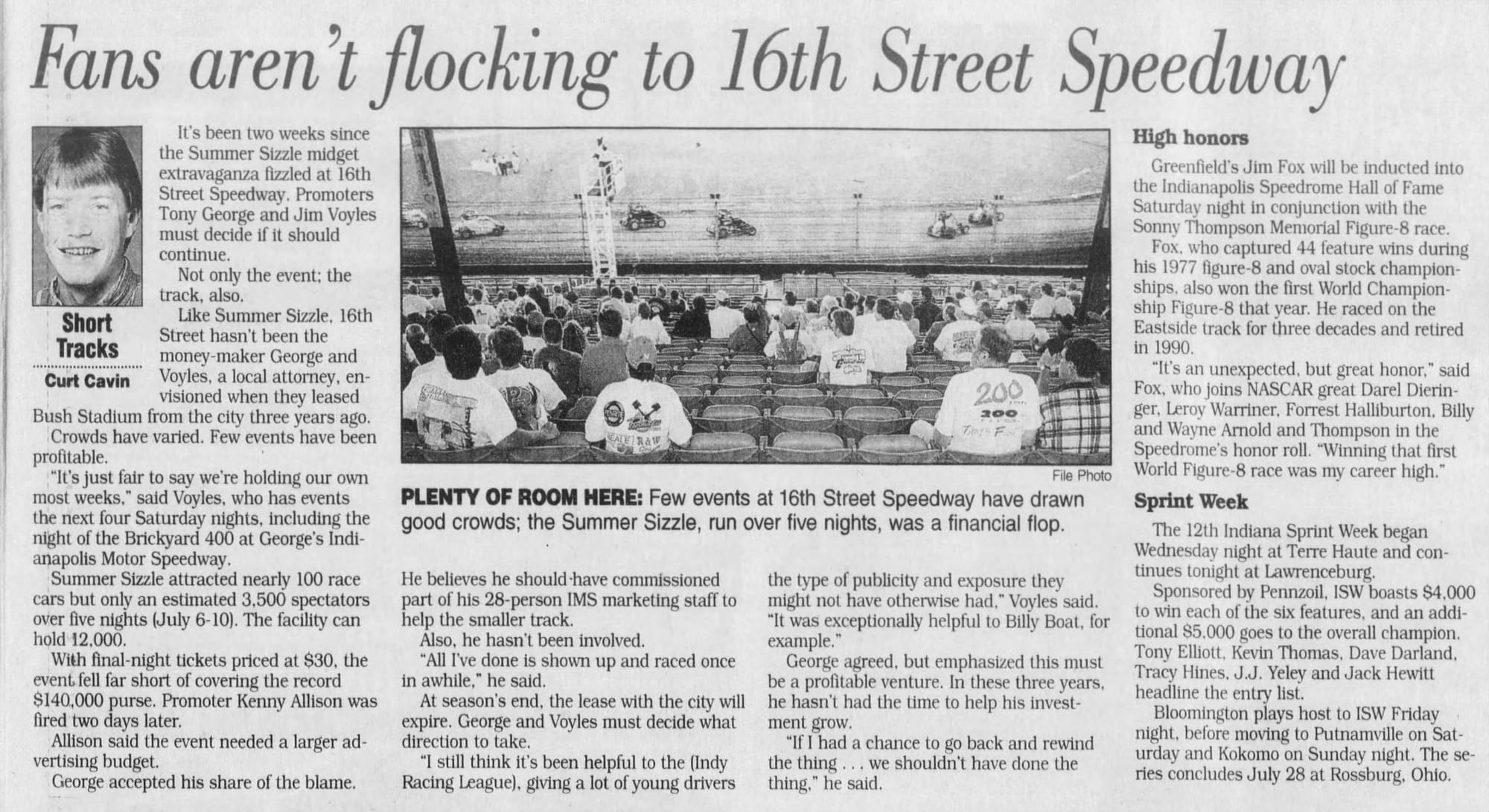
Exterior, concourse, and field view, 1995, Paul Diebold, NRHP Nomination Form | 1995-1996 articles on the preservation battle, plans for the stadium after the baseball team left, and the speedway plan | 1999, attendance is low at the speedway
Vacant, overgrown, and deteriorating, things looked bleak for the old ballpark. In 2009, the diamond filled with old cars from the Obama administration’s “Cash for Clunkers” stimulus program. Plans for a broader neighborhood redevelopment effort eventually helped catalyze the partial preservation of Perry Stadium—the building was swept into city plans for what is now called the 16 Tech Innovation District. Developer Core Redevelopment came forward with plans to demolish the interior curve of the building—preserving the Art Deco facade and the shape of the diamond—and converting it into 138 apartments (they’d also build another 144 units in four new buildings constructed on the parking lot). To make the redevelopment happen, the city sold the land and building to Indiana Landmarks, a nonprofit, for $10, who then sold it on to Core for $1. The city of Indianapolis then contributed $5 million to the nearly $14 million project. Dubbed Stadium Lofts, the apartment building opened in 2013.

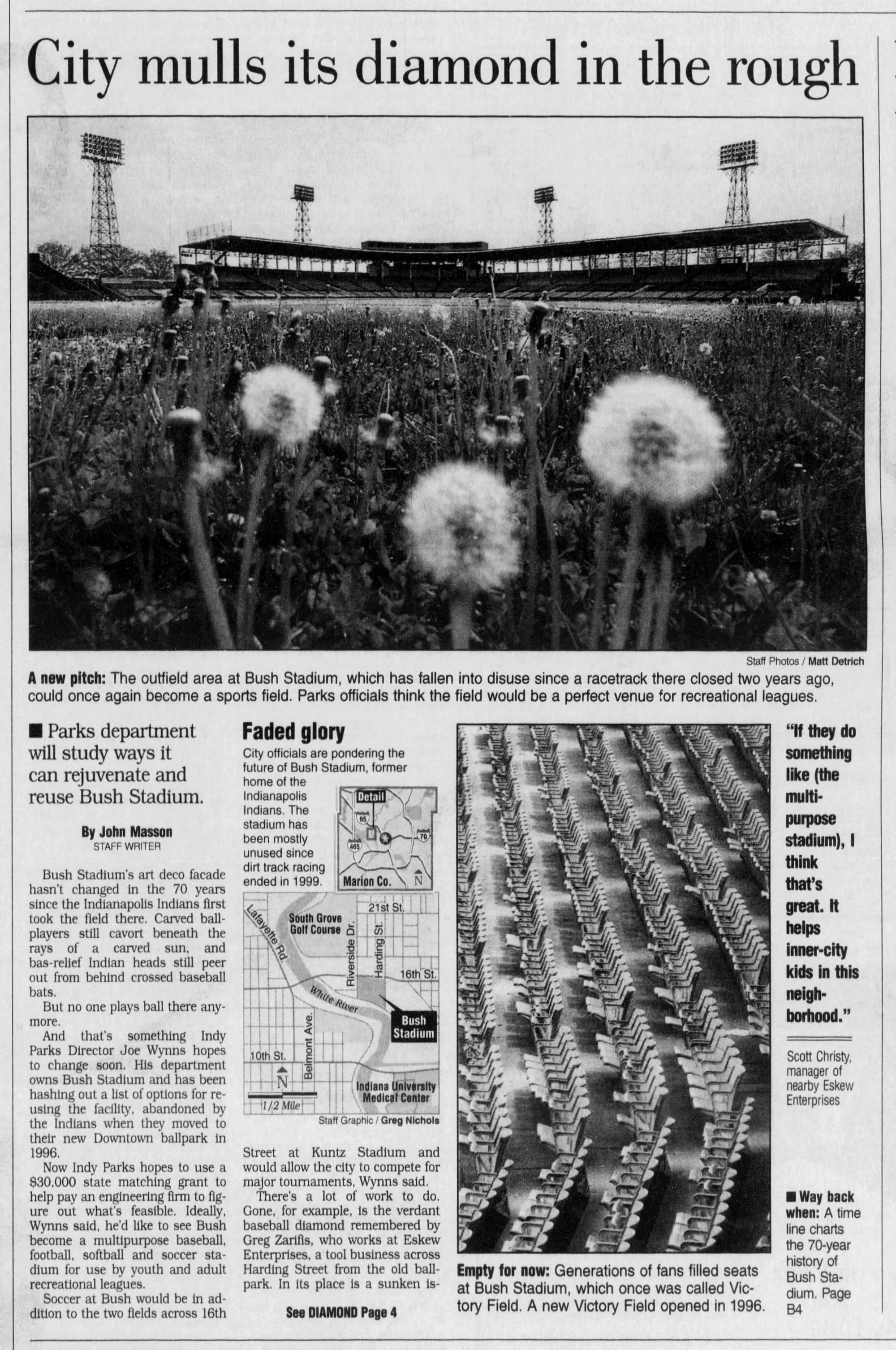
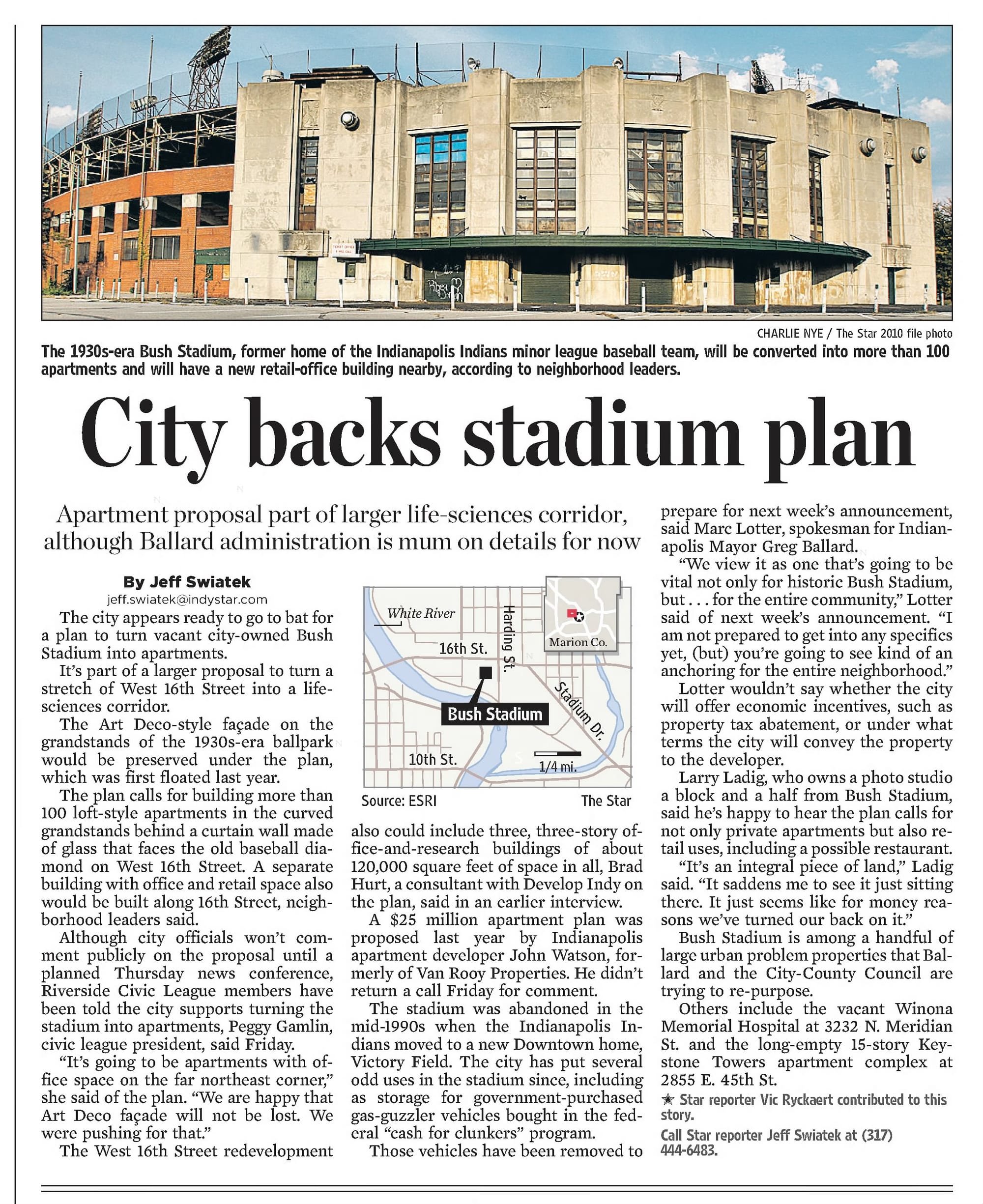
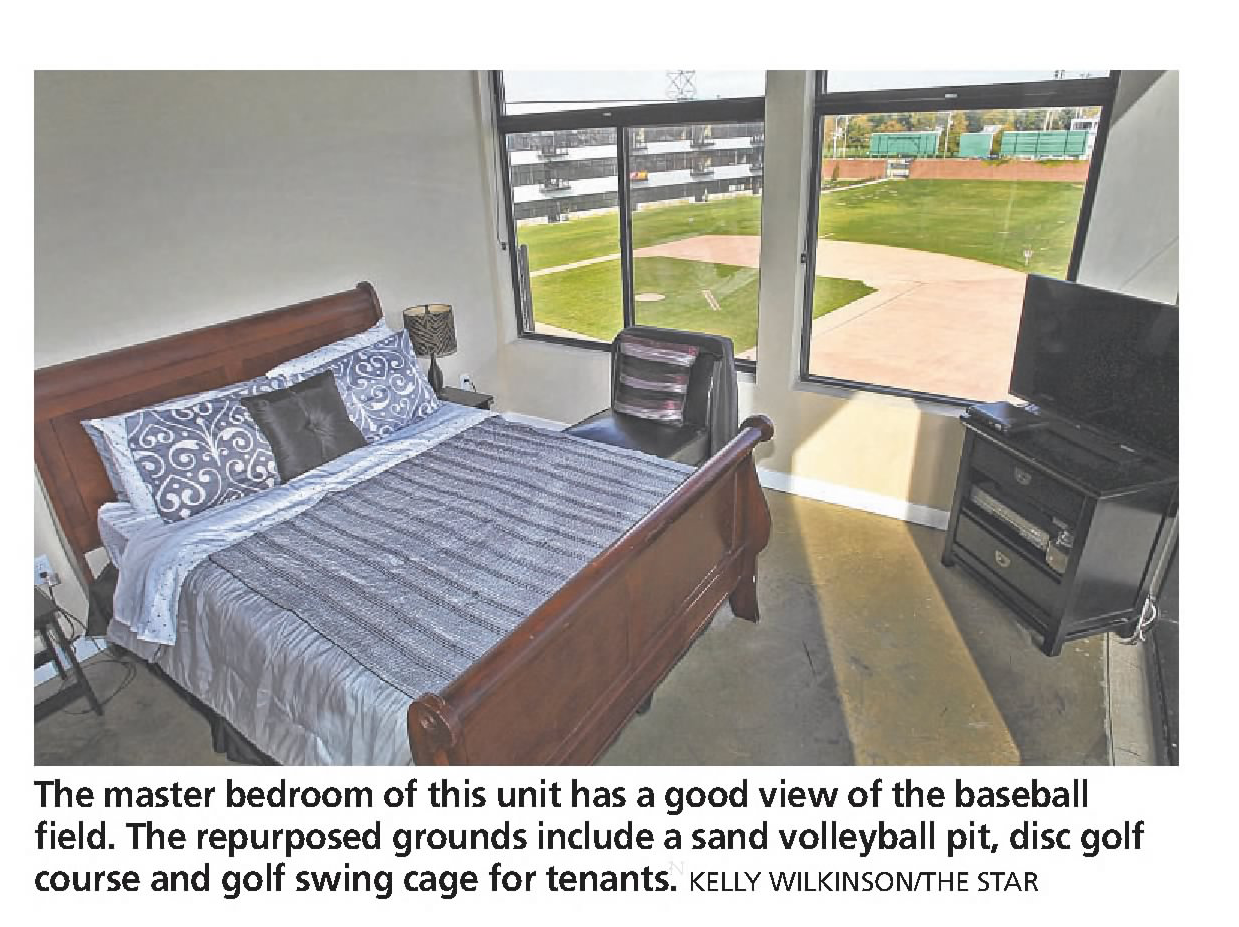
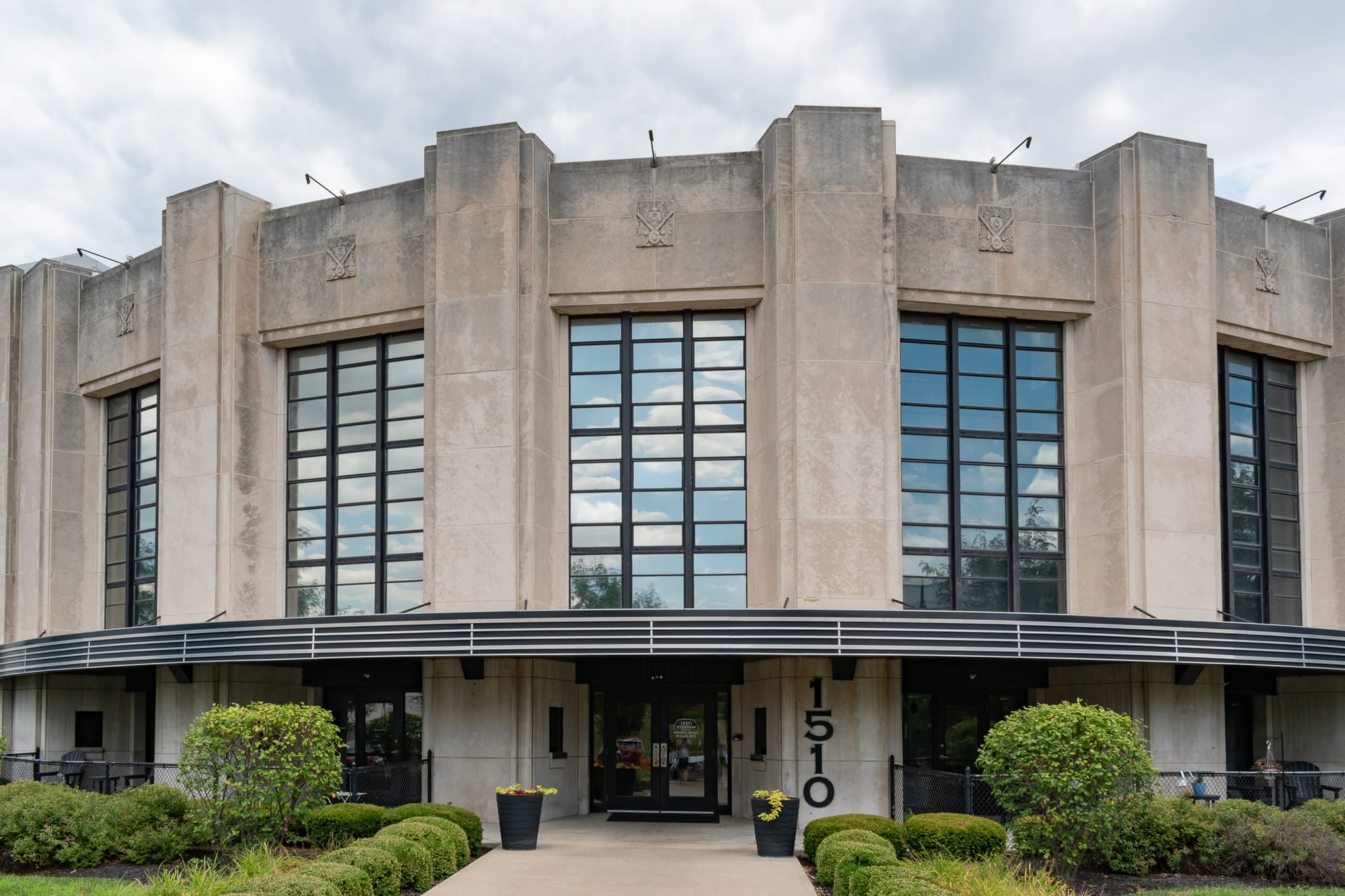
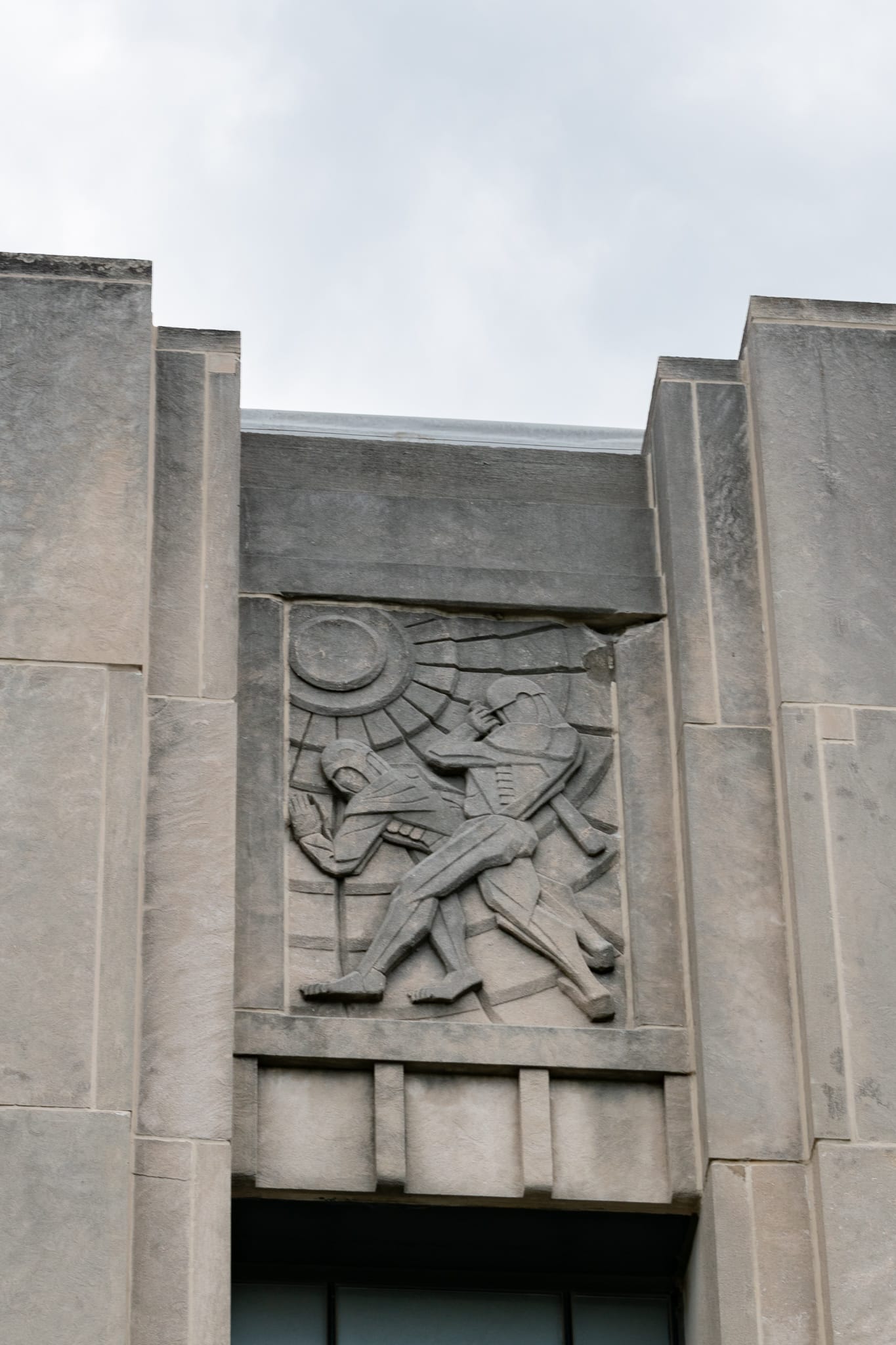
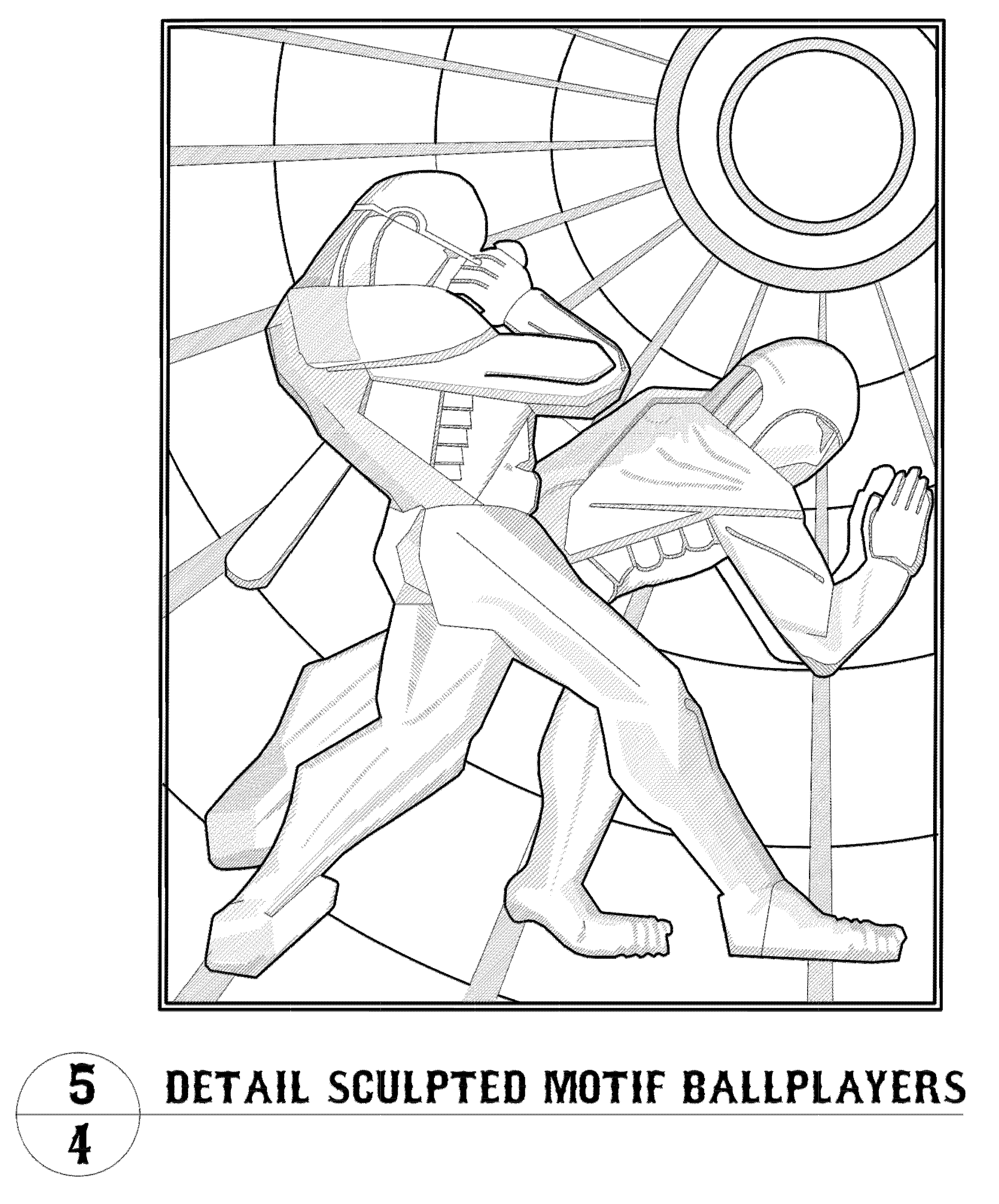
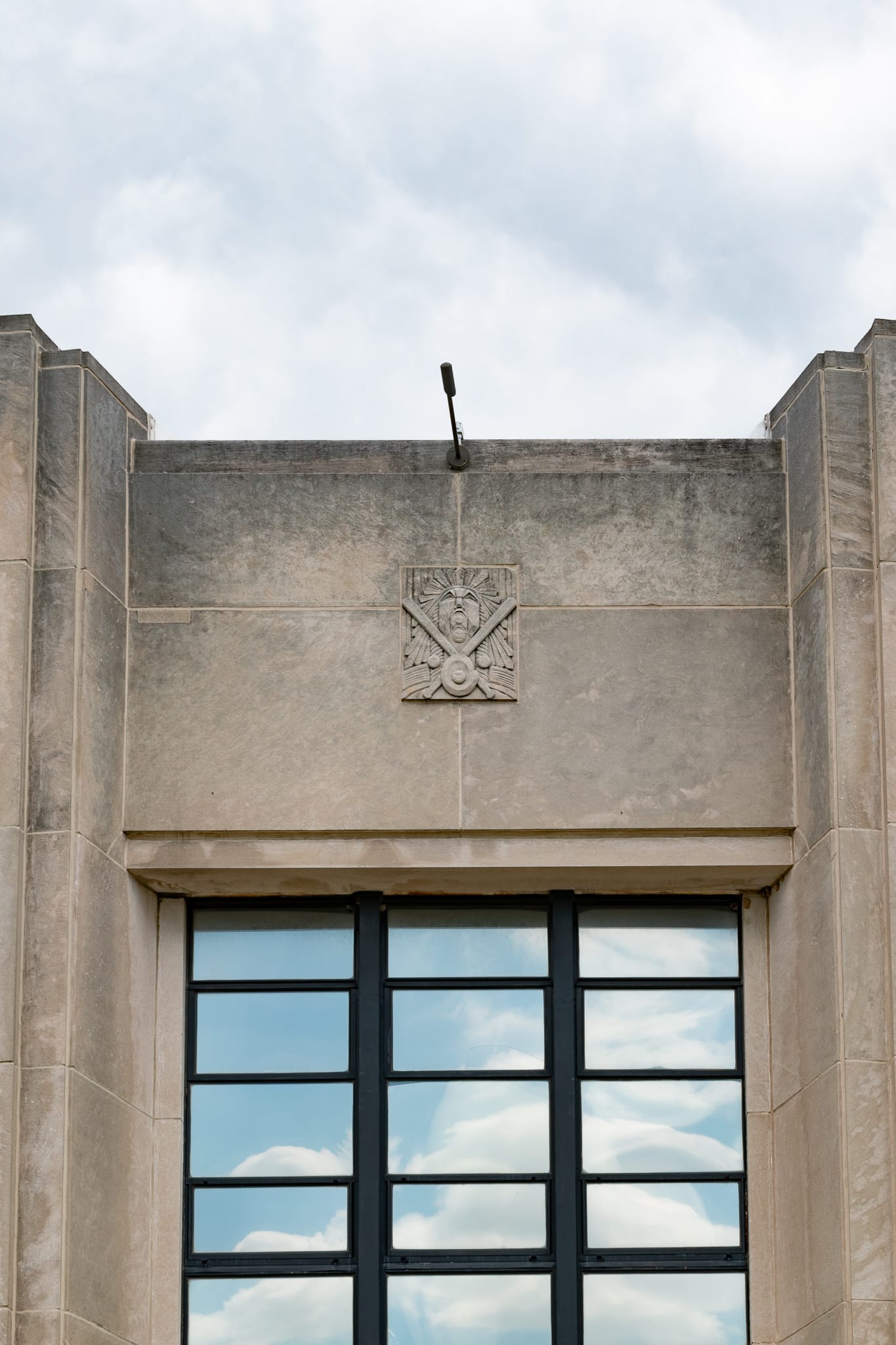
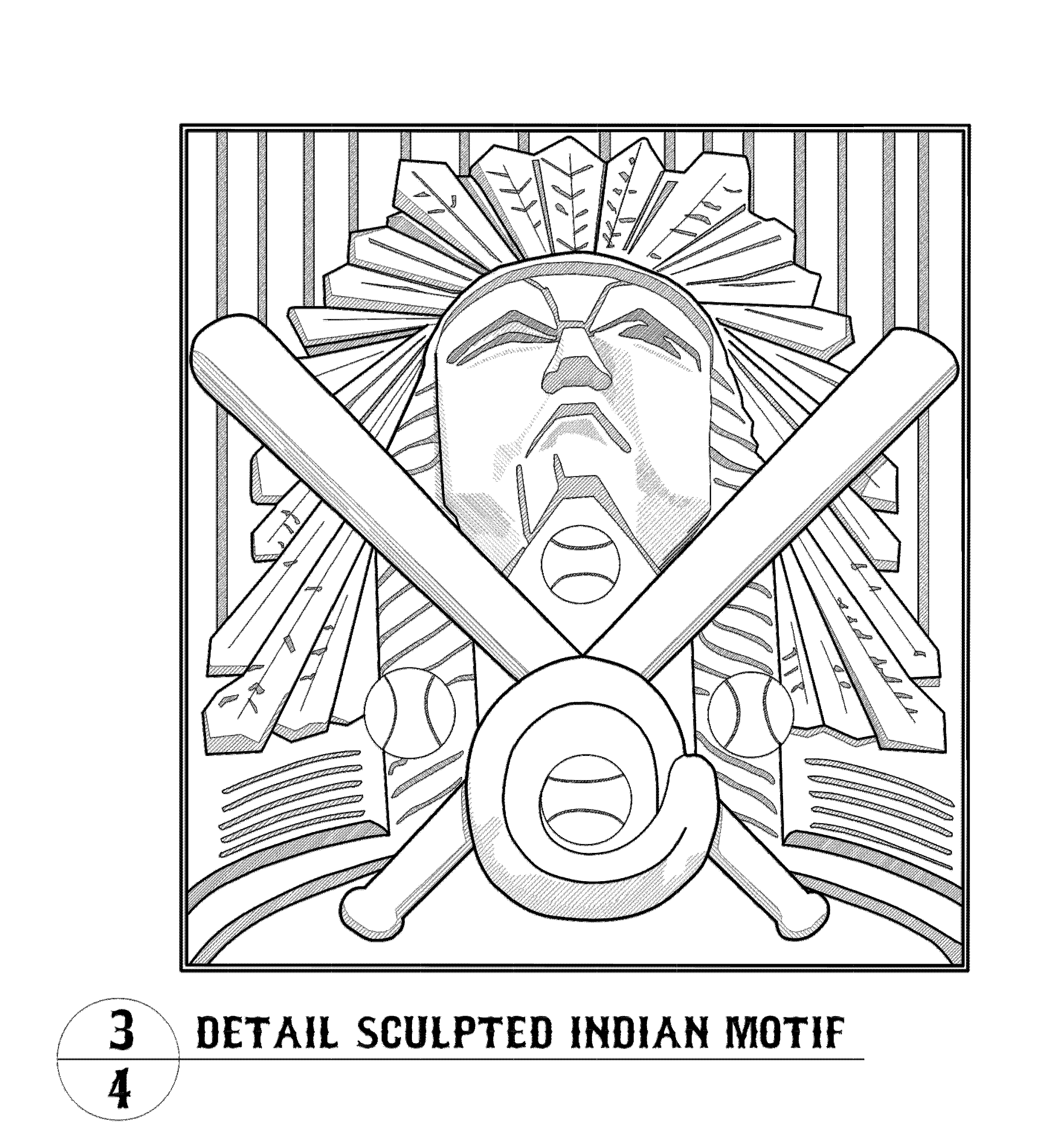
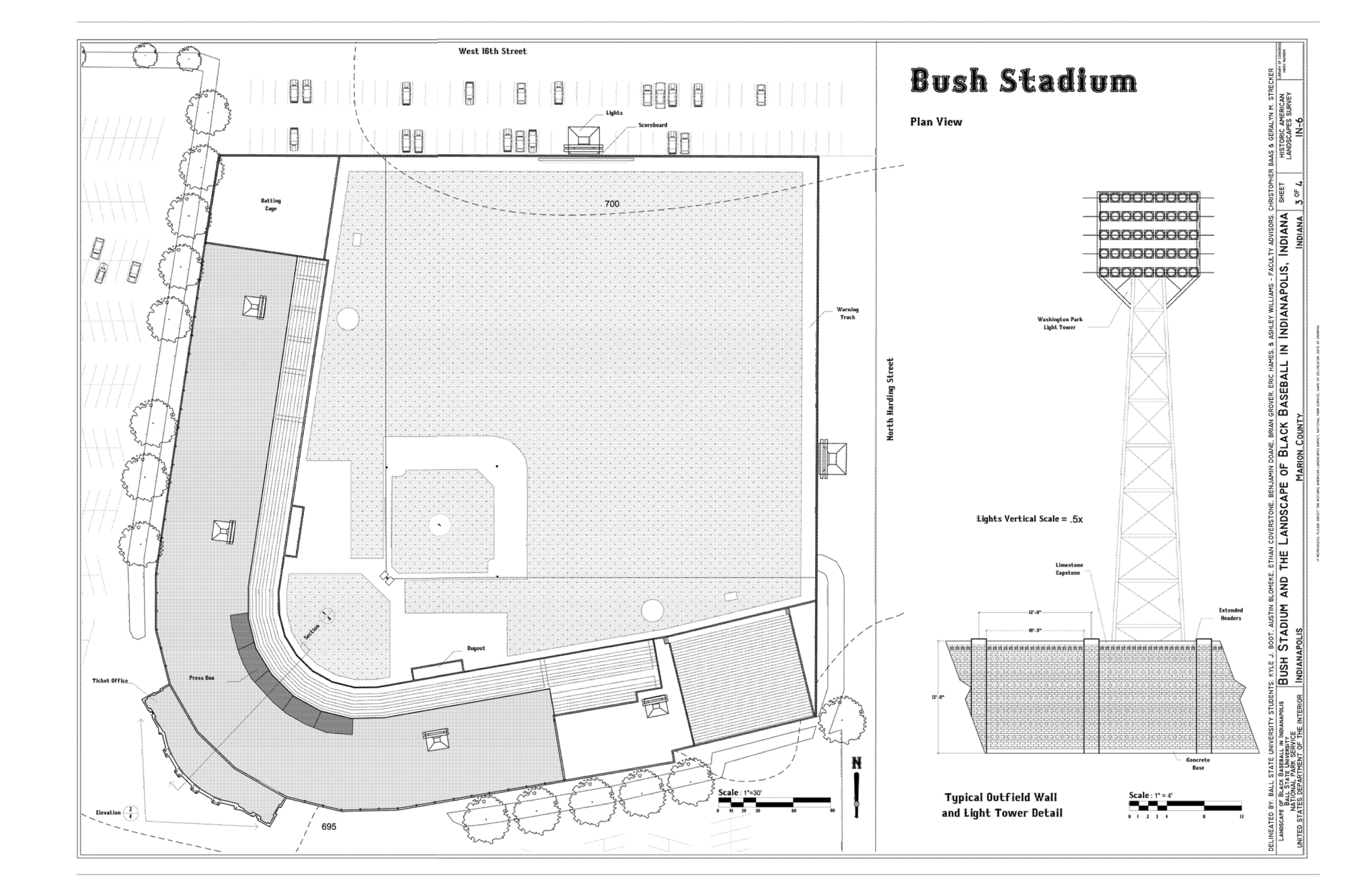
2001, post-speedway plans | 2011, city backs apartments plan for stadium | 2013, bedroom in completed unit | 2022 photo of entrance | 2022 photos of bas reliefs | Illustrations from the Historic American Landscape Survey, "Bush Stadium and the Landscape of Black Baseball in Indianapolis, Indiana", Library of Congress
While Pierre & Wright designed the stadium exterior, with its handsome limestone and powerful bas reliefs, Osborn Engineering Co. were responsible for the actual ballpark. Osborn was one of the preeminent builders of ballparks, placing Bush Stadium in a design lineage that includes old Yankee Stadium, Fenway Park, Comiskey Park, & Tiger Stadium. Unfortunately, Osborn’s side of things here (the field, the grandstands, etc.) didn’t really survive the conversion to apartments. Which is one of my two complaints here—I love it as an example of creative reuse, the Art Deco exterior looks fantastic, and I personally would like to live in an old ballpark—but the field side of the building looks kind of boxy and awkward and doesn’t really evoke baseball besides the identifiable grandstand shape.
(....complaint two is that more than $5m of public money went into this but the city didn’t secure a single unit of affordable or below-market-rate housing in exchange)
Production Files
Further reading:
- NRHP Nomination Form, 1995
- Black Ball: A Negro Leagues Journal by Leslie A. Heaphy
- The Indianapolis ABCs : history of a premier team in the Negro leagues by Paul Debono
 Encyclopedia of Indianapolis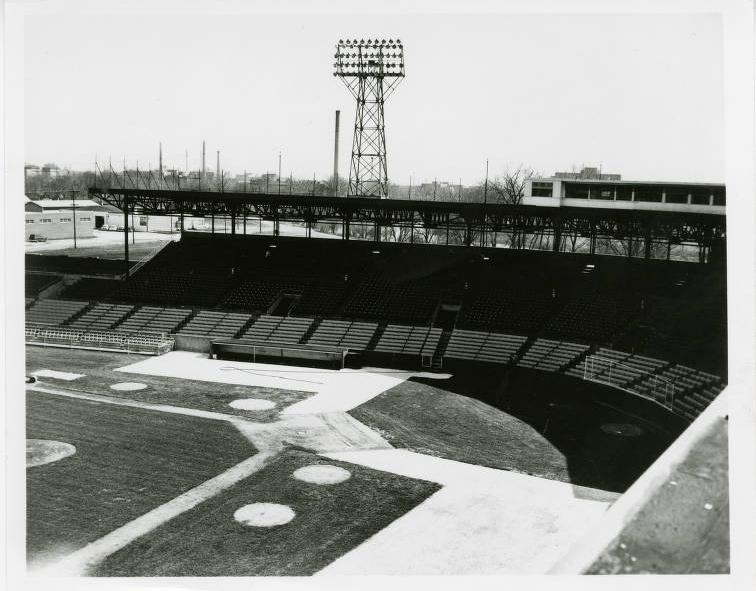
Not a particularly rich production envelope in the Curt Teich Postcard Archive at the Newberry Library for this one, but it did have the production order and the retouched postcard photo (which, it looks like they ultimately chose a more expansive crop than shown there).
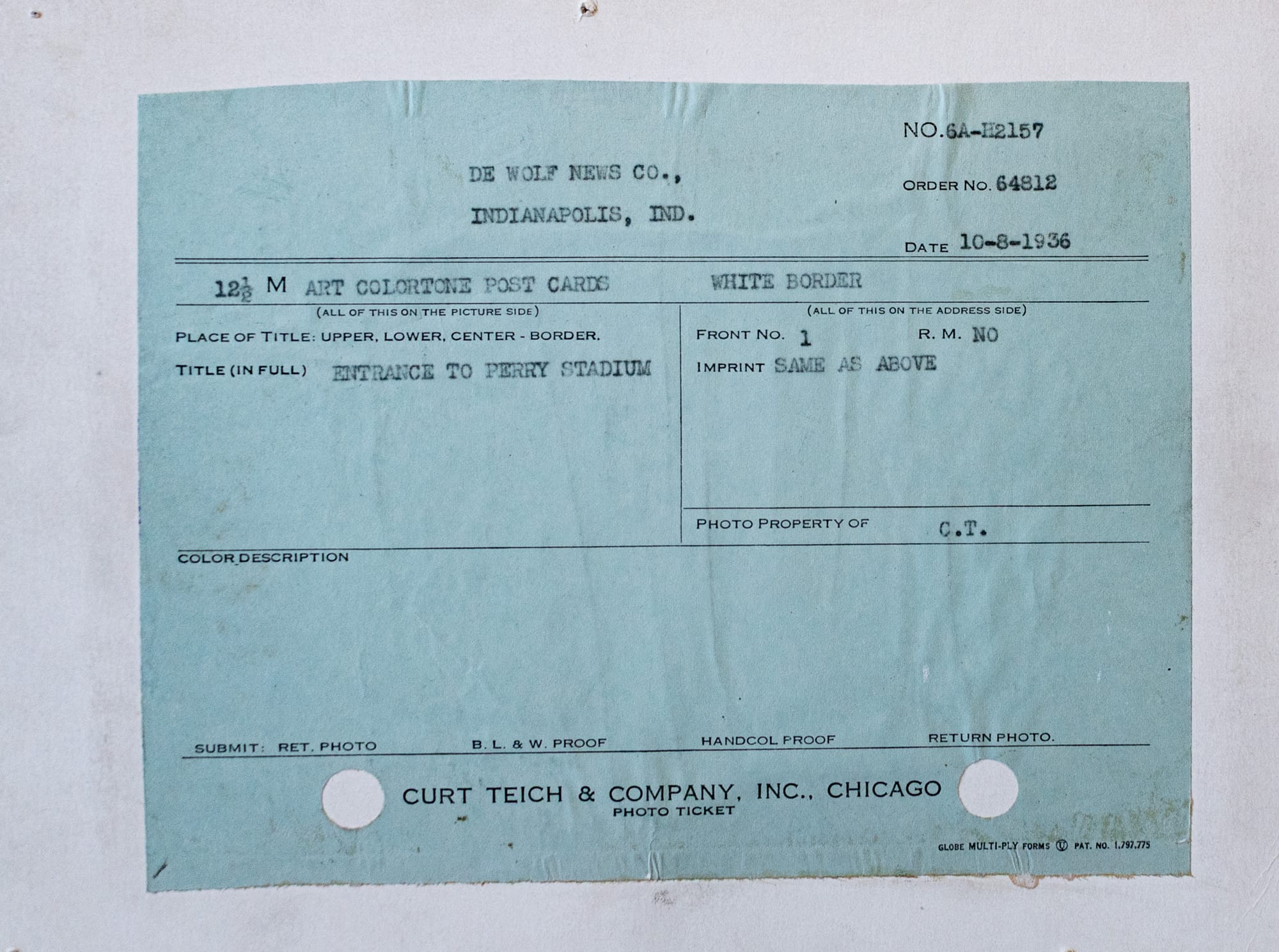
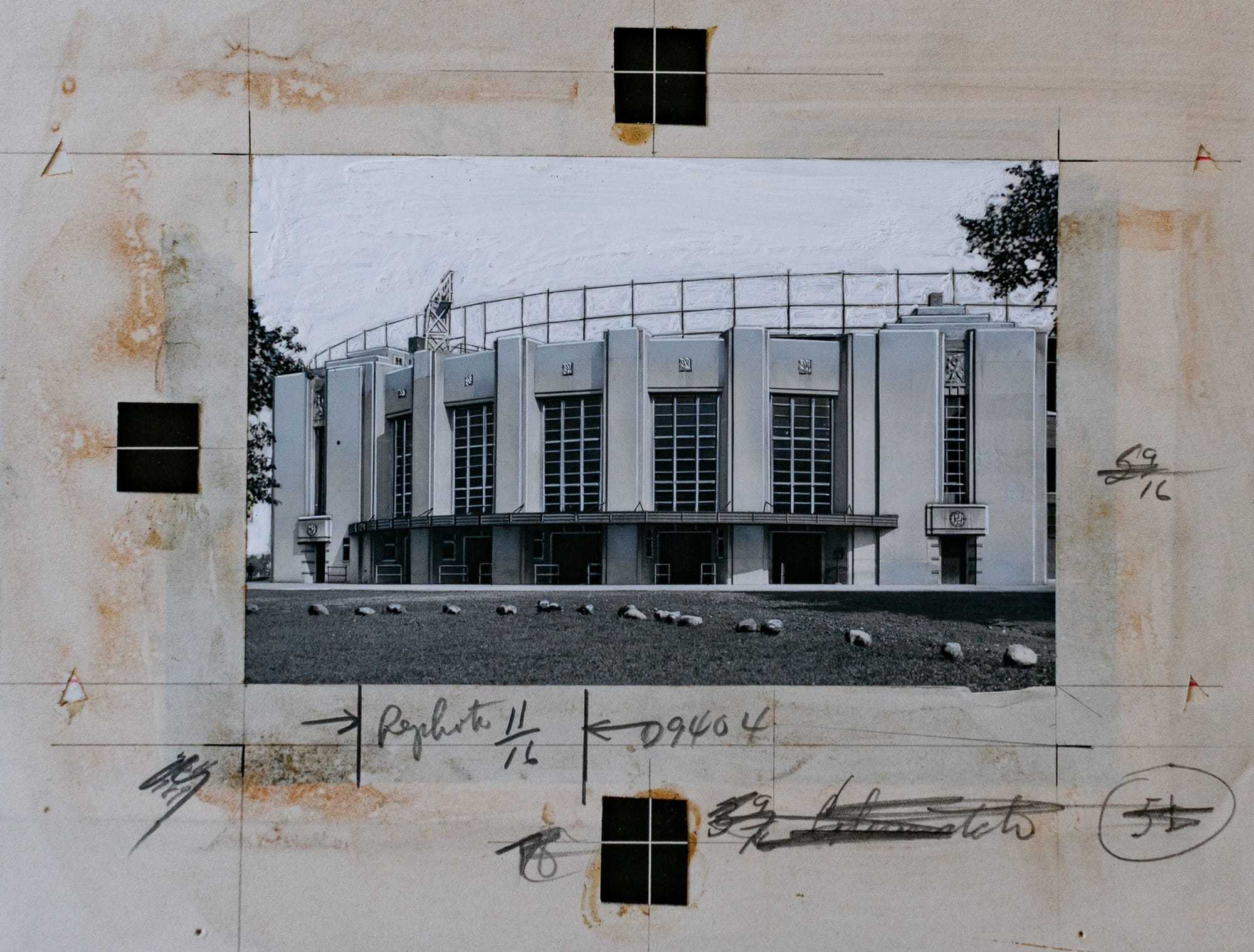
Production order photo ticket, 1936 | Retouched image
Over 60+ years, some
Soon after it opened, the eventual World Series Champion New York Yankees played an exhibition game here in April, 1932—Babe Ruth, Lou Gehrig, Bill Dickey, etc.
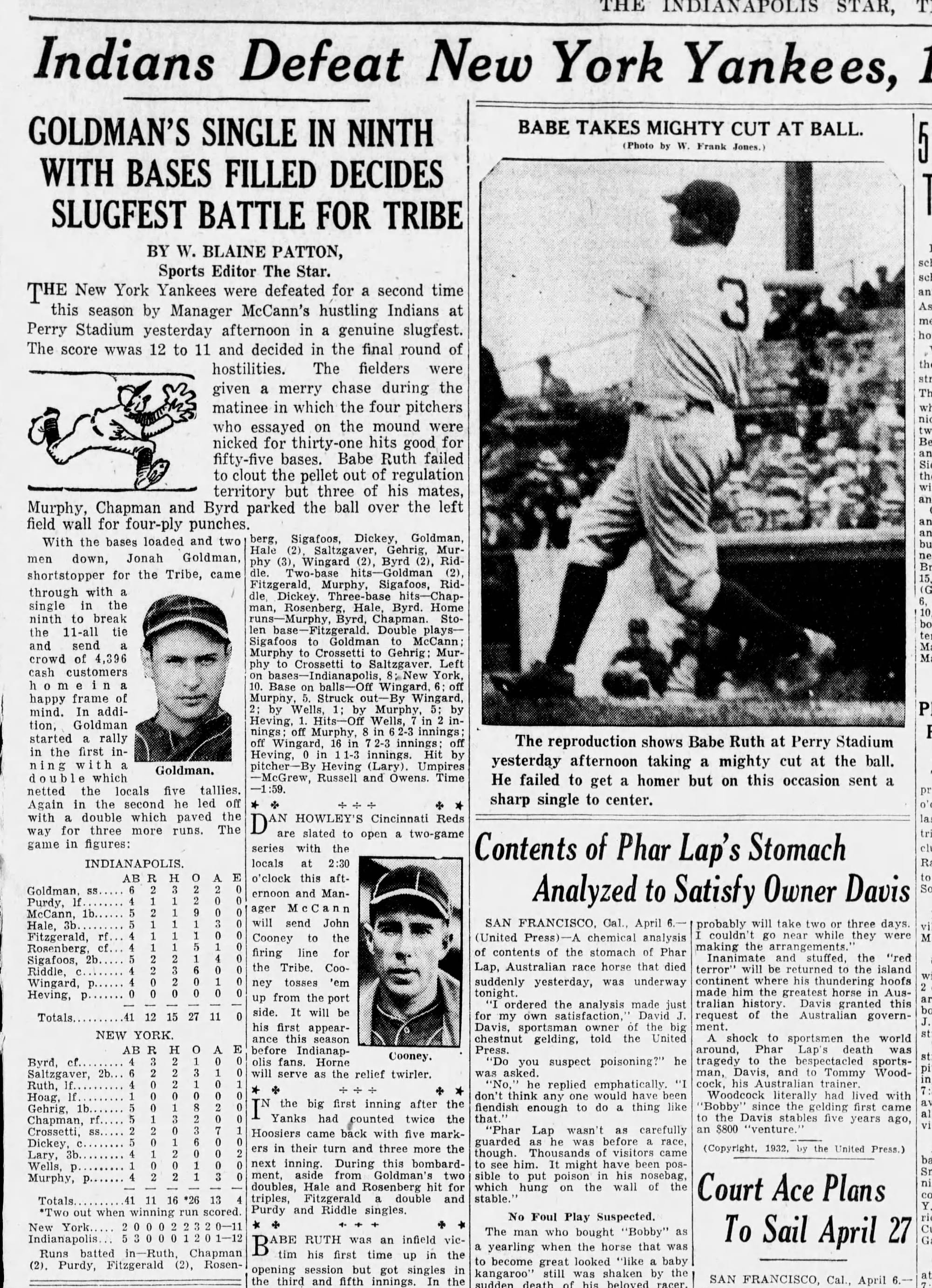
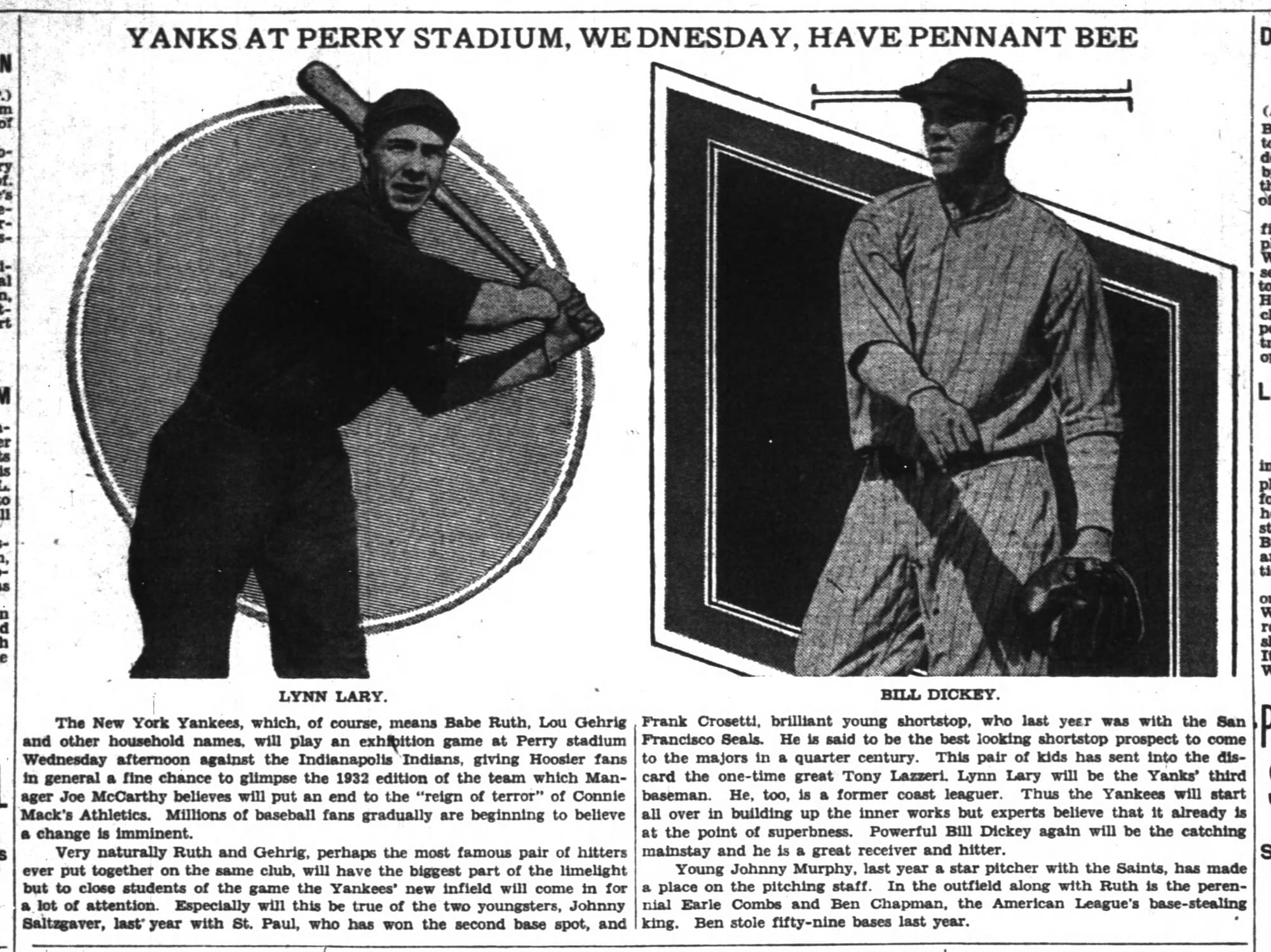
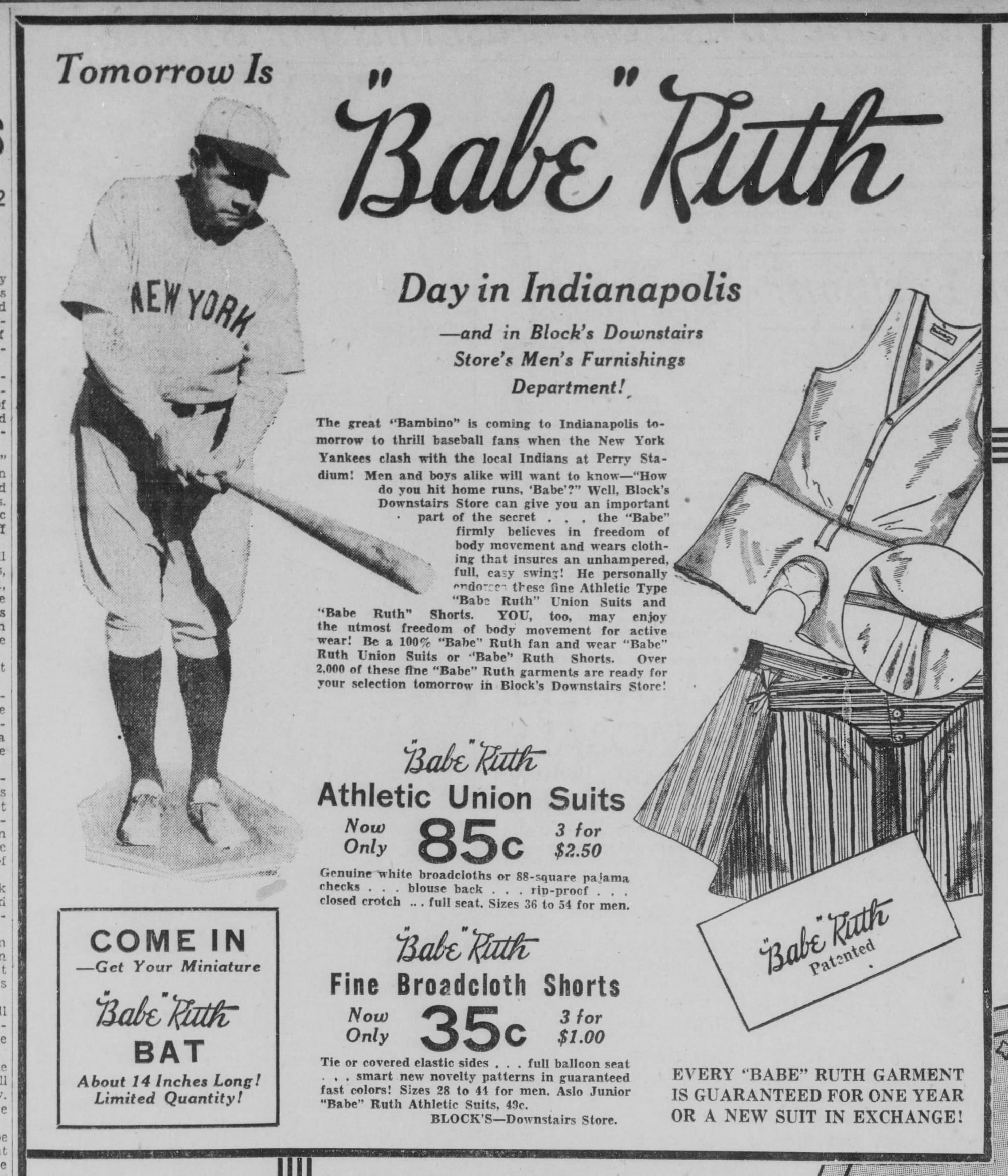
1932 articles and ads in connection with the Yankees exhibition game at Perry Stadium
Perry Stadium also had a rich history with the Negro Leagues, home to the Indianapolis Clowns, the Indianapolis ABCs, and an odd Chicago American Giants season, amongst others. In 1943, one game of the Negro Leagues World Series was played here (it barnstormed across seven different cities).
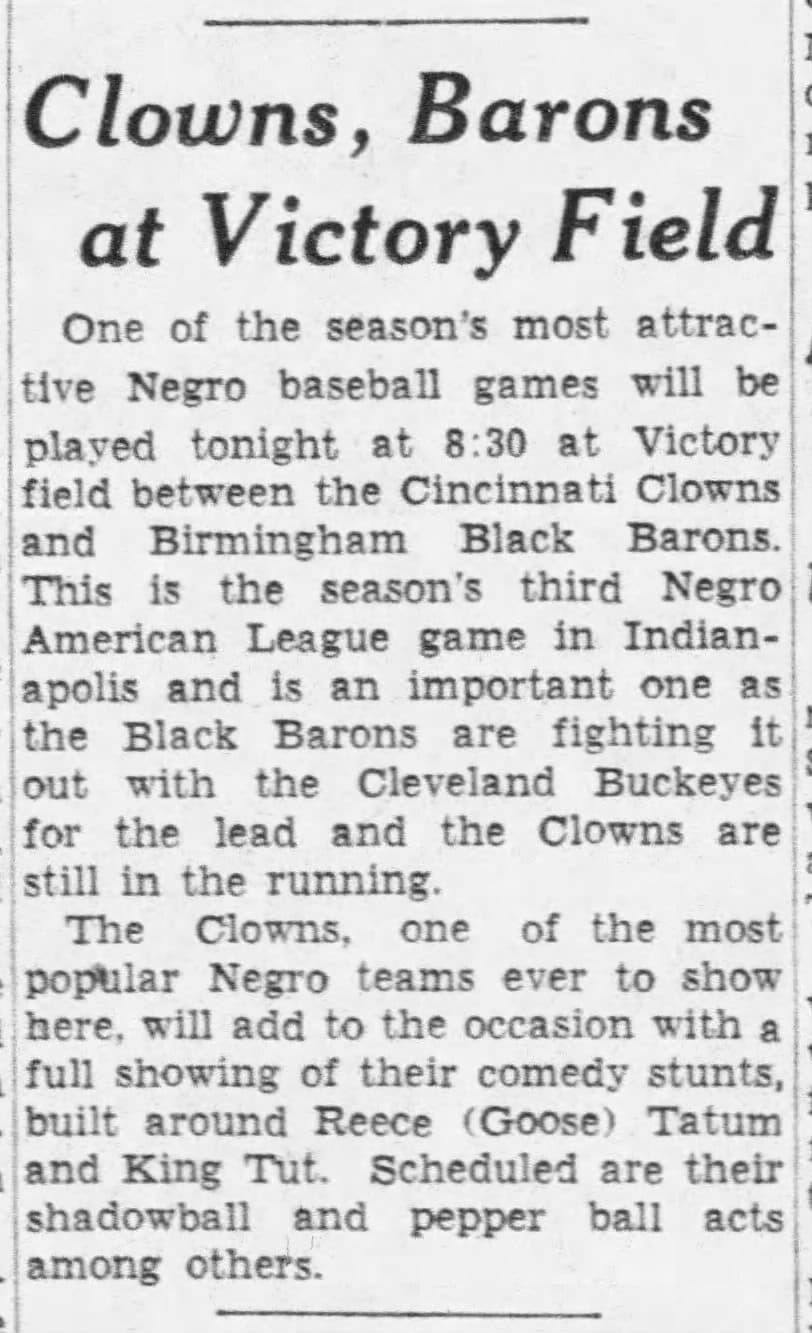
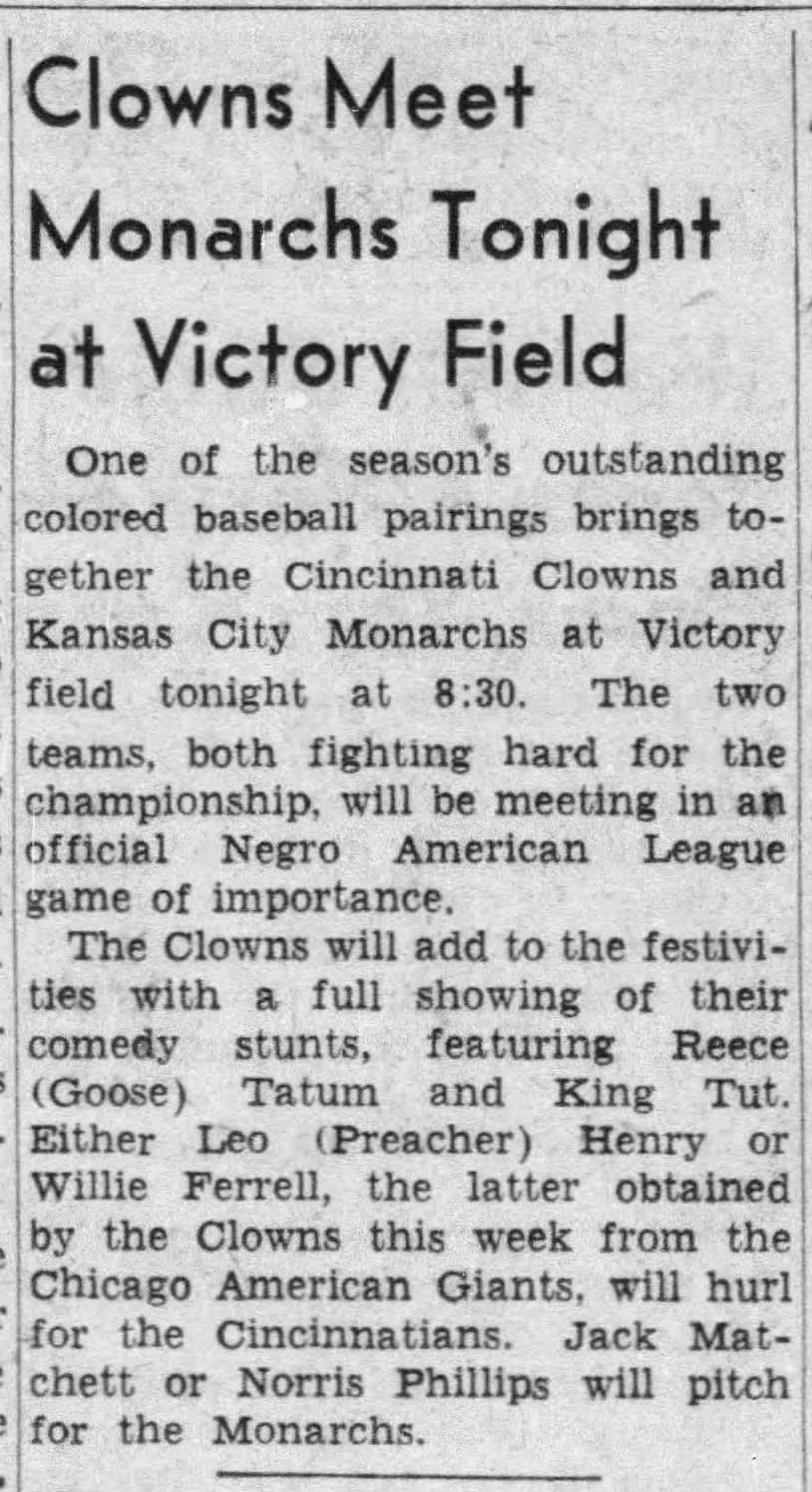
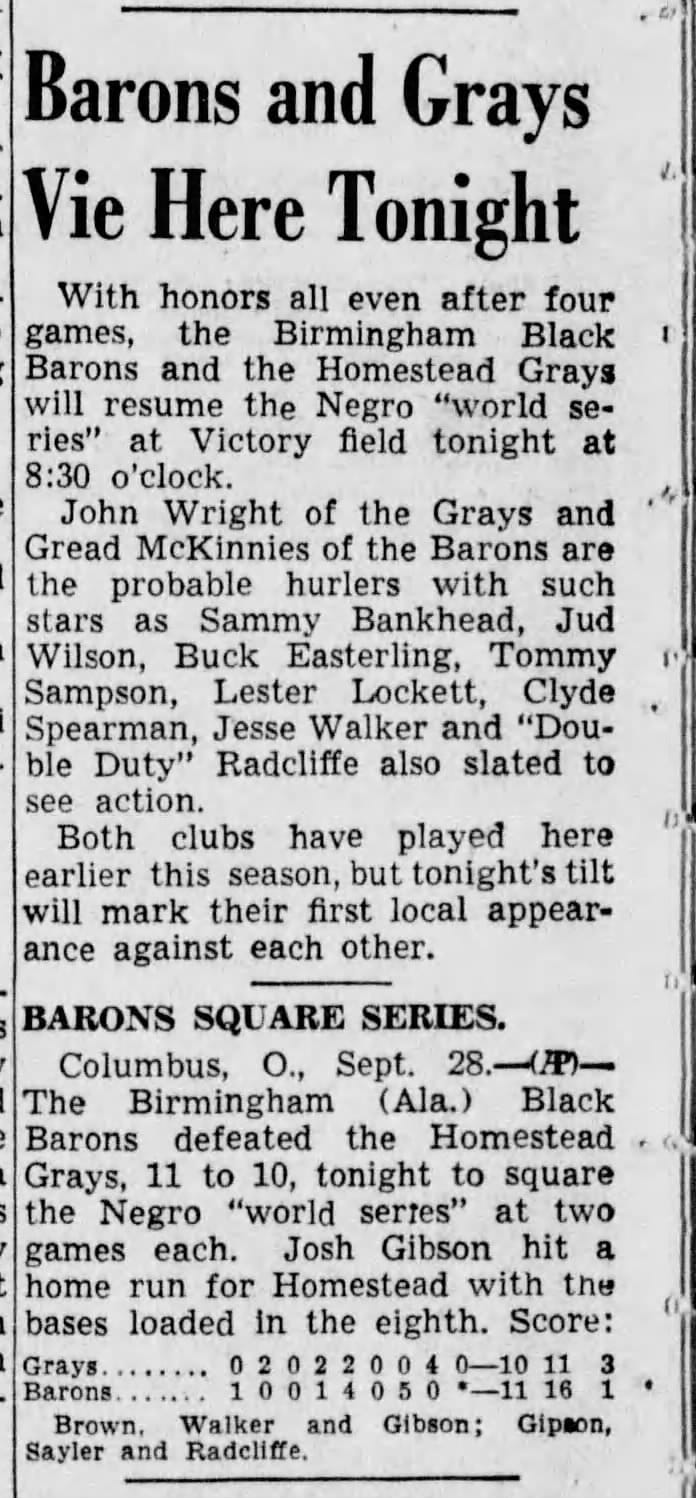
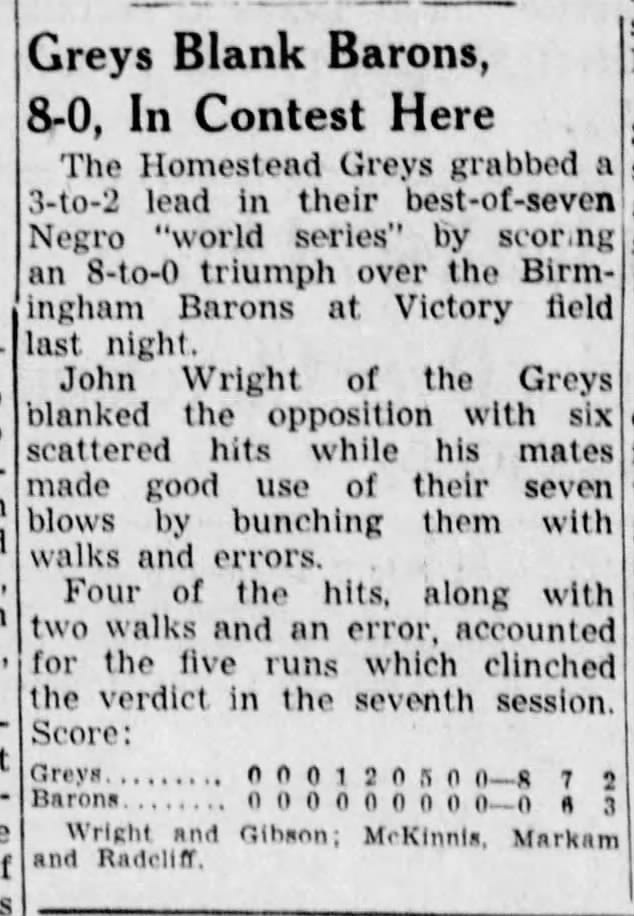
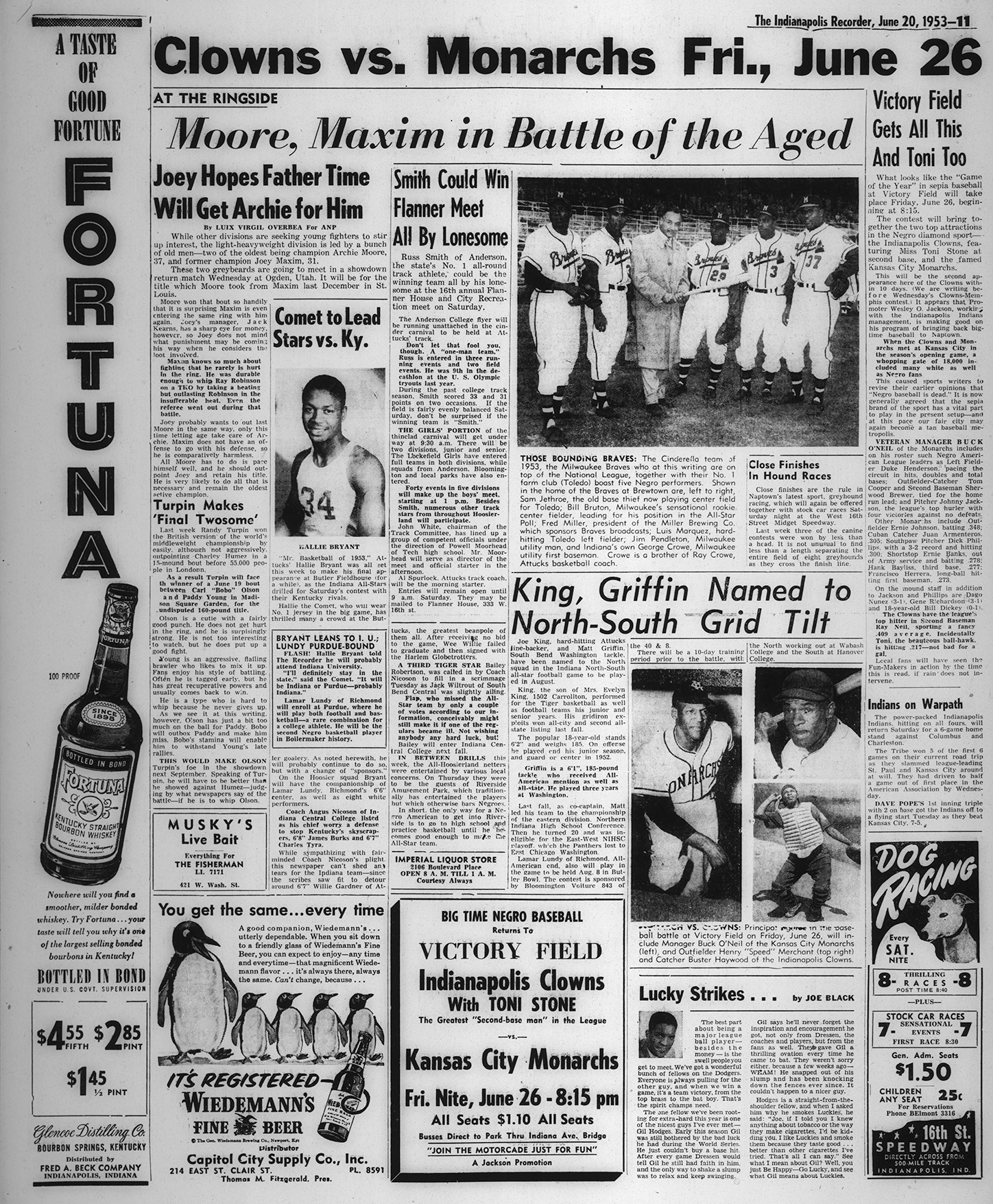
1943, Indianapolis Clowns games at Victory Field | 1943, Negro Leagues World Series at Victory Field | 1953, Indianapolis Clowns vs. Kansas City Monarchs at Victory Field
The Indianapolis Clowns were at various times a competitive Negro League team and a Harlem Globetrotters-style baseball performance. The greatest player to wear a Clowns jersey was a teenage Henry Aaron, who played for them briefly as a shortstop in the early 1950s.
By 1952 the Indianapolis Recorder, the city's African-American newspaper, was wondering what effect the integration of the Indianapolis Indians would have on the Negro League baseball, after Al Smith and Dave Pope broke the color barrier at the AAA level in the city. With the Negro Leagues declining after the American League and National League started to integrate beginning in the late 1940s with Jackie Robinson and Larry Doby, the Clowns played on through the 1960s as the last surviving Negro League team.
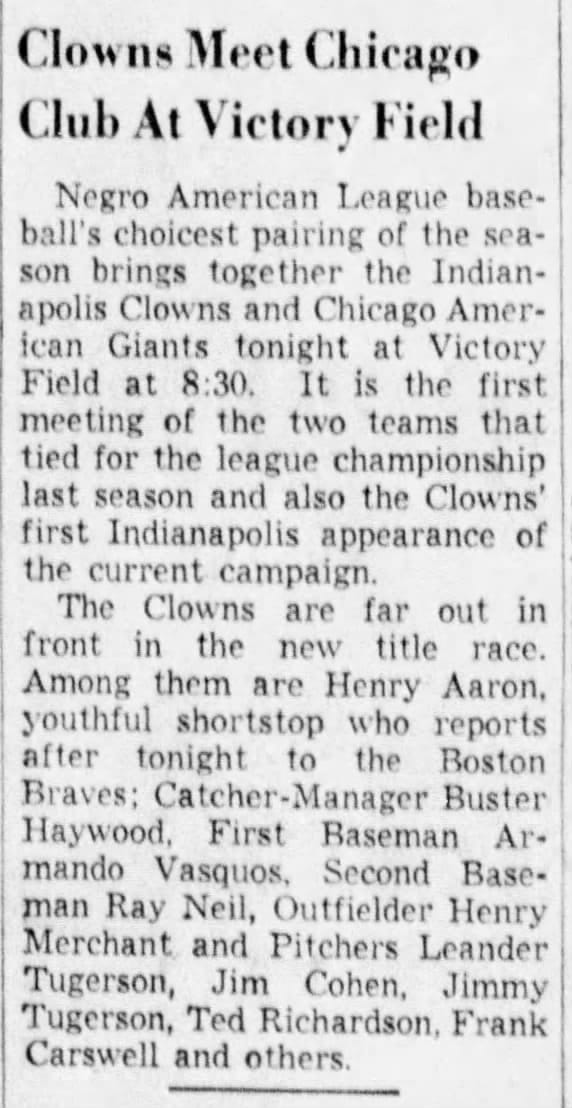
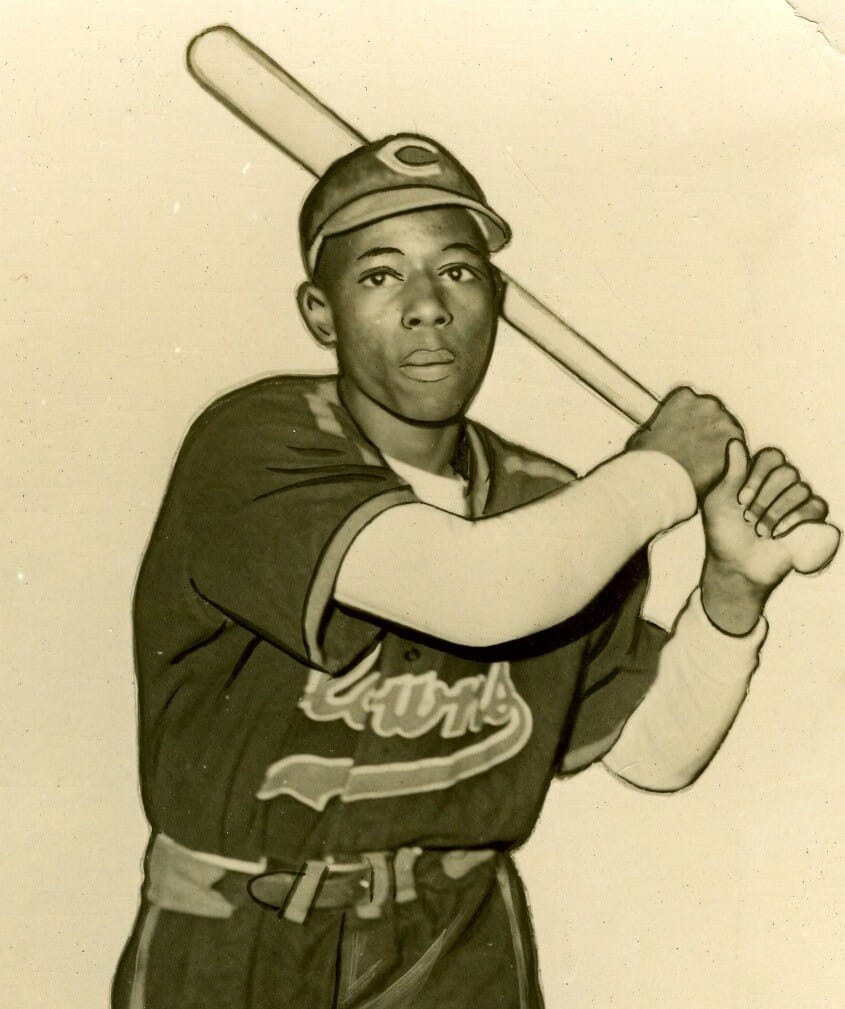
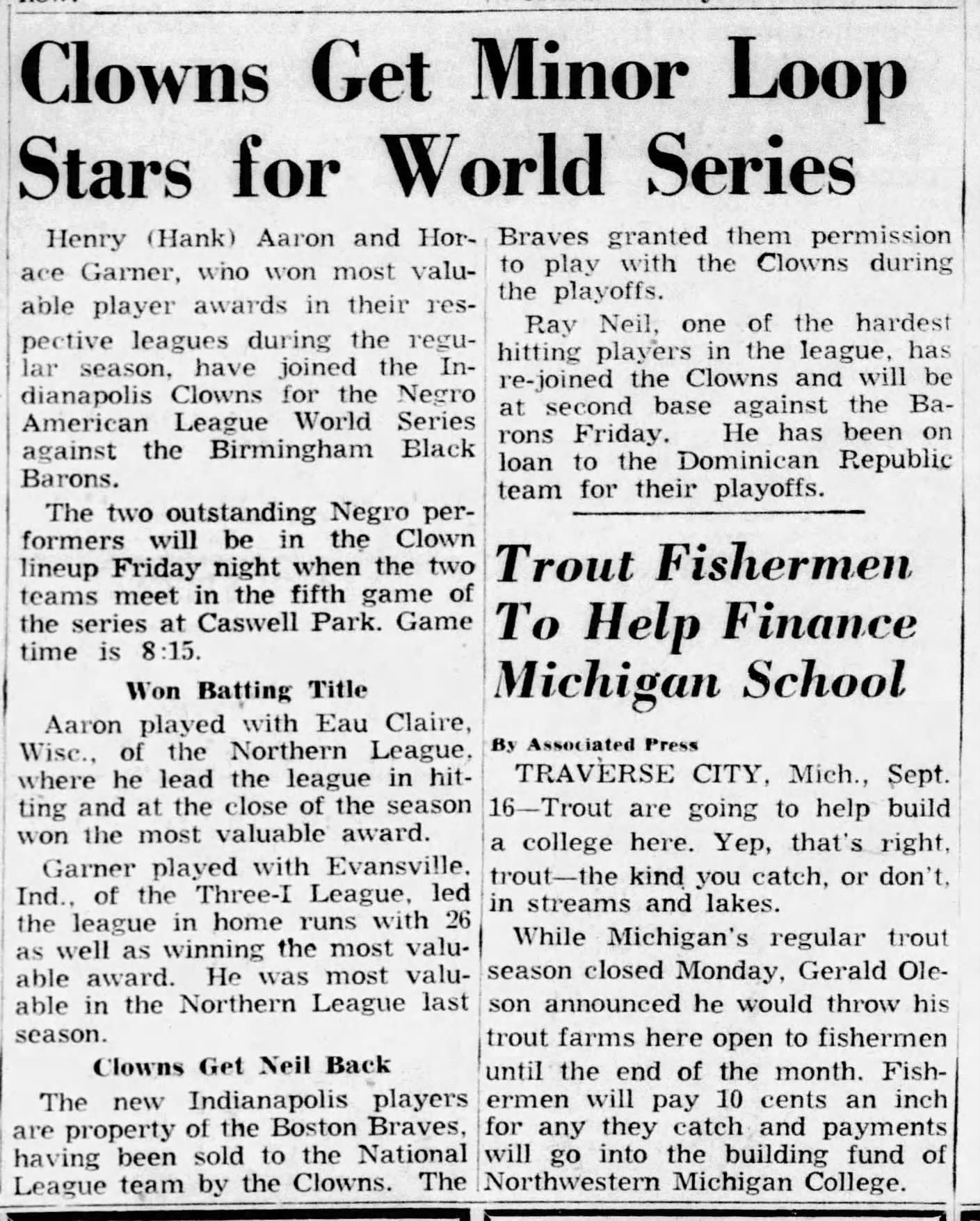
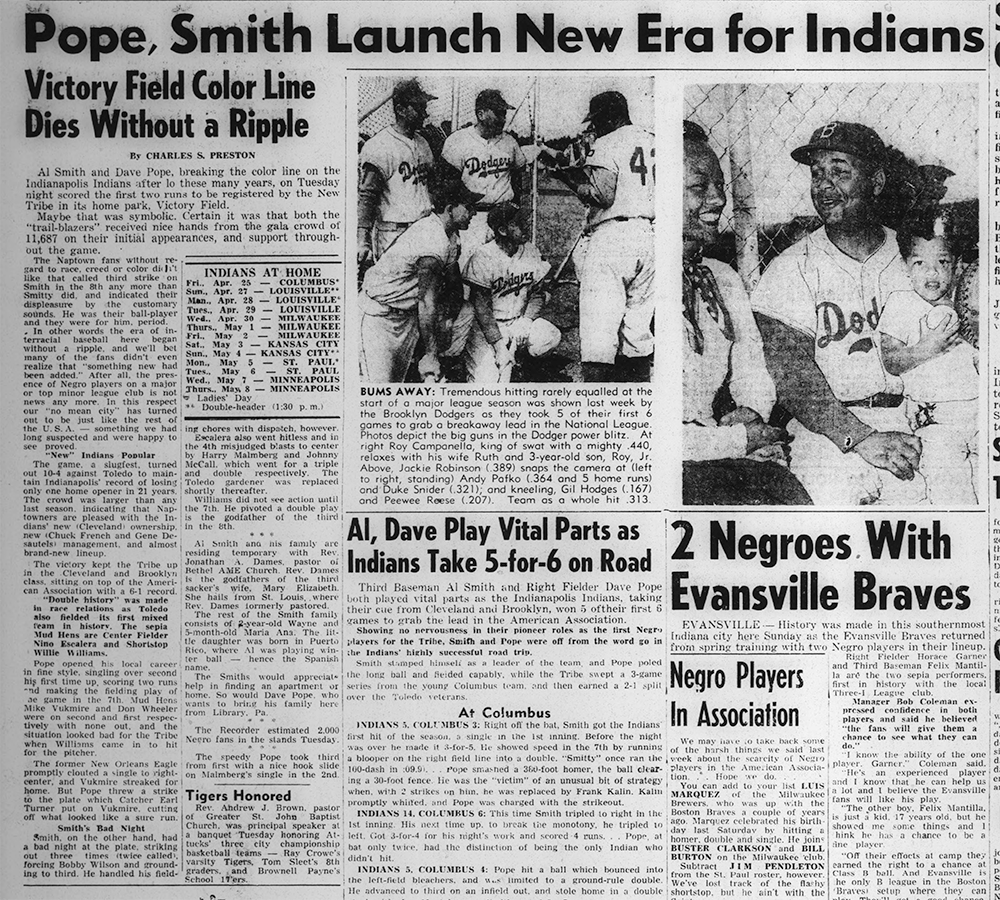
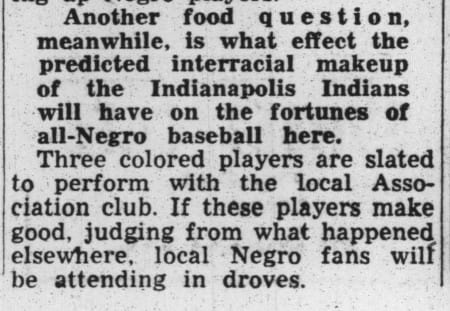
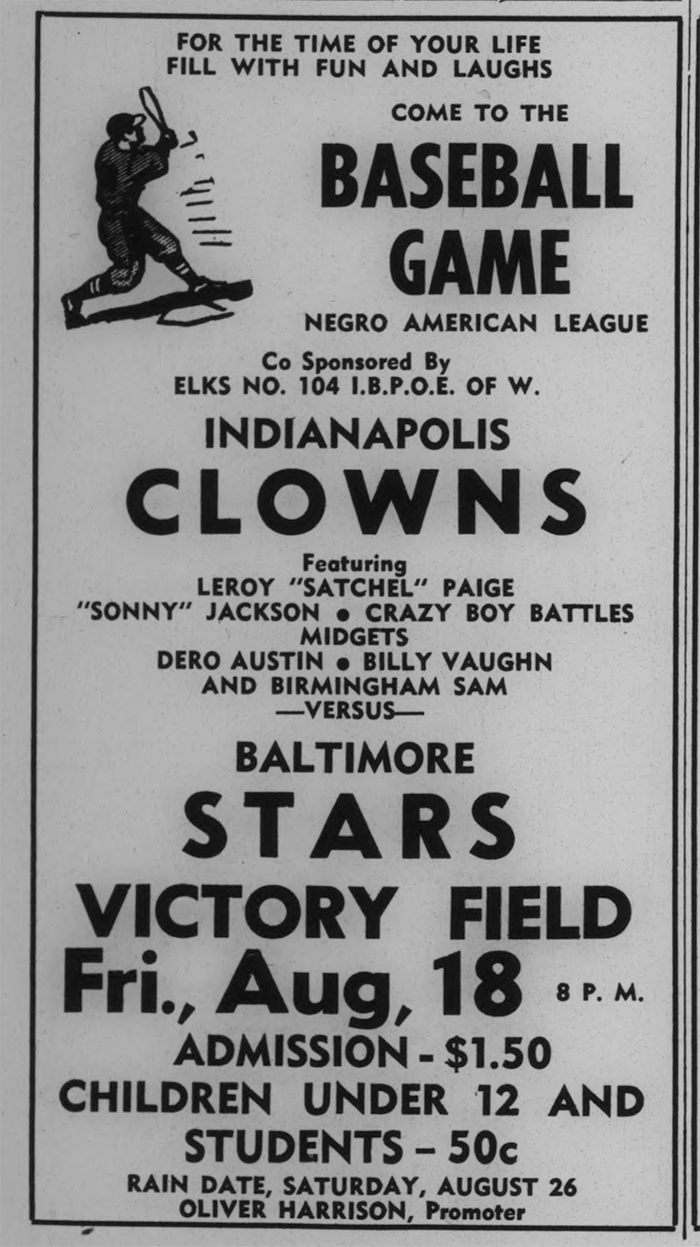
Early 1950s articles and photo of Henry Aaron playing for the Indianapolis Clowns | 1952, Al Smith and Dave Pope break the color line in Indianapolis professional baseball | 1952, Indianapolis Recorder asks about the effect of integration | 1967 Indianapolis Clowns ad
Perry Stadium's longest tenant was the minor league Indianapolis Indians. Hall-of-Famers who called the ballpark home while playing for them included Manager Gabby Hartnett, pitcher Randy Johnson, Larry Walker, Minnie Miñoso, Bob Uecker, and—most unexpectedly for me—NBA Hall-of-Famer Dave DeBusschere, who pitched for them in the early 1960s before switching permanently to basketball.
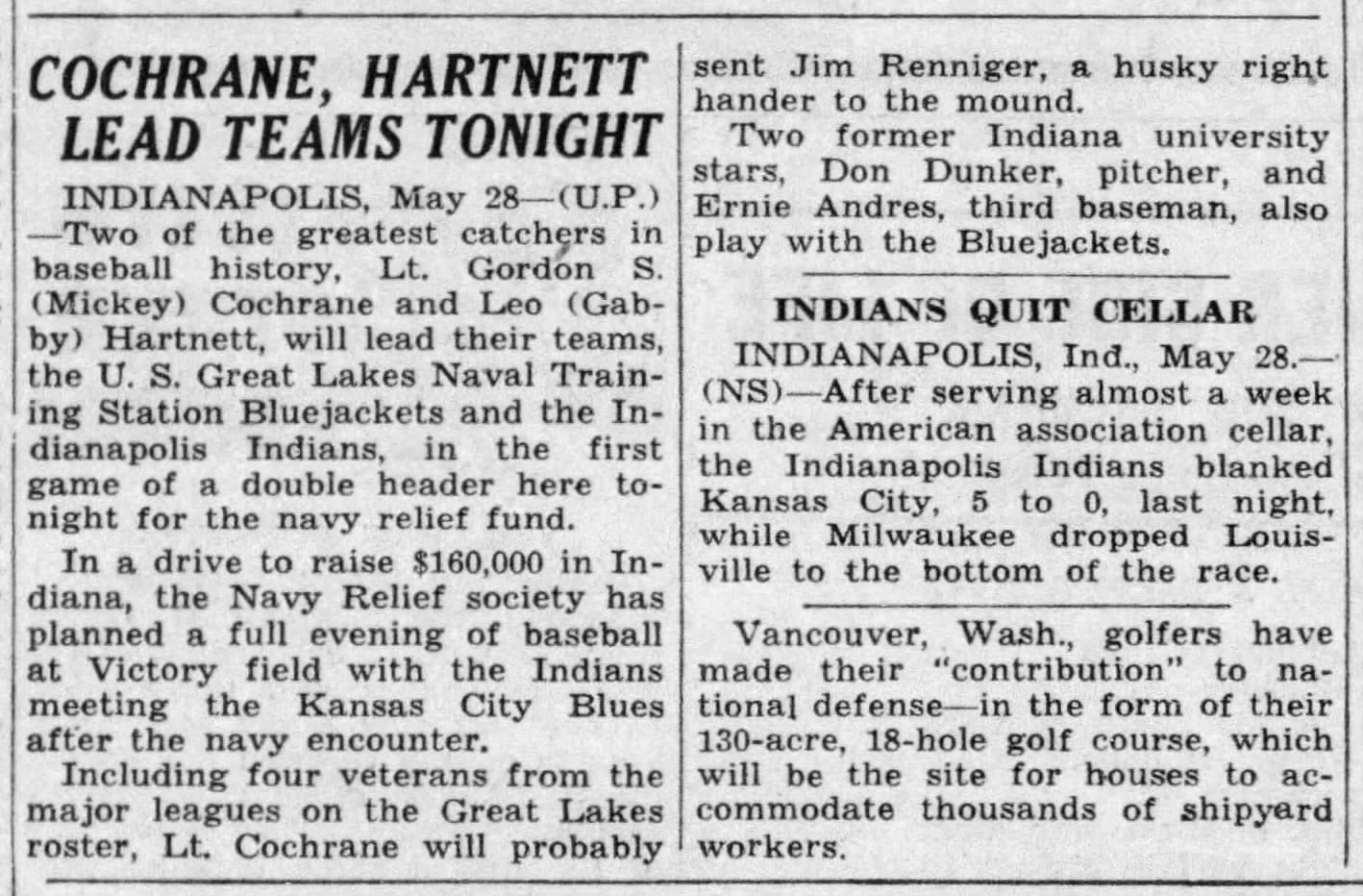
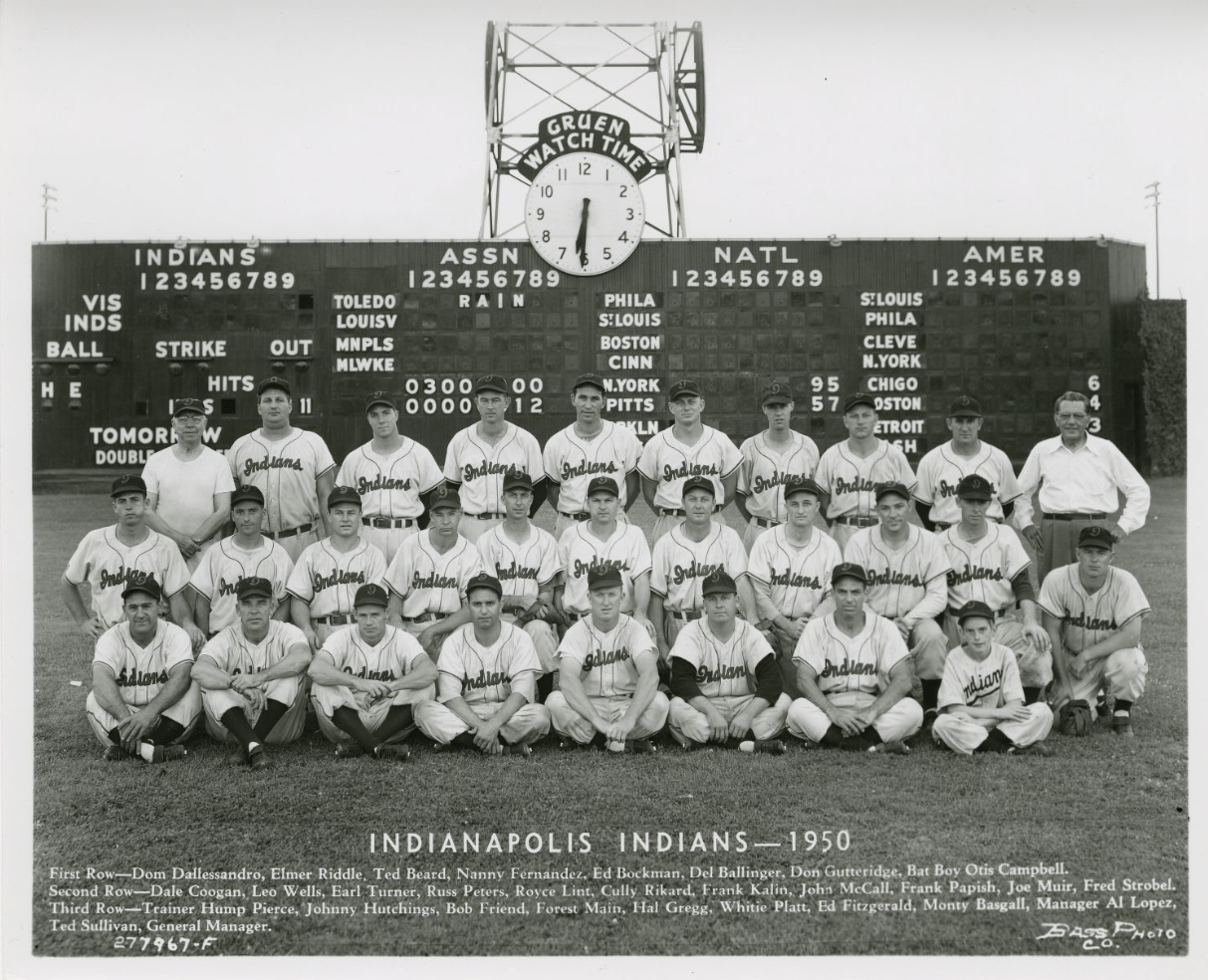
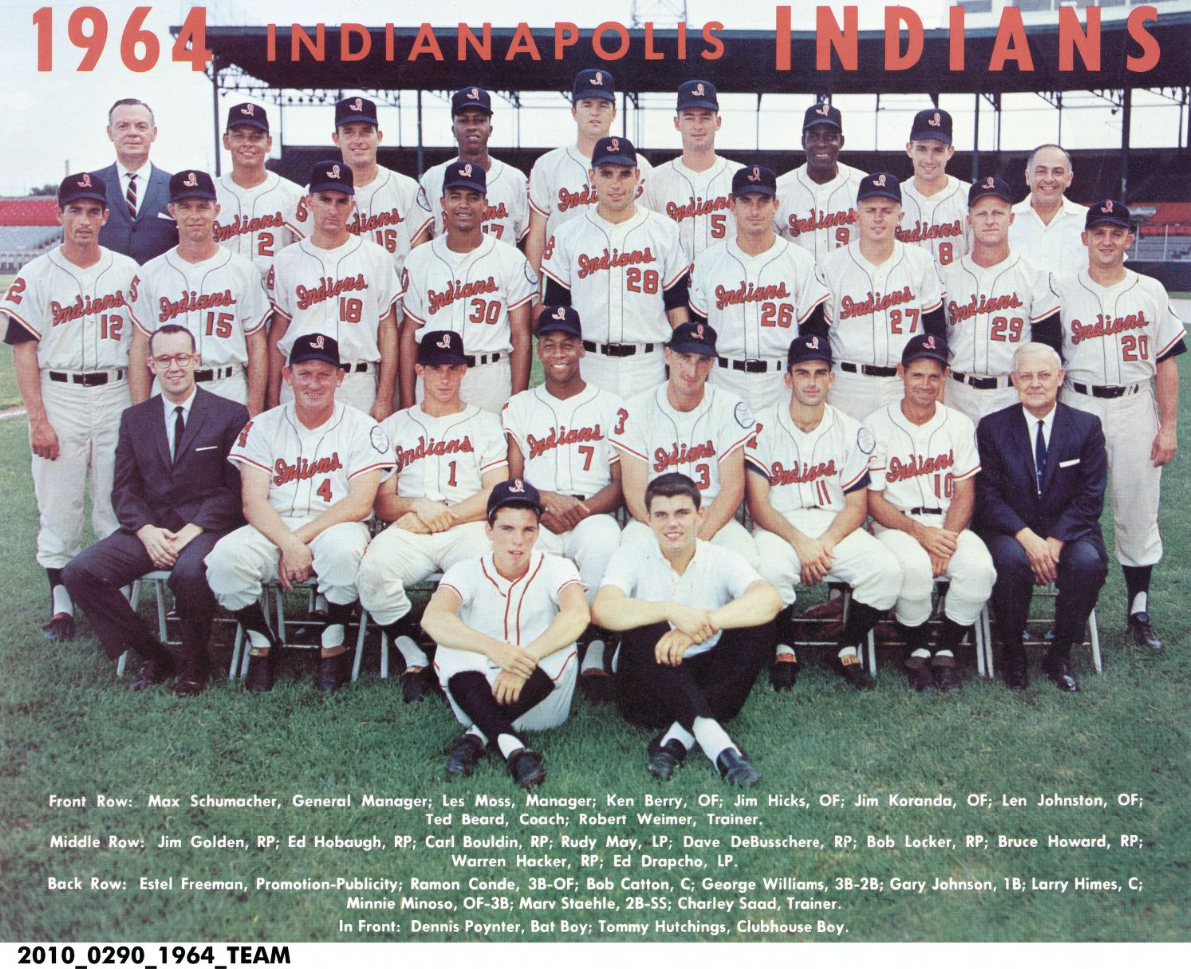
Hartnett leads a team in Indianapolis, 1943 | 1950 Indianapolis Indians team photo, Indiana Historical Society | 1964 team photo, Indiana Historical Society
1963 film, Indiana Historical Society
Member discussion: