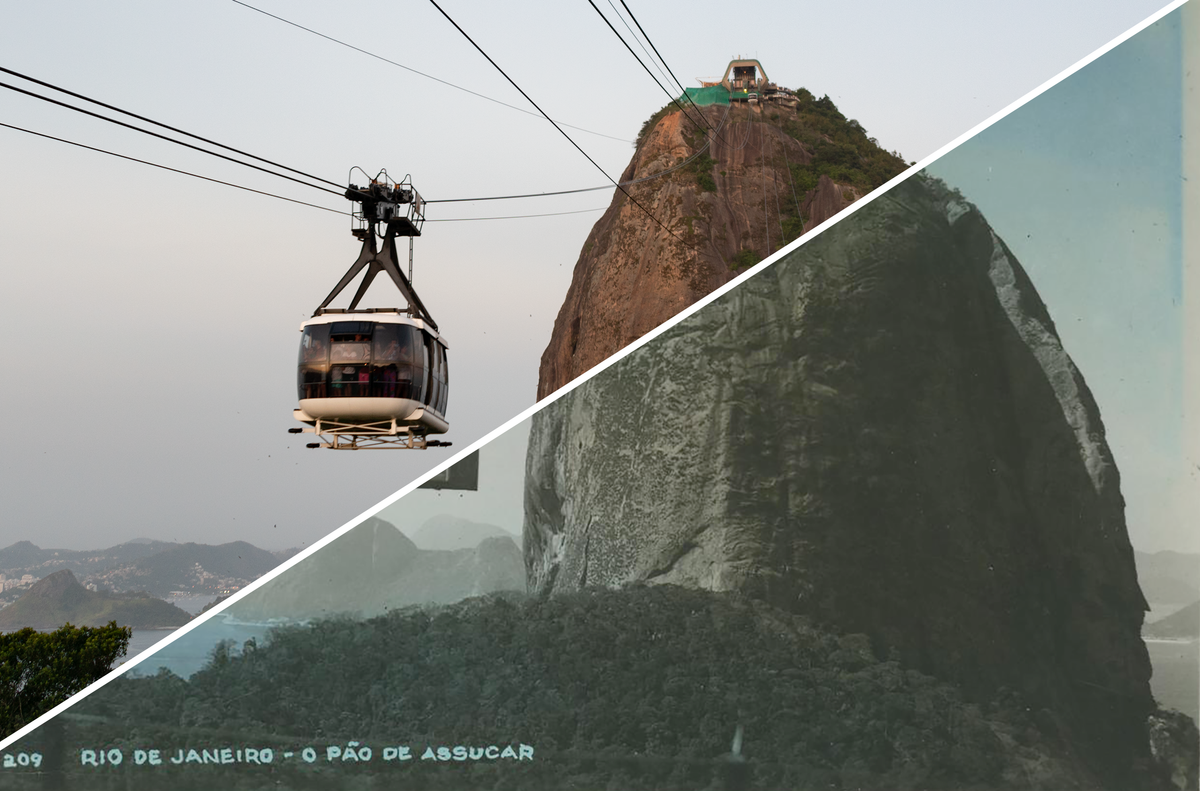
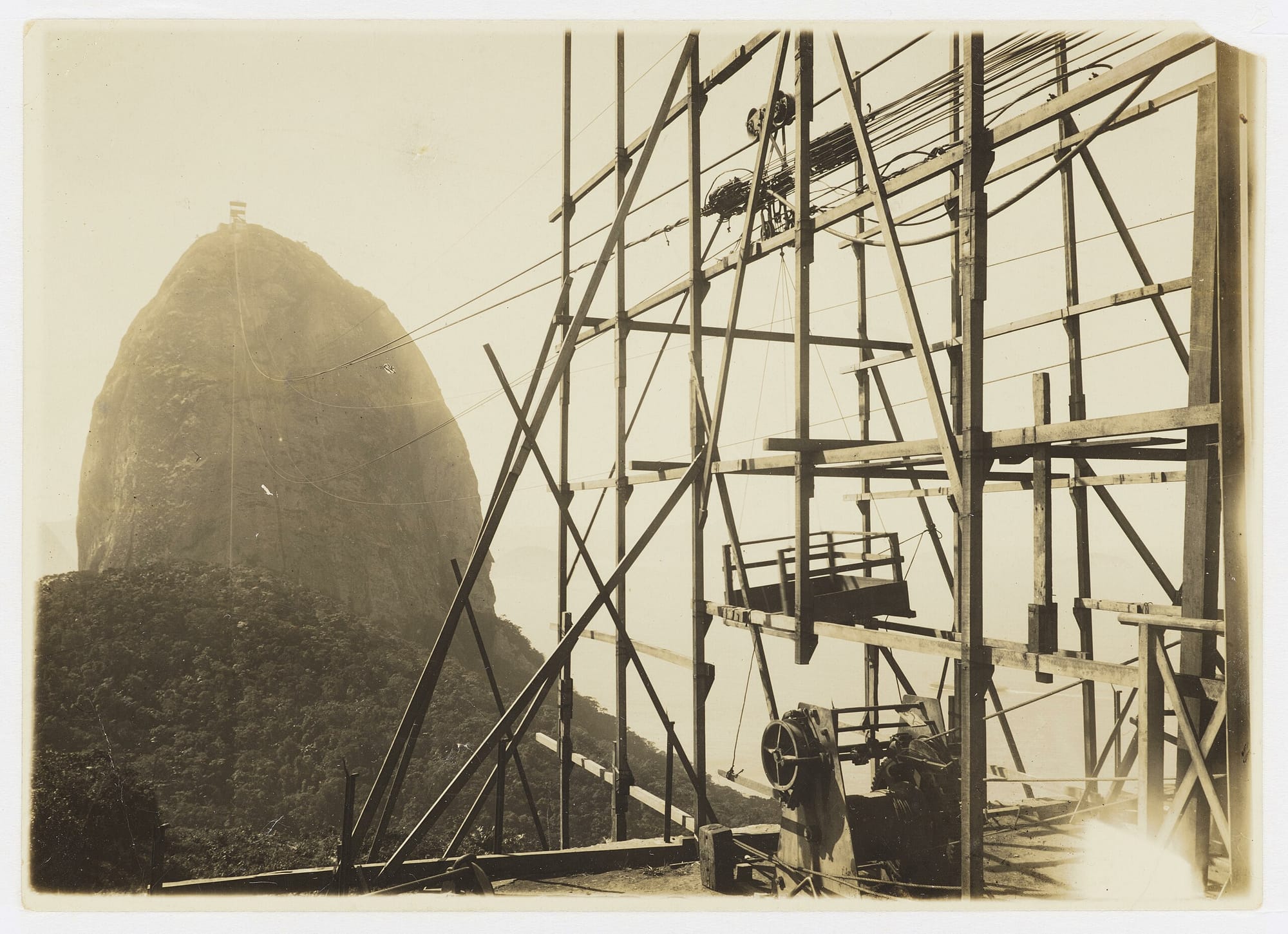
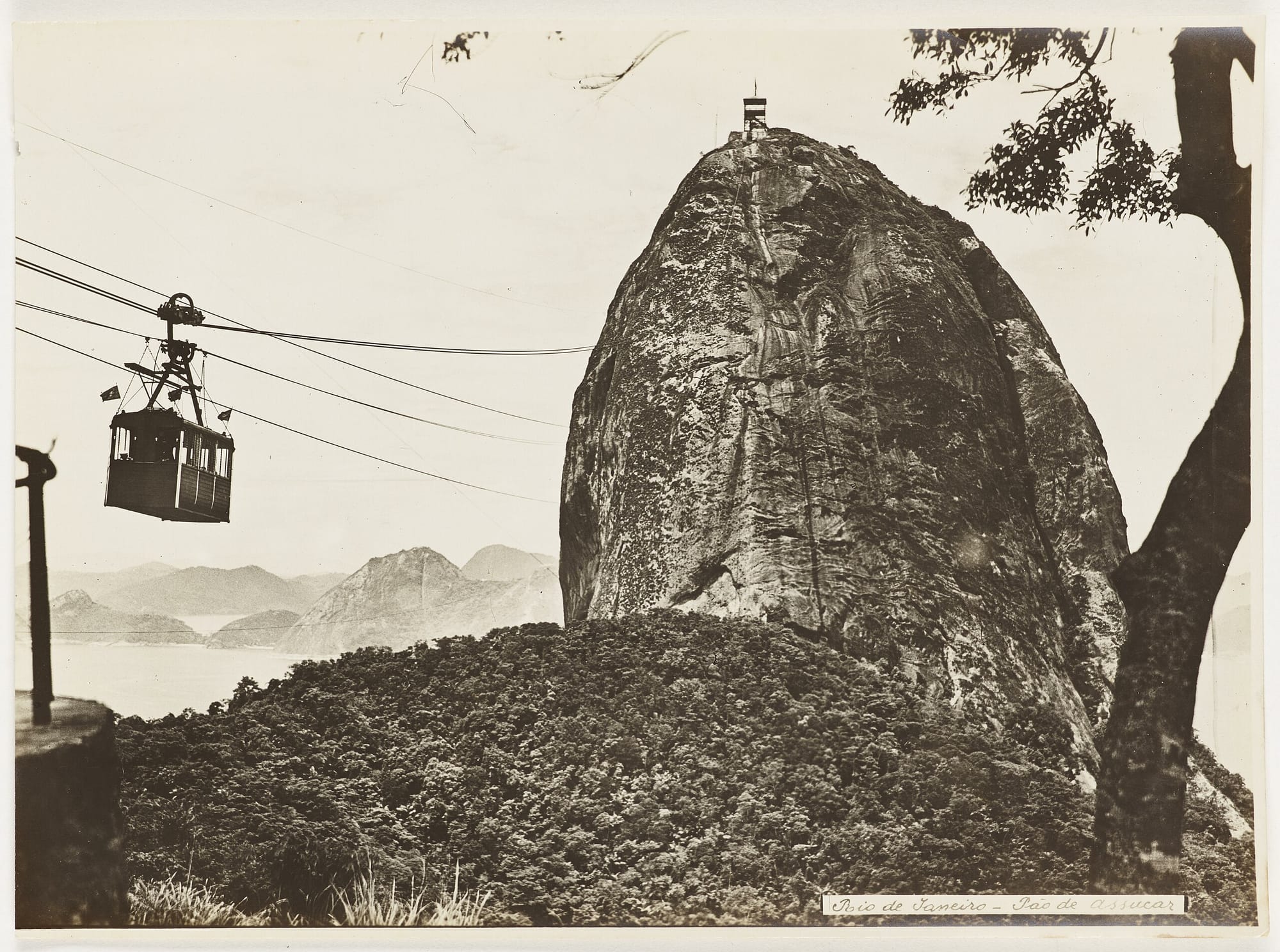
One of the first passenger cable cars in the world when it opened, the aerial tramway to Pão de Açúcar in Rio de Janeiro remains one of the busiest tourist attractions in Brazil—polymath engineer and entrepreneur Augusto Ferreira Ramos knocked it out of the park with this one. Inspiration struck Ramos while attending the Brazilian National Exposition of 1908—the Exhibition of the Centenary of the Opening of the Ports of Brazil—at the foot of Morro da Urca, “hey, we could string lines up between these hills to run a cable car for sightseers”. Ramos was successful, wealthy, and well-connected to people even wealthier and more powerful than he—they capitalized his unconventional idea, forming the Companhia Caminho Aéreo Pão de Açúcar to build Ramos’ aerial tramway. Starting in 1909, hundreds of construction workers scaled this dramatic gneiss outcropping to build the tramway, and this section of the cable car route opened in January, 1913.

So, what’s changed?
- The company strung cables for a parallel line in 1969, doubling capacity.
- We’re on the third generation of cable cars, and the station houses and barriers have been modernized.
- Look at how development has filled in around Icaraí in the city of Niterói across the bay.
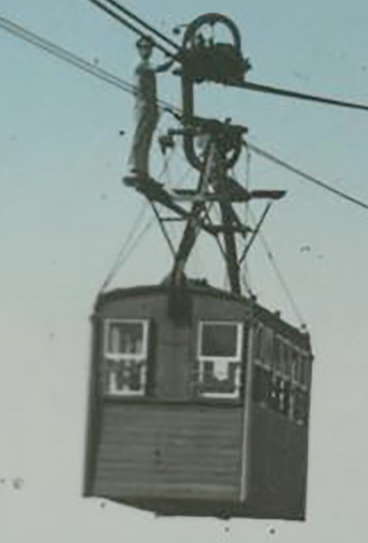
…but also the big one—I can’t imagine anyone, even staff, ever riding ON TOP OF A CAR anymore. GET DOWN FROM THERE.
A bornhardt—a dome-shaped bare rock formation–-made up of augen gneiss, Sugarloaf (Pão de Açúcar) is the gateway to Guanabara Bay and one of the main symbols of Rio de Janeiro. For the first couple centuries of Rio’s existence, Pão de Açúcar stood isolated at the entrance to the bay—important to navigation and the military, but otherwise quite removed from early urban development. Beginning with the opening of a military school at Praia Vermelha in the mid-1800s, development plans accelerated for the area around Morra da Urca, the nearest hill to Pão de Açúcar, culminating in the Brazilian National Exposition of 1908. Commemorating the centenary of the opening of the ports of Brazil, some Brazilian states erected pavilions. Augusto Ferreira Ramos, involved because of his work in the coffee industry, helped organize São Paolo’s, and his time spent on the expo grounds at the foot of Morro da Urca and in the shadow of Pão de Açúcar inspired him to propose an aerial tramway connecting the beach, Morro da Urca, Morro da Babilônia, and Pão de Açúcar.
Working with local government, industrialists, and the military, Ramos received authorization to construct the tramway and—after validating its financial and engineering feasibility—raised investment and founded the Companhia Caminho Aéreo Pão de Açúcar in 1911. There were only a handful of aerial cable car systems in the world at that point—at the Wetterhorn in Switzerland, one in the Basque Country serving San Sebastián’s Mount Ulia, the Kohlerer Bahn in Italy, and the Mount Parker Cable Car in Hong Kong (and maybe a couple others).
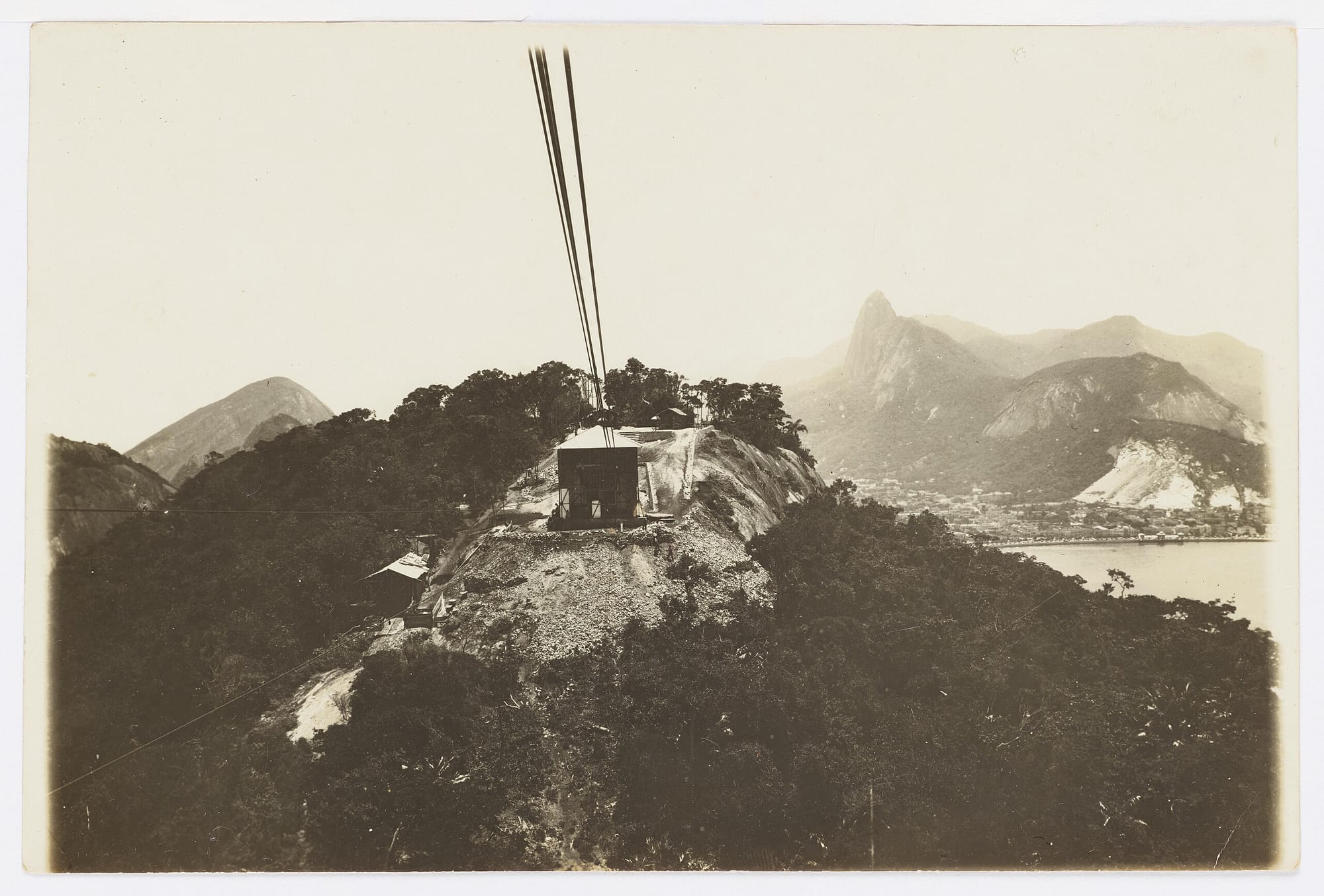
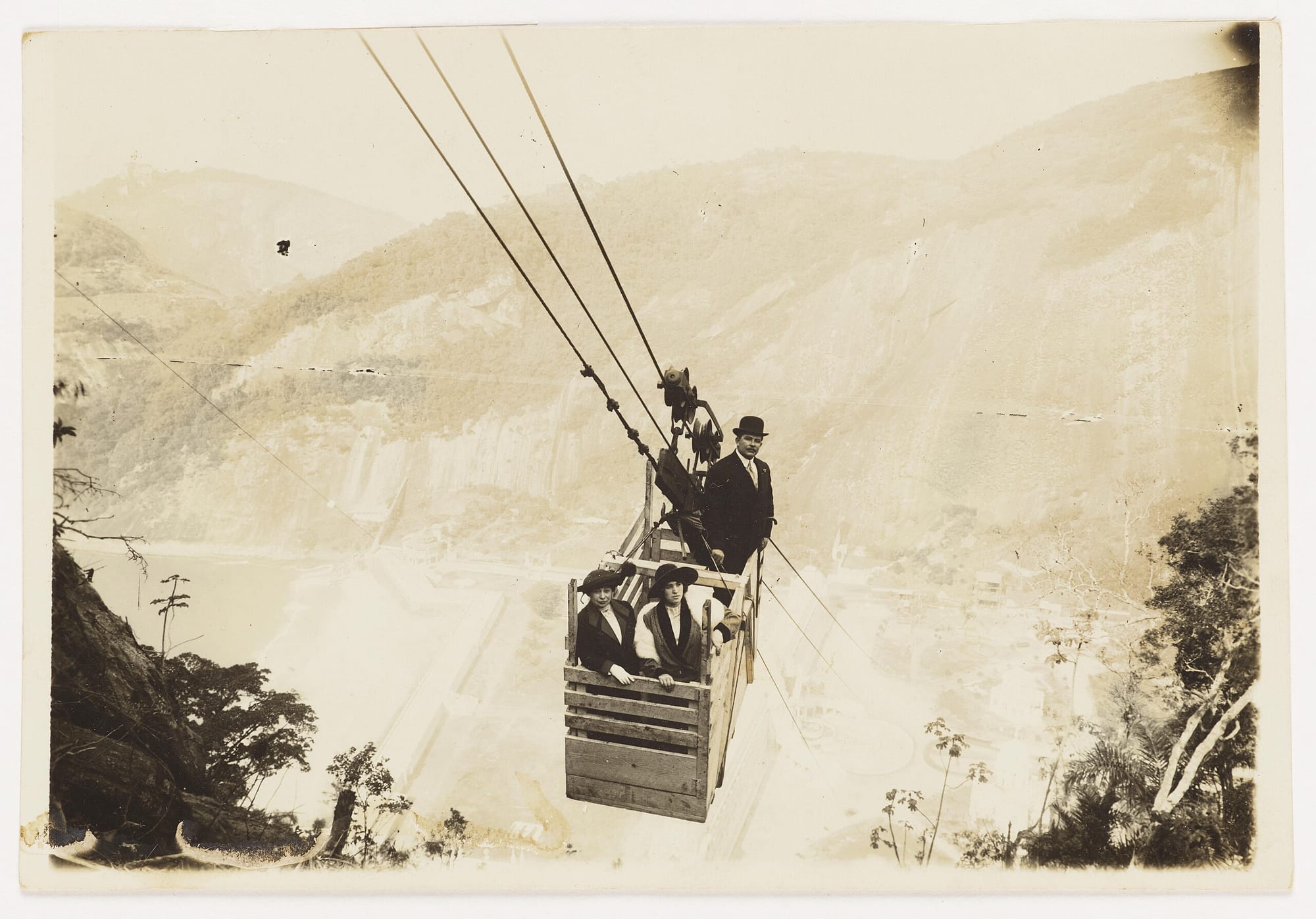
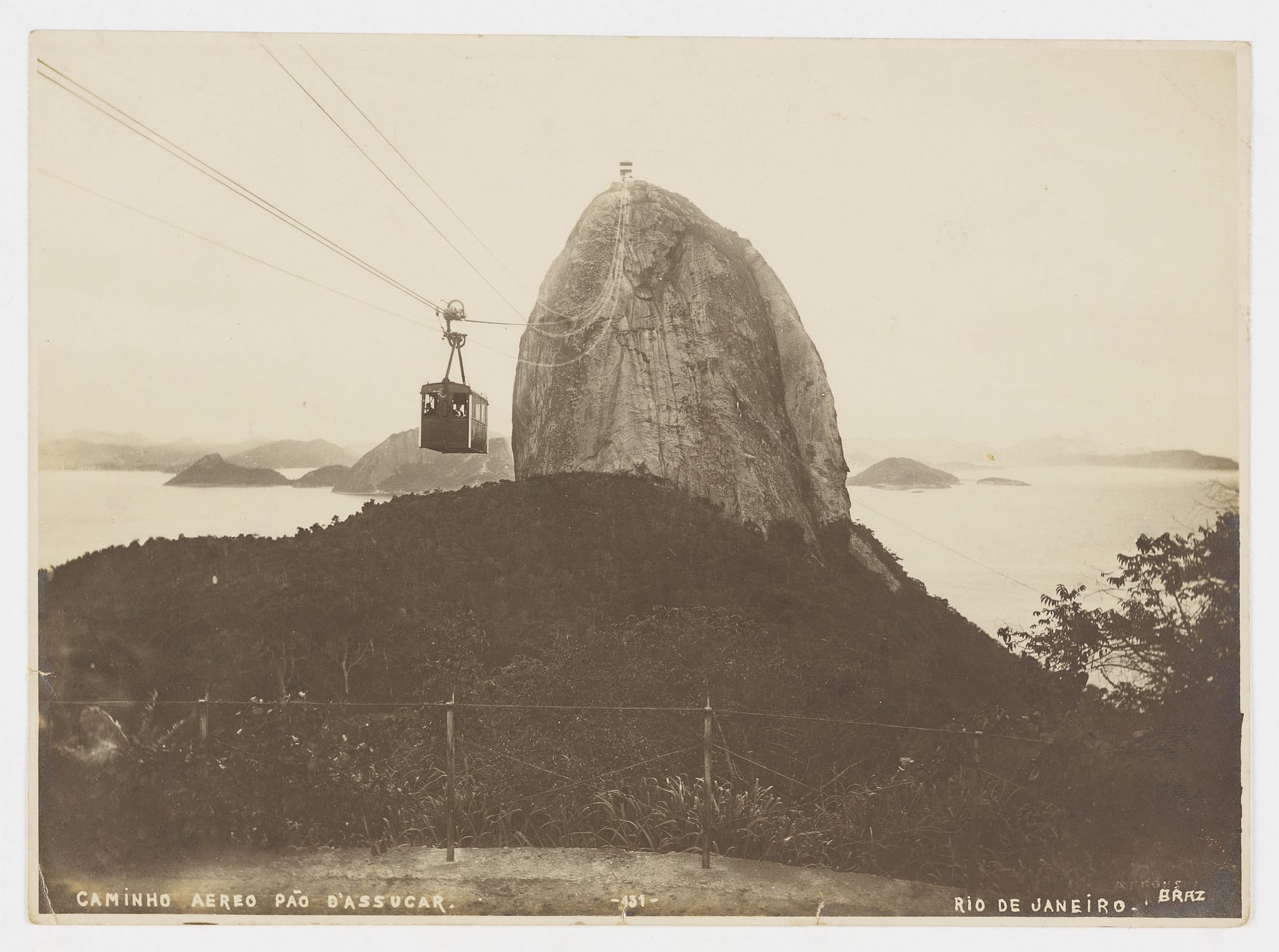
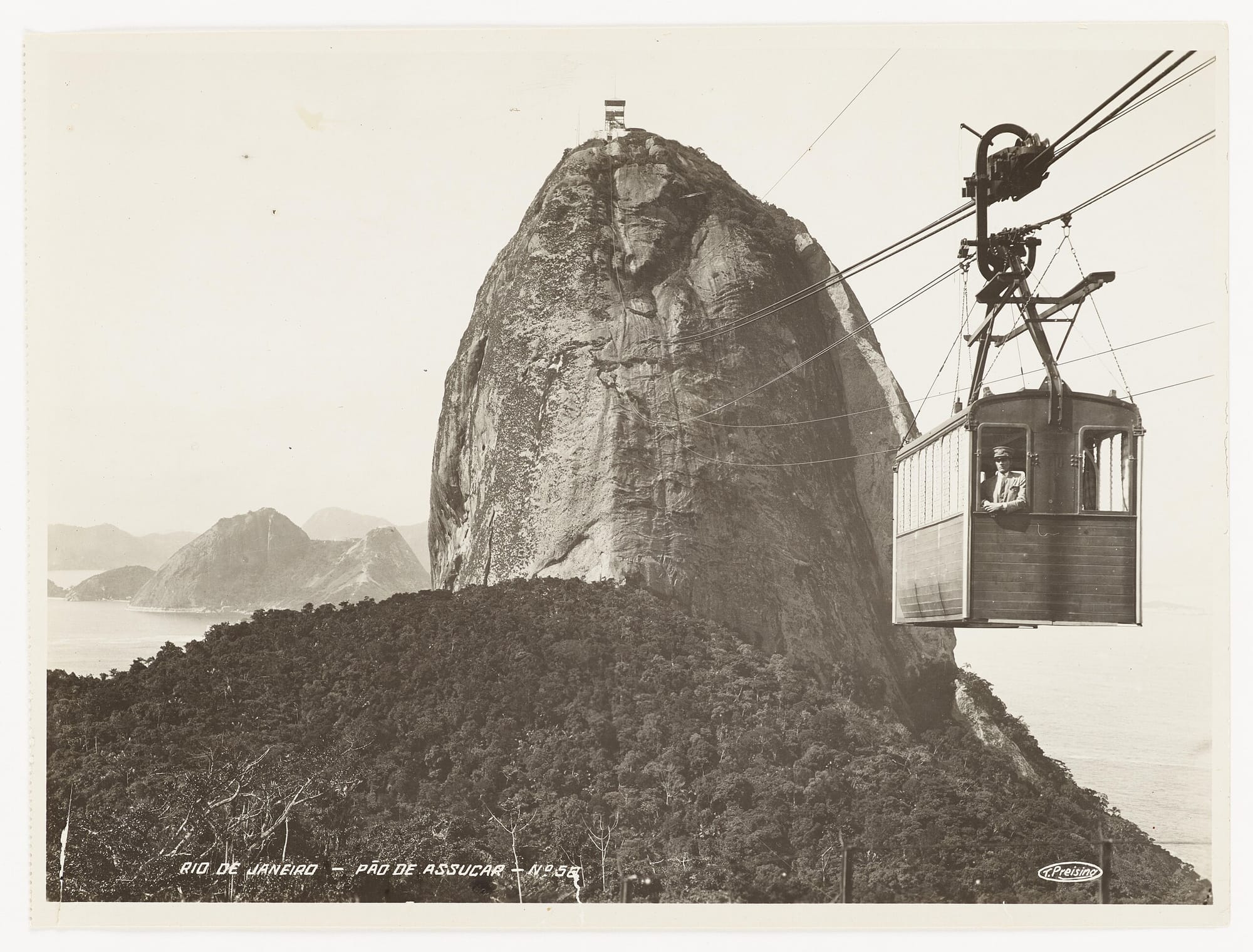
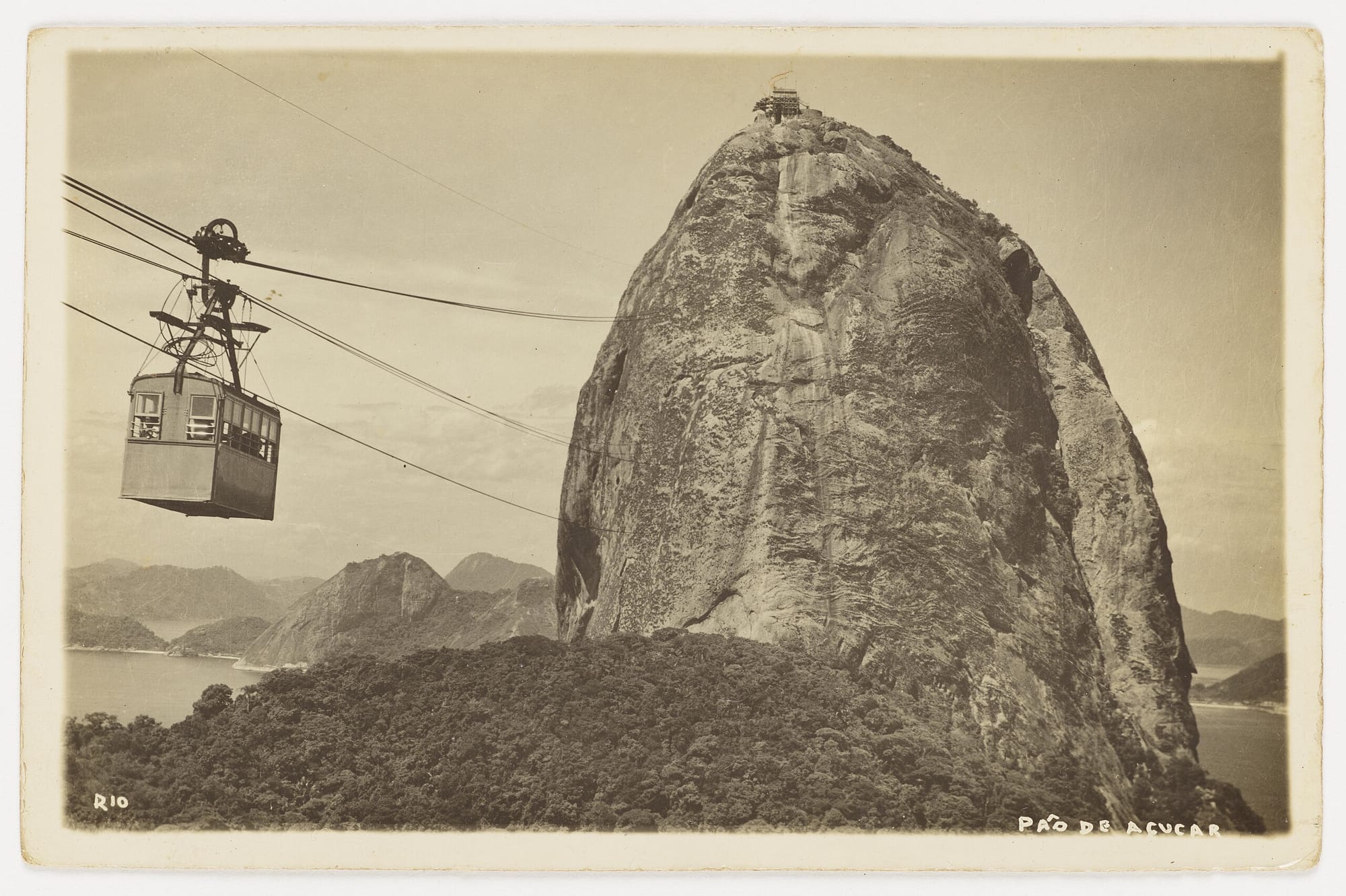
1910-1912, Therezio Mascarenhas, Instituto Moreira Salles Collection via Wikimedia Commons | 1910-1912, visitors, Therezio Mascarenhas, Instituto Moreira Salles Collection via Wikimedia Commons | 1910-1912, Therezio Mascarenhas, Instituto Moreira Salles Collection via Wikimedia Commons | 1913-1923, Instituto Moreira Salles Collection via Wikimedia Commons | 1912-1915, Marc Ferrez, Instituto Moreira Salles Collection via Wikimedia Commons | 1912-1915, Marc Ferrez, Instituto Moreira Salles Collection via Wikimedia Commons | 1920s postcard, Instituto Moreira Salles Collection via Wikimedia Commons | 1930s postcard, Theodore Preising, Instituto Moreira Salles Collection via Wikimedia Commons | 1940s postcard, Instituto Moreira Salles Collection via Wikimedia Commons

.jpg?ref=postcard-past.com)
.jpg?ref=postcard-past.com)


.jpg?ref=postcard-past.com)
.jpg?ref=postcard-past.com)

This was still a newish technology operating in challenging terrain, and construction of the Sugarloaf cable car was risky and expensive. With no existing cable cars in Brazil (or all of Latin America, really), all equipment had to be imported from Germany—Ramos contracted the German company J. Pohlig Heckel out of Cologne to design and manufacture the cable car equipment. On the Brazil side, to actually hang the cables, hundreds of construction workers climbed Pão de Açúcar and Morro da Urca, first with winch parts to construct the tools to haul the heavier materials and equipment up the mountain. The company ultimately built a workshop on top of Morro da Urca to maintain the German-built cabins, winches, and cable systems—the Sugarloaf Cable Car is an interesting combination of early 20th century German technology, local Brazilian know-how, and an entrepreneurial gamble on Rio’s fledgling tourism industry.
Early 1930s video, Jornal Carioca, the Internet Archive
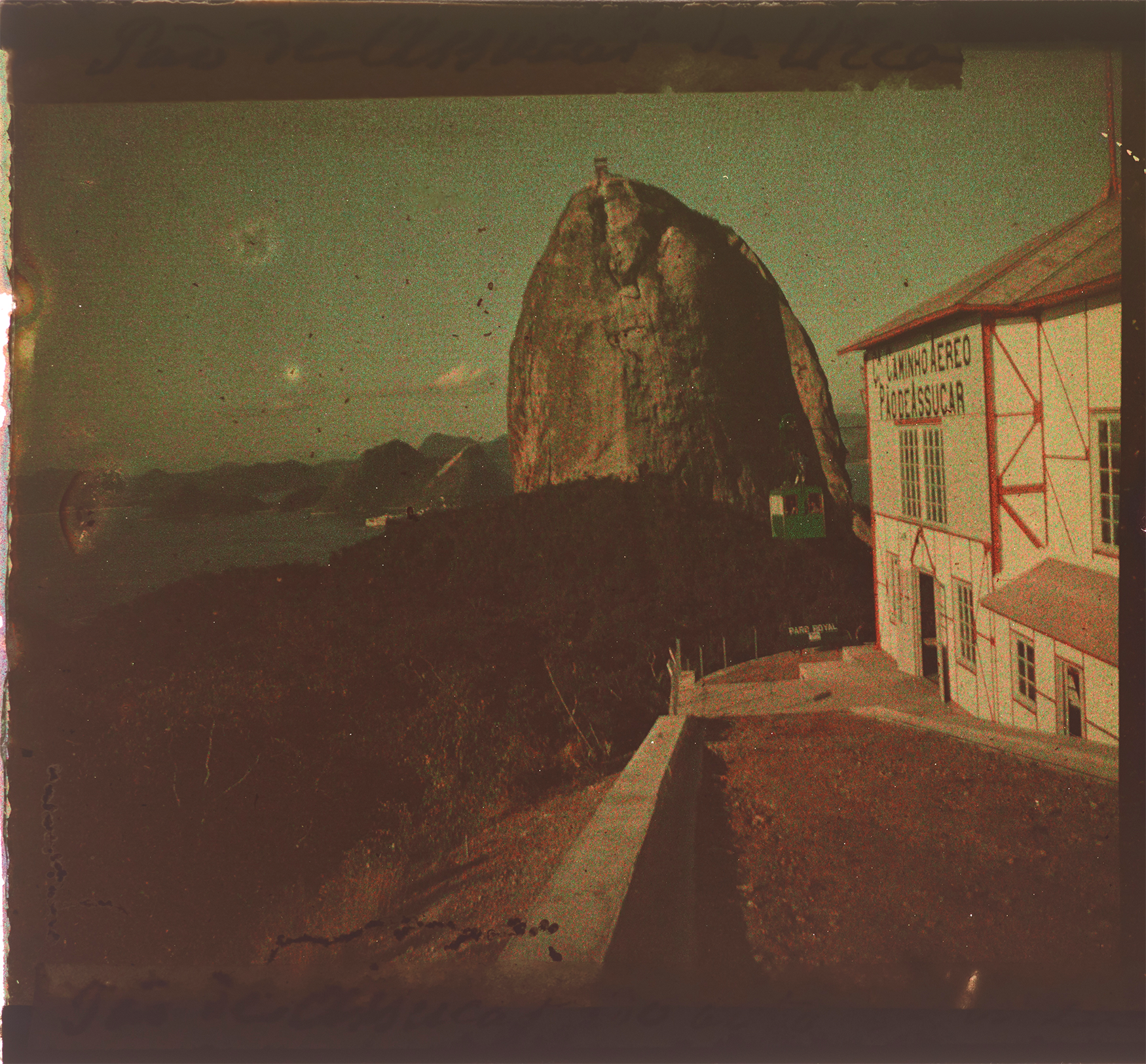
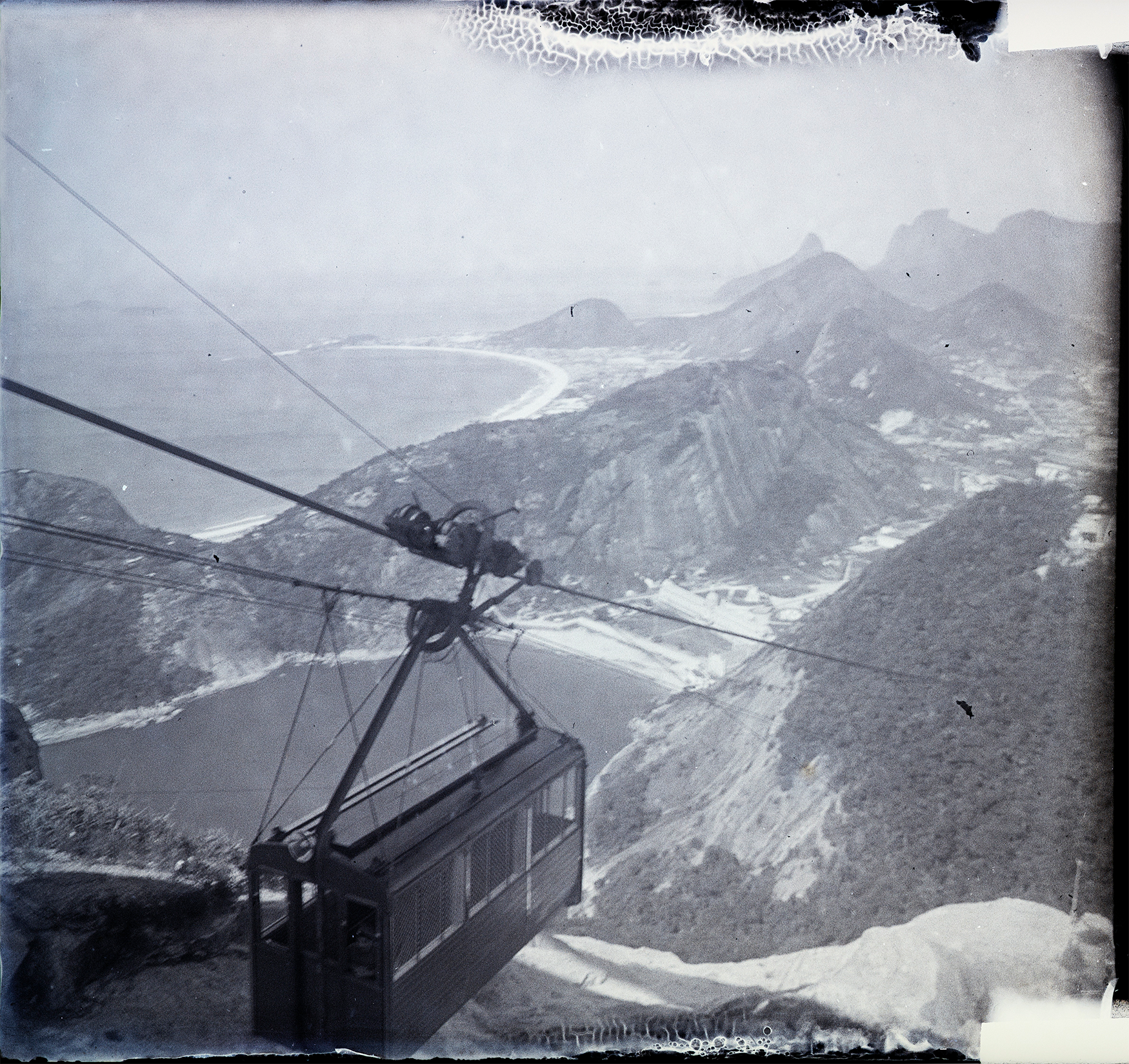
The first leg of the tramway, 1732 feet from Praia Vermelha to Morro da Urca, opened in 1912. This section, 2460 feet from the top of Morro da Urca to Pão de Açúcar, opened in January 1913 (the Morro da Babilônia section was never built). It took the wooden cars, quickly nicknamed bondinhos after Rio’s streetcars, roughly 11 minutes of travel time to go from sea level to mountaintop (excluding the transfer on top of Morro da Urca). Ramos’ sightseeing tramway appears to have been an immediate success, and he would lead the company he founded until 1934.
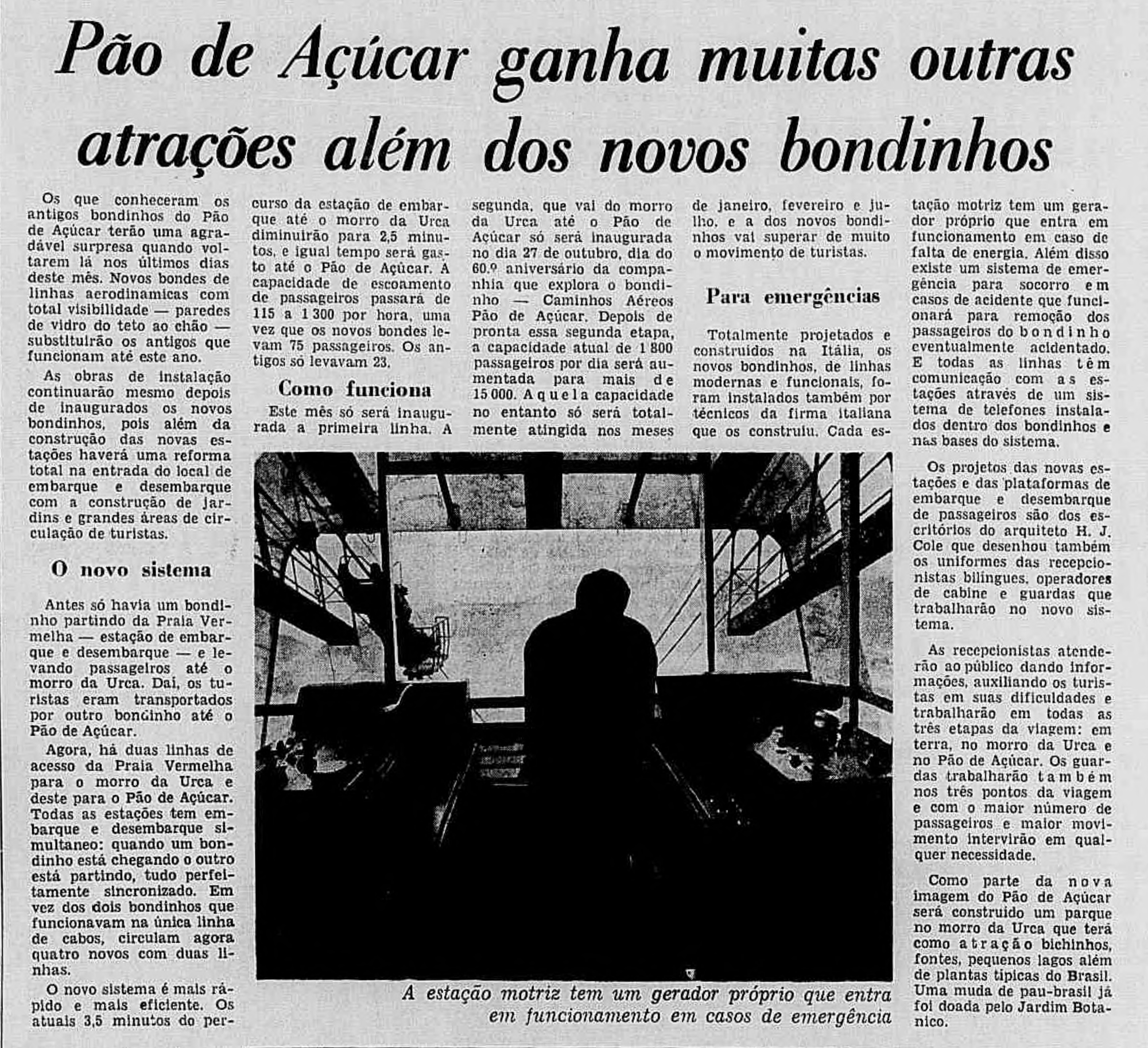
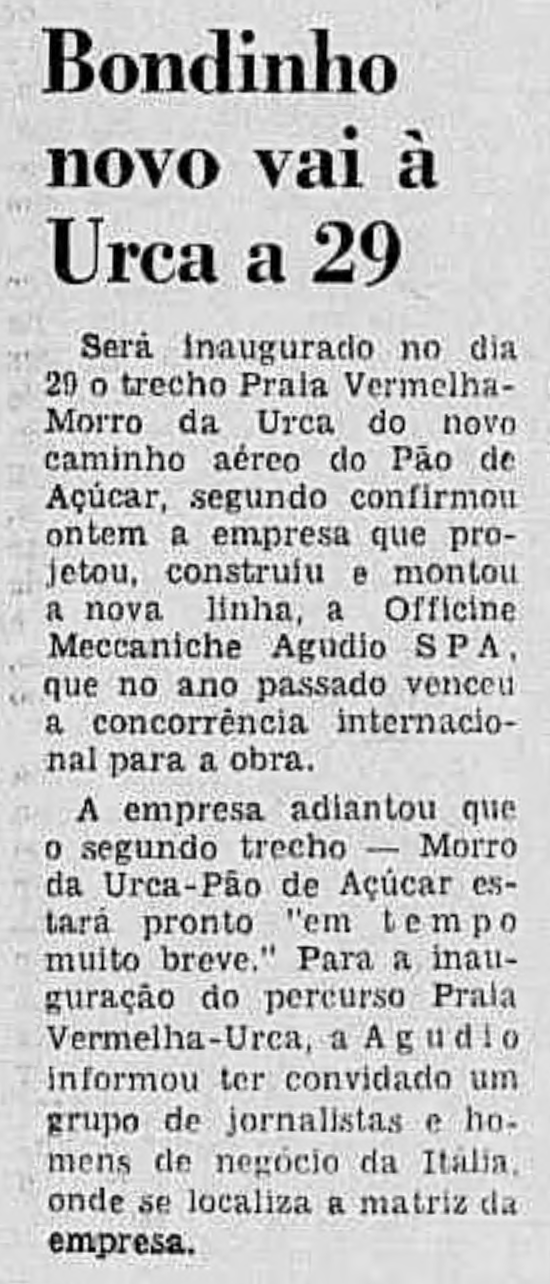
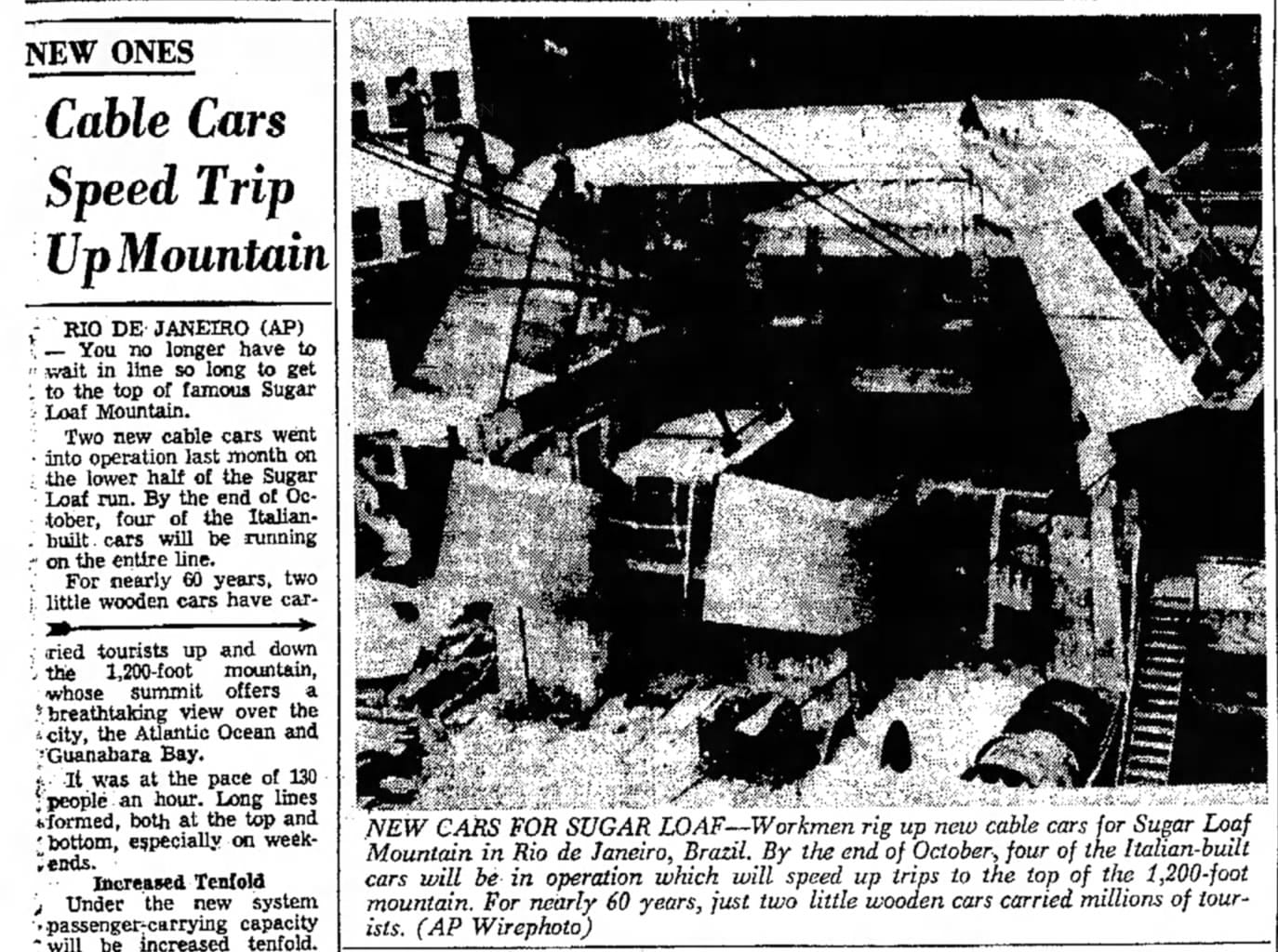
1972 articles about the new cars, Jornal do Brasil, the Internet Archive | 1972 AP article
The first major modernization of the cable car came in the late 1960s and early 1970s. To increase passenger capacity, the company strung up a second cableway parallel to the original, allowing them to run more cars simultaneously. Cable car technology had also advanced considerably in 50 years—in 1972 the Companhia Caminho Aéreo Pão de Açúcar acquired their second-generation cable cars, the steel and glass bubble-style cabins imported from Italy. The combination of the extra cables and the new, significantly larger gondolas increased capacity from 115 passengers an hour to 1,360. These cabins had a high-profile cameo as the site of a fight between James Bond and Jaws in Moonraker in 1979.
Now on their third-generation cabin—new cars from Switzerland’s CWA Constructions started operating in 2008—today more than 2500 passengers a day ride the cable car to Sugarloaf.
Not bad for one engineer's wild idea.
1965, Previsão Do Tempo, the Internet Archive
Production Files
Further reading:
- A construção do Bondinho do Pão de Açúcar sob as lentes de Therezio Mascarenhas
- As diferentes faces do ‘louco’ que criou o bondinho do Pão de Açúcar
- Bondinho do Pão de Açúcar do Rio de Janeiro, a história
- Bondinho, “A História de um fio” by Sabrina Soares Cruz
- 1908 National Exposition
- On the other early aerial tramways: the Wetterhorn, the Kohlernbahn, Mt. Ulia
Member discussion: