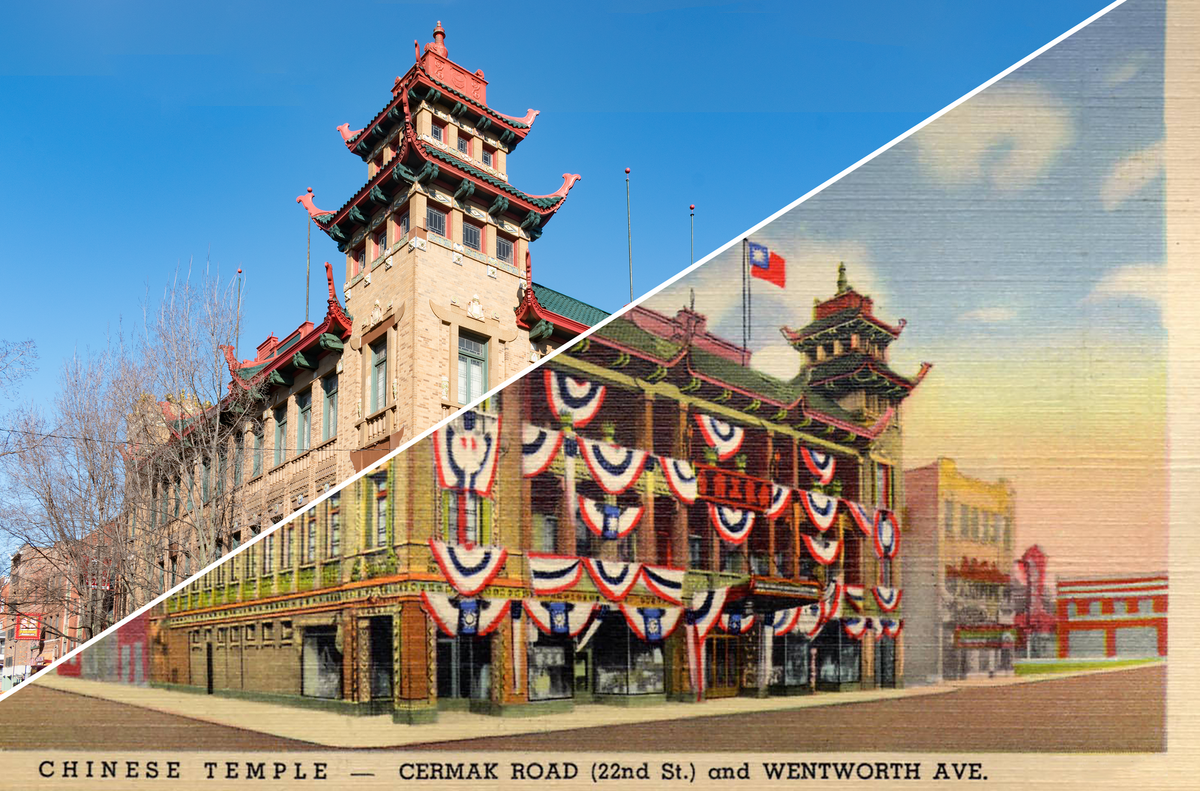
Basically a traditional Chicago union hall with a Chinese-inspired skin based on photos from a German architect's book and designed by Norwegian-American architects, Chinatown’s landmark On Leong Merchants Association Building is a quirky western reinterpretation of Chinese architectural forms. Discriminatory laws meant there were no Chinese architects licensed in Illinois when the tong needed to build itself a new home, but architects Christian Michaelsen & Sigurd Rognstad had designed On Leong director Jim Moy’s Peacock Inn restaurant in Uptown. So...good enough.
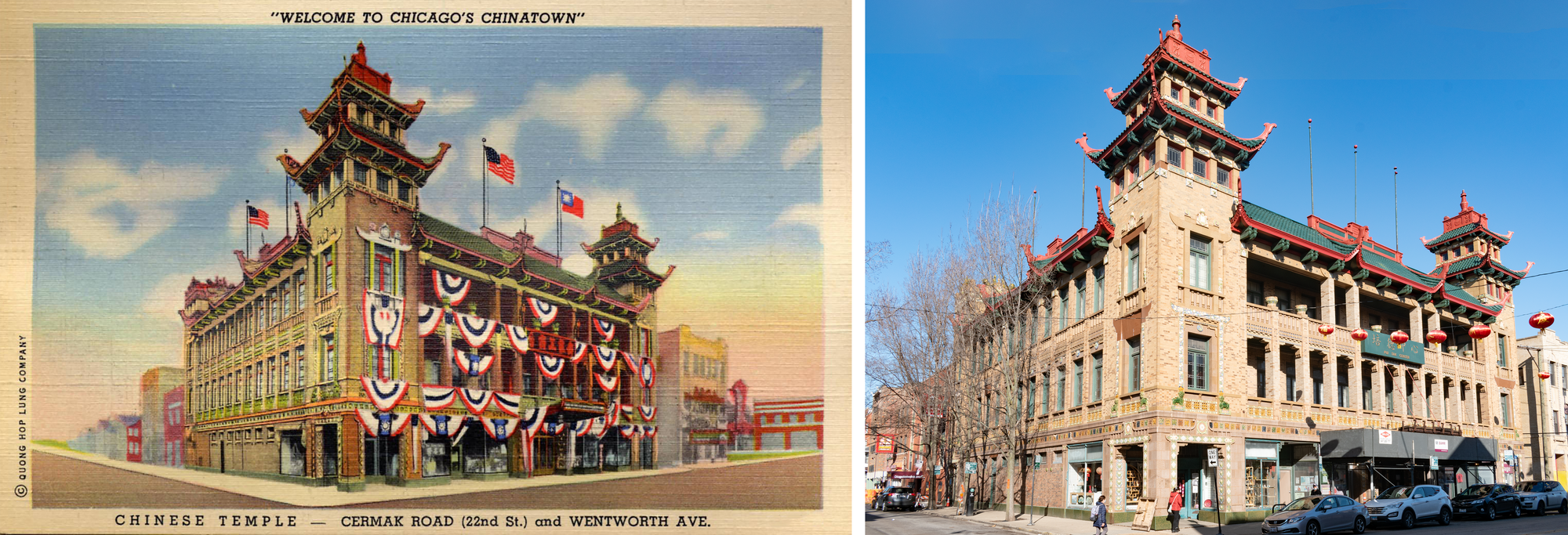
Lacking familiarity with Chinese culture, Michaelsen & Rognstad turned to German architect Ernst Boerschmann’s book Chinesische Architekture for inspiration. Predictably, as the Chinese American Museum of Chicago put it, "none of the motifs are truly Chinese — they were designed by a creative European-American who had seen very little real Chinese art or architecture". That's not really a criticism—it's a raucous example of early 20th century syncretic American design—but while the colorful grandeur of the building helped launch Michaelsen & Rognstad's career, it took decades for Asian architects in the US to overcome the racist barriers that boxed them out of the industry.
The organization that commissioned the building, the On Leong Merchants Association, was one of the major tongs that operated in US Chinatowns in the 20th century. Support and protection associations for Chinese-American communities, tongs like On Leong organized Chinese-language education, new immigrant assistance, community dispute resolution, and celebrations (...and yes, sometimes fought other tongs for control of gambling, prostitution, and protection rackets). Reflecting the unique pattern of early Chinese immigration to the US–where emigrants from the relatively small county of Taishan made up a disproportionate share of arrivals–for decades all tong business was conducted in Taishanese.
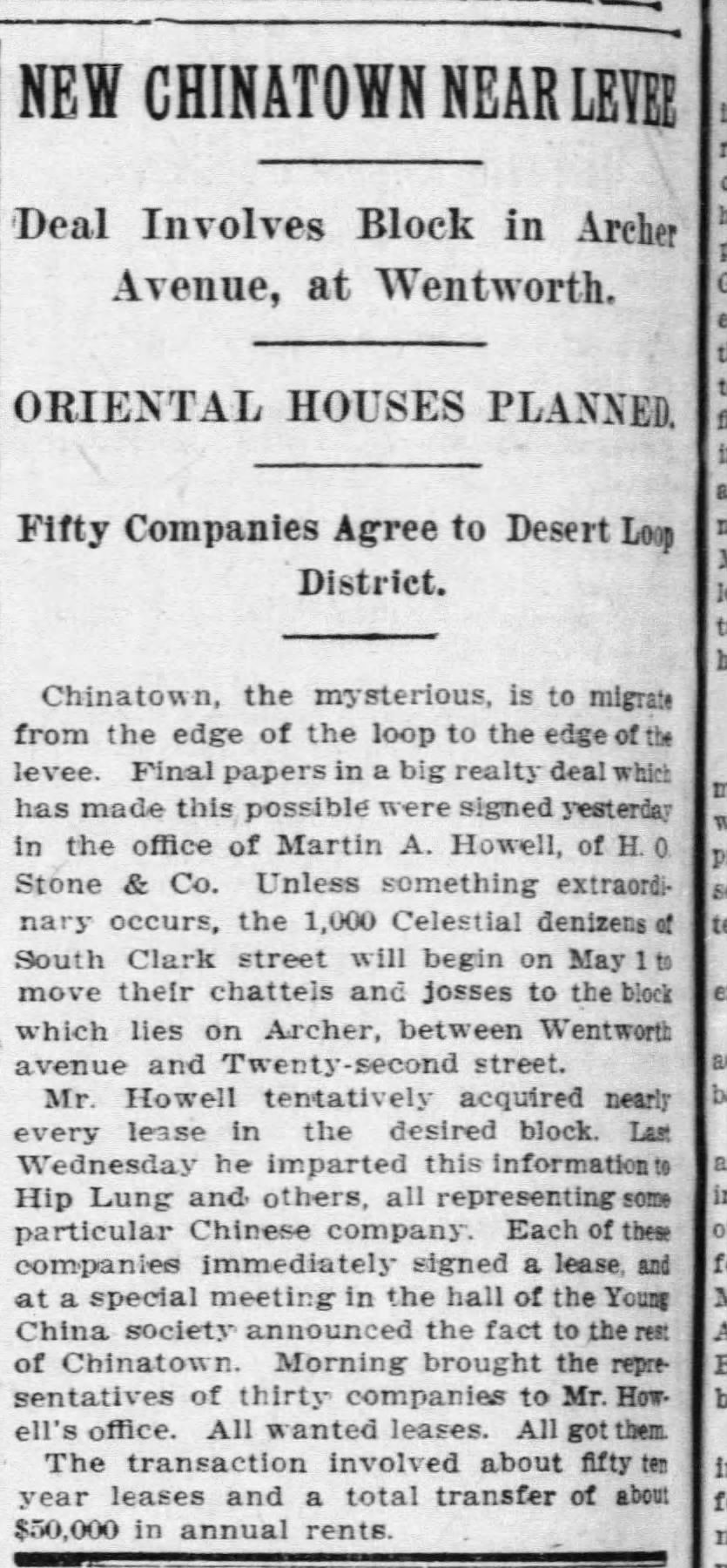
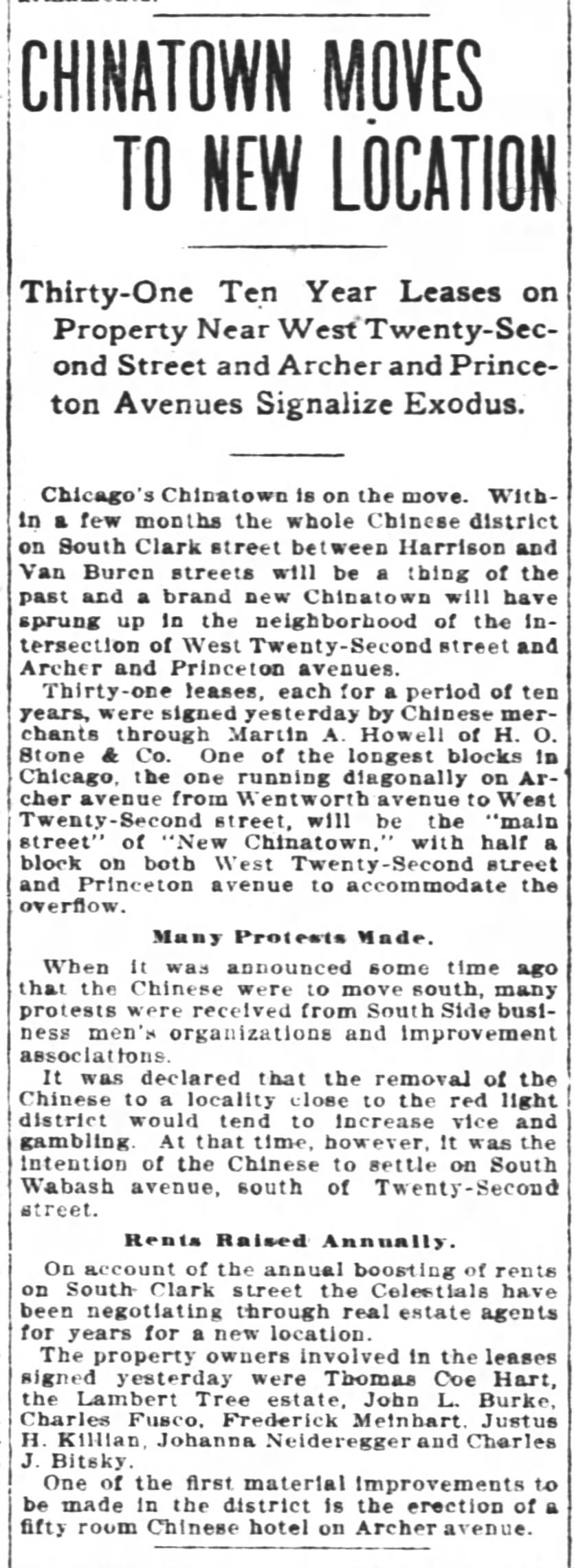
Two 1912 articles about Chinatown moving from Clark Street south to Wentworth and 22nd
It was the On Leong Tong who helped turn this area into Chicago’s Chinatown in the first place, in 1912. The city’s old Chinatown on Clark Street was in turmoil: partially demolished for the city's new federal building, split into monarchist and republican factions after the Chinese Revolution of 1911, and struggling with rising rents and extreme rental discrimination by white landlords. In response, On Leong member businesses moved en masse in February, 1912 to the area around Wentworth and 22nd.
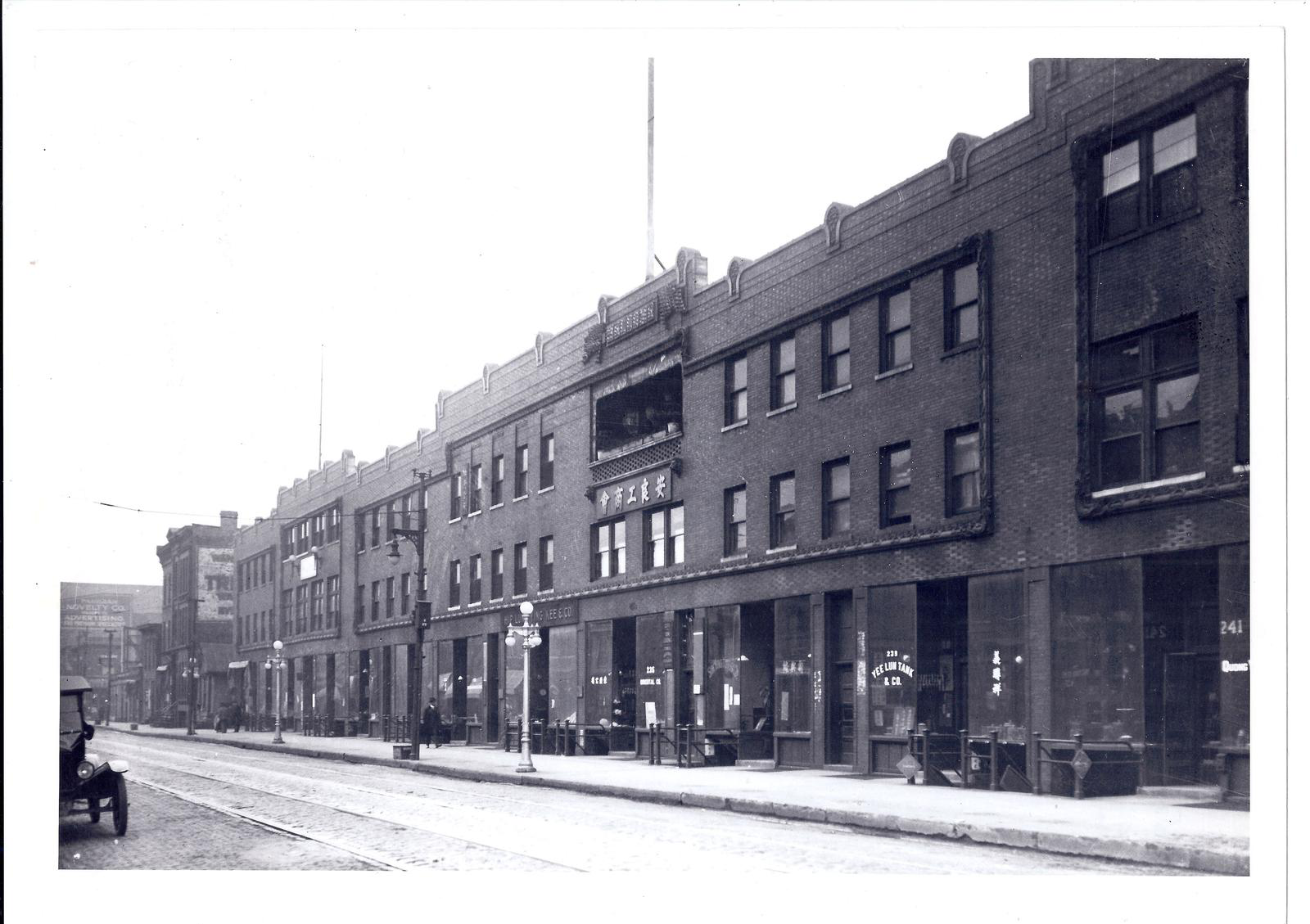
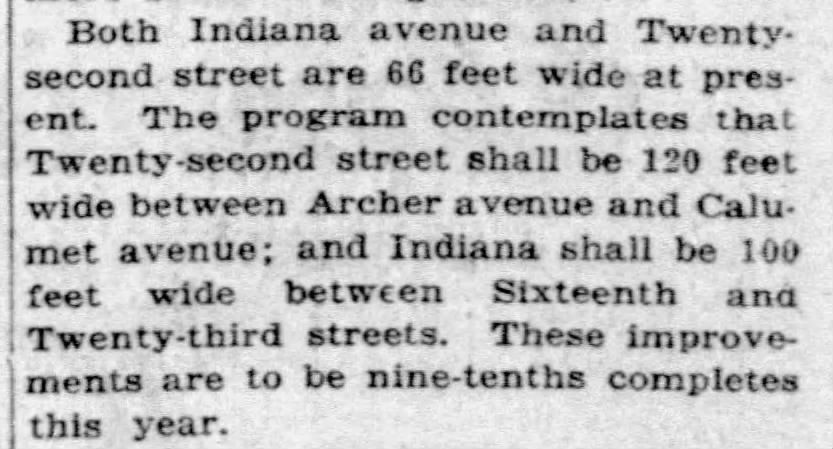
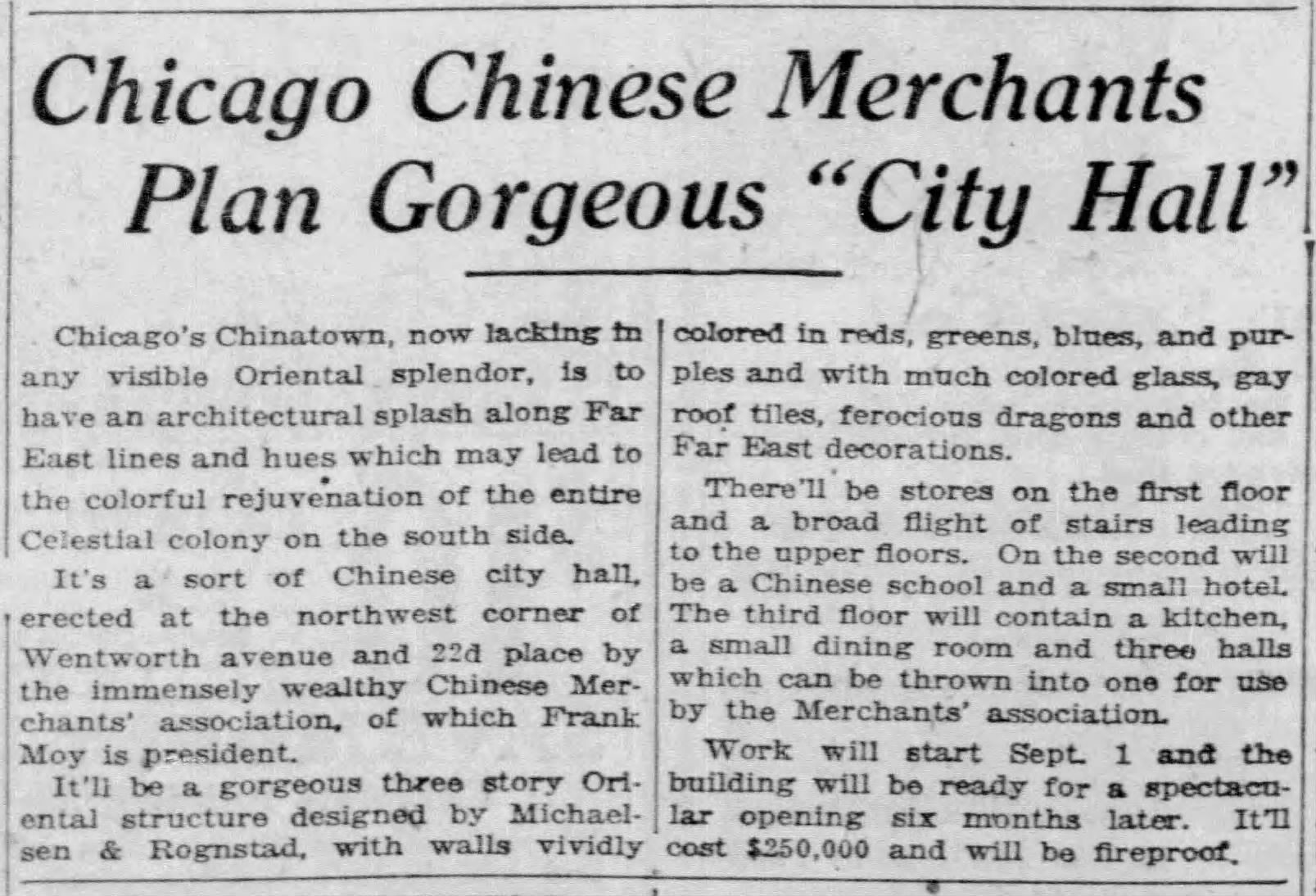
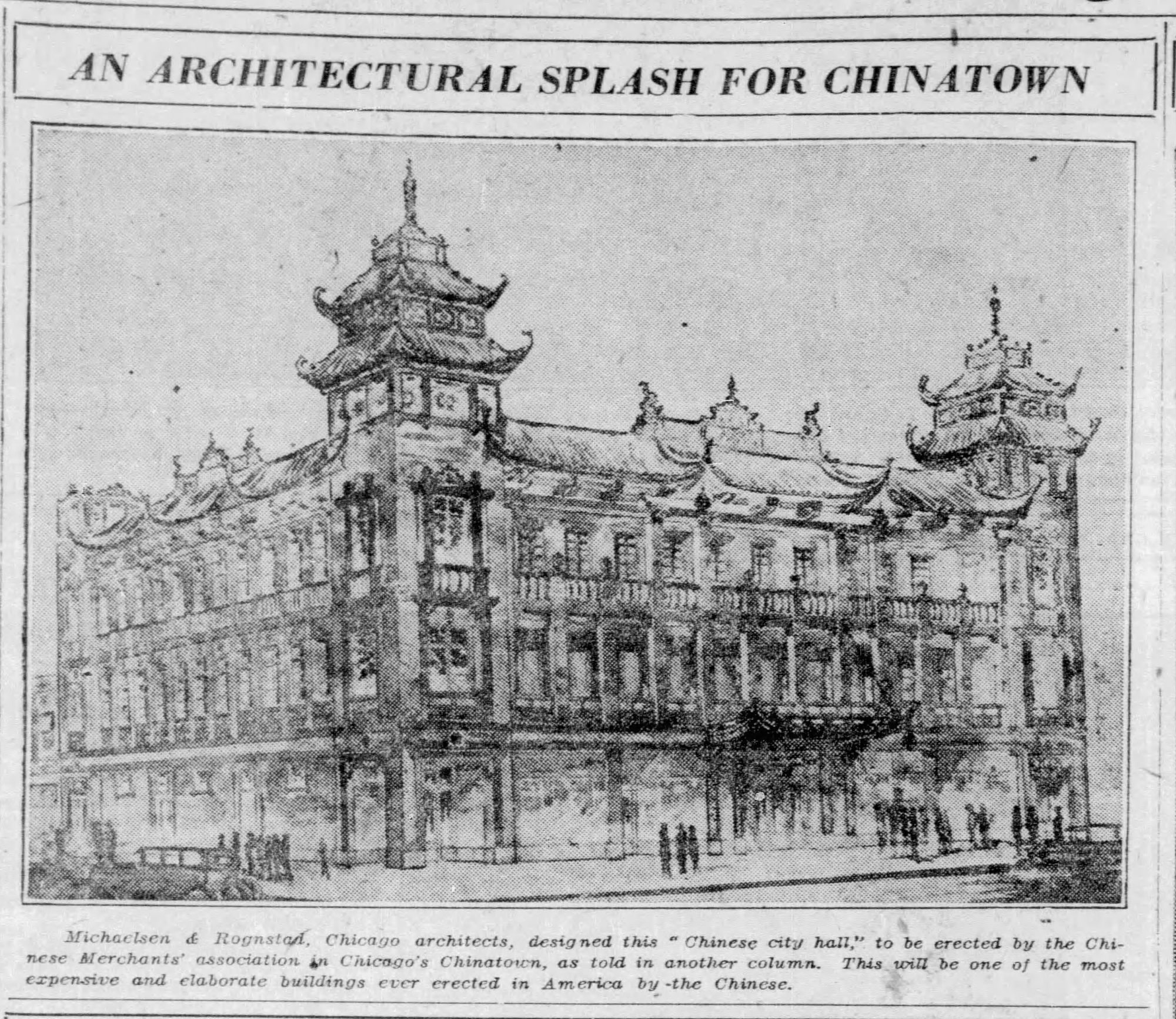
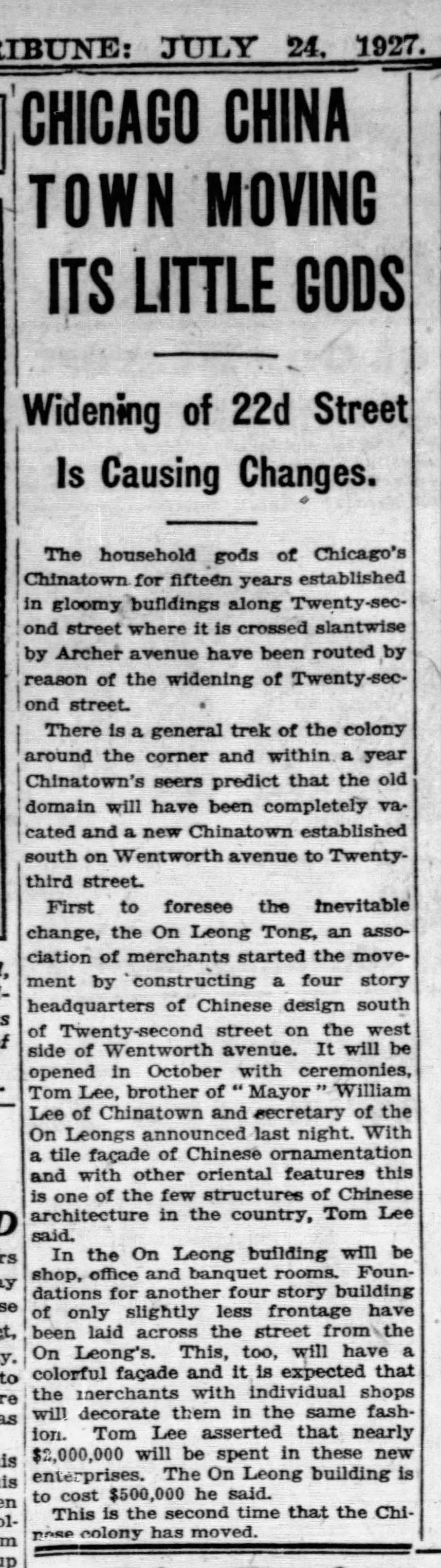
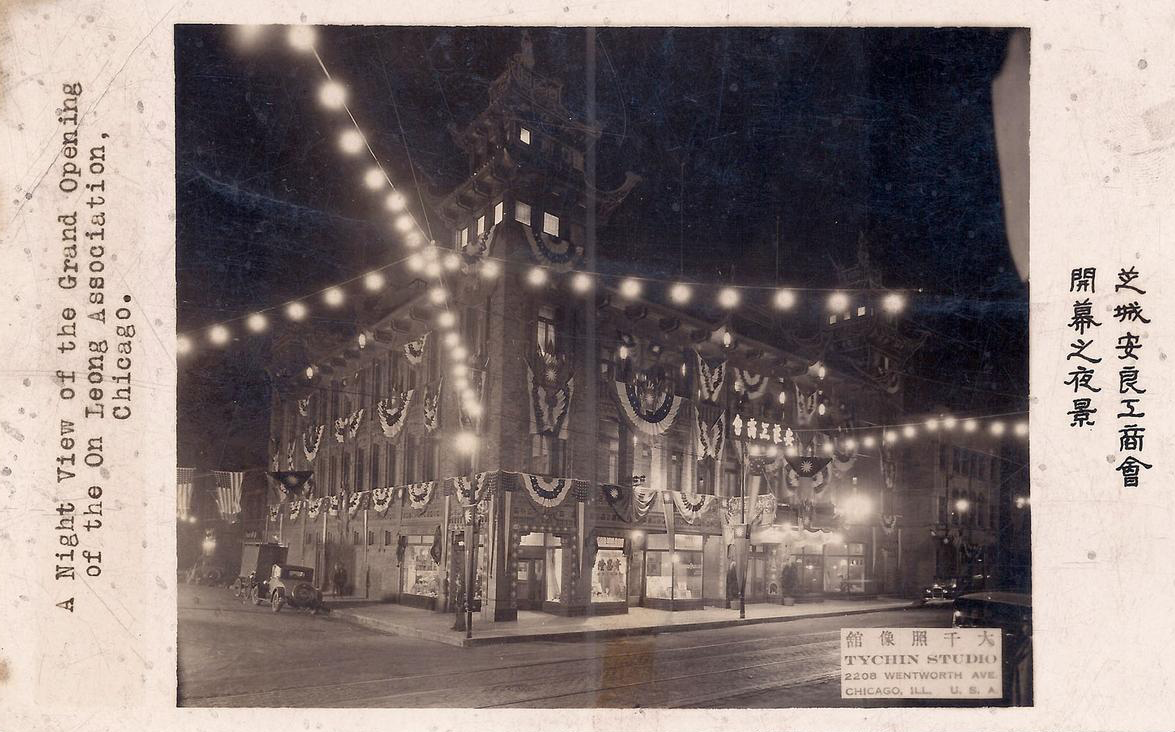
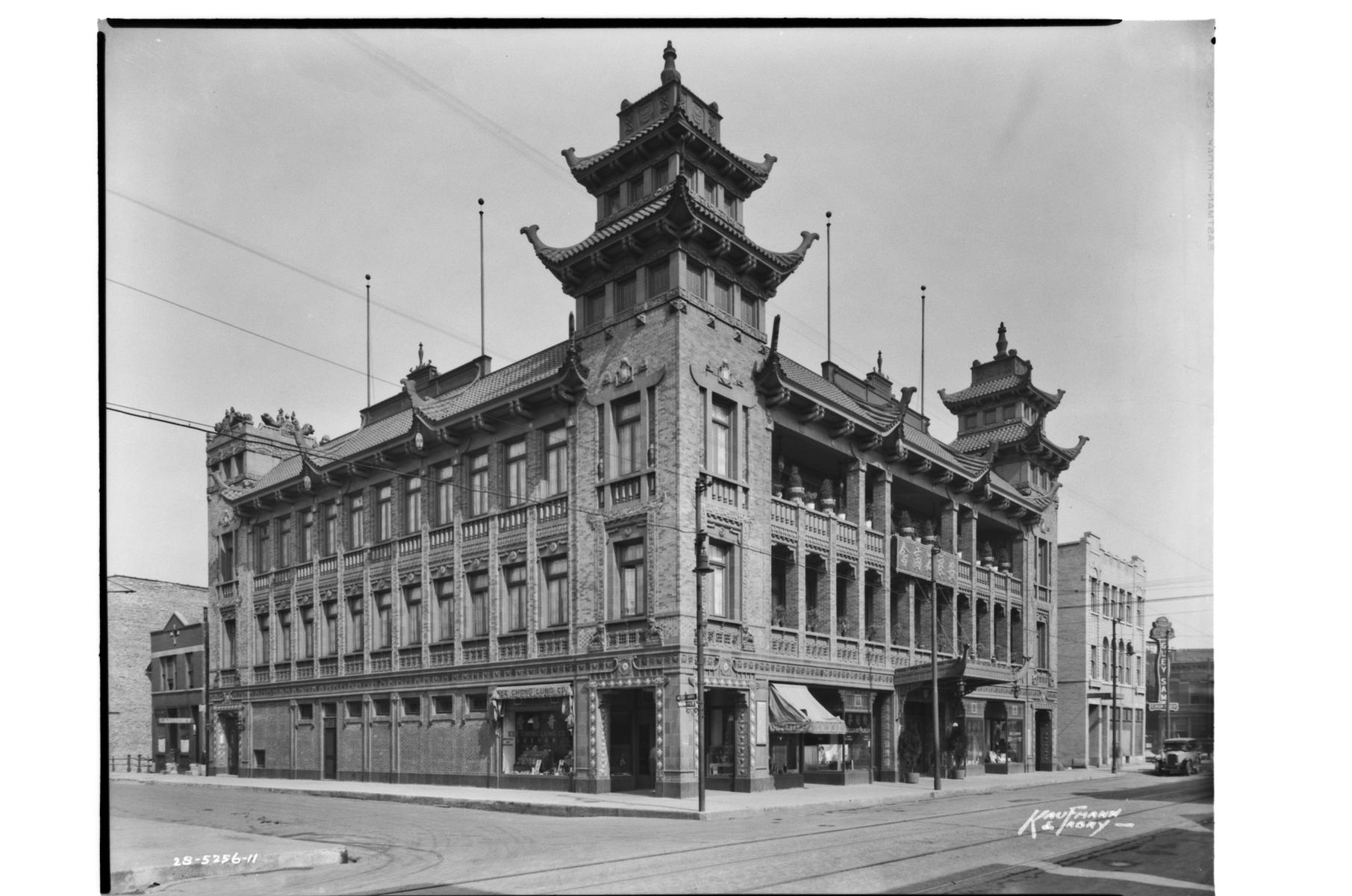
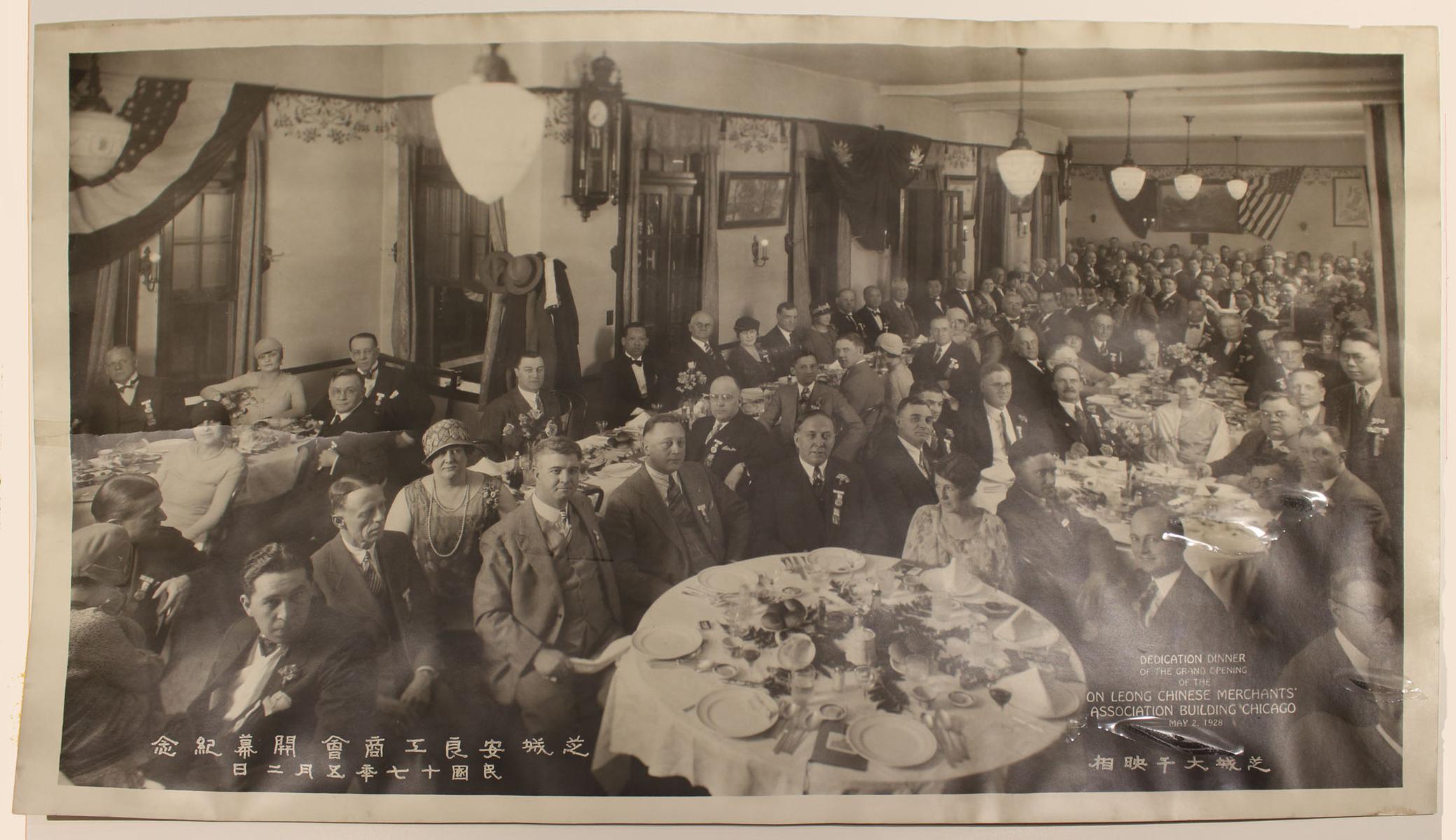
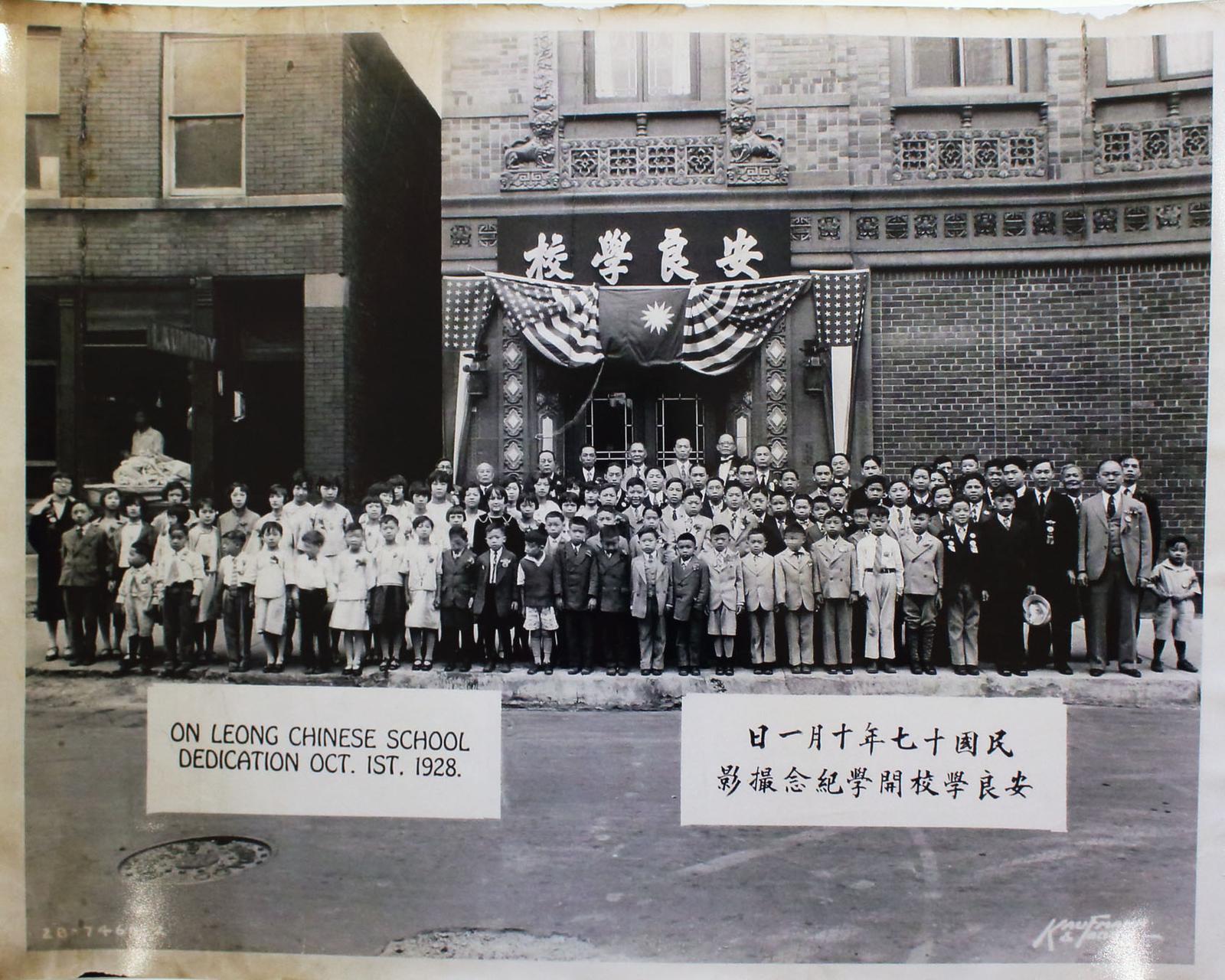
1920s photo of the old On Leong building on 22nd Street, Chinese American Museum of Chicago, via Chicago Collections | 1926-1927 articles on the widening of 22nd St and the planning and construction of the new On Leong building | 1928 postcard, "A Night View of the Grand Opening of the On Leong Association, Chicago", the Chinese American Museum of Chicago via Chicago Collections | 1928 Kaufmann and Fabry photo of the building, UIC Library via Chicago Collections | dedication dinner at the grand opening in 1928, Chinese American Museum of Chicago via Chicago Collections | On Leong Chinese school dedication in 1928, Chinese American Museum of Chicago via Chicago Collections
A decade later the widening of 22nd St (now Cermak Road) would displace On Leong Tong from their original building in the new Chinatown, but the growth of the organization necessitated a more spacious home anyway. The tong hired Michaelsen & Rognstad to design them a building befitting their growing influence, and the new building opened in 1928. Informally known as Chinatown's city hall, the new On Leong building had retail on the first floor, offices/classrooms on the second, and meeting halls and a small shrine on the third floor. A Chinese Catholic School, St. Therese's School, also operated in the building from 1941 to 1961.
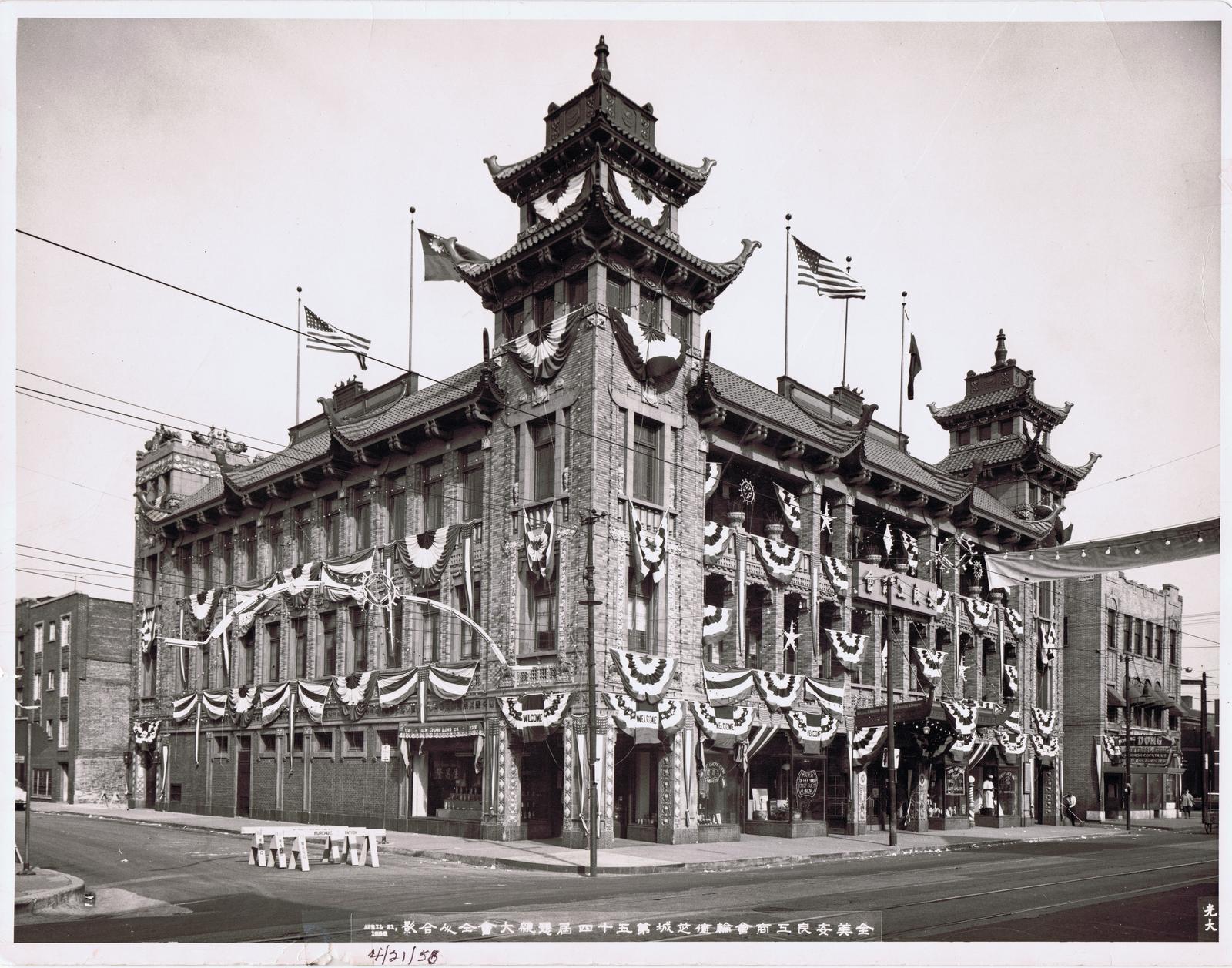
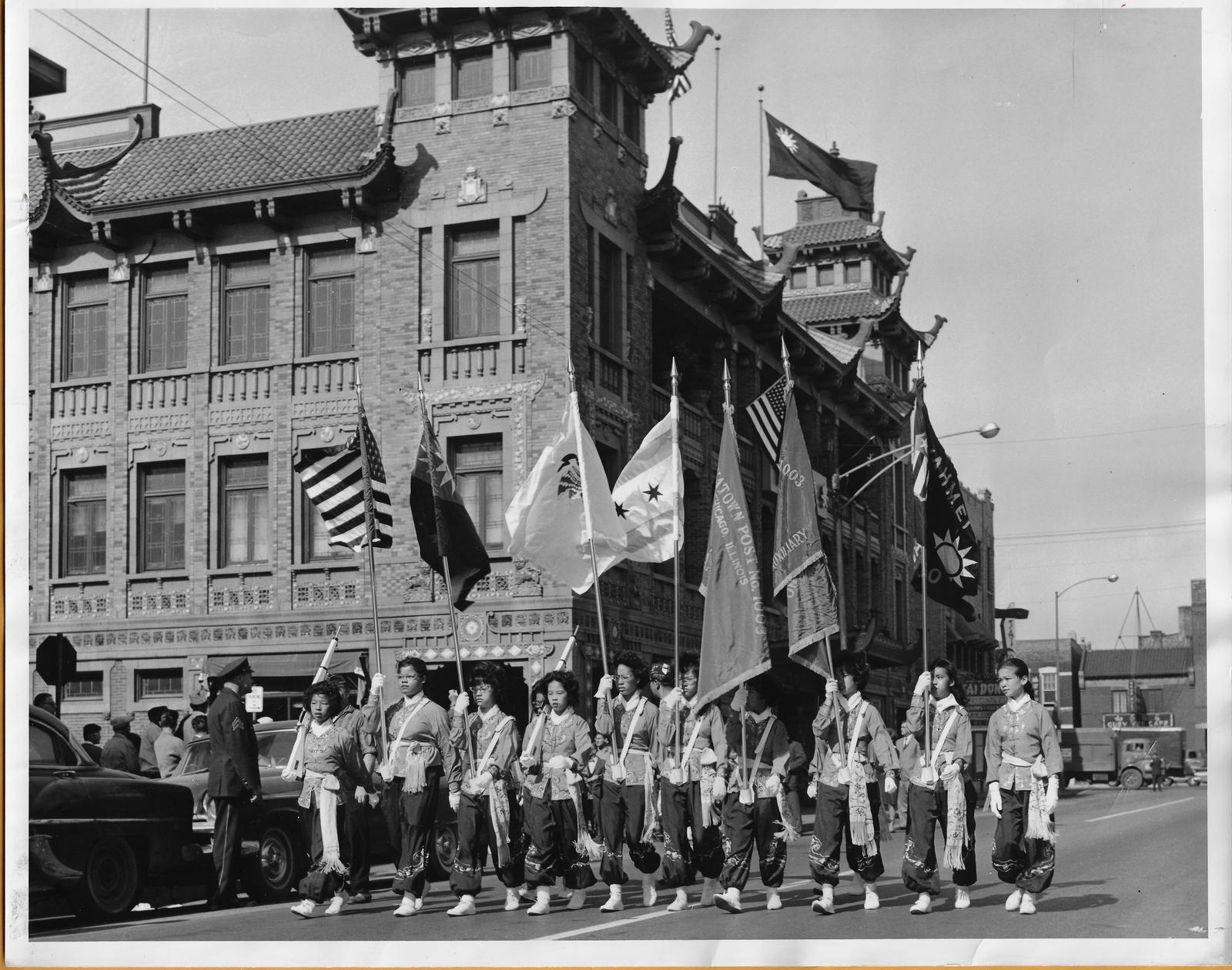
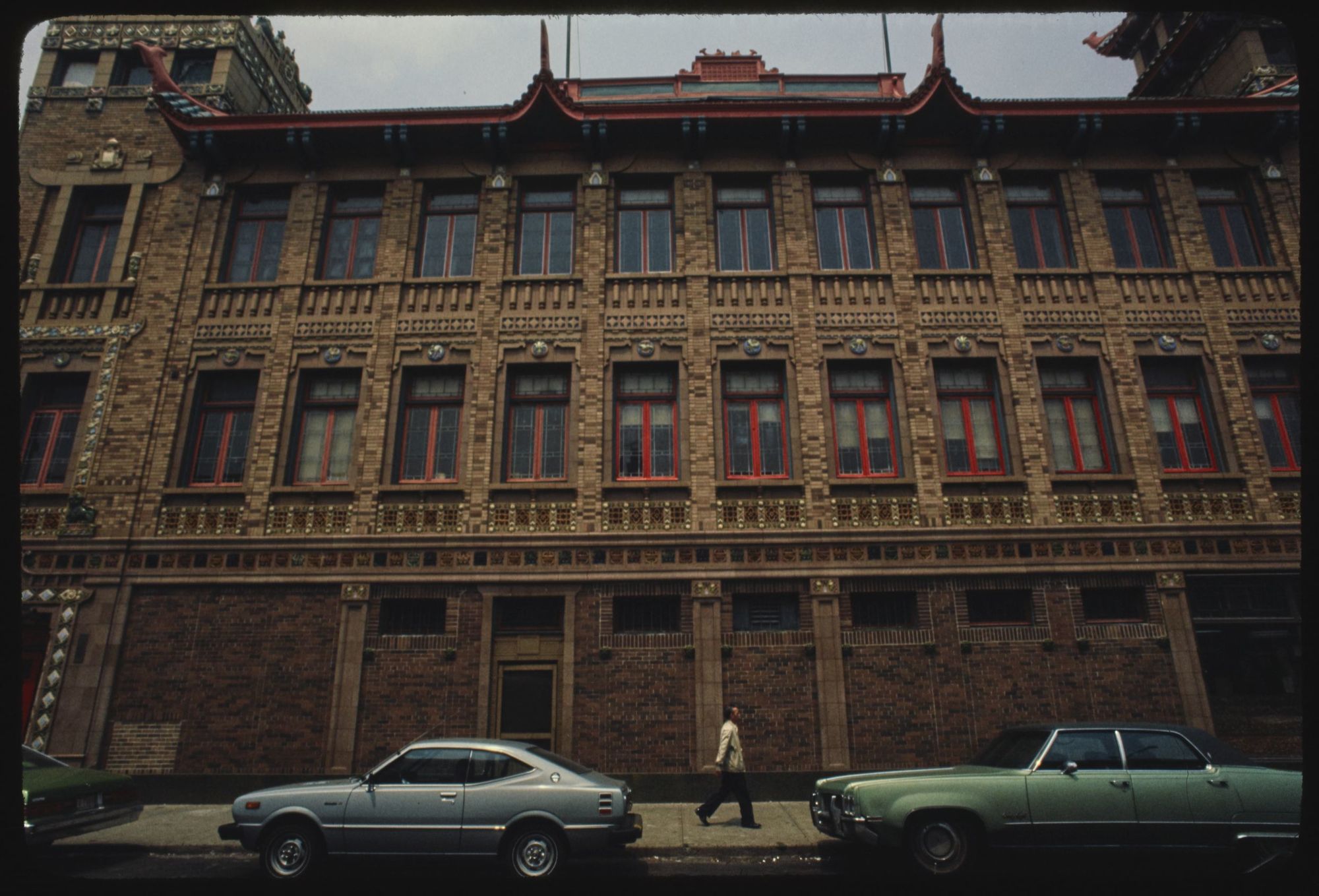
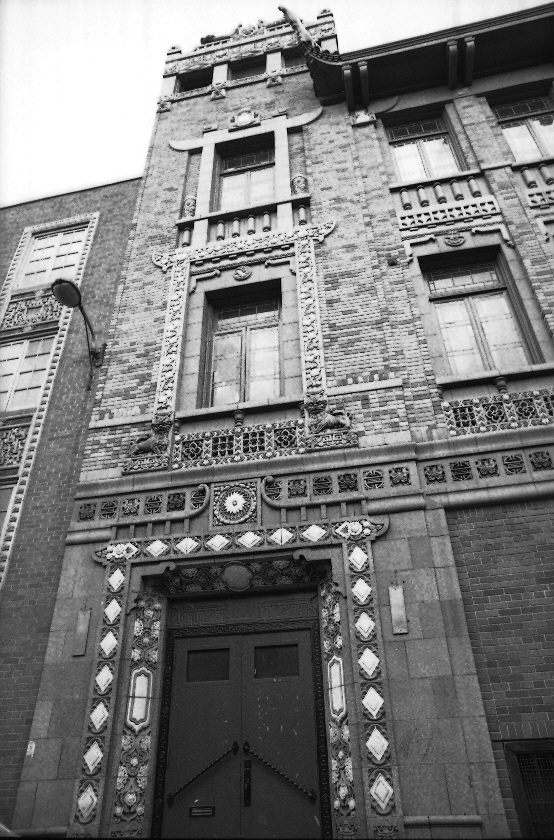
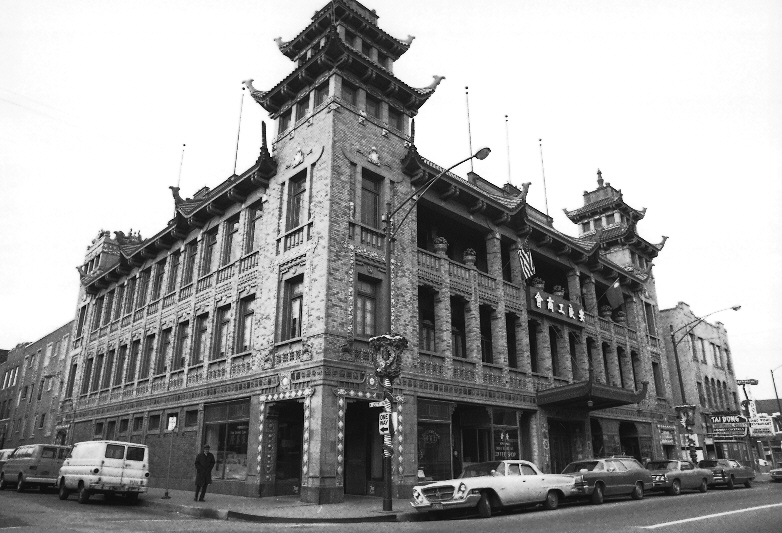
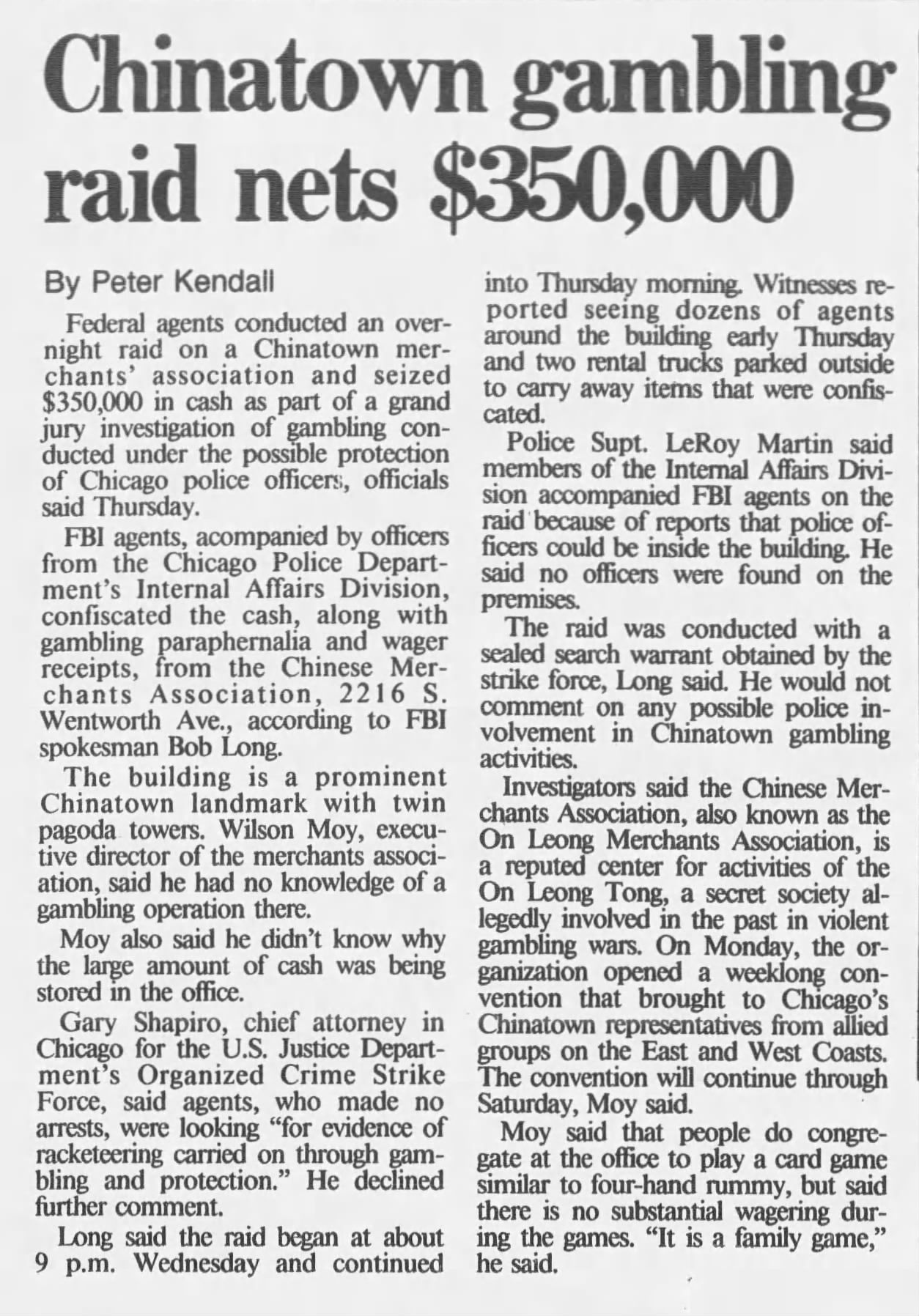
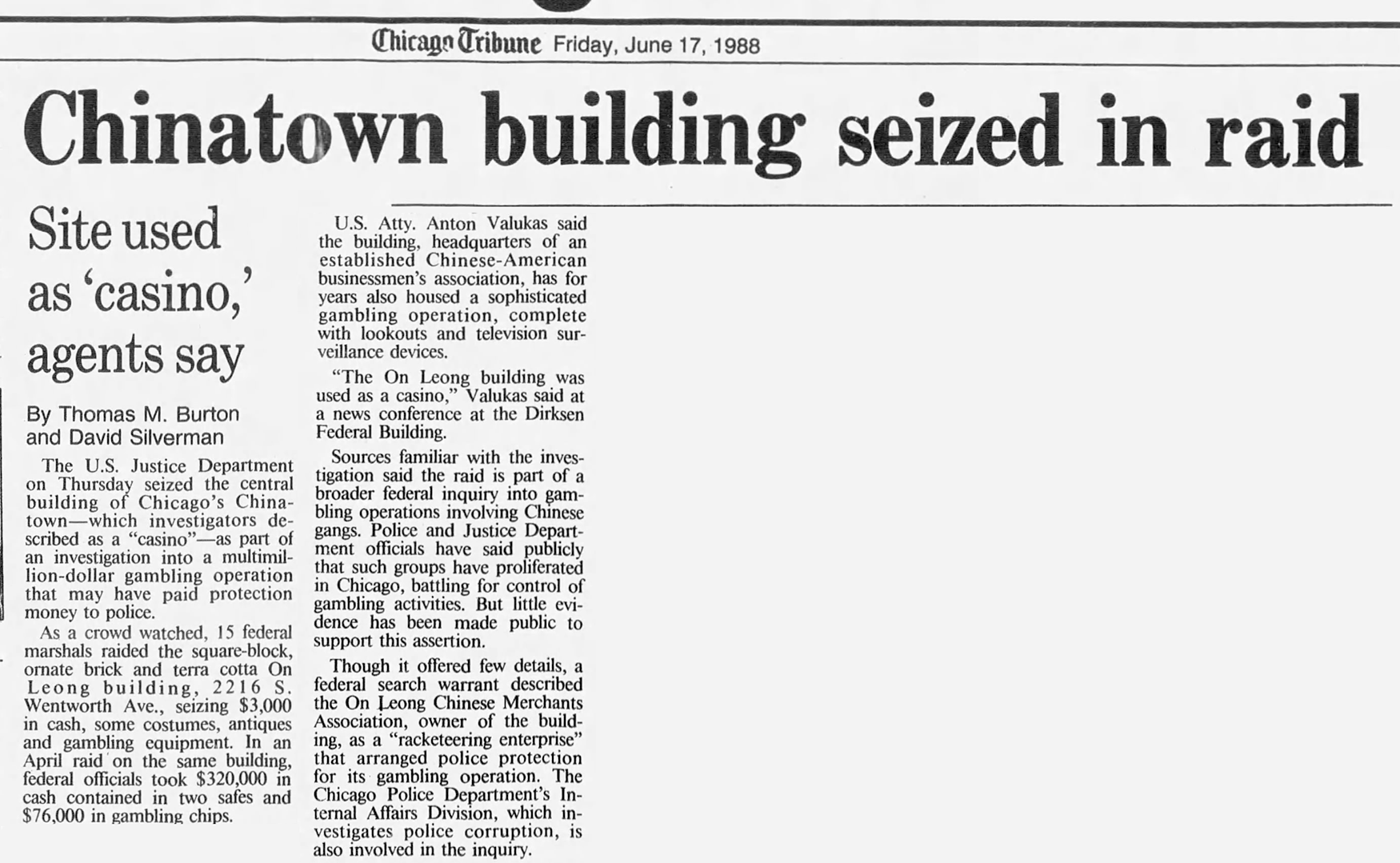
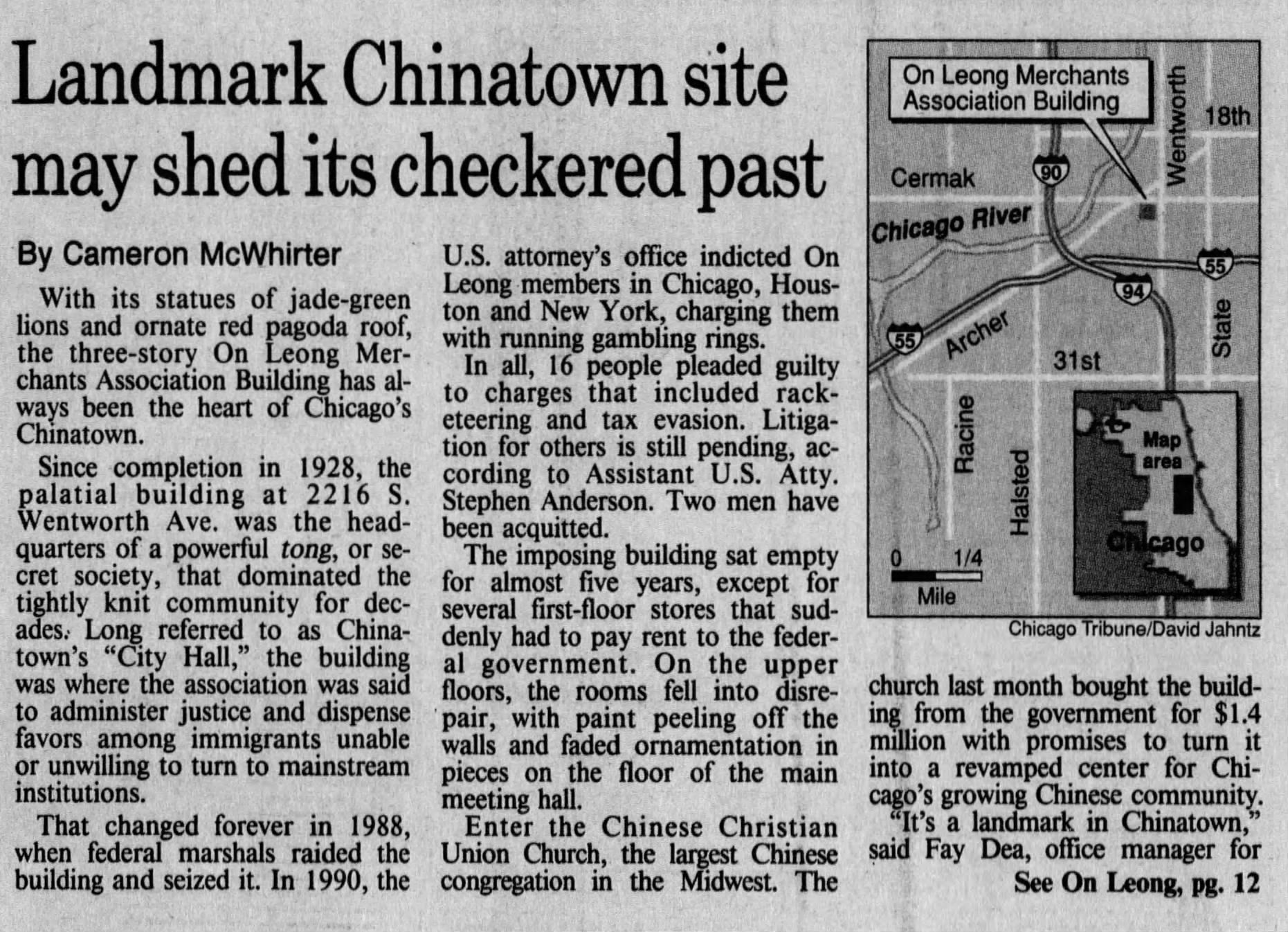
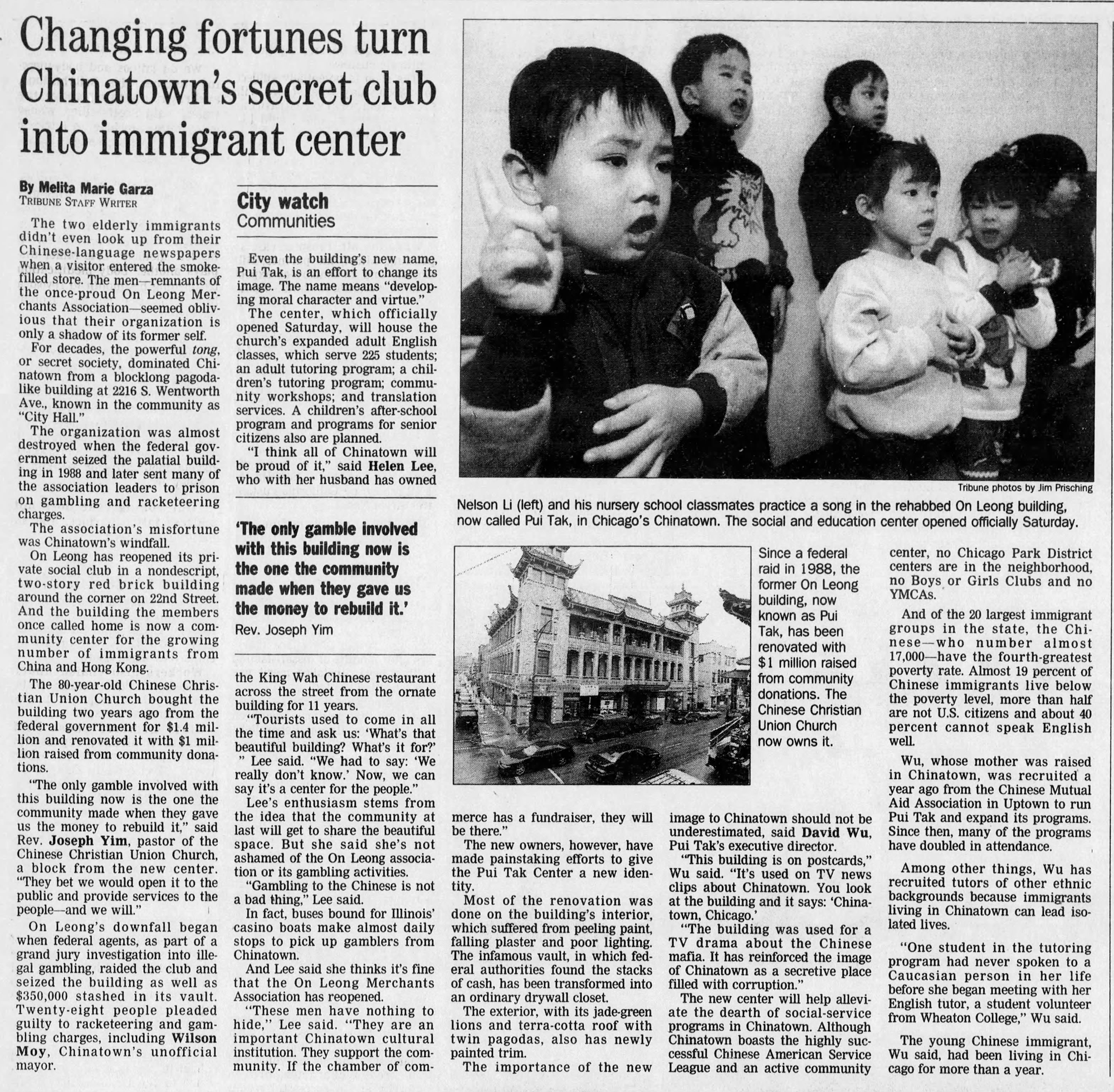
1958 photo of the 54th National Convention of On Leong Chinese Merchants Association, Chinese American Museum of Chicago via Chicago Collections | seen in the 1962 Double Ten parade, Chinese American Museum of Chicago via Chicago Collections | 1977 Jonas Dovydenas photo, Chicago Ethnic Arts Project collection, Library of Congress | two undated photos from the Illinois State Historic Preservation Office, HARGIS | two 1988 articles about the seizure of the building after a gambling raid | 1993 and 1995 articles about the newly-opened Pui Tak Center in the building
It's a little jarring given the city government's recent enthusiastic embrace of a Chicago casino, as well as the deluge of gambling ads that now accompany live sports, but in 1988 the federal government seized the building under a racketeering statute, accusing the merchants’ association of illegal gambling and tax fraud. Some of the illegal gambling, racketeering, and tax evasion charges stuck, and more than a dozen people went to prison. After the seizure, the building sat mostly vacant for five years as the cases wound their way through the court system.
The federal government sold the building to the Chinese Christian Union Church in 1993, who turned it into the Pui Tak Center. Serving as a church-based community center and an immigrant welcome center, the Pui Tak Center offers ESL and citizenship classes, after school and summer programs for kids, disability services, etc.. In response to the pandemic, they administered more than 15,000 vaccine doses to the community. The Pui Tak Center has also embarked on a long-term restoration of the building. Wiss, Janney, Elstner Associates completed a partial facade restoration between 2008 and 2010, and it looks like they're in the process of completing the full facade restoration this summer.
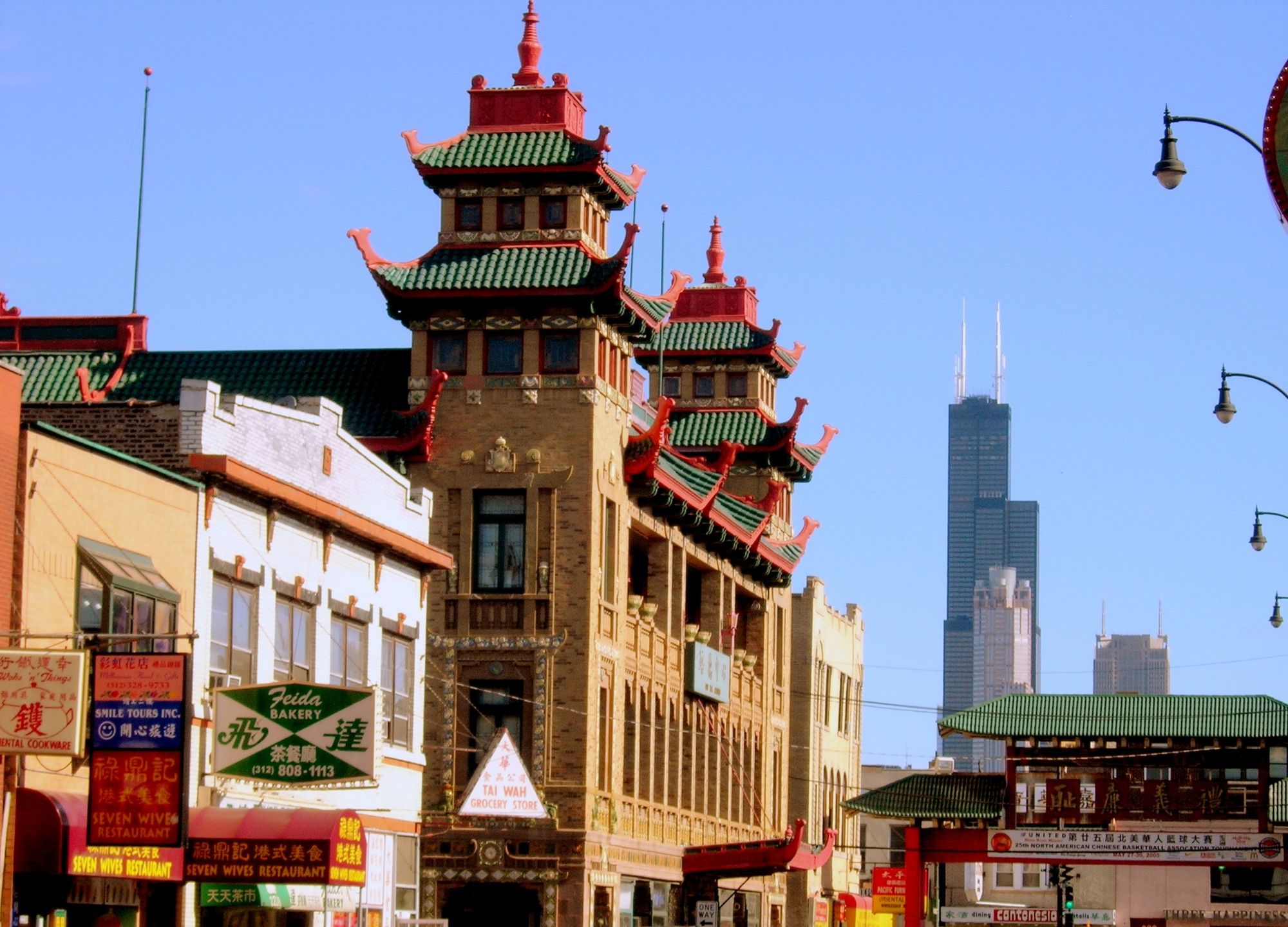

2005 photo via Wikimedia Commons | 1977 Jonas Dovydenas photo, Chicago Ethnic Arts Project collection, Library of Congress

Production Files
Further reading:
- Huping Ling's Chinese Chicago: Race, Transnational Migration, and Community Since 1870
- Pui Tak Center in their own words
- Julia Bachrach's authoritative write-up on Michaelsen & Rognstad
- The City of Chicago Landmark Designation Report
- The Chinese American Museum of Chicago, on the Clark Street Chinatown
- WBEZ and Timeout on Chicago's first Chinatown
- Good write-up in Blueprint Chicago
- An article on the changing immigration trends of Chicago's Chinatown (and one in the LA Times about the unique history of immigration from Taishan [and its eventual decline])
- Journal article republished by the Chinese American Museum of Chicago that specifically mentions On Leong Tong business being conducted in Toisan Cantonese
- Wiss, Janney, Elstner Associates report on the partial facade restoration
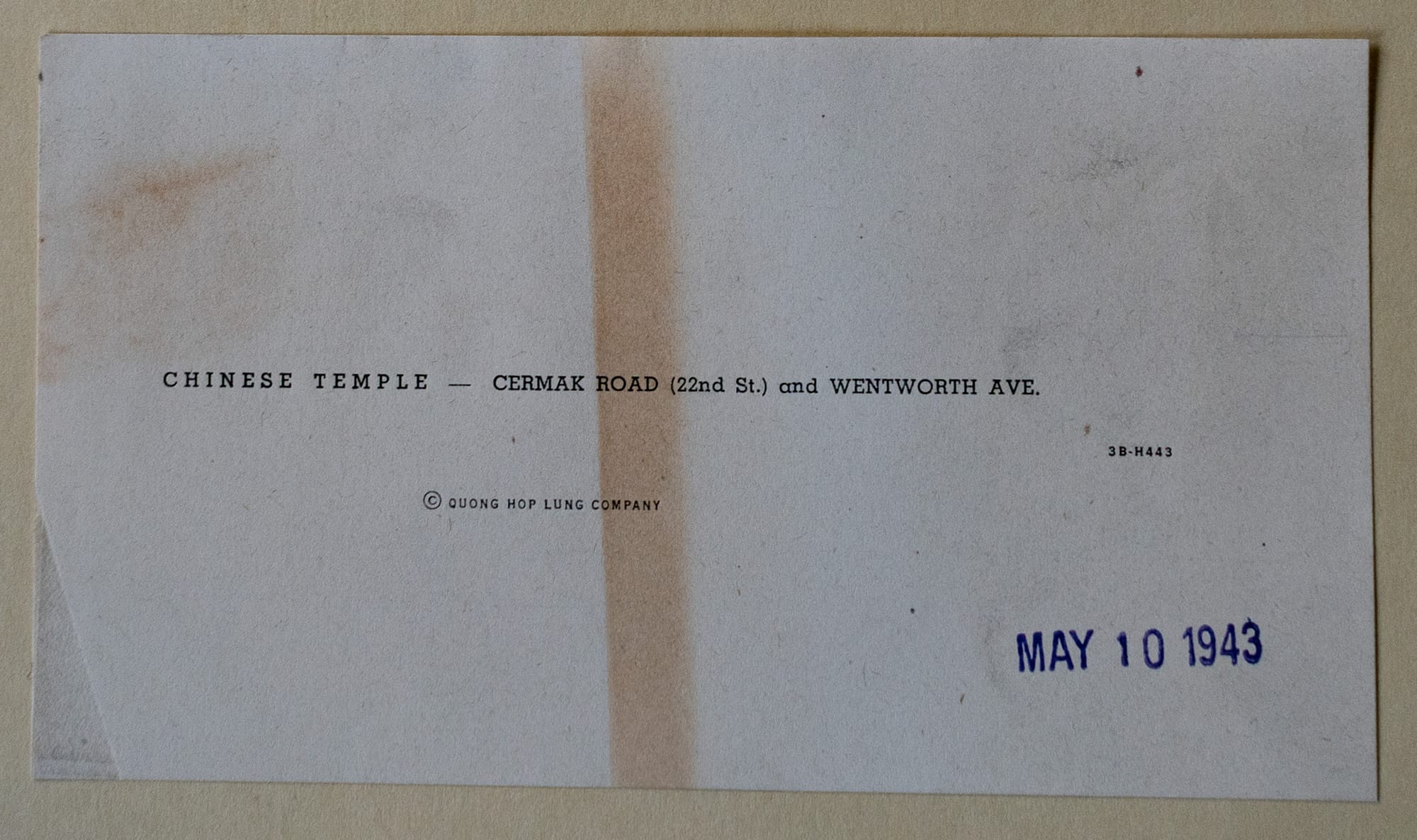
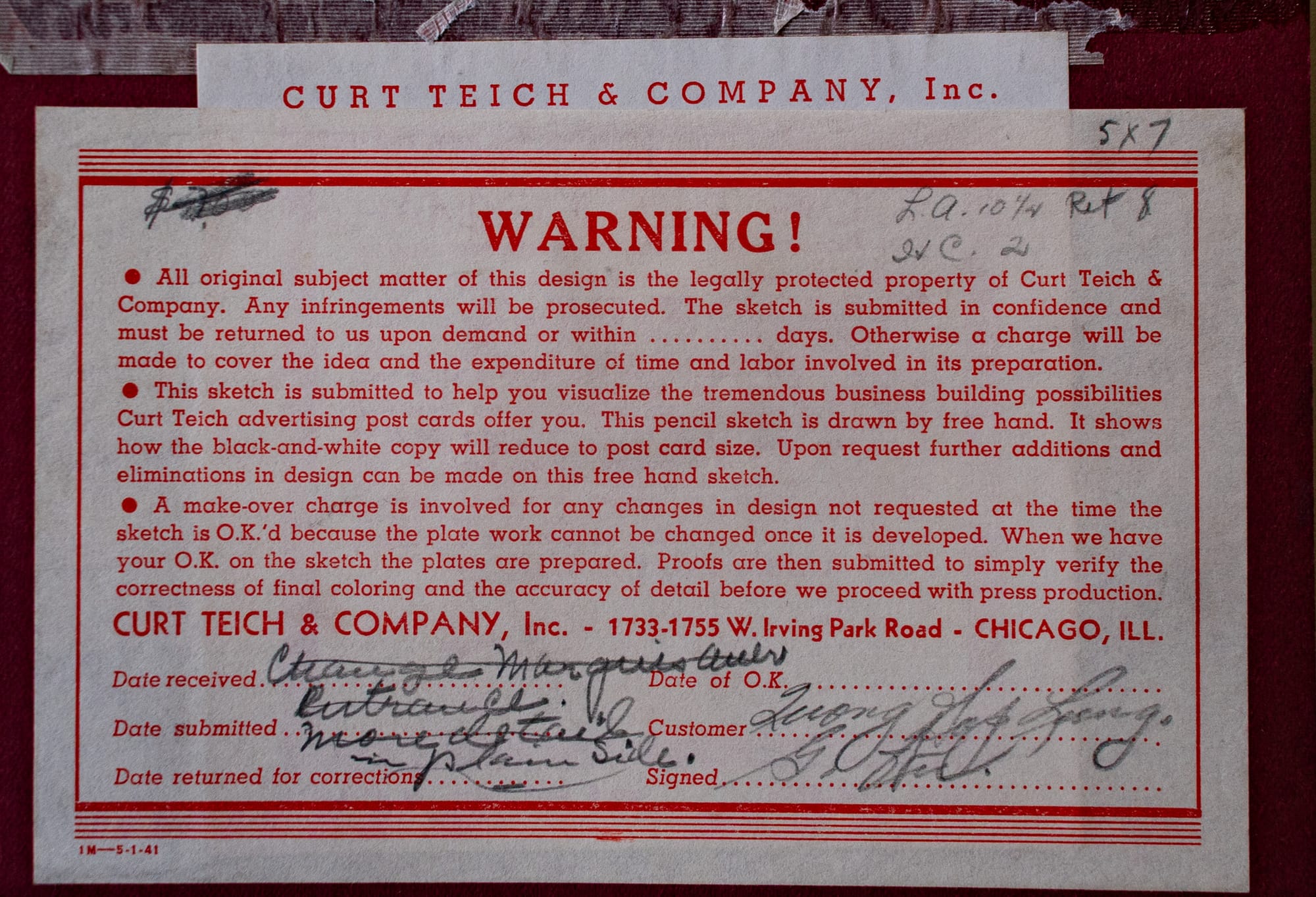
Interesting stuff in the production file in the Curt Teich Postcard Archive at the Newberry Library. A photo negative, the photo that was used to create the postcard, and a copyrighted photo that was emphatically not used for the postcard, but was included as a reference for what the flags and the entrance marquee should look like, as laid out in the instructions to the Curt Teich Order Department from the Advertising Sales Division. Also worth noting that Quong Hop Lung Co., the customer, paid the extra $2.00 to have their postcard copyrighted (equivalent to $40 in 2026).
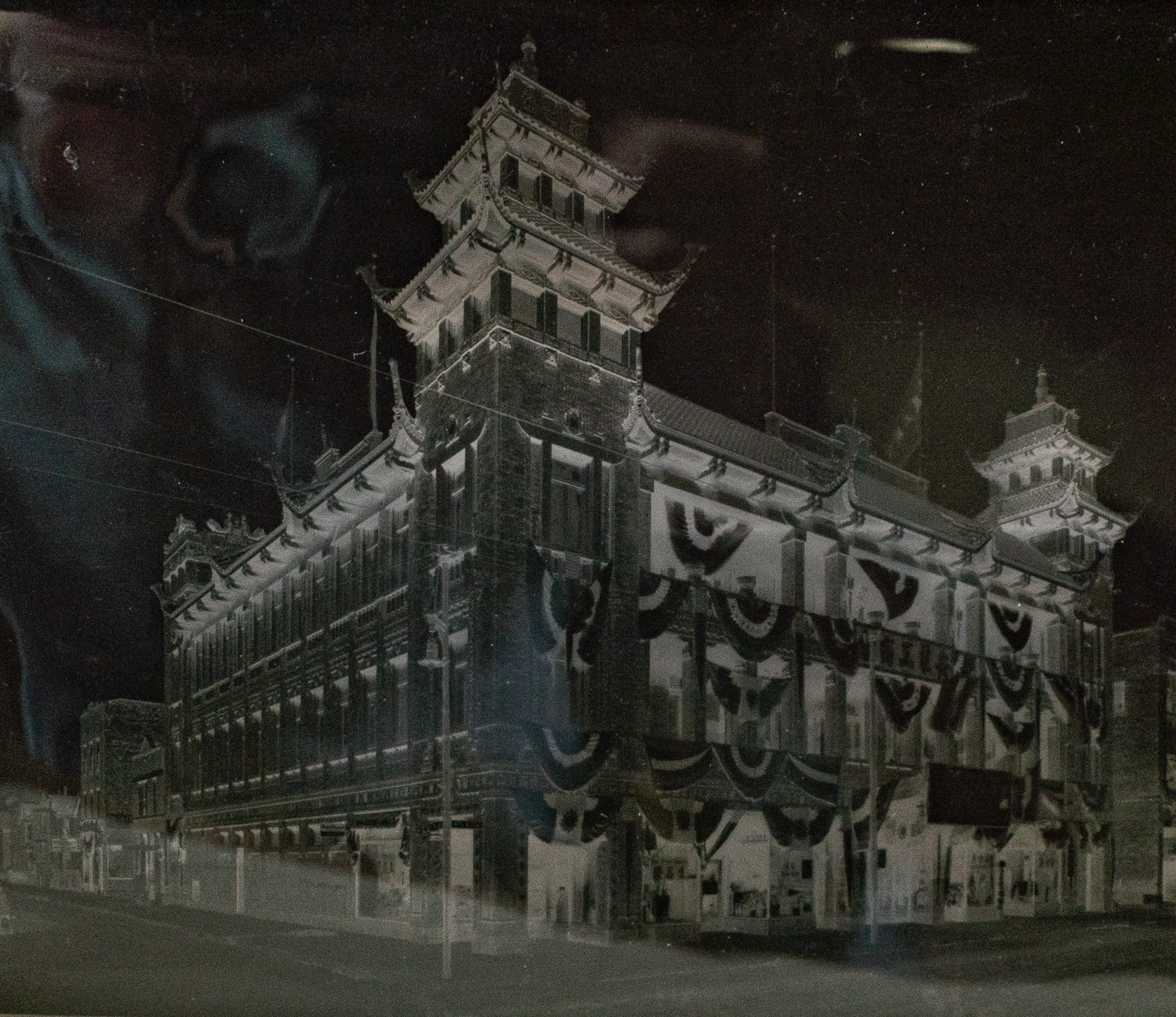
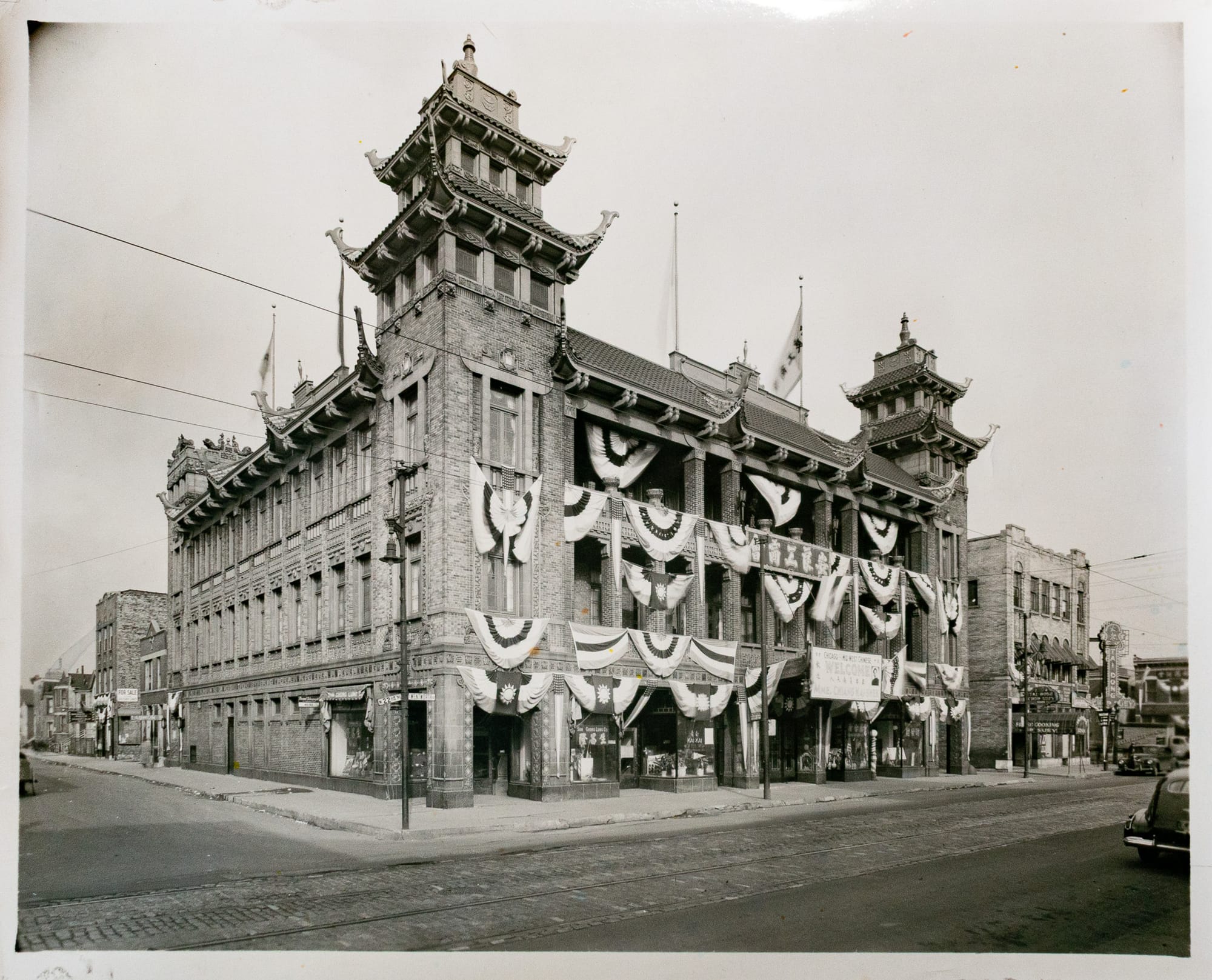
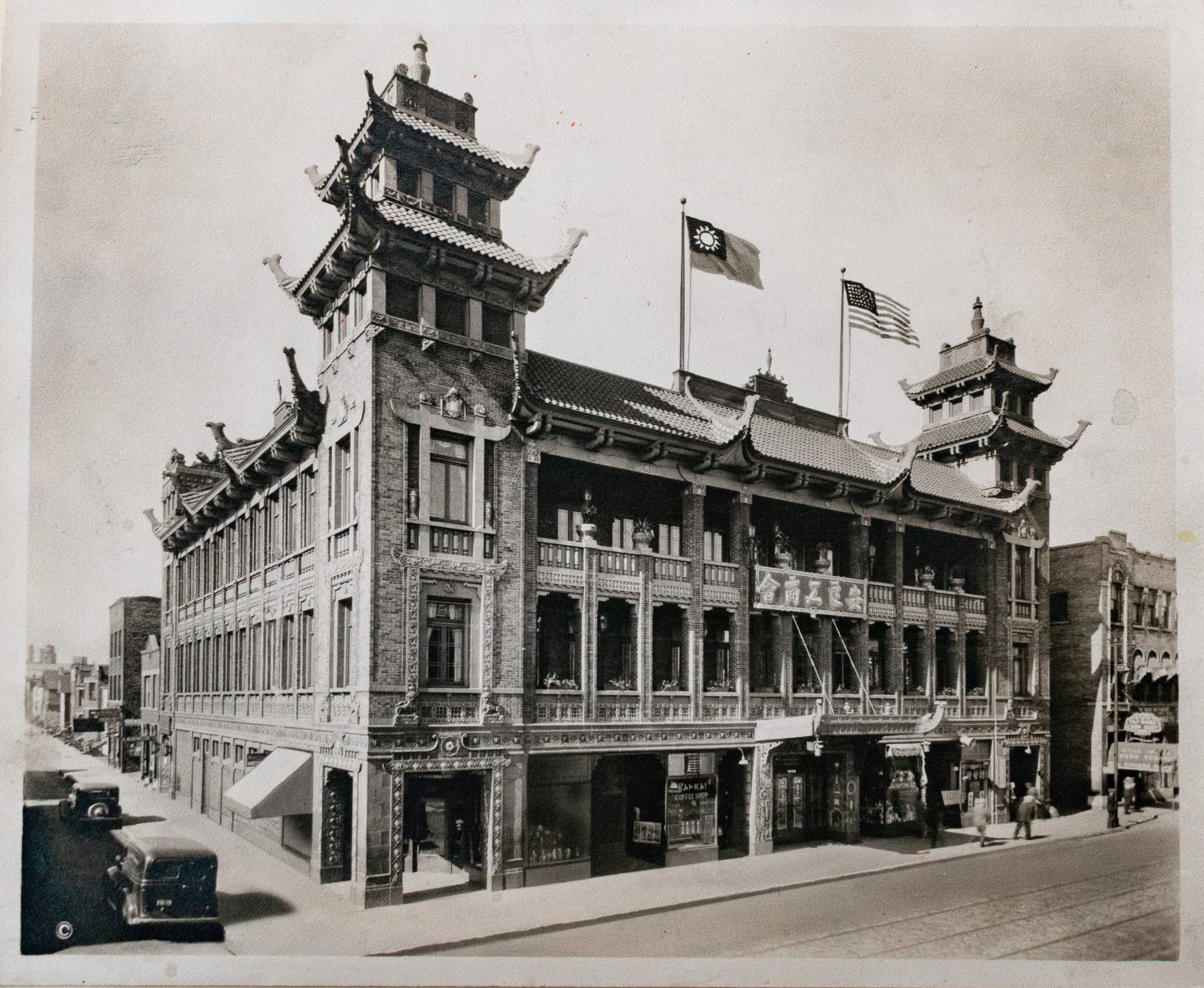
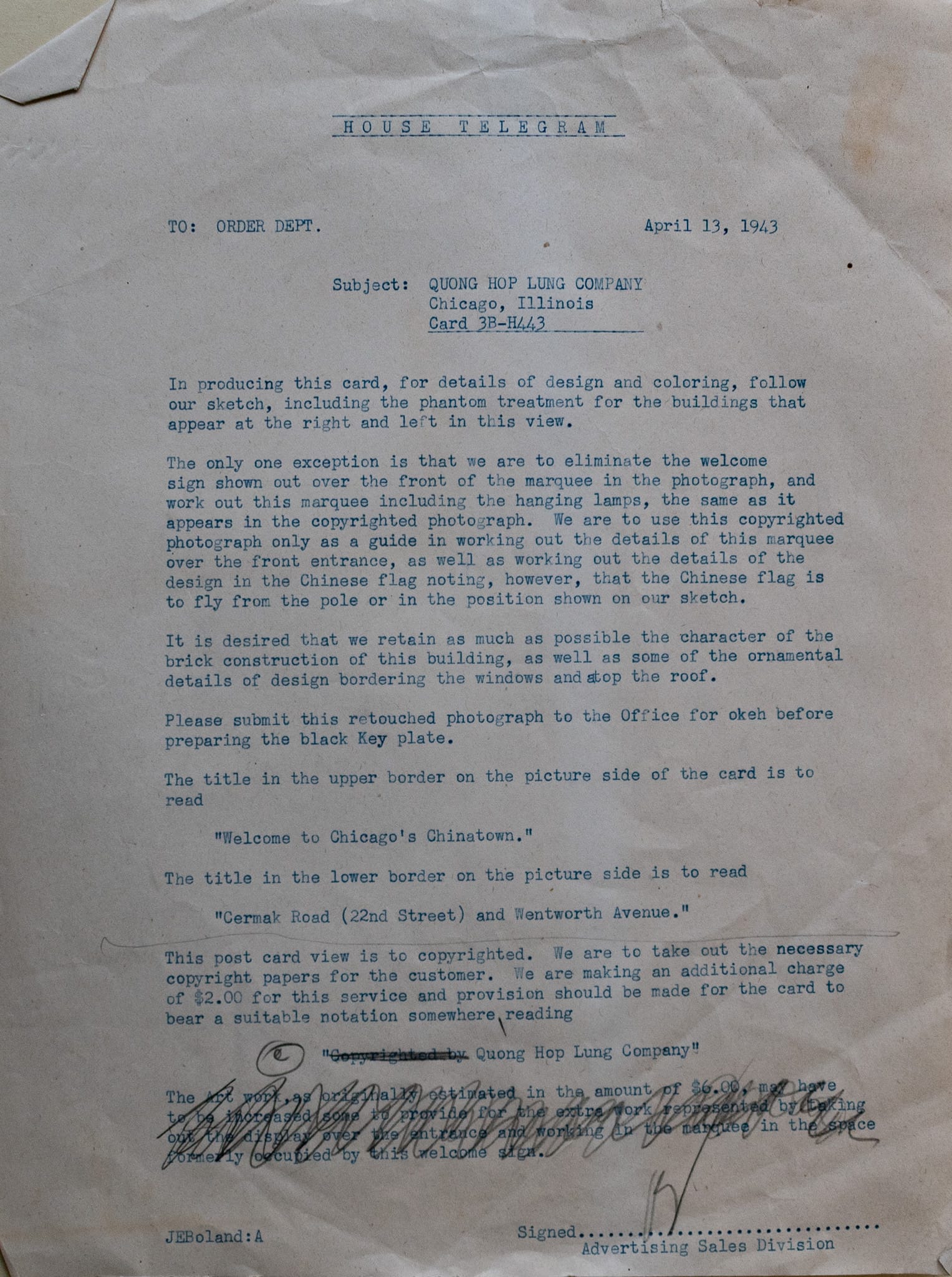
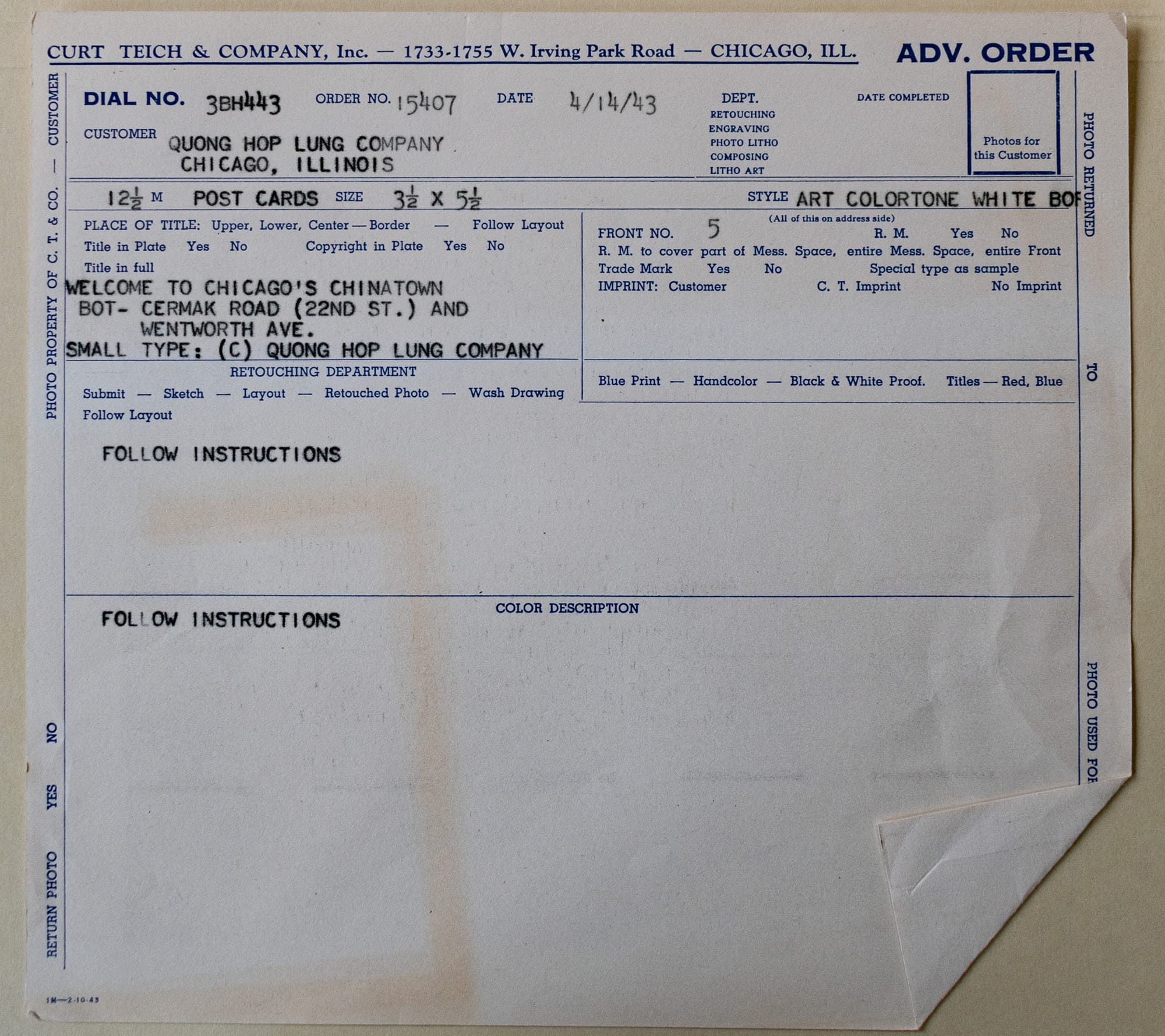
Photo negative | 1943 photo | Inspiration photo | House telegram to the order department | Production order
From that, the company produced the retouched image, which together with the tissue overlay with coloring instructions informed the hand-painted mockup sent to the customer for final approval, then the proofs for coloring and preparing the printing plates for the 12,500 postcard order.
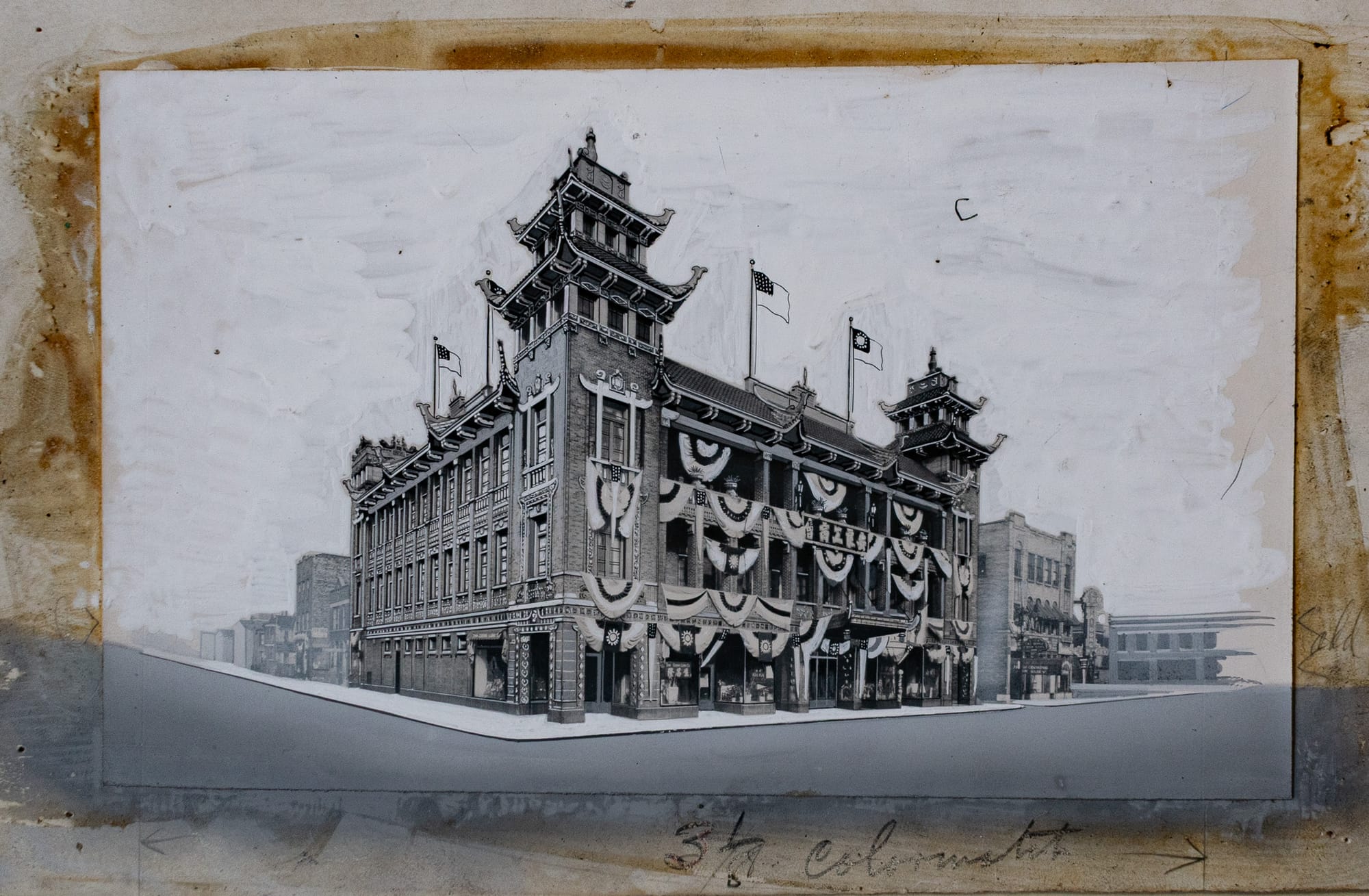
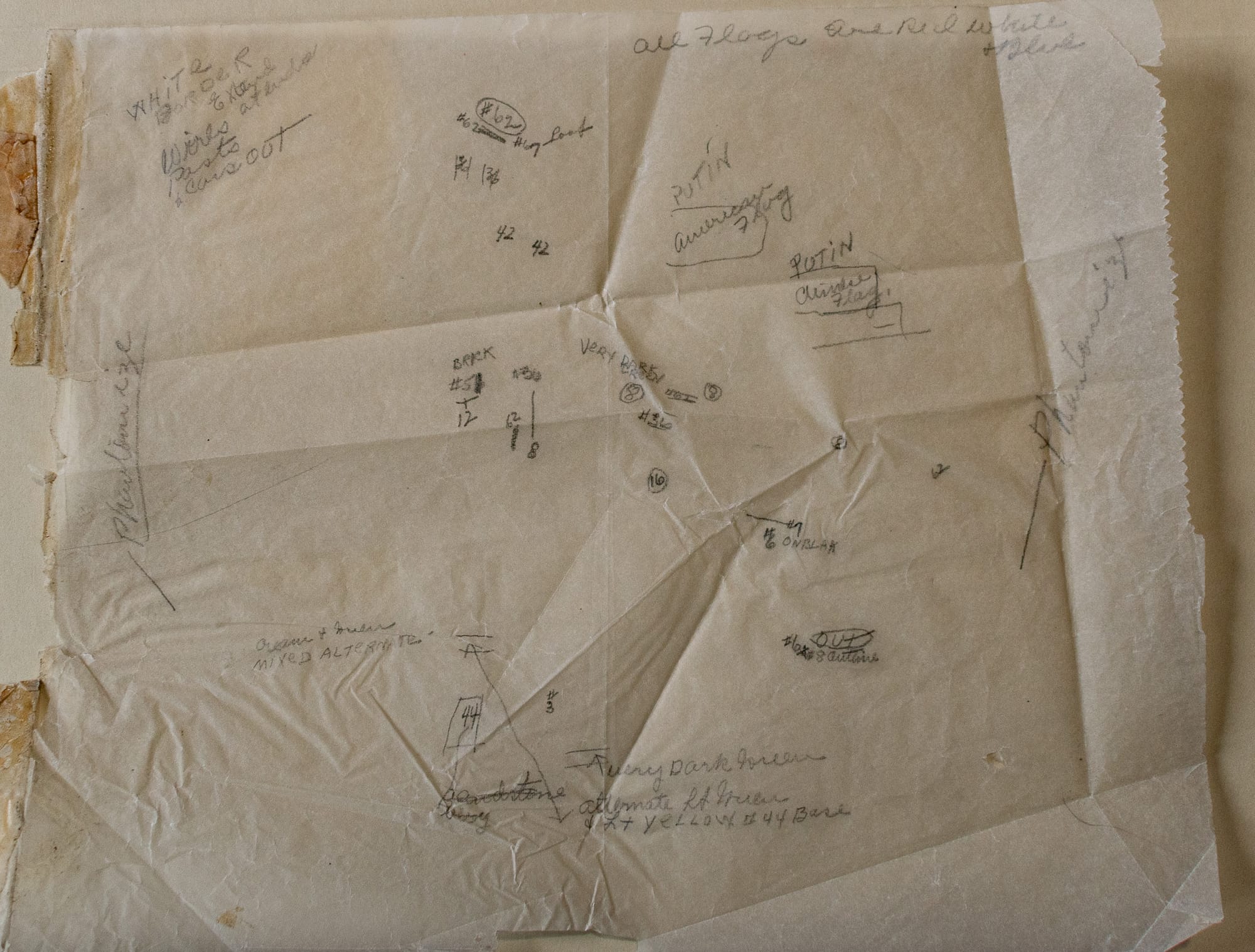
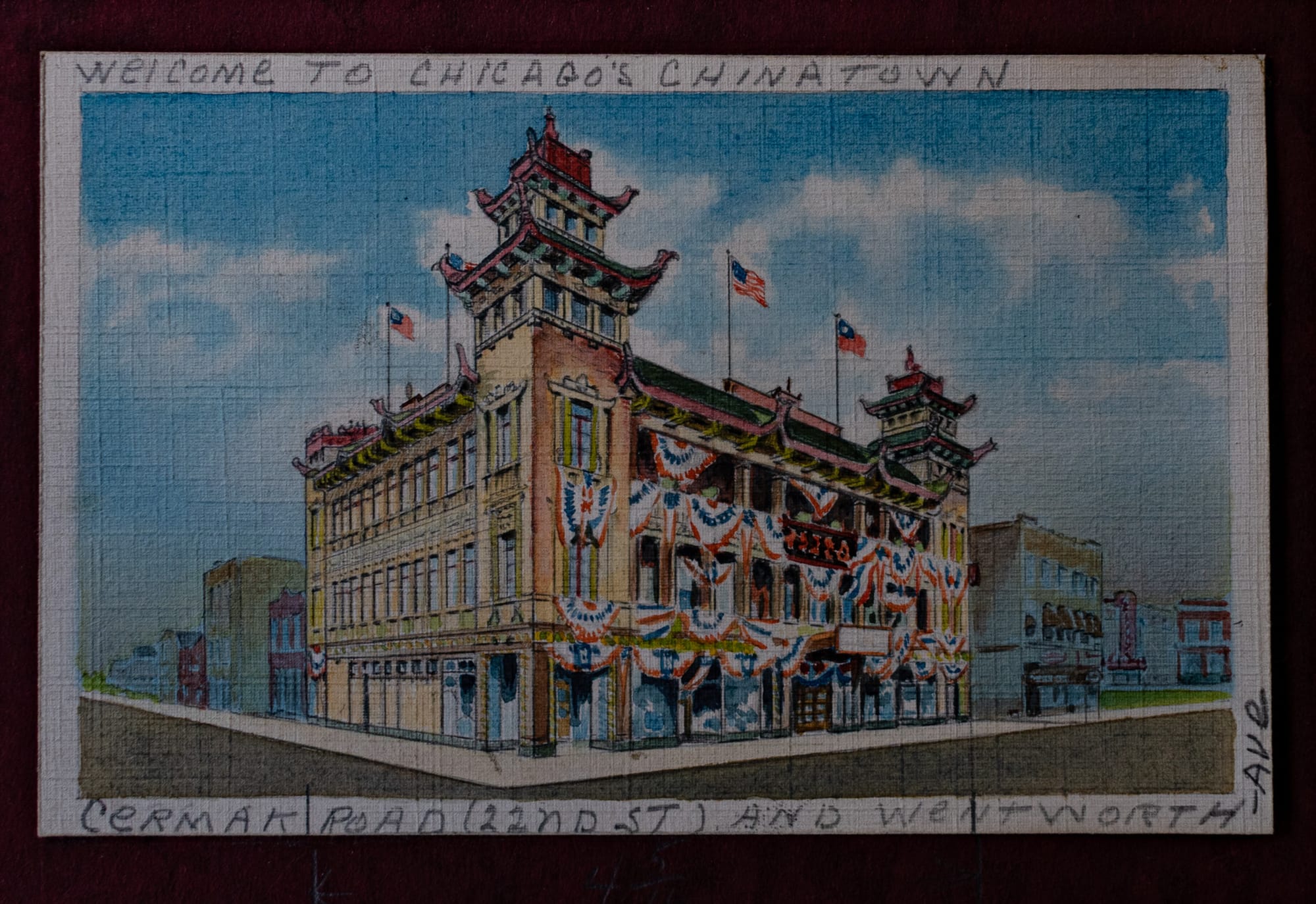
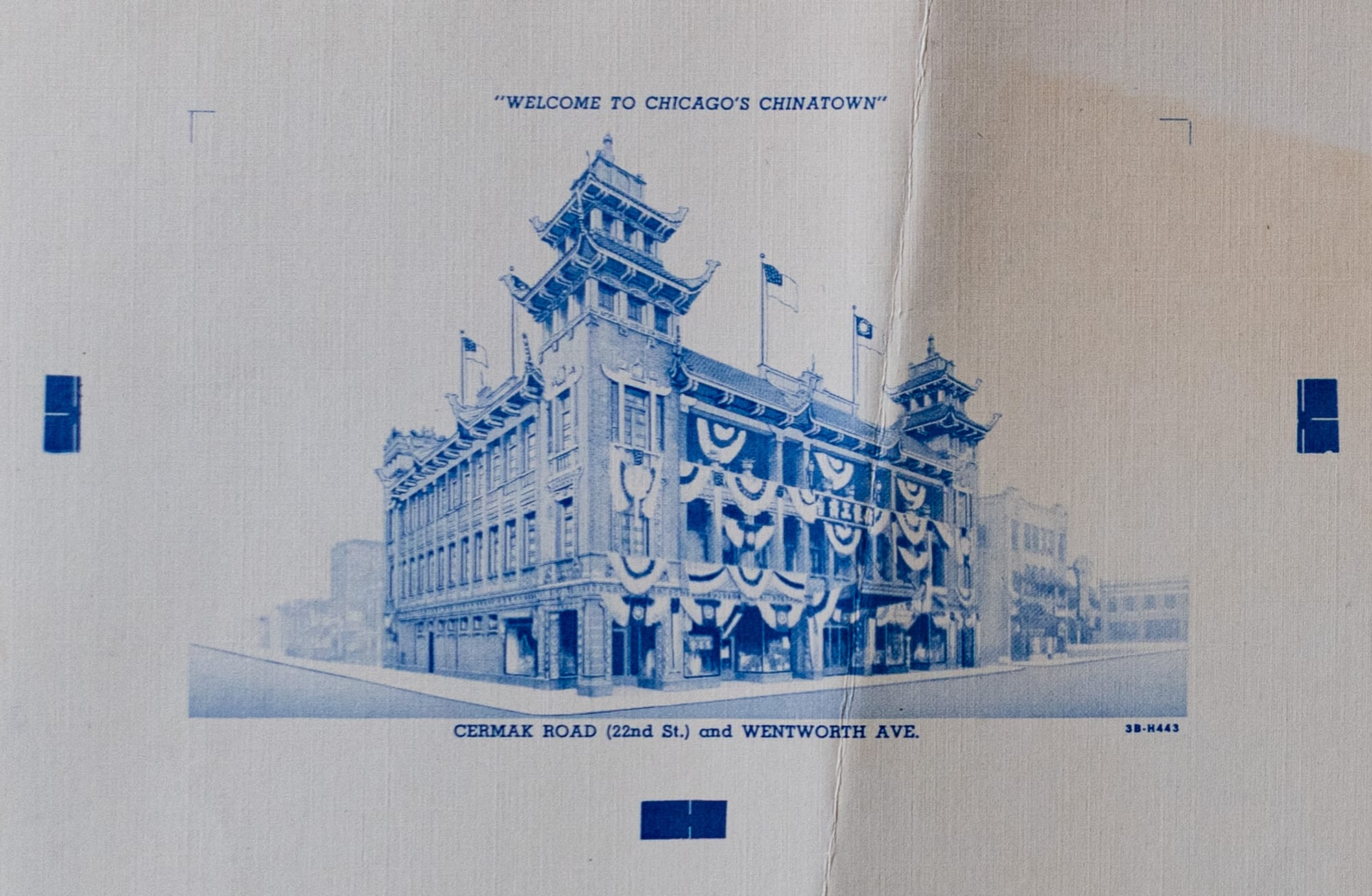
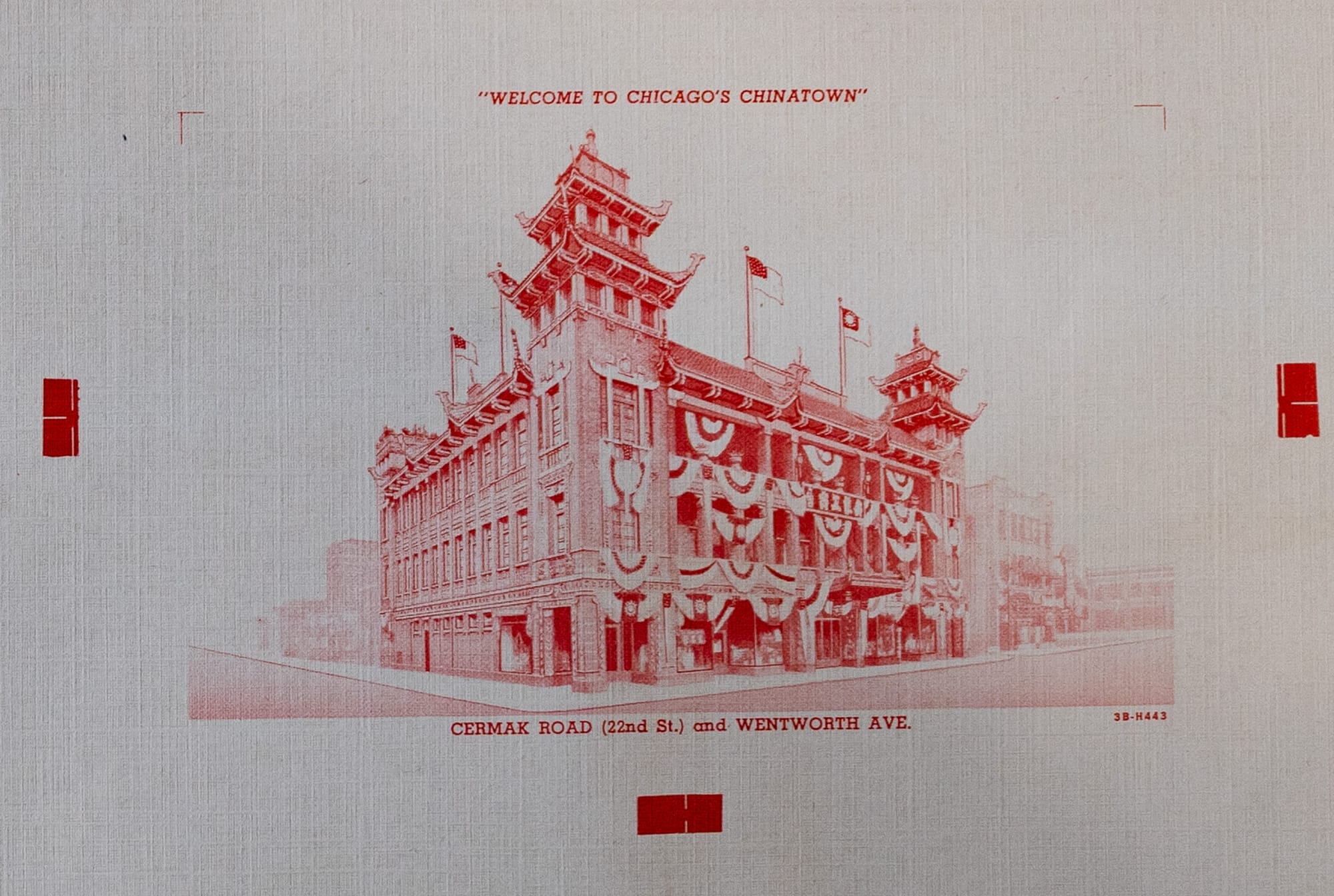
Retouched photo | Hand-painted mockup | Blue and red proofs for coloring
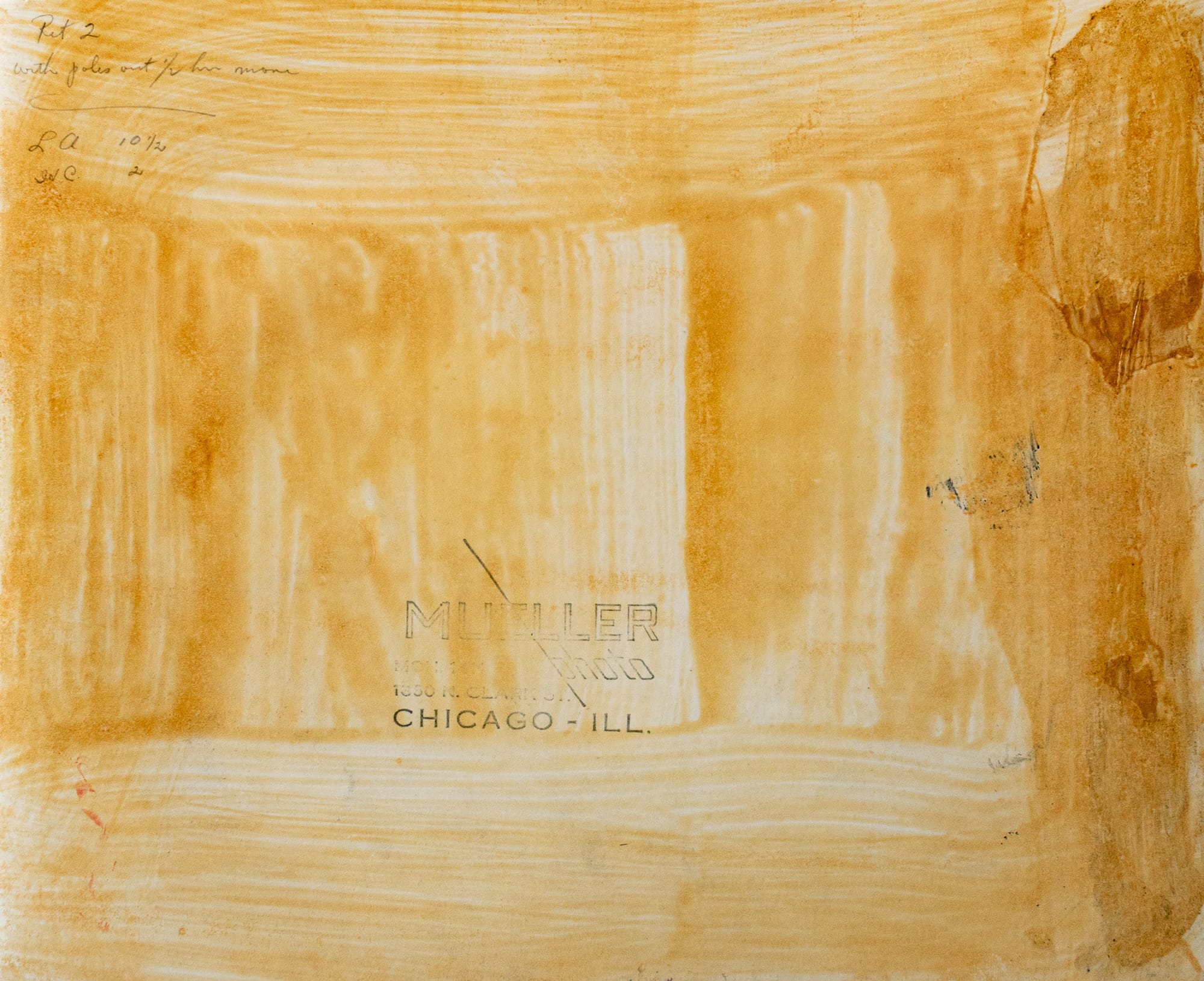
Plus a few more things—the back of the photo, which was developed at Mueller Photo at 1350 N. Clark, the approved copy for the front of the postcard, and the legal boilerplate and customer approval of the hand-painted mockup.
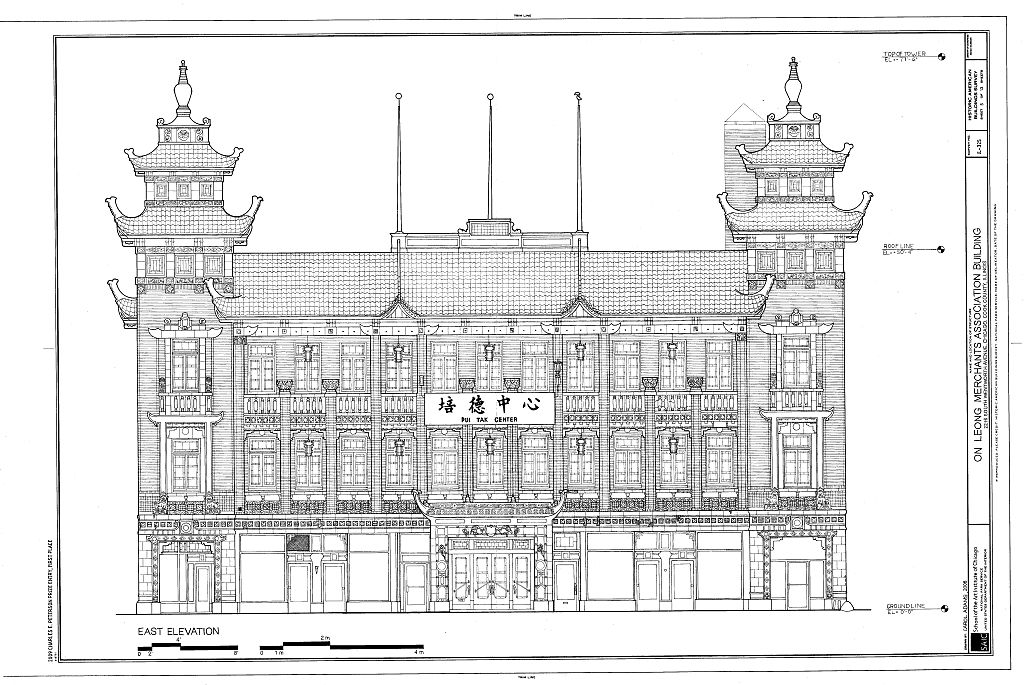
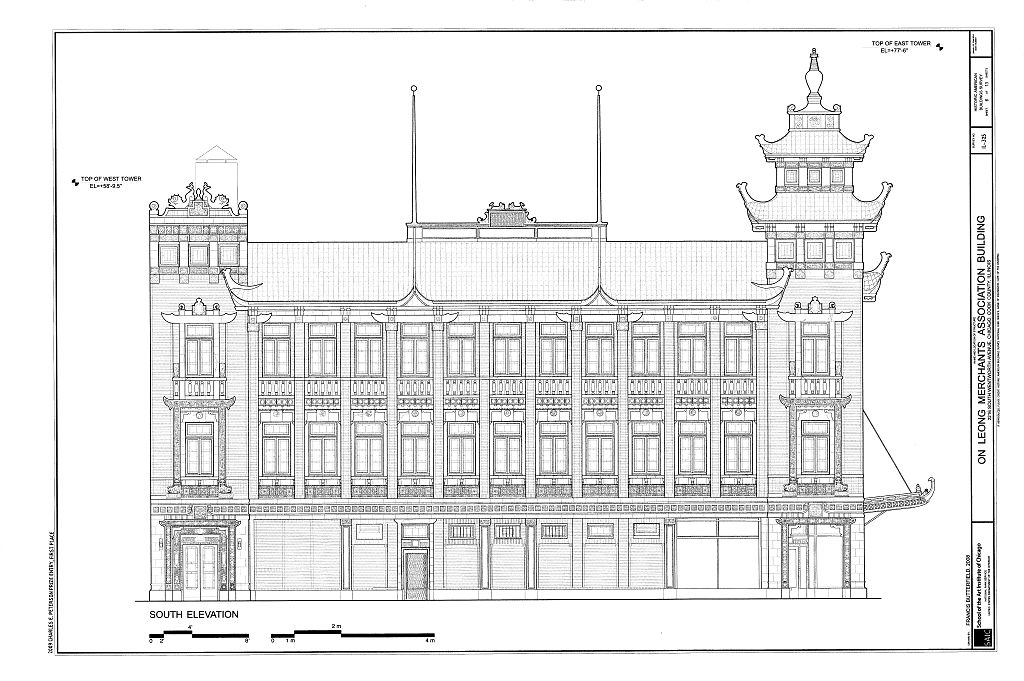
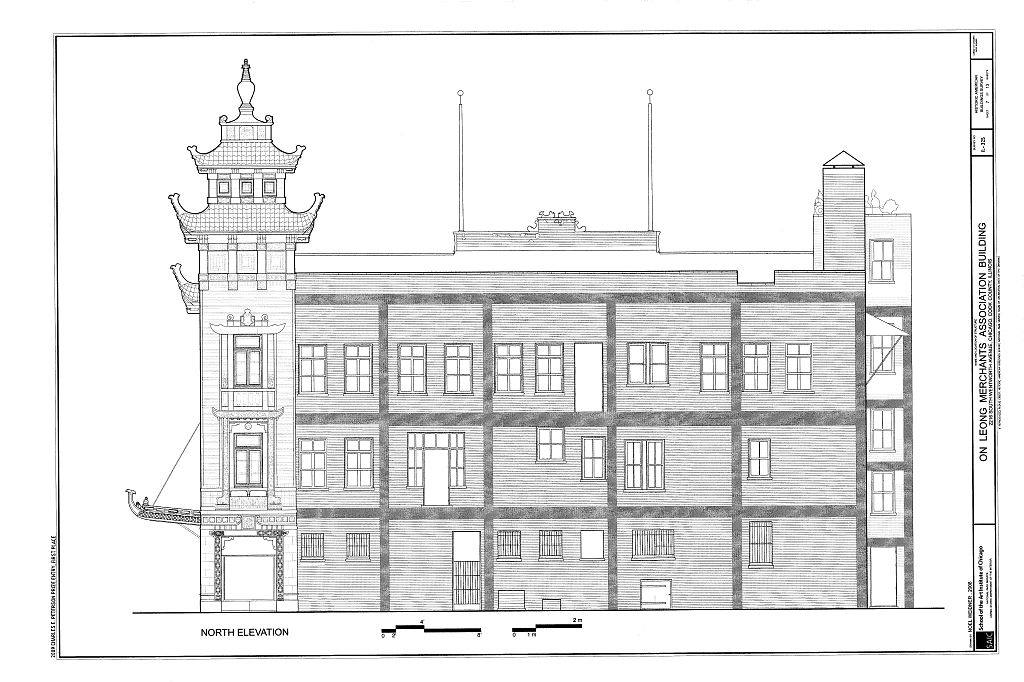
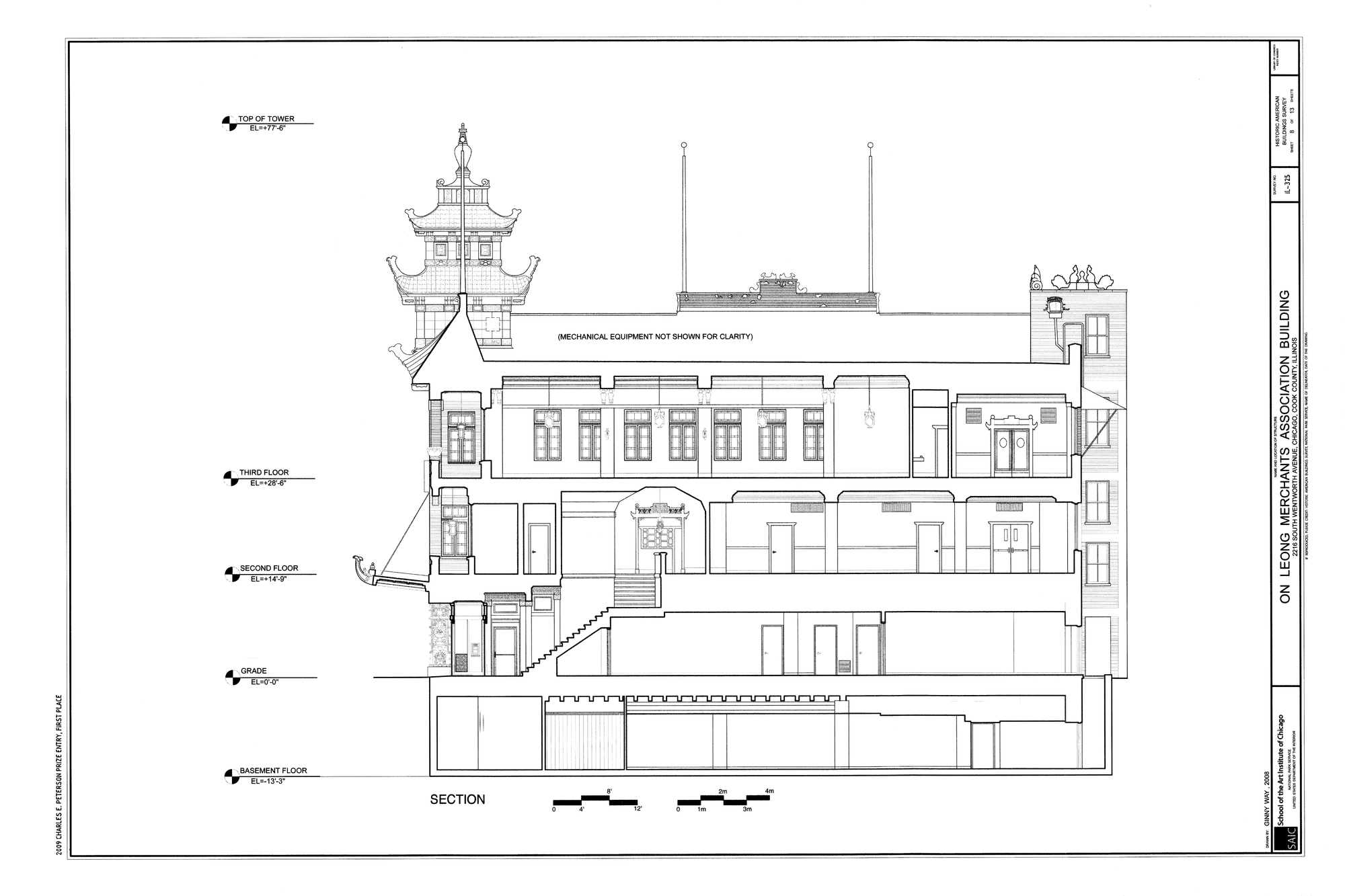
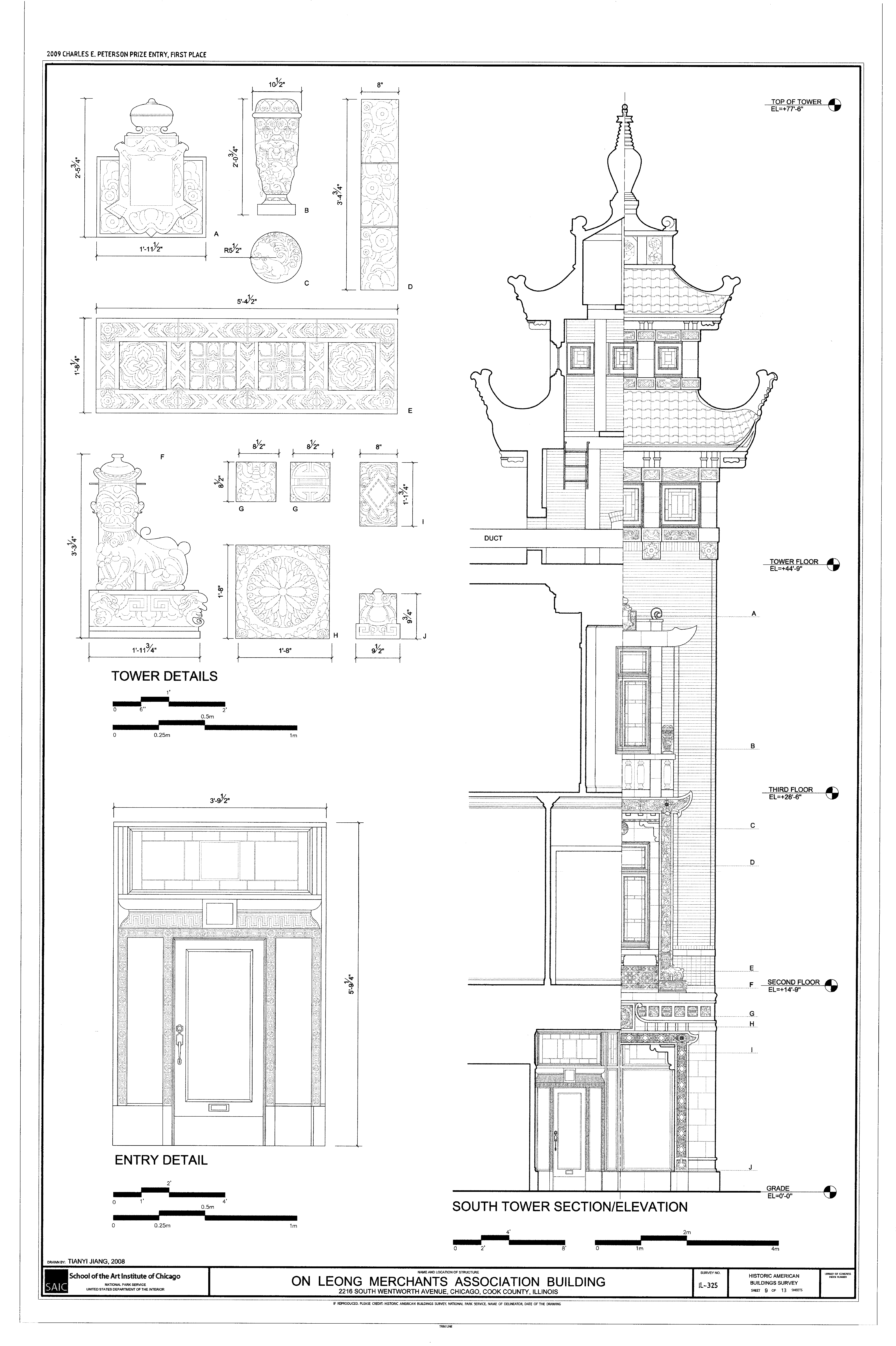
In 2009 students from the School of the Art Institute of Chicago Historic Preservation Department won the Charles E. Peterson Prize for measured drawings for the Historic American Buildings Survey for their work on these drawings of the On Leong building, Library of Congress
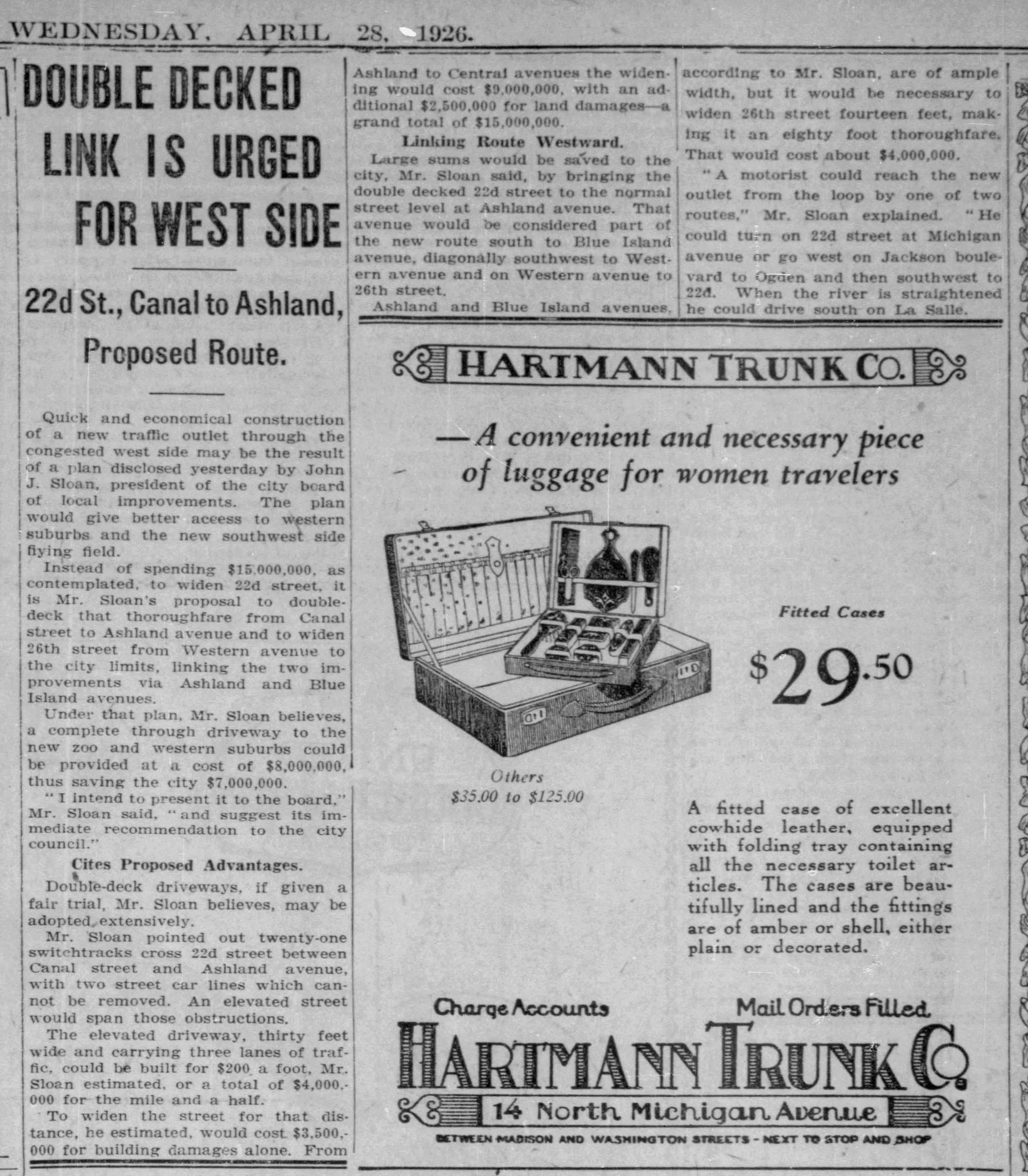
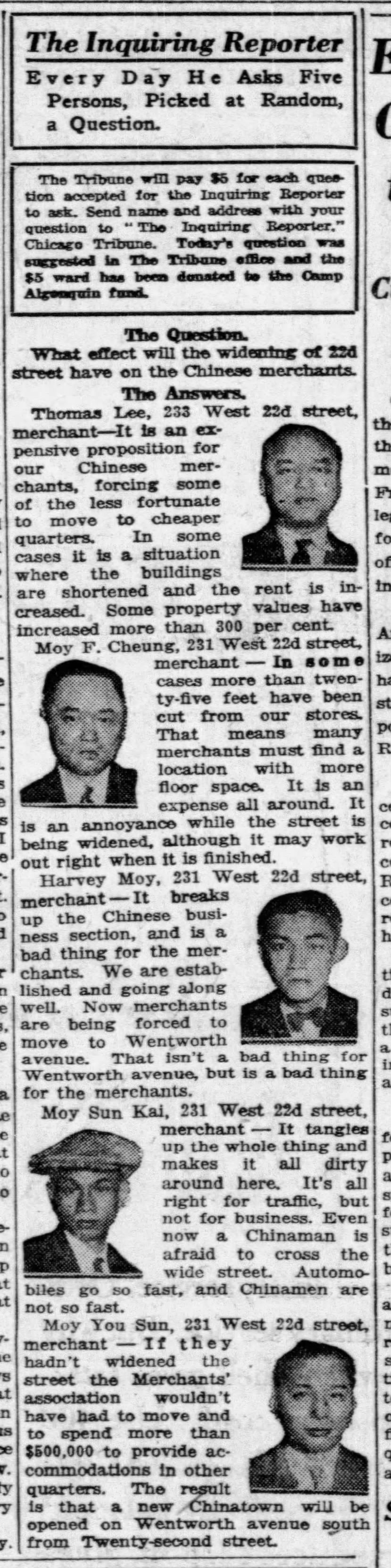
1926 article about a proposal to make Cermak a bi-level road (thank god they didn't) | interesting 1926 "Man on the Street" perspectives on the road widening–they're mostly opposed
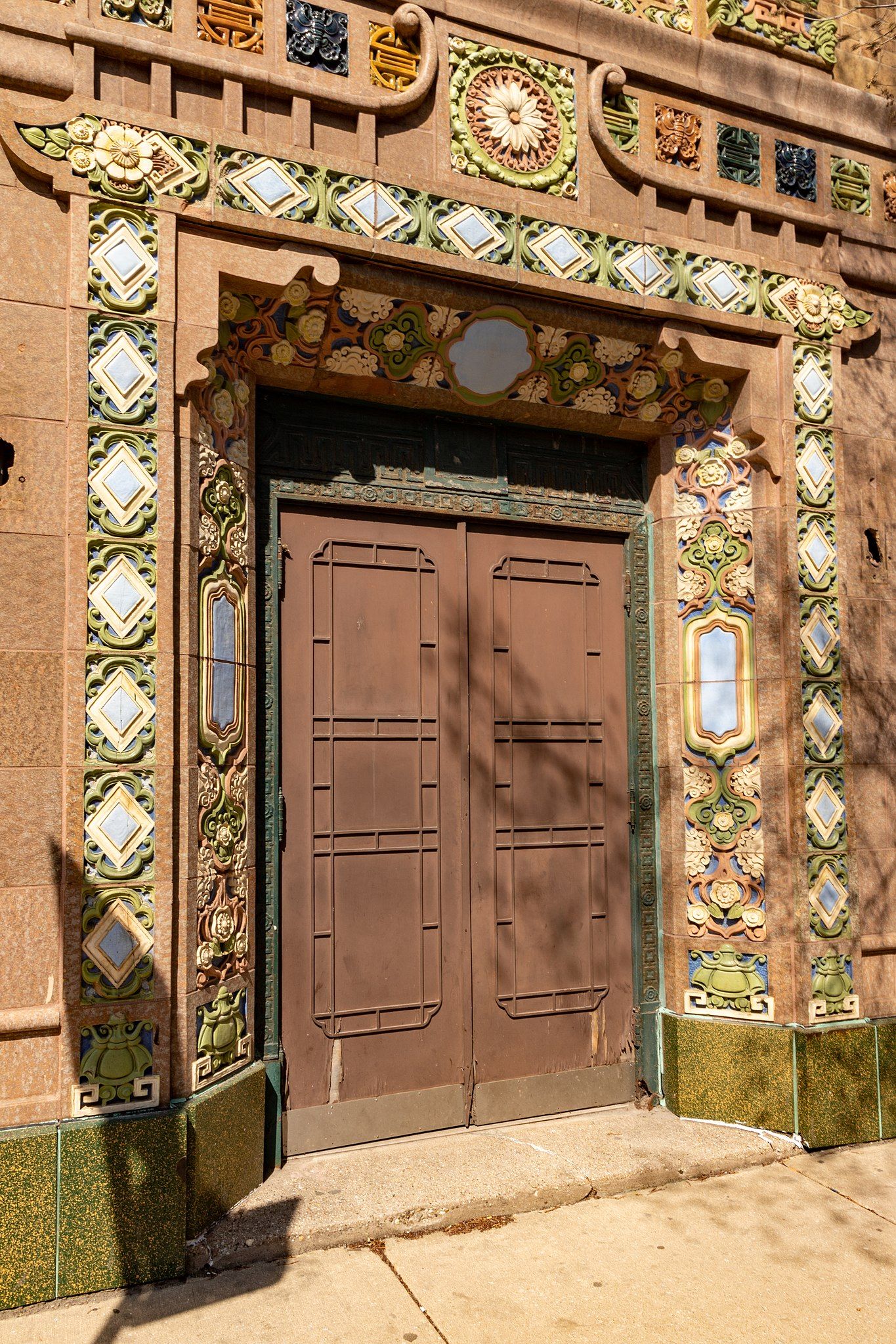
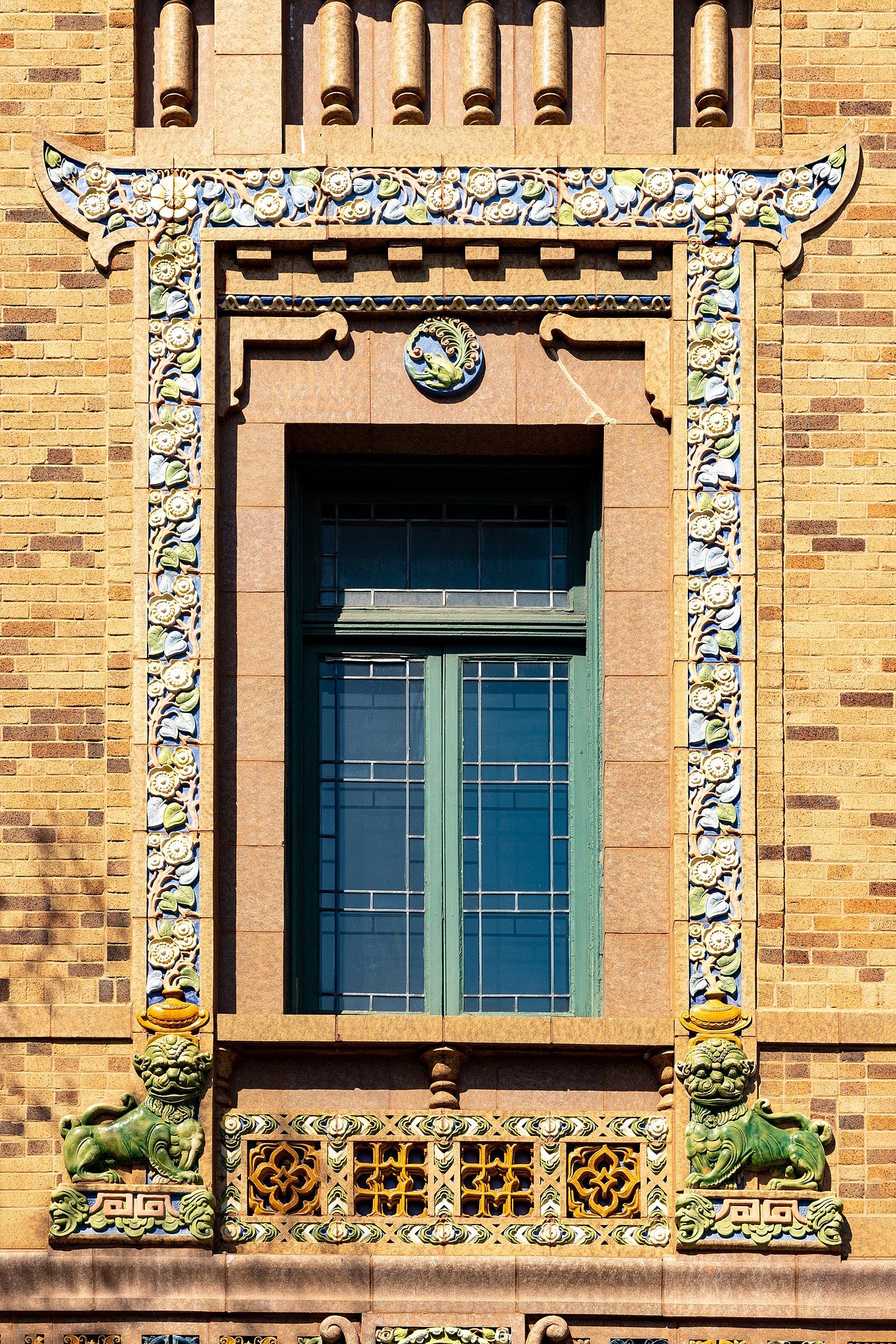
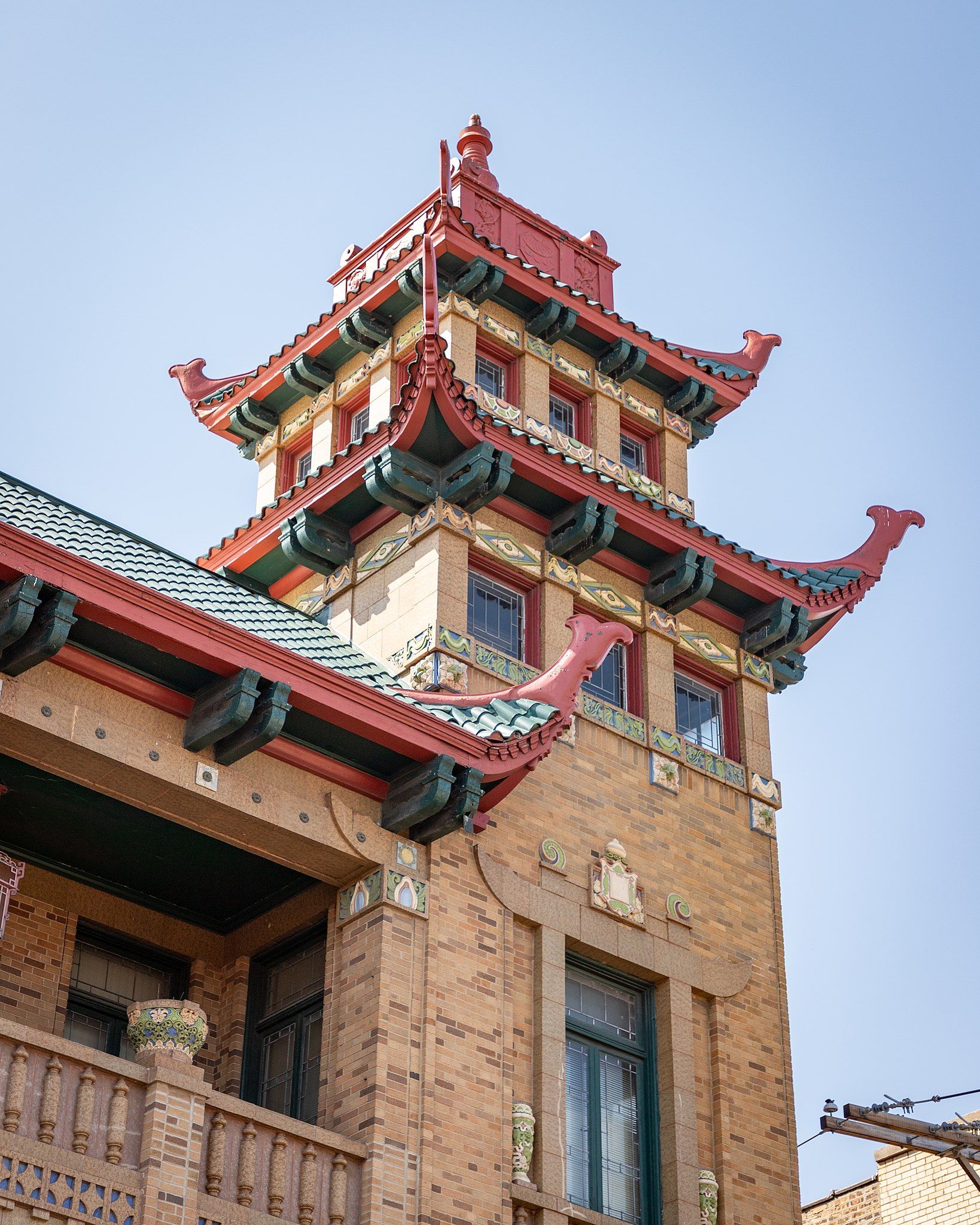
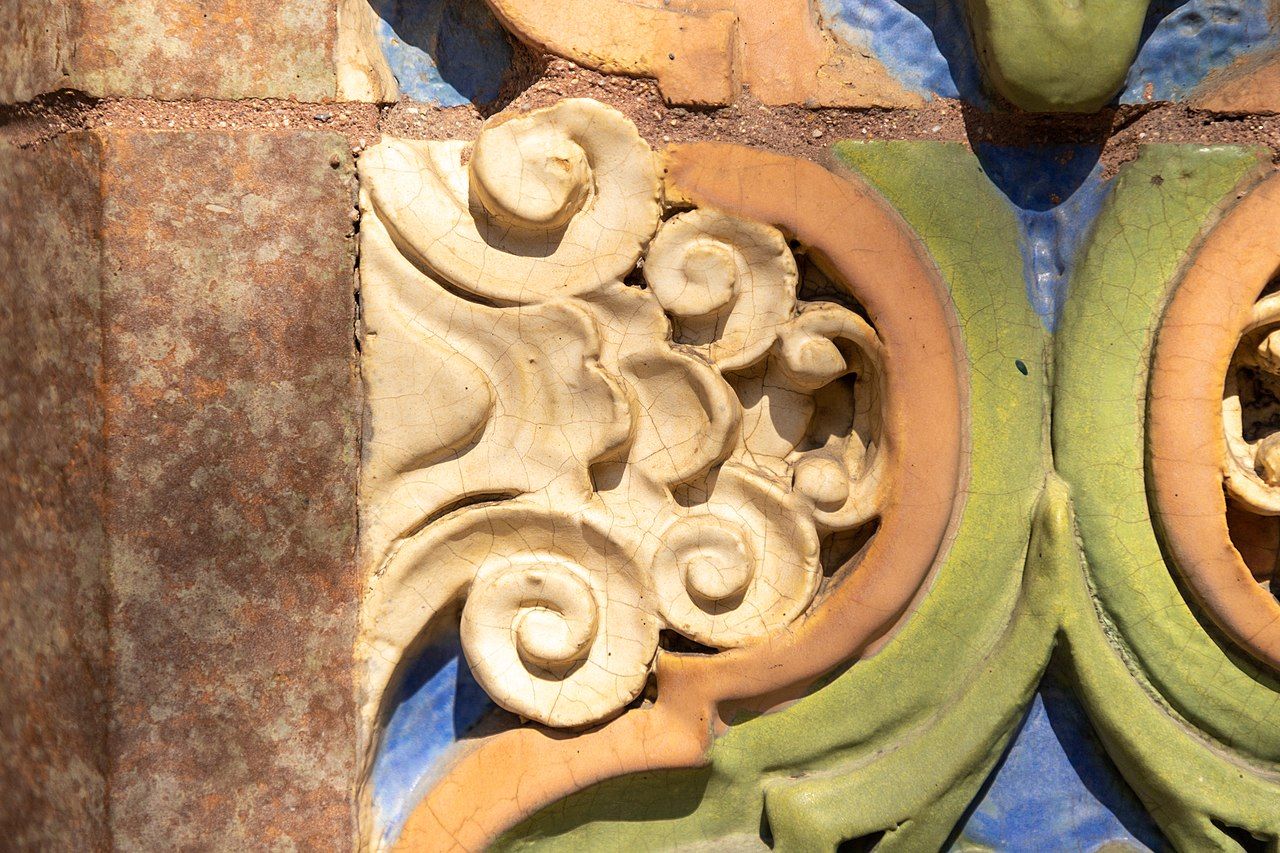

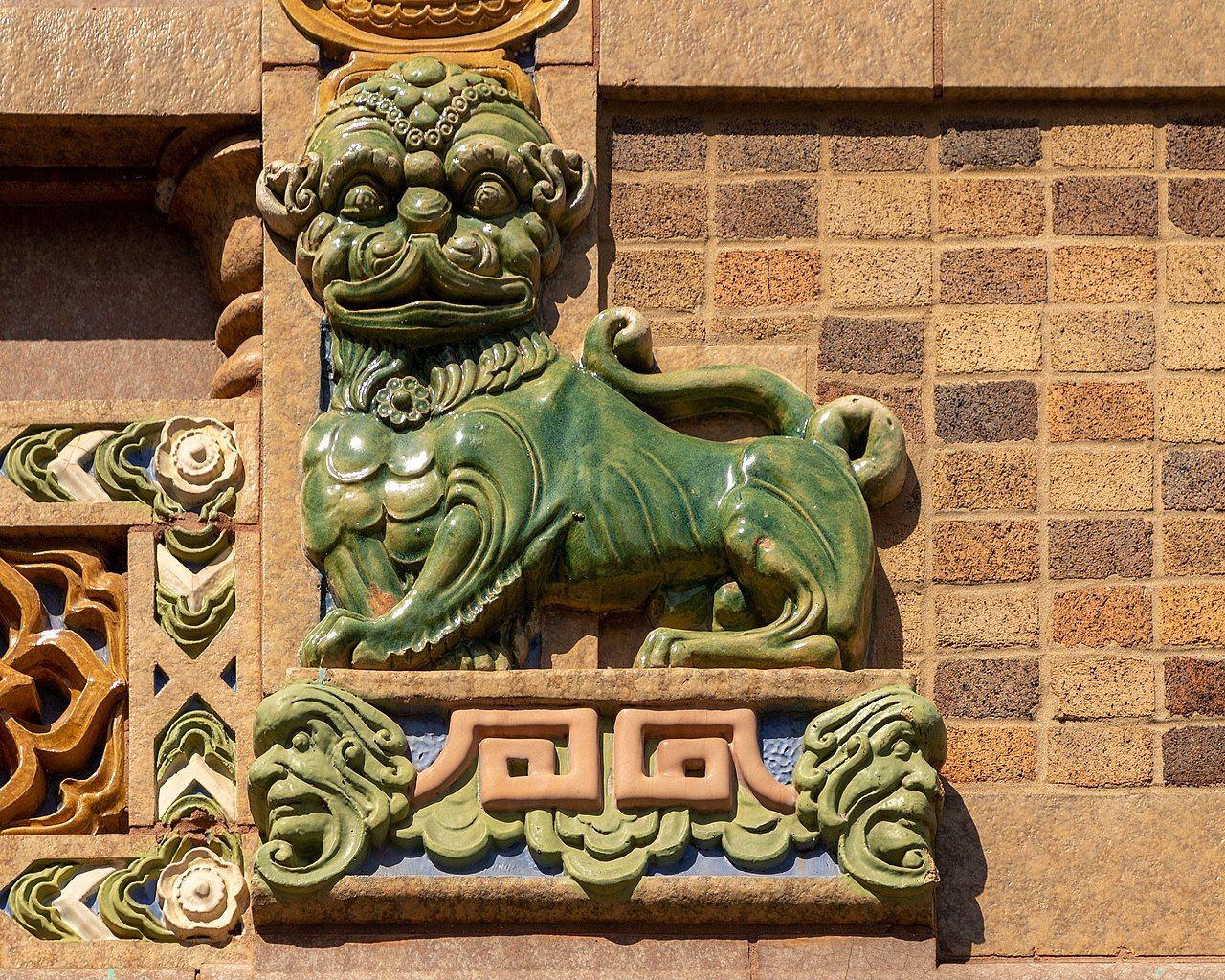
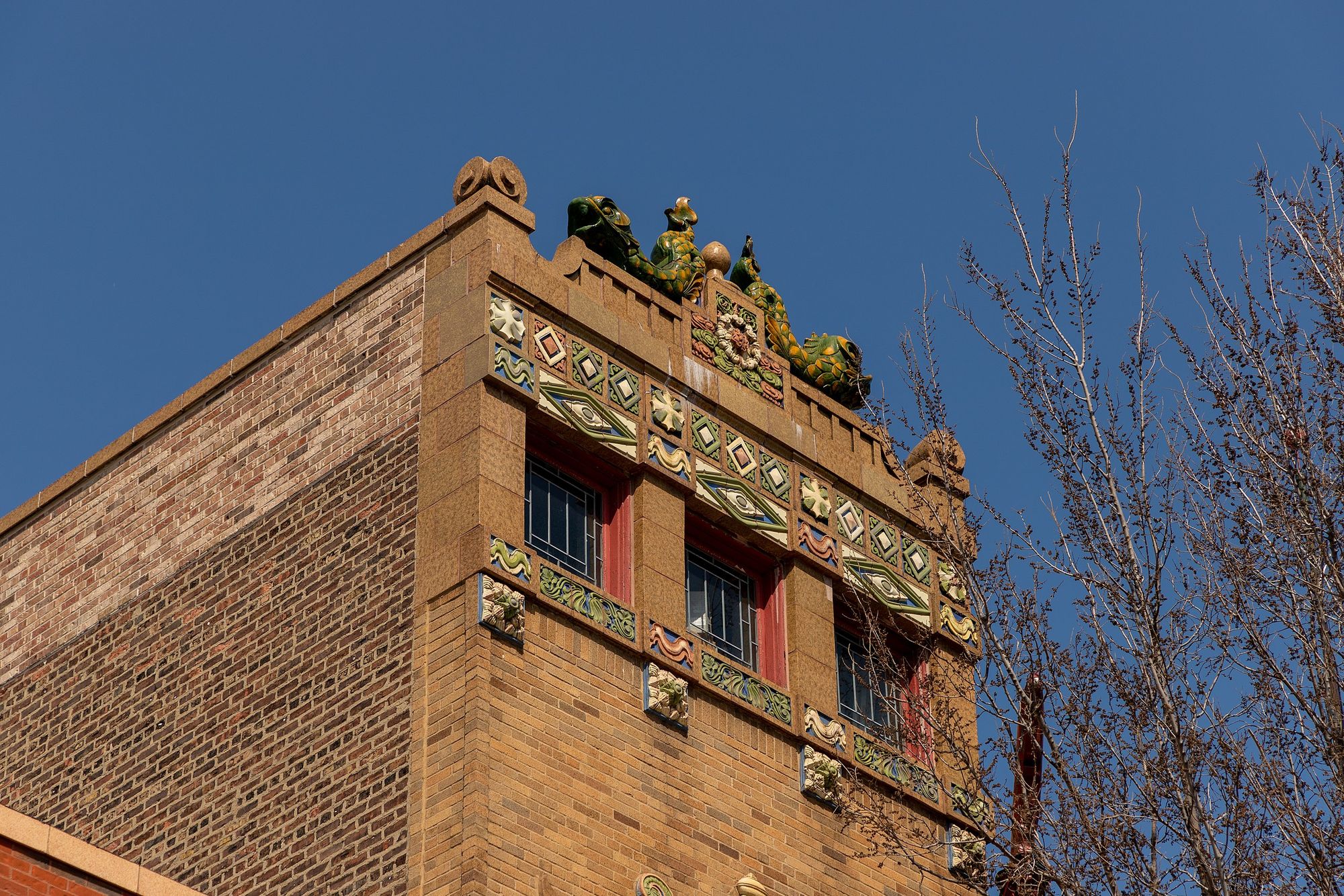
An excellent series of detail shots of the building's terracotta by Paul R. Burley, via Wikimedia Commons

Member discussion: