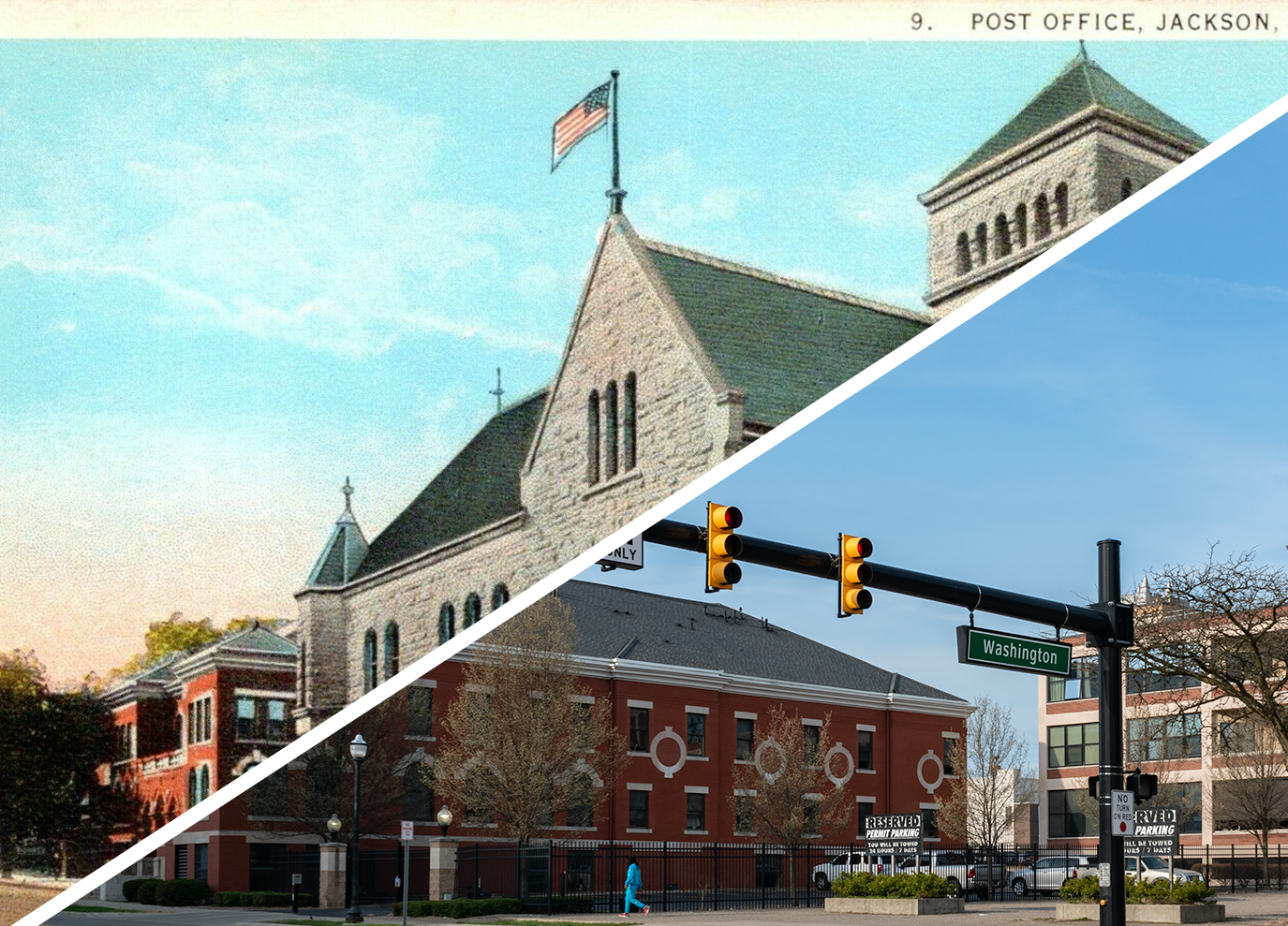
Jackson, Michigan has an even older “Stone Post Office” that’s still standing, as well as a neoclassical Old Main Post Office that’s been absorbed into a contemporary office building...so I guess we’ll call this the Old Demolished Post Office. A shame it was torn down, as this could’ve been a fascinating adaptive reuse trio—both the old factory to the right (designed by Albert Kahn) and the former Elks Lodge to the left have been turned into housing!
Designed during James H. Windrim’s short tenure as Supervising Architect for the US Treasury, the Old Demolished Post Office was part of the wave of Romanesque Revival piles the federal government built across the US in the 1890s (see also: the Old DC Post Office [now the Trump Hotel], the old Buffalo Post Office, etc.). Completed in 1894, besides the post office, this chunky guy also contained courtrooms and offices. Bought in 1938 by the corset company in the factory next door, they demolished it in 1954 after deciding maintenance costs were too steep for a storage building.
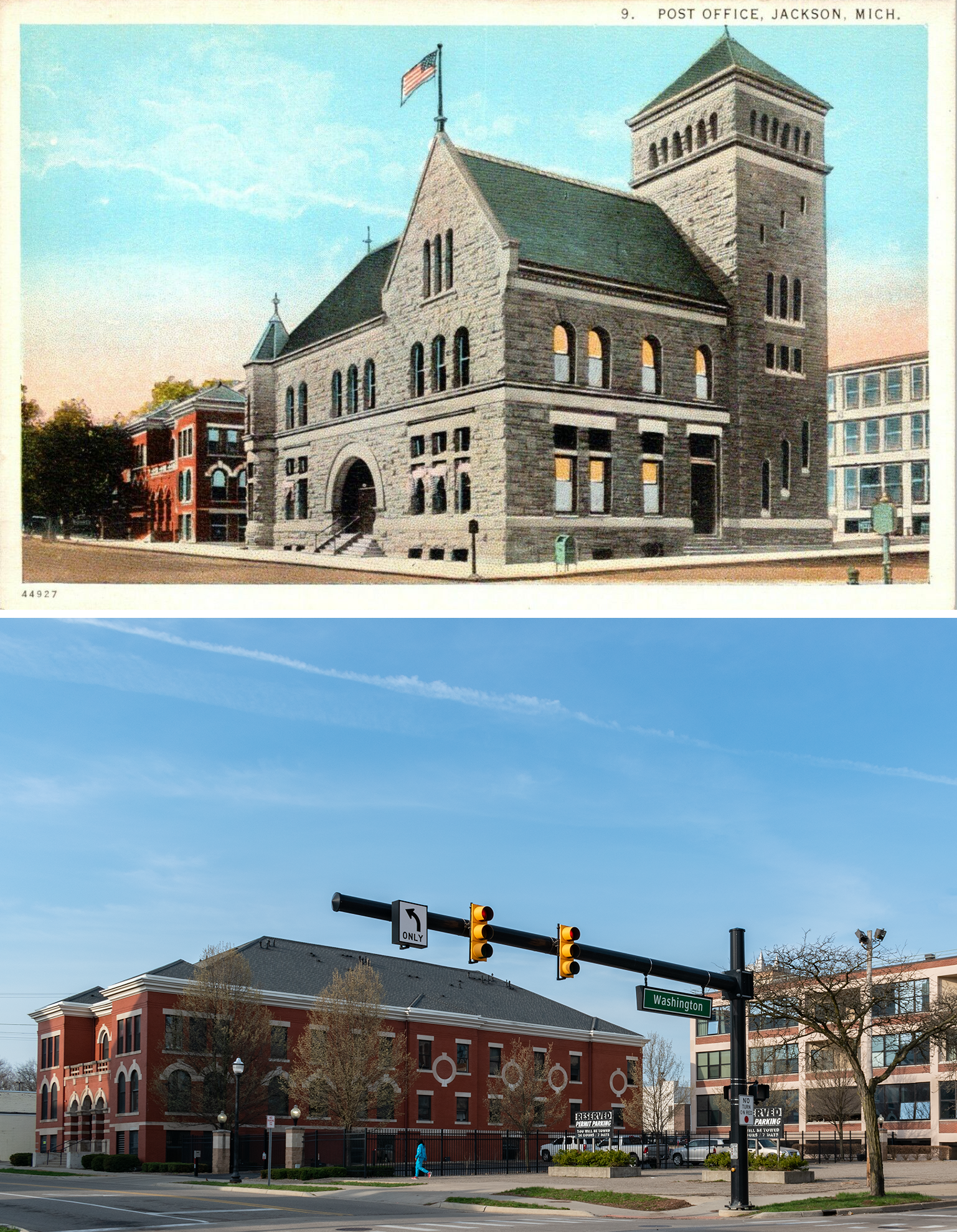
So, what's changed? ...well, you know.
But honestly, besides the disappearance of the post office (obviously a huge "besides"), the rest of this perspective is surprisingly intact.
In the 1890s, it feels like construction usually went like, "they built it in nine months, four people died, and it's the grandest building the Middle West has yet seen". Building the Jackson Post Office (or likely most post offices) didn't shake out that way. Since it used to take an act of Congress to establish a new post office and every local power player wanted to have their say on its location, this one took awhile. Philadelphia architect James H. Windrim—who only served as Supervising Architect for the US Treasury from 1889 until 1891—signed off on this design before stepping down, but construction didn't finish until three years later.
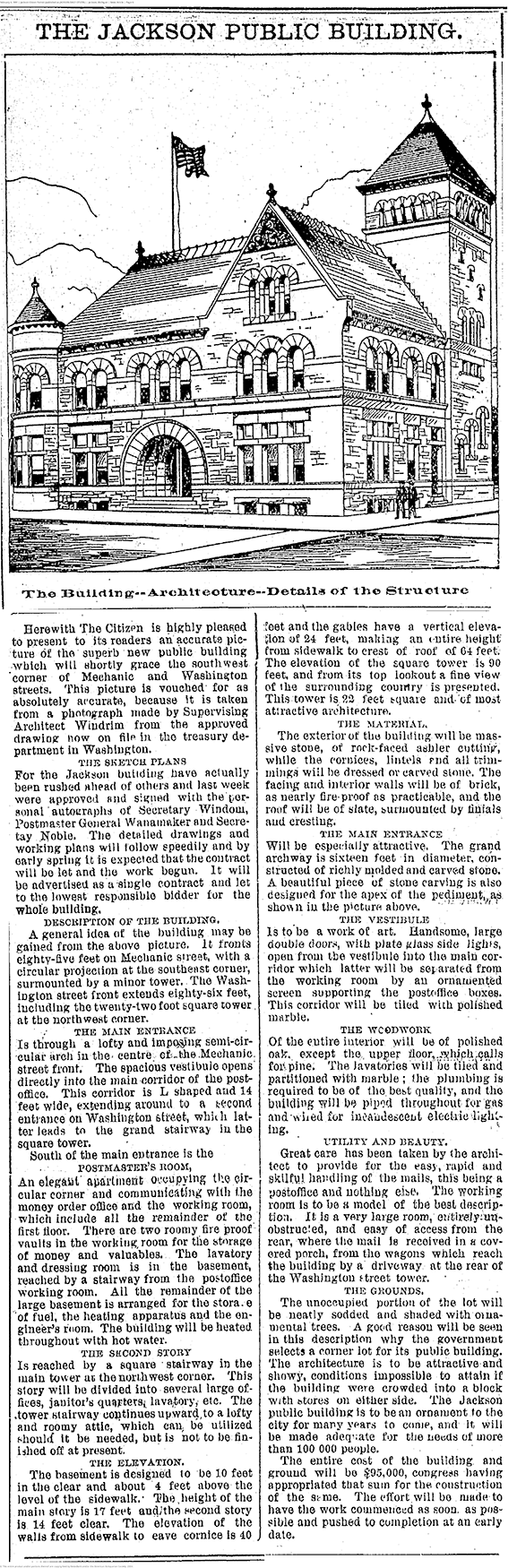

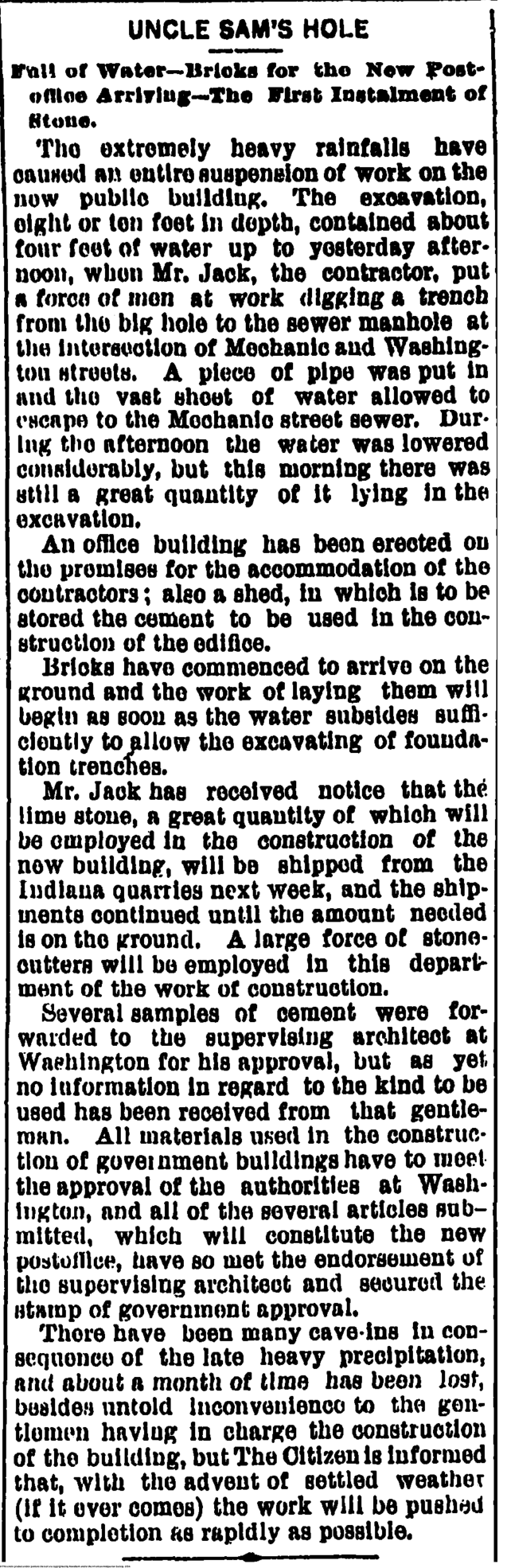
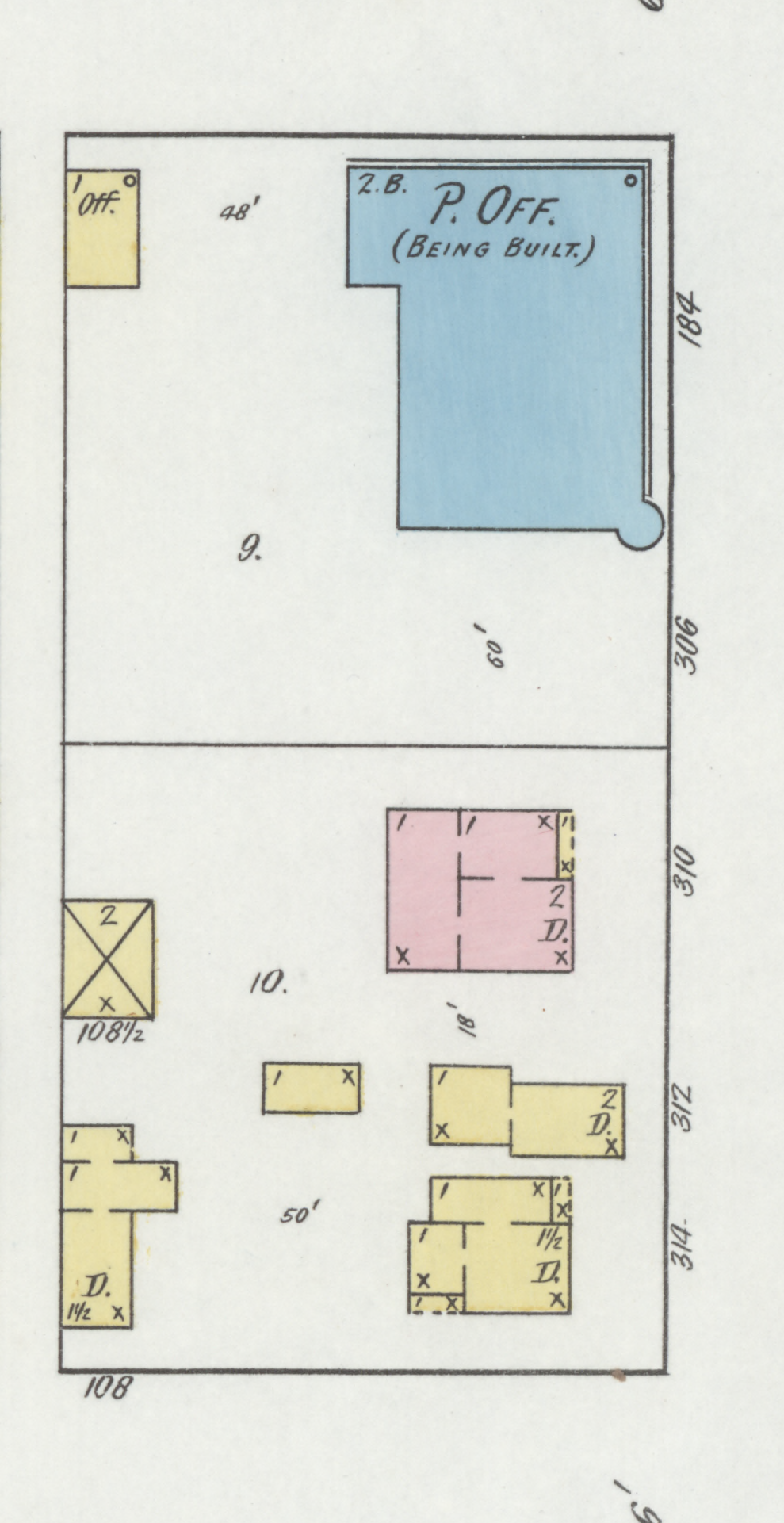
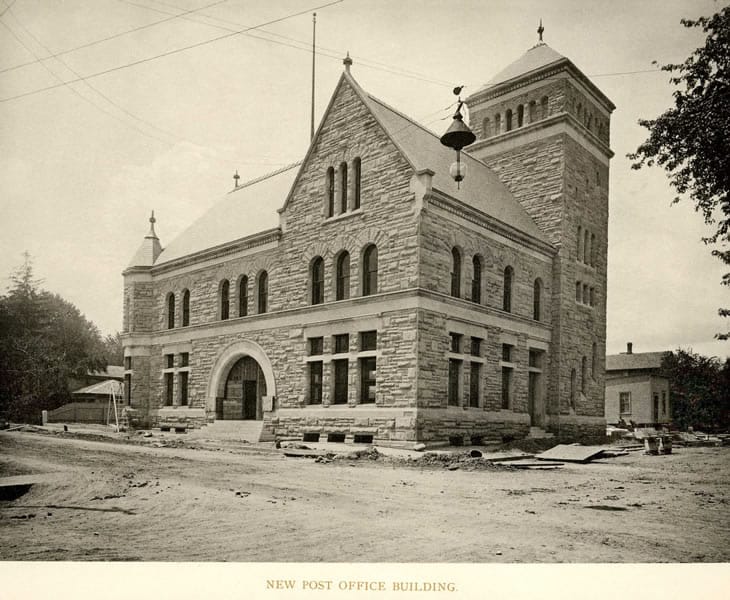
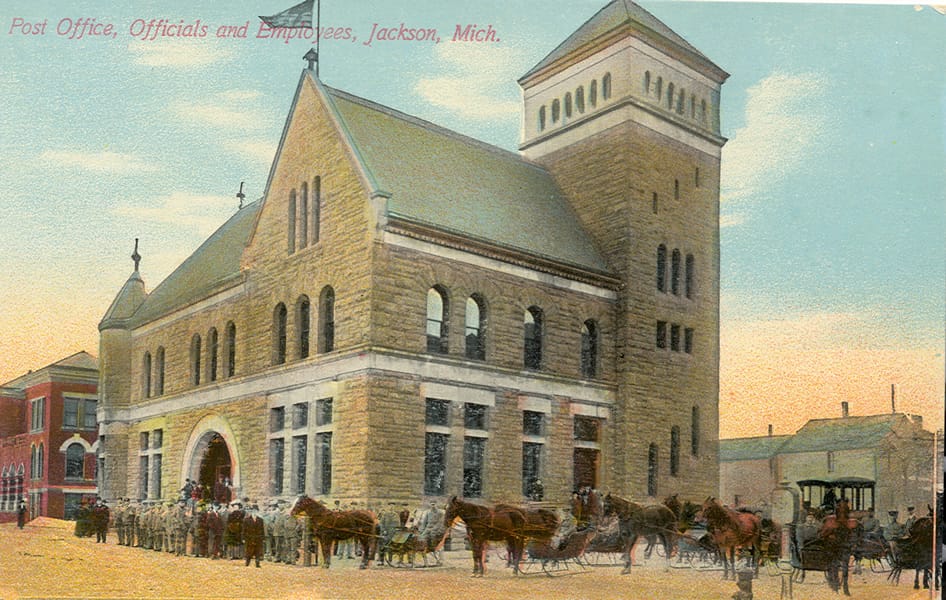
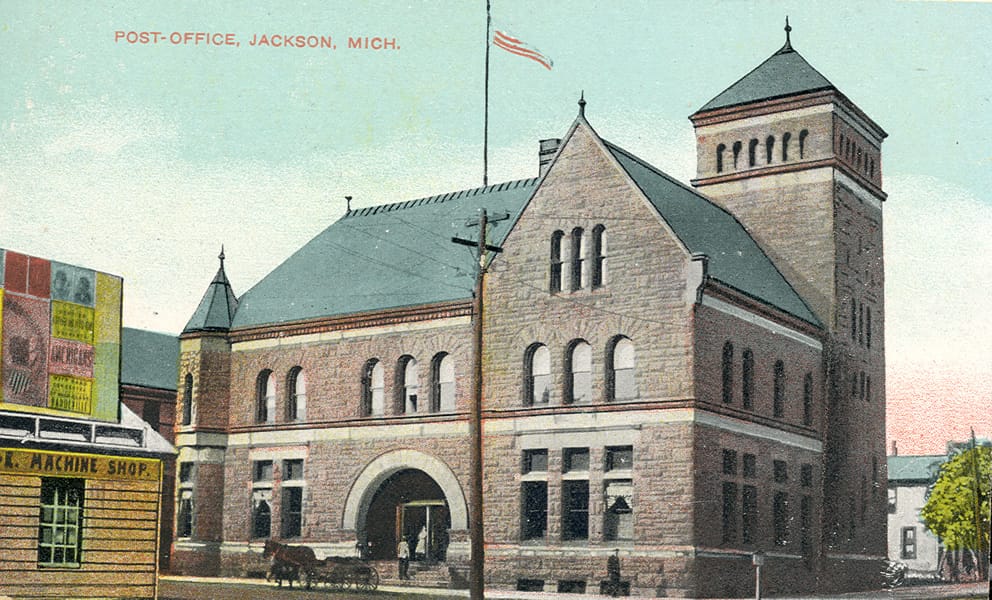
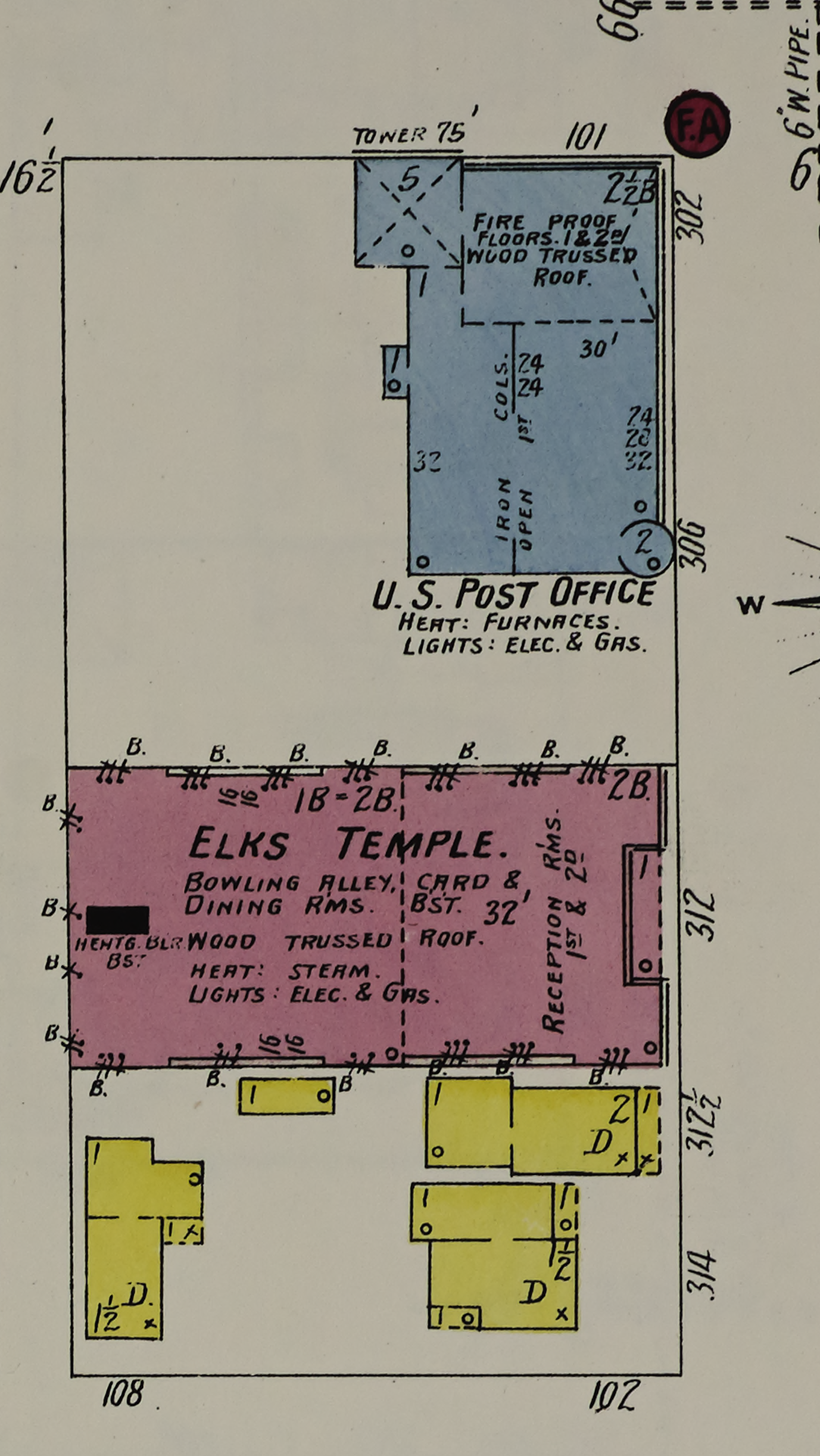
1891 articles about planning for the post office | 1892 article about construction | 1893 Sanborn Fire Insurance Map | 1890s photo, Jackson District Library | Early 1900s postcards, Jackson District Library | 1907 Sanborn Fire Insurance Map
Technological advances, population growth, and changing tastes rendered this generation of federal building obsolete especially quickly—it feels like few examples from this era survive. A burst of New Deal energy kept the building in use after the USPS moved out in 1933. It served as the local Works Progress Administration HQ, had offices for the National Reemployment Services and the National Youth Administration. By the mid-1930s the federal government decided upkeep, which in 1937 exceeded $125,000 a month (adjusted for inflation), was too expensive and wanted rid of it. The US Treasury Department put the building up for sale.
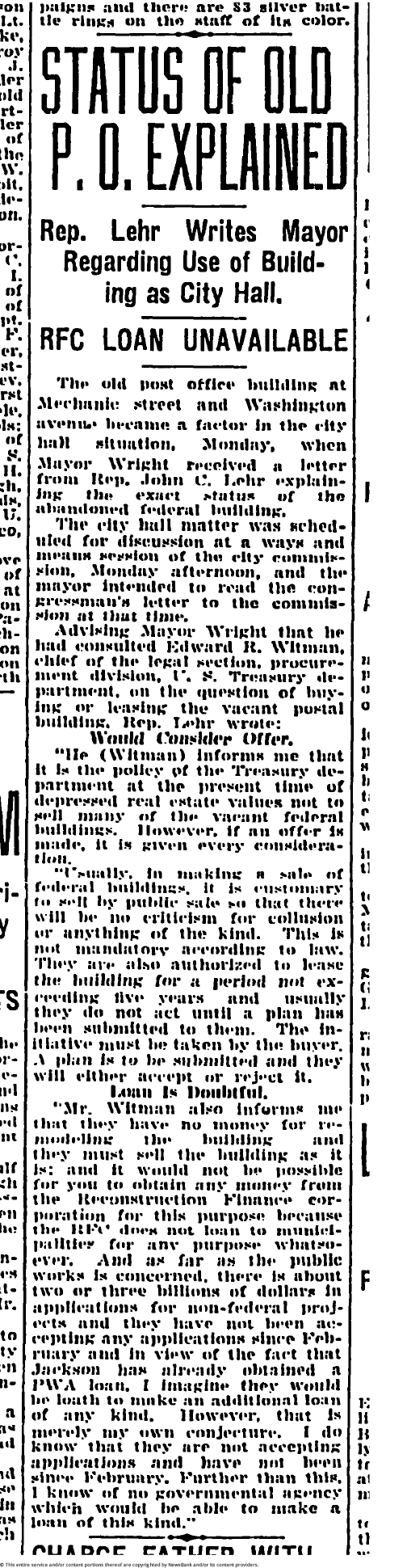
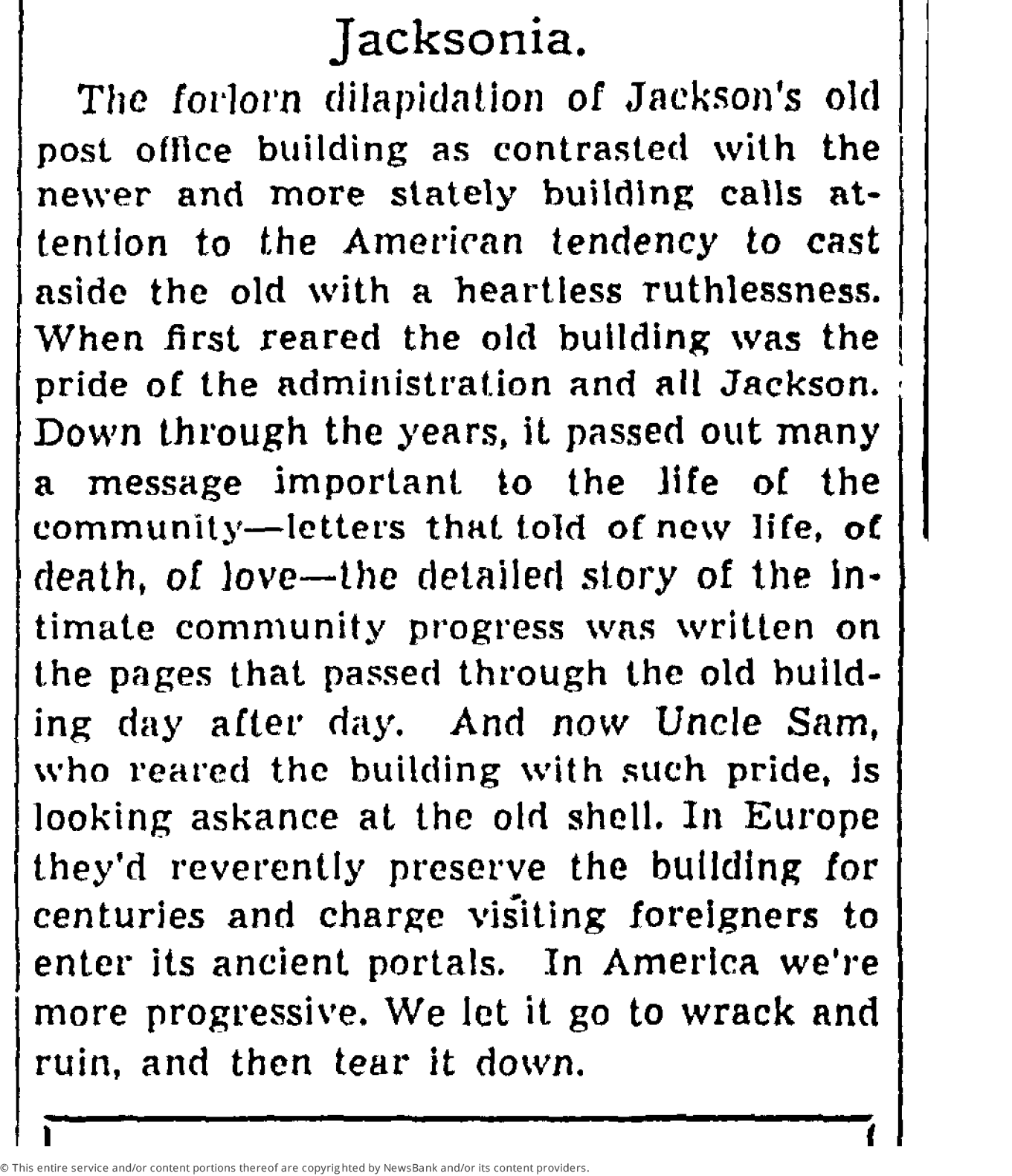
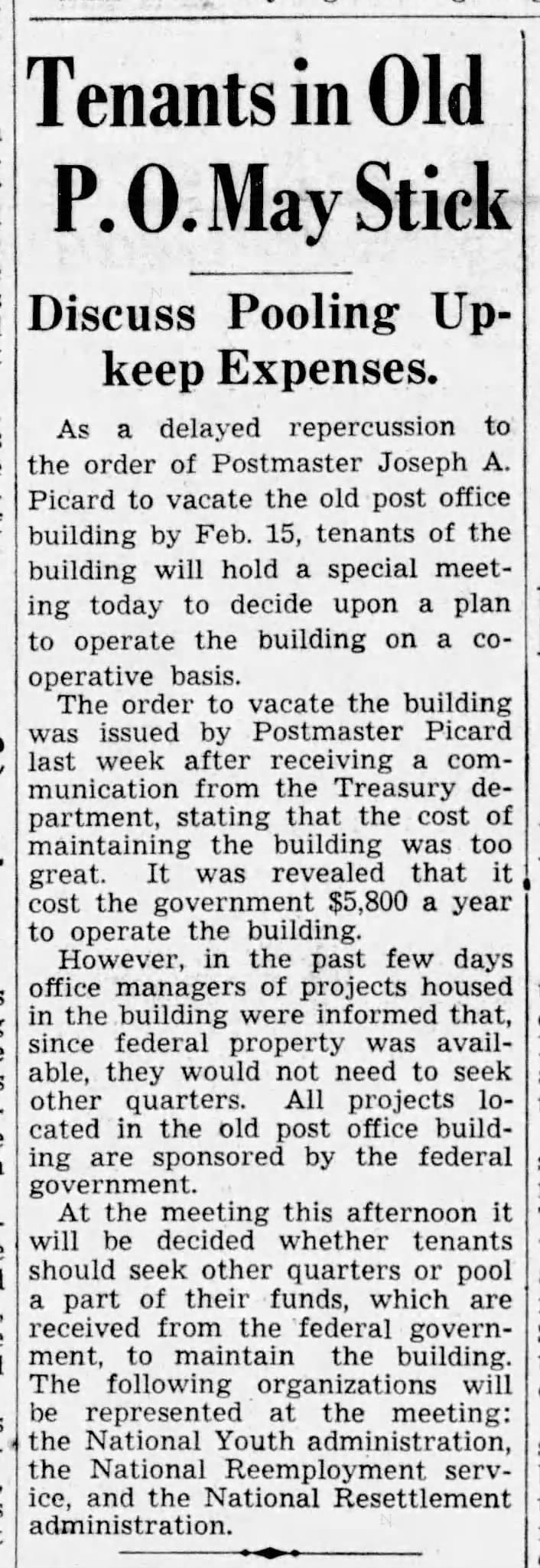
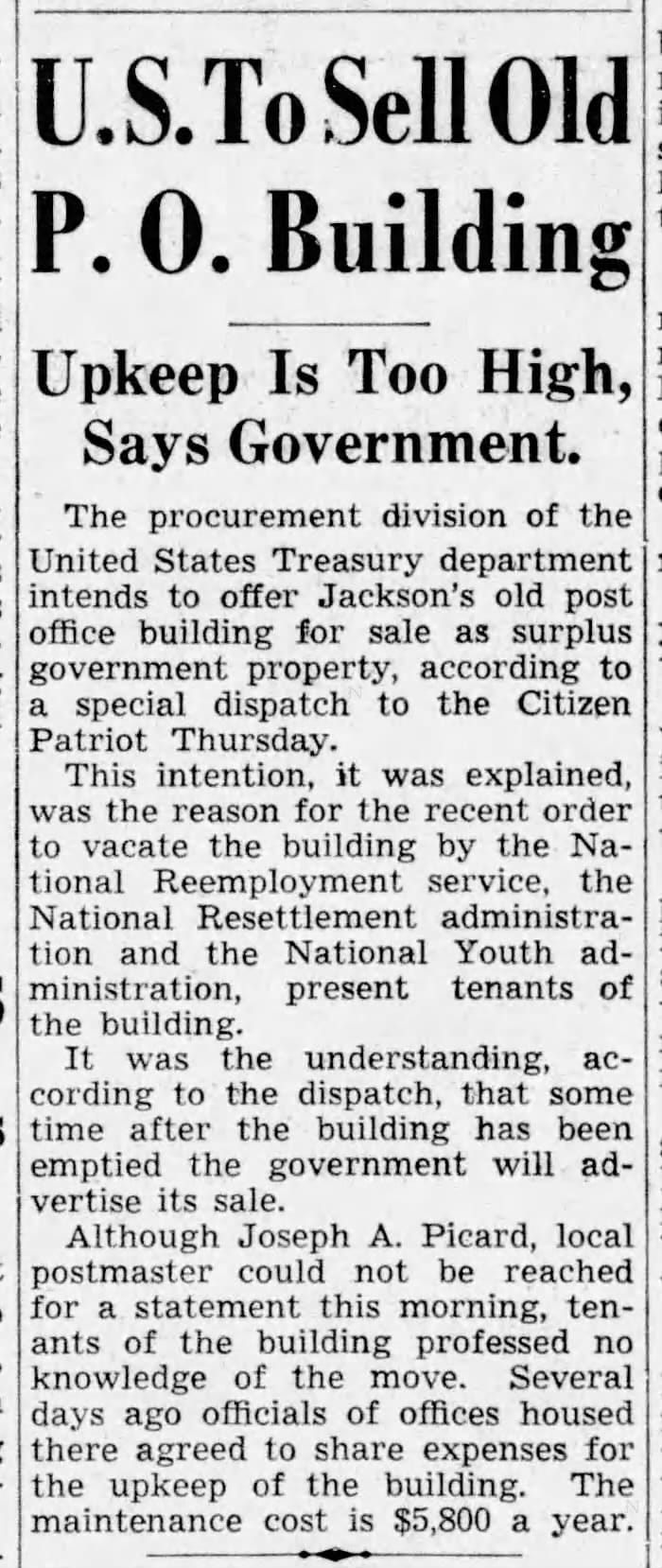
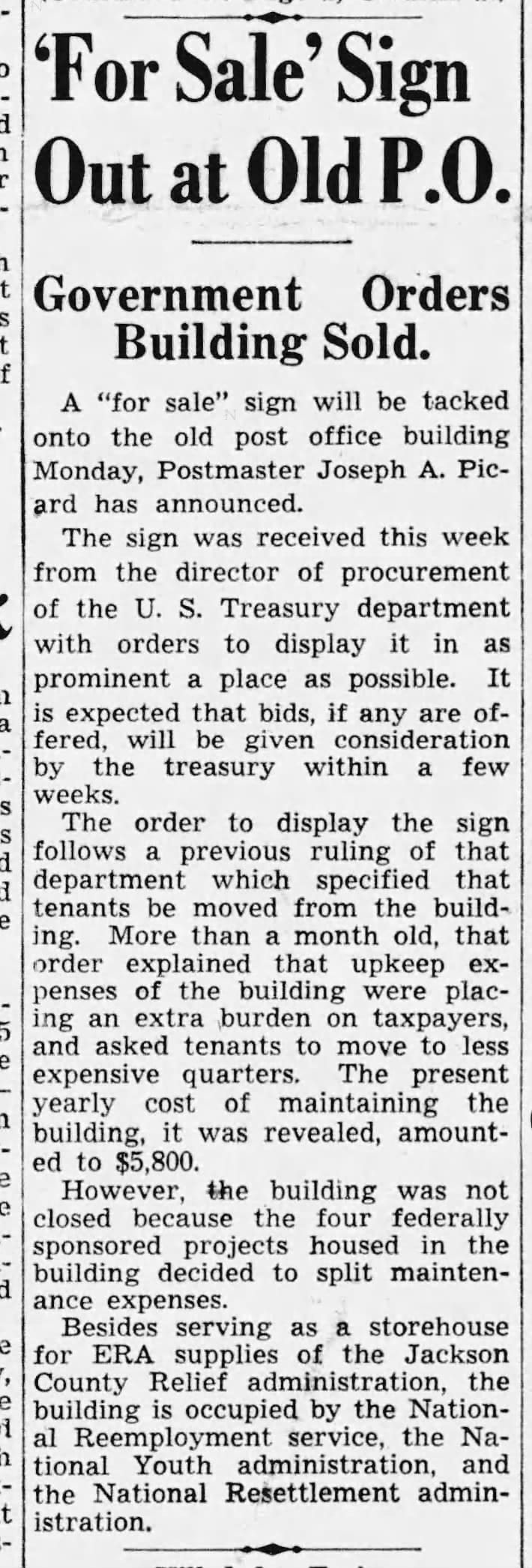
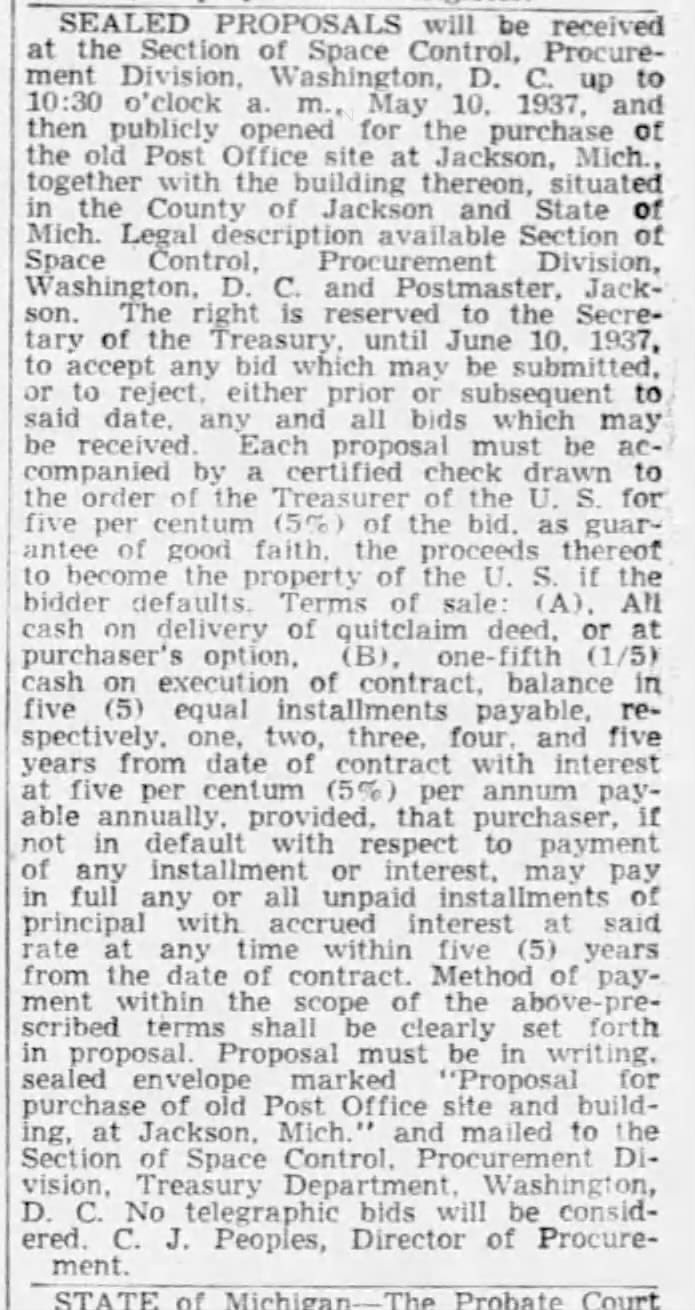
1934 about the post office vacating the building | 1937 articles about the federal government forcing the other government tenants to leave and putting the building up for sale
A corset maker bit. Corsets were big business in Jackson, and in 1938 the federal government sold the old post office to S.H. Camp and Company, a corset maker that owned the factory next door (the extant building on the right). The factory had been built for American Lady Corset Co., who hired Albert Kahn in 1912 to design them a much expanded factory, which opened two years later. Jackson-based S.H. Camp—notable as one of the two companies that introduced the A-D bra sizing system in the 1930s—bought the factory from American Lady Corset in 1928, as that company retreated back to Detroit.
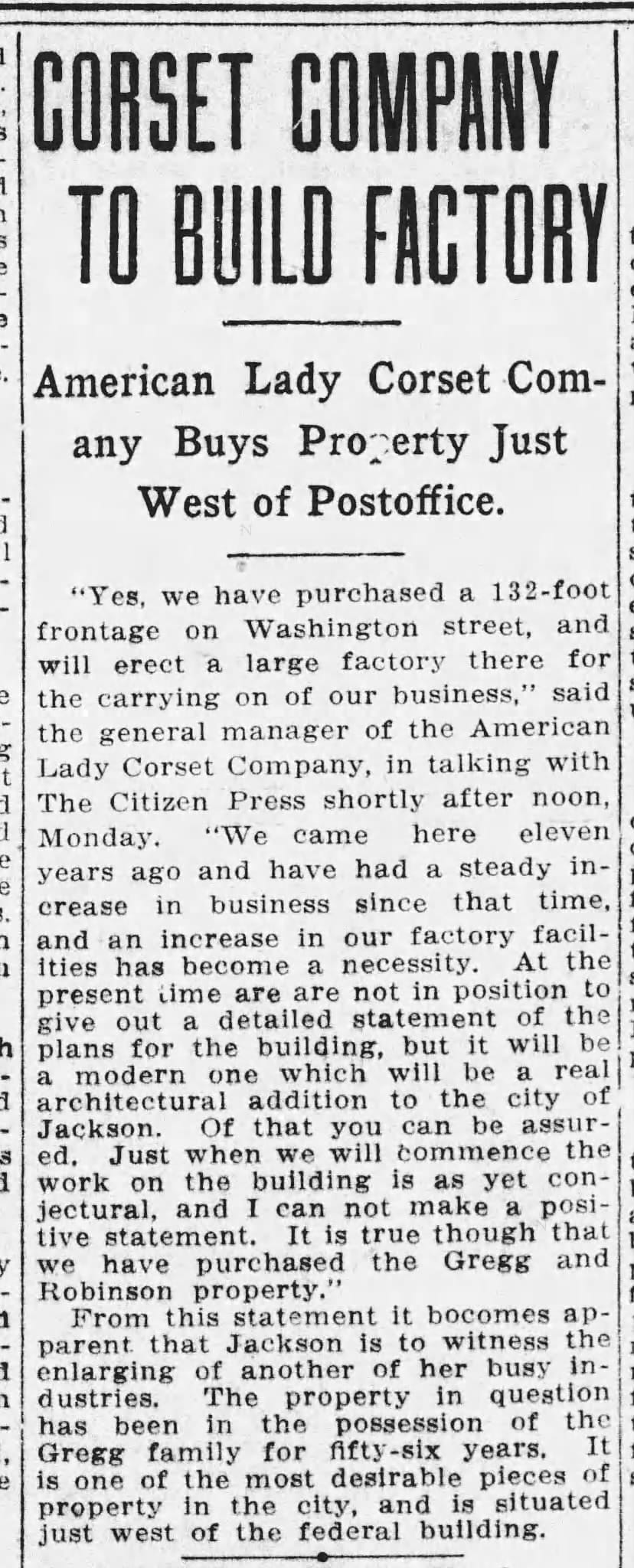
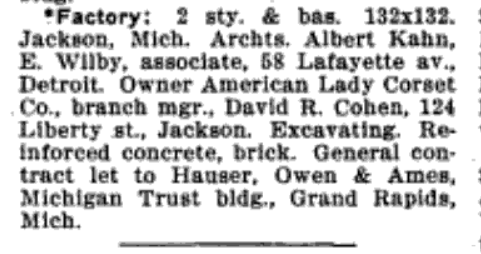
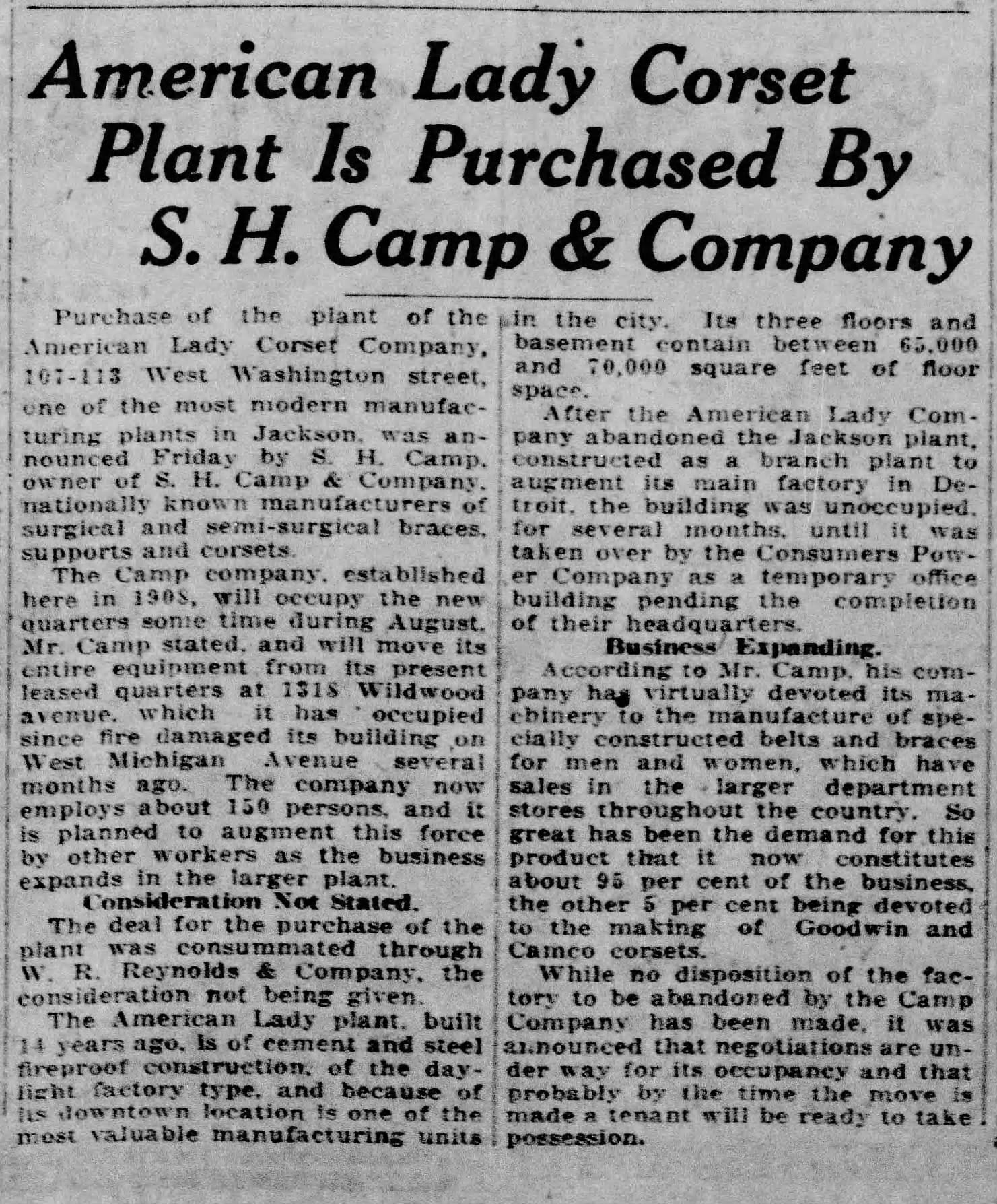
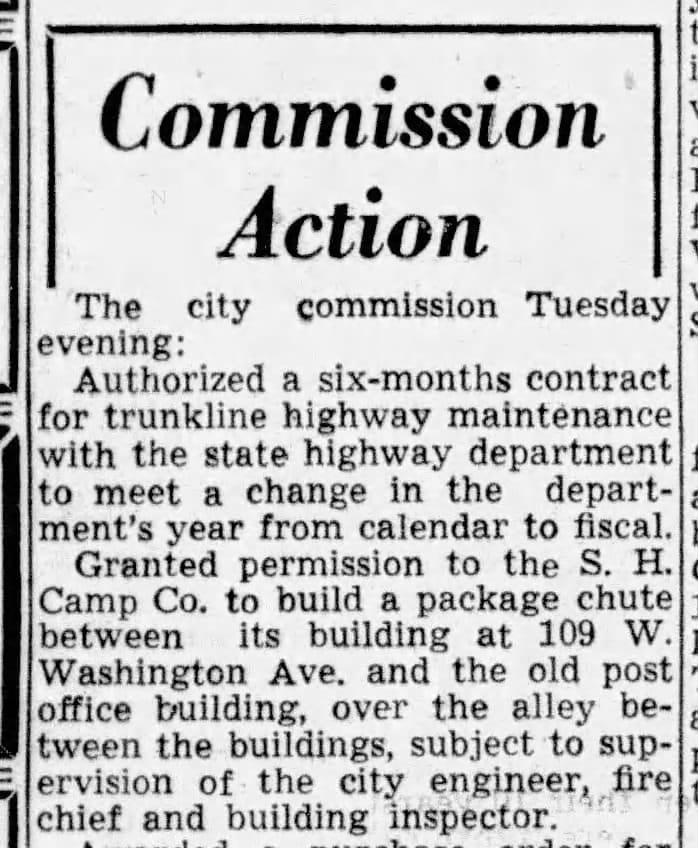
1912, American Lady Corset plans to build factory | 1928, S.H. Camp buys the factory from American Lady Corset | 1941, city allows construction of a connecting chute | 1943 S.H. Camp ad
S.H. Camp mostly used the old post office for storage—it doesn't seem like they had a particularly compelling business case for buying it. I imagine it was available cheap and, since it was right next door, they wanted control of the site to keep their options open in the future. Maintaining a decaying Victorian heap like the old post office was expensive—exactly why the feds wanted out—and by the 1950s S.H. Camp decided it didn't make financial sense to incur those costs for an ersatz warehouse. They tore the building down in 1954, and the site has been a parking lot ever since.
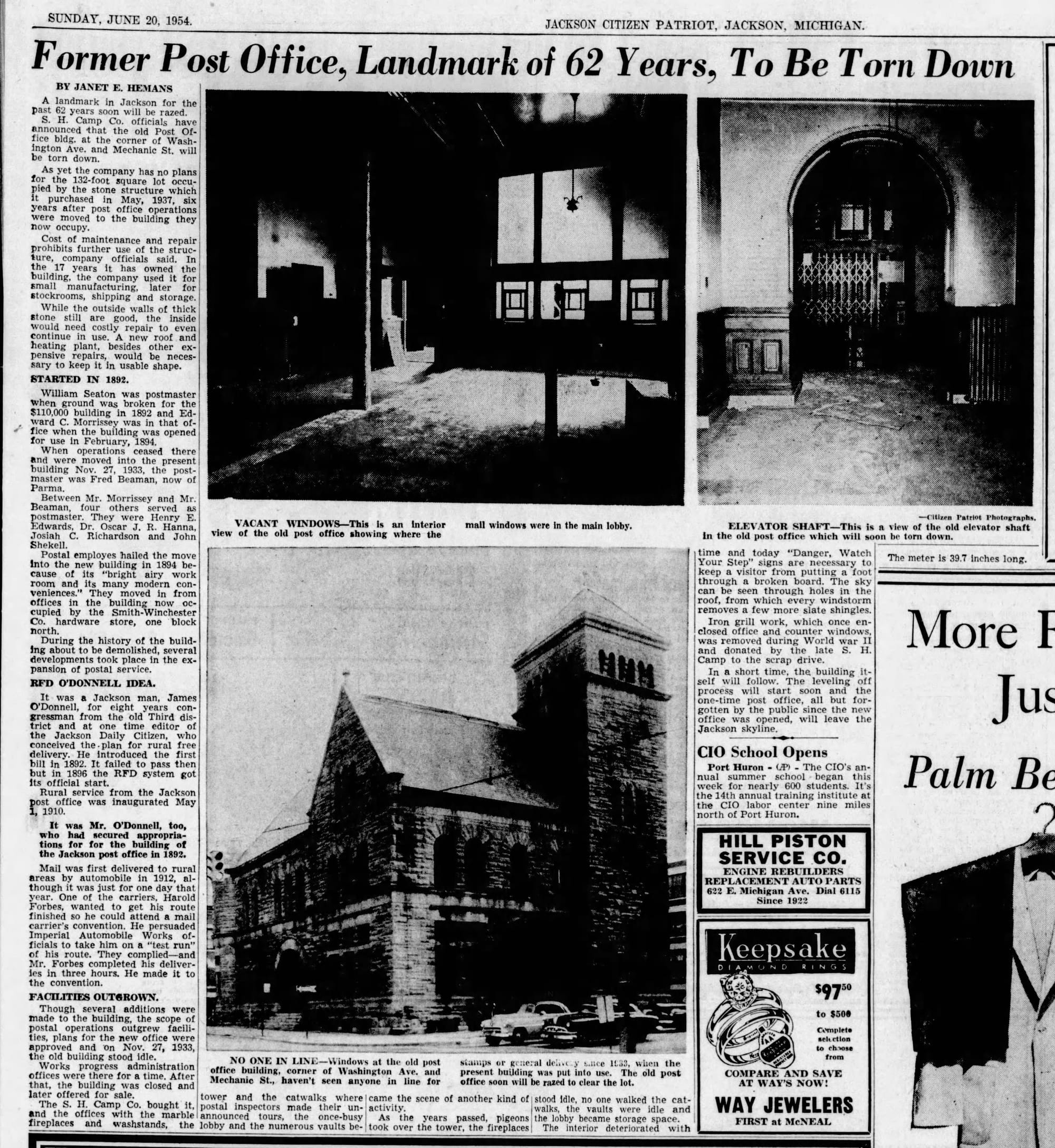
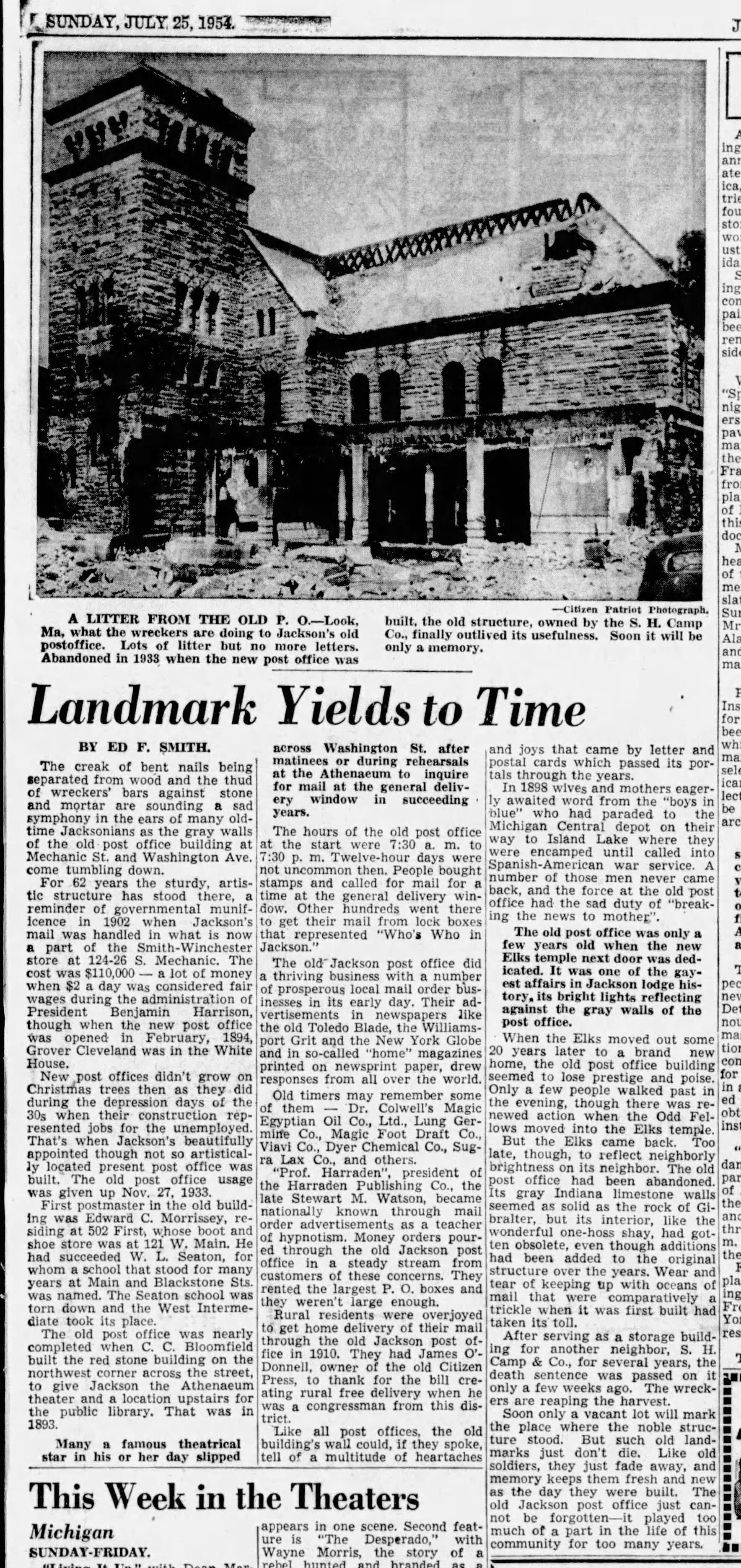
1954 articles about the post office demolition
Production Files
The wrecking company found a time capsule in the cornerstone when demolishing the old post office, and its contents went on display at a local department store.
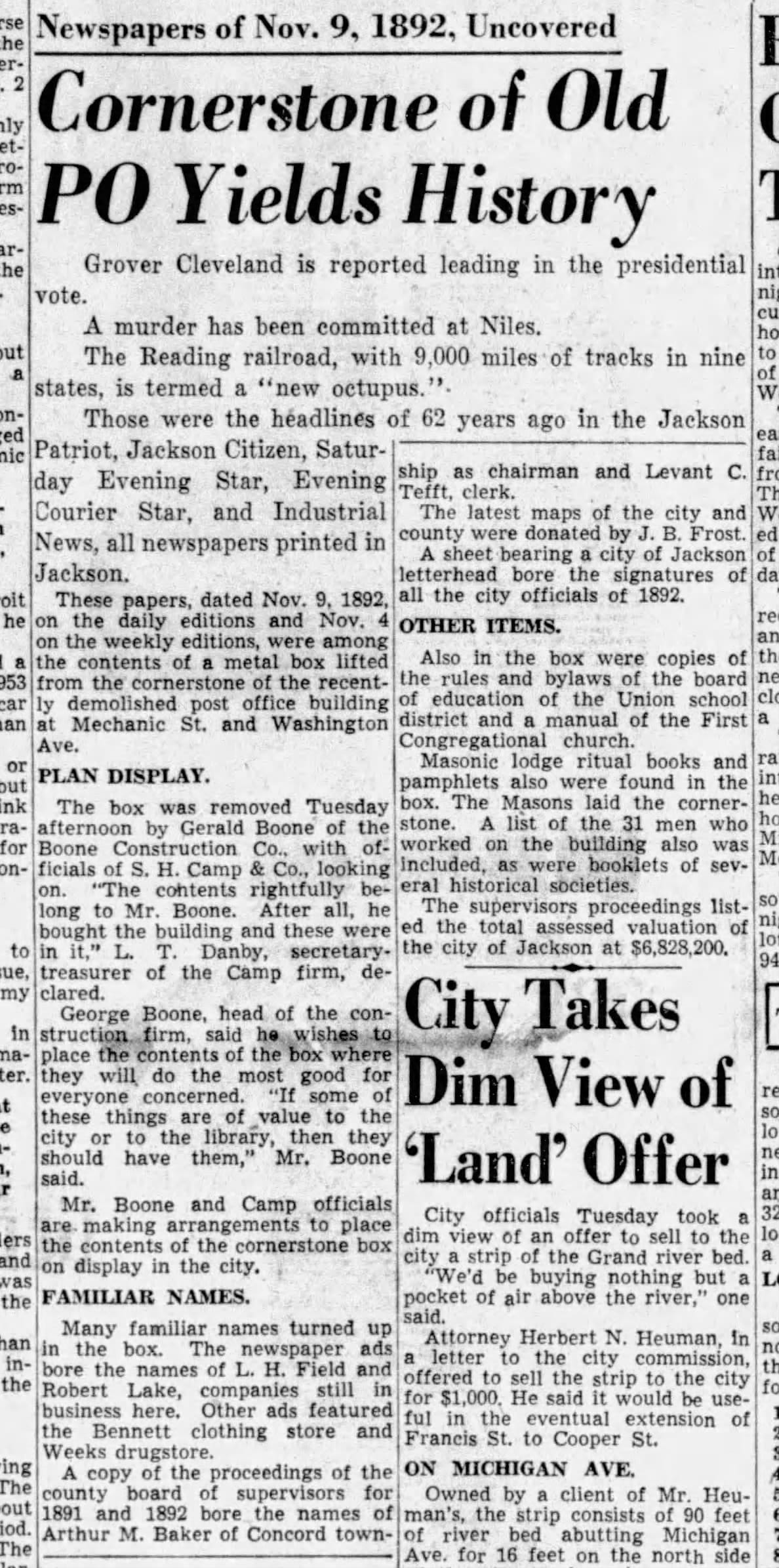
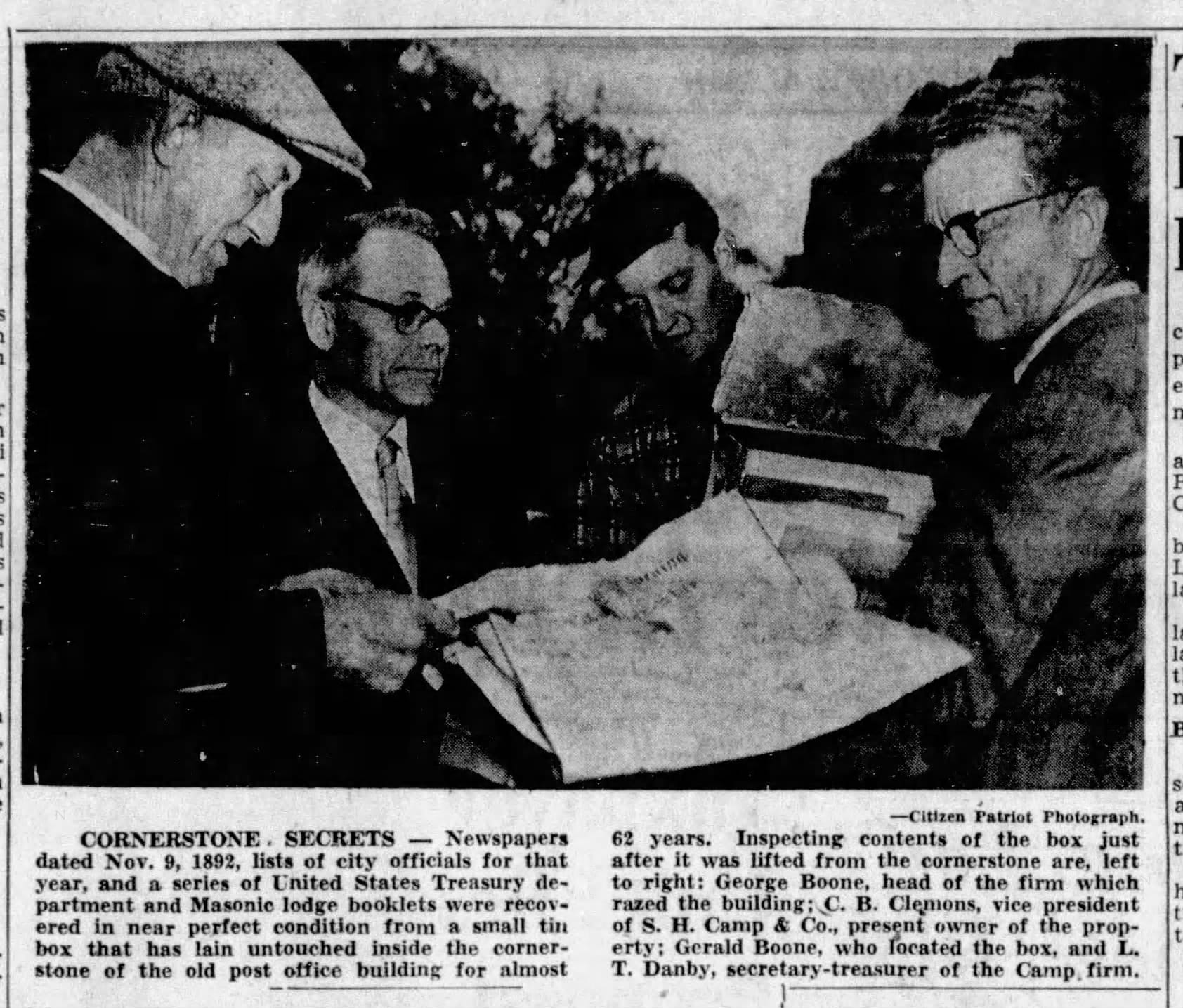
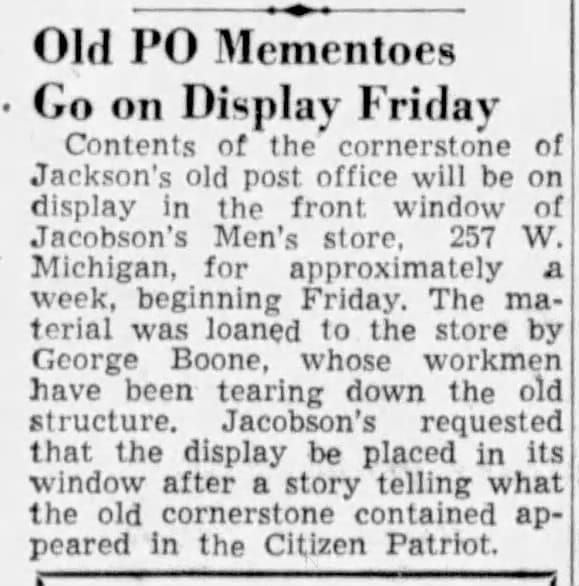
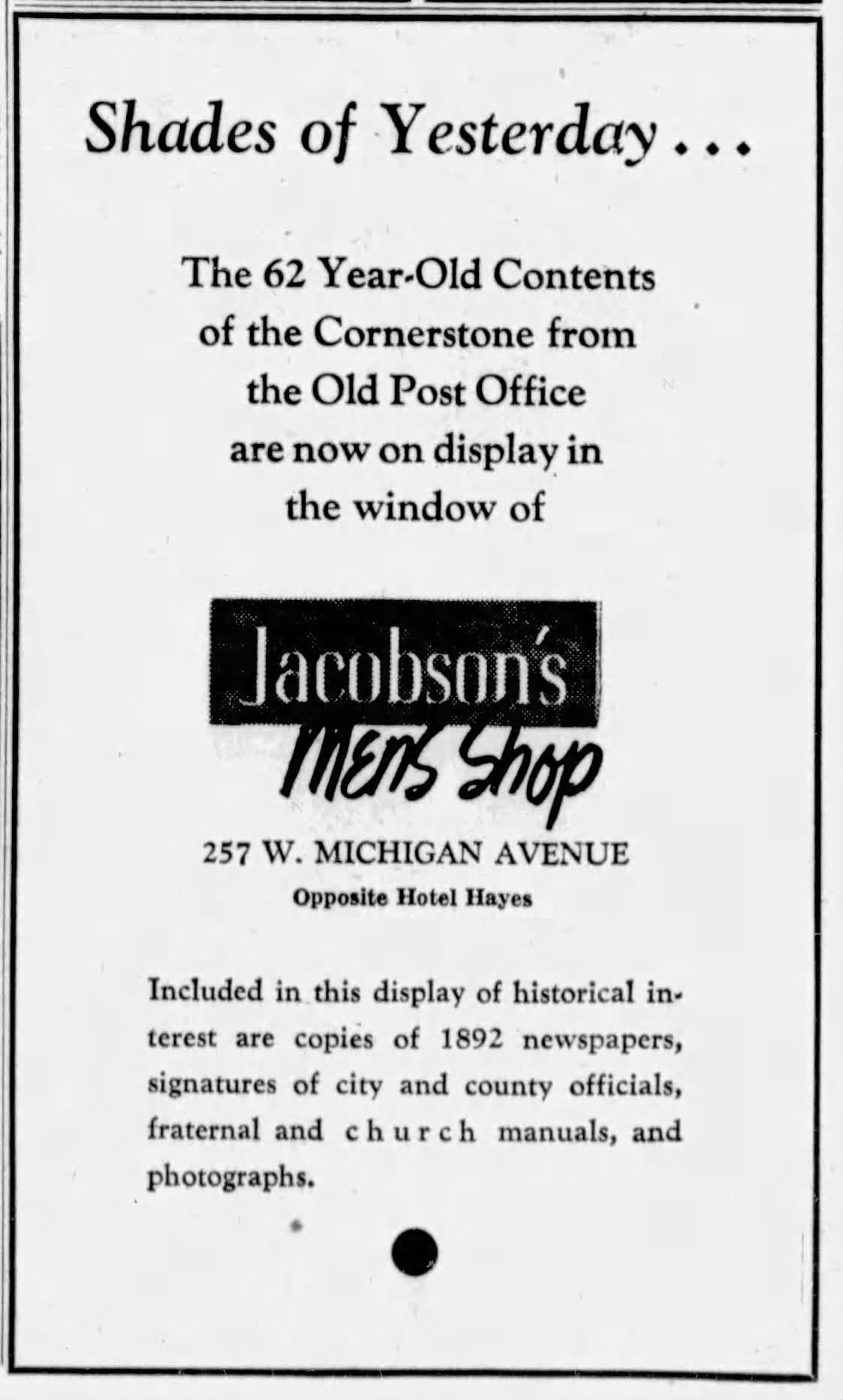
1954 articles about the contents of the cornerstone
Both the construction of the post office and—twenty years later—the factory next door struggled with the quality of soil and high water table at this site.
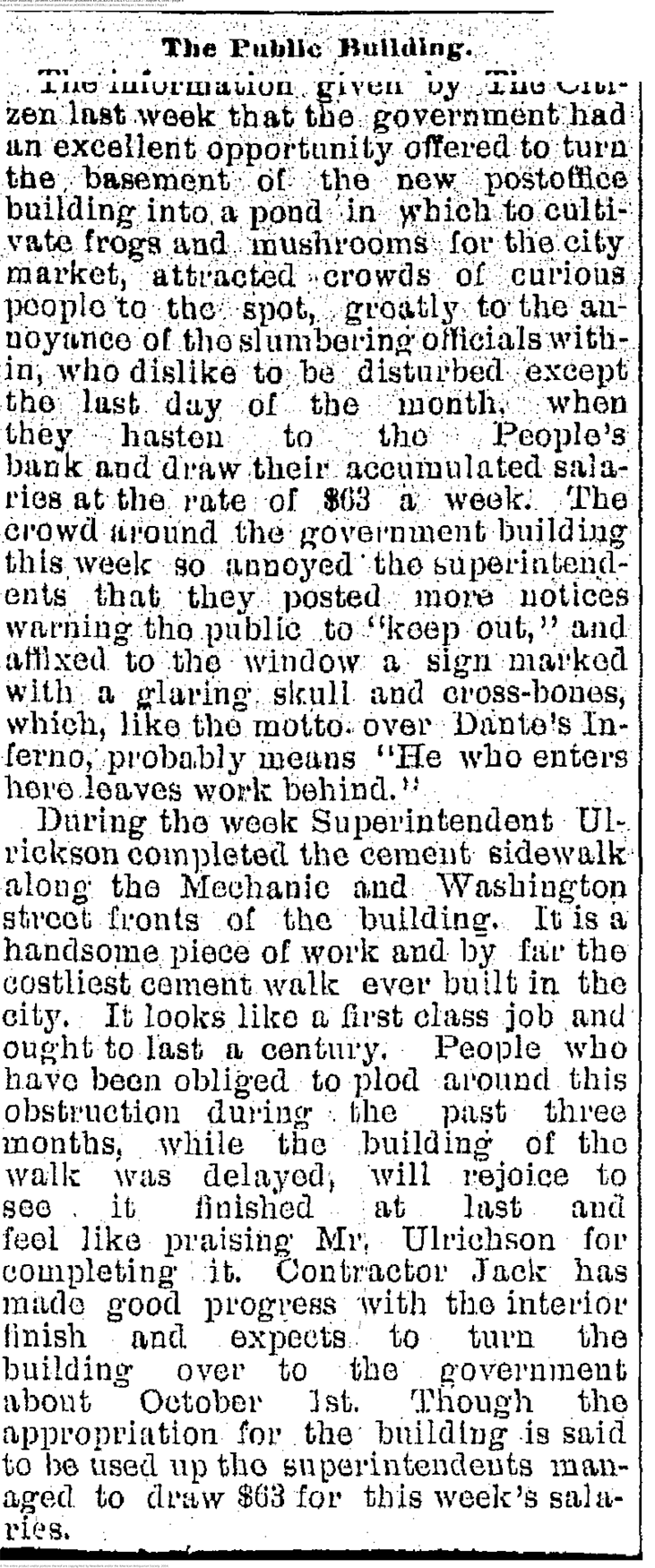
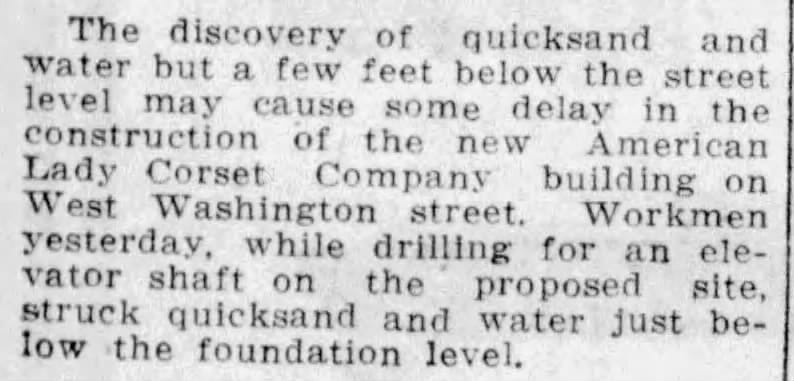
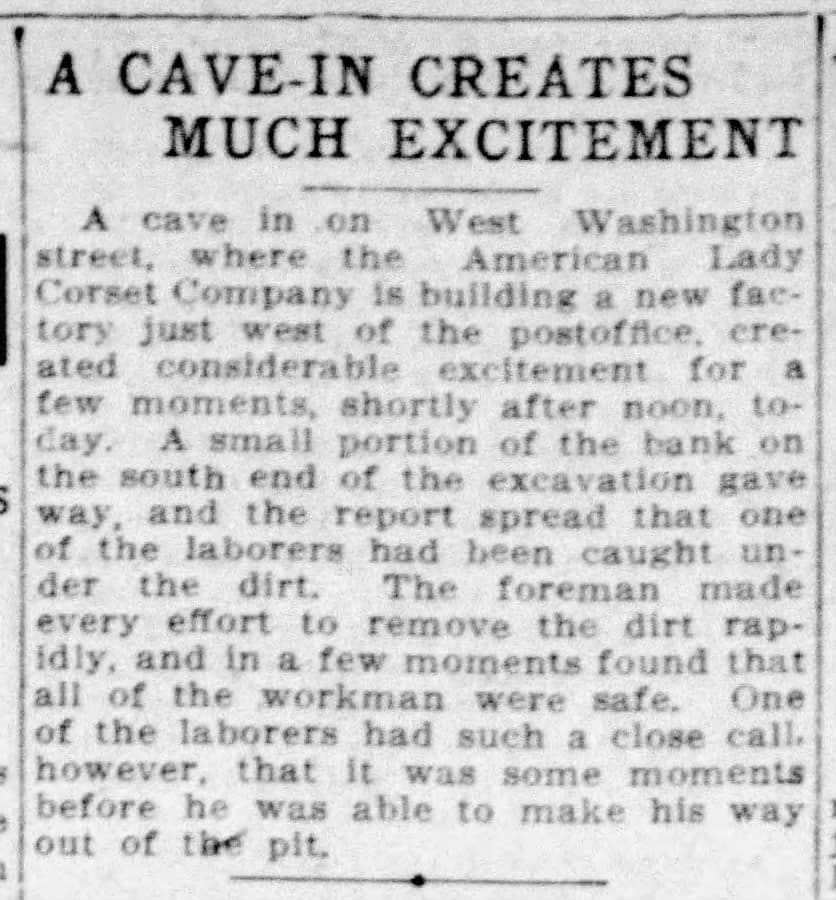
Satirical 1894 article about using the flooded basement for growing mushrooms and cultivating frogs | 1913 articles about the construction of the factory next door
Member discussion: