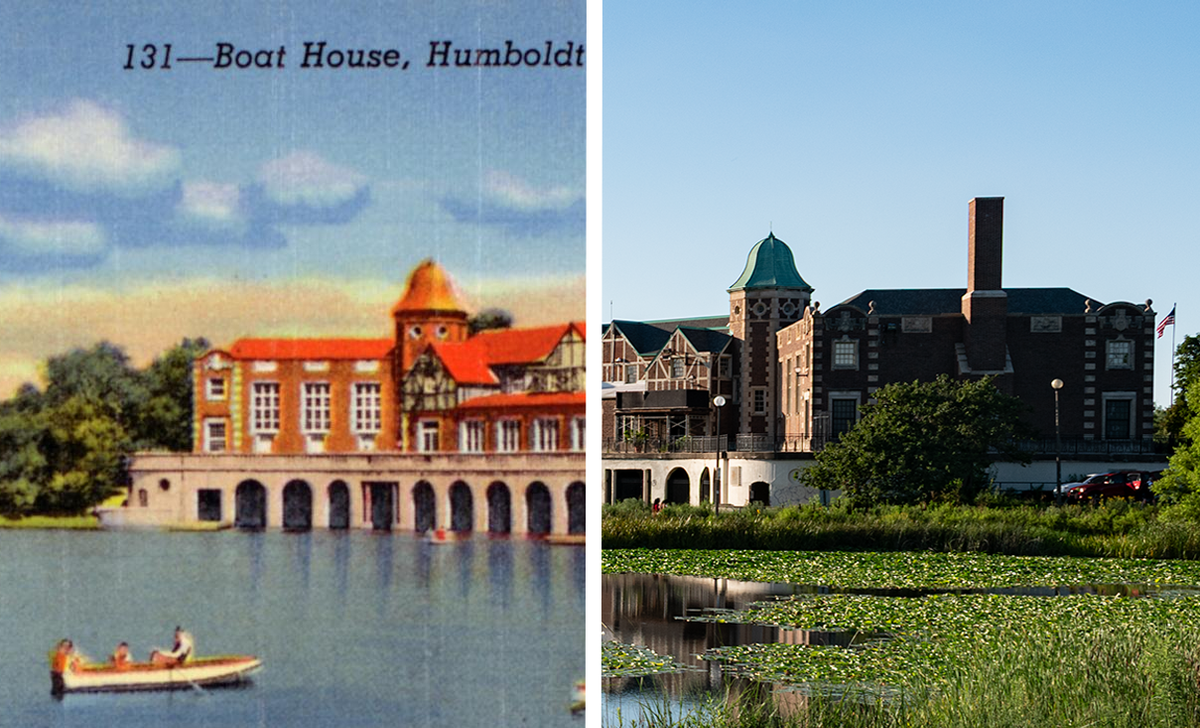
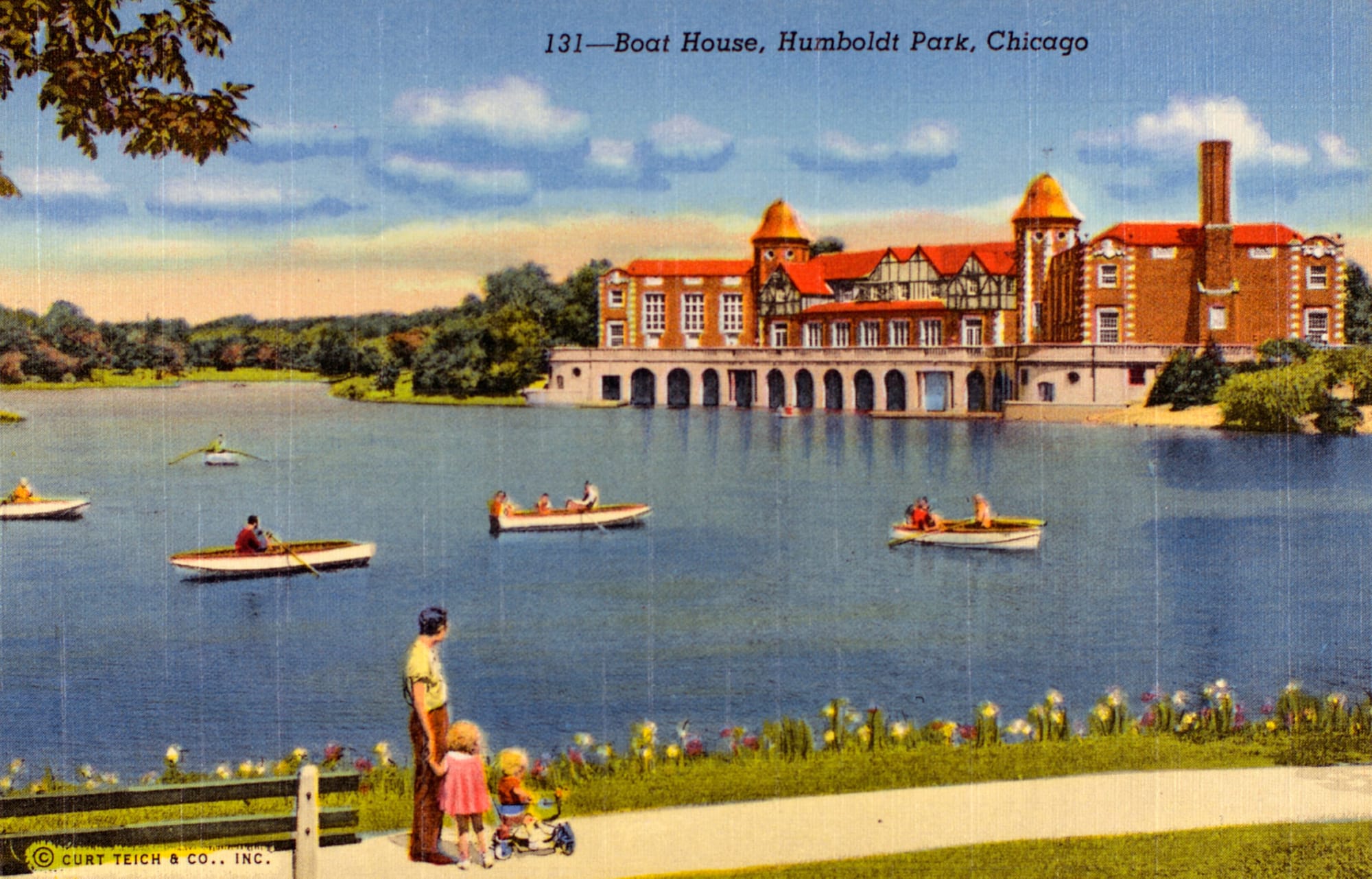
Engineered waterways and cultivated prairie, the naturalistic lagoons of Chicago’s Humboldt Park have shifted more than you may have expected over the park’s 150 years. Here, an early 2000s project added a footpath isthmus, returning this part of the lagoon to something closer to the marshy “prairie river” landscape architect Jens Jensen originally designed. Plus, while the boaters in the postcard could row their dinghies around an impressively-sized lagoon, they didn’t have any sand to frolic in—the beloved Humboldt Park Beach wasn’t installed here until 1973.
The Humboldt Park Fieldhouse and Refectory, though, has barely changed at all since it was built in 1928. Part of a clutch of West Side park buildings designed by Norwegian-American architecture duo Michaelsen & Rognstad in the late 1920s, the magazine distributor who commissioned the postcard, the J.O. Stoll Company, wasn’t familiar with the neighborhood and misidentified the fieldhouse as the park’s boathouse, which is a completely different building.
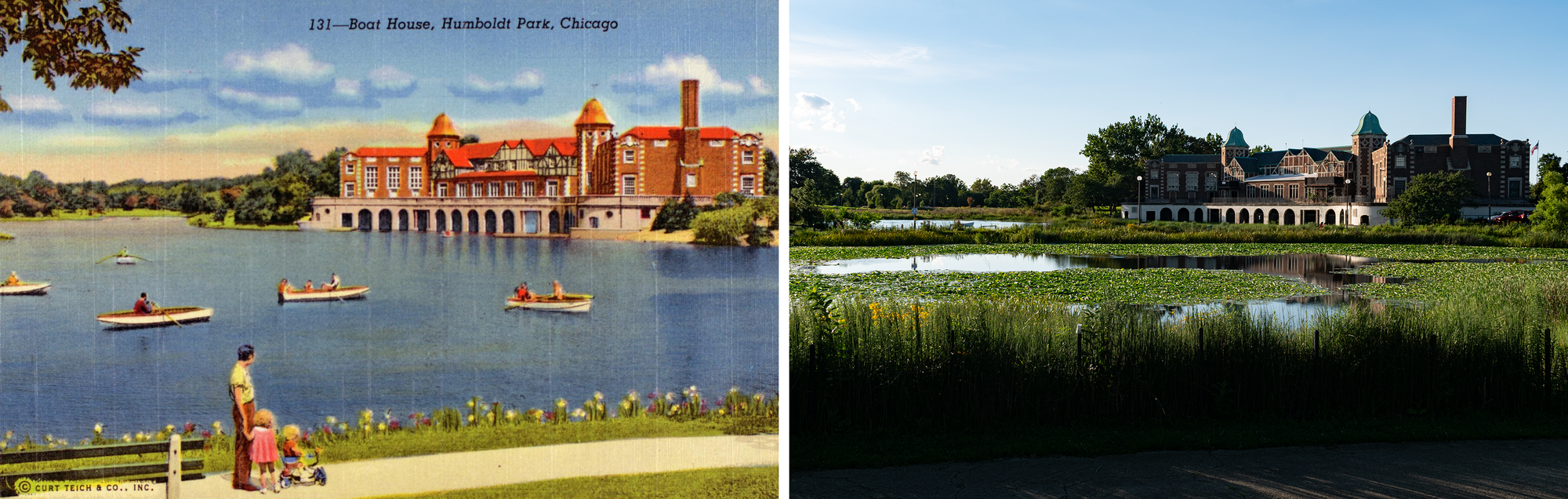
The big change here is the shifting shape and character of the lagoon, but that makes sense—a bunch of different landscape architects, gardeners, planners, and engineers have shaped Humboldt Park, from William Le Baron Jenney, the father of the modern skyscraper who first laid out the park in the 1870s, to City of Chicago Architect Jerome Butler, who coordinated the creation of the beach a century later. The most influential, though, was undoubtedly Jens Jensen, the king of Prairie Style landscape architecture, who led Chicago’s West Side Parks Commission from 1905 until 1920.
Wide horizons, layered horizontality, and native plantings, the Danish immigrant pioneered a uniquely Midwestern style, and the prairie river—muddy, marshy, and modeled off the Rock River in Northern Illinois—was Humboldt Park's most characteristically Jensen element. It opened into the wide western lagoon in the postcard, connecting under Humboldt Drive to the park’s eastern lagoon.
1938 - 2025
However, the construction of the beach in 1973 severed that connection. The push for the beach project came not from the Chicago Park District but from the mayor’s office (...smells like some kind of Boss Daley political maneuvering to me), aiming to bring the beaches of Lake Michigan to the West Side, literally. The lagoon was drained, the silt removed, sand trucked in from the beaches of the Indiana Dunes and voila—Humboldt Park had a beach. While it brought joy to the neighborhood, the beach did degrade Jensen’s prairie river—cut off from the larger system by the new beach and swimming hole, water quality in the stagnant prairie river plummeted. It also became overgrown with invasive plants—planning for ecological succession wasn't one of Jens Jensen's strongest suits, and intermittent maintenance from the Park District didn't help.
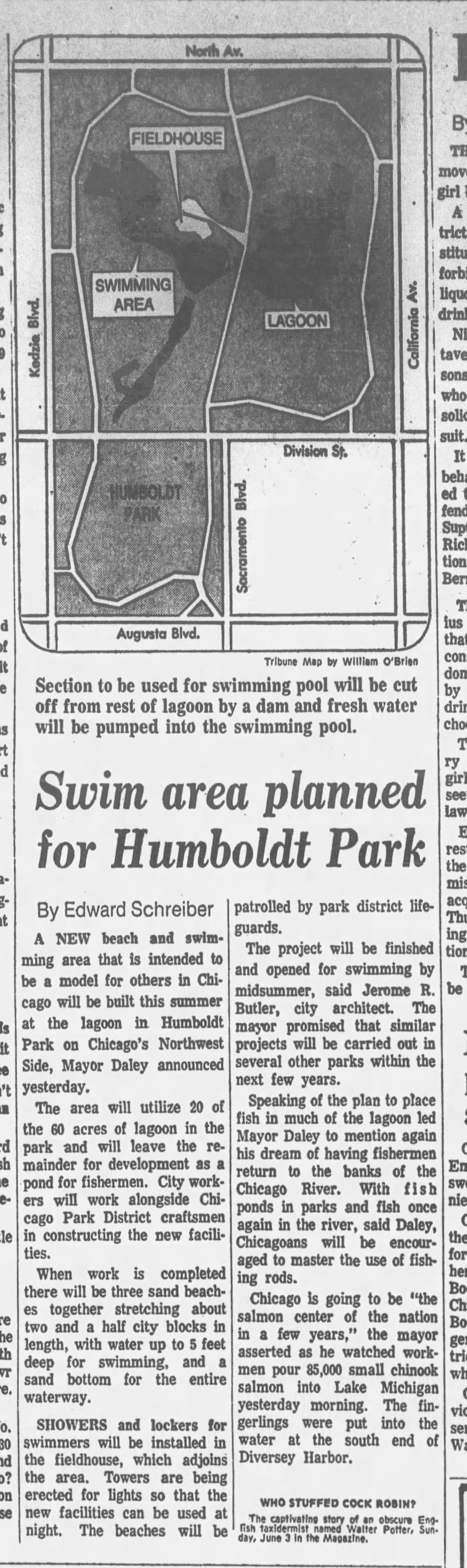
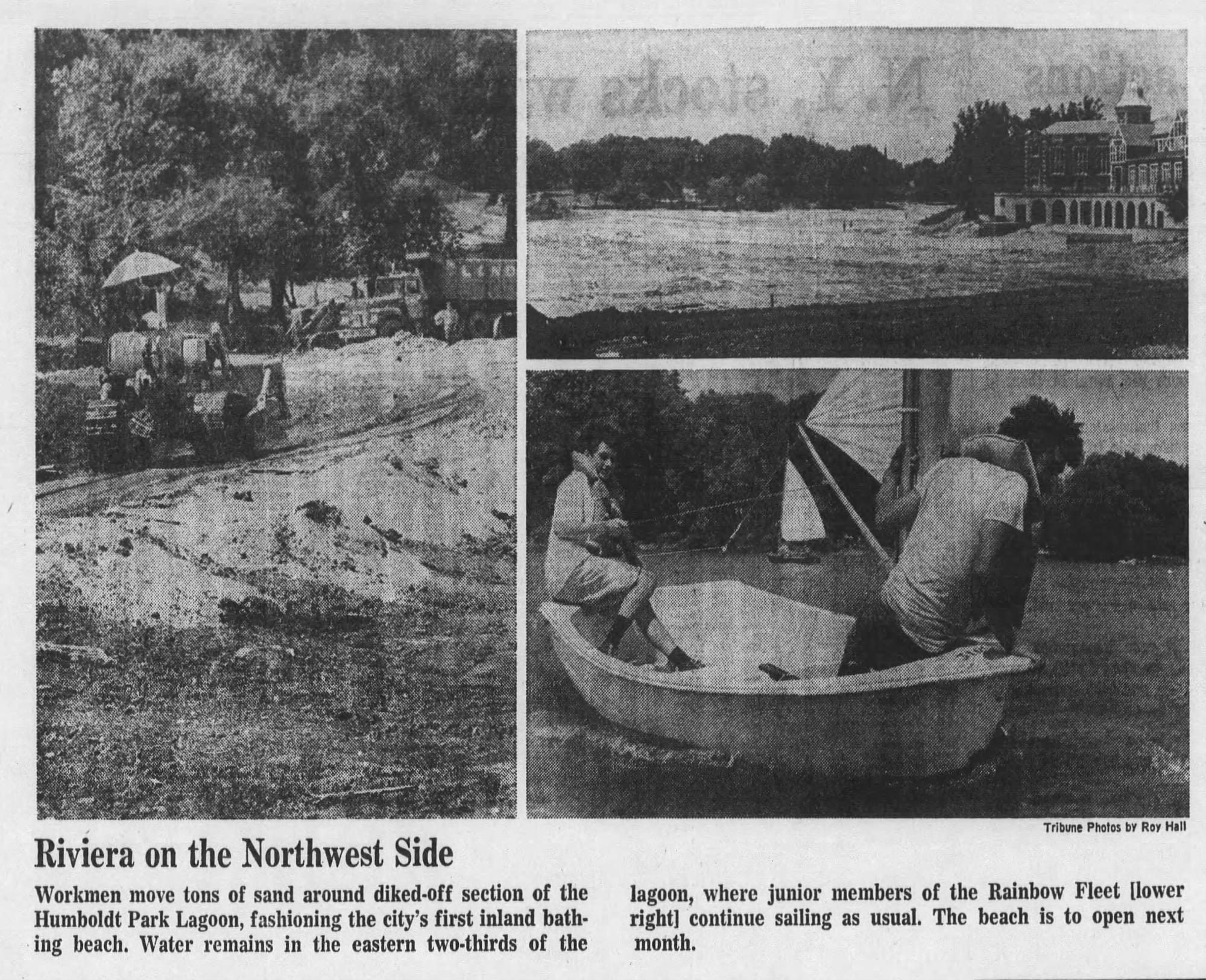
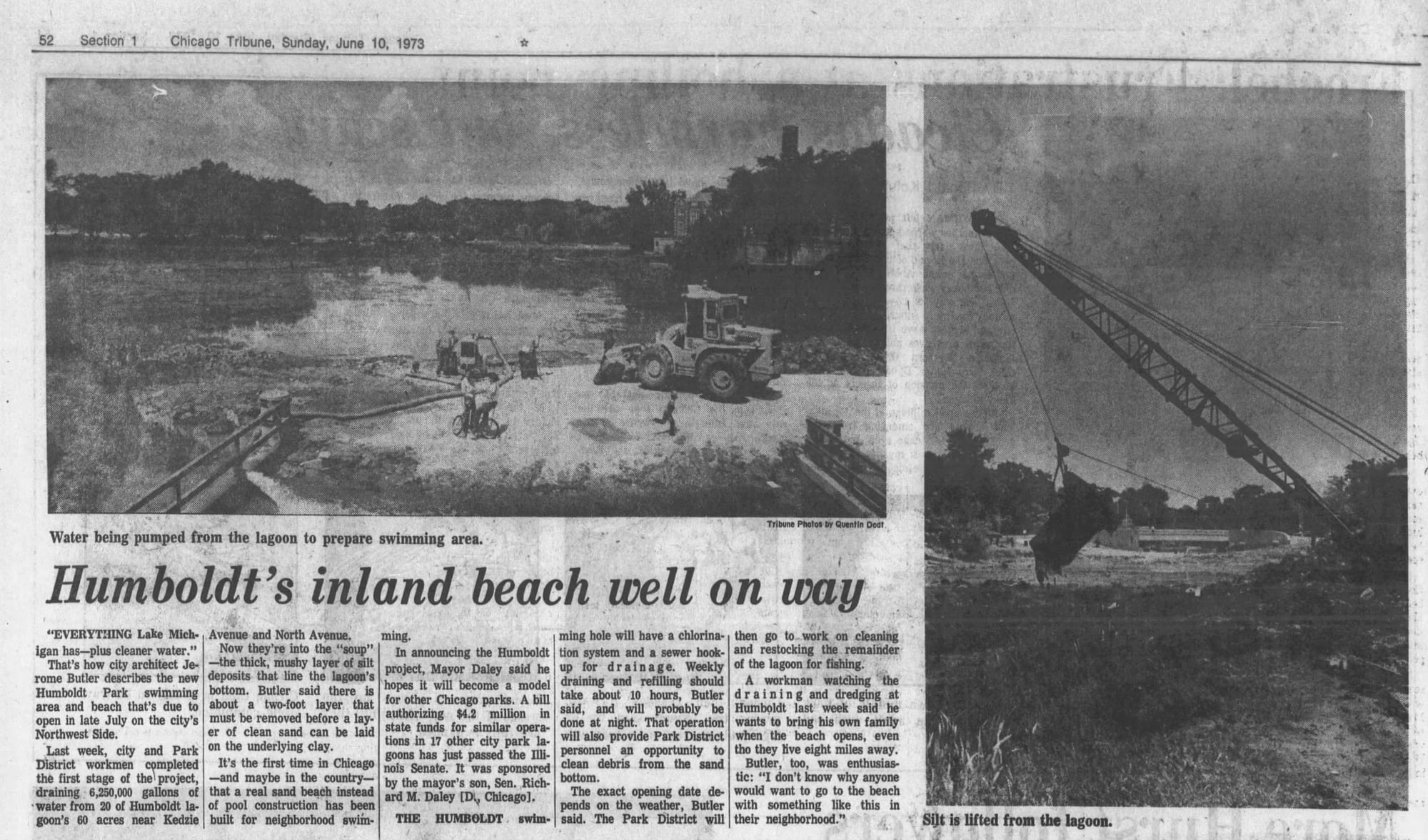
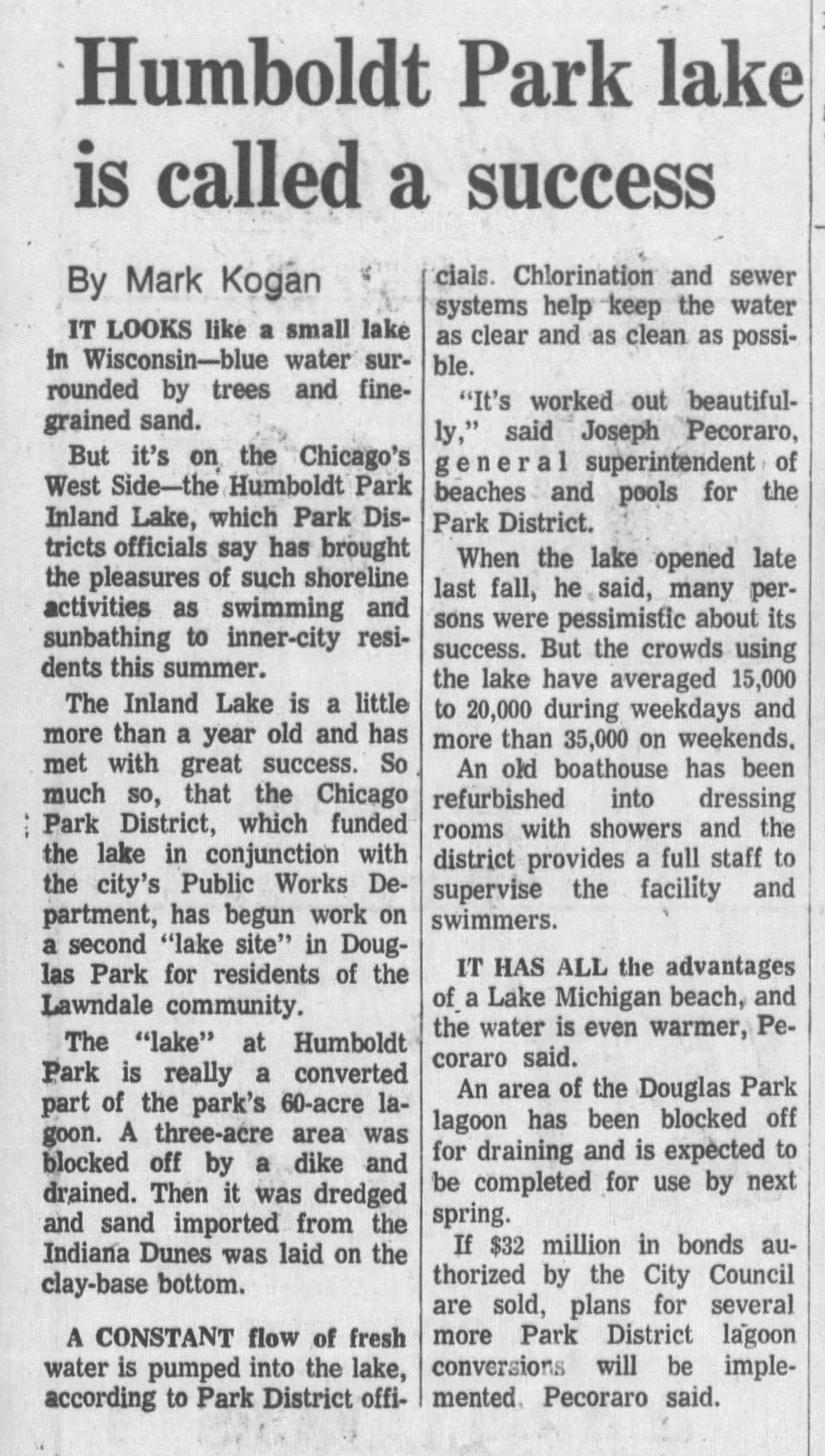


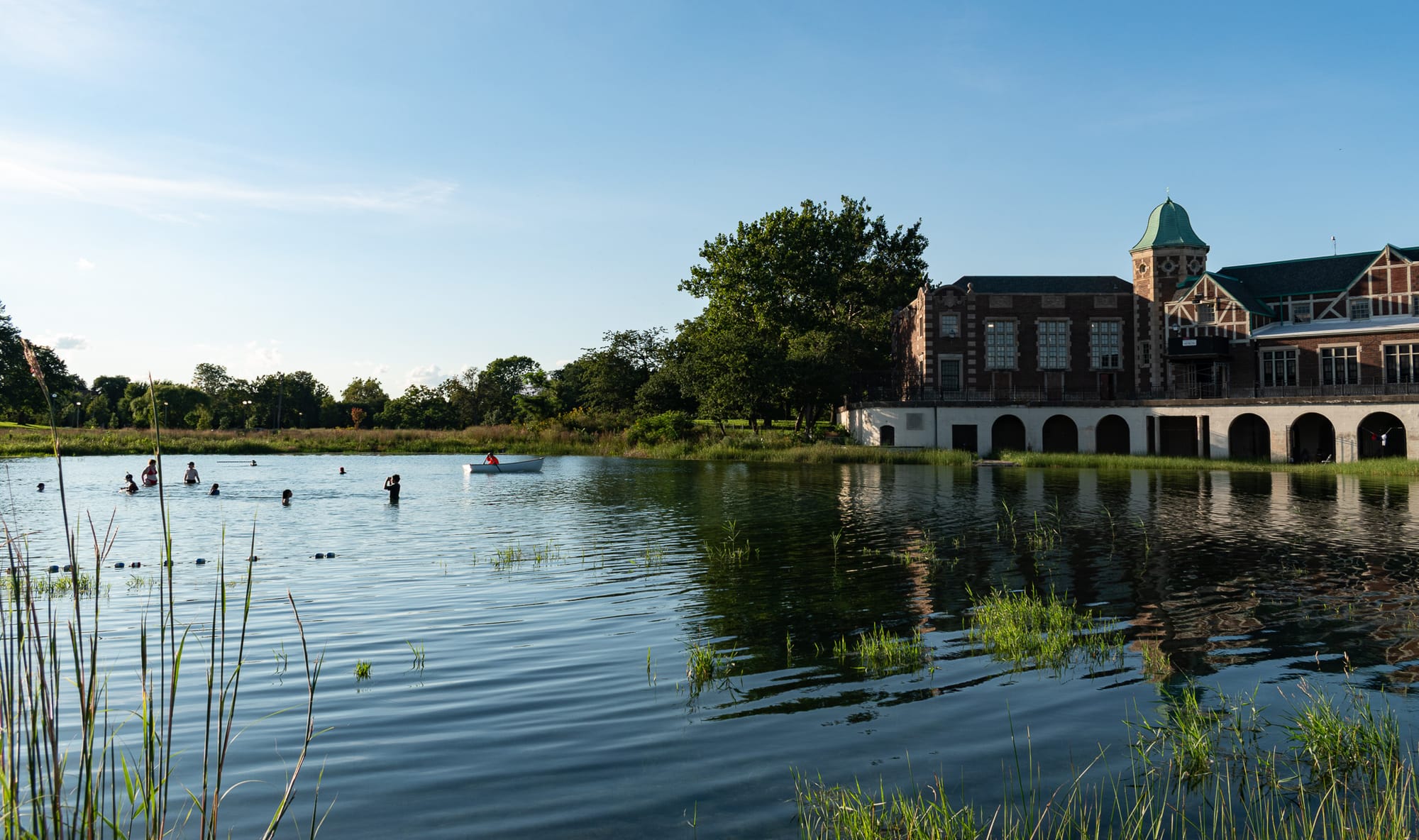
1973 and 1974 articles about the construction of the Humboldt Park Beach | 2003 and 2004 articles about the restoration of the prairie river | 2026 photo
All the waterways in Humboldt Park are artificial, and it grew expensive and ecologically damaging to pump millions of gallons of treated city water into the park’s lagoons to maintain their levels. Cutting water costs (the city spent $1m annually filling the swimming lagoon in the early 2010s) and improving ecological health became the animating goal for many of the changes to the park over the last 25 years. First with the restoration of the prairie river, reconnecting it with the east lagoon and building a footpath between it and the swimming lagoon, completed in 2004. After protests halted an attempt to close the Humboldt Park Beach in the mid-2010s, a rebuild of the beach and swimming area—splitting it into two smaller lagoons (one for people, one for waterfowl) physically separated by an earthen berm—was completed in 2016 that also aimed to reduce the pumping of water and improve ecological health. Today it's a birding hotspot, visited by green and great blue herons, red-tailed and broad-winged hawks, warblers, and buzzing insect life—those efforts have paid off.

The fieldhouse came after Jensen, as you can infer from its emphatically unprairie style. Built when Humboldt Park was a predominantly Scandinavian neighborhood (with a rapidly growing Eastern European Jewish community), it feels like we could’ve ended up with something silly, kitsch, and Norwegian here as the architects—who designed some very fun and eclectic terra cotta buildings around Chicago like the On Leong Merchants Association Building in Chinatown and the Bertini Bros. store in River North—pandered to their ethnic community.
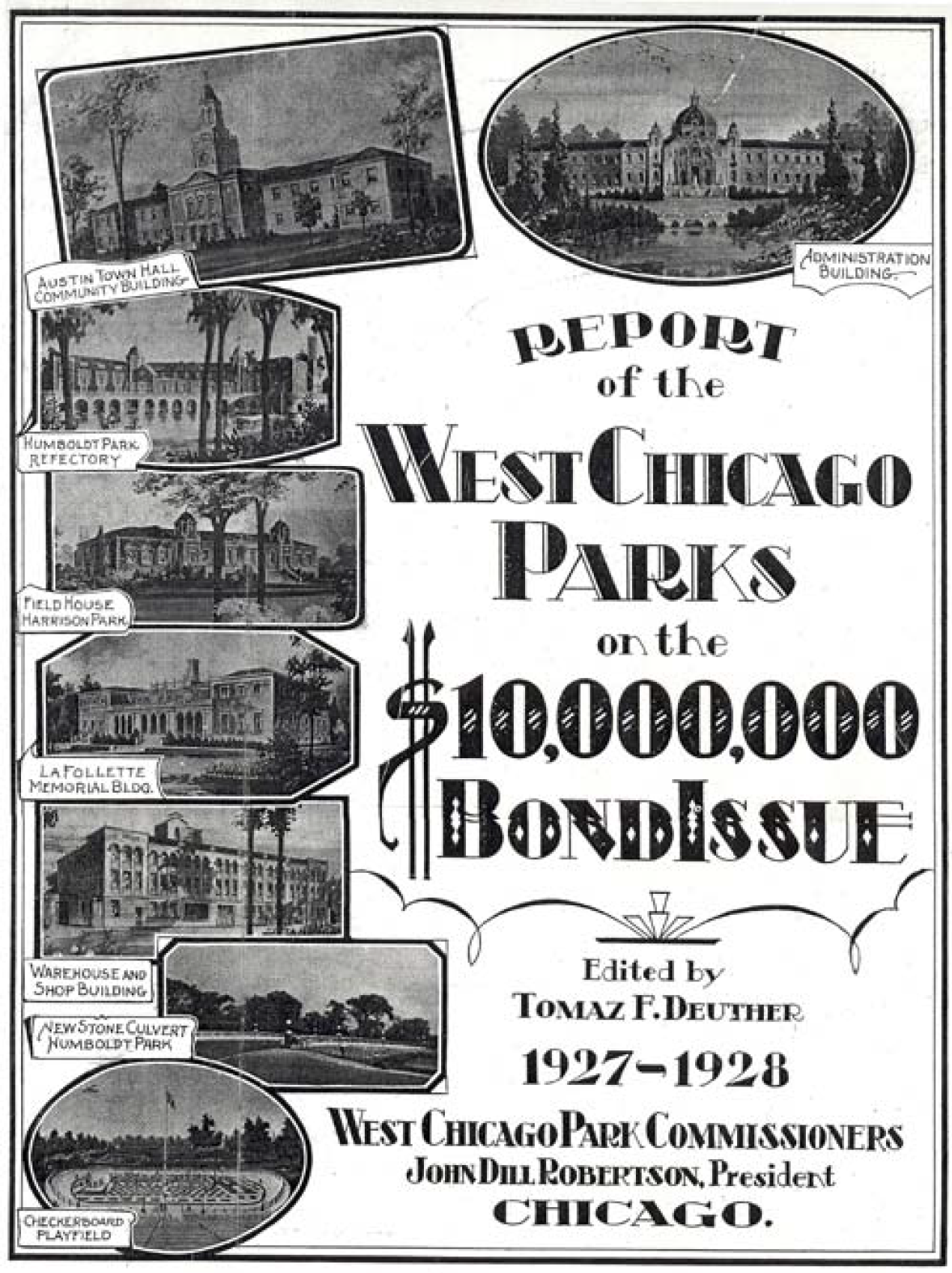
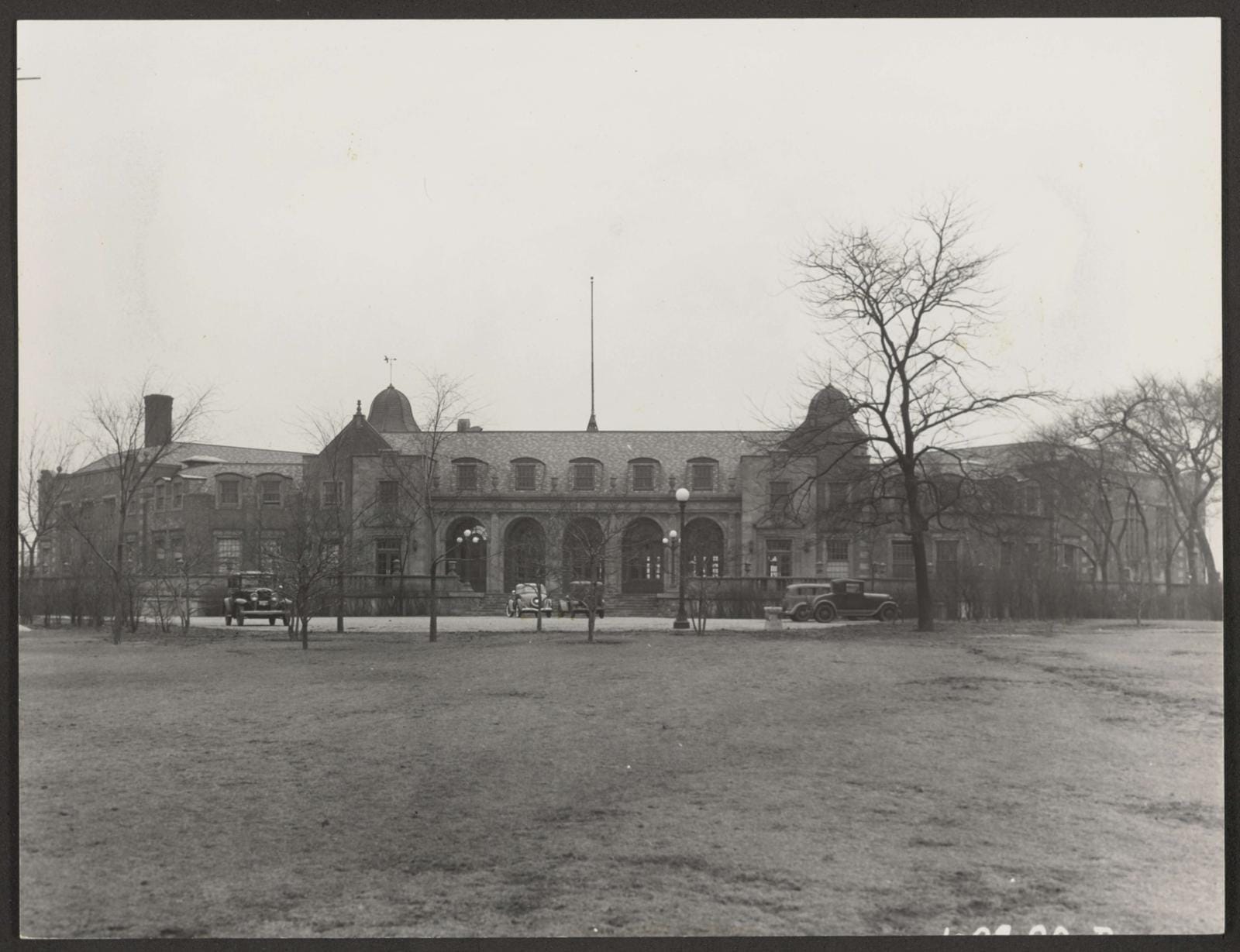
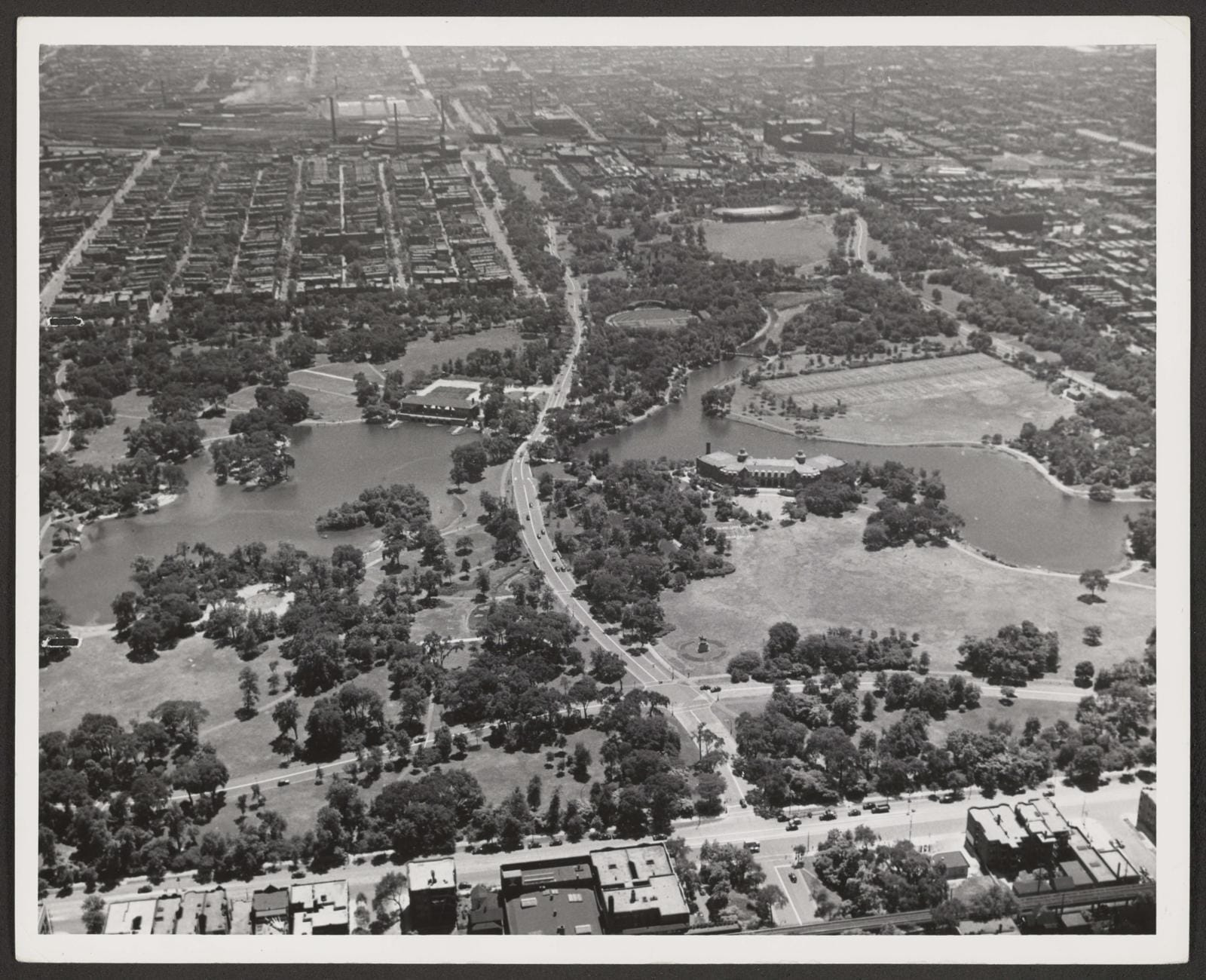
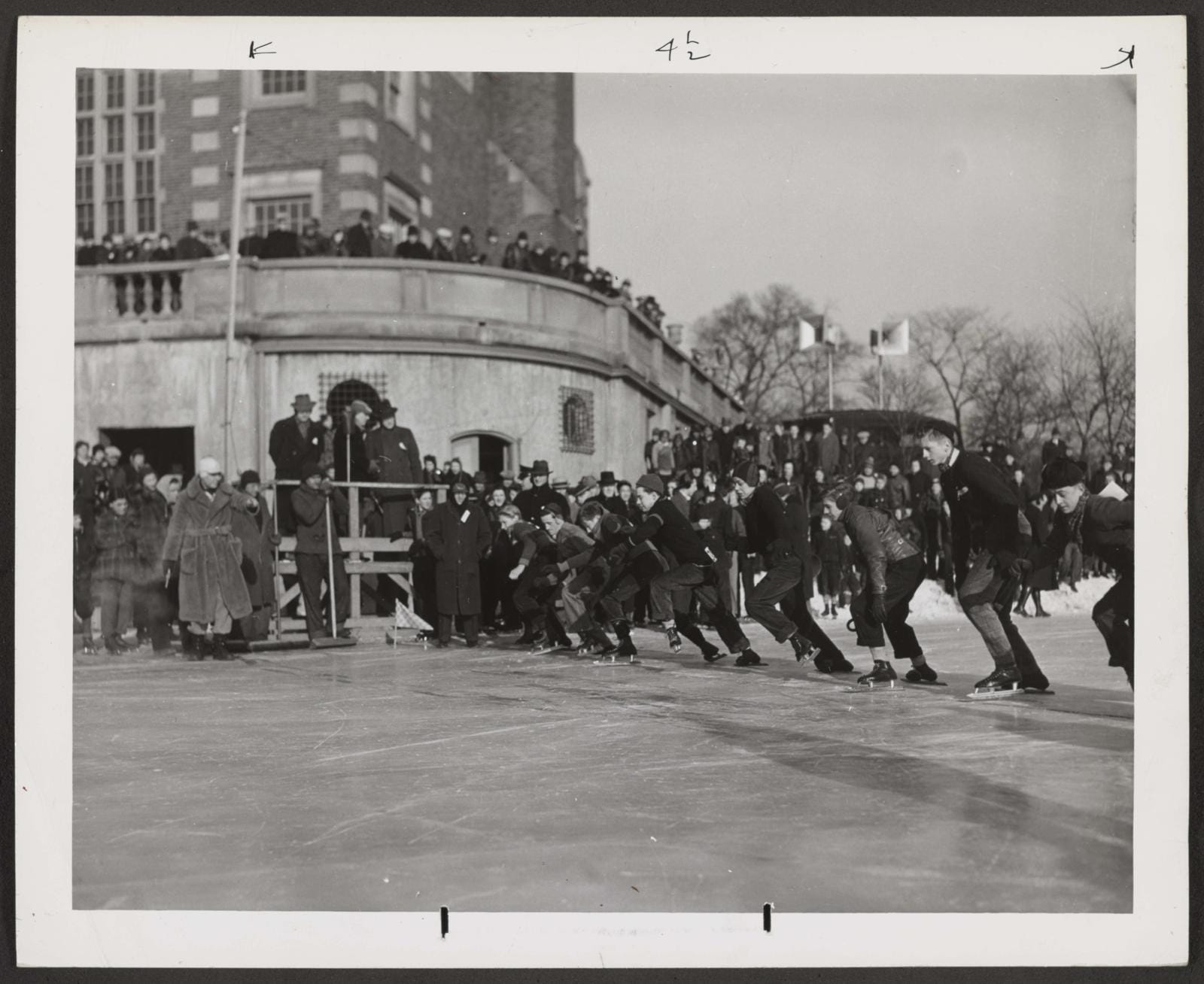
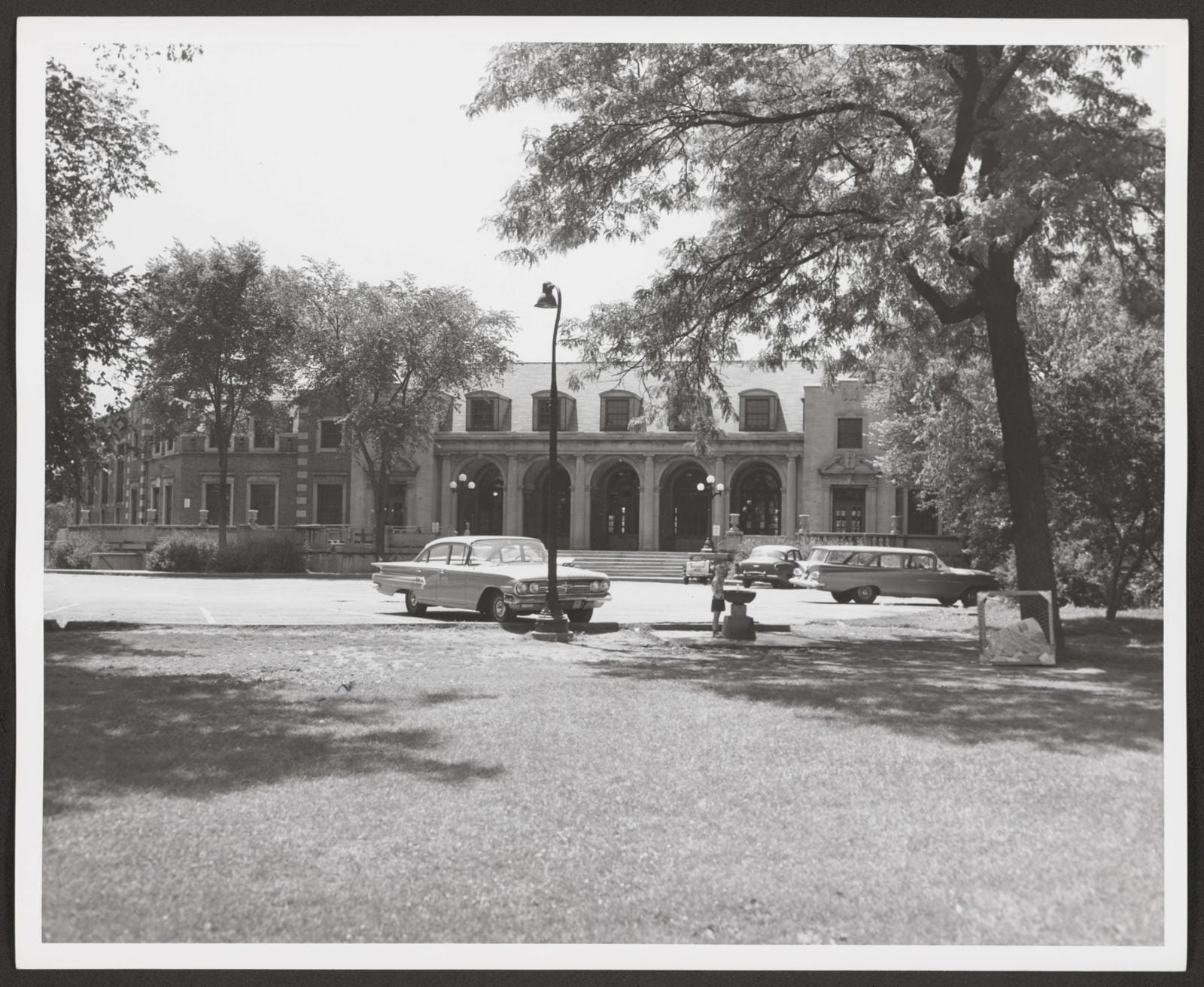
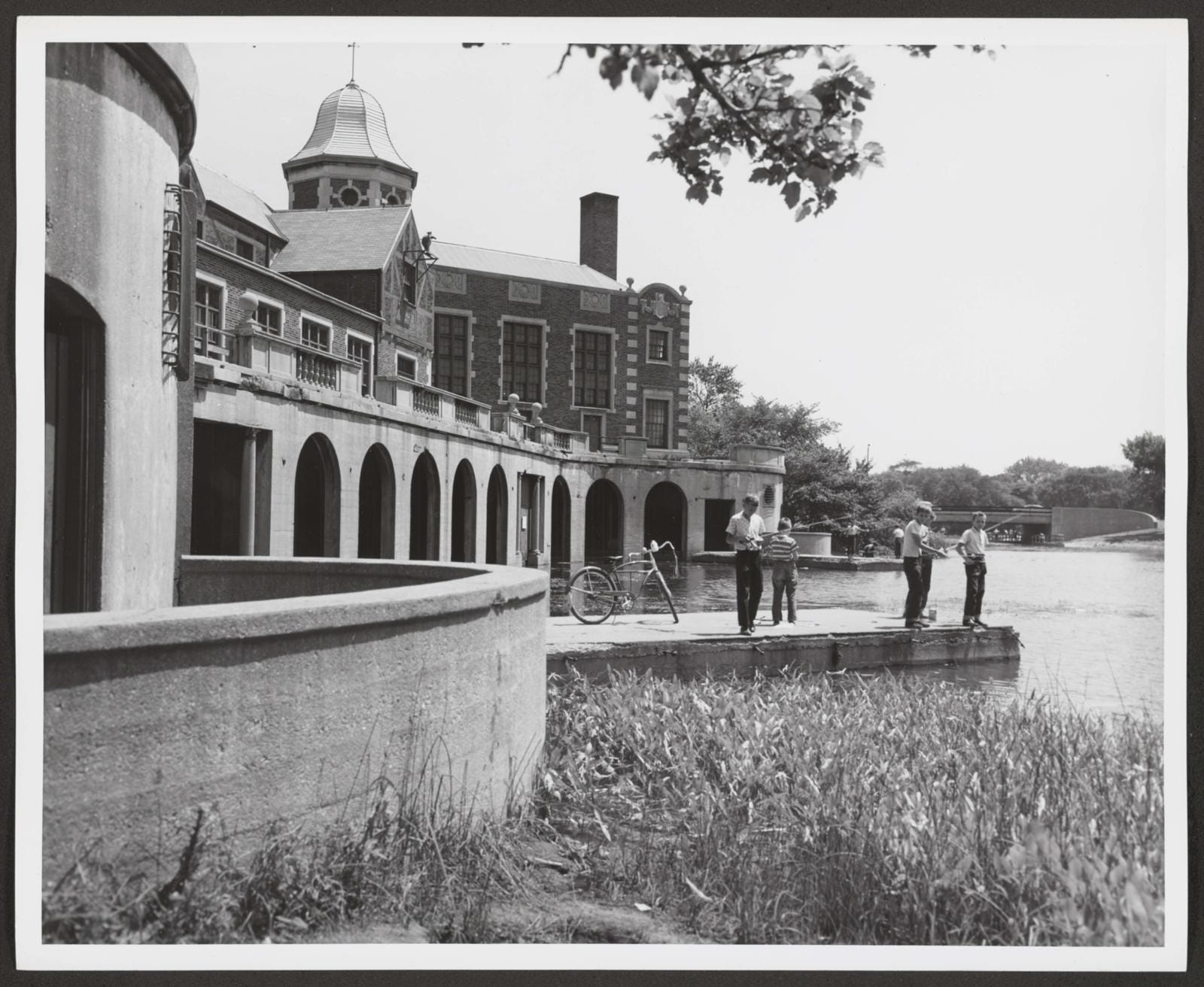
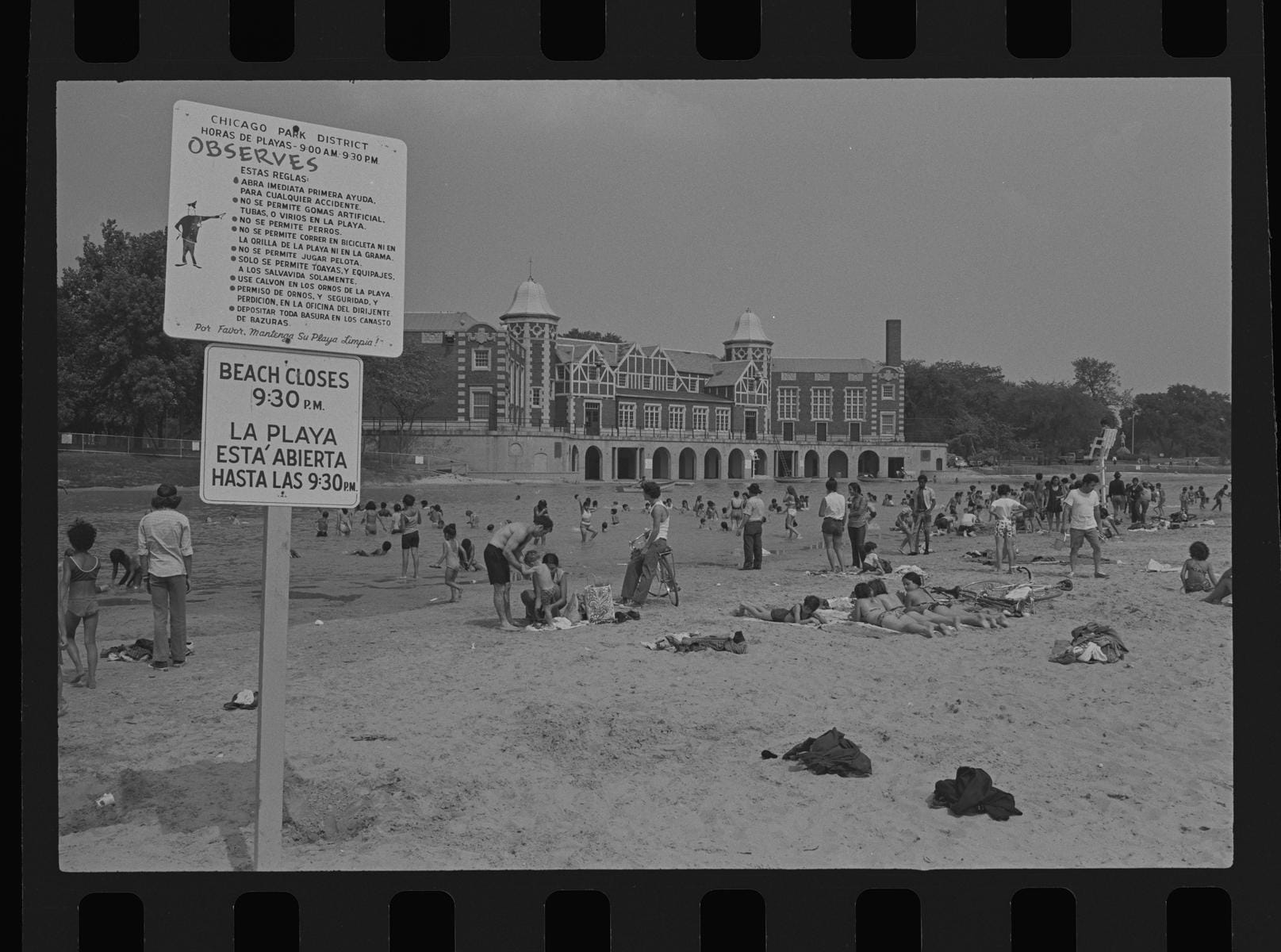
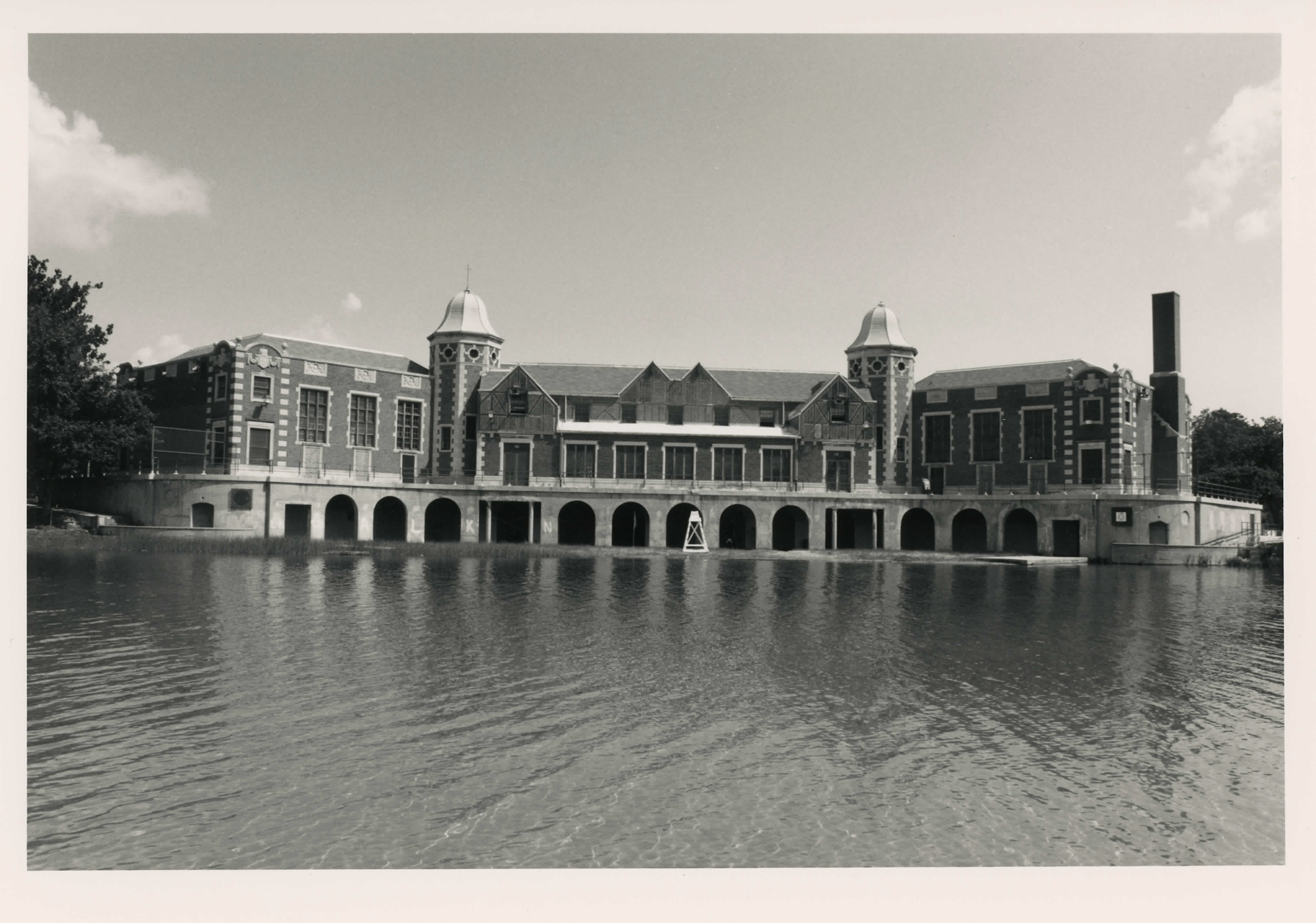
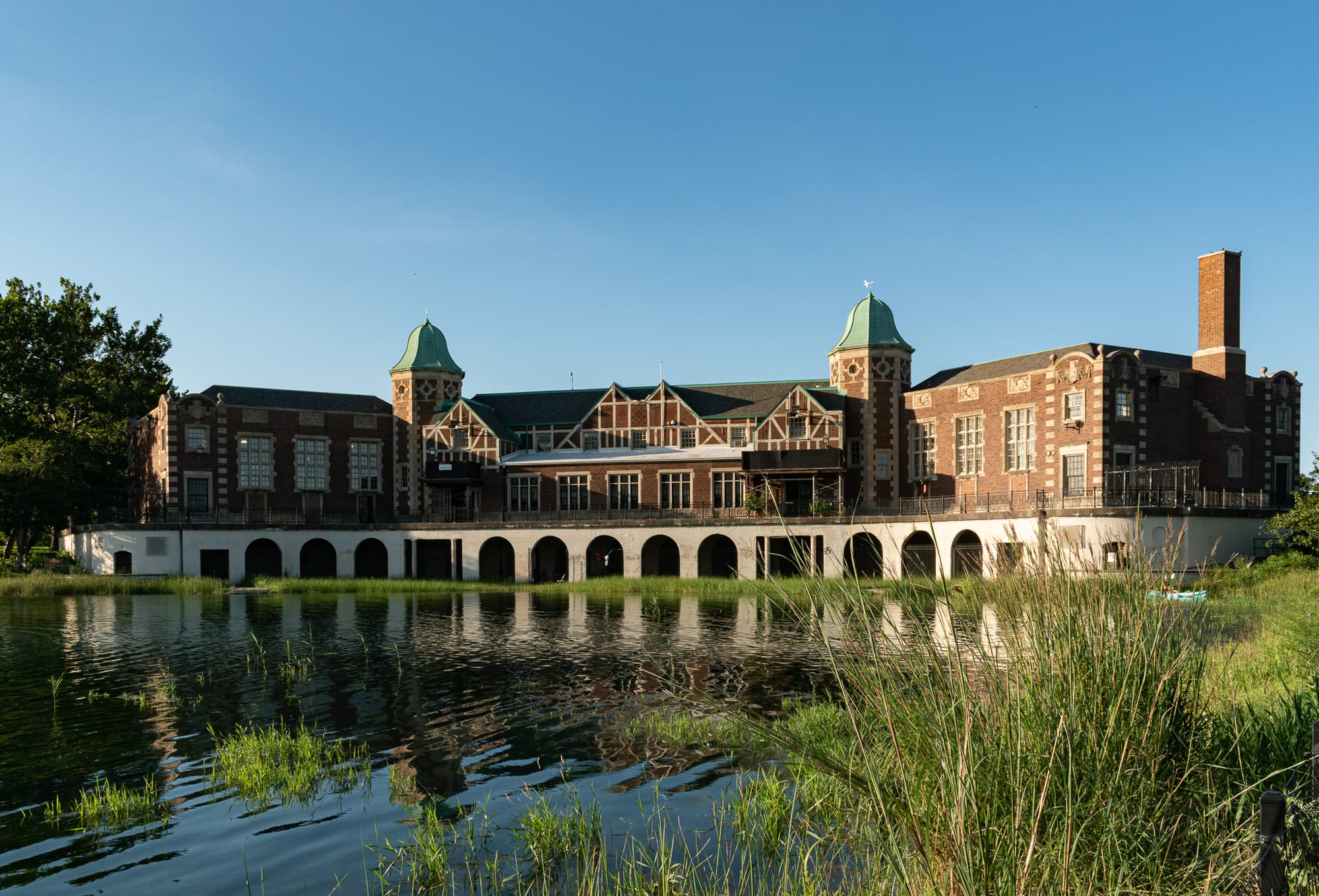
1928 bond issue | Undated, likely late 1920s/early 1930s, Chicago Public Library via Chicago Collections | 1941 aerial looking south, Chicago Public Library via Chicago Collections | Undated, ice skating, Chicago Public Library via Chicago Collections | Undated, likely late 1950s, Chicago Public Library via Chicago Collections | Undated, fishing, Chicago Public Library via Chicago Collections | 1973, Chicago Public Library via Chicago Collections | 1989, John Lee, NRHP Registration Form | 2026
Instead, though, the West Side Parks Commission made the most of their investment by using the same design for two fieldhouses—the Humboldt Park Fieldhouse has a nearly identical twin in Douglass Park, structurally the same but with Georgian Revival decoration swapped in for Humboldt’s Tudor Revival. The Humboldt Park Beach was intended to be the first of many swimming lakes in neighborhood parks, but only one other was built...fittingly, outside the Humboldt Park Fieldhouse's twin in Douglass Park.
Production Files
Further reading:
- Humboldt Park NRHP Registration Form
- "Prairie Style of Landscape Gardening" by Wilhelm Miller
- "Jens Jensen: Landscape Architect" by Ragna Bergliot Eskil
 Julia Bachrach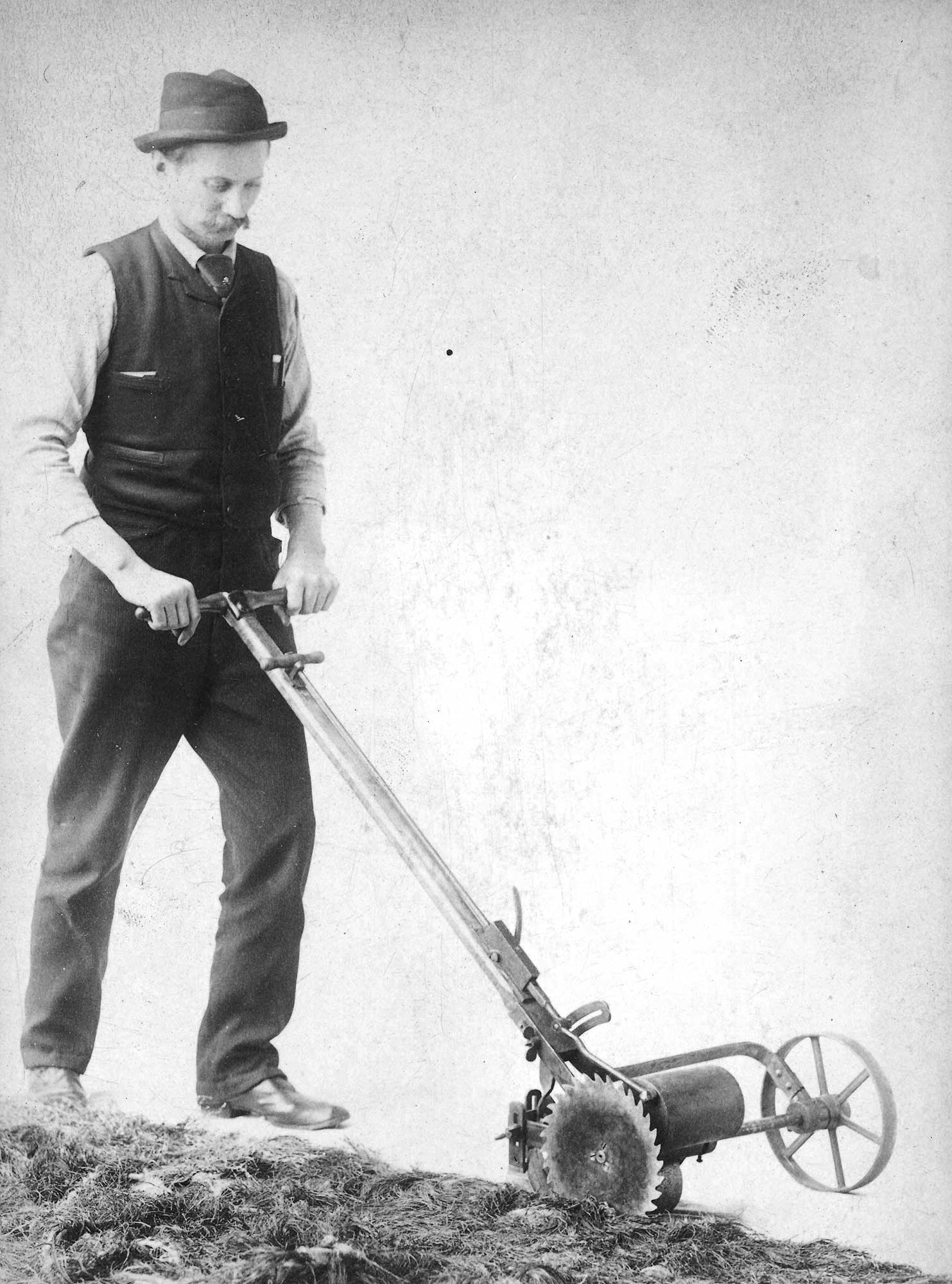
 Julia Bachrach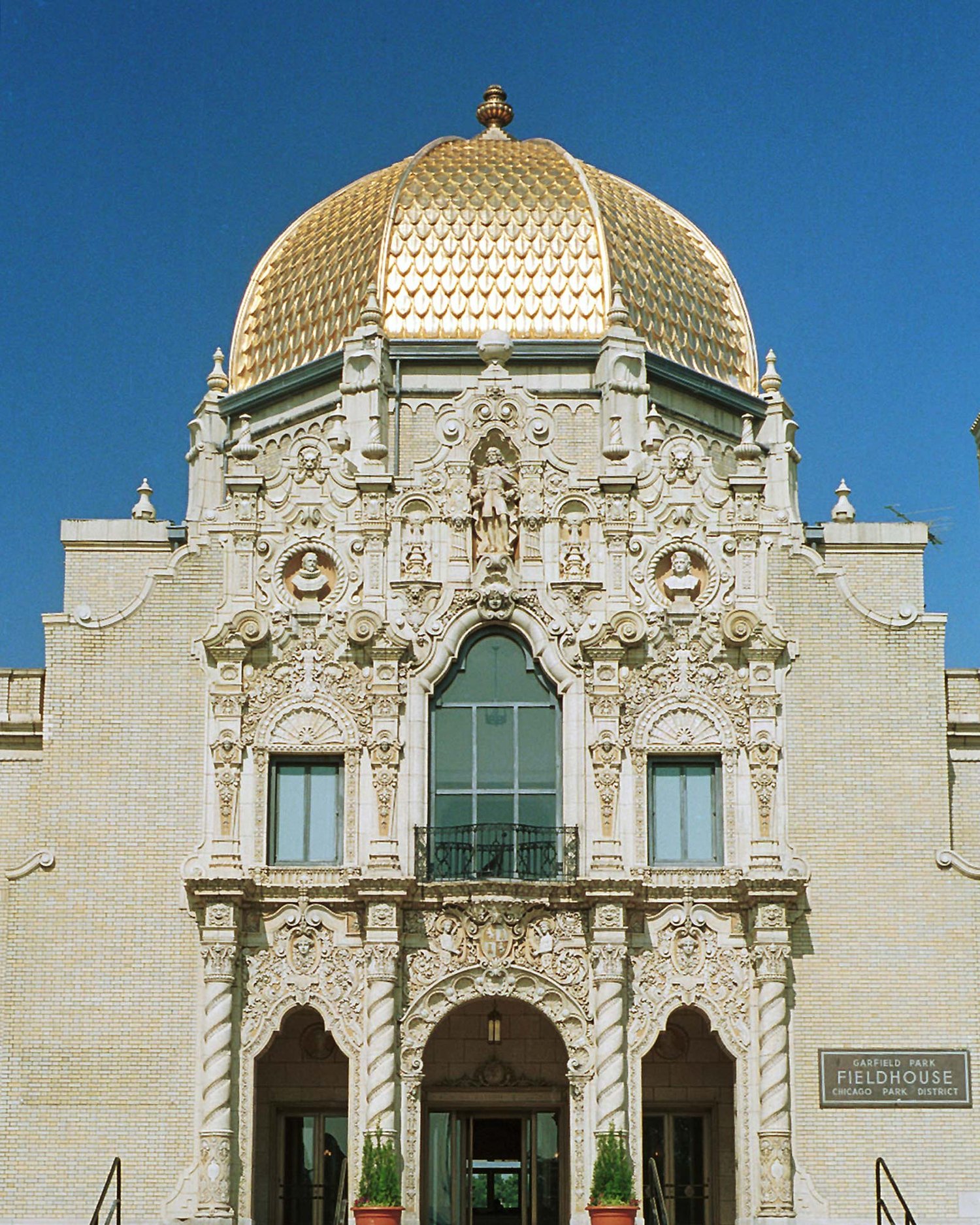
 Julia Bachrach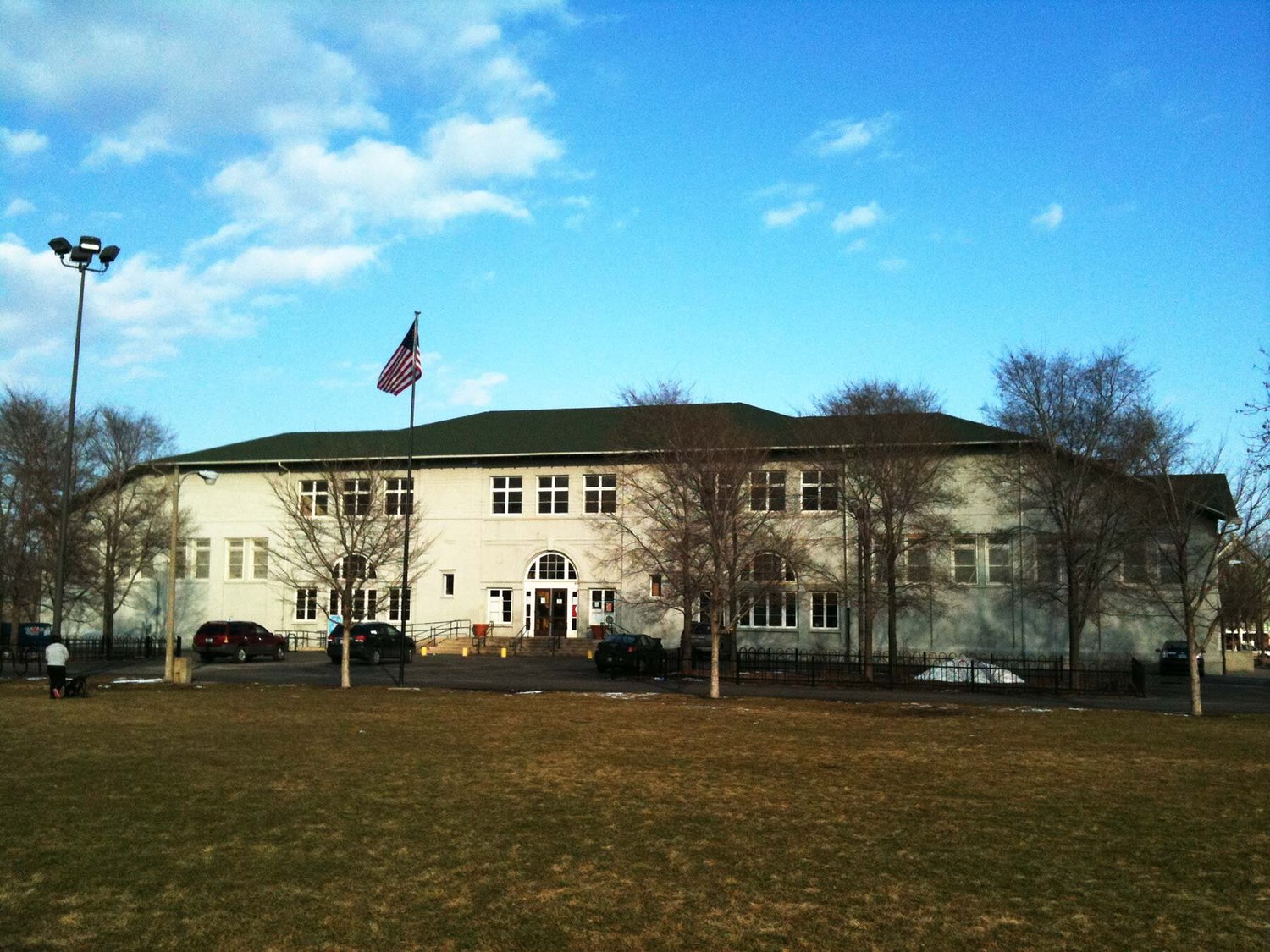
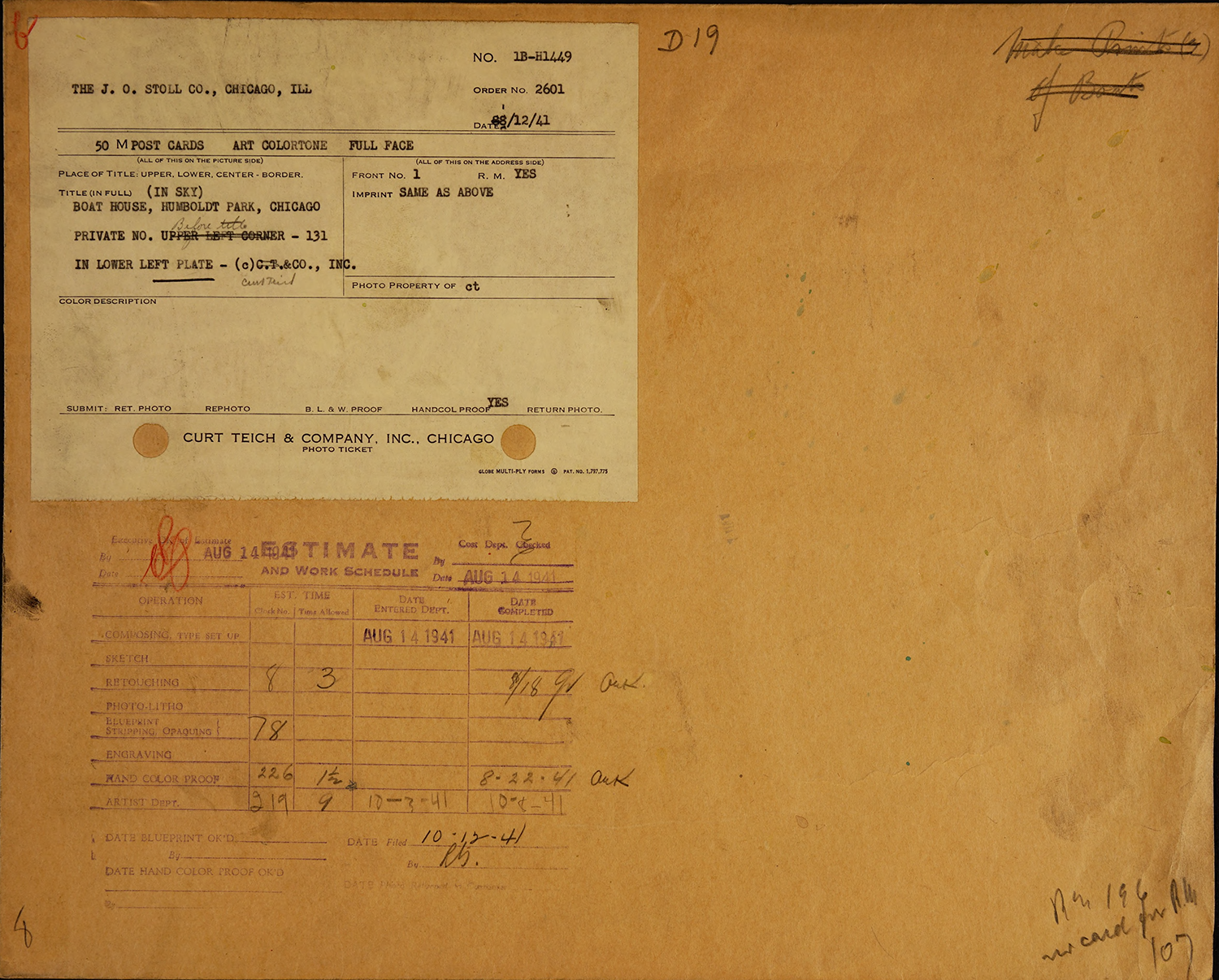
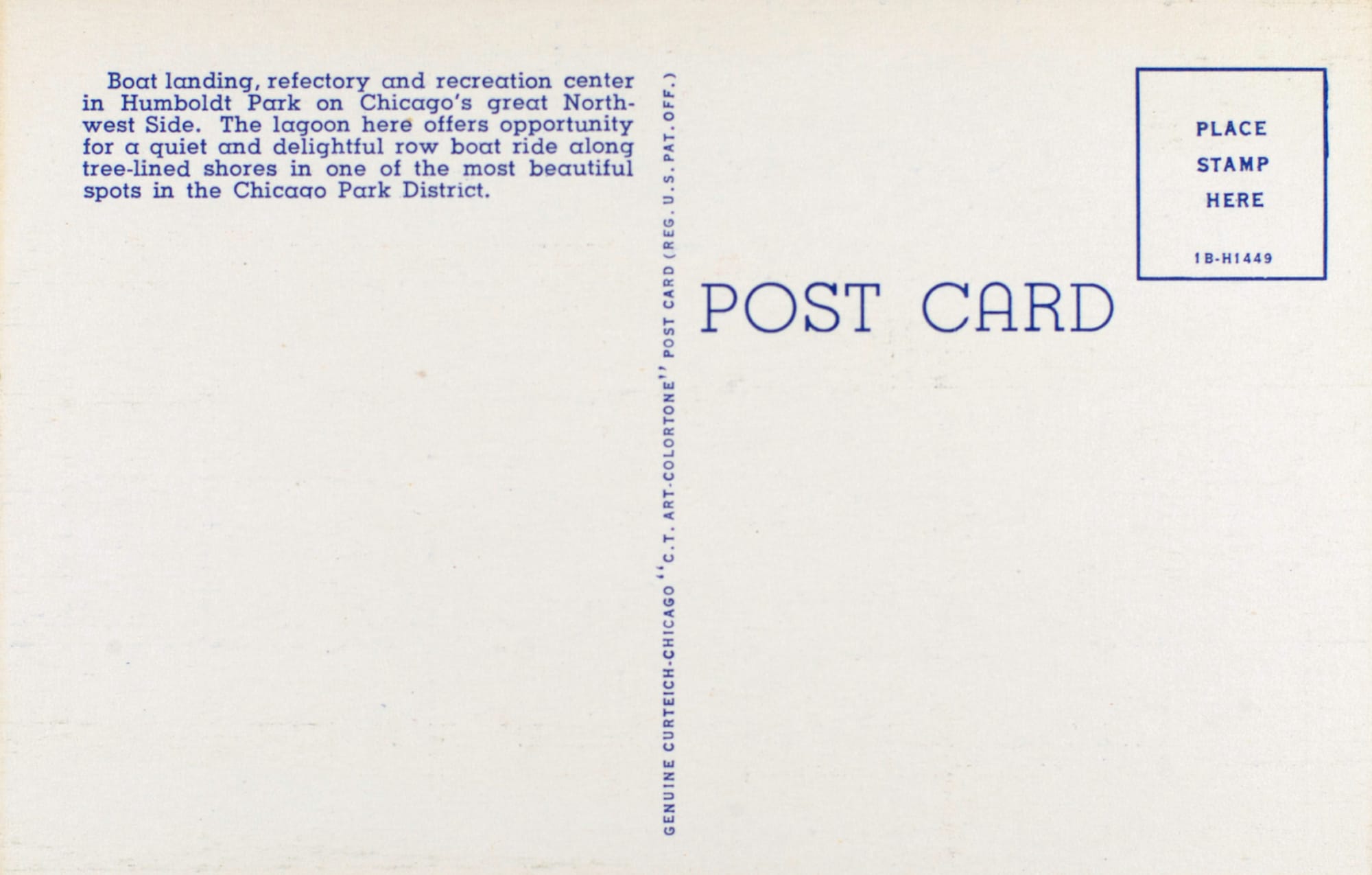
The production file in the Curt Teich Postcard Archives at the Newberry Library wasn't especially rich for this, but it did have a production envelope with a work schedule on it. This 50,000 postcard order by magazine distributor J.O. Stoll Co.—presumably would be hawking them as souvenirs in newsstands—took roughly two months to produce in 1941, going through the composing, retouching, blueprint stripping/opaquing, hand color proof, and artist department.
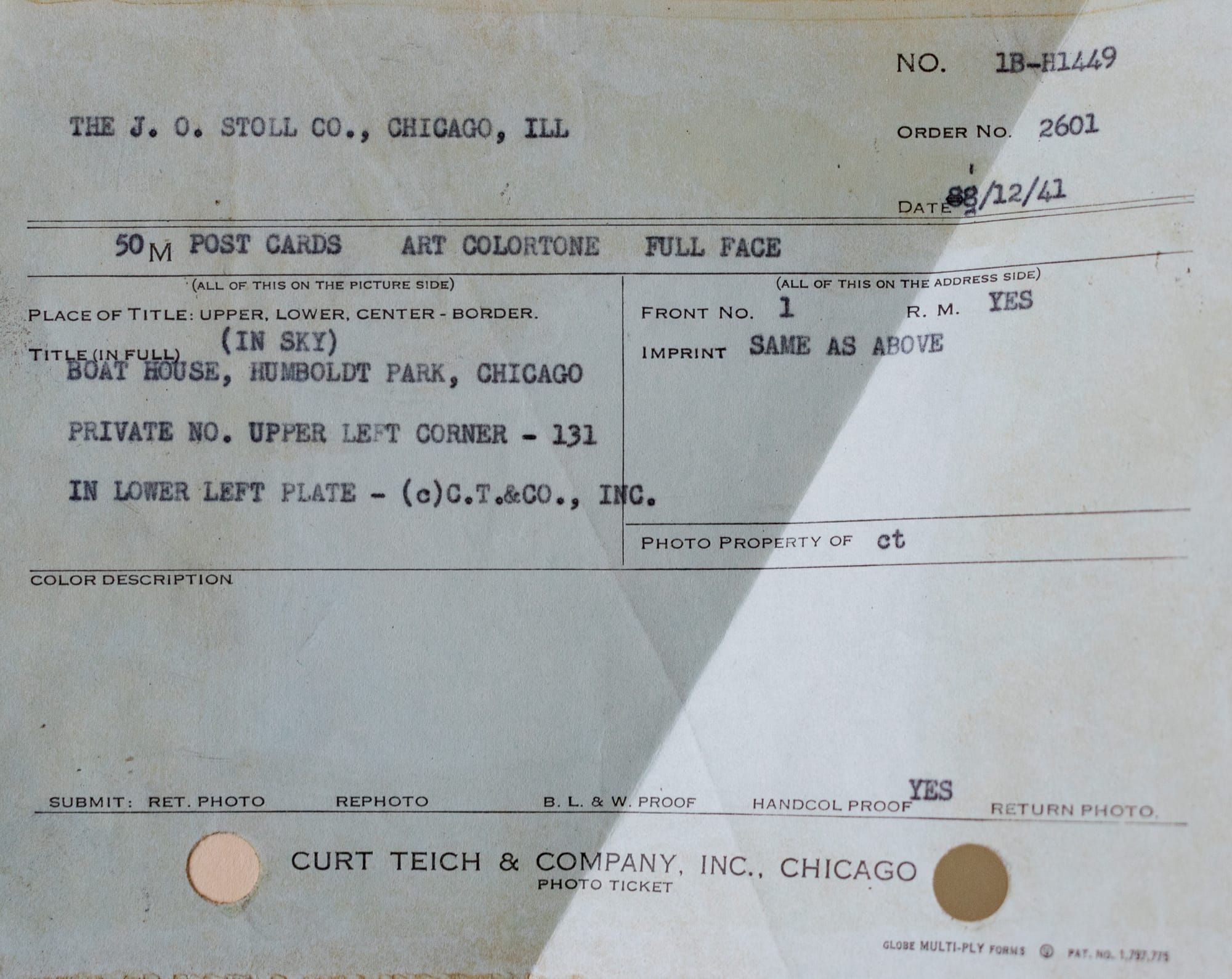
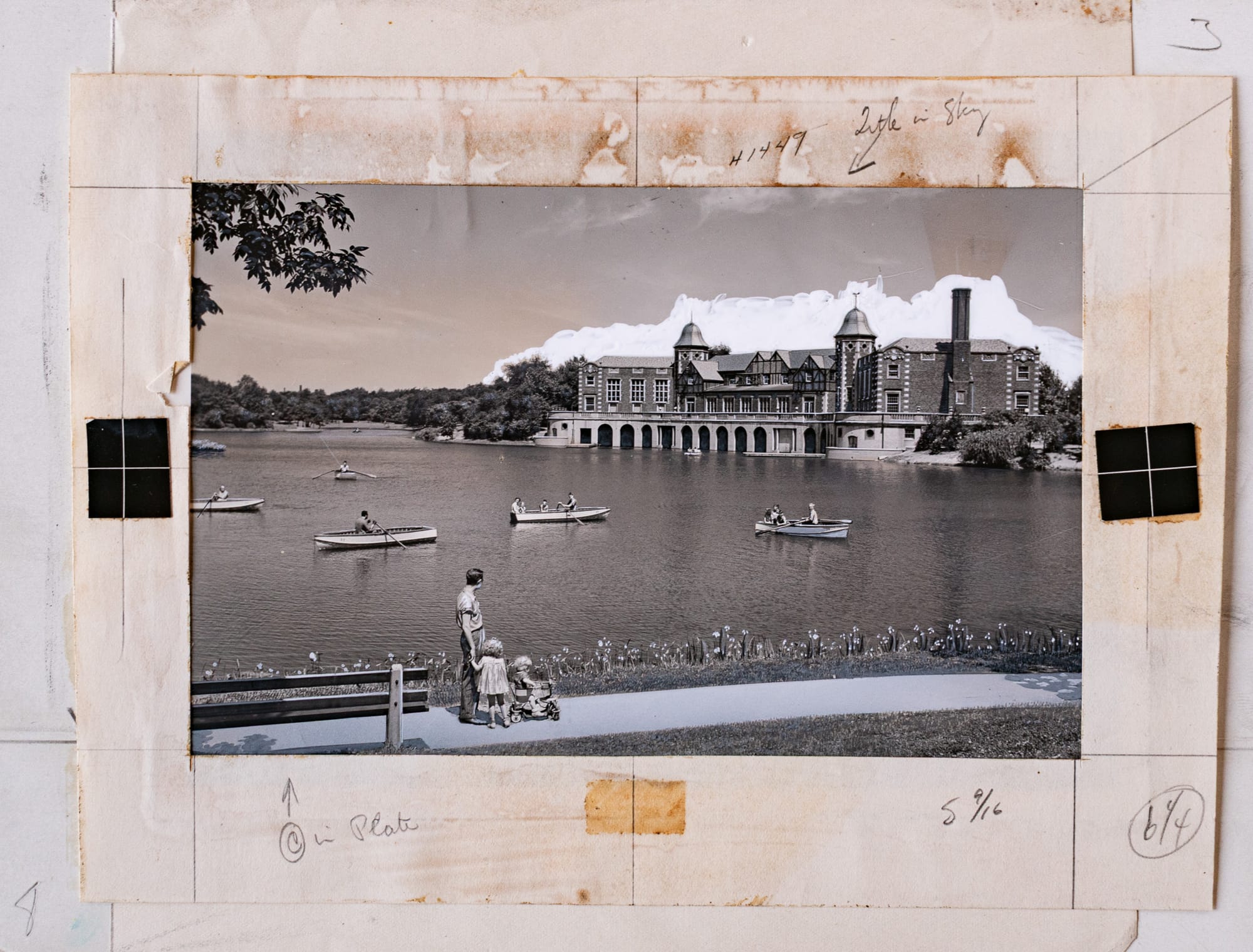
You can see what the retouching department airbrushed and sharpened.
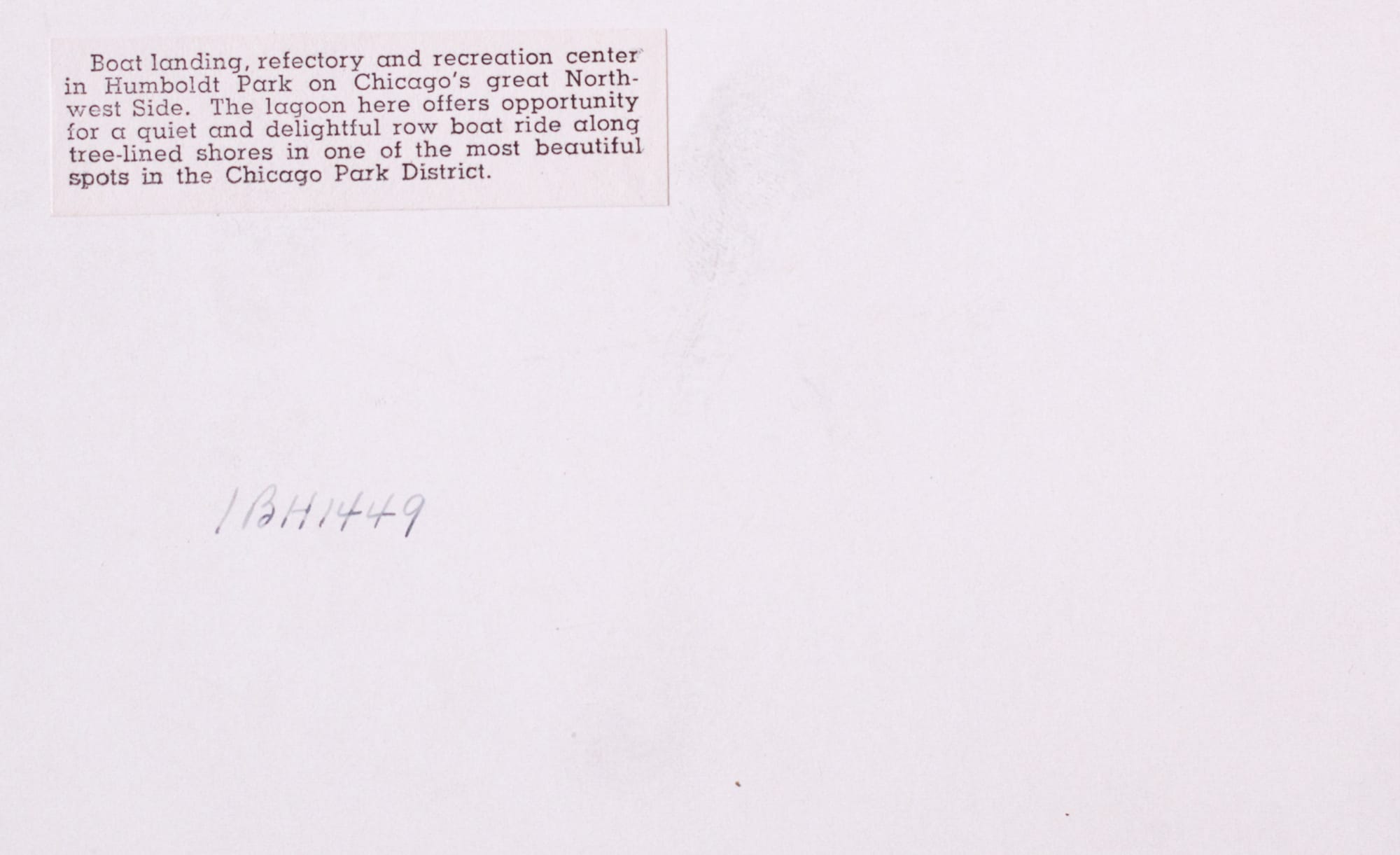
And obviously they had to OK the back as well.
Some of the aerials from 1938 to 2015 I used to make that video.
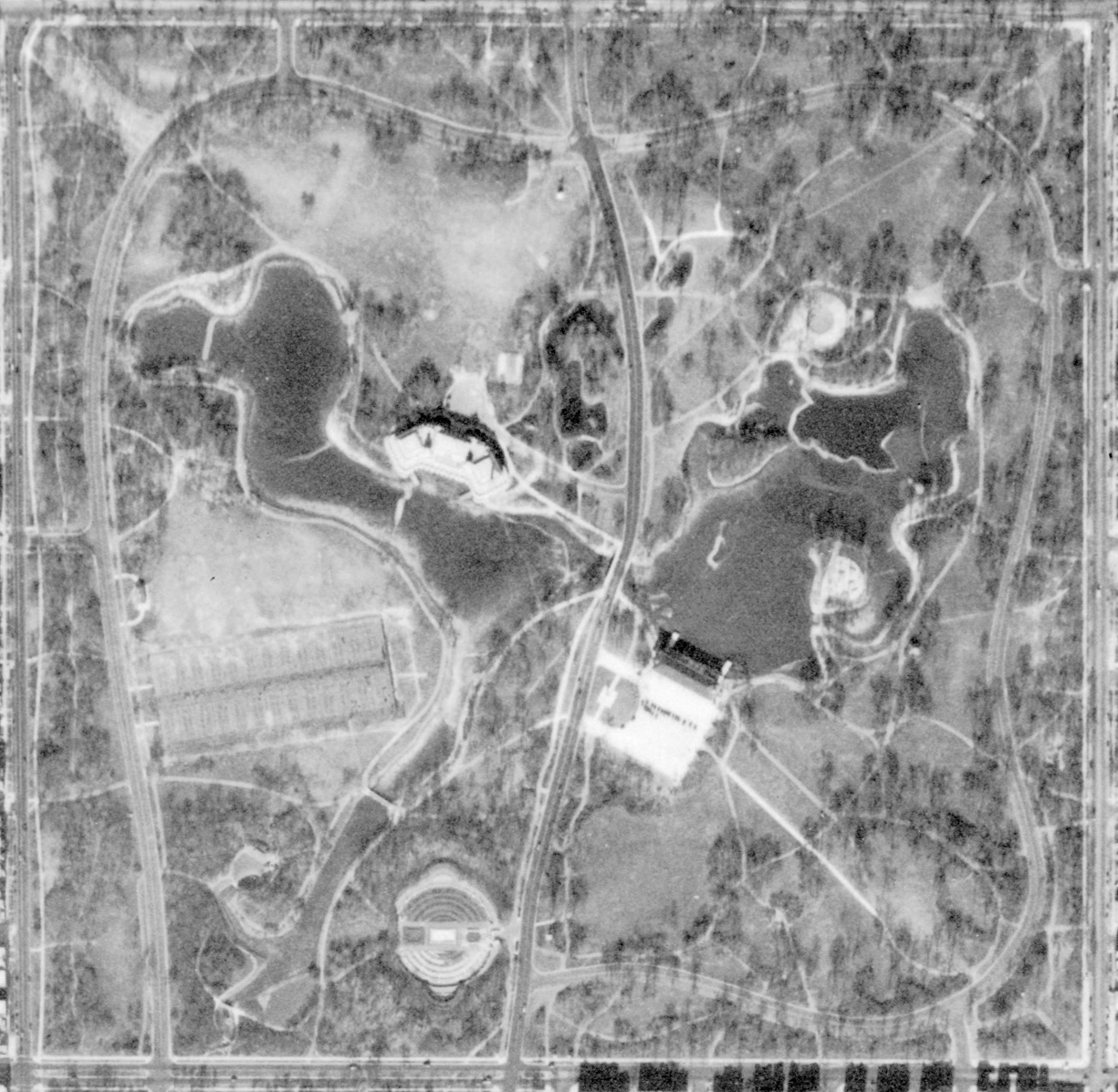
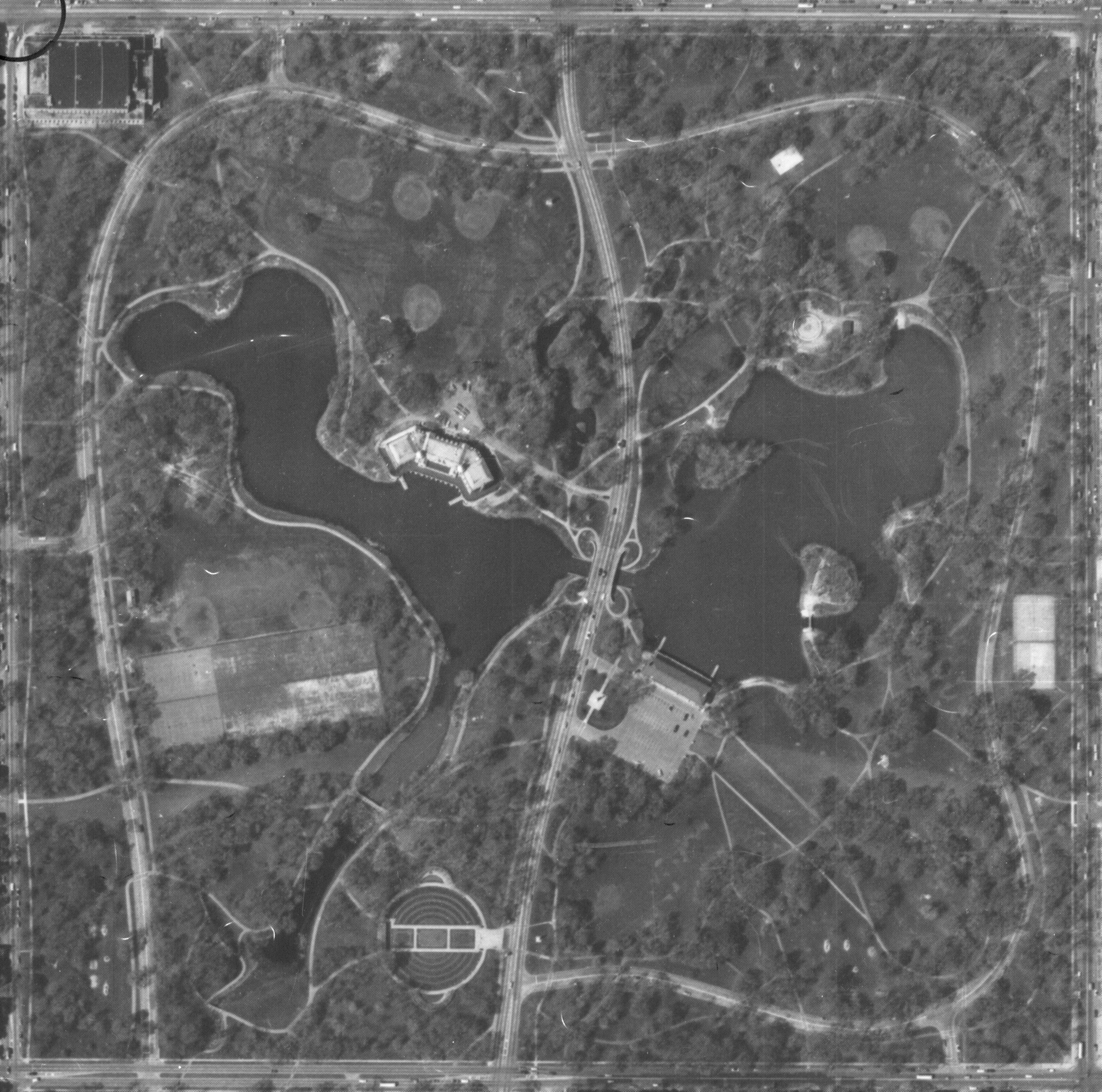
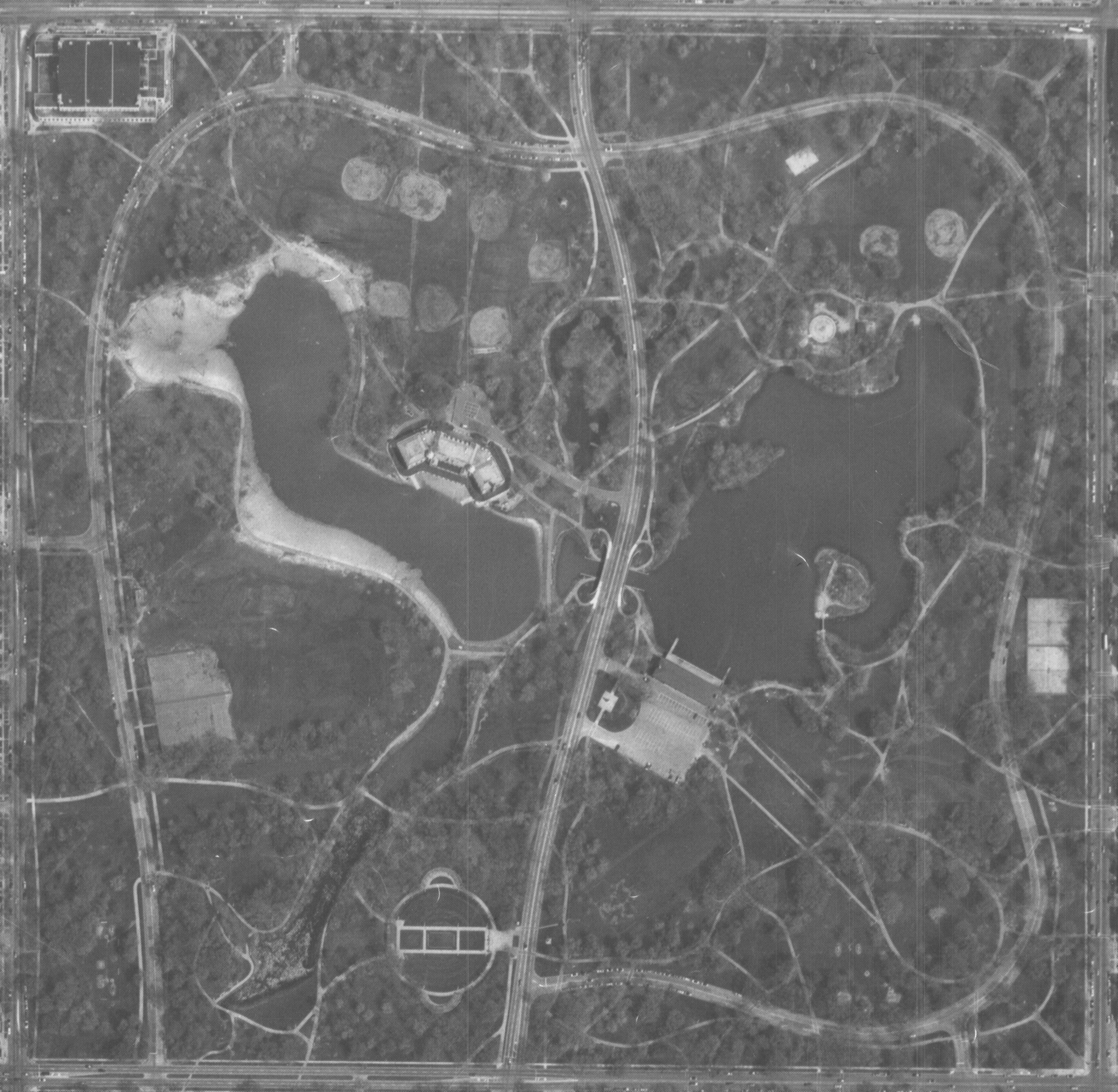
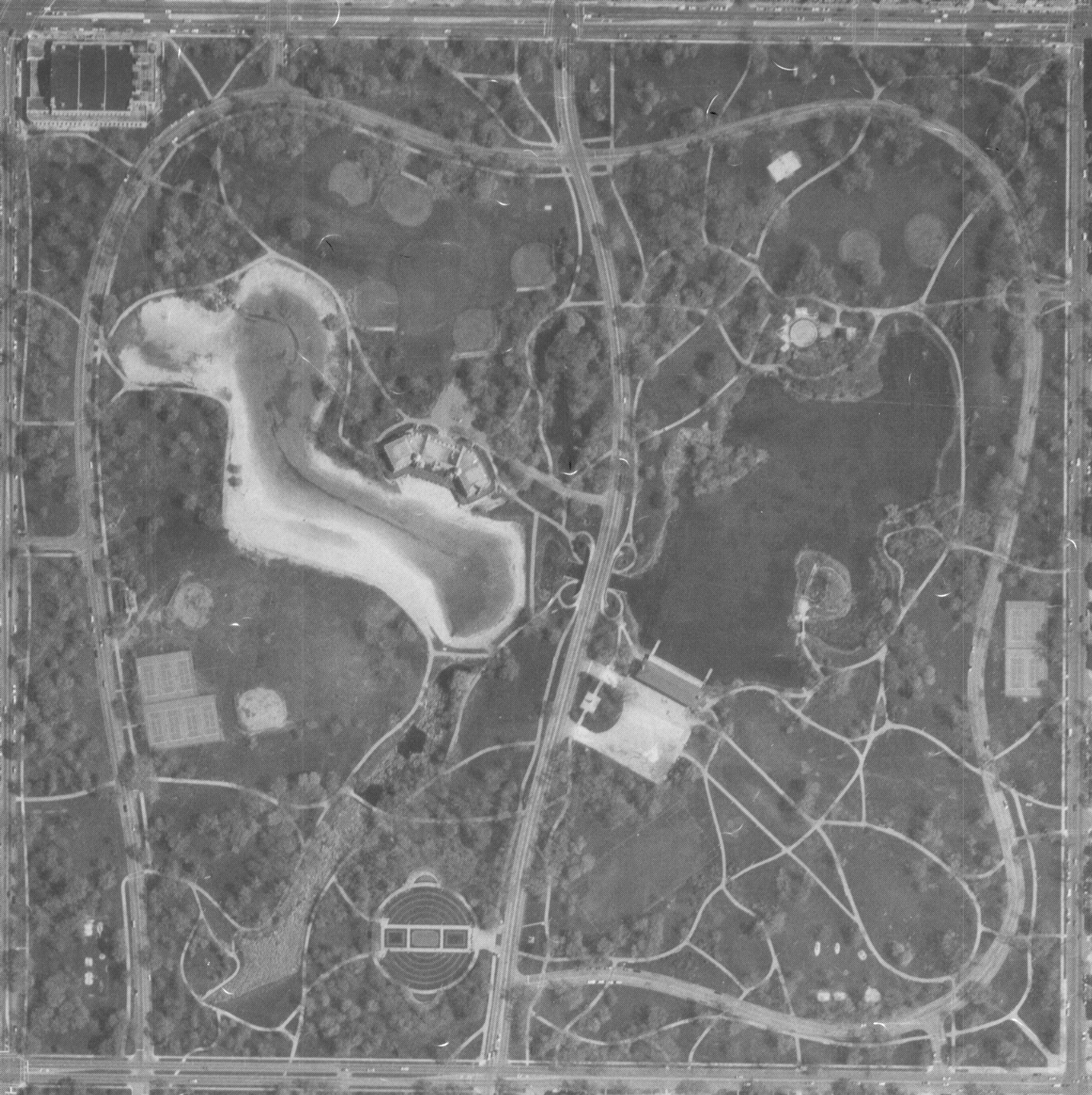
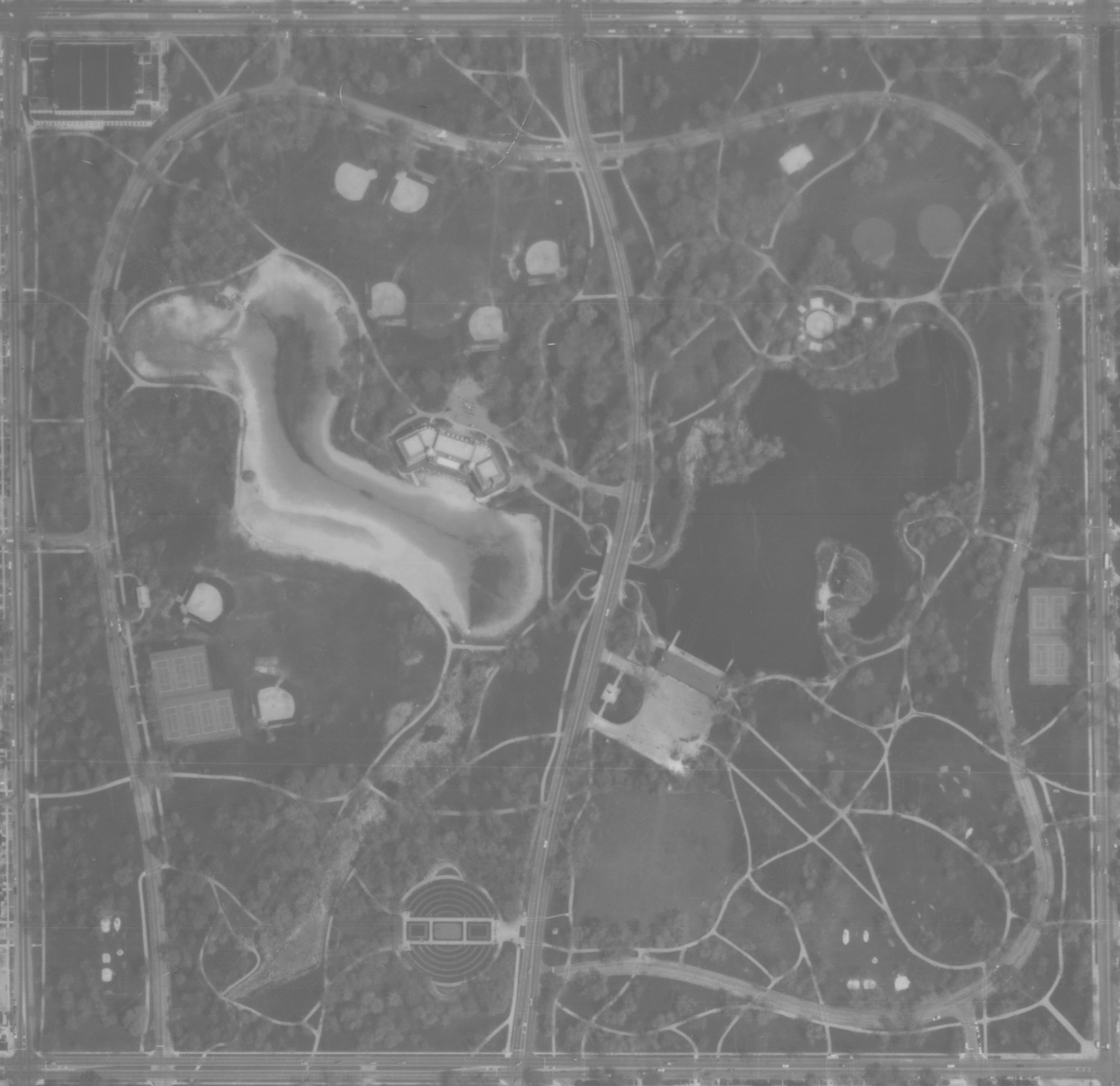
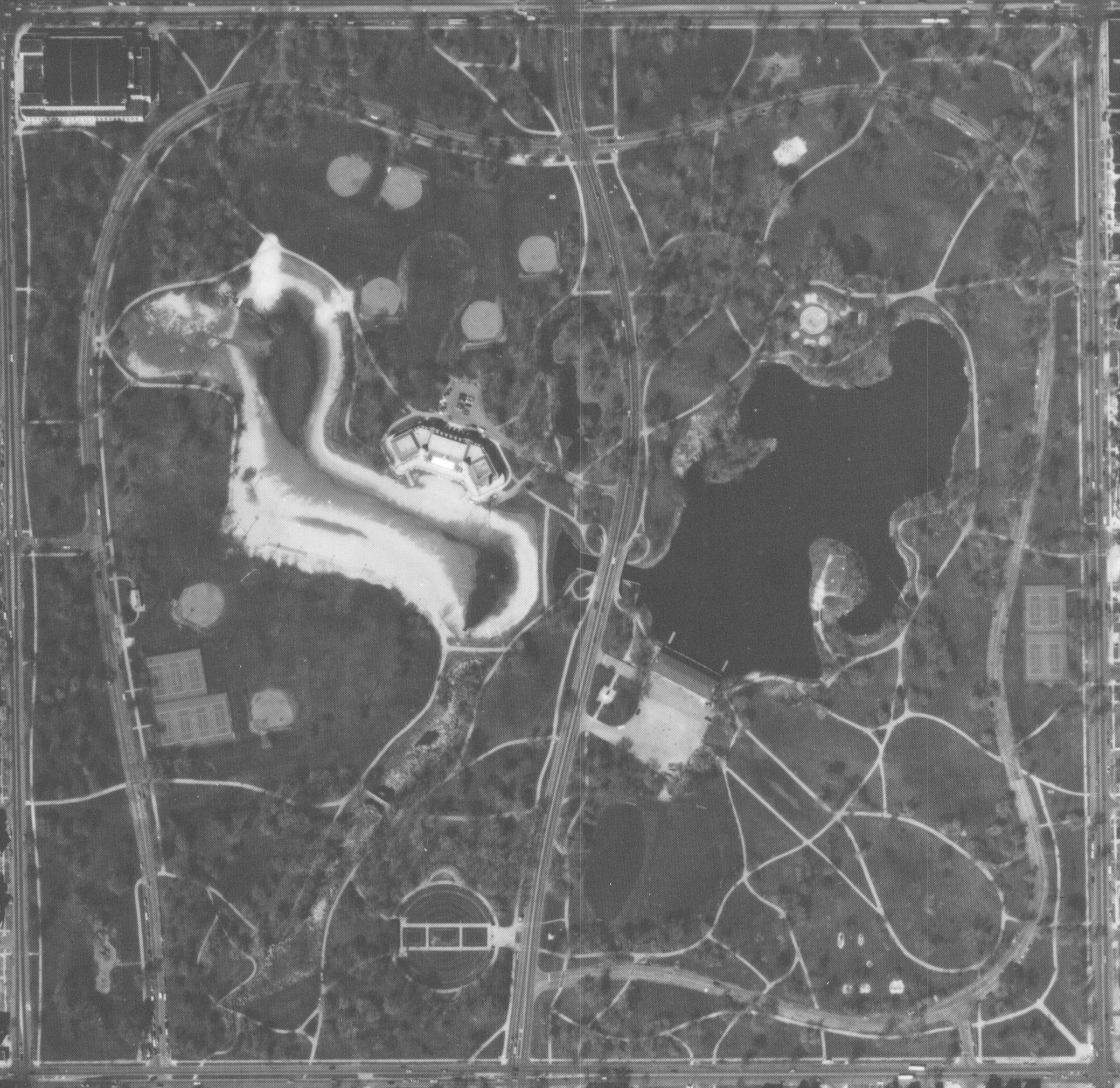
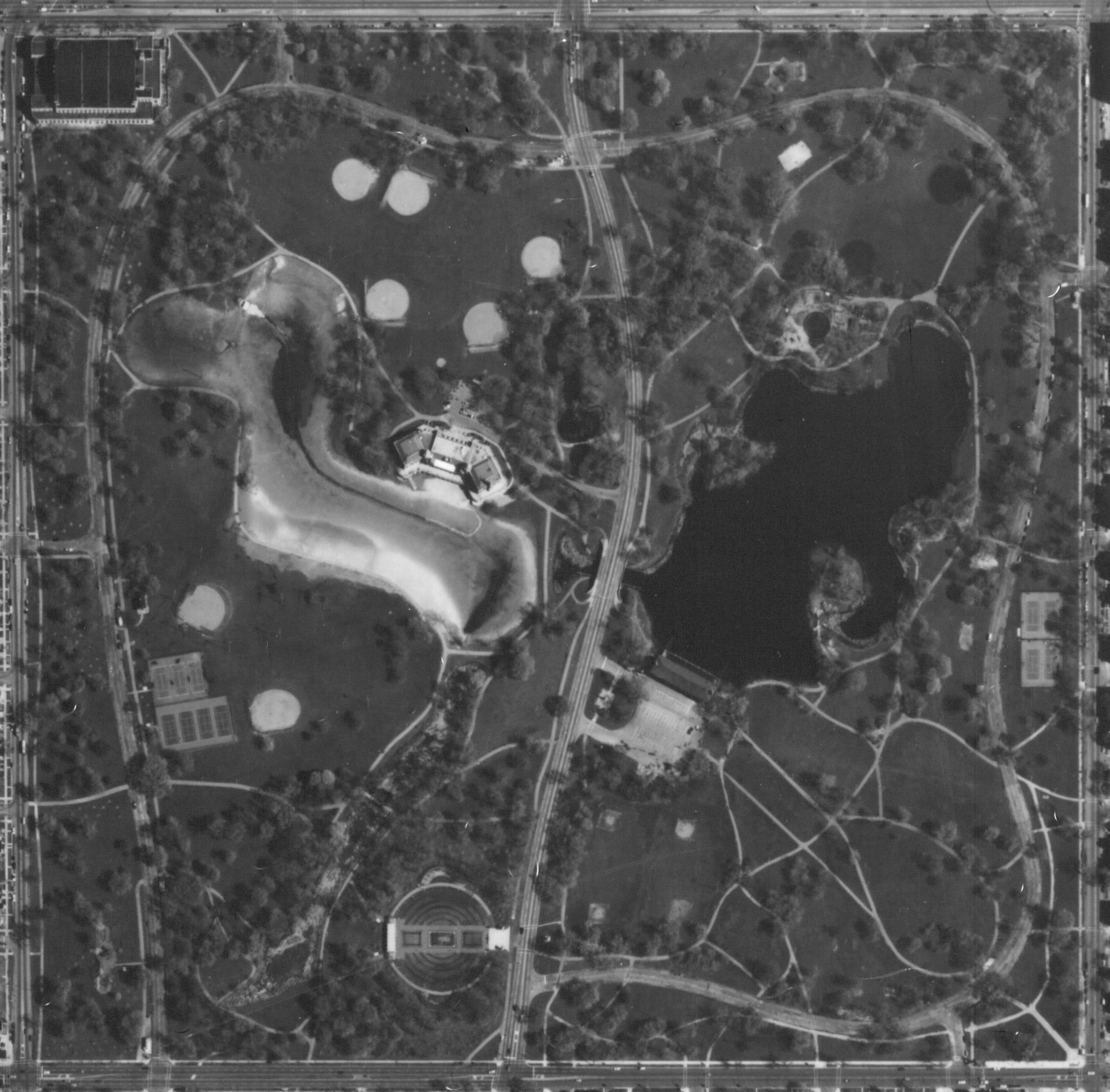
1938 aerial, Illinois State Geological Survey | 1970, 1975, 1980, 1985, 1990, 1995, Chicago Metropolitan Agency for Planning
Where I took the photo from.
Member discussion: