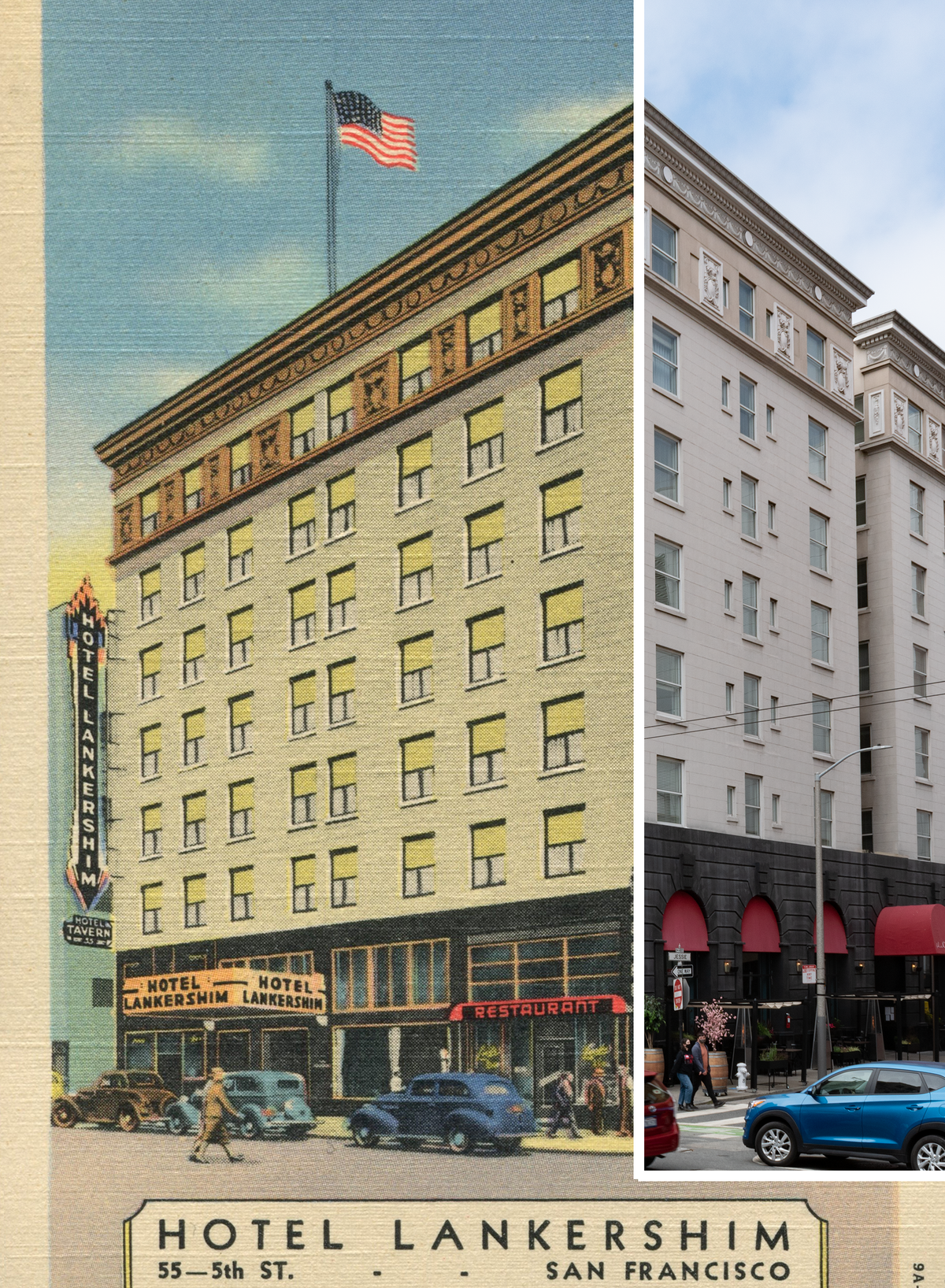
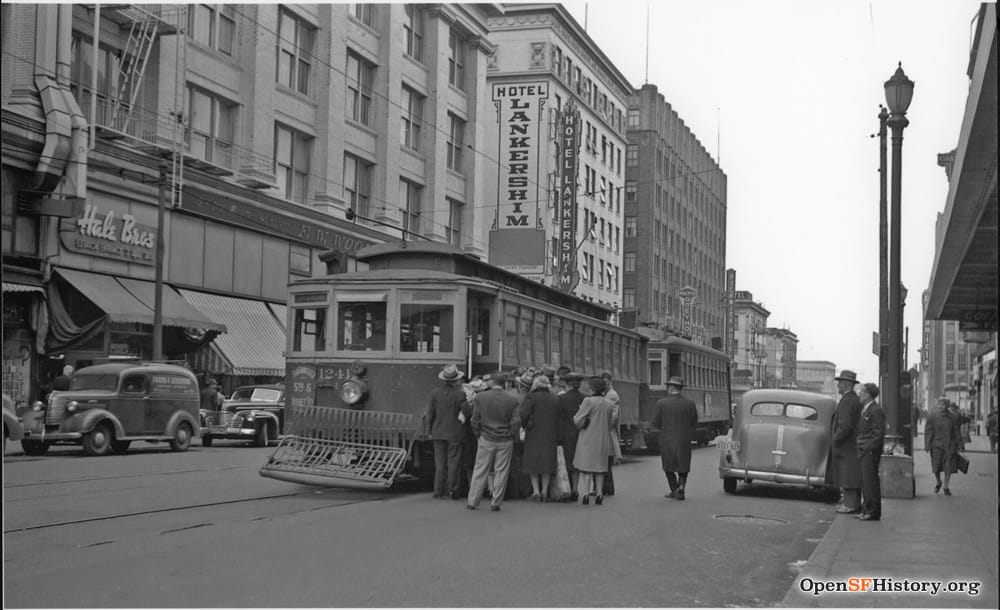
The former Hotel Lankershim ties into two common 20th century San Francisco stories—a discreet hookup spot popular with the gay community in the 1940s and 1950s, it was also one of the hundreds of residential hotels converted into tourist hotels as the city lost more than 15,000 SRO rooms between 1970 and 2000. Designed by Reid Brothers and opened in 1913, San Francisco’s Hotel Lankershim was a Northern California outpost of Los Angeles real estate heir J.B. Lankershim’s commercial empire.
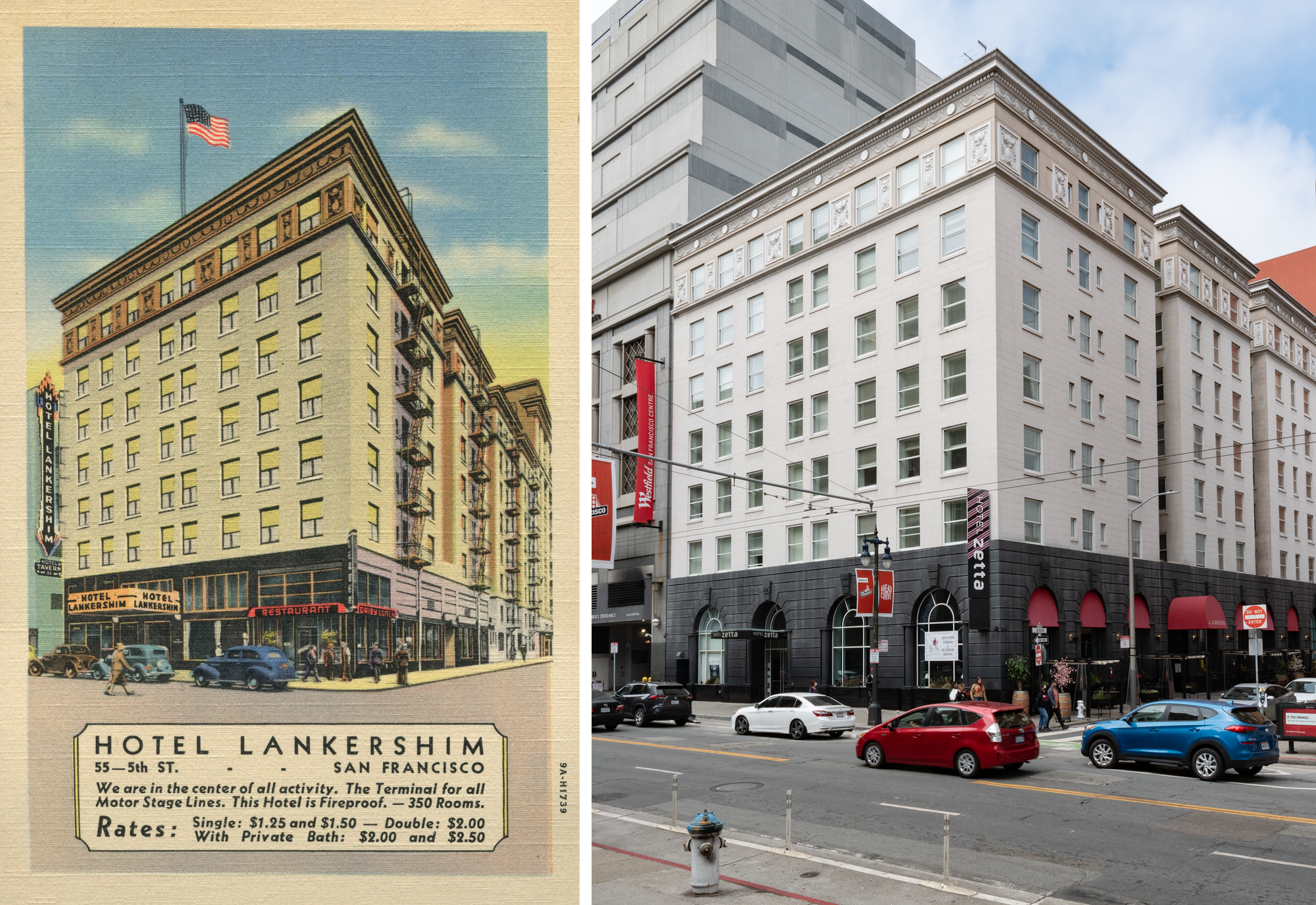
So, what's changed?
- A millennial gray makeover, unfortunately.
- Removal of the blade sign and the fire escapes.
- A 1990s renovation gave the ground floor facade an old-timey rustication the building never had.
Before it was a hotel, the Metropolitan Temple stood on this site, an event hall which often featured sermons by Baptist preachers. James Boon Lankershim's dad, Isaac Lankershim, had acquired property years prior. By the 1906, J.B. planned to demolish the old wood-frame building and replace it with a hotel, and the fires that accompanied the cataclysmic earthquake that year took care of it for him.
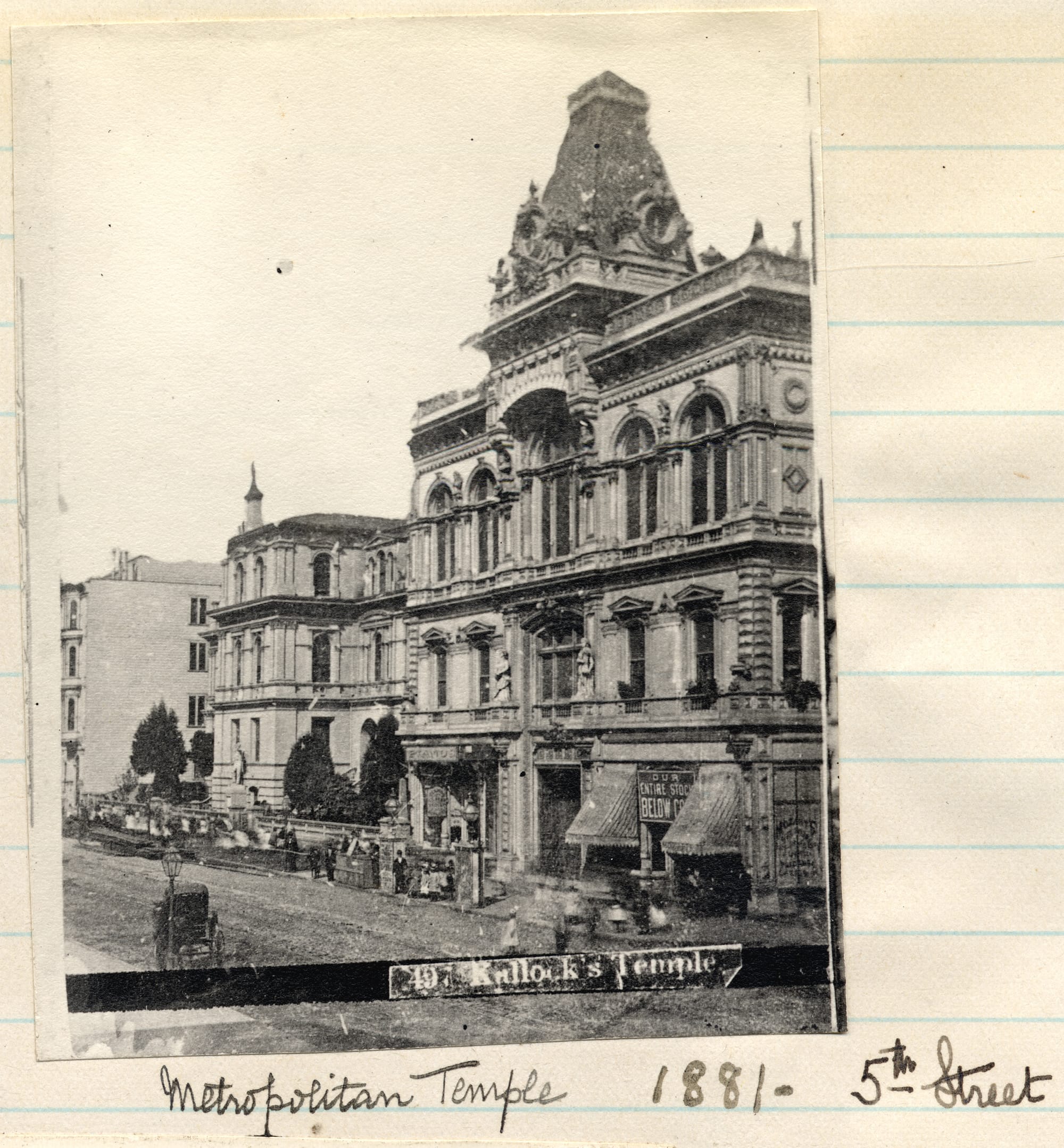
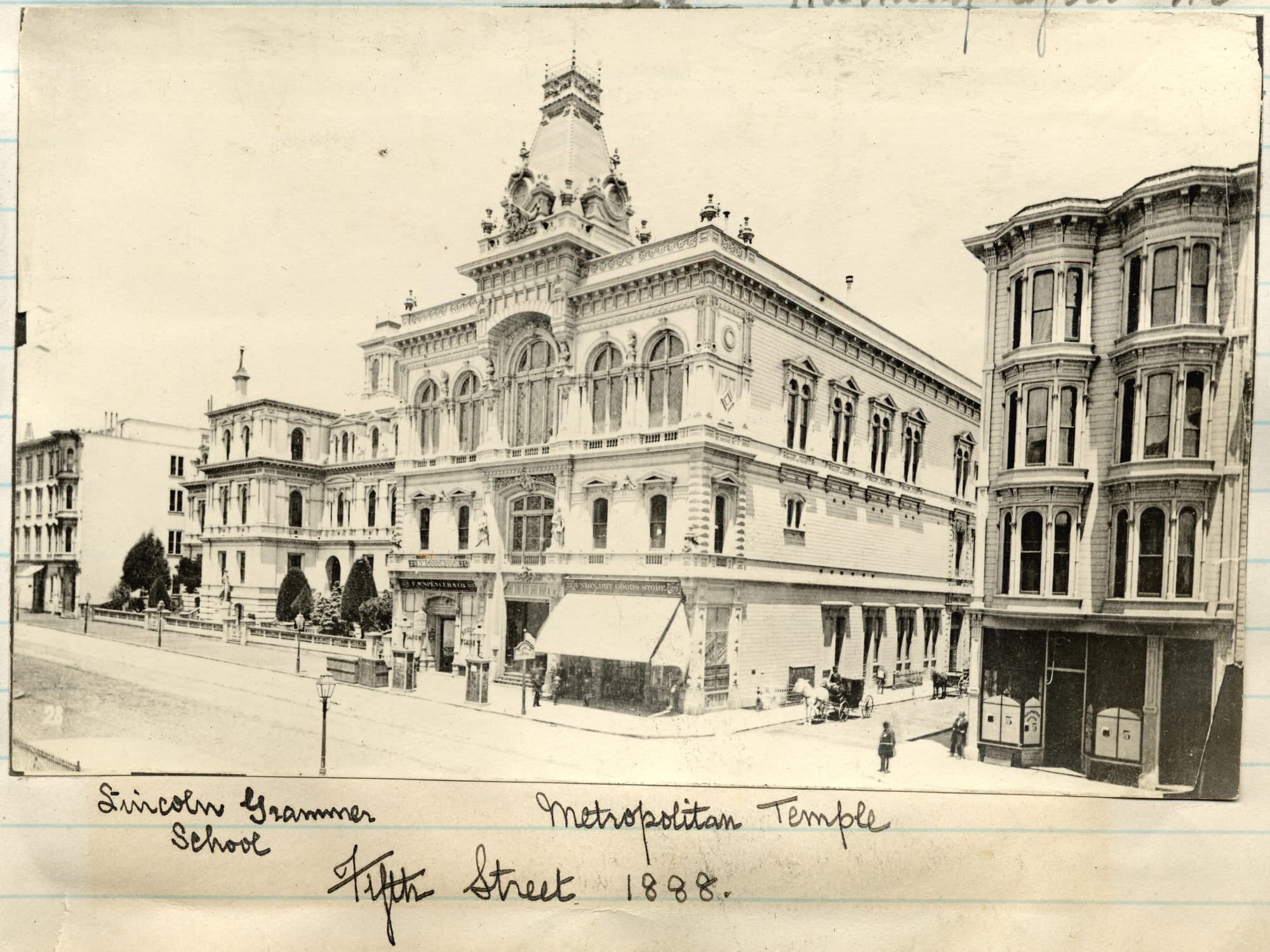
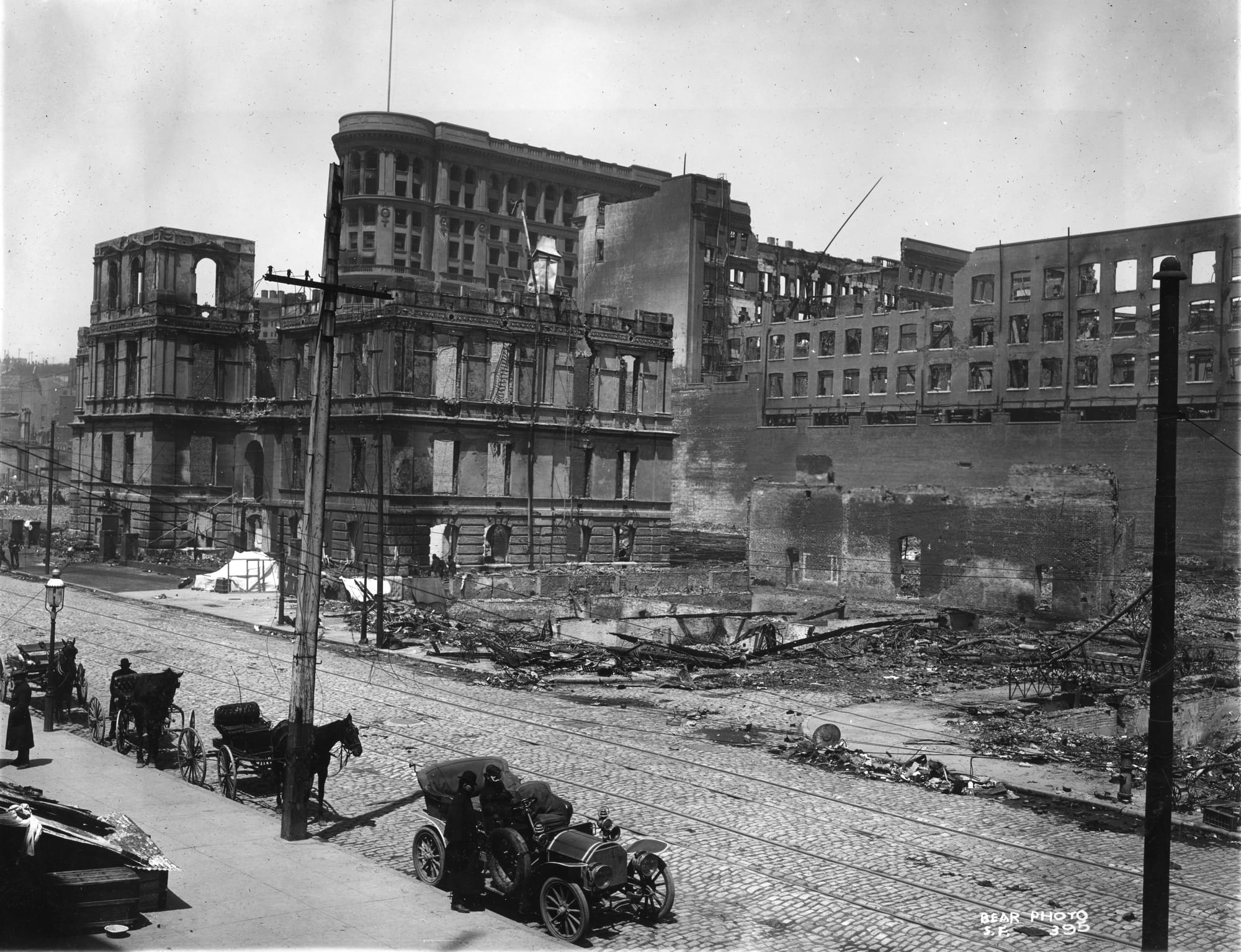
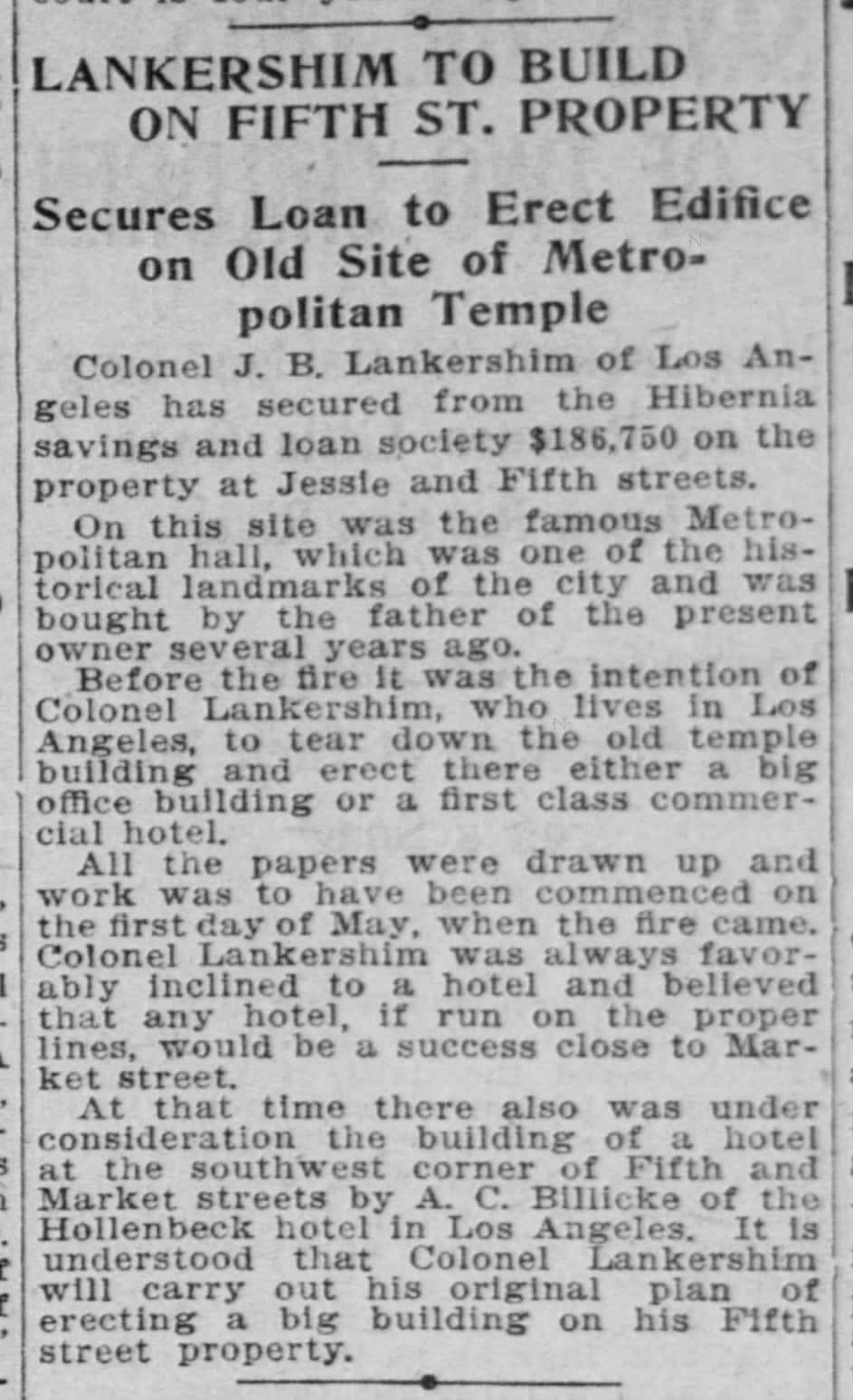
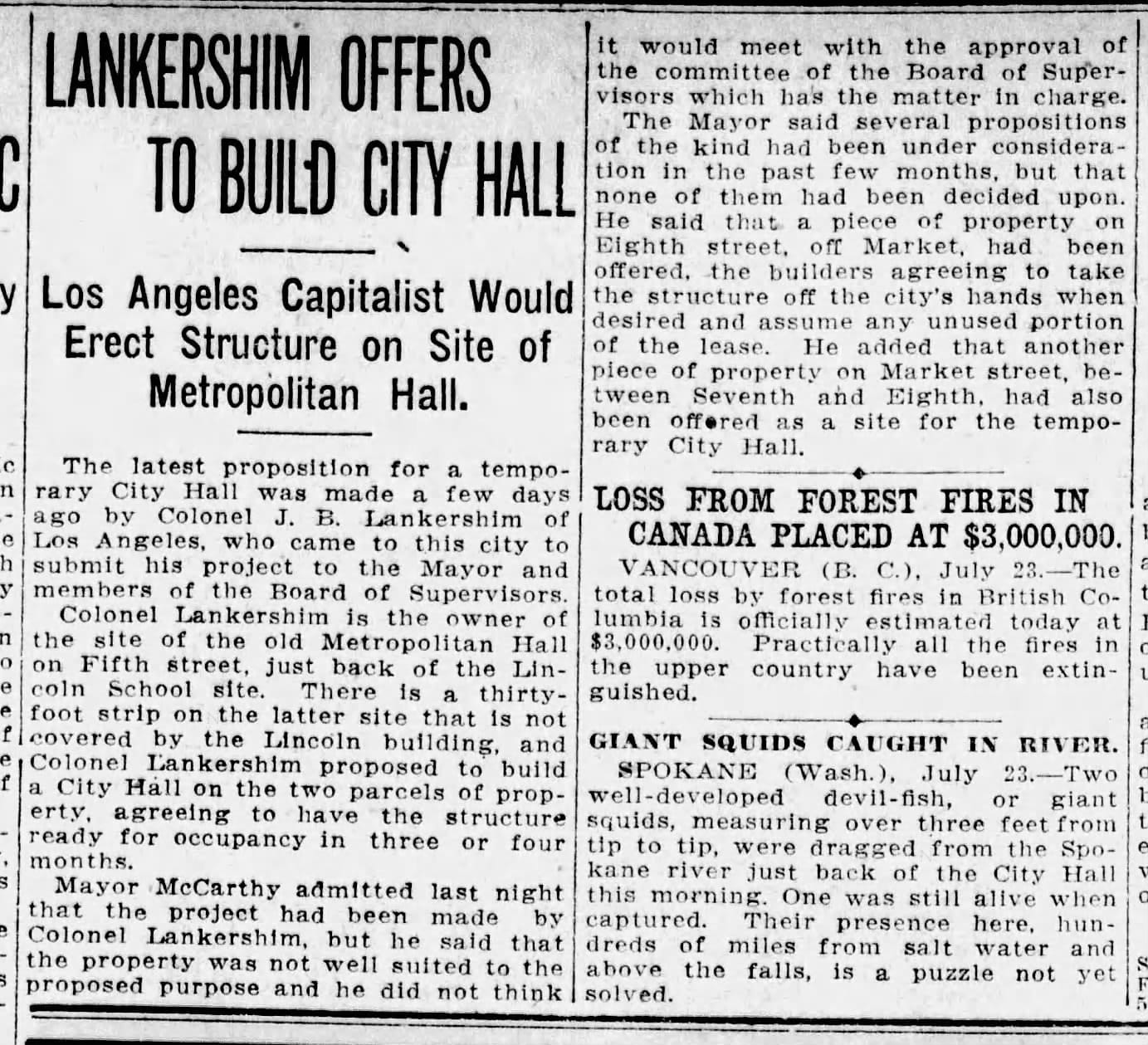
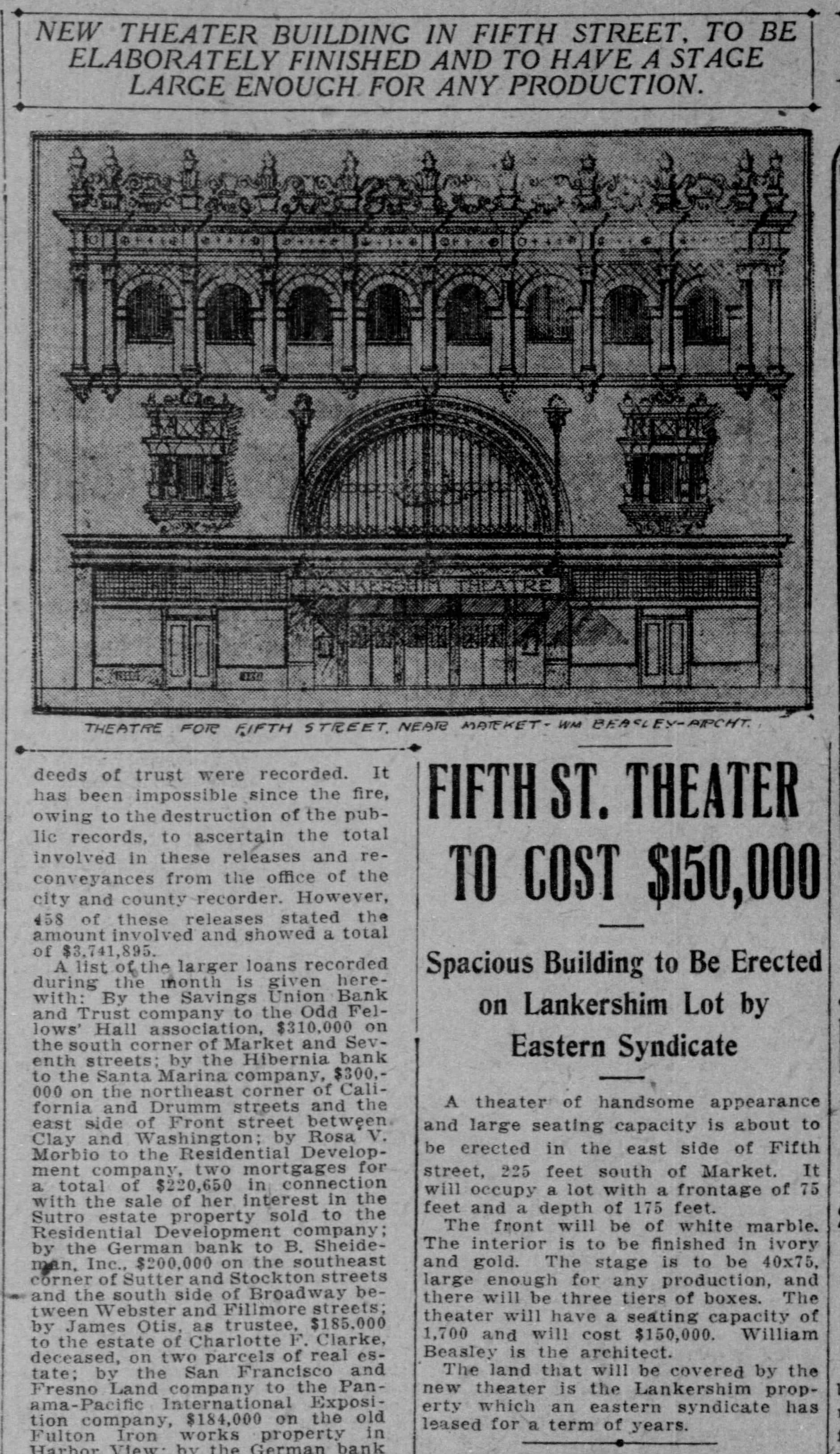
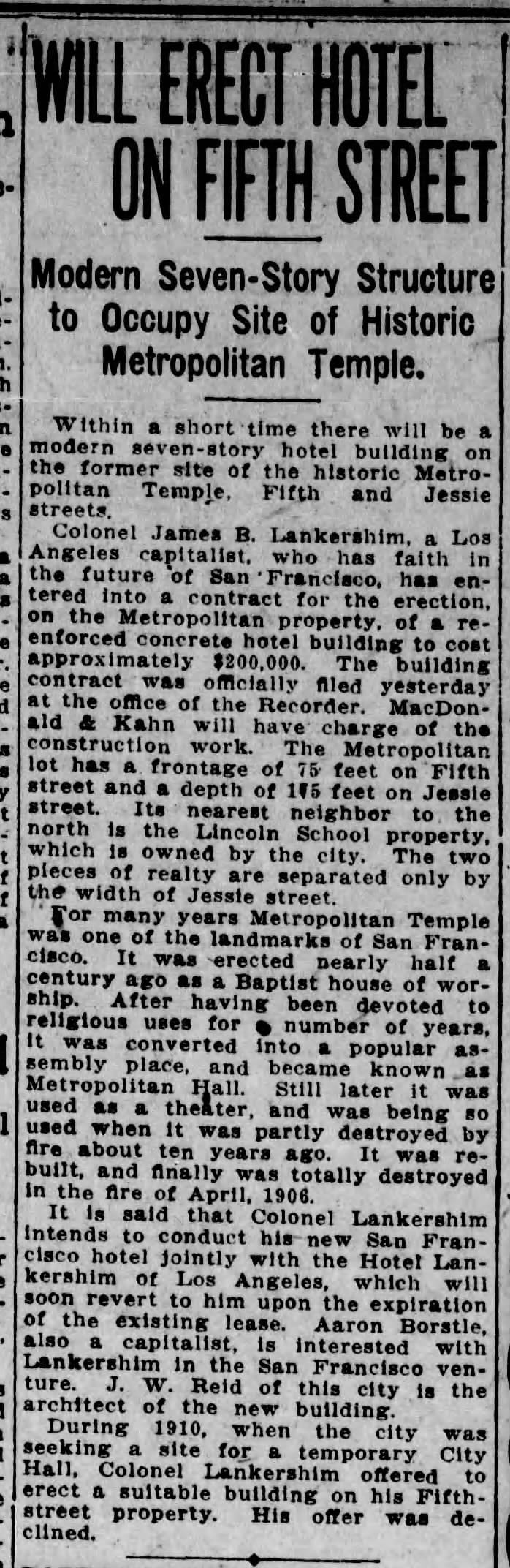
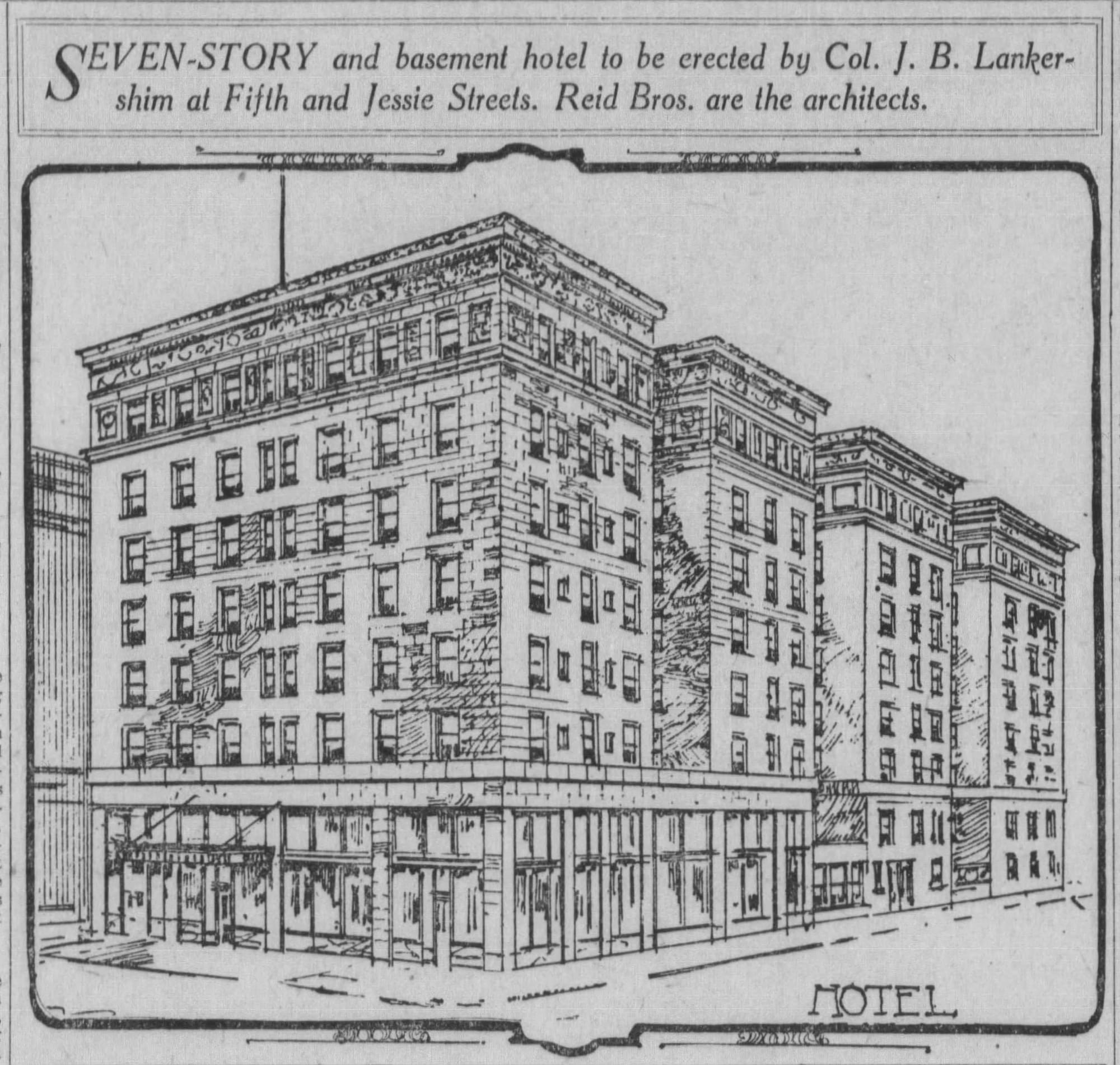
Metropolitan Temple at 5th & Jessie, 1881, Hamilton Henry Dobbin, California State Library | Metropolitan Temple, 1888, Hamilton Henry Dobbin, California State Library | Ruins of the Metropolitan Temple, 1906, California State Library | 1908, Lankershim to build hotel | 1910, Lankershim offers to build temporary city hall | 1912, theater plan for the site | 1913, Lankershim will build hotel | 1913, rendering
...but it seems like Lankershim wasn't especially dedicated to the hotel plan, spending a few years pivoting between different projects for the site. Most notably, the City of San Francisco accepted an offer to house their temporary city hall here before backpedaling and eventually choosing the building that became the Hotel Whitcomb. Lankershim finally bit the bullet and hired the Reid Brothers to design the hotel for him in 1913.
Born in Canada, the Reids started their career in southern Indiana, but California is where they made their name—their work on San Diego’s Hotel del Coronado launched their career and over the next few decades, based in San Francisco, they would design theaters, office towers, classical revival mansions…a little bit of everything. A relatively austere hotel block, the Lankershim still fits neatly into their oeuvre with some restrained classical revival ornamentation.
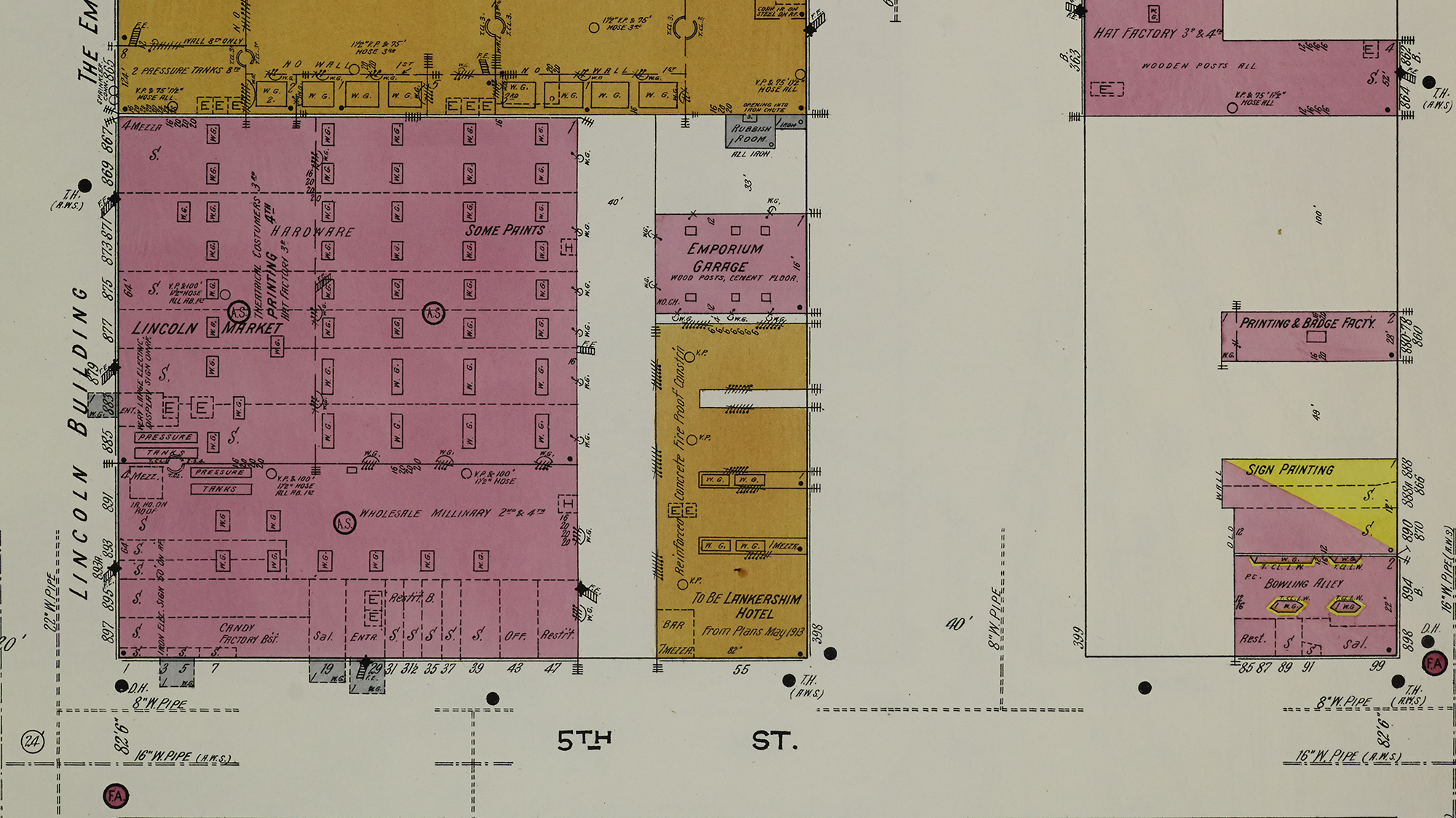
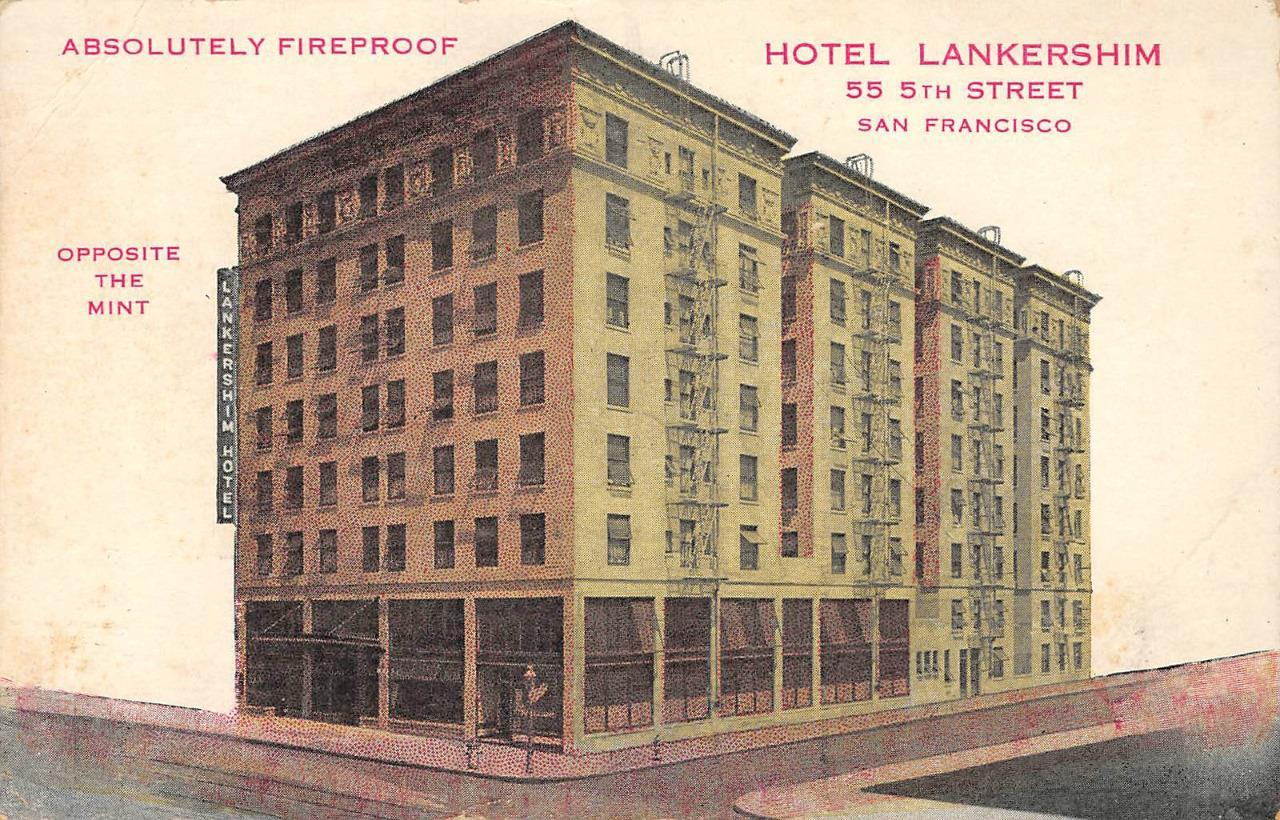
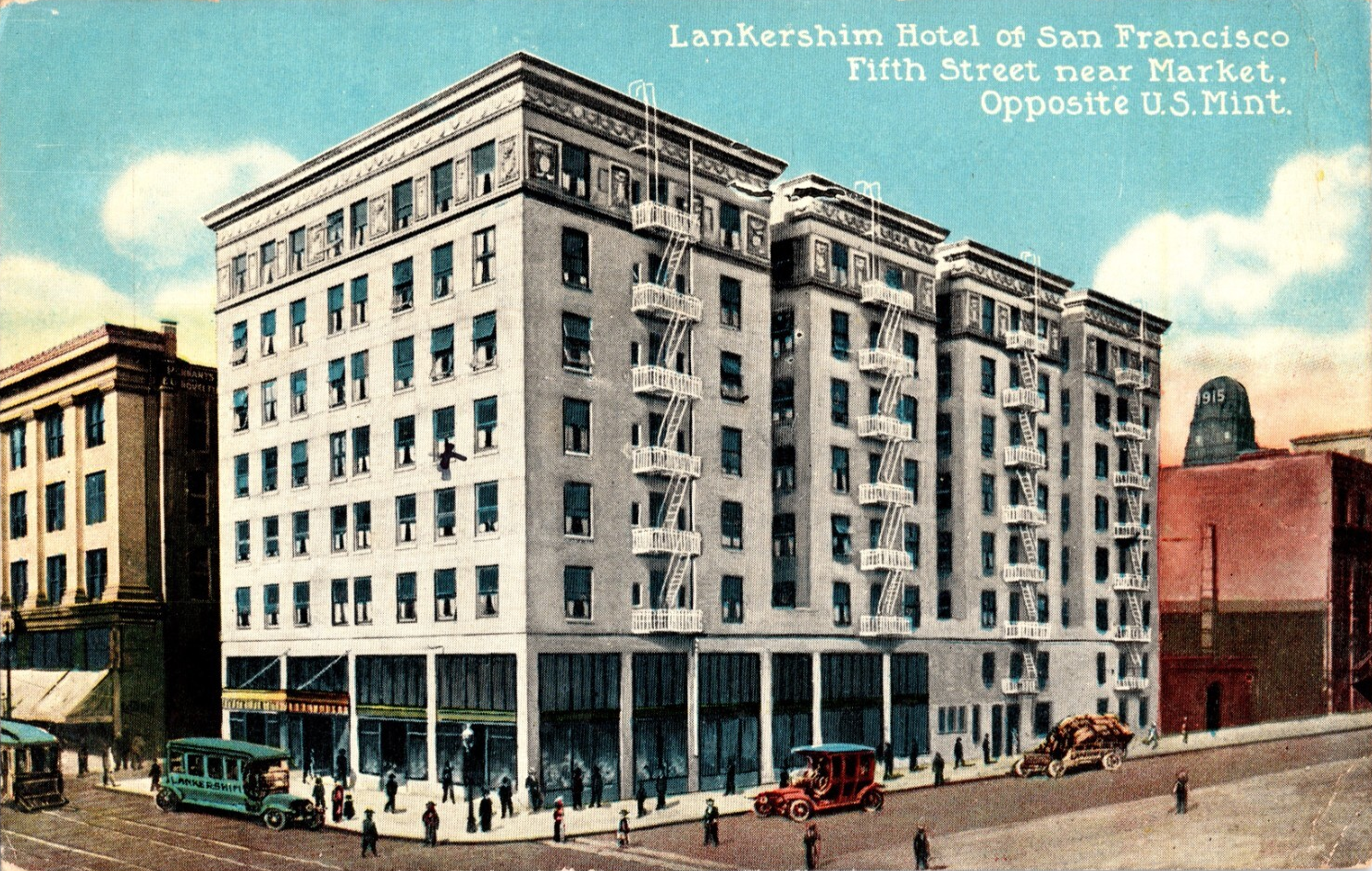
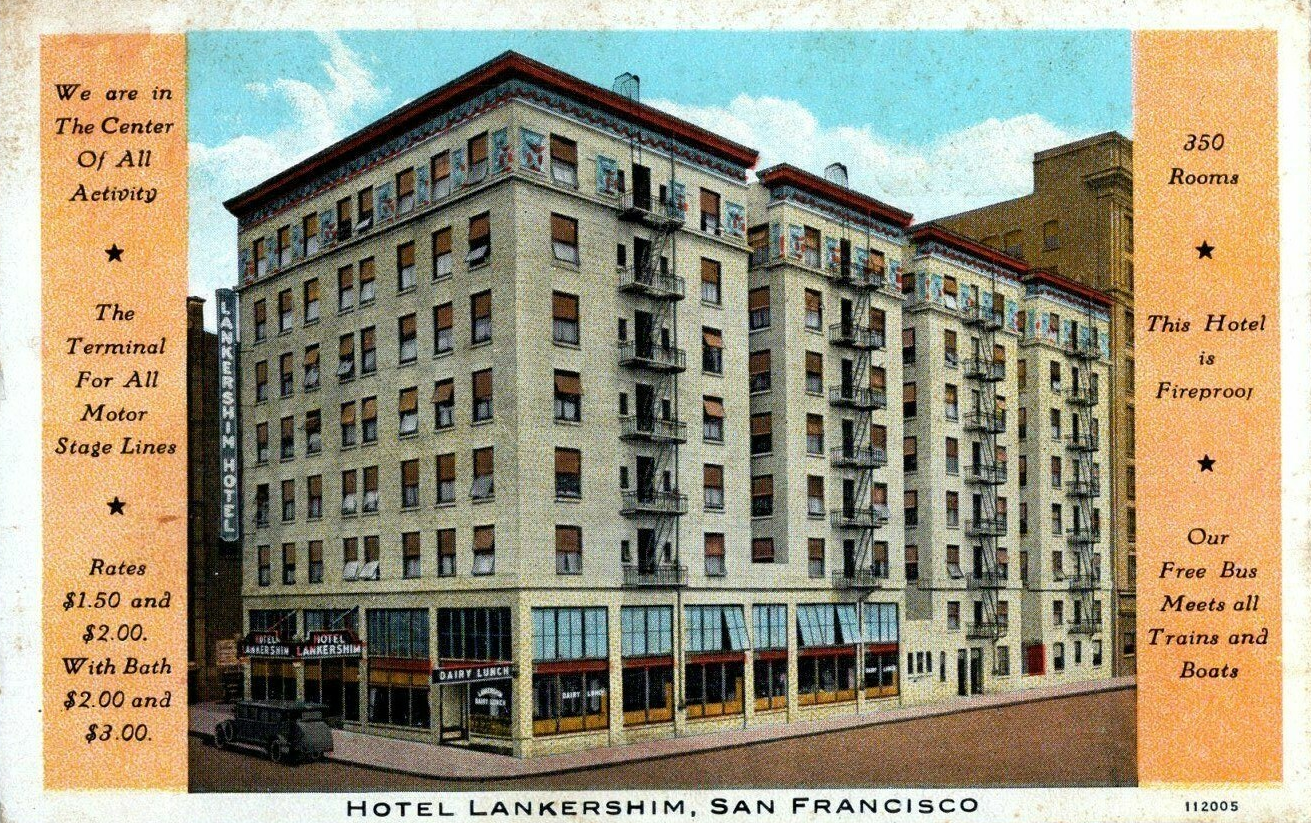
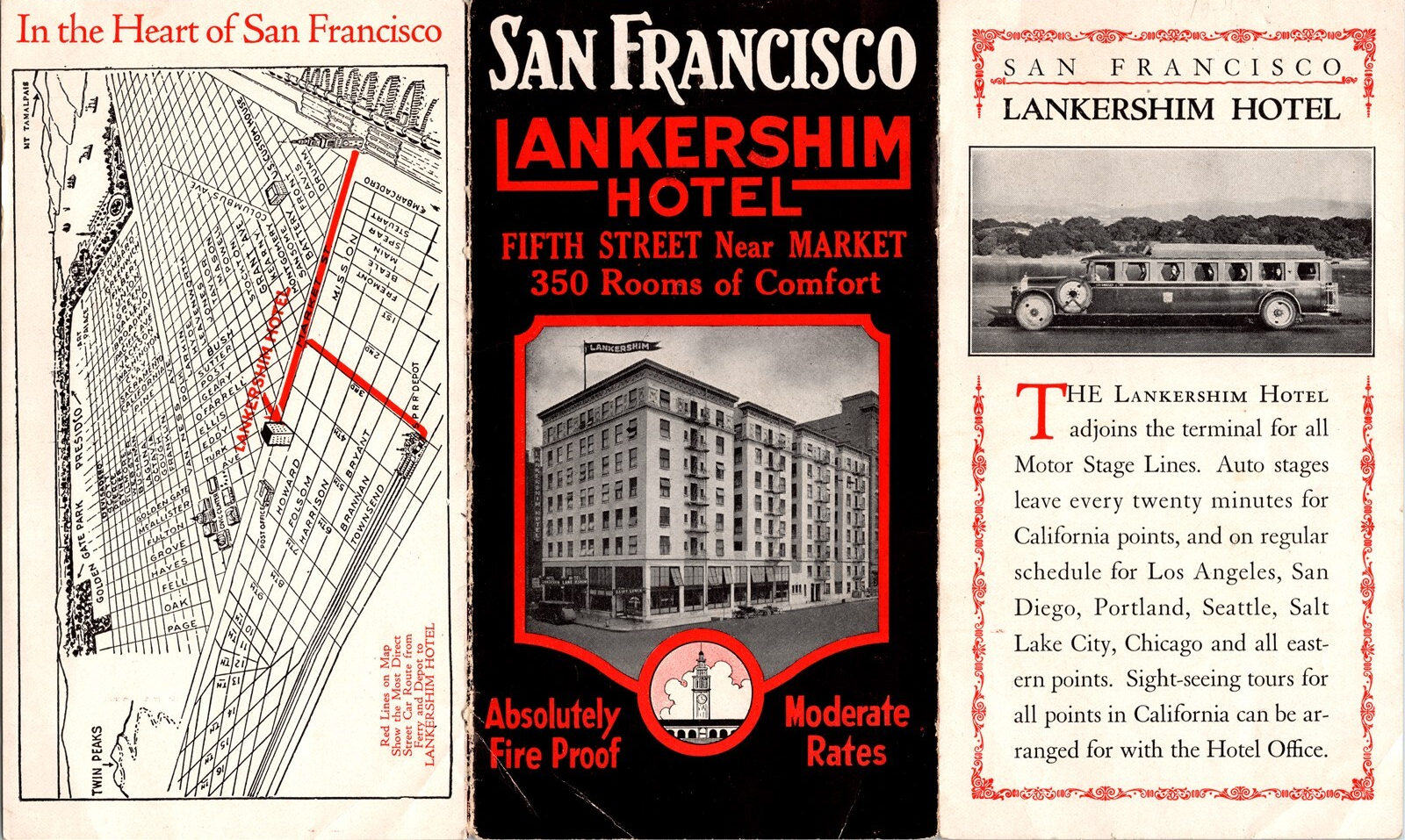
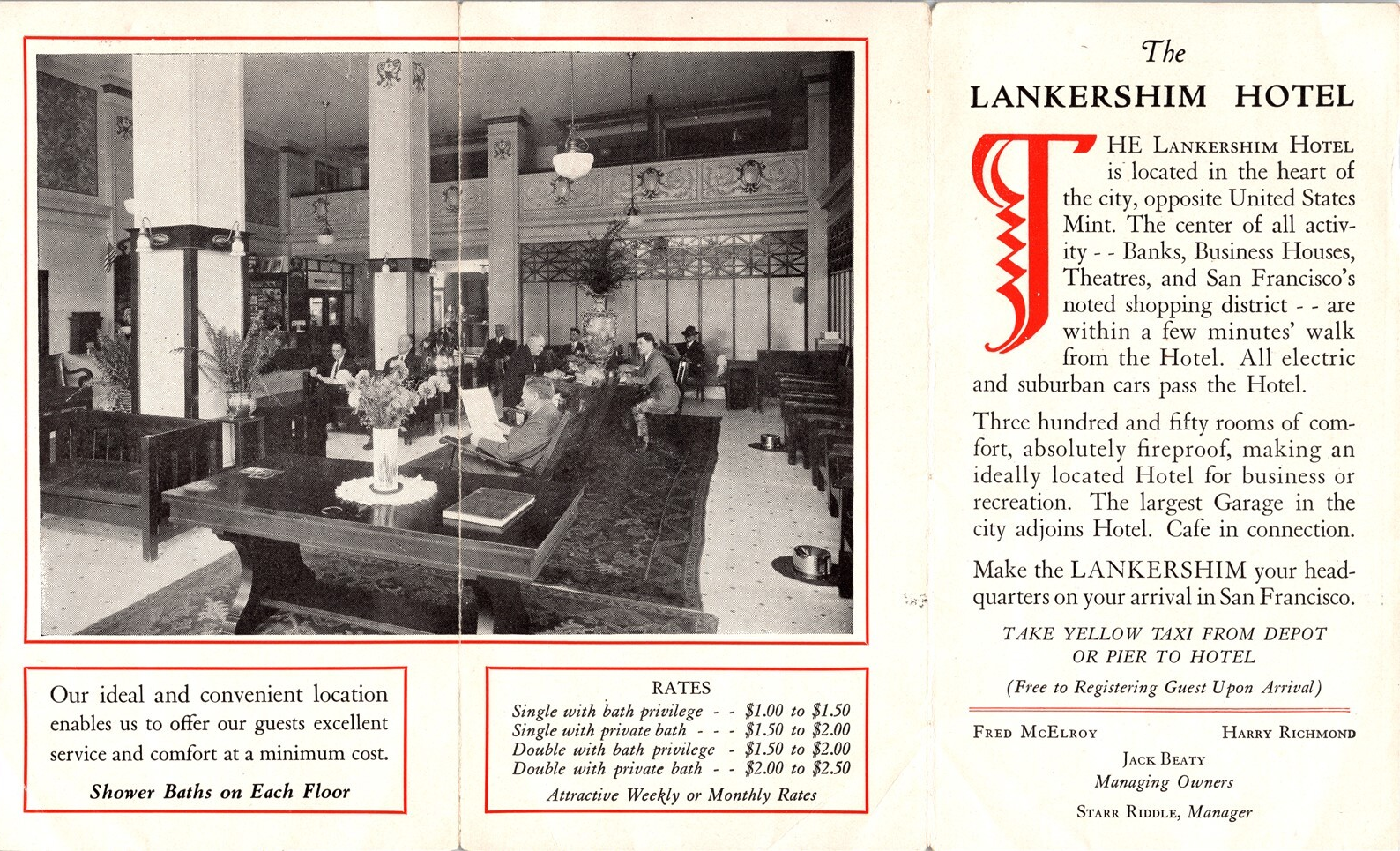
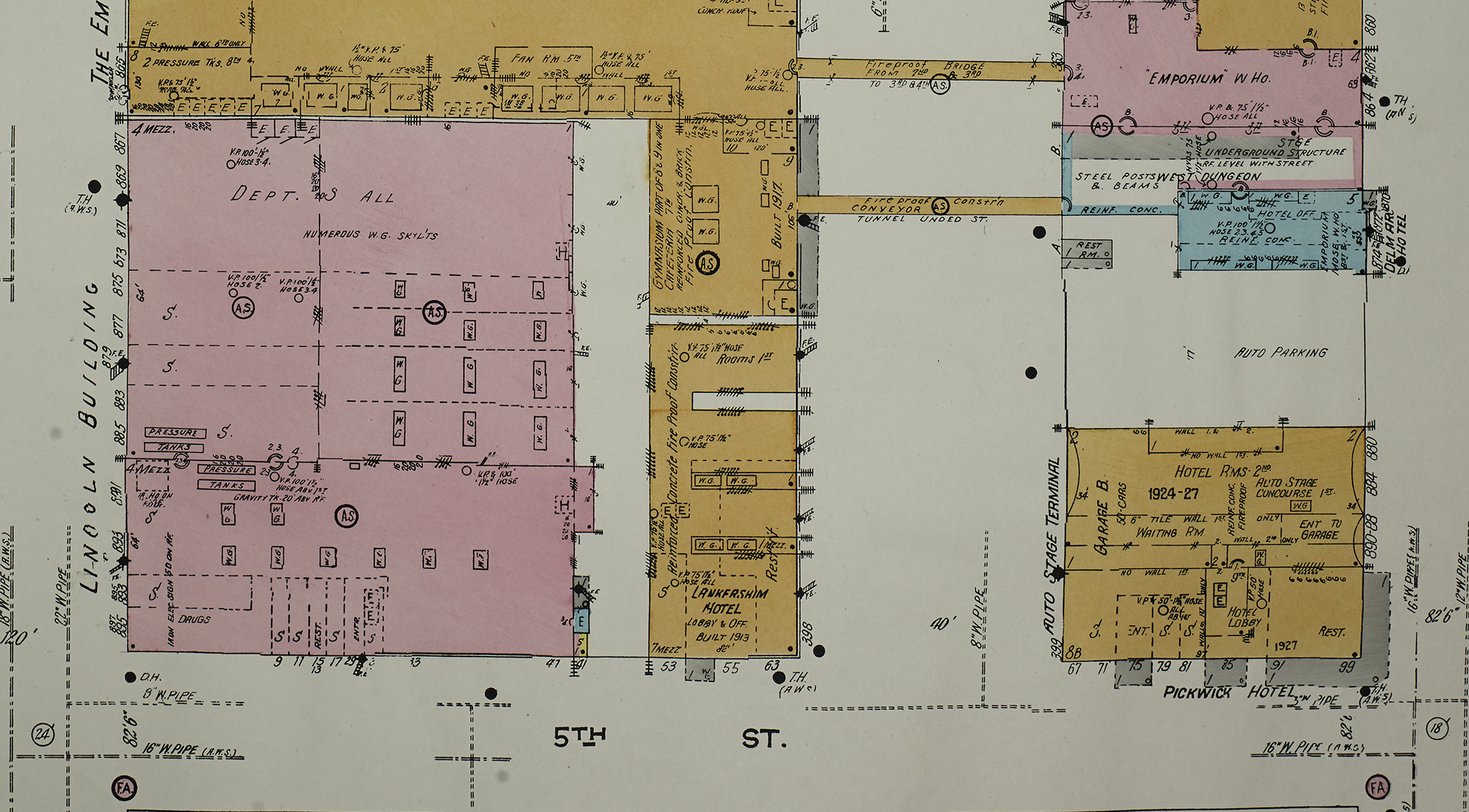
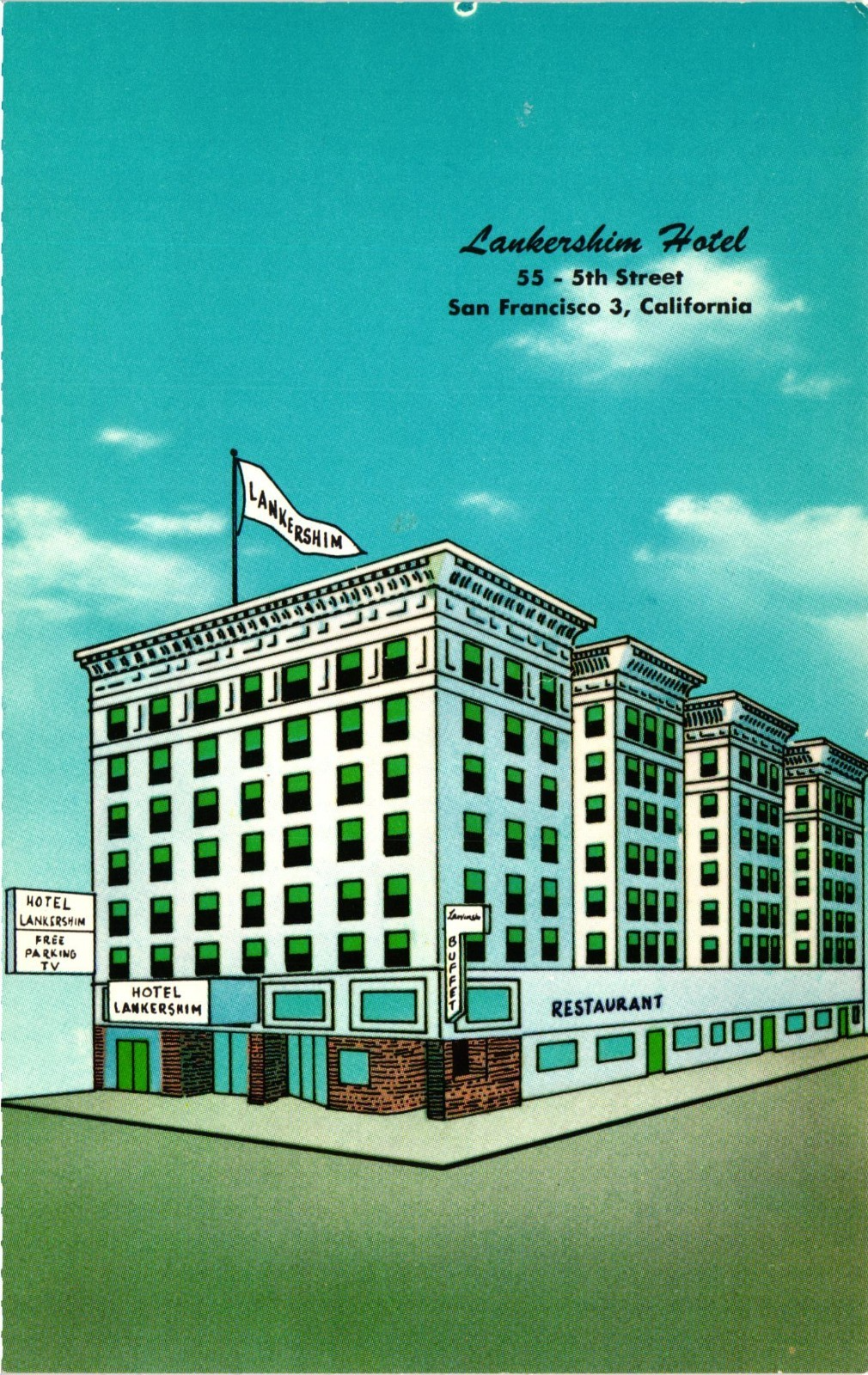
1913 Sanborn Fire Insurance Map | 1910s postcard | 1915 postmarked postcard | 1933 postmarked postcard | Brochure | 1948, OpenSFHistory / wnp27.50030 | 1949 Sanborn Fire Insurance Map | Undated postcard

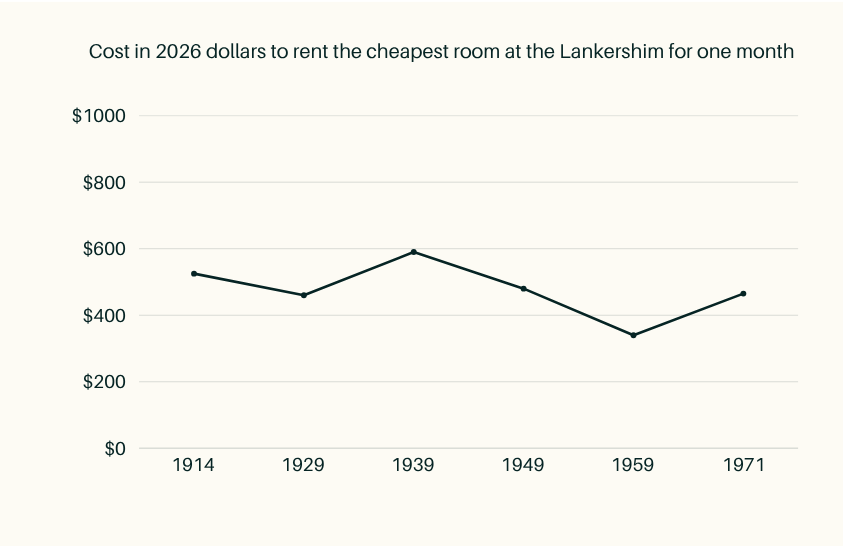
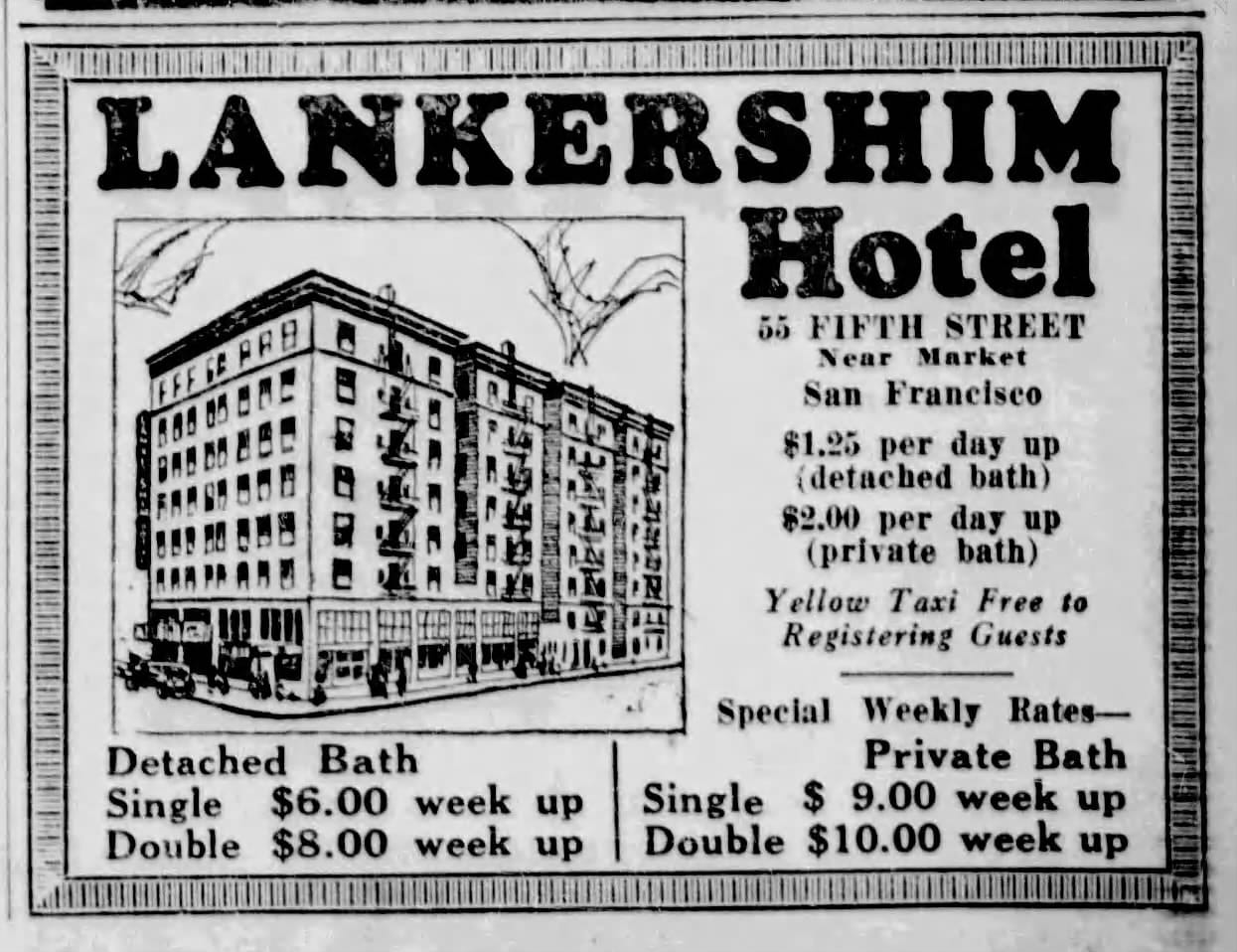
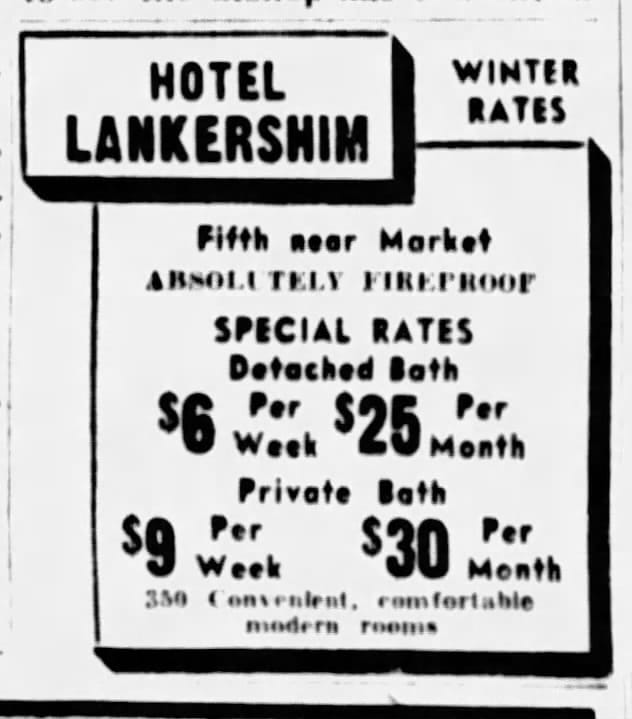
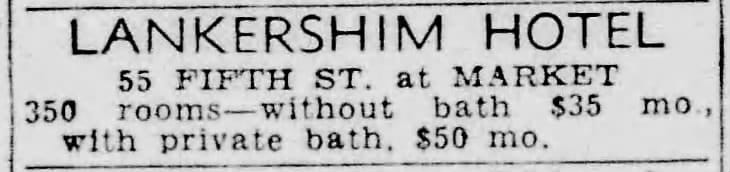
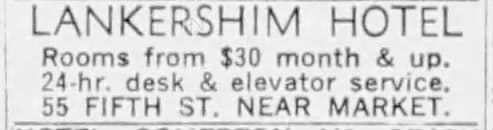
Originally 350 rooms catering to both middle-class tourists and long-term residents, within a couple decades the Lankershim was mainly a residential hotel—which was very normal, as SF once had more than 90,000 SRO units. Rent for the cheapest long-term room at the Lankershim—a double, no bathroom—generally hovered in the mid-$400 range in 2026 dollars, an example of the affordability and flexibility that residential hotels once offered.
San Francisco lost more than 40% of its SROs to tourist hotel conversion and demolition between 1975 and 1988. The Lankershim disappeared right at the start of that wave—bought, renovated, and converted into a tourist hotel that reopened under the Hotel Yerba Buena name in 1976. In response to the wave of SRO conversions like the Lankershim, San Francisco passed the Residential Hotel Unit Conversion and Demolition Ordinance in 1981, which regulates whether and how an SRO could be demolished or converted into another use. Down from a peak of 90,000, the ordinance created a legal framework that has at least slowed the bleeding—the city has a relatively stable stock of 19,000 SRO rooms today.
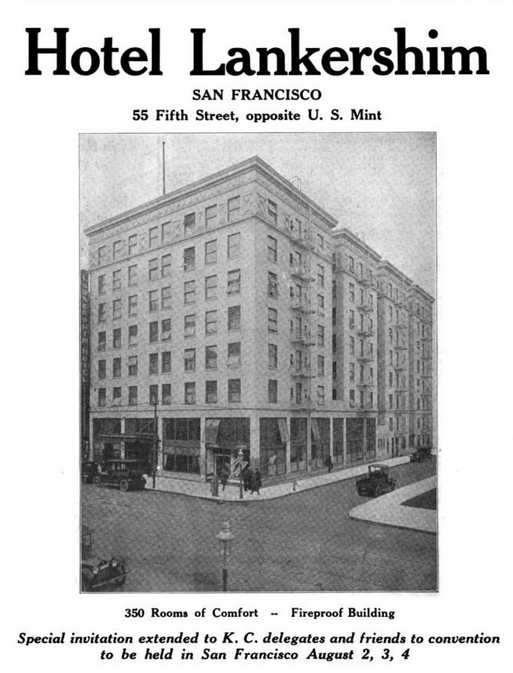
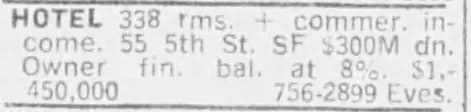
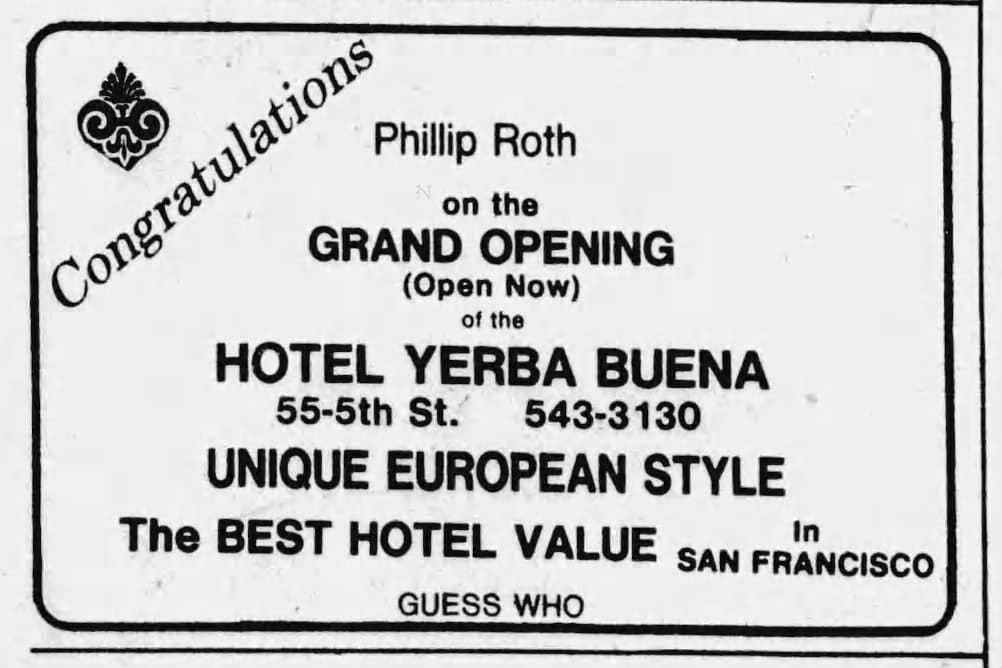
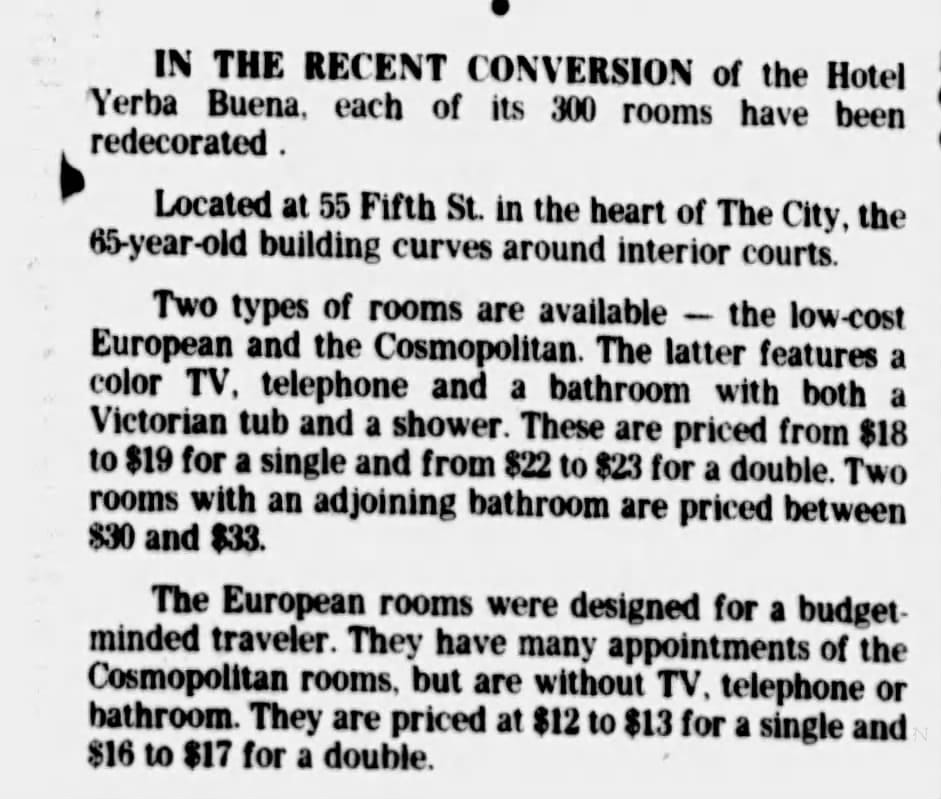
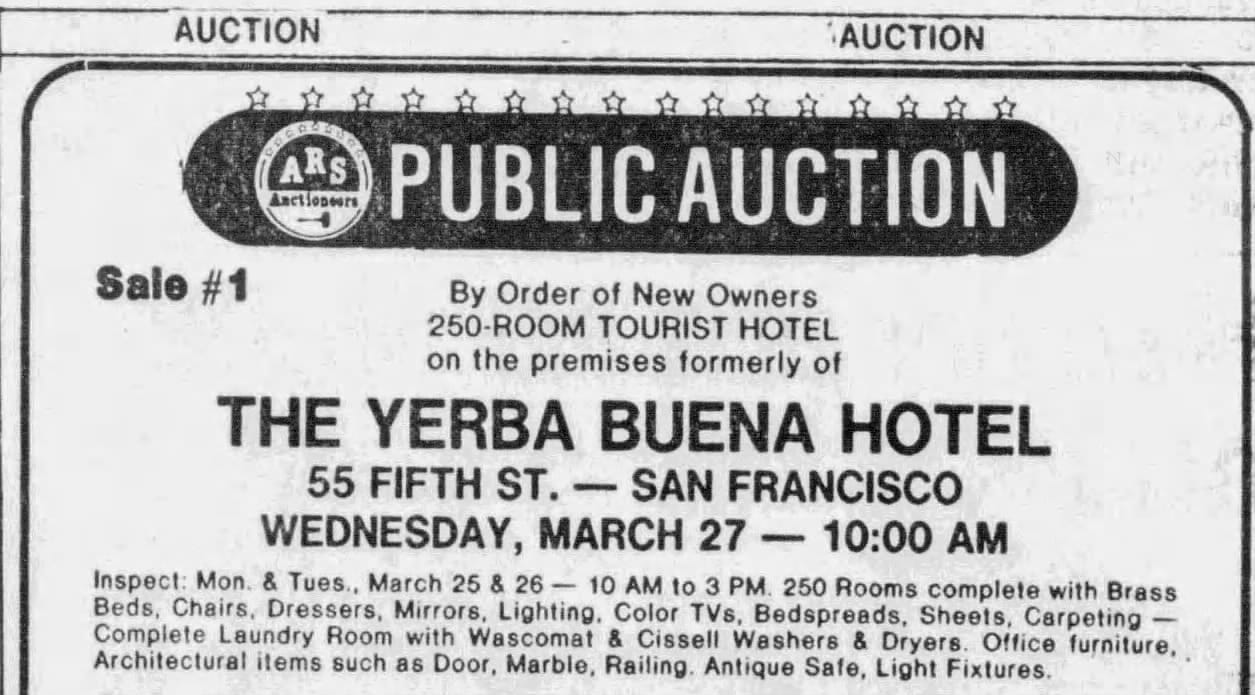
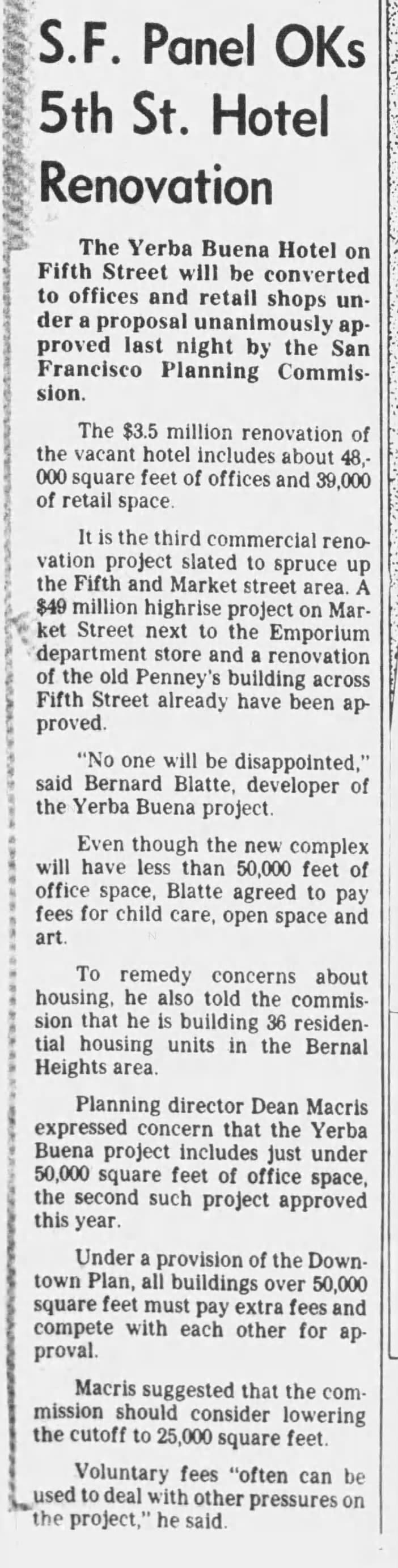
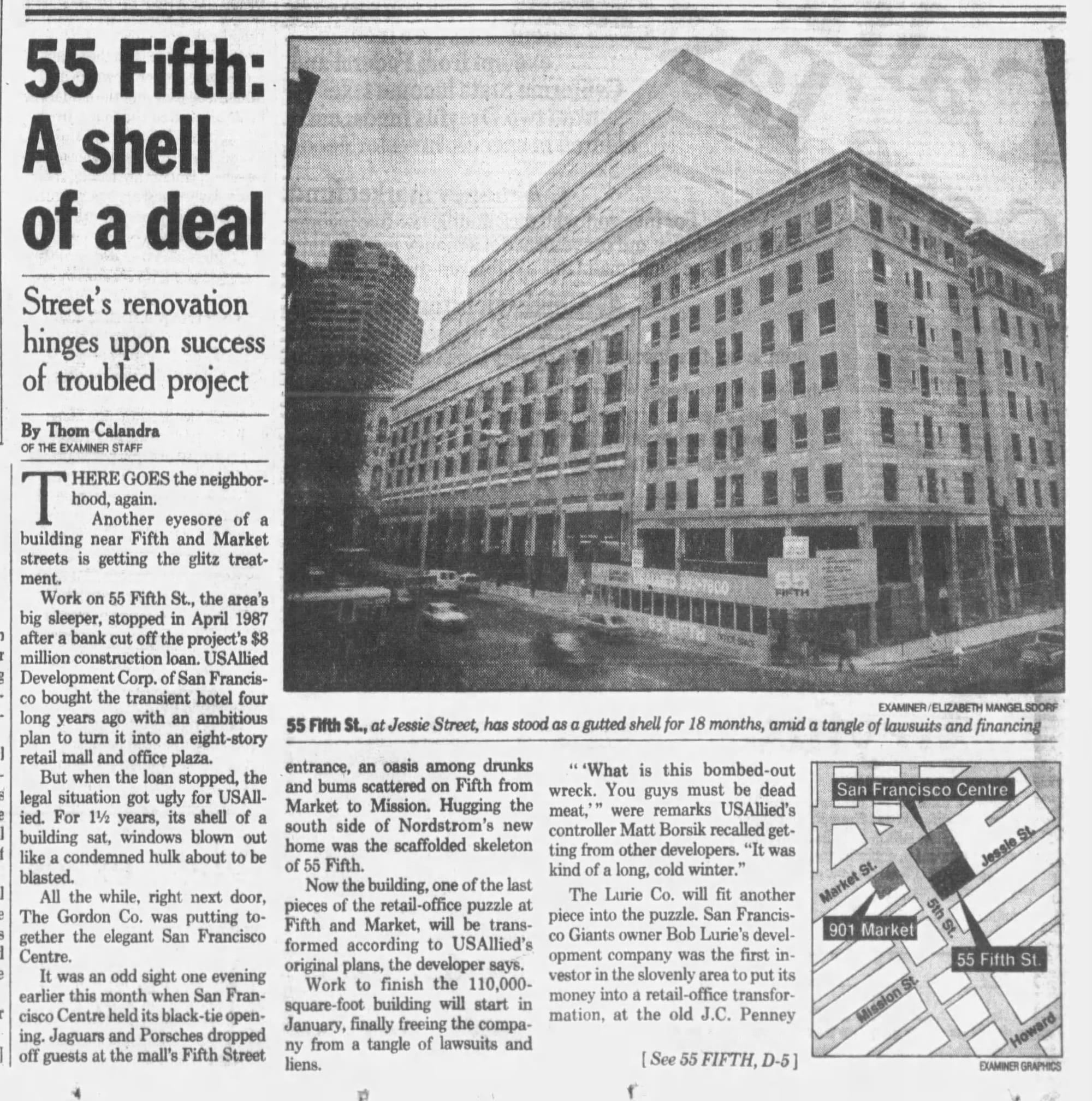
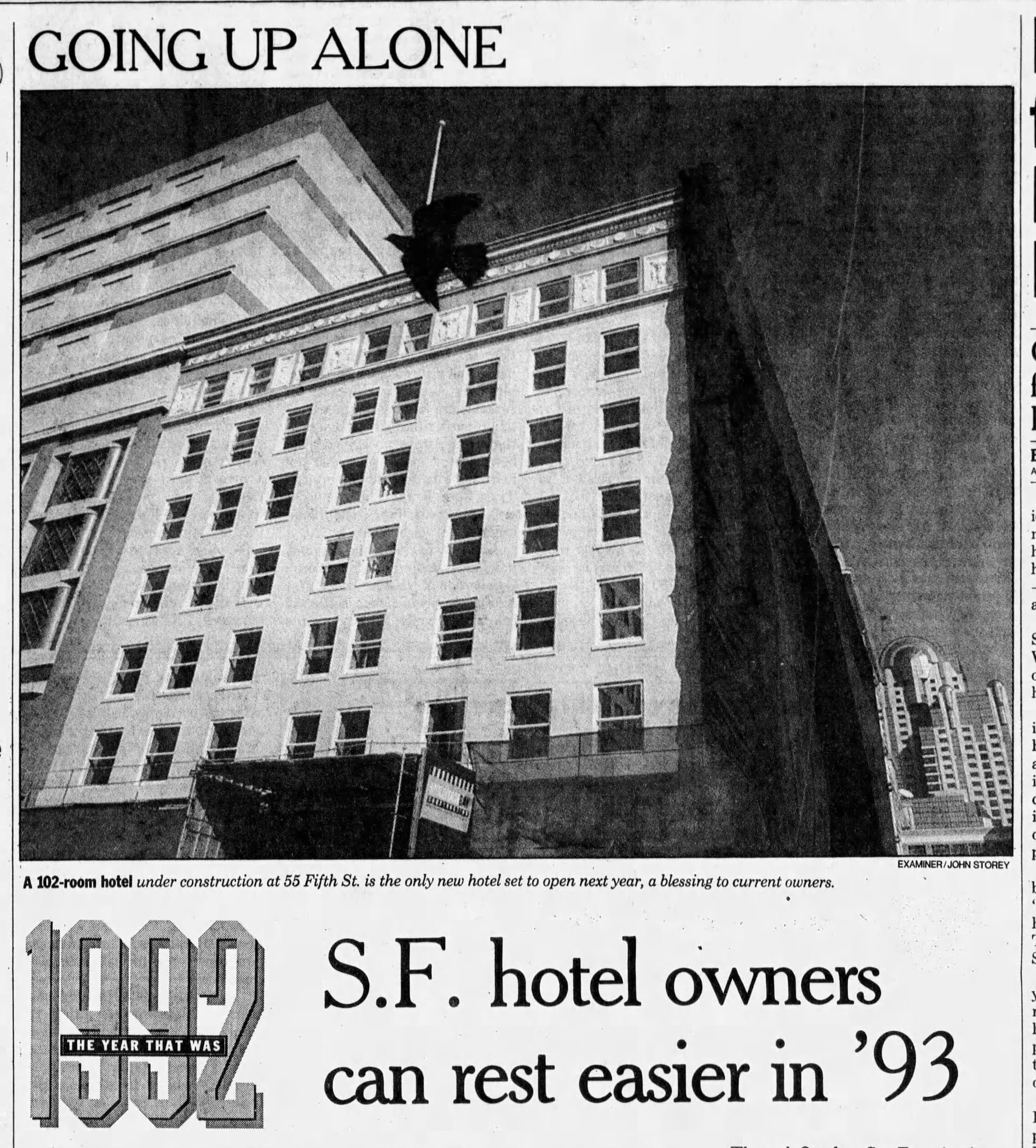
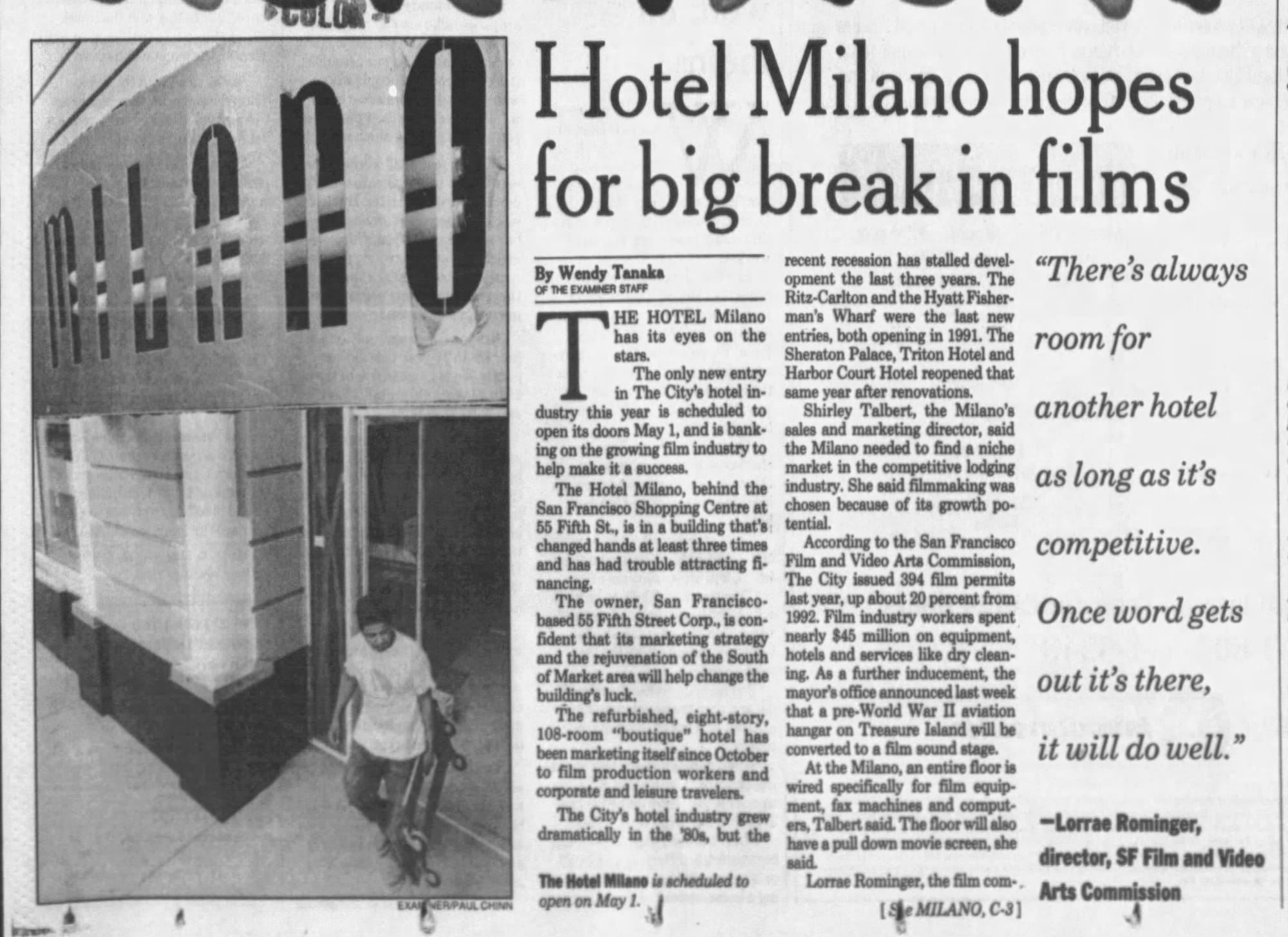
1921 Lankershim ad | 1974, Hotel Lankershim for sale for $1.45m | 1976, grand reopening | 1977 description of the Hotel Yerba Buena | 1985 ad for an auction of the contents of the hotel | 1985, city OKs hotel-to-office conversion plan | 1988, conversion stalled | 1992, hotel renovation continues | 1994, Hotel Milano opens and hopes for film business
In 1985, a company bought the Yerba Buena Hotel for $6.1m ($19m in 2026) and received permission to gut the building and turn it into offices. A San Francisco ordinance at the time required any new office building over 50,000 square feet to also create housing units (an example of the overly complicated regulatory kludges that virtually killed home building in San Francisco for decades), but this office conversion limbo'd its way just under that threshold to avoid building any housing units...and then failed anyway.
The gutted shell languished for five years until another developer converted it back into a hotel, re-opening as the tourist-oriented Hotel Milano in 1994. Since 2013 it’s operated as the Hotel Zetta.
Production Files
Further reading:
- Living Downtown: The History of Residential Hotels in the United States by Paul Groth
- Citywide Historic Context Statement for LGBT History in San Francisco by Donna J. Graves & Shayne E. Watson
The production file in the Curt Teich Archive at the Newberry Library was THICK for this one.
The salesman for Curt Teich & Co., Ed McCarthy, was ON this one, because it was a decent-sized order (50,000 postcards) and the Lankershim had generally ordered from Teich competitors, who were cheaper. So McCarthy sent three pages of instructions to ensure the production department would get this right, including two postcards of other hotels that would serve as models.
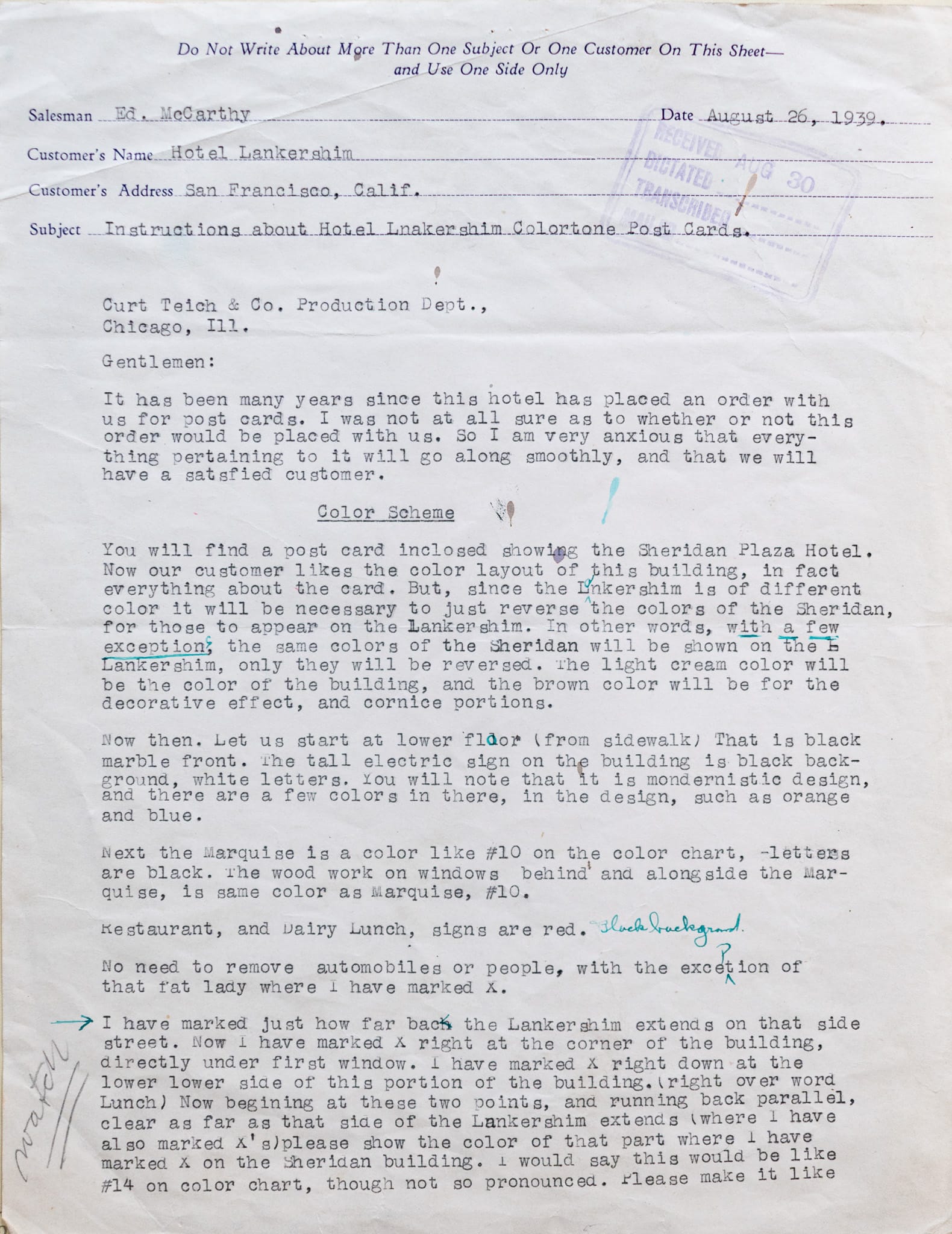
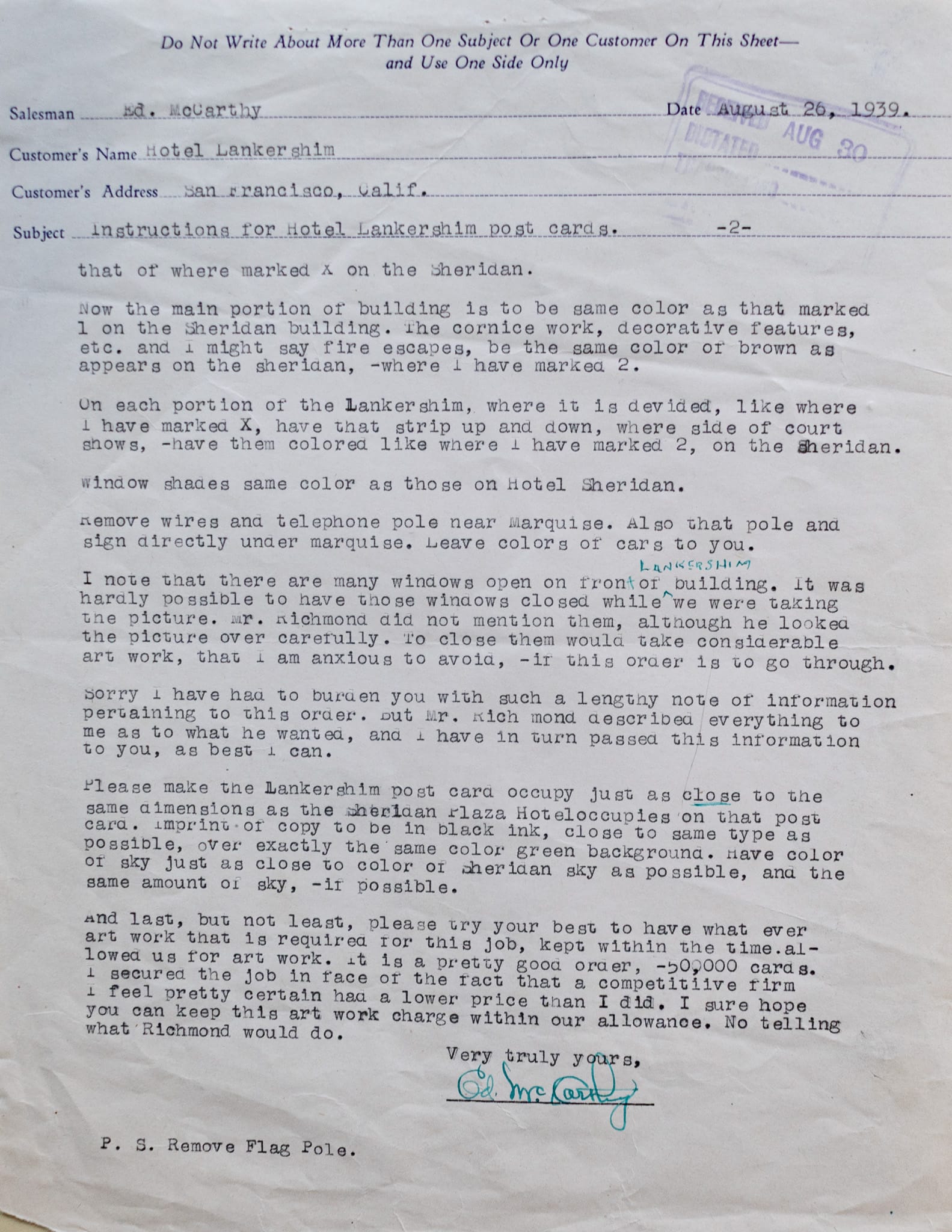
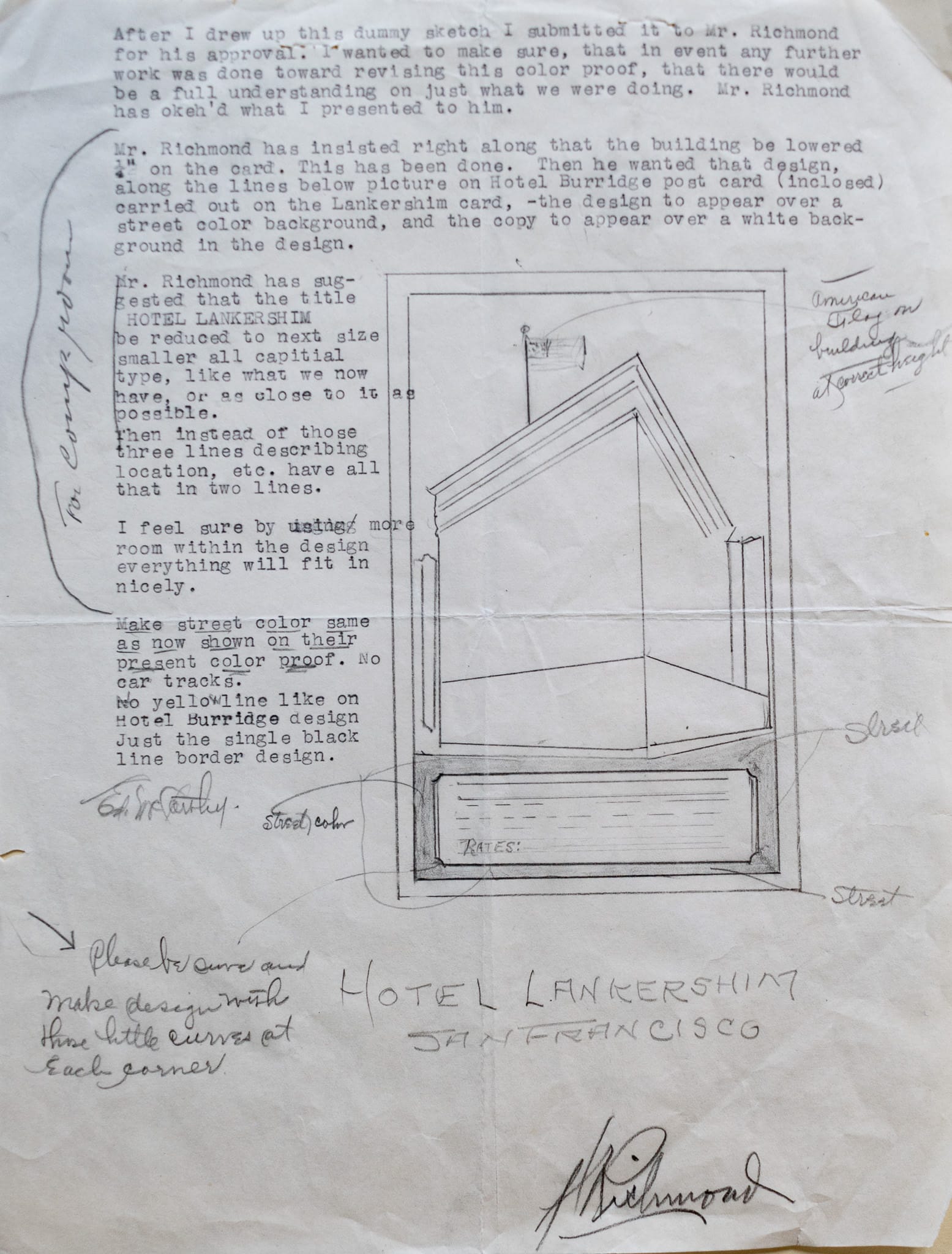
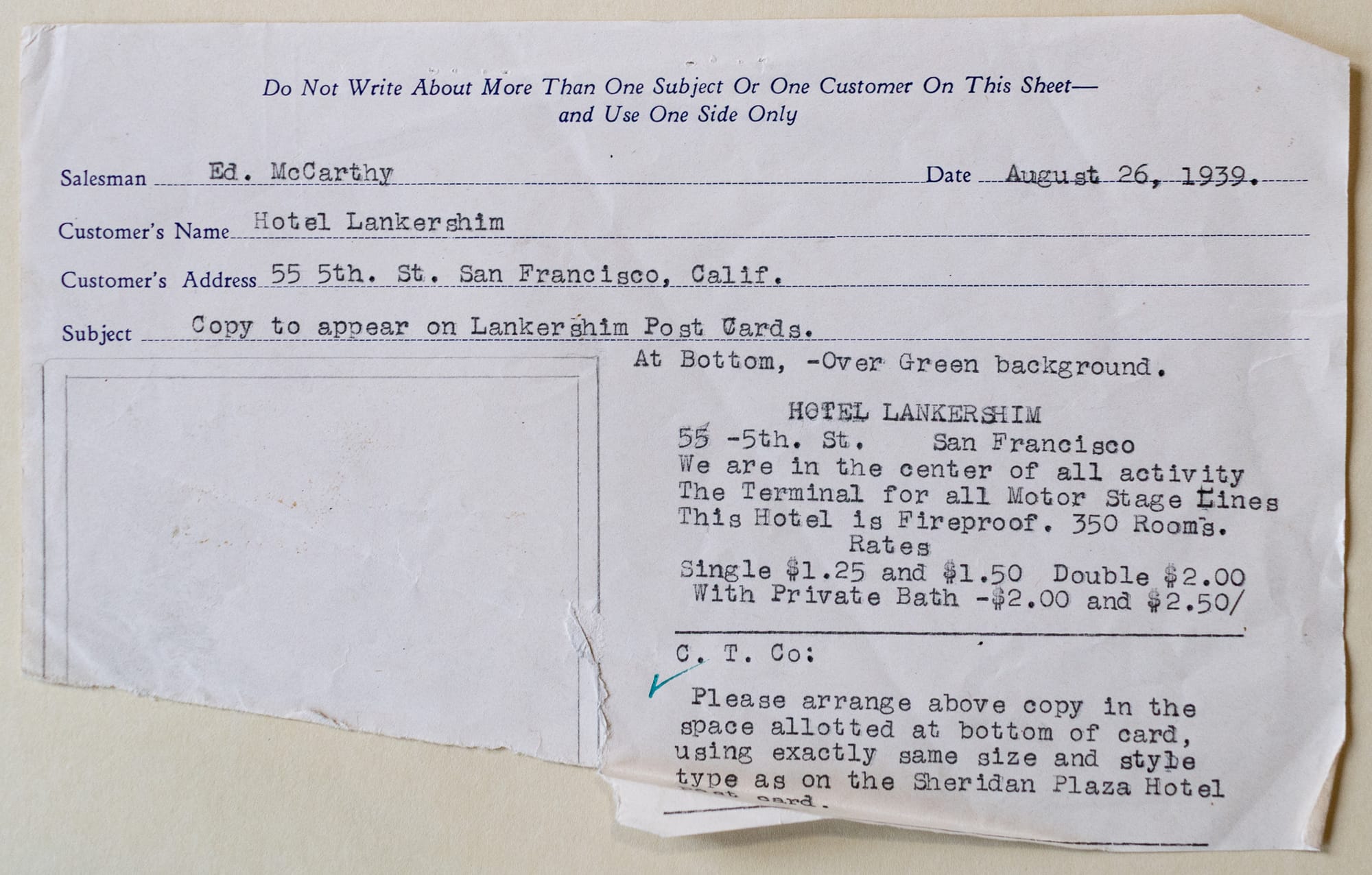
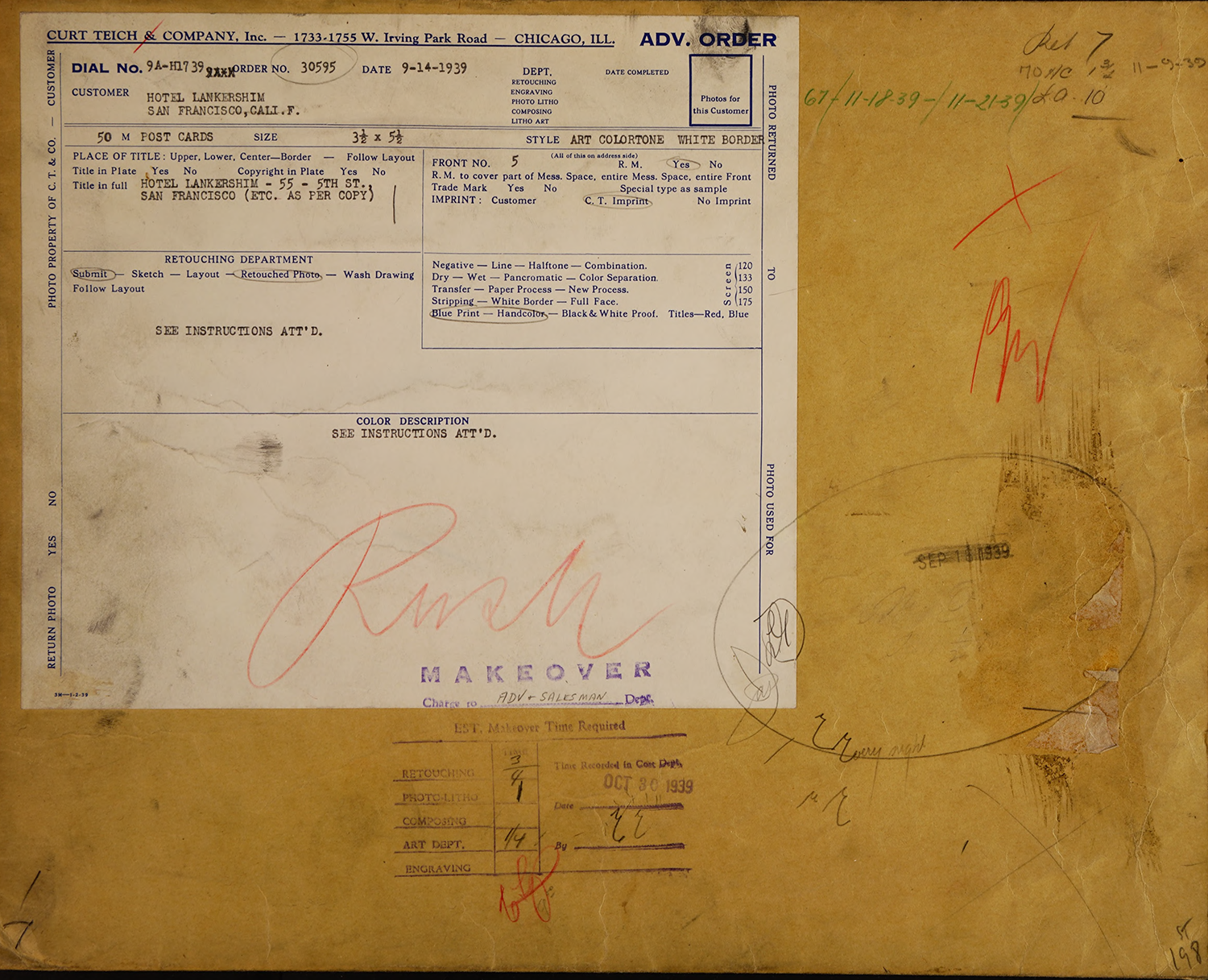
August 1939 letters from salesman Ed McCarthy to the production department, Curt Teich Co. Archive at the Newberry Library | Production file envelope, Curt Teich Archive at the Newberry Library via the Internet Archive
The Hotel Lankershim postcard cribbed heavily from Teich & Co.'s design for the Sheridan Plaza postcard and the Hotel Burbridge postcard.
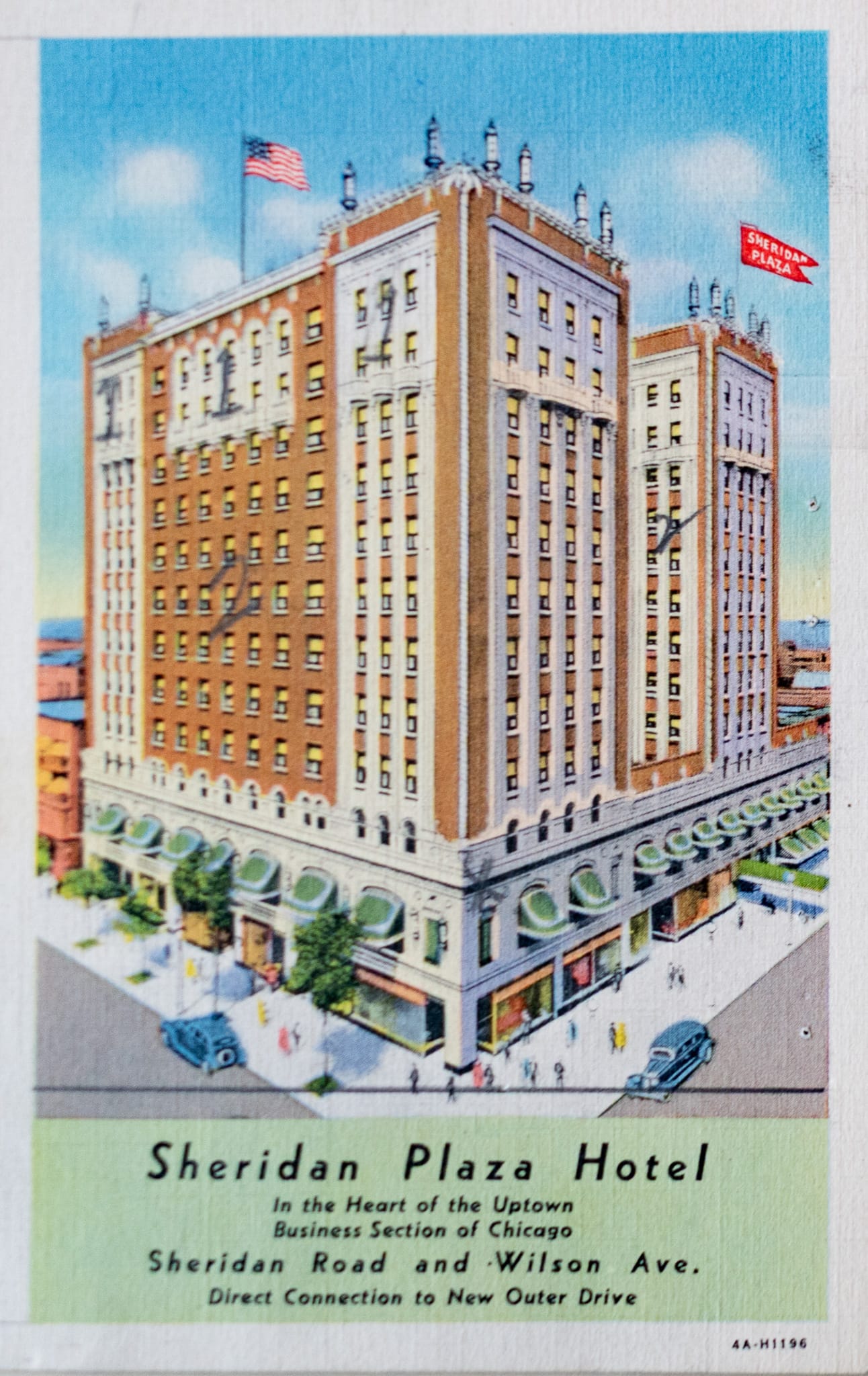
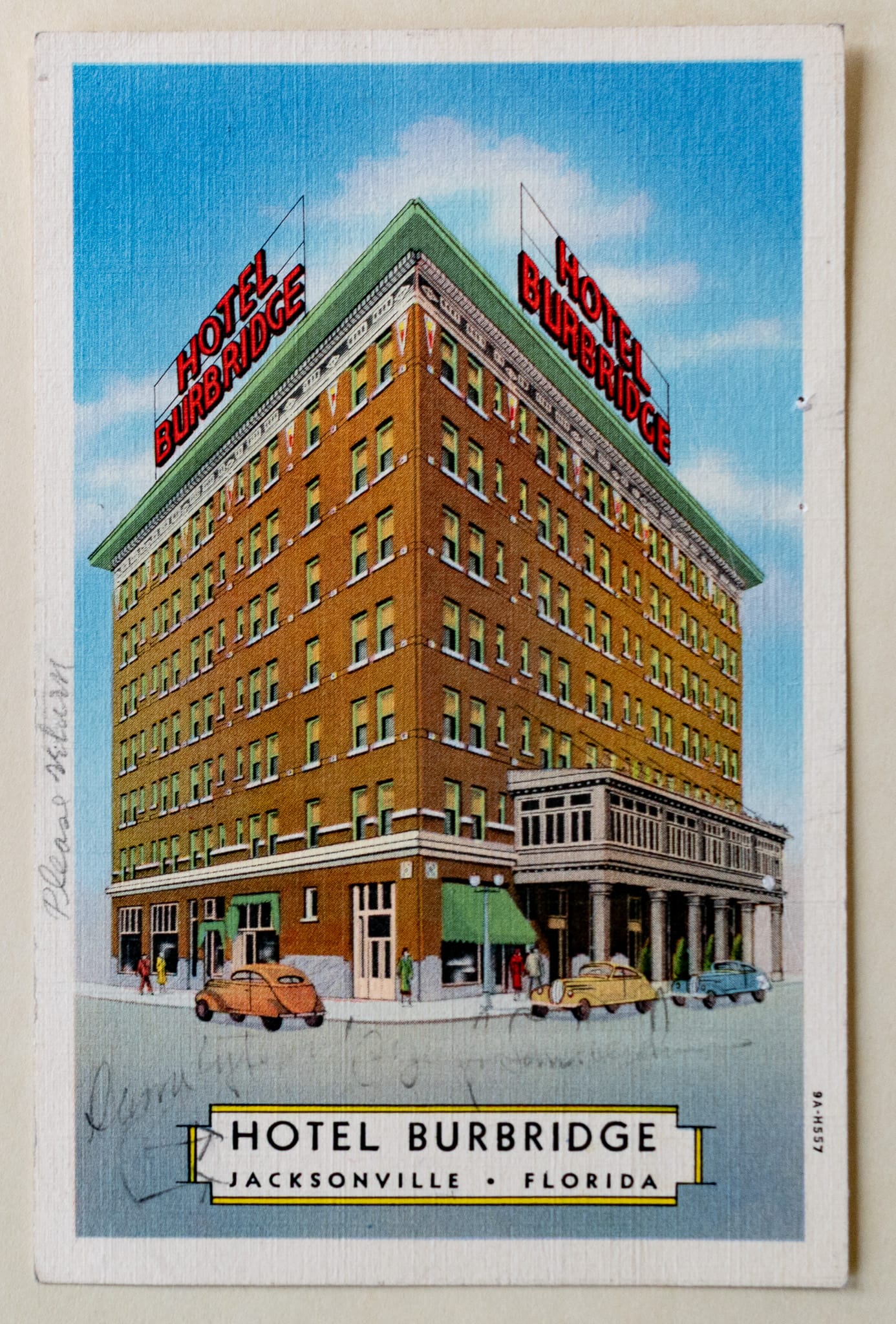
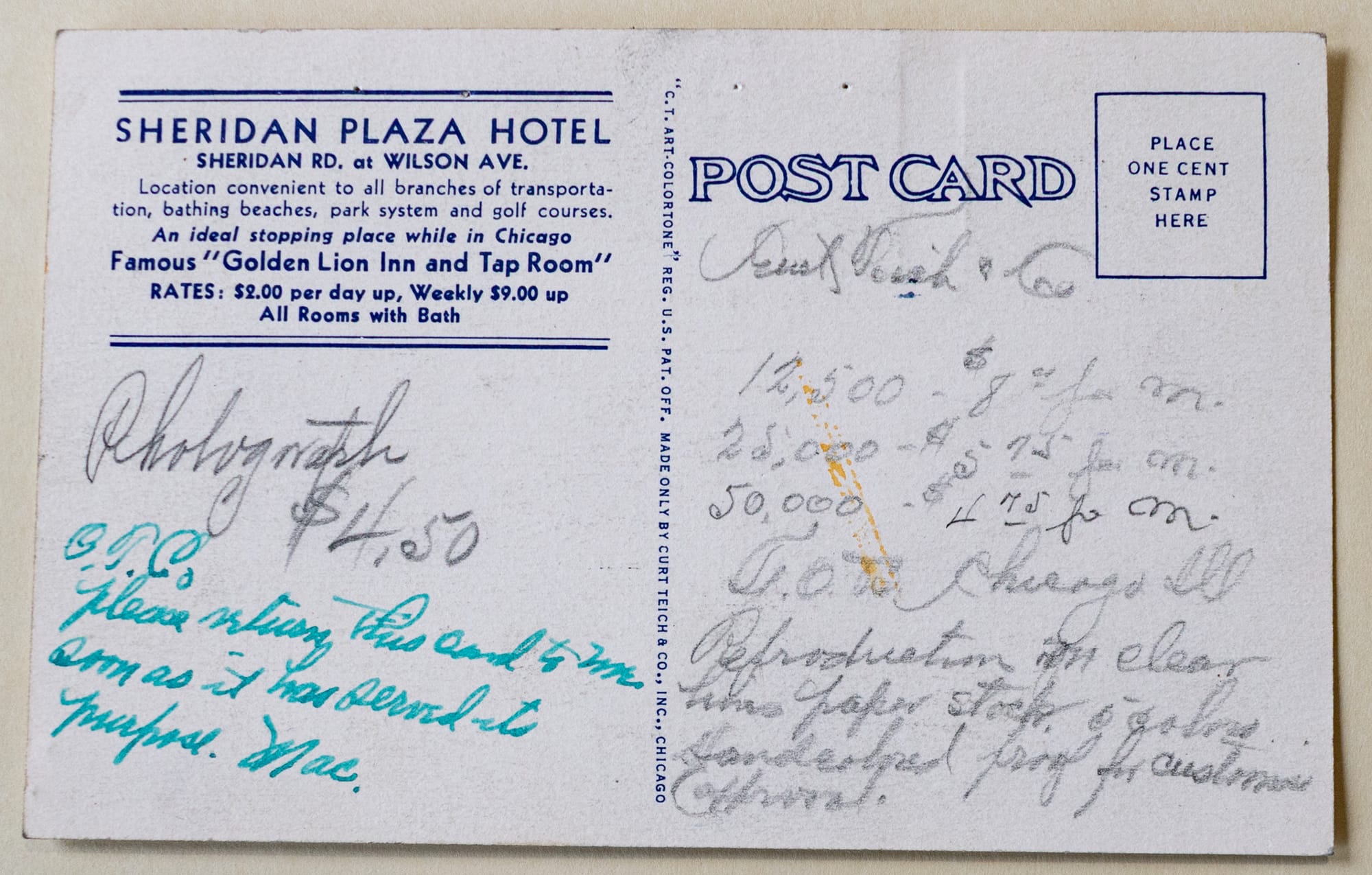
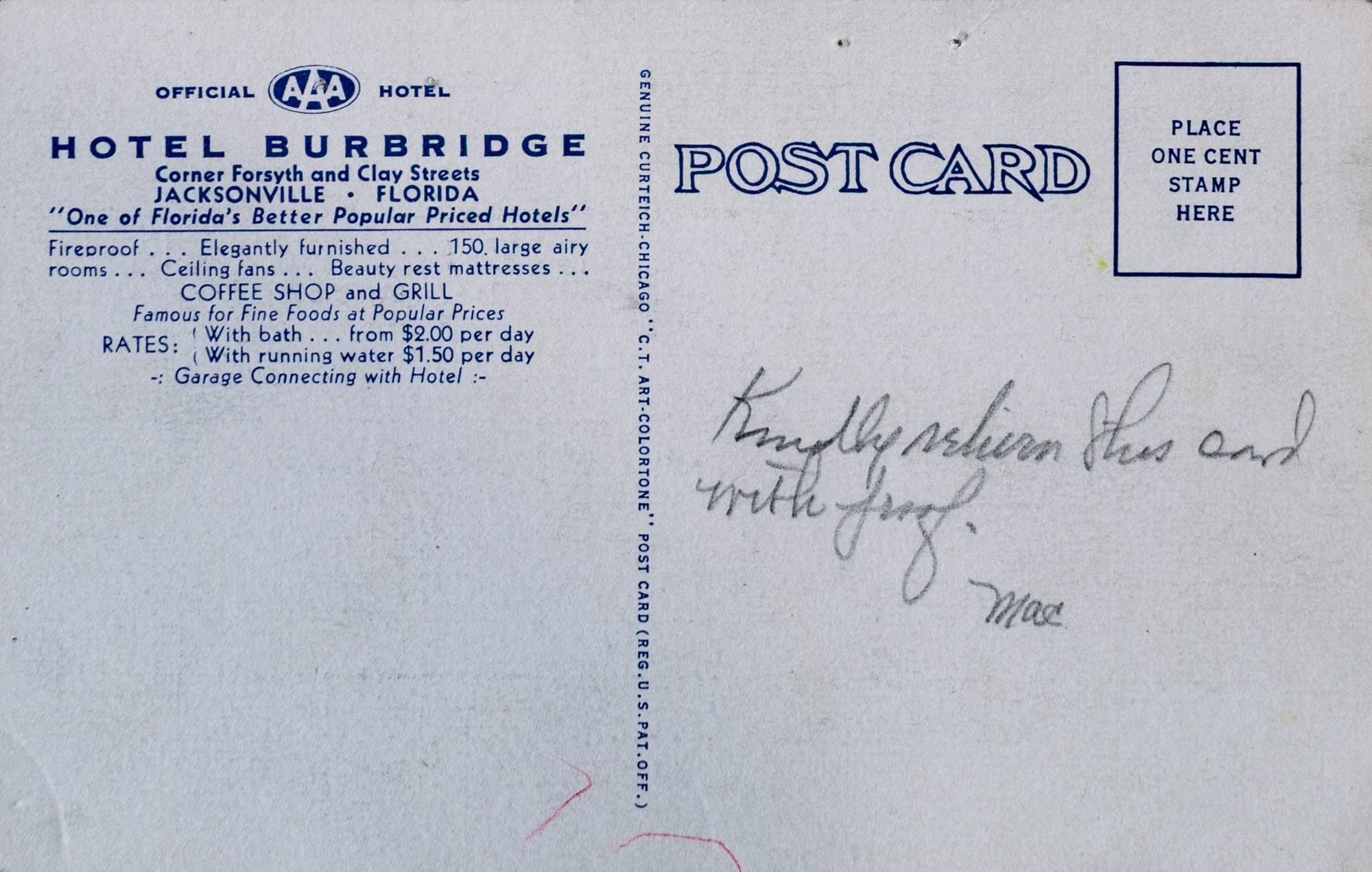
Sheridan Plaza Hotel postcard | Hotel Burbridge postcard | Versos of the two postcards, with pricing and instructions written on them from Ed McCarthy
Notice it took them some finagling to get the spacing of the copy to fit in the banner the way they wanted it to.
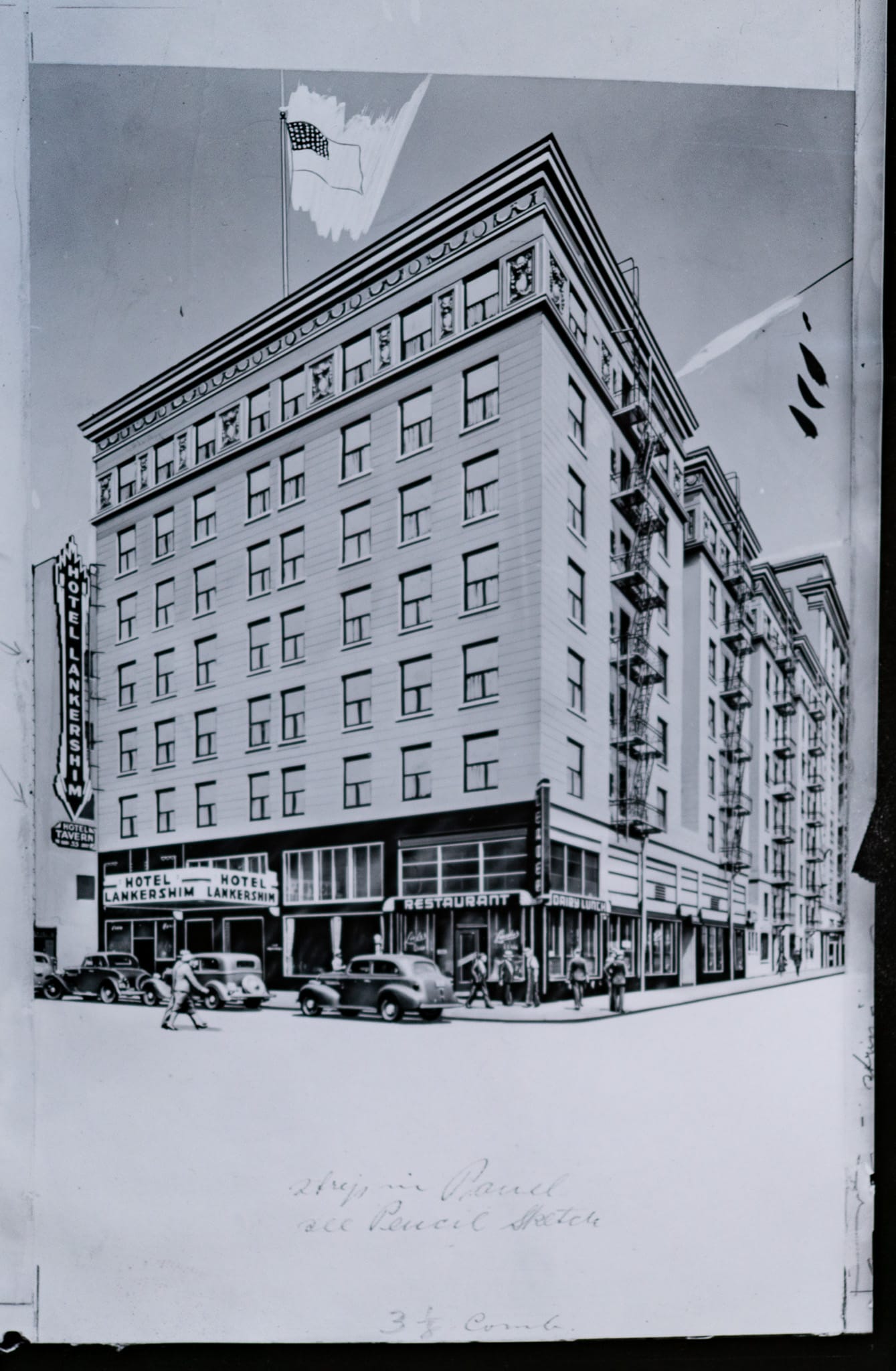
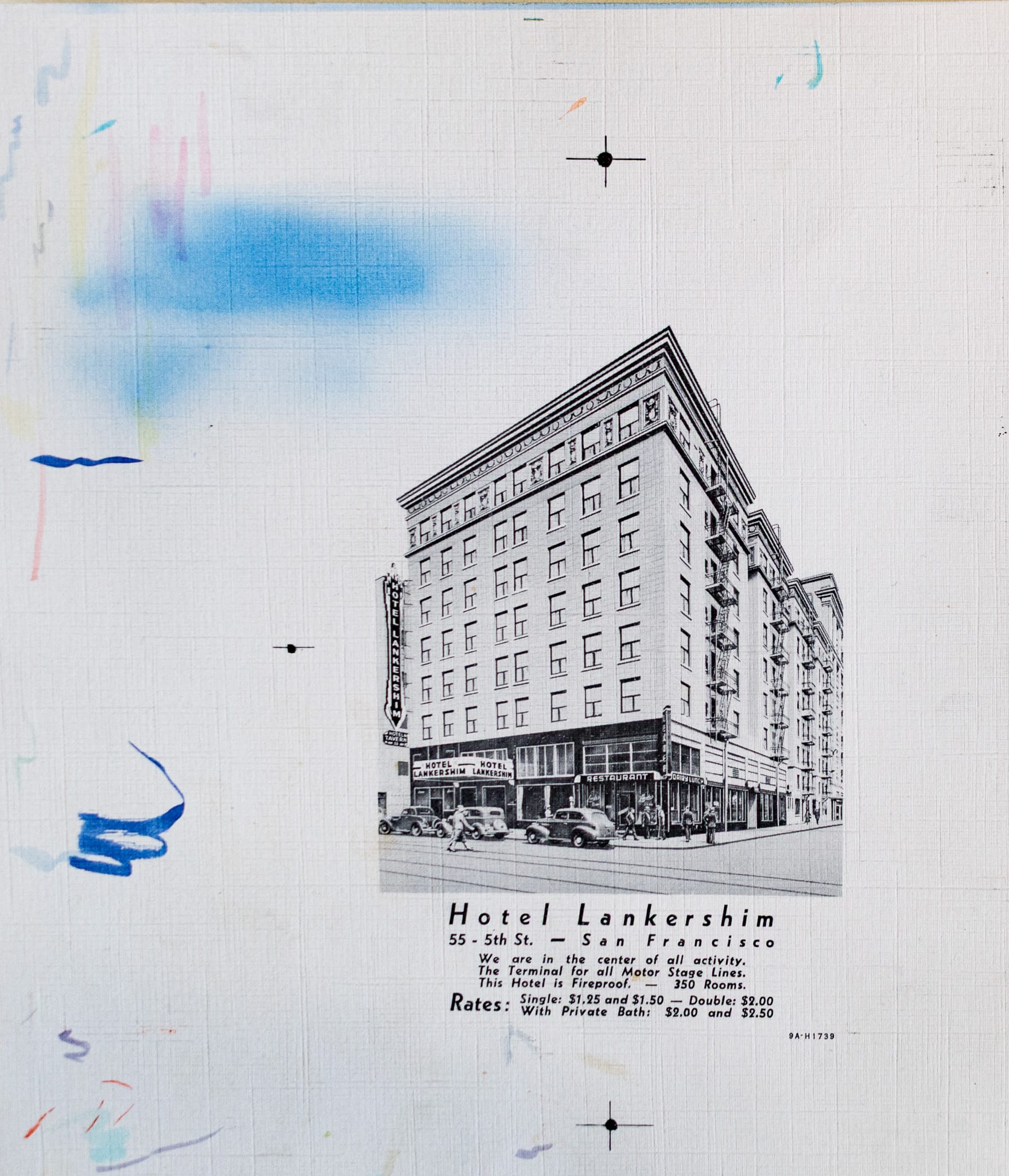
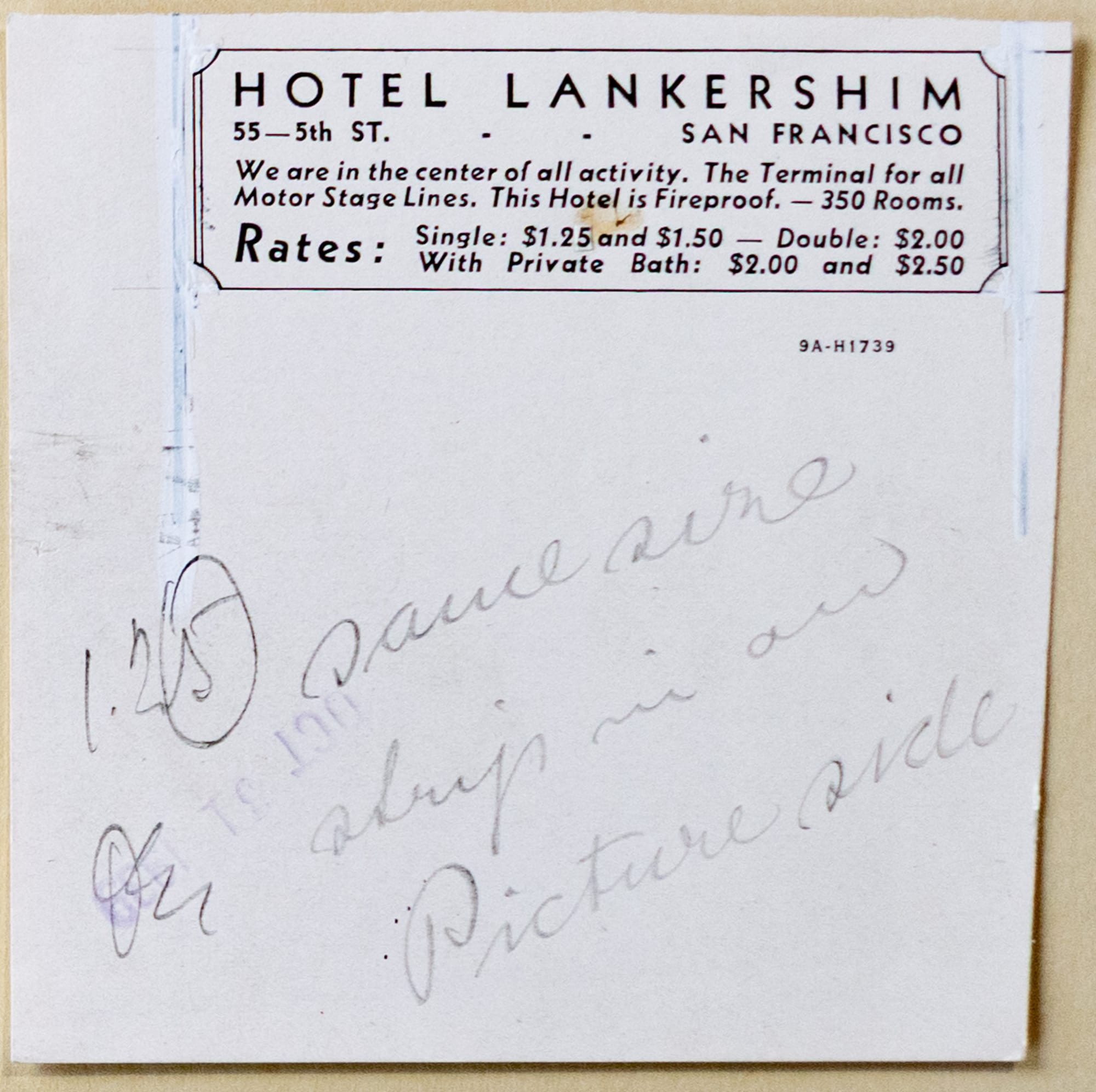
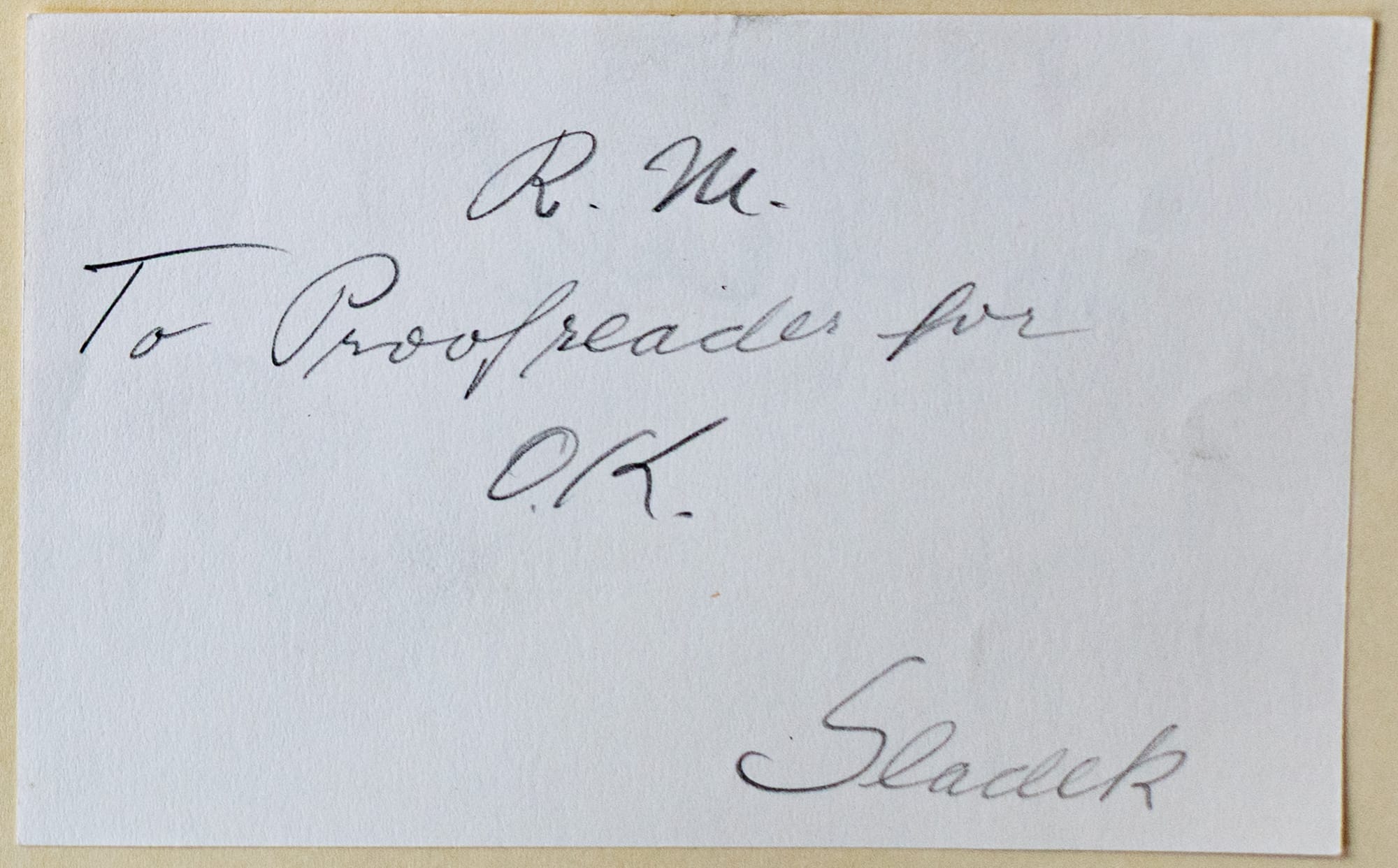
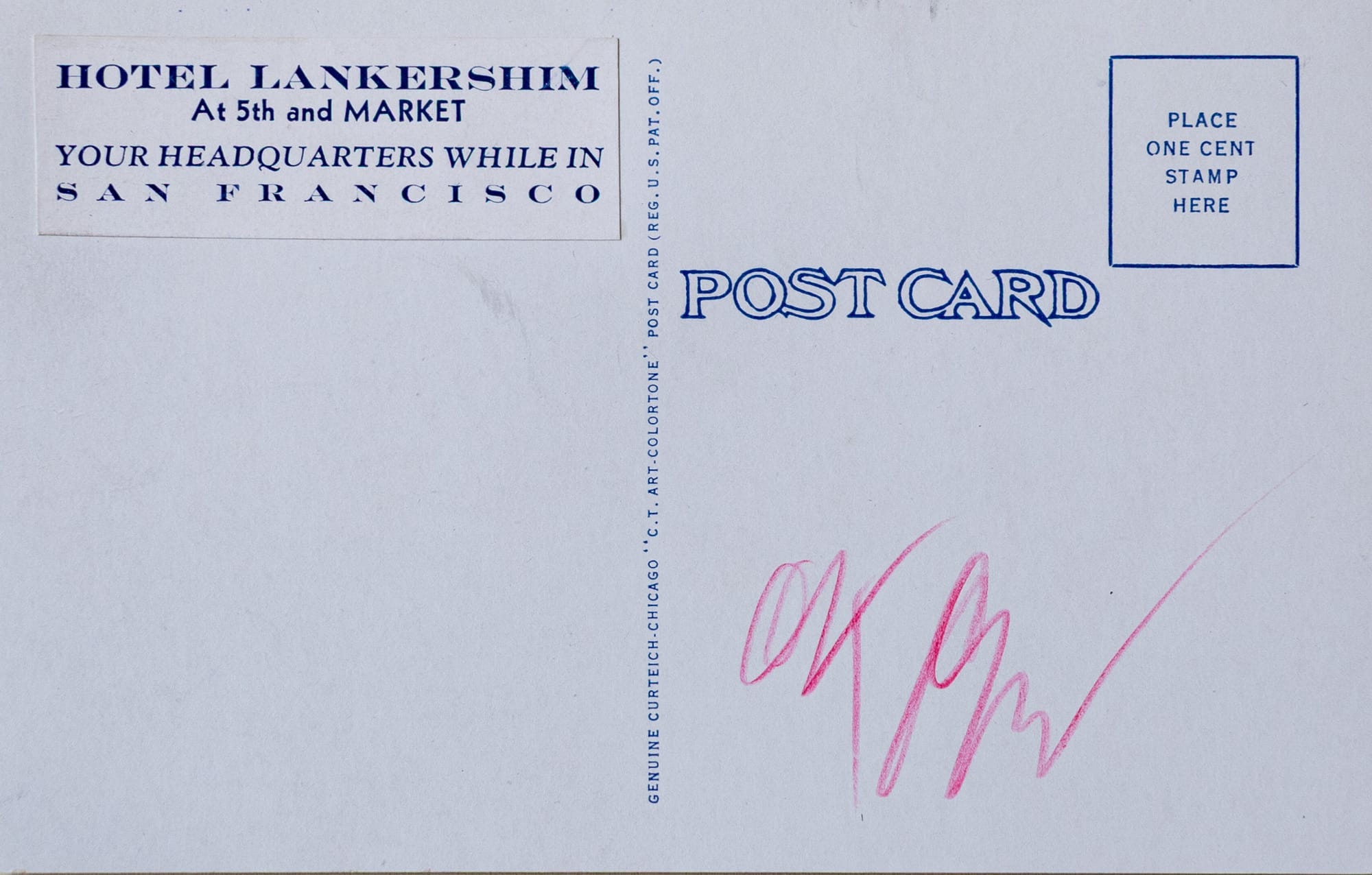
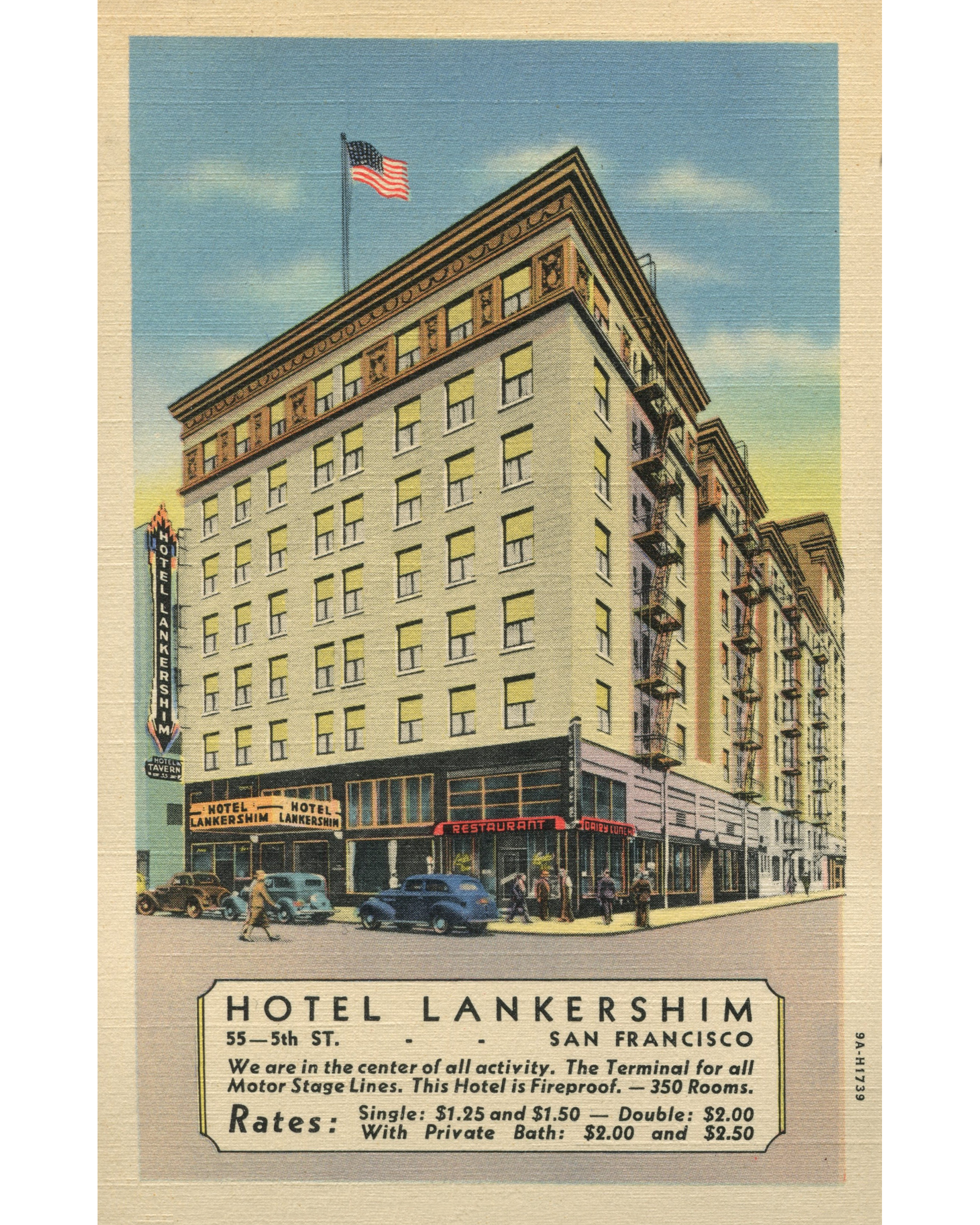
Retouched version | Black proof | Copy of the banner for the front of the postcard | To be sent to proofreader for OK | Approved postcard verso | Final postcard
It looks like from customer order to final production, the process took about three months—late August to mid-t0-late November.
A little more on the saga of the temporary city hall offer—basically, after San Francisco City Hall was destroyed in the 1906 earthquake, the city wanted a temporary building from which to run the city to give them time to build out a massive civic center. Developers lined up to build this for the city, enticed by the opportunity for a guaranteed, lucrative, and temporary anchor tenant to help finance the construction of a building that they would eventually be able to use for whatever would be most profitable. J.B. Lankershim pitched hard for his site on 5th Street near Market, and the San Francisco Board of Supervisors even passed a resolution accepting his offer in September, 1910, but there were a bunch of competing offers with different patrons and basically immediately after accepting it, they backtracked and eventually went with a different building—the eventual Hotel Whitcomb—instead.
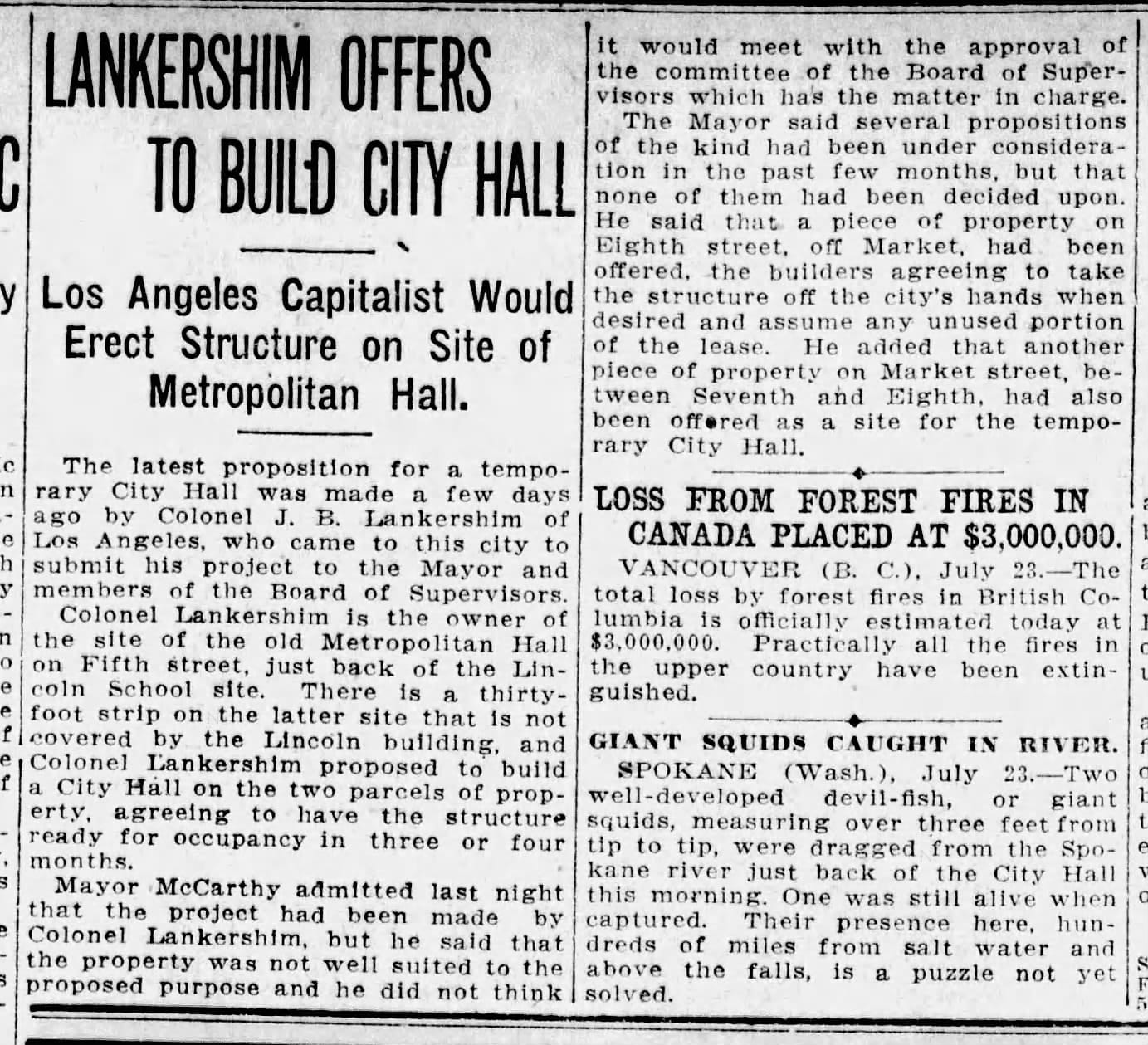
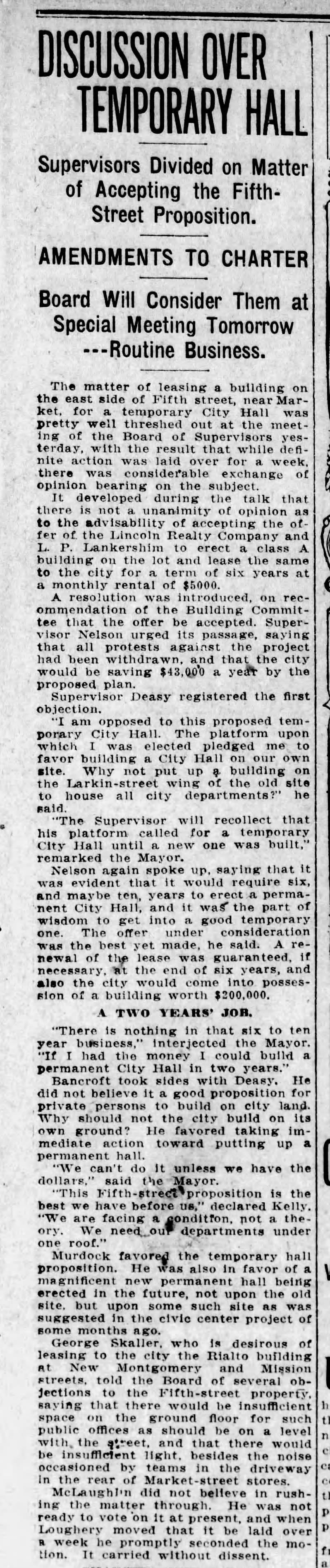
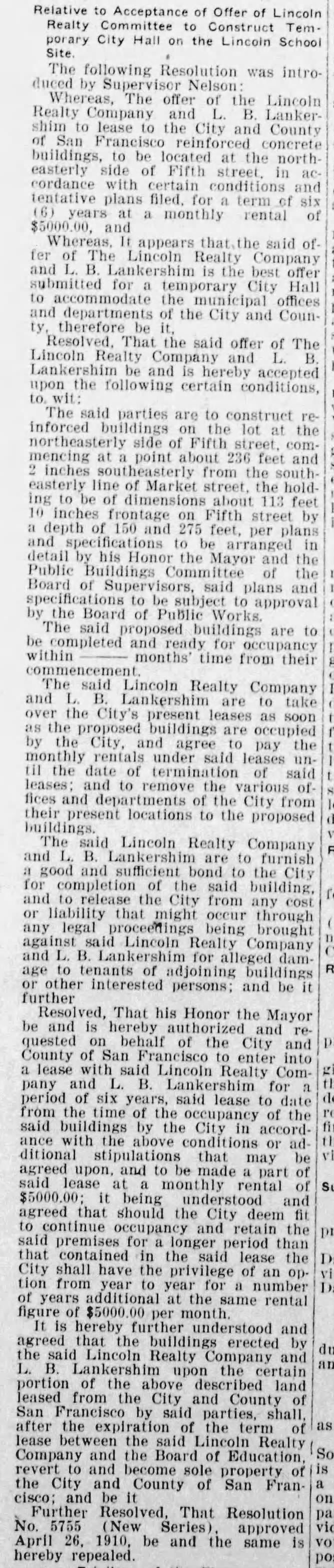
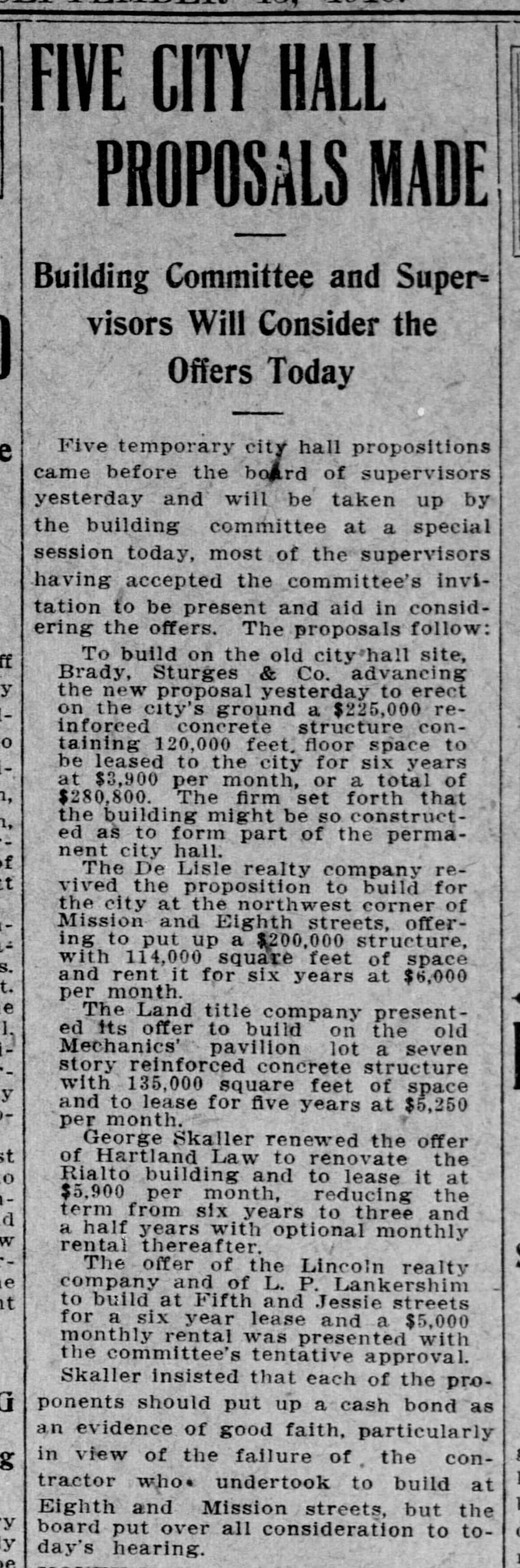
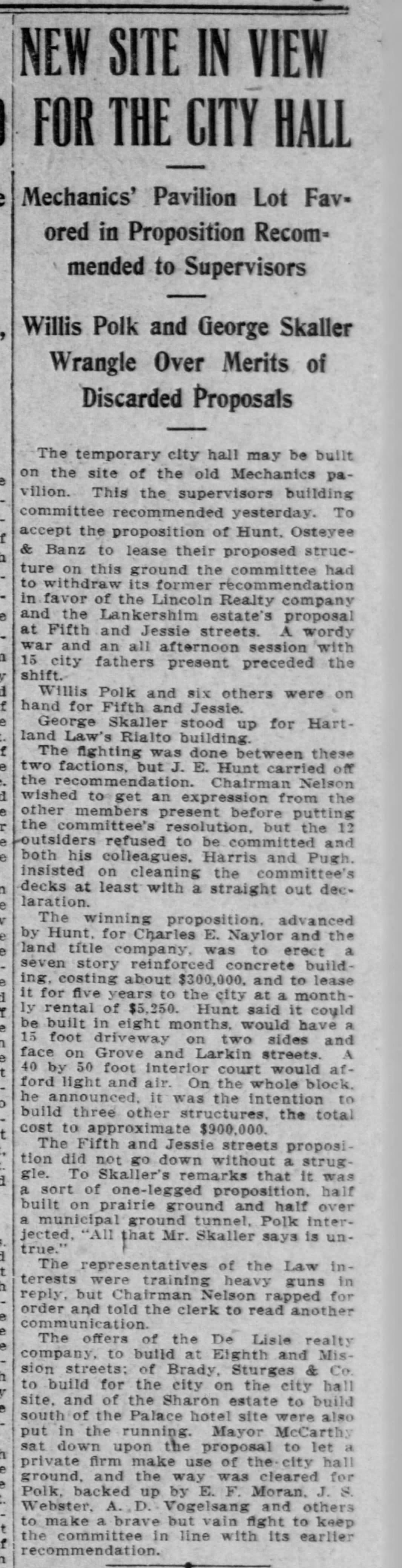

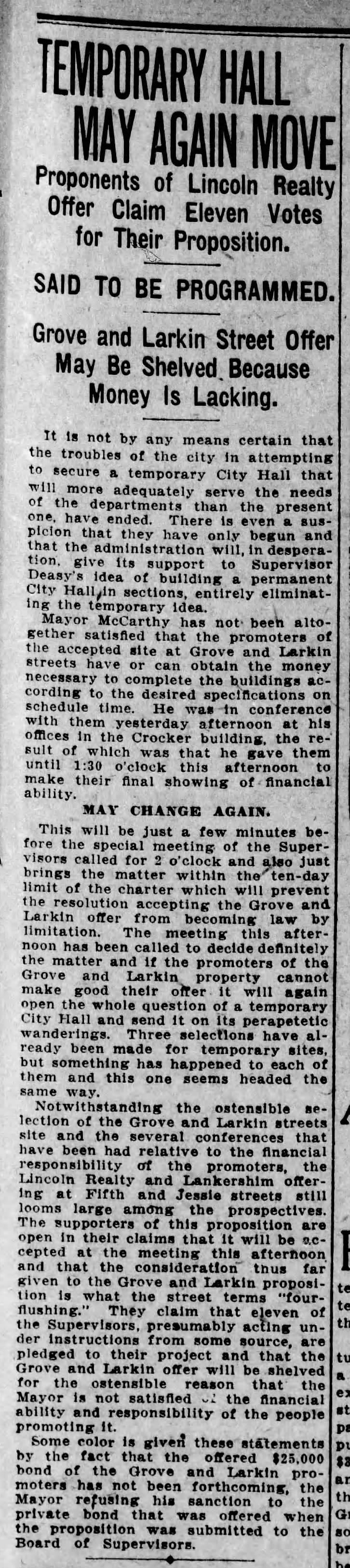
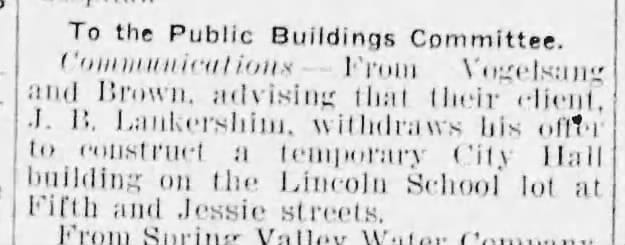
Articles from 1910 about Lankershim's effort to win the temporary city hall project
Some of the ads I used to make that rent chart.
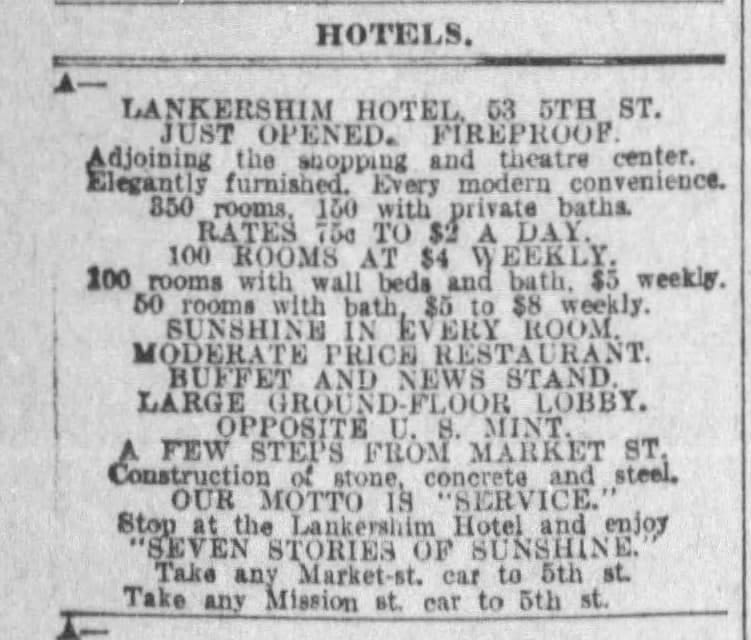
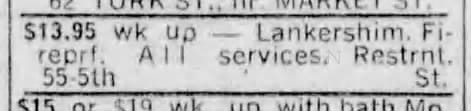
1914 | 1929 | 1939 | 1949 | 1959 | 1971
I thought the random ink and markings on the back of the black proof of the postcard was weirdly pretty.
Member discussion: