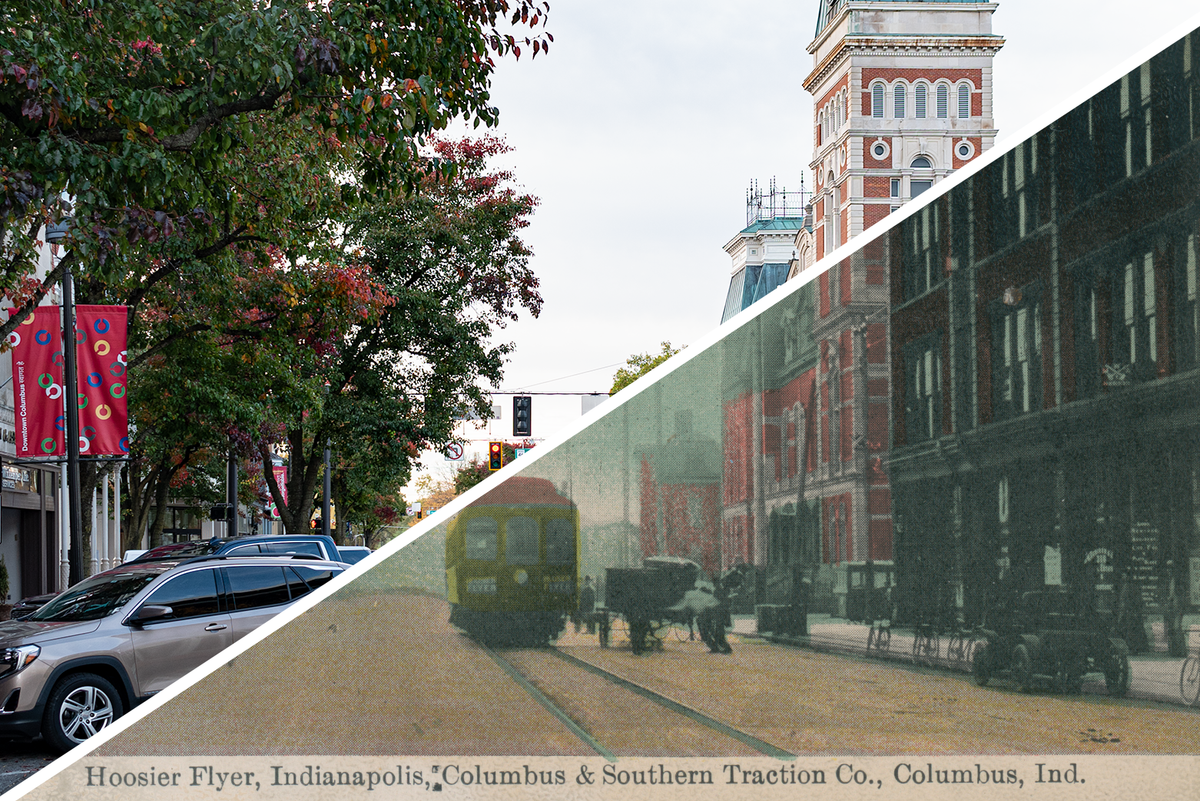
Indiana was one of the hubs of the interurban streetcar system that bloomed across the US in the first decades of the 20th century—at their peak, 40 interurbans a day rolled through downtown Columbus—and the Hoosier Flyer was one of the flagship services of that once-dense system. Traveling north from Louisville to Indianapolis in four hours (its sister service, the Dixie Flyer, was the southbound train), in the 1920s the Hoosier Flyer even ran sleeper cars and “the finest interurban dining cars ever constructed”. Battered by the Great Depression and competition from cars, interurbans declined in the 1930s, their system maps shrinking as quickly as they’d expanded. In 1935, the federal government passed the Public Utility Holding Company Act, which required the separation of utilities and electric railroads, mortally wounding their business model. Service through Columbus, already truncated and running only between Indianapolis and Seymour, came to a particularly ignominious end—a deadly crash in September, 1941, destroyed two of the line’s four remaining streetcars. Service never restarted. Today, Columbus has no intercity passenger rail service.
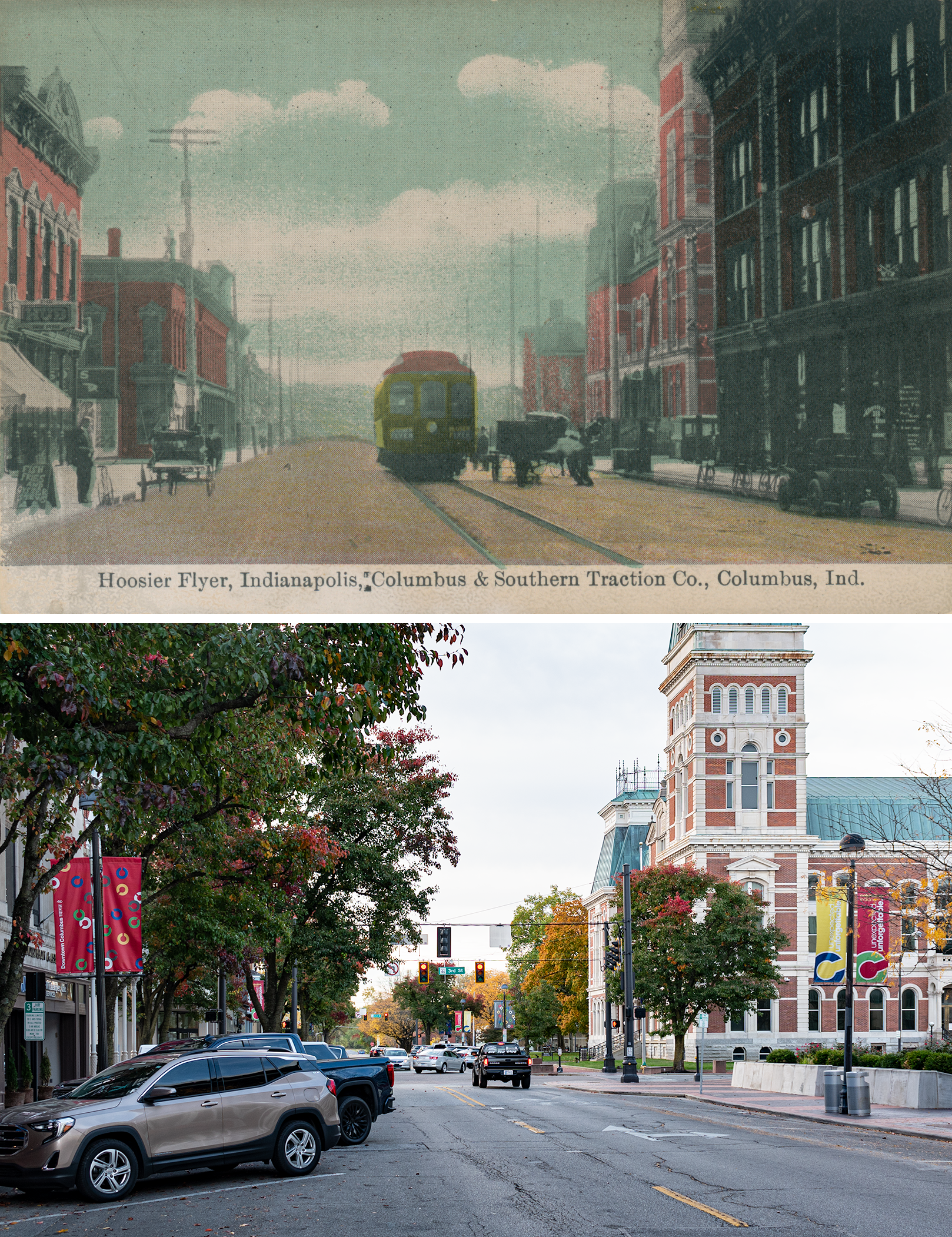
So, what’s changed?
- Well, obviously, the streetcar rails are gone—ripped up and paved over in 1942, soon after service ended—but also notice how many bikes there are in the postcard. I count five parked bikes and only two parked cars, whereas today that ratio is...different.
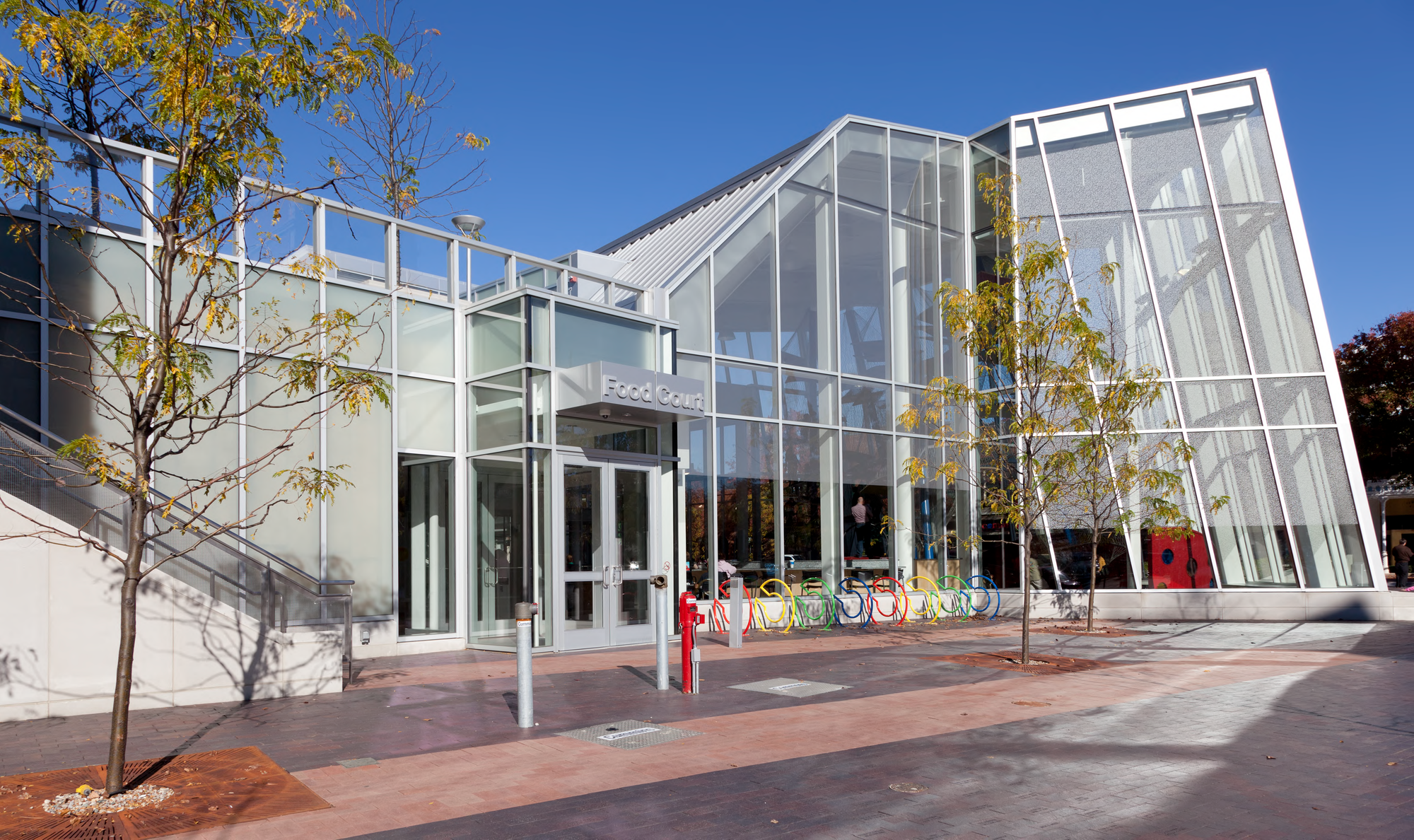
- The building on the right was torn down in a bout of 1960s urban renewal (Columbus wasn't immune) and replaced with the Commons (first, the old one, a mall and event center designed by Cesar Pelli and demolished in 2008, then this version, also called the Commons, designed by Koetter Kim).
- New diagonal parking configuration (mehhhhh) and more street trees (hooray).
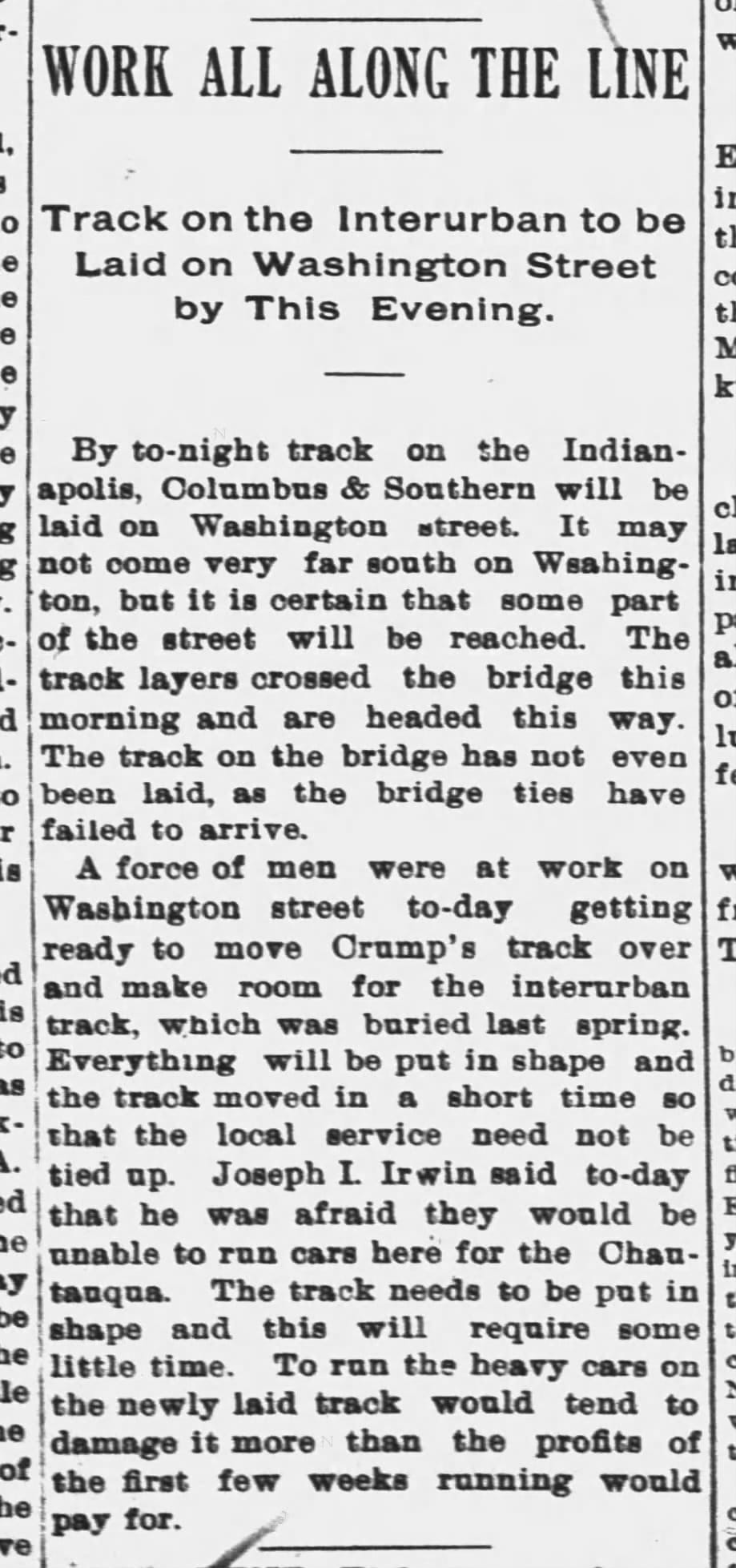
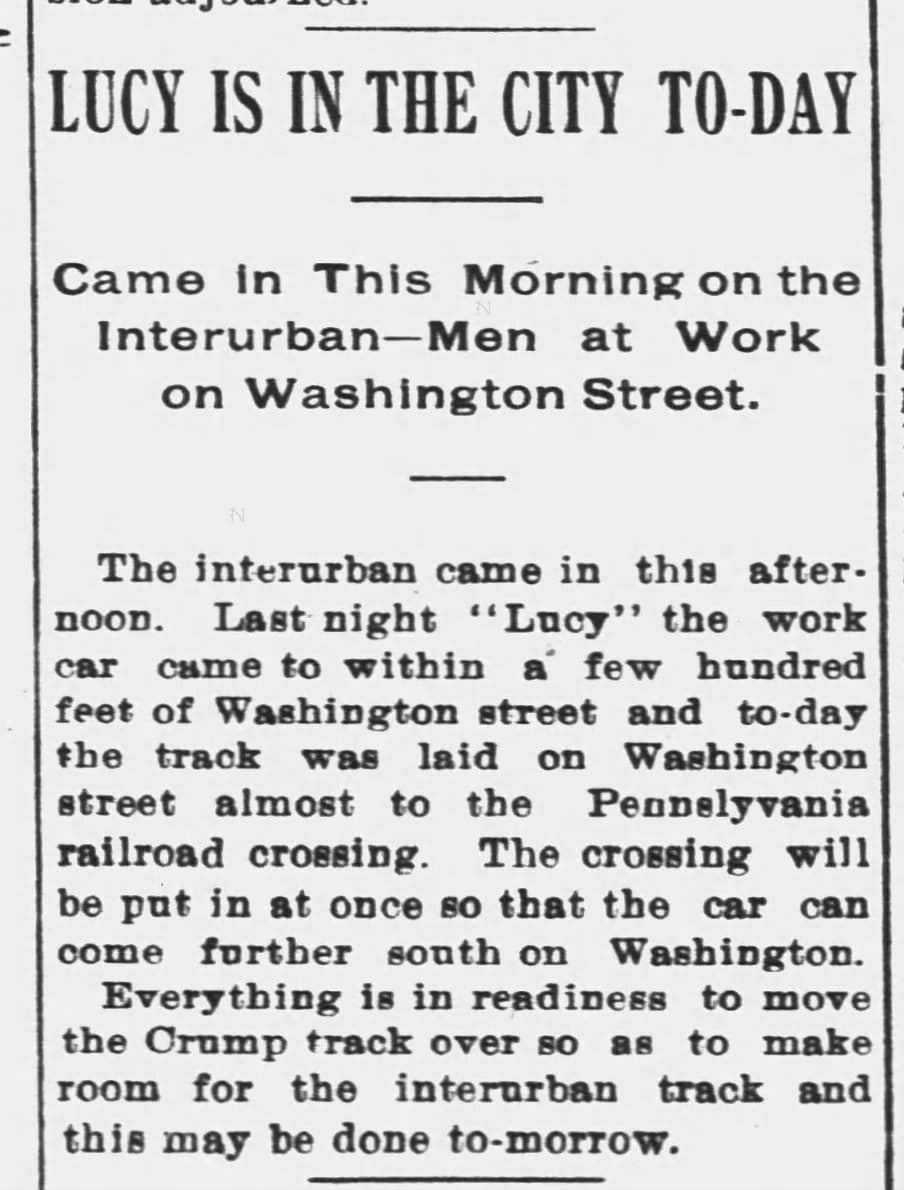
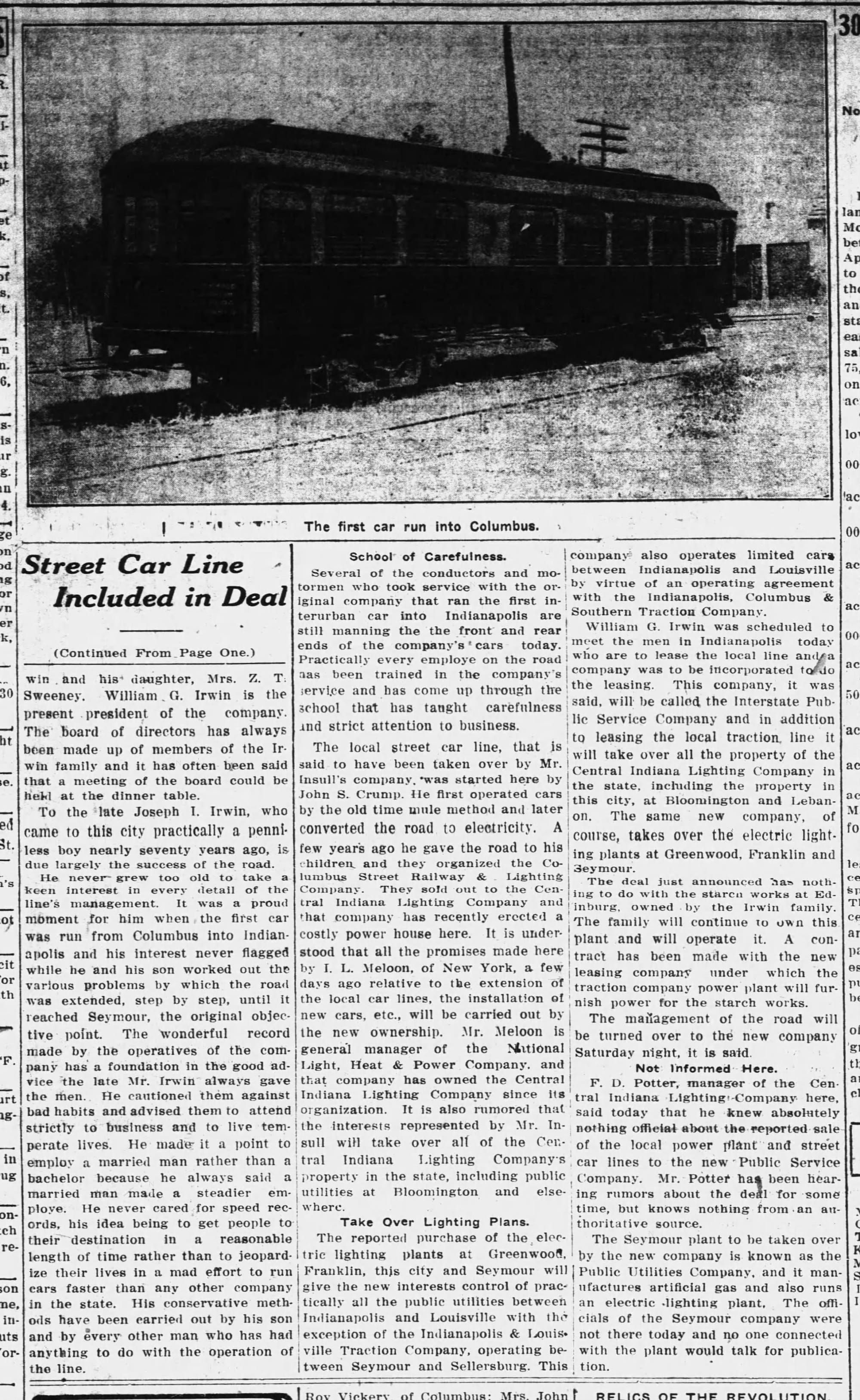
Like just about everything in Columbus, the Irwin family was involved in bringing the interurban here. Irwin Bank founder Joseph I. Irwin and his son William G. Irwin acquired the unfinished Indianapolis, Greenwood and Franklin Railroad railway in 1899 after the original organization ran out of money. The Irwins restarted construction and in 1900 it became the first interurban to enter Indianapolis. Service first reached Columbus in 1903, and the interurban changed its name to the Indianapolis, Columbus and Southern Traction Company. By 1909, 21 southbound Dixie Flyer and 19 northbound Hoosier Flyer interurbans passed through Columbus daily—from here, it was a 90 minute ride to downtown Indianapolis or two-and-a-half hours to downtown Louisville. They even ran a bit of freight service on the line.
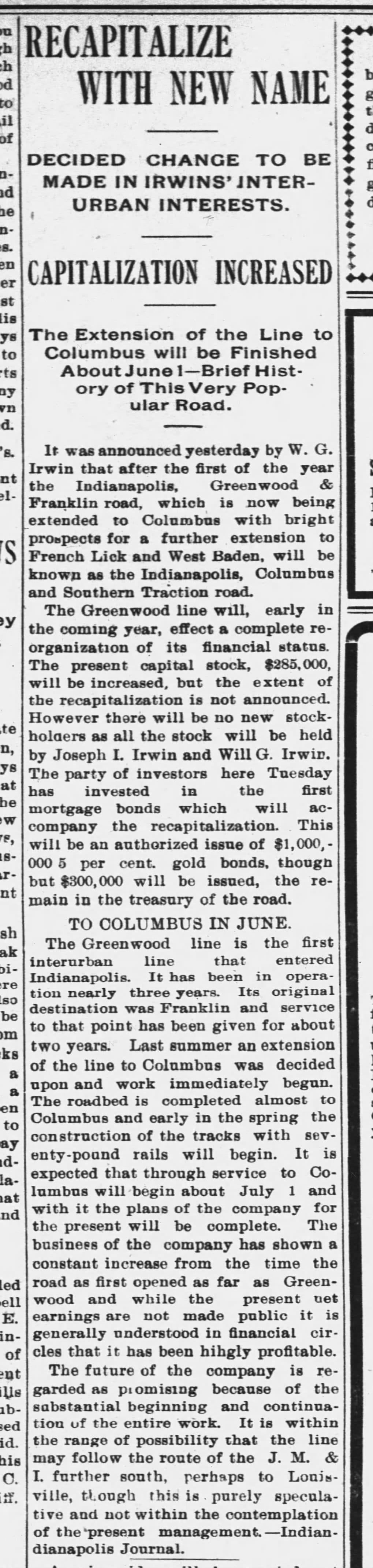
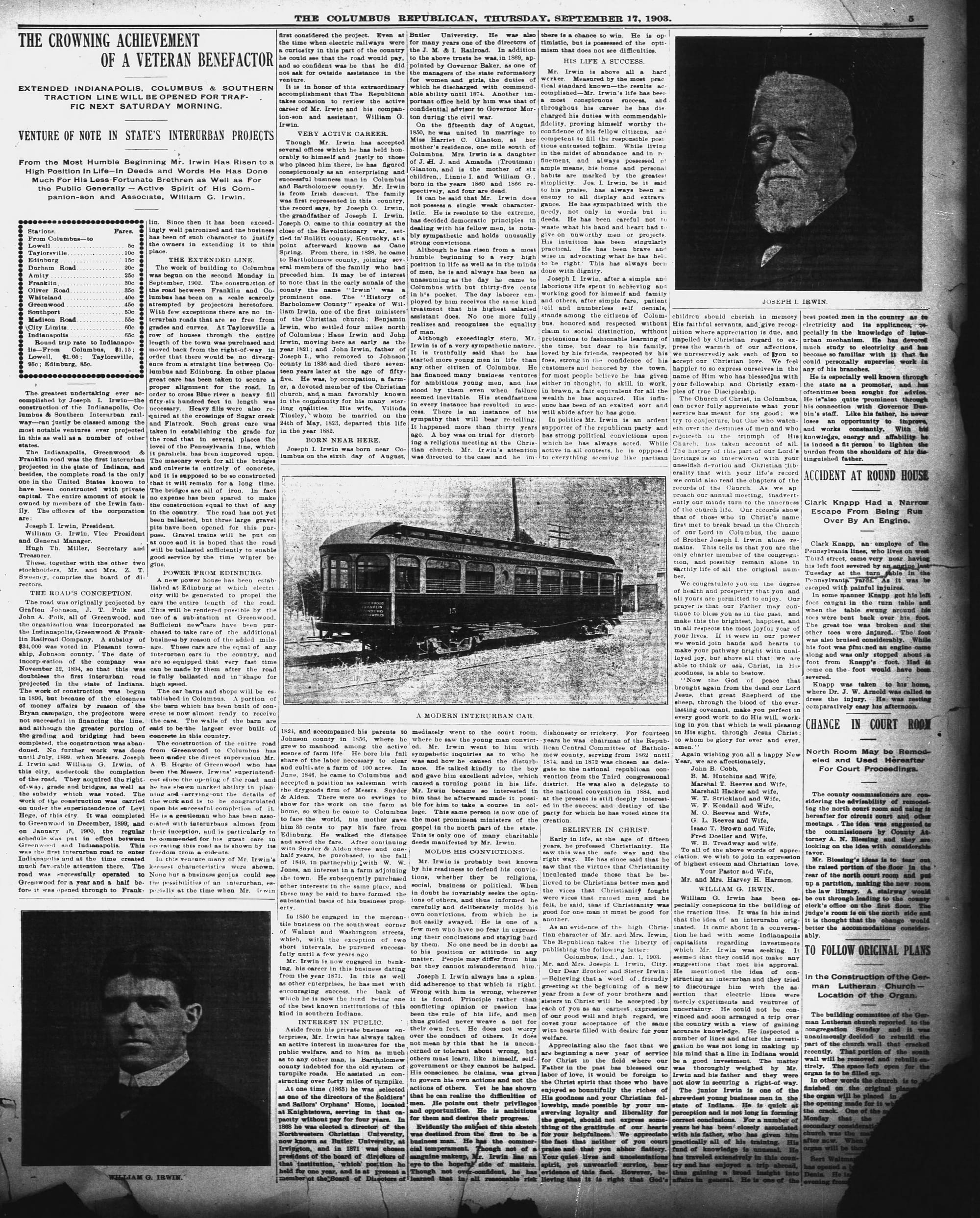
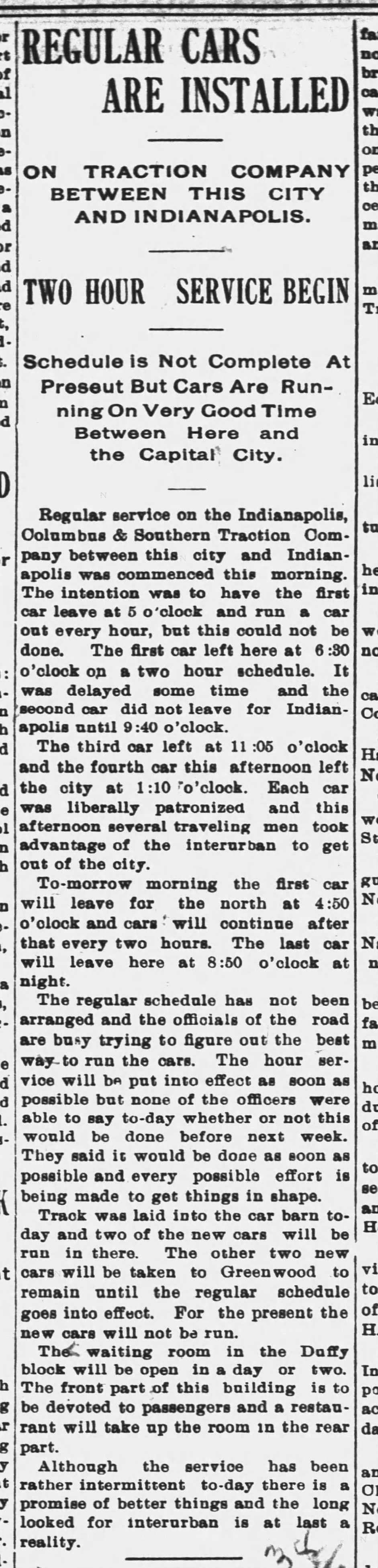
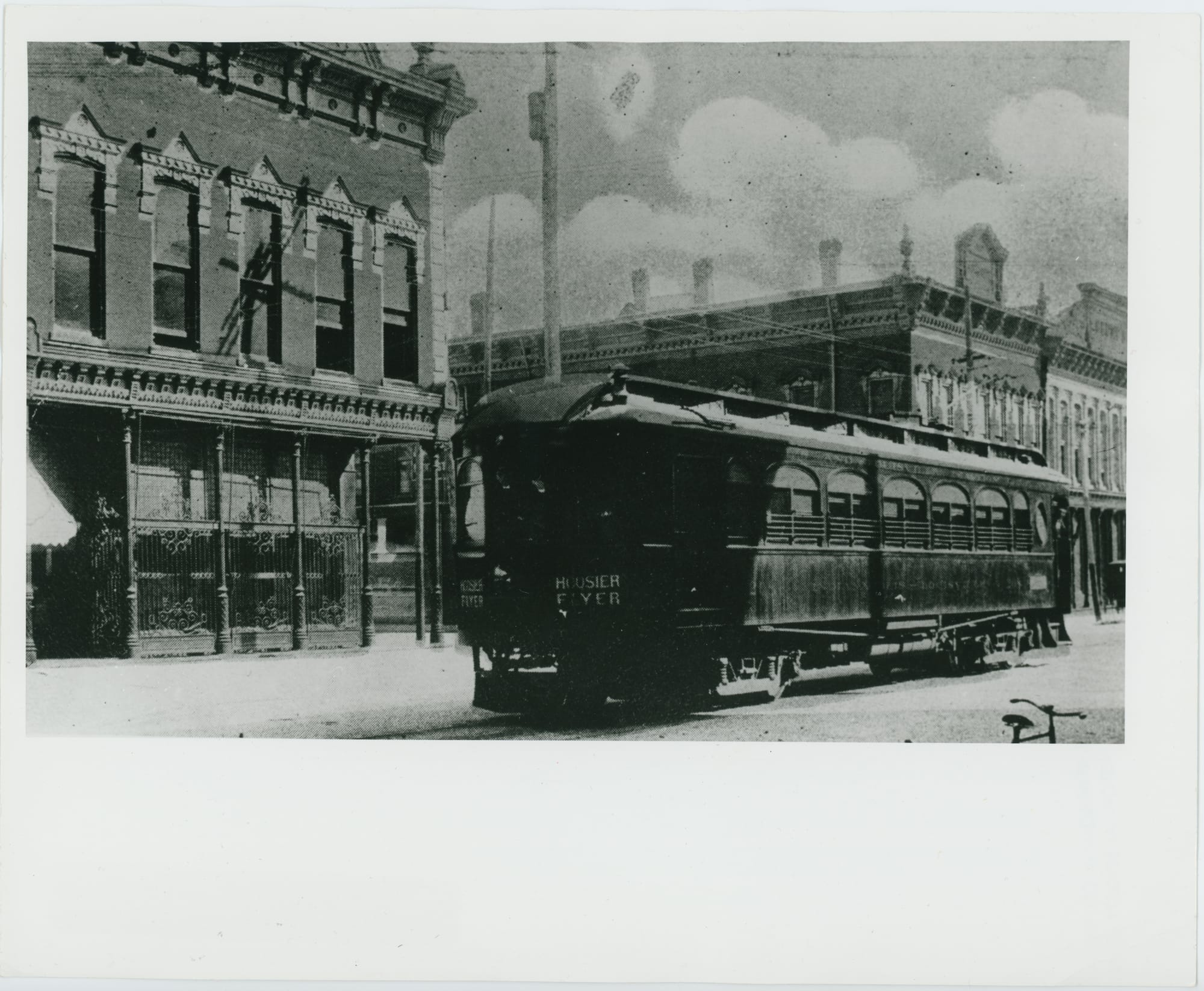
1902, Irwins recapitalize and continue extension of interubran | 1903 articles on the completion of the interurban to Columbus and the start of regular service | Undated photo, Cline Keller Library Photo Collection, Bartholomew County Historical Society, Bartholomew County Library
In 1912, an entity controlled by Chicago utility monopolist Samuel Insull leased the railroad from the Irwins. Insull’s group bought the Central Indiana Lighting Company, folding it all under a new venture, the Interstate Public Service Company. This was a typical Insull strategy, but it was also just generally common for electric utilities to own interurbans—they were a large and guaranteed customer for baseload electricity, plus the interurban lines were a readymade network that the utility could follow when expanding their grid transmission infrastructure to electrify rural areas.
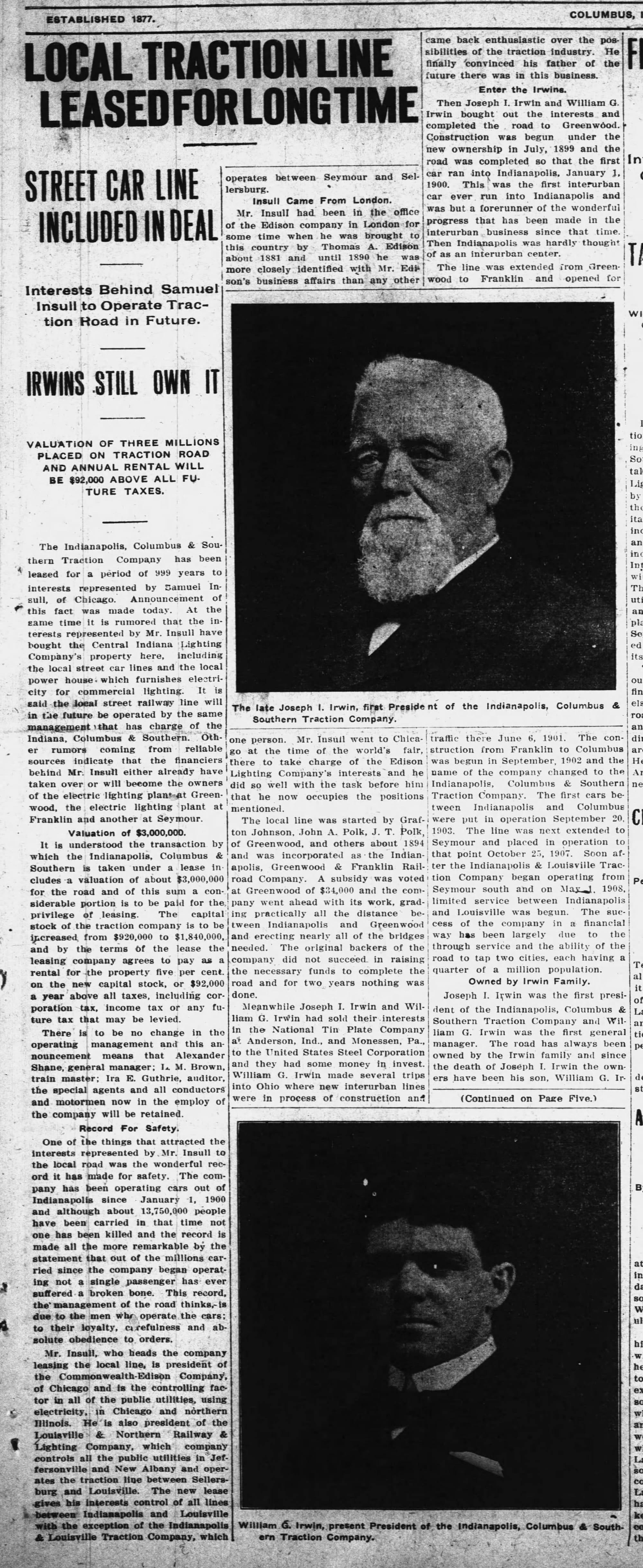
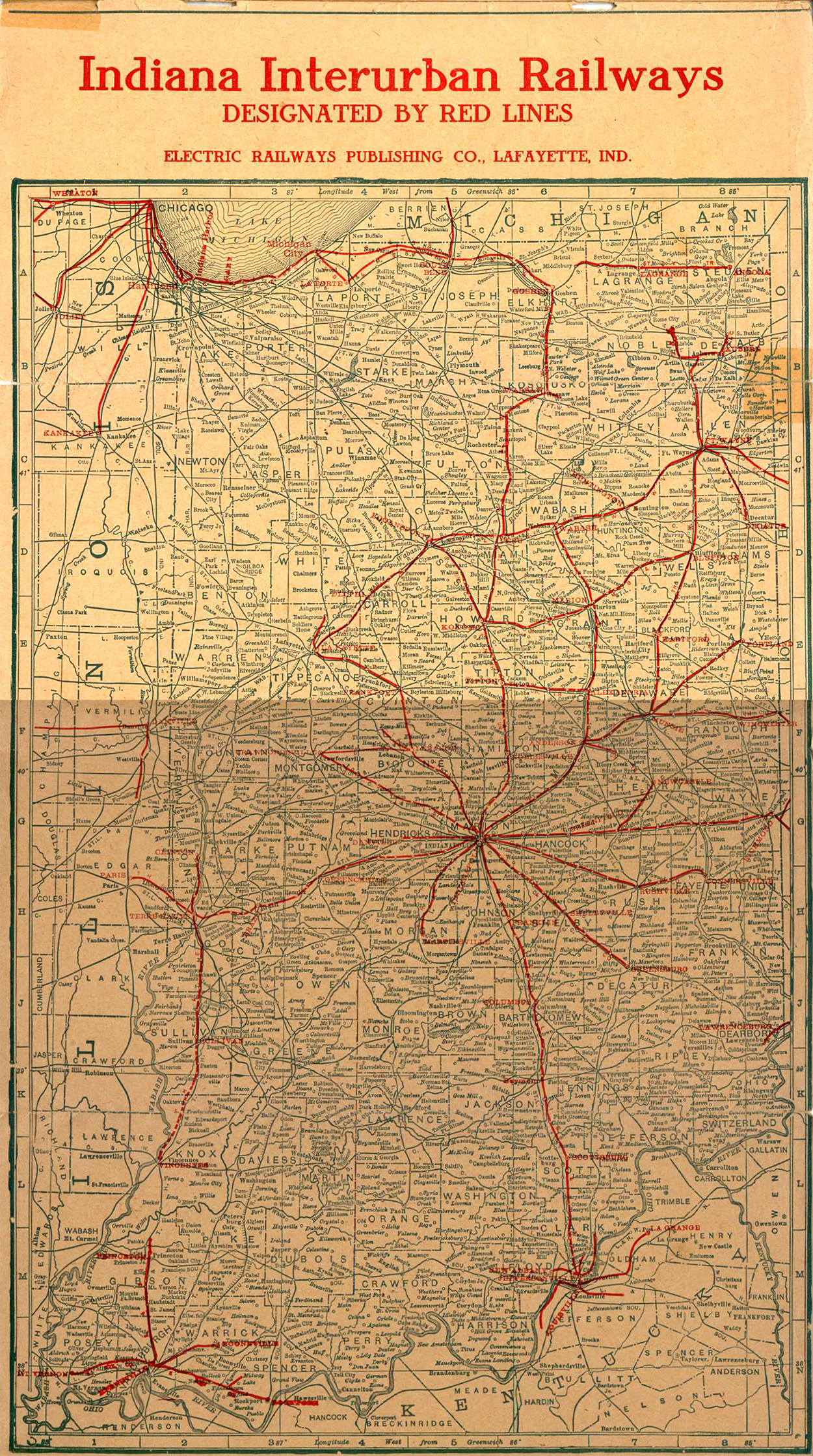
1912, Insull interests lease the rail line | 1912 map of interurban service in Indiana, Collection of Jon Habegger
Interurbans peaked after the first World War. Most interurbans were unprofitable—it was the integration with electrical utilities that made the business model (sort of) work—but competition from cars and intercity railroads had interurbans in decline by the late 1920s. The Great Depression swamped an already unprofitable business, and in a survival bid three of Indiana’s major interurbans merged in 1930—the Union Traction Co., the Northern Indiana Power Co., and Interstate Public Service Company.
Reconstituted as the Public Service Company of Indiana, the consolidated company began to make a tentative recovery, with revenues on the upswing, but in 1935 the federal Public Utility Holding Company Act killed the turnaround effort. An anti-monopoly New Deal act, the PUHCA tried to shrink electric utility holding companies to a scale small enough (and an organizational complexity simple enough) that states could effectively regulate them. The act required the separation of utilities and electric railroads, forcing power companies across the US to spin off their (already precarious) streetcar companies in the midst of an economic depression. It was this—rather than an incredibly effective and nefarious conspiracy led by the auto industry—that truly killed interurbans in the United States (...lobbying and unfair competition by the auto industry was one affliction among many as the interurbans declined). The PUHCA wasn’t intentionally structured to destroy the interurbans—the dying remnants of democratic government in the US would be way stronger if we had continued to wield the power of the federal government to forcibly shrink and simplify industries that have become too big to regulate and too big to fail (instead, George W. Bush and the Republicans repealed the PUHCA in 2005)—but it took out one of the last buttresses propping up an ailing industry.
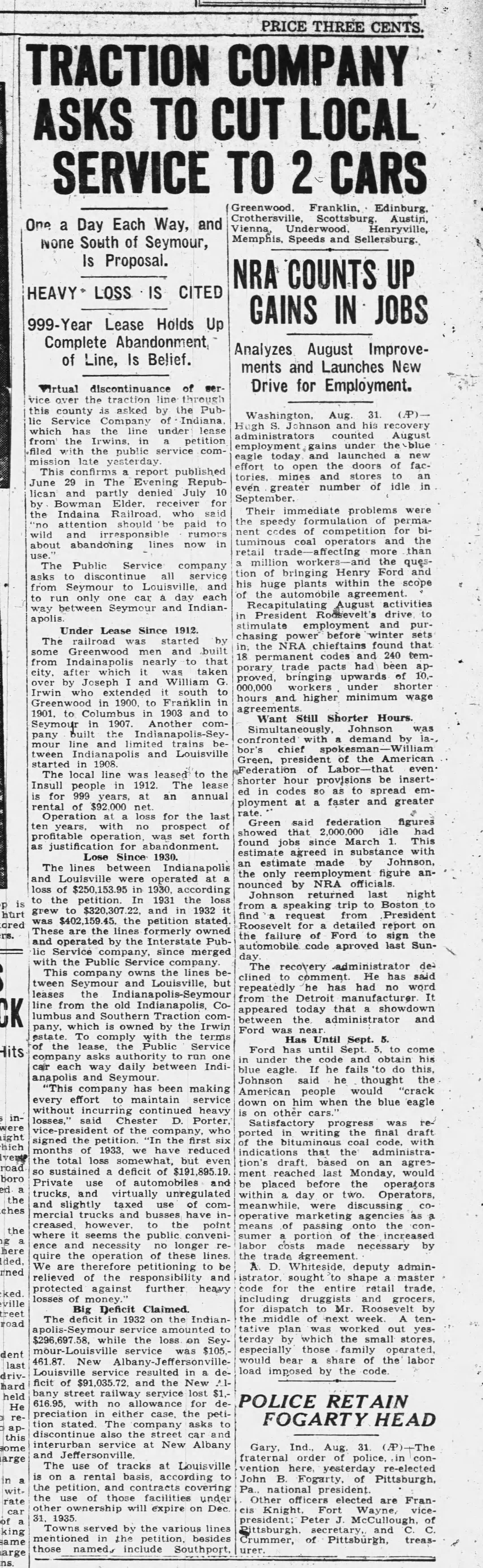
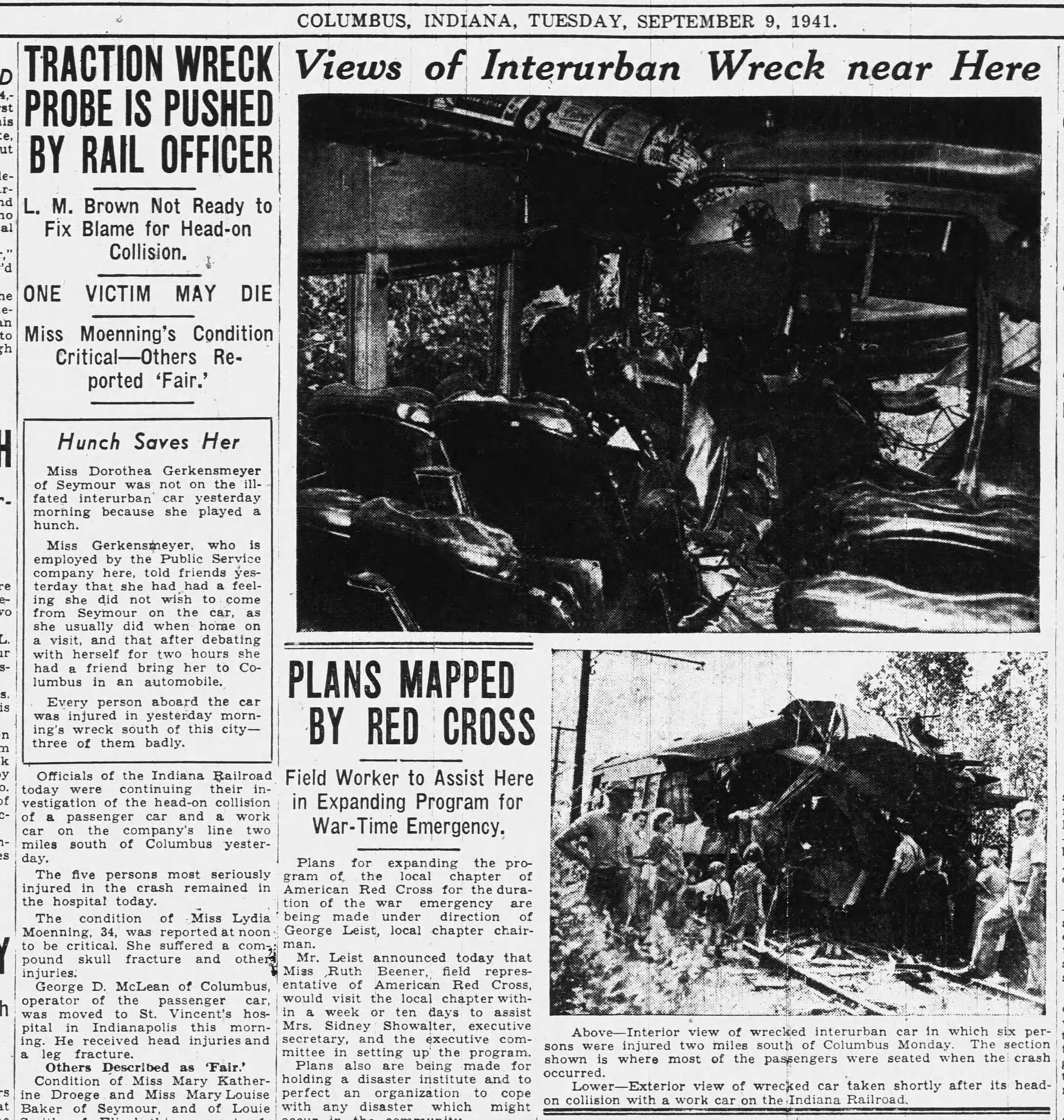
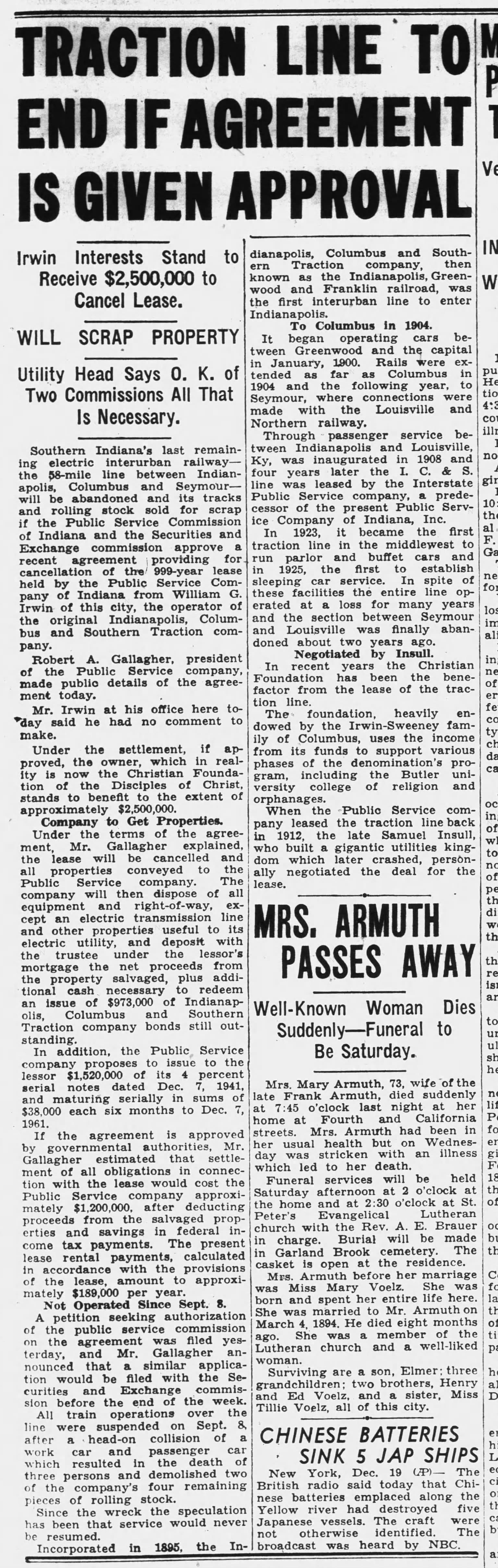
1933, request for service cut | 1941, crash | 1941, service to end
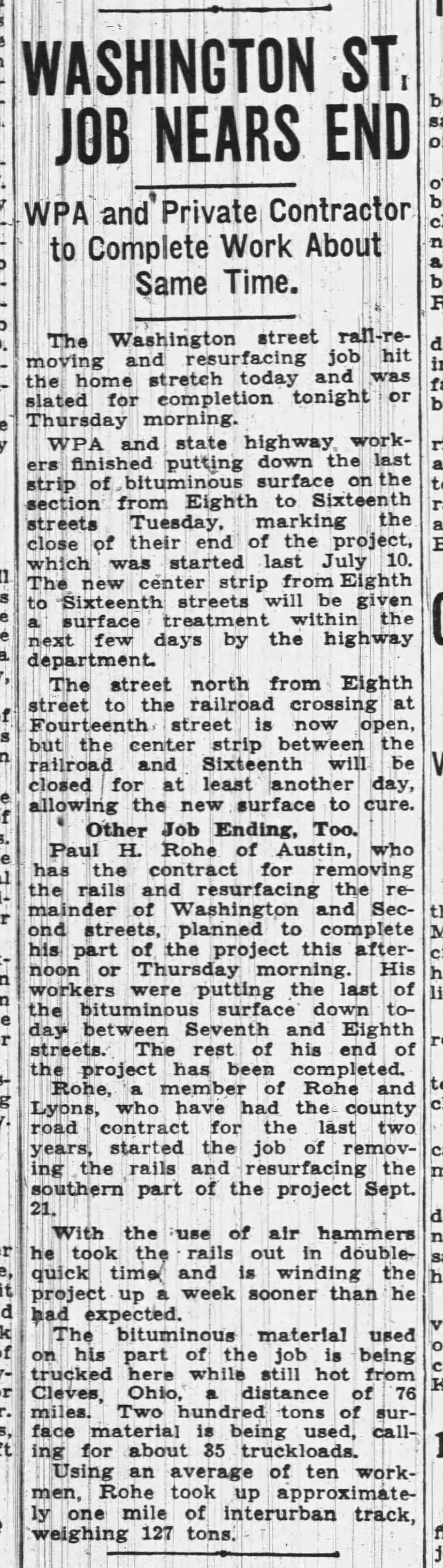
By 1933 the Public Service Company of Indiana was already asking to severely cut service and abandon the line between Louisville and Seymour (they succeeded in vacating that stretch in 1939). The line plodded on, with service cut to a bare minimum, until on September 8th, 1941, a northbound car from Seymour en route to Indianapolis collided head-on with a work car just outside of Columbus, killing three and destroying half the railroad’s remaining rolling stock. Passenger service never resumed, and the rails were removed and paved over by October, 1942.
While a streetcar hasn’t rolled through Columbus in 85 years, a small slice of Indiana’s interurban heyday is still chugging along—not only does the South Shore Line from Chicago to South Bend still exist, but America’s last interurban railroad is even growing, with the Northern Indiana Commuter Transportation District opening up the new Monon Corridor branch in March 2026.
Production Files
Further reading:
- Interstate Public Service—Your Neighborhood Interurban by Jerry Marlette
- Electric Railroads of Indiana by Jerry Marlette
- The electric interurban railways in America by George Woodman Hilton
- Electric Indiana: The Rise and Fall of the World's Greatest Interurban Railway Center, 1893–1941 by Carlos Arnaldo Schwantes
- Trials and Tribulations, The Interurban in Indiana by Jerry Marlette
 Richard M. Simpson, III

Few other relevant articles—1902 and 1903 articles on the new interurban line to Indy, it reaching Columbus, and construction on Washington Street. A bit more on Insull's lease in 1912, then the removal of the rails in 1942.


The brick buildings on the right side of the postcard survived into the 1960s.
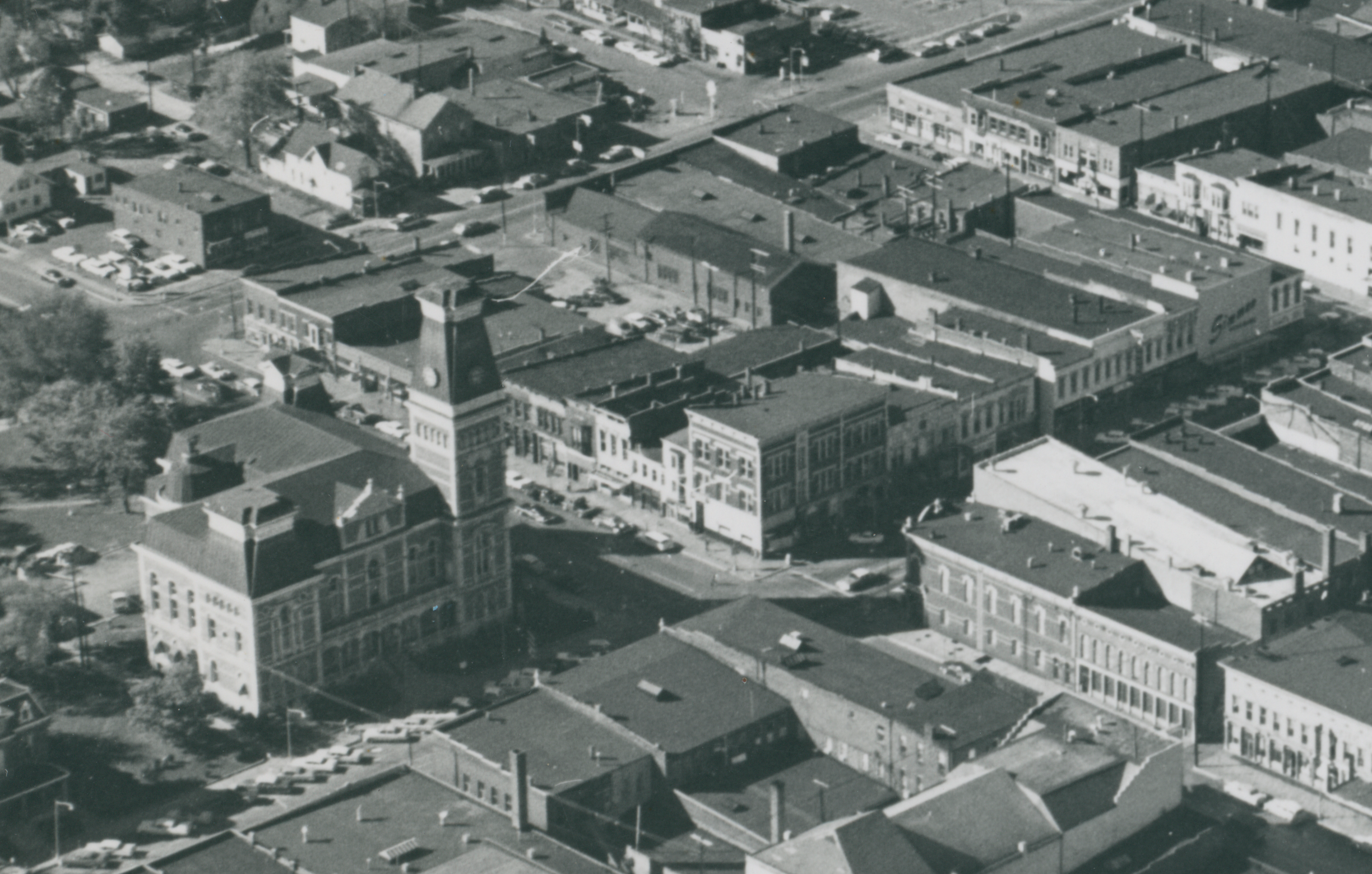
In what turned out to be a rare misfire, after an SOM masterplan identified the need for a central shopping center in Columbus, J. Irwin Miller bought and cleared the lot and hired an up-and-coming César Pelli to design it.
Influential and inventive, Pelli's Commons also ended up incredibly expensive to maintain and clad in brownish glad that started to look very dated, the mall was torn down (mostly) in 2008.
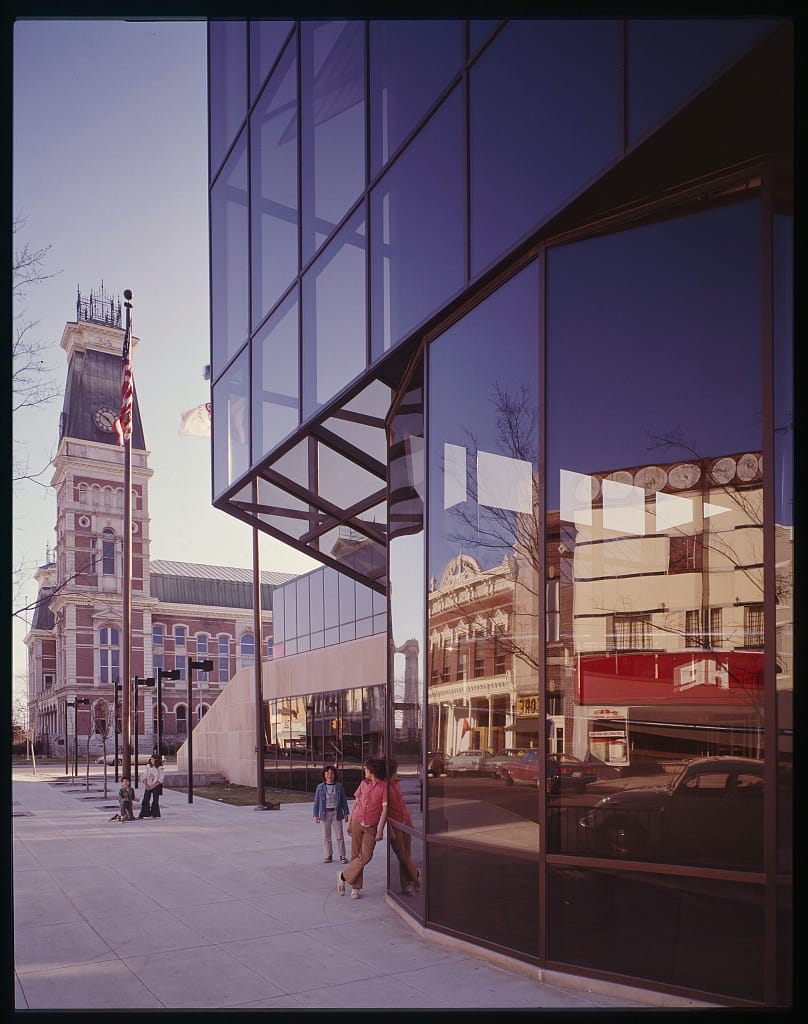
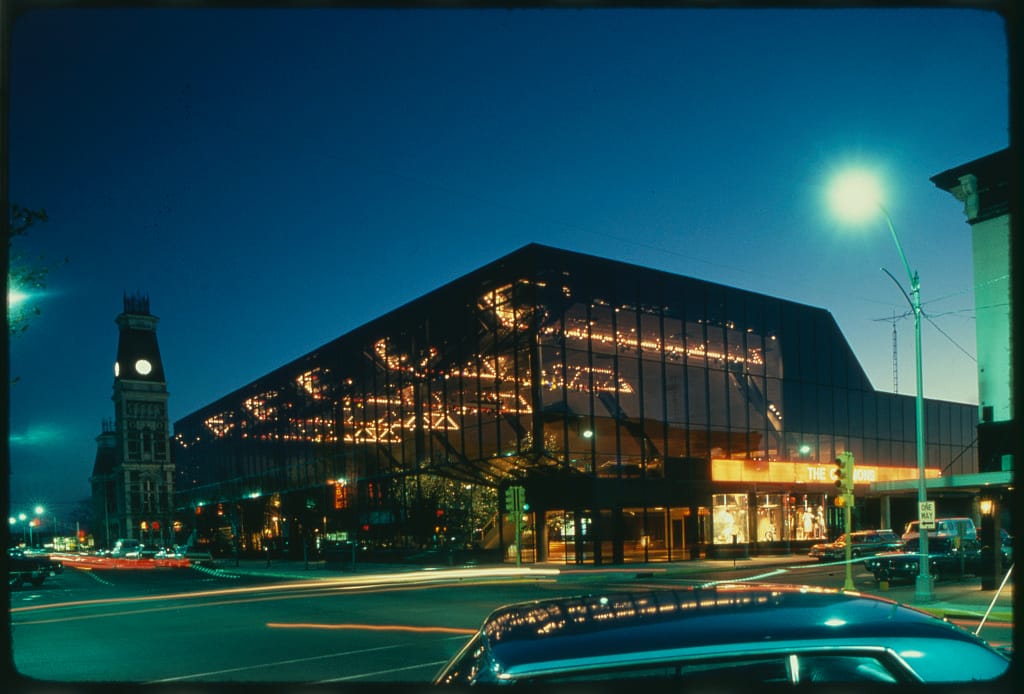
1973, Balthazar Korab, Library of Congress | 1973, Balthazar Korab, Library of Congress
The Commons (mk. II), designed by Koetter Kim and CSO Architects, opened in 2011.
Member discussion: