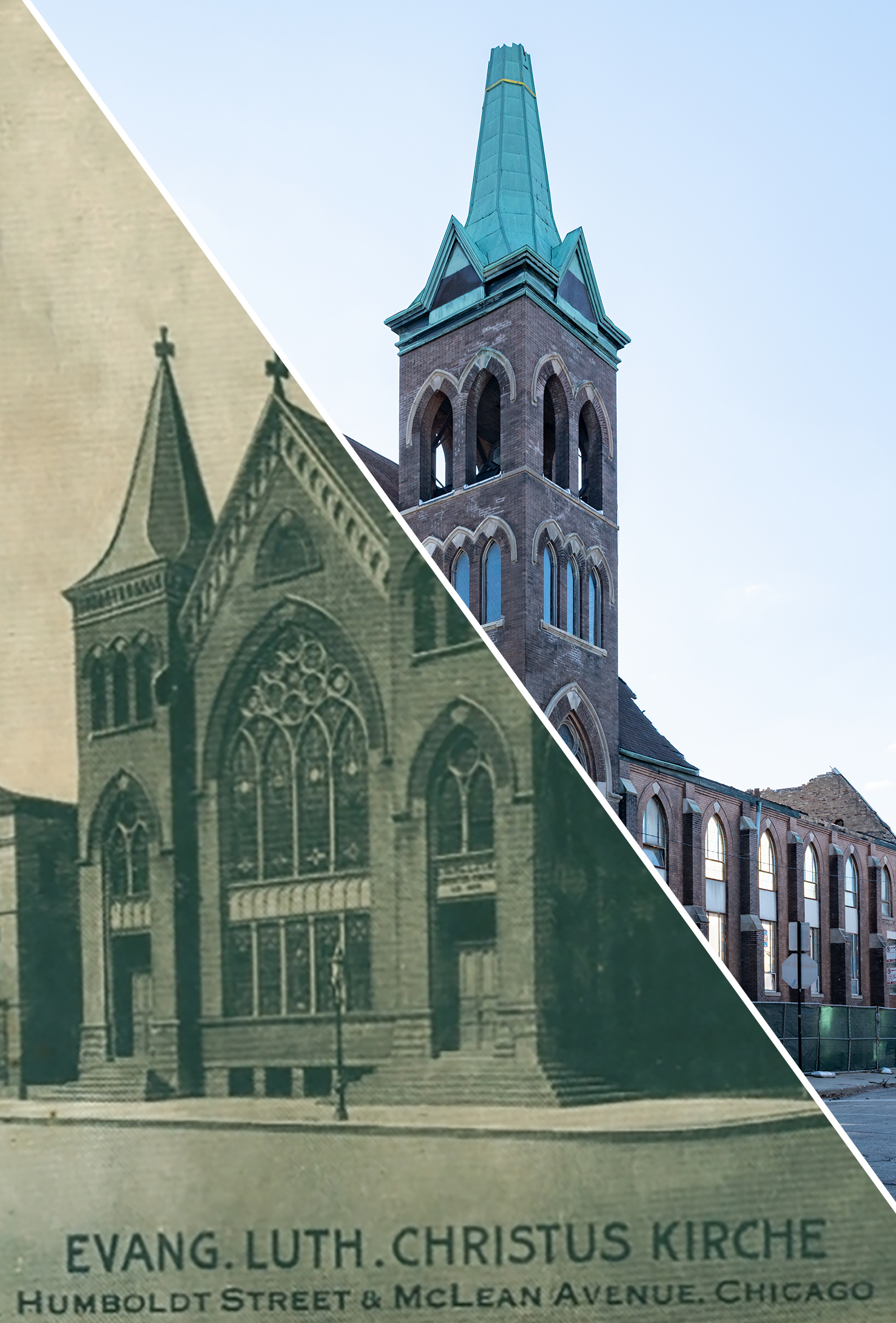
Chicago will still have hundreds of underused former churches once the former Christ Evangelical Lutheran Church of Logan Square is completely demolished—nothing about this specific church building or its fate is especially notable—but it still feels like a real waste to replace this one with four luxury single family homes, an outcome that's a letdown through whichever lens you choose. Housing supply and property tax? There’s a converted church nearby with ten units of housing which paid $90k in property taxes last year (the homes replacing this complex will probably end up paying in the $60k range combined), whereas this will house four families one block from a major thoroughfare in one of Chicago’s hottest neighborhoods. Carbon emissions and historic preservation? Most of this stuff, and the embodied carbon it represents, will end up in a landfill. A failure of vision, creativity, and boldness all around.
Designed by Flizikowski & Kaiser for a German congregation in 1896, this was Christ’s third church building on the site (the second one burned down). The building’s final tenant was an Indonesian Christian church, IFGF Chicago.
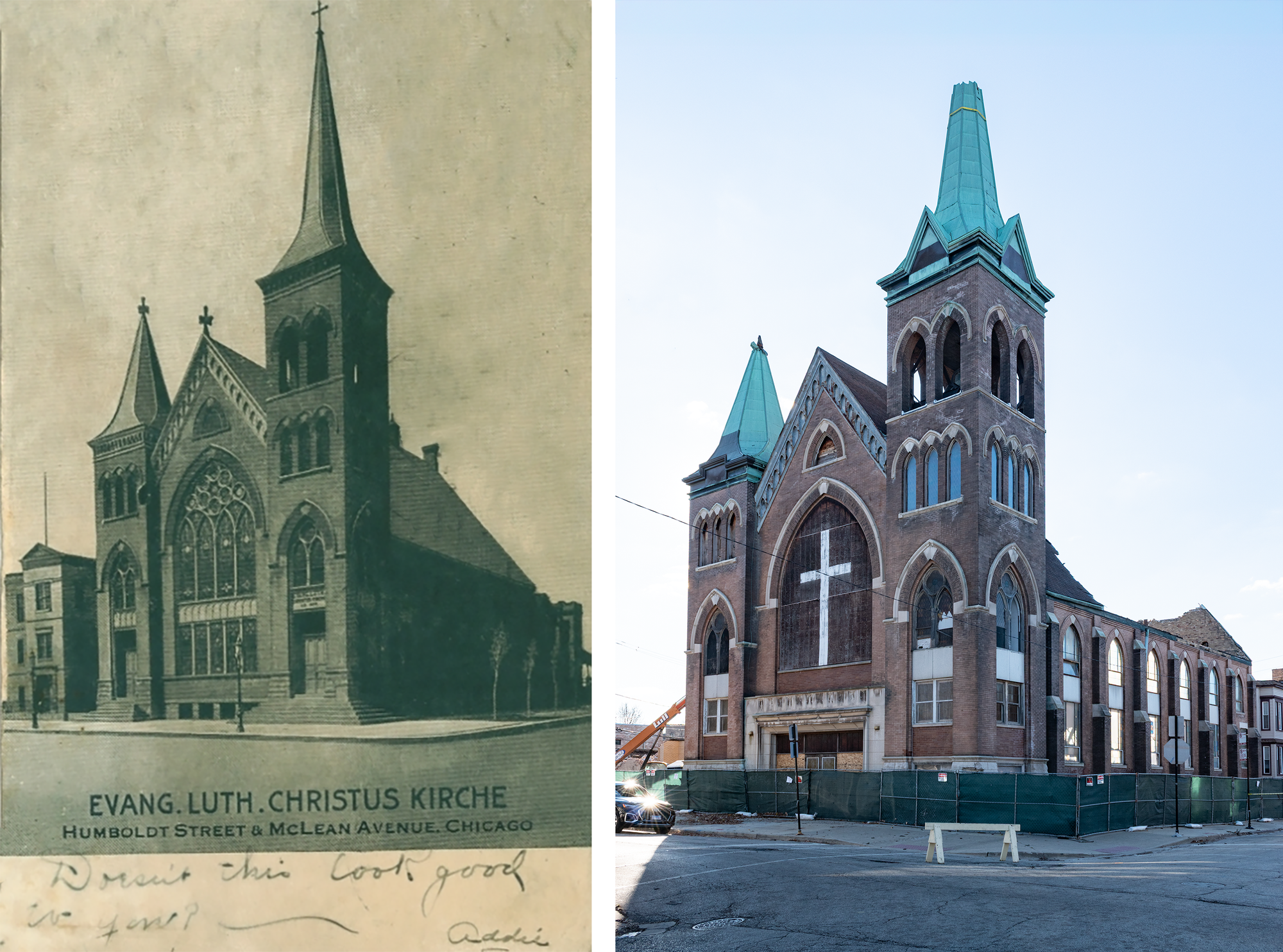
So, what's changed? A silly question for a church building that's actively being torn down, but still, there are a couple things worth pointing out.
- The building to the left–the church's affiliated school—was torn down and rebuilt, set back from the street, sometime between the 1910 and 1921 (...which, yes, that version was just demolished).
- The main entrance was moved from the corner of Richmond St. and McLean to underneath the main Gothic arched window–best guess is that this happened in the late 1950s renovation (that window was covered in plywood sometime in between the 1970s and the 2000s—I’d guess when the congregation sold the building in 1986).
- A rare one where the postcard has more street trees—barely—than the present-day photo.
Like the rest of the North Side, the big bang of development in the 1880s and 1890s that created Logan Square brought a bunch of German immigrants to the neighborhood. To minister to them, in 1885 Rev. Ernst Werfelmann organized the Christ Evangelical Lutheran Church congregation, occupying a small wood-frame church on this site. Worshiping in German and English, Christus Kirche was affiliated with the Missouri Lutheran Synod. The congregation grew fast (which, of course it did—the neighborhood around it had sprouted from nothing into a densely populated urban area in a decade).
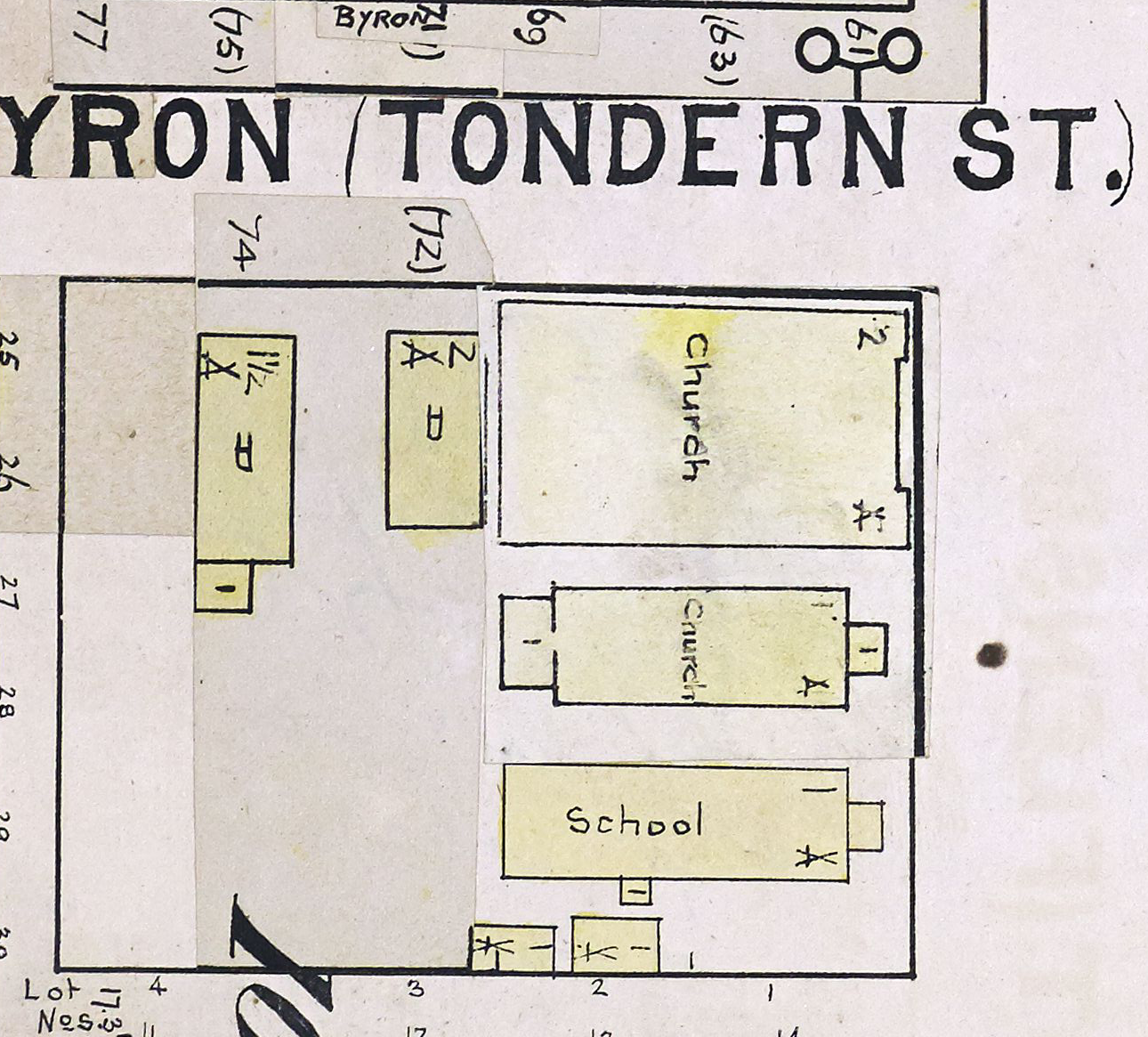
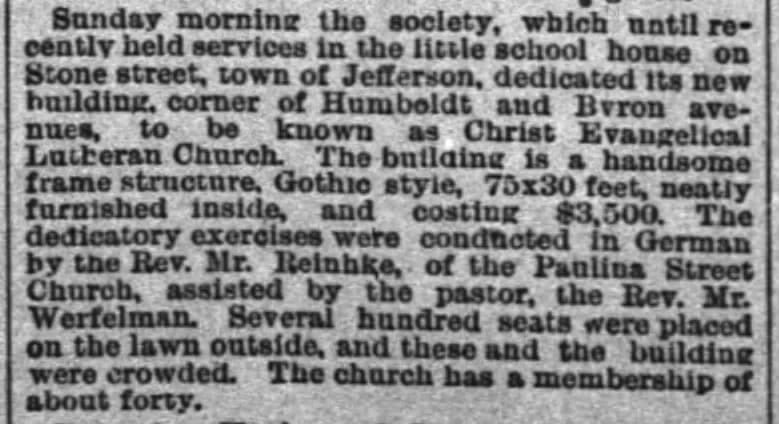

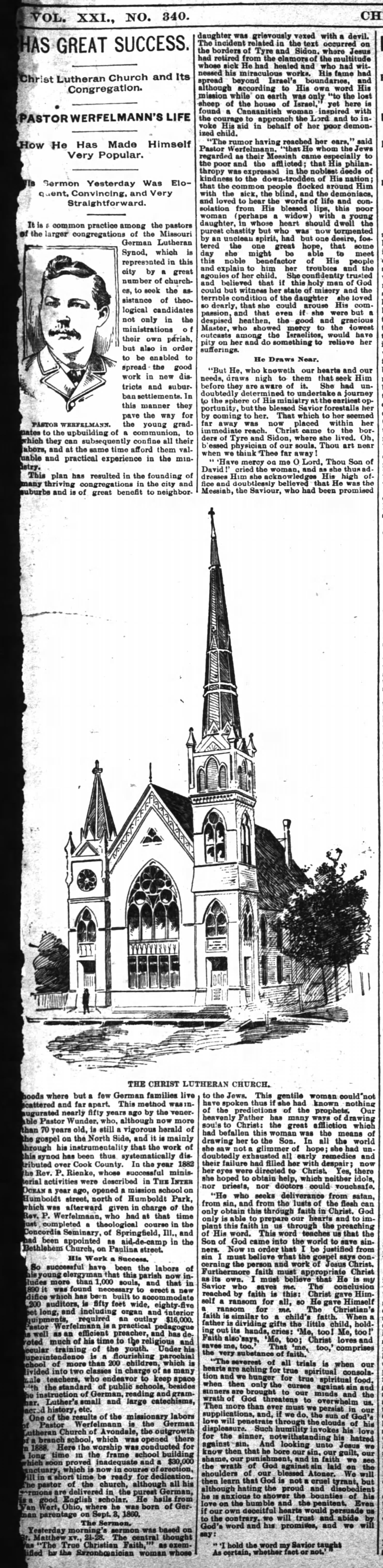
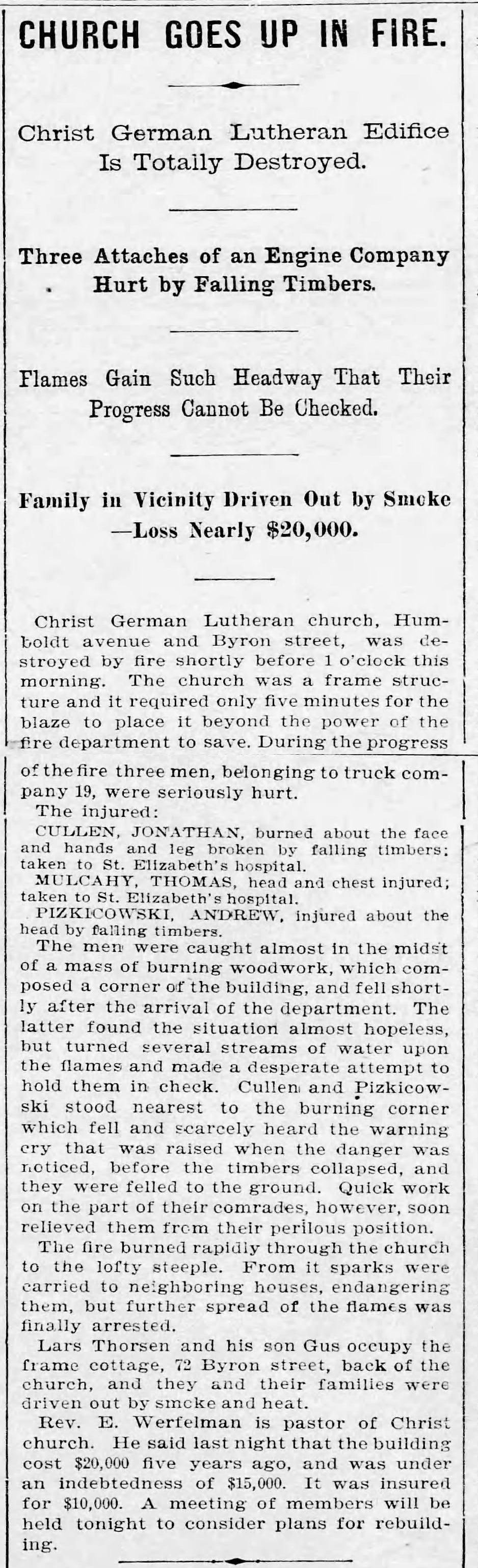

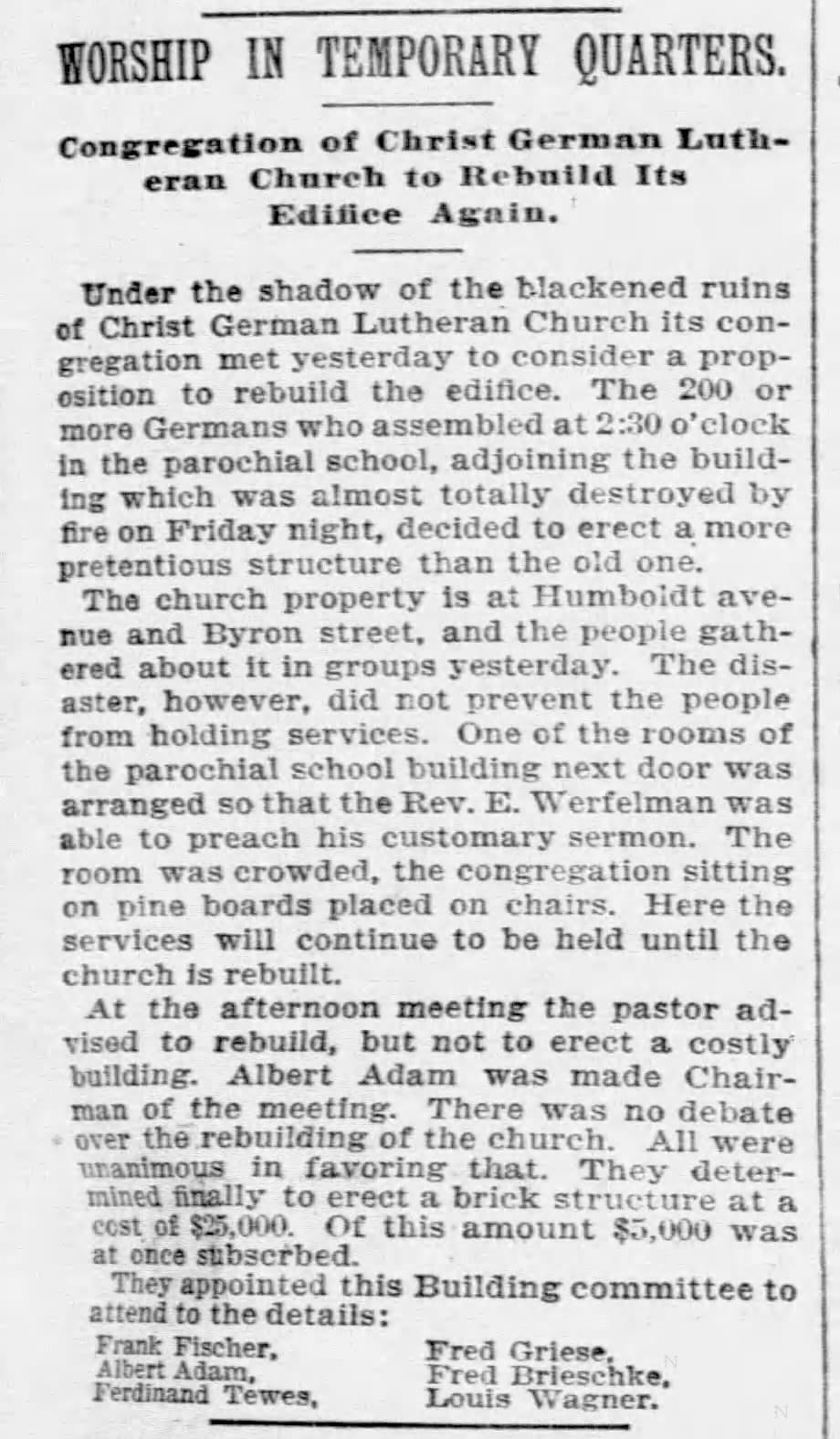
1891 fire insurance map | 1885, Christ Evangelical Lutheran Church is organized | 1896 fire insurance map | 1893 article on the congregation with a sketch of the second church building | 1896 articles in the Chicago Chronicle, Illinois Staats-Zeitung, and Chicago Tribune about the fire
To accommodate that growth, the congregation constructed a larger replacement on this site only five years later, in 1890. The new one, much larger, could hold a thousand parishioners. It was also made of wood, though, and when a fire broke out in the building in May 1896, the whole thing went up in flames in minutes. To design a replacement, Christus Kirche hired Chicago architects Flizikowski & Kaiser—one of that firm’s earliest commissions.
Over the course of his career, John Flizikowski would become the go-to architect for Chicago Polonia—he designed headquarters for both the Polish National Alliance and the Polish Roman Catholic Union of America—so I initially assumed it was his partner, the German-born Otto Kaiser, who bagged this commission.
...that was a very 21st century perspective, though. The nation-state was still a new thing in the 1800s, with borders in flux and identities multilayered, until the ethnic cleansing and genocide of the 1900s created strict delineation through violence. Flizikowski was Polish, yes, but he was born in Prussia—part of that country’s large Polish minority—and spent years studying in Cologne and Berlin. Flizikowski was more than capable of winning a commission from a German-speaking congregation himself. Flizikowski & Kaiser’s church building, a handsome if relatively ordinary neighborhood church, borrowed much of its look from the congregation’s second church—just bigger and more Gothic.

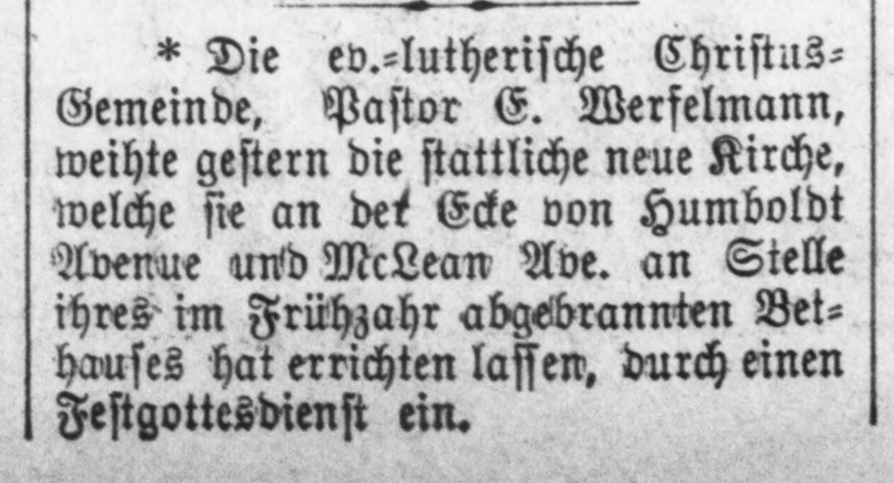
1896, Flizikowski & Kaiser hired | 1896, rebuilt church dedicated, Abendpost


1910, Logan Square Preservation | 1921 fire insurance map
Besides the church, Christ Evangelical Lutheran—Christus Kirche—operated a school next door as well, renovating both the church building and school in 1959. Rev. Werfelmann had led Christus Kirche for 50 years before handing over to Rev. Walter G. Dippold for another couple of decades, but leadership turnover accelerated in the 1950s and 1960s—Rev. Mehlberg to Rev. Krueger to Rev. Lassanske to Rev. Feller. The congregation held services in German into the 1960s, but one of those leadership handovers ended German-language worship—a change inseparable from white flight and the demographic changes in Logan Square, but also the disappearance of the United States’ once-thriving German-language communities because of the World Wars.
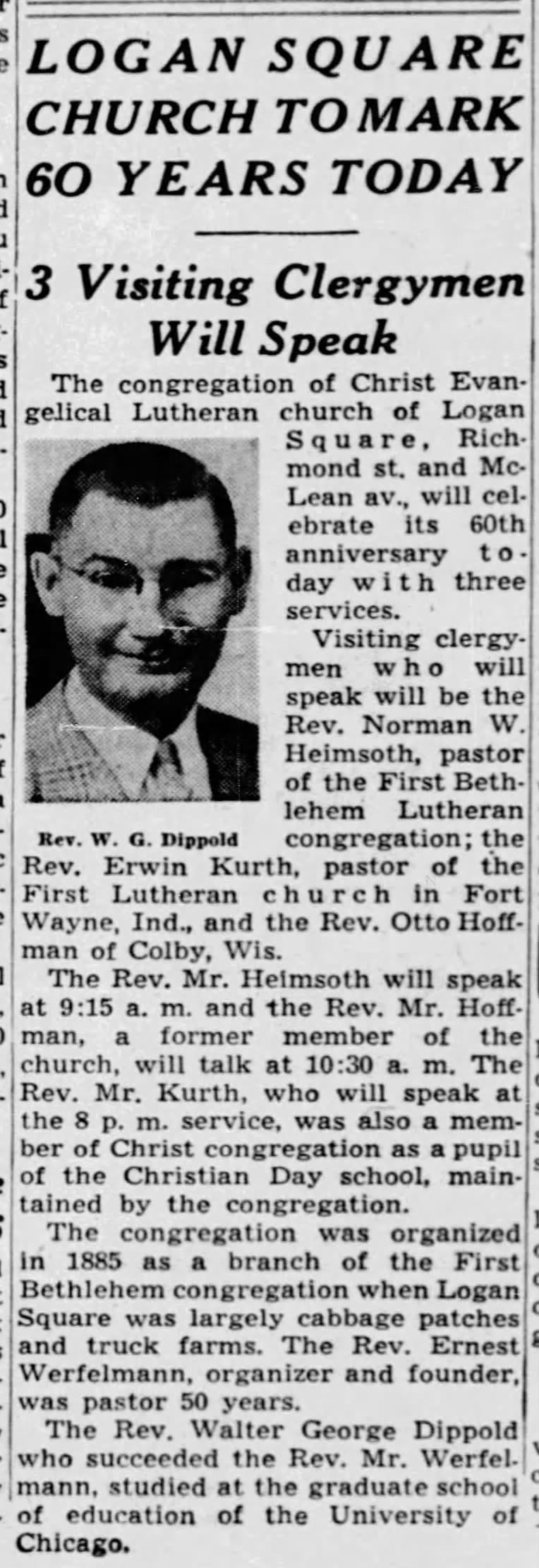
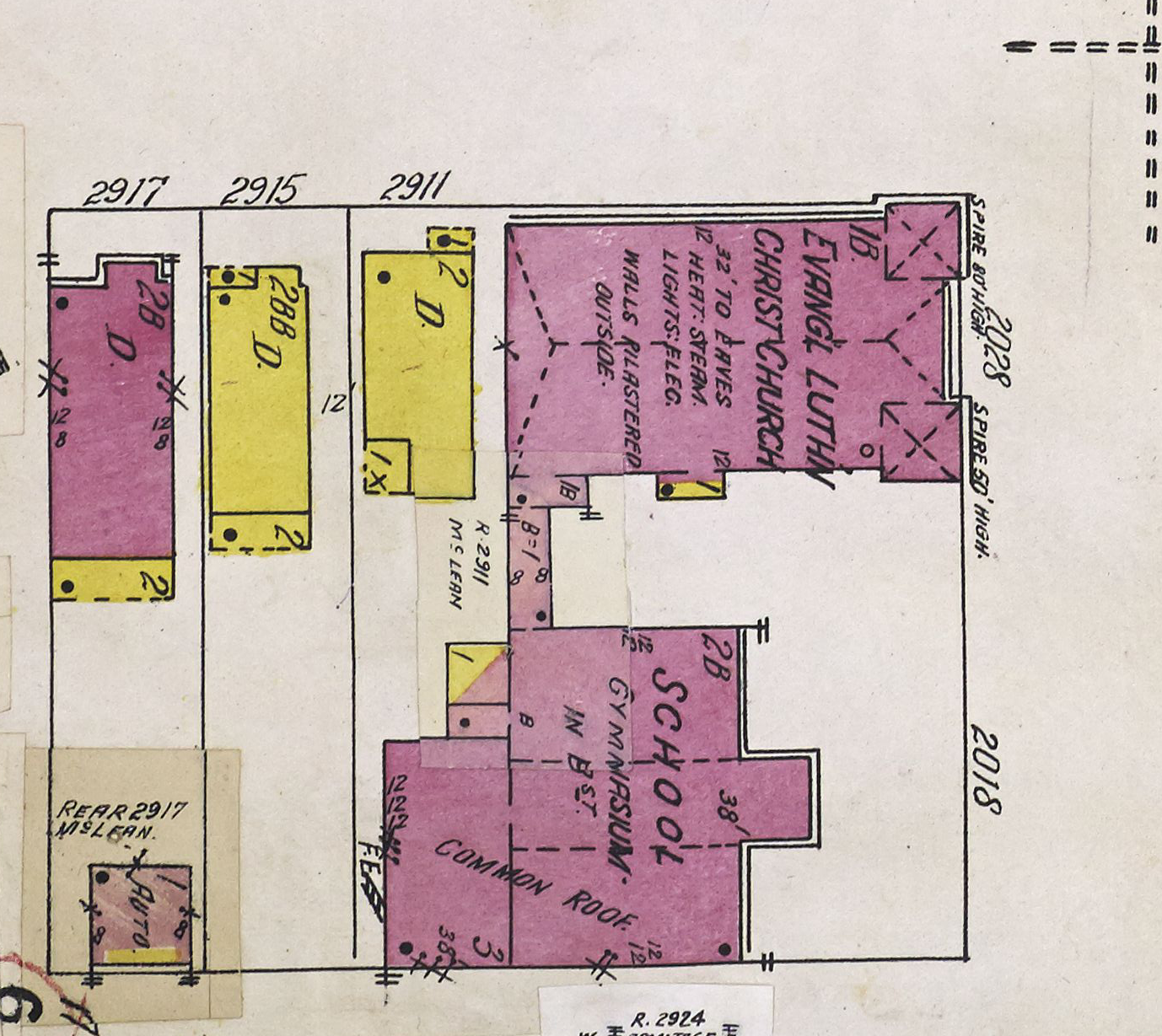
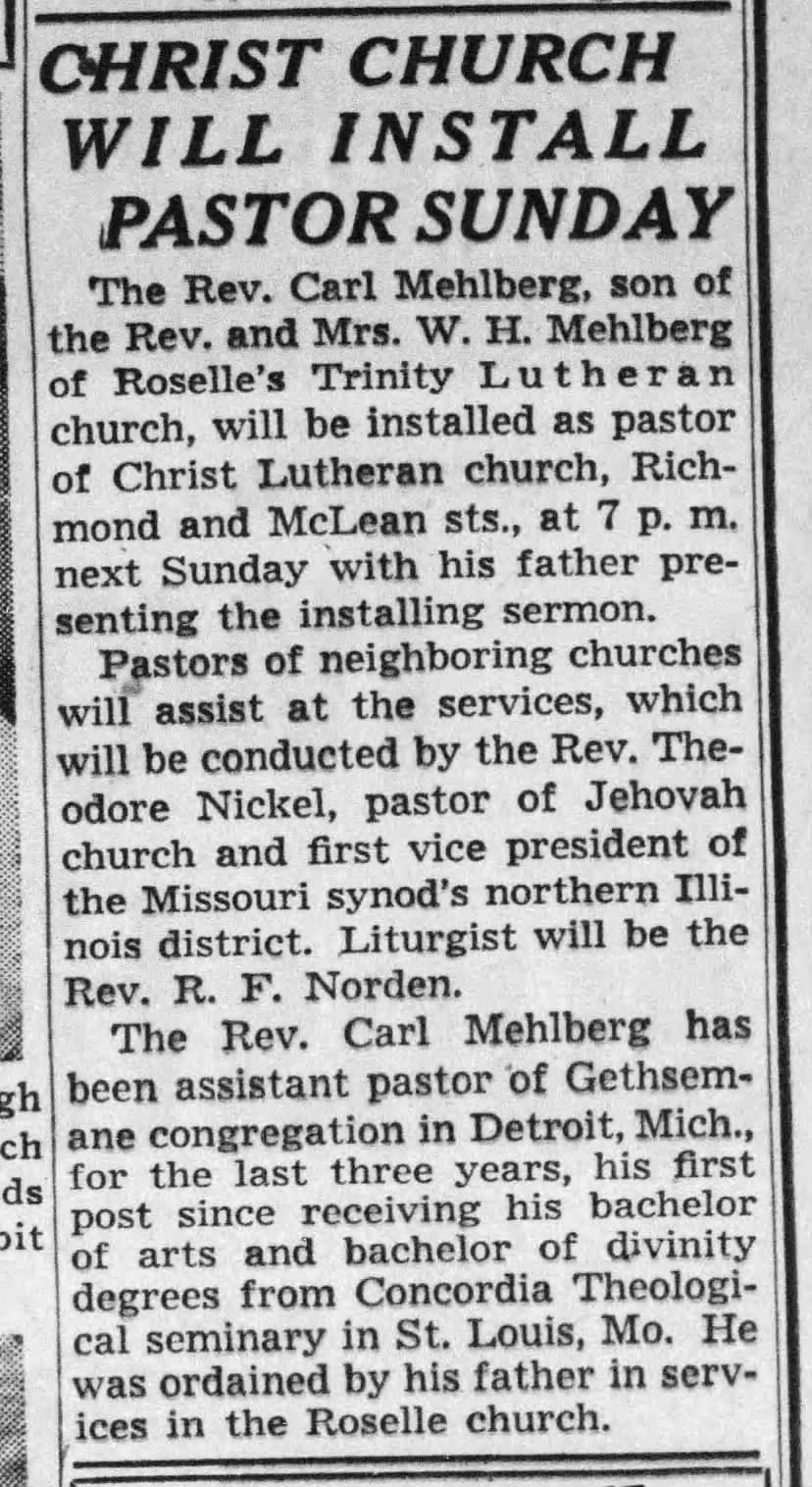
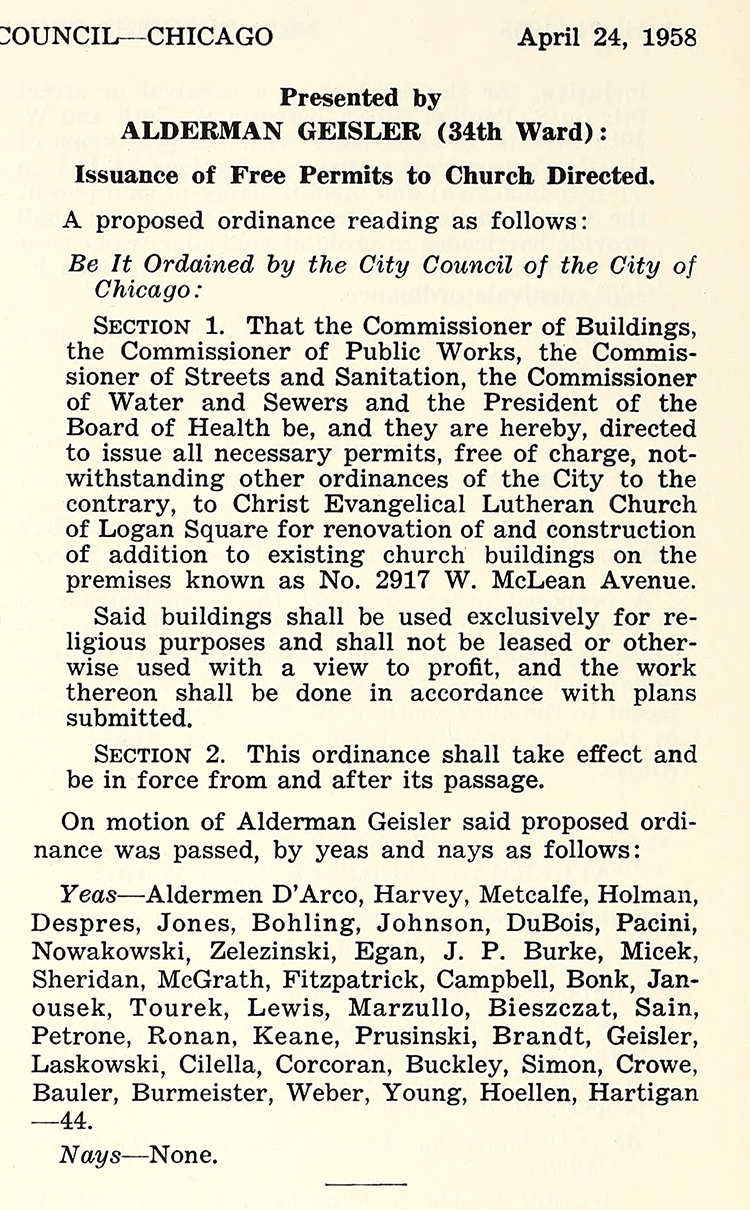
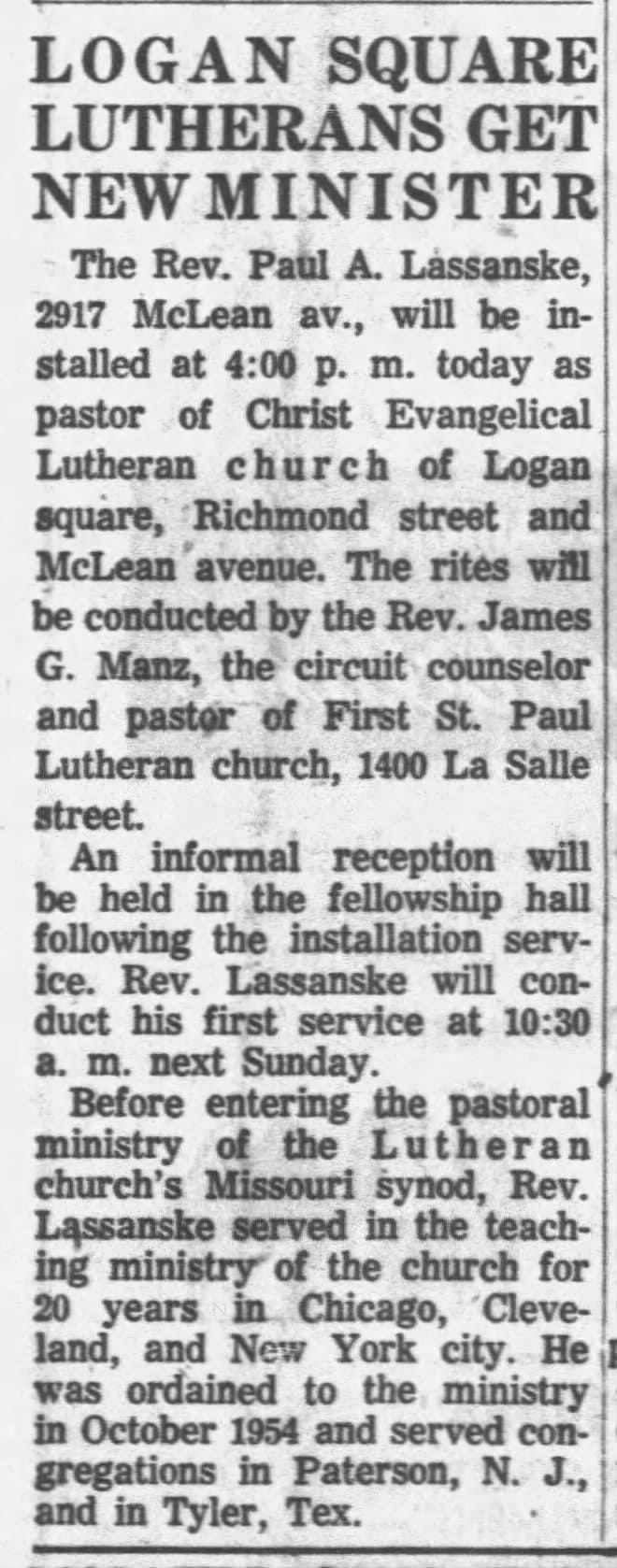

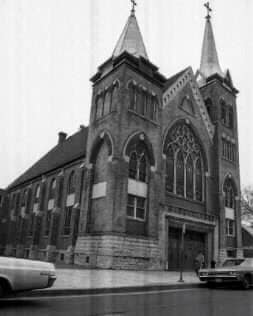
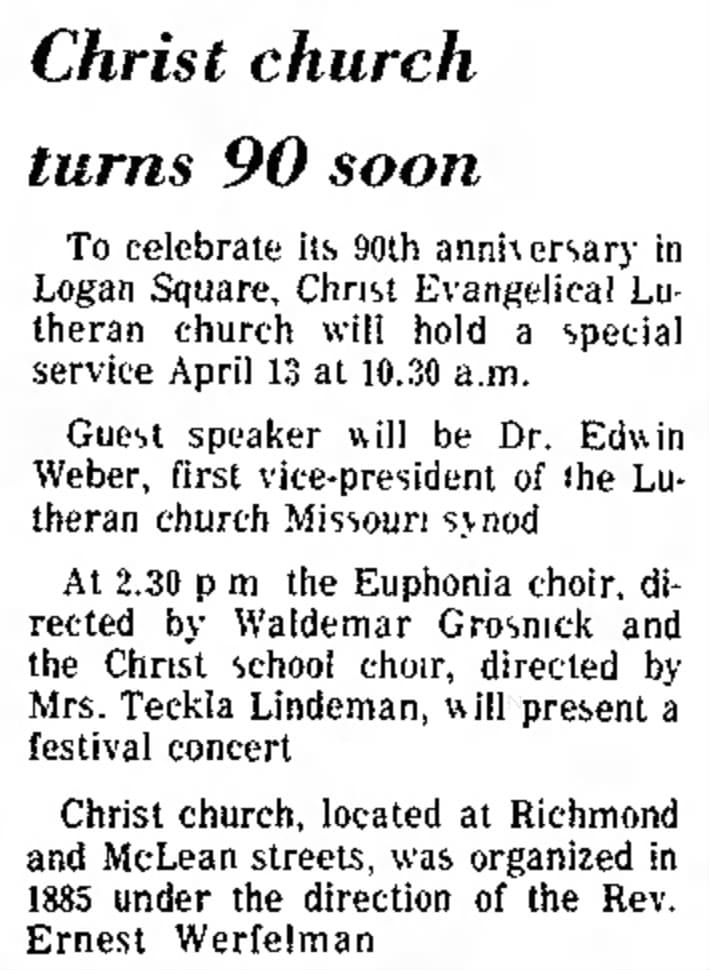
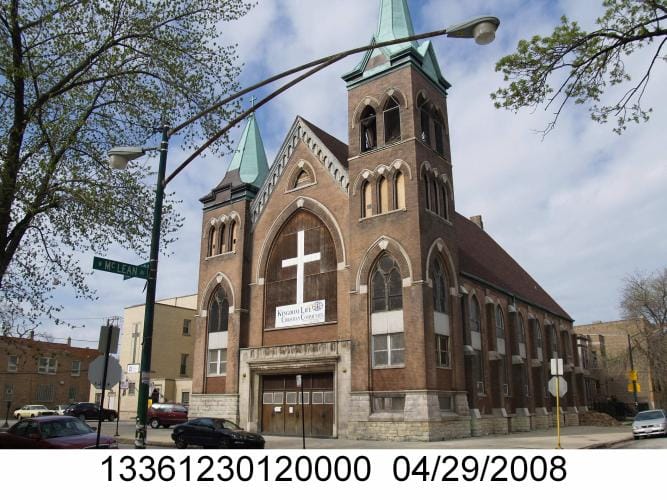
1945, 60th anniversary | 1950 fire insurance map | 1952, new pastor | 1958, free building permit for renovation, the Internet Archive | 1962, new minister | 1968, interior, Logan Square Preservation | 1970s, Illinois State Historic Preservation Office | 1975, 90th anniversary | 2008, Cook County Assessor photo
Christ Lutheran Church of Logan Square muddled on into the 1980s, shrinking, until in 1986 the congregation sold the church building and school to Salem Christian School, part of the New Life Church. The congregation continued to rent space in the complex until it voted to dissolve itself at the end of 1989.
Salem and New Life rented out the church building for most of the last 25 years. Tenants included Kingdom Life Community Church and, for the last few years, IFGF Chicago, an Indonesian Christian congregation.

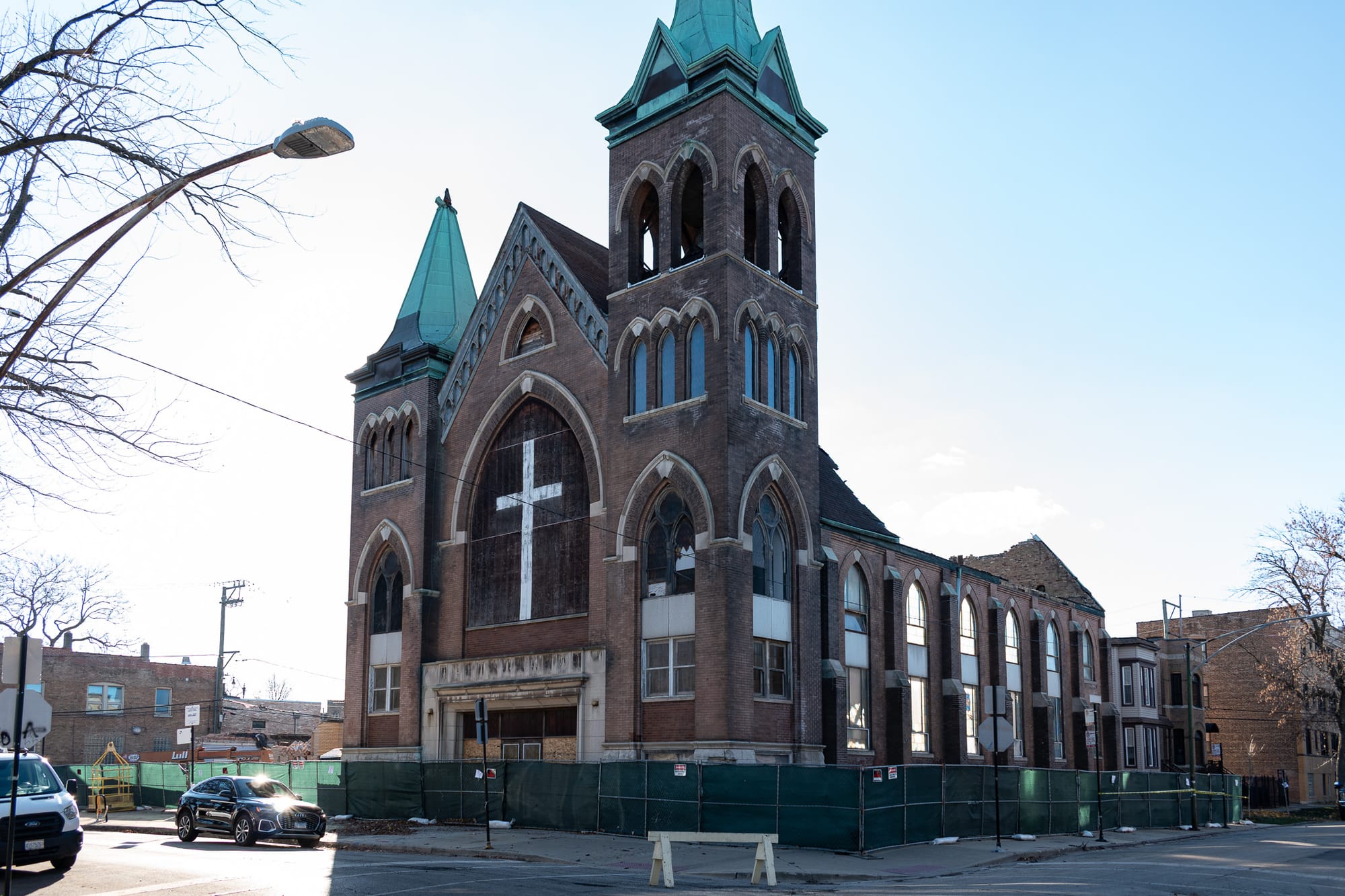
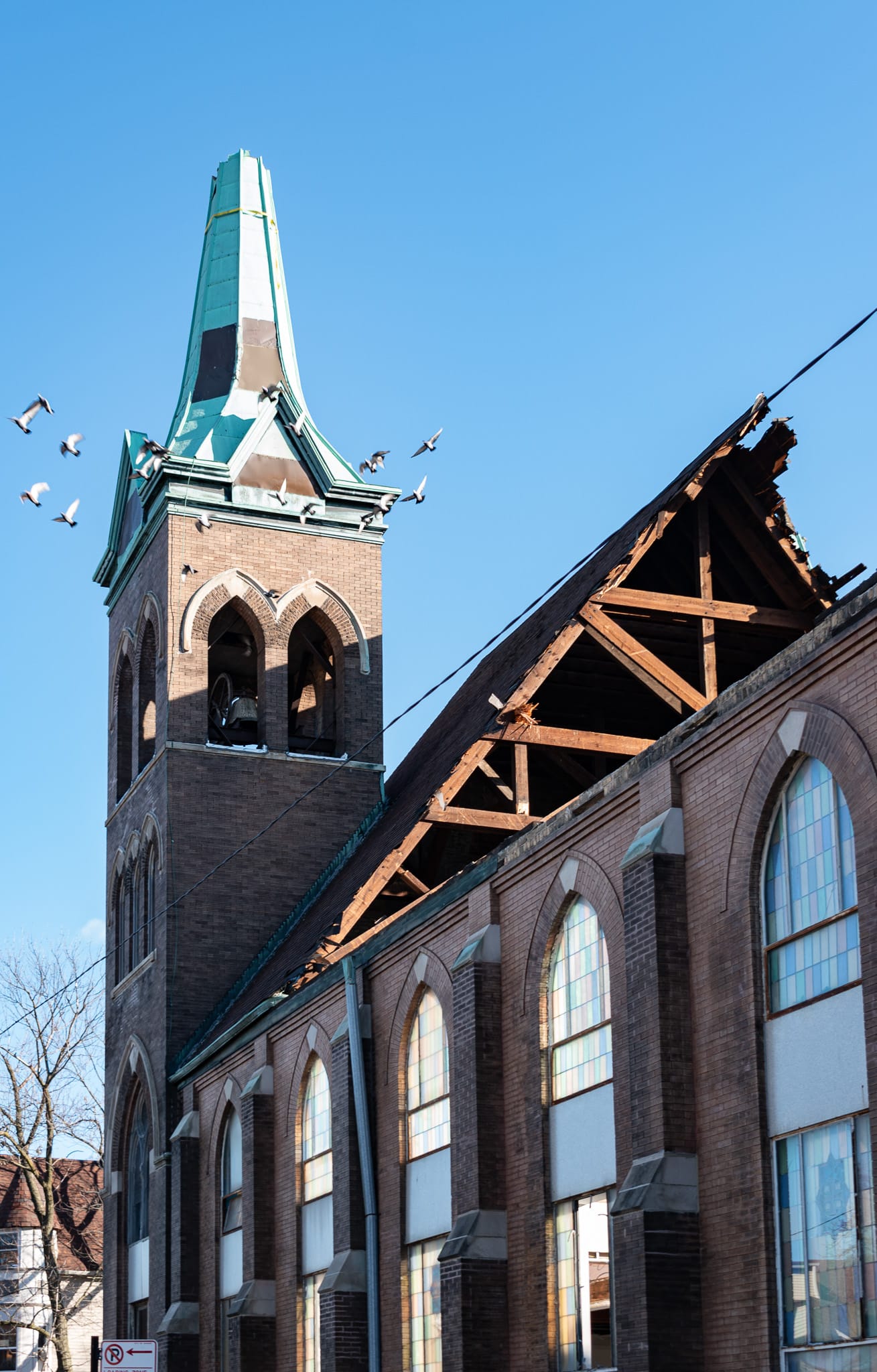
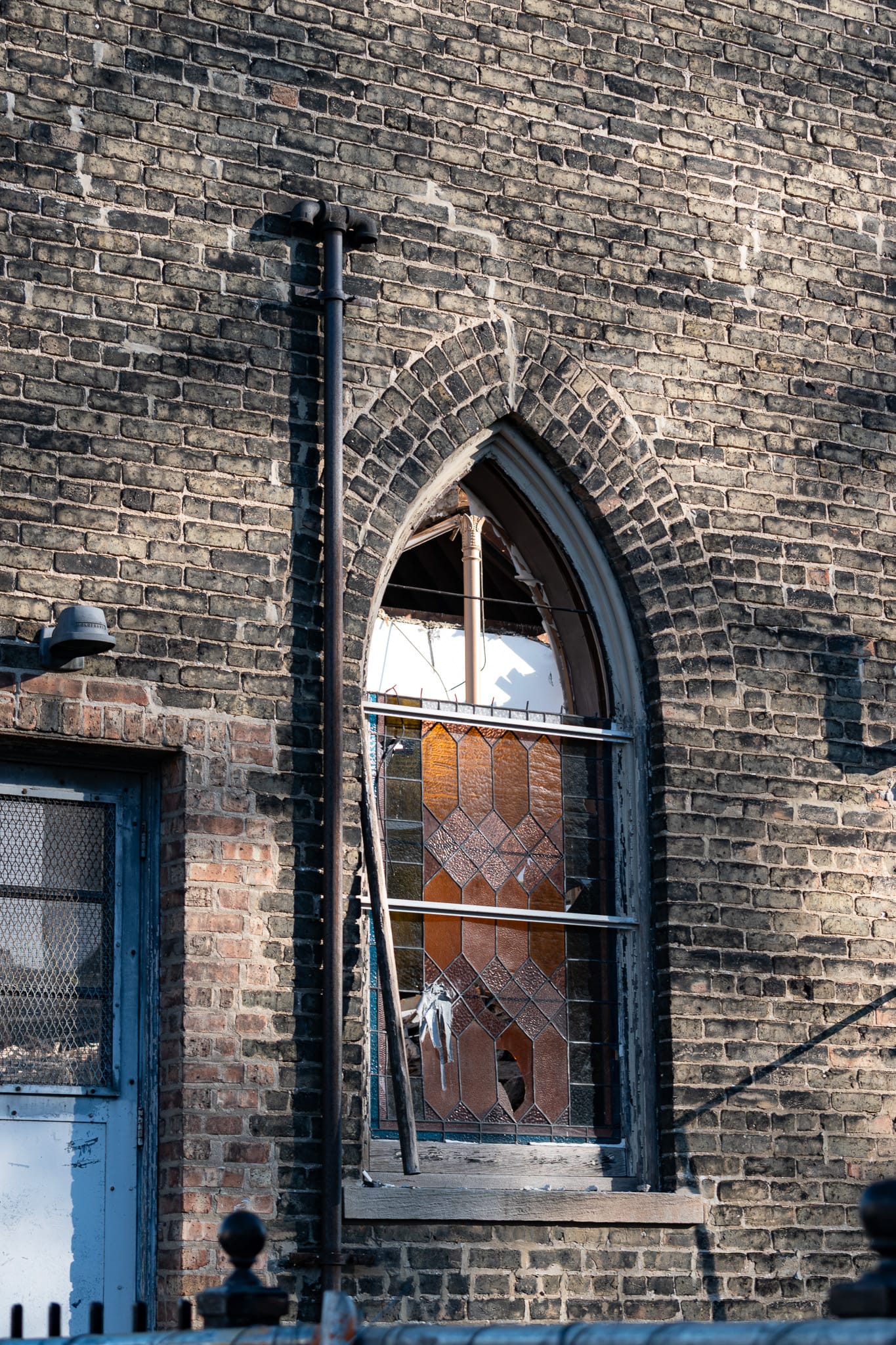
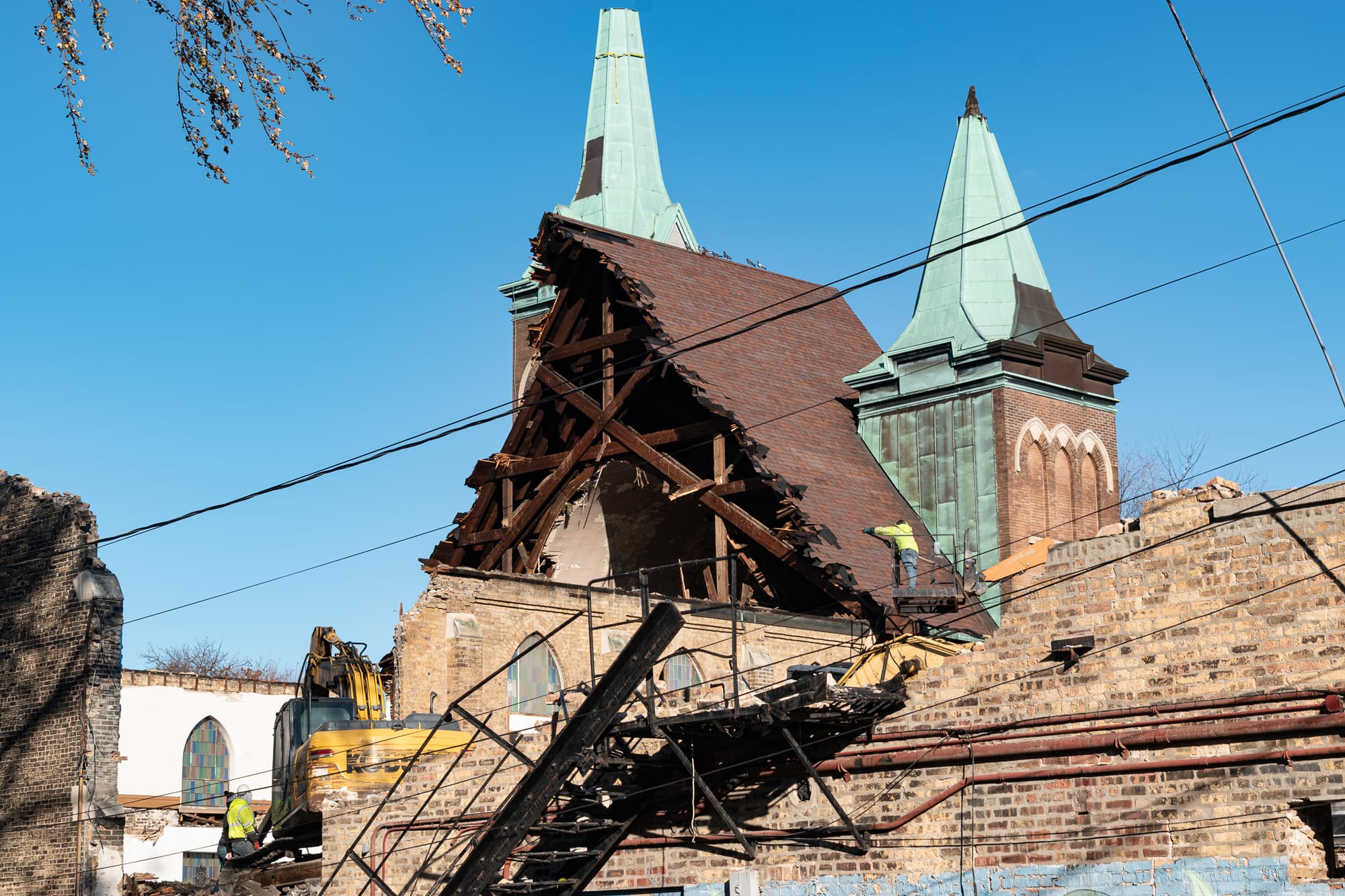
Demolition photos, 11/29/2025
Both the church building and the school were sold this year to Mar Van Development, who plan to build four single family homes on the site. The church building—again, ultimately a pretty regular neighborhood worship place—wasn’t on the Chicago Historic Resources Survey, and you can build single family homes by-right basically anywhere in the city, so permitting, demolition, and construction should proceed quickly here. Which, I guess four homes are better than zero and its a small win for the city to have the land on the property tax rolls for the first time ever, but given neighboring church conversions like “Sanctuary on the Square” on Shakespeare Ave just north of here—denser, more productive, adaptive reuse—this is still kind of a missed opportunity.
1891 - 2020
Production Files
Further reading:
 Daniel Schell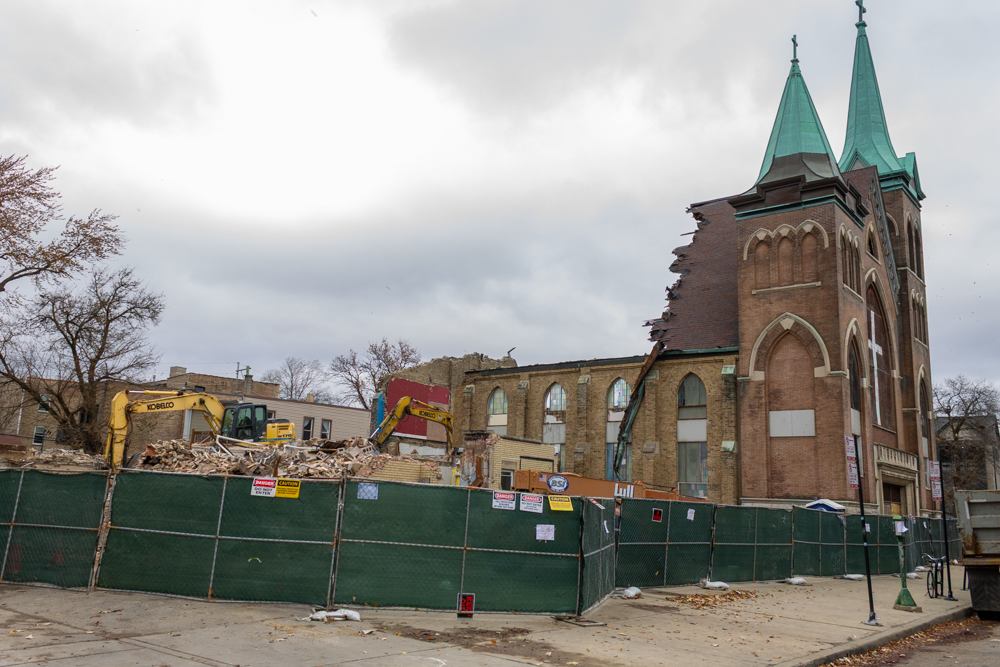
- the Chicago Tribune on similar church conversions in the city:
 Jay Koziarz
Otto Kaiser and John Flizikowski's partnership looks like it didn't even last five years, but it was pretty productive. They designed the building on Wabansia that housed legendary lost bar Artful Dodger in Bucktown (shamefully demolished for an especially shitty single family mansion).

As well as the former Polish National Alliance HQ and a bunch of mixed-use corner buildings around the North Side.



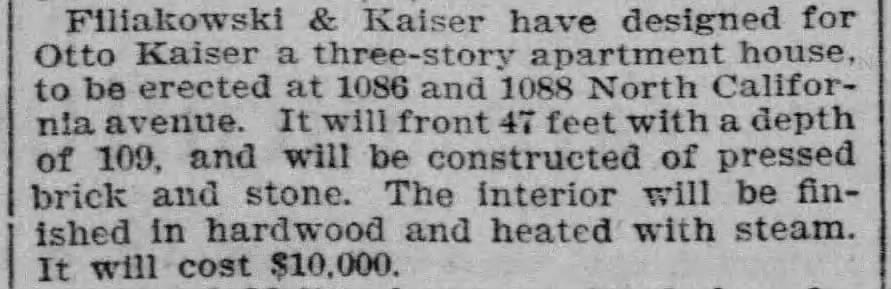

PNA HQ, 1896 | 2258 N. Southport permit (1898) and Google Streetview (2019) | 2017 N. California permit (1899) and Google Streetview (2025)
Flizikowski went on to have the more notable career after their partnership dissolved.

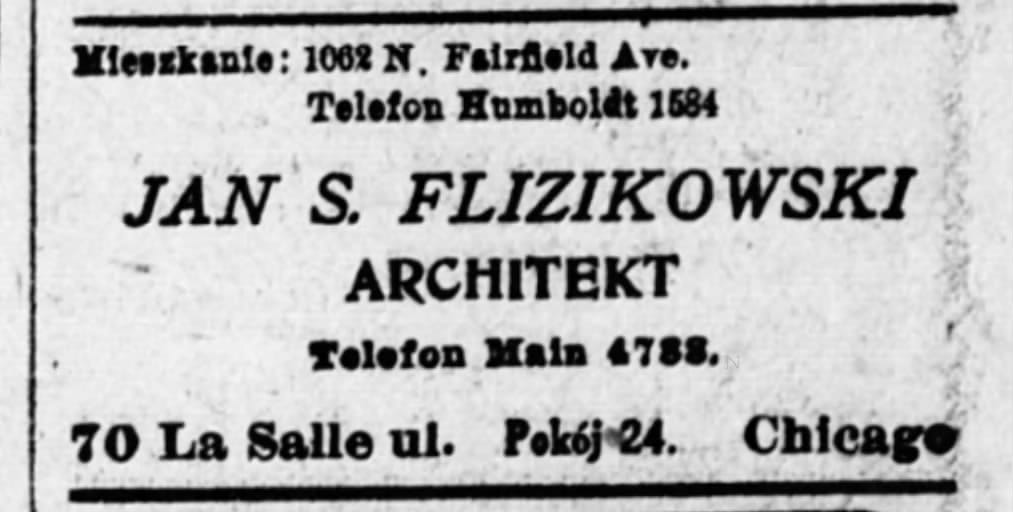
Flizikowski ad in the official Catholic directory, 1906, the Internet Archive | Flizikowski ad in Dziennik Chicagoski, 1909
A 2025 City of Chicago Landmark Designation said of Otto Kaiser, "about
whom little is known", but it looks like Kaiser—an immigrant from Germany—had a solidly productive career designing neighborhood residential as well before dying young in 1917. North Side residential buildings designed by Kaiser include:
- 1423 N. Springfield
- 2642 N. Mozart
- 3327 N. Hamilton
- 4951 N. Troy
- 4818-4820 W. Pensacola
- 2700 N. Whipple


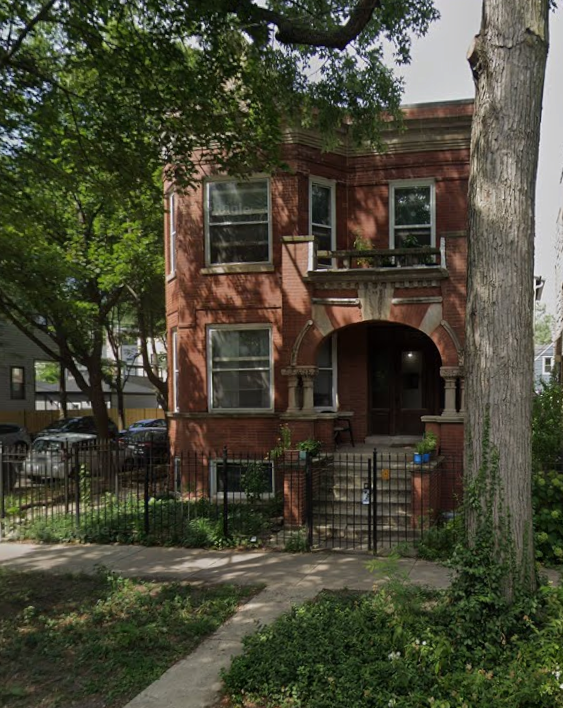
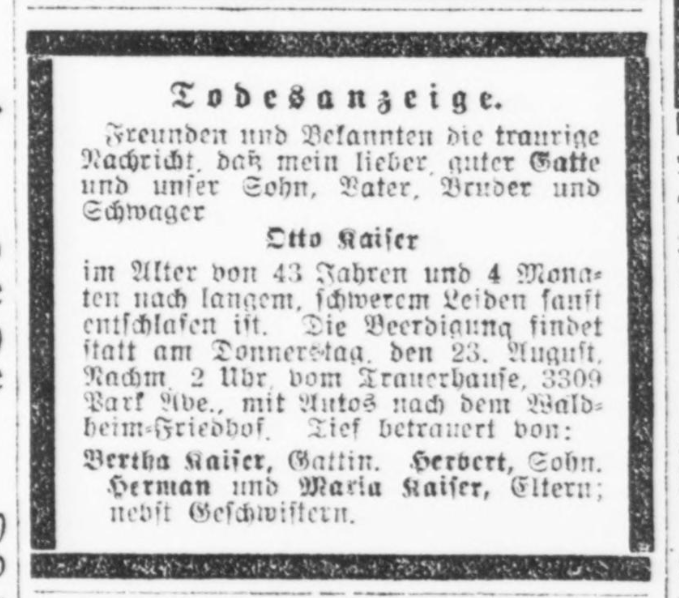
Buildings designed by Otto Kaiser | Kaiser's 1917 obituary, Abendpost, the Internet Archive





Otto Kaiser building permits
Rev. Werfelmann had bad luck with fire—six years before his church burned down, he set himself on fire.
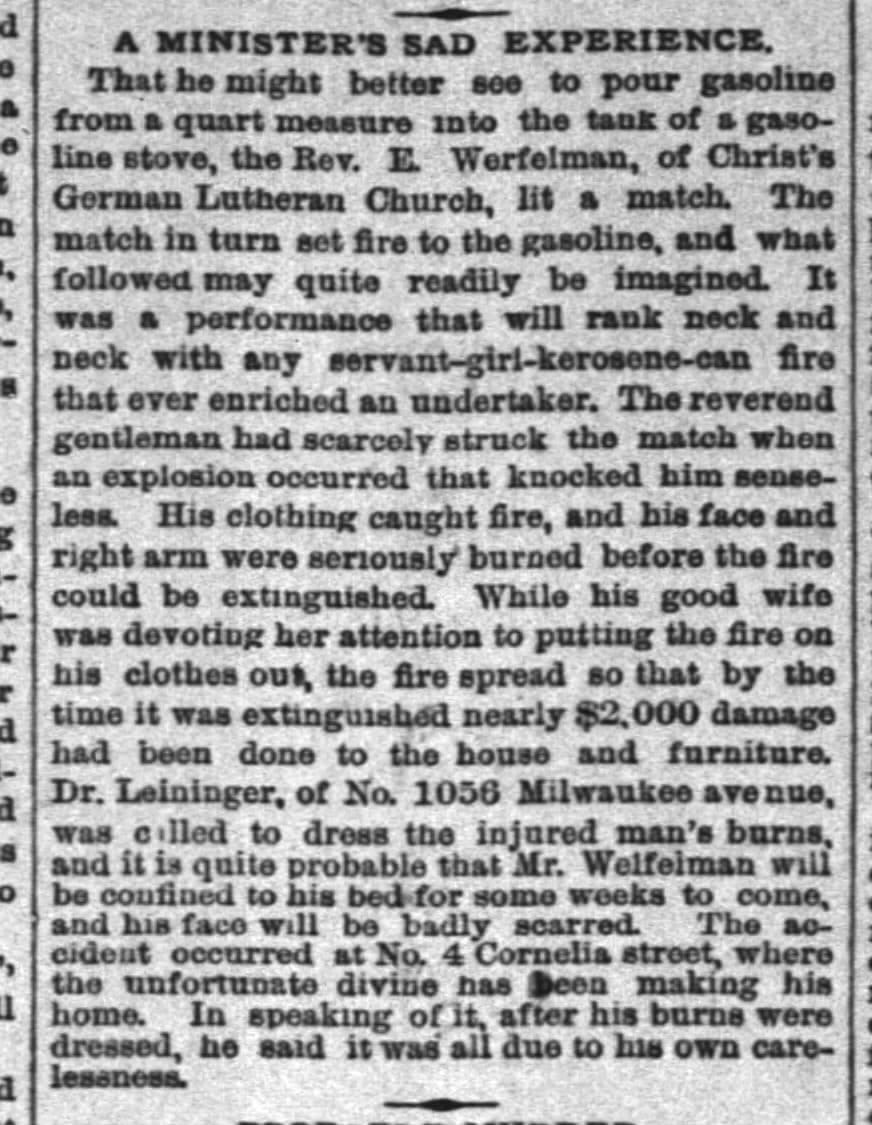
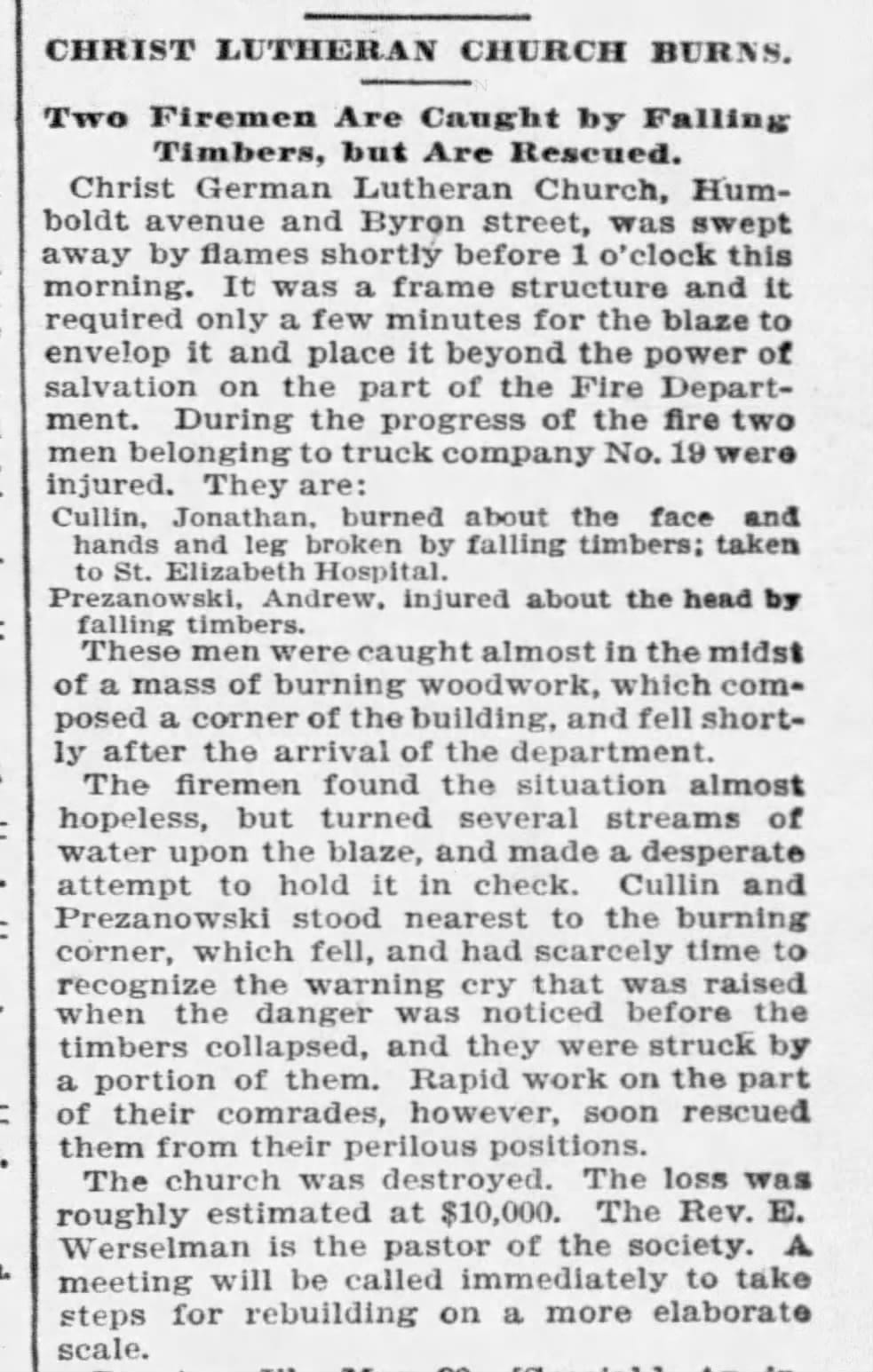
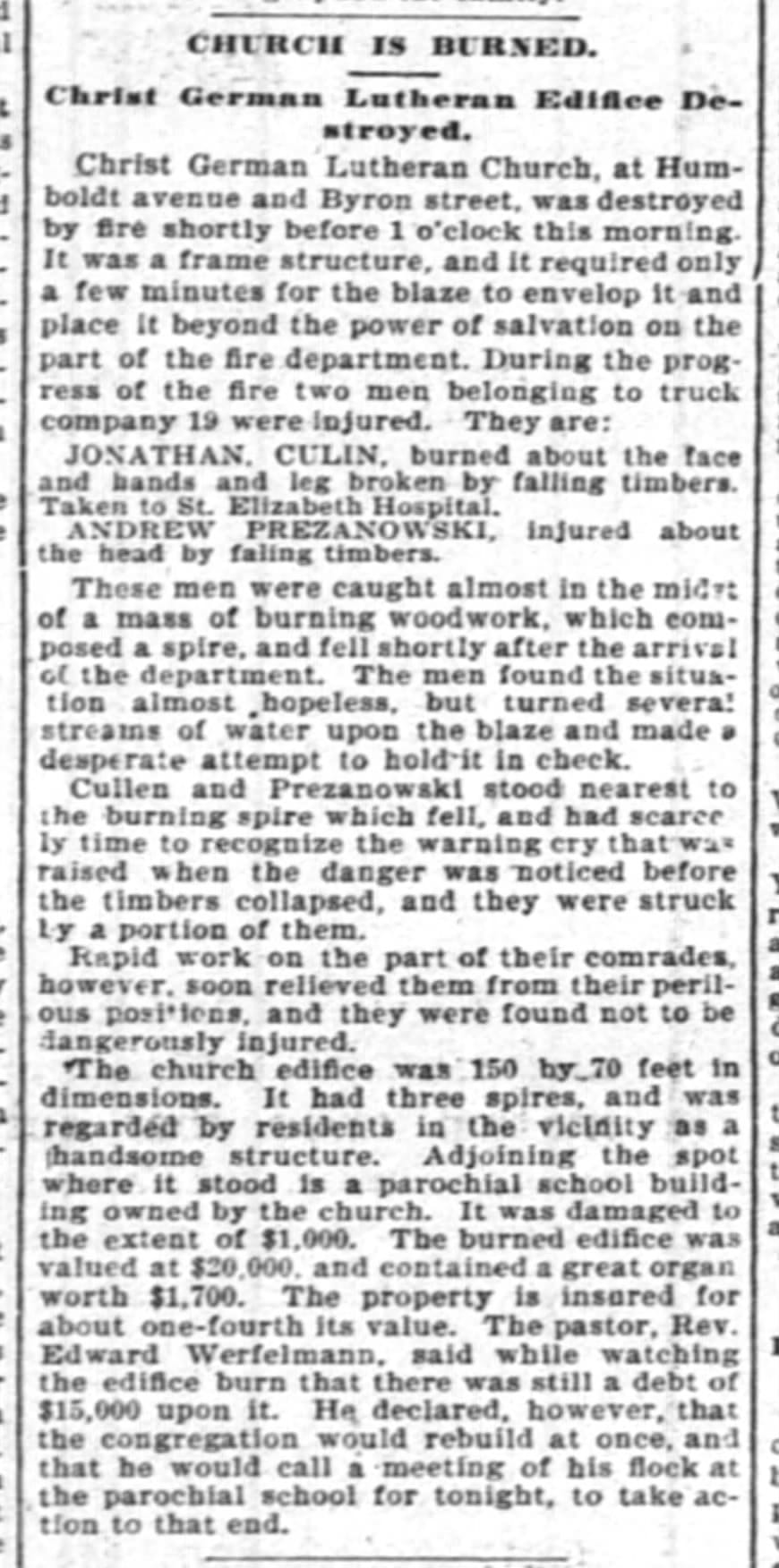
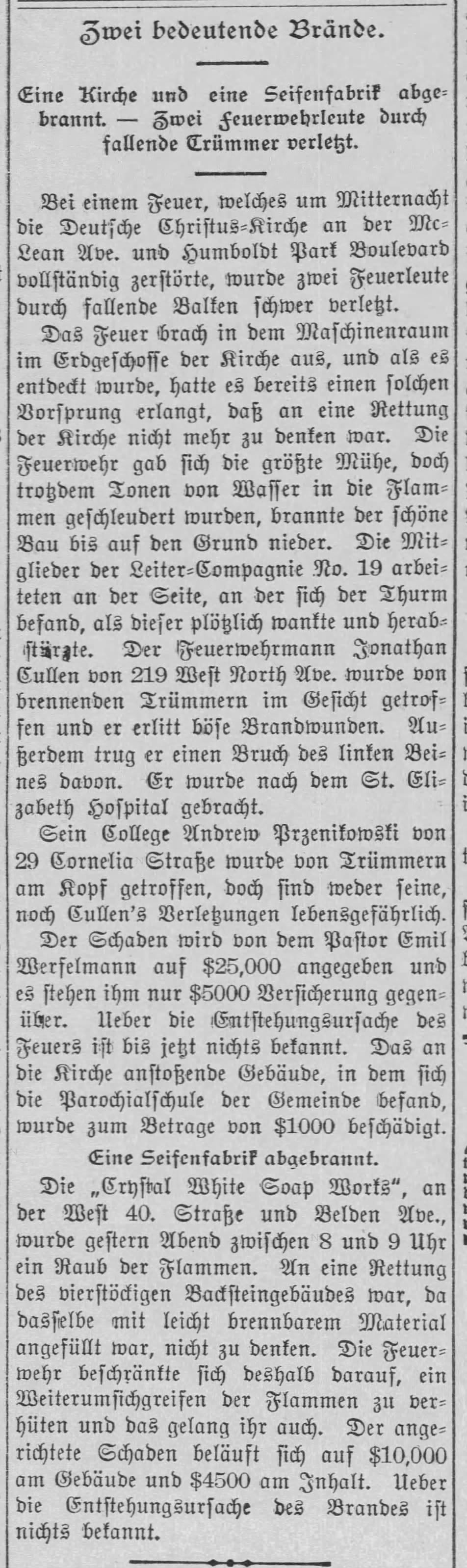
1889, Rev. Werfelmann sets himself on fire | 1896 articles about the fire in the Chicago Tribune, the Inter Ocean, and Abendblatt
At least until 1960, they were advertising services in German—by 1967, though, it was mostly (maybe all) English.
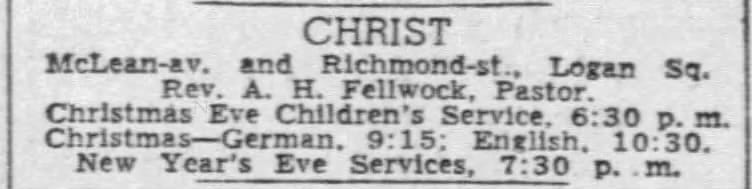


1949 ad, 1960 ad, and 1967 ad
Didn't know where to put these, but thought they were interesting enough to include—particularly that 21 members of the congregation served in World War I (again, it was a German congregation, at a time when there was serious anti-German hysteria in the US).
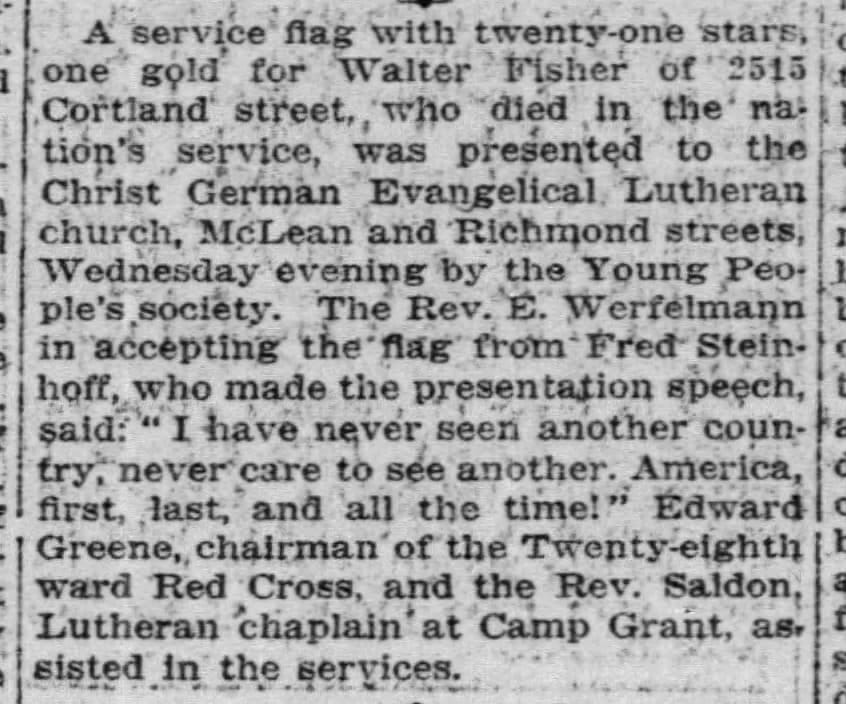

1918 article about WWI servicemen | 1935, Rev. Dippold is robbed
This is where I took the photo from.

Member discussion: