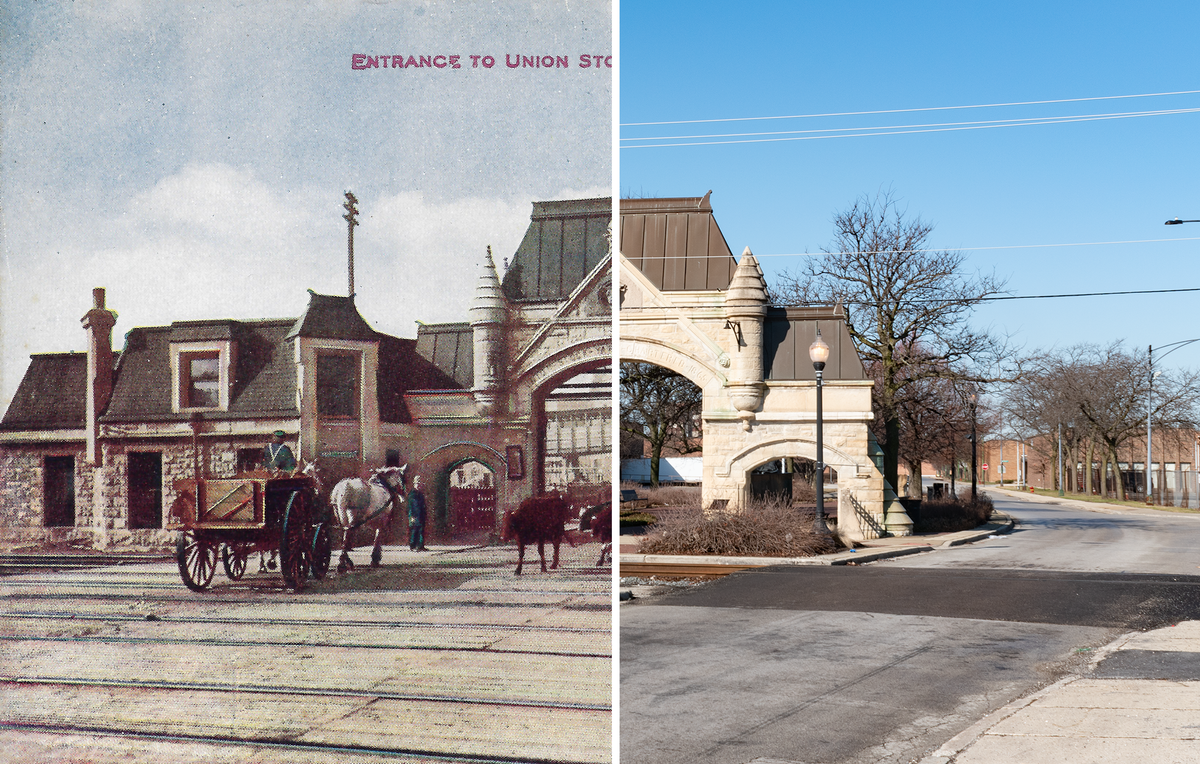
Shorn of its guardhouse and the cacophony of livestock long since quieted, one of the last remnants of Chicago’s Union Stockyards stands at the entrance to what is now an industrial park. Built in 1879, the Stockyards Gate was the grand entrance to what was a smelly, squealing, frenetic square mile filled with animals shipped to Chicago for efficient slaughter—one of the first sites of mechanized mass production that help create, arguably,
...modernity.
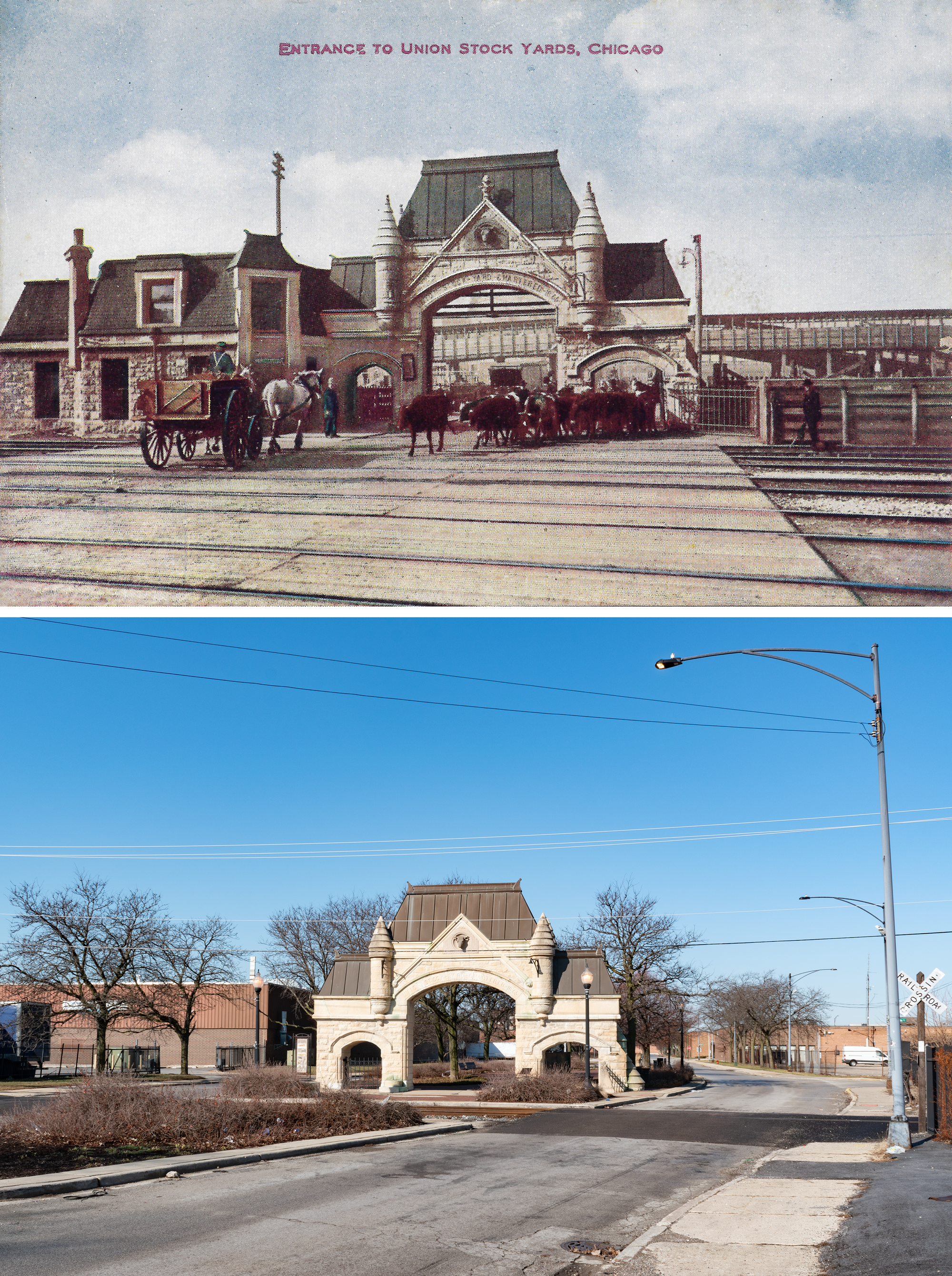
So, what's changed? Well, really, what hasn't?
- The gate itself is still there, if purely decorative, but it did lose its finials.
- There's still a single track of rail here, the South Boomer track, one of the last remnants of the Chicago Junction Railway that once covered much of the Union Stock Yards.
...and, that's it. I can't point to anything else.
The Union Stockyards were established in 1865, uniting the smaller stockyards scattered around the city into a single efficient collecting point with extensive rail access. Outside the stockyards at Packingtown, the Swifts, Armours, and Morrises broke the slaughter process down into simple, repetitive constituent actions. With carcasses delivered by novel conveyor belt systems, workers performed the same single task repeatedly, de-skilling what was once an artisanal process.
The loosely Romanesque gate replaced an earlier wooden gate that couldn't handle a high-traffic and high-pollution environment as the Stock Yards became the most important meatpacking district in the United States in the 1870s. Triple-arched, decorated with finials, and made of Lemont limestone, the bull atop the gate depicts a prize-winning steer that was a favorite of Union Stock Yards Superintendent John B. Sherman.
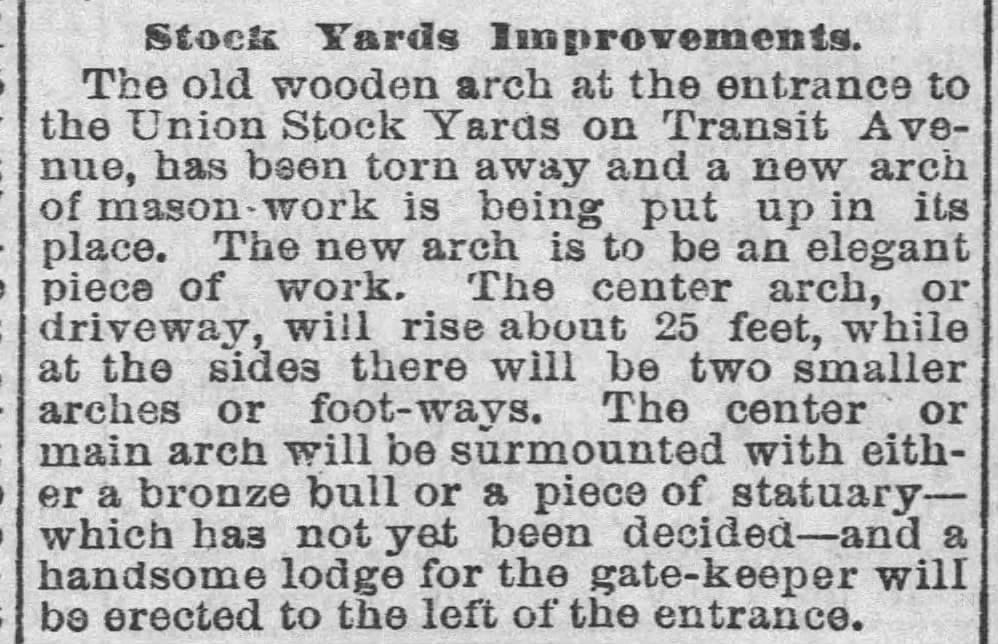
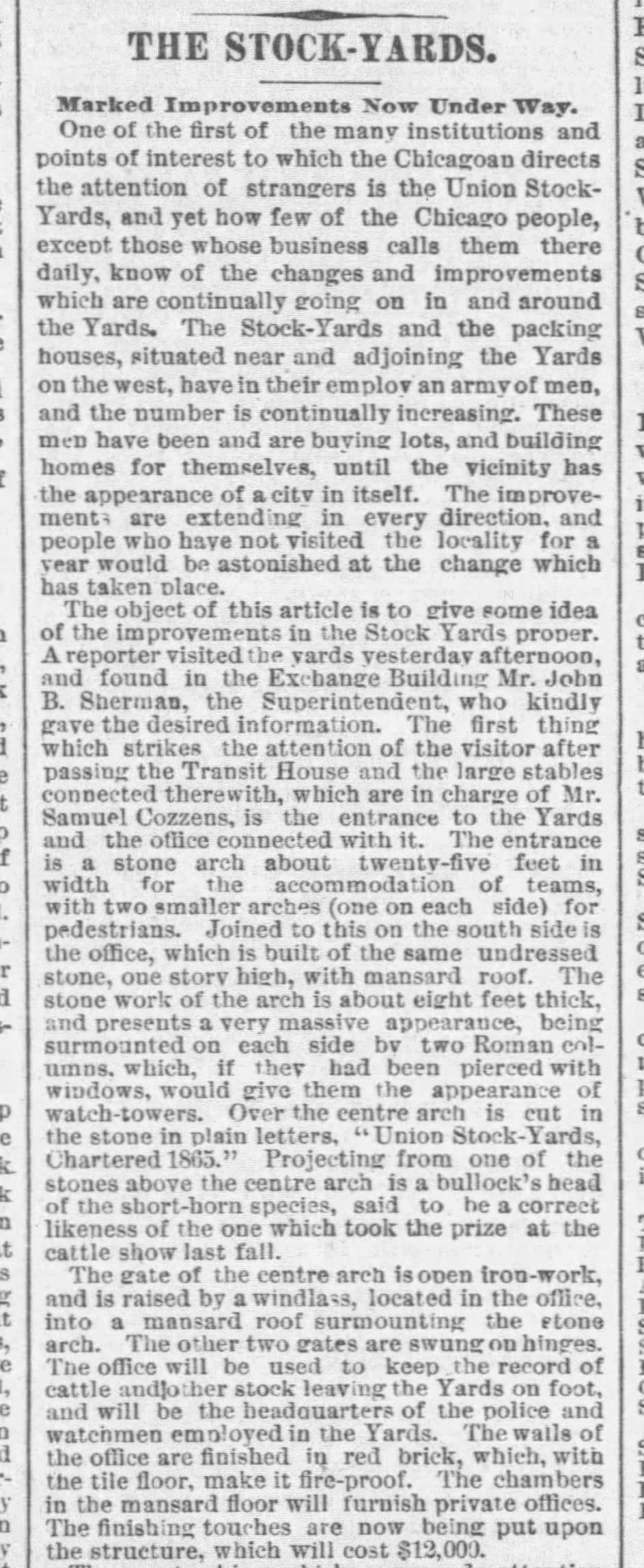
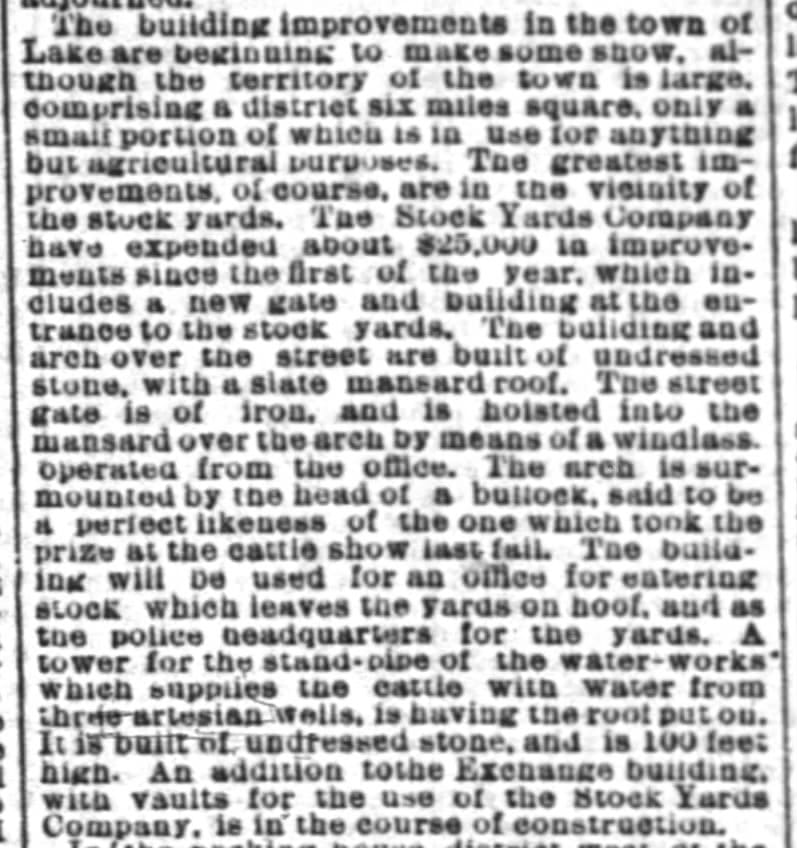
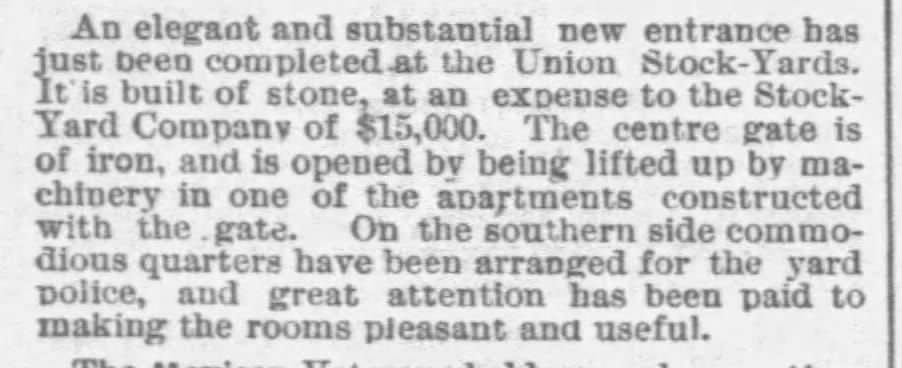
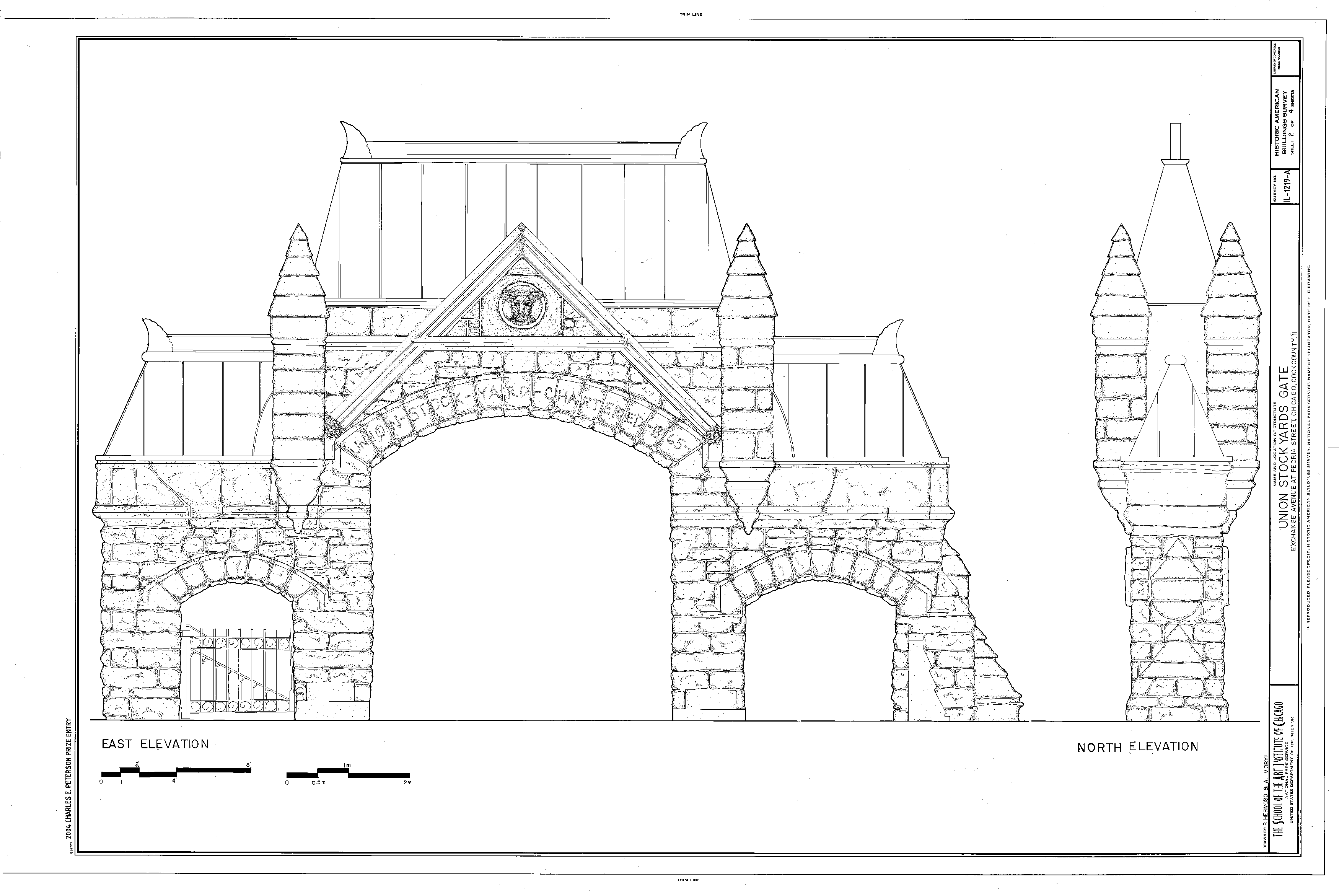
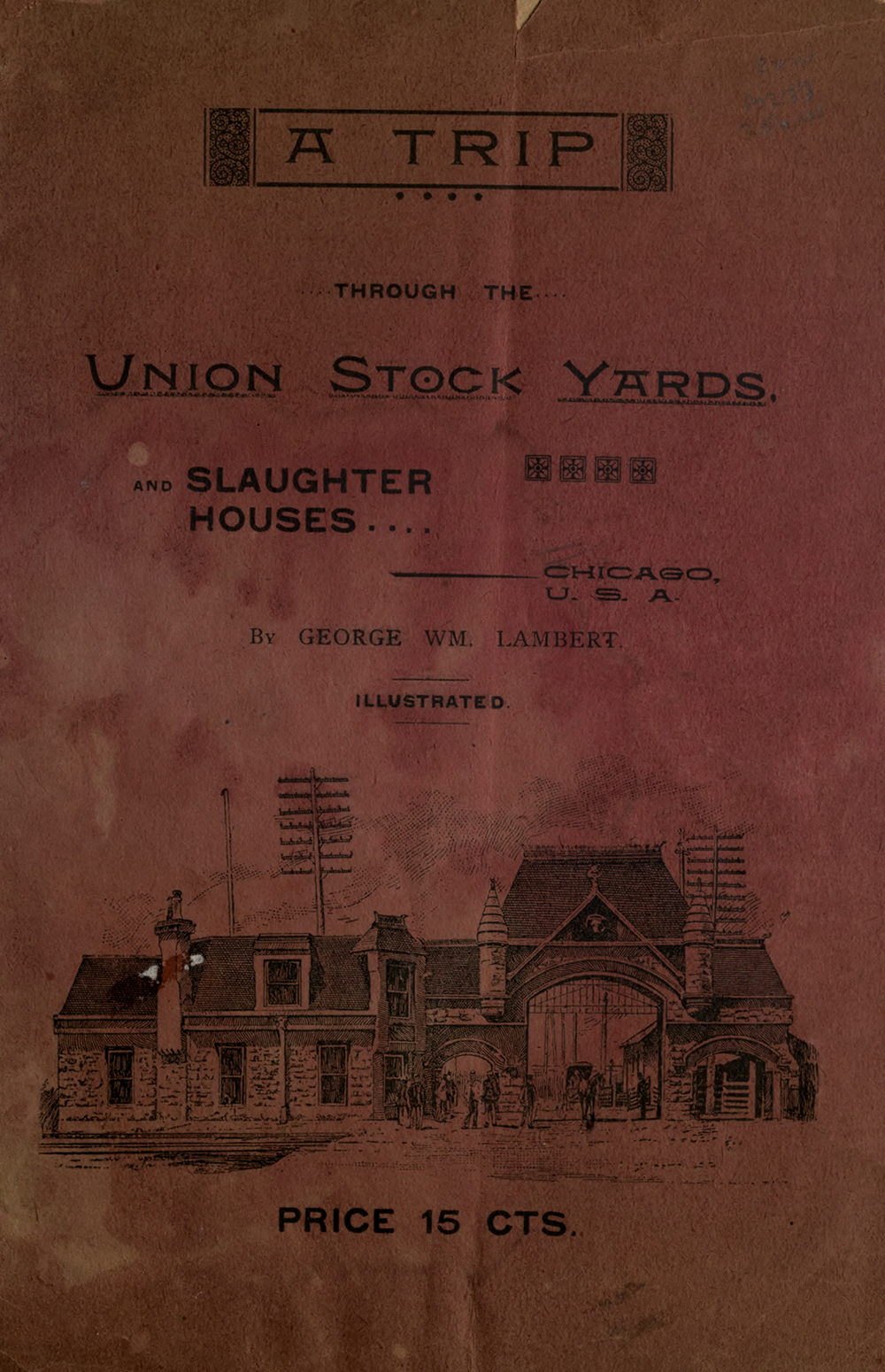
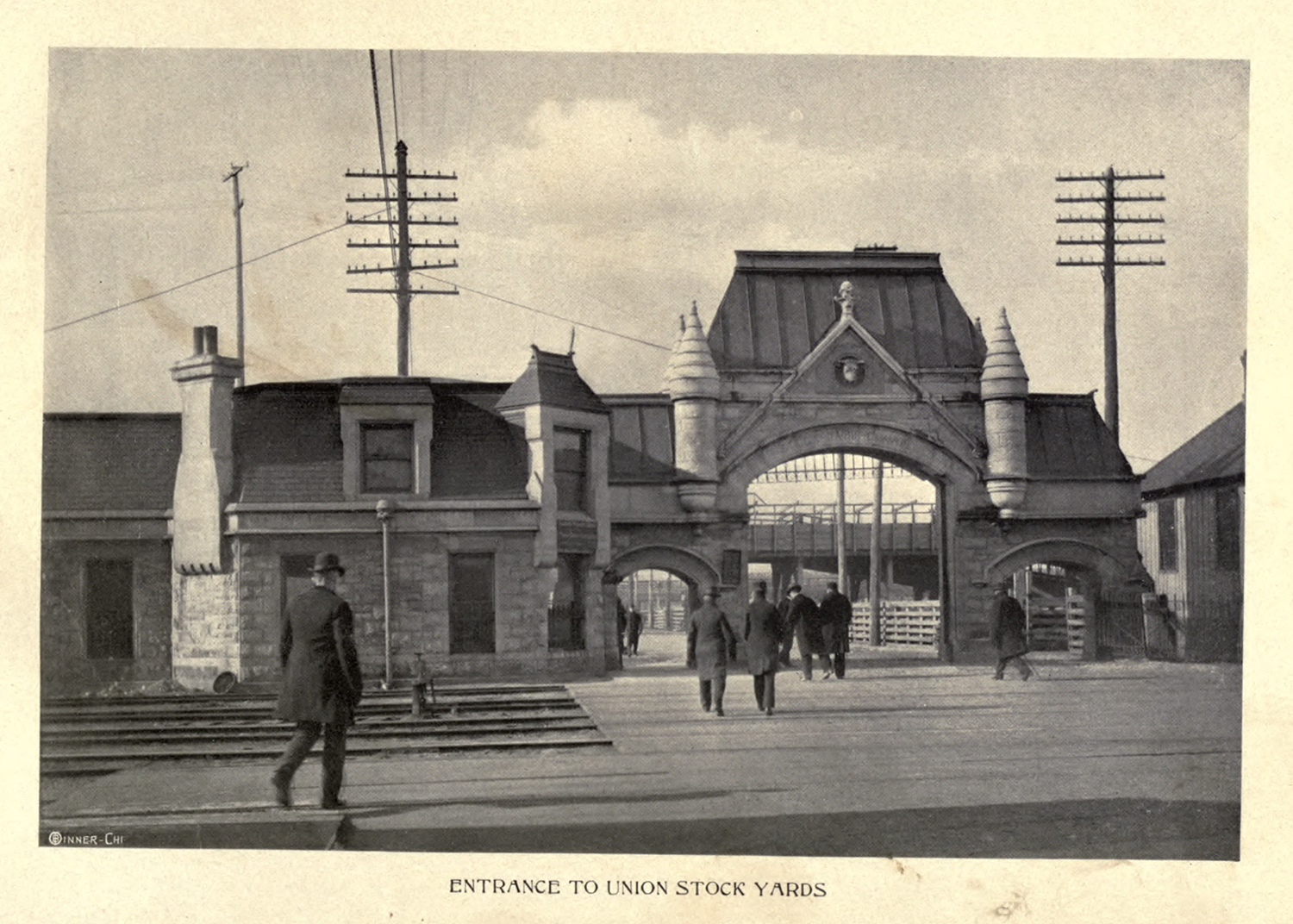
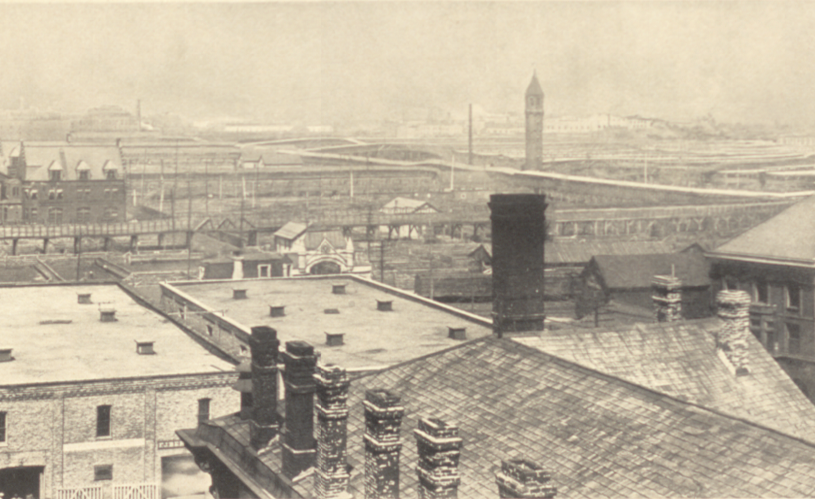
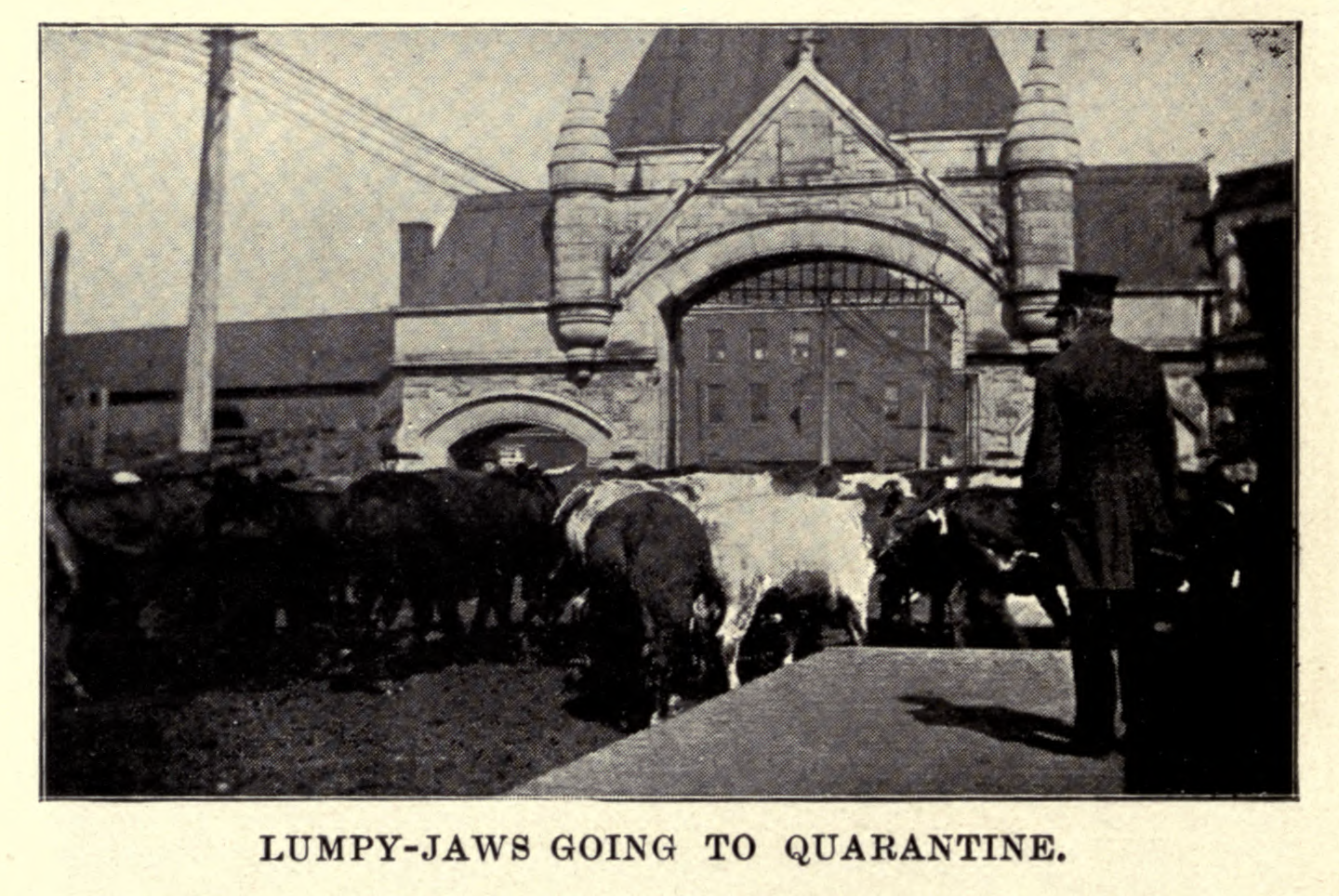
1879 articles about the new arch and entryway to the stock yards | Sketch, Historic American Buildings Survey, Library of Congress | 1893, on a Chicago guidebook cover | 1898, Ingwersen Brothers and Smith souvenir, the Internet Archive | 1899 view from the transit house, Library of Congress | 1901, Illustrated history of the Union Stockyards, the Internet Archive
The design of the gate is popularly attributed to Burnham & Root, although it looks like no one (including me) has been able to dig up direct primary source evidence. The firm designed other buildings at the stockyards at the time, as well as Superintendent Sherman's home, so it seems believable enough (plus, Burnham was married to Sherman's daughter).
The stockyards began to decline in the 1940s. Trucking and improved refrigeration allowed for a more distributed meatpacking system, with slaughterhouses spread across the country, closer to where the livestock were raised–there was no need for a giant collecting point for live cows, pigs, sheep, etc.
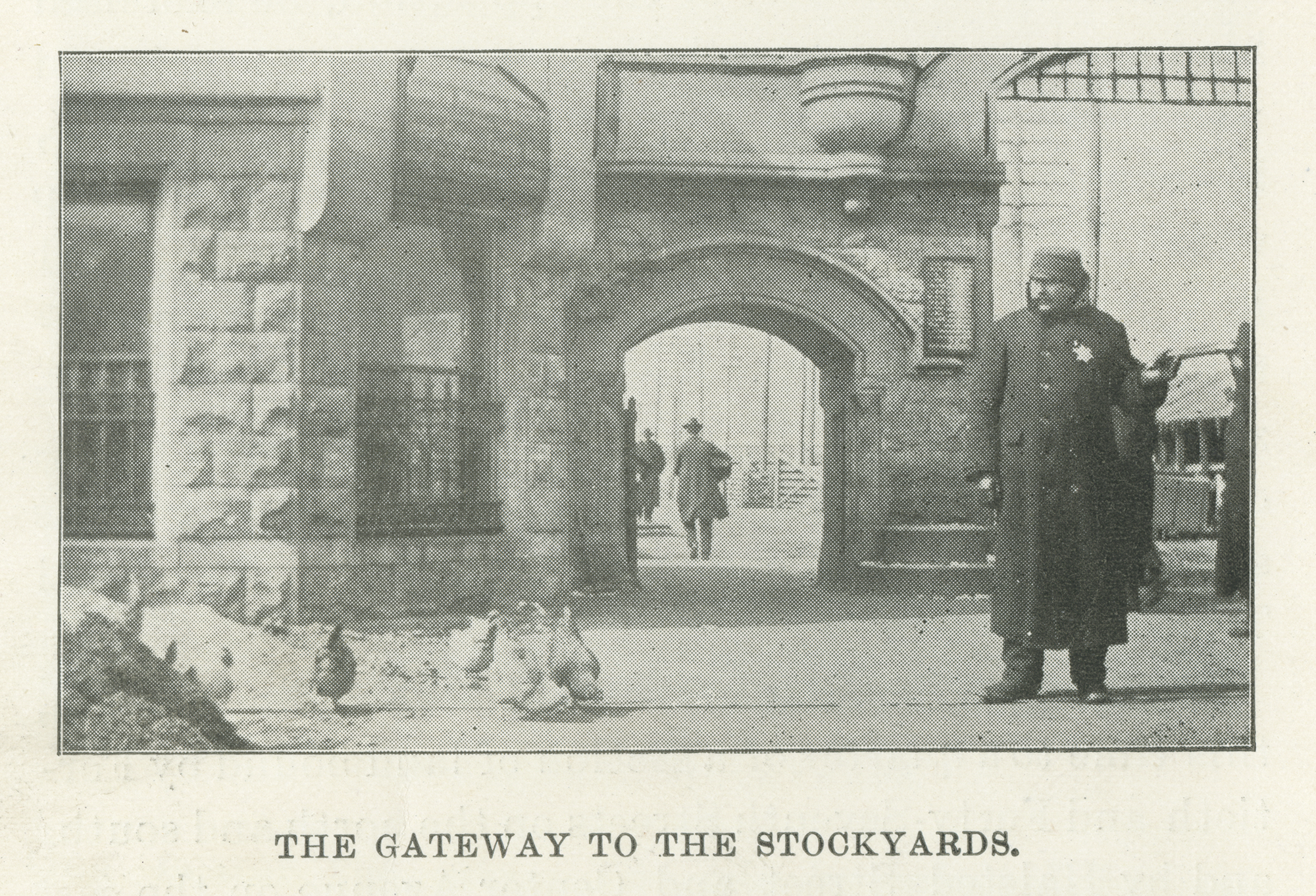
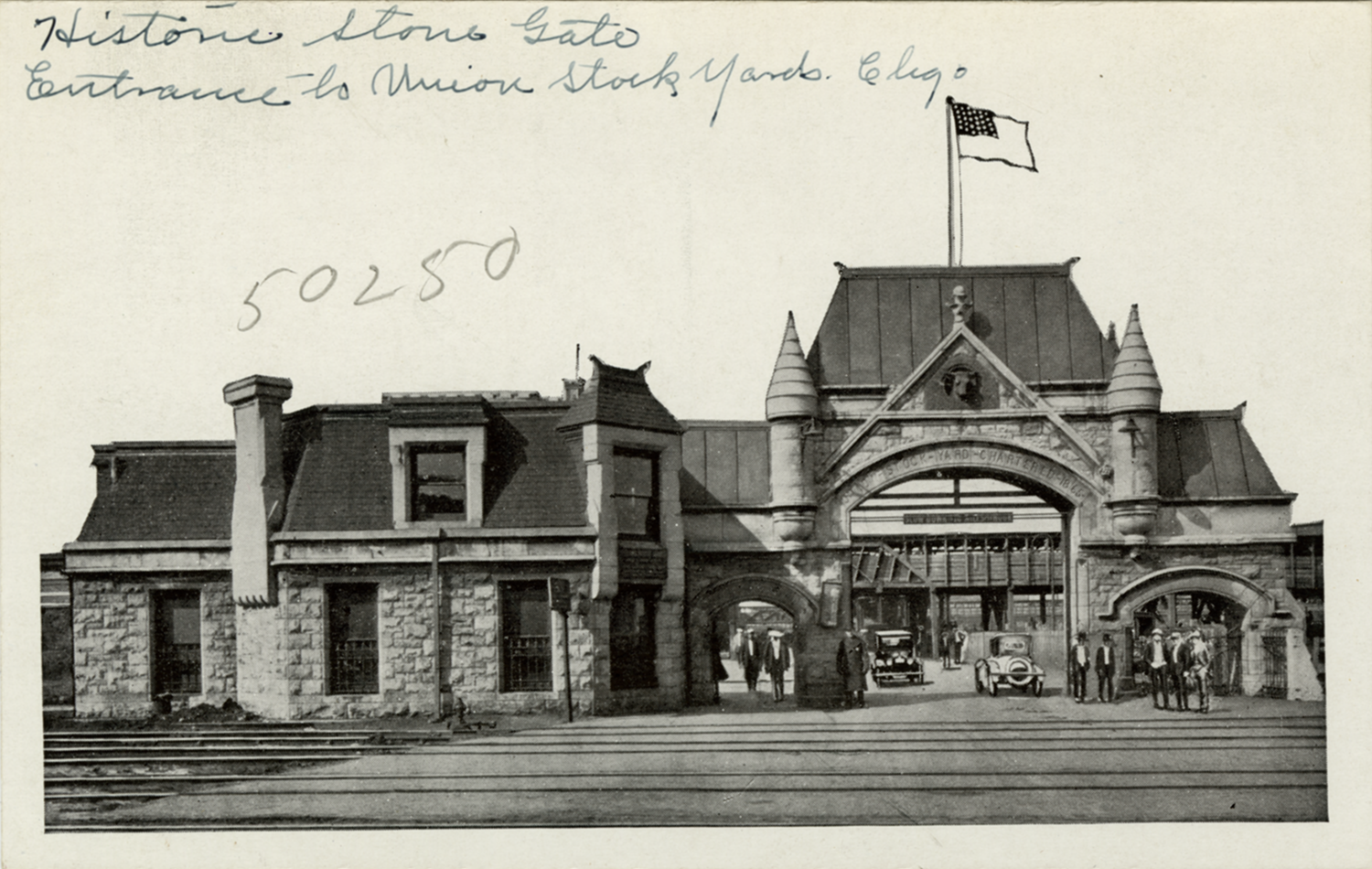
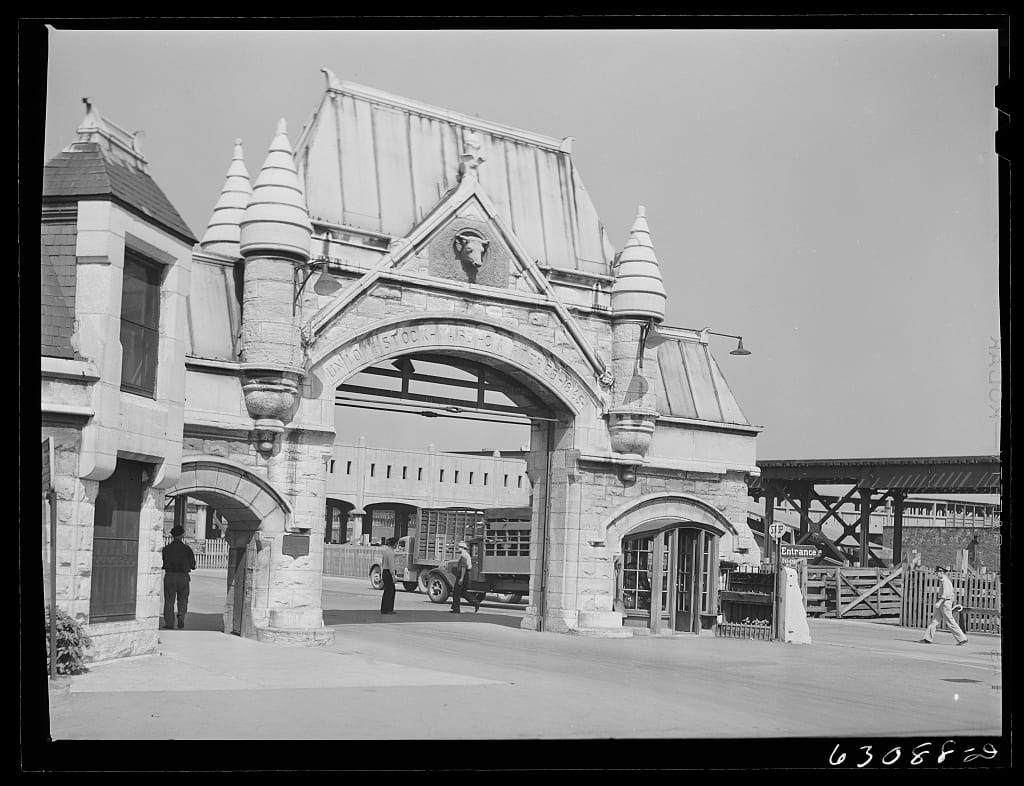
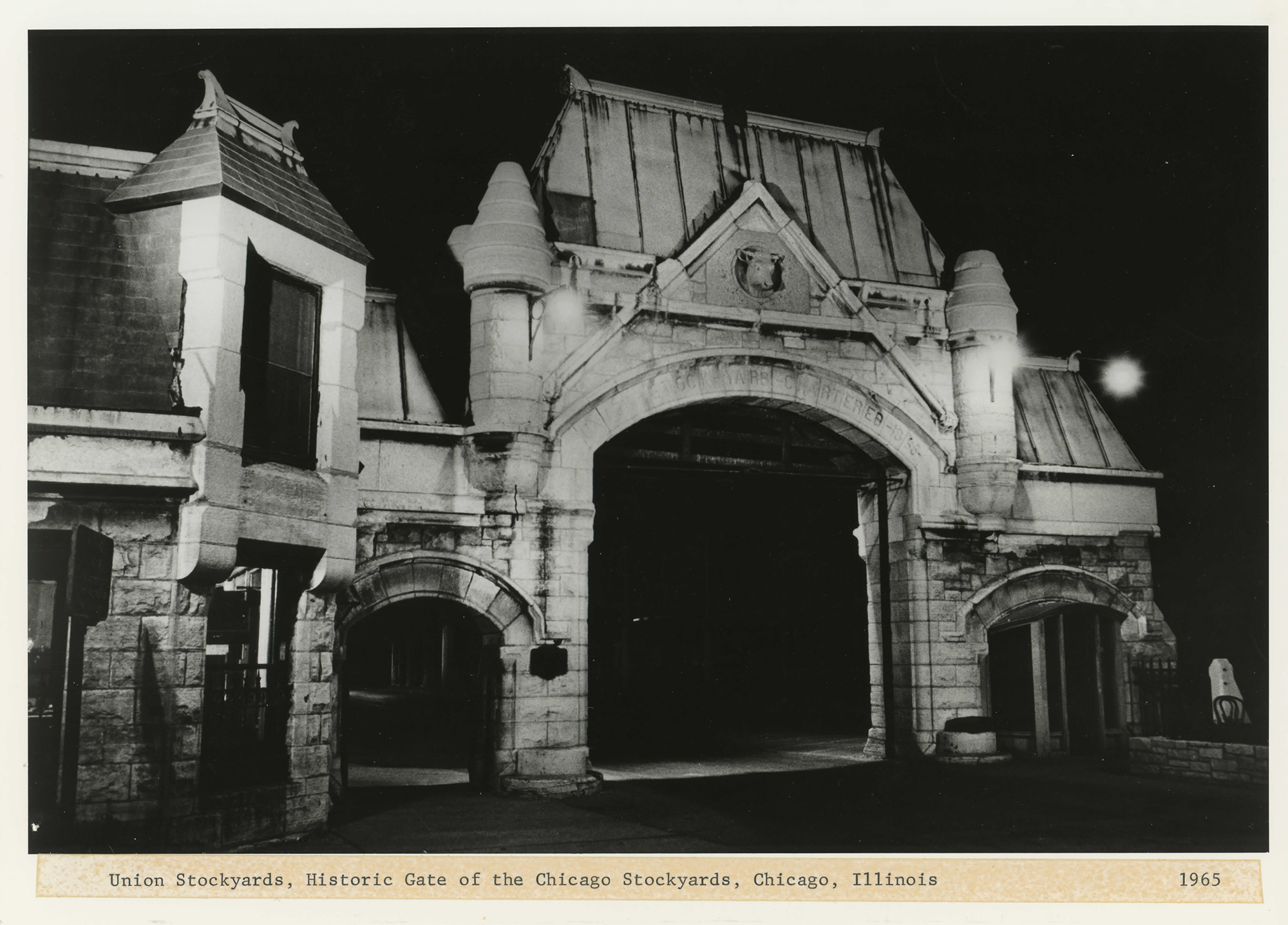
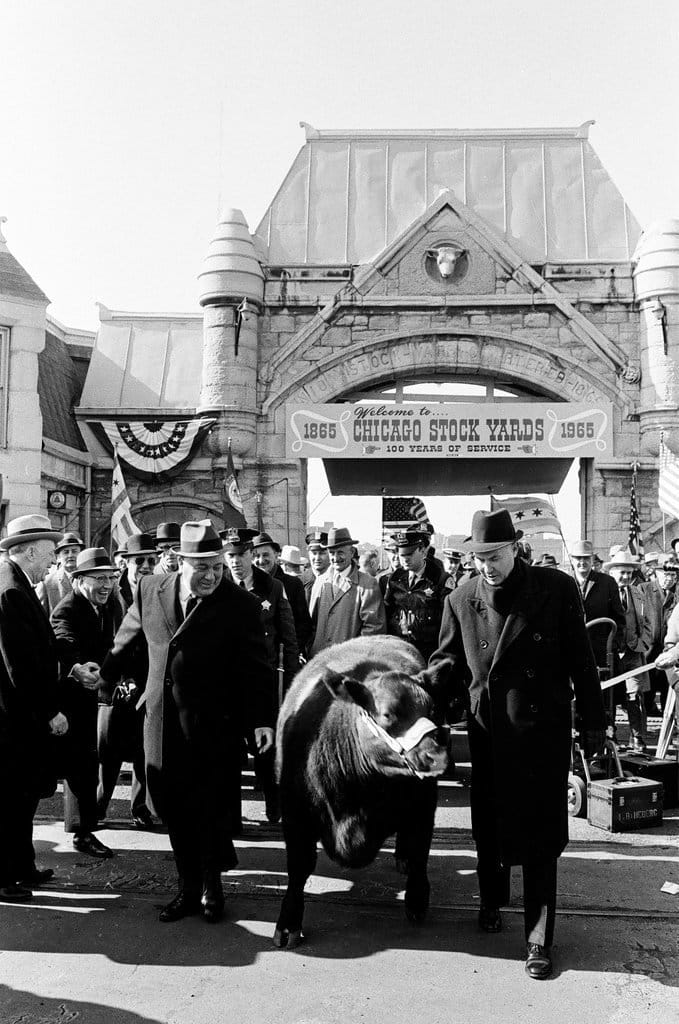
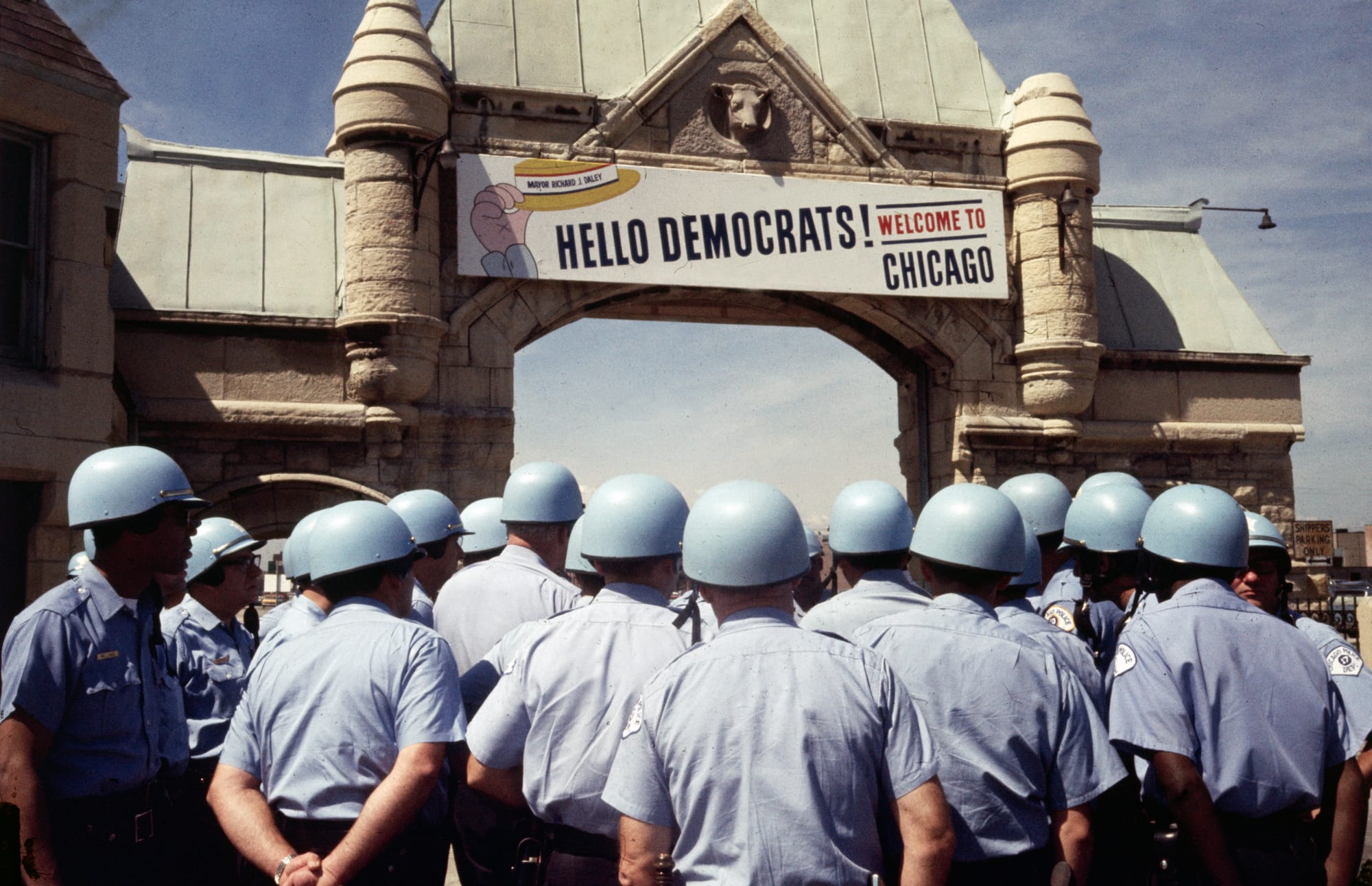
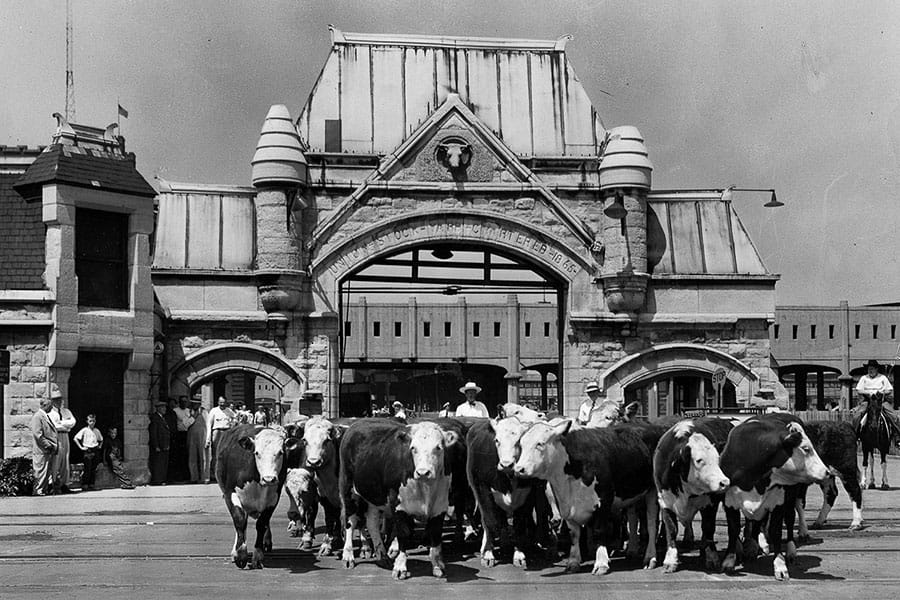
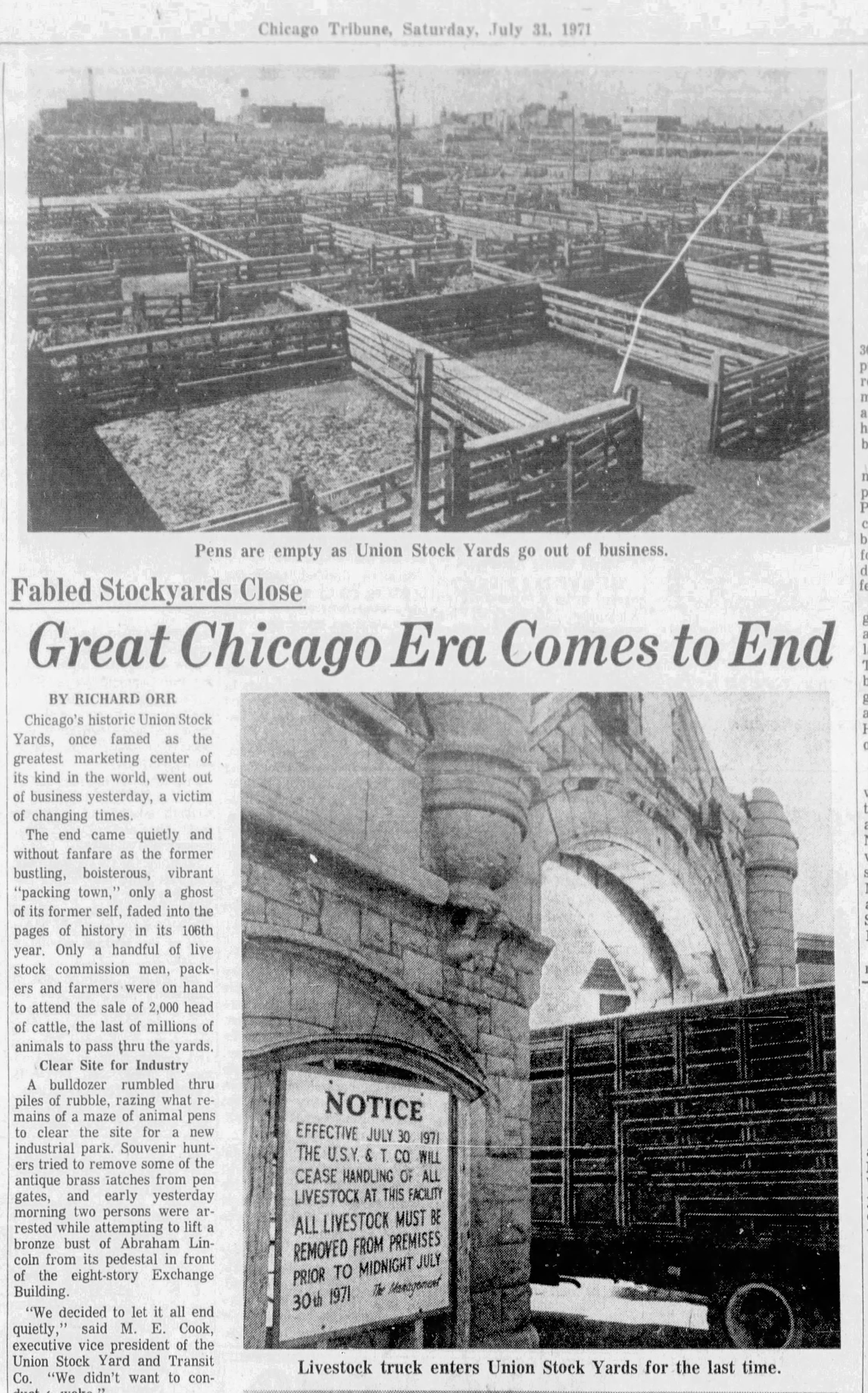
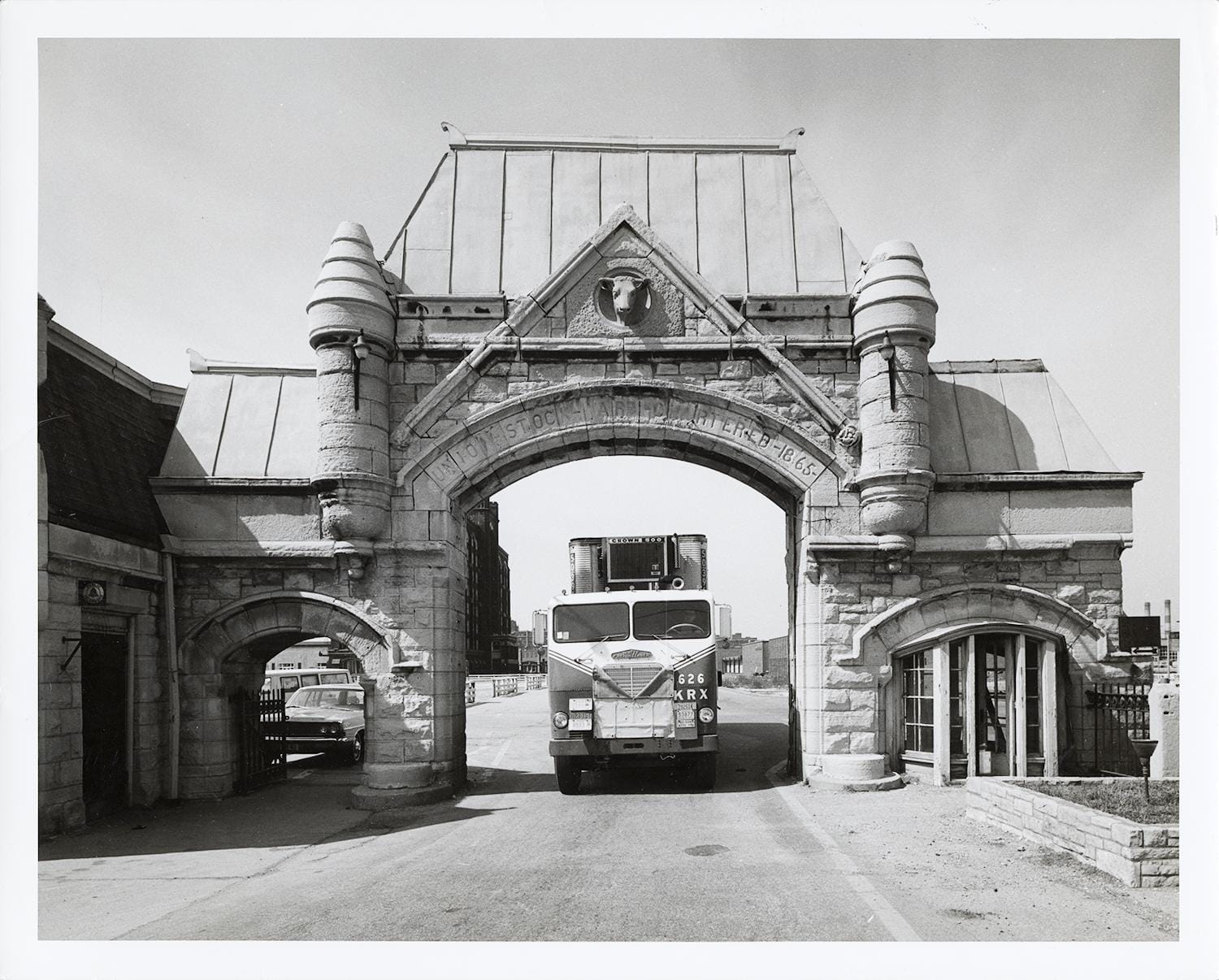
1896, Illustrated history of the Union Stockyards, the Newberry Library | 1920s postcard, the Newberry Library | 1941, John Vachon, Library of Congress | 1965, Leslie Orear, NRHP Nomination Form | Mayor Daley with cows, celebrating the 100th anniversary of the Stock Yards | 1968 | Late 1960s | 1971, Stock Yards closes | 1972, UIC via Chicago Collections
When the stockyards closed in 1971, the Central Manufacturing District purchased the property for redevelopment as an industrial park. Demolition of the gate was a possibility, but the city negotiated to save it. The new owners rolled over so quickly I don’t know if their heart was in it, although they tore down the attached guardhouse that year. The gate was designated a city landmark and listed on the NRHP in 1972. The Amalgamated Meat Cutters lobbied the National Parks Service for further recognition for the Stock Yards Gate, and in 1981 it was designated a National Historic Landmark as well.
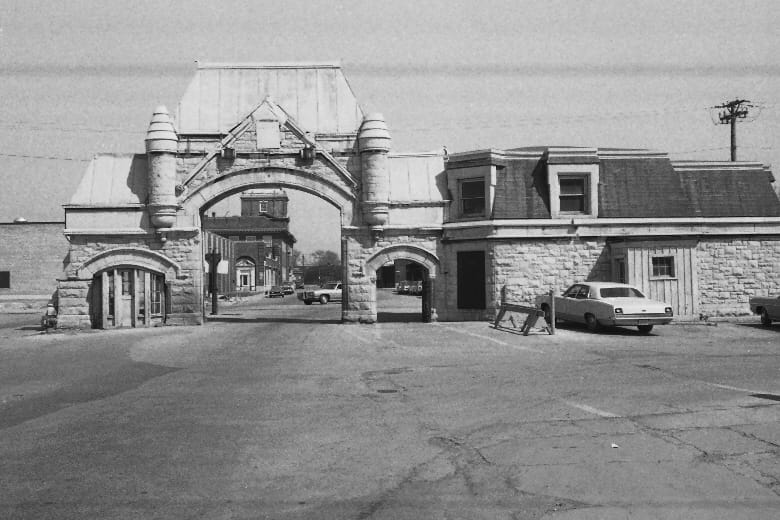
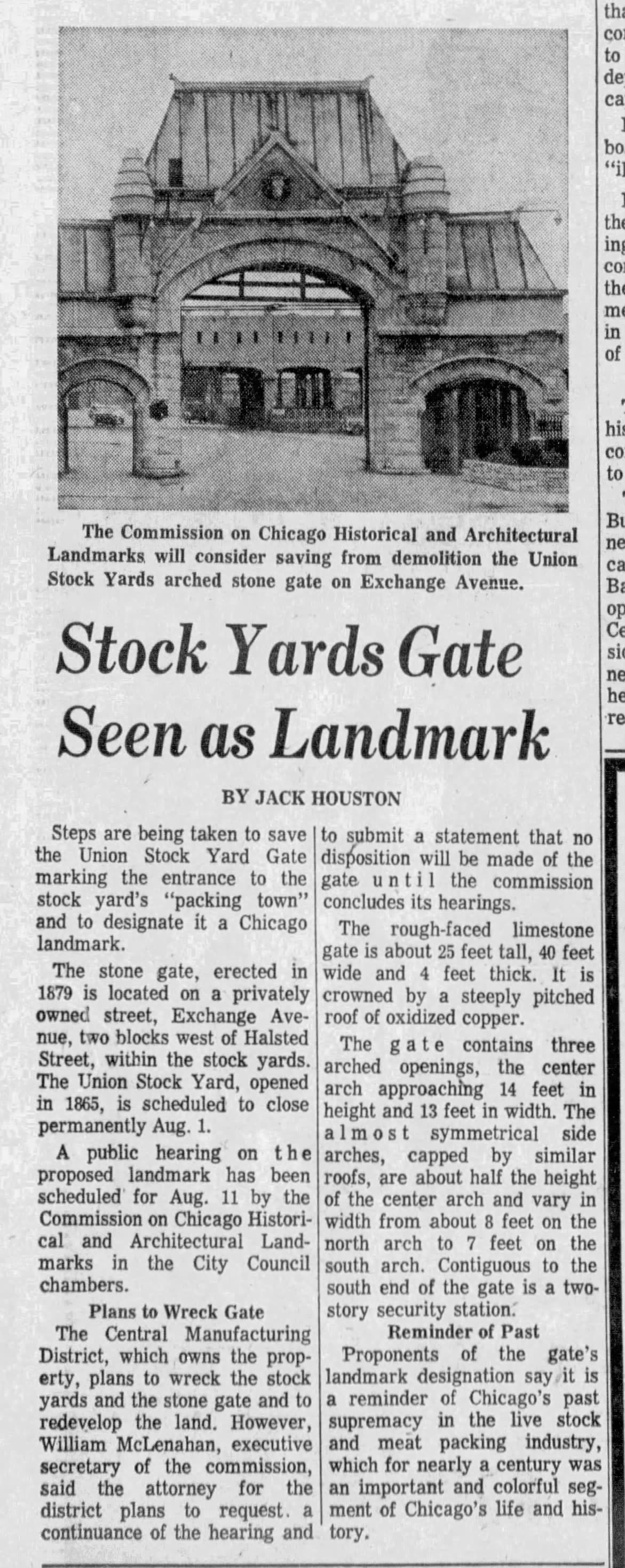
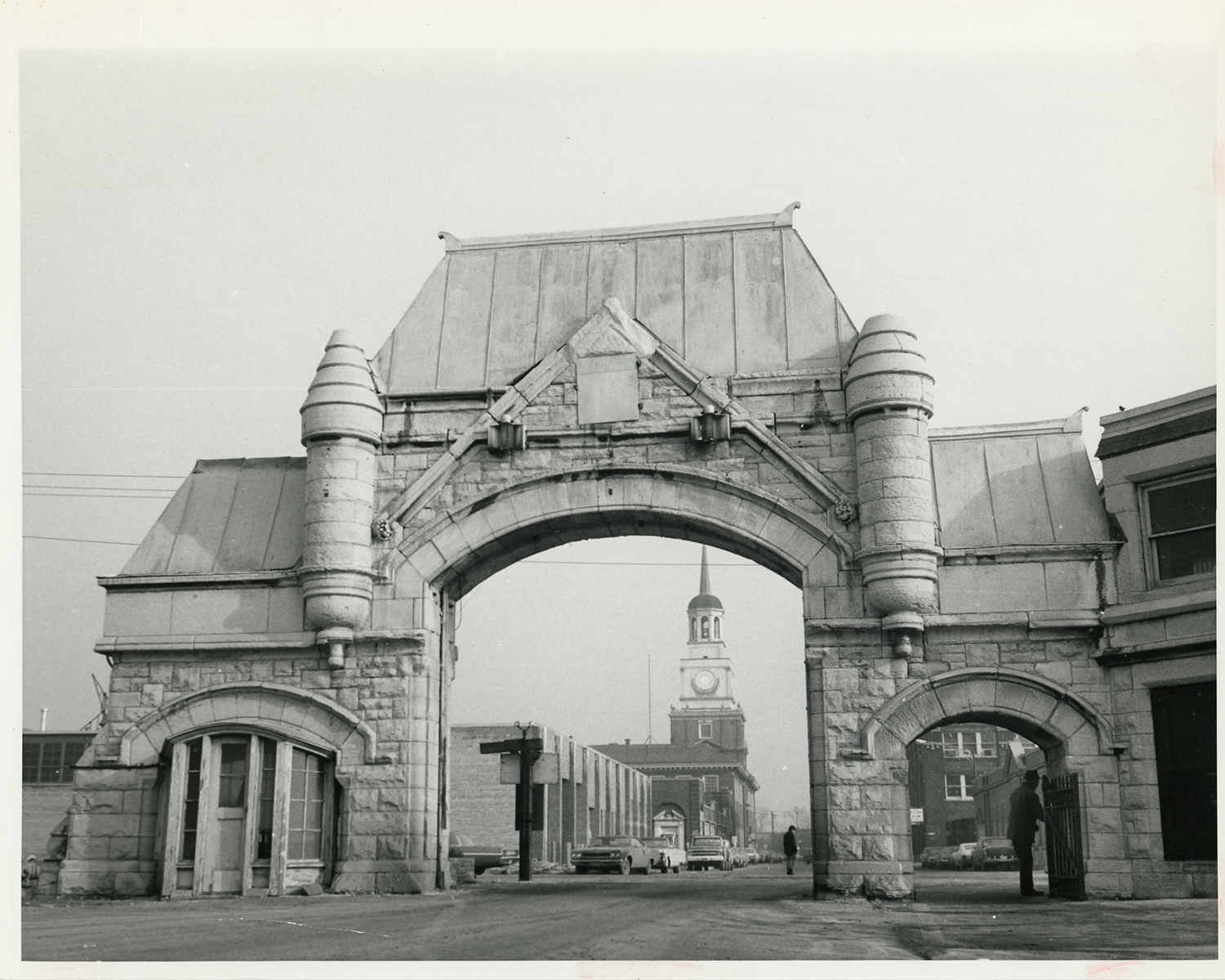
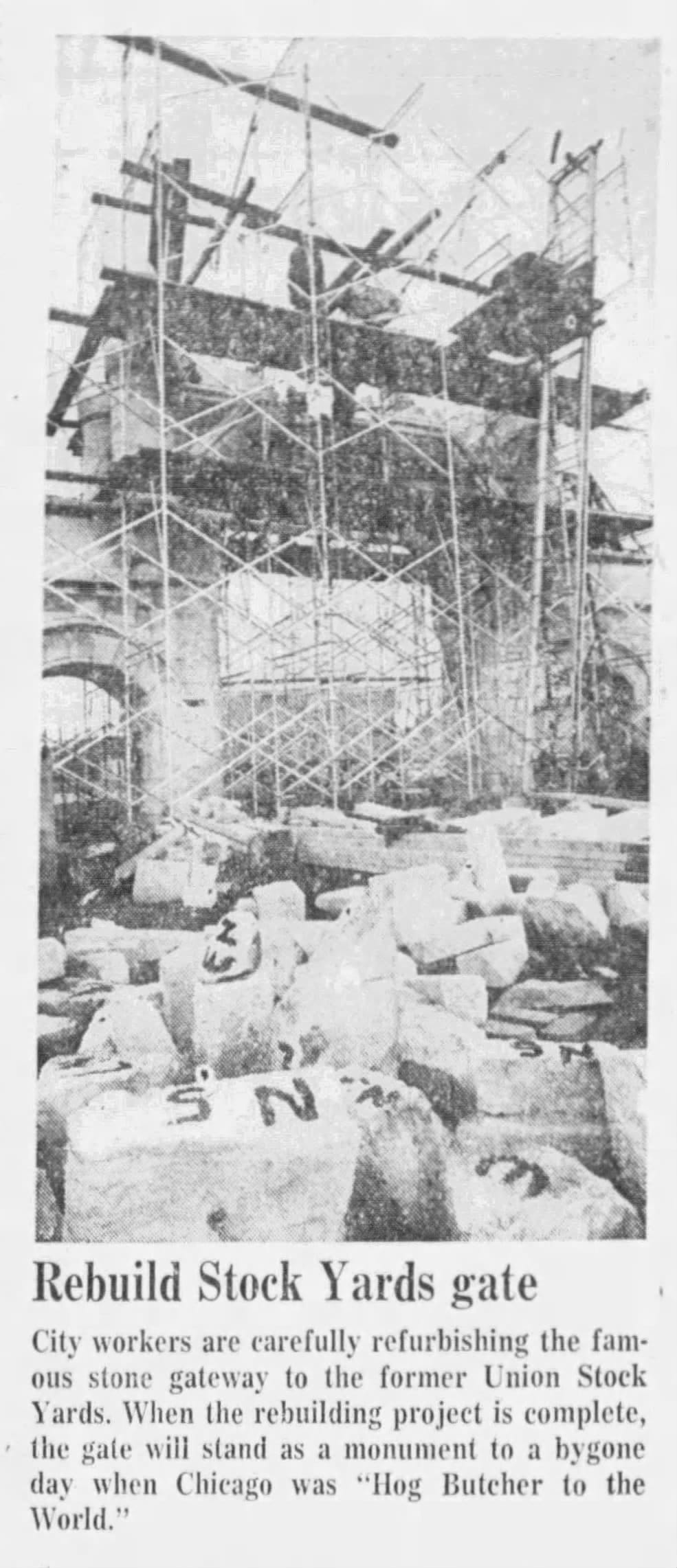
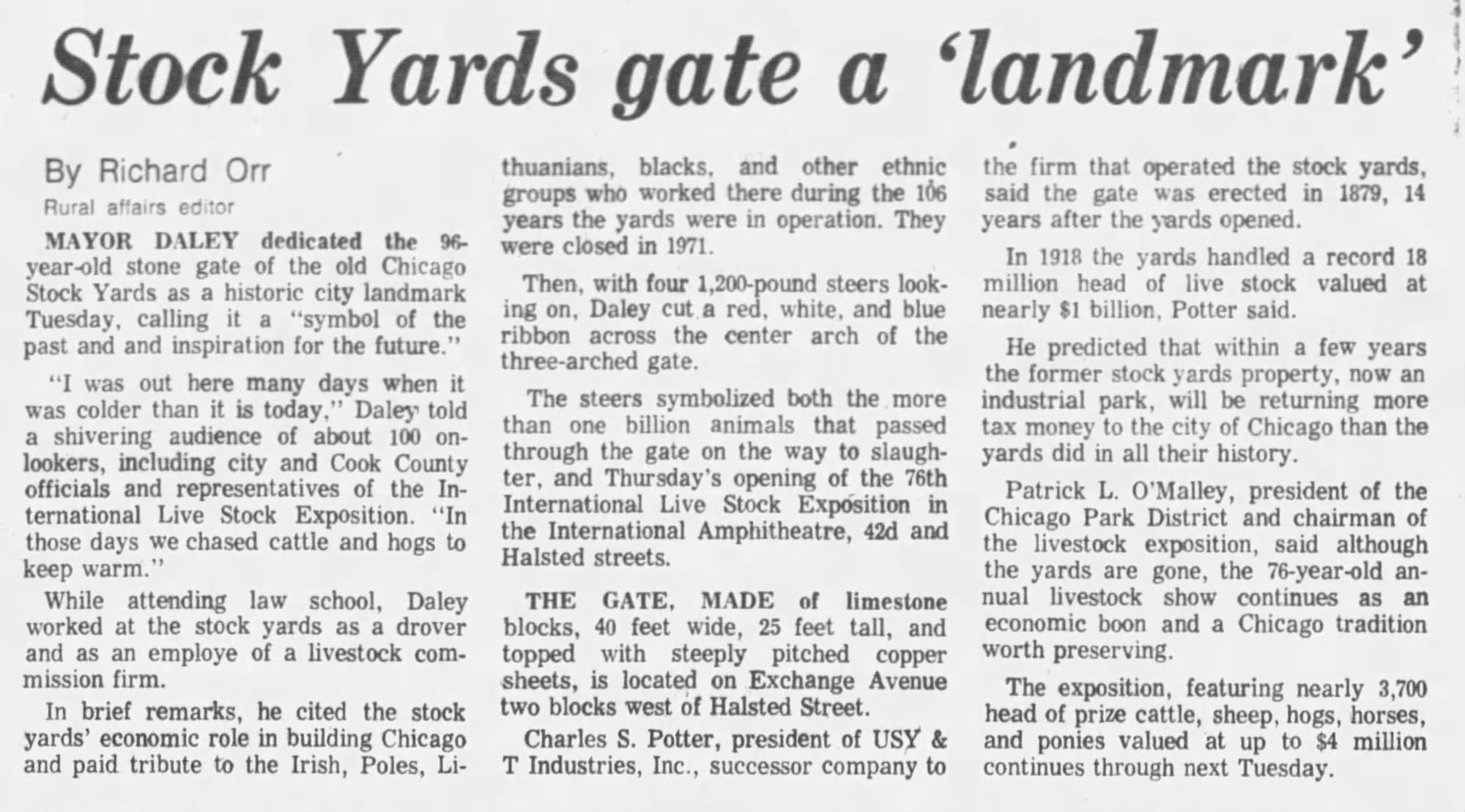
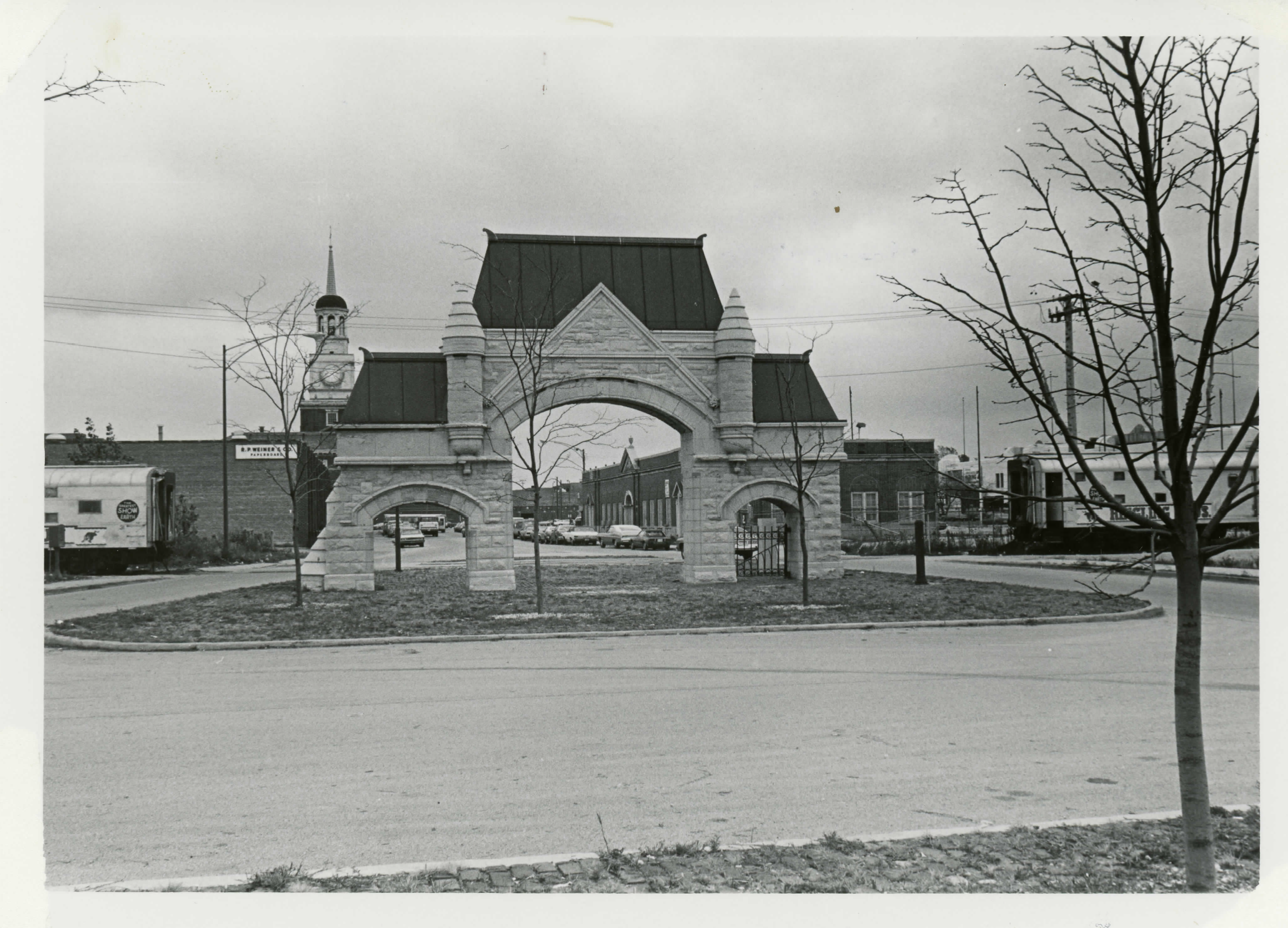
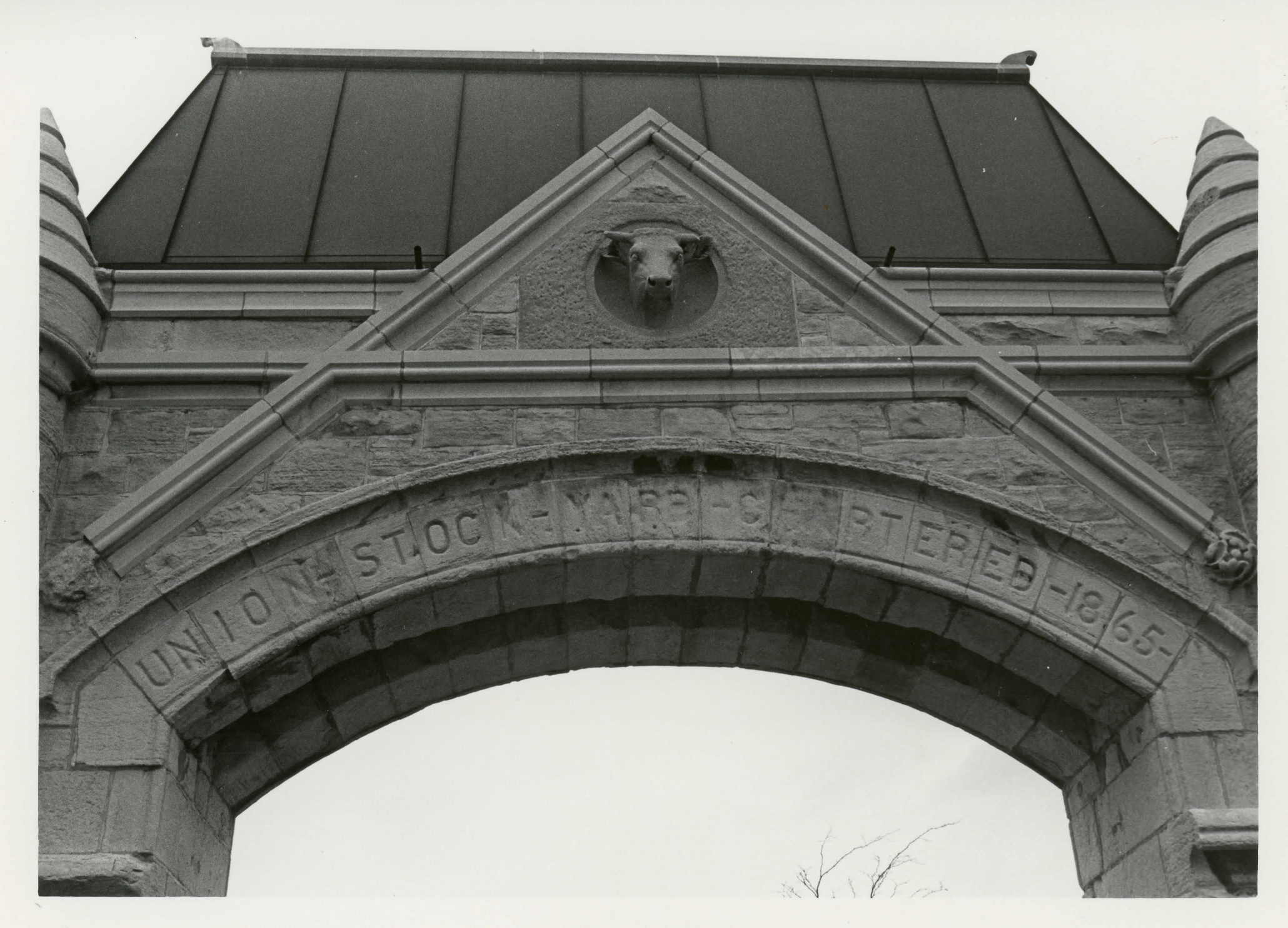
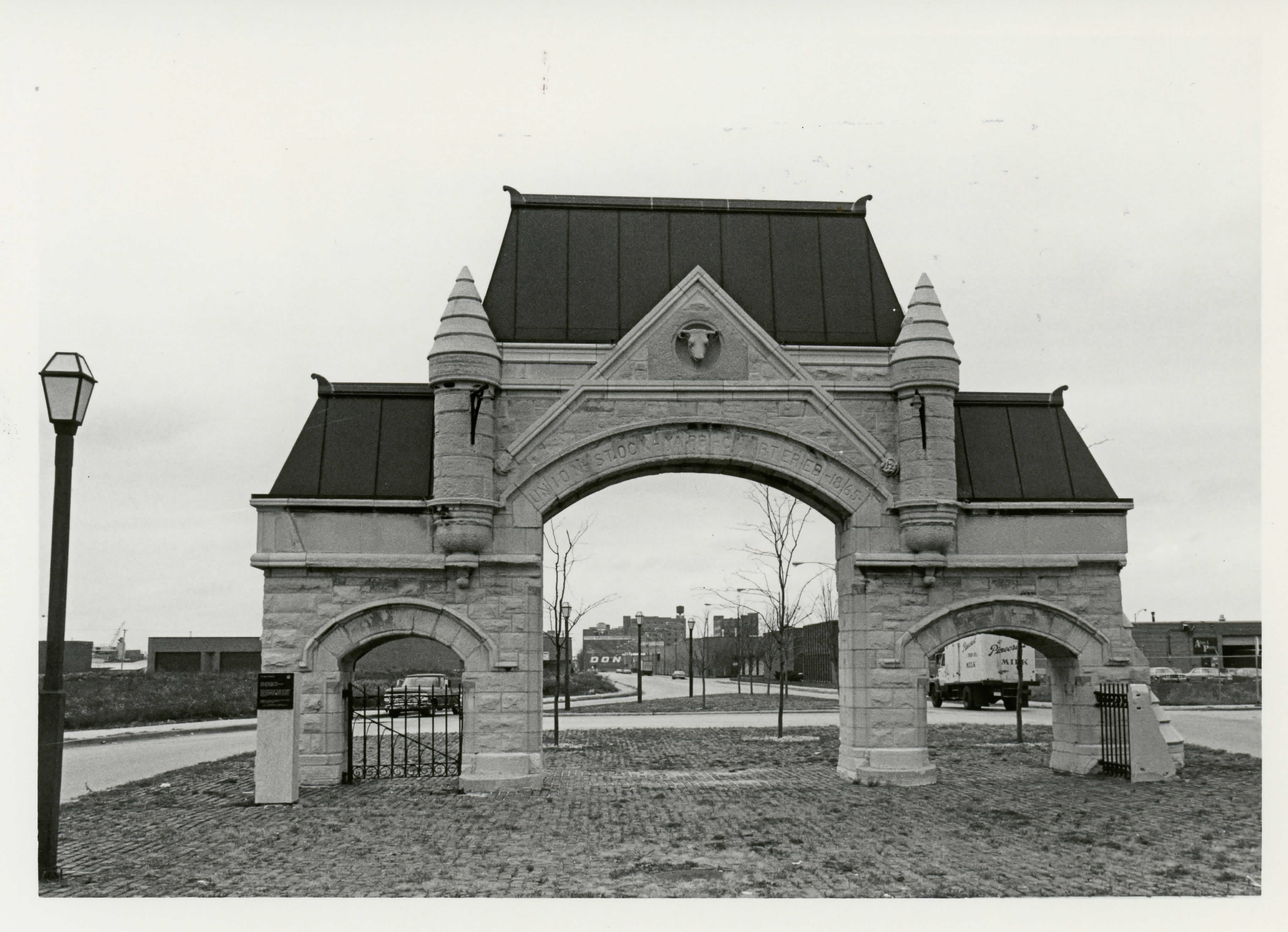
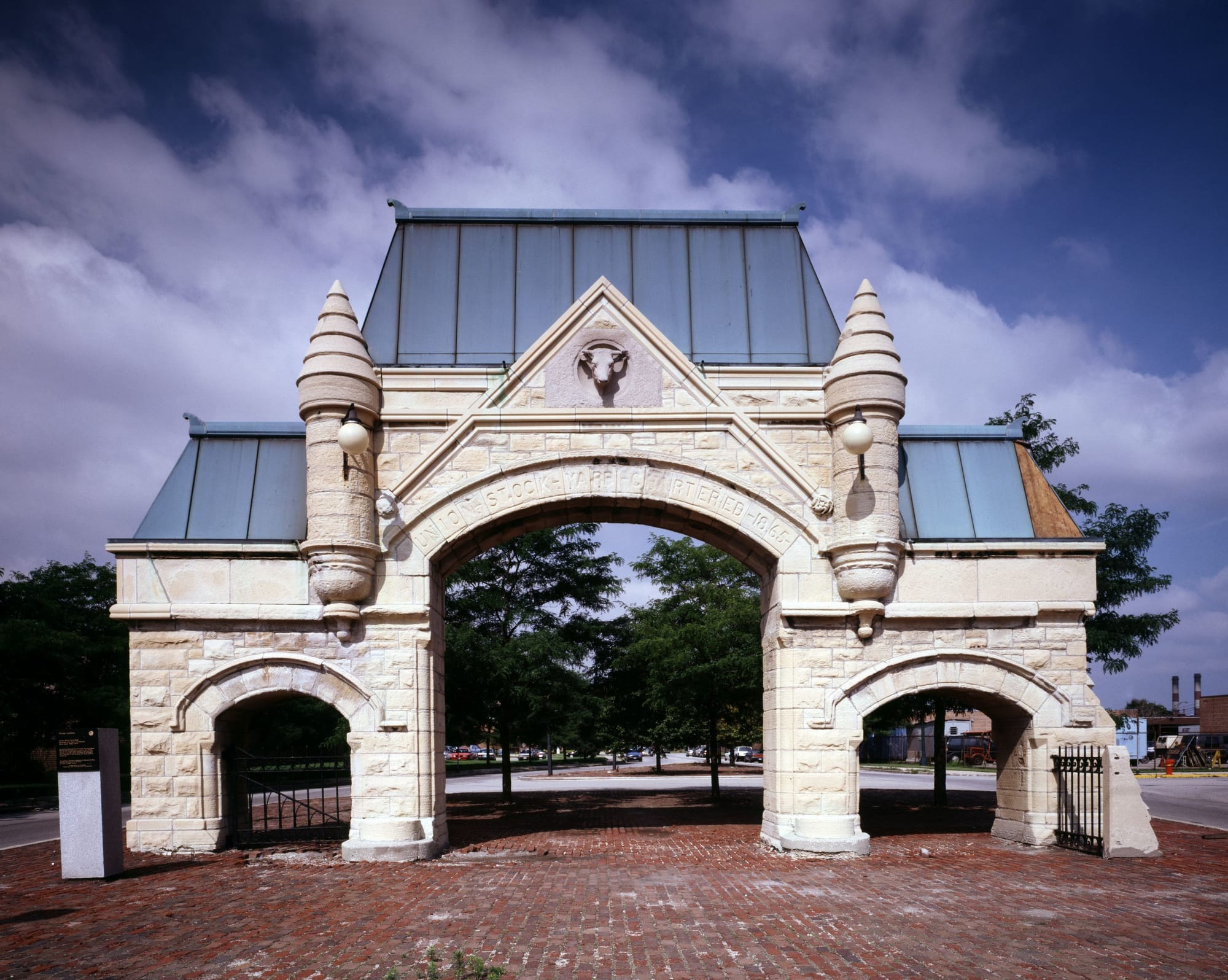
Early 1970s, Illinois State Historic Preservation Office | 1971, Stock Yards gate seen as landmark | 1971, Leslie Orear, NRHP Nomination | 1974, gate restoration | 1975, landmark designation | 1977, Ralph J. Christian photos, NHL Nomination | 1980, Carol Highsmith, Library of Congress
Production Files
Further reading:
- City of Chicago Landmark Designation Report
- National Register of Historic Places Nomination Form
- National Historic Landmark Nomination Form

There was a wooden entrance arch built in 1875, but it was replaced by the sturdier stone gate in 1879.
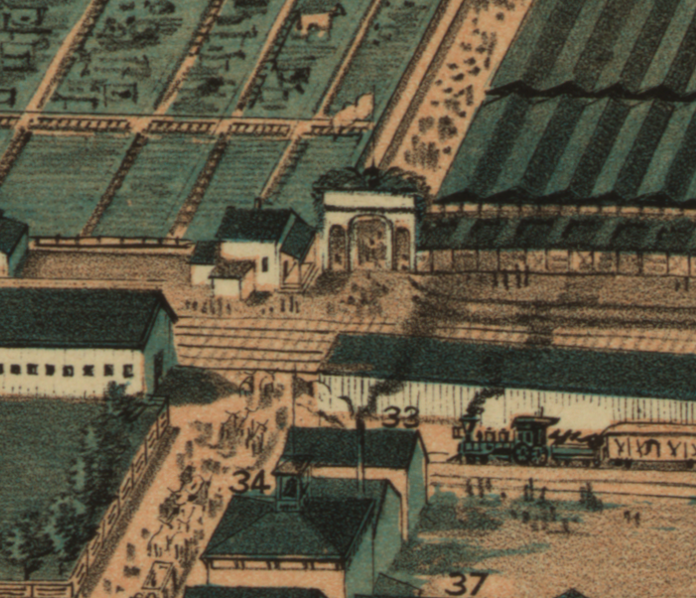
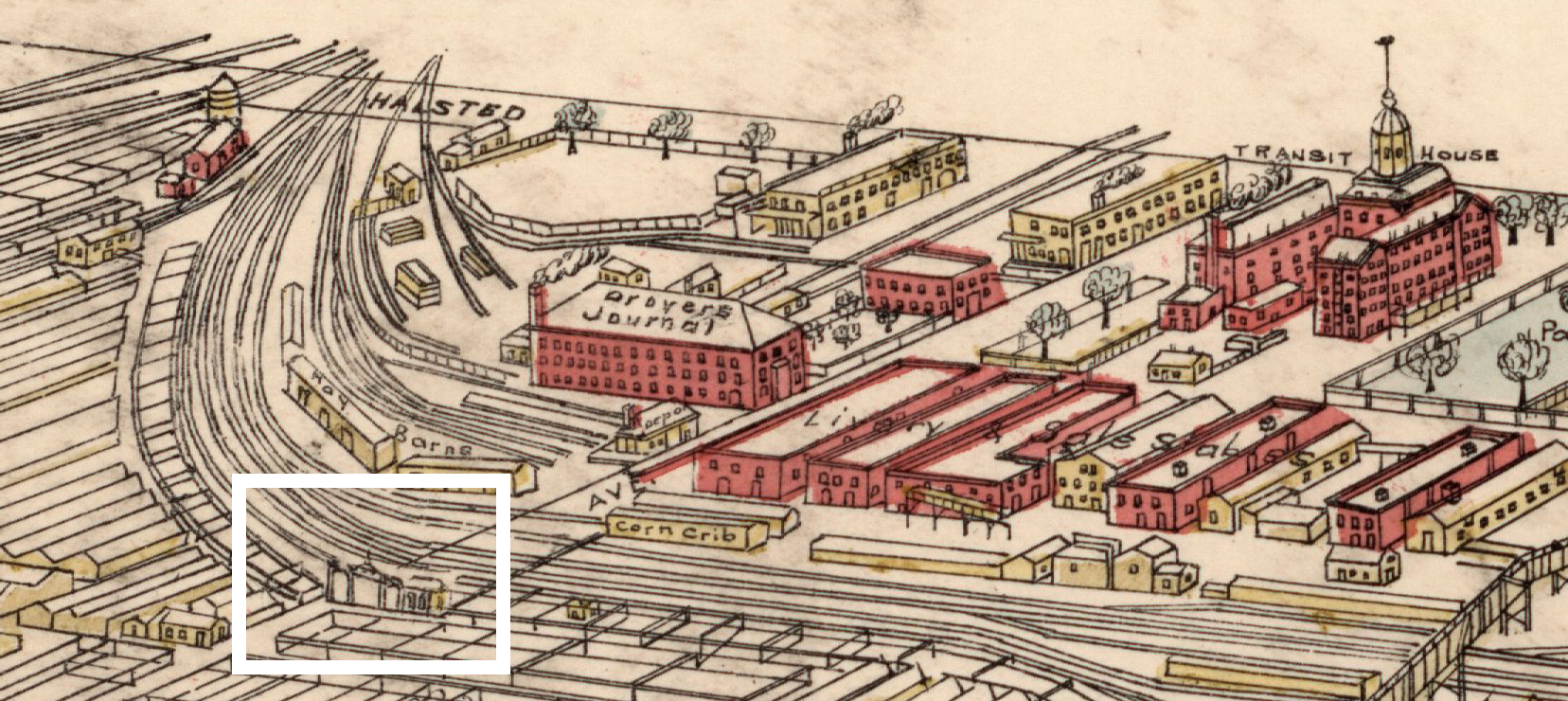
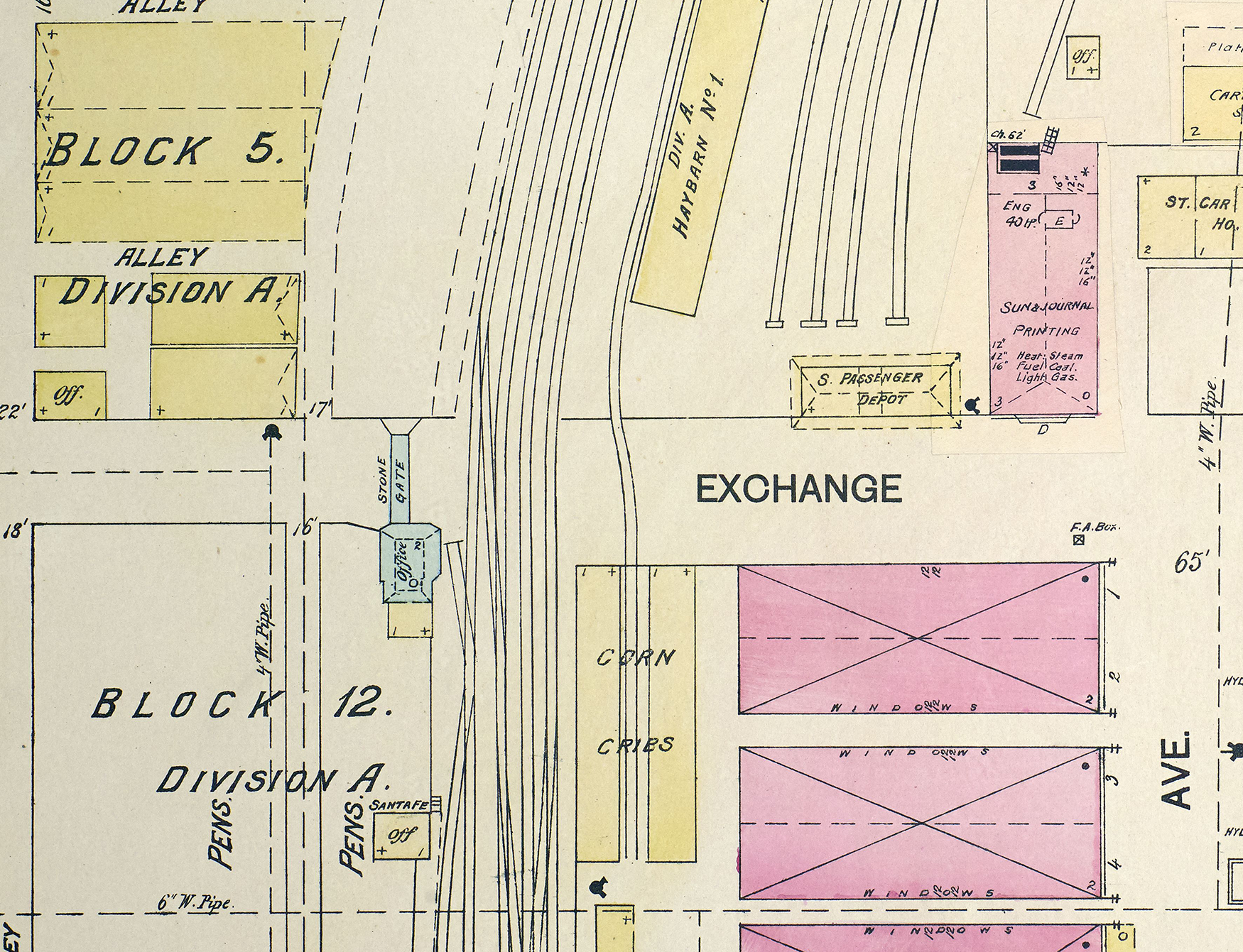
1878, Charles Rascher Bird's Eye View of the The Great Union Stock Yards of Chicago, Library of Congress | 1890 fire insurance map | 1891 fire insurance map
Couple other interesting photos.
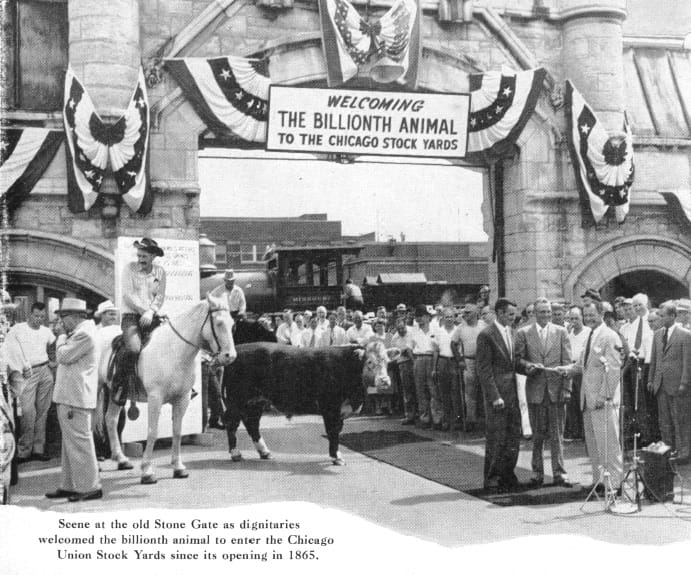
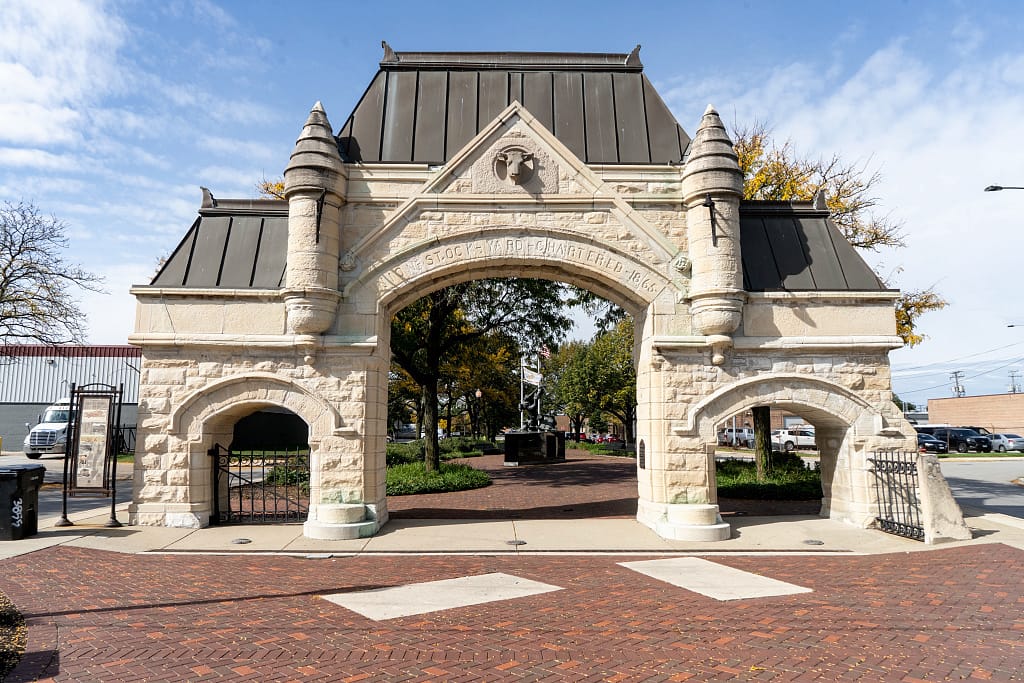
Celebration for the billionth animal to enter the Stock Yards | 2023, Camilo Vergara, Library of Congress
Member discussion: