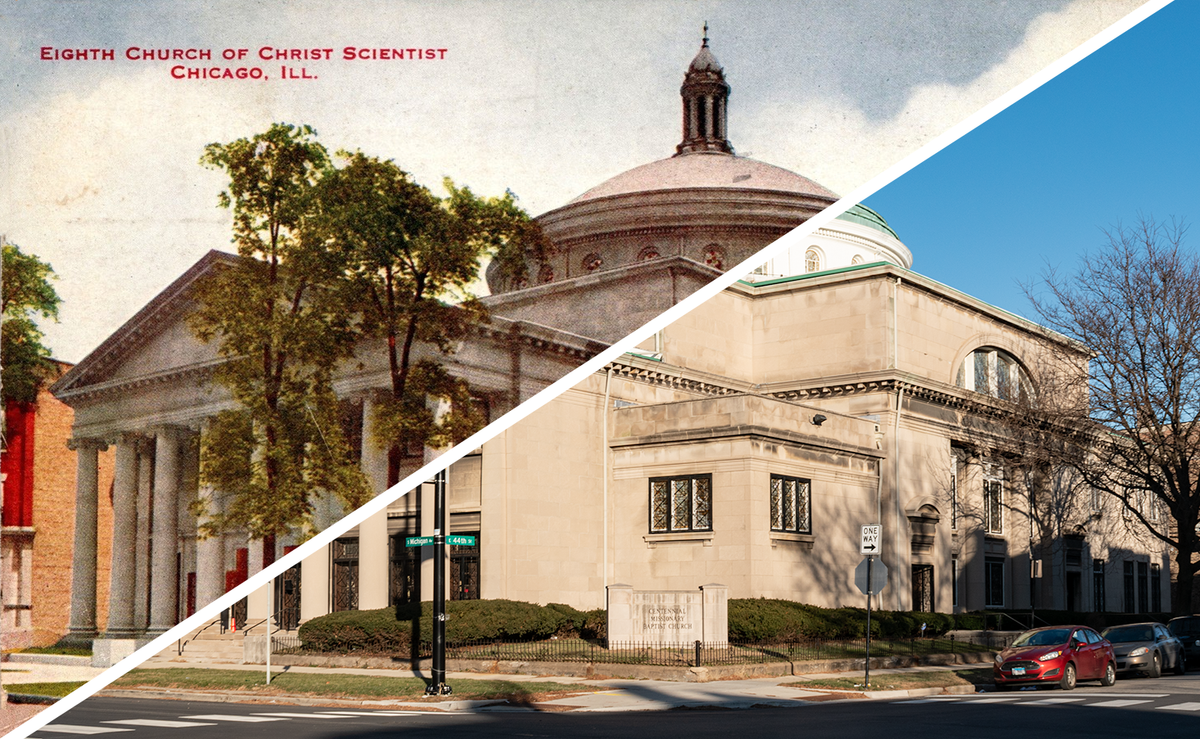
Built in 1911, the Eighth Church of Christ, Scientist stuck around when other white religious institutions moved away as the Grand Boulevard area blossomed into the Black Belt, Chicago’s Black Metropolis. The neighborhood went from majority white in 1920 to 95% Black in 1930. Following the neighborhood’s swift and total demographic shift, the Christian Scientists decided this would become the first Black Christian Scientist church in the US. After a century in the building, the Eighth Church sold the building to Centennial Missionary Baptist Church in 2011, who then sold the designated Chicago Landmark for $1.2m to an opaque LLC a decade later.
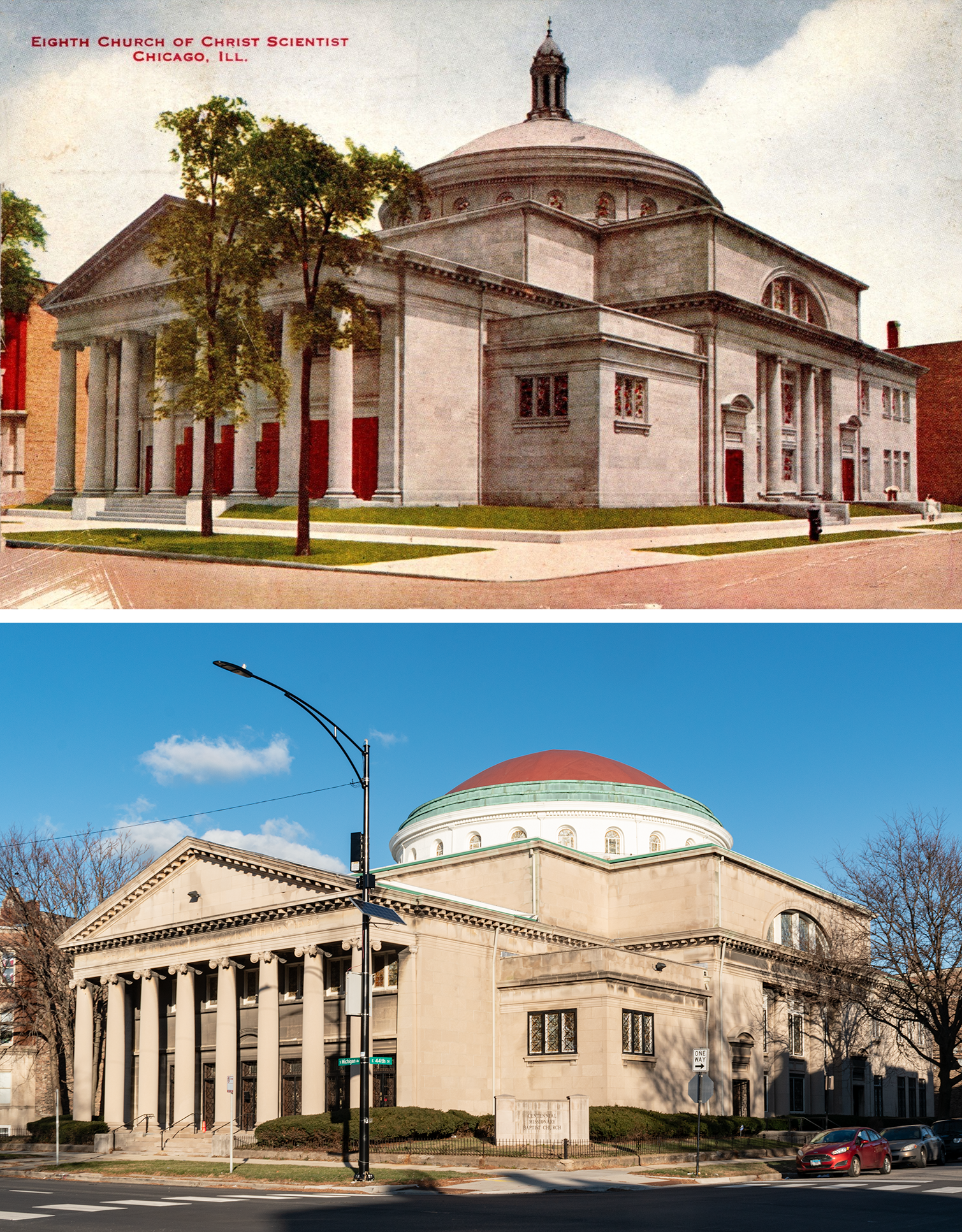
So, what’s changed?
- The cupola came down in 2018 (without the permit that dismantling part of a landmark building would require).
- Some little stuff—the small stone sign in front, the stair railings, etc.
- Worth noting one thing that hasn’t changed: the building’s neighbors to the north and east, which survived the burst of demolition that leveled much of this block in the 1970s and 1980s.
While cultish and culpable in unnecessary death because of their rejection of modern medical care in favor of prayer, Christian Science was also homegrown in the US, theologically daring, and disproportionately popular with educated, wealthy women who valued its approach to something at least suggestive of feminism (it was a woman-founded and woman-led faith and energetically in favor of women’s suffrage). For a brief time, prior to widespread adoption of modern sanitation methods and germ theory, the Christian Scientists’ metaphysical approaches to healing through prayer (basically a placebo) might even have been a more successful treatment method for certain maladies than having a poorly trained surgeon who hadn’t washed his hands in months rooting around in your insides.
As the faith exploded from only a few dozen followers in 1880 to nearly 100,000 in 1910, the Eighth Church branched out of Chicago’s bursting First Church of Christ, Scientist—on Drexel Boulevard on the South Side—in 1907.
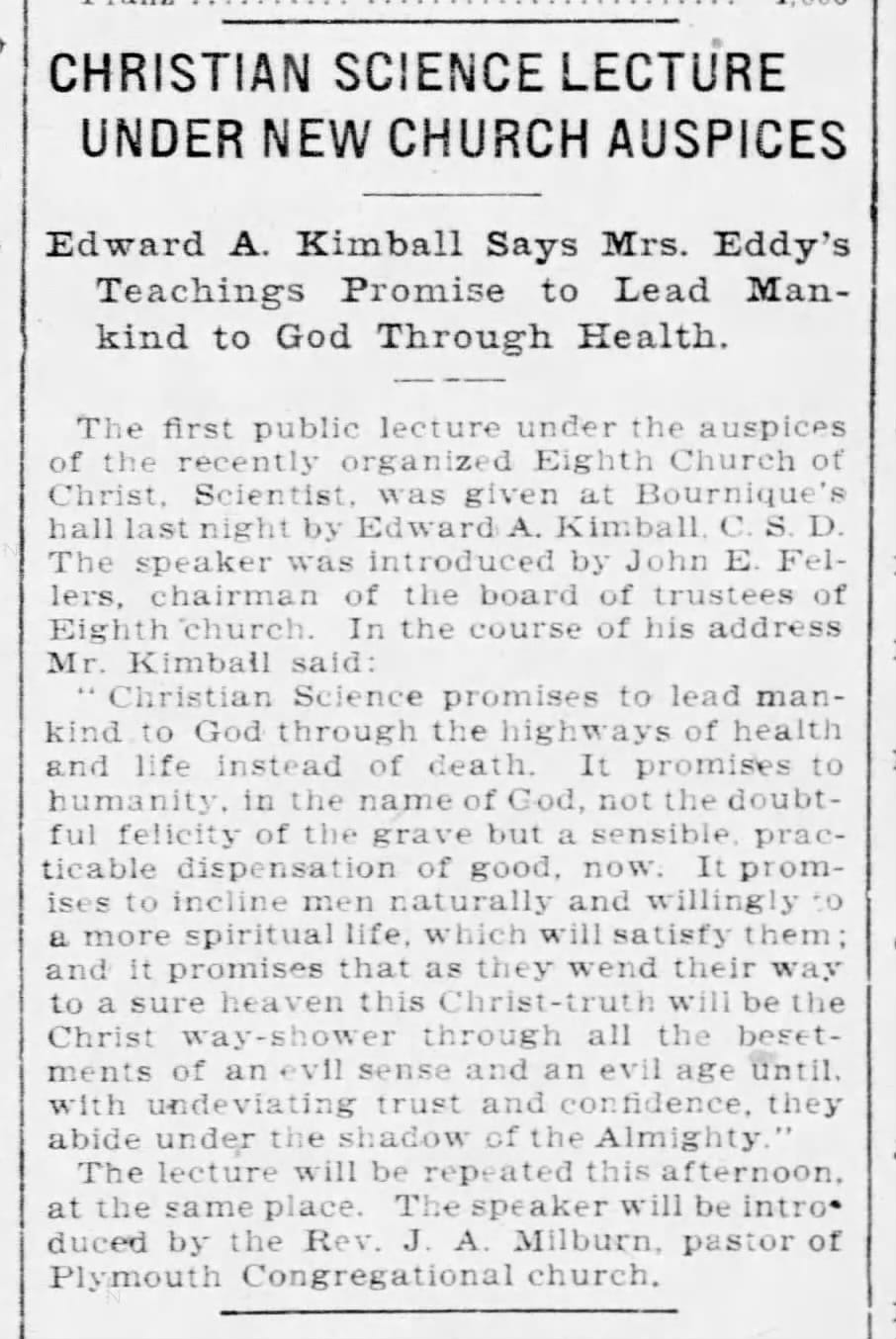
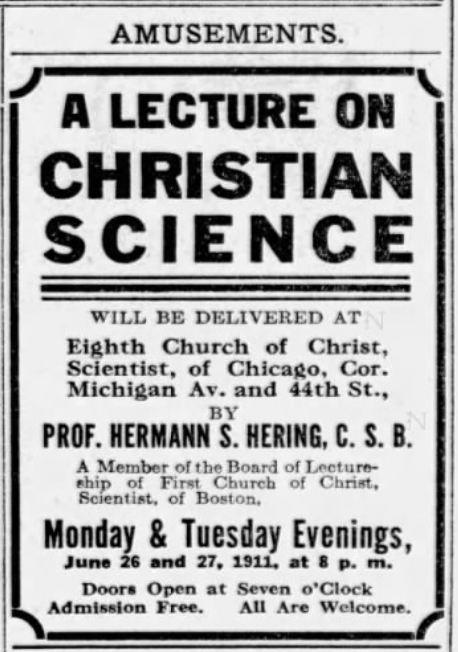
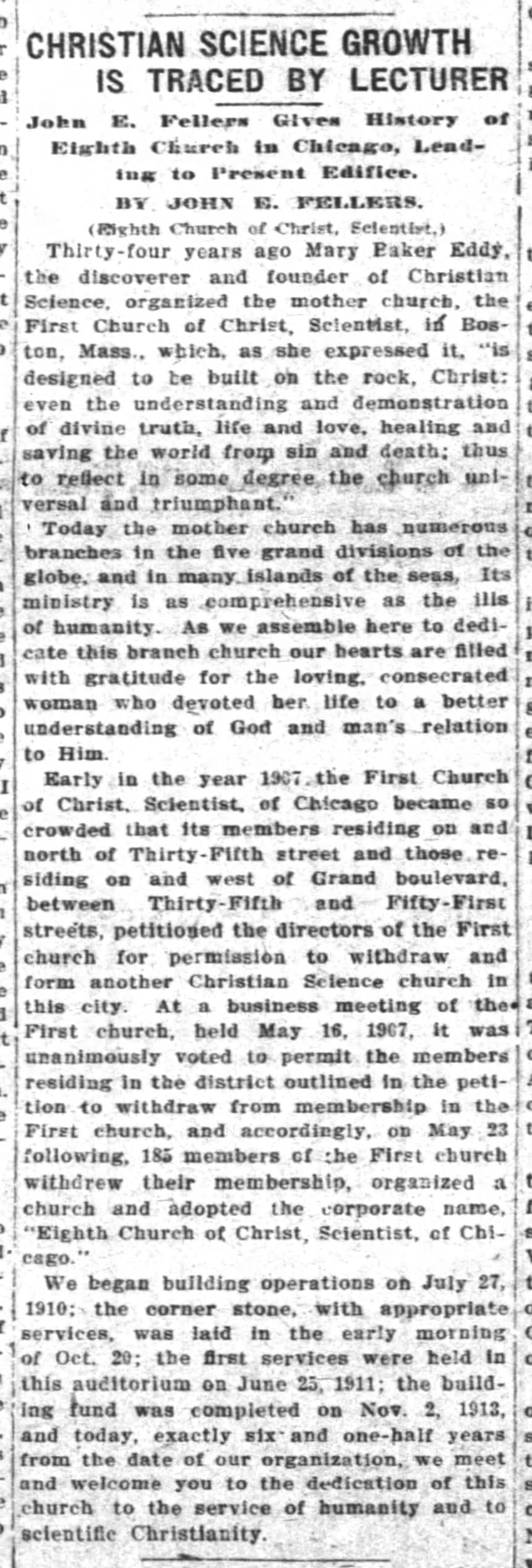
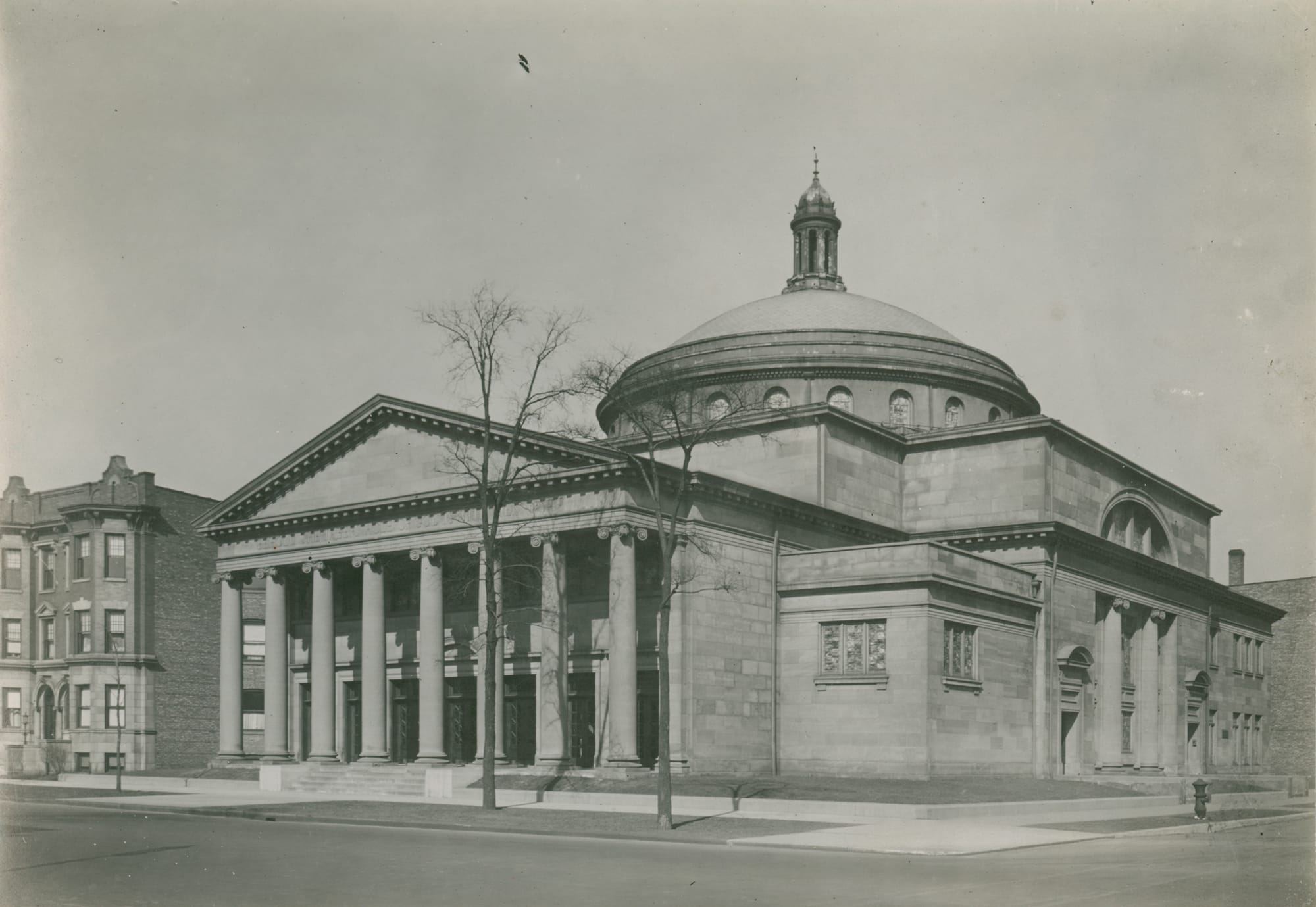
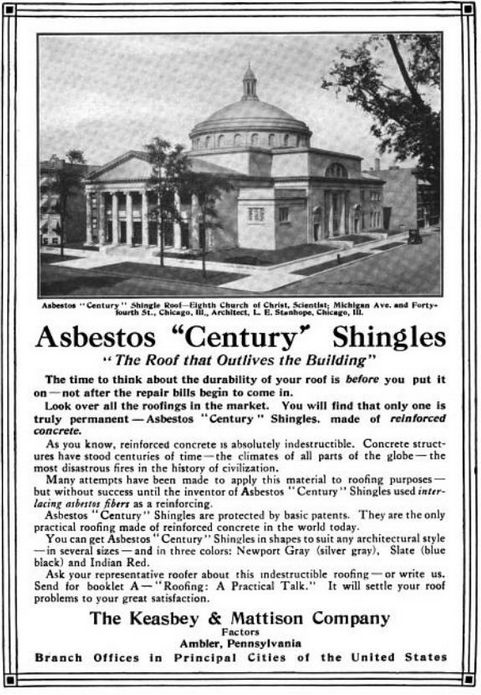
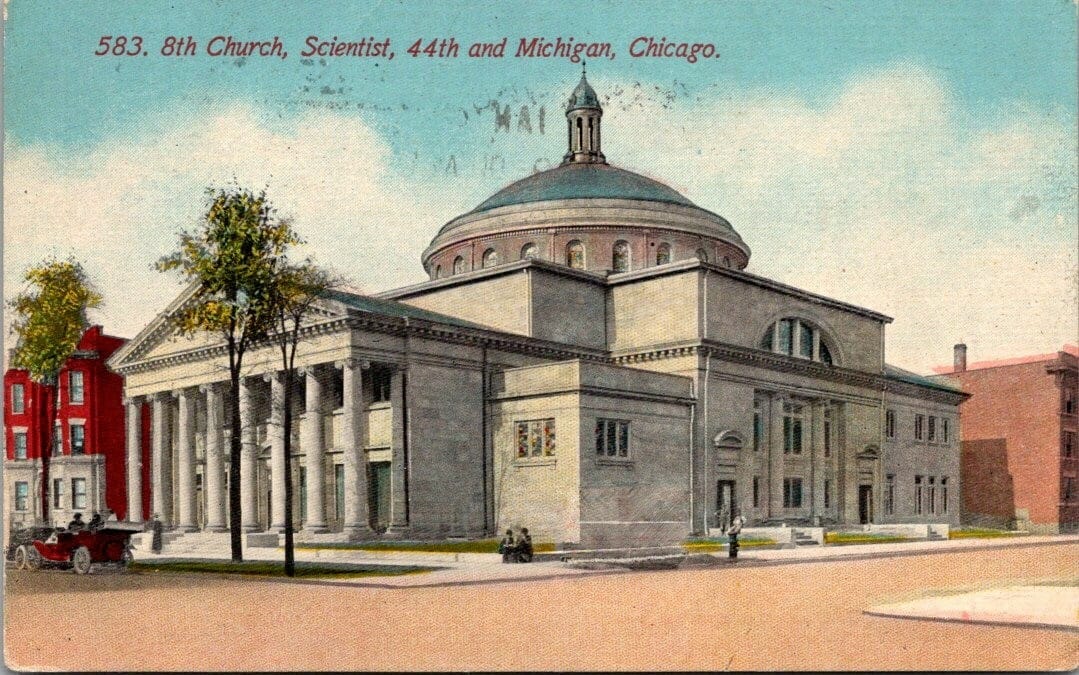
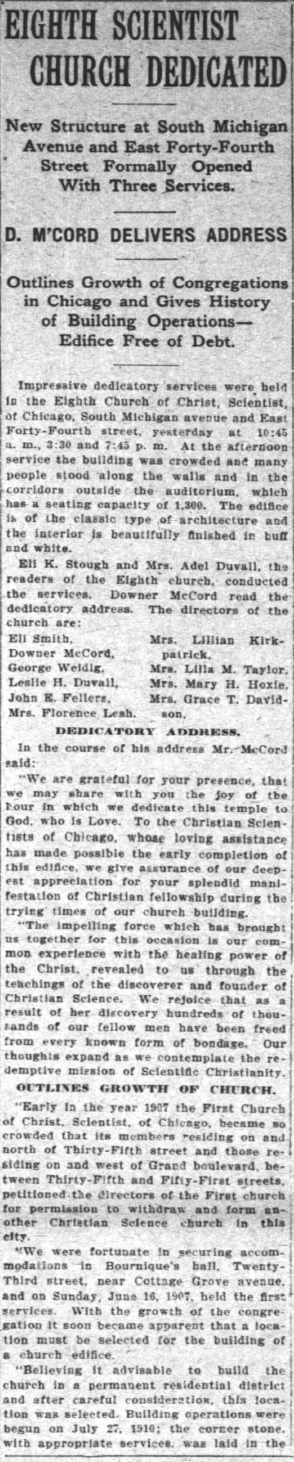
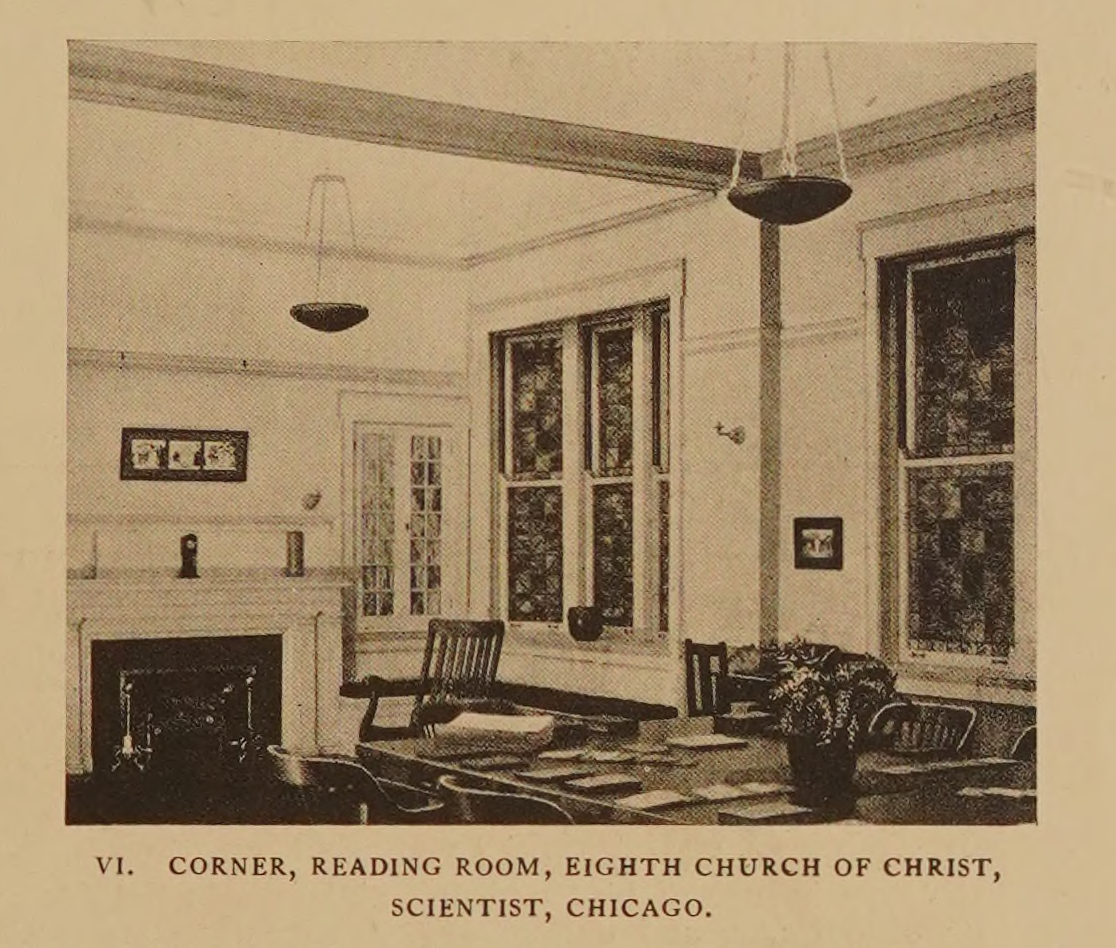
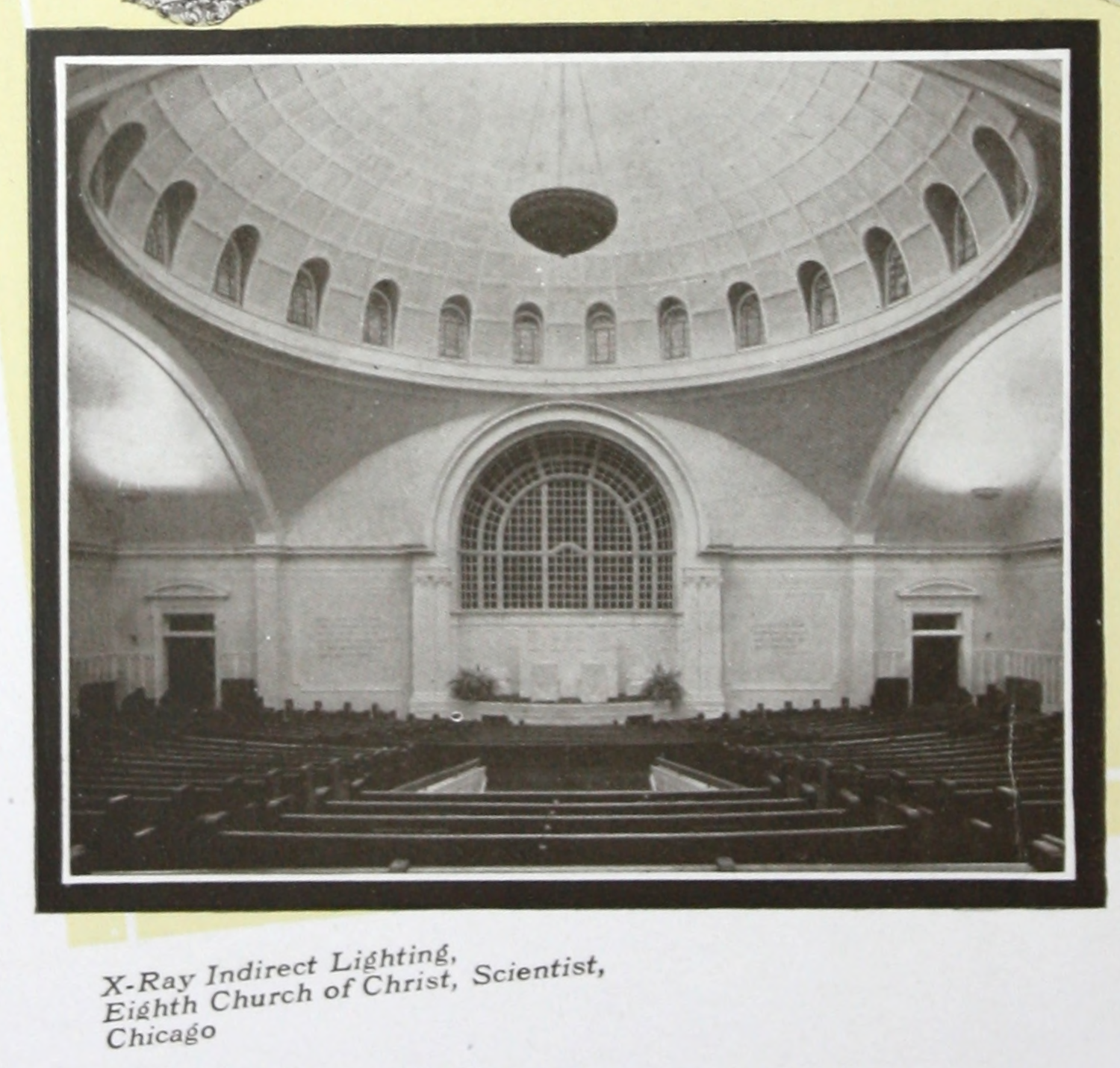
1907, Eighth Church branches off | 1911, lecture in the new church | 1913, lecturer traces story of congregation | Percy H. Sloan photo, Newberry Library | Asbestos shingles ad | 1912 postmarked postcard | 1913, church dedicated upon the payment of their debts | 1913, reading room, Architecture Monthly, the Internet Archive | 1917, X-Ray Indirect Lighting Ad, the Internet Archive |
Designed by Leon Stanhope, construction on the Eighth Church of Christ, Scientist began in 1910. The building exemplifies the austere neoclassicism of Christian Scientist churches, a deliberate break from the traditional gothic or romanesque churches of other denominations. While Stanhope got his start working for Burnham and Root, he was definitely an architectural heir to Solon S. Beman, the Chicago architect who designed six of the first seven Christian Scientist churches in the city, deploying a ‘rational’ classicism that would come to typify their churches.
Beman was the de facto house architect for Christian Science, and Leon Stanhope succeeded him there, too, designing similar Christian Scientist churches in Logan Square (now the Central Hispanic Seventh Day Adventist Church on Logan Boulevard), Oak Park, South Bend, and Columbus. He also designed single family homes and the Art Deco Anti-Cruelty Society building in River North (the one with the delightful Stanley Tigerman addition).
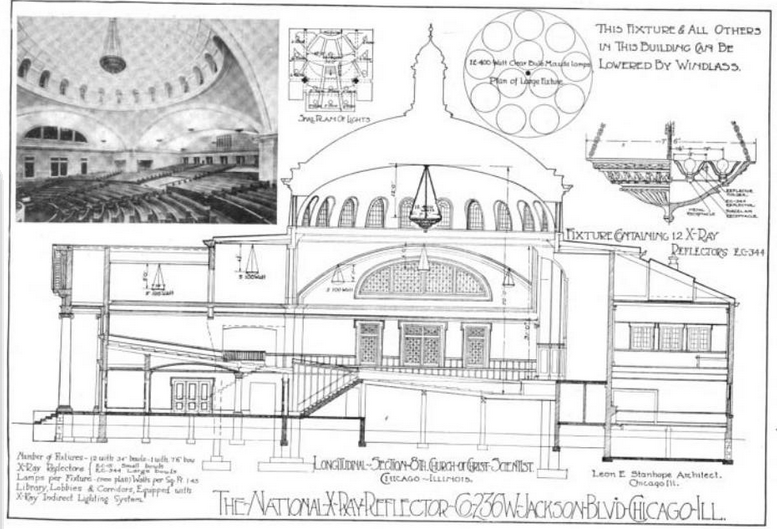
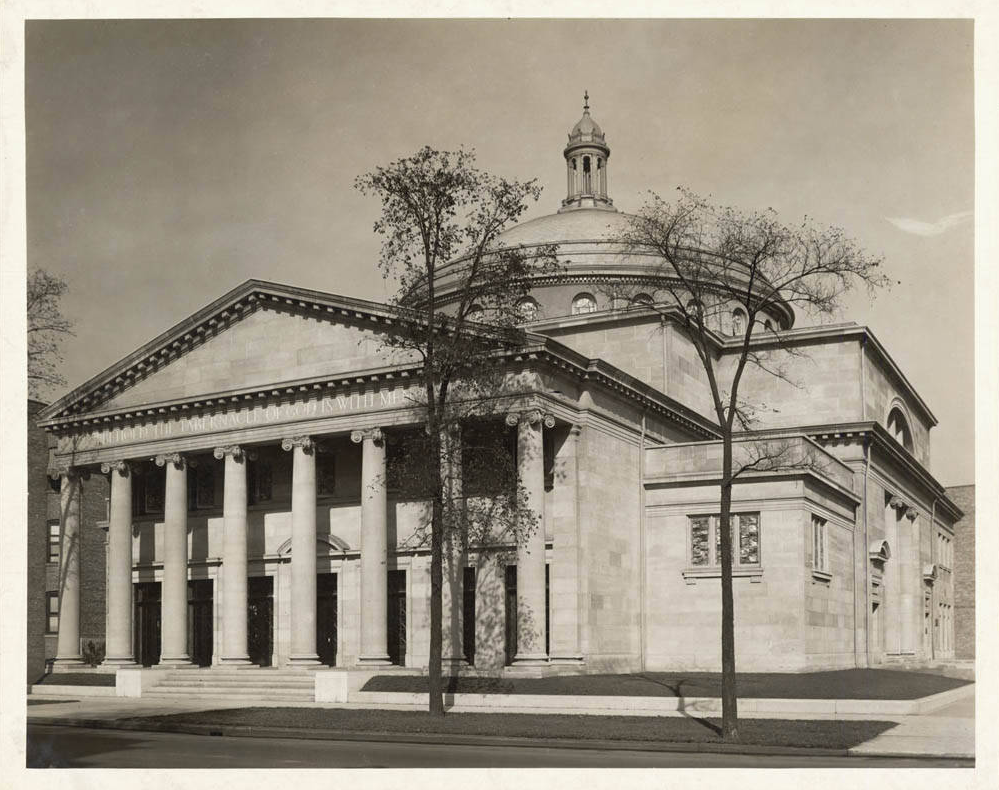
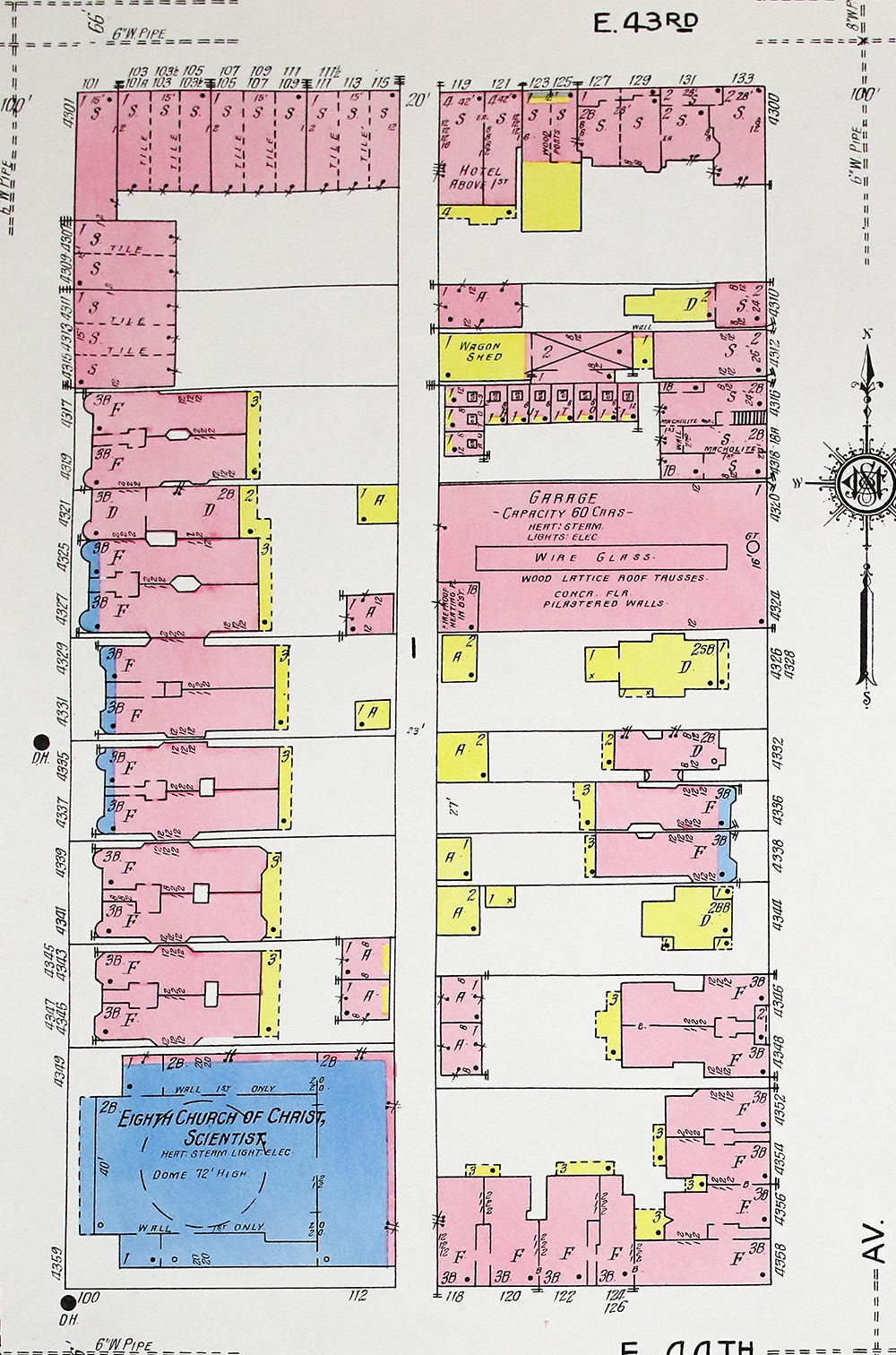
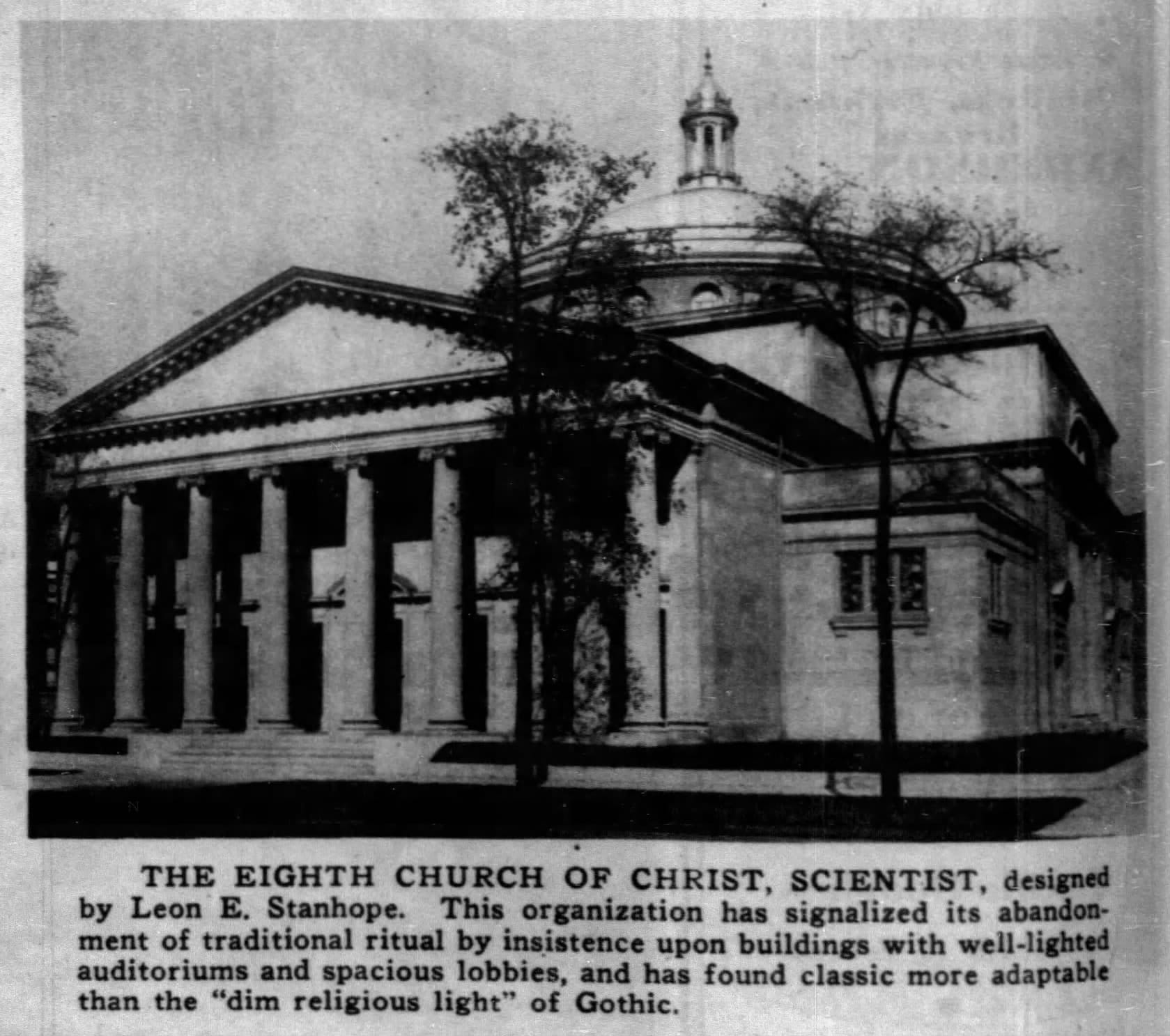
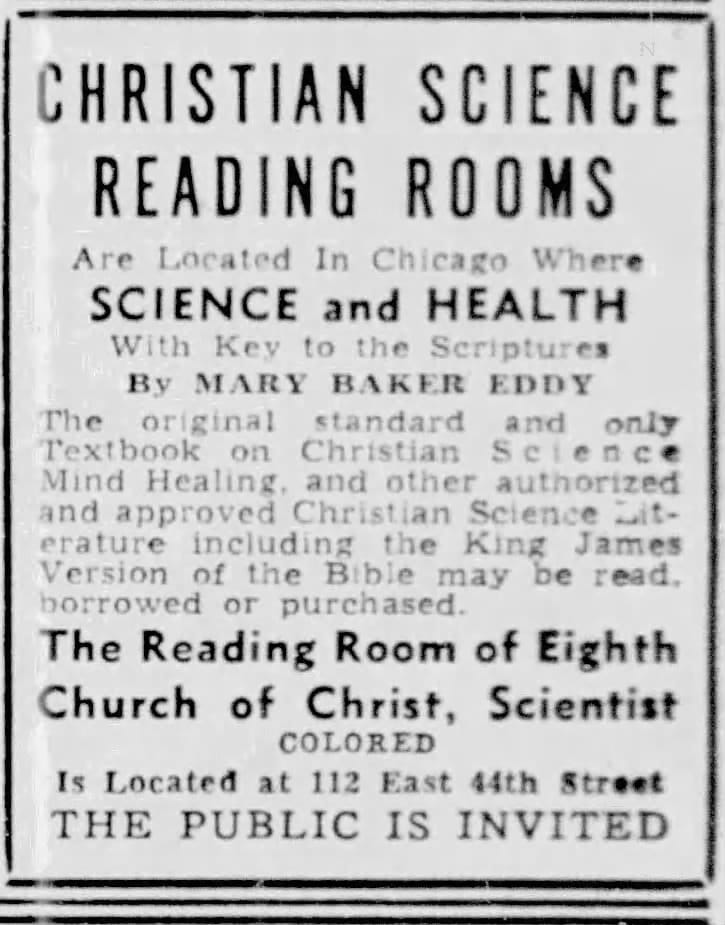
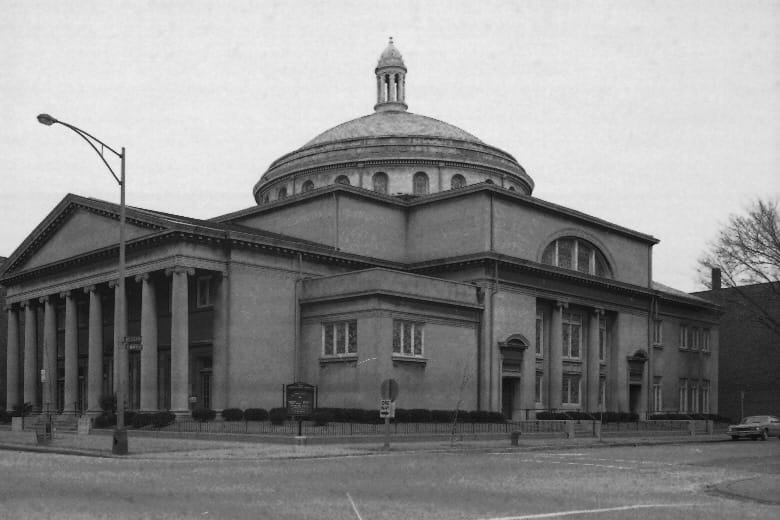
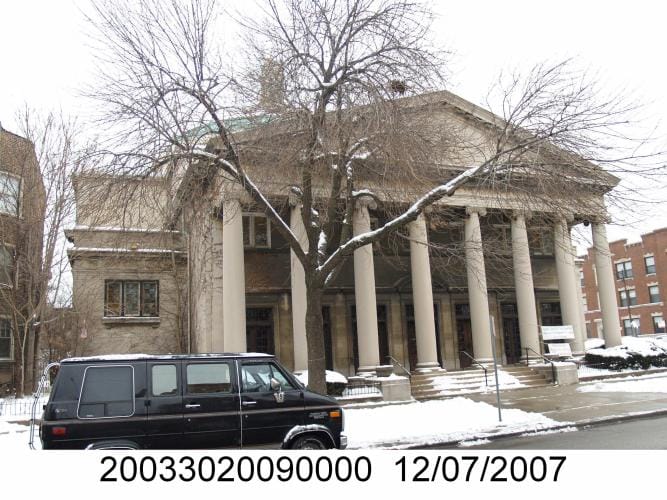
1919 X-Ray Lighting Ad | J.W. Taylor Photo, Ryerson & Burnham Archives, the Art Institute of Chicago | 1925 Sanborn Fire Insurance Map | 1931 newspaper photo | 1943 reading room ad, "COLORED" | 1970s, Illinois State Historic Preservation Office | 2007, Cook County Assessor
By the late 1920s, more than half of the Eight Church's 800 average weekly attendees were Black—seems like this was, briefly, an interesting early example of an integrated house of worship in Chicago. Many white congregations left the area as present-day Bronzeville became the heart of Chicago's Black Belt, but the Christian Scientists intentionally chose to remain and serve the neighborhood as it existed, making it the oldest African-American congregation in Christian Science. While a better response than the overwhelming majority of white religious institutions, Christian Science was still segregated as well—from the 1930s through the 1950s, church communications described it as the "Eight Church of Christ, Scientist (colored)".
The first Black man selected to be an astronaut, Robert H. Lawrence Jr., was raised as a member of the Eighth Church here. The Air Force (pointedly, not NASA, whose astronauts were exclusively white until Ron McNair, Guy Bluford, and Fred Gregory were selected in 1978) chose Lawrence to participate in the Manned Orbital Laboratory program in 1967, a precursor to the space shuttle program. It was the 1960s, though, and being an astronaut was insanely dangerous—Major Lawrence died in a training flight crash less than six months later and never made it to space. One of the many memorial services honoring Maj. Lawrence was held here in 1967.
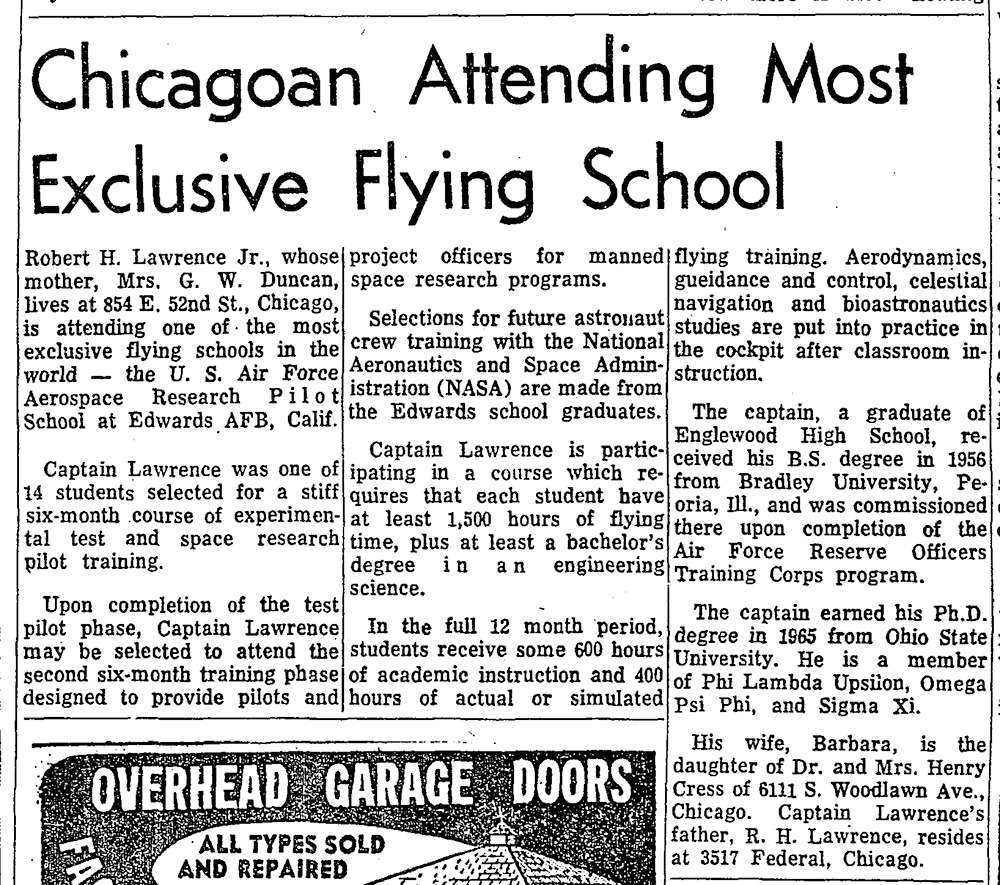
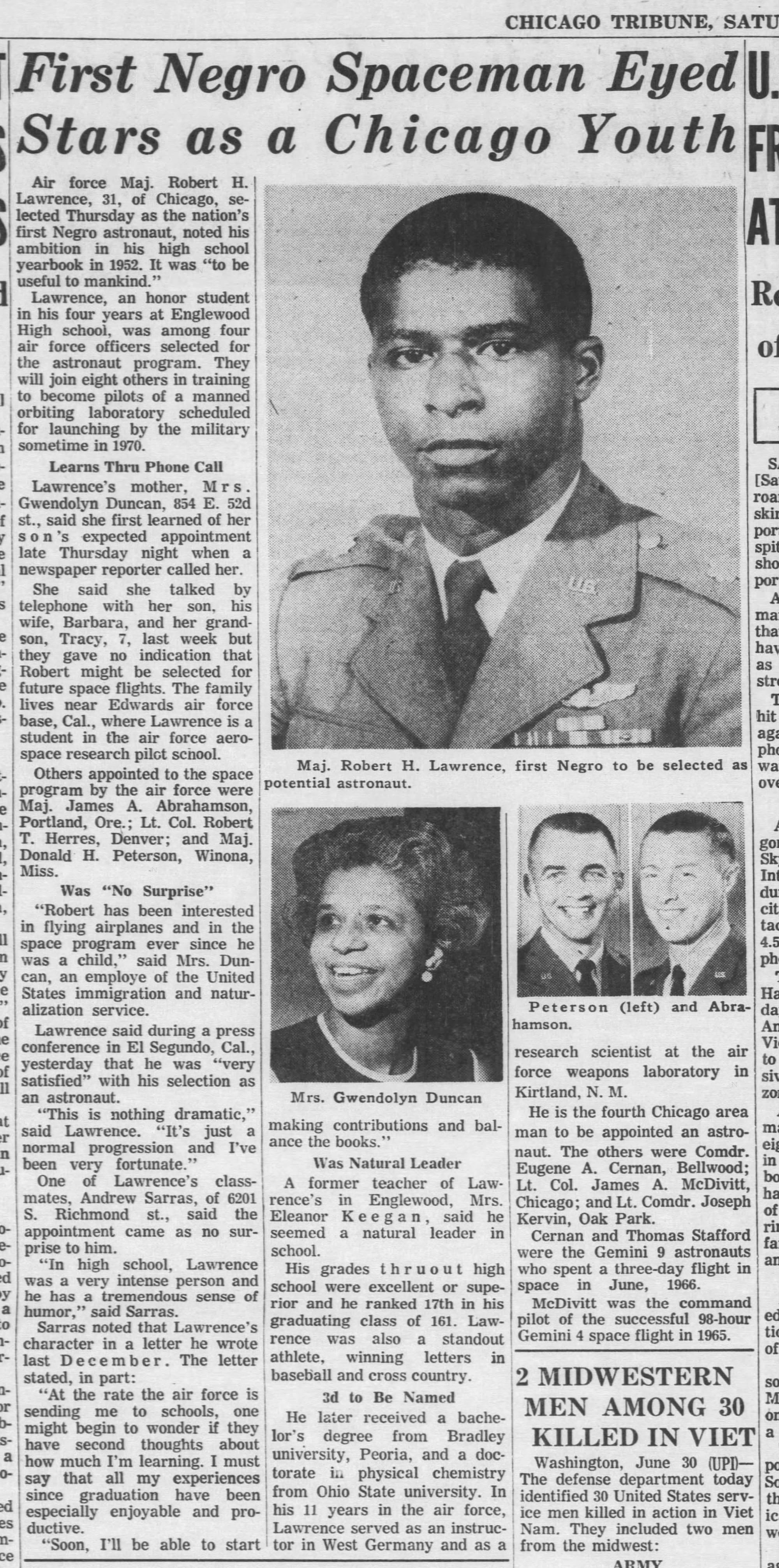
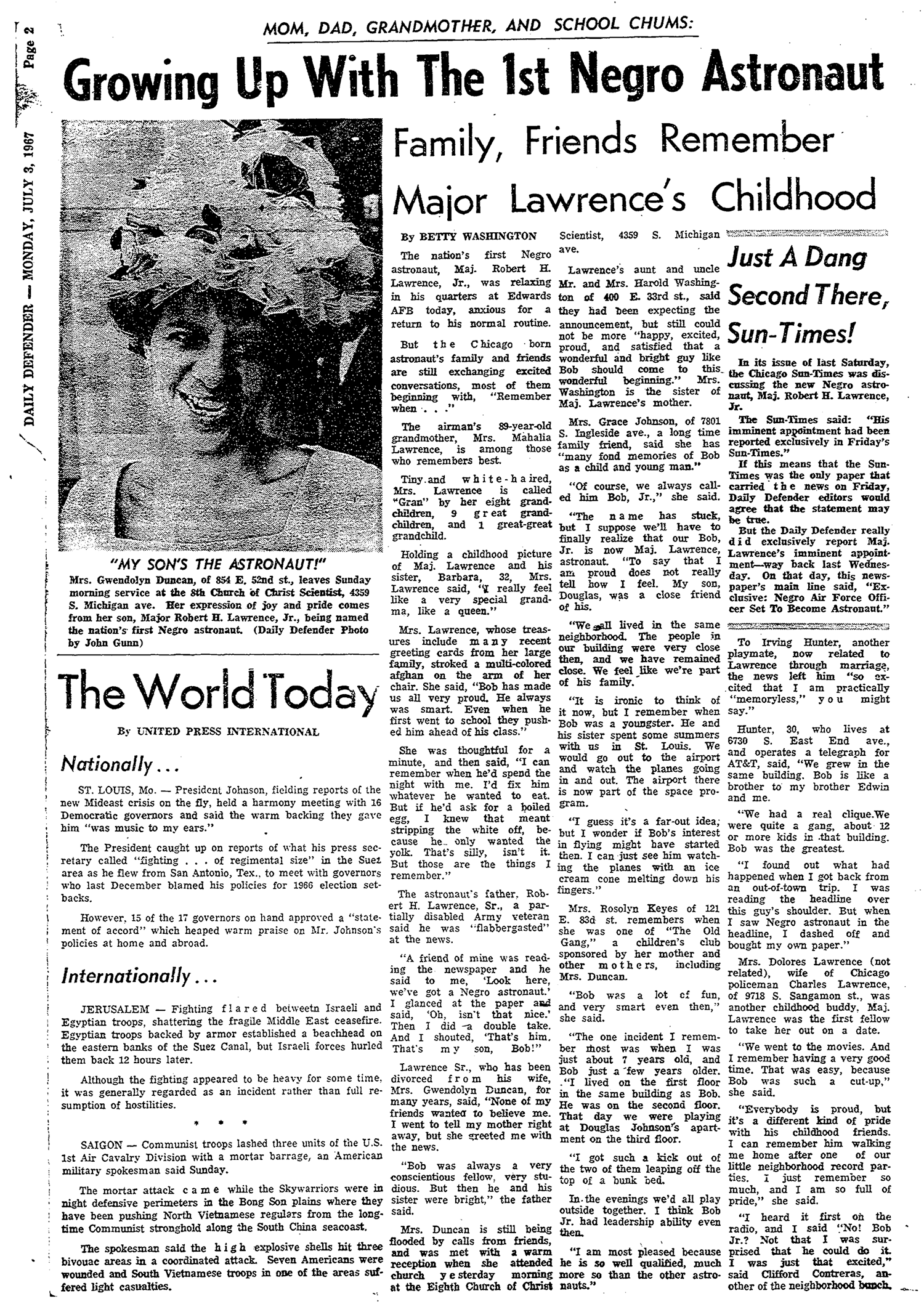
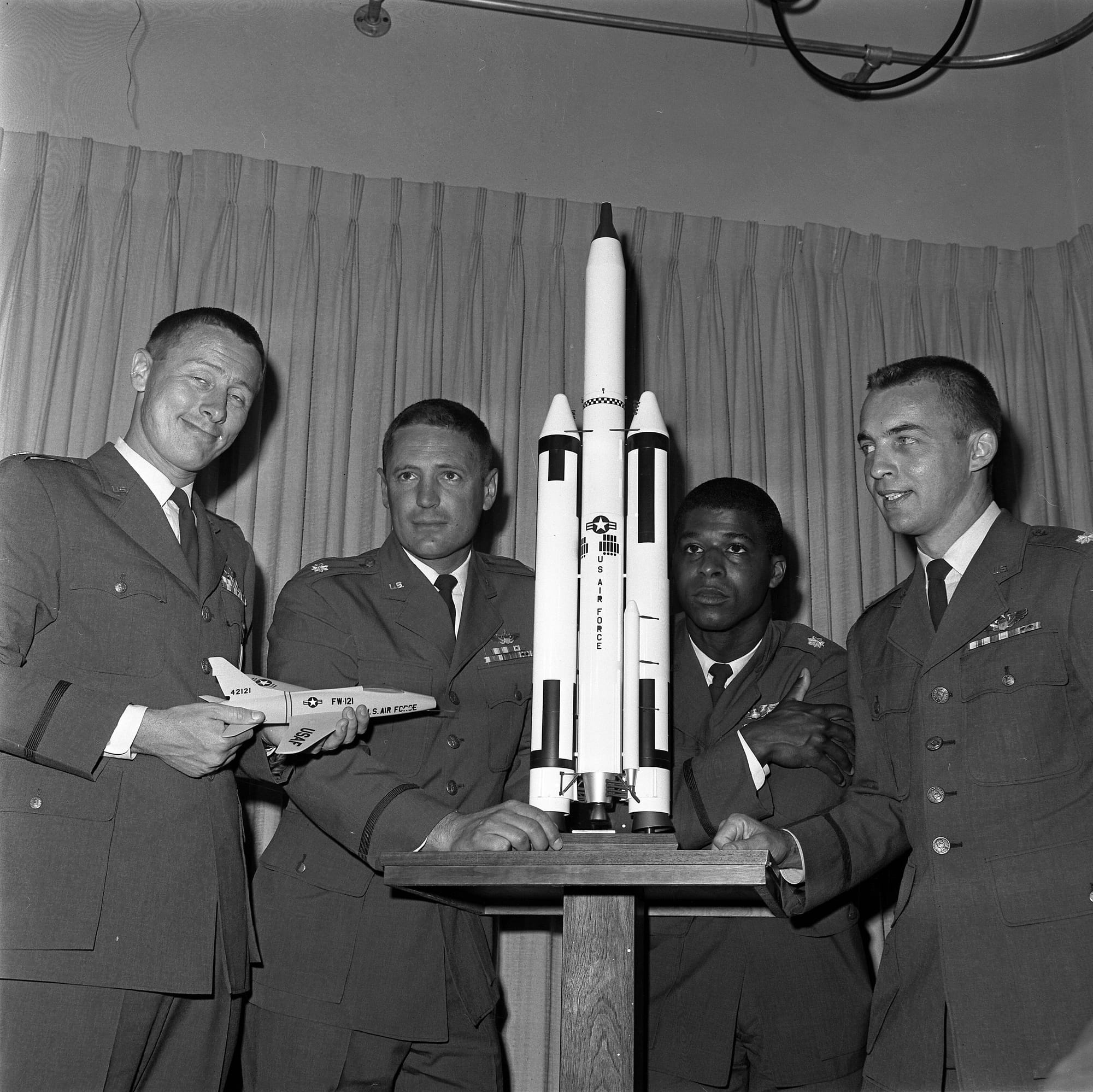
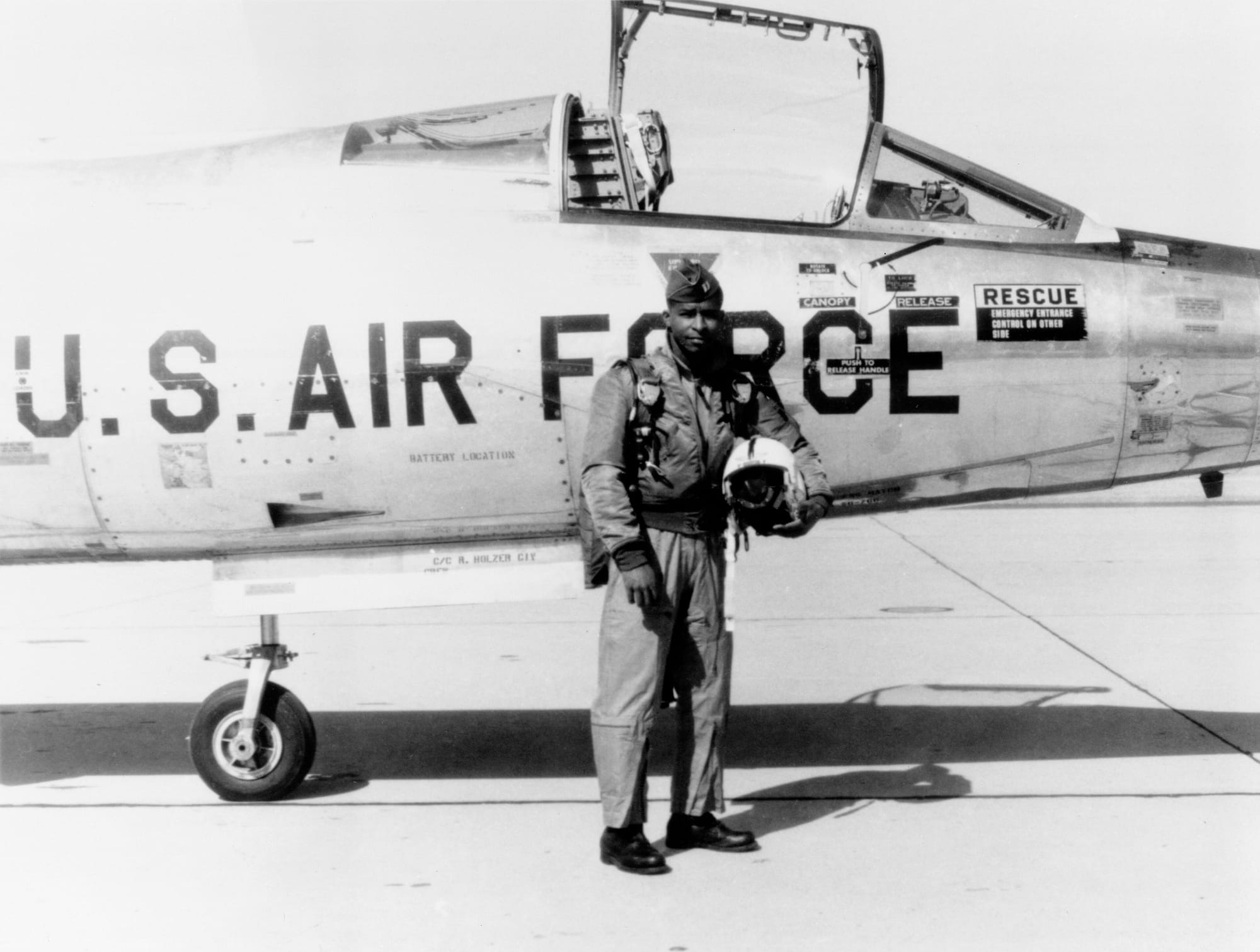
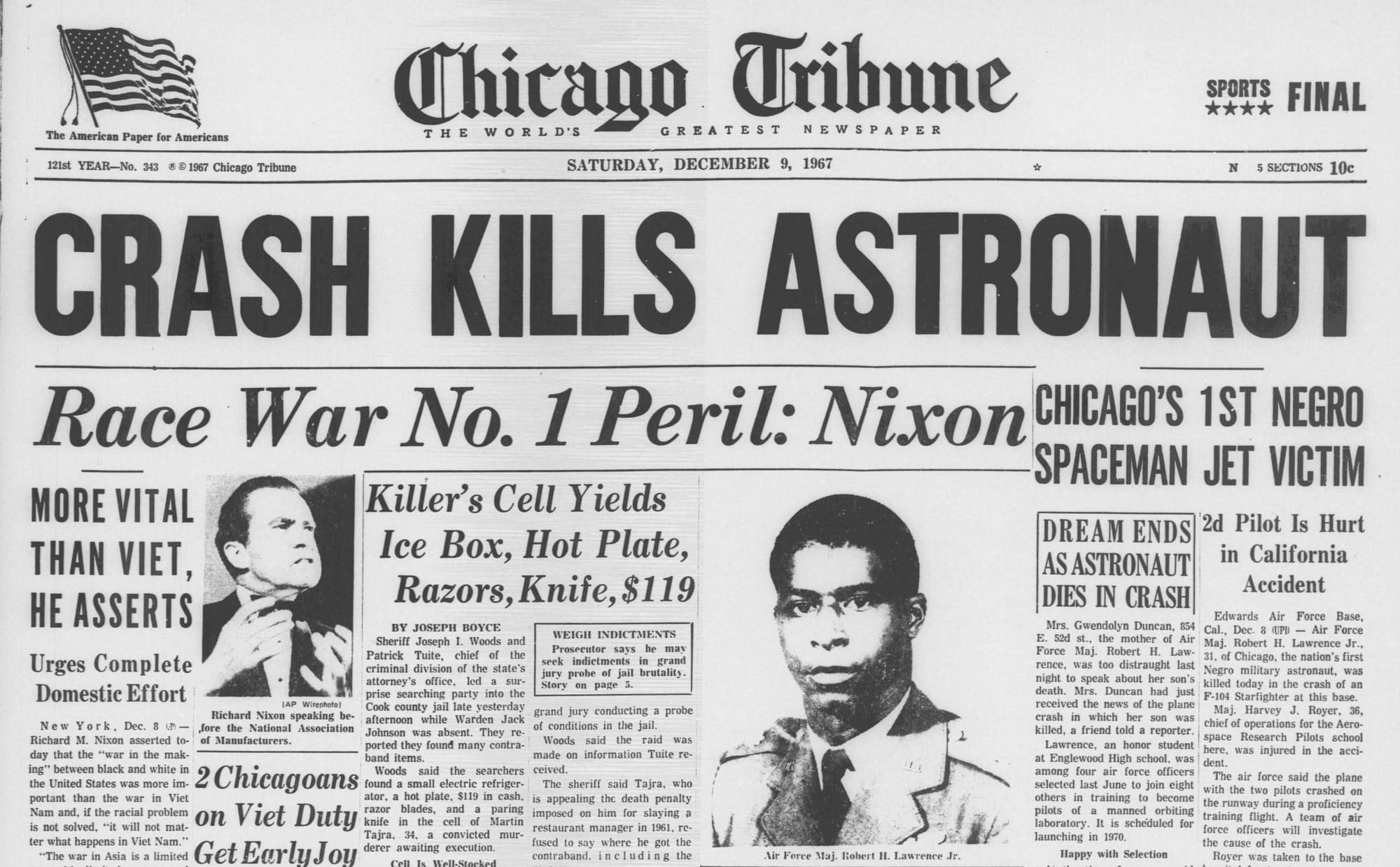
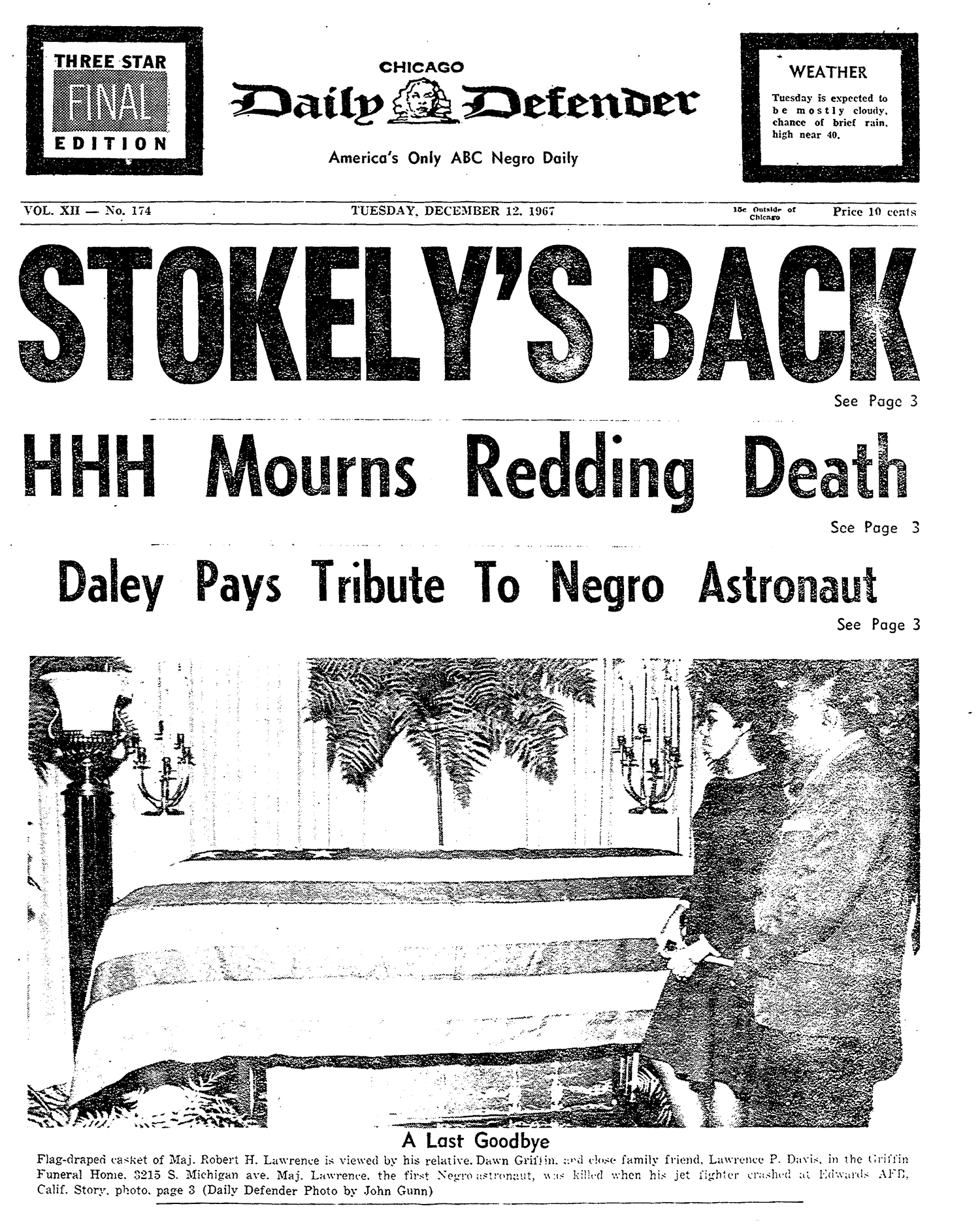
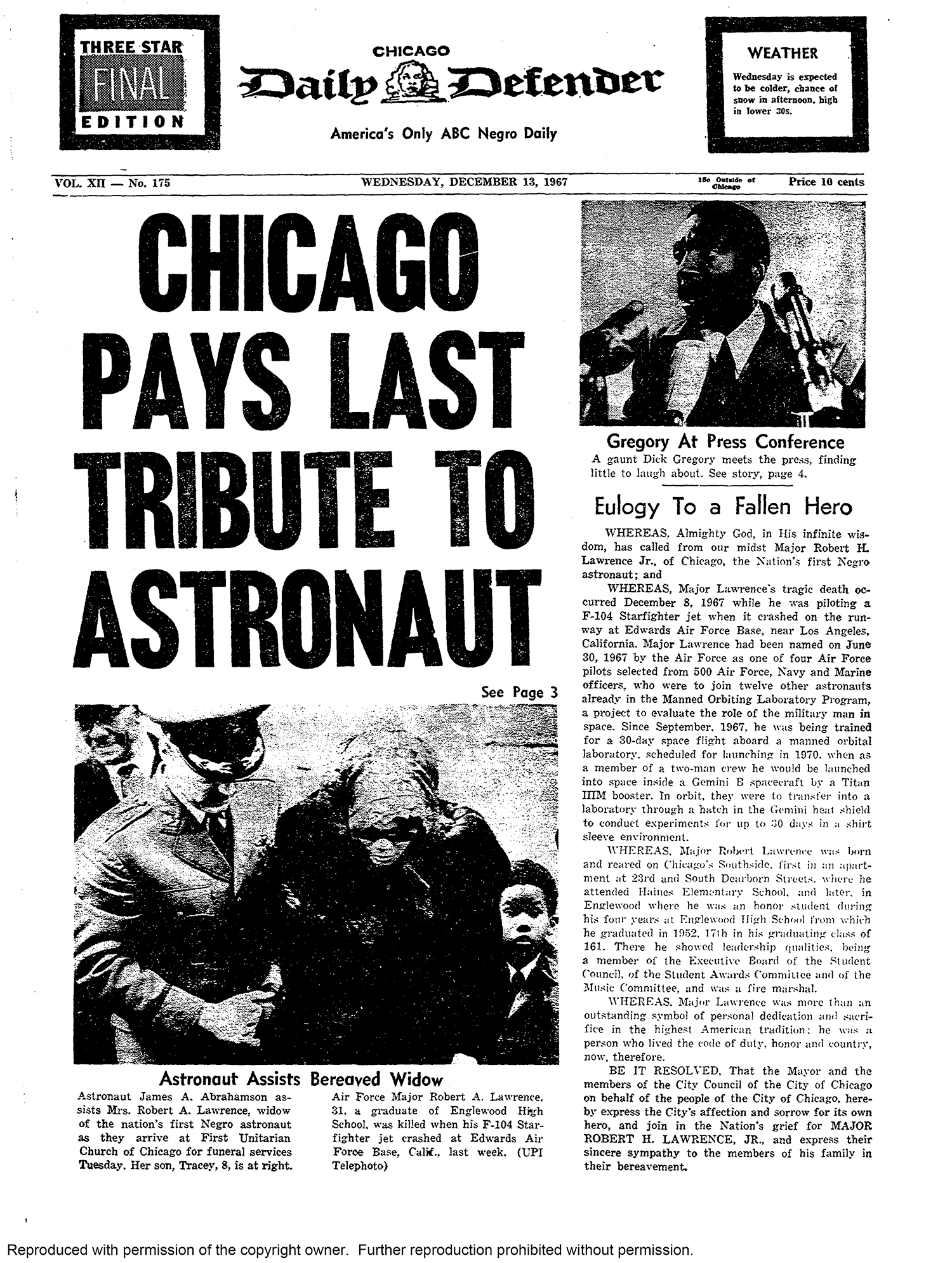
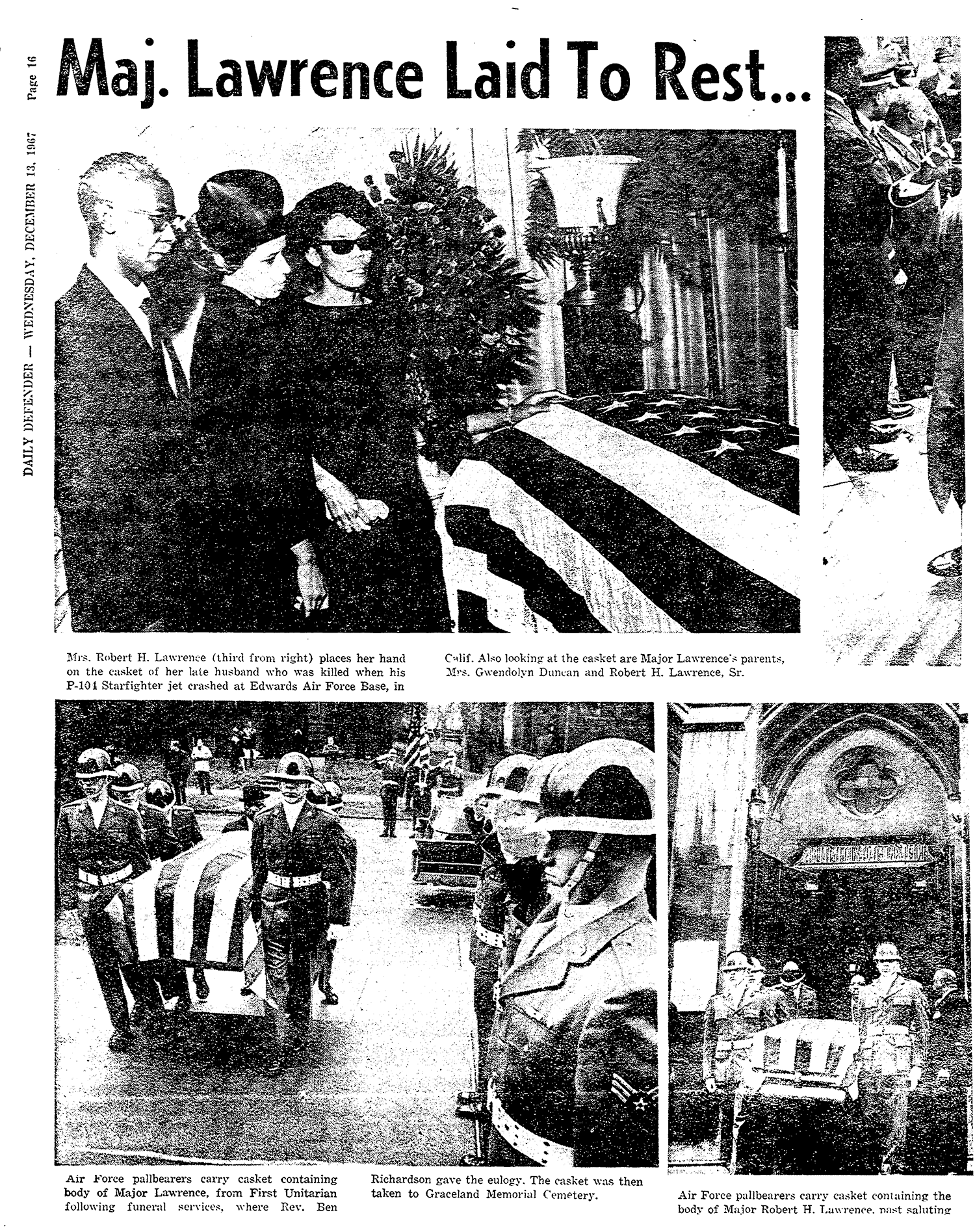
1966, Lawrence to attend elite flying school, Chicago Defender | 1967, Lawrence as first spaceman, Chicago Tribune | 1967, growing up with Lawrence, Chicago Defender | 1967, James A. Abrahamson, Robert T. Herres, Robert H. Lawrence, Jr., and Donald H. Peterson, Wikimedia Commons | 1967, Major Lawrence with a jet, Wikimedia Commons | 1967 Chicago Tribune front page | 1967 Chicago Defender Front Page| 1967, Chicago Pays Last Tribute, Chicago Defender | 1967, Maj. Lawrence Laid to Rest, Chicago Defender

.jpg?ref=postcard-past.com)
The Christian Scientists sold the building in 2011 for $500k, but—unlike many Christian Science churches as the number of adherents dwindled—they still appear to exist, sharing space in the First Baptist Church of Chicago's building on 50th Street in Kenwood. The congregation that took over from the Christian Scientists, Centennial Missionary Baptist, sold the building for $1.2m in 2021.
Production Files
Further reading:
- City of Chicago Landmark Designation Report
- The Varied Lives and Architecture of Chicago's Christian Science Churches
- Black Wings by Von Hardesty
- They had a dream: the story of African-American astronauts by J. Alfred Phelps
- "A Sudden Loss of Altitude", Air & Space Magazine, 1986
- Prayers in Stone: Christian Science Architecture in the United States, 1894-1930 by Paul Eli Ivey
- Unfolding Joseph E. Yoakum: "Christian Science and Life on the South Side" by Esther Adler in Joseph E. Yoakum: What I Saw
 The Mary Baker Eddy Library
A bummer that the cupola was removed—and really not great that it was done without a permit on a landmarked building—but also maintaining these giant old spaces can be a real burden to their congregations, especially with landmark protection (less exculpatory here since Centennial M.B. had only bought the building seven years earlier and it was already landmarked, they knew what they were getting into).

The changes in the block around the Eight Church over the last century are pretty typical of the Bronzeville experience—extreme densification, widespread demolition, and now revitalization.
1925 Sanborn Map | 1938 aerial, Illinois State Geological Survey| 1950 Sanborn Map | 1970, 1975, 1980, 1985, 1990, 1995 aerials, CMAP
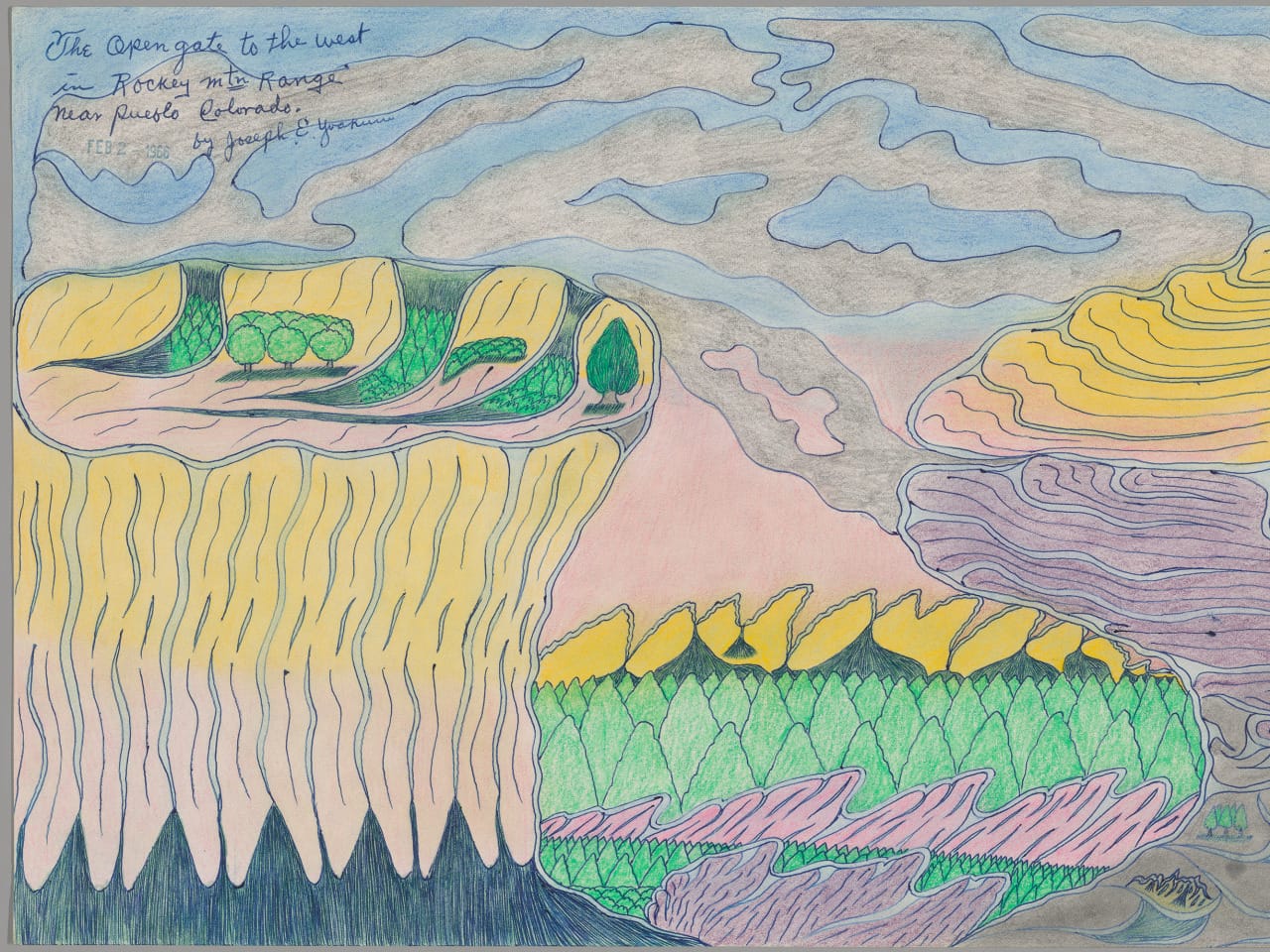
Joseph E. Yoakum, a legendary Chicago artist, almost definitely interacted with the Eighth Church, even if he wasn't a member himself. Yoakum, who lived a ten minute walk away, was a reader of Mary Baker Eddy's work and repeatedly referenced Christian Science concepts in connection to his work.
A few other random articles about the building, its organ, and the Eighth Church of Christ, Scientist's members.
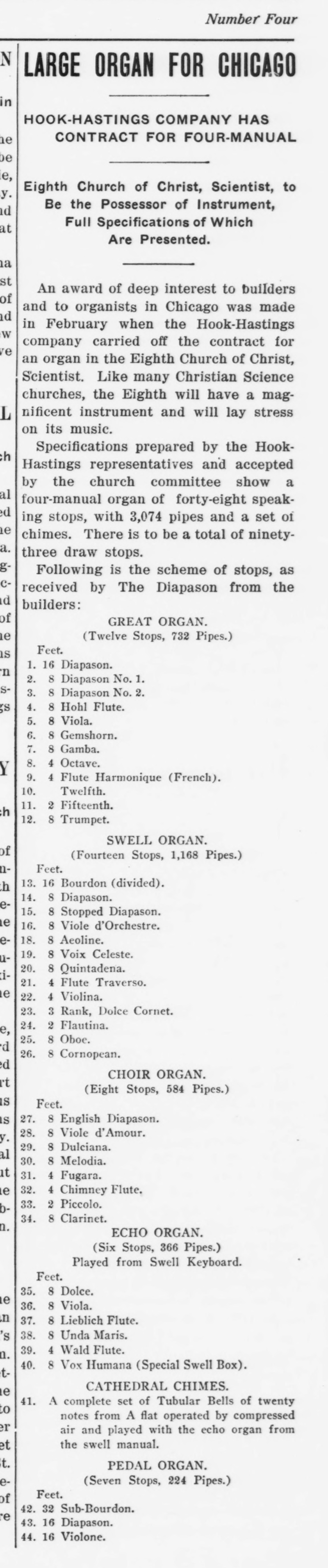
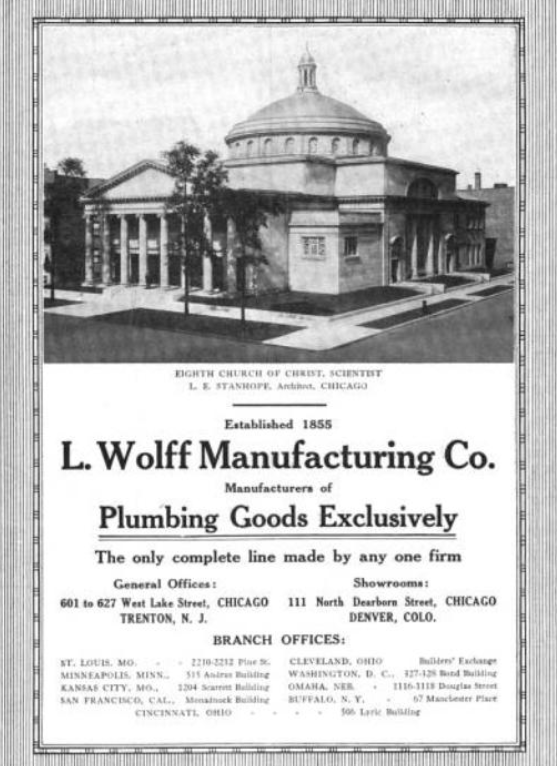
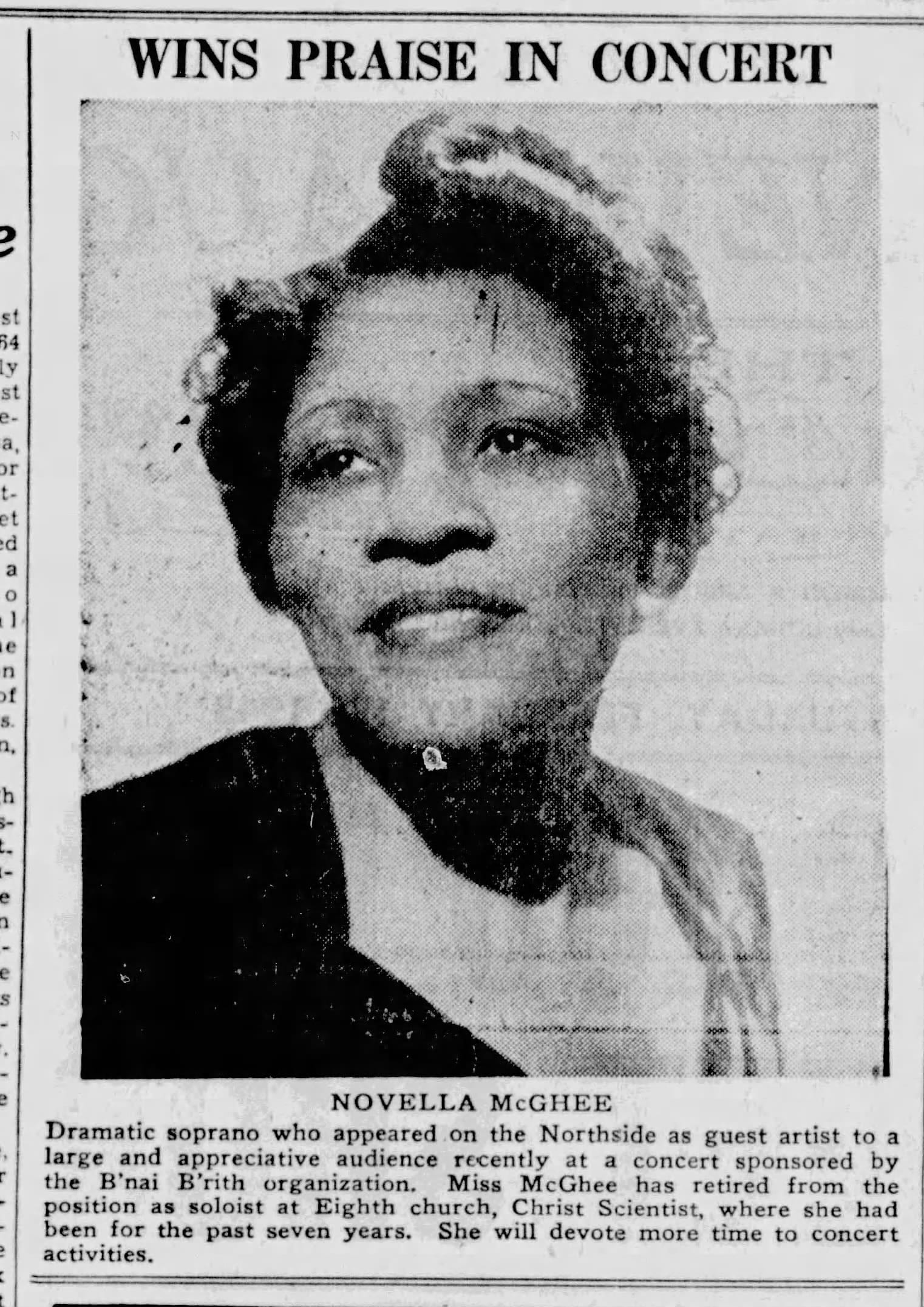
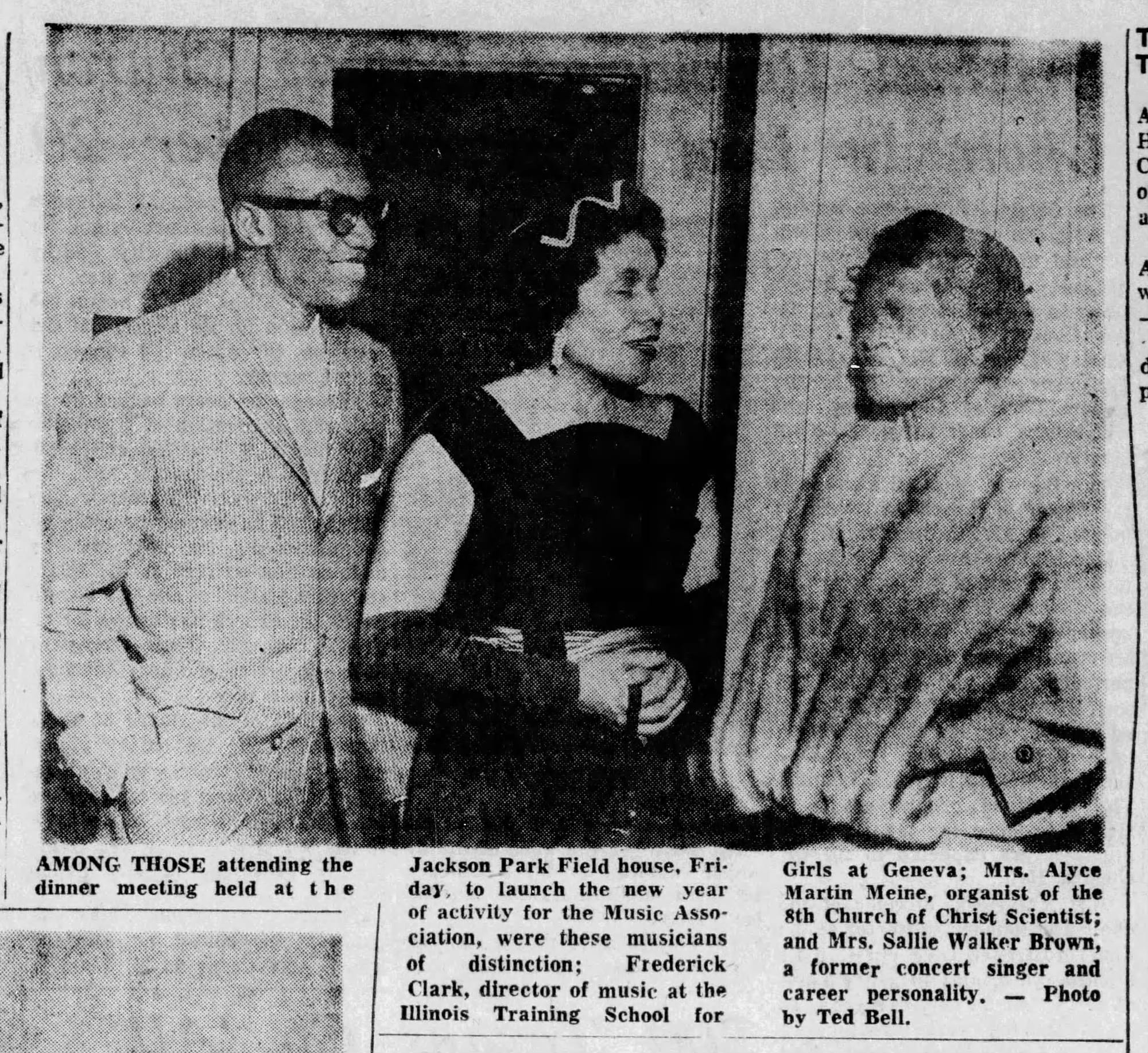


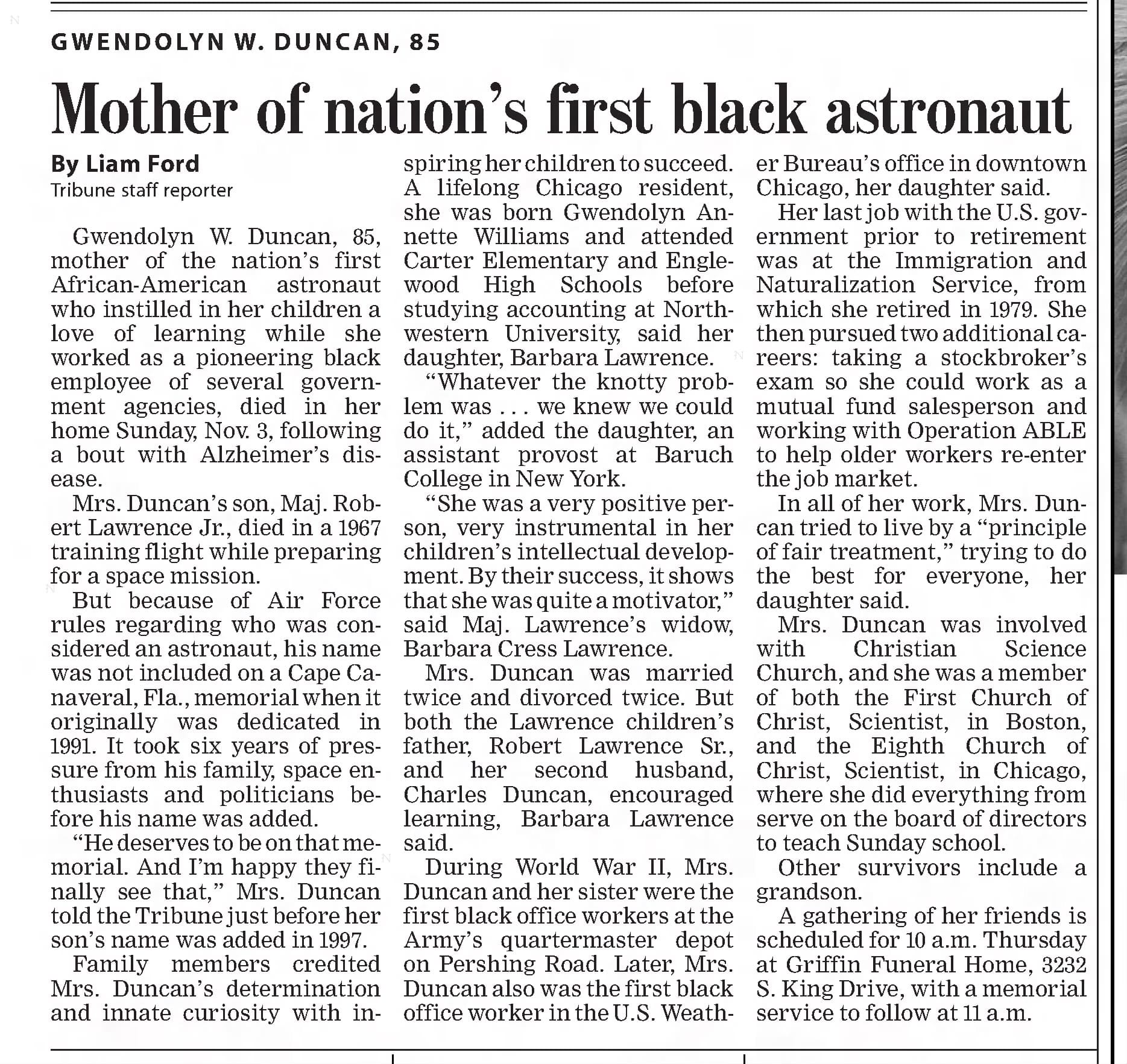
1911 article on the organ in The Diapason, the Internet Archive | Plumbing goods ad | 1943, Novella McGhee, Eighth Church soloist, Chicago Defender | 1957, Eighth Church organist Alyce Martin Meine | 1967, services for Maj. Lawrence, including one at the Eight Church of Christ, Scientist, Chicago Tribune | 1967, 500 assemble as astronaut eulogized, Chicago Tribune | Obit for Maj. Lawrence's mom, 2002
Member discussion: