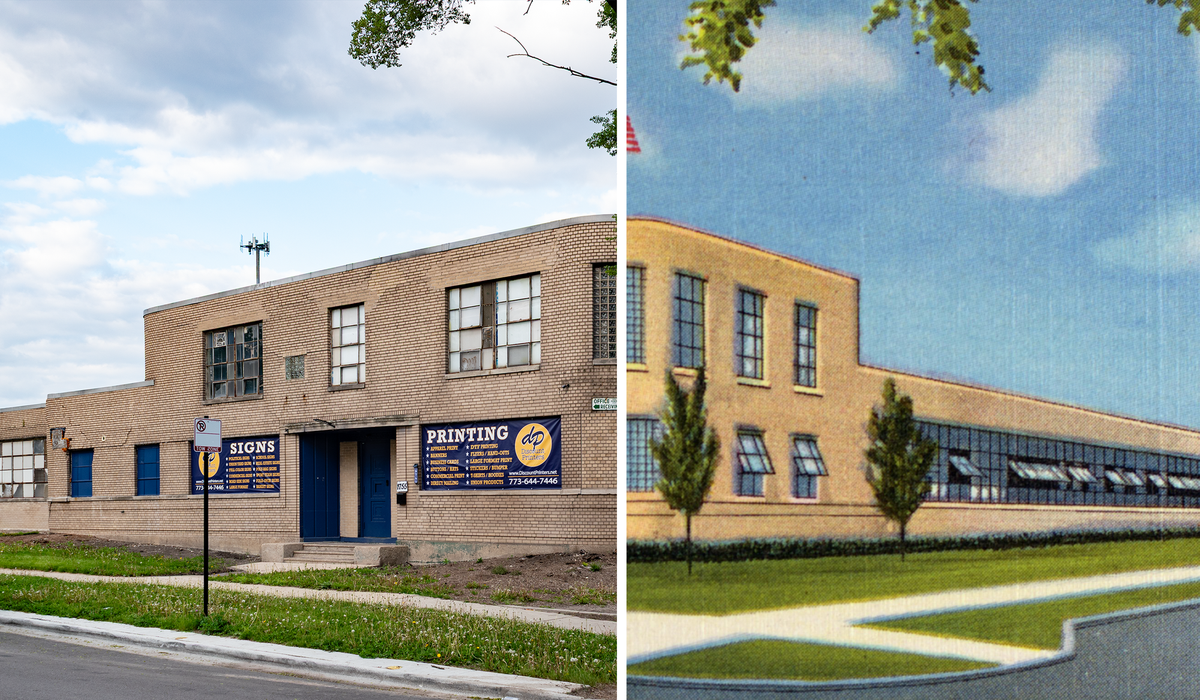
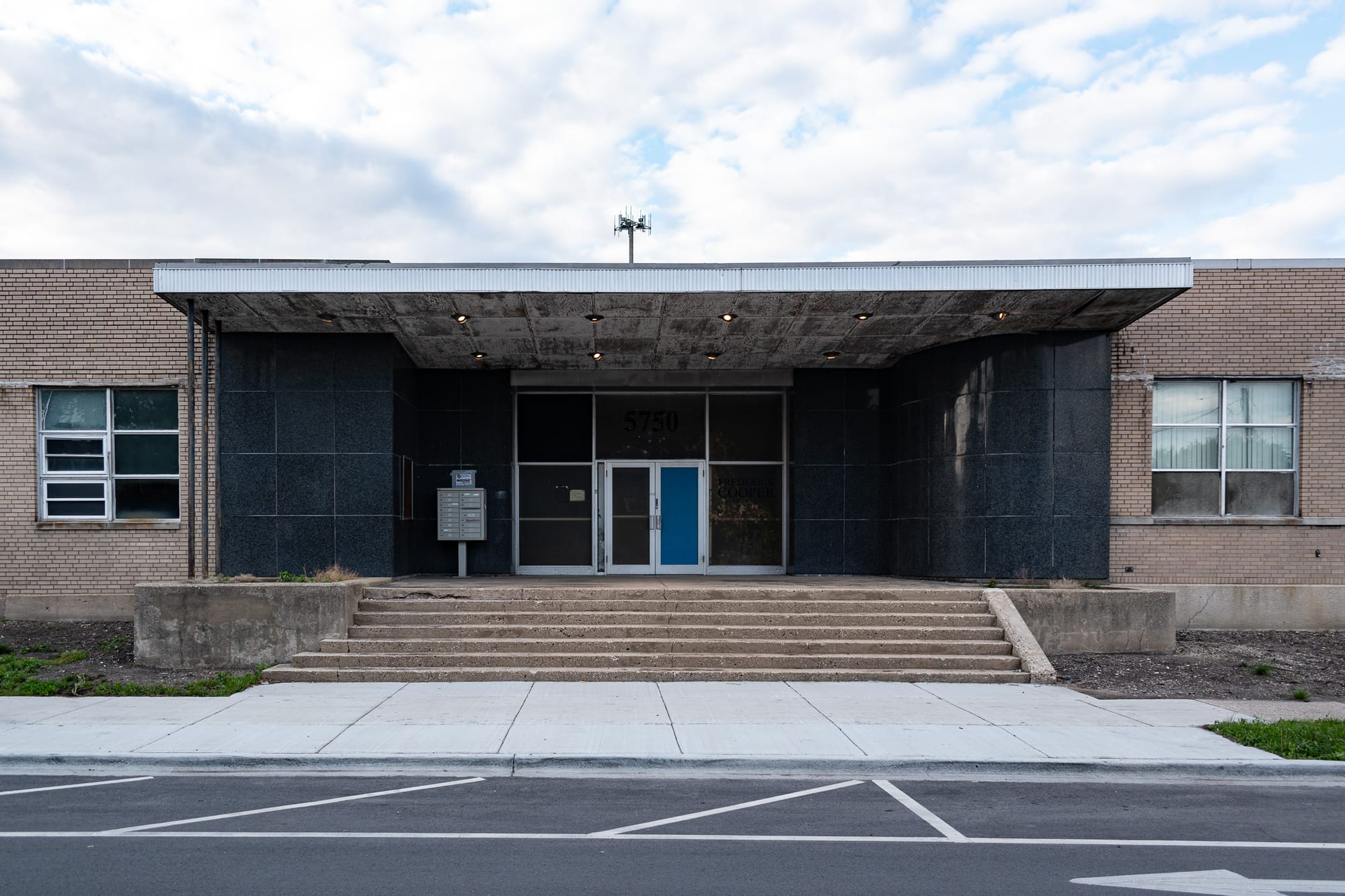
Next to the Milwaukee Road’s once-massive Galewood Yard on the West Side of Chicago, in the Keeney Industrial District developed with the Phipps family’s Carnegie Steel riches, this former paper box plant is still hanging in there—barely.
Completed in 1940 and designed by engineer Carroll F. Morrison in a dignified industrial Art Moderne, the Eagle Paper Box Manufacturing Co. made set-up boxes—rigid-sided boxes like those a board game or a luxury gift would come in—and to celebrate their shiny new factory Eagle owner Harry L. Kagan commissioned an advertising postcard from a Chicago paper manufacturer of another sort—Curt Teich & Co. Still home to light industrial and warehousing, the building appears to be in foreclosure proceedings with the city for building code violations.
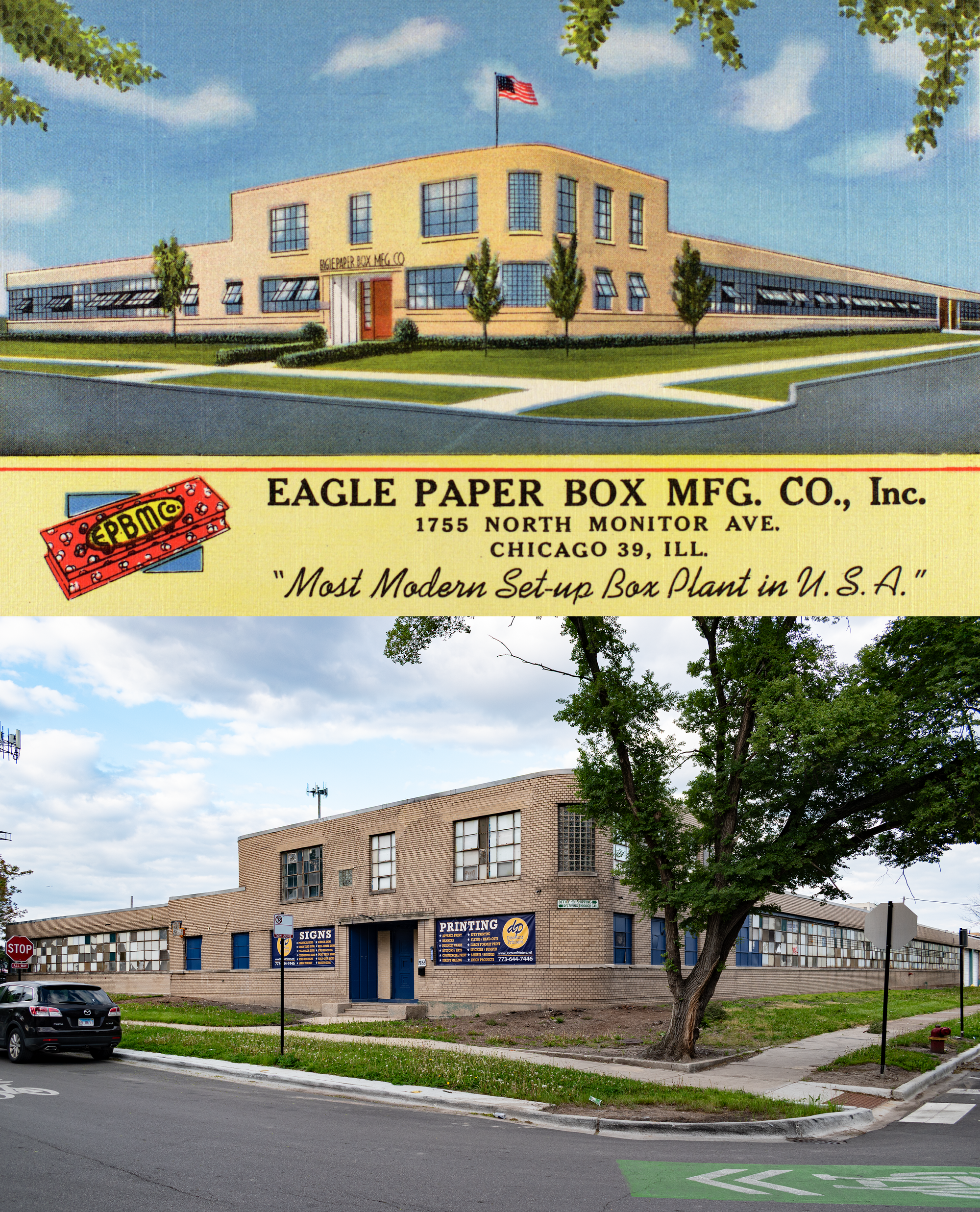
So, what’s changed in the intervening 83 years? Although scarred by time and the elements, really not that much. We do have at least three different ways to cover up or fill in a window, but that’s about as substantive as the alterations get.
Attracted by direct access to the Chicago, Milwaukee, St. Paul and Pacific Railroad’s Galewood Yard, the Phipps Industrial Land Trust bought this land in 1925, with plans to develop it as a manufacturing district. A real estate vehicle operating on behalf of the sons of Henry Phipps (who grew fabulously wealthy as the second-largest shareholder in Carnegie Steel after, well, Carnegie), the Phipps Industrial Land Trust diversified the capital of the Pittsburgh steel industry into (amongst other things) Chicagoland real estate, developing manufacturing districts in Burnside (Burnside Industrial Park), Gage Park (confusingly, the Kenwood Industrial Park), and Hermosa (Healy Industrial Park).
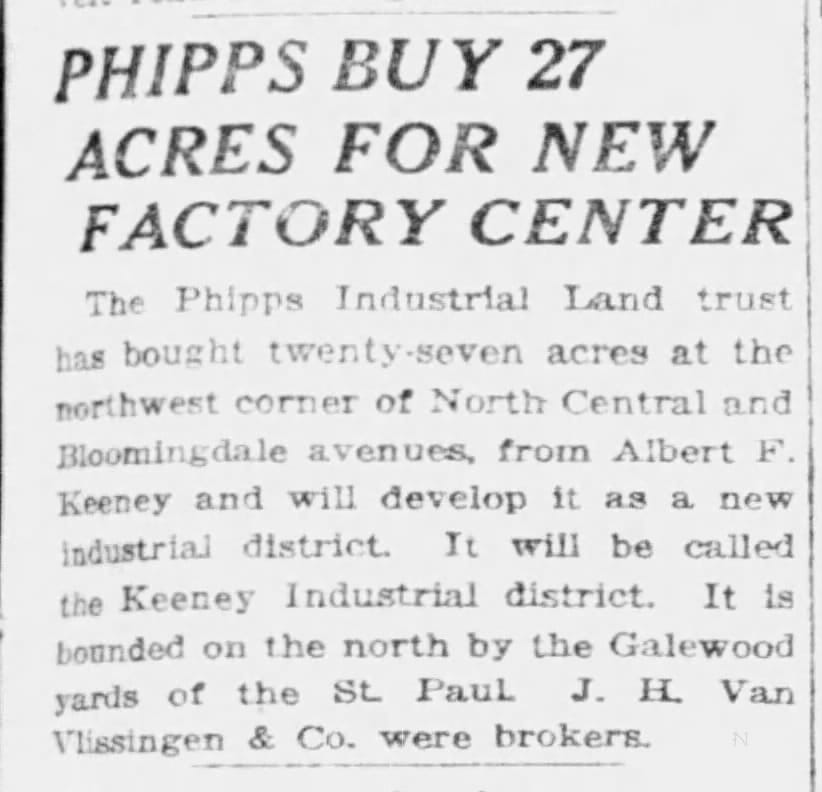
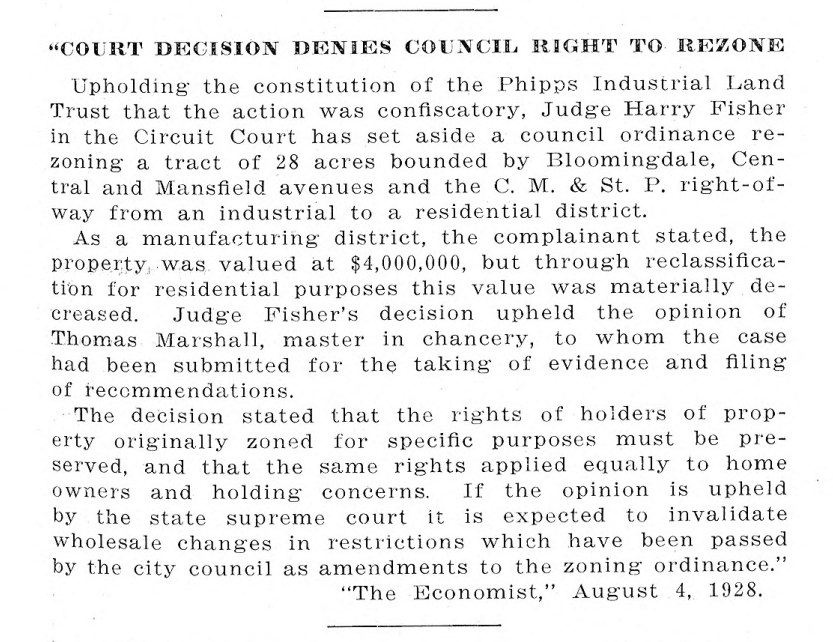
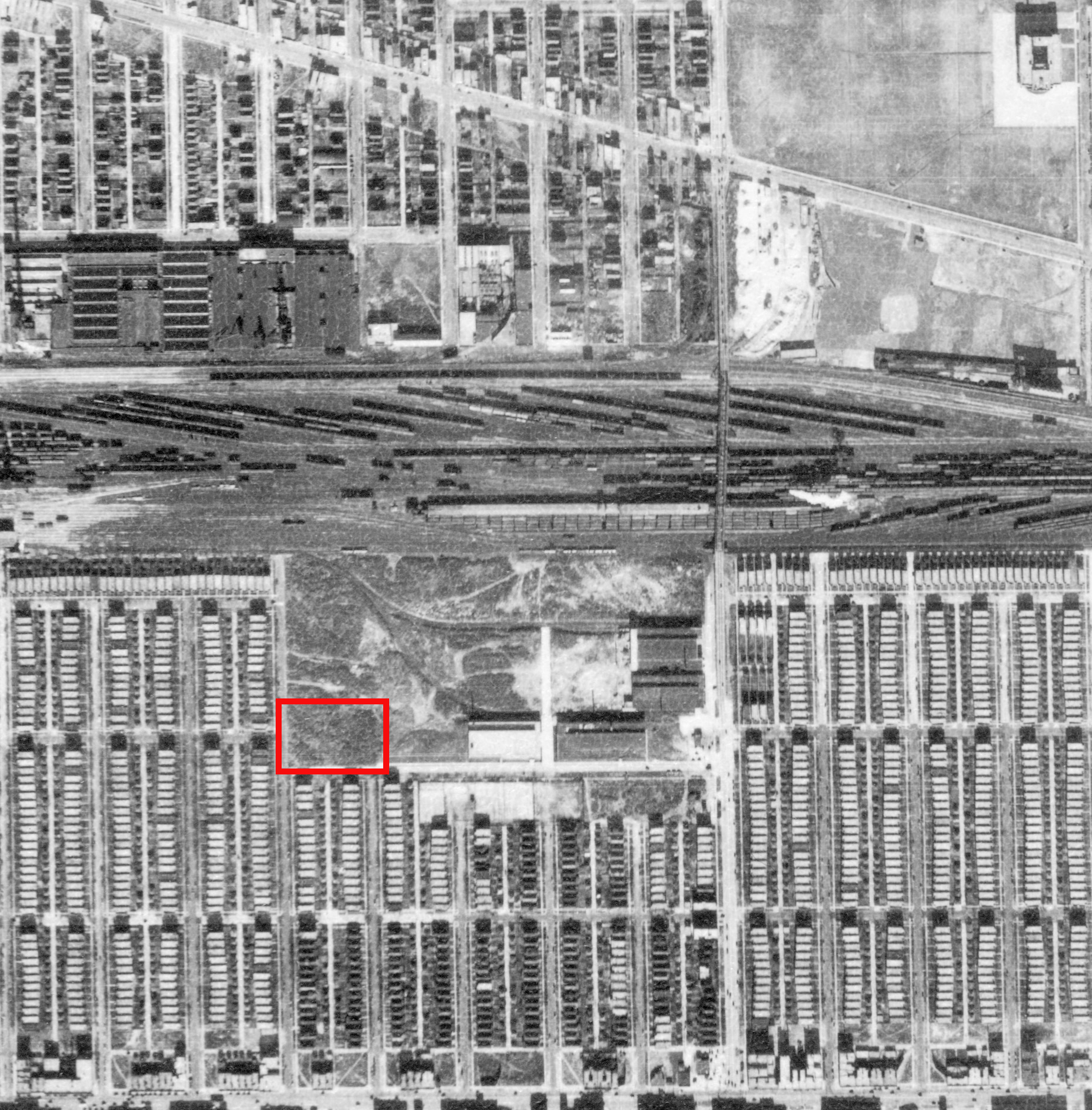
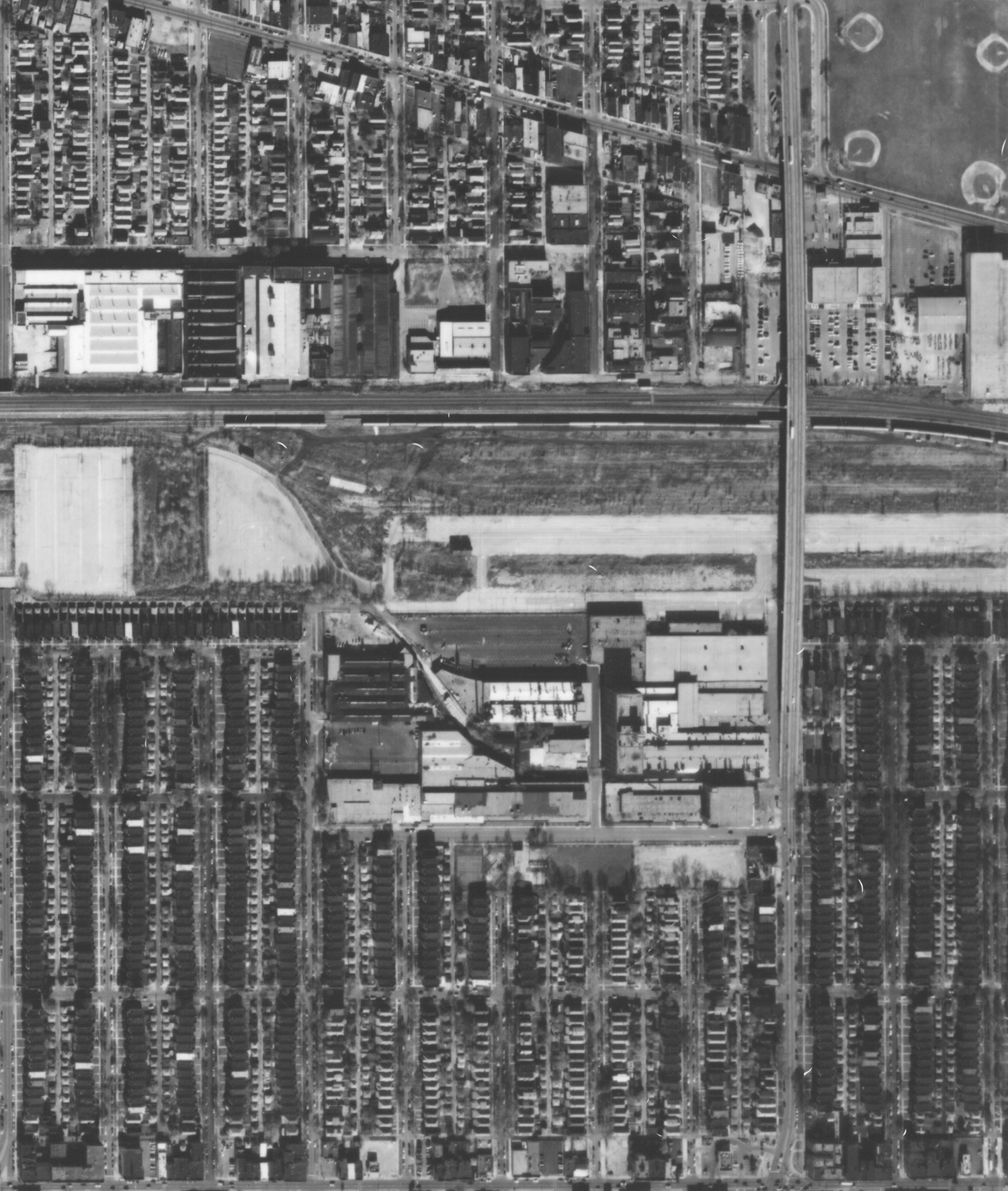
1925 article on the Phipps acquisition | 1928, court denies rezoning | 1938 aerial, Illinois State Geological Survey
There was one small wrinkle here: the city tried to rezone the area to residential after the Phipps bought it, but—wealthy, connected, and experienced—the land trust overturned the city council’s rezoning in court. By the late 1930s, the development of the Keeney Industrial District—defined by Monitor Ave to the east, Bloomingdale Ave to the south, Central Ave. to the east, and the railroad tracks to the north—was well underway. Working with influential Chicago real estate firm Van Vlissingen & Co, the Phipps Industrial Land Trust model worked by building a factory for an anchor tenant who leased the building with an option to buy.
The Eagle Paper Box Manufacturing Co. was one growing manufacturer looking for new space. Founded in the early 1920s by Harry L. Kagan on Chicago’s Jewish West Side, the company was already on their fourth production facility by the late 1930s. Eagle specialized in set-up paper boxes. As opposed to folding boxes, set-up boxes are delivered rigid and meant to stay that way. Eagle’s paper boxes were for gifts, for luxury goods—they were a marketing differentiator for whatever was held inside the box (say, high-class cutlery).
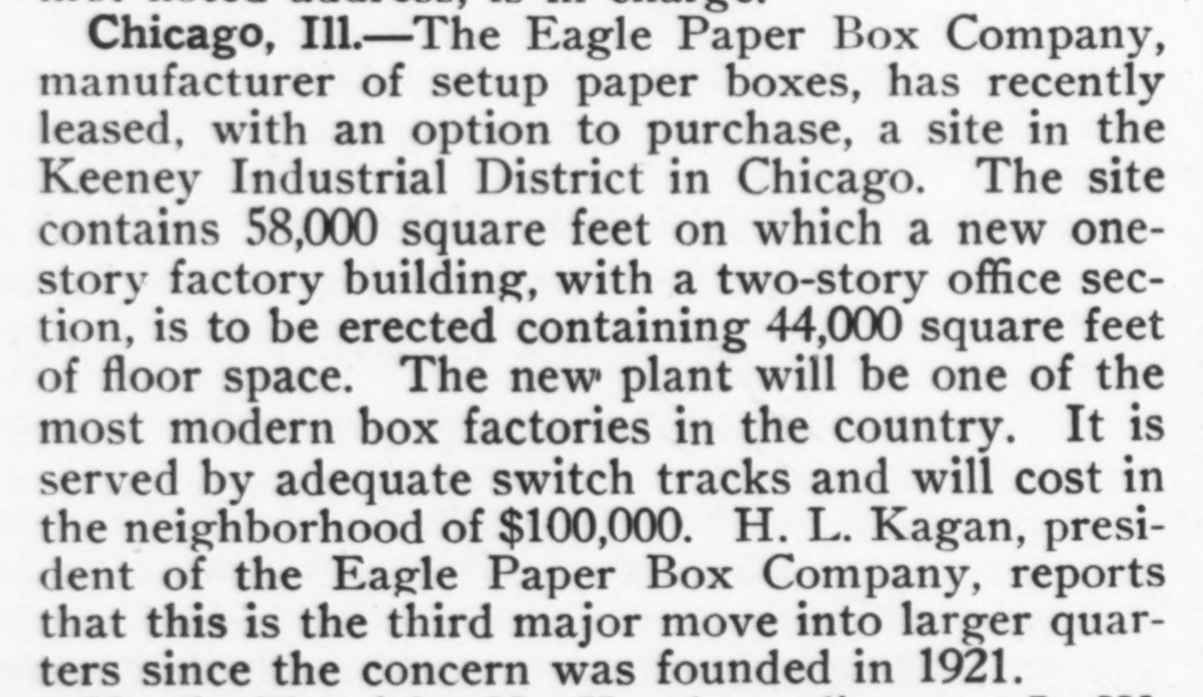
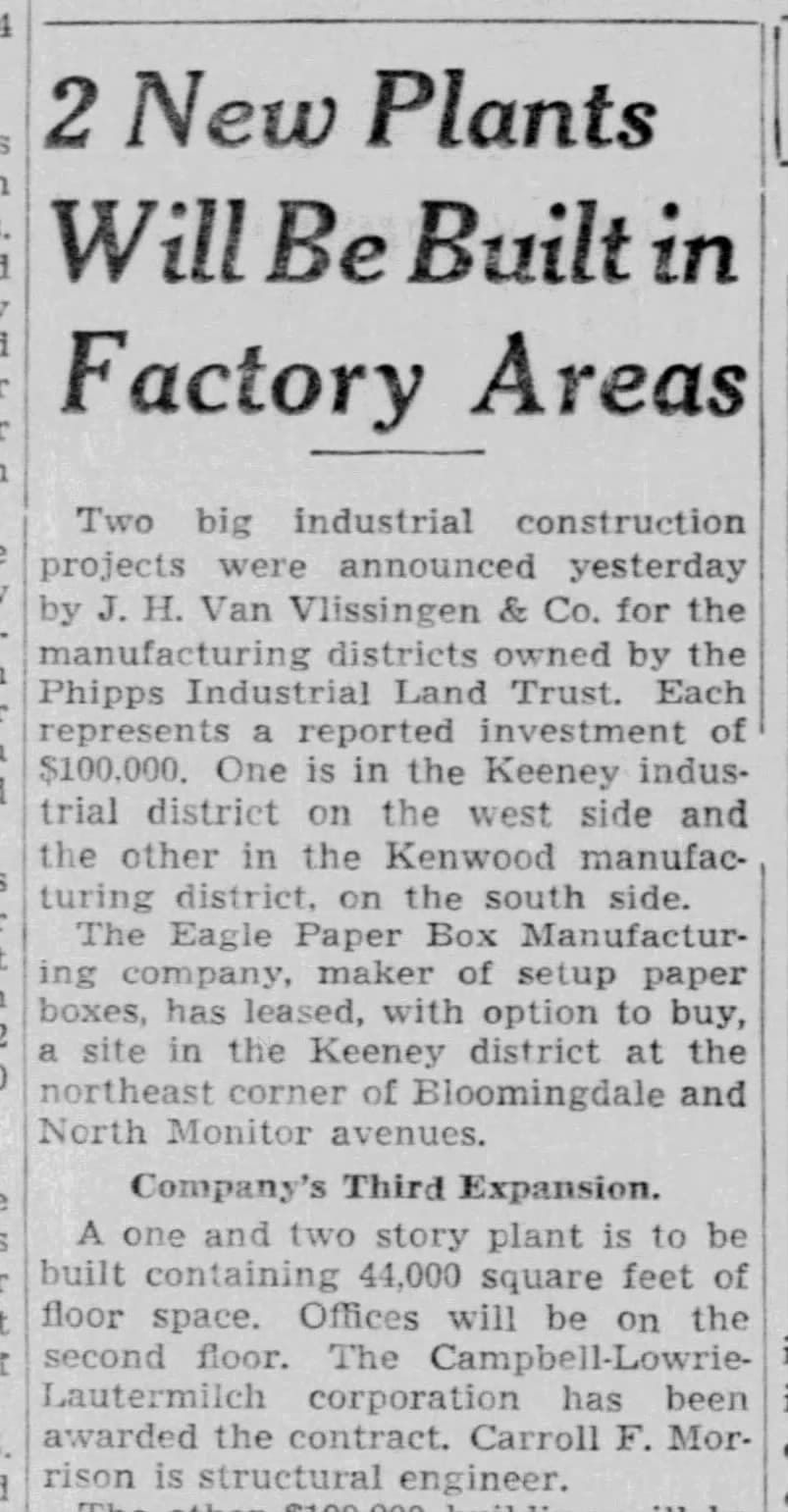
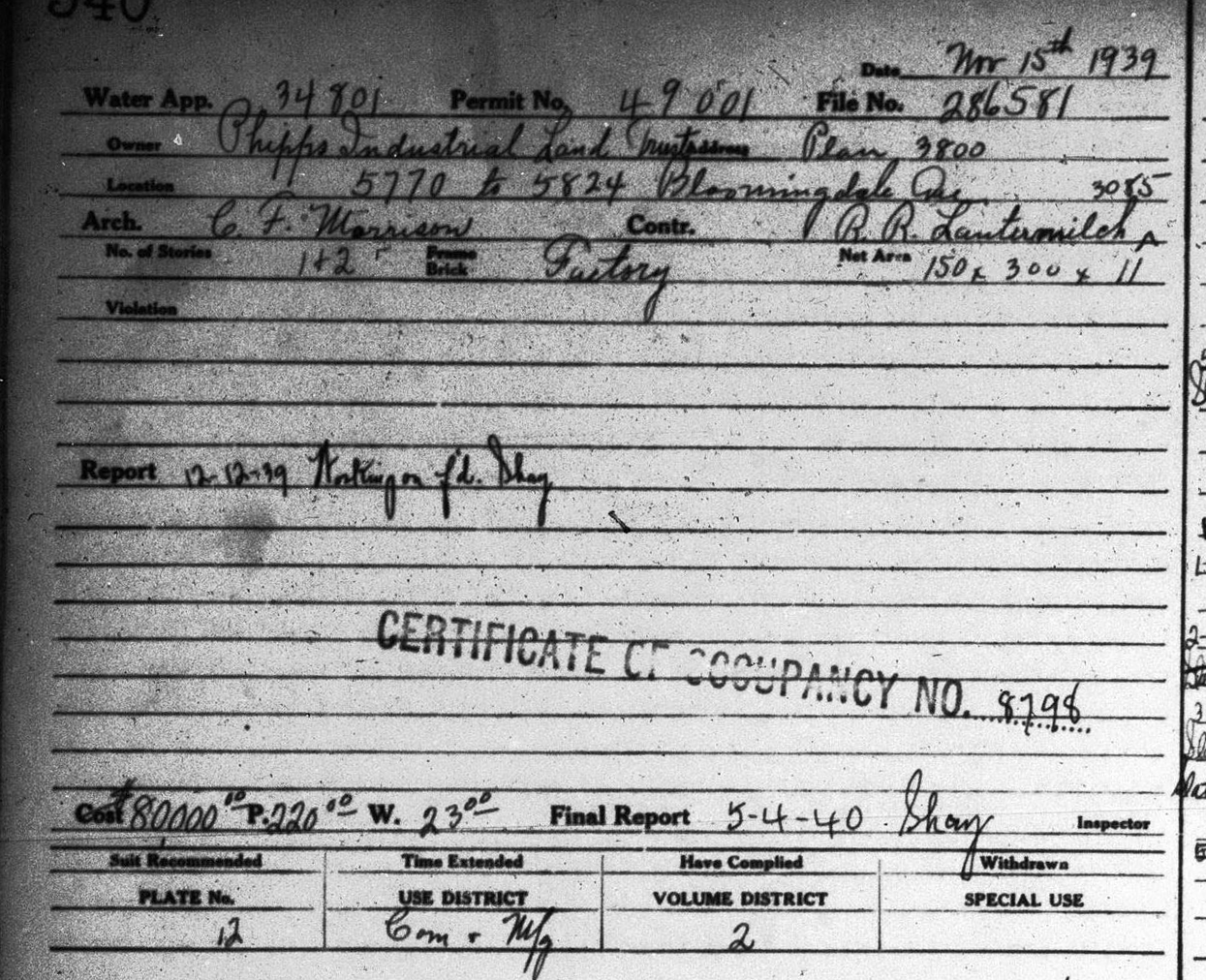
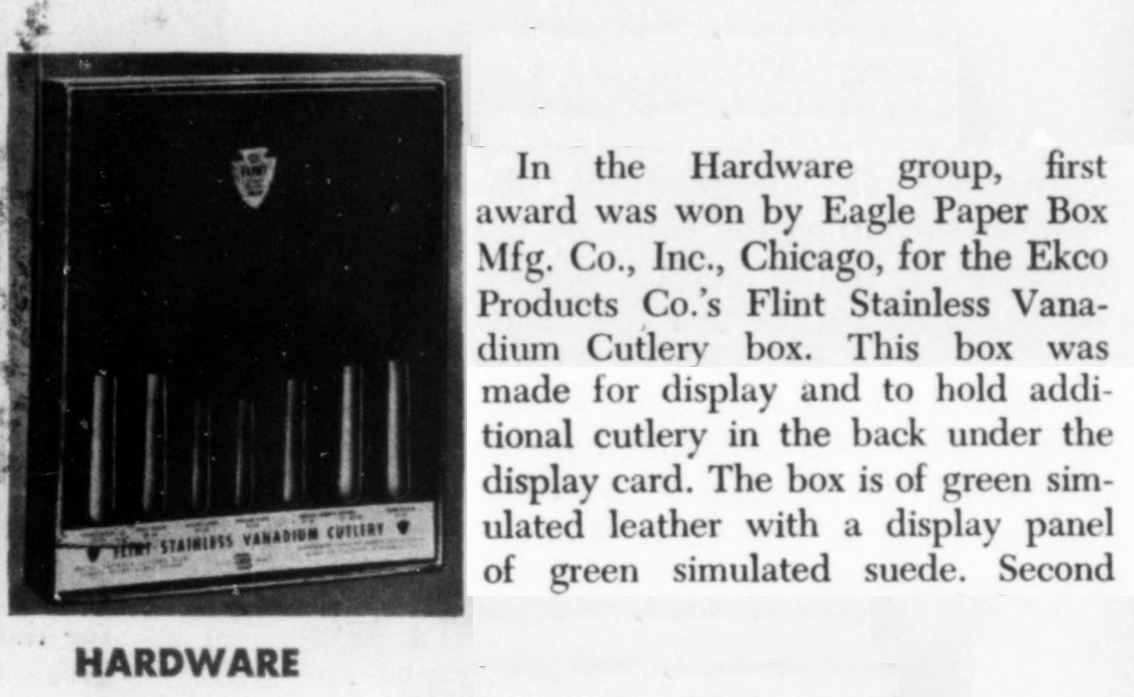
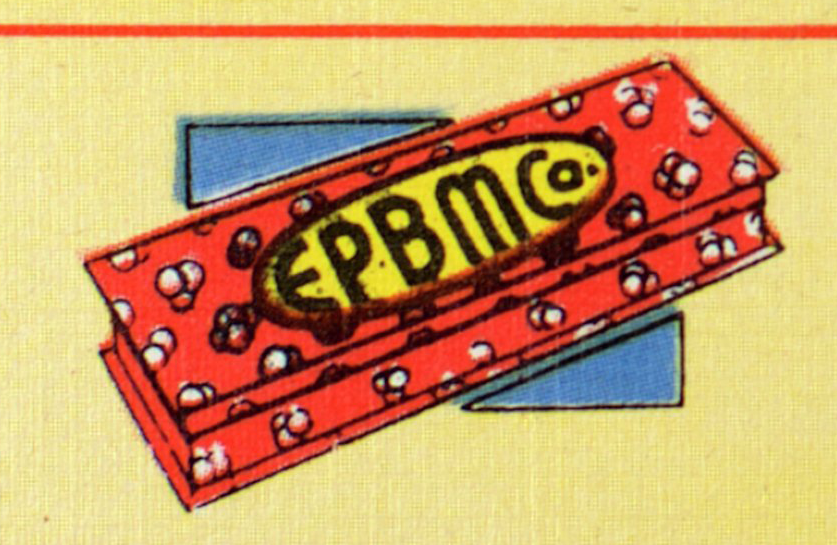
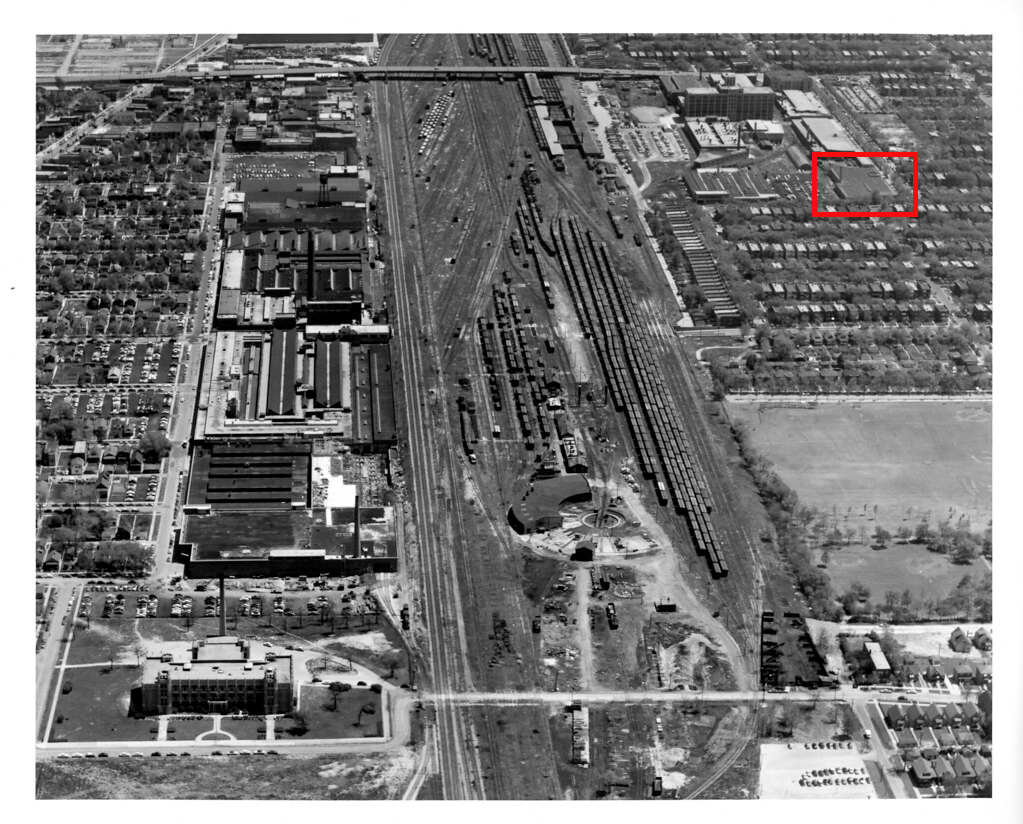
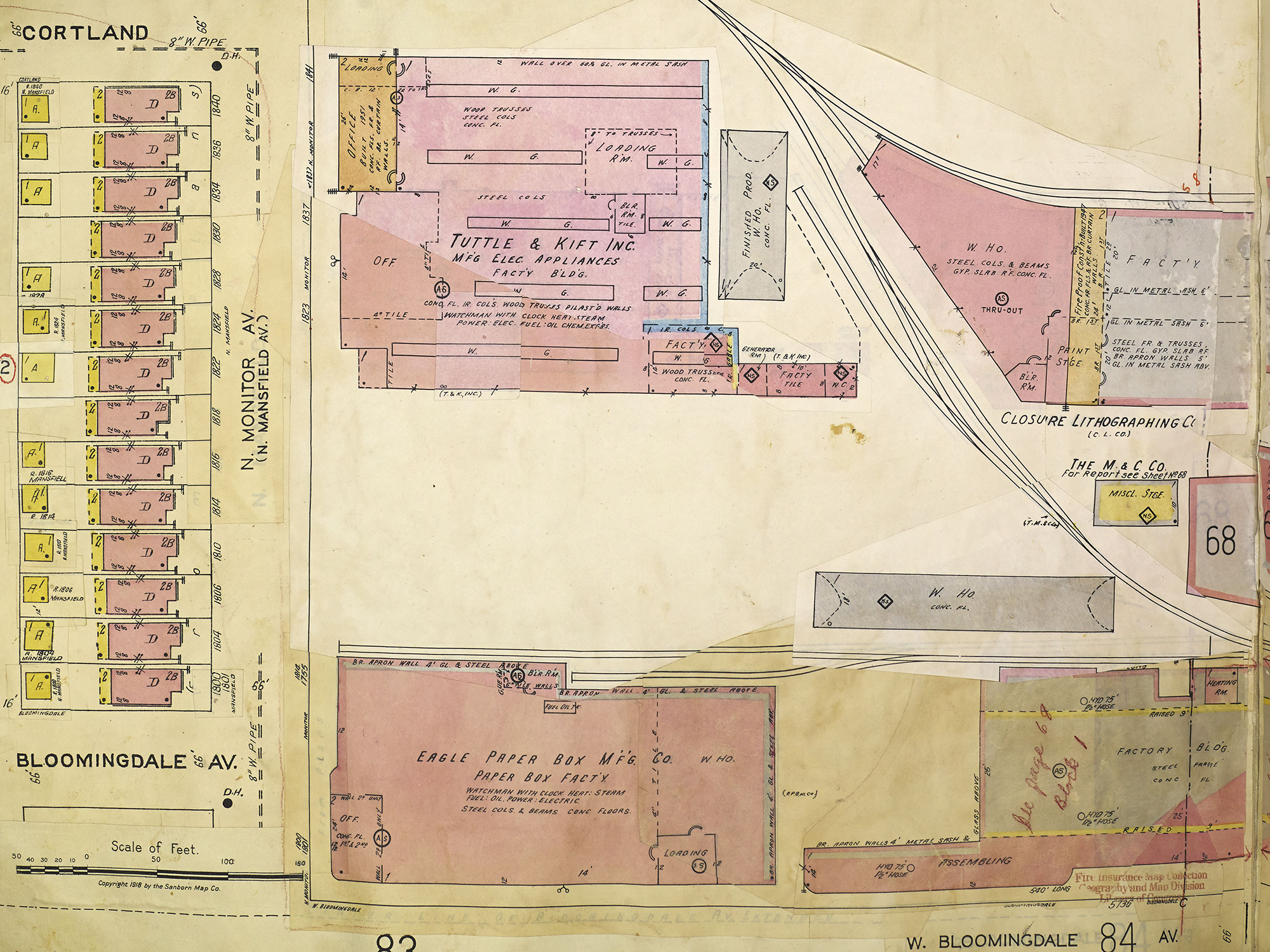
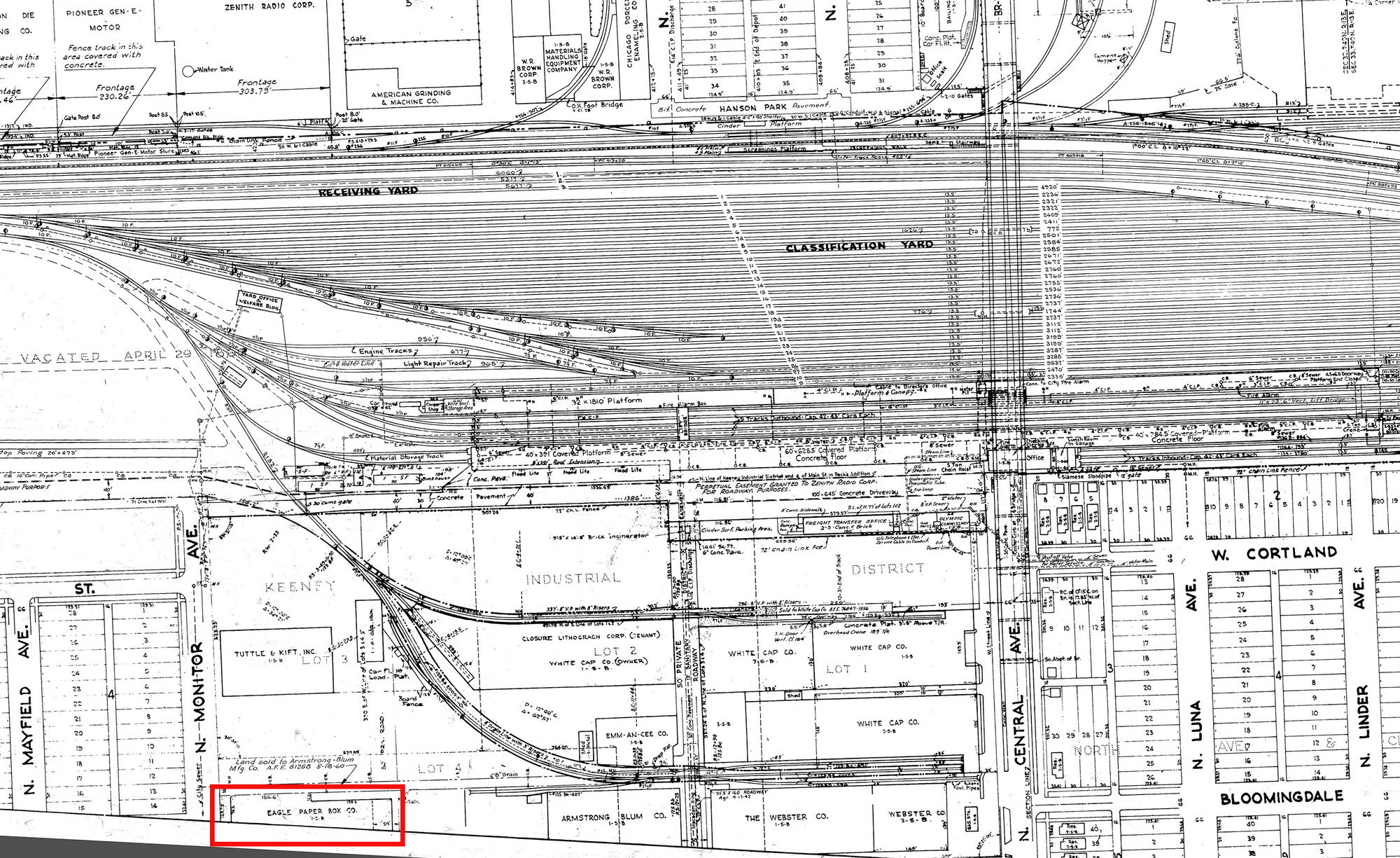
1939, lease signed, Paper Trade, the Internet Archive | 1939 article on new plant | Building permit, UIC Chicago Building Permits Digital Collection 1872-1954 | A prizewinning Eagle Paper Box box, 1951, Modern Packaging, the Internet Archive | An example of an Eagle Paper Box set-up box on the postcard | 1954, John W. Barriger III National Railroad Library | 1950 Sanborn Fire Insurance Map | Galewood Yard Map, Jon Roma
In 1939, the Eagle Paper Box Co. signed a deal to lease a new factory that the Phipps Industrial Land Trust would build at the corner of Monitor and Bloomingdale. The architect that Phipps hired, Carroll F. Morrison, was super obscure and is generally described as an engineer rather than architect, but he was credited with designing at least one other Chicagoland factory at 51st & Merrimac (demolished).
Completed in 1940, this plant was just one utilitarian component of a much larger rail-served manufacturing district. Other Keeney Industrial Park tenants included the Emm-An-Cee Company (Italian food products), Tuttle & Kift (electrical parts), White Cap Co. (caps for glass bottles), and the Armstrong-Blum Manufacturing Co. (metal saws).
Eagle Paper Box didn’t exercise their option to buy. The company moved to Garfield Park in the late 1950s before settling into a factory at 351 N. Pulaski, eventually disappearing in the late 1970s or early 1980s. Another Keeney Industrial District tenant—the Armstrong-Blum Manufacturing Company, manufacturers of Marvel saws—eventually expanded westward from their original building on Bloomingdale, taking over the Eagle Paper Box space. By the early 1980s these factories were lurching towards obsolescence. Armstrong-Blum moved to Oshkosh, Wisconsin in 1988 and sold the building to BSN, a Texas-based sports and trophy manufacturer (Armstrong-Blum eventually renamed themselves after their biggest brand, Marvel, and Marvel Manufacturing was bought by Japan’s Amada group in 2018).
1938 - 2025
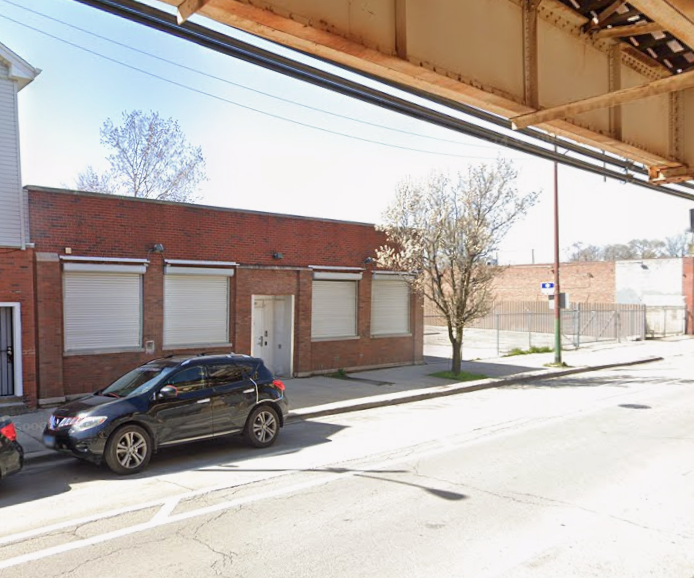
With the Galewood Yard effectively vacant by the 1980s, the Keeney Industrial District’s original raison d'être was gone, and the obsolete factories struggled with vacancy and blight. The building just to the north burned down in a large fire in 2002. The old Eagle Paper Box Co. factory passed from owner to owner, sliding down to ever lighter types of industrial tenant. It does appear that Discount Printers—the current tenant of this part of the building—is an active company, but the section to the east is vacant and for lease. However, the building owner was slapped with serious building code violations in 2024 because of the (VERY VISIBLE) brick bulging and buckling, so that leasing agent has quite the job on their hands. They did rip out a bunch of large trees in front of the building last year and repainted the front door, so maybe that’s a sign the building owner (...a somewhat faceless LLC) will get around to fixing the serious structural defects.
(...yeah right [...but still, one can hope!])
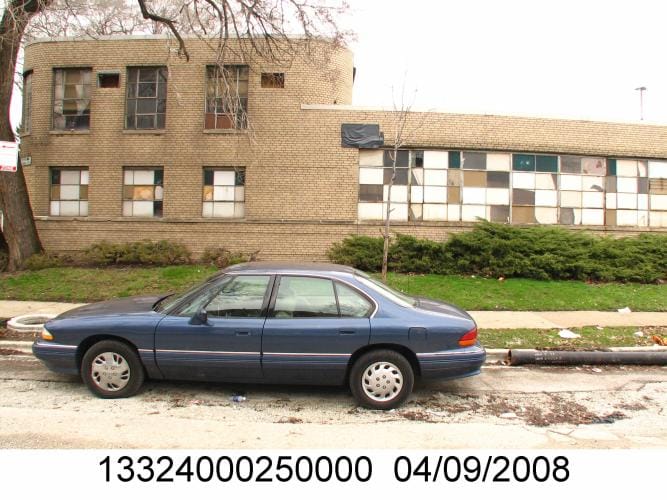
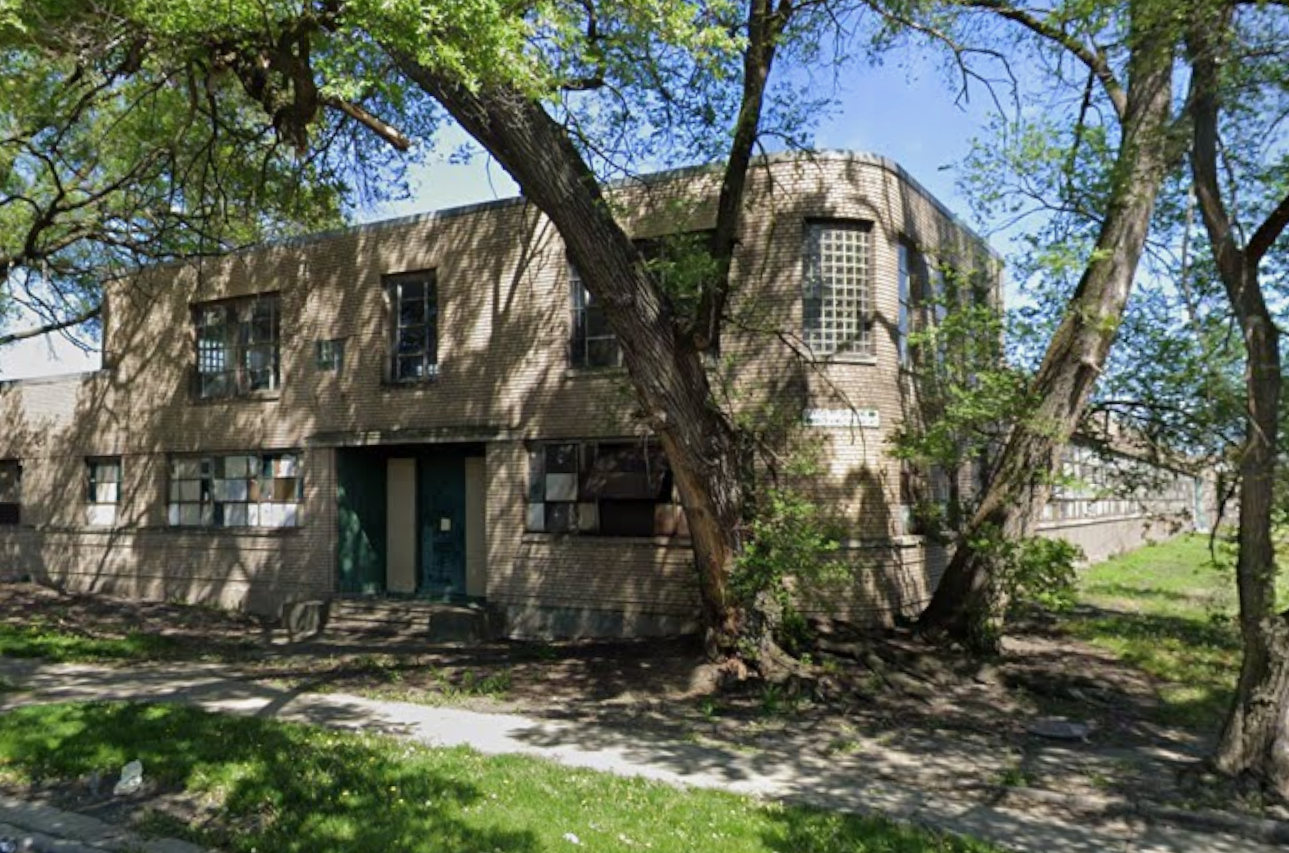
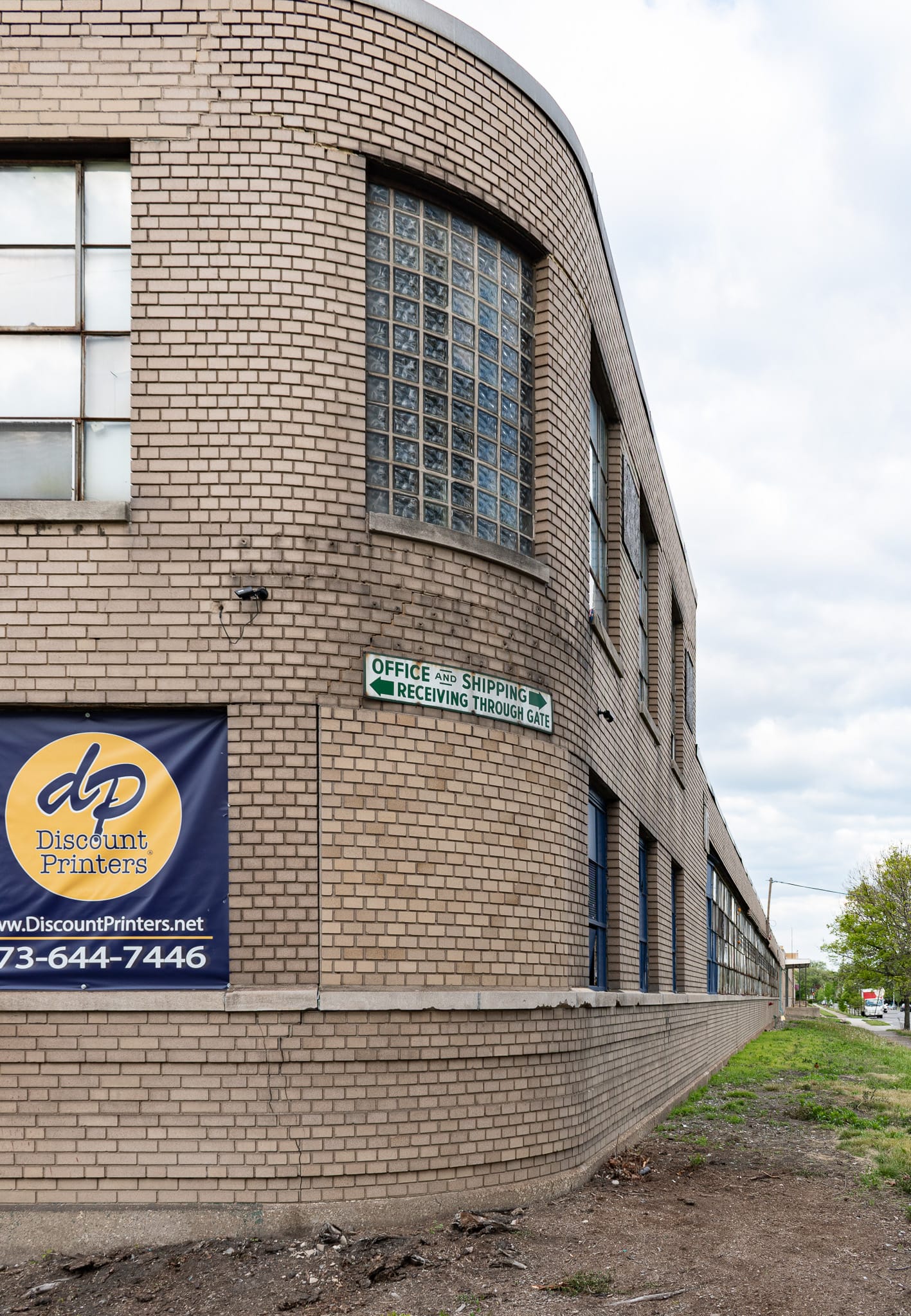
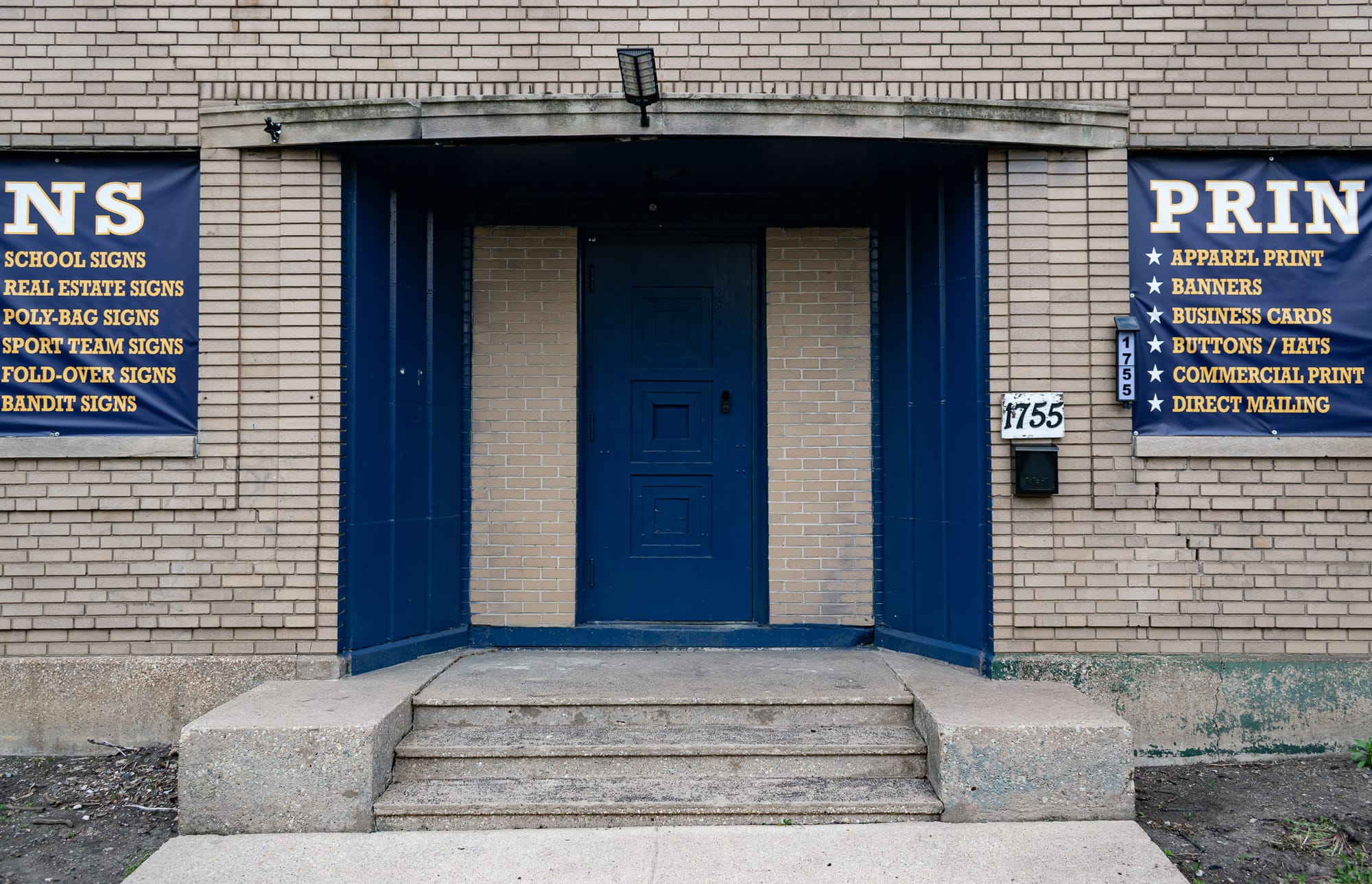
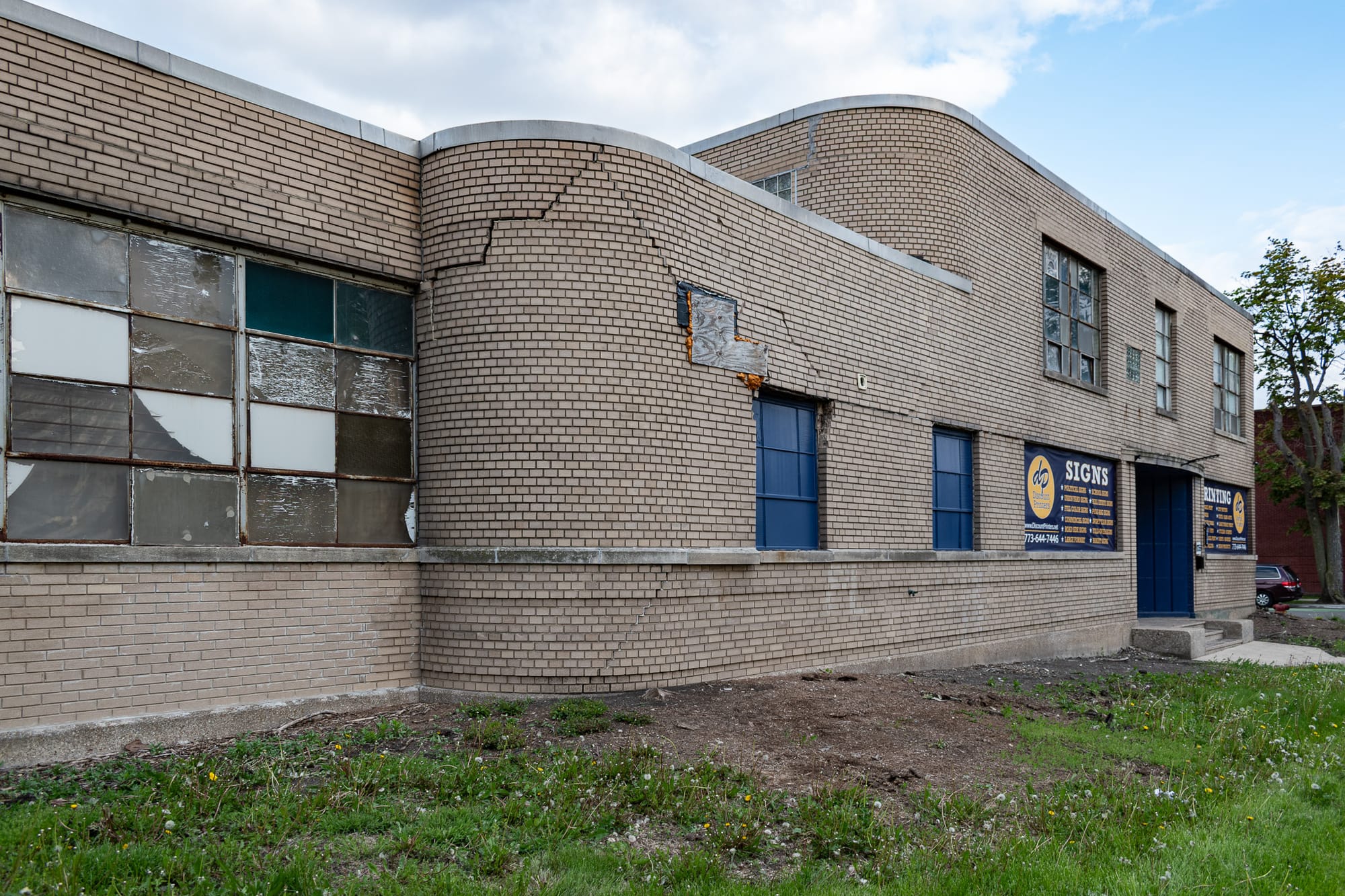
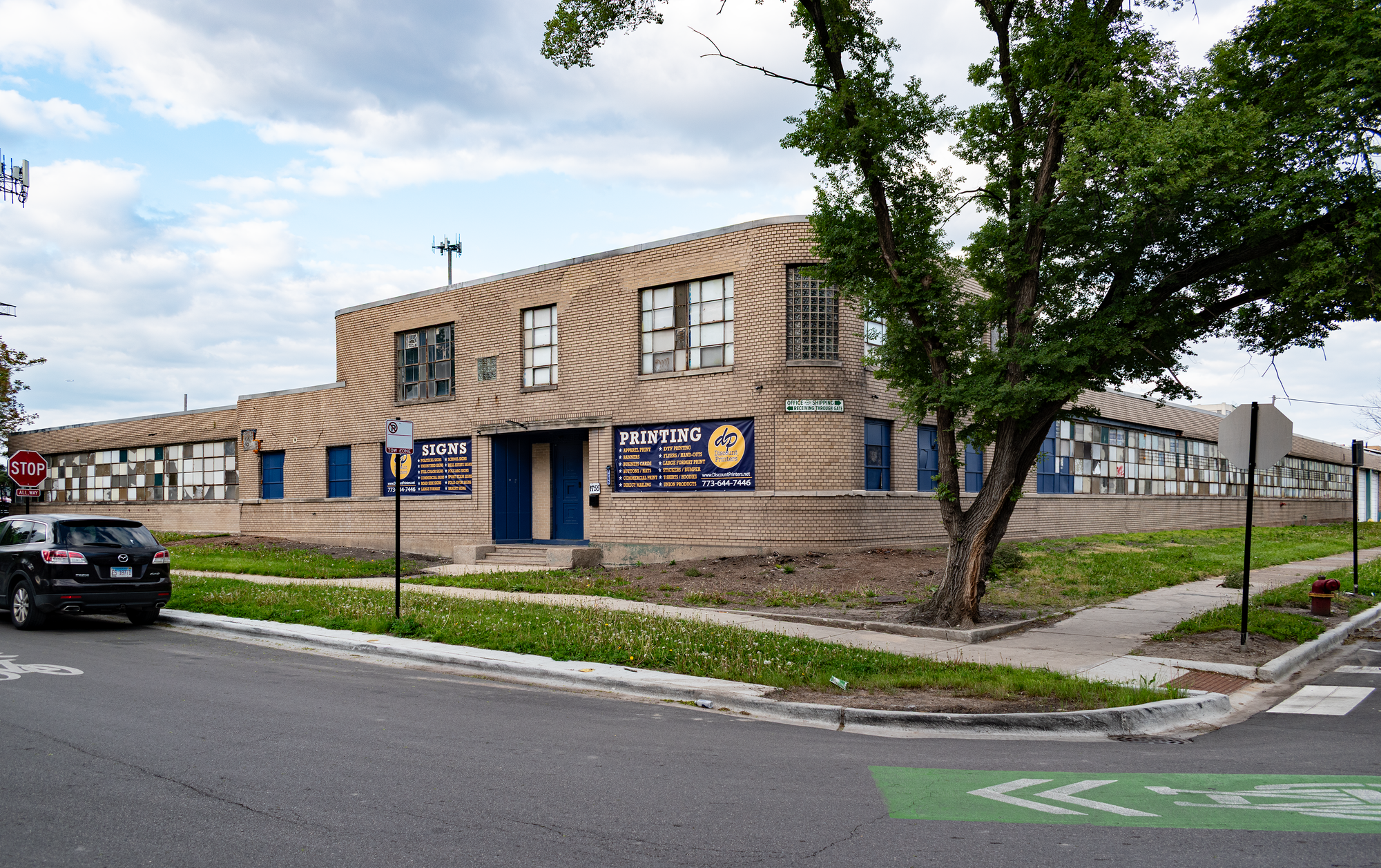
2008 Cook County Assessor photo | 2024 Google Streetview | 2026 photos
Production Files
Further reading:
 Dennis DeBruler
Some good stuff in the production file in the Curt Teich Archive at the Newberry Library here.
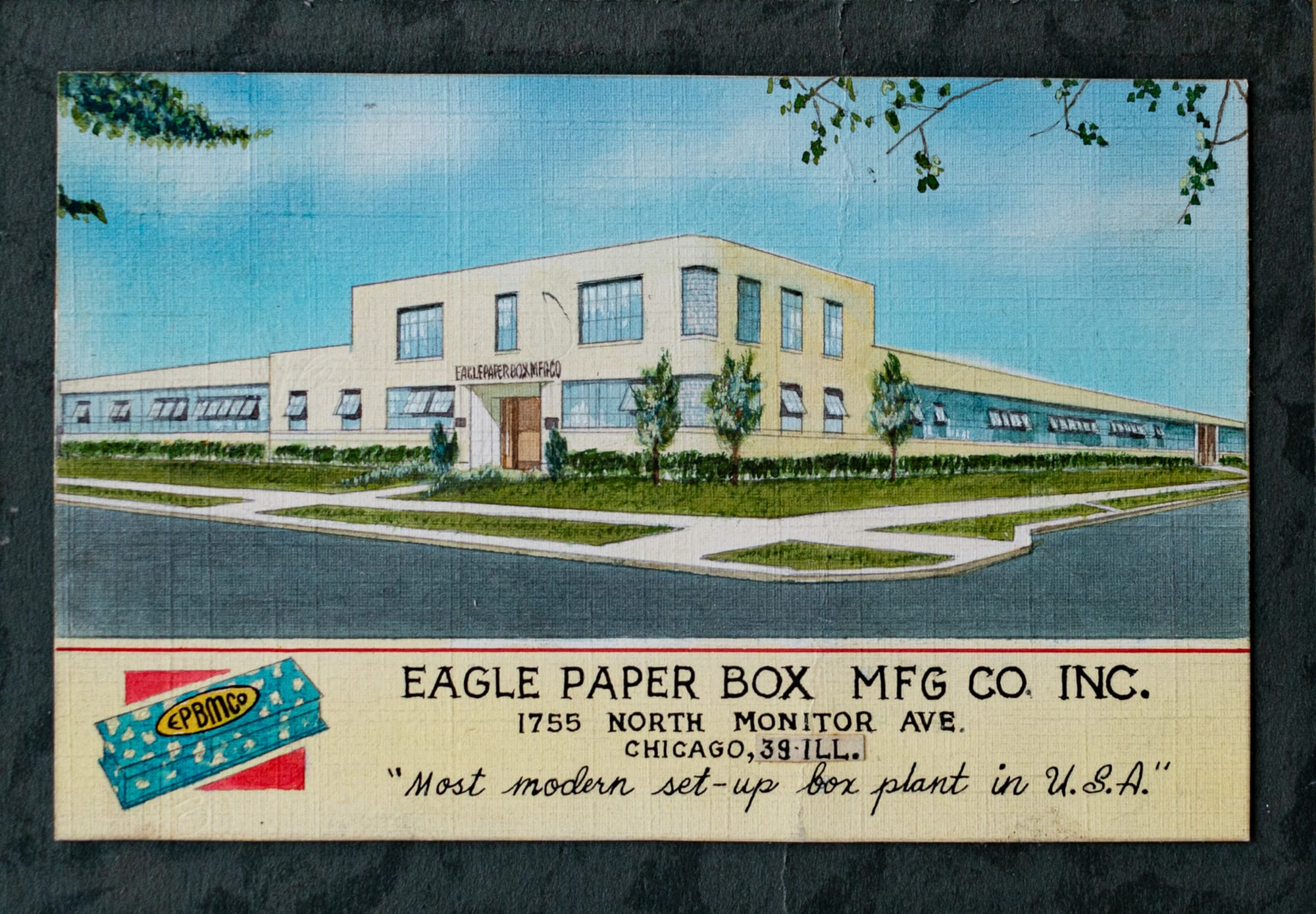
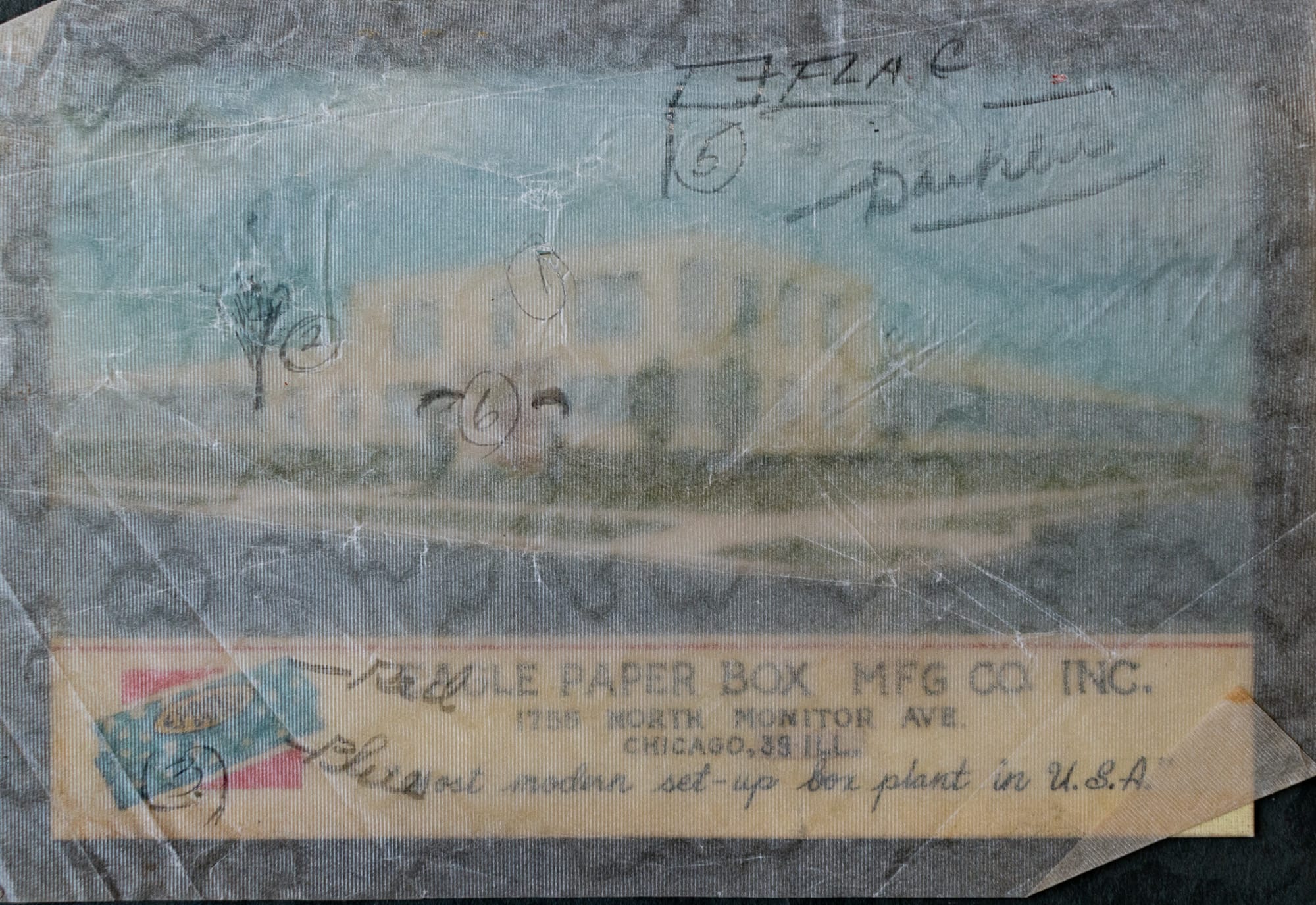
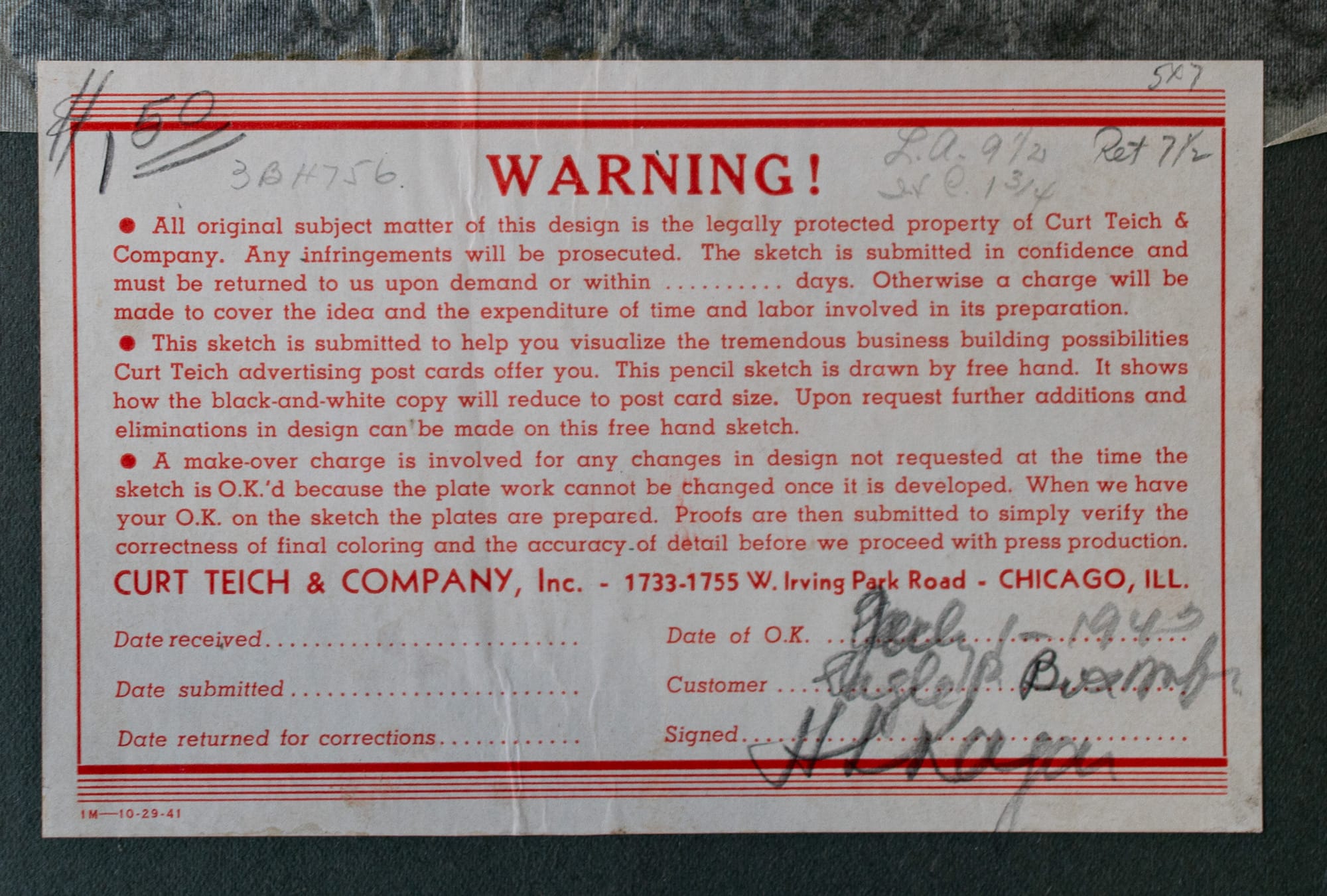
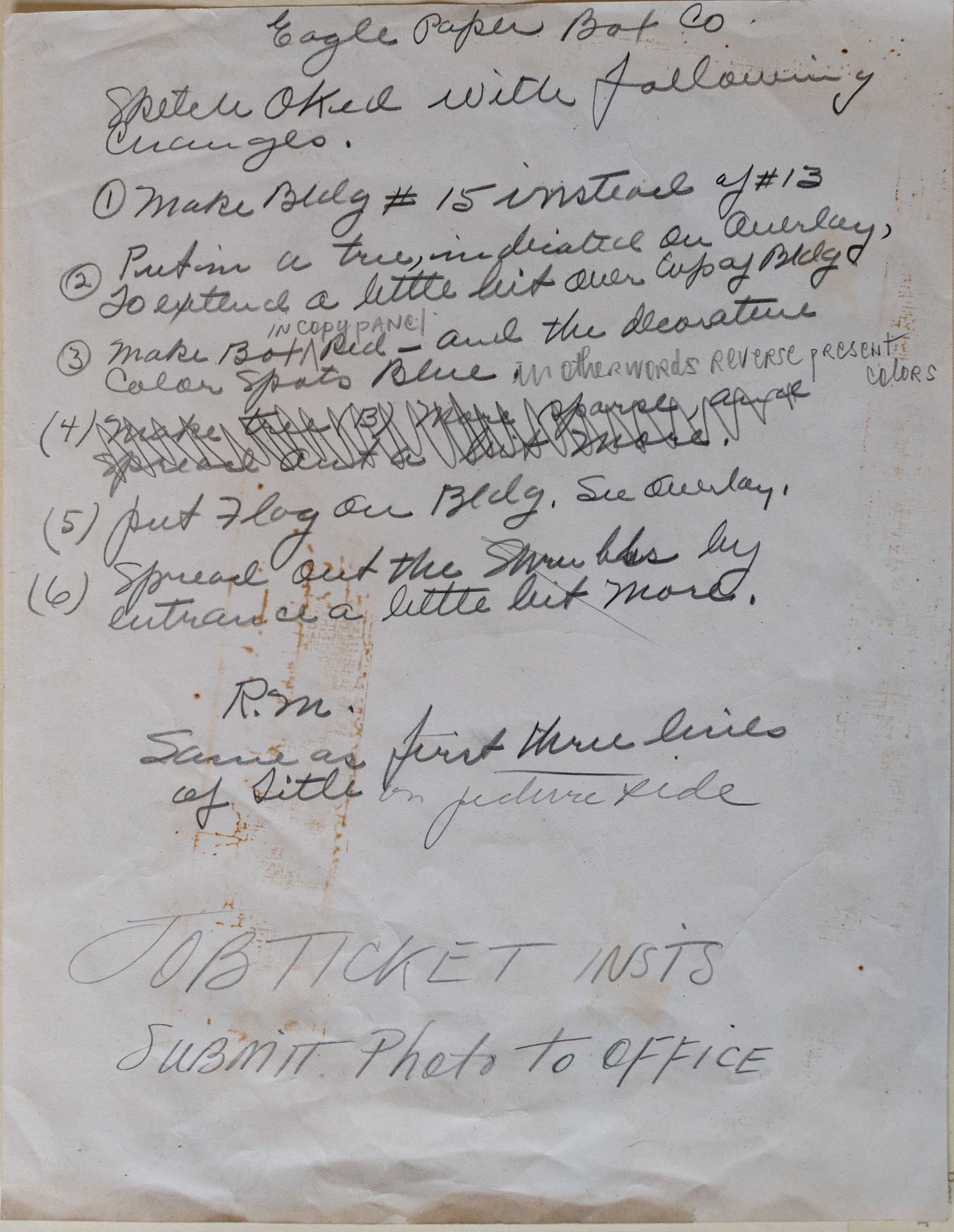
Handpainted postcard mockup for customer approval | Frisket paper with notes over the mockup | Back of the mockup with legal warning and signature from Harry L. Kagan | Instructions on changes
A few changes were suggested—mostly around coloring, foliage, and the flag—and the postcard was ready to go into production.
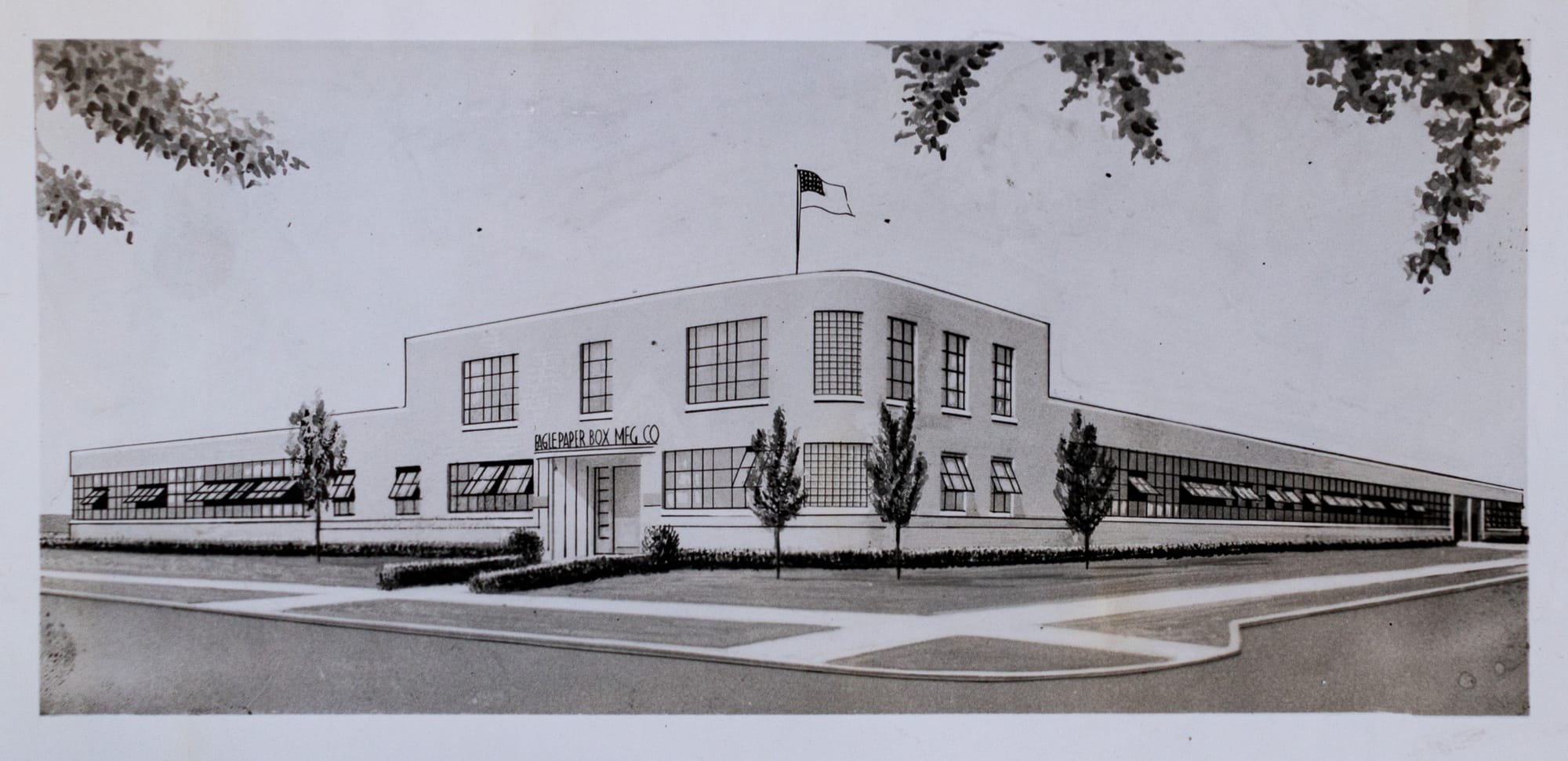
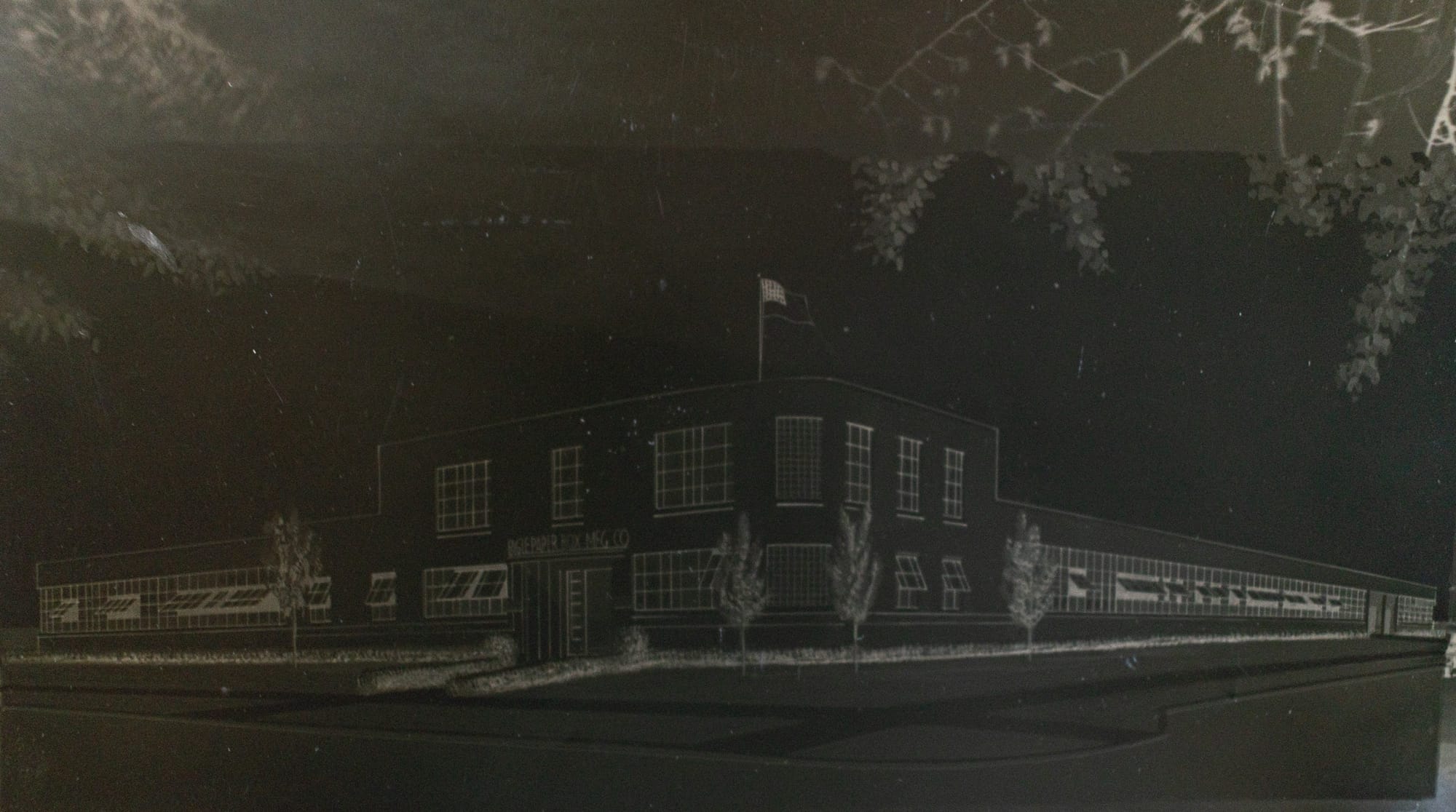
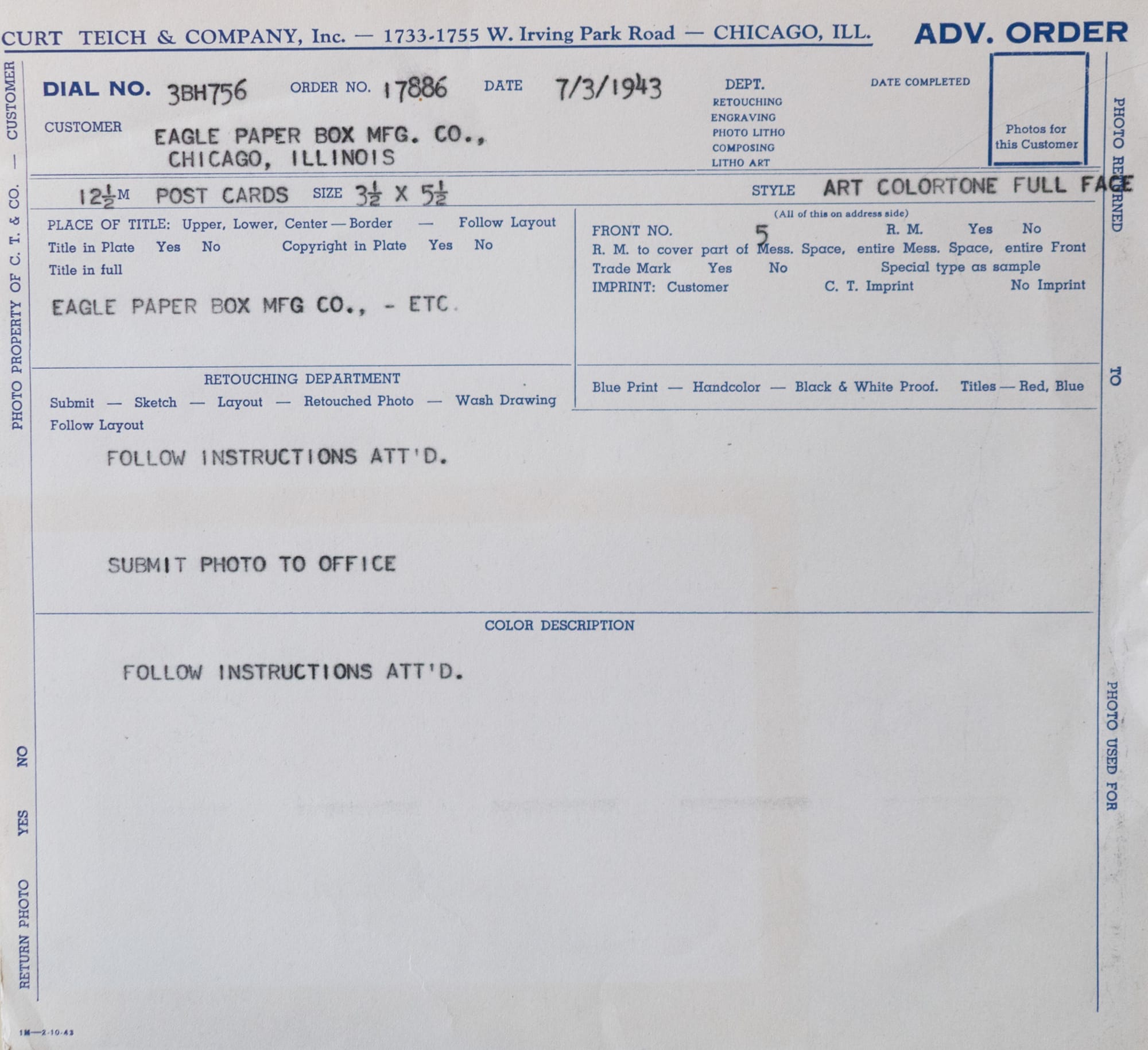
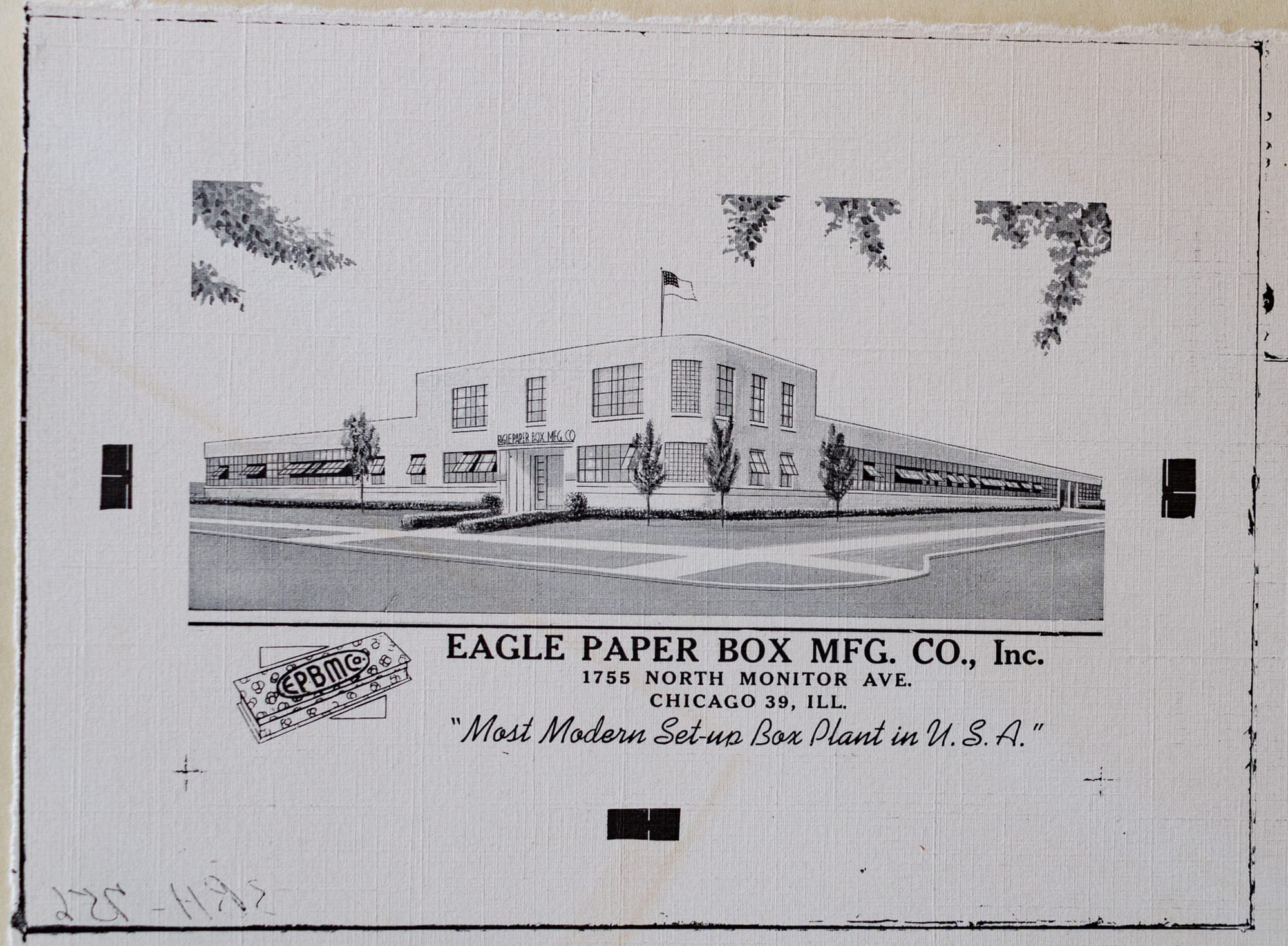
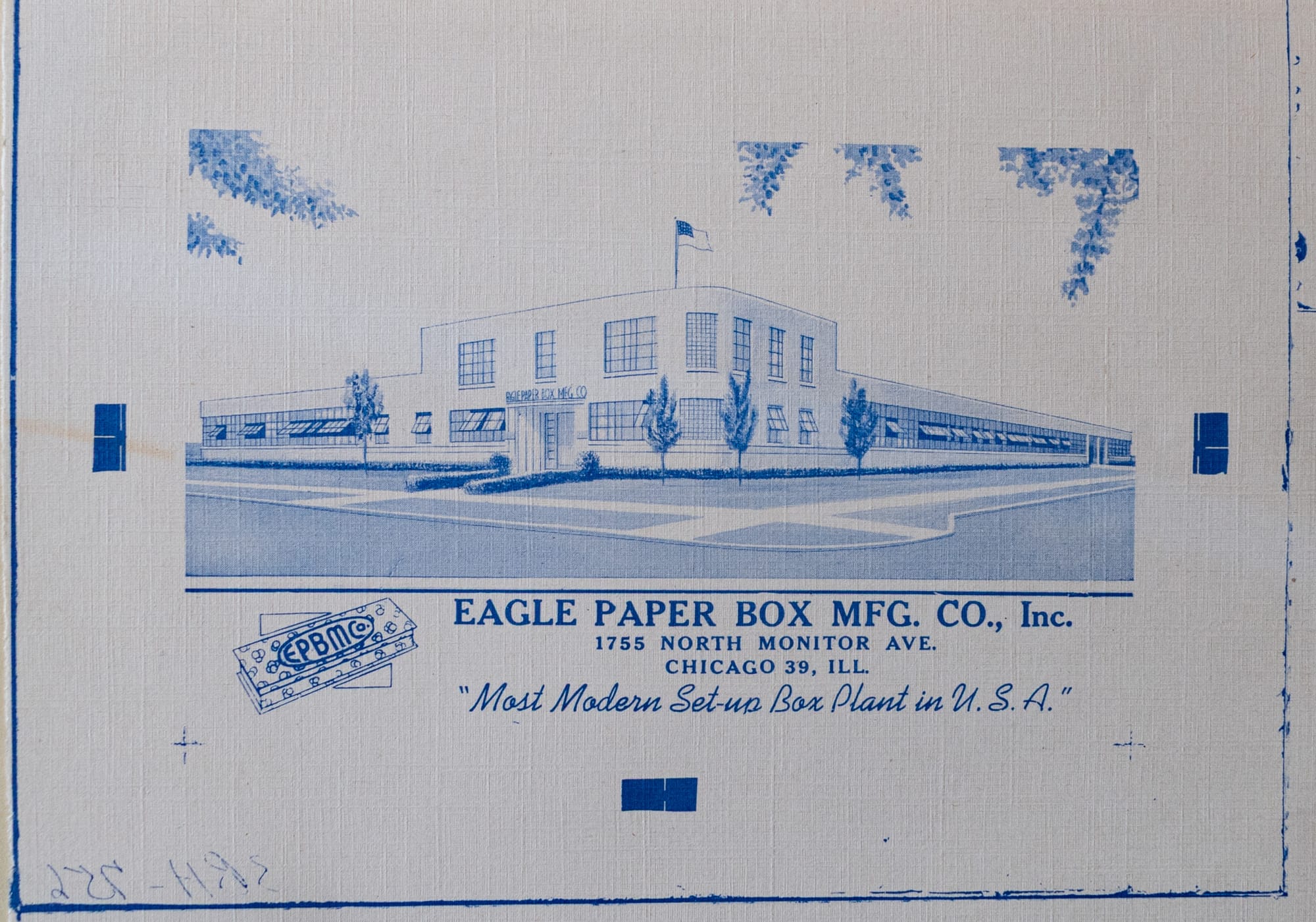
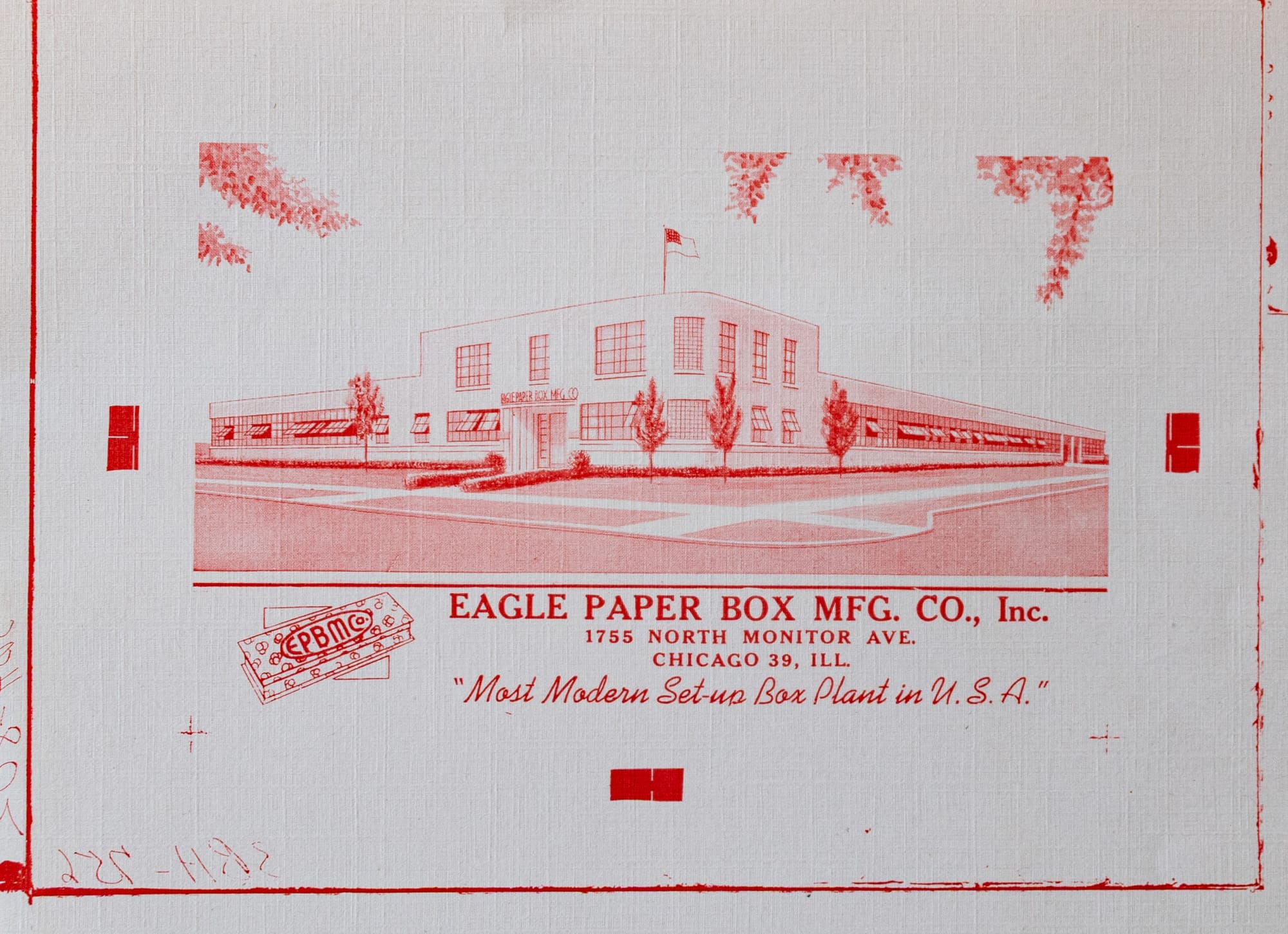
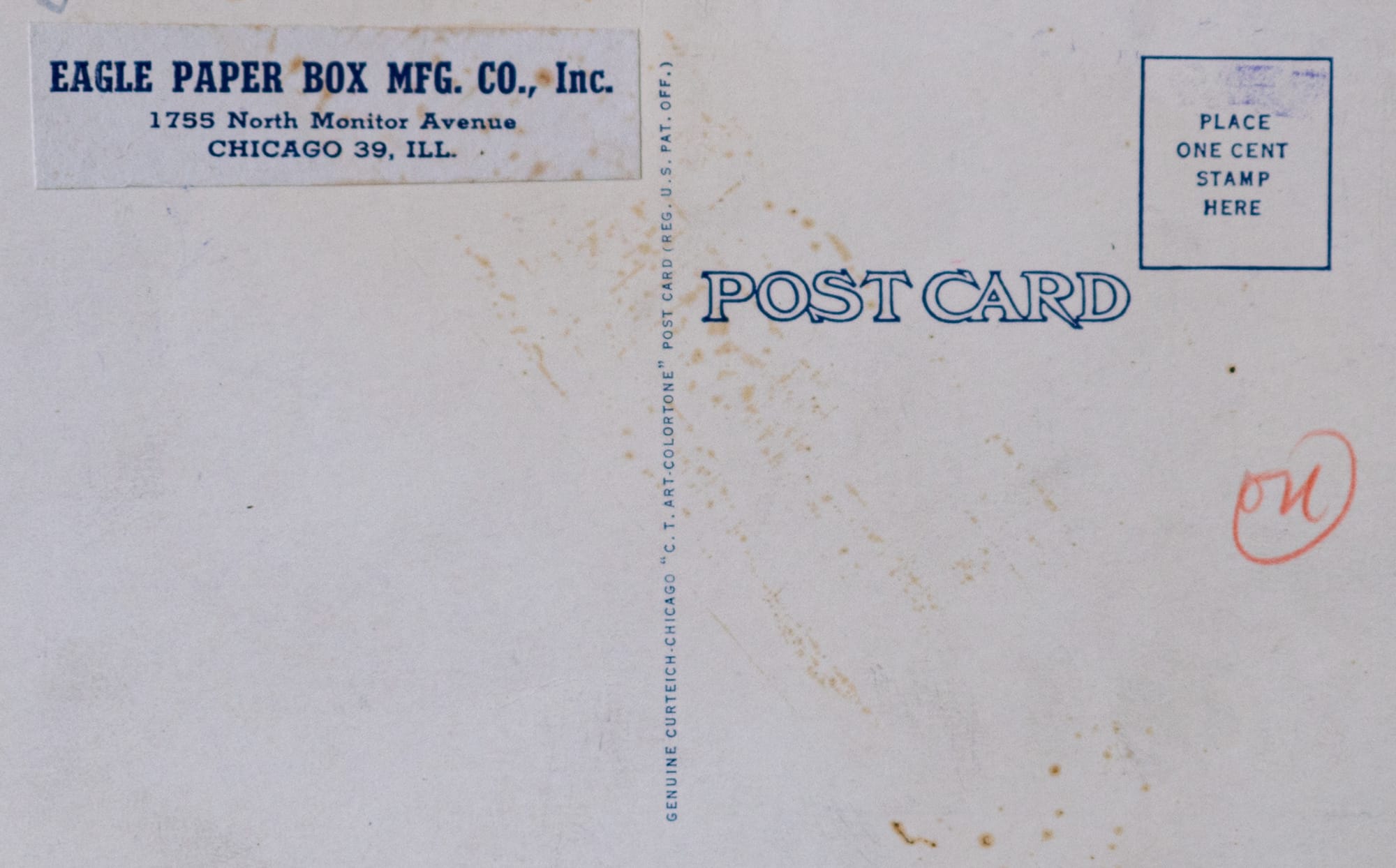
Retouched image | Negative of the retouched image | Production order | Black proof | Blue proof | Red Proof | Approved proof of the postcard verso
Other locations where the Eagle Paper Box Manufacturing Co. was located:
- 1014 W. Congress (demolished)
- 4125 W. Lake (extant)
- 820 S. Tripp (extant)
- 2315 S. Keeler (extant)
- 3021 W. Carroll (extant)
- 351 N. Pulaski (demolished)


1921 help wanted ad for the Congress location | 1926 ad for the W. Lake location | 2024 Google Streetview of the W. Lake building

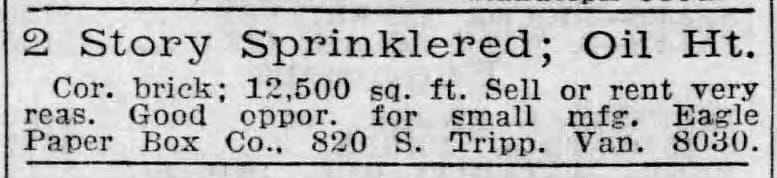
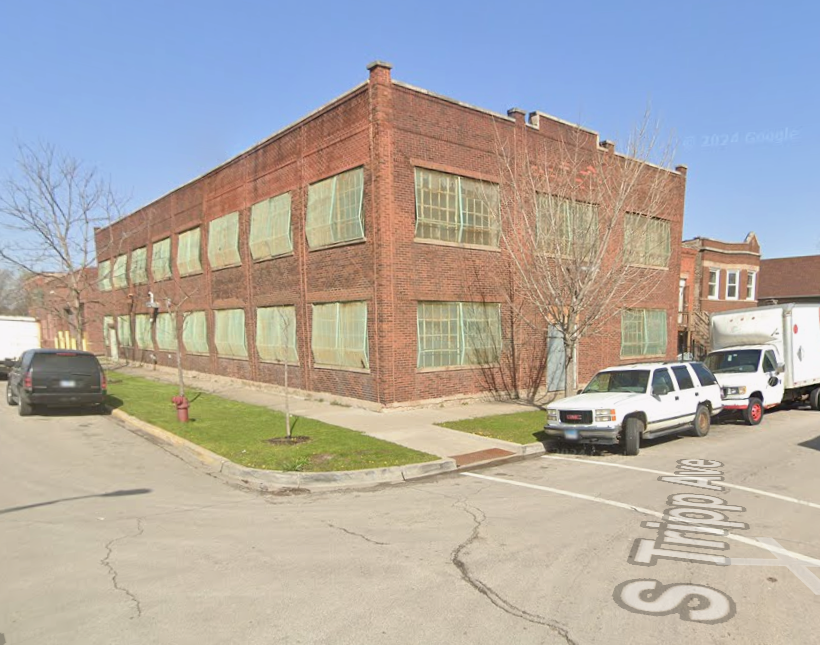
1929 help wanted ad for the S. Tripp location | 1935, Tripp plant for sale/lease | 2024 Google Streetview of the Tripp plant

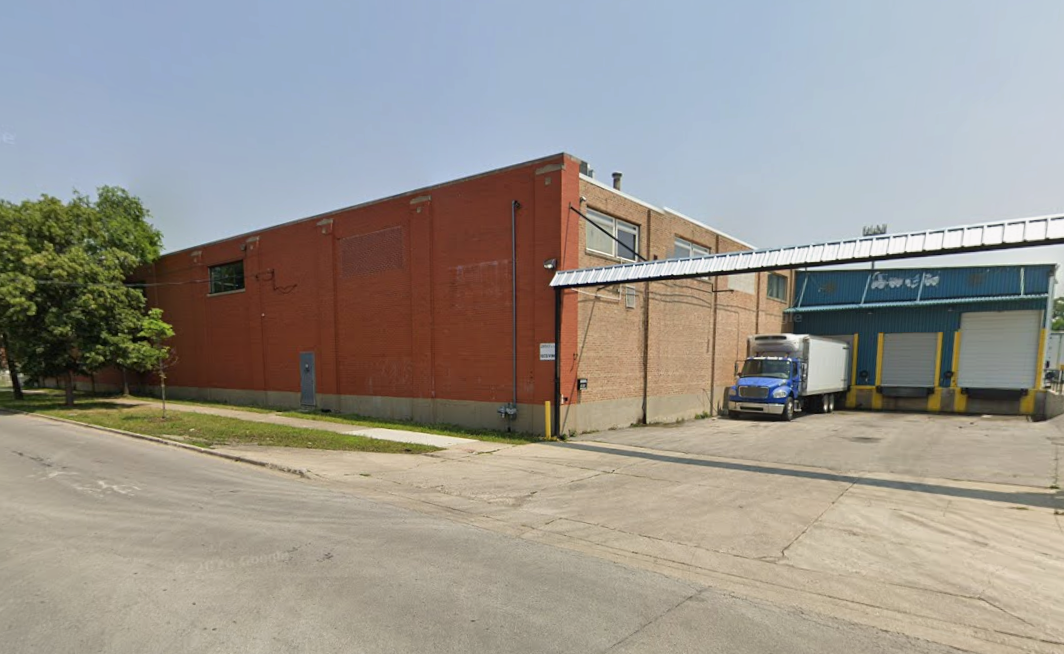
1939 ad for work at the S. Keeler location | 2024 Google Streetview of the Keeler factory
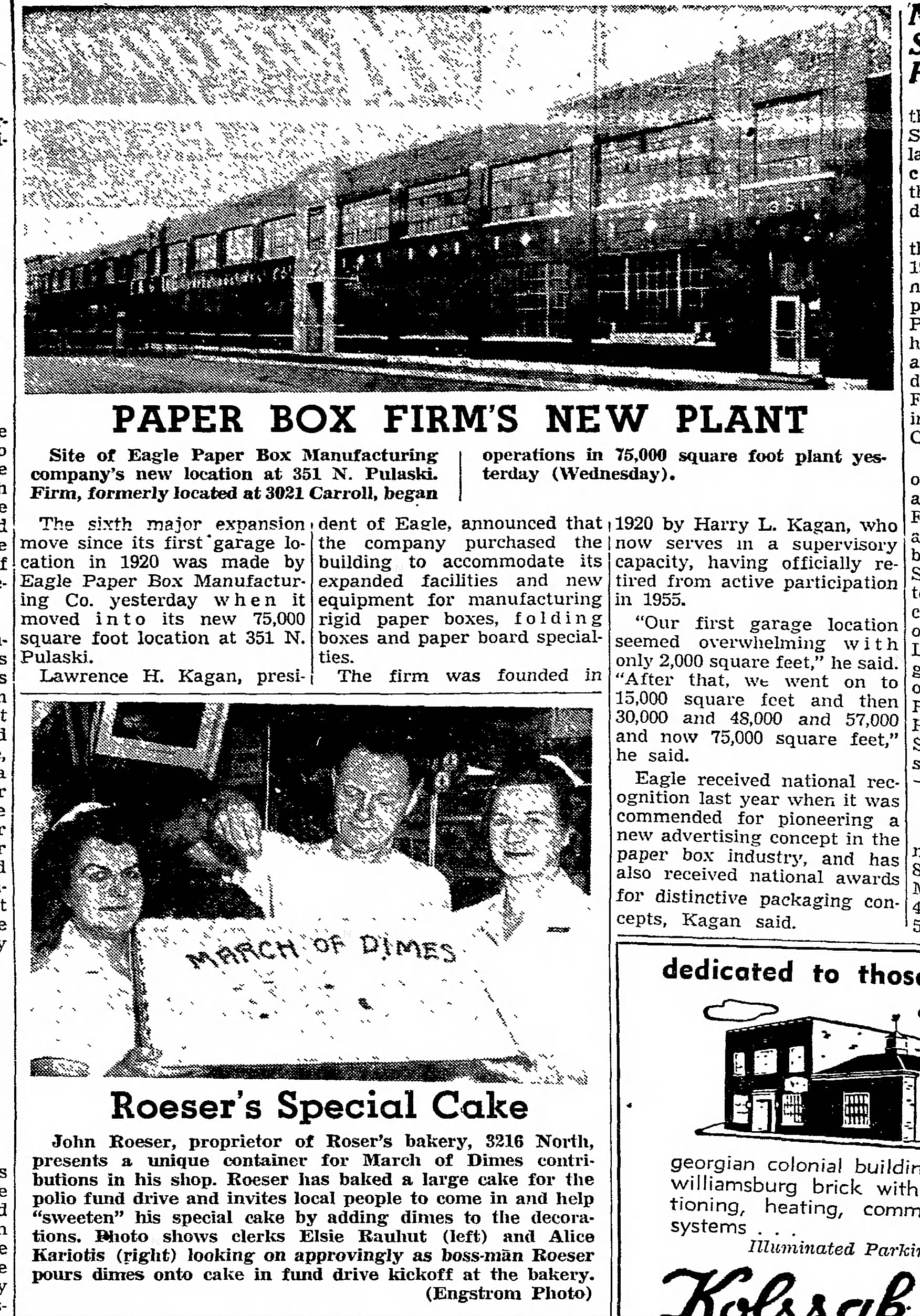
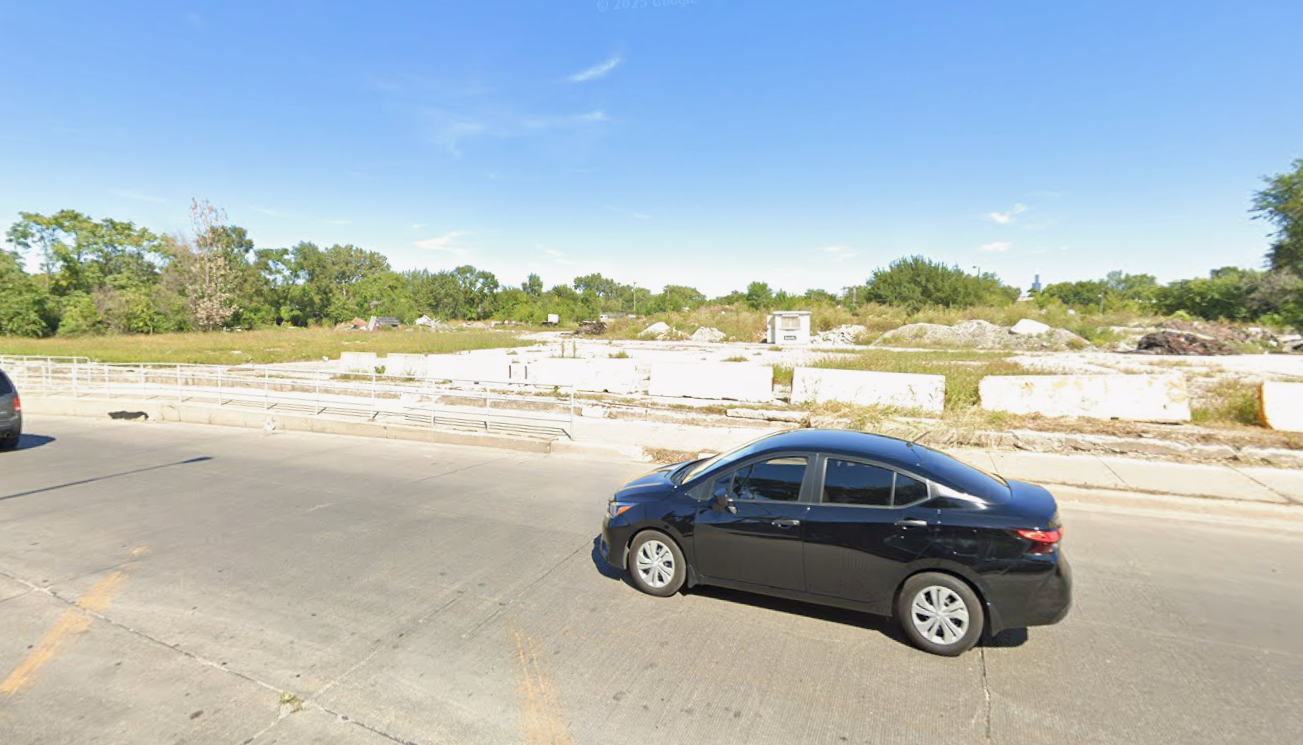
1963, moving to the factory on Pulaski | 2024 Google Streetview of the Pulaski lot today
Plus some of their help wanted ads—given how racist some of these could be, I cringed when I saw the one that said "colored" before laughing that it was basically "white or colored, we don't care".
Any guesses what the "music while you work" would've been for the girls in 1947?
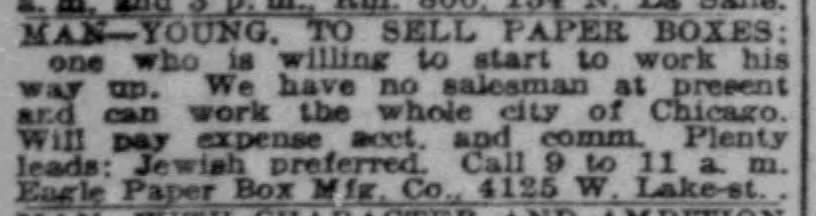


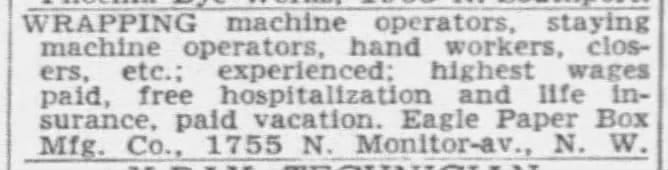
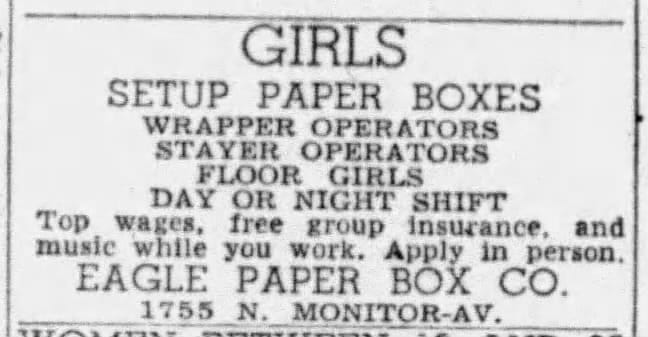
1927 ad | 1940 ad | 1943 ad | 1946 ad | 1947 ad
A bit more on the Phipps Industrial Land Trust. Their Kenwood Industrial District in Chicago was actually in Gage Park, including the massive Central Steel & Wire plant that Amazon is currently tearing down. Their Healy park was in Hermosa centered along Keeler Ave, alongside the train tracks.
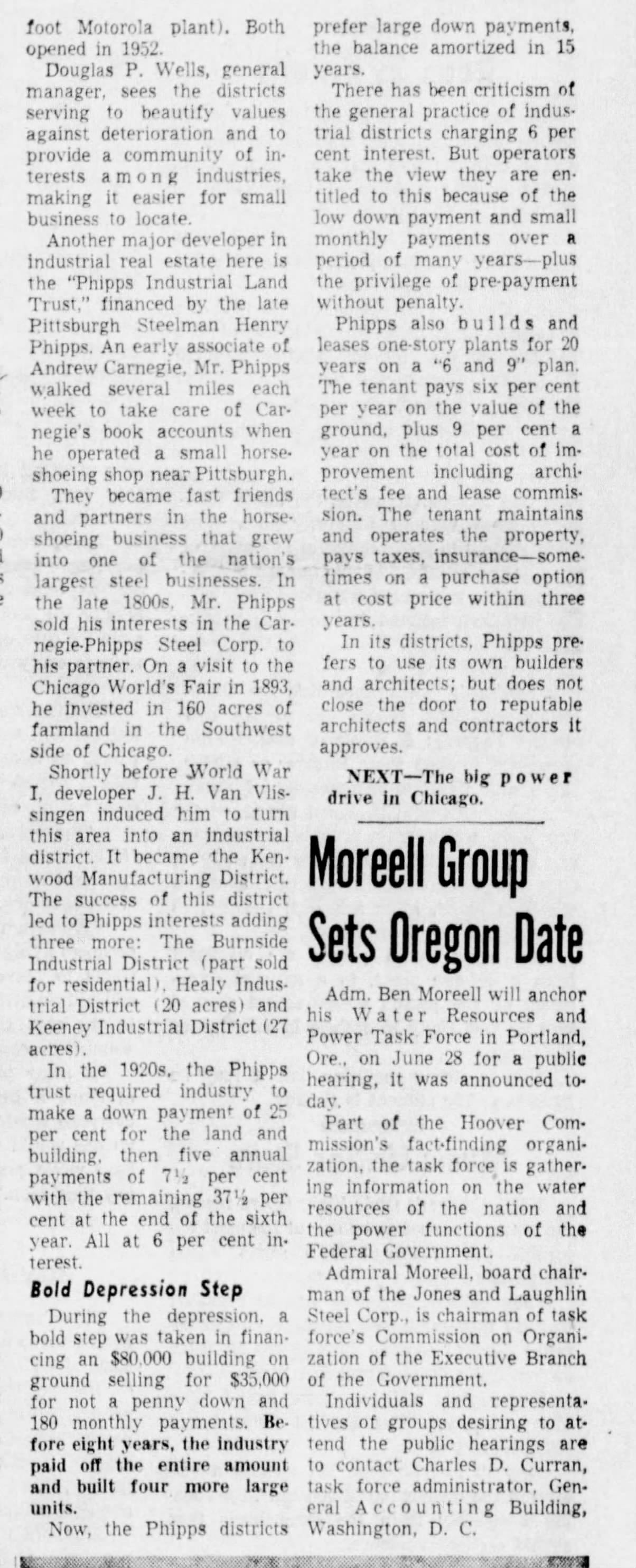
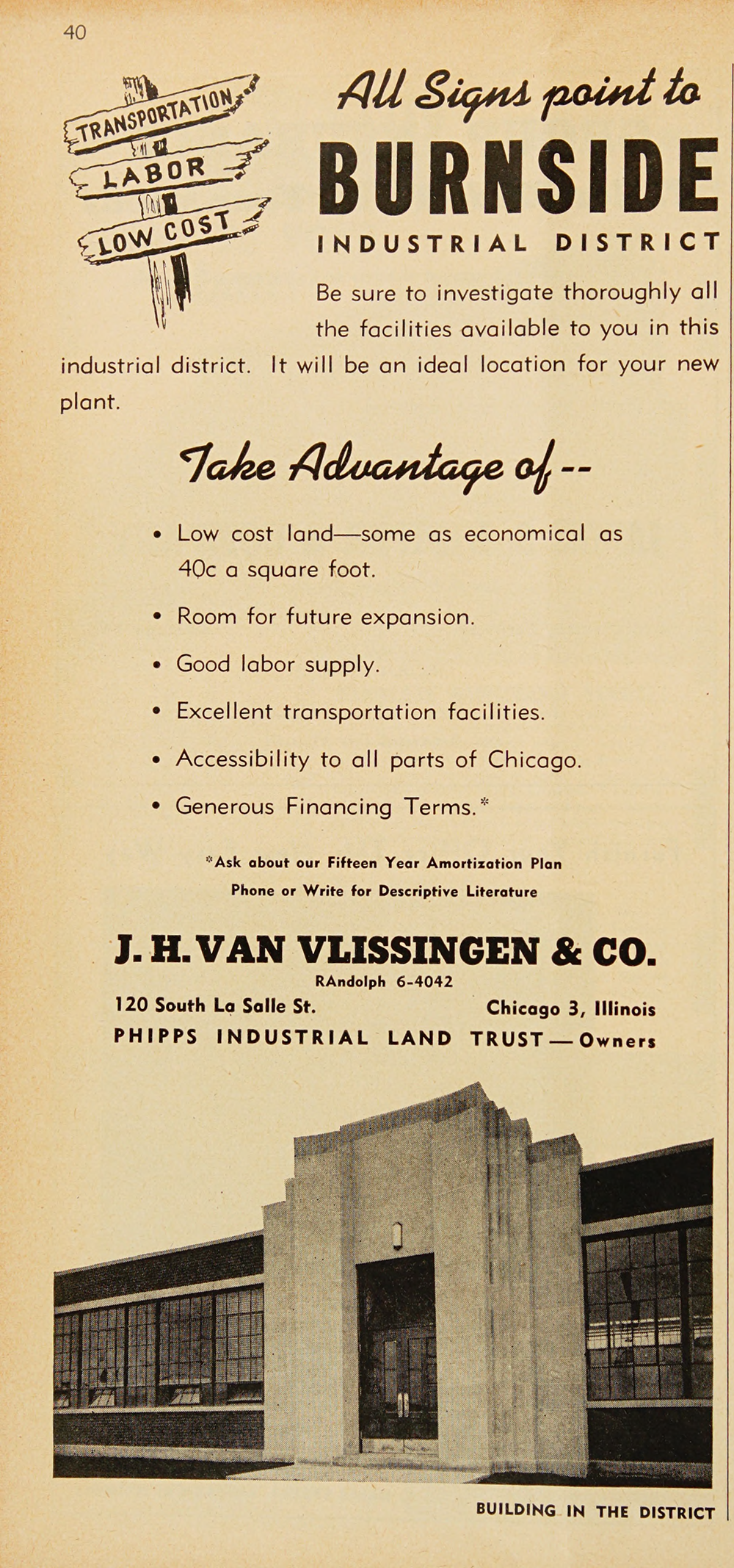
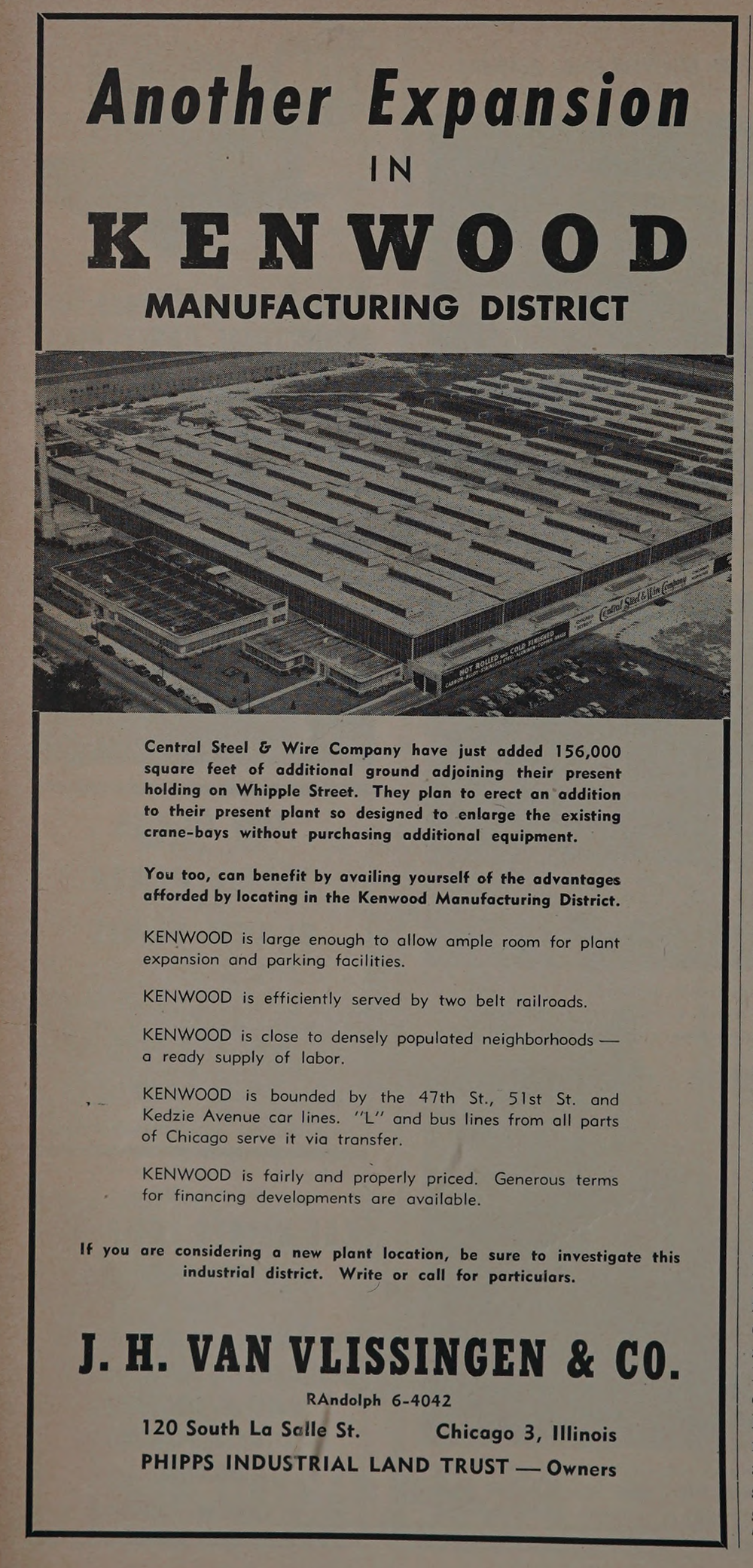
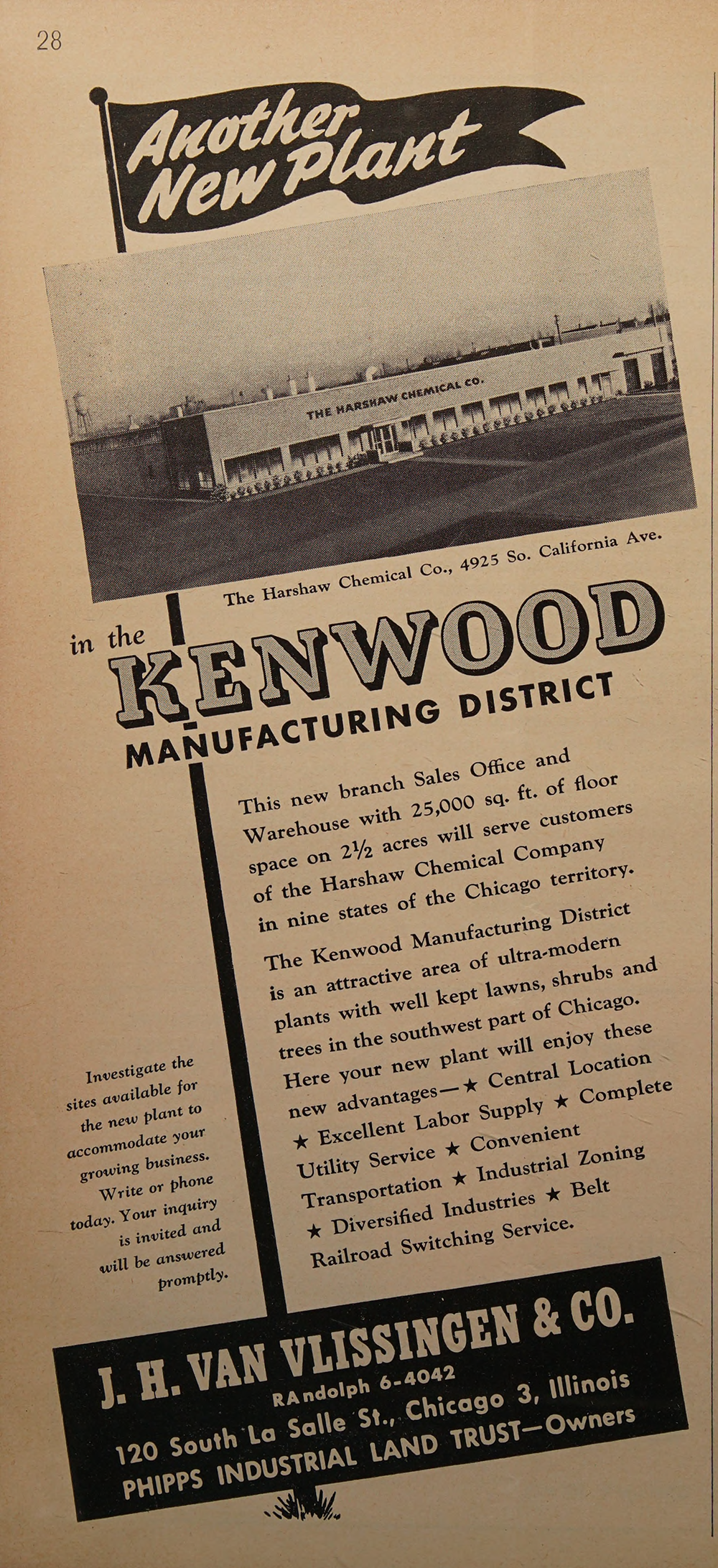
1954 article about the land trust | 1948 ad for the Burnside Industrial District, Commerce, the Internet Archive | 1953, Commerce, the Internet Archive | 1956, Commerce, the Internet Archive
Other tenants at the Keeney Industrial District included Tuttle & Kift and Armstrong-Blum.
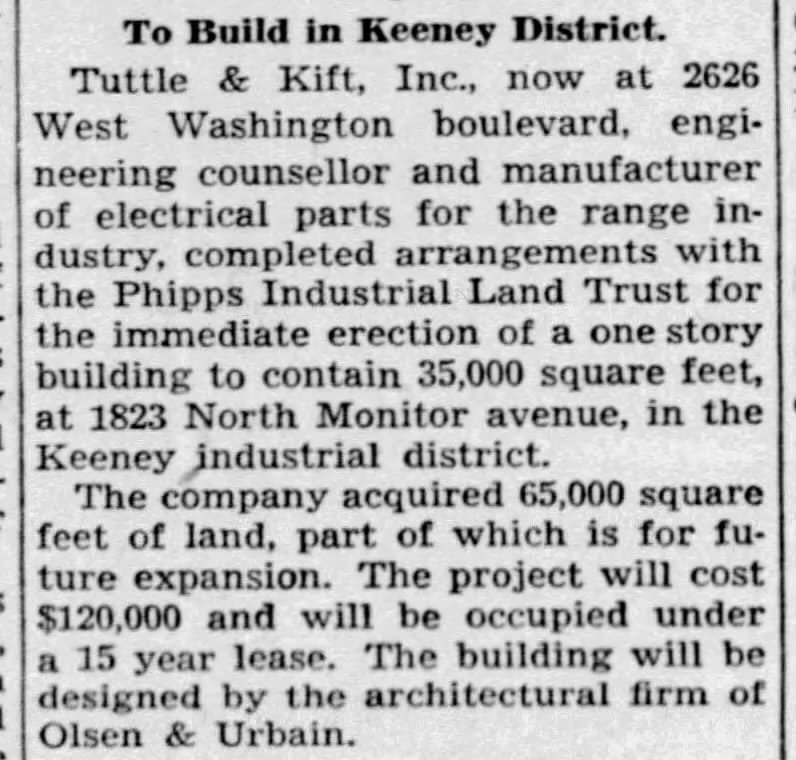
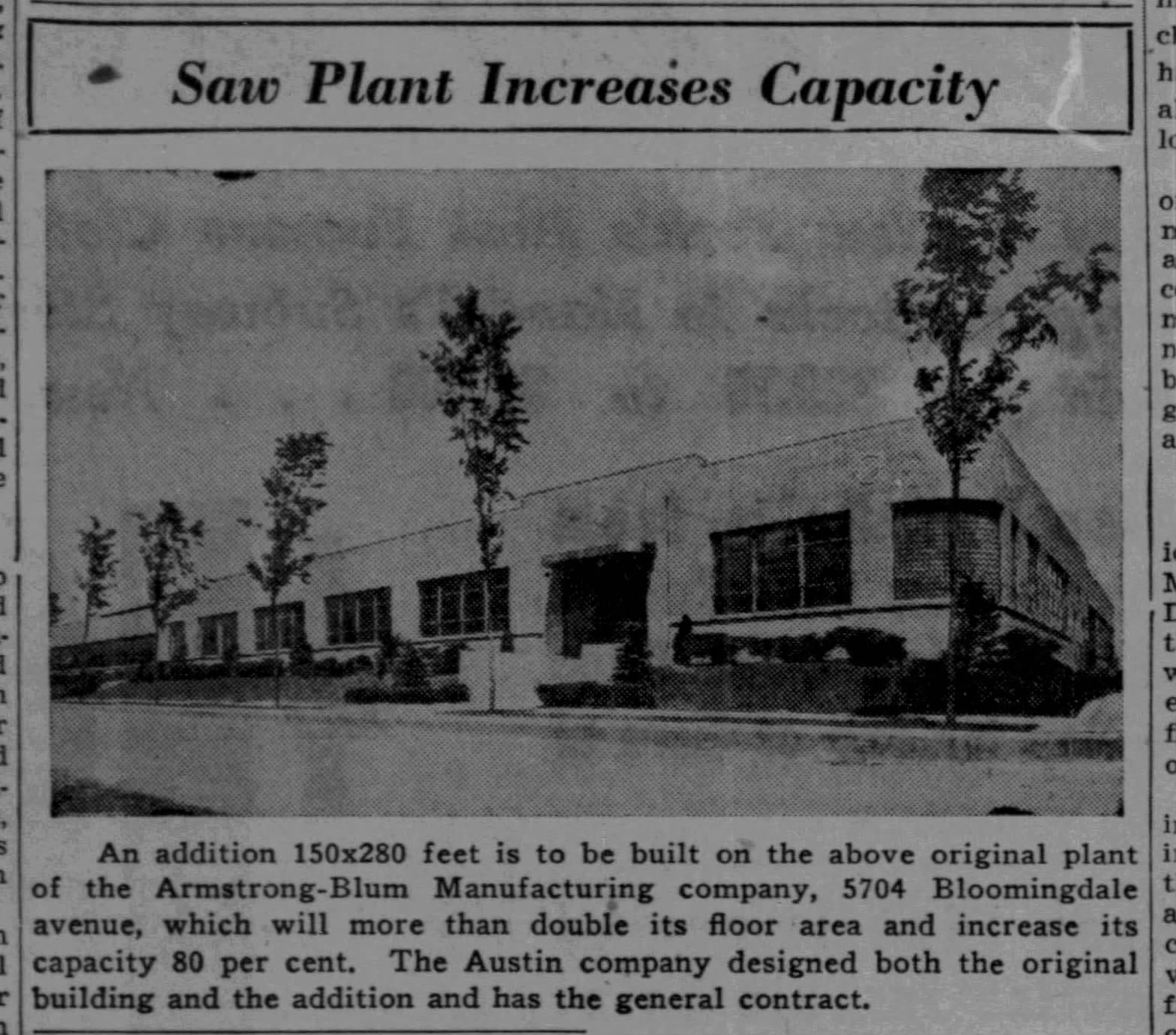
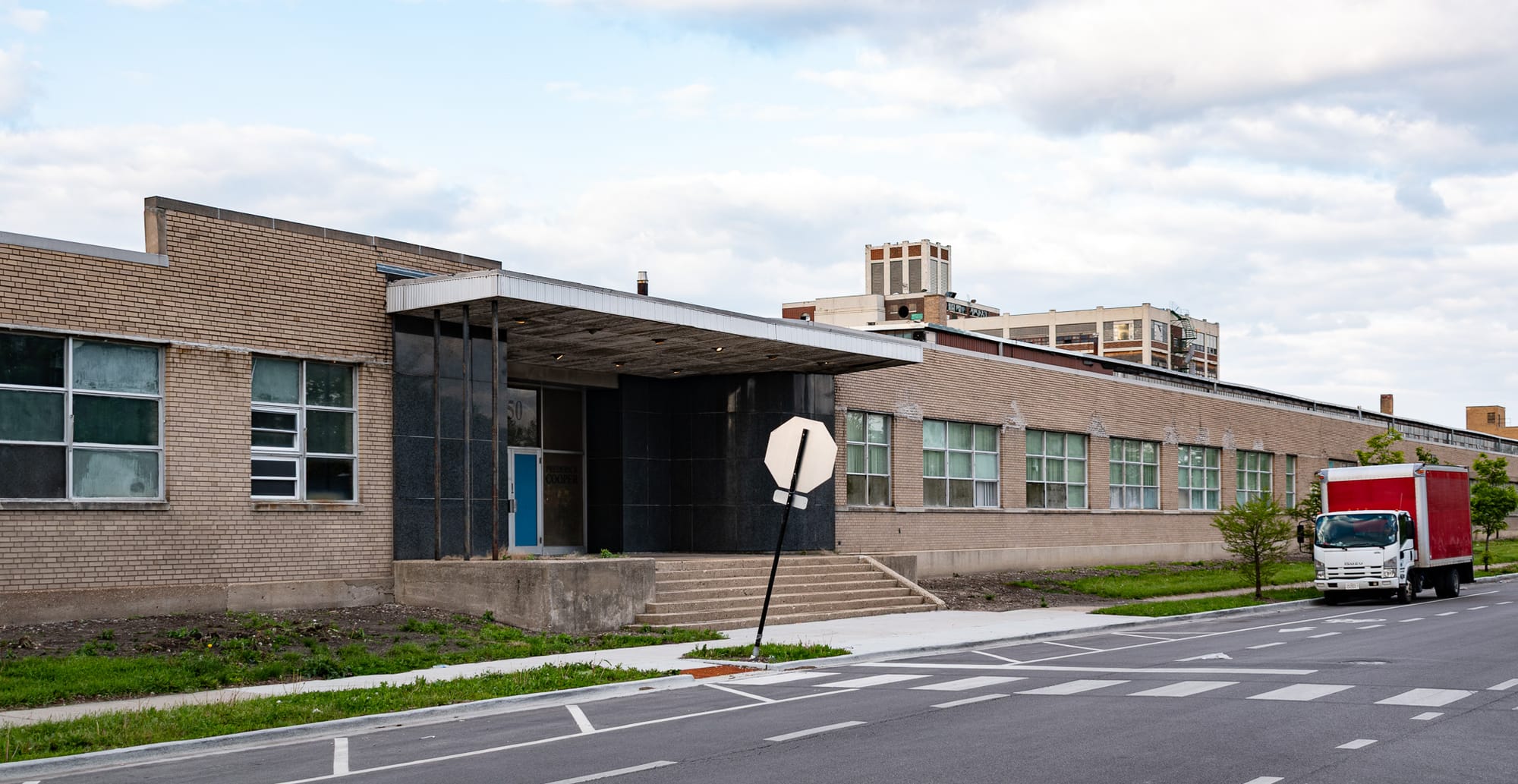
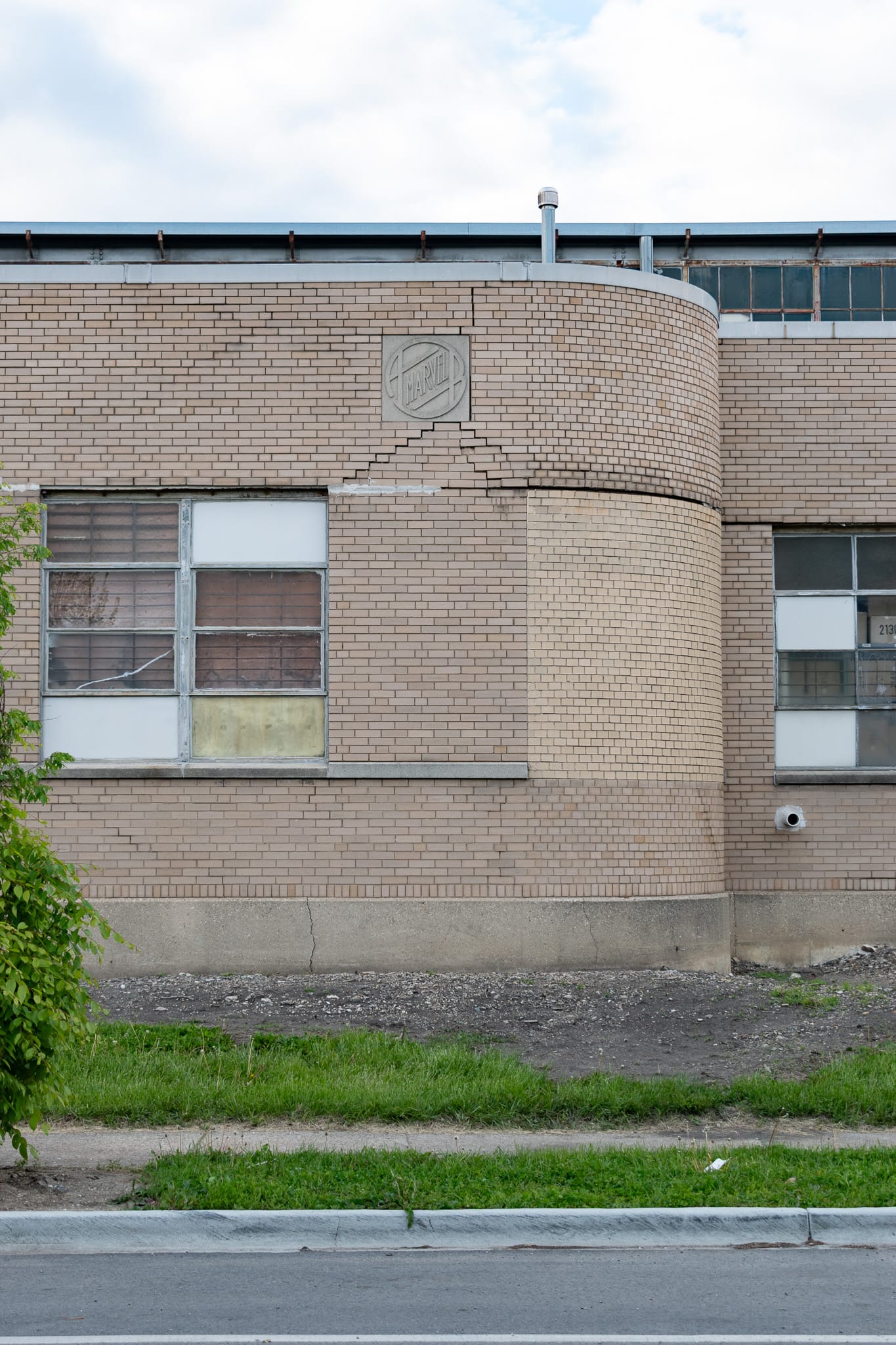
1941, Tuttle & Kift to build | 1940, Armstrong-Blum to expand | 2026 photos of the Armstrong-Blum plant including an emblem with Marvel branding
The former Tuttle & Kift building burned in 2002.
The architect here, Carroll F. Morrison, was really quite obscure, but he did do a factory on the south side and at least wrote about housing.
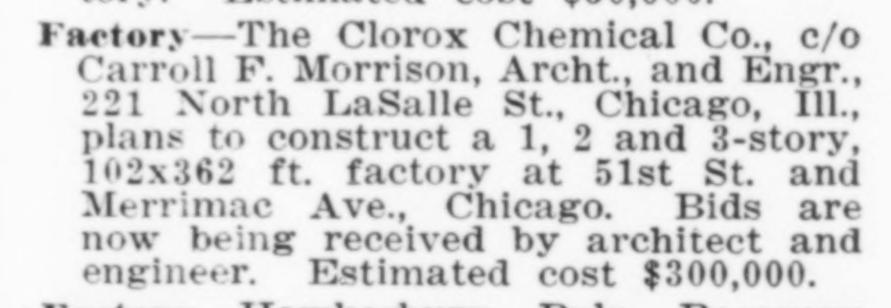
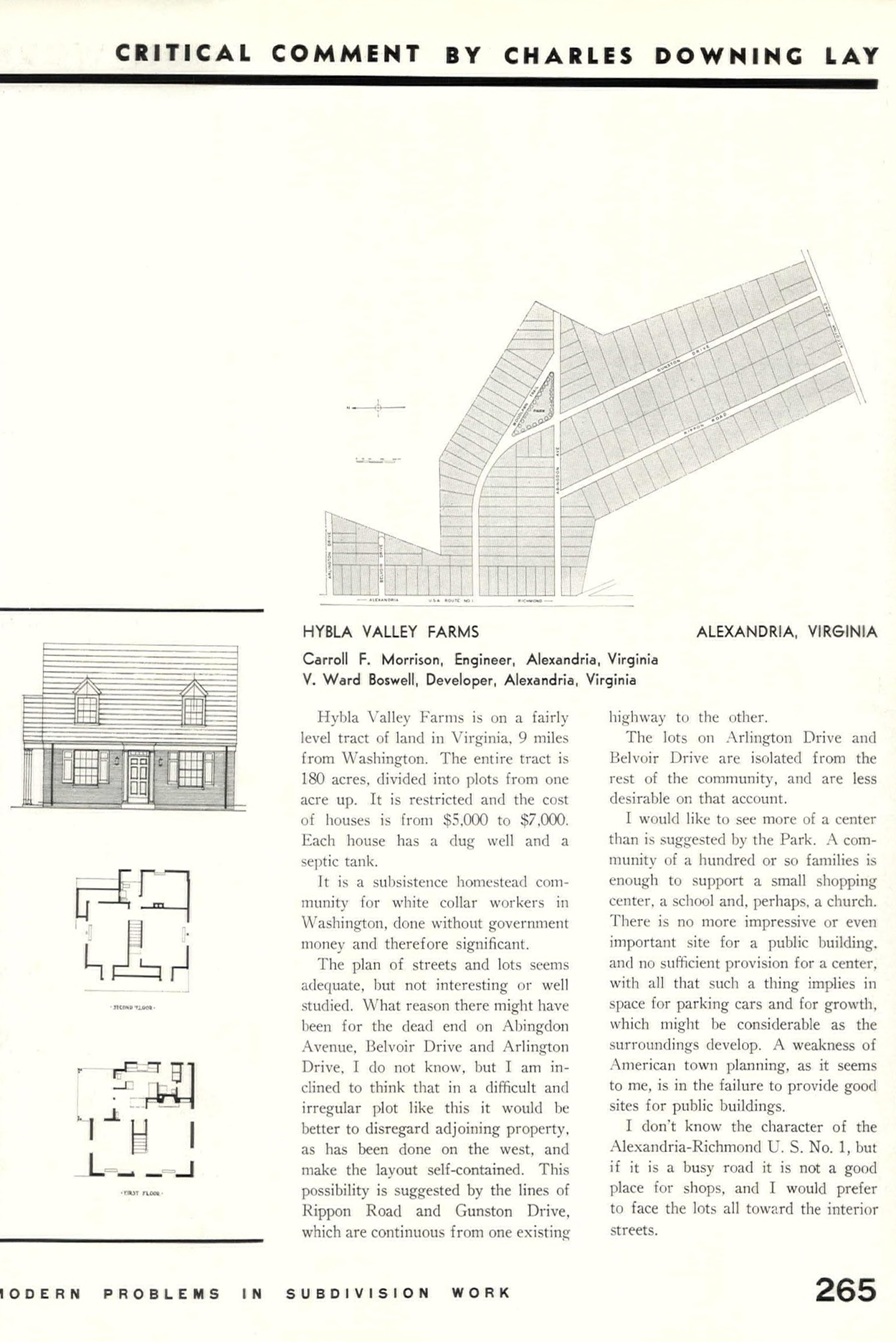
1938 building permit | Virginia subdivision, 1936, Architectural Record
The Eagle Paper Box Manufacturing Co. advertising budget ran the gamut from the Sentinel, a Chicago Jewish newspaper, to promotional paperweights.
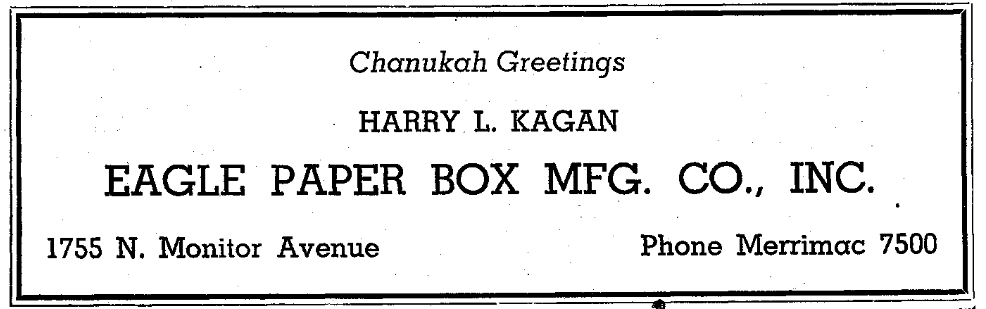
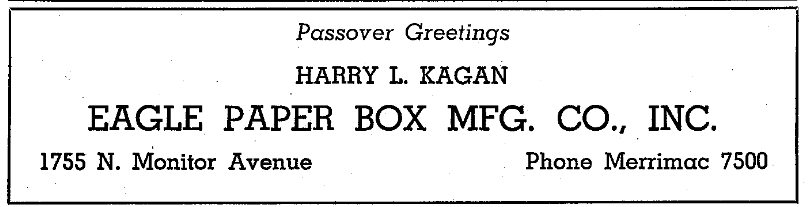
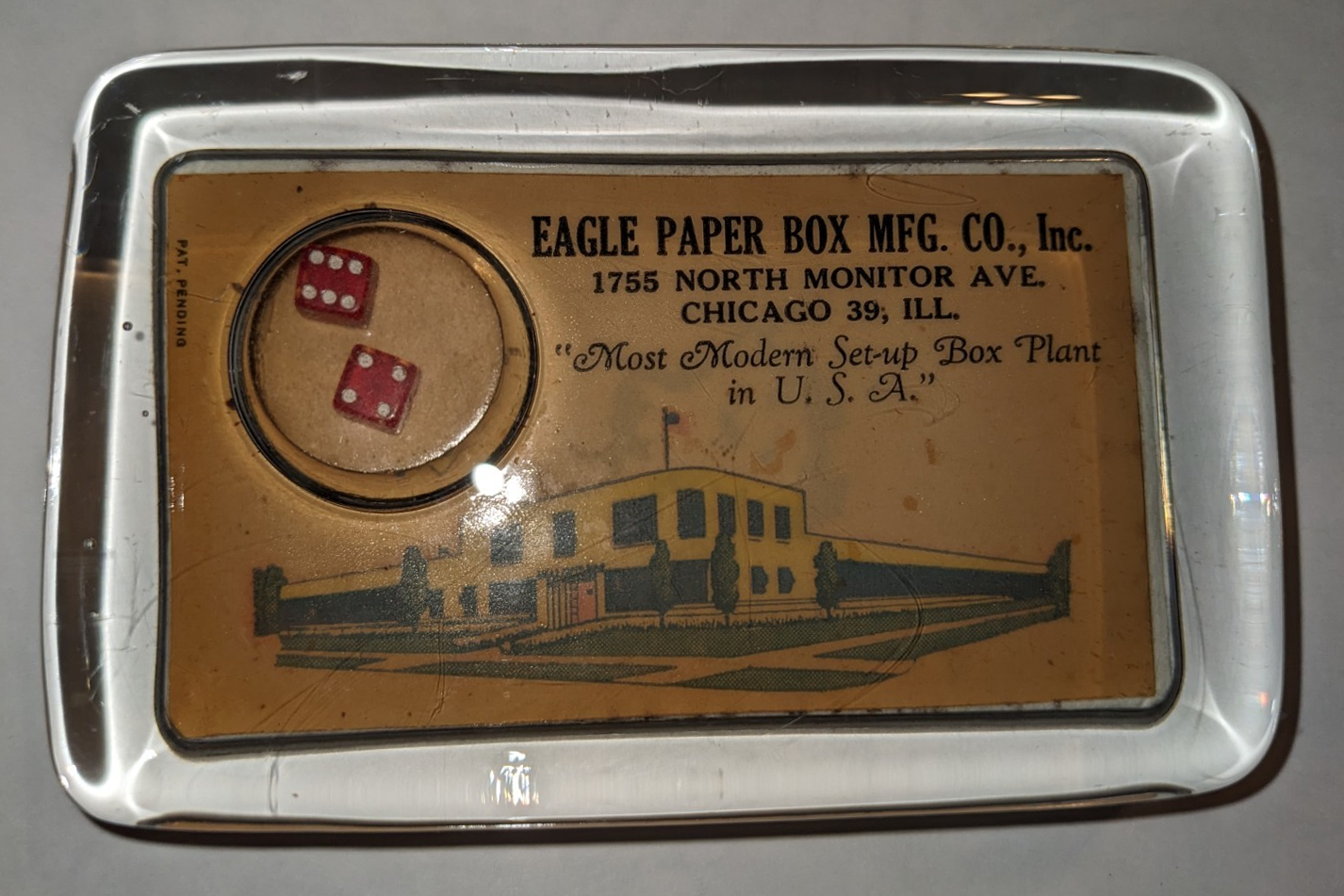
1944, Hanukah Greetings in the Sentinel, Illinois Digital Archives | 1945, Passover Greetings in the Sentinel, Illinois Digital Archives | paperweight
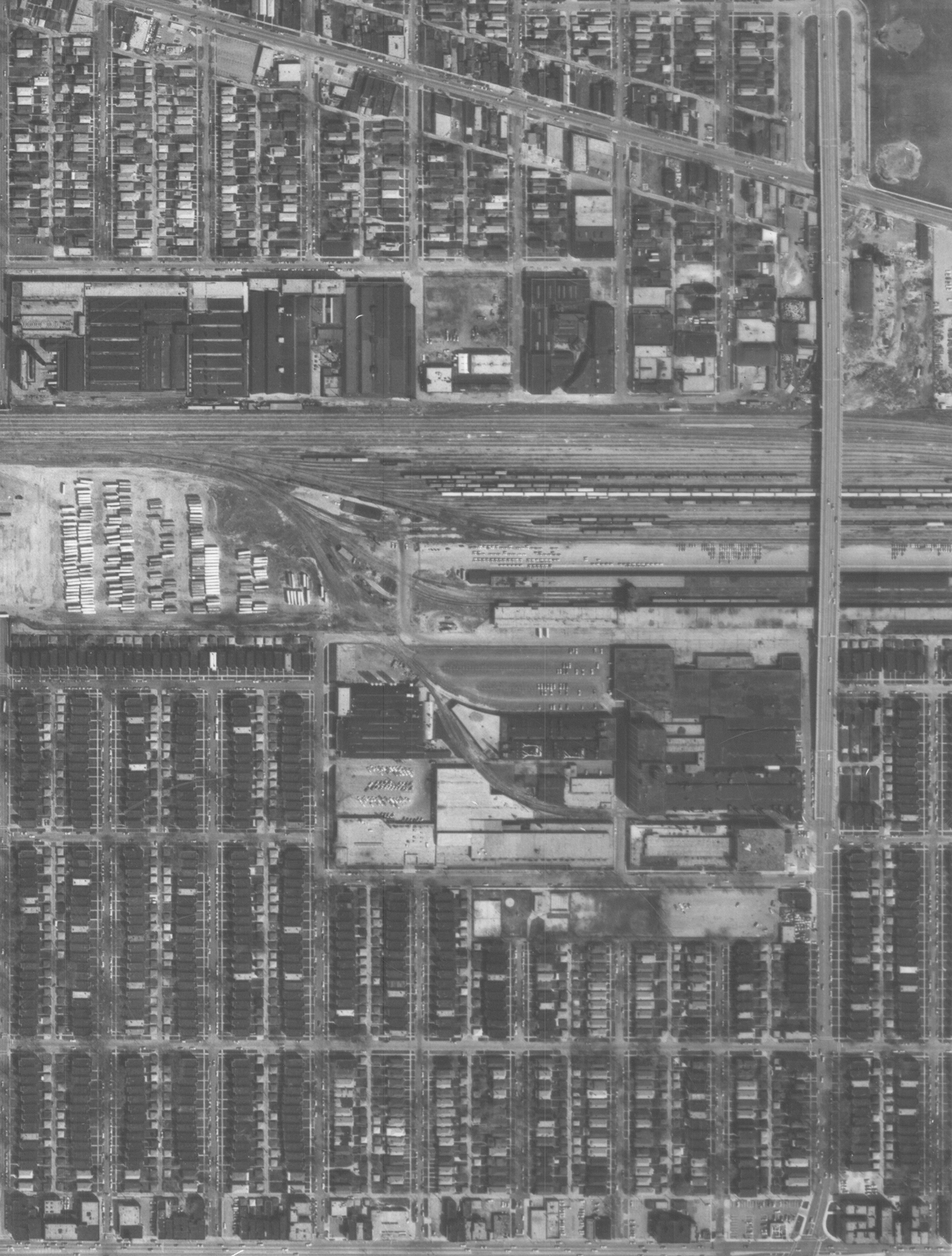
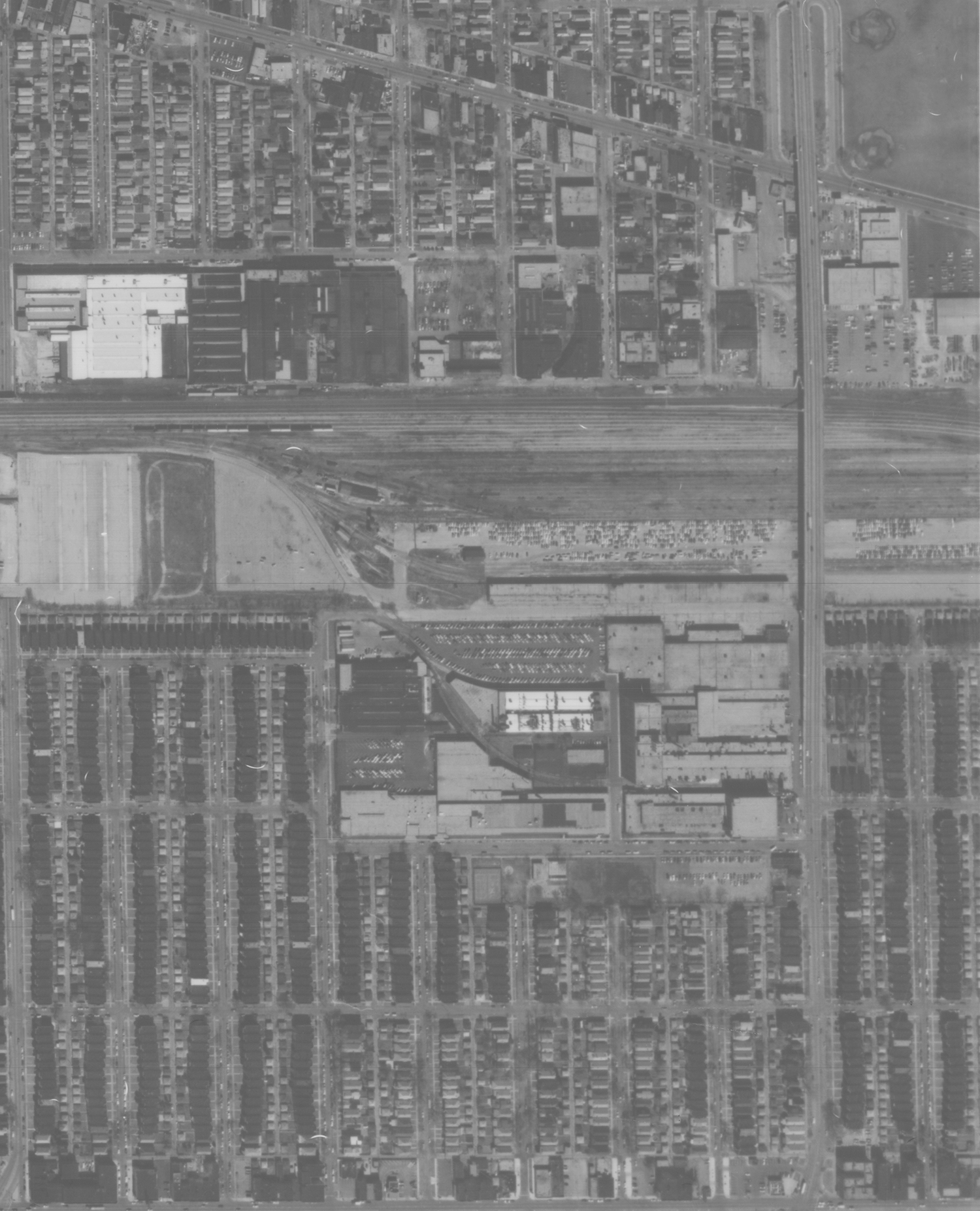
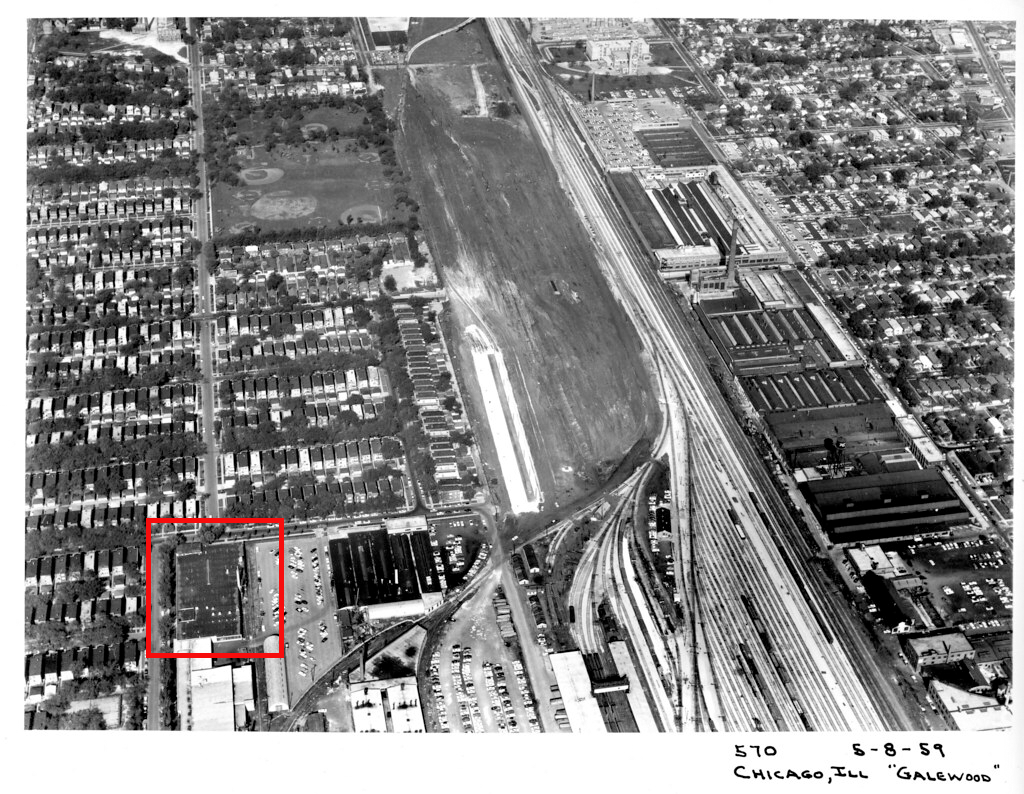
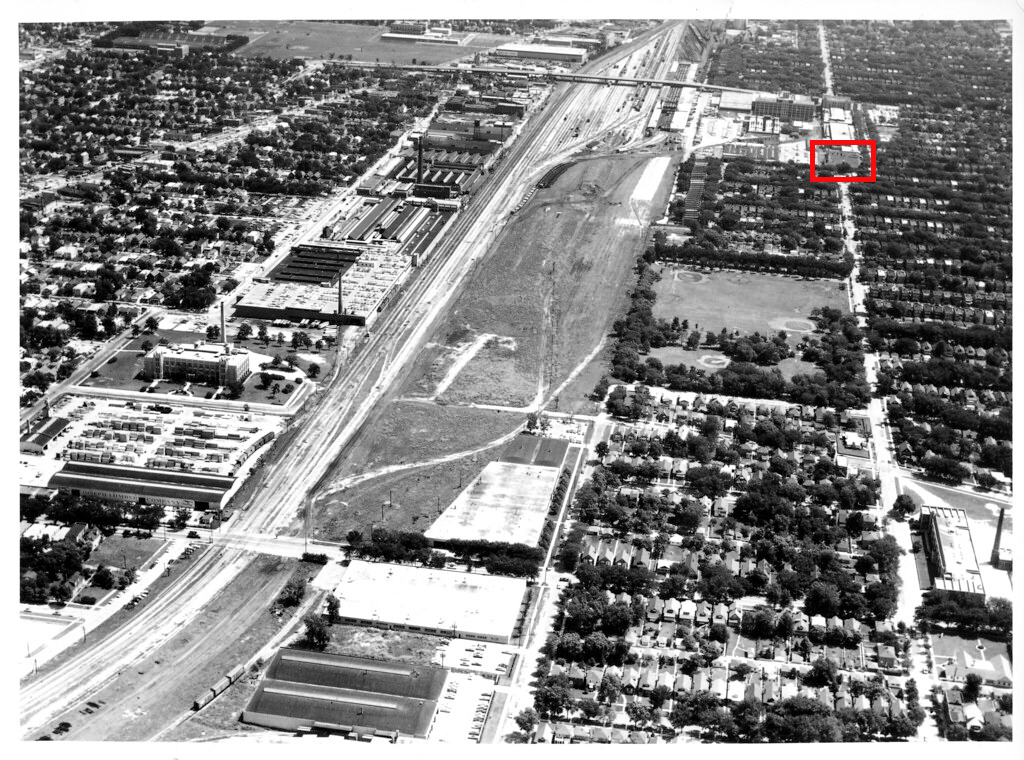
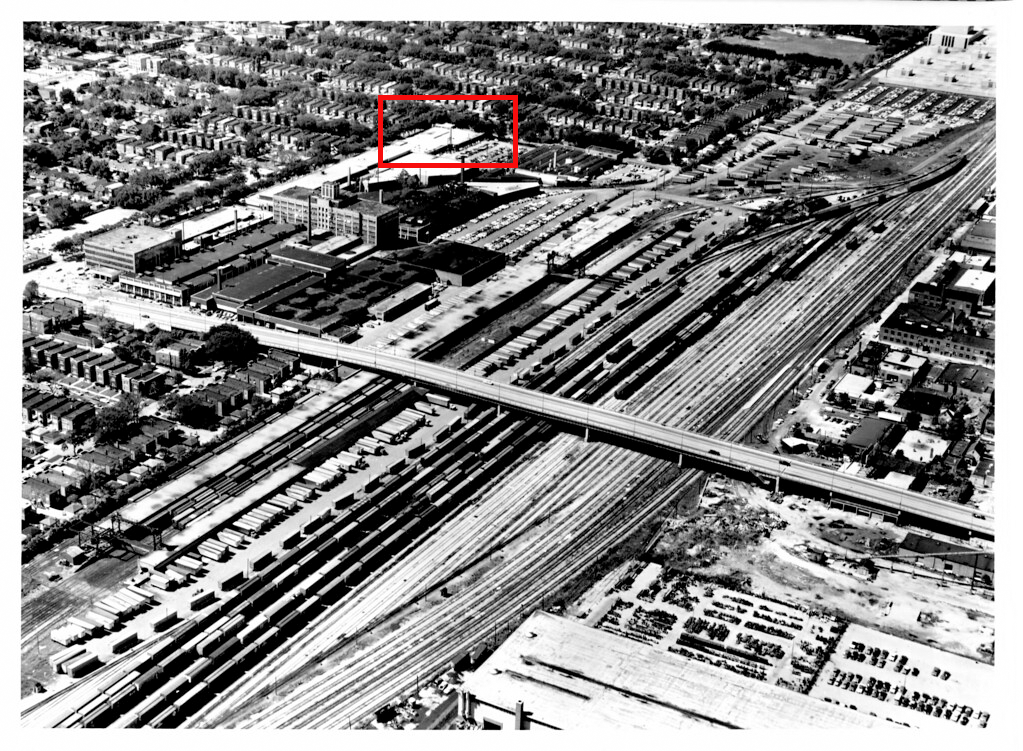
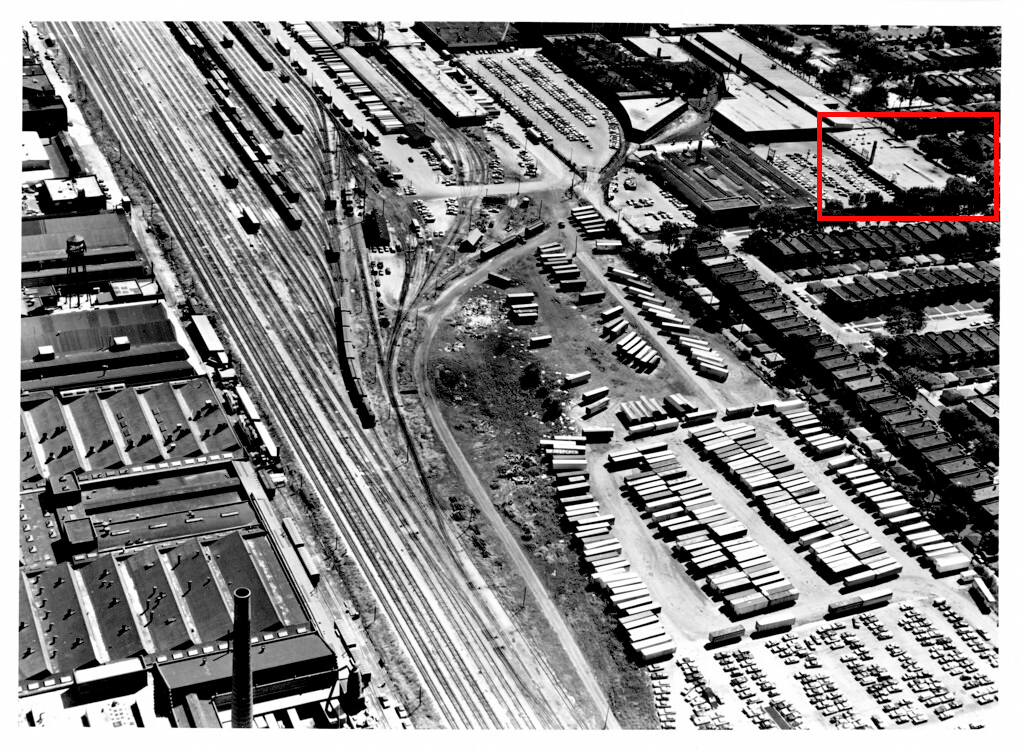
1975, 1985, and 1995 aerials, Chicago Metropolitan Agency for Planning | 1959, John W. Barriger III National Railroad Library | 1960, John W. Barriger III National Railroad Library | 1973, John W. Barriger III National Railroad Library | 1973, John W. Barriger III National Railroad Library
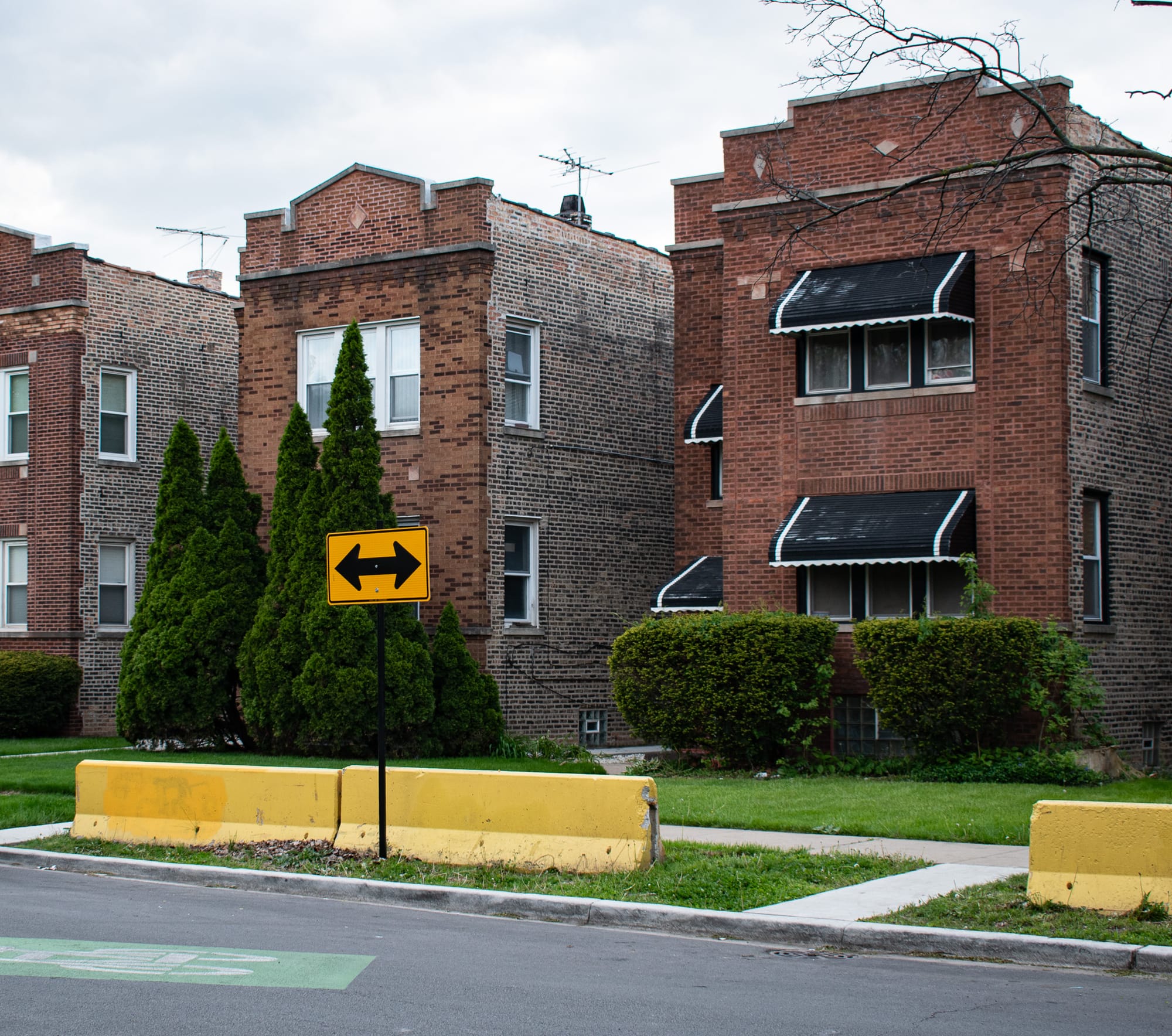
Here's where I took the photo from.
Member discussion: