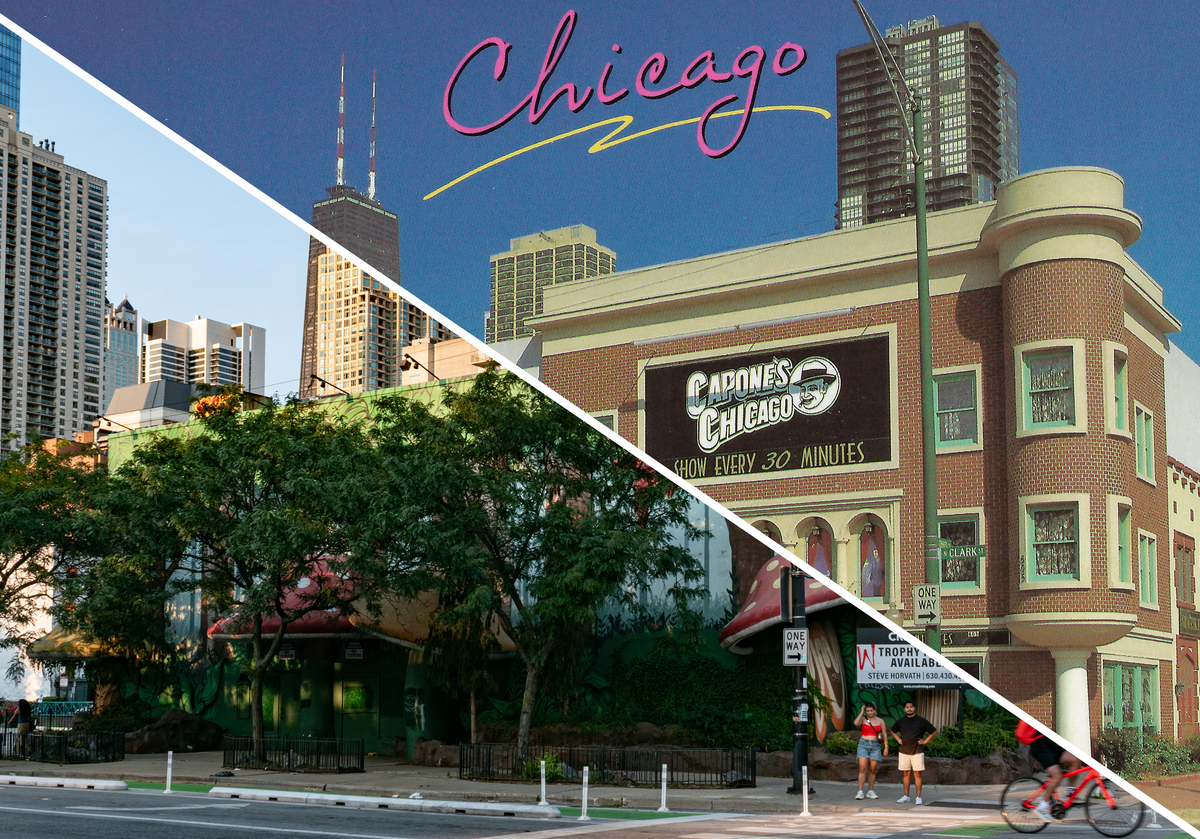
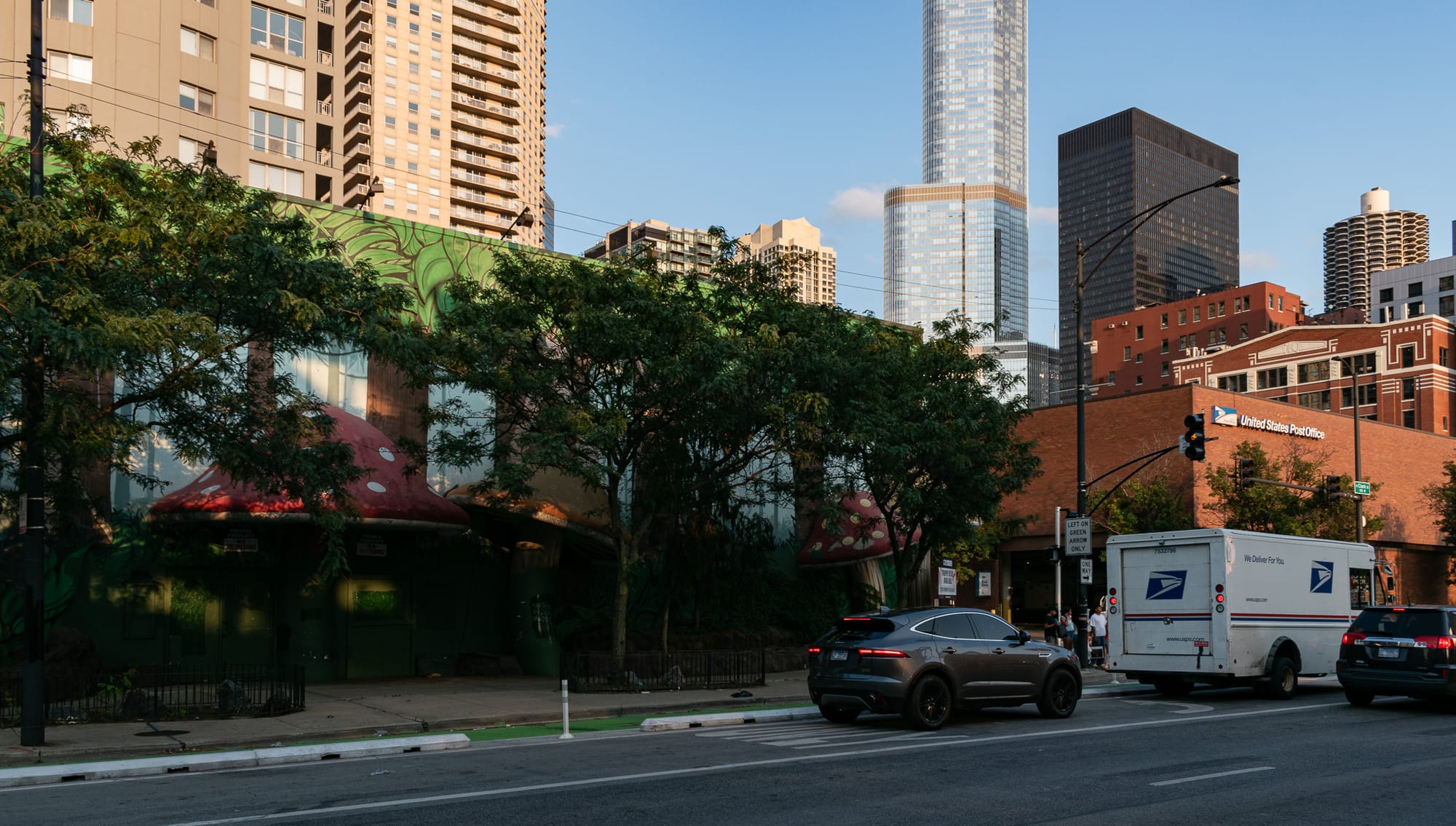
Somehow the Rainforest Cafe might be the least schlocky concept to occupy this building.
Built in 1993 and designed by Summerdale Architects, Capone’s Chicago opened as this part of River North degenerated into a Disneyfied eatertainment district alongside the Hard Rock Cafe, Planet Hollywood, and the Rock and Roll McDonald’s. Headlined by a 30-minute animatronic show on the history of Prohibition coupled with a small museum, there wasn’t much public appetite for Chuck E. Capone and it closed after three years. Chicago’s lame and embarrassing Capone Industrial Complex was running out of steam even then.
After a $14m renovation, the Rainforest Cafe hung out their giant green tree frog and opened here in 1997. In 2020, with their lease ending soon anyway, the COVID pandemic pushed the chain to close the restaurant early. Stuck in foreclosure and leasing purgatory, the building has sat vacant since then.
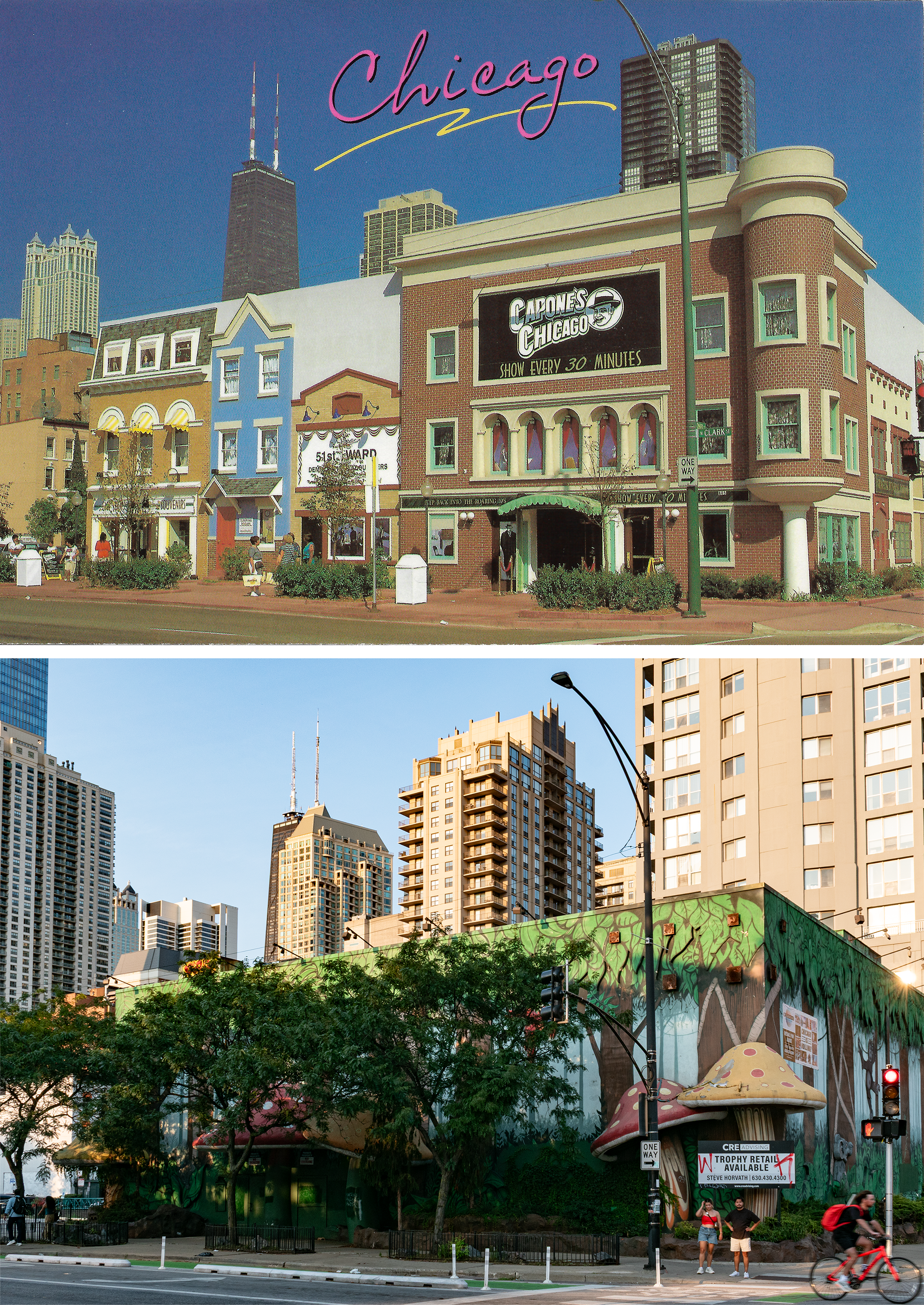
So, what’s changed?
- Capone’s shitty foam “Main Street USA” facade came down when the theme switched. Crazy to say it, but I think the Rainforest Cafe facade might’ve been an improvement? It’s goofier, but less uncanny.
- River North beige was a meme before the Great Recession for a reason—look at how many 20-50 story residential towers sprouted over here! They might not be inspiring, but they did create a whole lot of homes.
- We love a new protected bike lane.
- Why is the Hancock Building’s antenna asymmetric these days?
In 1964 a fire gutted the neglected building that stood at the northeast corner of Clark and Ohio. Like much of River North, this lot festered as a surface parking lot for decades, until Patricia and James McHugh (yes, those McHughs—like the construction company) teamed up with Capone collector Michael Graham in 1992 to lease the land and add another cheesy tourist attraction to this part of River North. Pumping nearly $4m into the project, they hired Summerdale Architects to design the building, basically a warehouse with a cartoonish foam facade.
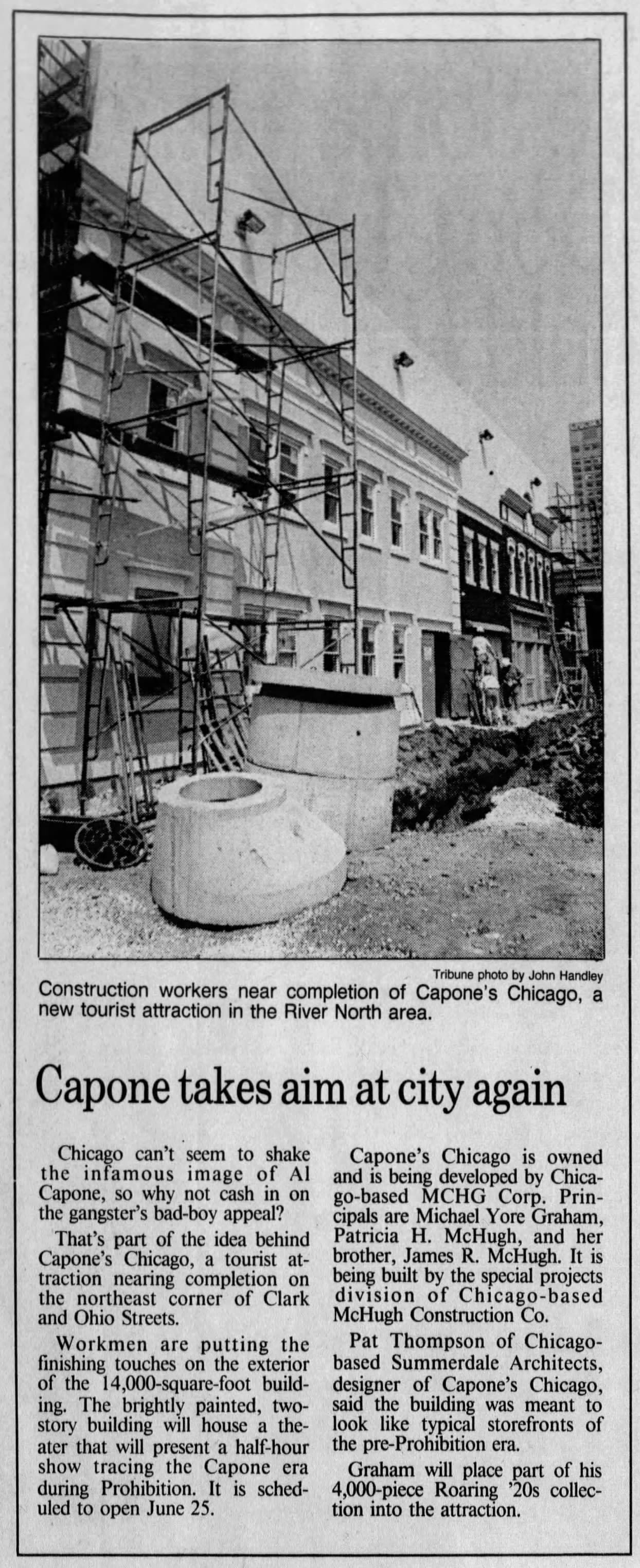
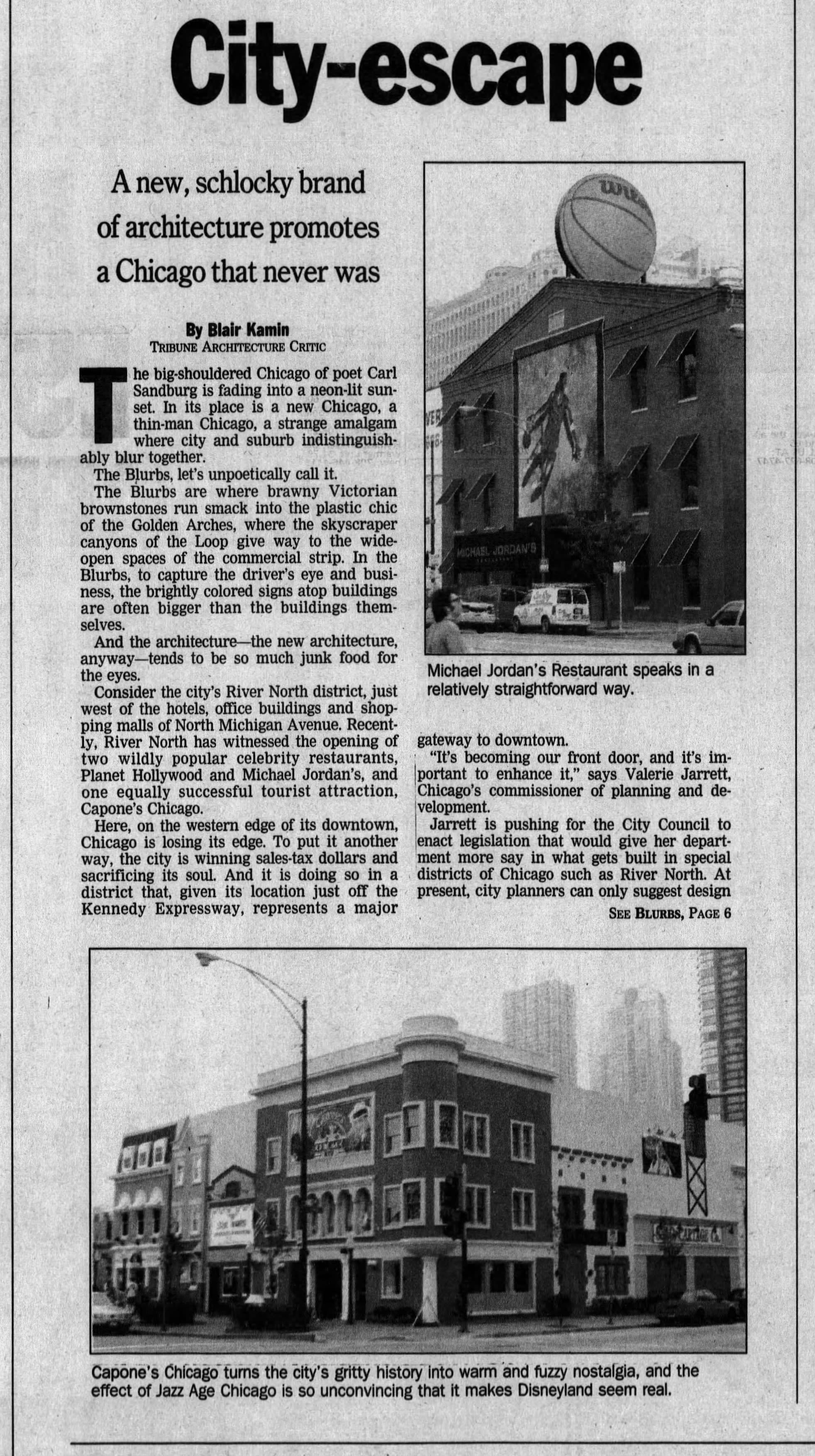
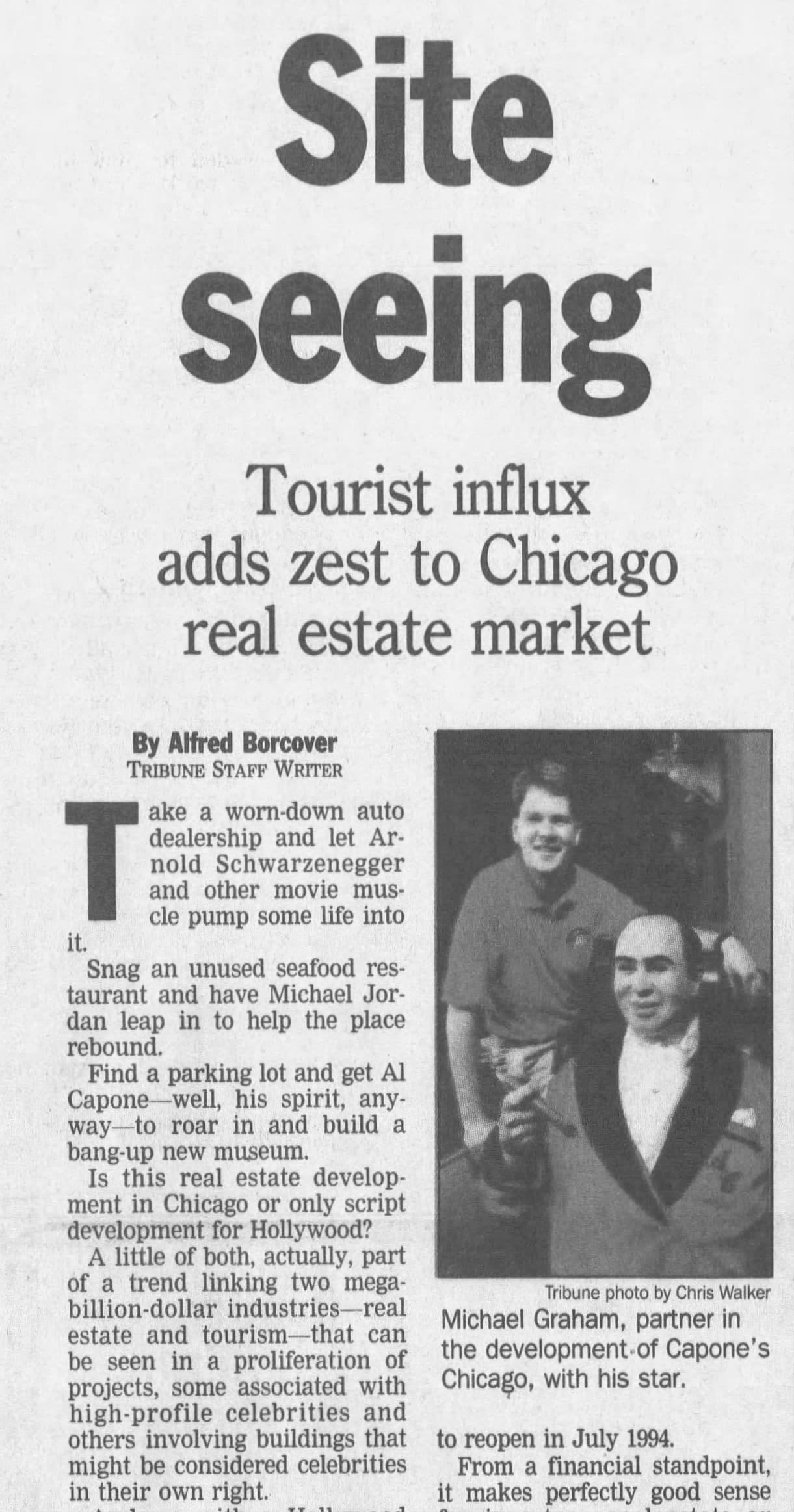
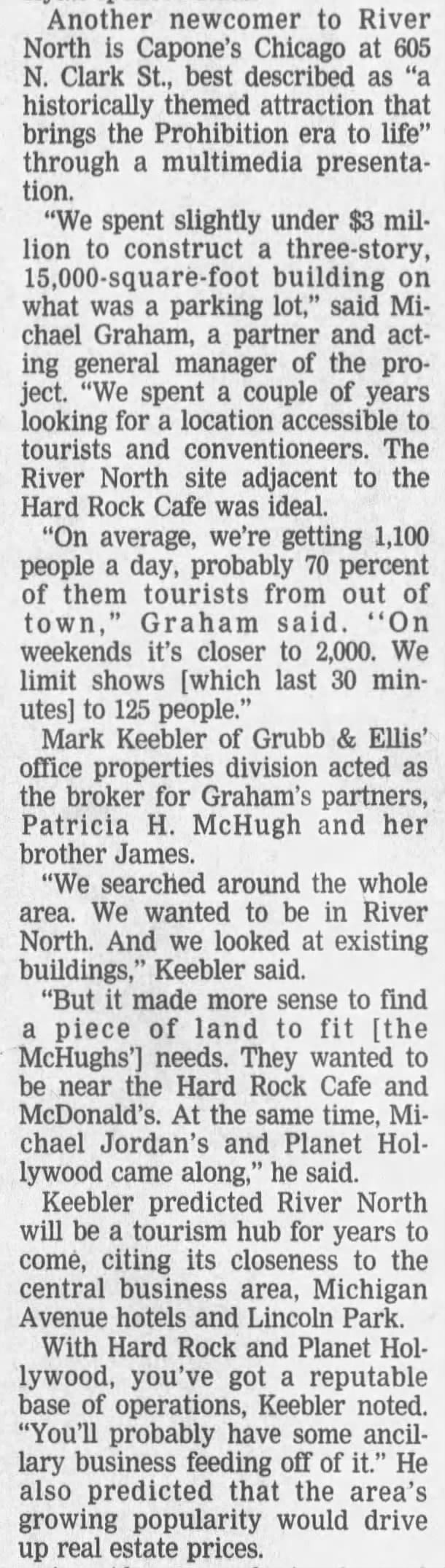
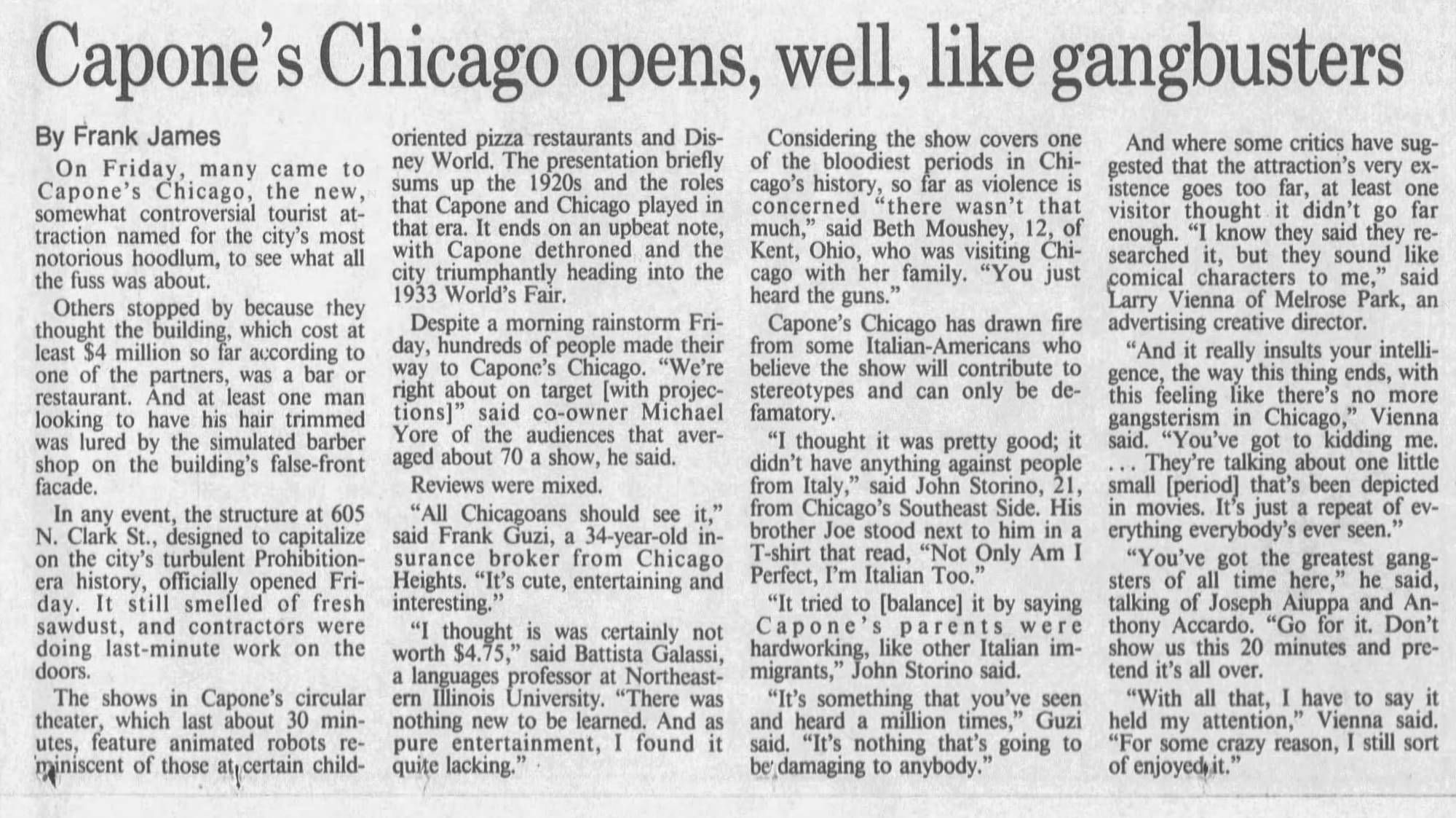

1993 articles about the opening of Capone's
The City of Chicago and the Joint Civic Committee of Italian Americans weren’t happy with the project, thinking it made them look bad, and the city’s cultural critics hated it too. Even in a part of River North bursting with cornball establishments like Ed Debevic’s, Planet Hollywood, and the Hard Rock Cafe, Capone’s apparently stood out for its garishness. Discussing Capone’s in a hilarious 1994 Chicago Reader article—it finished 2nd in a poll of which building in the city Chicago architects would like to blow up—Summerdale architect Pat Thompson said, “these buildings are really sort of like potato chips, sort of a mass entertainment thing. There is not really a lot of serious content intended to any of that”.
When it opened in 1993, Capone’s Chicago featured a theatre-in-the-round starring animatronic Al Capone, Carrie A. Nation, Louis Armstrong and others in a cheery 30-minute show about the history of Prohibition. The attraction also included a small museum with artifacts like the fireplace from Capone’s office in the Lexington Hotel and his hat. There was also, of course, a gift shop—the Four Deuces. Marketed towards tourists and, uh, school field trips (!?), an individual ticket cost $4.75 ($10.50 in 2025). Even writing it out it sounds like a weird concept: an awkwardly short show, can’t imagine there were many repeat customers, and—unlike its successor and so many of its neighbors—there wasn’t food service. Three years after opening, it closed, and I am SO curious where those animatronics went.
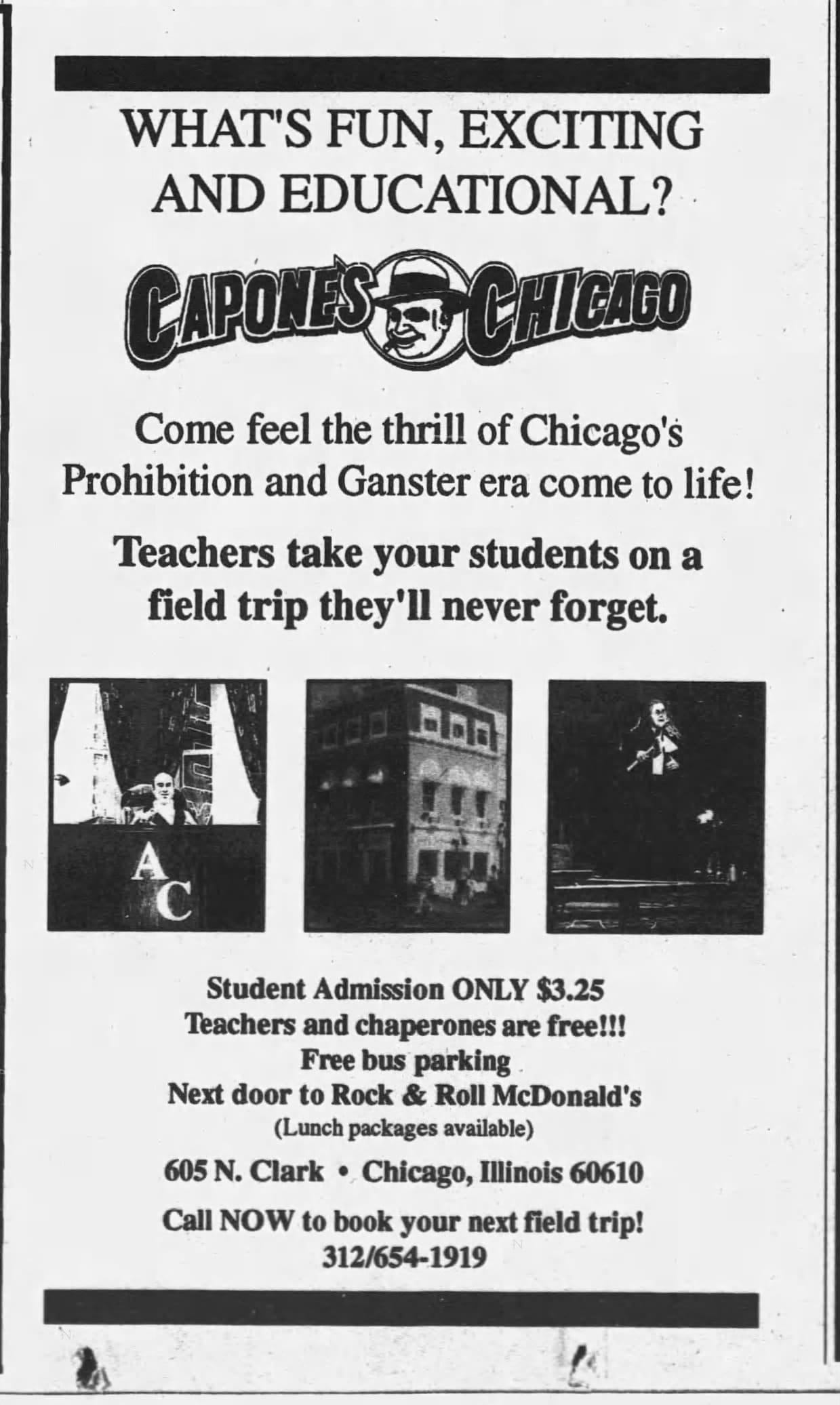
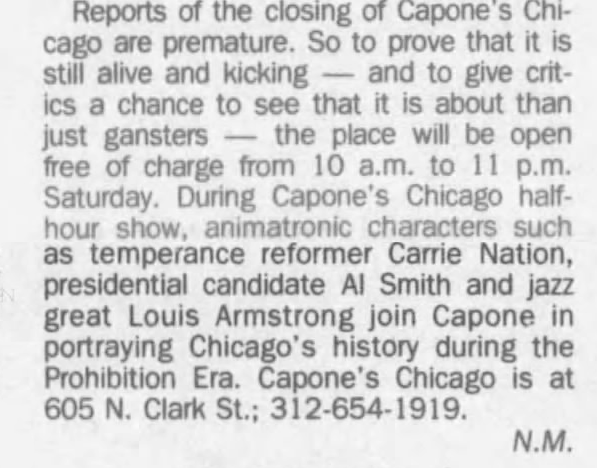
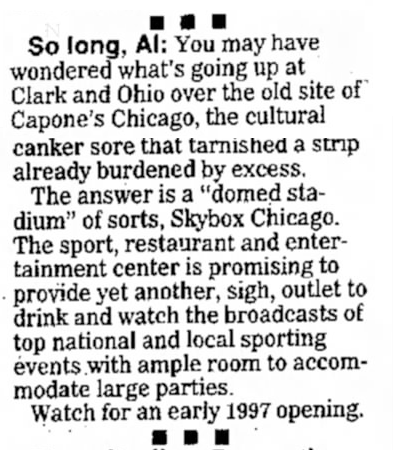
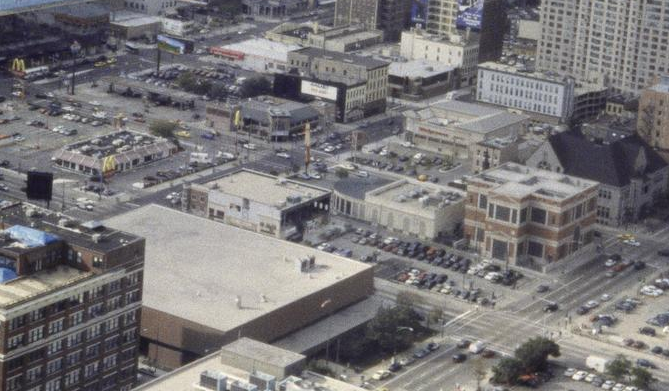
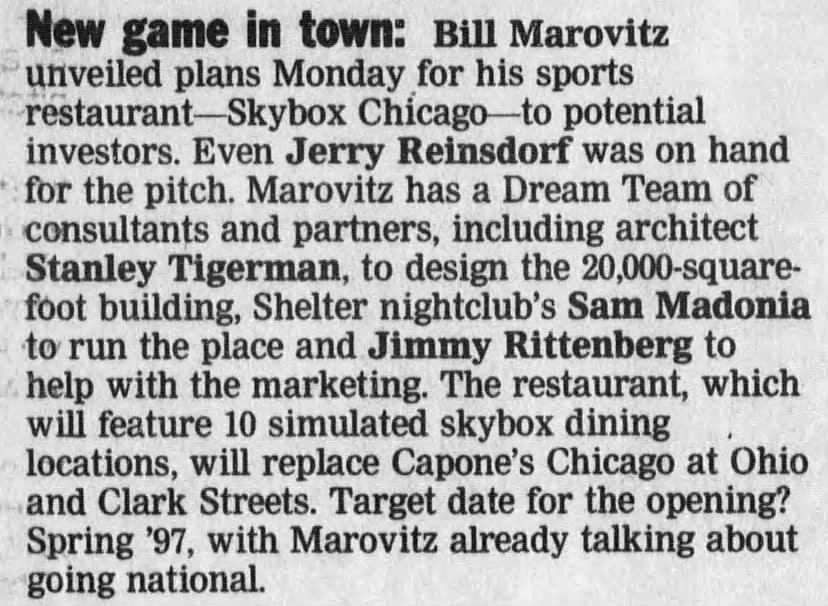
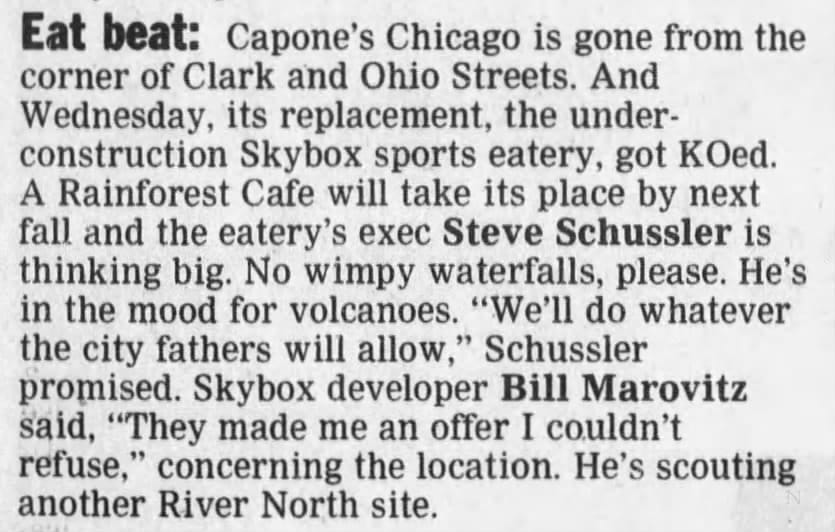
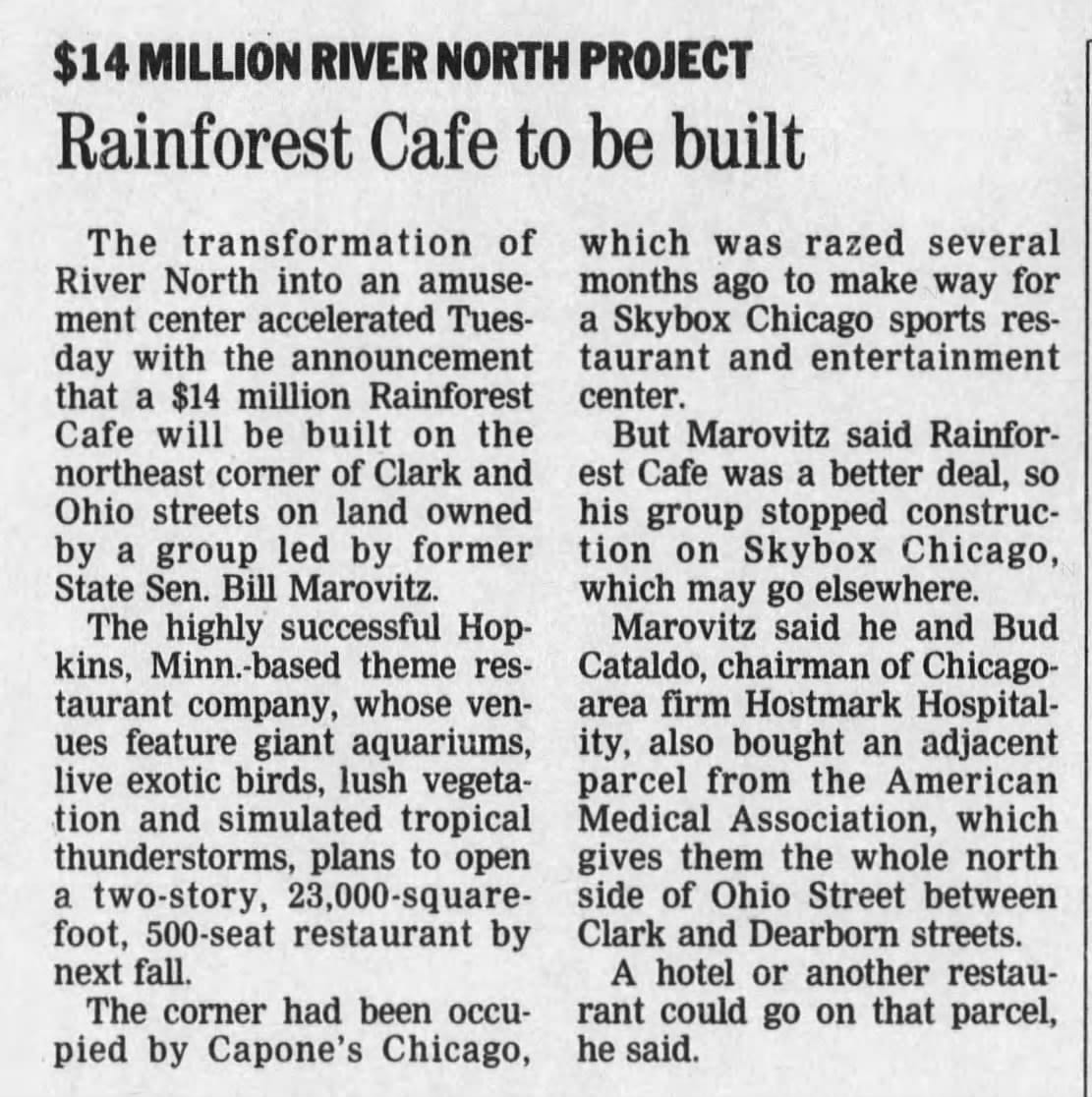
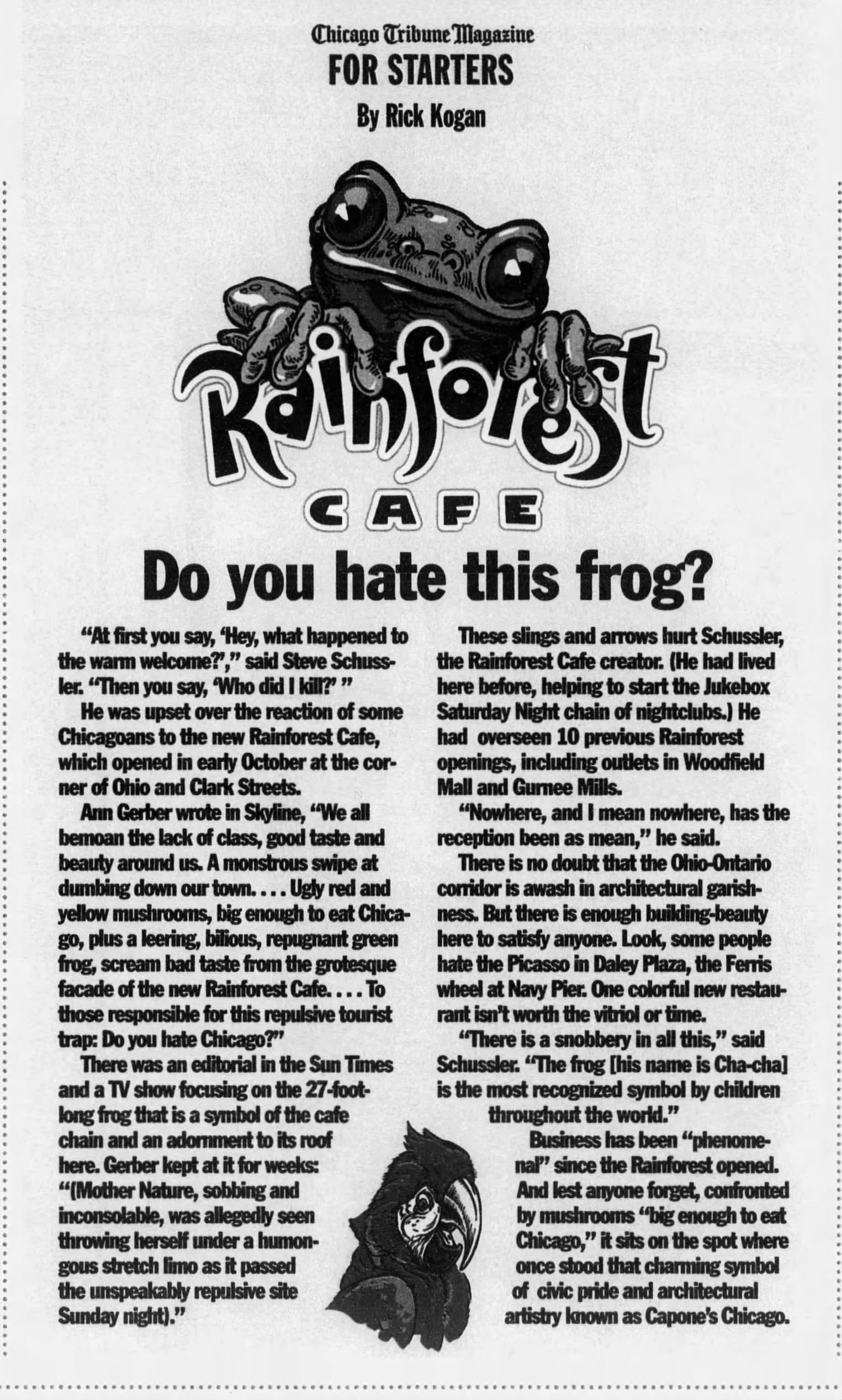
1993 field trip ad | 1996 articles about Capone's struggling and closing | 1996, C. William Brubaker photo, UIC via Chicago Collections | 1996-1997 articles about the Rainforest Cafe being built | 1998 Rainforest Cafe hiring ad
The McHughs sold the building to a group led by former State Senator Bill Marovitz, who wanted to convert it into a massive sports eatertainment concept called Skybox Chicago where fans would eat and drink in skyboxes…just not in an actual sports stadium. They hired Stanley Tigerman to design it and even started renovations in 1996, knocking down the east facade for a small addition, when they received a significantly superior offer from the rapidly growing Rainforest Cafe chain. The first Rainforest Cafe opened in the Mall of America in Minnesota in 1994. By the end of 1997 there were more than 15 locations around the world, including this one, which opened in October of that year.
The new tenant swapped out the animatronic Al Capone for animatronic apes and the crack of bullets for claps of thunder. Probably designed by Cuningham Hamilton Quieter Architects (now the Cuningham Group) who specialized in Rainforest Cafes, the company spent more than $14m on the revamp, including $250k on the giant green frog looking down at the intersection of Clark and Ohio (its name was Cha! Cha!). The reception was, once again, decidedly negative. In a Chicago Tribune column titled, “Do you hate this frog?” Rainforest Cafe founder Steve Schussler said, “nowhere, and I mean nowhere, has the reception been as mean”.

While most of the vitriol focused on the building’s harmless-but-tacky appearance, the real issue was that Rainforest Cafe was an unnervingly moist mold machine that served some of the worst food in the city of Chicago.
…but you know what? If you were in its demographic sweet spot—spoiled suburban millennial children no older than, like, eight—at its best Rainforest Cafe did successfully generate some wonder.
Tilman Fertitta, supremo of schlock and owner of Landry’s Restaurants, bought Rainforest Cafe in 2000. They never owned the land, though, and in 2015 real estate investor Sean Conlon acquired the site for more than $13m. Landry’s has been shuttering Rainforest Cafes around the country as their leases expired, and here Conlon made clear he didn’t intend to extend this one’s lease past its expiration in ~2022. That dynamic made things relatively straightforward when the pandemic hit and indoor dining was briefly prohibited—rather than figure out how to pivot a tired themed dining experience to handle capacity limits and customers wary of getting sick, Landry’s never reopened this location after the initial COVID shutdown, making its closure official in August 2020.

The building has been vacant ever since, but not for lack of demand. Plans to open a dispensary in the building fell through in 2022 under pressure from legal challenges and strong competition from existing dispensaries nearby, and then this year, Conlon was hit with a foreclosure suit.
In the past, real estate agents have already marketed this land as a site for a residential high rise. Now that the Hard Rock Cafe next door has also closed, there’s an obvious opportunity for an ambitious developer to assemble one of the larger sites left in River North for a big tower. Fingers crossed.
1938 - 2024
Production Files
Further reading:
- Some great interior and exterior photos on Mario Gomes' My Al Capone Museum
- "Building Boom: In which Chicago architects identify the buildings they’d most like to blow up." by Cate Plys in the Chicago Reader
- Lynn Becker on the "Schlock Corridor" in 2005
- 2019 CBRE marketing flier
 Mariah Rush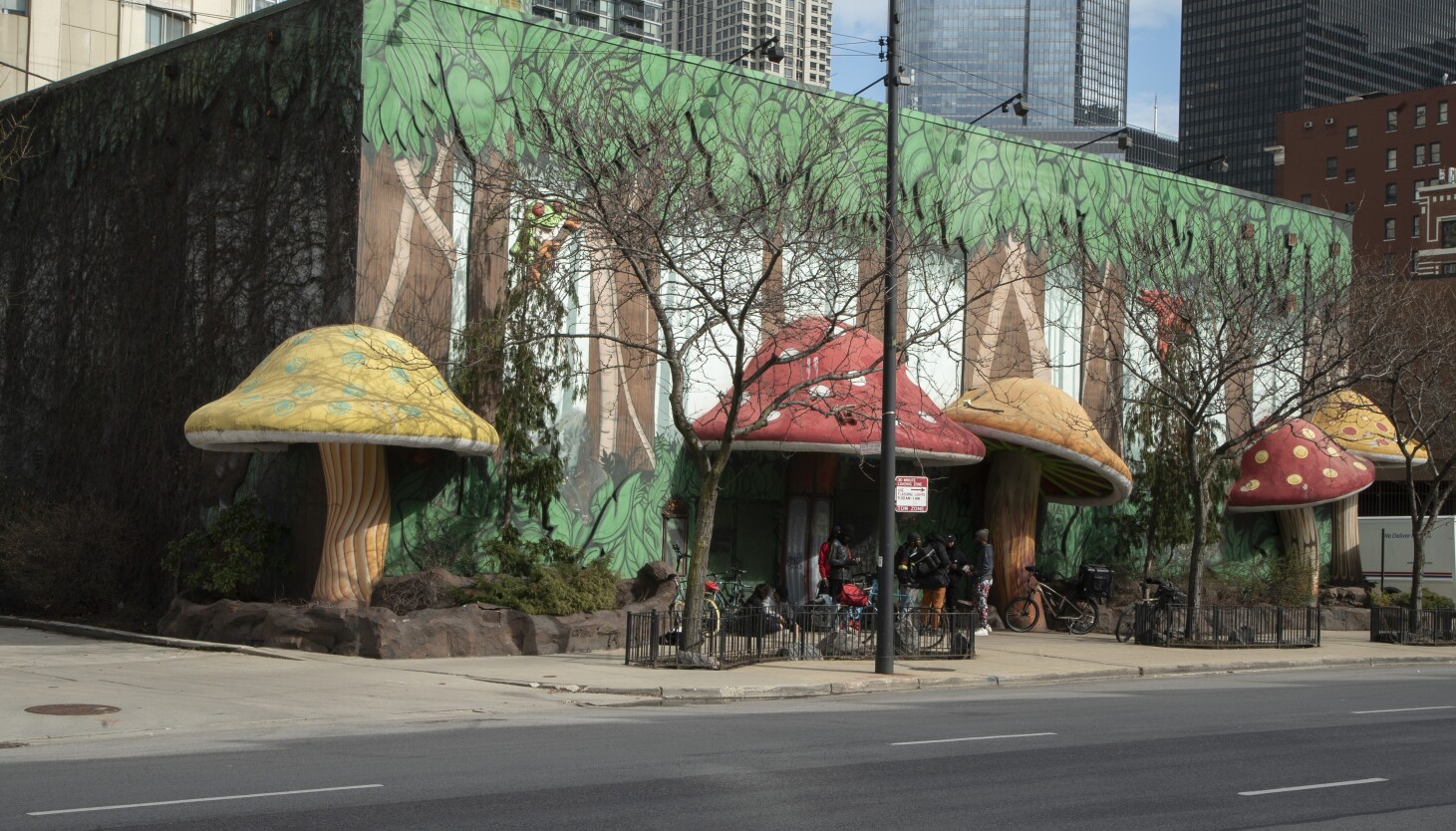
 Jay Koziarz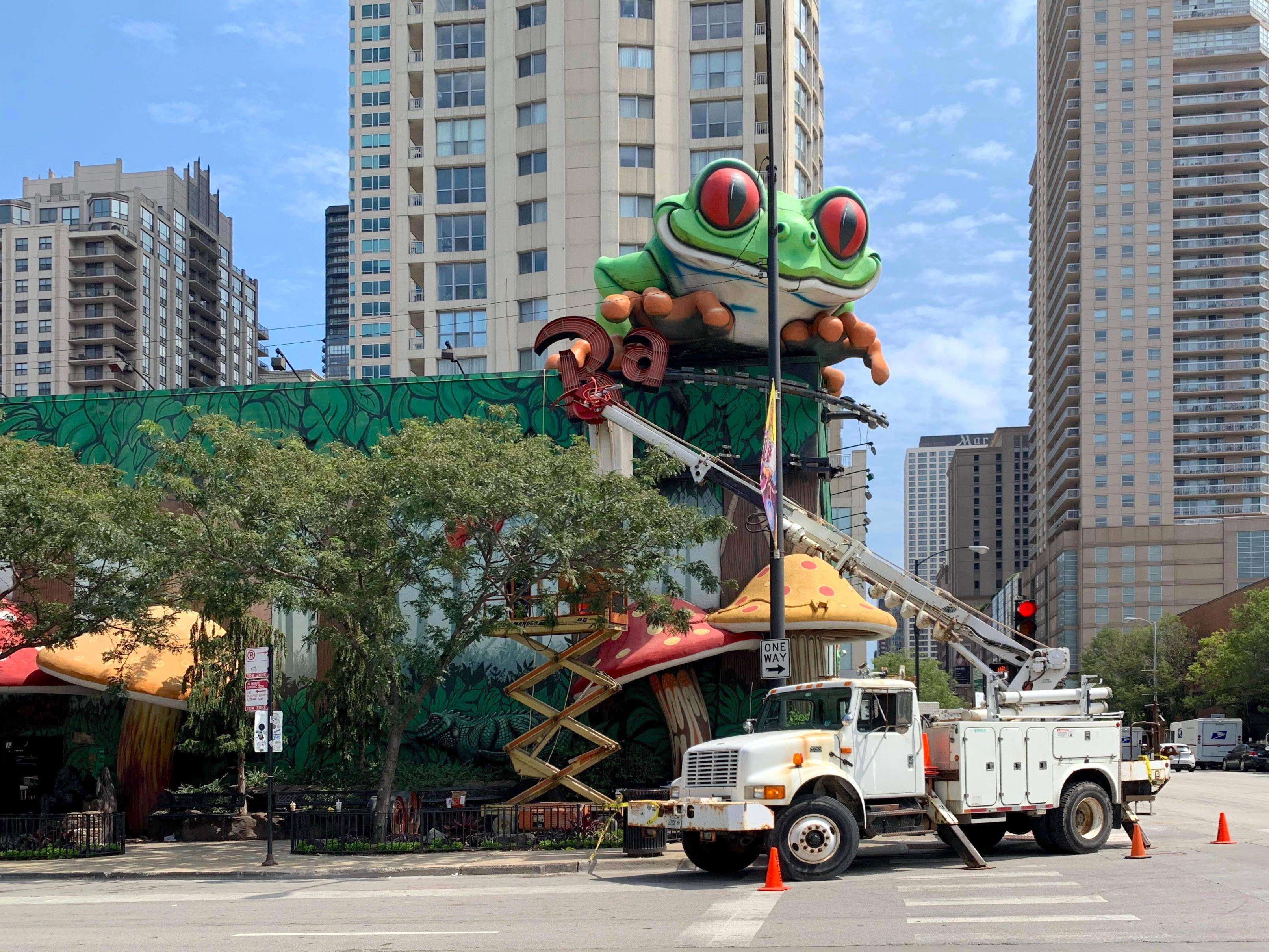
 Melody Mercado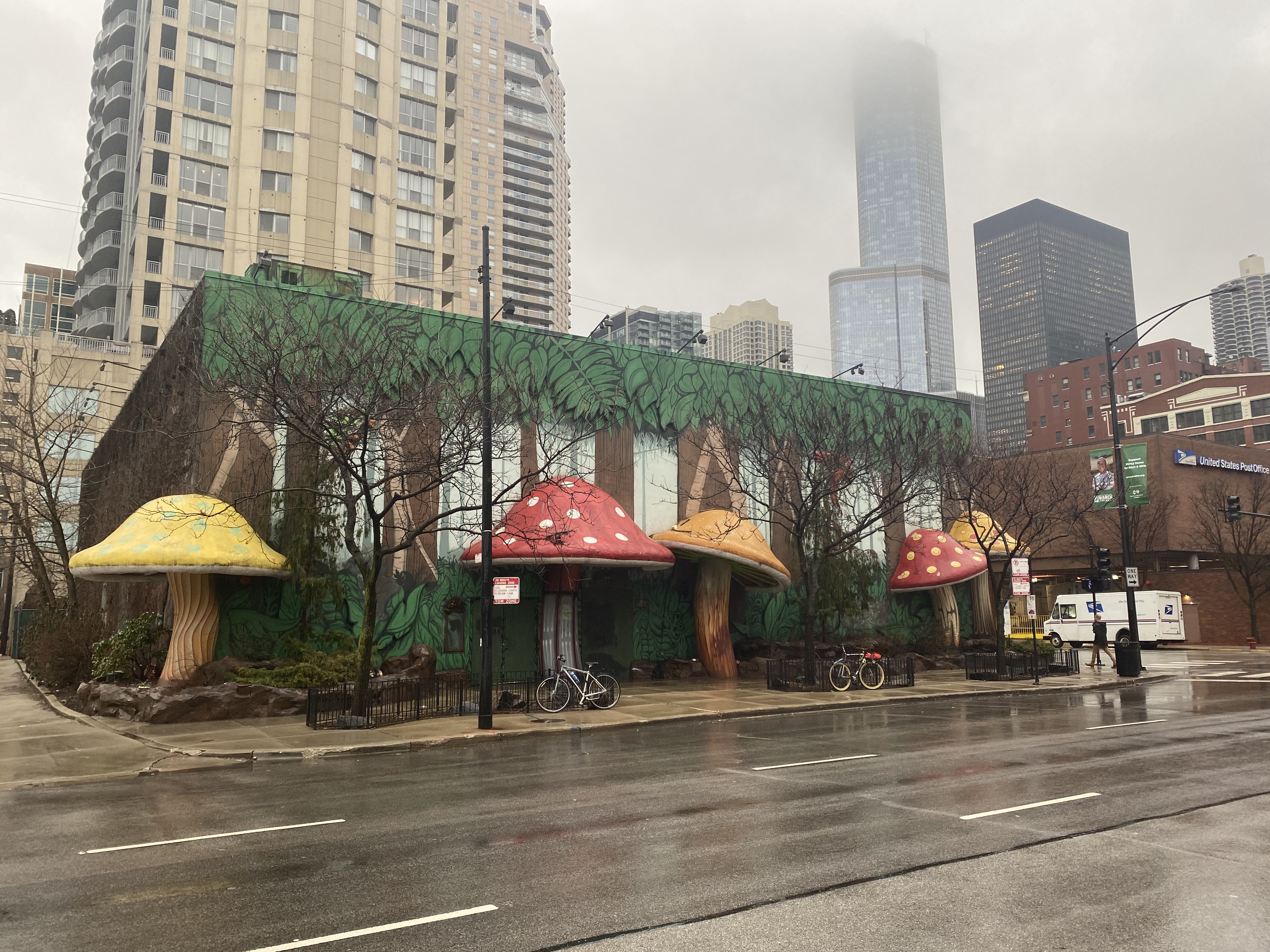
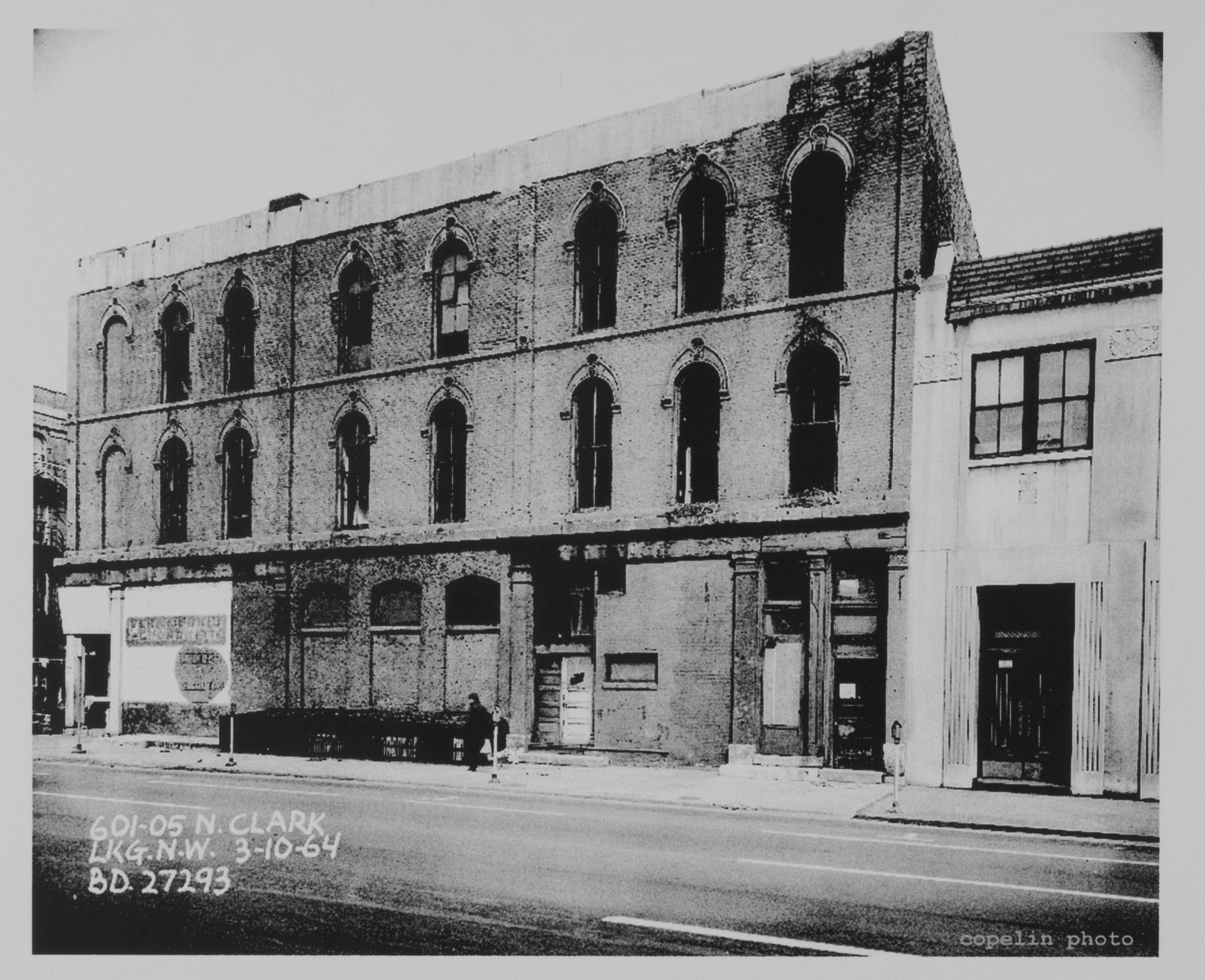
1964 photo of the building on the northeast corner of Clark and Ohio, UIC
The building that stood here before Capone's clued me in to a dark little footnote in Chicago's history—the imprisonment of Japanese and German immigrants in an old mansion in Kenwood repurposed as a detention center, before they were shipped off to internment camps elsewhere.
It's a story that I personally knew nothing about, one that foreshadowed the masked ICE and CBP goons brutalizing people in the Broadview Detention Center in the Chicago suburbs.

1930 classified ad

Harvey Mitaro Kayano immigrated to Chicago from Okayama Prefecture in Japan, eventually marrying a white American woman, and in 1930, he ran a restaurant here. Harvey Kayano would've been around 60 when the Japanese bombed Pearl Harbor.
The shameful internment of Japanese people on the US West Coast gets all the attention—understandably, with 120,000 legally forced out of their homes and into concentration camps—but much smaller numbers of "alien enemies" were also arrested and imprisoned in the Midwest.
Harvey Mitaro Kayano was one of them.
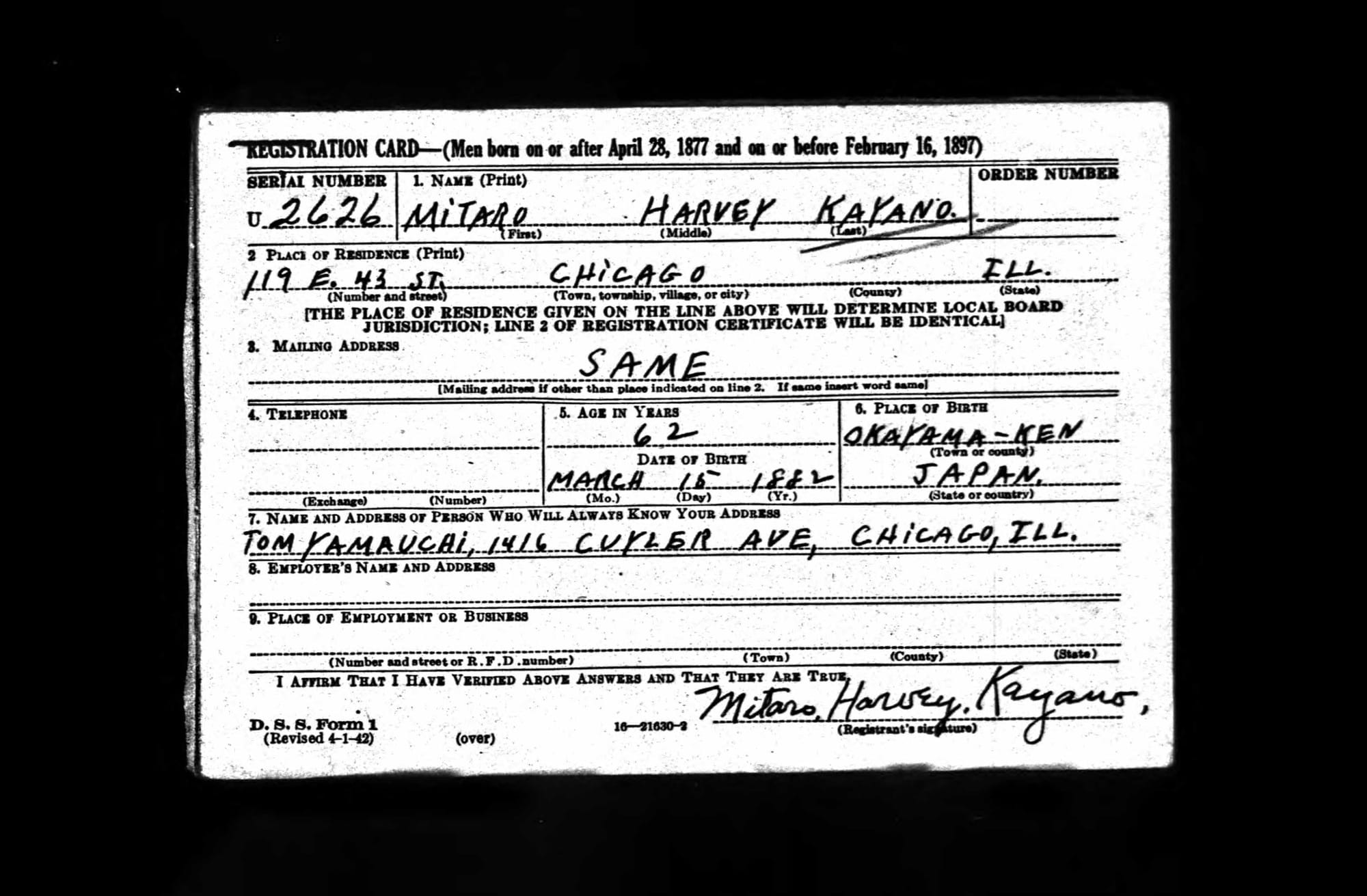
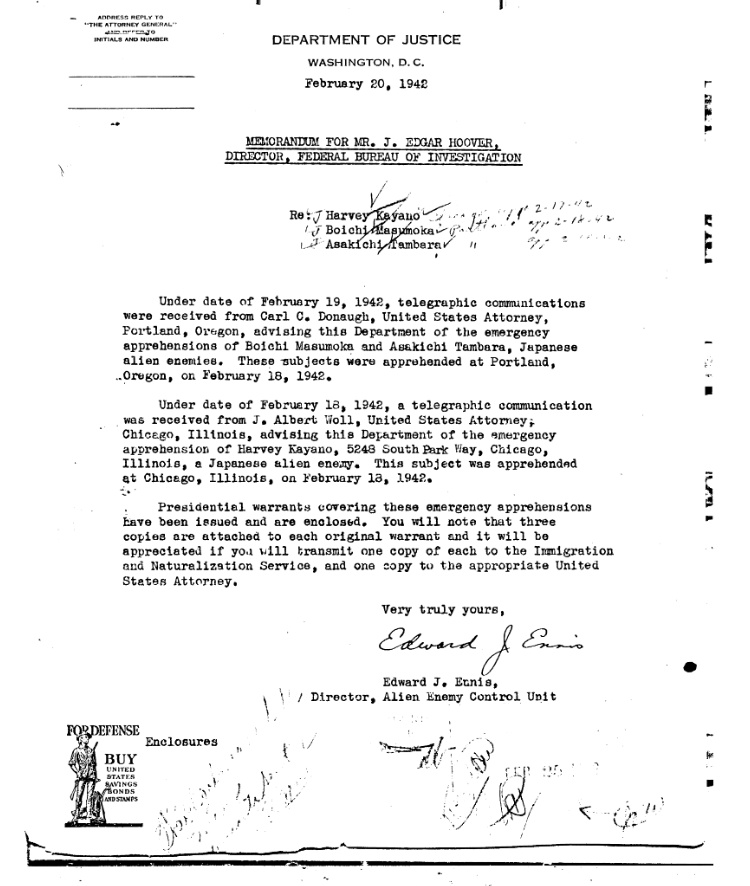
Kayano draft card | 1942 FBI memorandum on the arrest of Harvey Kayano
In Chicago, detainees ended up in a former mansion turned detention center at 4800 S. Kenwood on the South Side. Holding dozens of detainees for weeks at a time before they were transferred to larger camps, those imprisoned here were mostly Germans, but also Hungarians, Romanians, Italians, Austrians, and Japanese.

Kayano was an old cook and assimilated US citizen who'd lived in Chicago for decades—the federal government knew he wasn't a threat. However, because they alleged he was "mentally unbalanced", they imprisoned him anyway. Kayano spent almost four months detained in Kenwood before the federal government shipped him off to intermediary camps in Wisconsin, Louisiana, and New Mexico, ultimately spending the final two years of the war in the Kooskia Internment Camp in Idaho.
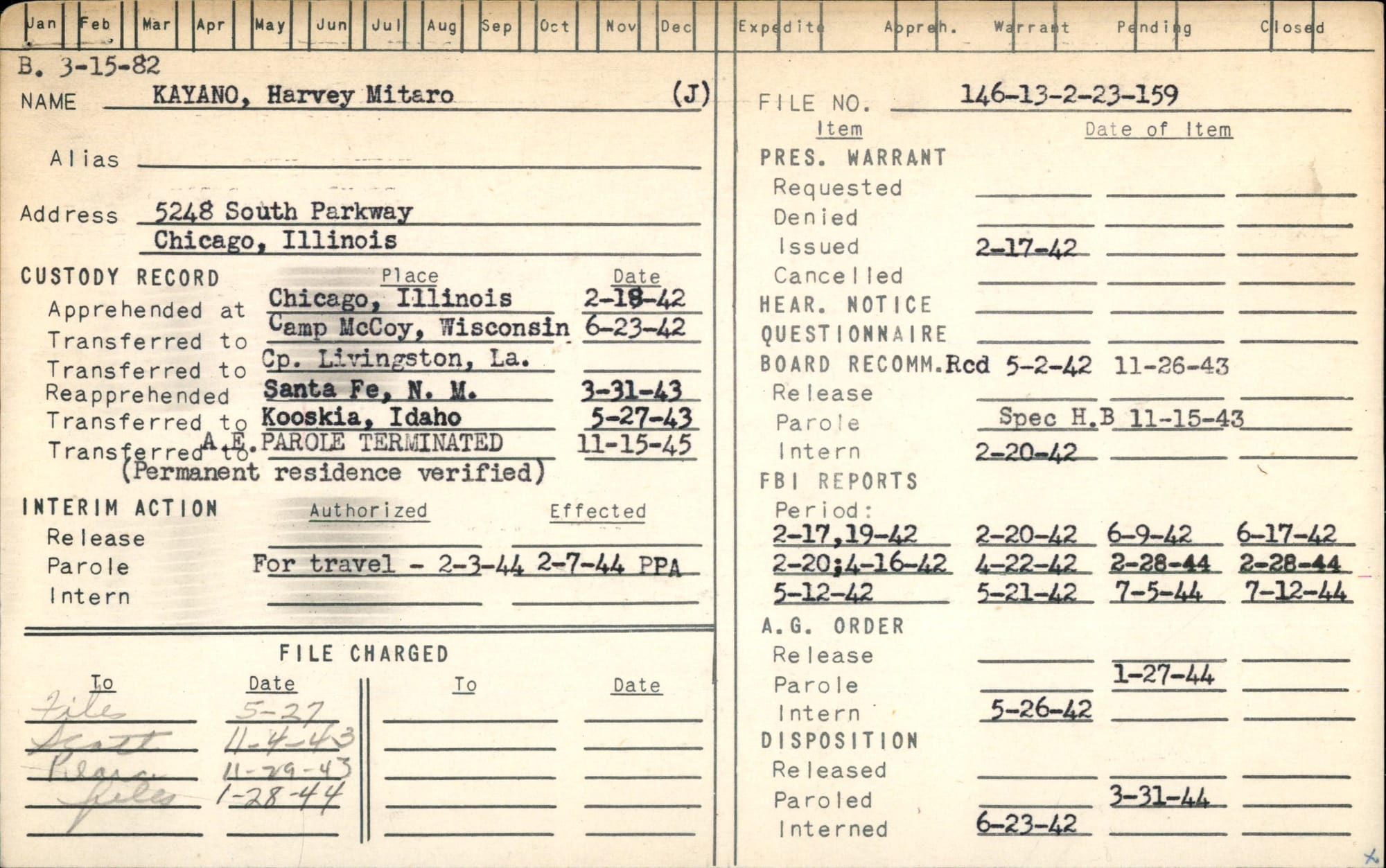
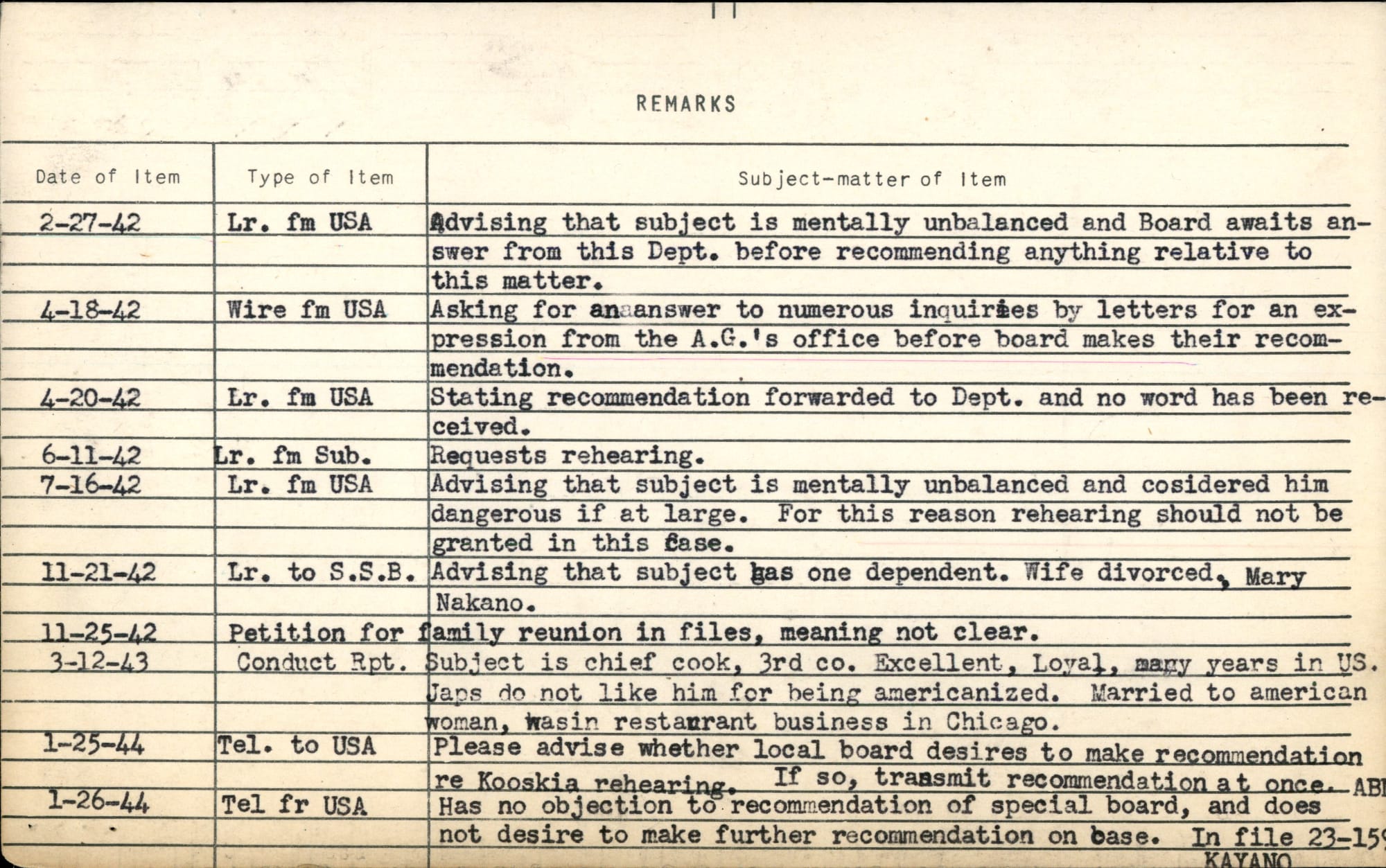
Japanese Internee Card for Harvey Mitaro Kayano, National Archives
Further reading:
 Kyra Mitchell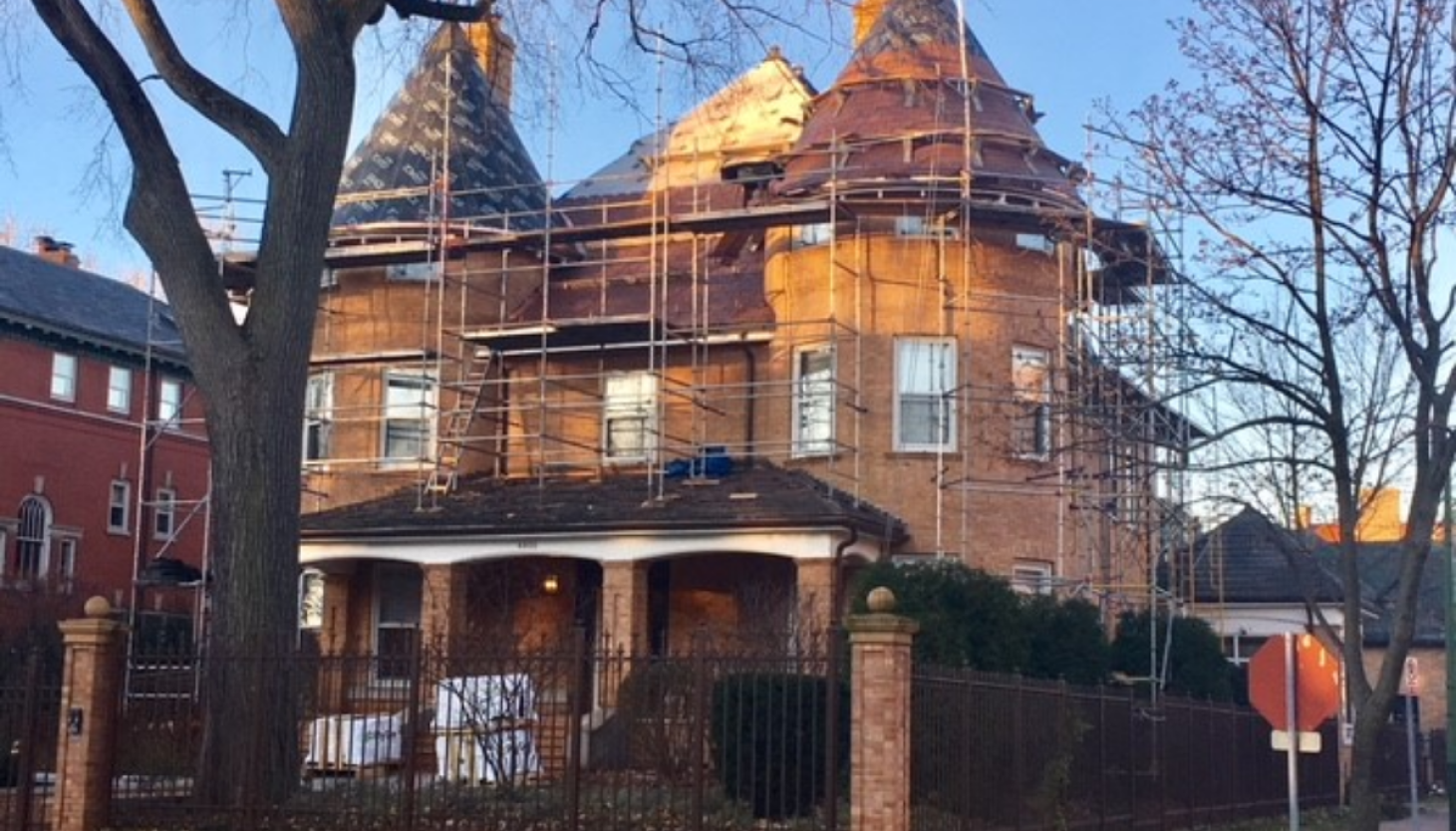
Some fire insurance maps of the block.
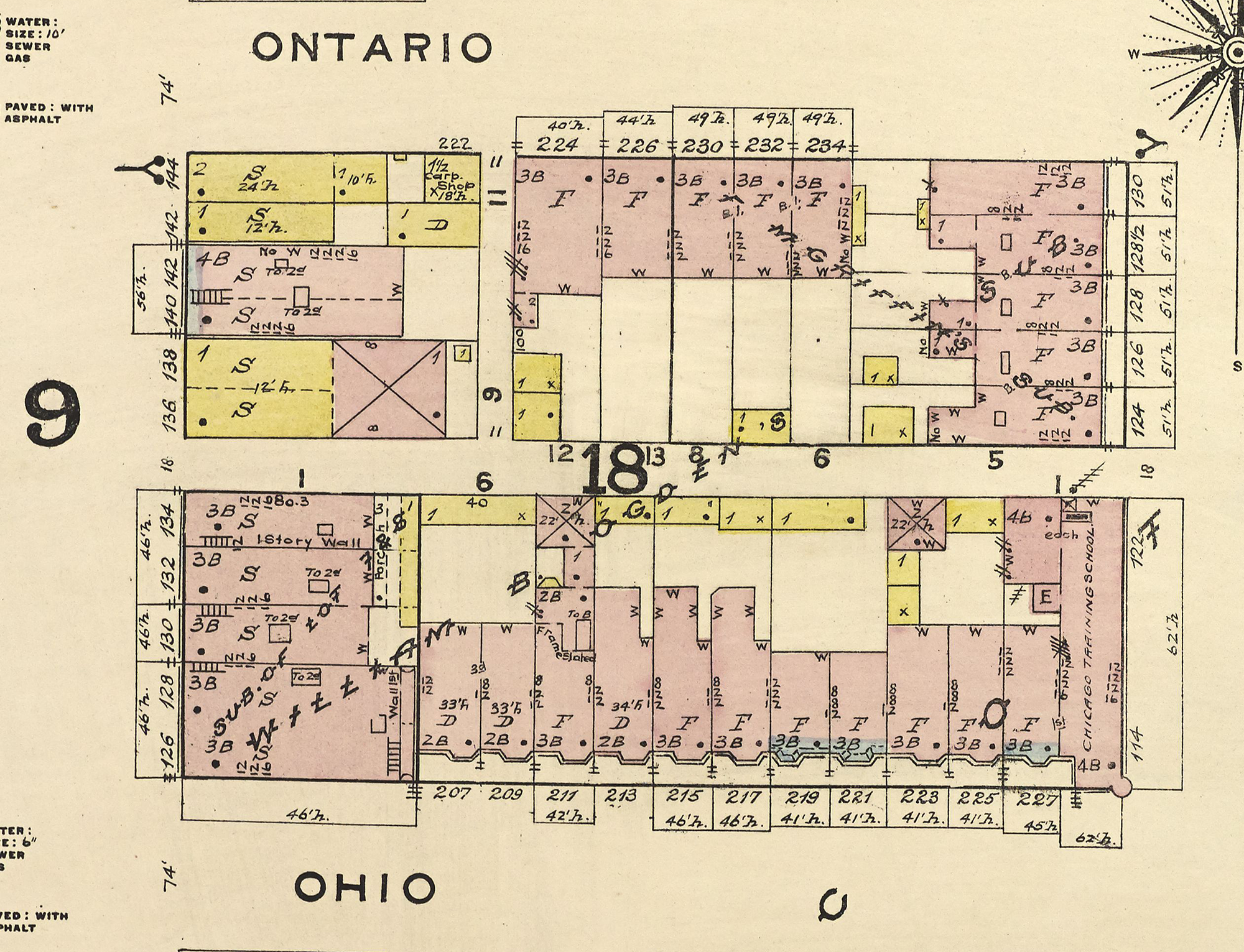
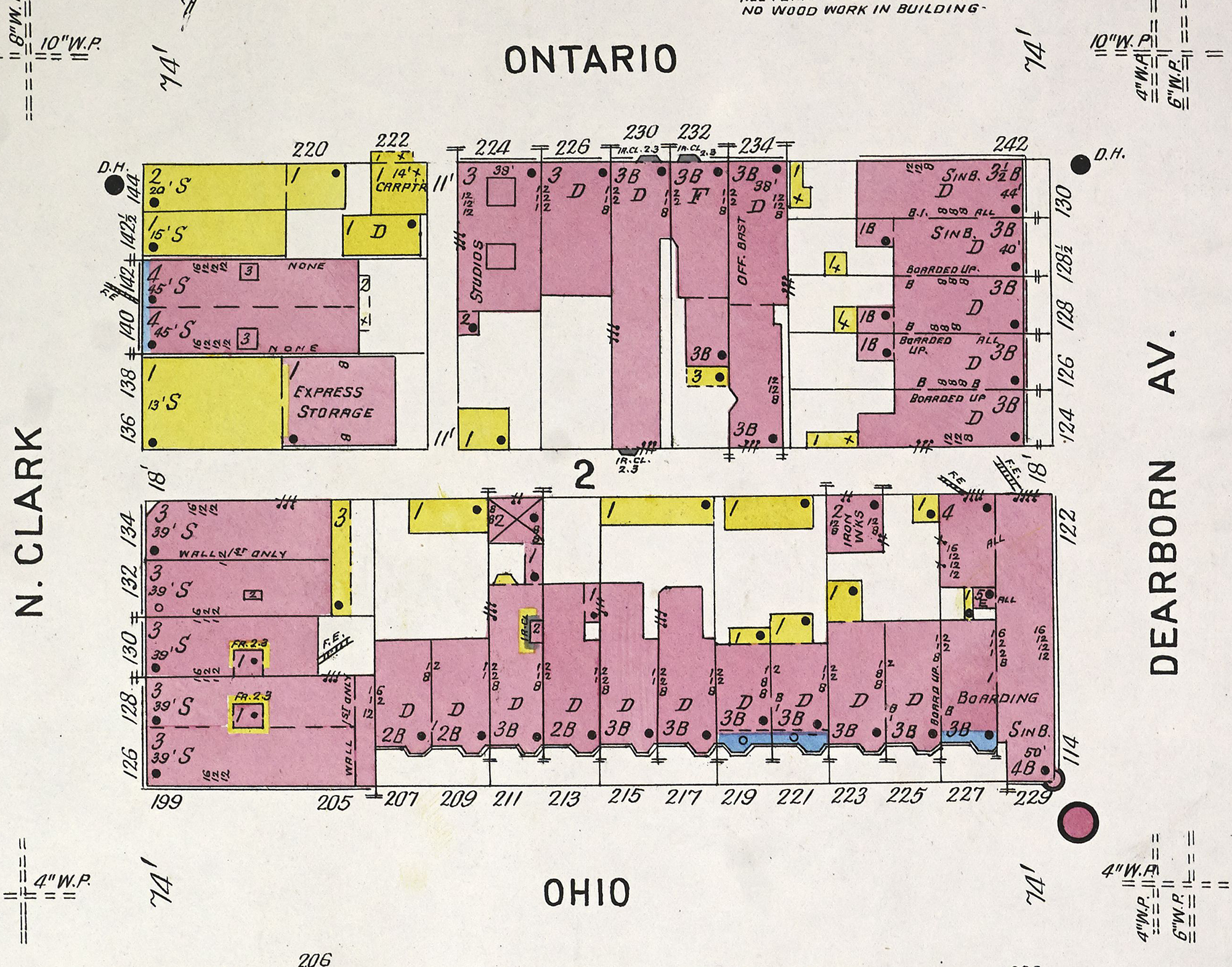
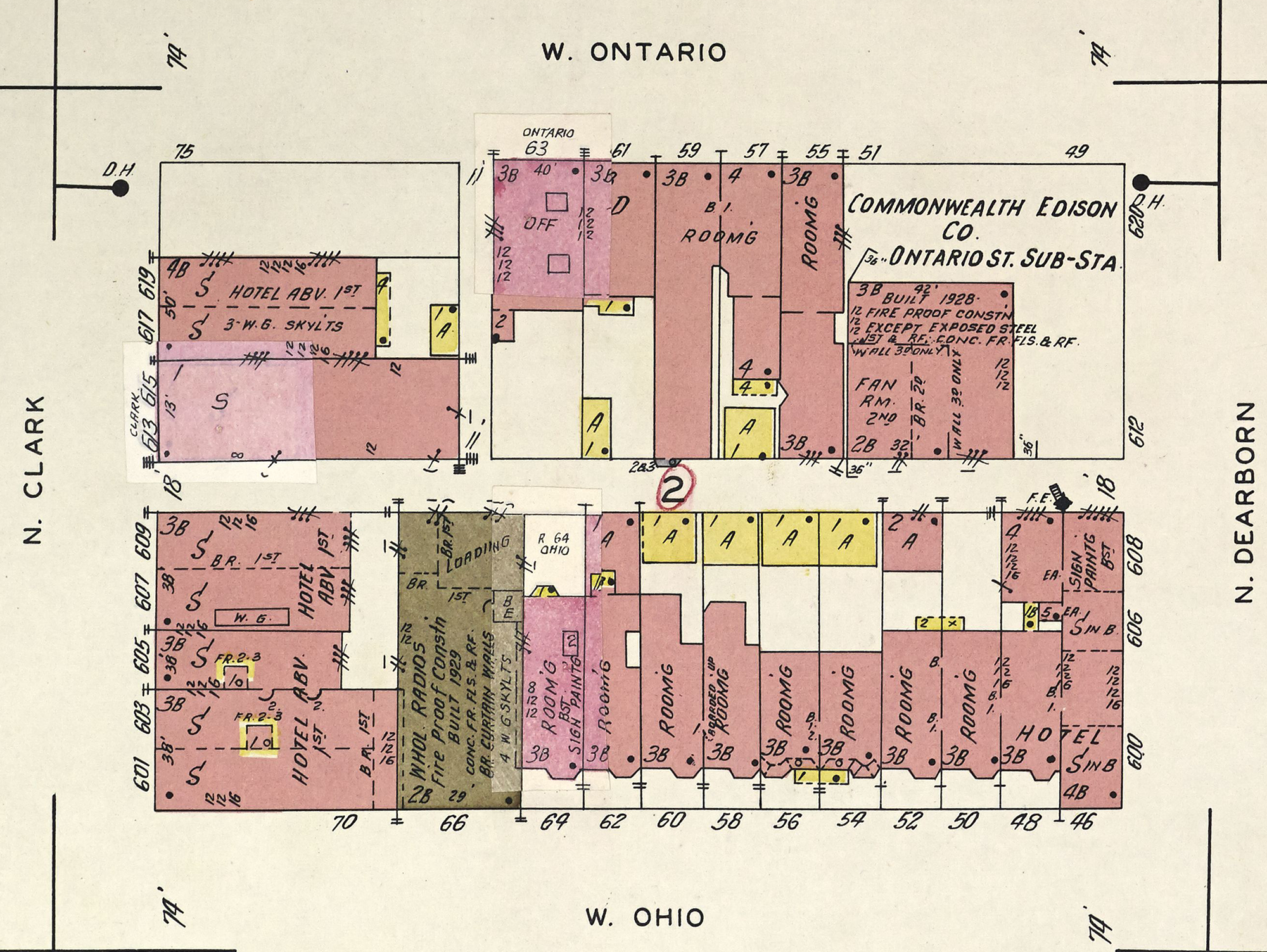
1891 fire insurance map | 1906 fire insurance map | 1950 fire insurance map
And some aerials.
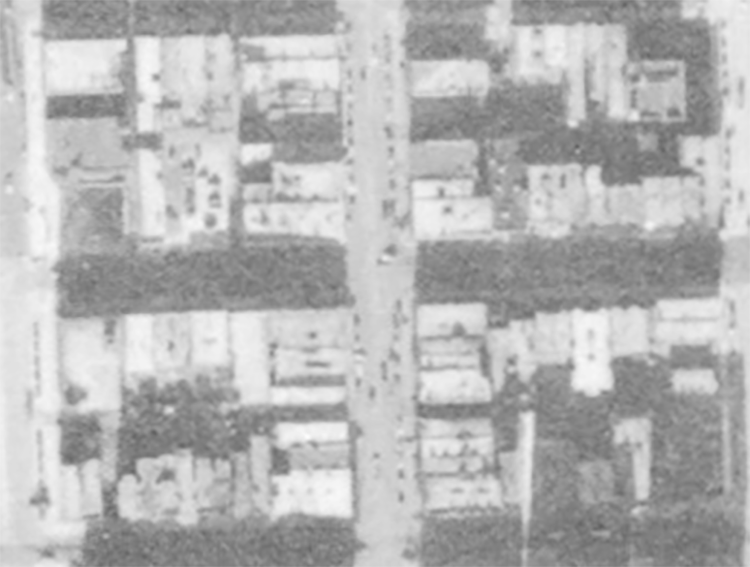
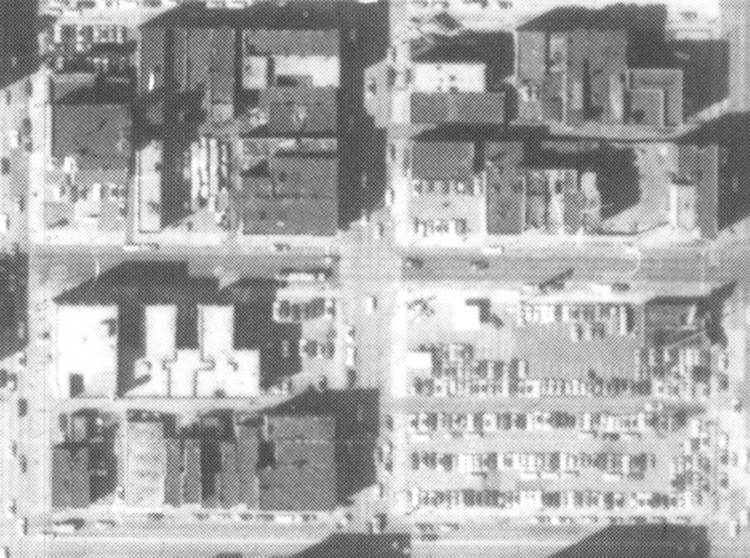
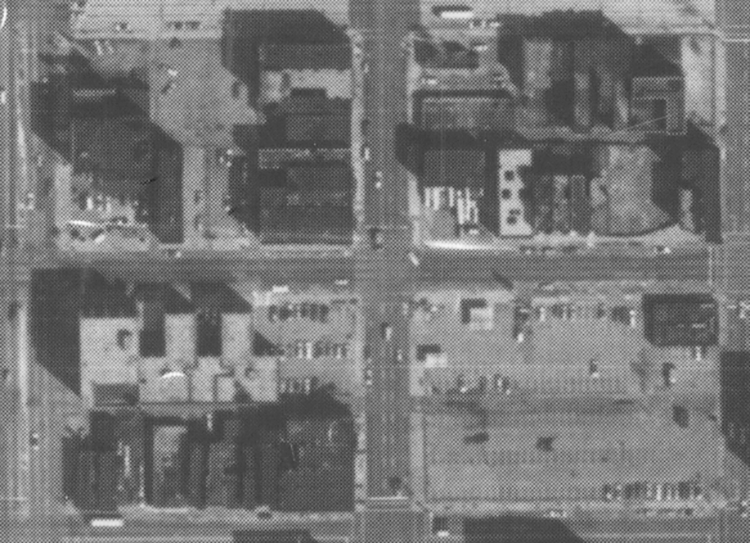
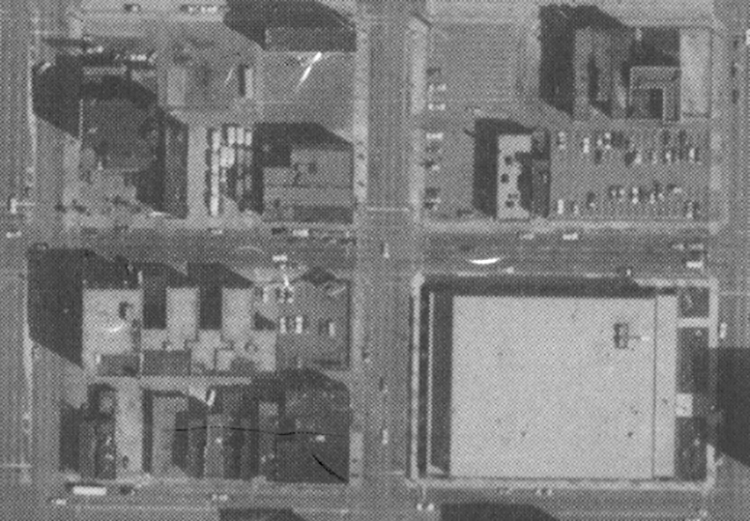
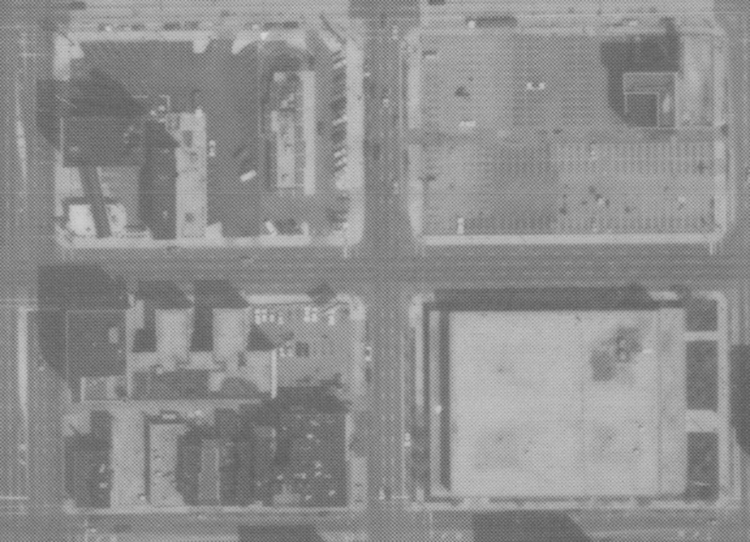
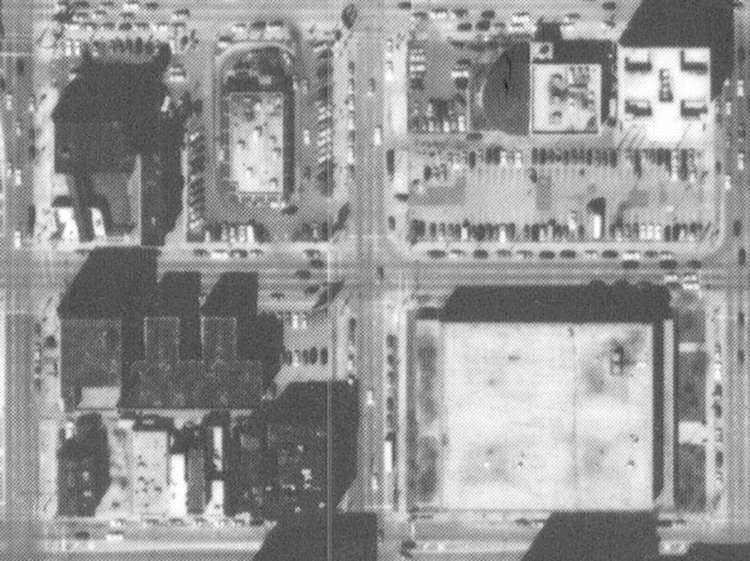
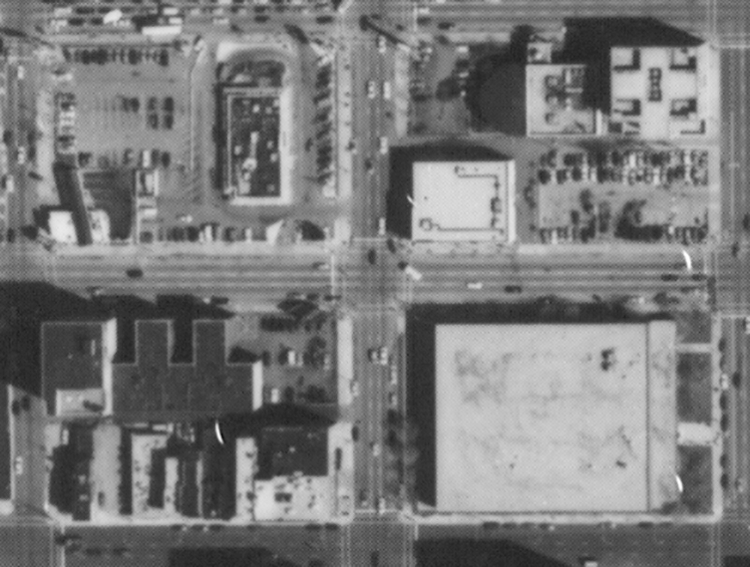
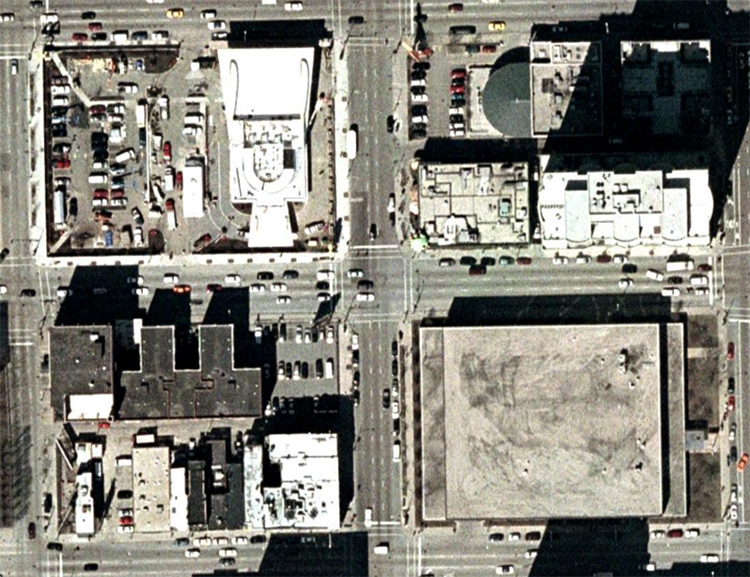
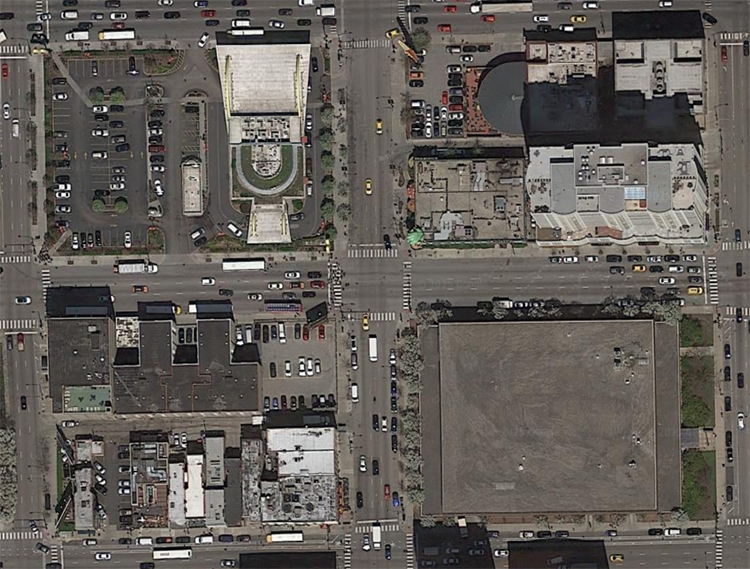
1938 aerial, Illinois State Geological Survey, Prairie Research Institute | 1970, 1975, 1980, 1985, 1990, and 1995 aerials, CMAP | 2005 and 2015 aerials, Google Earth
The building that was here pre-1964, the one that Harvey Kayano once had a restaurant in, was gutted by a fire in 1964 and torn down shortly thereafter.
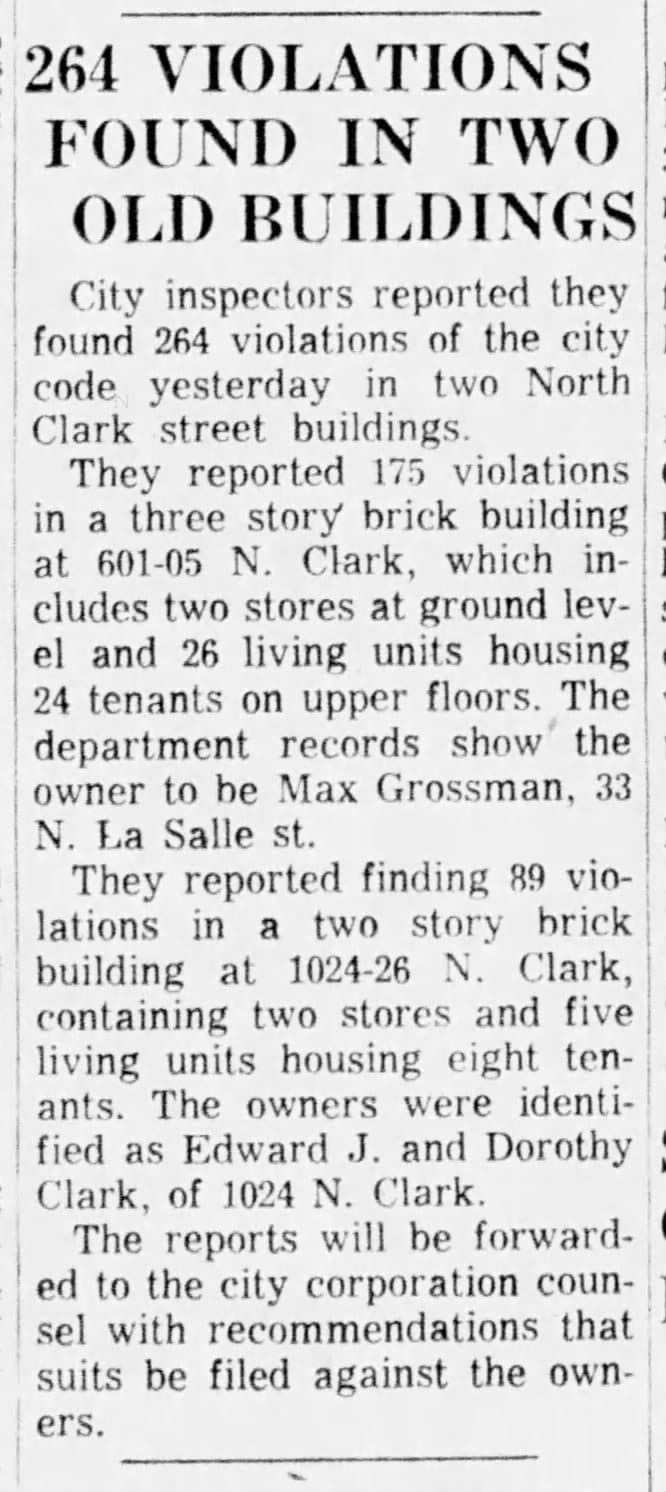
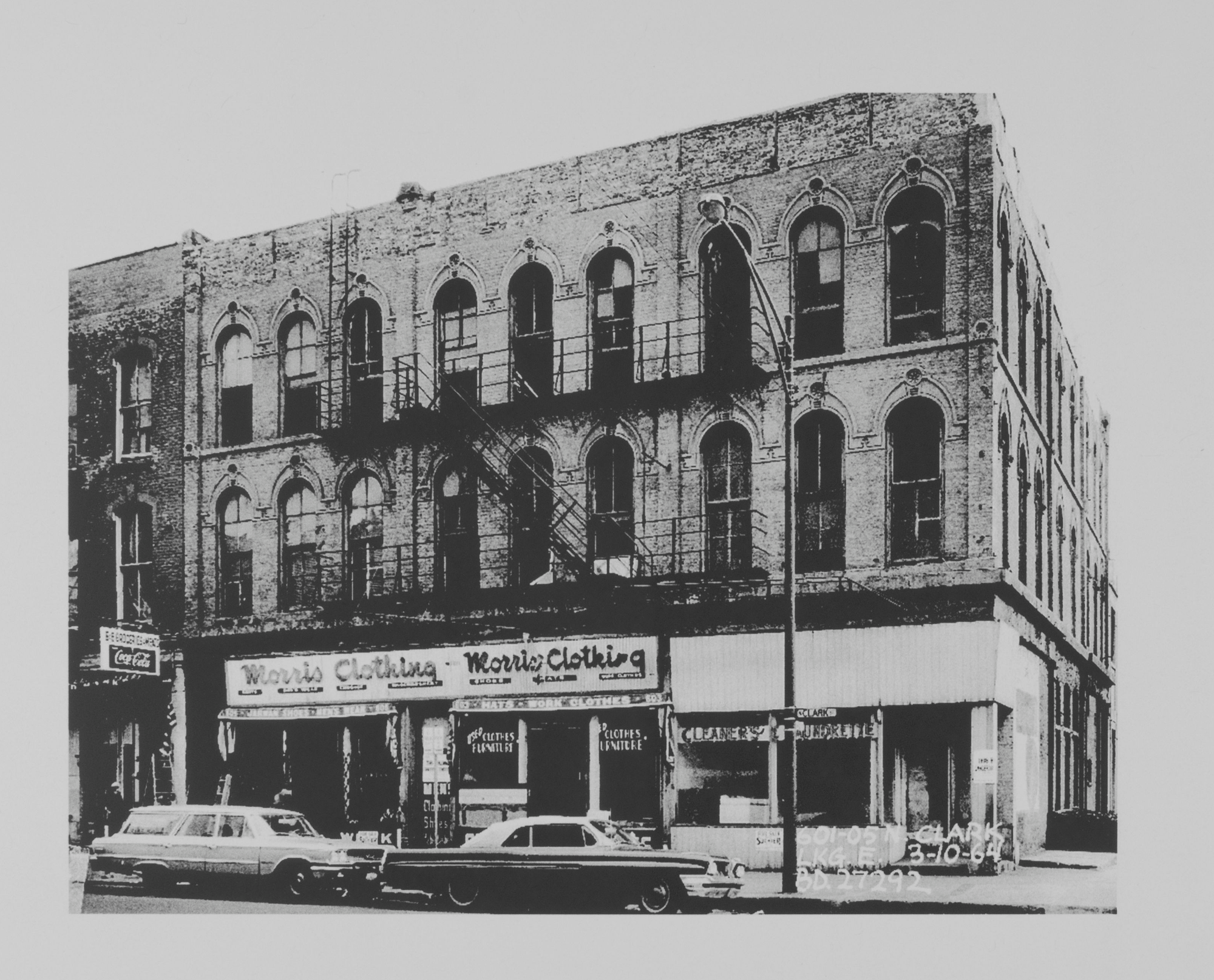
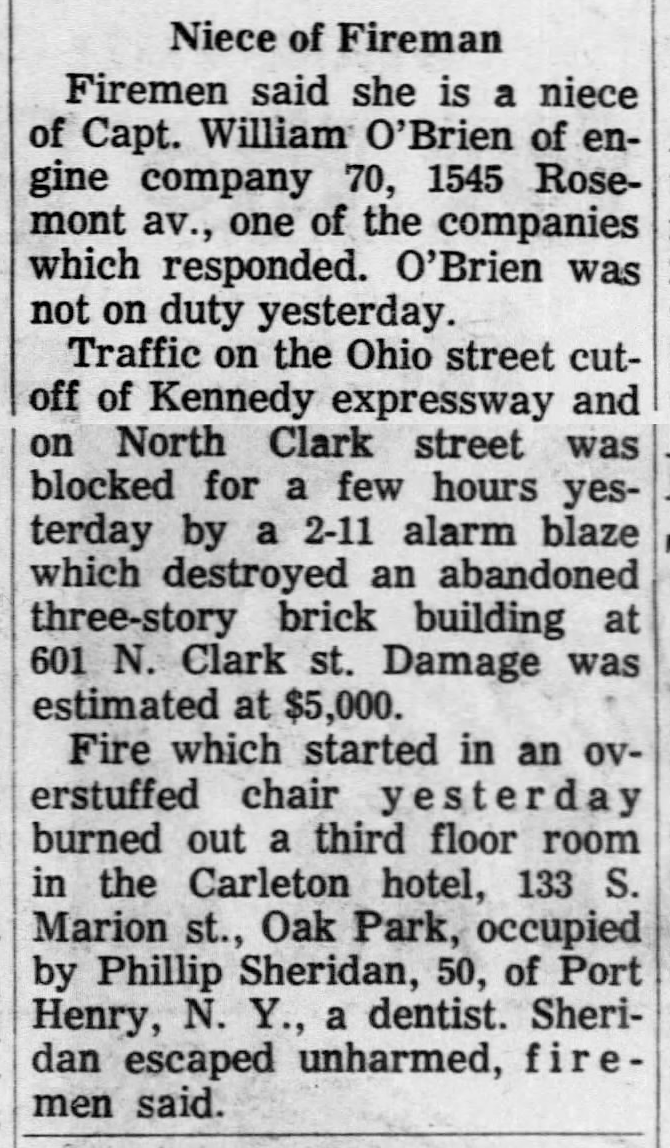
1961 article about building violations | 1964 photo of the Clark St. elevation of the building at the northeast corner of Clark and Ohio, UIC | 1964 article about the fire that gutted the building
Among other tenants, it had a tavern, a clothing store, and a laundry on the first floor and apartments above. Reflecting how down the Near North Side was after the war, the tavern, with living quarters, was for sale for $5,000 from the late 1940s in the early 1950s (only $65k, adjusted for inflation).


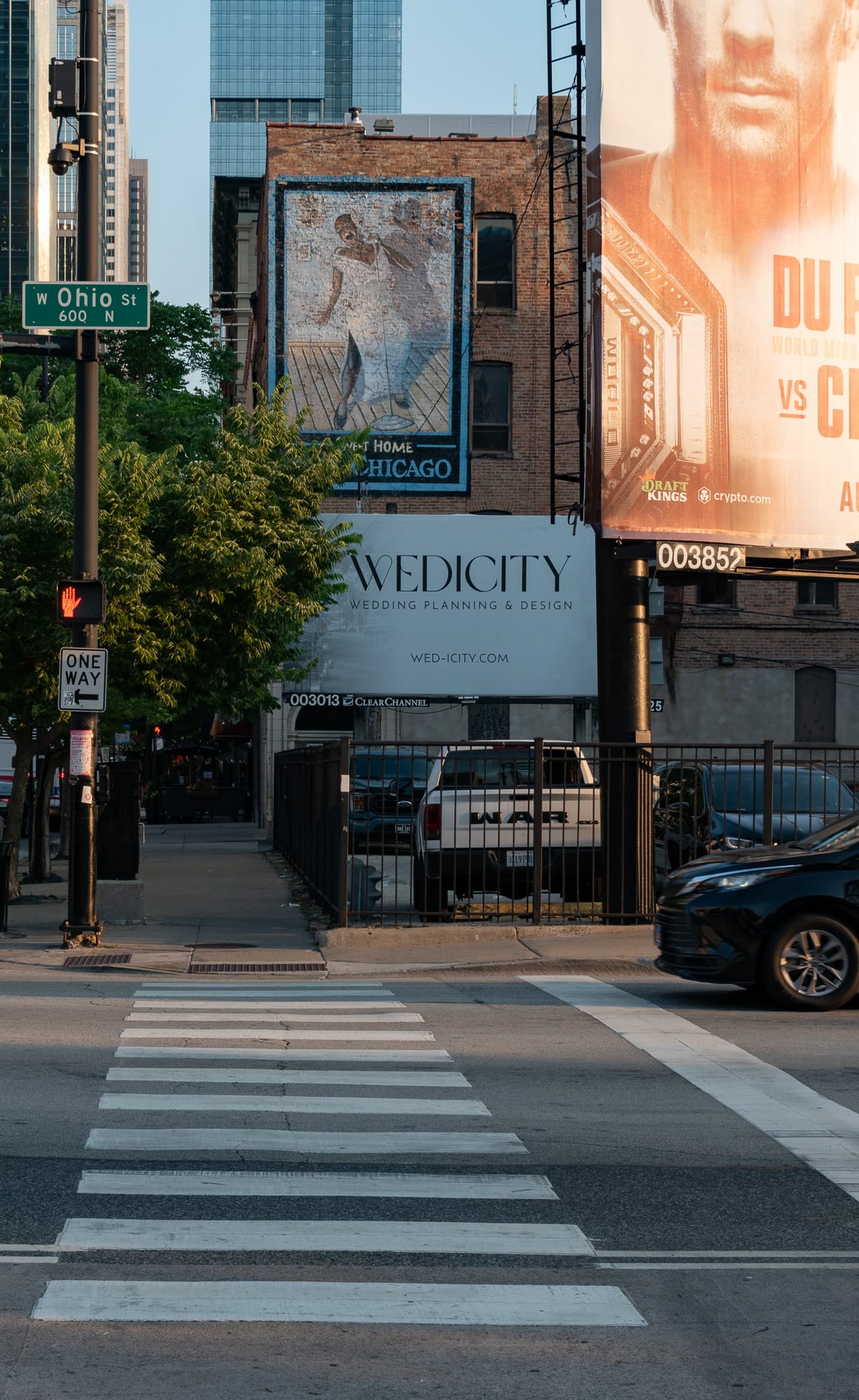
This is where I took the present-day photo from.
Member discussion: