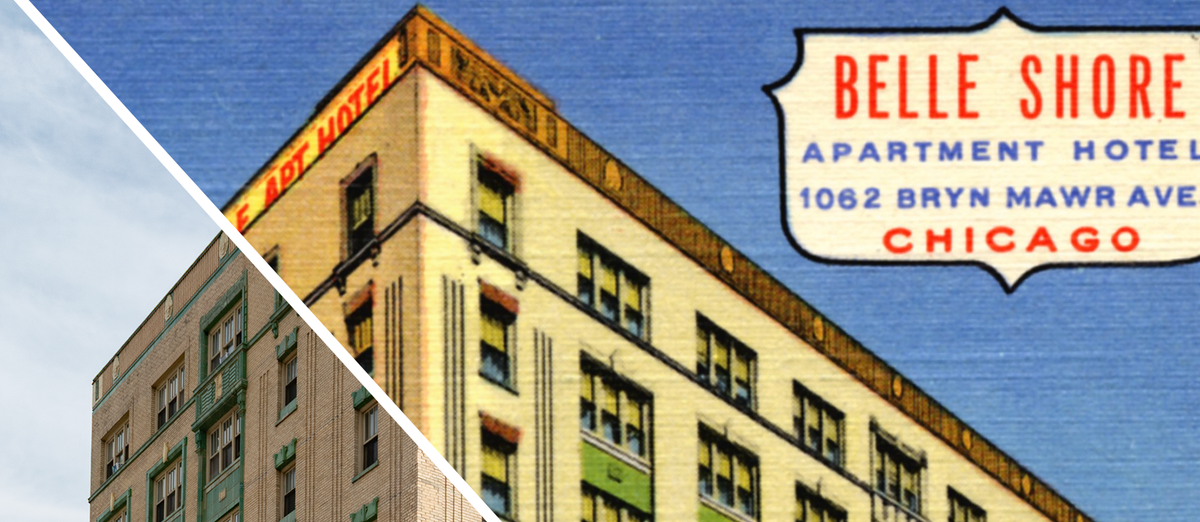
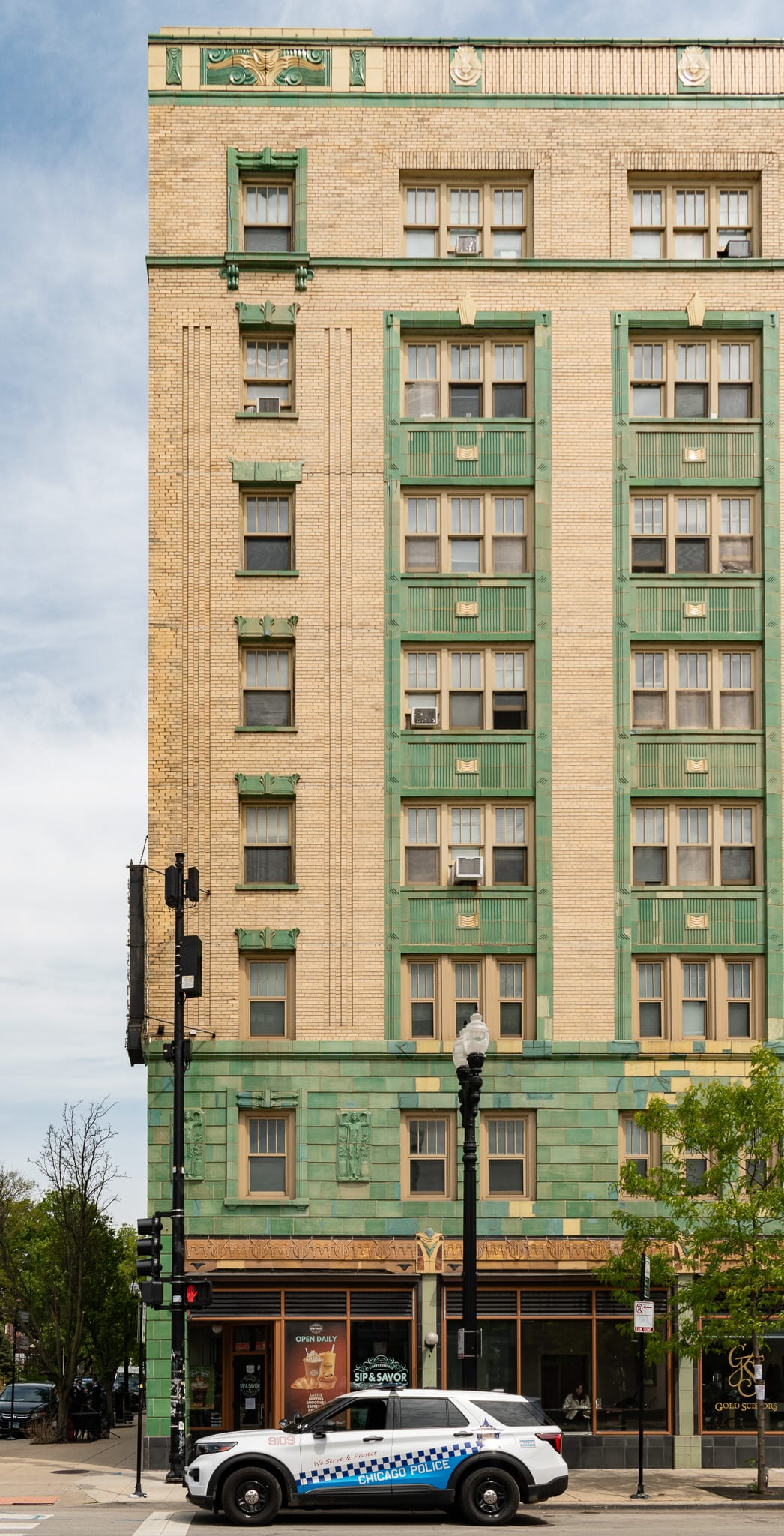
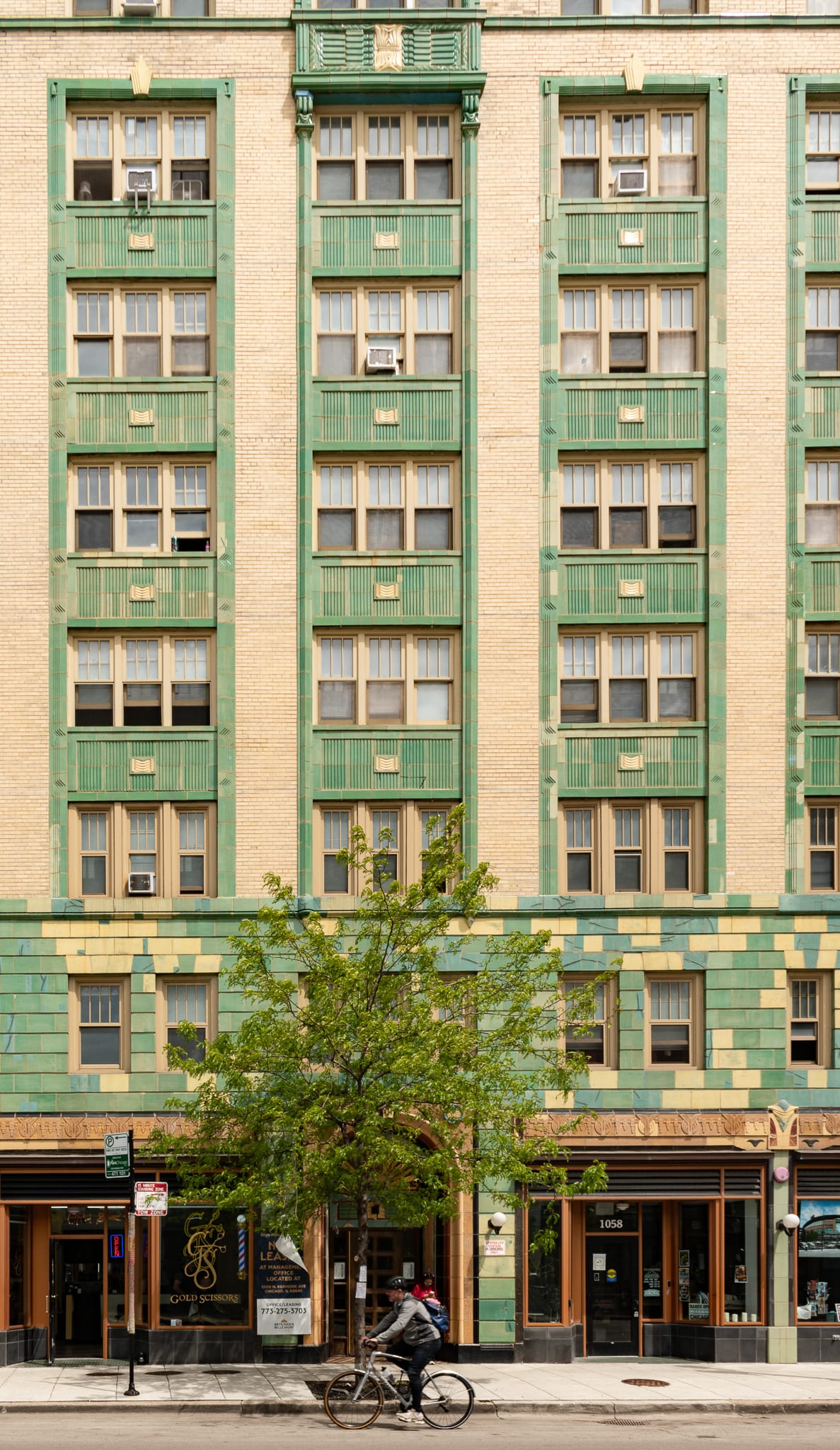
One of the flashiest examples of architectural terra cotta on Chicago’s North Side decorates a residential hotel. Designed by Koenigsberg & Weisfeld in a lively Egyptian Revival Art Deco, the Belle Shore opened in 1929 as a long-term apartment hotel for the white-collar middle class. Owners Max and Belle Malter (for whom it was named) managed to hold onto the building through the Great Depression—they even lived here—but beginning in the 1950s the Belle Shore was squeezed, stigmatized, and neglected alongside the rest of Chicago’s residential hotels as more than 50,000 SRO rooms disappeared across the city. Thankfully, affordable housing developer Peter Holsten acquired the building in 1995, assembling a complicated stack of public money and tax credits from the City of Chicago, the State of Illinois, and the U.S. Department of Housing & Urban Development to renovate the Belle Shore. No longer an SRO, the terra cotta queen of Edgewater remains a critical source of affordable housing today—the 140-unit building is income-restricted to those making up to 80% of the area median income.
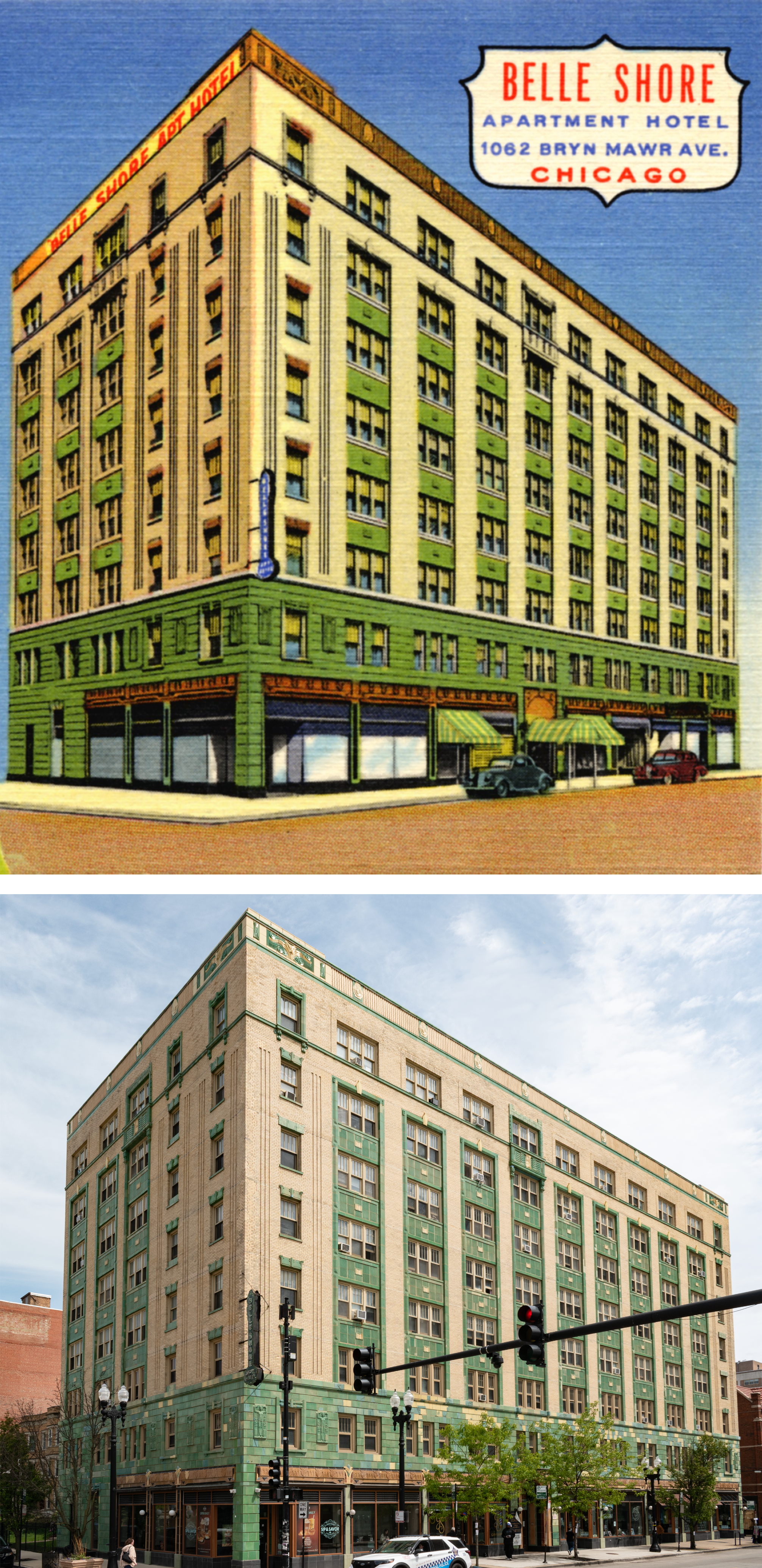
So, what’s changed? The Belle Shore remains a gem, but at 97 years old there have been a few:
- The Belle Shore Apt Hotel sign on the cornice was removed in the 1990s and some apartments sprouted window AC units.
- Another example of the disappearance of awnings from American streetscapes (boooo!), but the proliferation of street trees (hooray!).
- Some damaged green terra cotta tiles on the building’s first two floors were replaced with yellow ones, giving it the (mostly charming) aesthetic of a struggling houseplant.
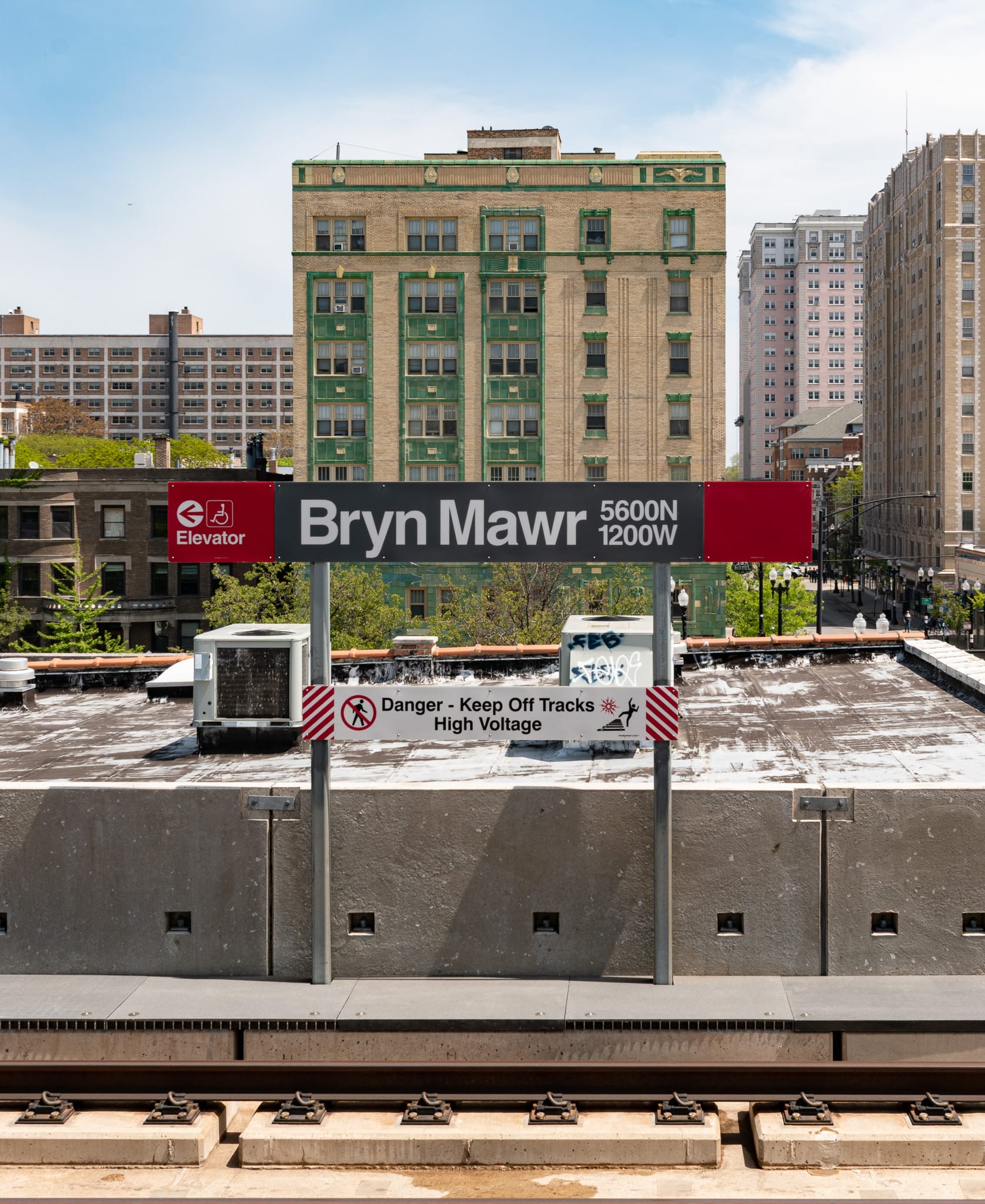
This part of Edgewater was originally conceived as an idealized sleepy suburb of single family homes, but it urbanized rapidly in the 1910s after the Northwestern Elevated opened a stop on Bryn Mawr in 1908. Initially a street-level stop, in 1921 it was elevated onto a viaduct, and with the heart of Edgewater only a short trip from the Loop, a dense housing boom followed. Max Malter—a Polish-speaking Jewish immigrant from the Austro-Hungarian Empire who’d built a successful laundry cleaning and fur business in Chicago—caught the tail end of that boom.
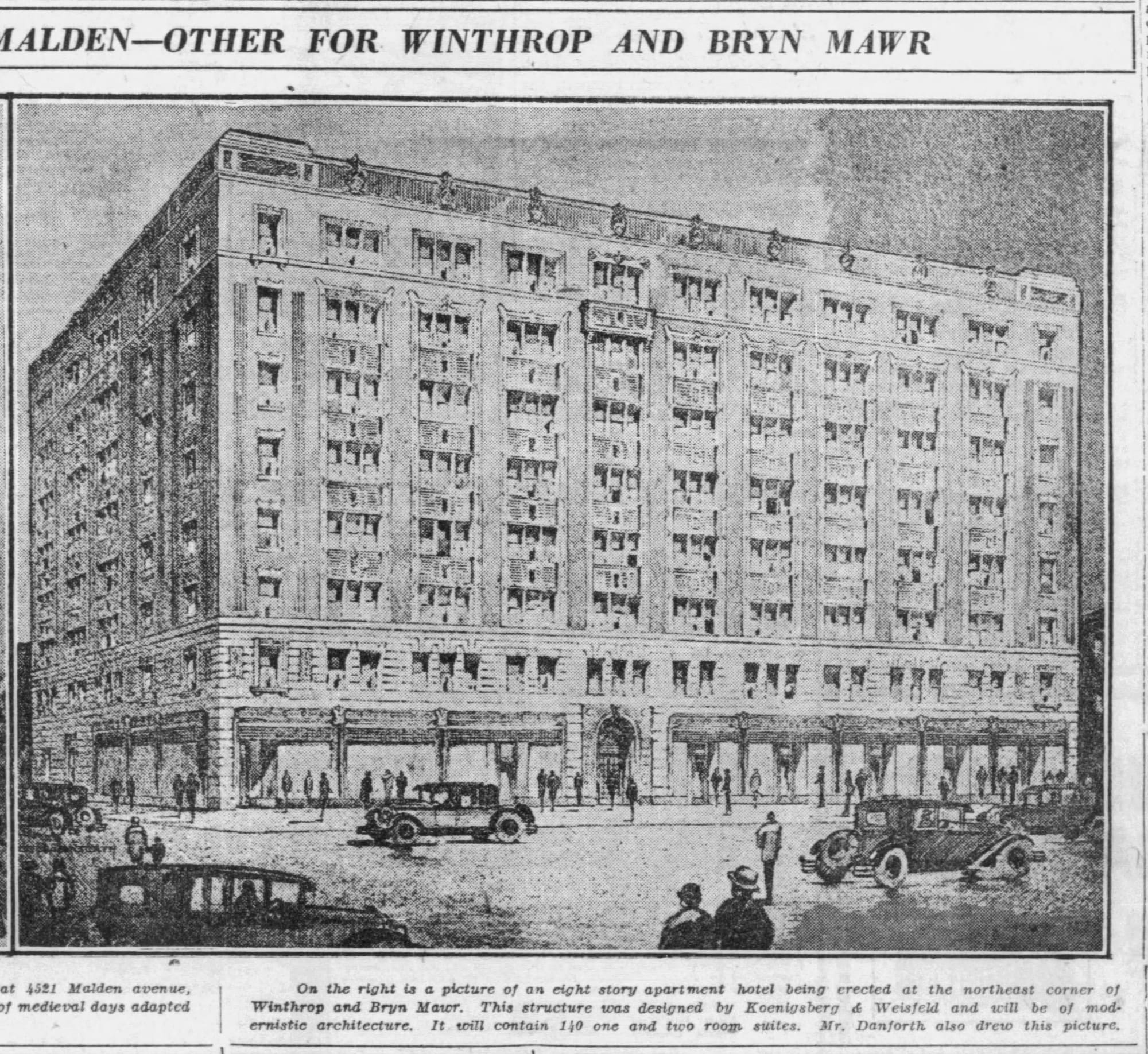
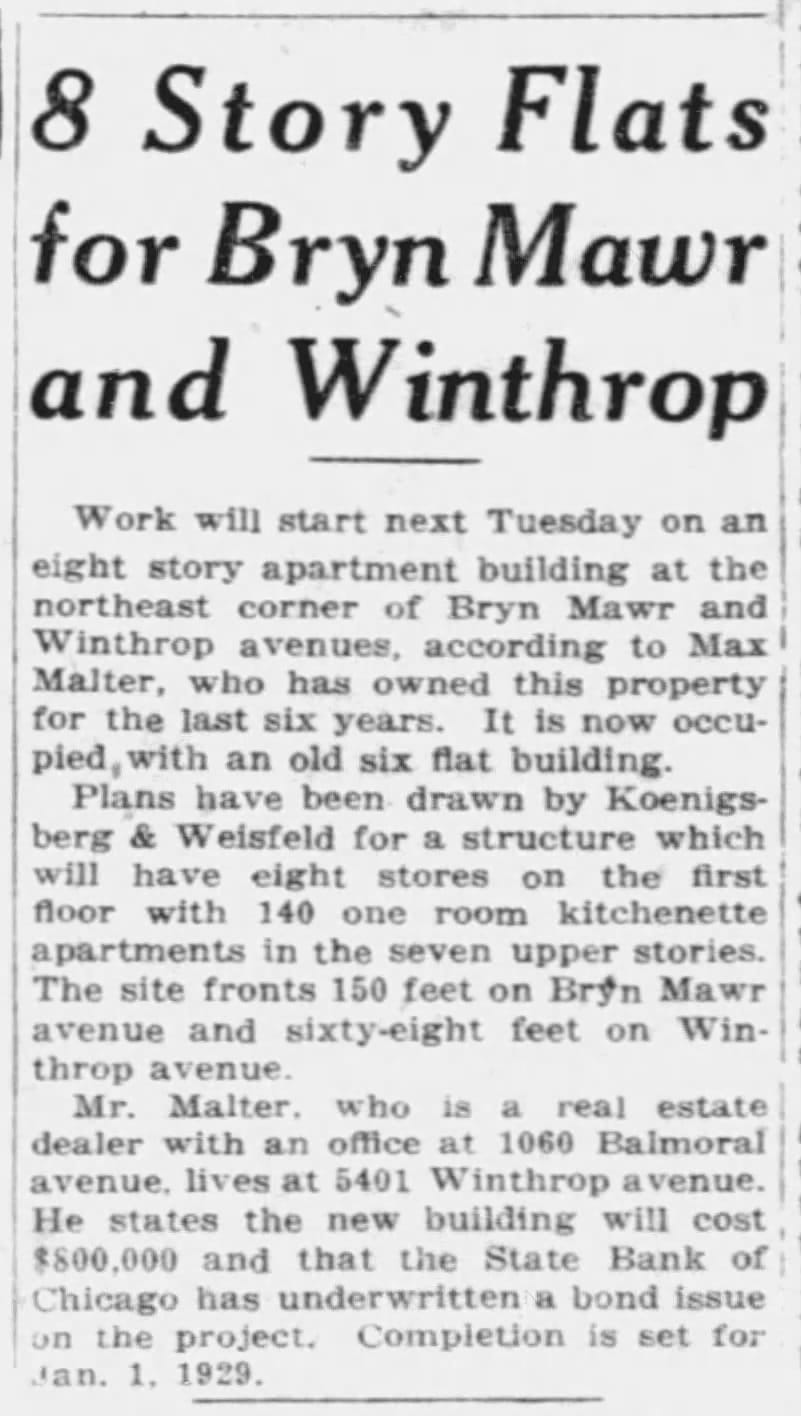
1928, rendering and article, Chicago Tribune | 2026, me
Malter, an Edgewater resident investing in his own neighborhood, planned to build a residential hotel on the corner of Bryn Mawr and Winthrop, hiring architects Nathaniel Koenigsberg & Leon H. Weisfeld in 1928. Koenigsberg & Weisfeld were, like every architecture firm in Chicago that decade, productive across all manner of buildings in the 1920s, but they carved out a particular niche in midrise residential hotels and apartment towers. A handsome handful still stand around the city—Georgian Revival at 420 W. Surf, Gothic Renaissance Revival at 1246 W. Pratt, Italian Romanesque at 601 W. Deming, etc.—but the Belle Shore is indisputably their most fun.
The Belle Shore combines green terra cotta, glazed yellow brick in a Flemish bond, and what might be every bit of Egyptian Revival ornament the Northwest Terra Cotta Company could manufacture into one of Chicago’s best examples of neighborhood Art Deco. Eight stories of Roaring Twenties flair, the building’s exterior extravagance was balanced by an interior focused on economy, with units maximizing spatial efficiency with Murphy beds and kitchenettes.
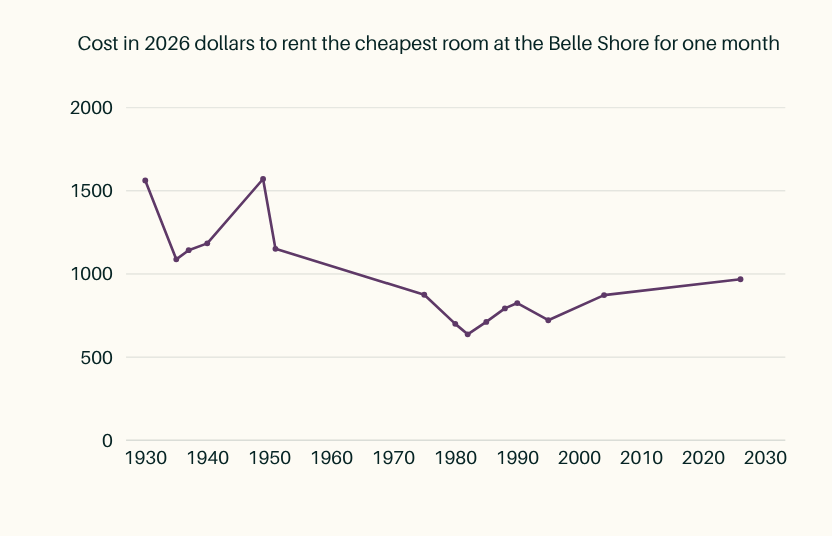
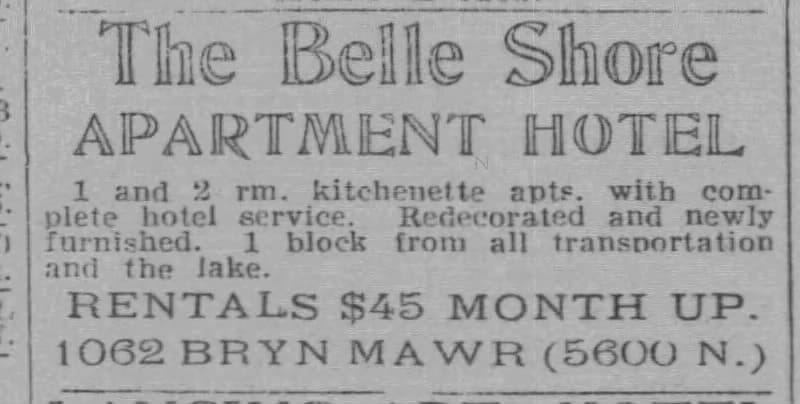
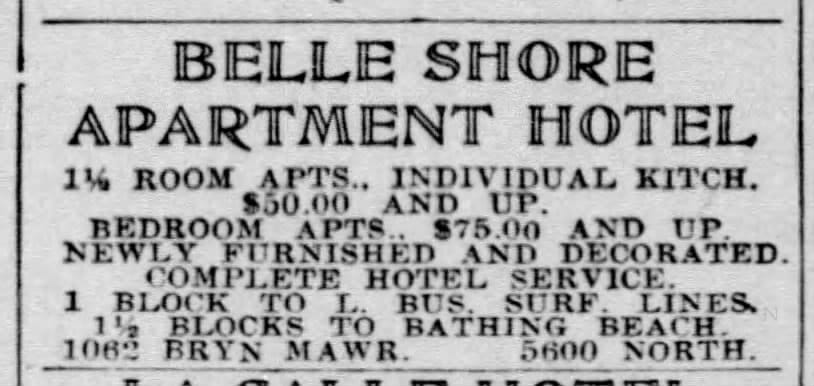
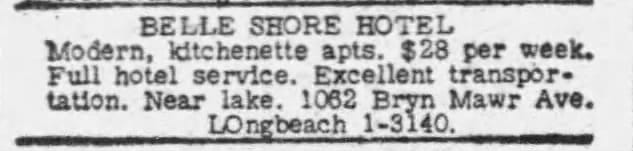
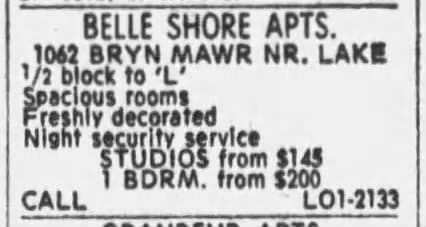
The Malters’ residential hotel—which was named for Max’s wife, Belle—contained 138 units, mostly intended for medium and long-term stays. Tenants mainly came from the white collar middle-class—teachers and clerks, stenographers and secretaries. For the first half of the 20th century, residential hotels (and later SROs) like the Belle Shore were a key part of the American housing stock, offering flexible and affordable living arrangements aimed at the young, the transient, the old, the wealthy, and the poor. In its heyday, monthly rent for a studio at the Belle Shore hovered between $1,000 and $1,500 in 2026 dollars, underlining that this was a solidly middle-class place to live—and it must have been a decent enough place to live, as most of the residents in 1940 had been there for at least five years.
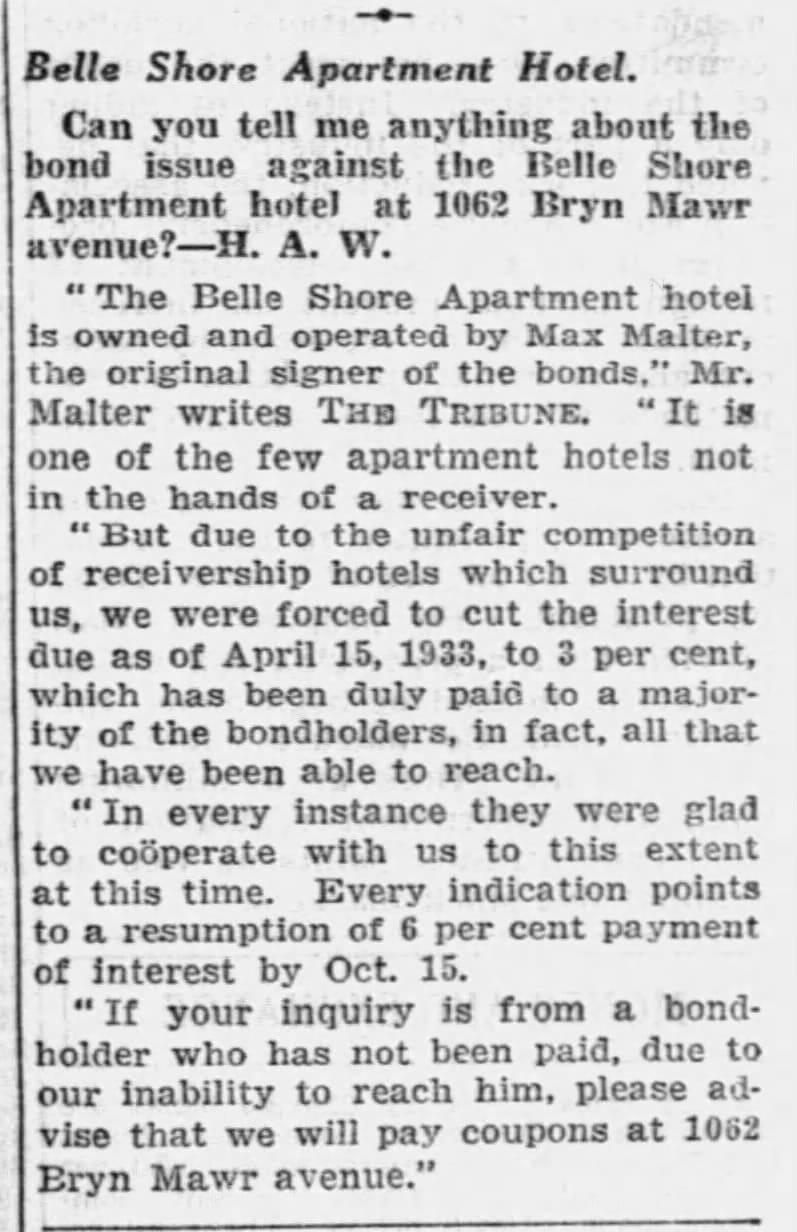
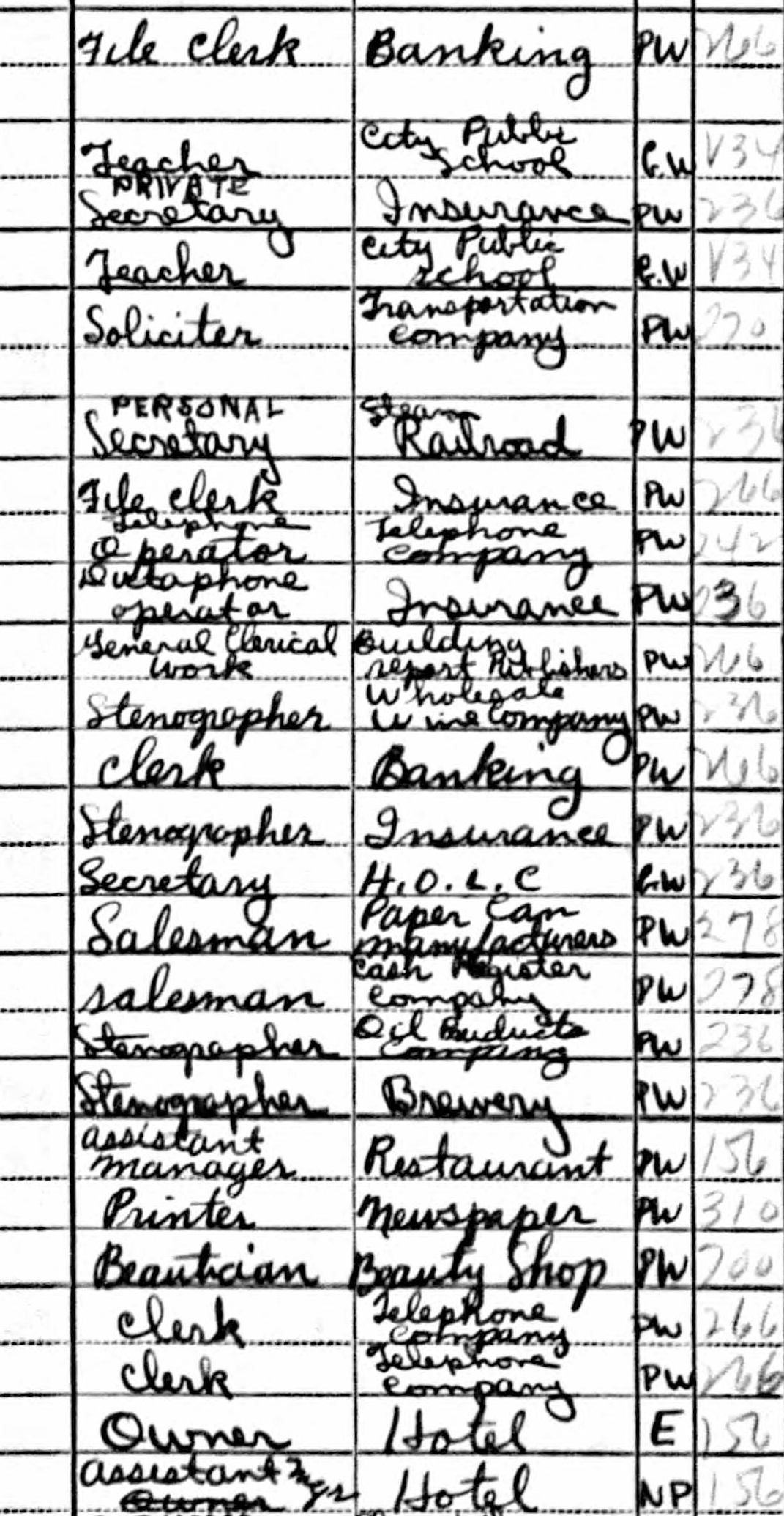
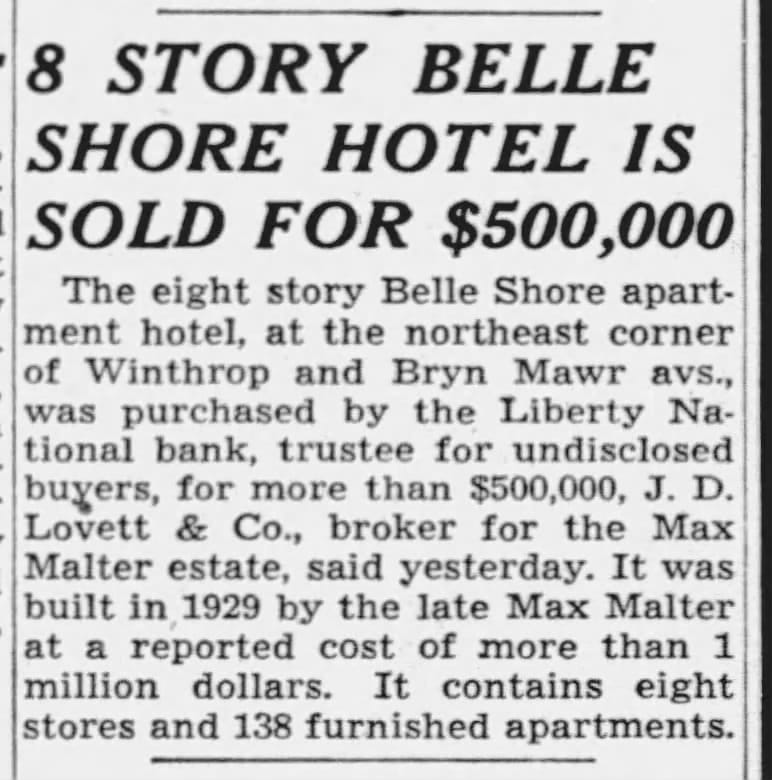
1933, Chicago Tribune | List of occupations of Belle Shore residents in the 1940 census | 1946, Chicago Tribune
However, 1929—on the eve of the Wall Street crash and the Great Depression—was a terrible time to open a new residential hotel. The Malters actually ended up living in the building for most of the 1930s, with Belle working as the Assistant Manager. Opening into the throes of the Great Depression and staked to a building they’d invested so much into, it's easy to imagine the Malters had no choice but to live here. Still, they managed to hold onto the hotel through the depression, then sold it for $500k in 1946 after Max Malter died (the equivalent to more than $9m in 2026, Belle must've been okay).
Residential hotels and SROs disappeared across the US starting in the 1950s—squeezed out by government regulation and social stigma, demolished in urban renewal projects or through owner neglect, converted into tourist hotels and leased apartments. In the early 1970s, Chicago still had more 50,000 single-room occupancy (SRO) units in residential hotels like the Belle Shore, but today there are no more than 700 SRO units left in fewer than 40 buildings scattered across the city (and, despite an SRO Preservation Ordinance, more are closing every year, including two recently in Uptown).
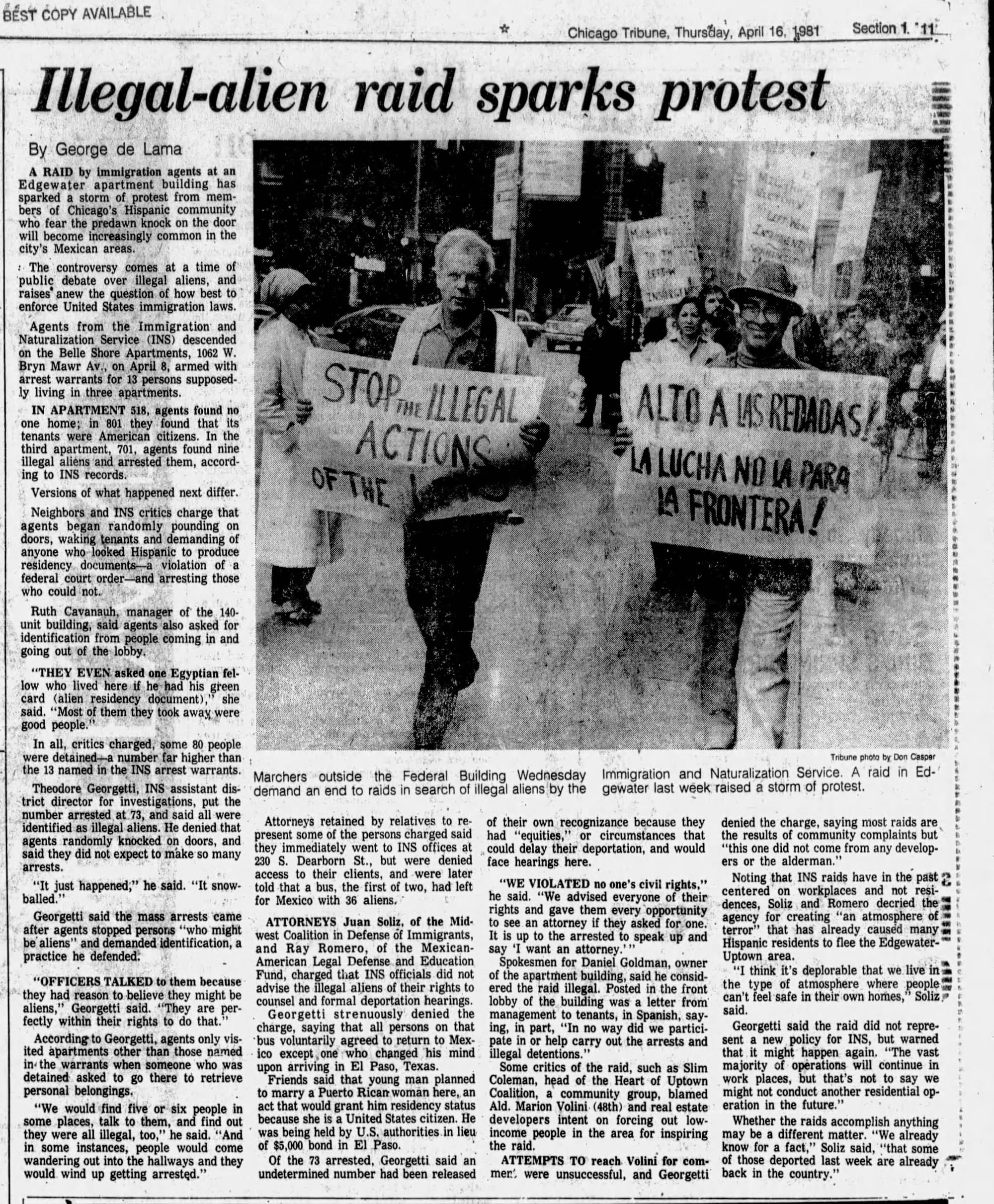
Sliding downmarket, neglected, stigmatized, and full of vulnerable people, the Belle Shore was the site of a traumatic INS immigration raid in 1981, a precursor to the masked ICE and CBP agents kidnapping and executing regular people across the United States today. Armed with arrest warrants for 13 people in the Belle Shore, the INS went amok, knocking on random doors and accosting anyone in the building who looked Hispanic—they ended up detaining more than 80 people in a single raid.
By the early 1990s the Belle Shore was in rough shape, but Edgewater was gentrifying. In 1995 the Bryn Mawr Historic District was added to the National Register of Historic Place, with the Belle Shore included as a contributing building, and that same year affordable housing developer Peter Holsten closed a deal to acquire the Belle Shore. Assembling a convoluted stack of funding—typical for affordable housing developments, part of the reason they’re more expensive to build than market-rate ones—consisting of historic preservation and low-income housing tax credits, HUD mortgage insurance, below-market loans from the state, and at least $6m in TIF funding, Holsten embarked on a multi-year renovation of the building that wrapped up in 1998. Tenants were relocated during construction and brought back as units came online. The U.S. Department of Housing and Urban Development awarded the renovation of the Belle Shore the 1999 National Trust/HUD Secretary's Award for Excellence in Historic Preservation.
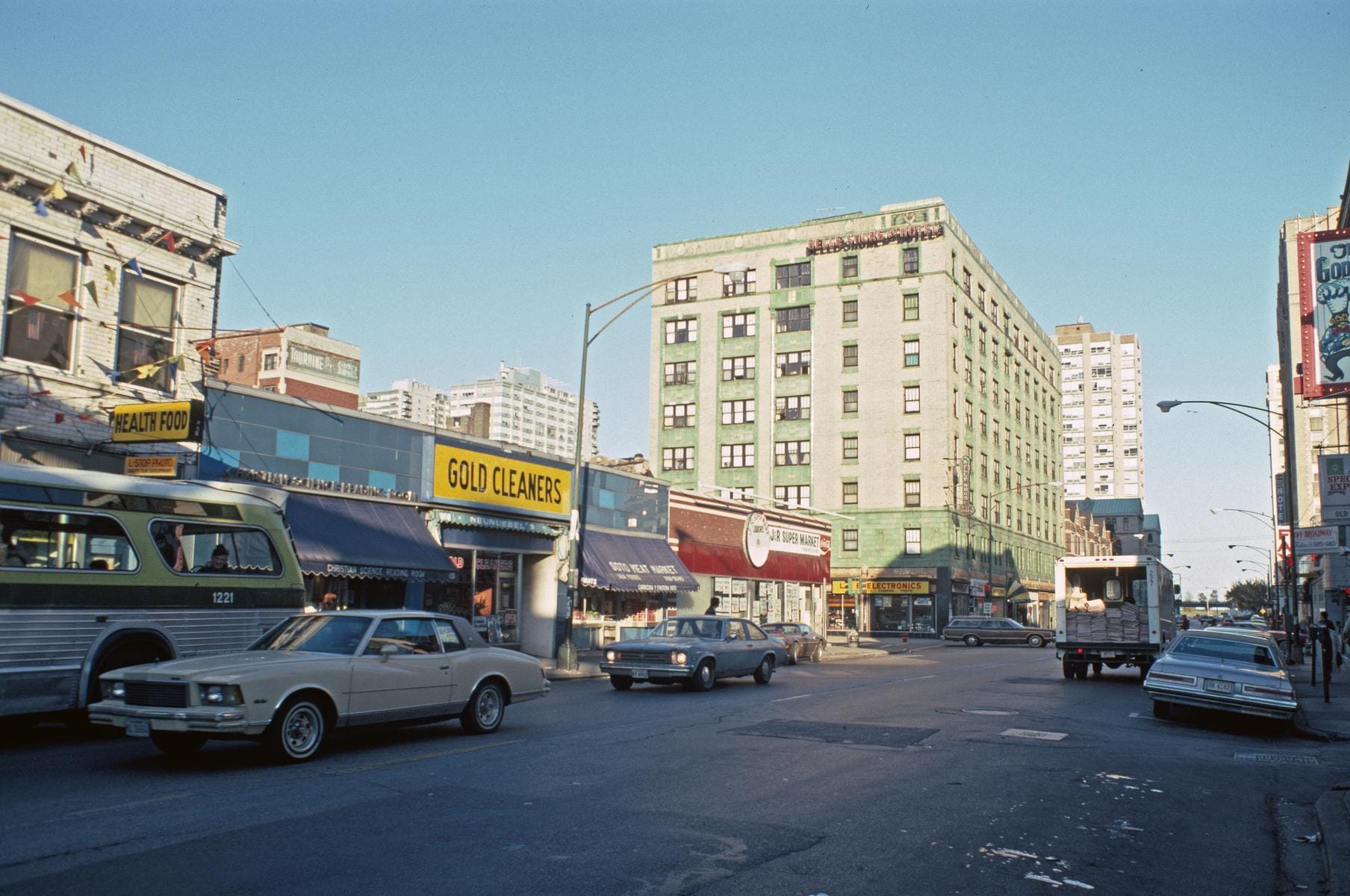
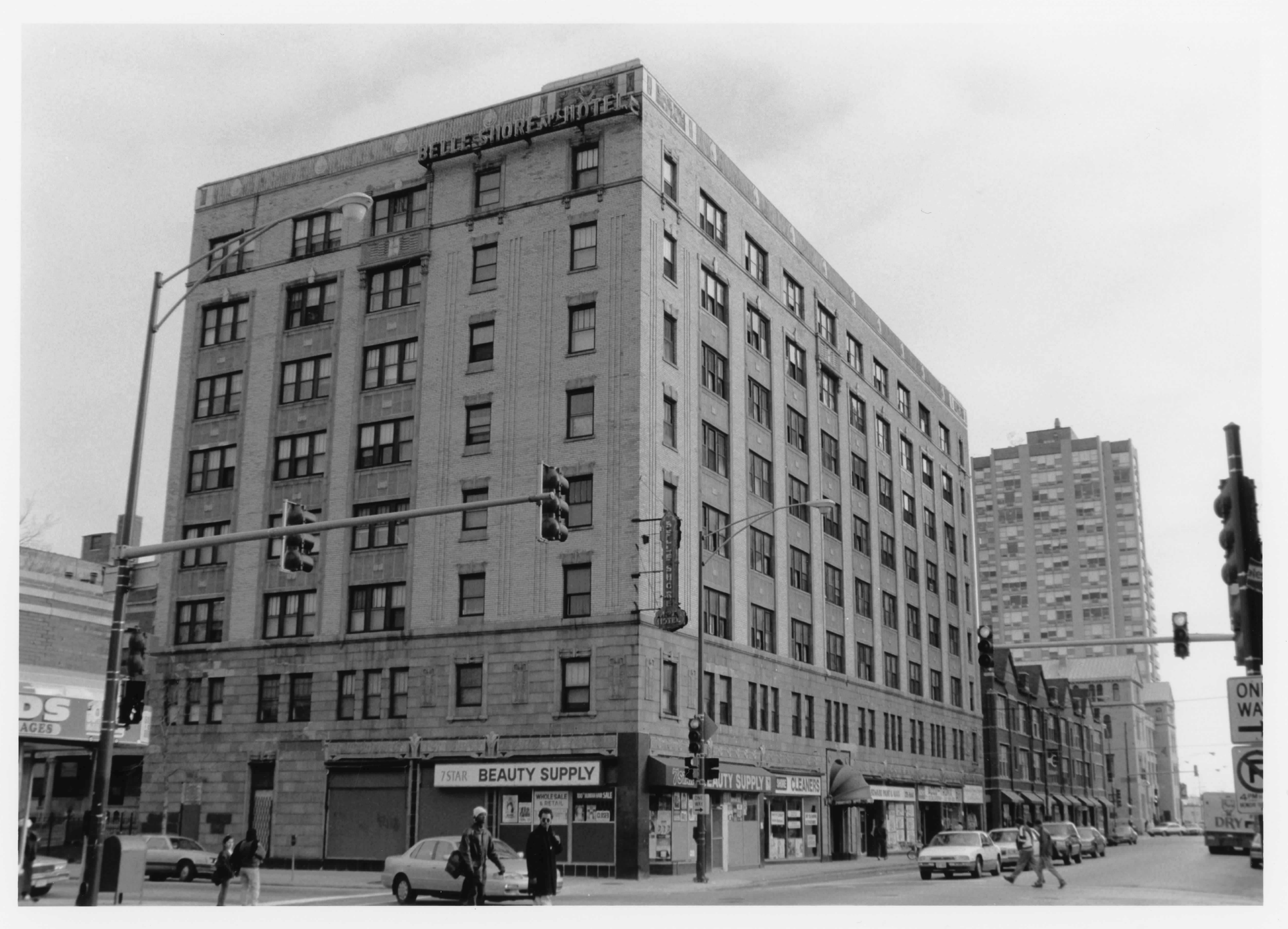
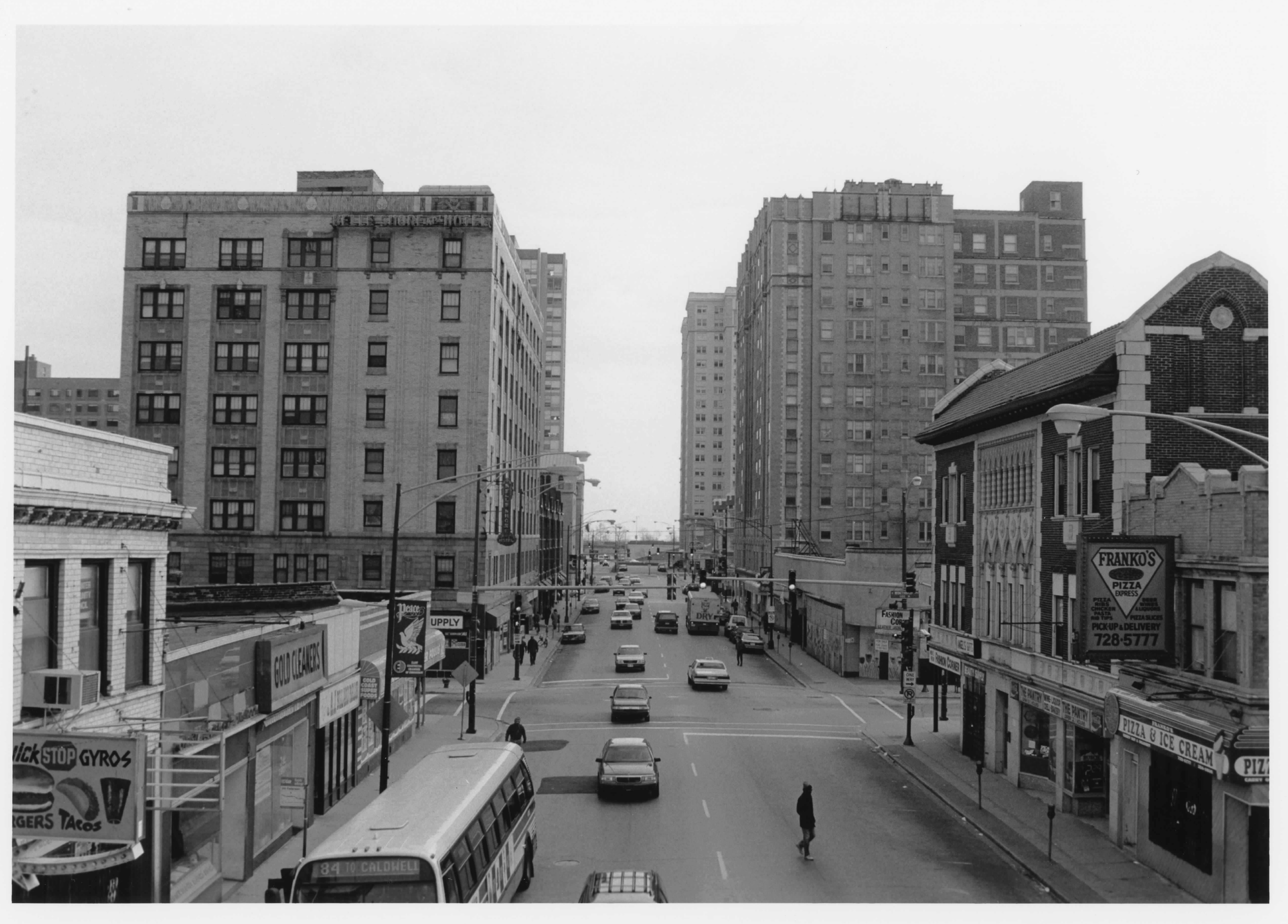
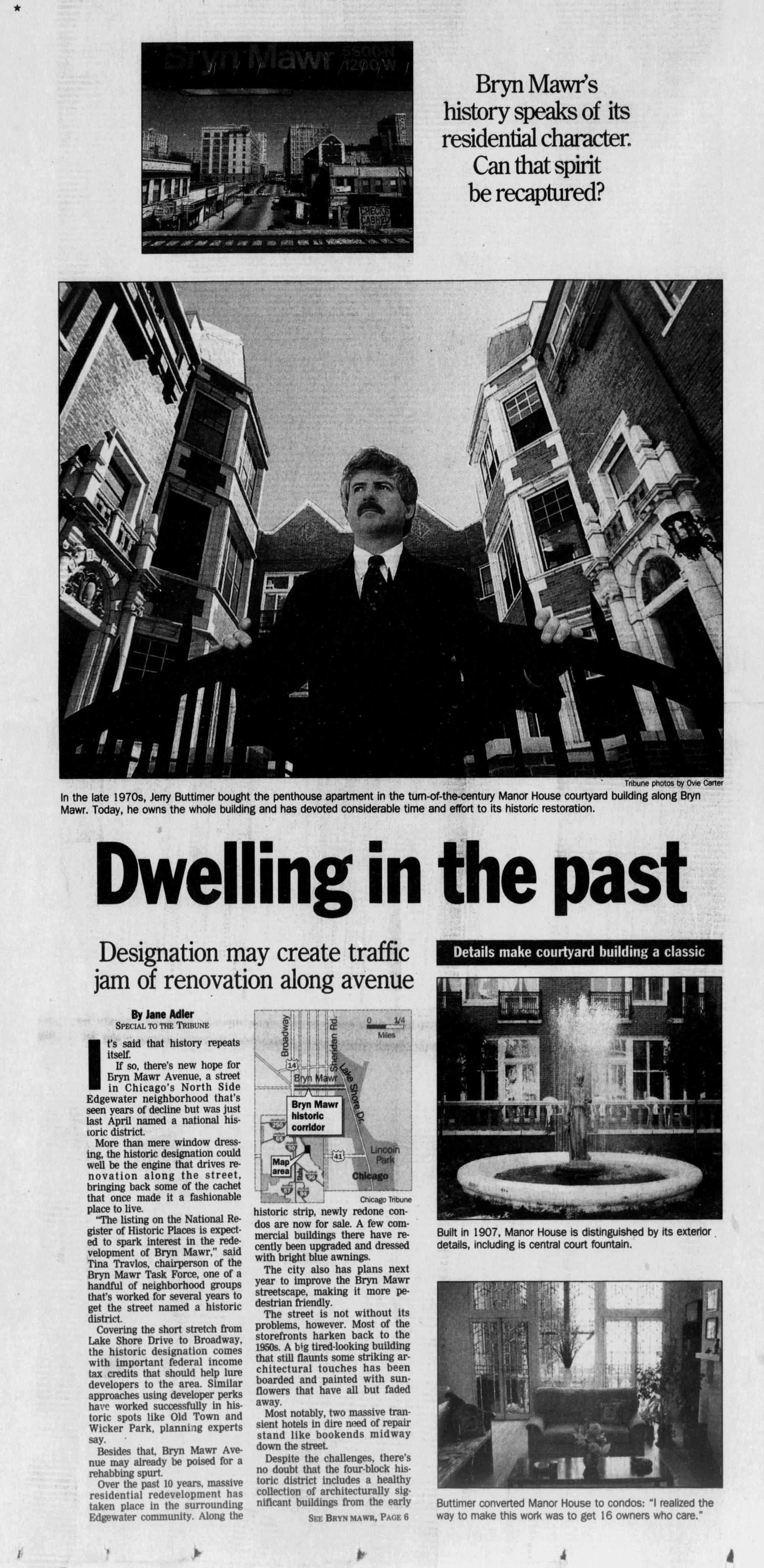
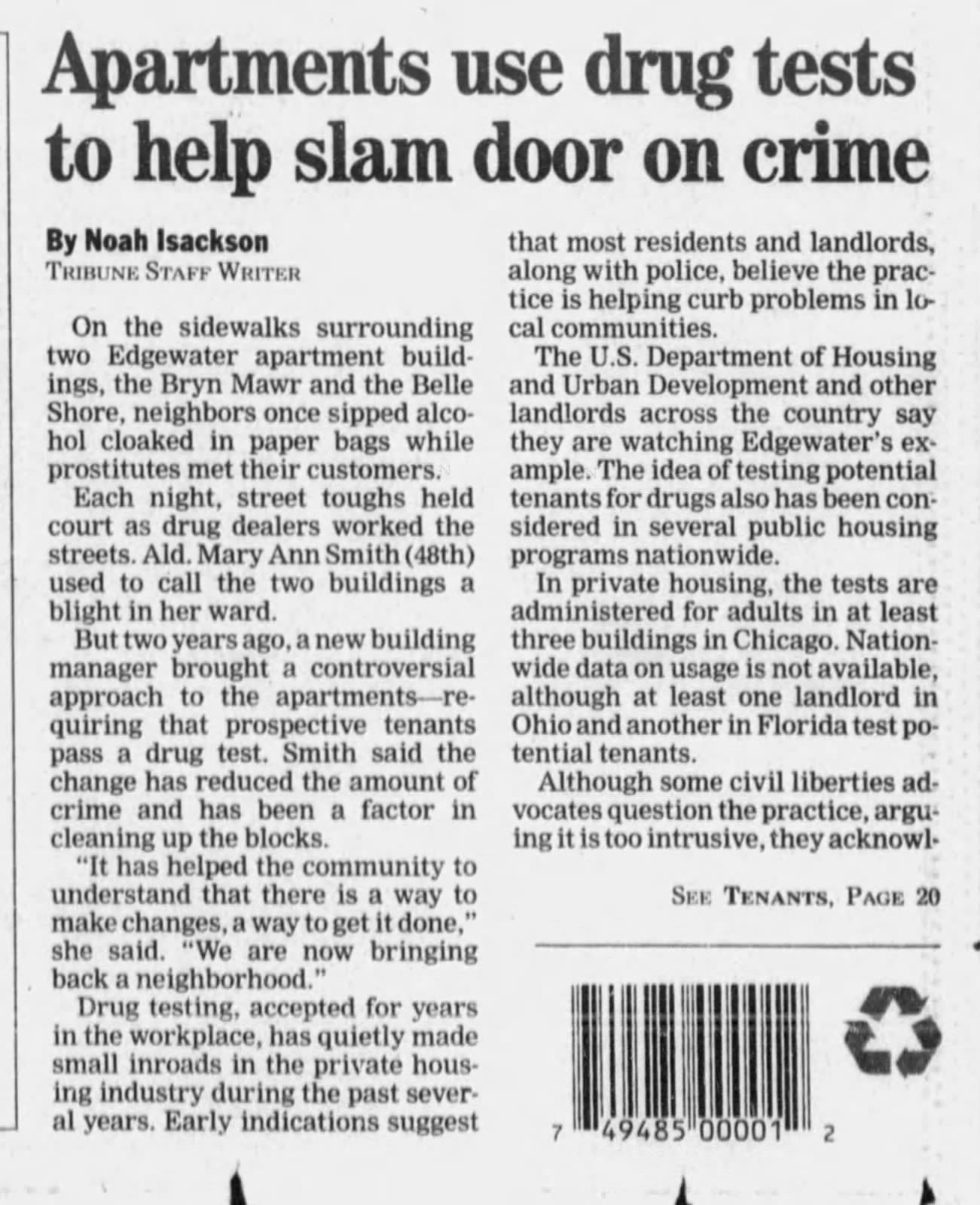
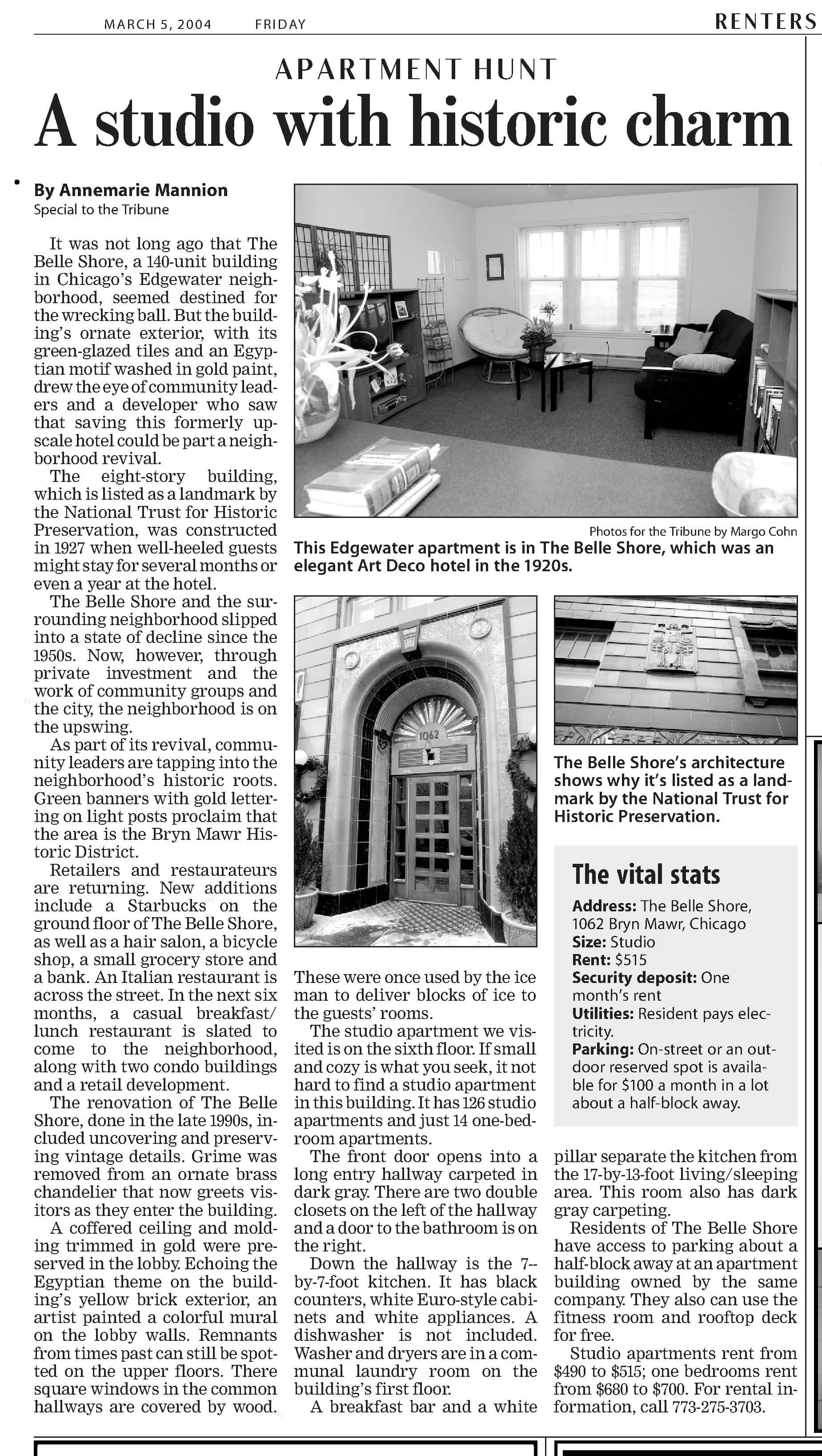
1980, C. William Brubaker, UIC Library via Chicago Collections | 1994, J.B. Spector, NRHP Nomination Form | 1994, J.B. Spector, NRHP Nomination Form | 1995, Chicago Tribune | 2000, Chicago Tribune | 2004, Chicago Tribune | 2026, me | 2026, me
Holsten didn’t just change the physical building—they have a reputation as an invasive, tough, but ultimately relatively fair landlord (...for one example, Holsten required drug testing of Belle Shore tenants). After a long run as a developer and operator of affordable housing, Holsten started to wind down their portfolio in recent years, and in 2020 they sold the Belle Shore and the Bryn Mawr Hotel across the street—371 units of affordable housing in all—to Eagle Management for $25.7m. Eagle flipped the two buildings to Standard Communities for $46m only two years later. City of Chicago Landmarks since 2002, the Belle Shore is protected from aesthetic alterations in perpetuity, but it’ll be important to keep an eye on how the new owners stick to their legal commitments to the state and the city when it comes to affordability.
The Belle Shore was built as flexible, transit-oriented housing for ambitious middle-class professionals in a fast-growing Edgewater. Now, supported by the attractively rebuilt Bryn Mawr station (part of CTA’s Red-Purple Modernization Project) and the courageous Broadway Land Use Framework, which abolished racist and exclusionary apartment bans around mass transit stops, maybe we’ll see the next generation of Belle Shores sprout up around Edgewater.
Production Files
Further reading:
- City of Chicago Landmark Designation Report
- Bryn Mawr Historic District NHRP Nomination Form
- Living Downtown: The History of Residential Hotels in the United States by Paul Groth
- 1999 National Trust/HUD Secretary's Award for Excellence in Historic Preservation
- Once-Underutilized Shops Become Part of Revitalization Strategy
- Jaeger and Alter pay $46M for landmark apartments
 Frederick H. Lowe
 Maya Dukmasova
The publishing process for this one started out with comps to the Chelsea Hotel on Wilson and the Bryn Mawr across the street.
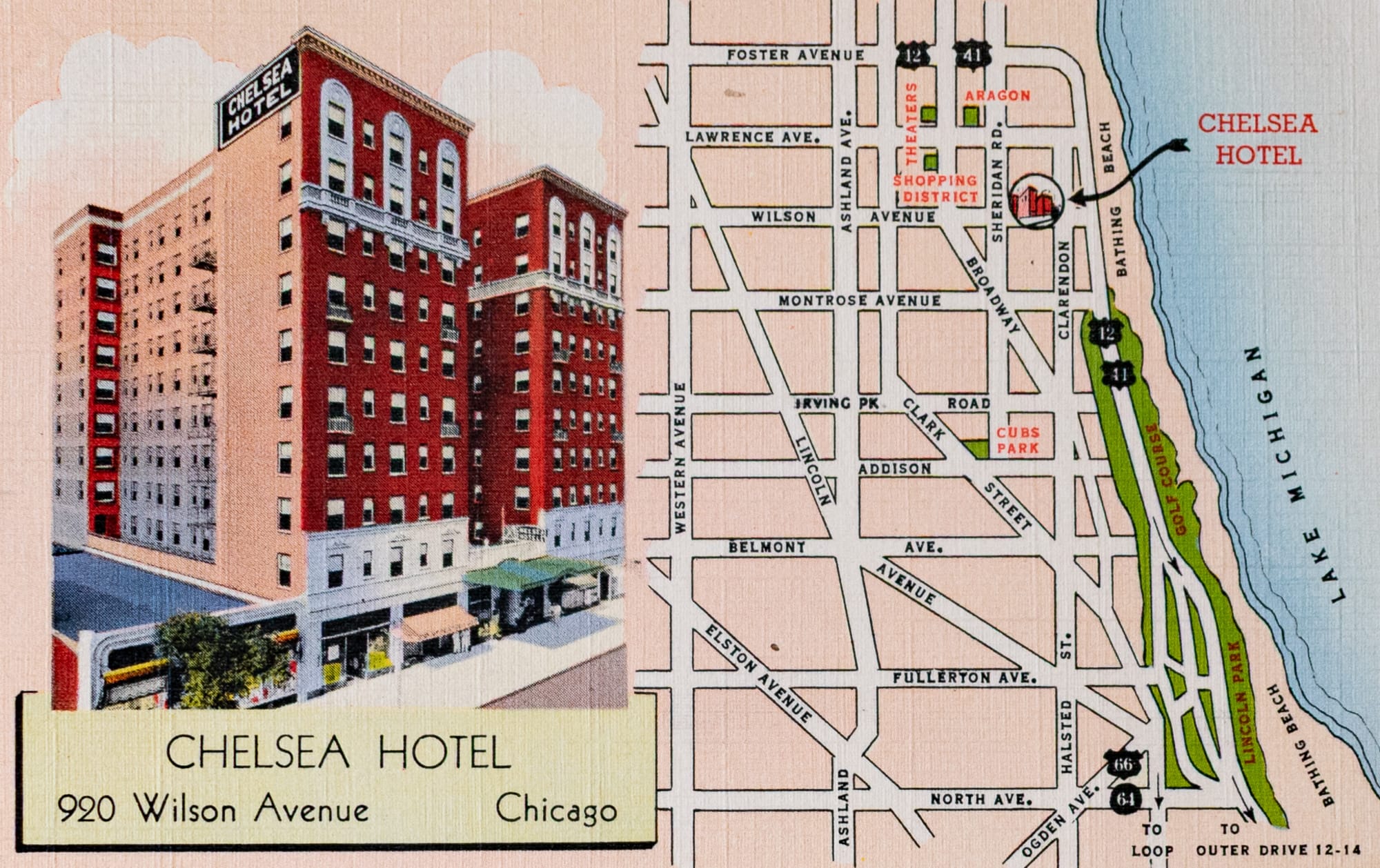
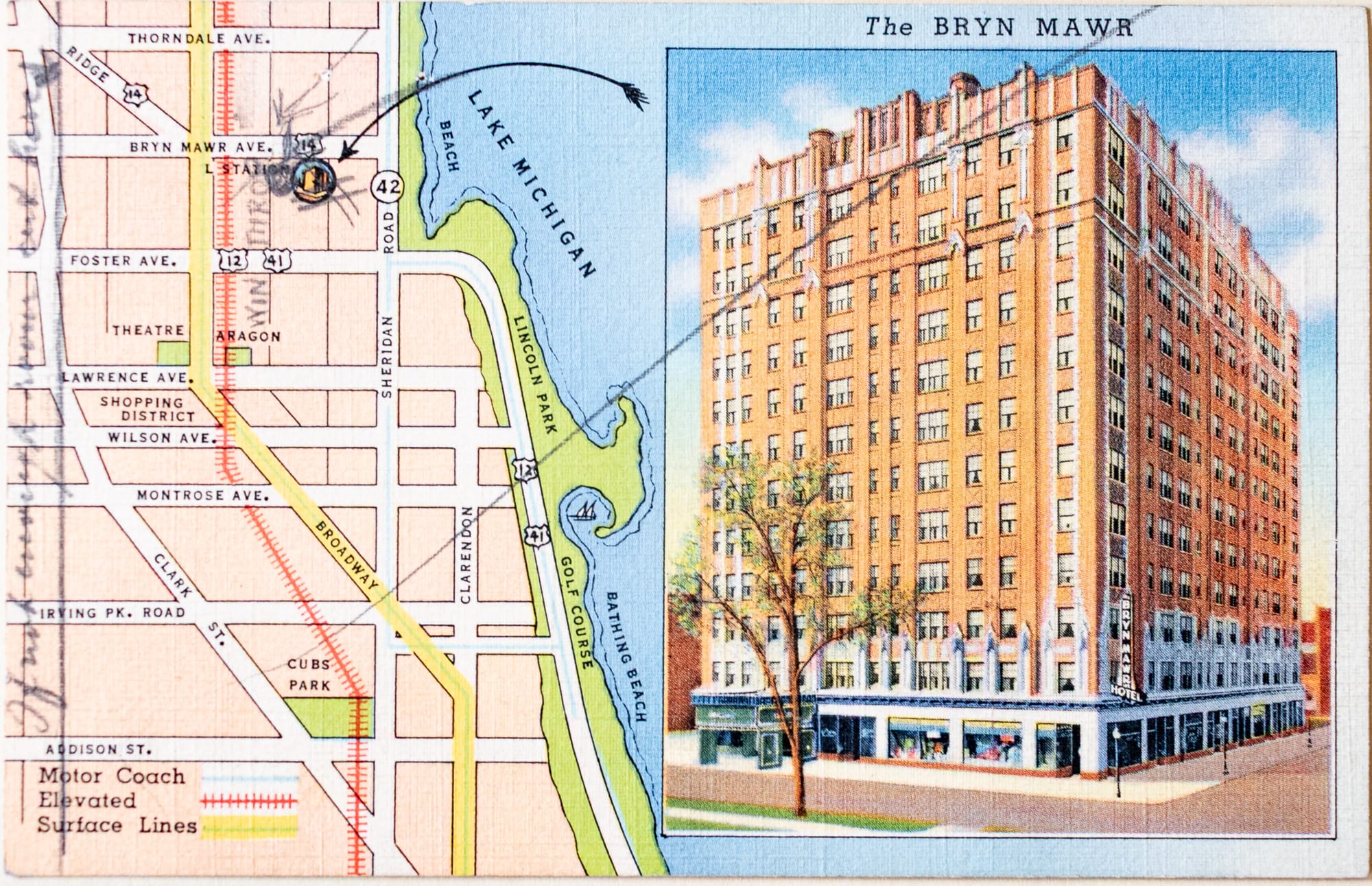
Comparison postcards in the production file, Curt Teich Postcard Archive, Newberry Library
Taking the style of those postcards, with a few changes to the map used for the Bryn Mawr across the street, Curt Teich & Co. came up with the below proposal. Notice that Max Malter signed it to give his approval, and they created the production order.
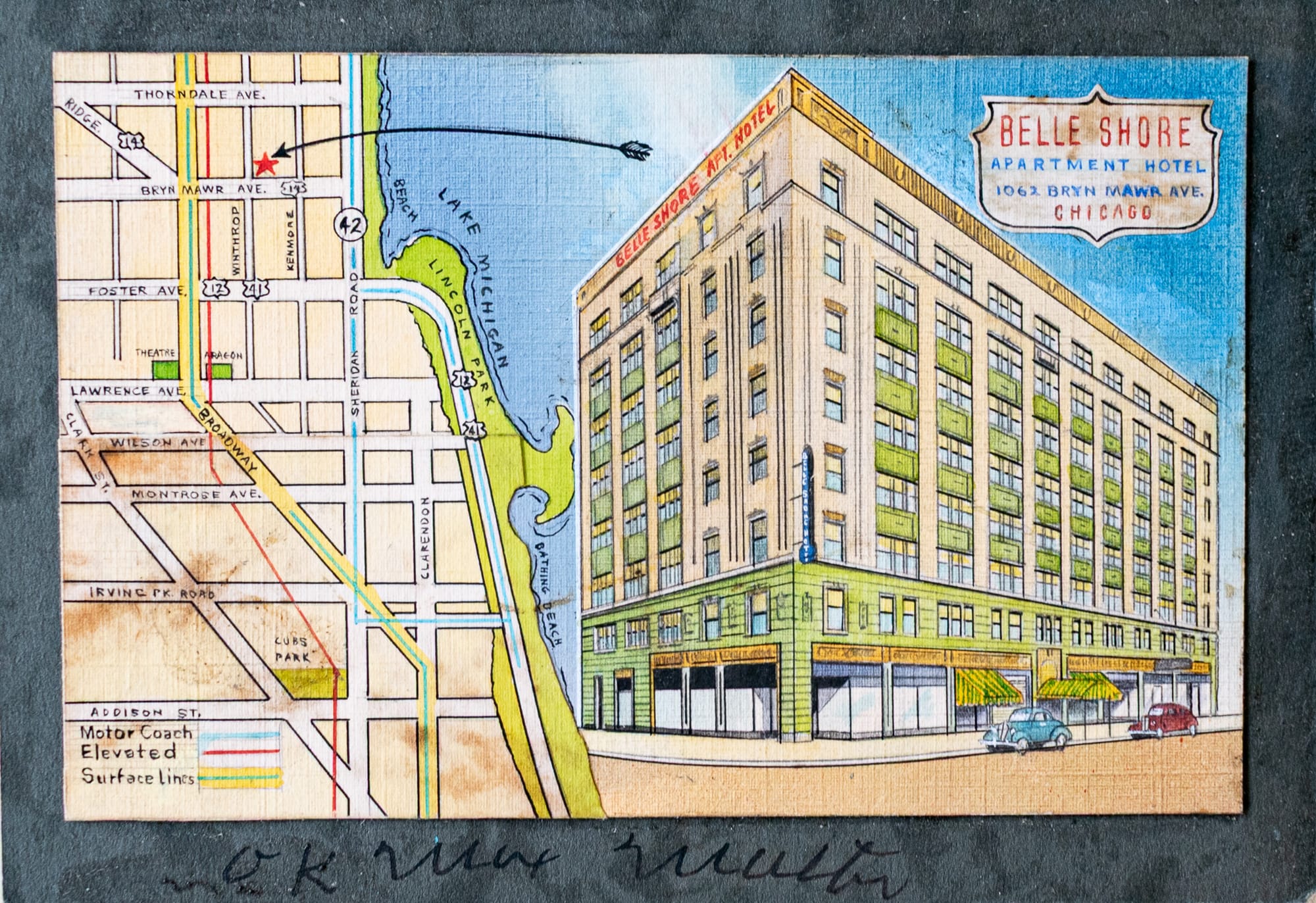
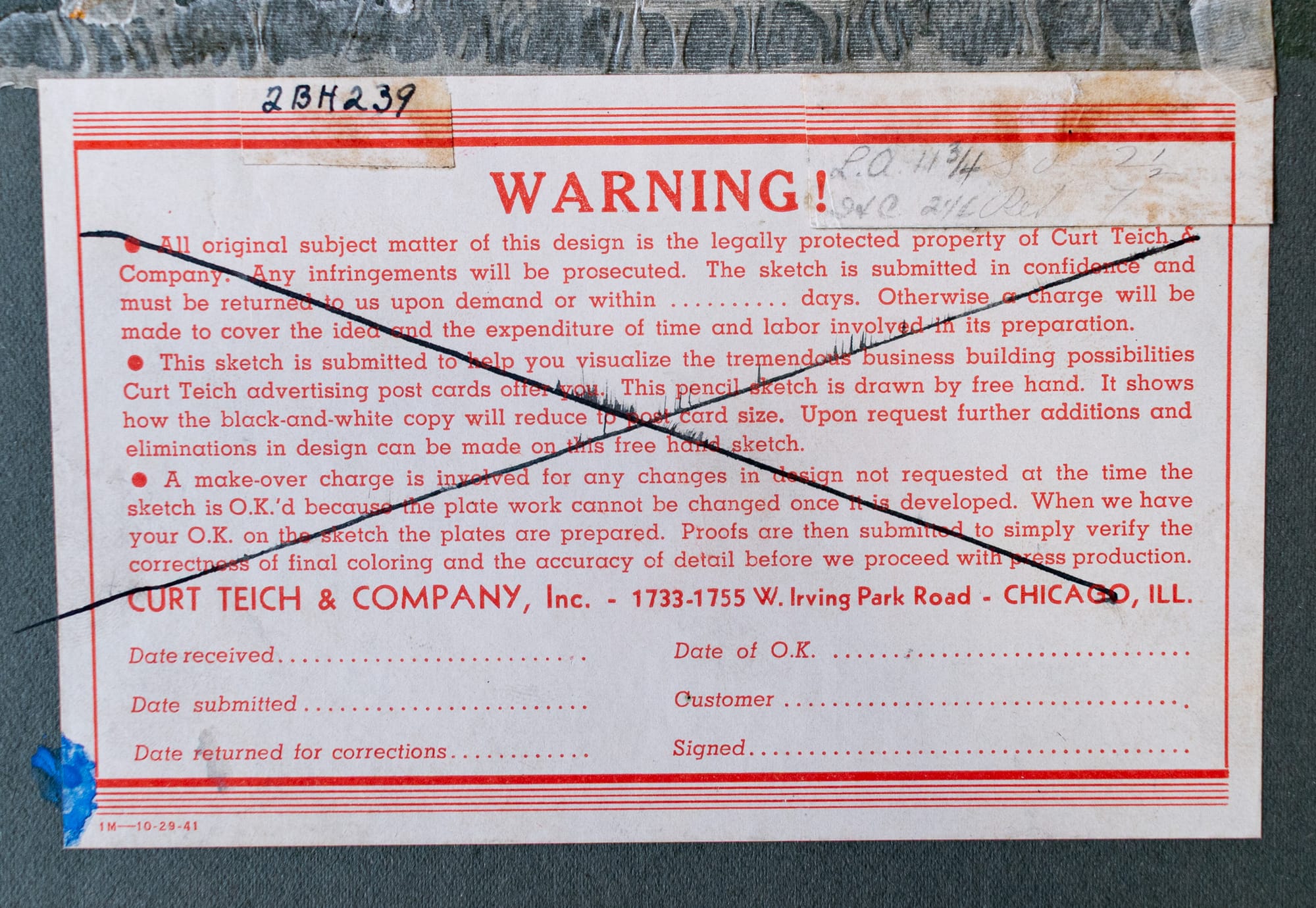
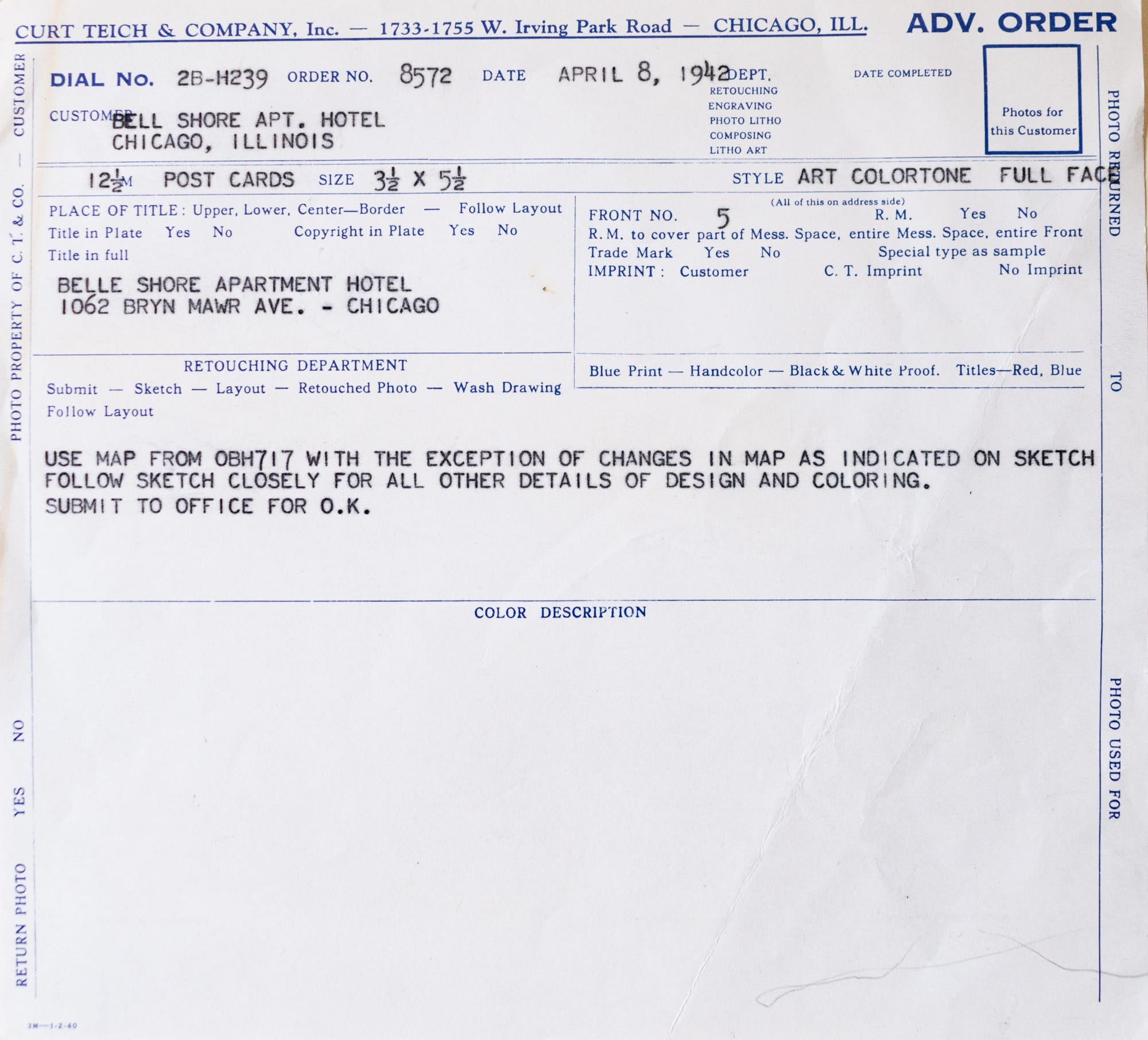
Handpainted mockup, legal boilerplate on the back of the mockup, and production order, Curt Teich Postcard Archive at the Newberry Library
The retouching department produced the below (this is a fun one–either you don't usually see so much of the original photo, or the retouching is pretty light, this has both).
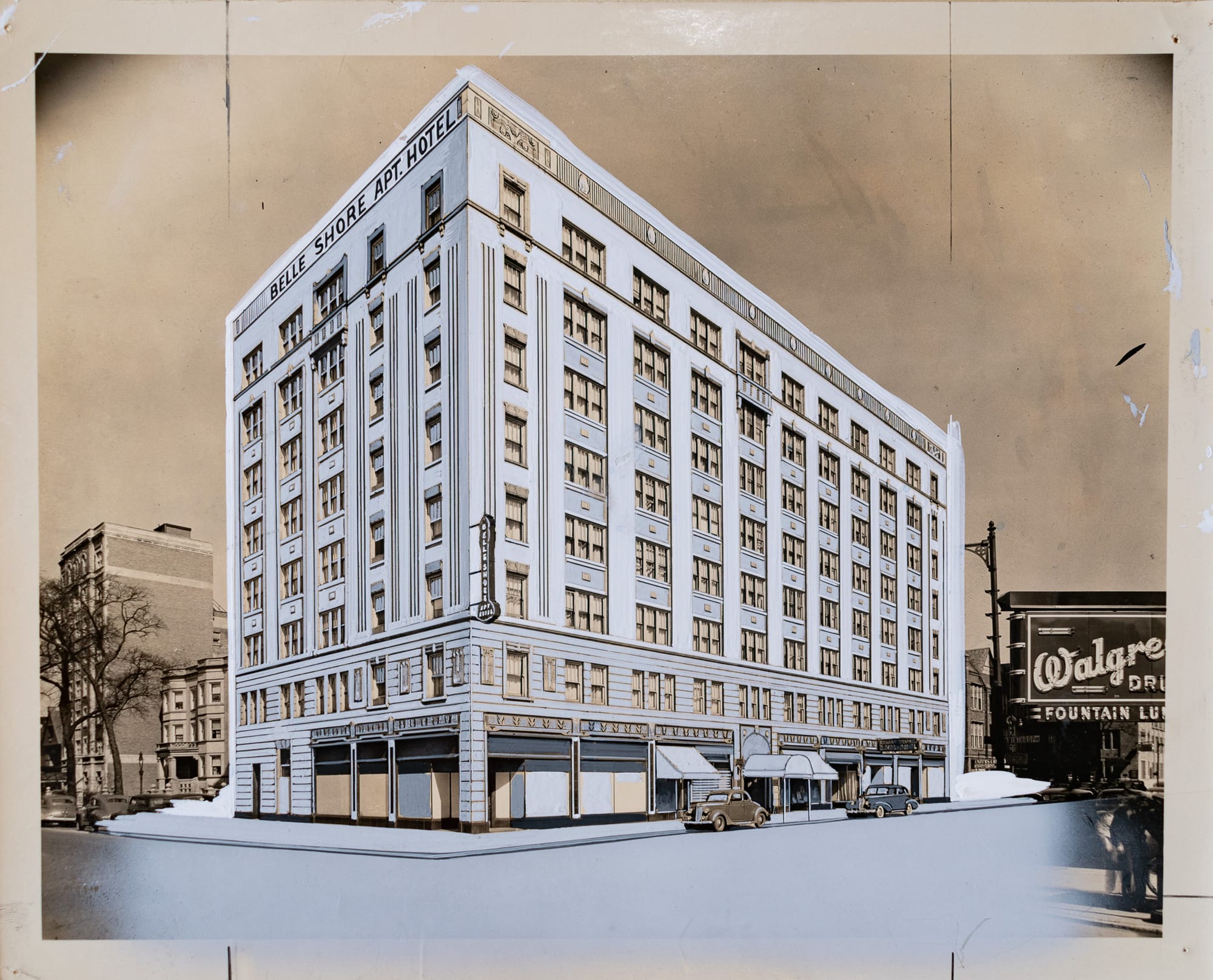
And then it went into production with the various proofs and prints.
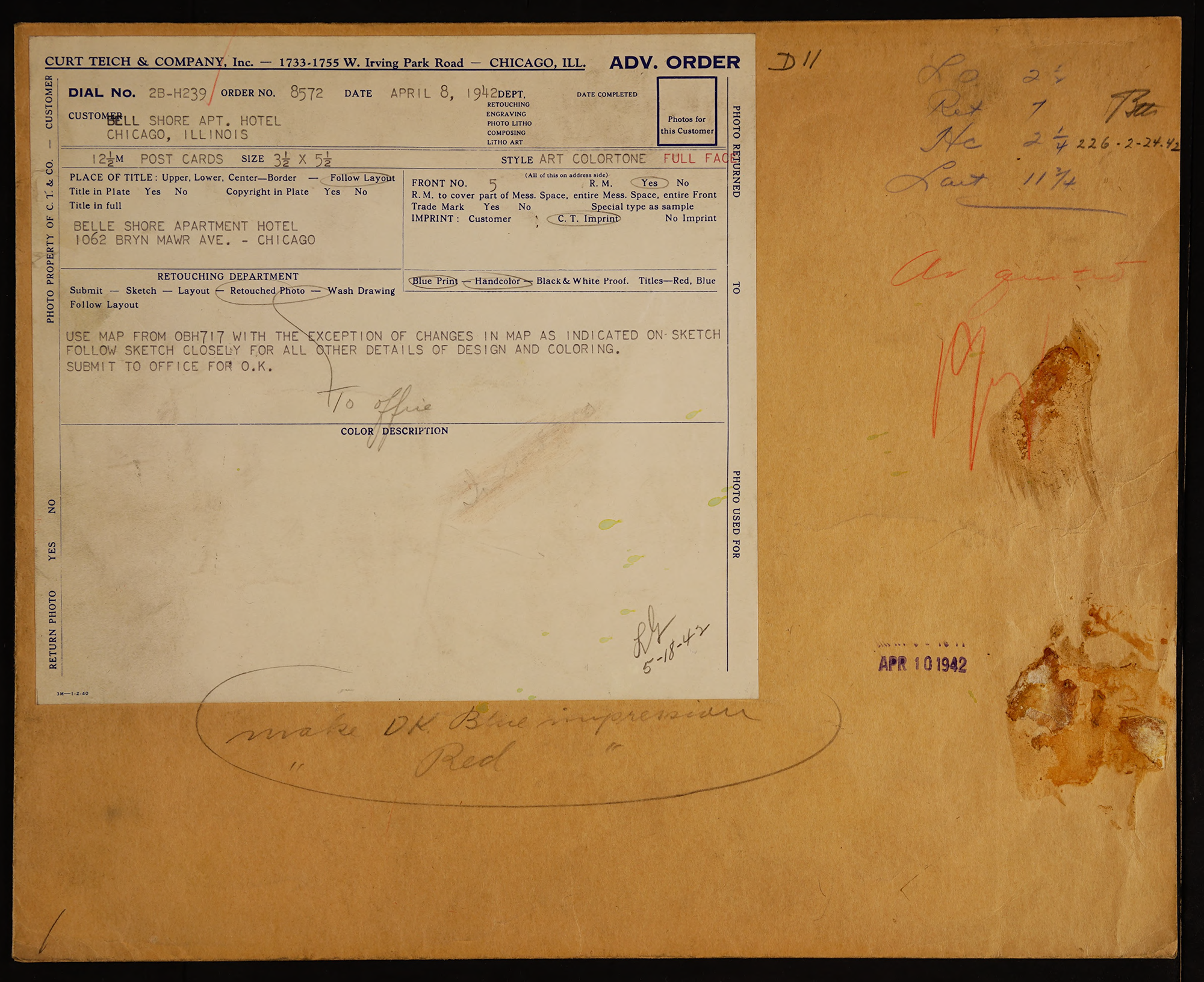
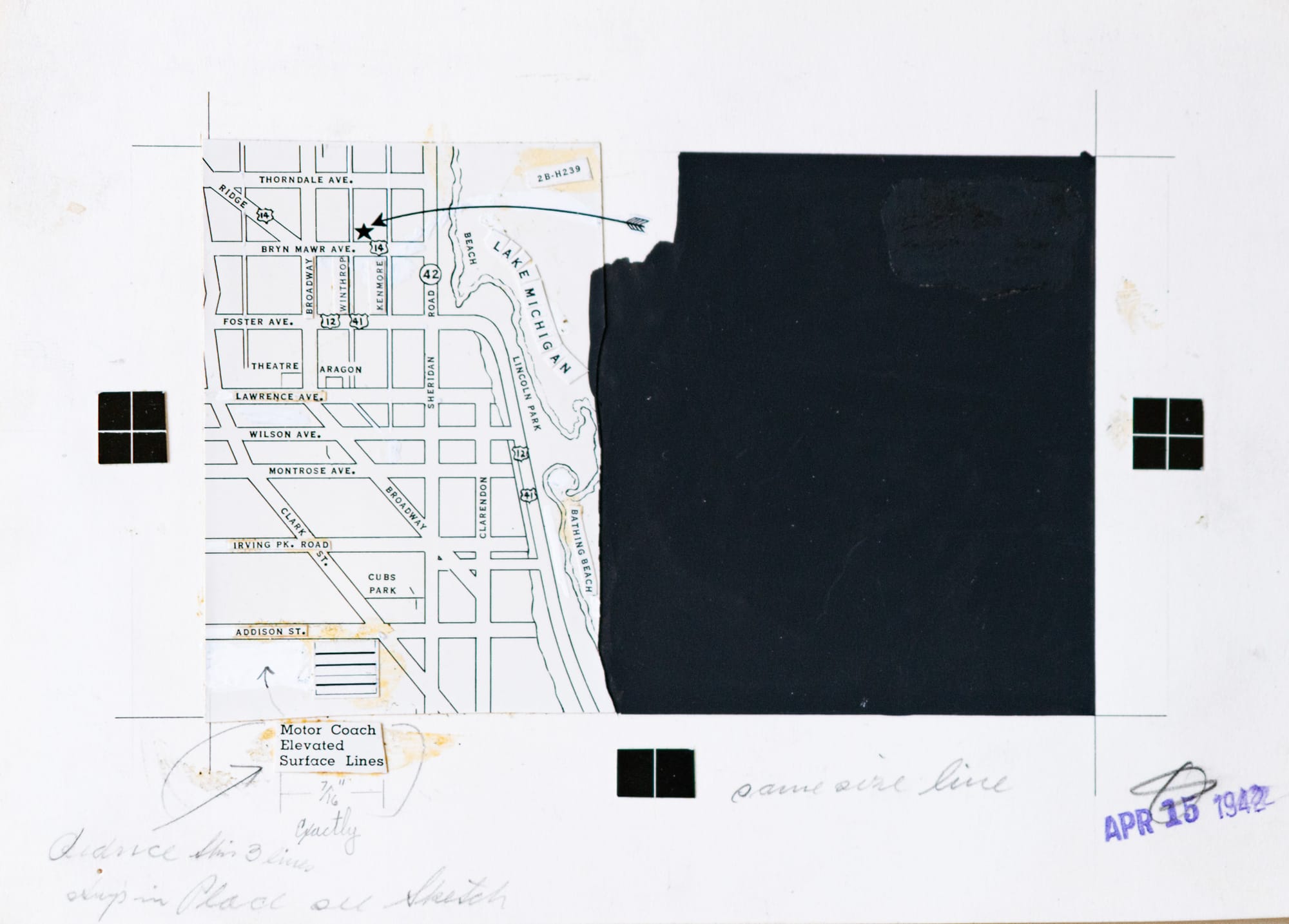
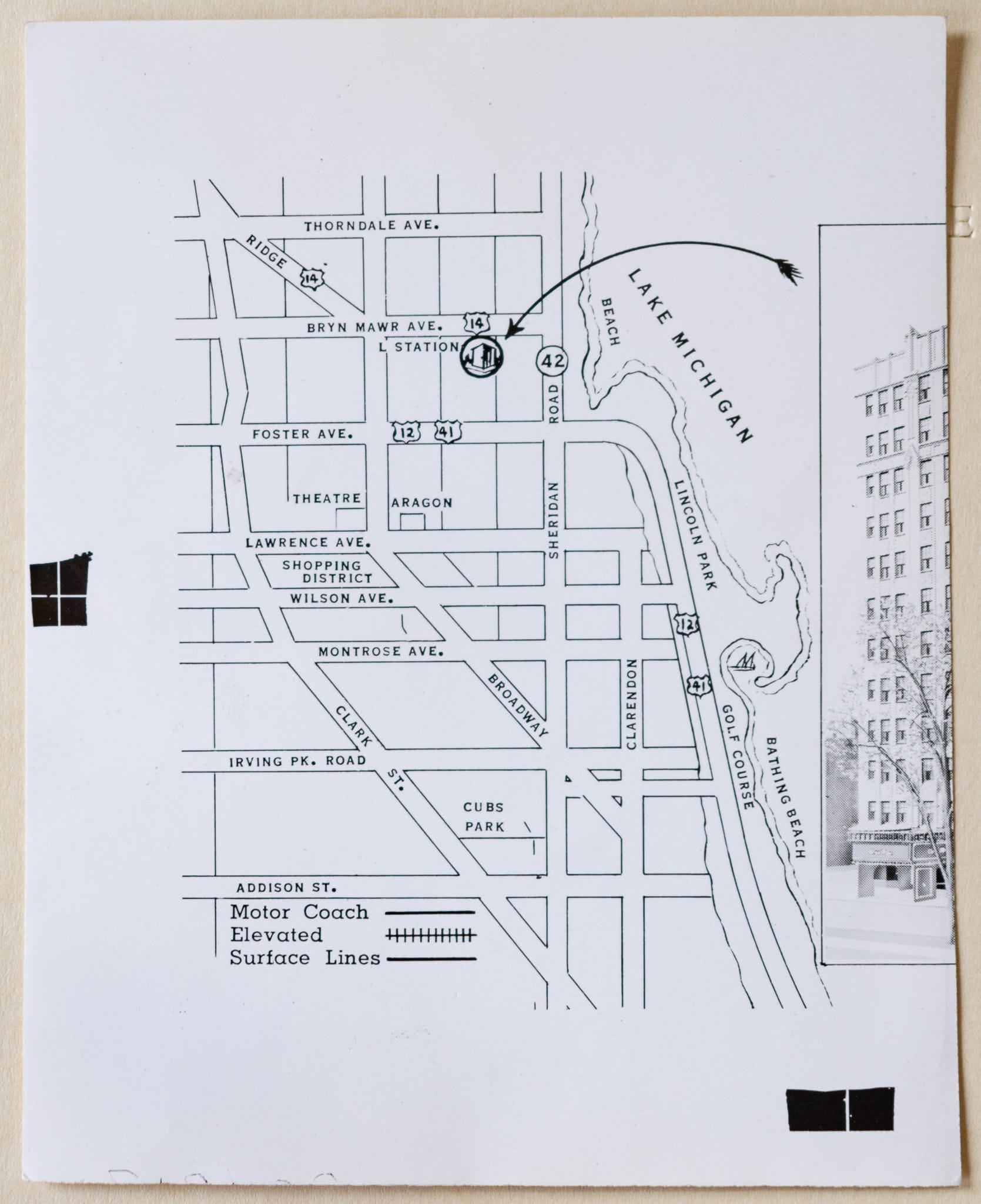
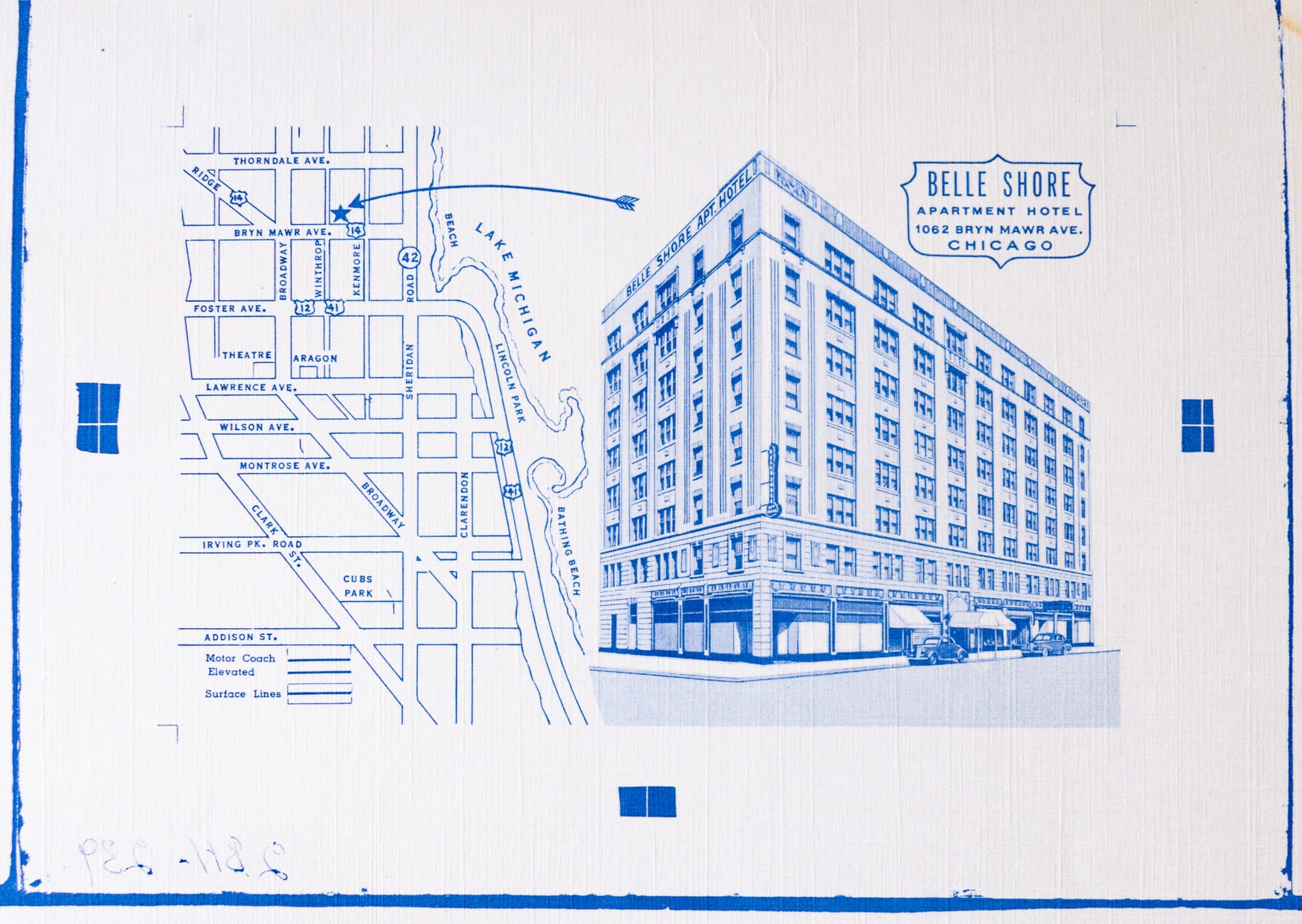
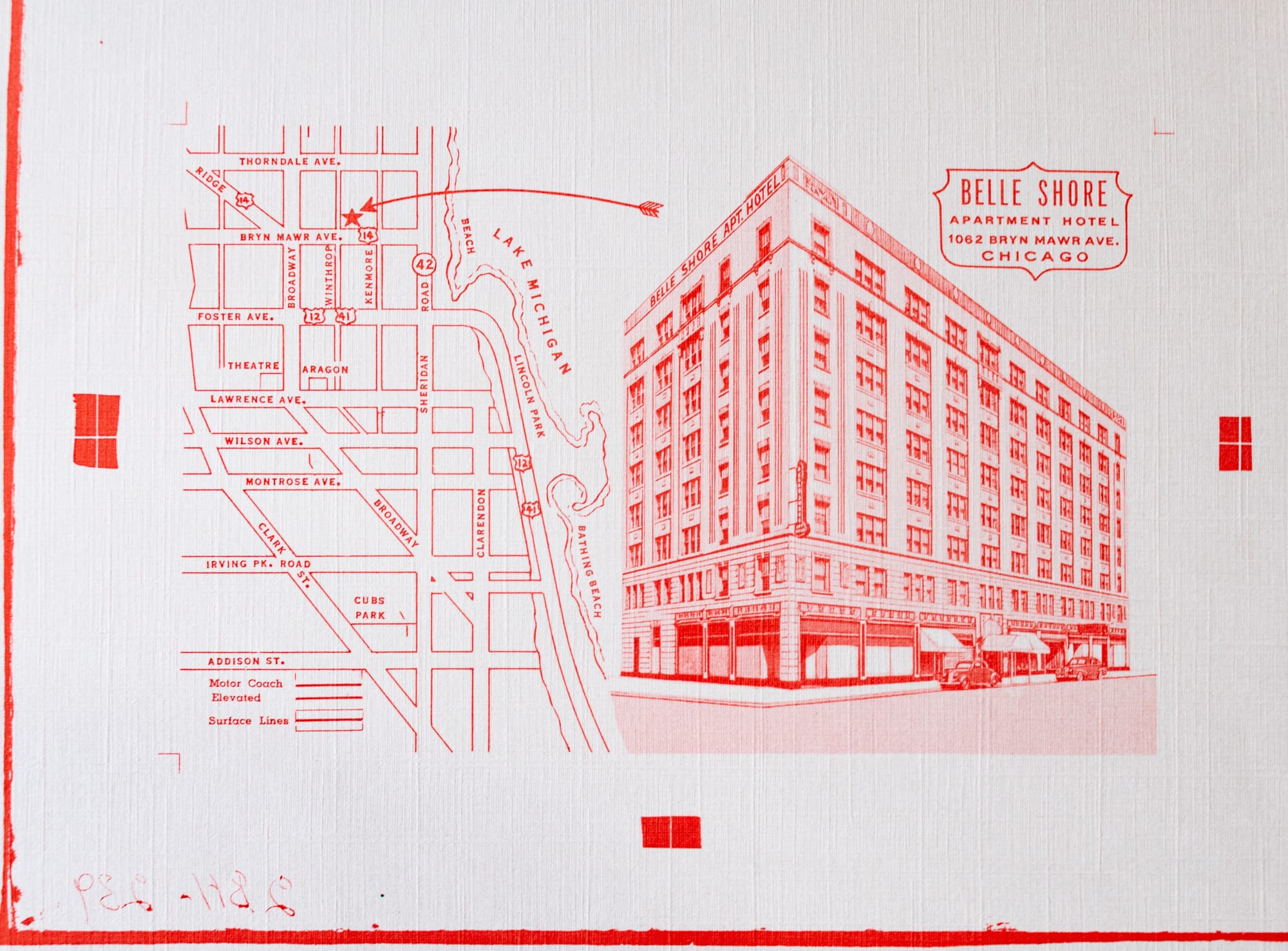
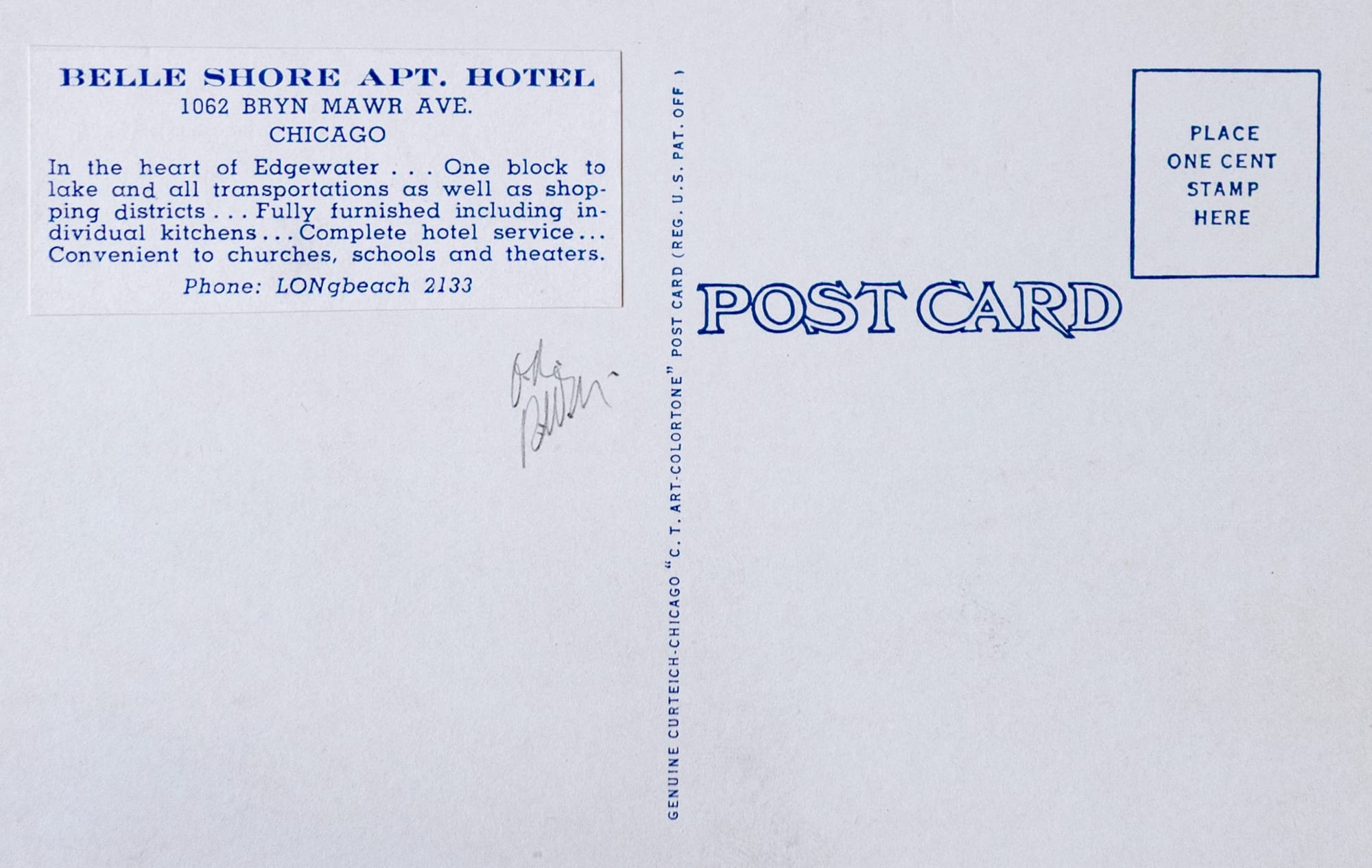
Production Envelope, Curt Teich Postcard Archive, Newberry Library via the Internet Archive | Map formatting | Map proof print | Blue proof print | Red proof print | Verso proof Curt Teich Postcard Archive, Newberry Library
Creating a finished product that looked like this.
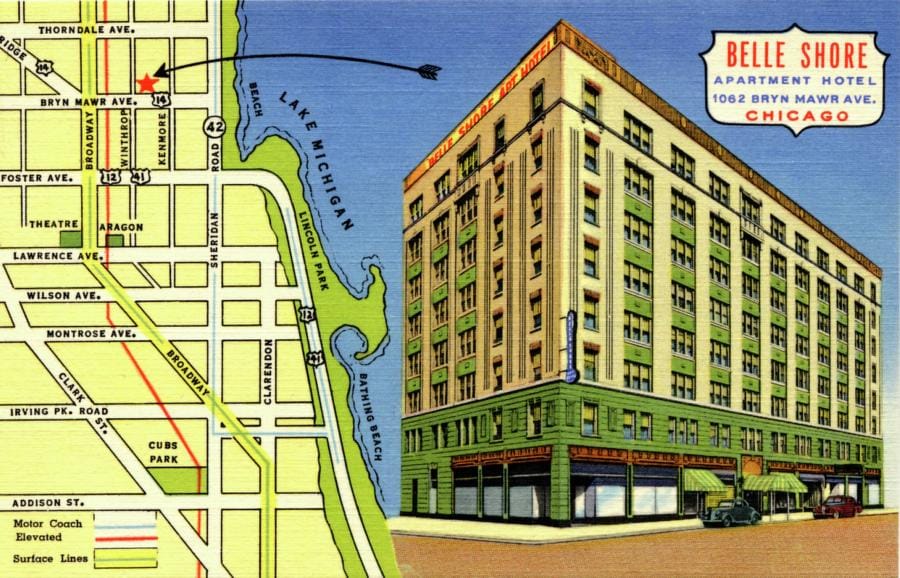
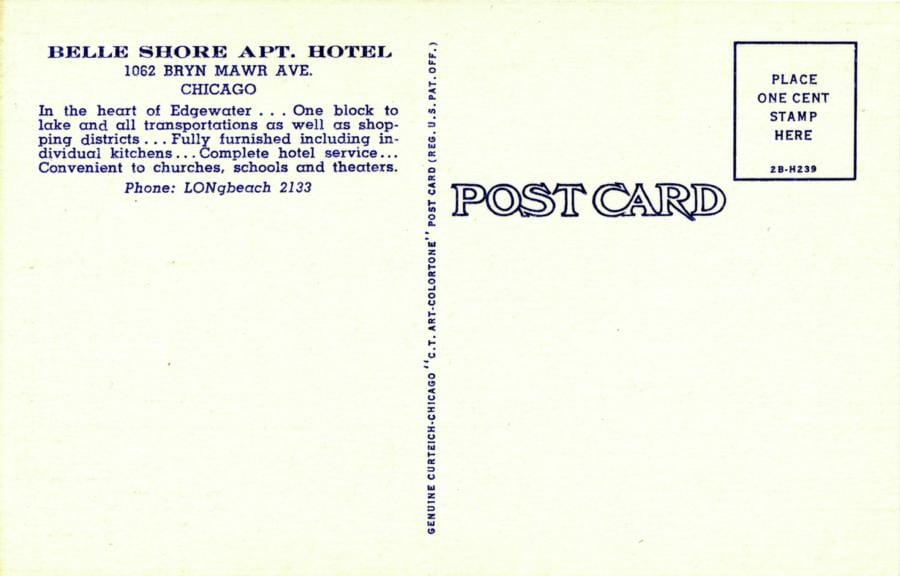
1942 postcard, Curt Teich Postcard Archive, Newberry Library via the Internet Archive | Production Envelope, Curt Teich Postcard Archive, Newberry Library via the Internet Archive
At least two other Koenigsberg & Weisfeld apartment hotels still stand, 420 W. Surf and the Pratt Lane Hotel at 1246 W. Pratt Boulevard.
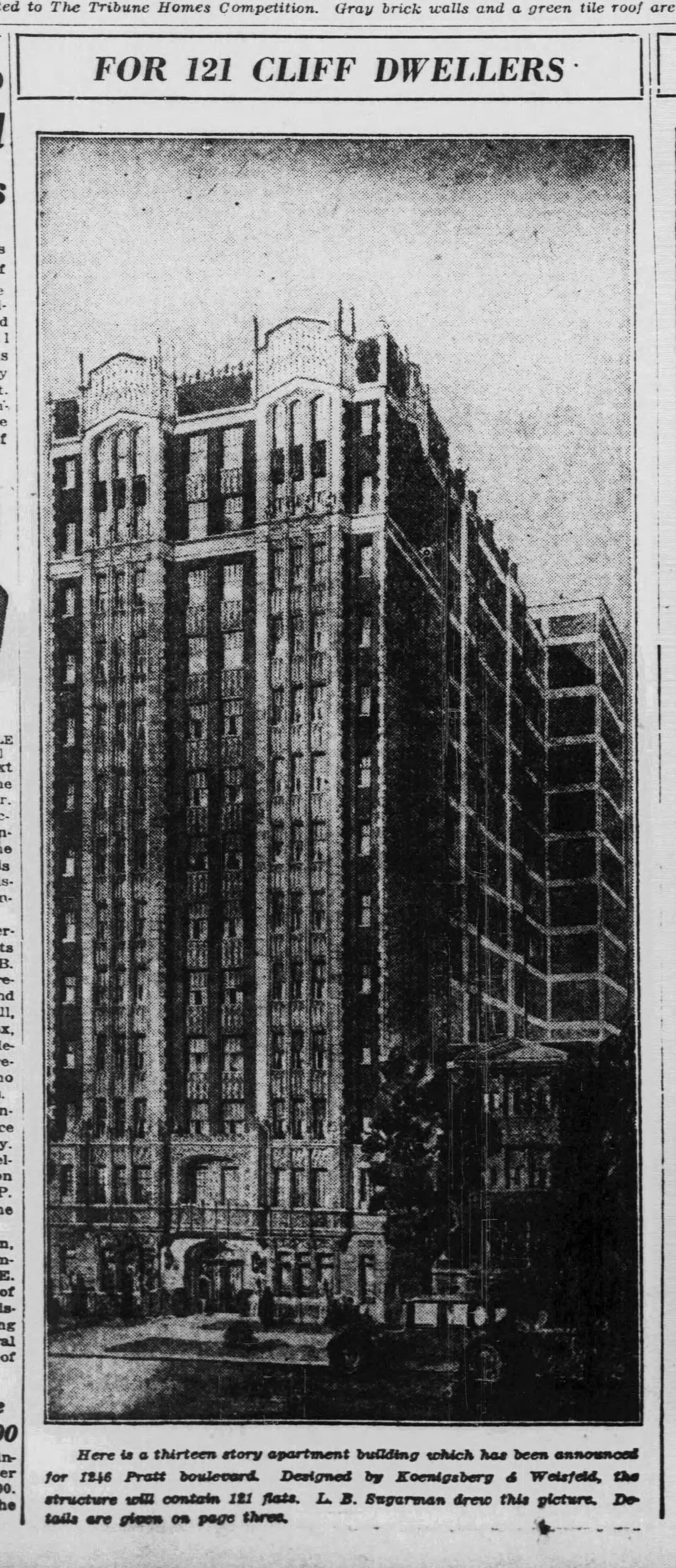
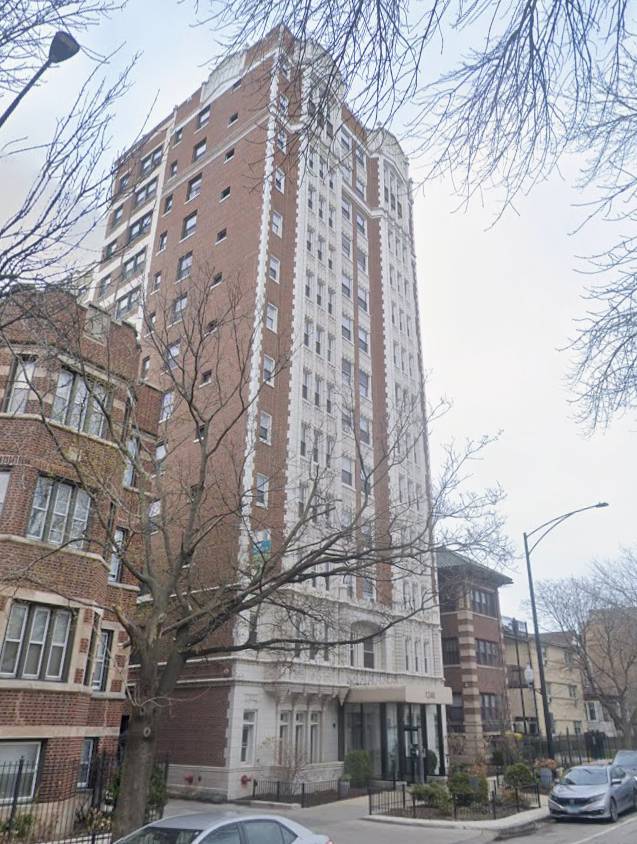
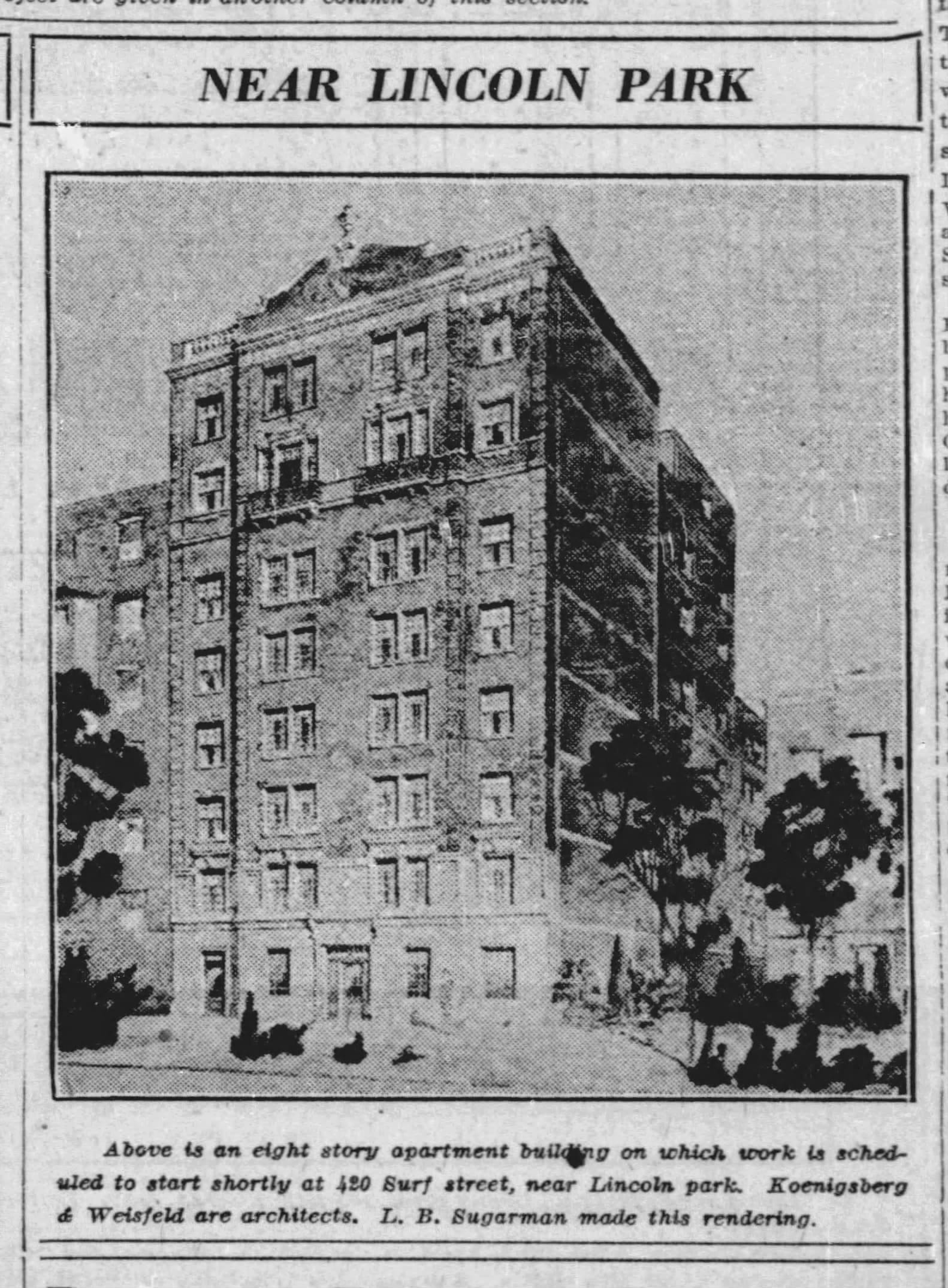
1927, Chicago Tribune | 2025 Google Streetview | 1928, Chicago Tribune | 2025 Google Streetview
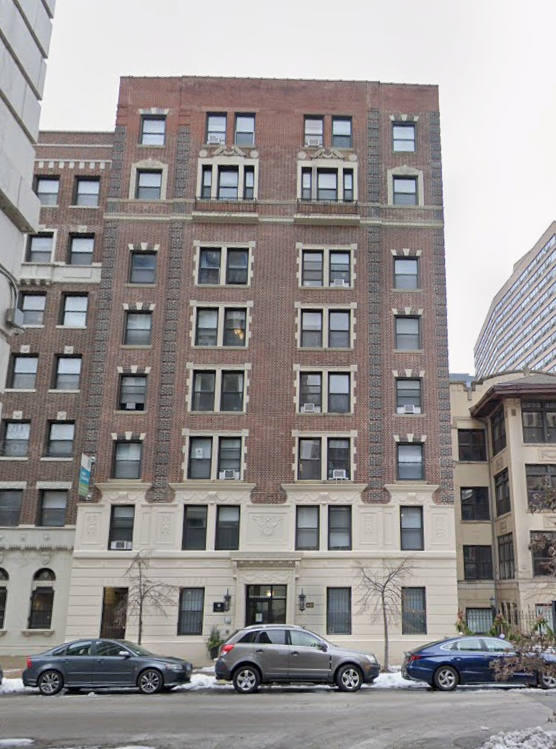
As well as a bunch of similar apartment buildings: 601 W. Deming, 440 W. Barry, 4536 N. Magnolia, 1618 W. Farwell, 515 Briar Pl., and 5463 S Everett. They hit on a profitable style and format and just kept working it, clearly.
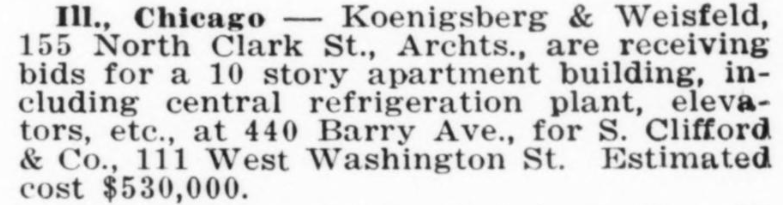
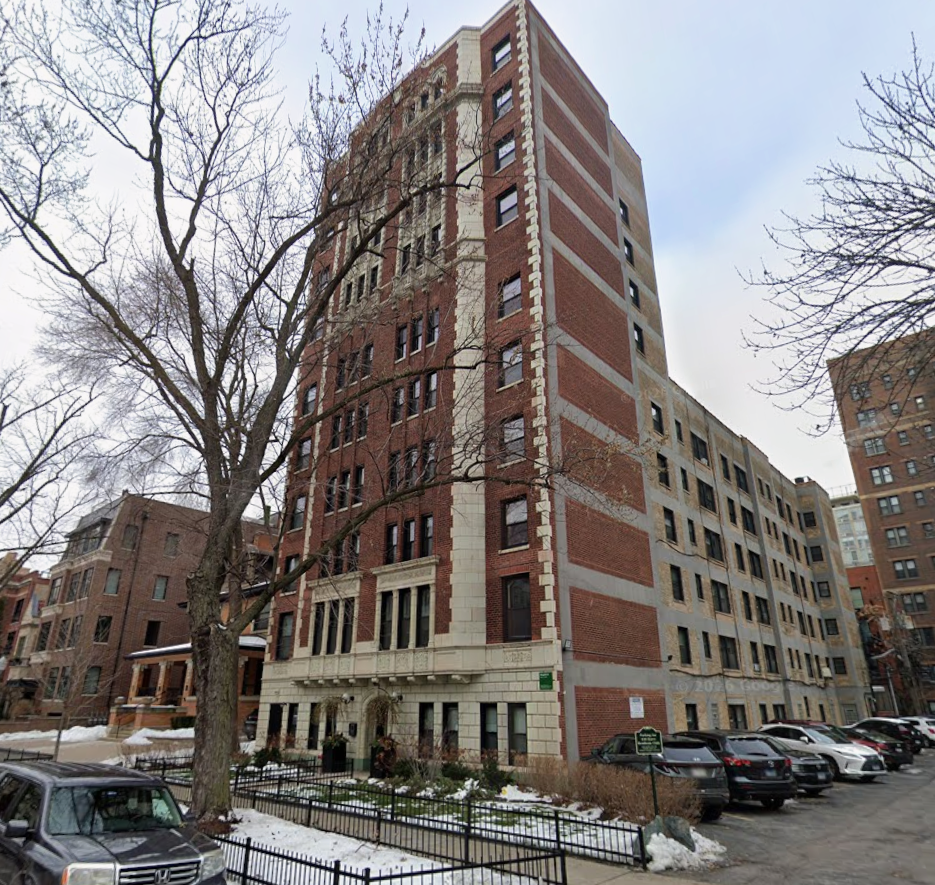
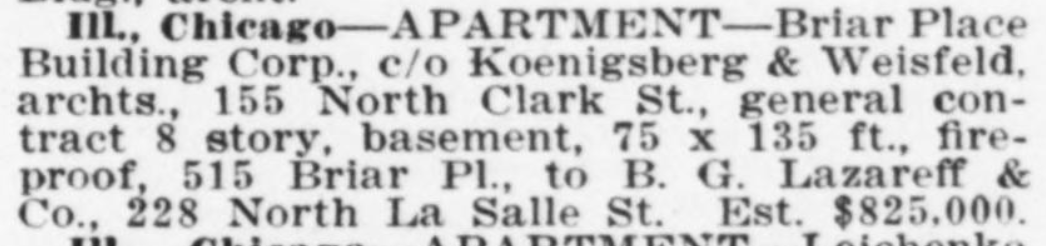
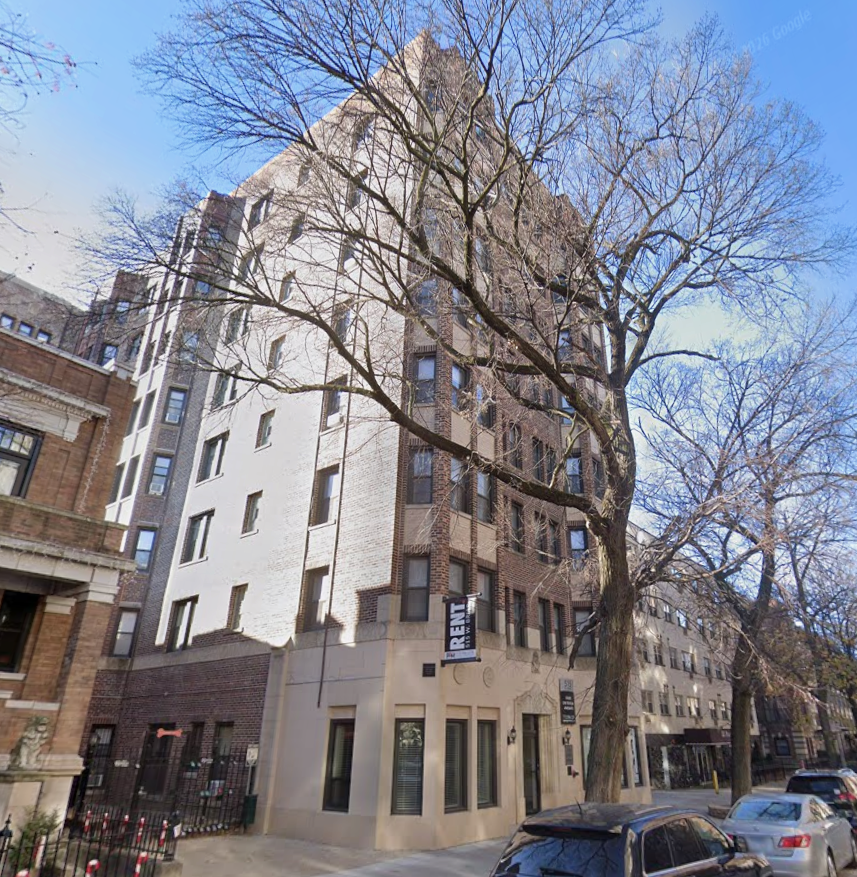
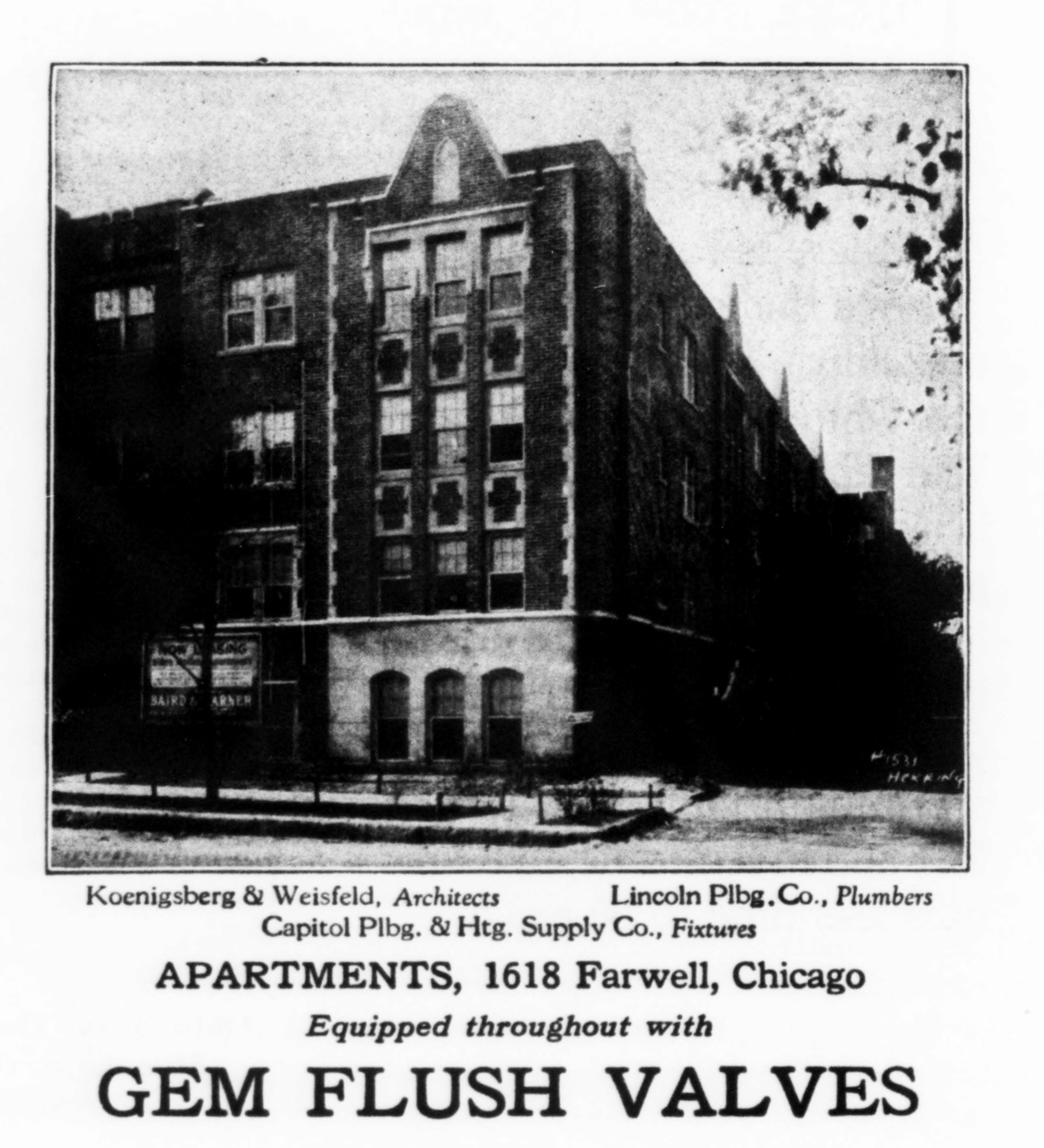
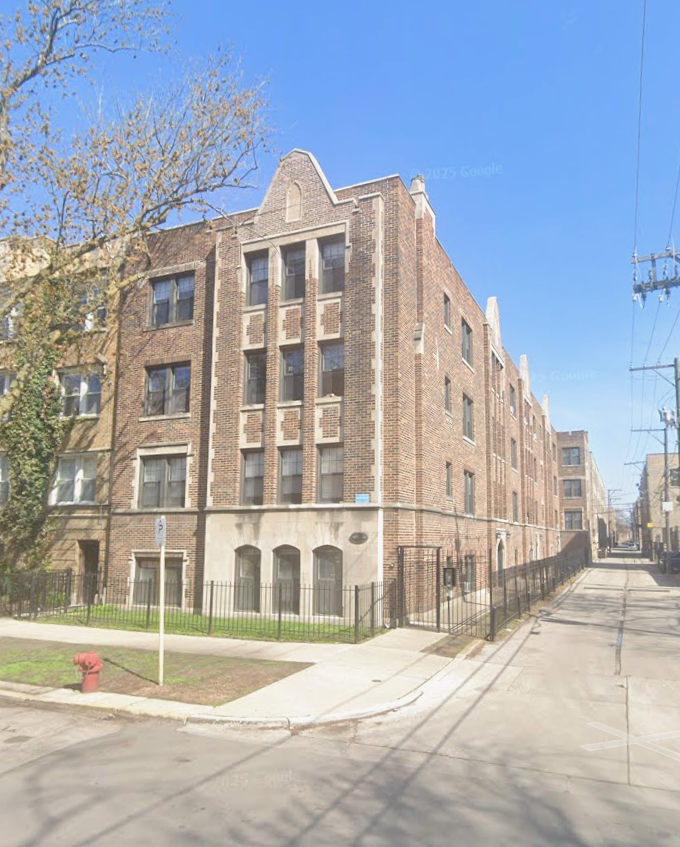
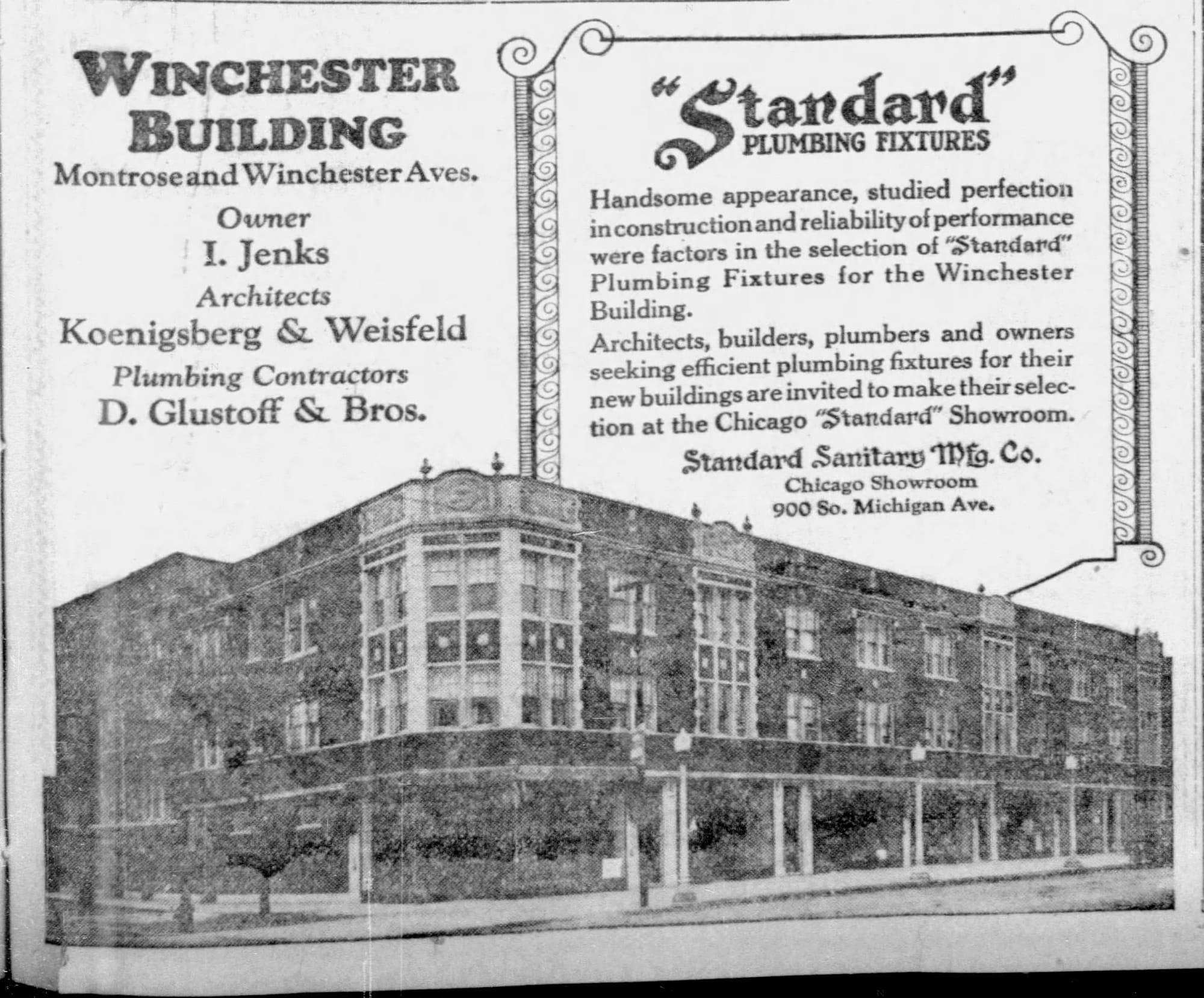
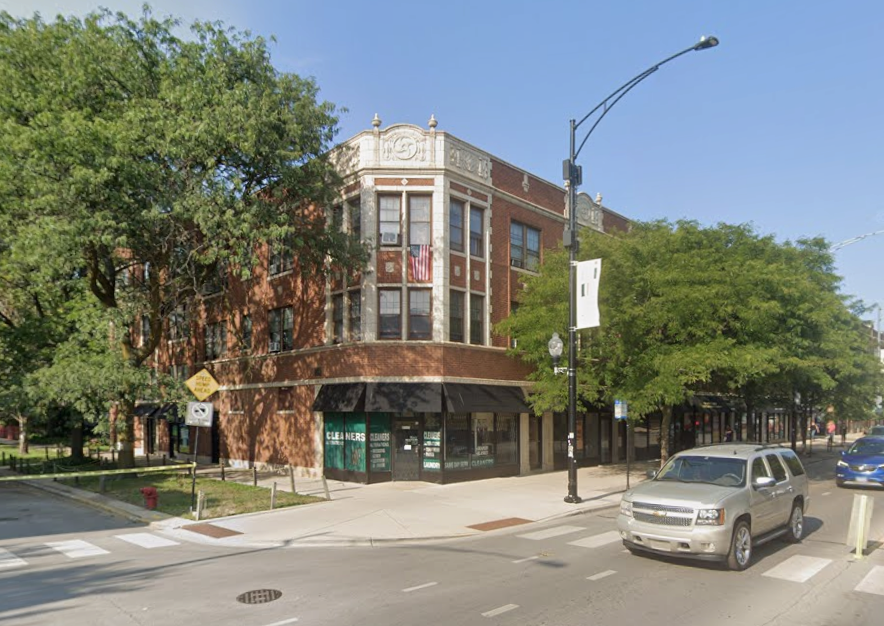
440 W. Barry, 1928, Power, the Internet Archive | 2025 Google Streetview | 515 W. Briar, 1928, Engineering News-Record, the Internet Archive | 2025 Google Streetview | 1618 W. Farwell, Heating & Plumbing, 1929, the Internet Archive | 2025 Google Streetview | 1930 W. Montrose, 1924, Chicago Tribune | 2024 Google Streetview
They also did a little bit of industrial, but it doesn’t look like much survived. Maybe most interesting to me, they designed an auto showroom on N. Milwaukee for Bandur Motors, which survived (sorta) into the 2010s as part of the old Logan Square Mega Mall.
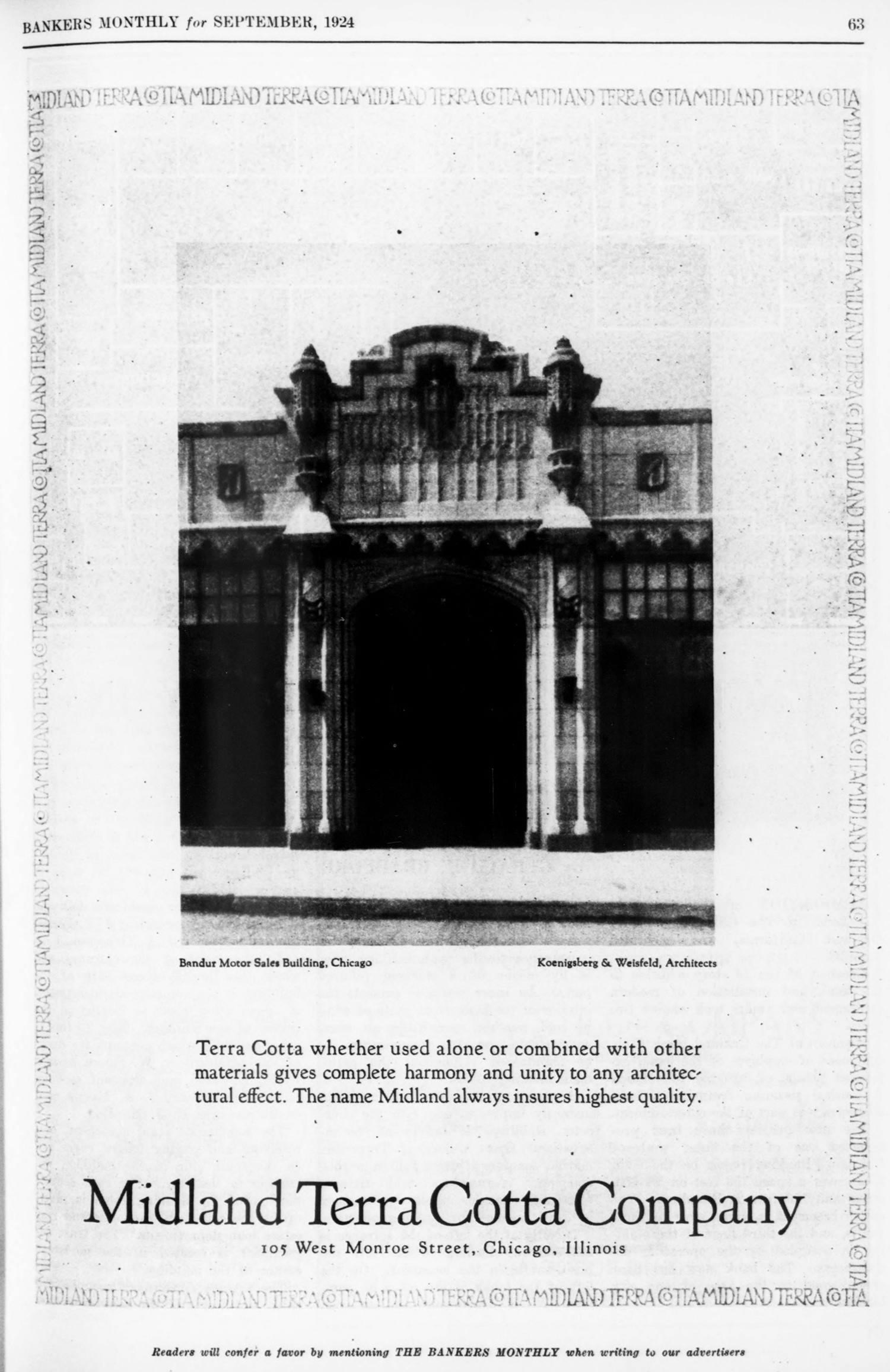
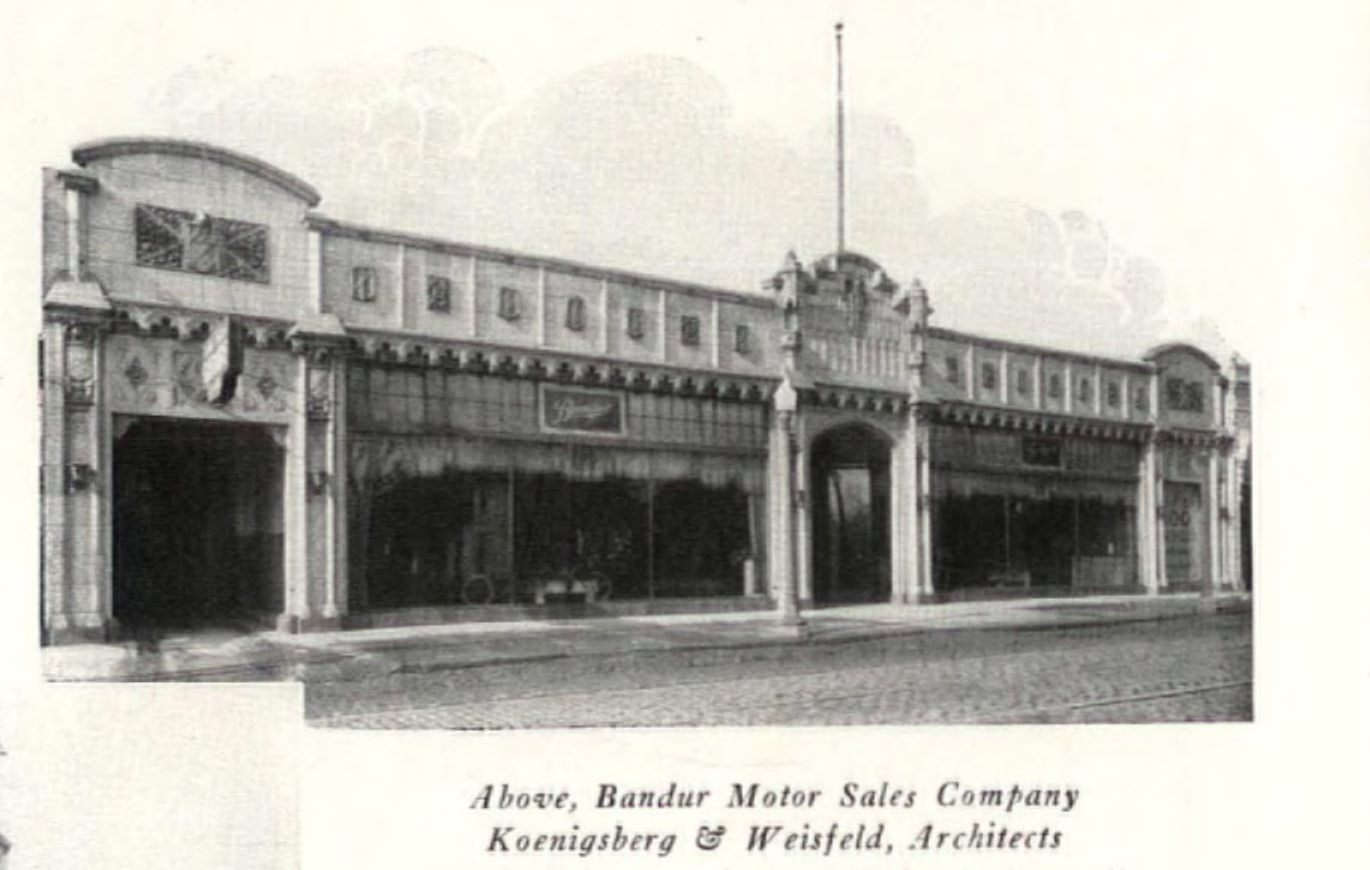
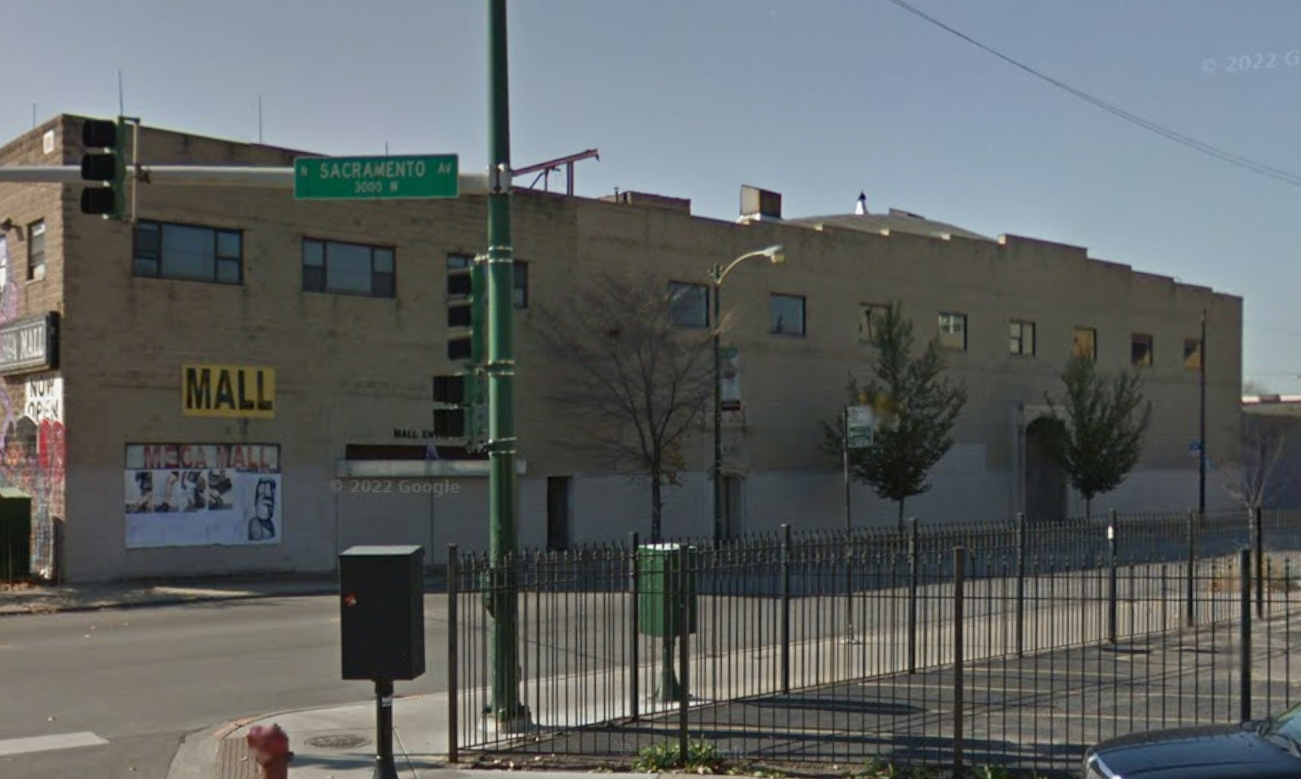
Bandur Motors terra cotta ad, 1924, Bankers Monthly, the Internet Archive | Bandur Motors valve ad, 1924, Architectural Forum, the Internet Archive | 2015 Google Streetview
As work for the firm dried up in the Great Depression, they ended up remodeling shoe stores for the Feltman & Curme chain.
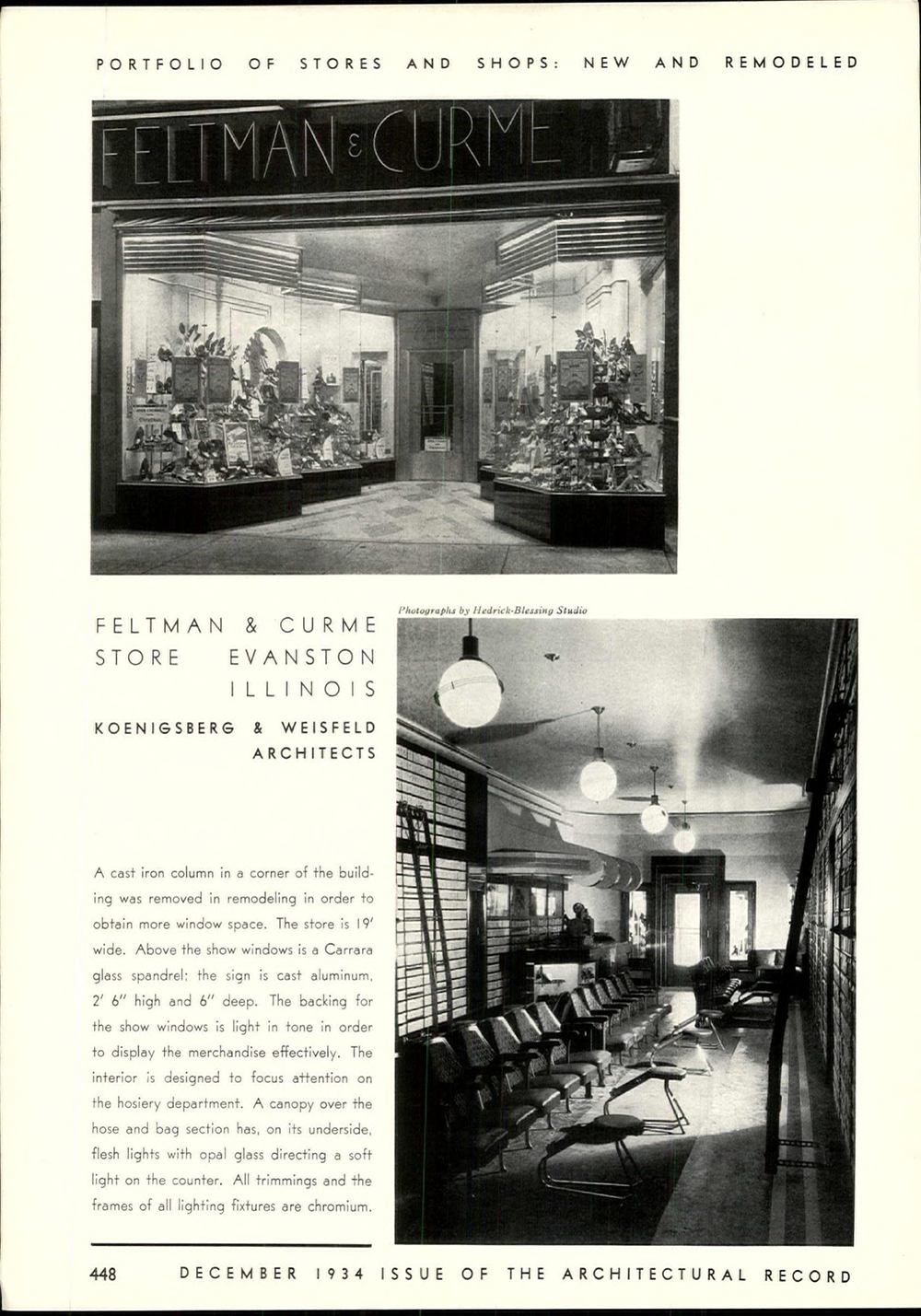
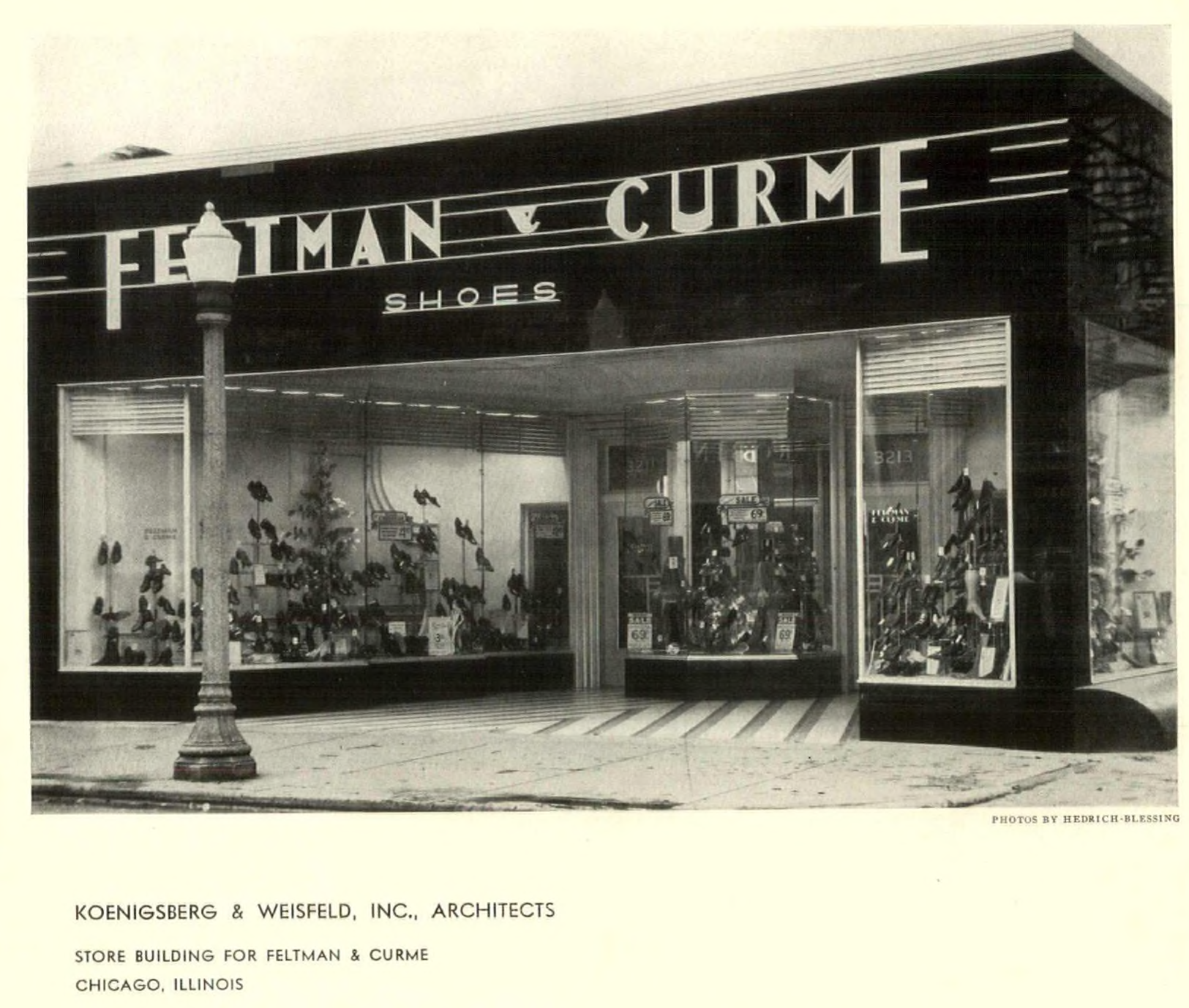
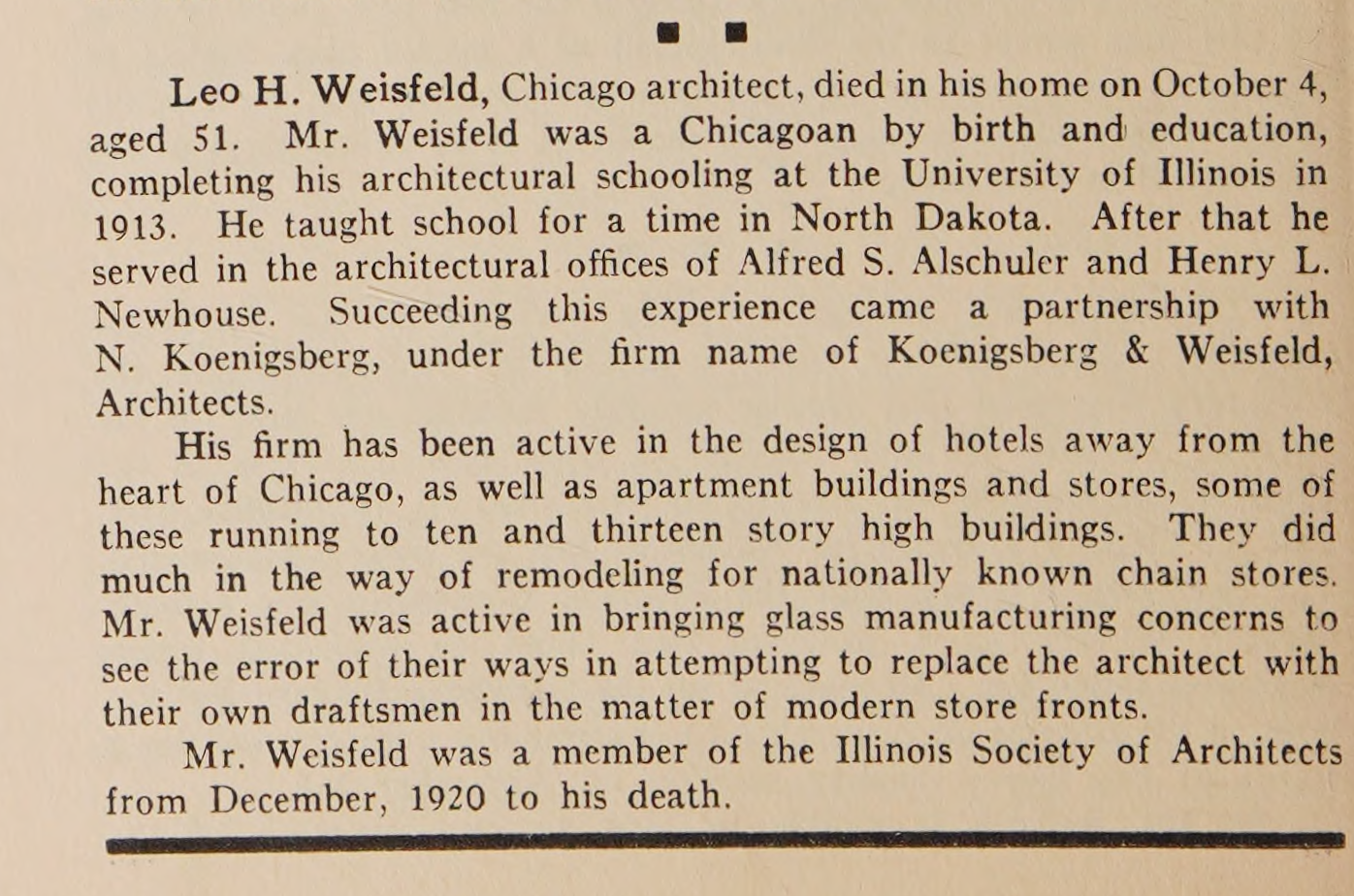
1934, Architectural Record, the Internet Archive | 1935, American Architect & Building News, the Internet Archive | Weisfeld Bio, 1940, Illinois Society of Architects, the Internet Archive
The most prominent resident of the Belle Shore I could find was Captain B.B. Lipsner, an air mail pioneer for the US military,

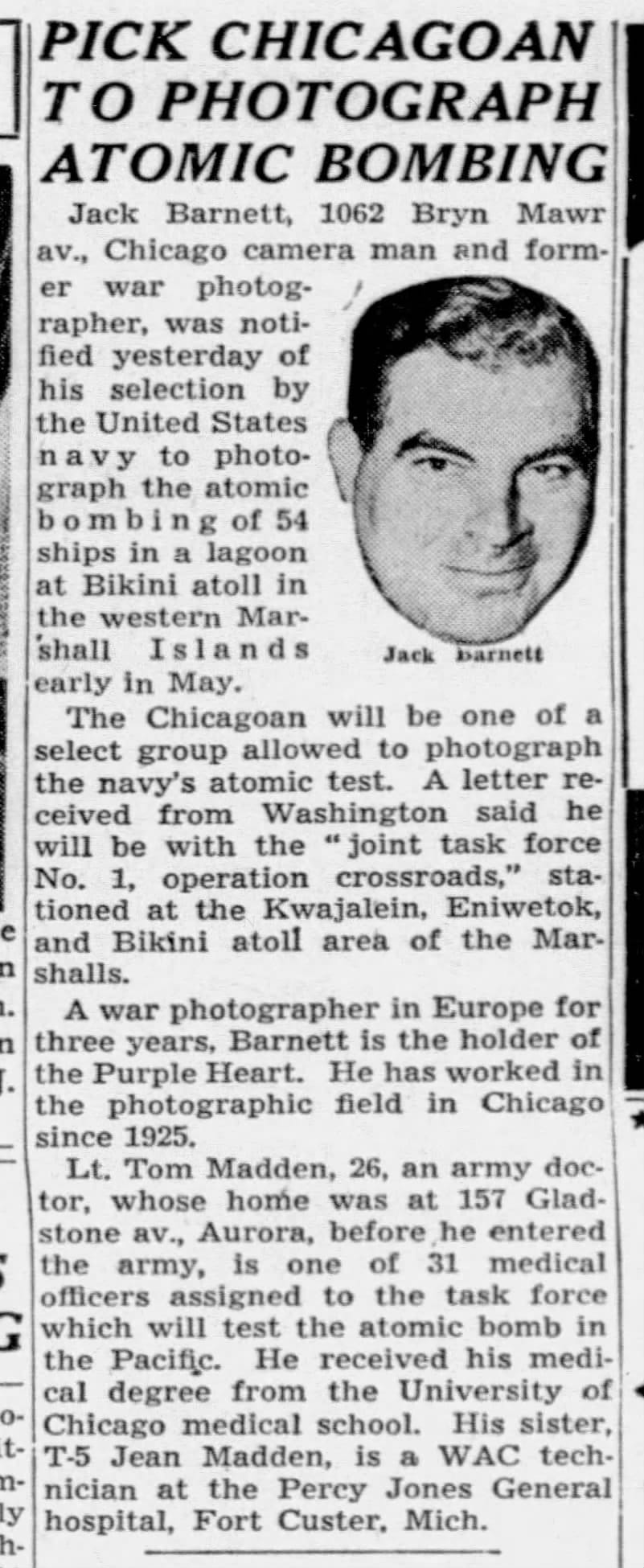
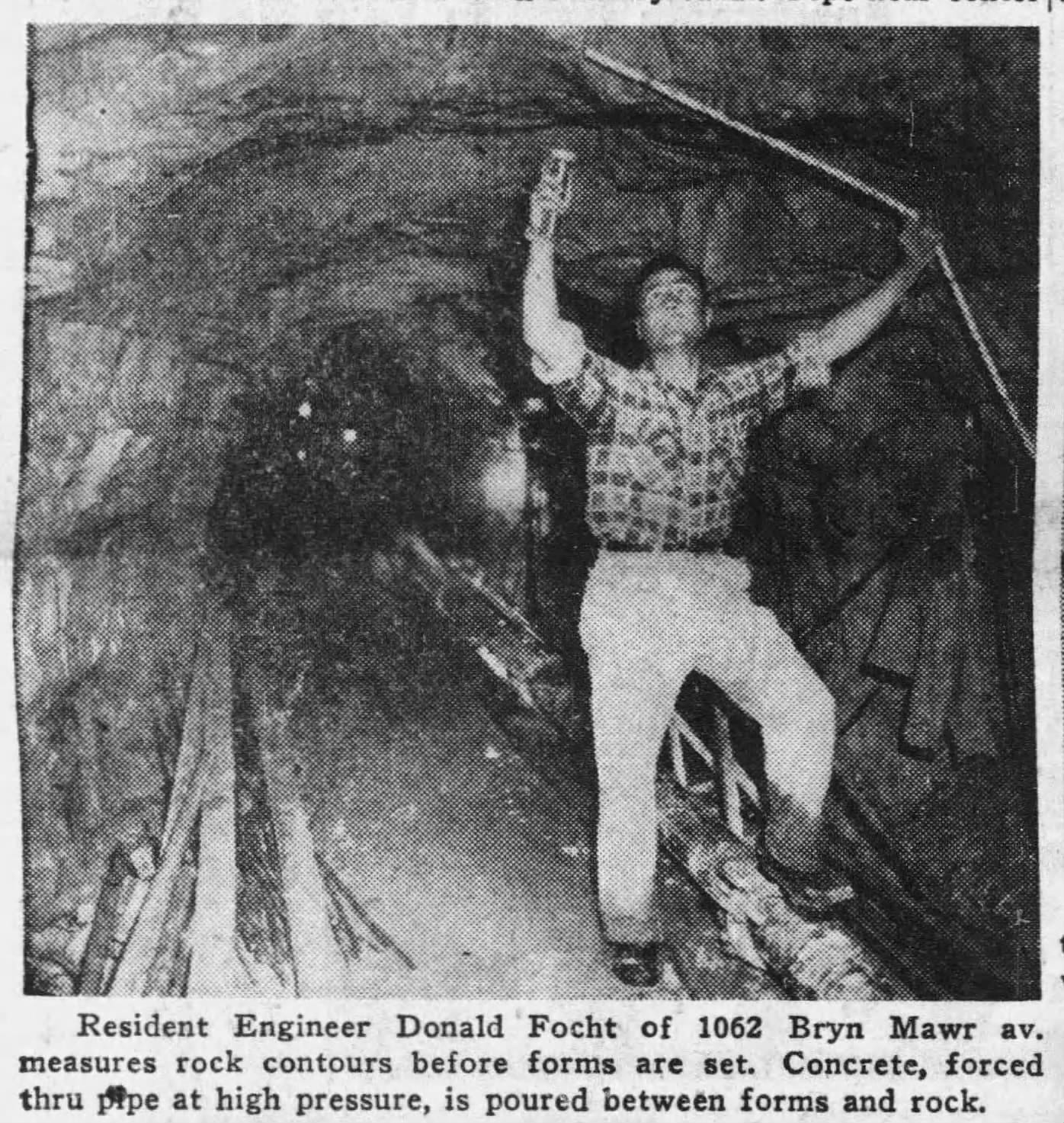
1947, Chicago Tribune | 1960, Commerce Magazine | 1946, Chicago Tribune | 1954, Chicago Tribune
There was also this guy, Hans Rudolf Kleinke, a German who had fled to the US in the late 1930s and in whose room the FBI installed a bug. He'd go on to run a "preventorium" for at-risk youth, Ridge Farm, in Lake Forest.
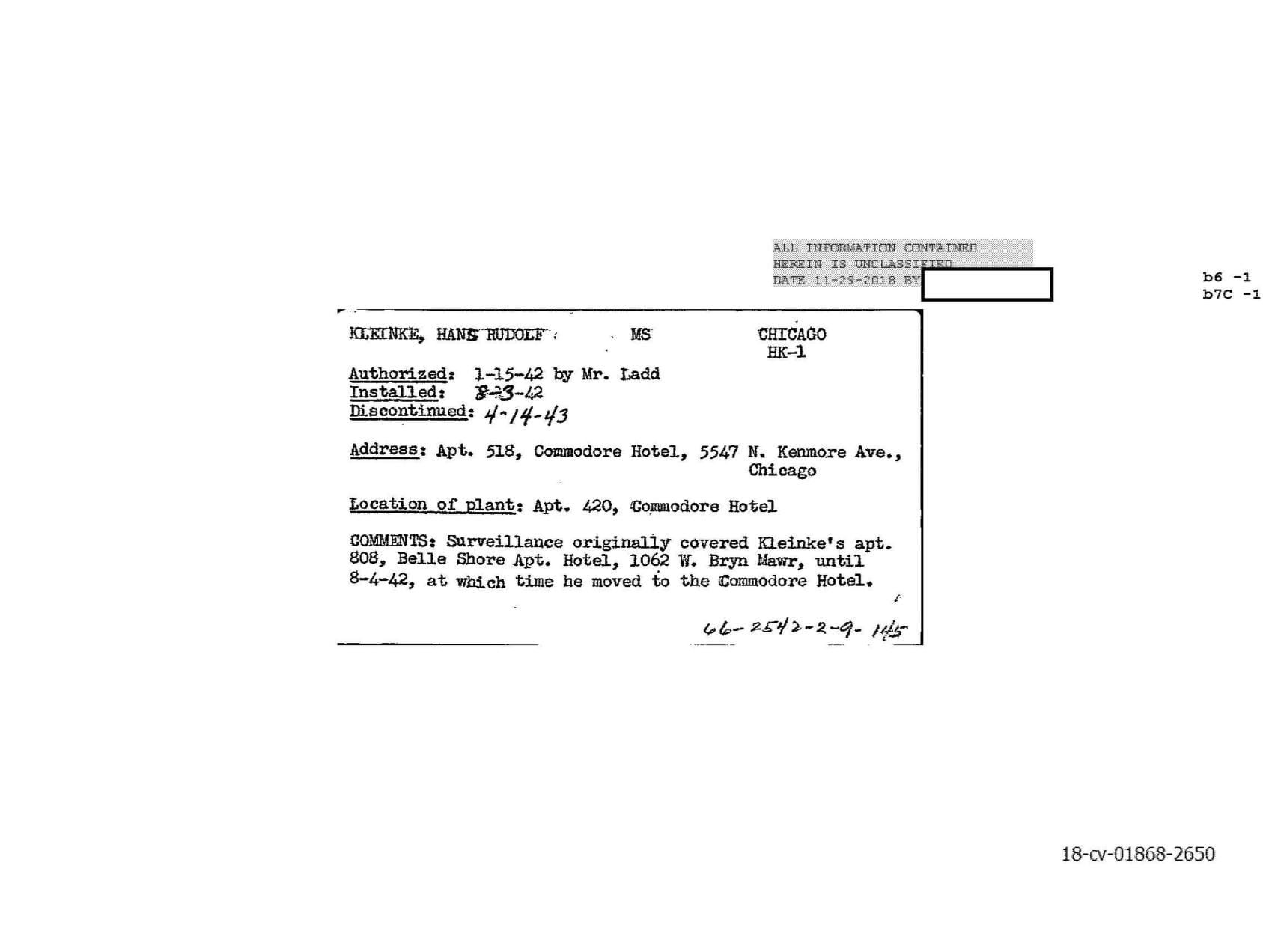
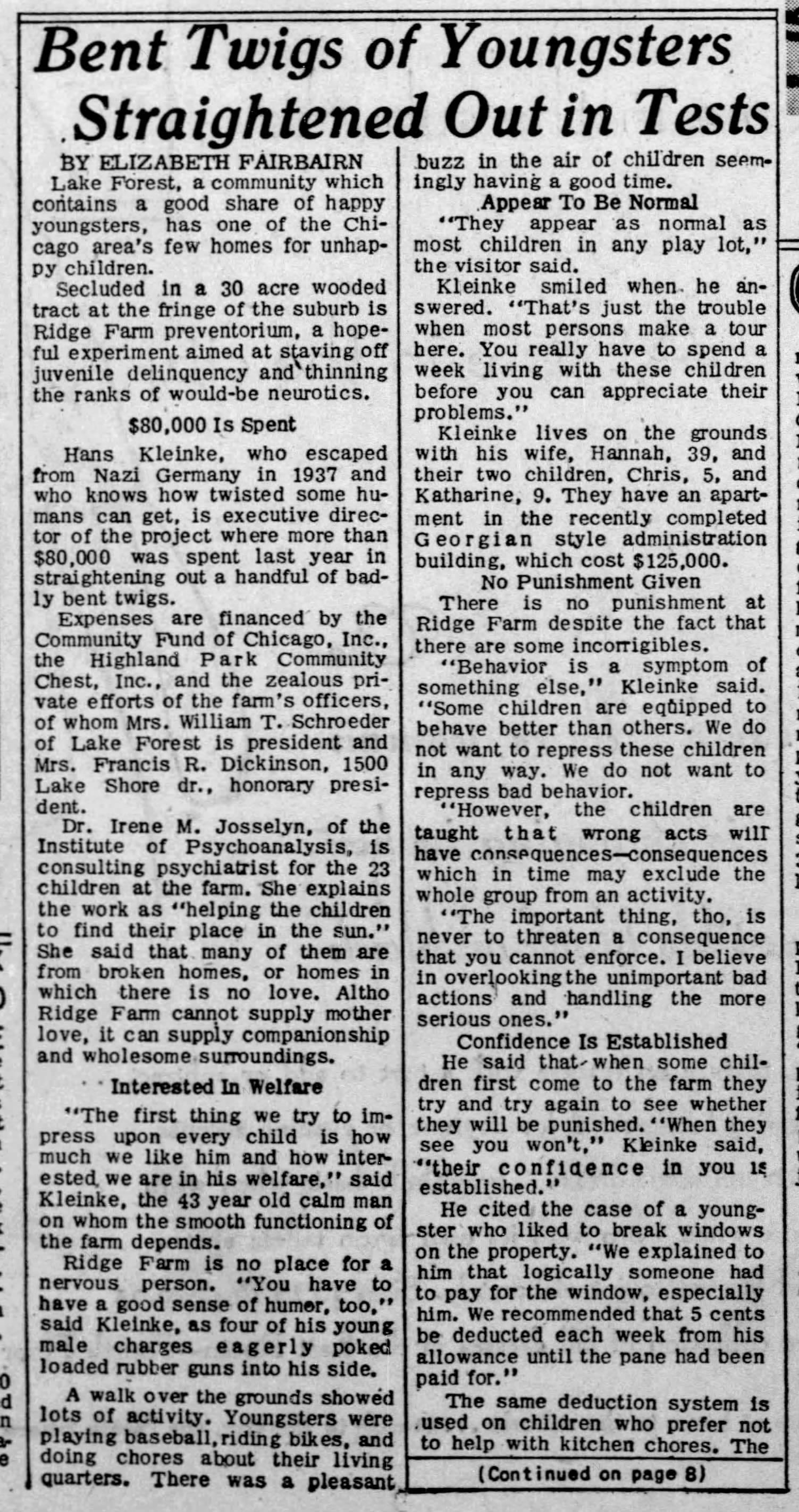
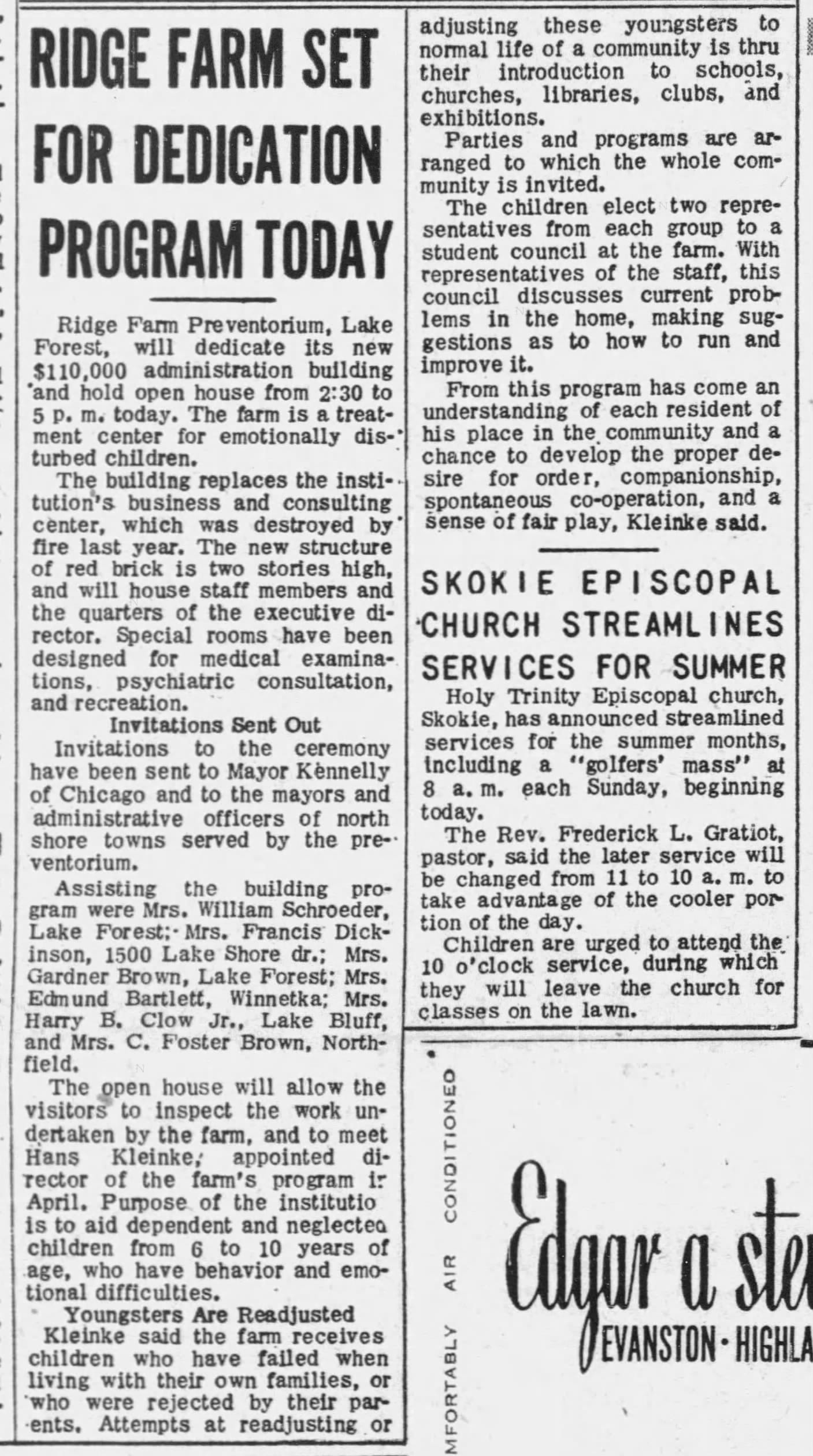
Kleinke FBI surveillance file, the Internet Archive | 1949 articles on Kleinke's Ridge Farm
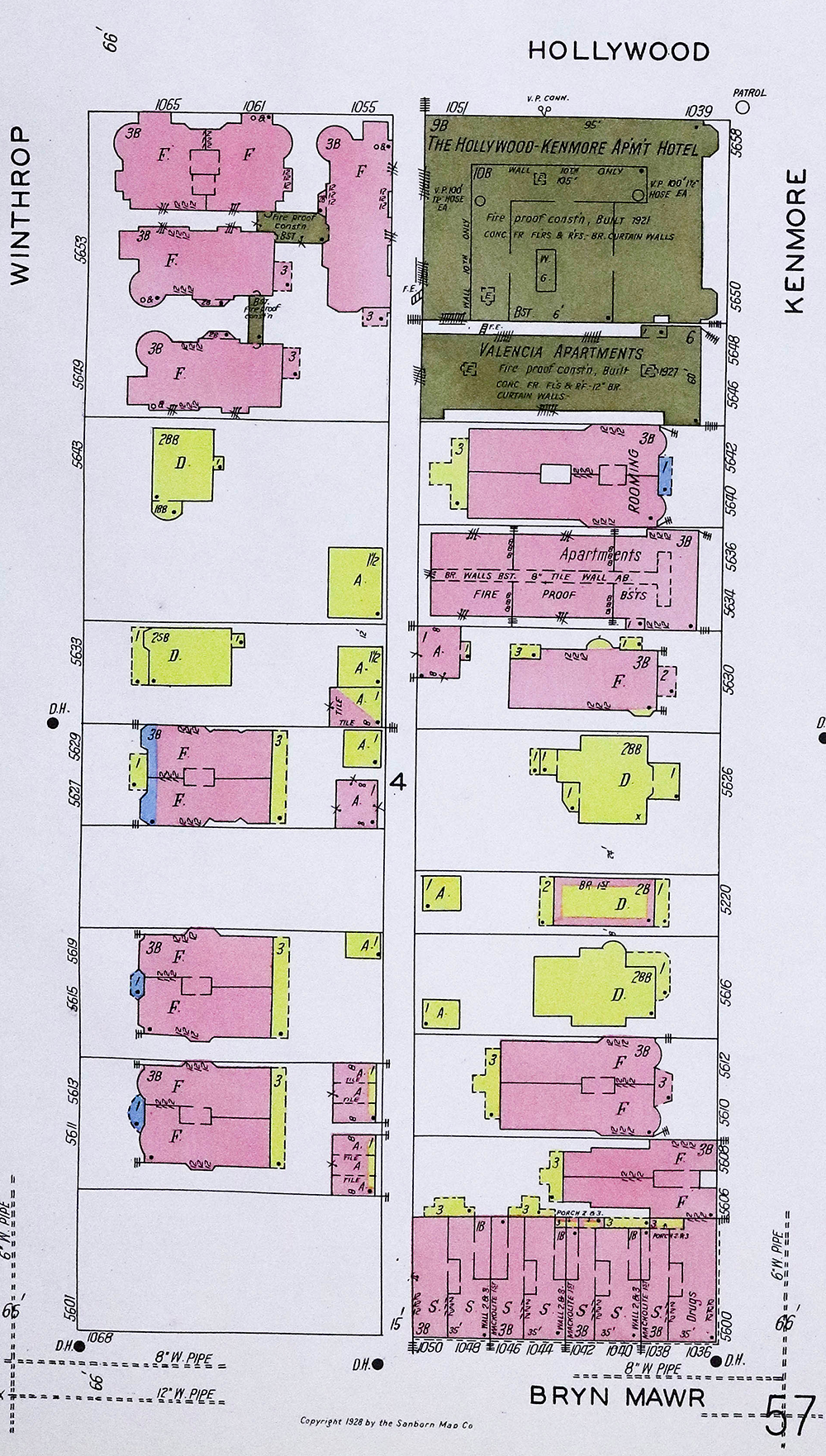
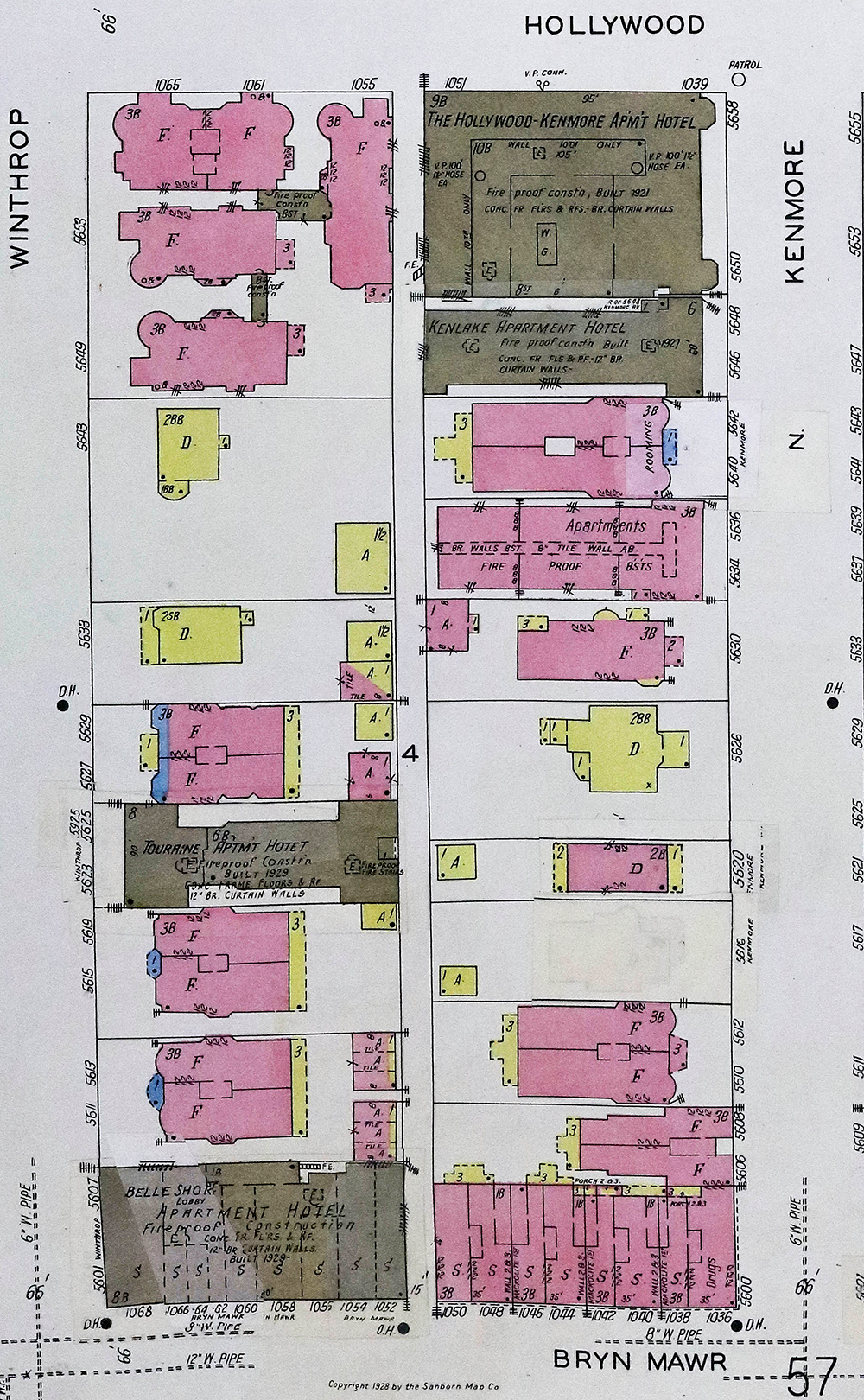
1928 Sanborn Fire Insurance Map | 1950 Sanborn Fire Insurance Map
Some of the ads I used to put together that rent graph.
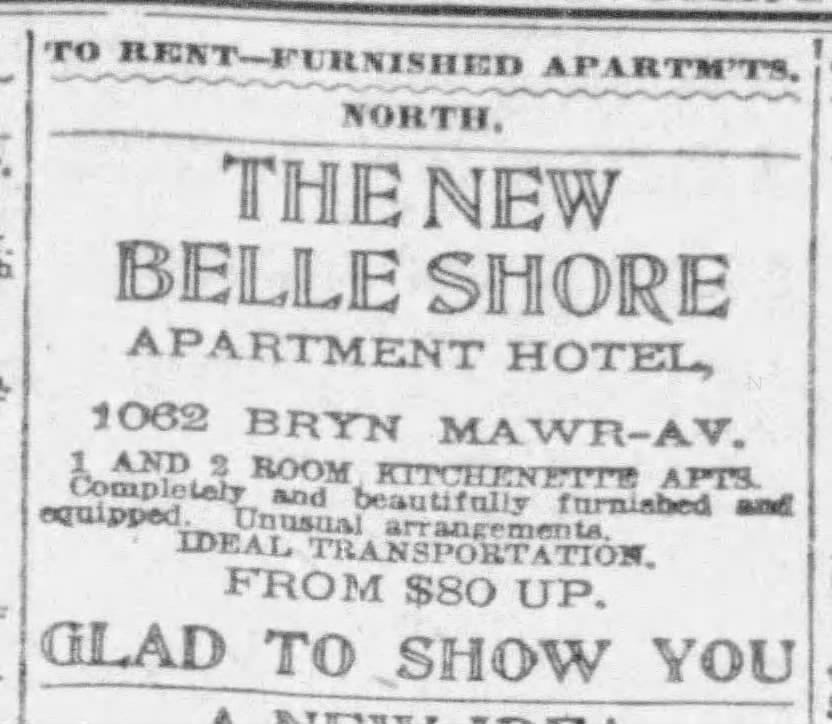
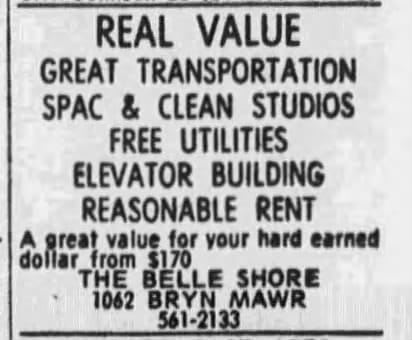
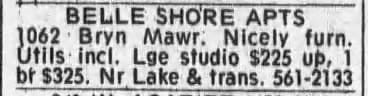
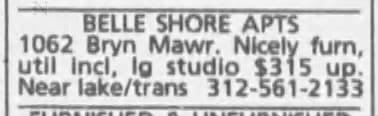
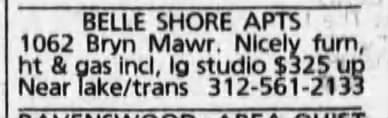
1930 | 1935 | 1940 | 1949 | 1975 | 1980 | 1985 | 1990 | 1995
Member discussion: