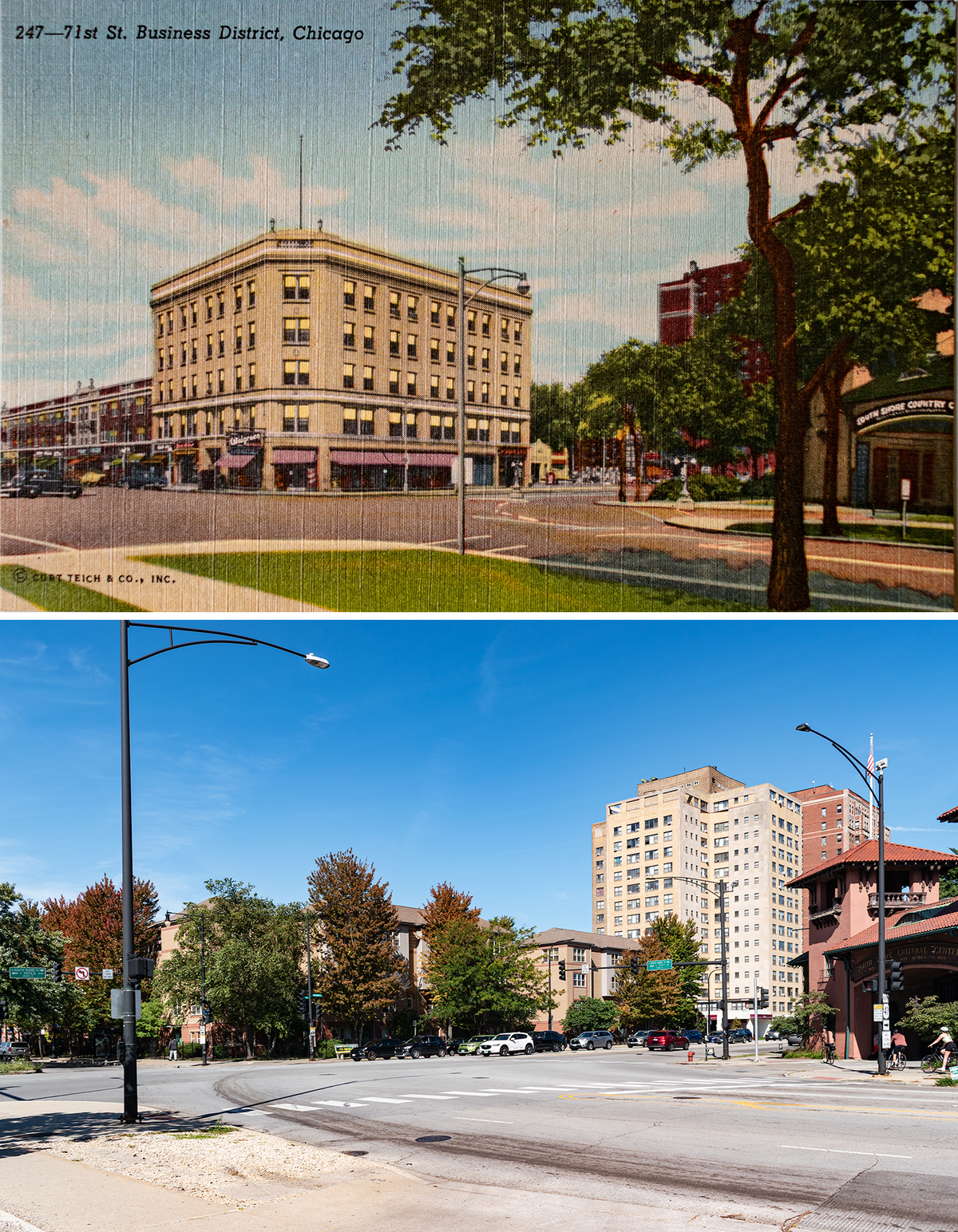
South Shore’s 1920s real estate boom, the preservation fight to turn what was once a racist country club into a park district asset for the all Chicagoans, vacancy, disinvestment, demolition, and the first market-rate development in the neighborhood since the Great Depression (but one that’s a bit of a fortress, a gated community of townhomes). The South Shore Cultural Center (nee Country Club), the South Shore Medical Building, the South Shore Club Apartments, the Townhouse Apartments, and LakeShore Pointe. Marshall & Fox, Alfred Alschuler, McNally & Quinn, Shparago & Kastrup, and Fitzgerald Associates. The Federal Housing Administration, horseracing tycoon B.F. Lindenheimer, the Illinois Housing Development Authority, and ShoreBank.
…there are a lot of layers to this corner of 71st Street in South Shore. It’s a story of real estate speculation, government intervention, white flight, and fitful reinvigoration (and now, an exciting proactive upzoning of 71st Street by 5th Ward Alderman Desmond Yancy, meant to make it easier to open stores, start restaurants, and build housing in the neighborhood).
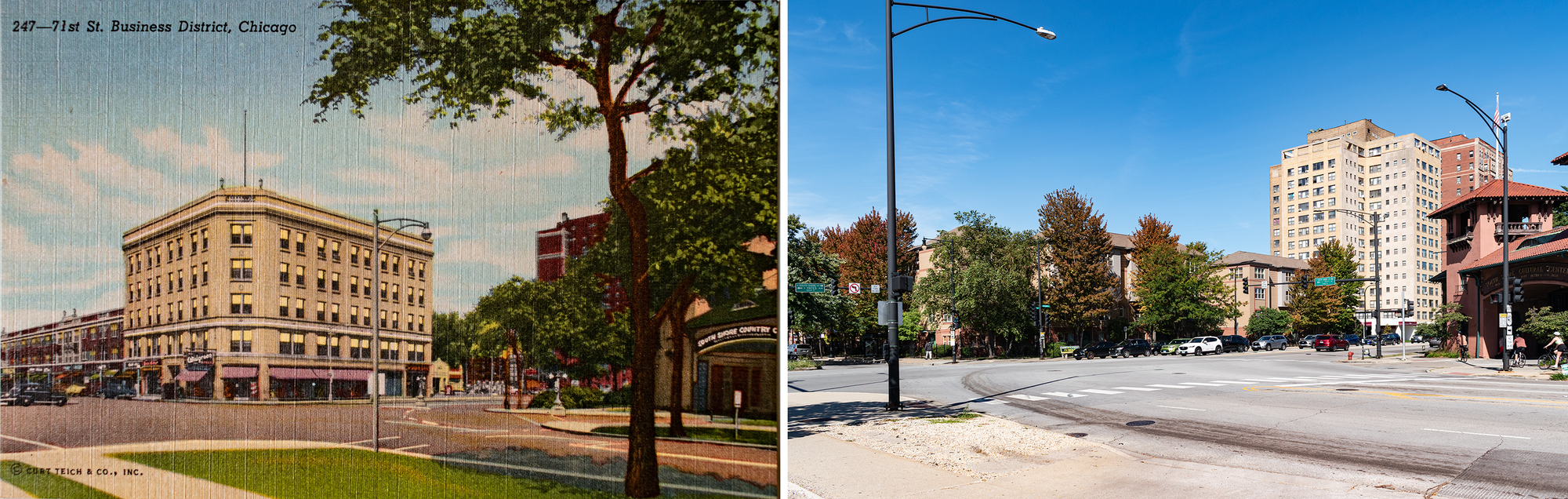
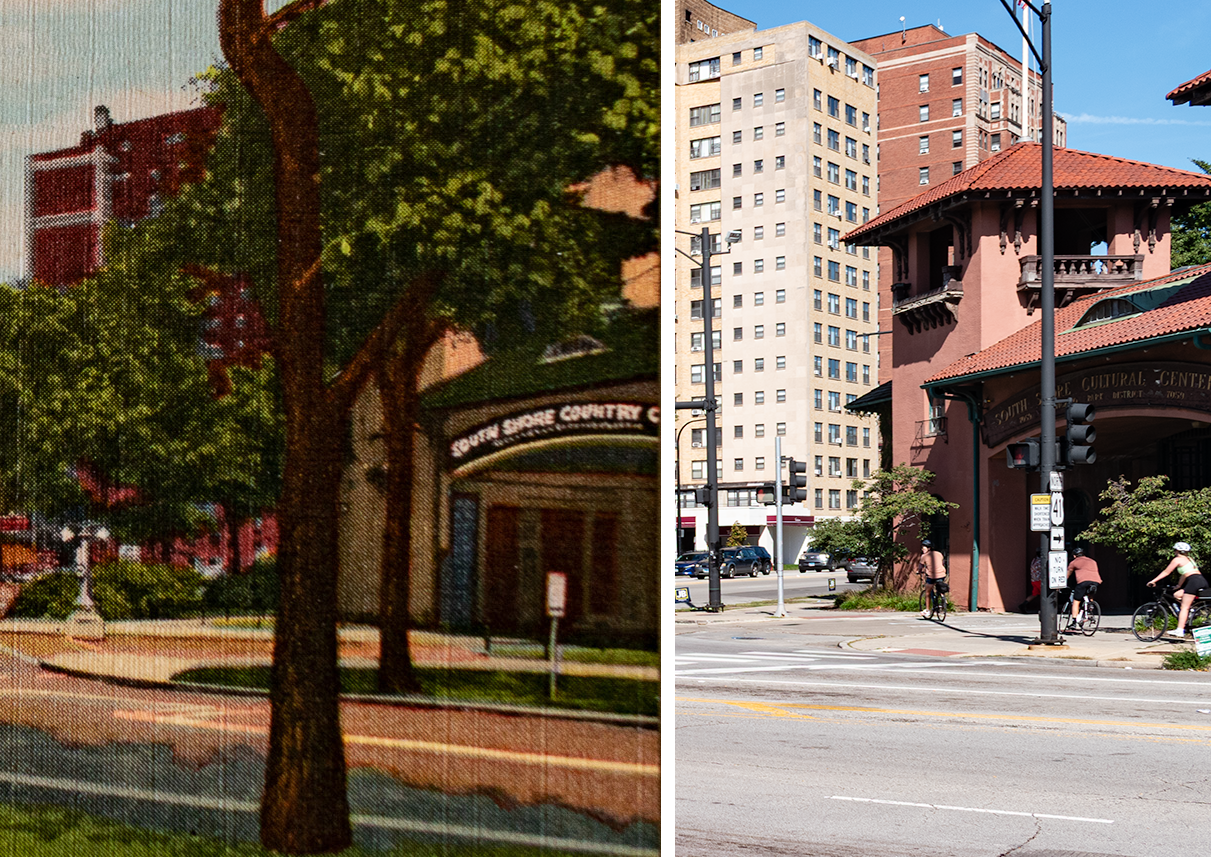
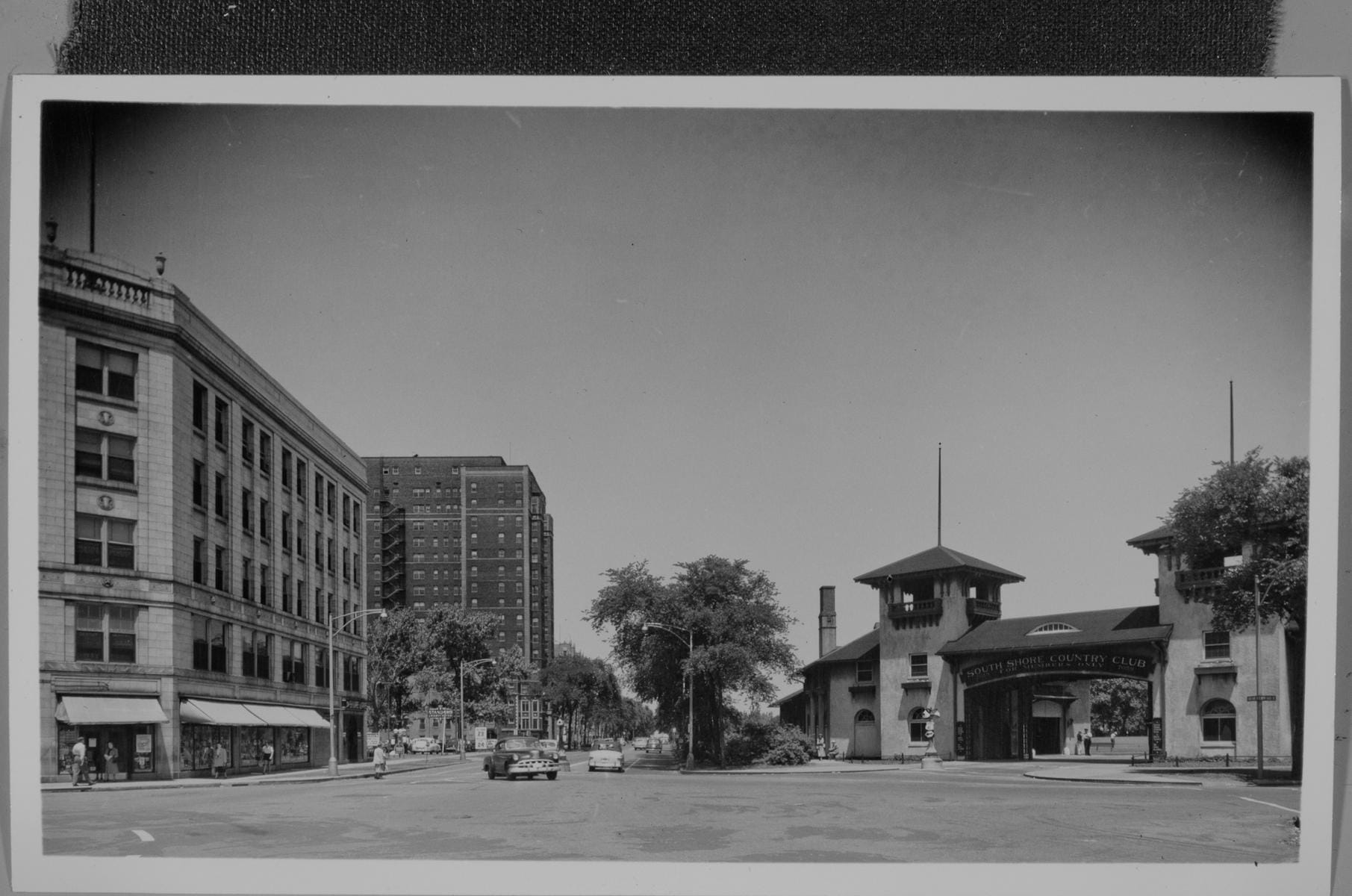
We have two survivors here. First, the gatehouse to the South Shore Cultural Center, designed by Marshall & Fox and built in 1906. Second, the brick apartment tower of the South Shore Club Apartments, built as a combined co-op and residential hotel in 1928 and designed by McNally and Quinn, part of a stand of upscale residential towers and mansions that sprouted around the country club.
Missing and replaced is the five-story office building on the corner and the associated block-long building stretching down 71st to Oglesby—developed by B.F. Lindheimer and designed by Alfred Alschuler, the complex was completed in 1927 and demolished in the early 1980s. After roughly two decades as a vacant lot, in its place sprouted LakeShore Pointe, an 86-unit gated community made up mostly of townhouses and the first market-rate development built in South Shore since the Great Depression.
A different Townhouse was one of those post-Depression non-market-rate developments—the beige tower was built as the Townhouse Apartments in 1952, designed by Carl Shparago and Carl Kastrup, and financed through a loan insured by the Federal Housing Administration, which meant that the FHA determined rents for its 15 floors of studios and one-bedrooms.
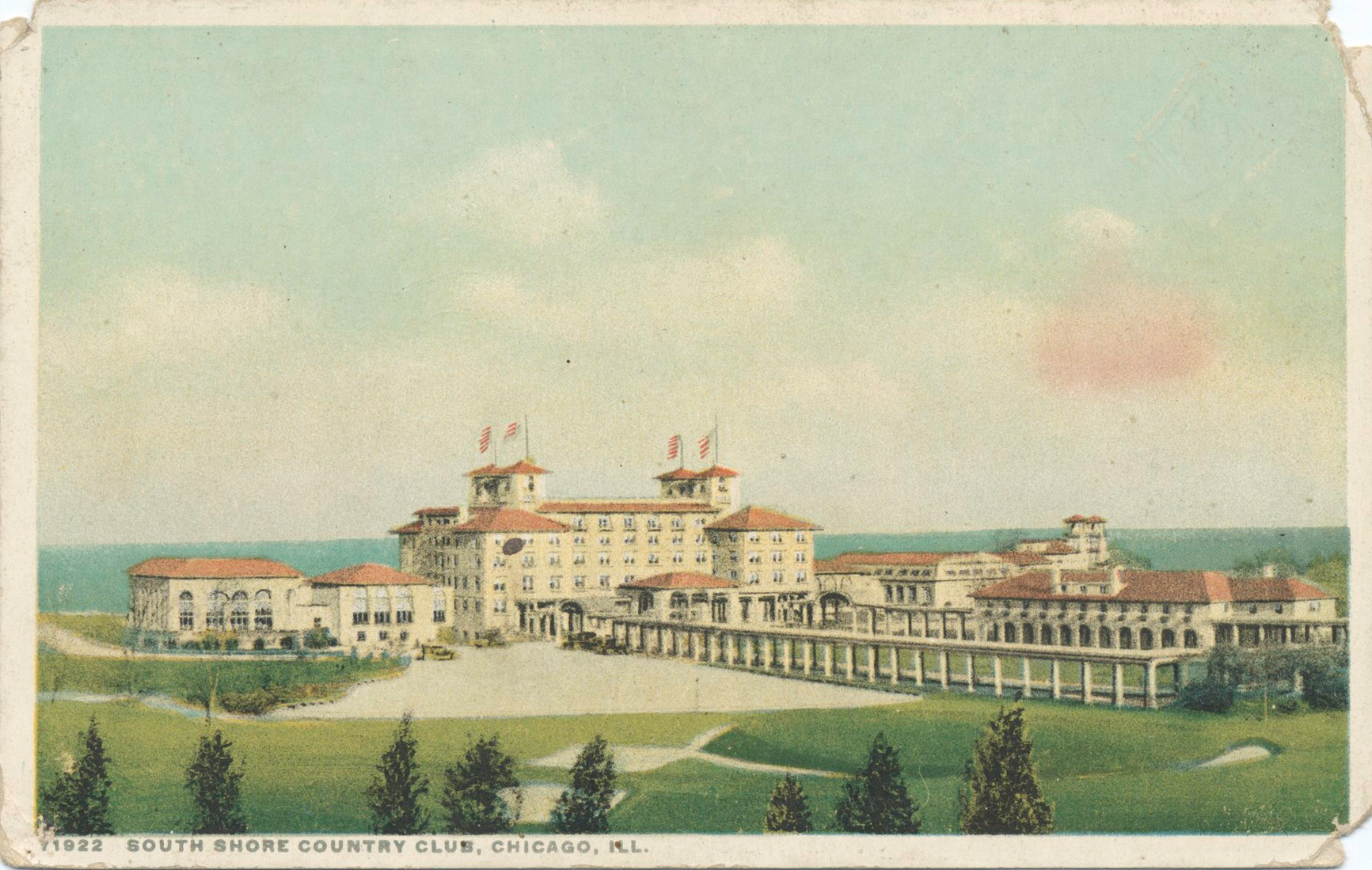
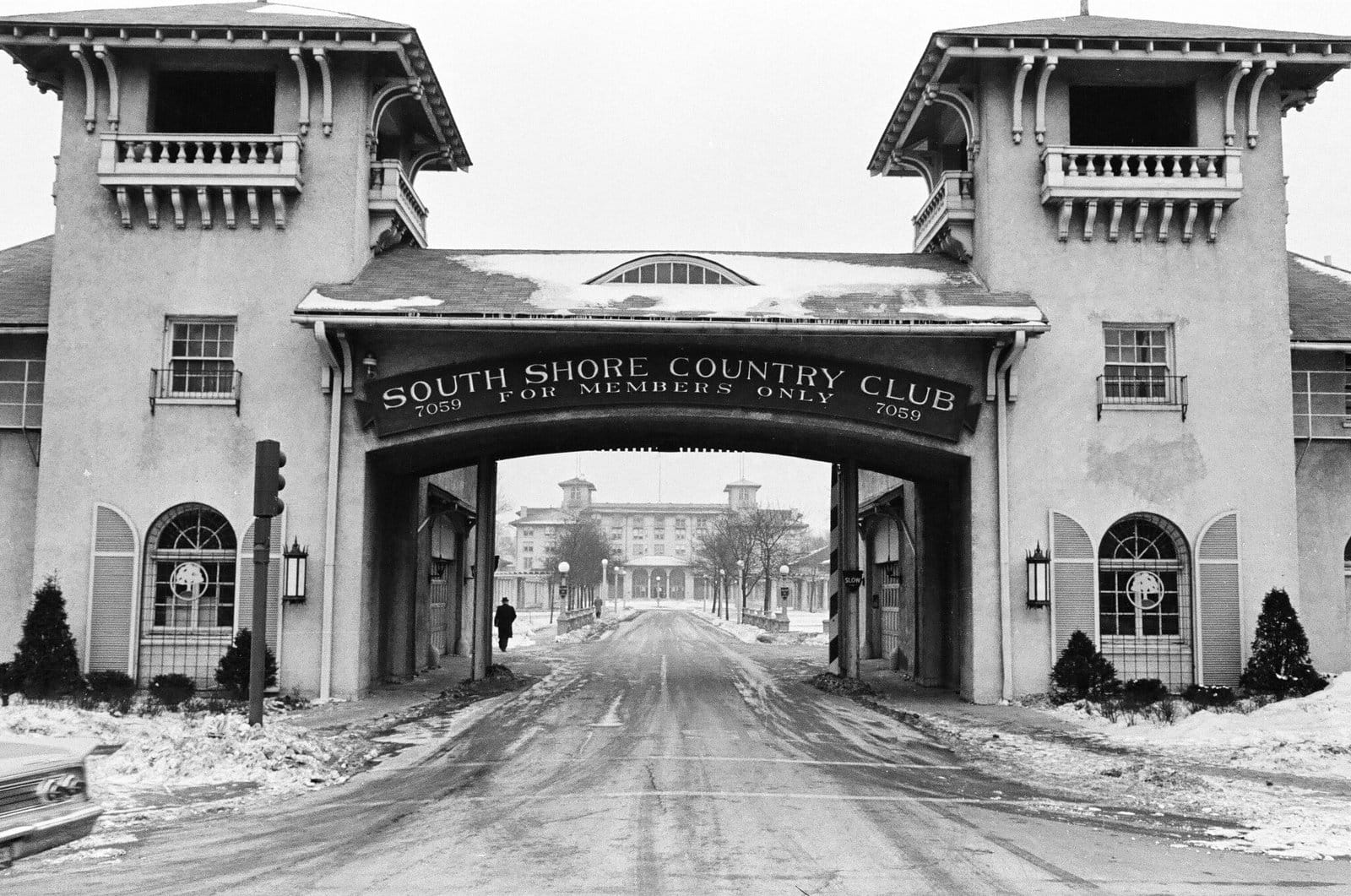
Postcard of South Shore Country Club, Wikimedia Commons | South Shore Country Club Gatehouse, 1963, ST-10103839-0006, Chicago Sun-Times collection, Chicago History Museum
The opening of the South Shore Country Club in 1906 was the prologue to the neighborhood’s real estate boom. An idyllic lakeside retreat founded by Loop bankers (who made it clear that anyone who wanted to score a loan from their banks better be a member of their new club), the South Shore Country Club had golf, horseback riding, tennis and beaches…but no Catholics, Jews, or Black members allowed. It evoked the exclusive clubs of New England as much as the Midwest. That extended to the architecture too—designed by Marshall & Fox, it’s a relatively rare example of the Mediterranean Revival style in Chicago. The gatehouse at the corner of 71st and South Shore Drive flaunted privatized lakefront and social status, with a literal marquee that signaled to capital and the aspirational class that they should invest in South Shore.
…and invest they did. Developers and the upwardly mobile piled into South Shore, fueling a building boom in the 1910s and 1920s whose stately apartment buildings still define the neighborhood today, and the South Shore Country Club and its golf course was a particular magnet. In 1926, a consortium led by Benjamin F. Lindheimer announced plans for a full-block development across the street from the country club entrance. Filling the entire vacant block between South Shore Drive, 71st, Oglesby, and 70th, they planned a ten-story hotel, a five-story office building, and a three-story residential hotel. Lindheimer was an influential realtor and developer, and he chose an architect he’d worked with before to design the complex, Alfred Alschuler. The first phase of the project—the five-story office building and the blocklong residential hotel on 71st—was completed in 1927. Lindheimer’s group then sold the northeastern quadrant of the site to the South Shore Masons rather than try to build their envisioned hotel (the Masons’ own plans for a tower clubhouse, designed by Thielbar & Fugard, also went unrealized).
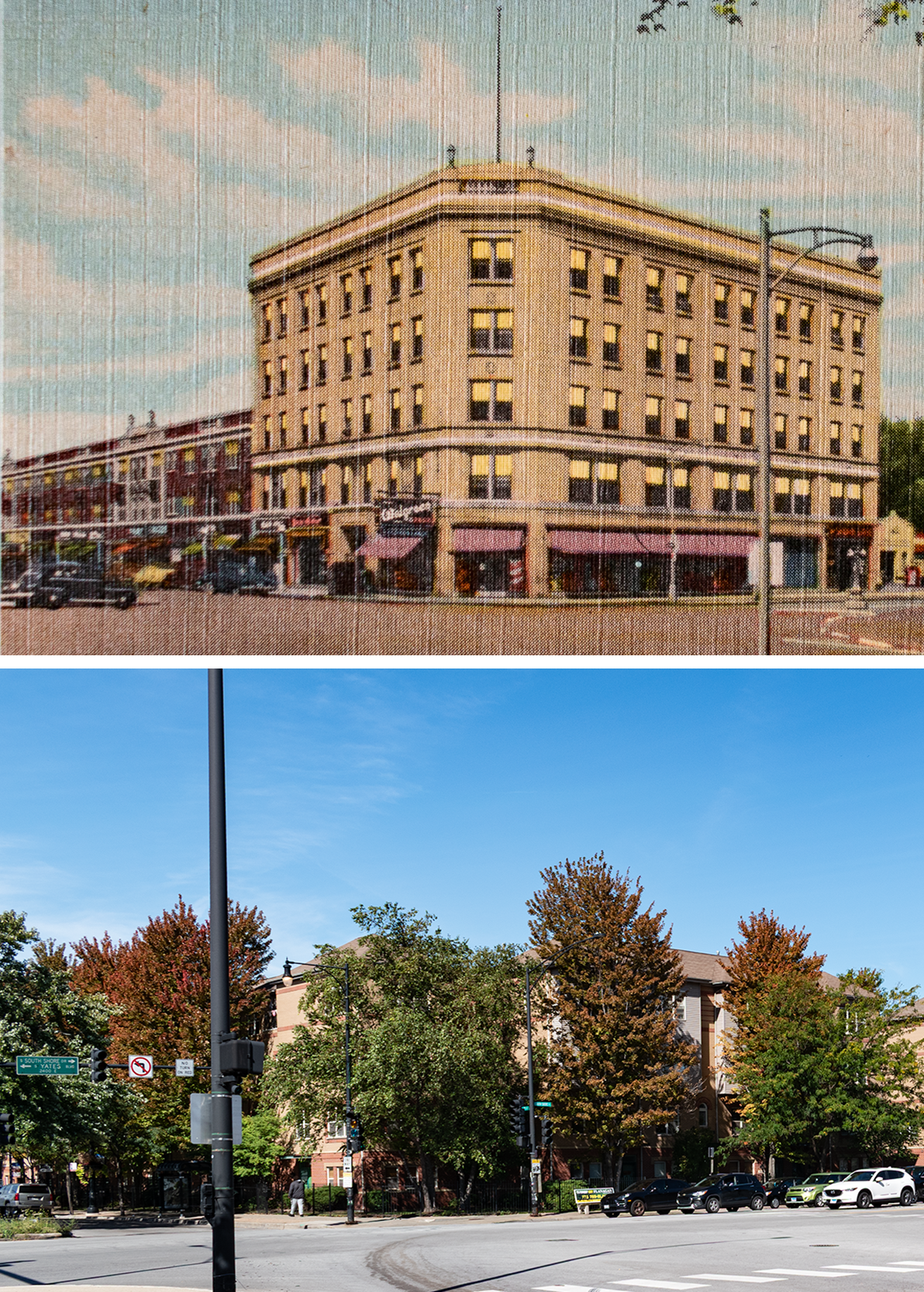
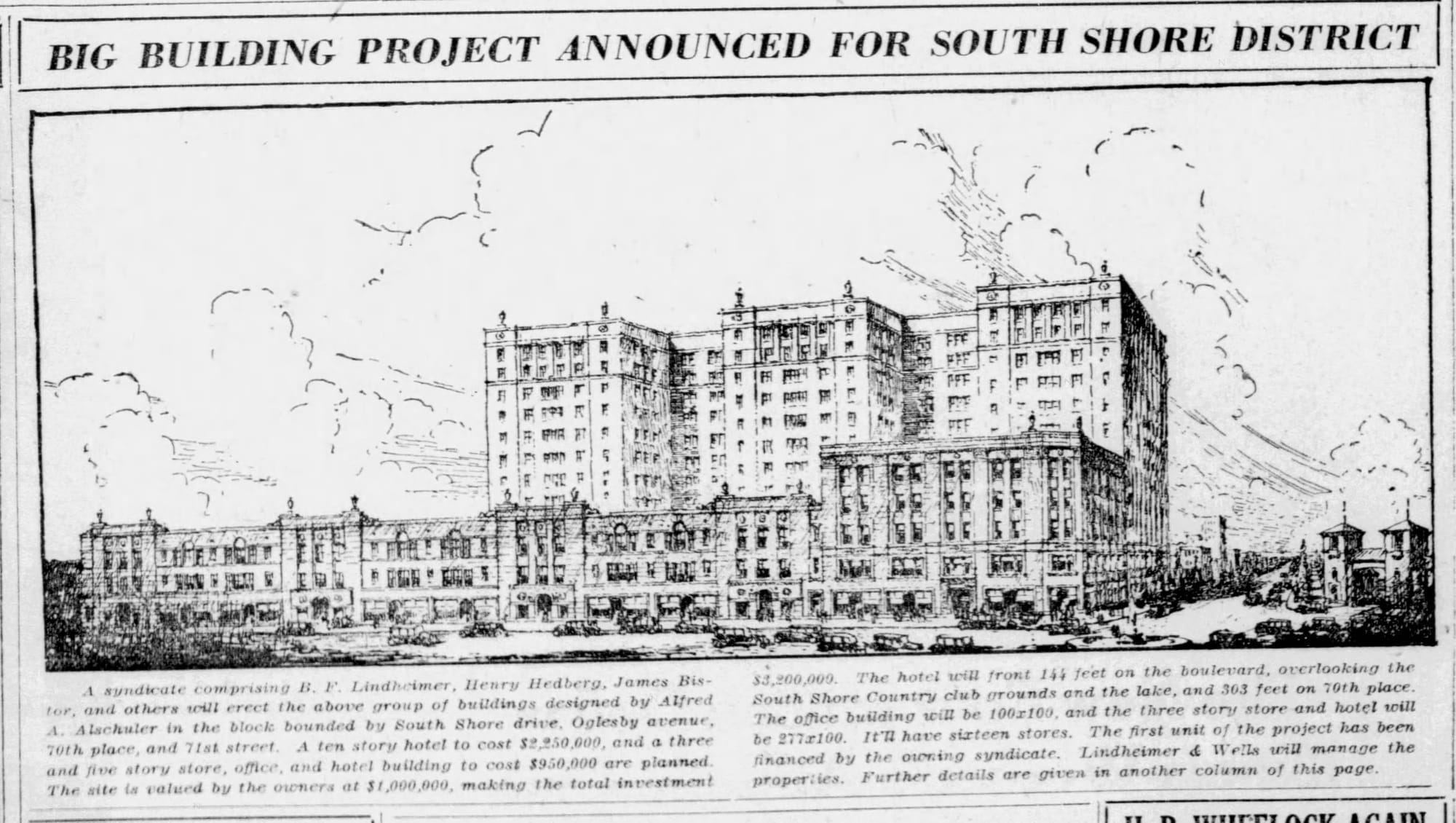
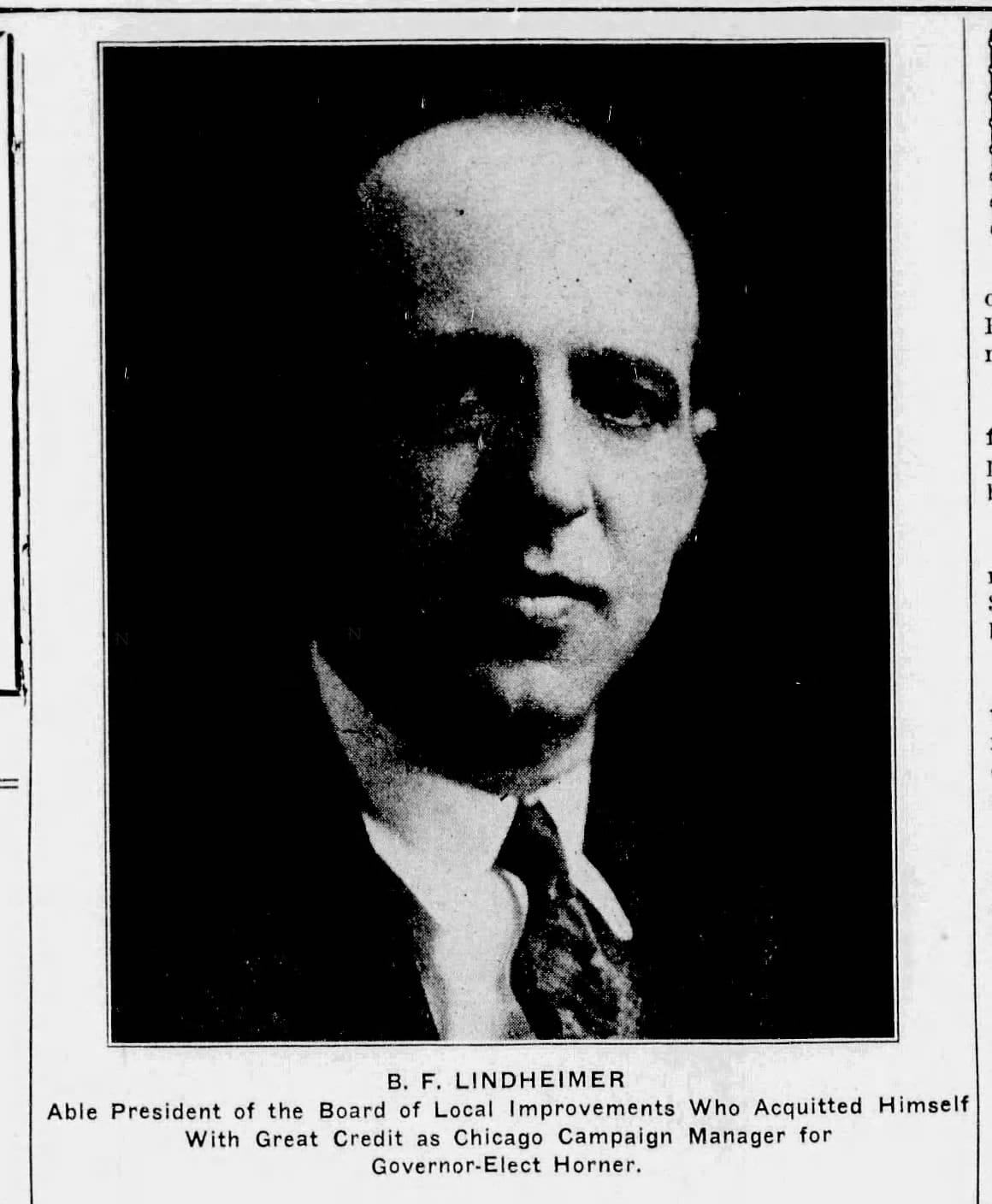

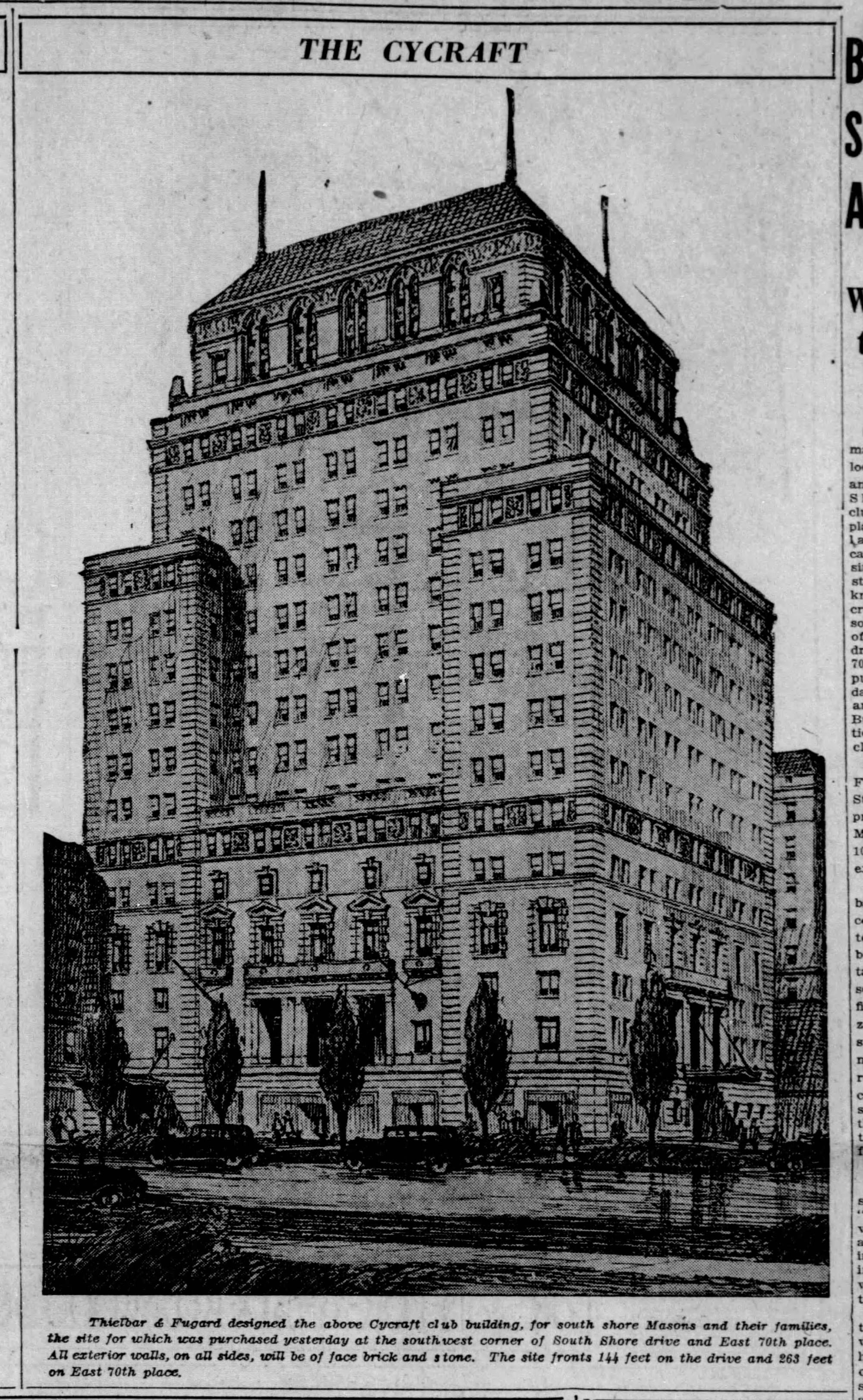
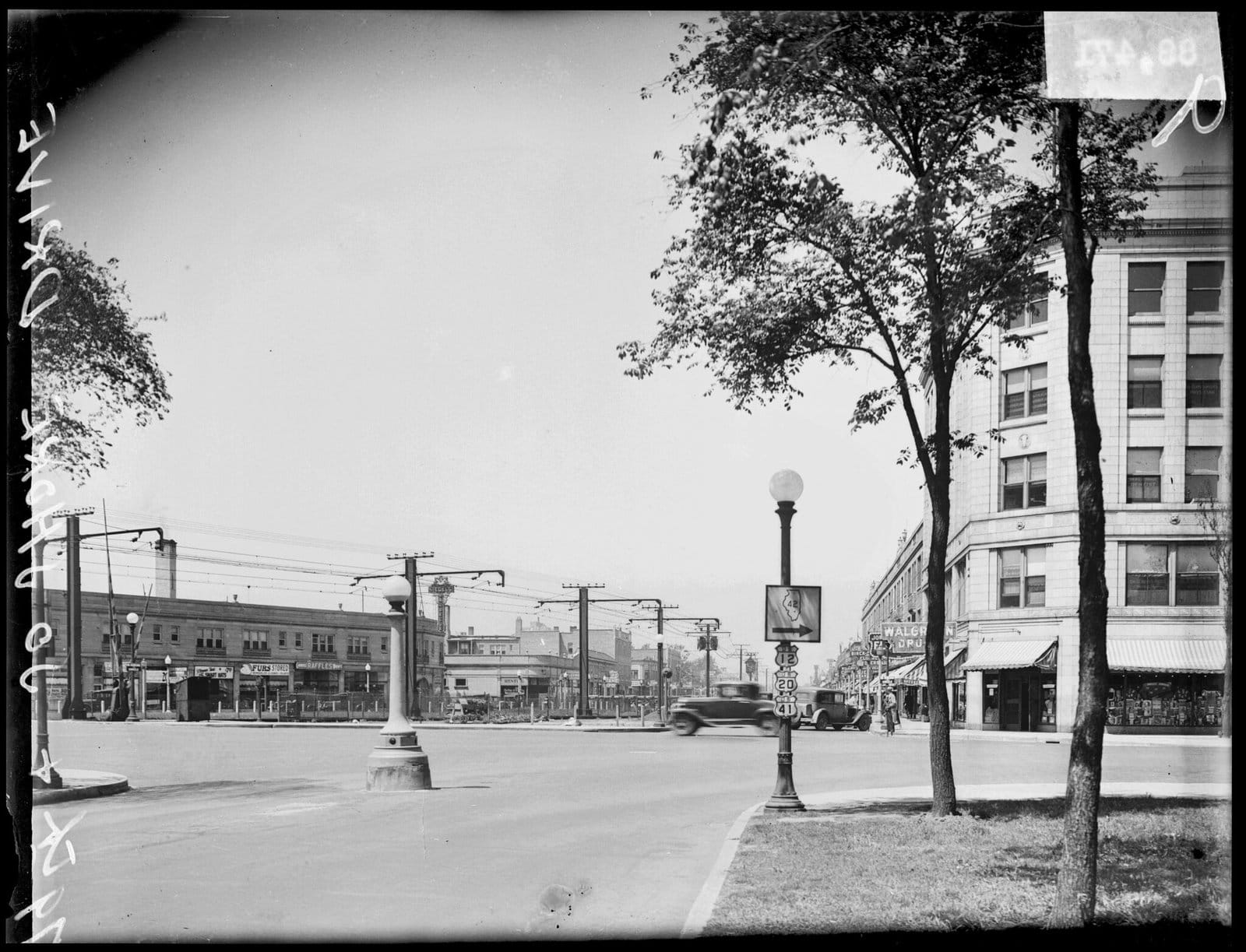
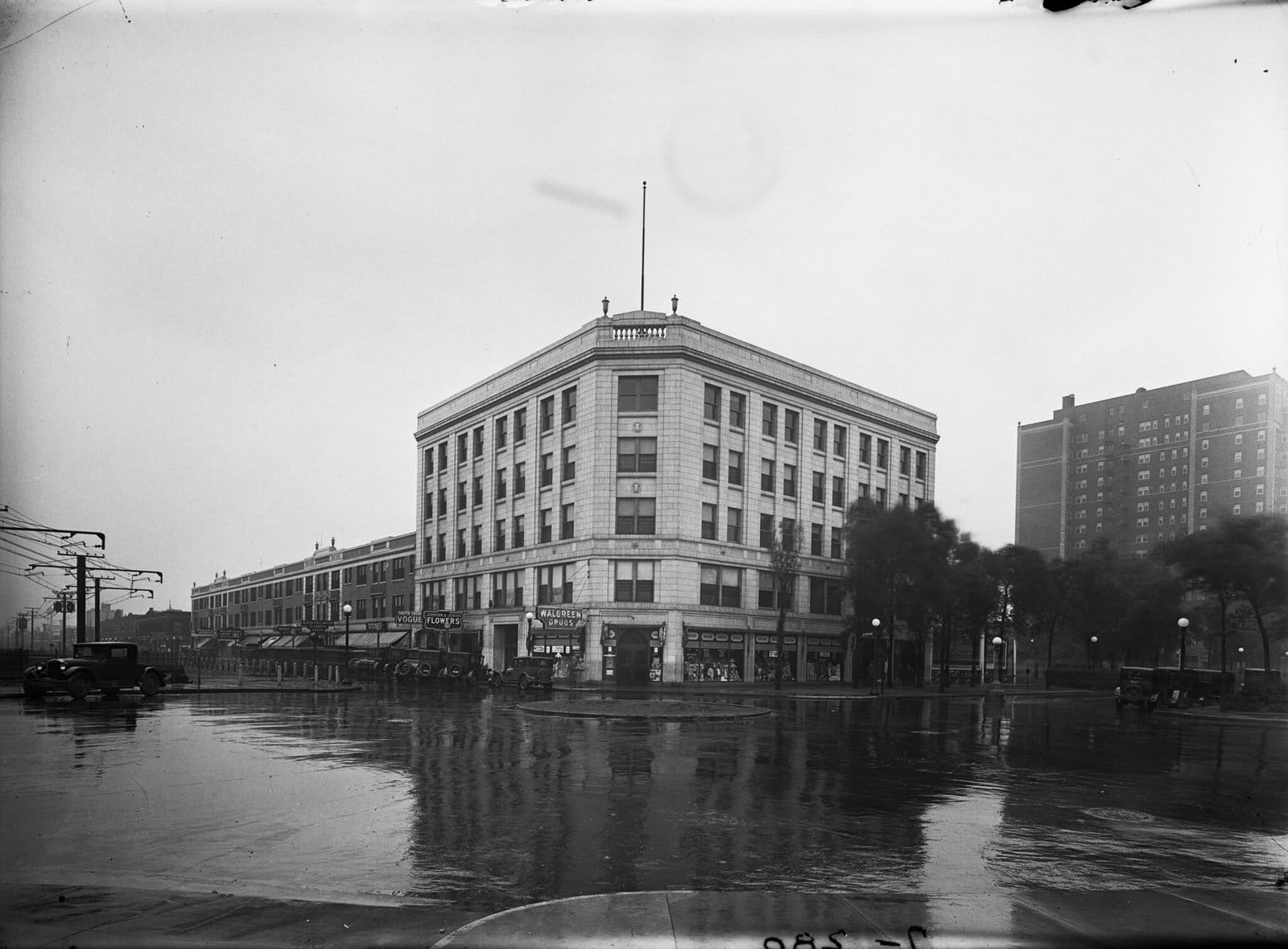
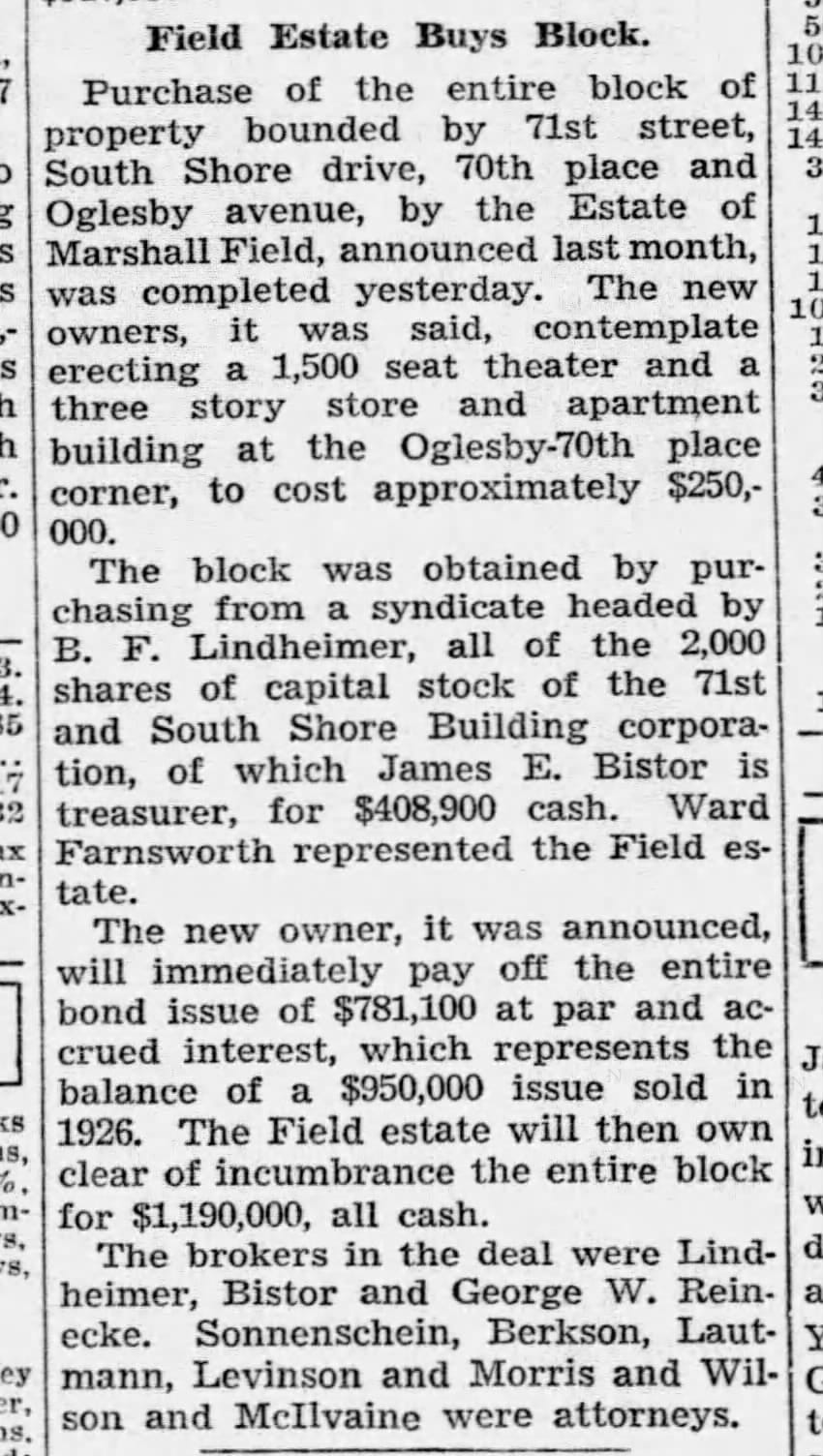
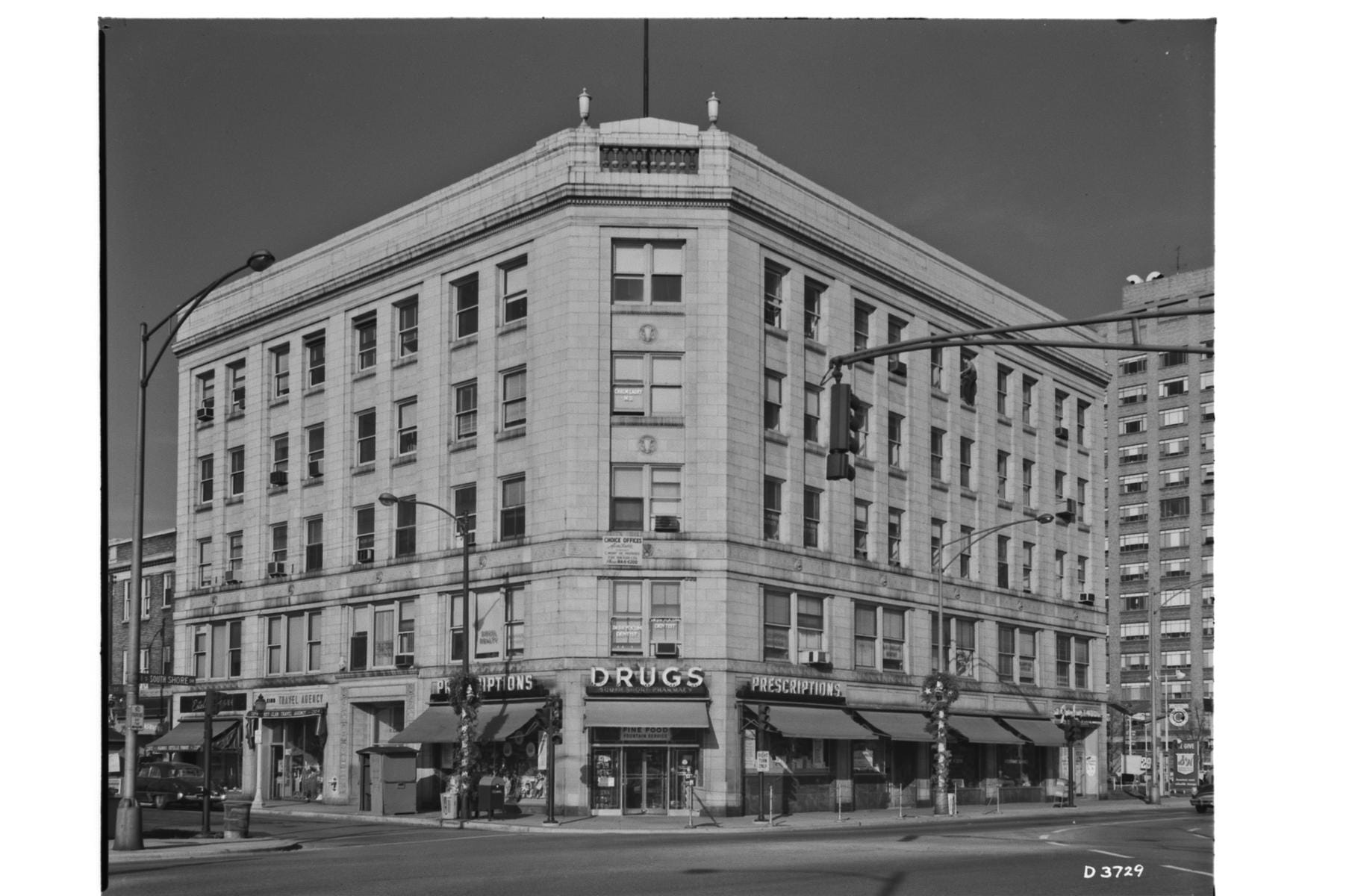
Detail view of the 1950 postcard and 2026 photo of the corner of 71st and South Shore Drive | 1926, "Big Building Project Announced for South Shore District" | B.F. Lindheimer, 1932 | 1926, "Will Overlook South Shore Country Club" | 1927, South Shore Masons plan tower | 1929, DN-0088471, Chicago Sun-Times/Chicago Daily News collection, Chicago History Museum | Undated, Chicago History Museum, ICHi-081627; Raymond W. Trowbridge, photographer | 1935, "Field Estate Buys Block" | 1950s, UIC Library via Chicago Collections
The office building on the corner was anchored by an early Walgreens, amongst other retail tenants on its first two floors—the upper three floors were marketed to doctors and dentists. The long horizontal building unfurling down 71st housed a 165-room middle-class residential hotel, the Oglesby Arms Apartment Hotel, with retail on the first floor. Lindheimer, a close ally of Mayor Anton Cermak and Governor Henry Horner, pivoted to horse-racing in 1935 when he acquired the Arlington Park and Washington Park Race Tracks, and his syndicate sold to the Marshall Field Estate that year. In the 1930s and 1940s these buildings were home to dozens of retail tenants, from bakeries and furriers to milliners and menswear—Joseph’s Shoes, Schlifke Furs, Estelle Vogue, E.J. Ryan, LeBoy’s, Holmes Bakery, Shore Post Restaurant, Irene’s Hats, Birck-Fellinger Cleaners…you get the point.
While Alschuler’s hotel tower wasn’t built, proximity to the South Shore Country Club had attracted another upscale tower just north on South Shore Drive. Designed by McNally & Quinn, who specialized in luxury apartment buildings in the Gold Coast, the South Shore Club Apartments opened in 1927 at 70th and South Shore. It was kind of a quirky model—the building combined a 31-unit co-op with a 148 room residential hotel. Built right in the middle of the South Shore boom, by 1932 the building was in foreclosure proceedings.

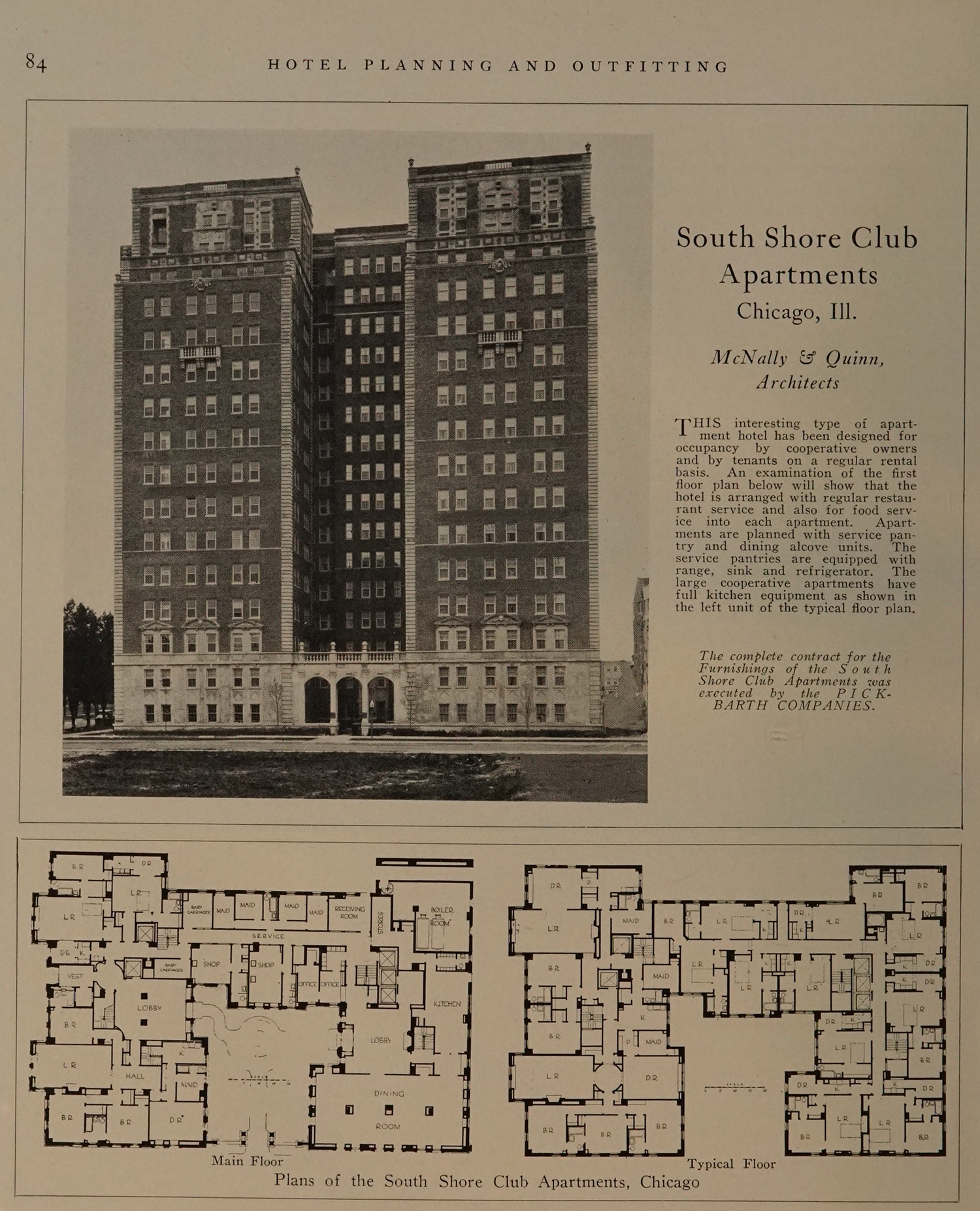
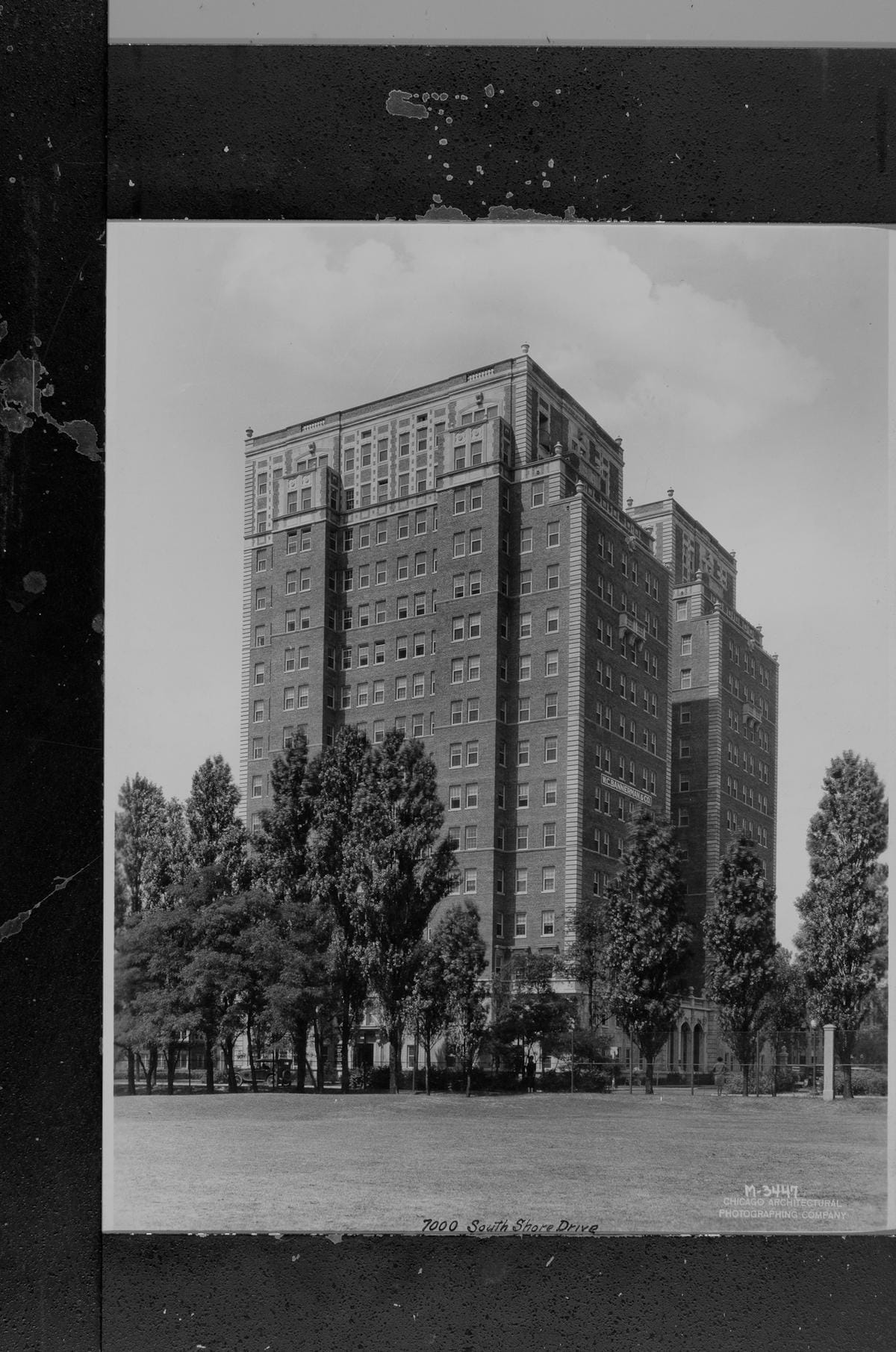

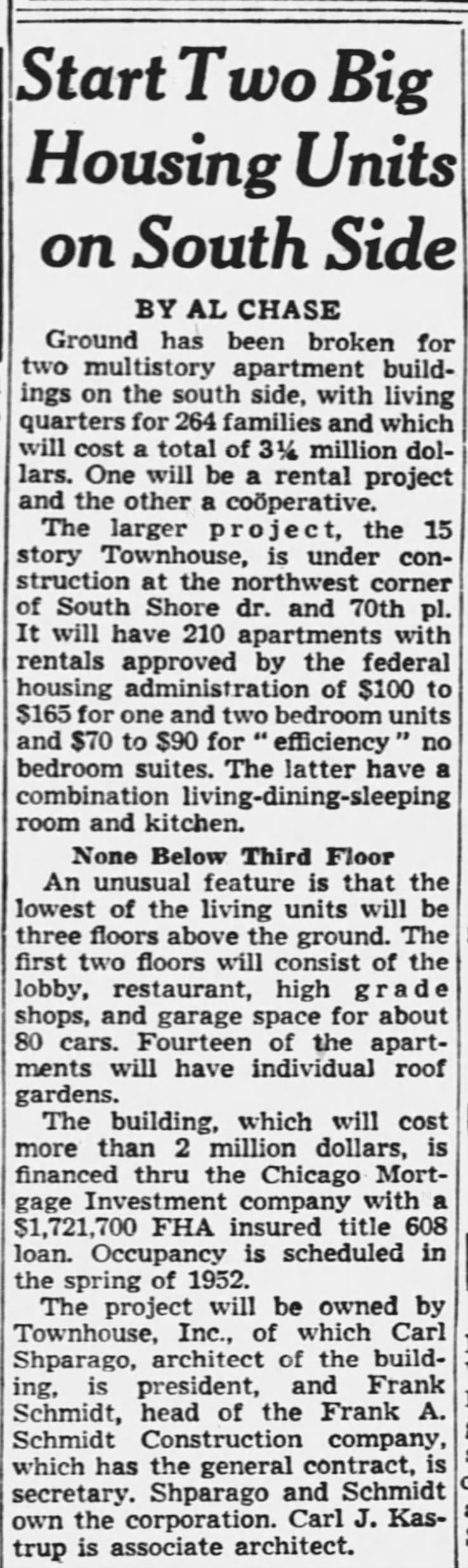
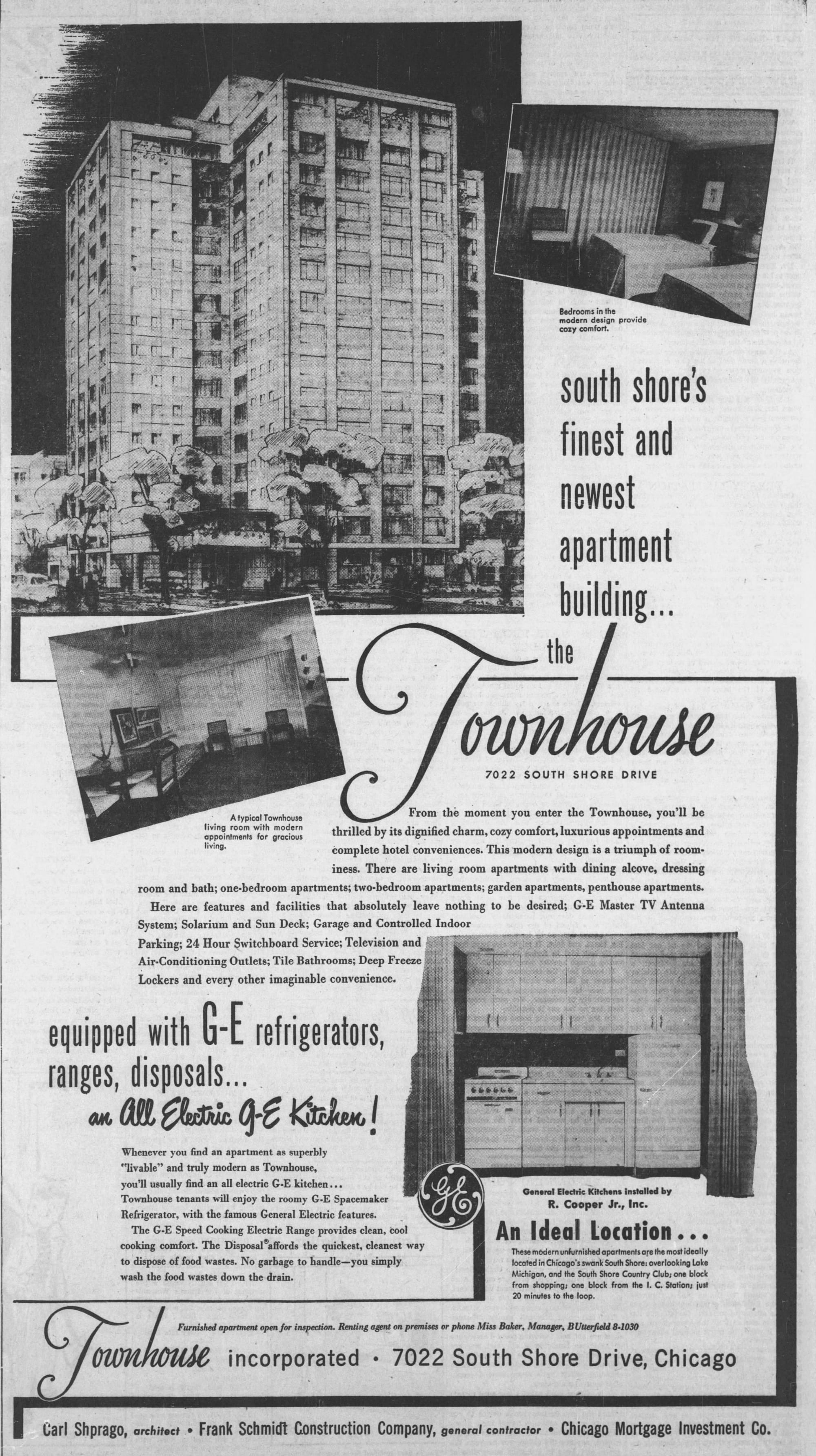
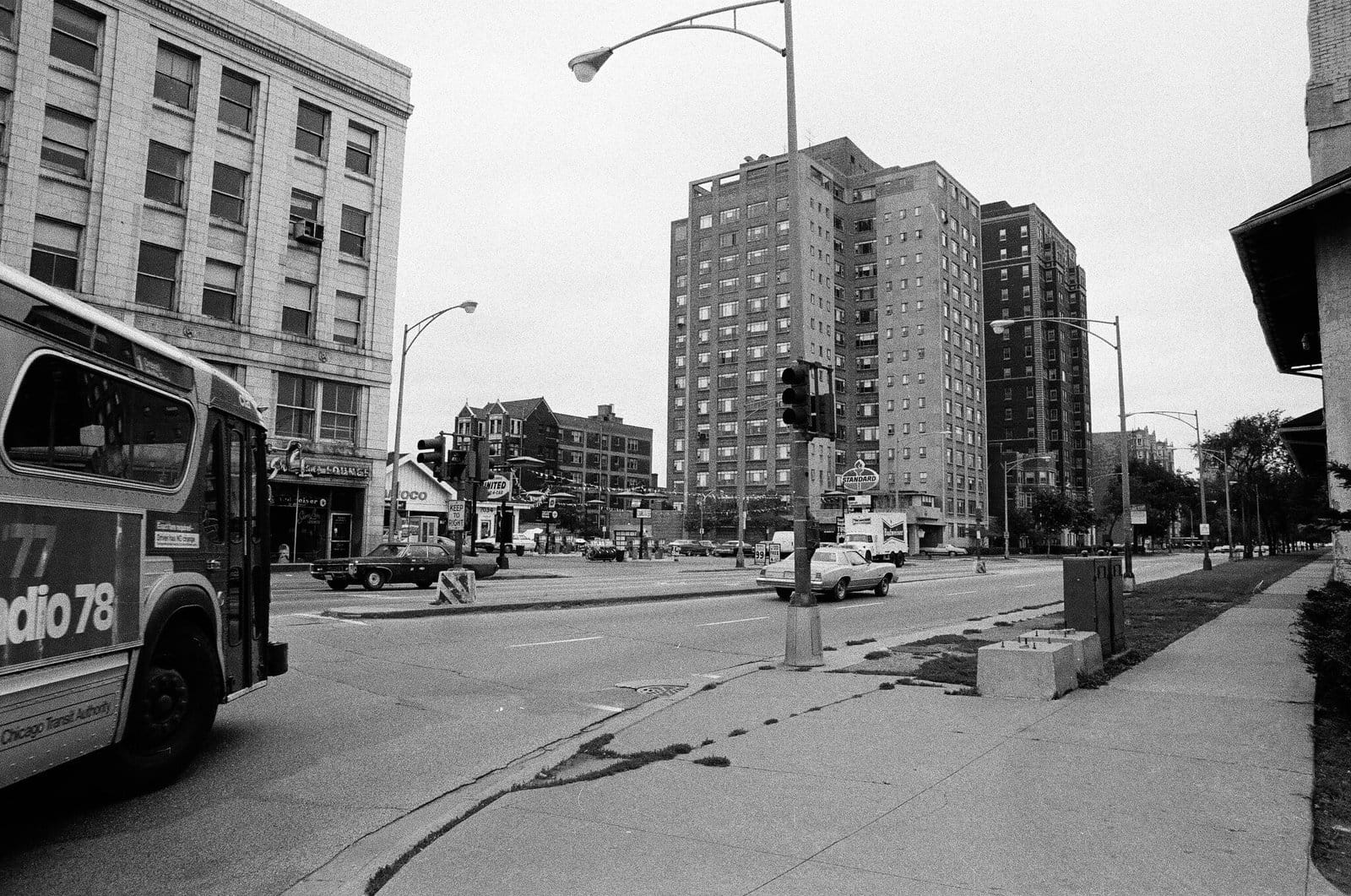
Detail view of the towers in the 1950 postcard/2026 photo | 1926, South Shore Club Apartments rendering | 1928, Hotel Planning and Outfitting, the Internet Archive | 7000 South Shore Drive, Undated, UIC Library via Chicago Collections | 1950, UIC Library via Chicago Collections | 1950, "FHA Insures More Homes for Chicago" | 1950, "Start Two Big Housing Units on South Side" | 1953 Ad | 1977, ST-14003552-0003, Chicago Sun-Times collection, Chicago History Museum
The twenty year boom created South Shore as we know it, but the subsequent blows of the Great Depression, World War II, and white flight virtually ended private development in the neighborhood. In the 1950s, the United States was still in the midst of a critical housing shortage so the federal government stepped in to support homebuilding in various ways—one way that manifested was in towers like the (relative) newcomer on South Shore Drive, the buff brick tower next to the South Shore Club Apartments. Christened the Townhouse, it opened in 1952 as a 210-unit apartment building consisting exclusively of studios and one-bedrooms. Designed by Carl Shparago and Carl Kastrup, Shparago acted as the developer as well—he tapped federal support to finance the project, which was insured with a Federal Housing Administration Section 608 loan.
White flight and the accompanying disinvestment hit South Shore hard. The neighborhood flipped from 95% white in 1950 to 95% Black in thirty years. The South Shore Country Club—which still didn’t admit Jewish or Black members (they’d given in on Catholics)—hemorrhaged members as the neighborhood changed. Membership dropped 60% in the 1960s and the club closed in the 1970s. The Chicago Park District bought the land in 1974, re-opening the lakefront here to Chicagoans, but they also intended to demolish the buildings, arguing restoration was too costly. The new neighborhood rallied to save them, powering through the irony of saving a building that once housed an institution too racist to admit them, deciding there was more power in transforming it into a civic asset for all Chicagoans.

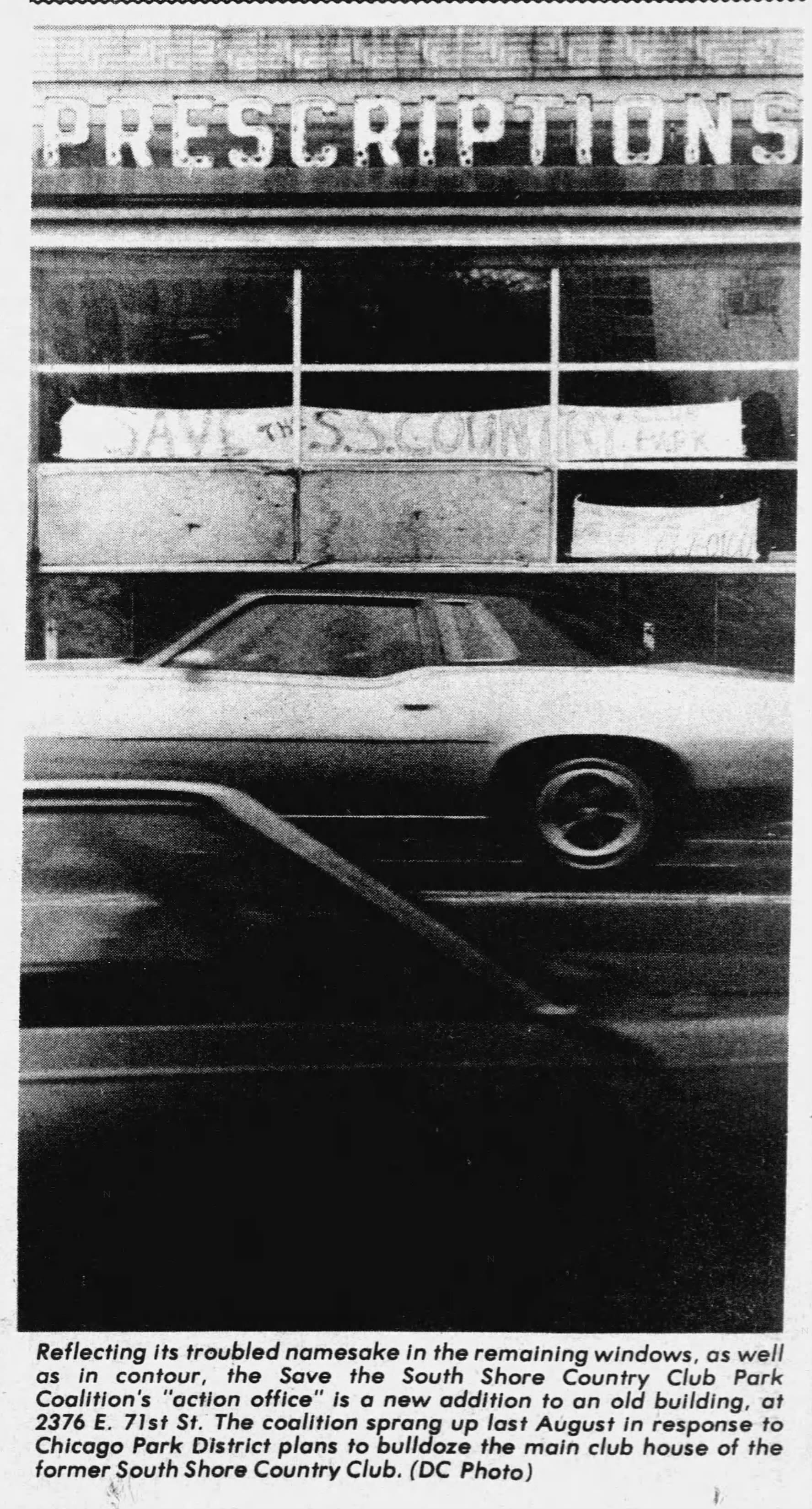
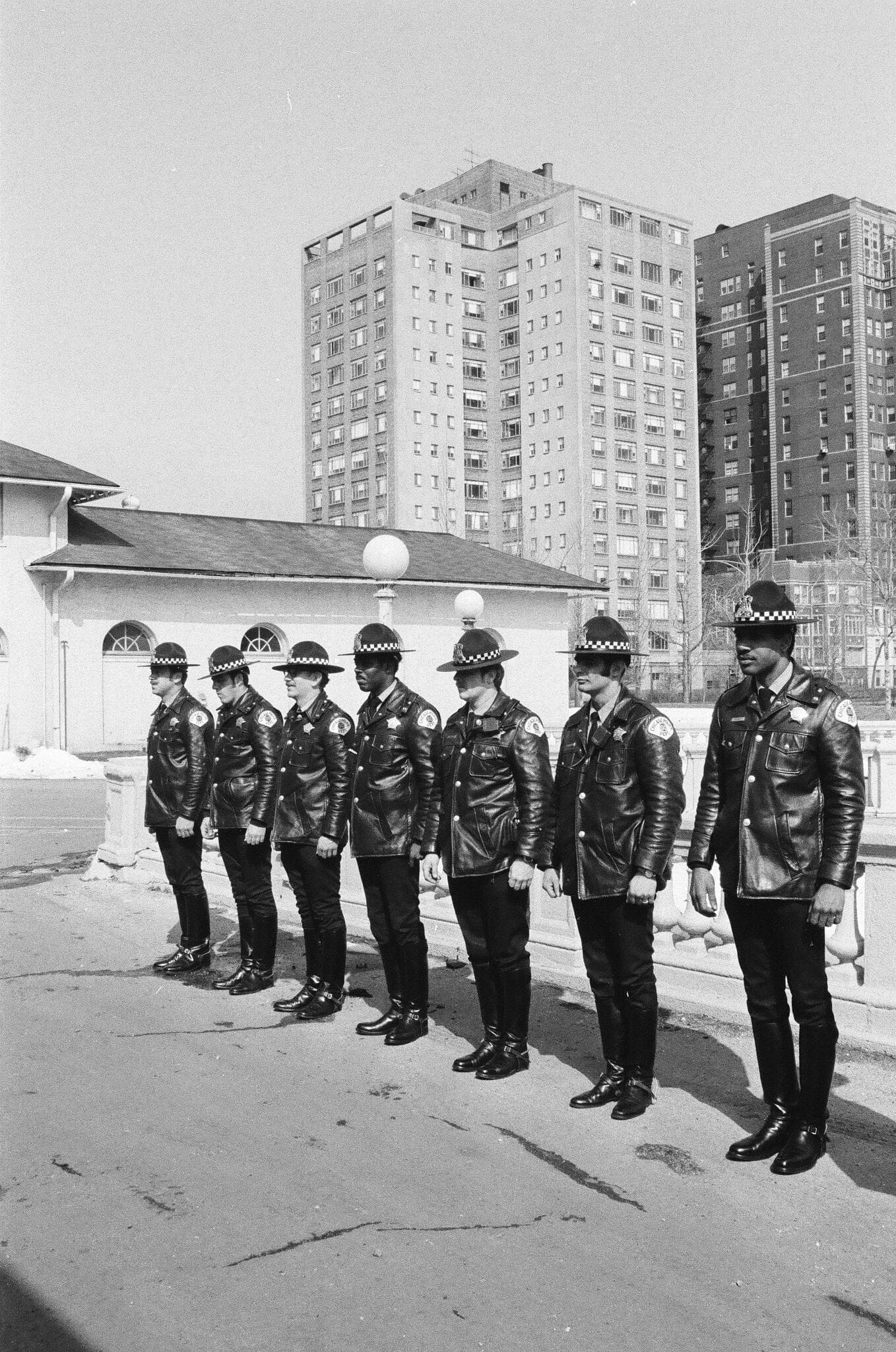
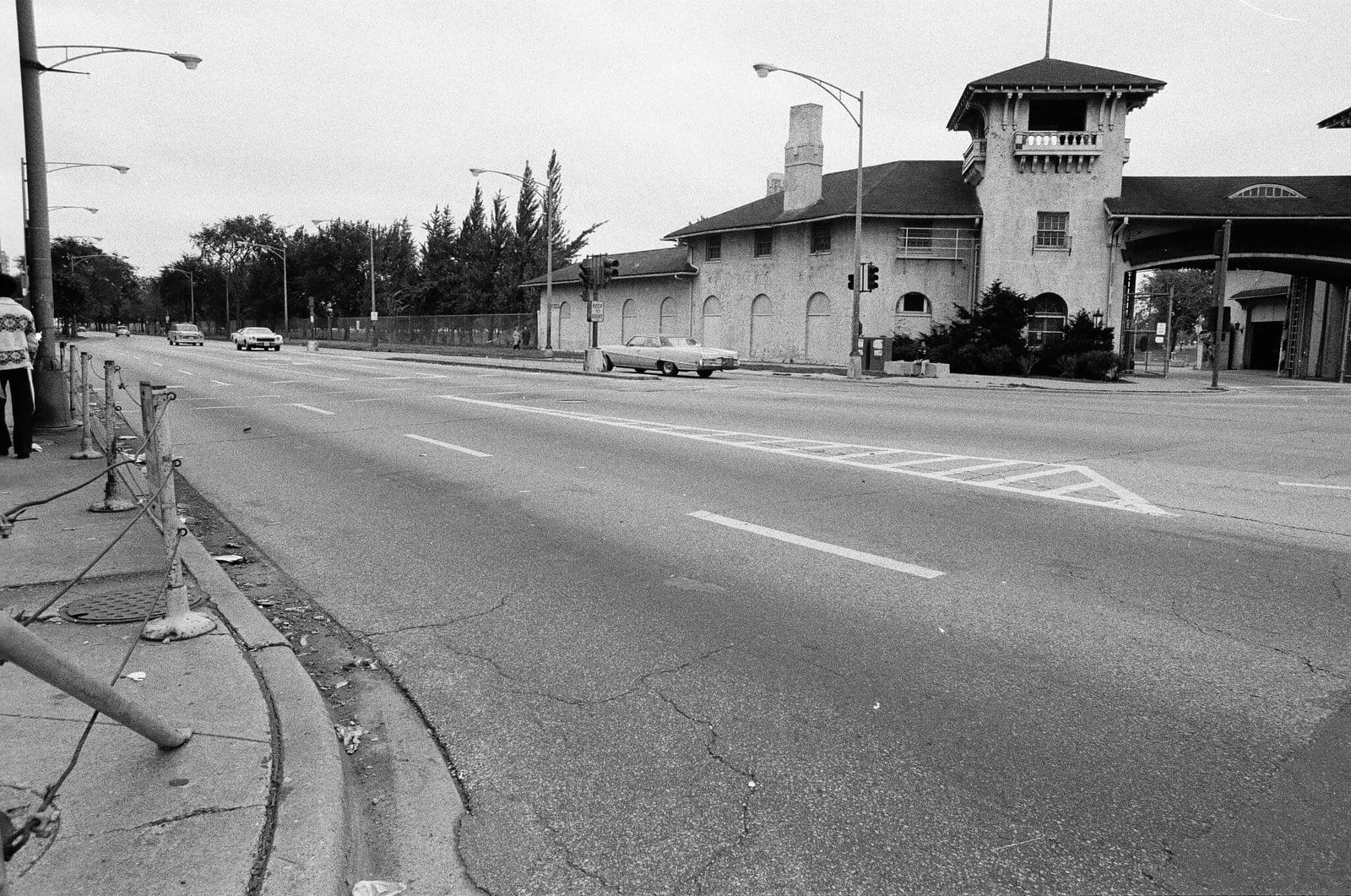
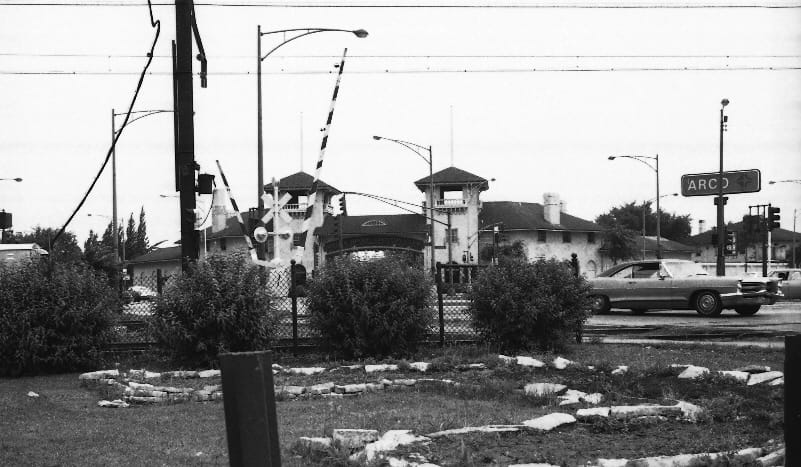
1977, "Racism Crux of Club Issue" | 1977, Save the South Shore Country Club Coalition action office | 1975, mounted cops staging at the former country club, ST-80006099-0138, Chicago Sun-Times collection, Chicago History Museum | 1977, ST-14003552-0005, Chicago Sun-Times collection, Chicago History Museum | Undated, 1970s, Illinois State Historic Preservation Office
By the mid-1970s the building on the corner, the South Shore Medical Building, was struggling with vacancy—white flight and the building’s age meant many of the doctors, dentists, and stores had moved out—and the building owner provided some office space to the Save South Shore Country Club Coalition. Neighborhood activists like the Coalition teamed up with local politicians and successfully forced the Chicago Park to restore most of the complex, reopening it as the South Shore Cultural Center. The gatehouse visible here was restored in 1979, but while the government-owned gatehouse was trending towards restoration, the complex across the street heading the other way—it was demolished in the early 1980s.
It languished as an empty lot for nearly twenty years, until pioneering community development bank ShoreBank entered the picture. ShoreBank was founded in 1973 in direct response to the disinvestment that accompanied white flight—its founders, a racially-integrated team of bankers, bought the failing South Shore Bank of Chicago. Foreshadowing the Community Reinvestment Act of 1977 that required banks to serve low-income communities, ShoreBank’s thesis was that there was both profit and social value in investing in communities that traditional white financial institutions were shunning, providing mortgages, business and home renovation loans in places the major financial institutions had fled. For years, that strategy worked. ShoreBank was profitable for 35 years and financed more than 52,000 units of affordable housing, expanding beyond South Shore to Chicago’s West Side, Detroit, and Cleveland.
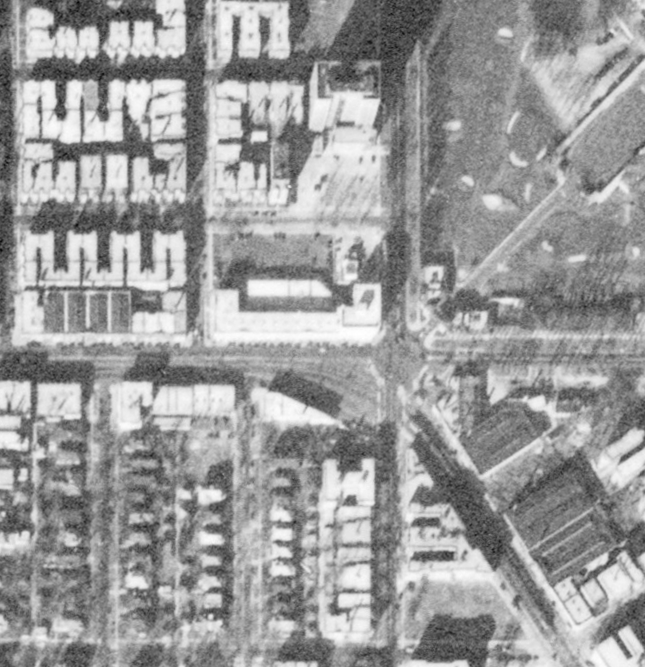
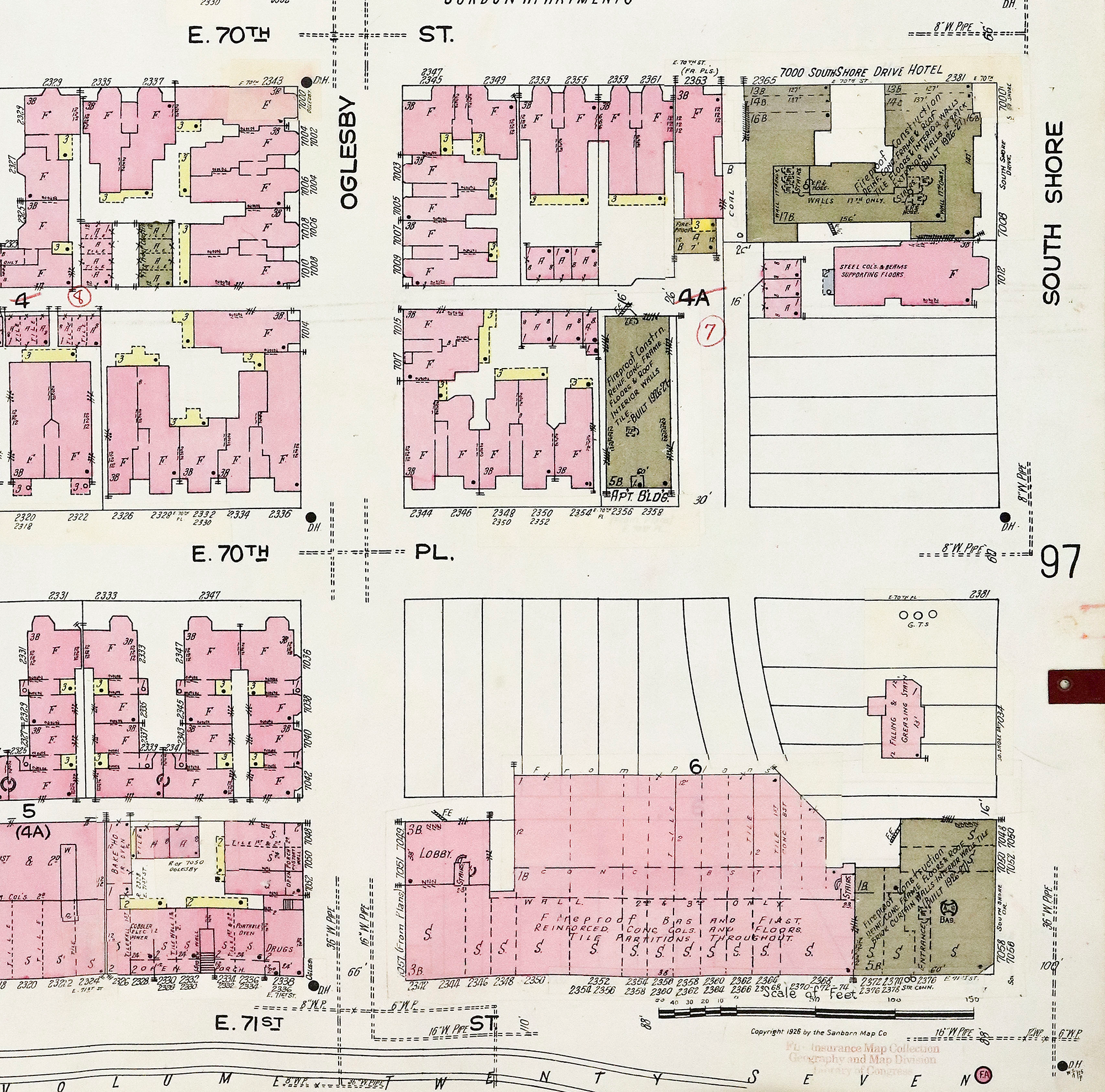
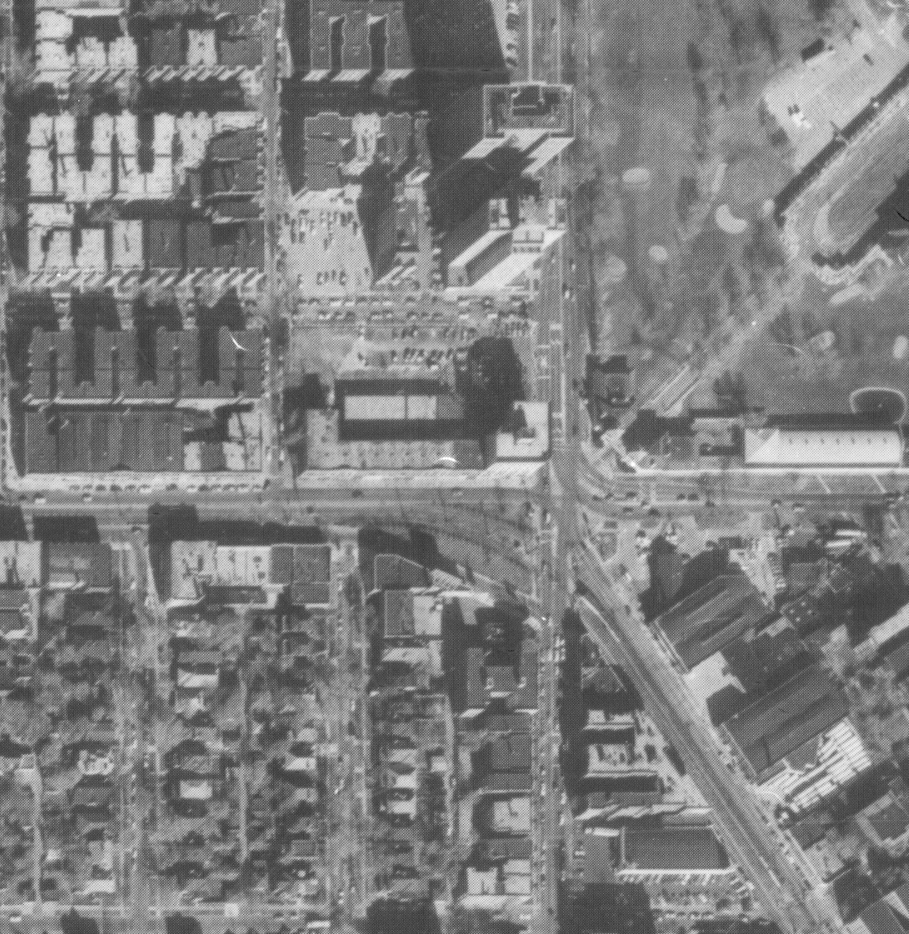
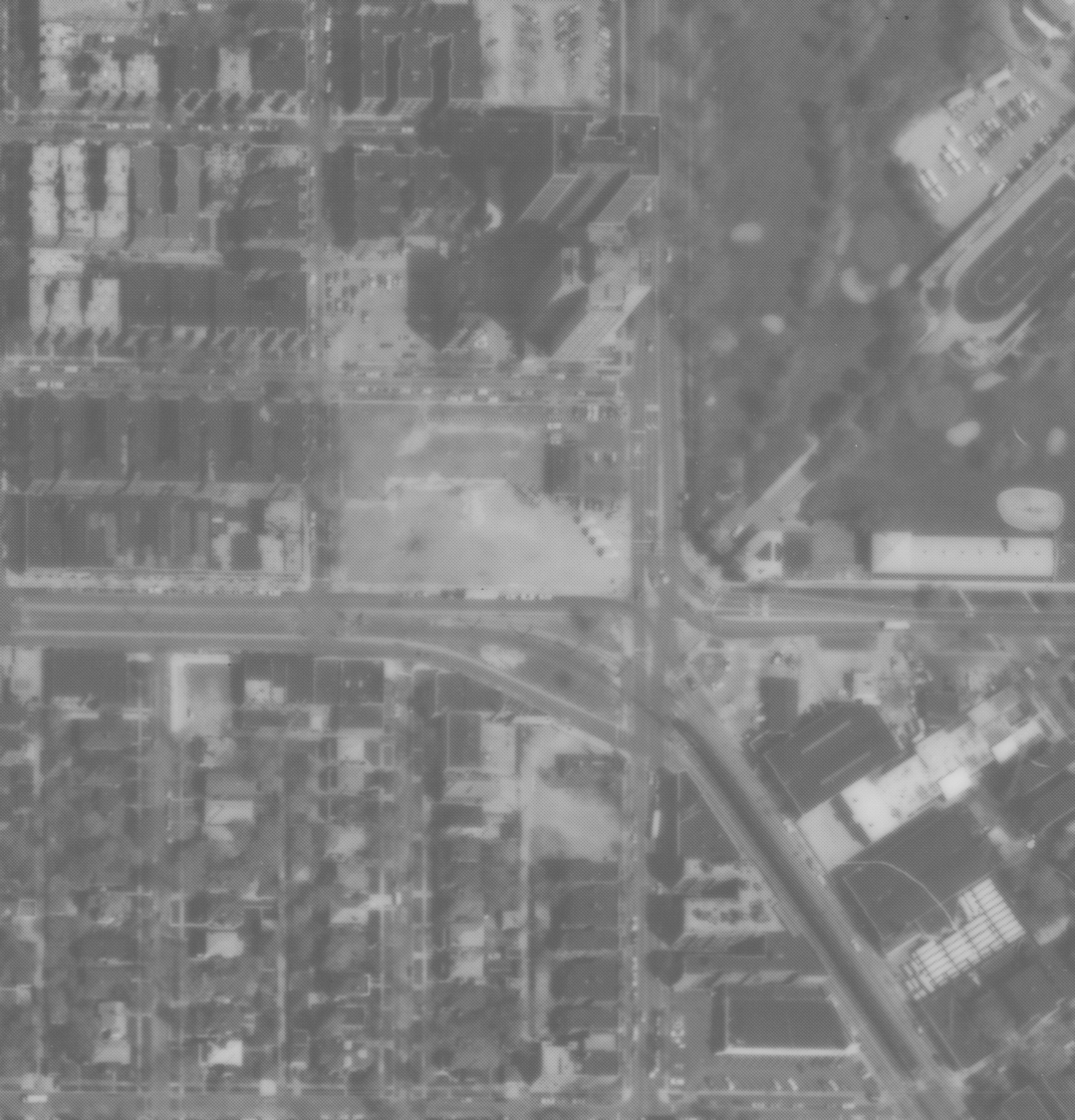
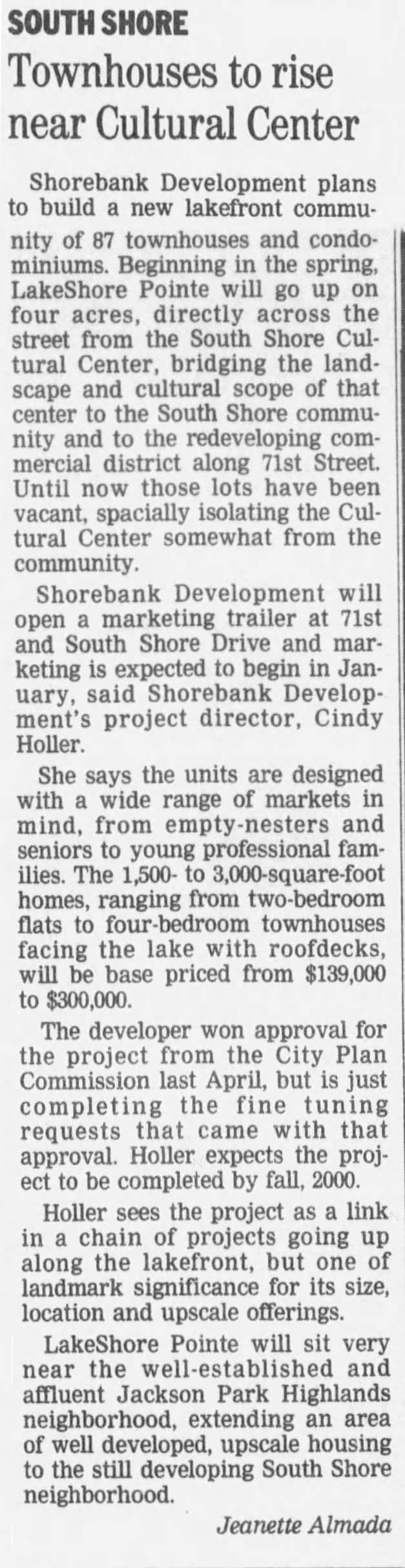
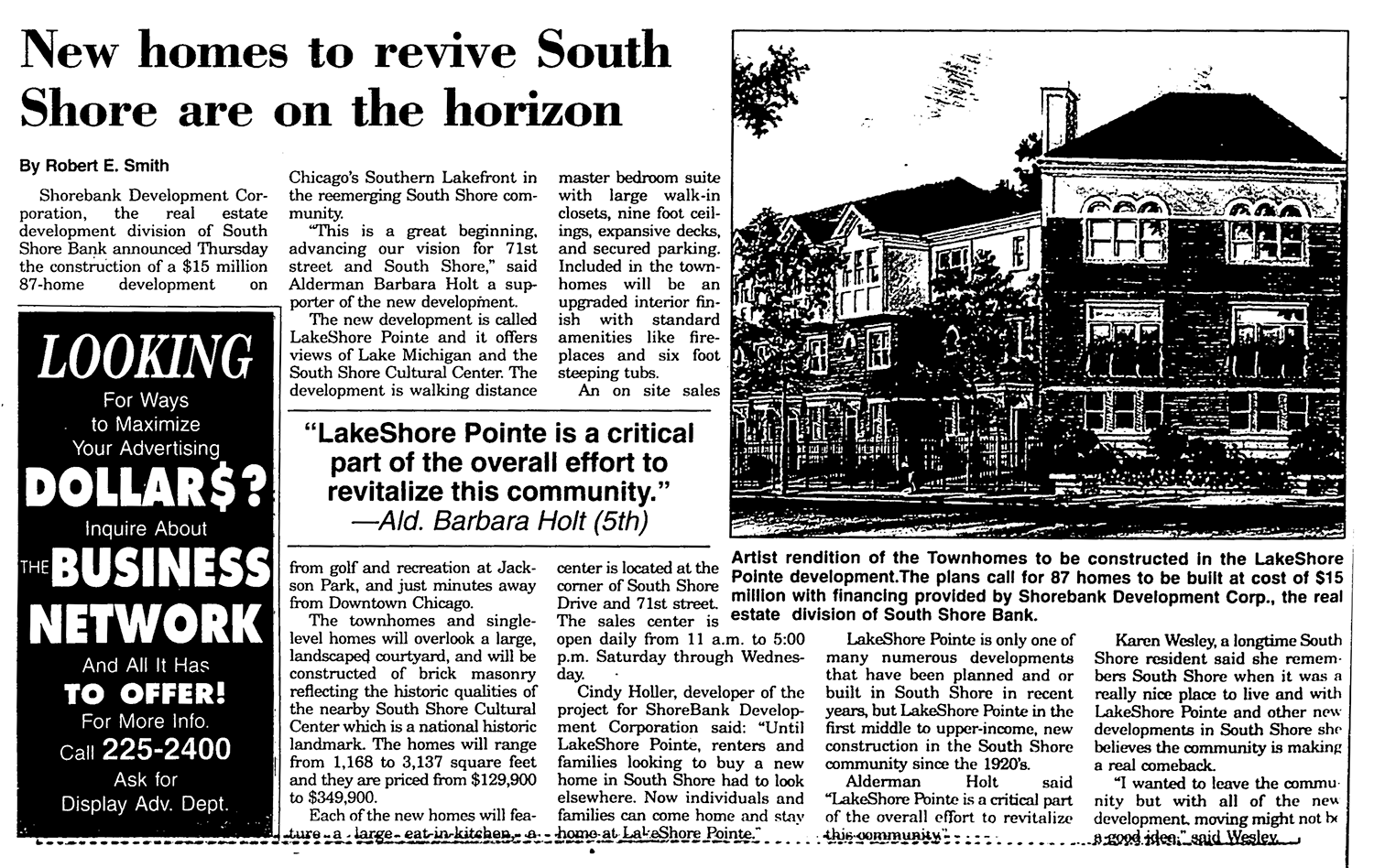

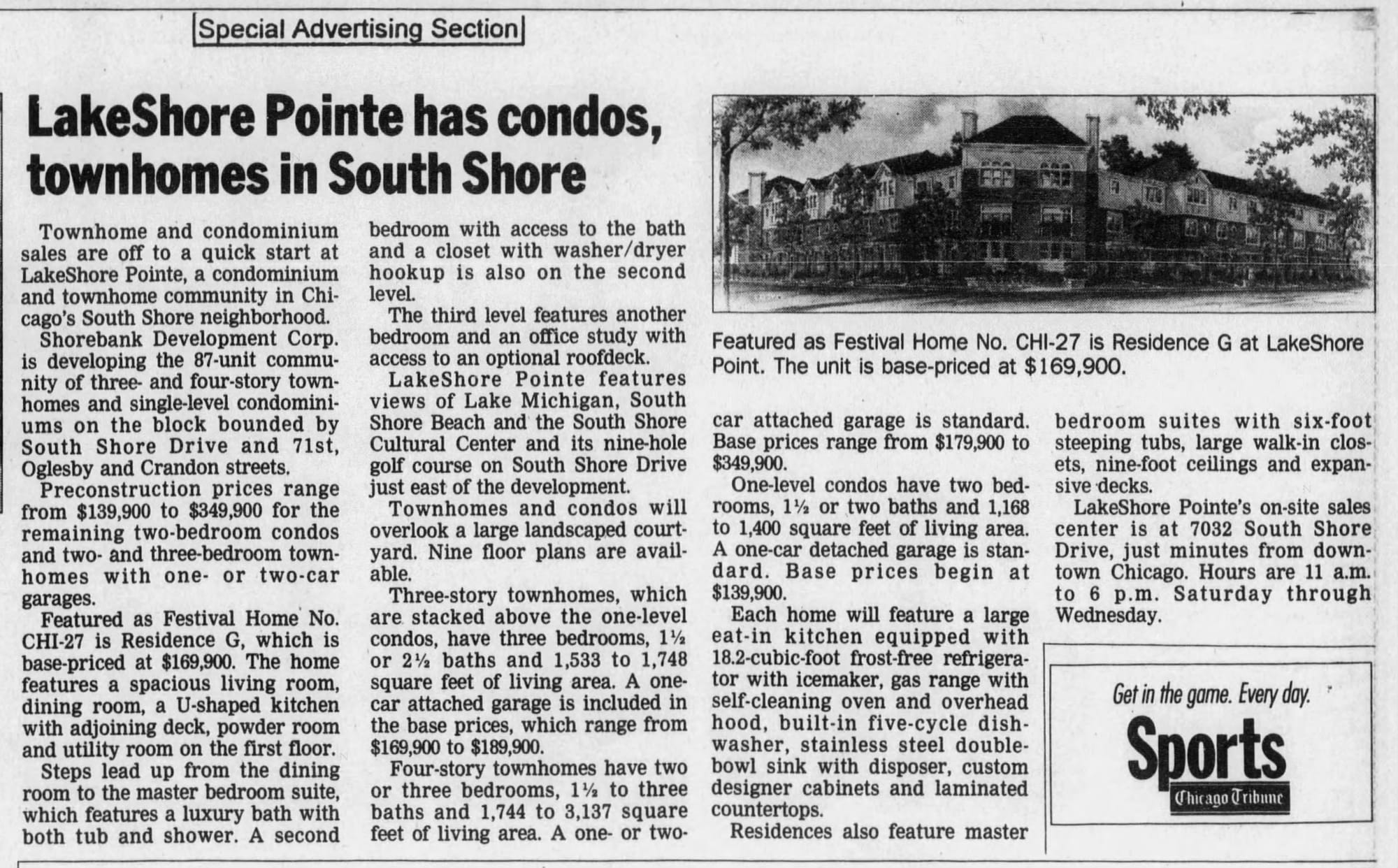
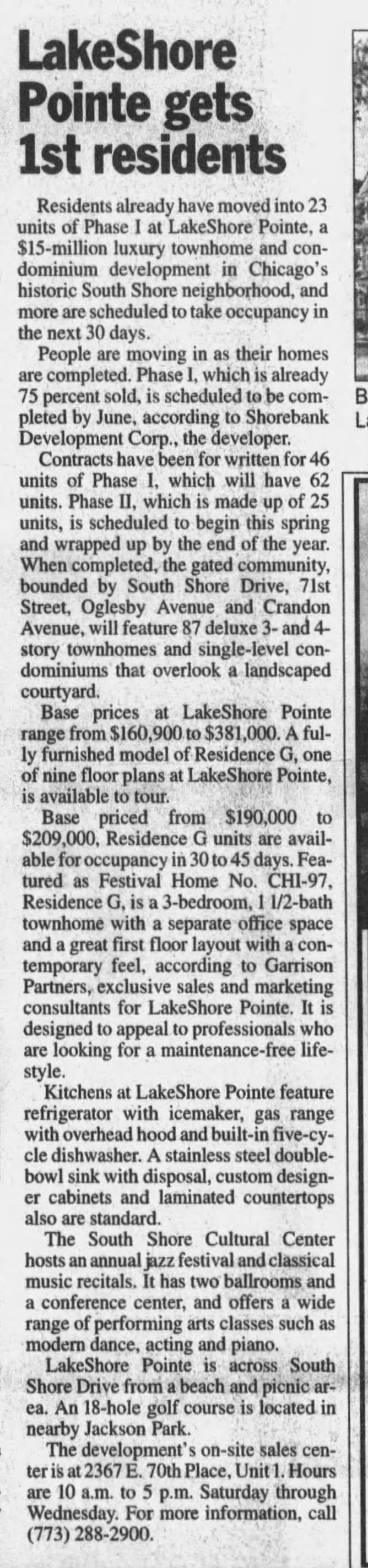
1938 aerial, Illinois State Geological Survey | 1950 Sanborn Fire Insurance Map | 1980 and 1985 aerials, Chicago Metropolitan Agency for Planning | 1998, "Townhouses to Rise", the Chicago Tribune | 1999, "New homes to revive South Shore", the Chicago Defender | Shore Bank leadership looking down at the intersection, 1999 | 1999 LakeShore Pointe Ad | 2001, LakeShore Point gets first residents
When they secured the full block bounded by South Shore, 71st, Oglesby, and 70th in the late 1990s, though, affordability was not the focus. Across the street from a jewel of the Park District, close to the lake, a block from the Metra Electric—this was going to be South Shore’s first fully market-rate development since the Great Depression. Construction began in 1999 on an 86-unit gated development consisting mostly of townhouses with a smattering of condos. Dubbed LakeShore Pointe, the project was named the Chicago Sun-Times Best City Development of 1999, and the first residents moved in in 2001.
LakeShore Pointe was a success, but the Great Recession a few years later crushed ShoreBank. While ShoreBank didn’t peddle subprime loans like the major financial institutions that created the crisis, by virtue of the bank serving a more vulnerable population, many of its loans went unpaid when borrowers lost their jobs because of the wider crash. The Treasury's TARP program bailed out the biggest banks, but the political optics of rescuing ShoreBank were awkward for the Obama Administration—they were worried the press would attack them for favoring a Chicago institution with a bailout. ShoreBank convinced major banks like Goldman Sachs to provide capital for their rescue, on the condition the federal government chipped in, but for political reasons it seems like Obama’s Treasury Department dragged their feet (despite the FDIC repeatedly making clear it approved of a bailout). Kind of a cowardly and foolish decision that looks even worse in retrospect, with most of the press giggling away while the Trump family and the Republicans rob the federal government blind with levels of corruption never before seen in American history. ShoreBank was shut down in 2010 and sold off for parts, killing a key source of capital for regular residents of South Shore as well as one of the most influential community investment banks in the country.
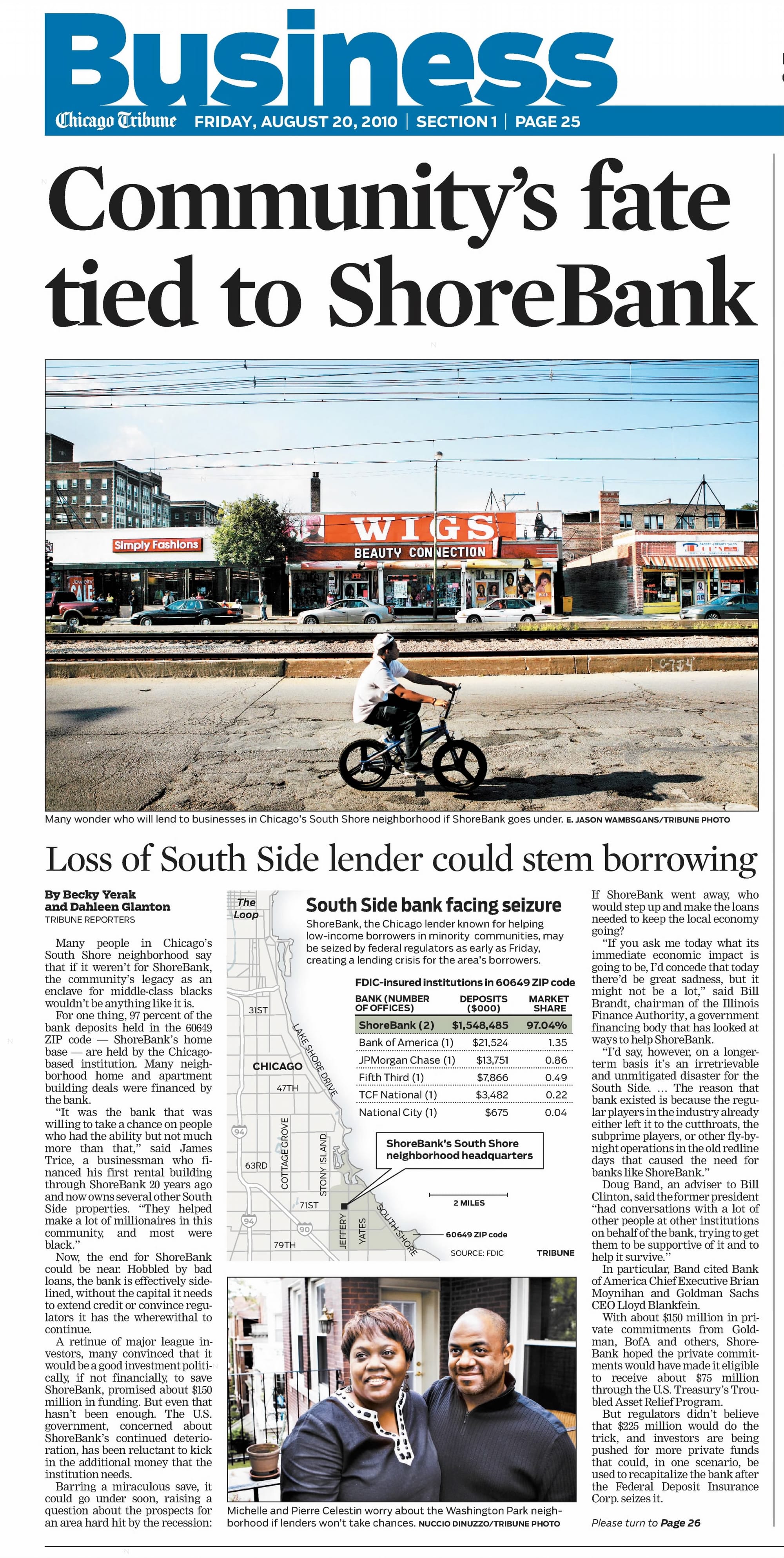
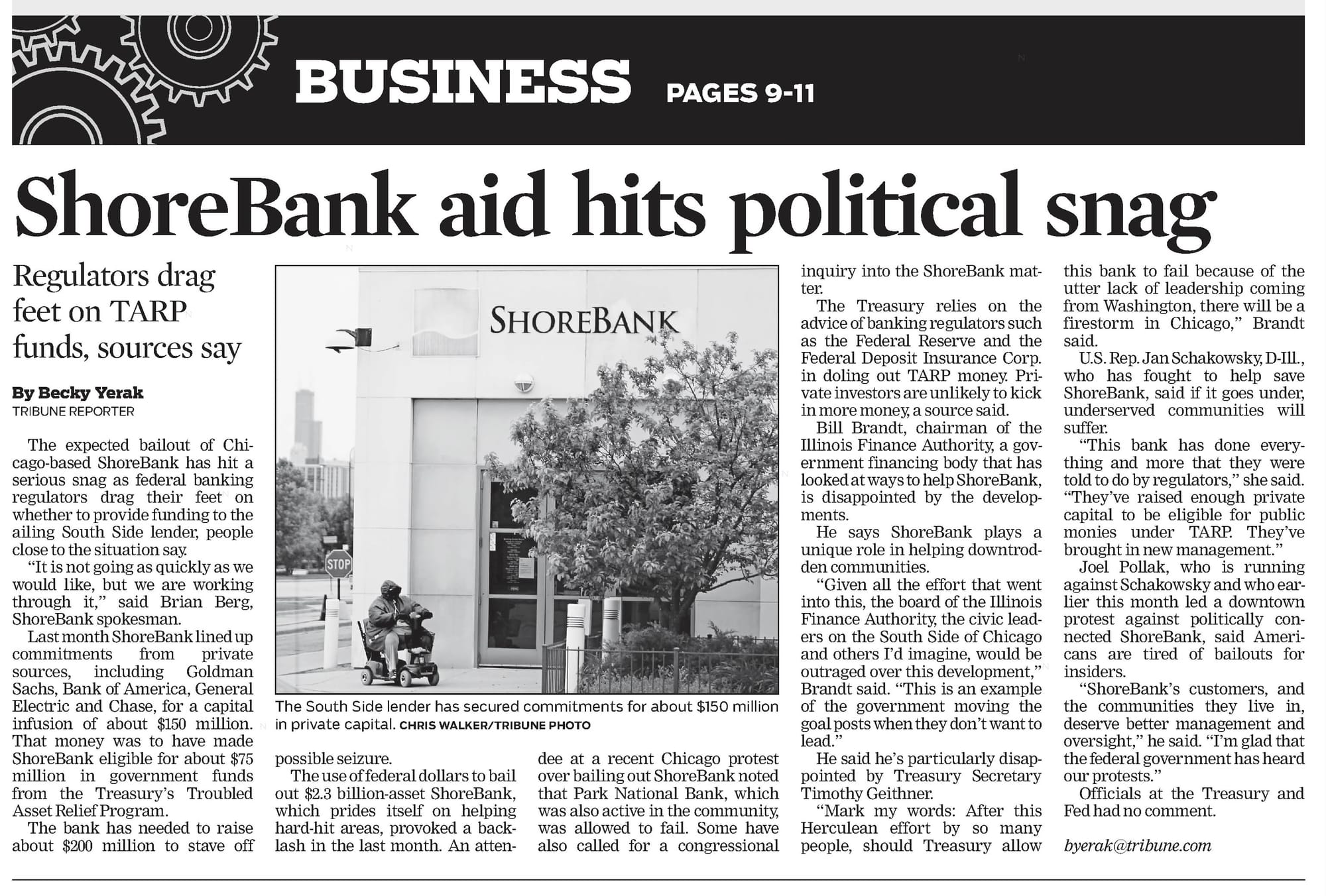
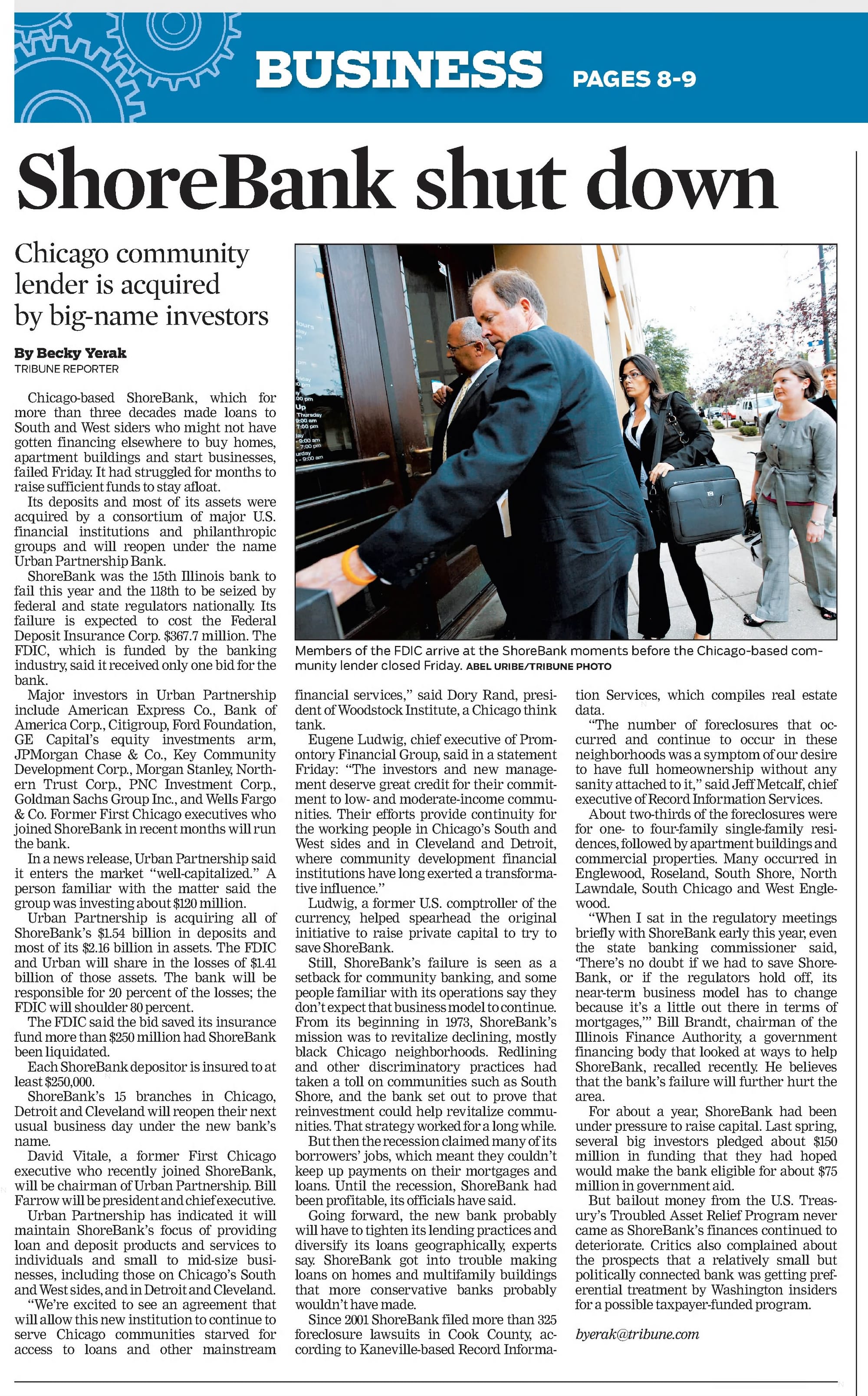

2010 Chicago Tribune articles about the collapse of Shore Bank | 2003, "The other golden coastline"
With the opening of the nearby Obama Presidential Center and a growing appreciation of the south lakefront as some of the last relatively affordable lakeside neighborhoods in the city, after a century the gears of real estate speculation are stirring again in South Shore. The owner of the South Shore Club Apartments, rechristened the Shorewind Towers (and now the Dunham Apartments), flipped the building for $22m in 2023, only four years after buying it for $16.8m. To maintain affordability and harness some of that speculative energy for local benefit, this fall 5th Ward Alderman Desmond Yancy upzoned much of 71st Street, allowing—but not requiring—more construction of more affordable two and three flats, while also making it easier to open stores and restaurants in the buildings that already exist on 71st.
(the upzoning just missed this block of 71st, presumably because it is part of a separate Planned Development [671] that was created in conjunction with the LakeShore Pointe project in the late 1990s, but still—kudos to Ald. Yancy for proactive and intelligent work)
Production Files
Further reading:
- South Shore Cultural Center NRHP Nomination Form
- South Shore Cultural Center City of Chicago Landmark Designation Report
- Planned Development 671
 Donna Kimura
 Author: Maria Powazka

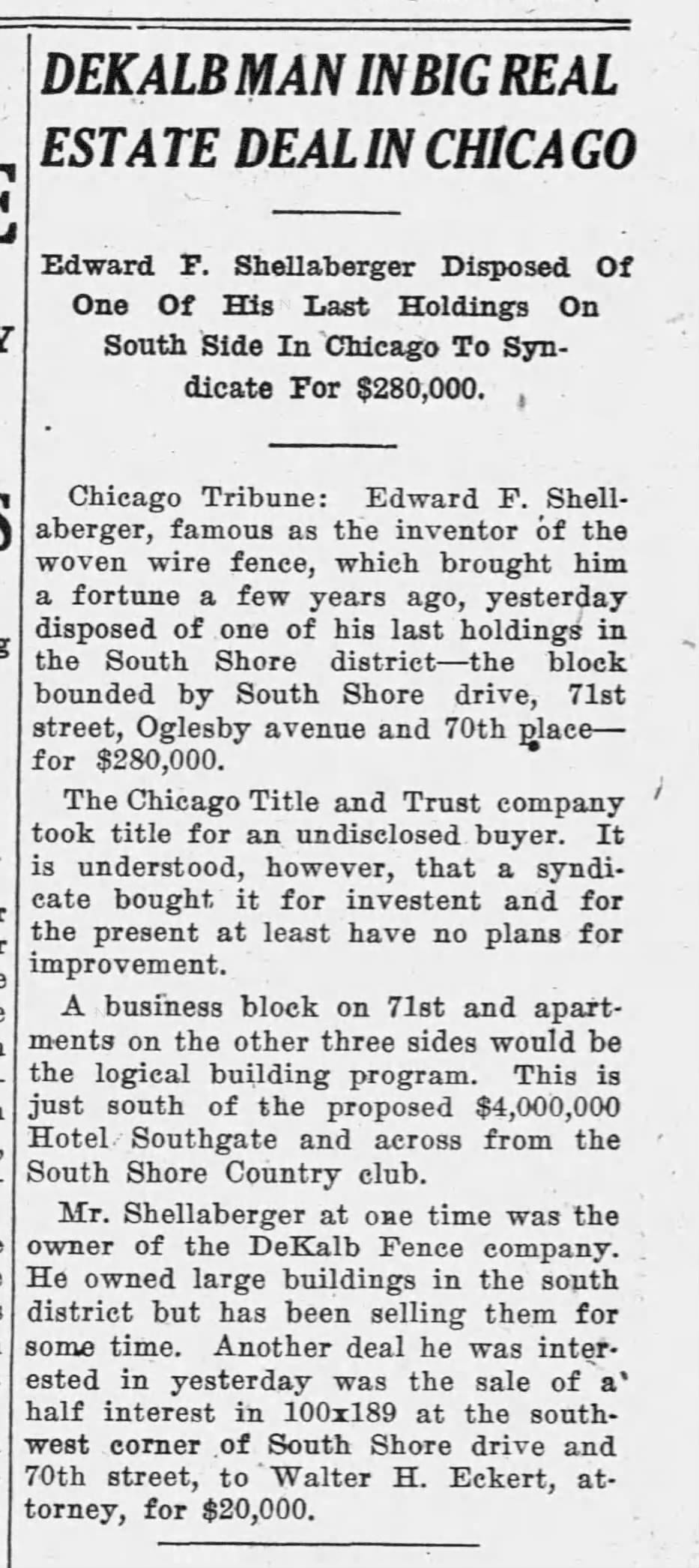
Some more articles about the first development on the corner of 71st and South Shore Drive—Lindheimer's group bought it in 1923 when it was an empty lot.
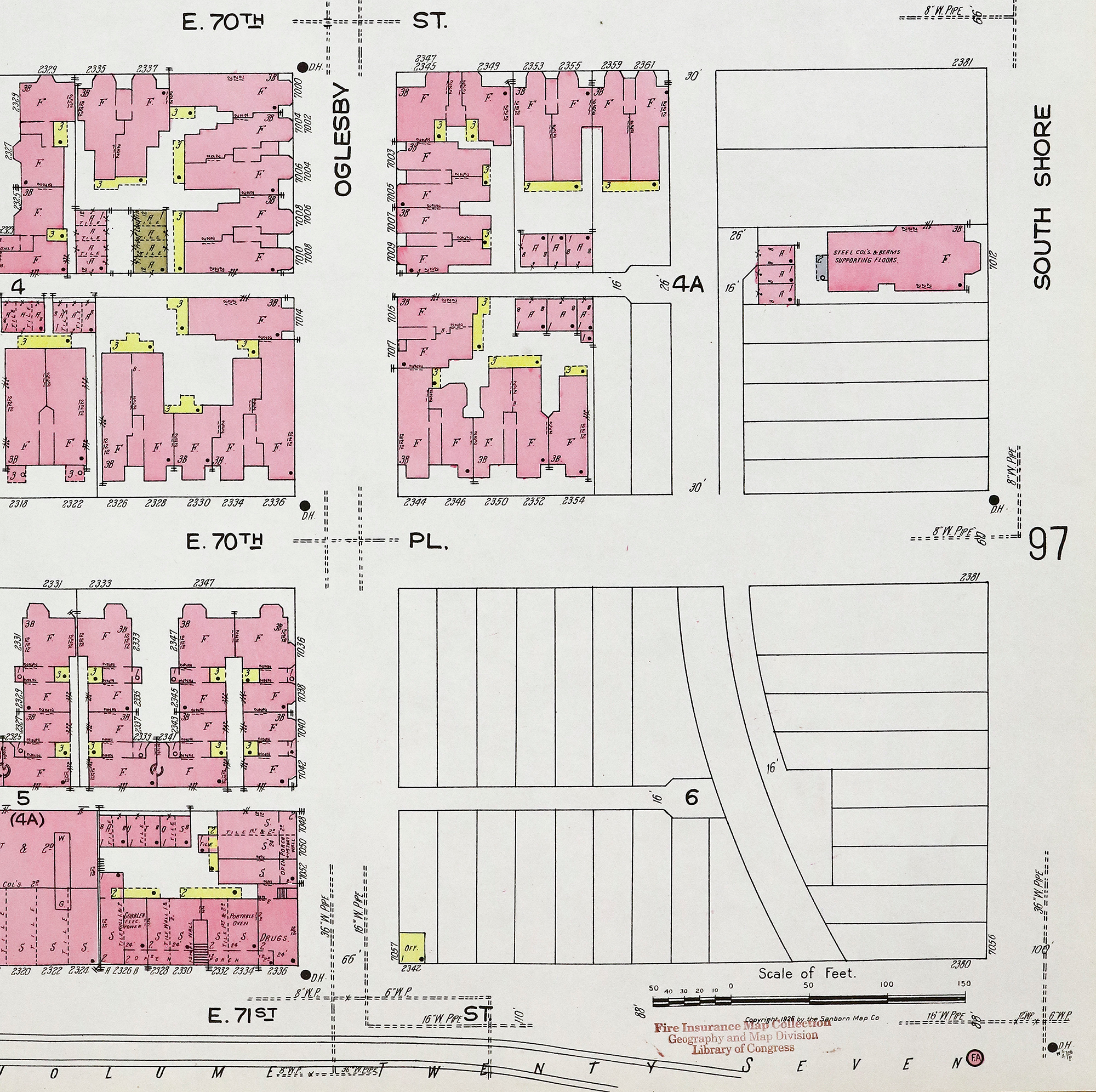

1926 Sanborn Fire Insurance Map | 1923 lot sold | 1926 mortgage
Developer Benjamin F. Lindheimer himself was incredibly well connected. He was a commissioner on the South Park Board of Commissioners, chaired the Illinois Commerce Commission for Gov. Henry Horner, and was President of the Board of Local Improvements for Mayor Cermak. Later in life he'd break into the horseracing business.
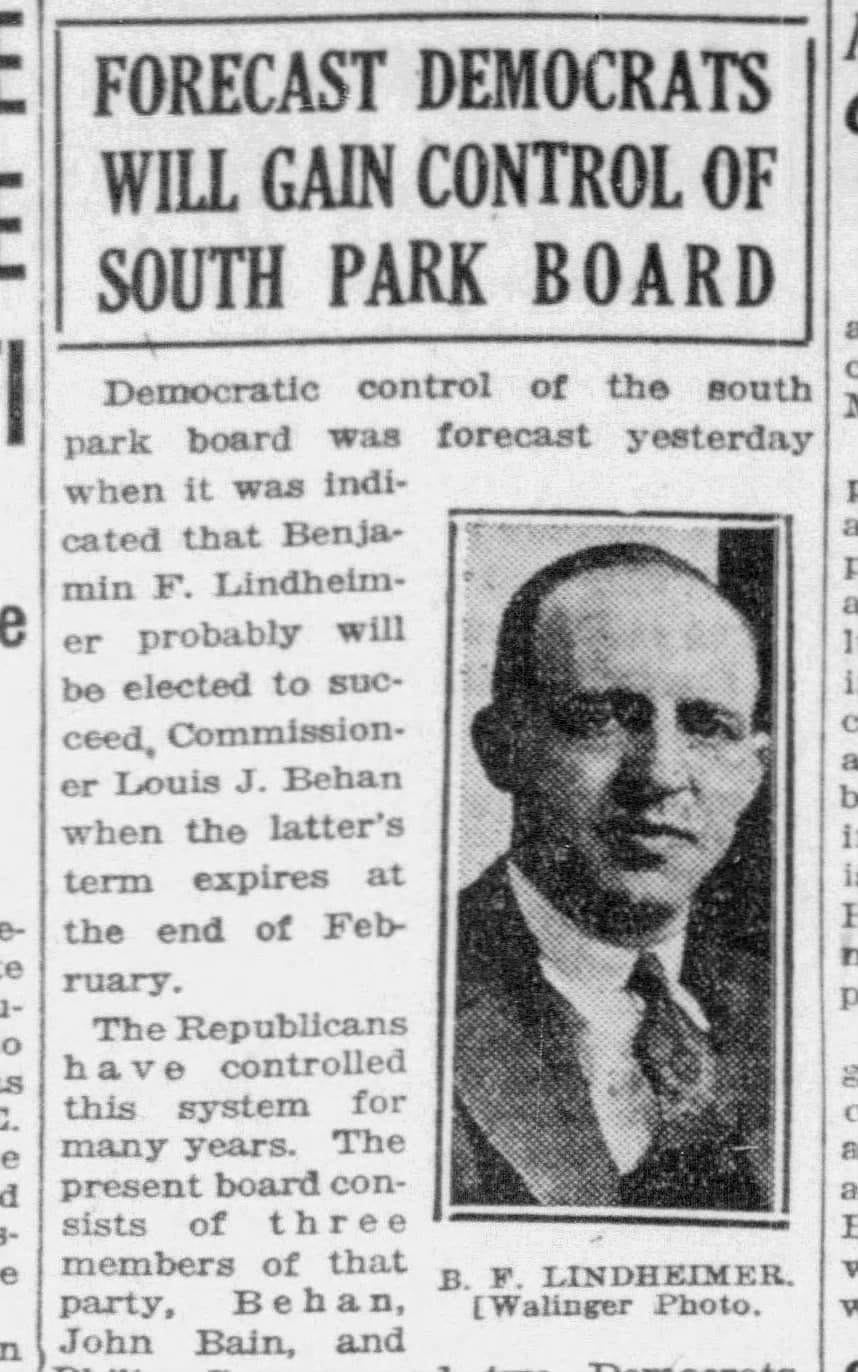
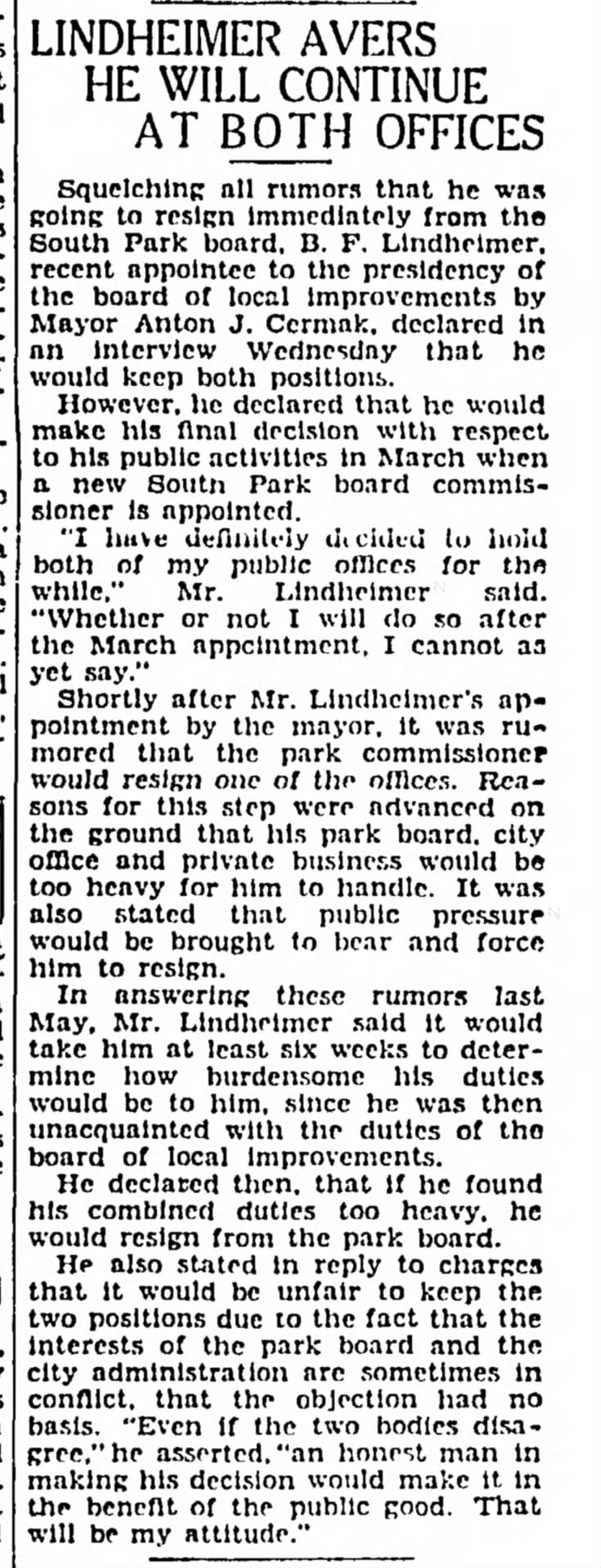
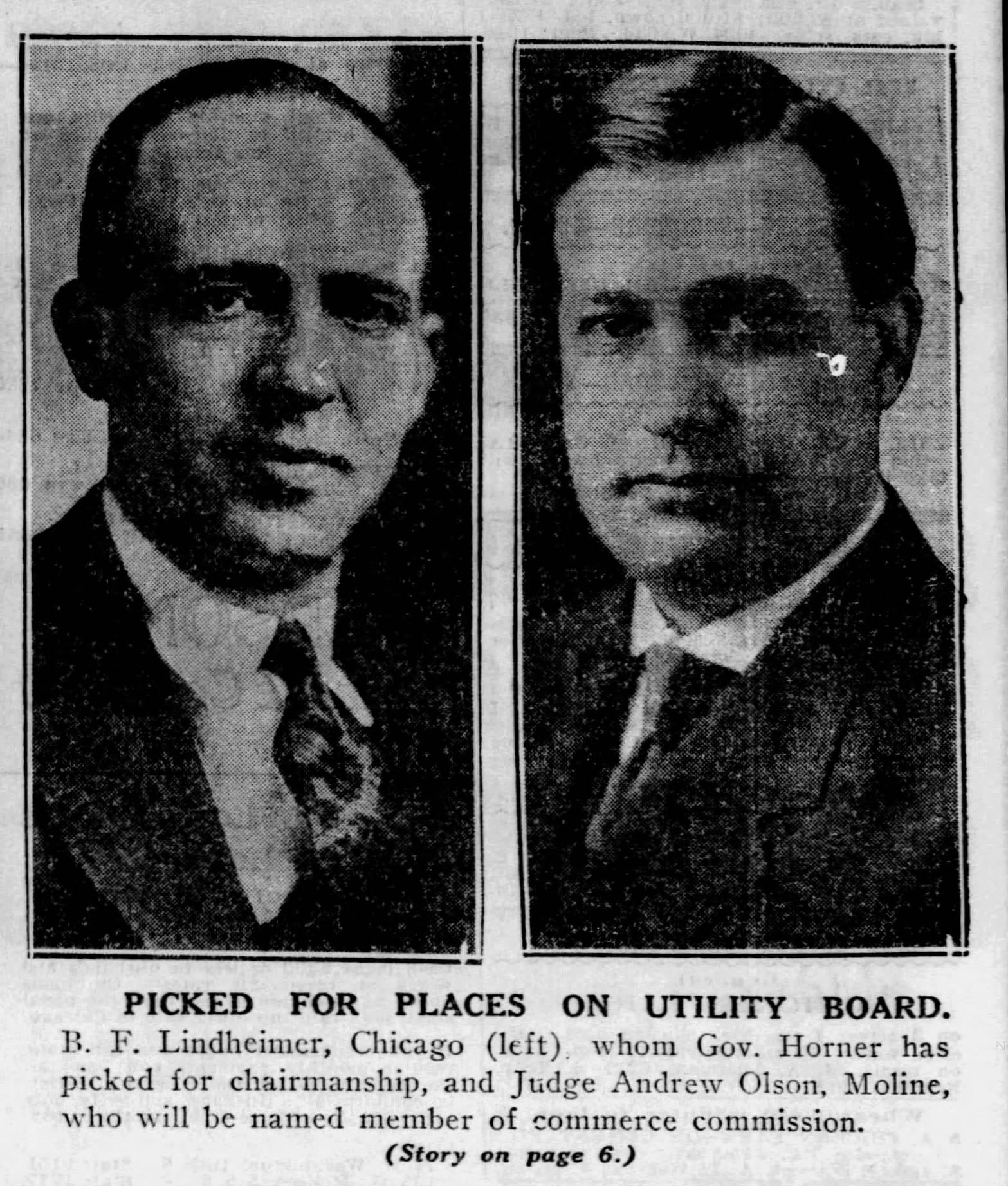
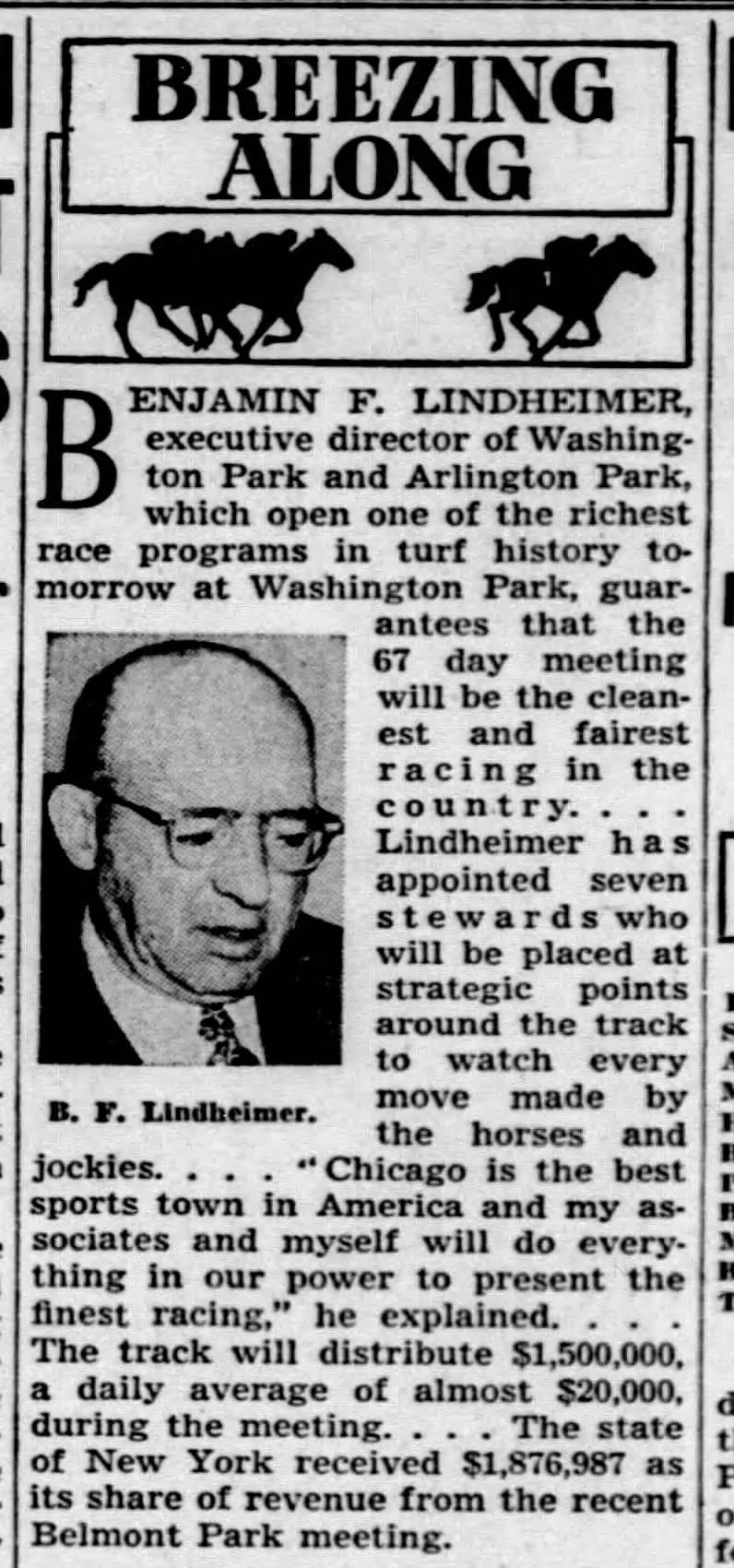

1930s articles on Lindheimer's political career | 1940s articles on his horse racing business
The residential hotel in the development was the Oglesby Arms.
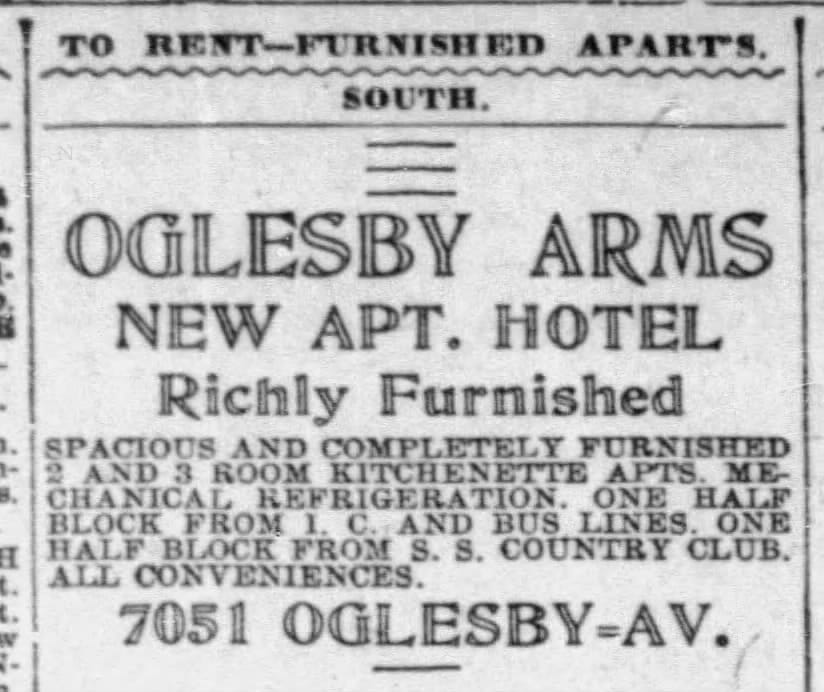
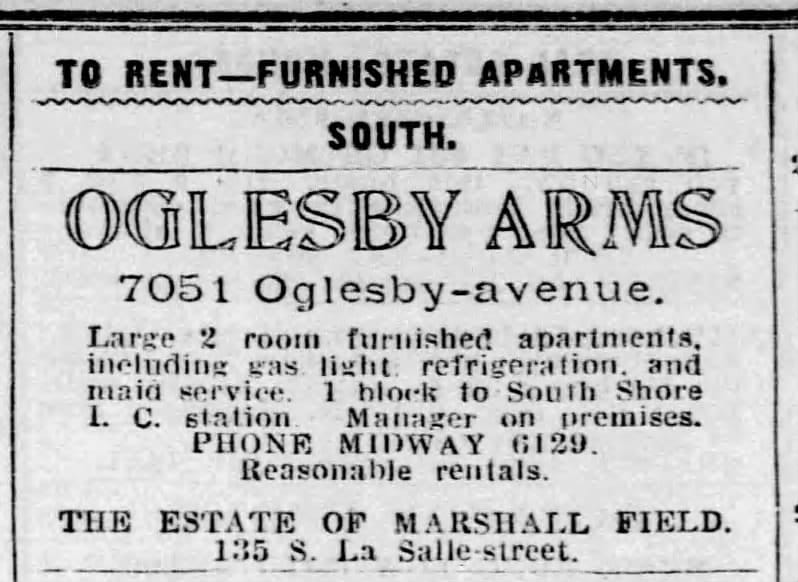
1927 ad | 1939 ad
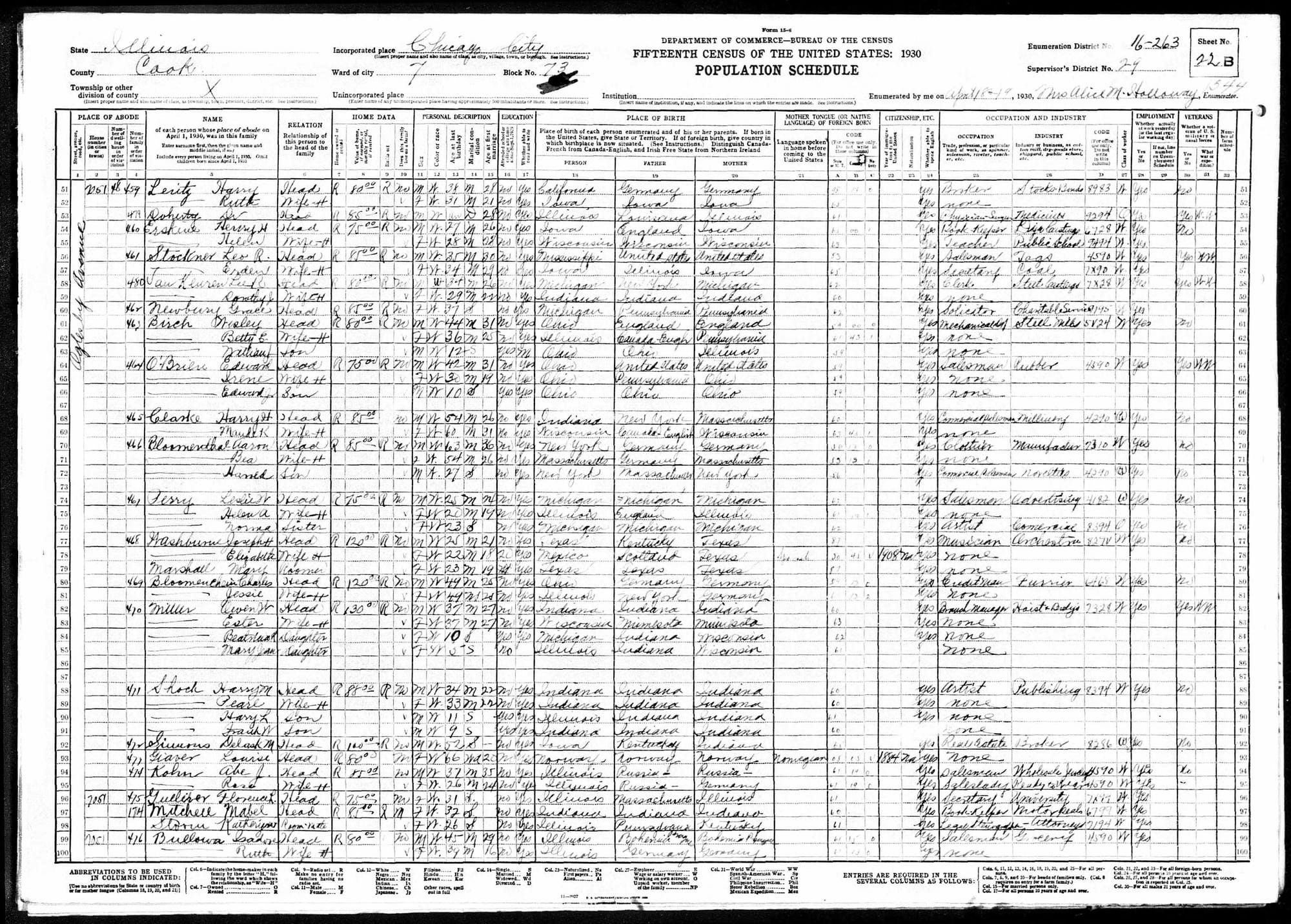
In 1930 the residents of the Oglesby Arms were 100% white, overwhelmingly born in the US, and they could all read and write. Monthly rents were mostly in the $75 ($1475 today) to $85 ($1675), but with a few bigger apartments in the $120 - $130 range ($2365 - $2560).
There were so many retail tenants of the complex over the years.
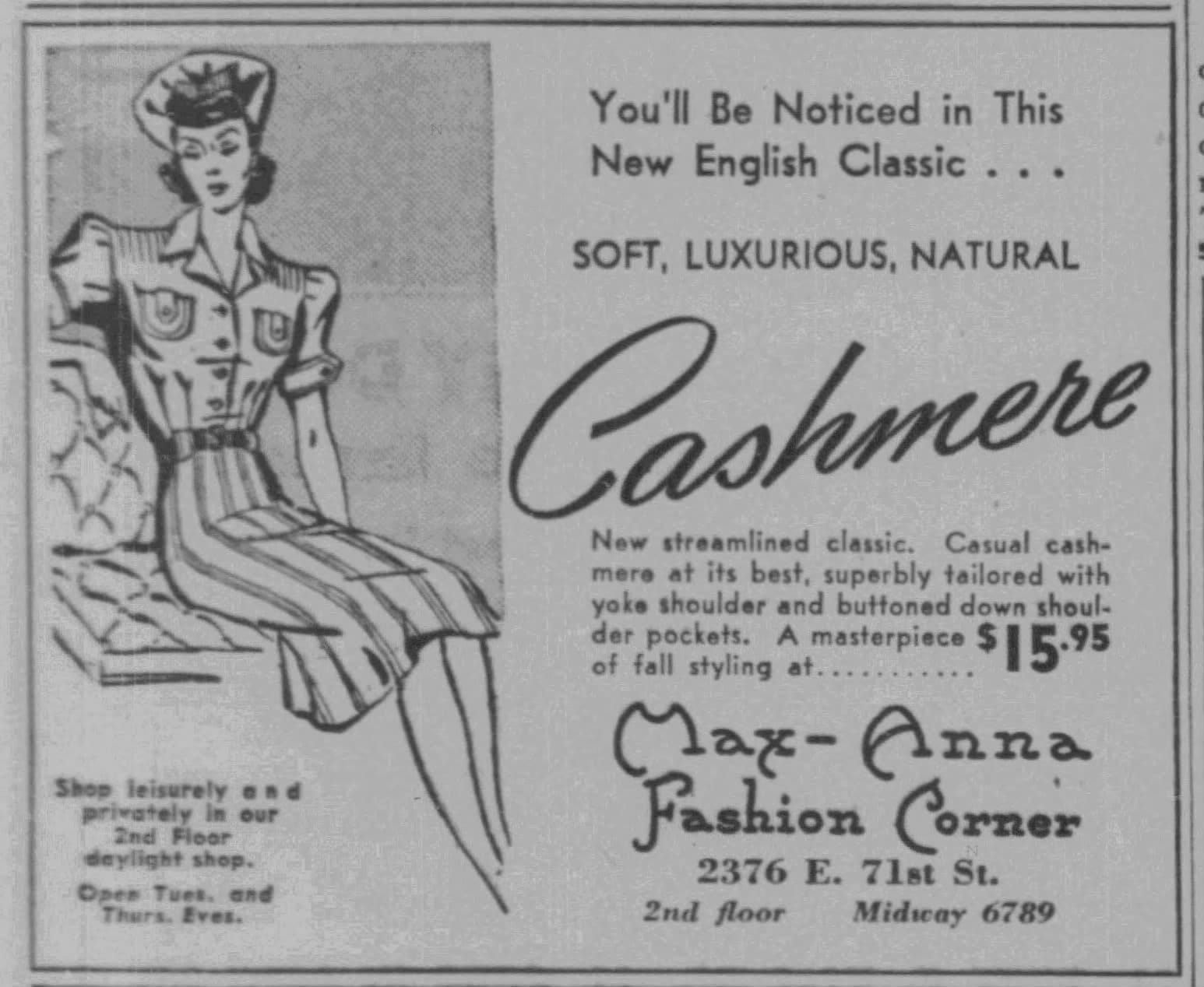
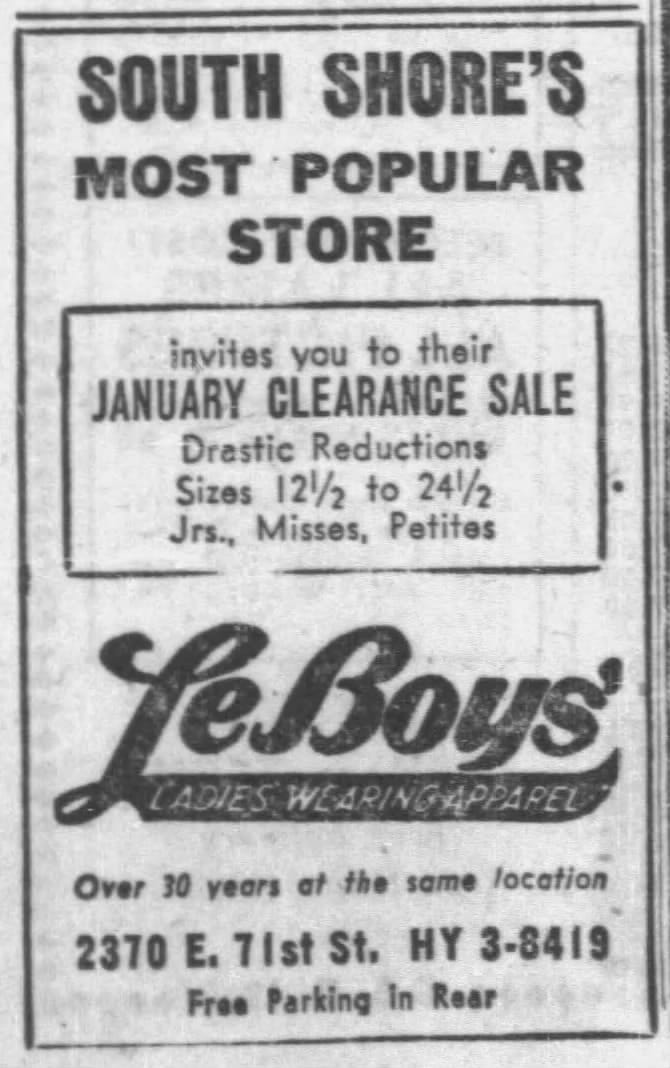
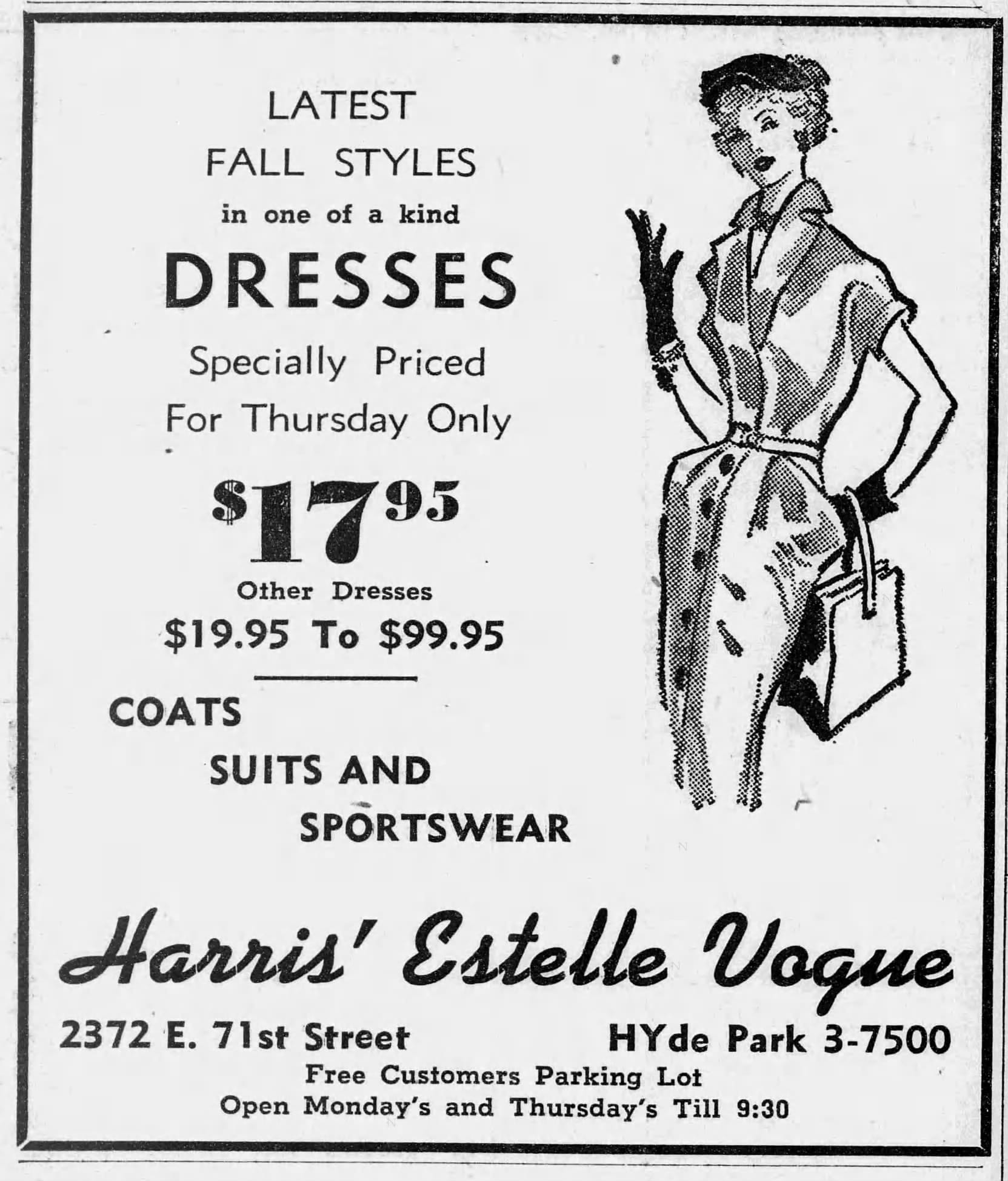
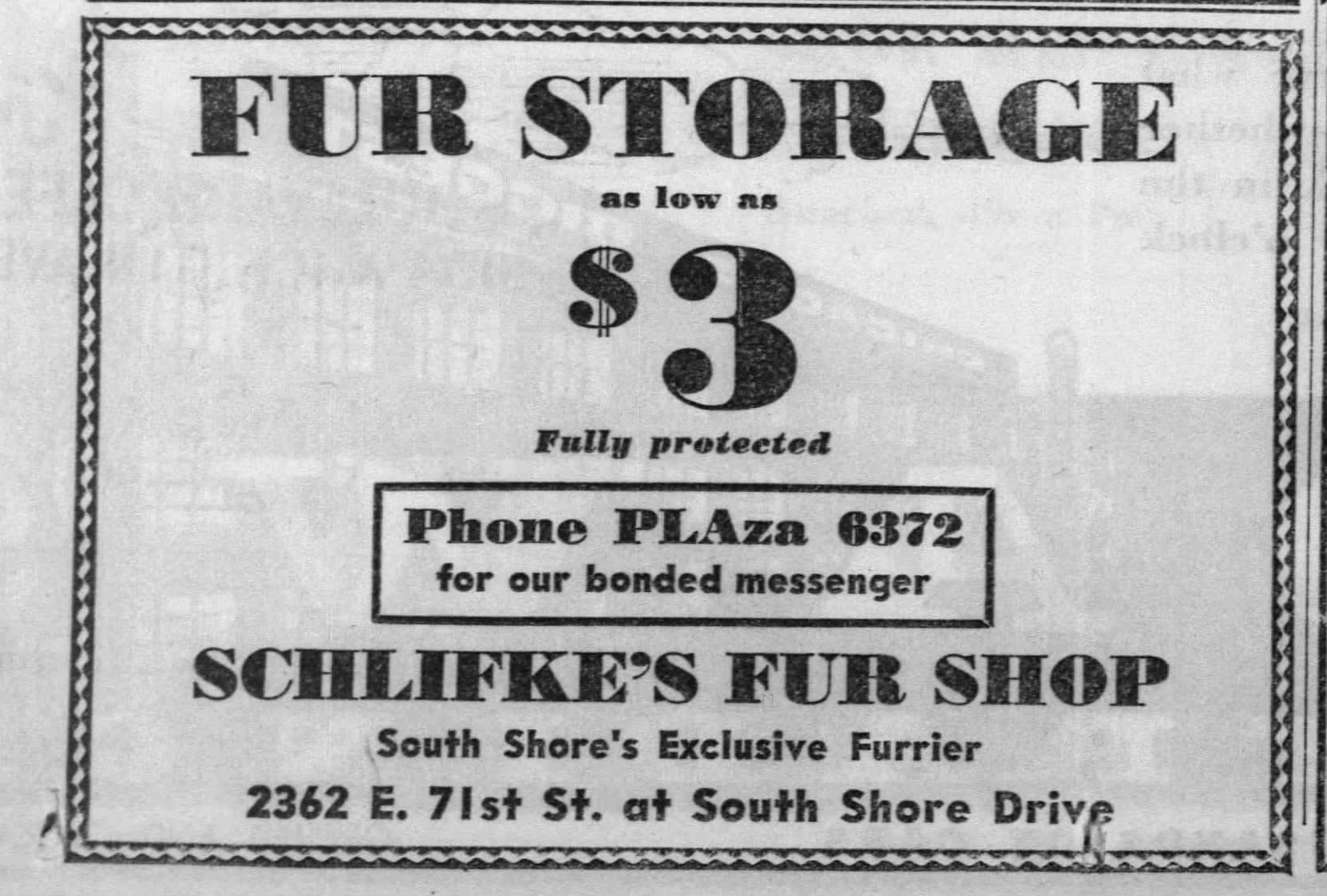
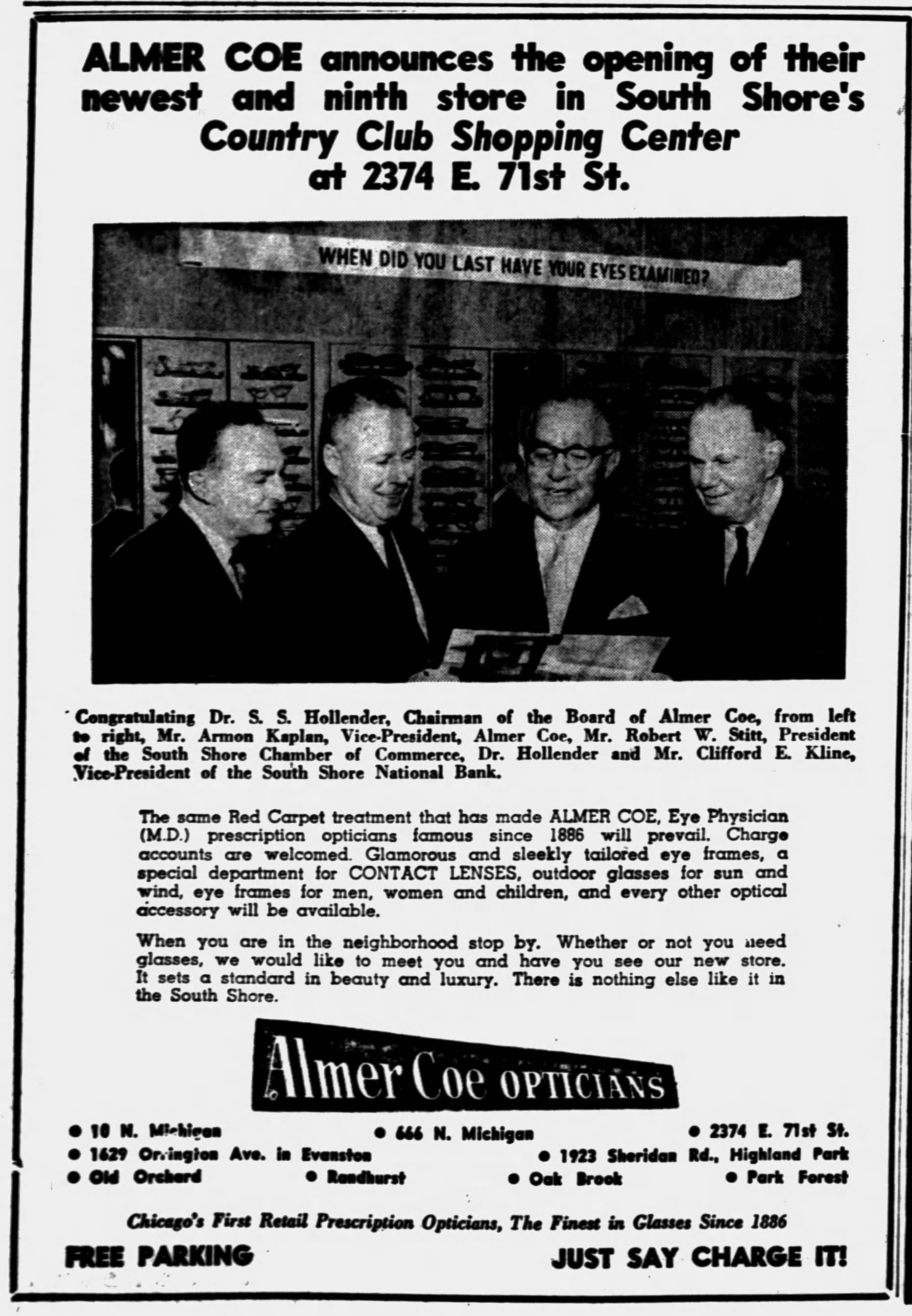
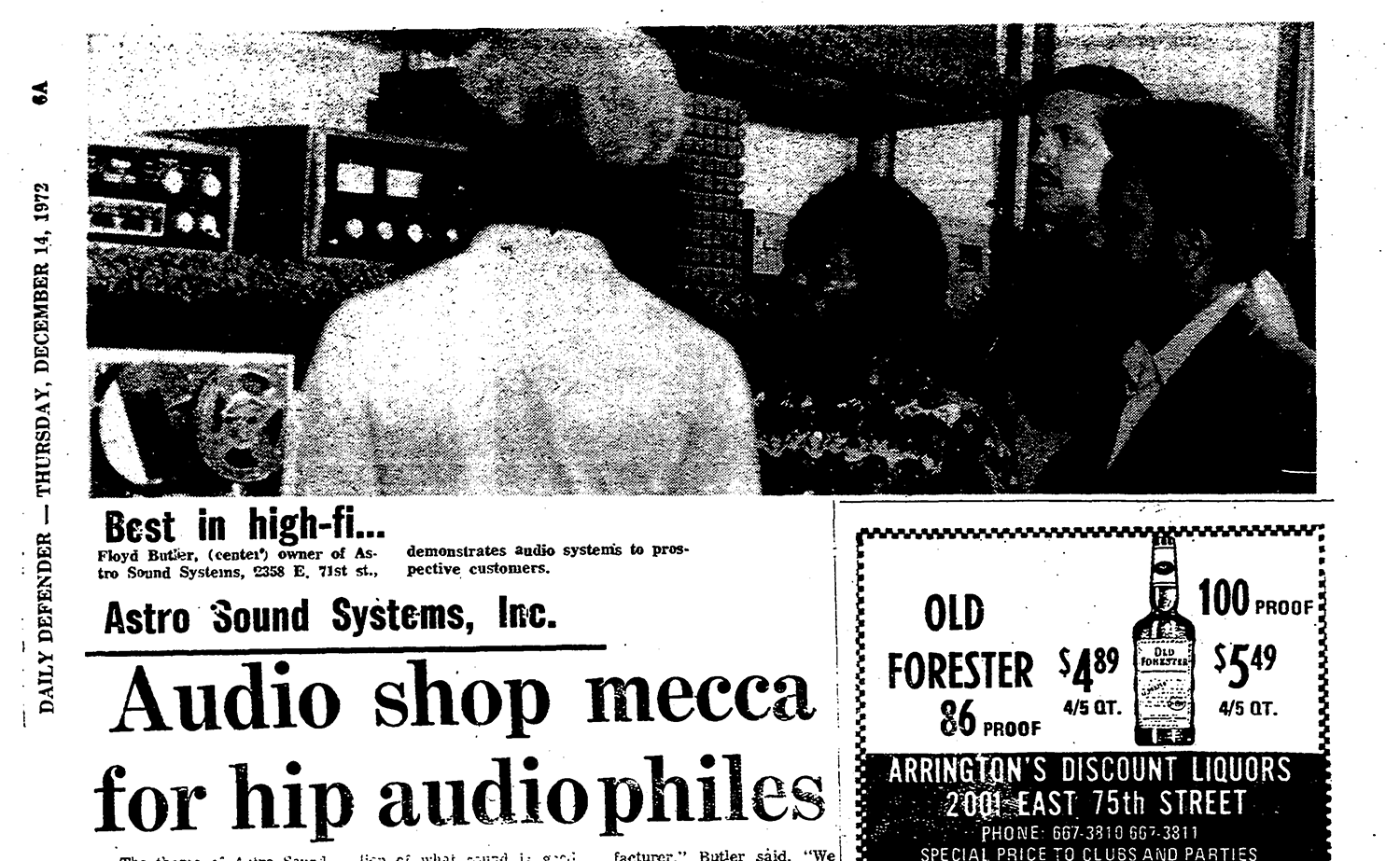
1930s - 1970s ads and articles about stores in the complex
In the 1950s, the Design Center in the building hosted art exhibitions from future heavy hitters like Gertrude Abercrombie Arthur Siegel, Rosemary Zwick, Richard Koppe, and Arthur Okamura.
You could, as usual, see the discrimination in the job ads—the Shore Post Restaurant in the building would hire Black men as dishwashers but not cooks.


1943 ads
A few things in the production file in the Curt Teich Archives Collection at the Newberry Library.
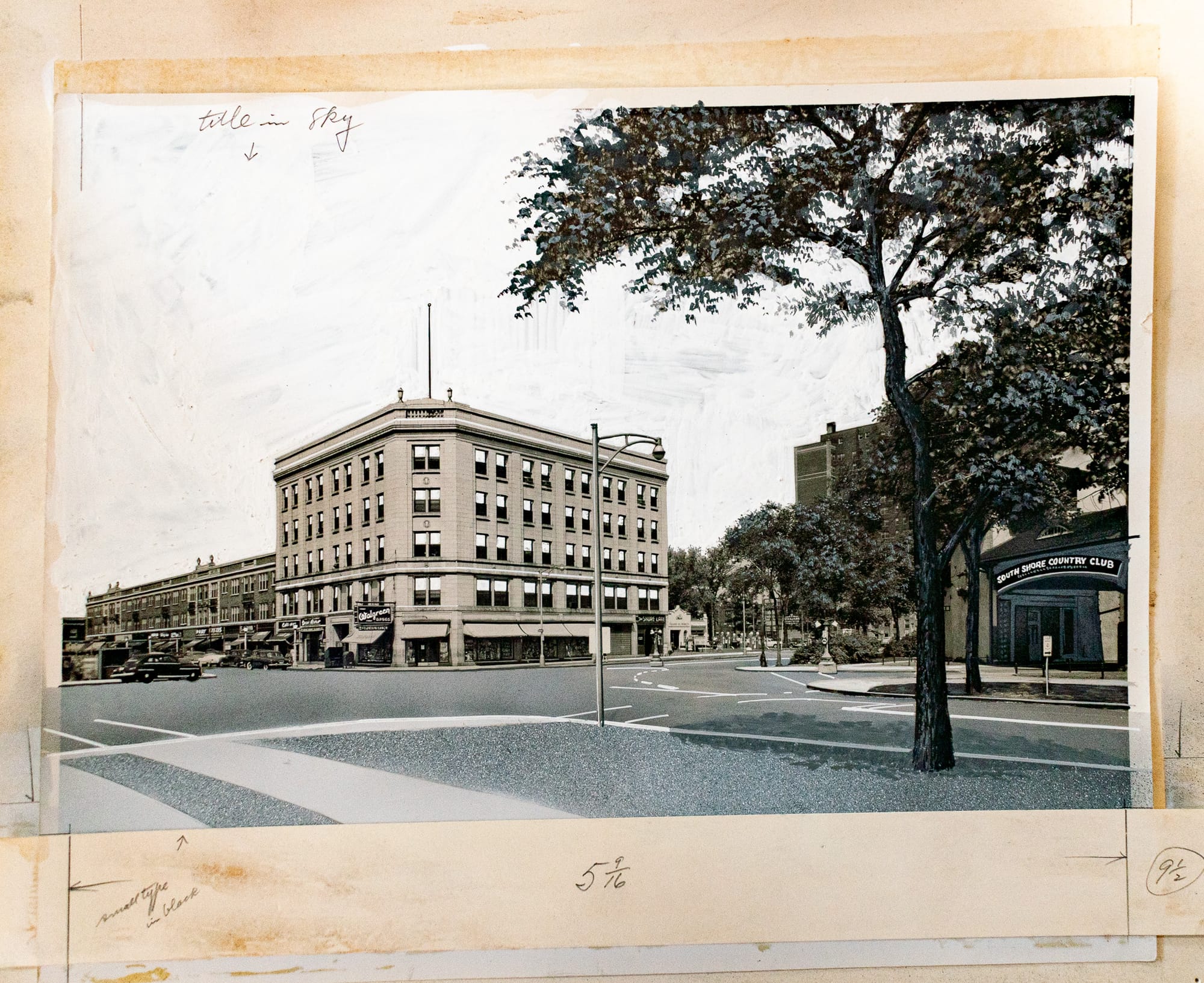
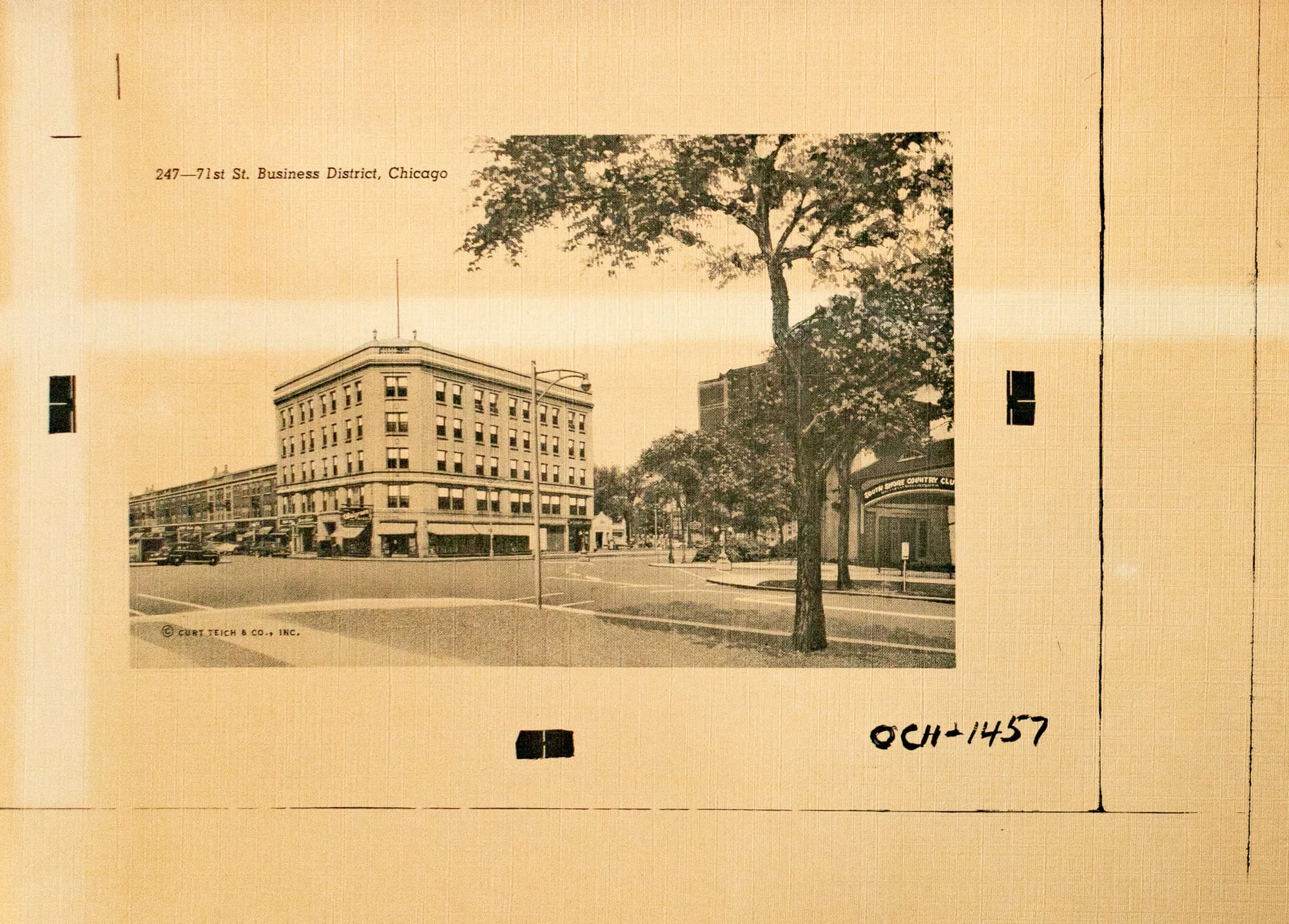
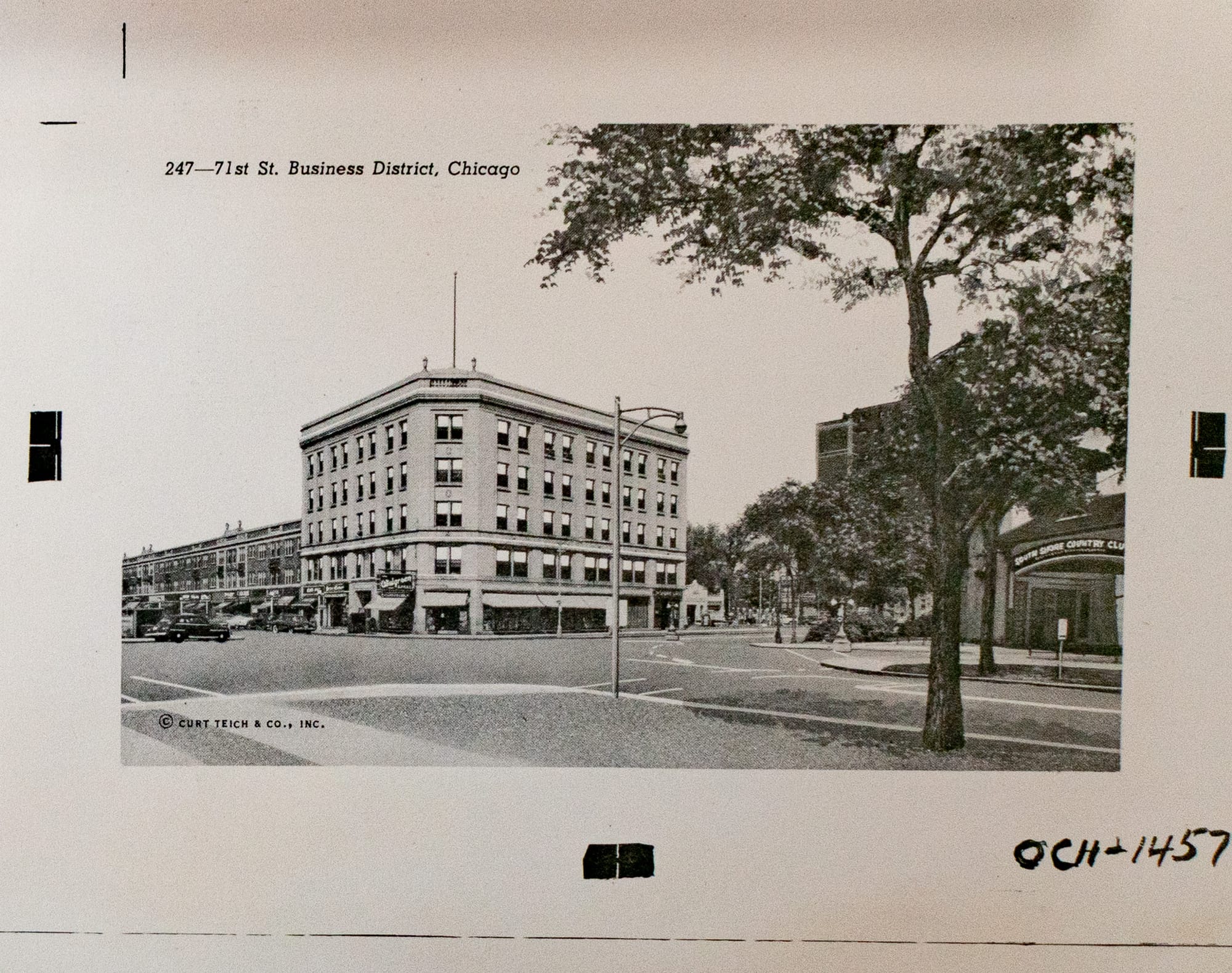
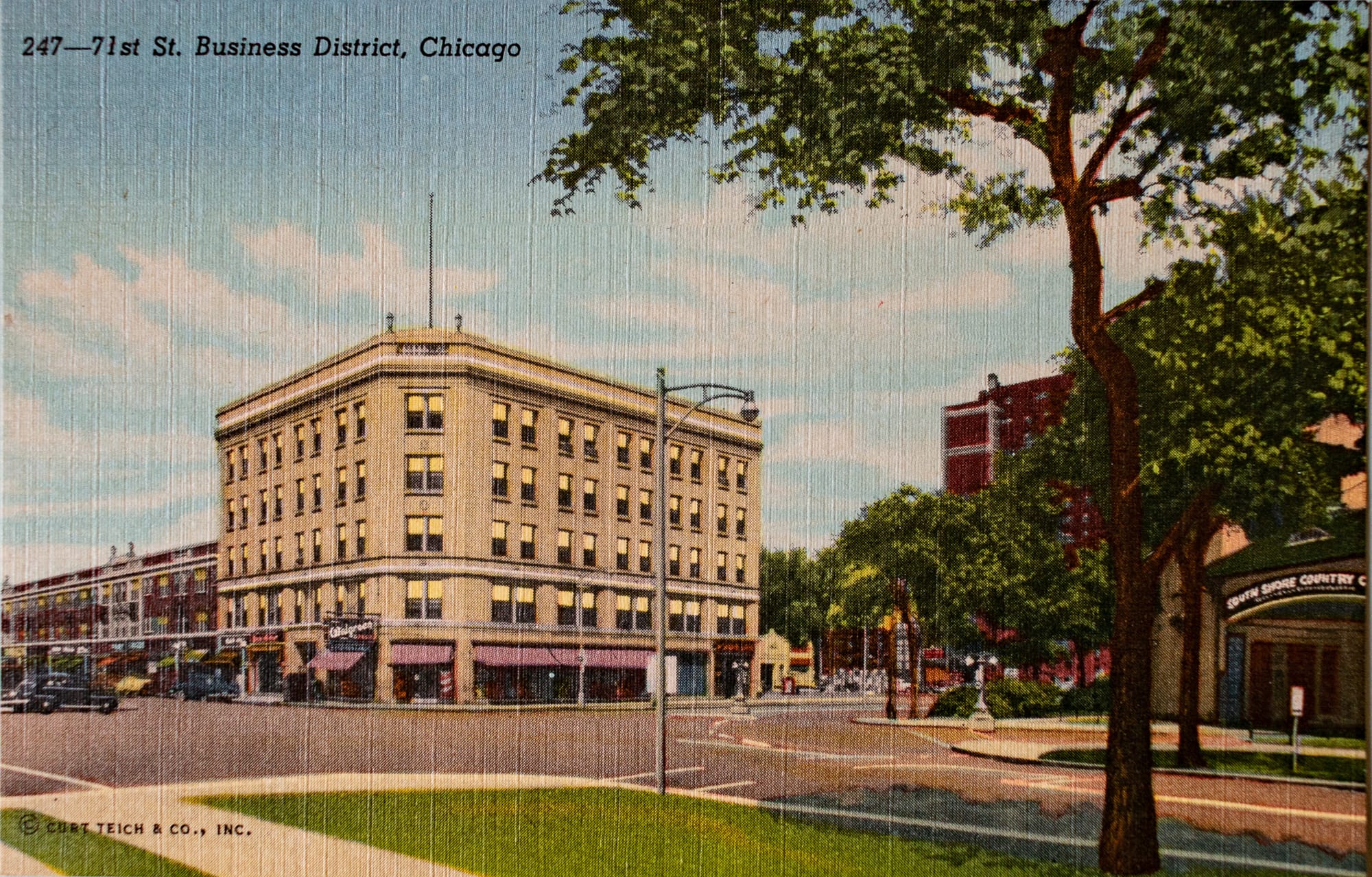
Retouched image | Black proof prints | final postcard
/They paragraphed out / the copy for the back of / the postcard.
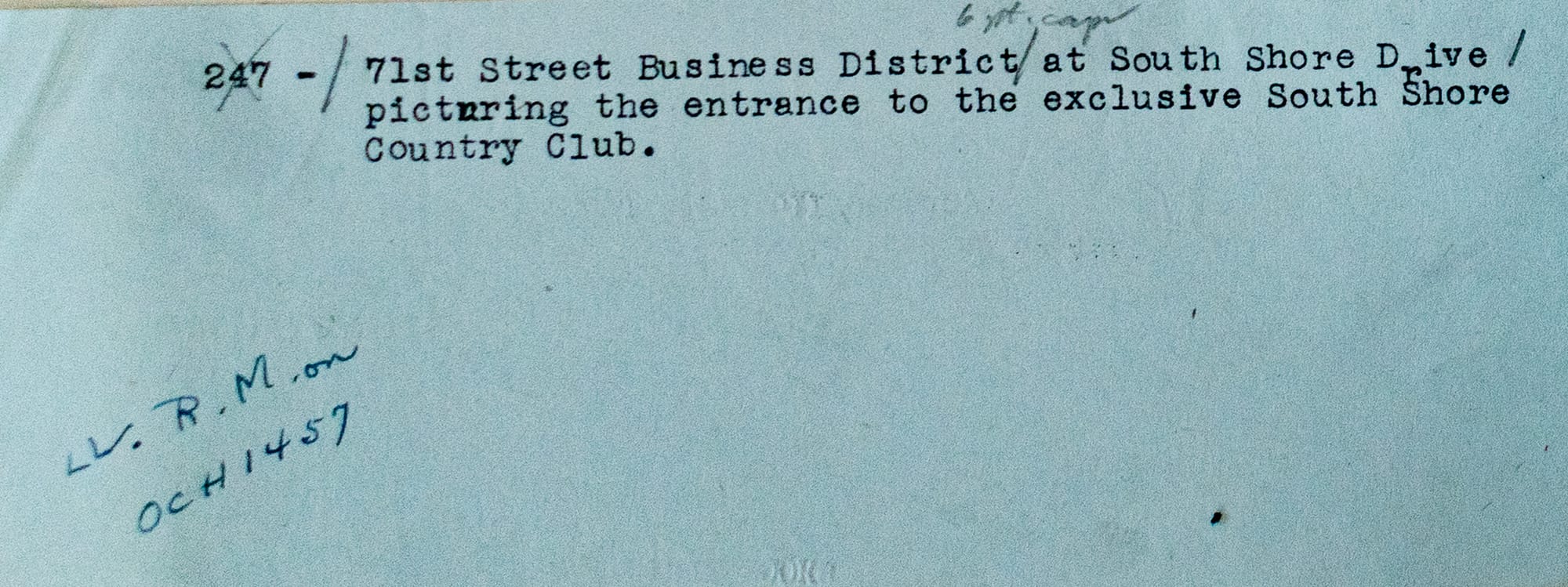
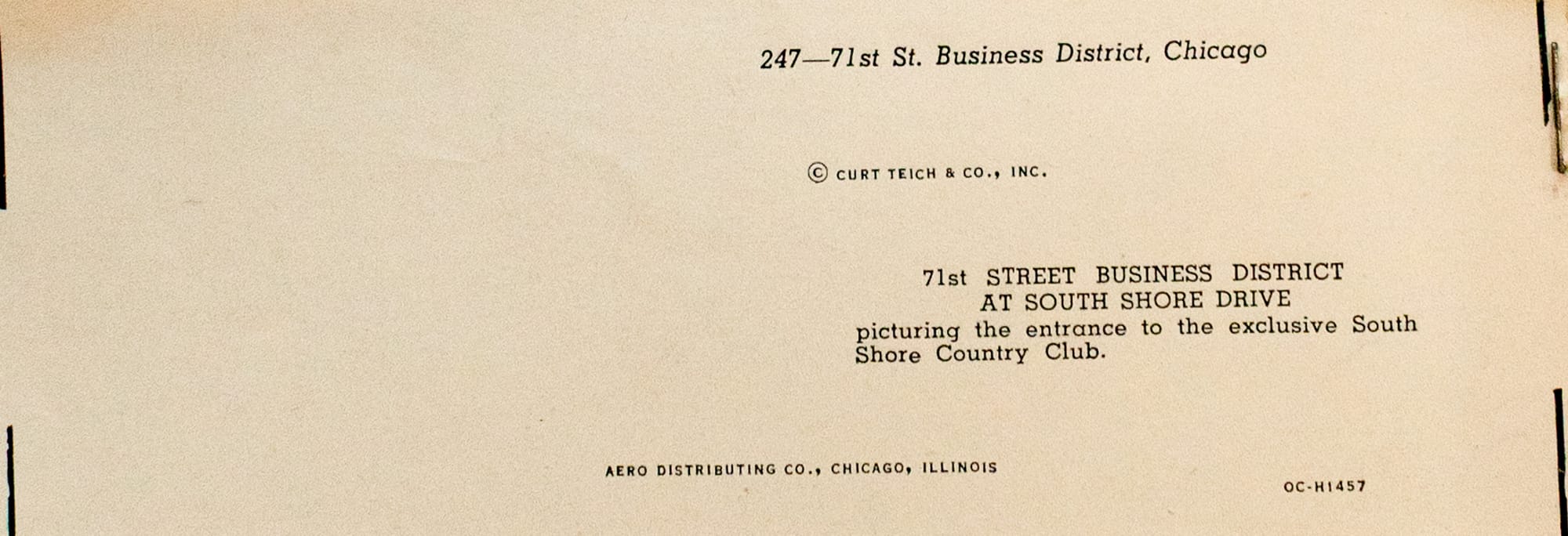
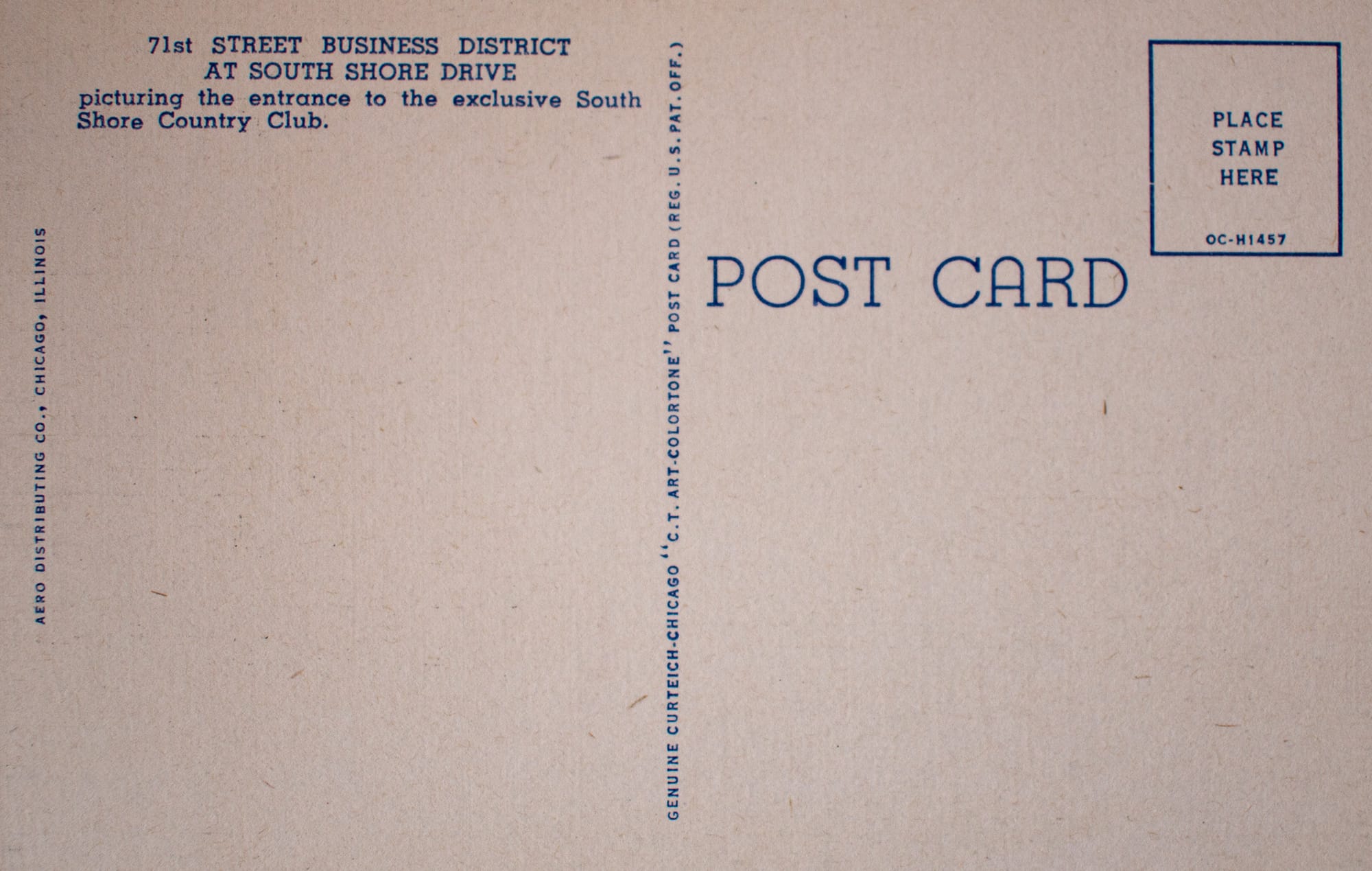
From start to finish, passing through composing, retouching, photo-litho, hand color proof, and the artist department, the production process took a little over a month here.
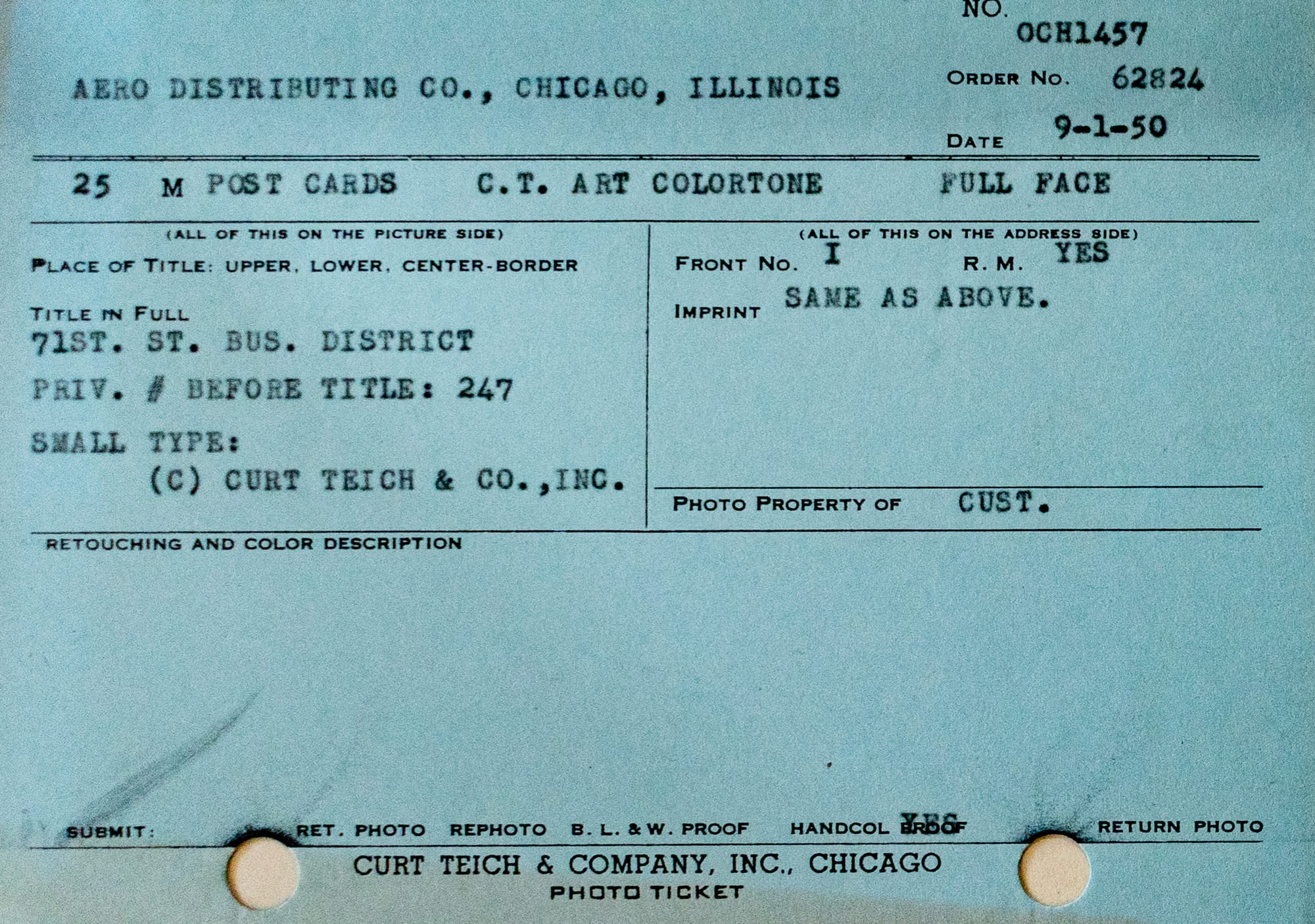
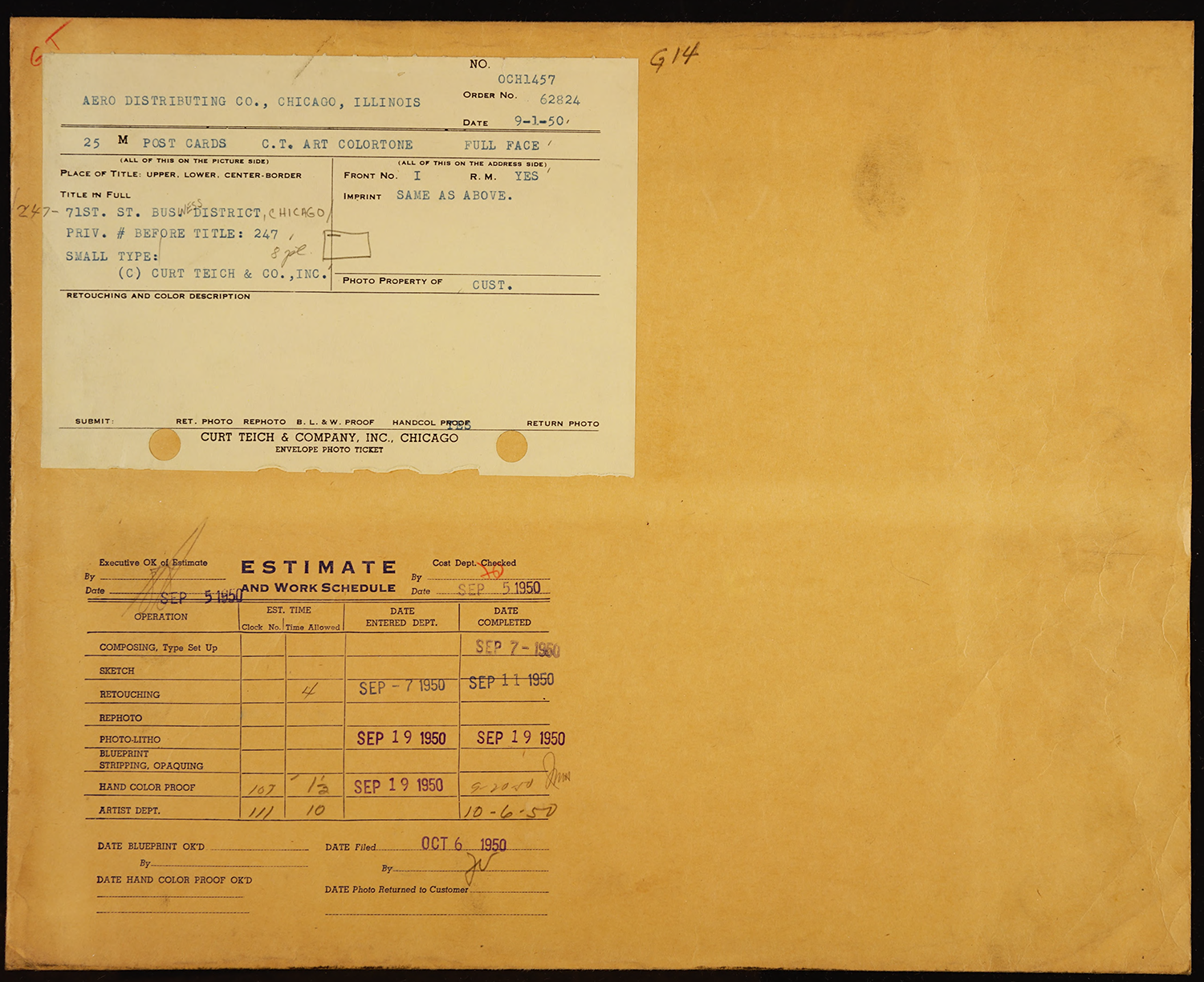
Photo ticket | Production envelop, the Internet Archive
While Alfred Alschuler and McNally & Quinn are pretty famous, I had never heard of the architects of the Townhouse Apartments, Shparago & Kastrup. Carl Shparago was an architect in the 1920s who designed apartments and single family homes who'd expand into real estate development and hotel ownership. Among buildings designed by him were the apartment building at 5155 Kenwood and the homes at 6011 S. Loomis. He also owned the Lansing Apartment Hotel, which still stands at 1036 N. Dearborn.
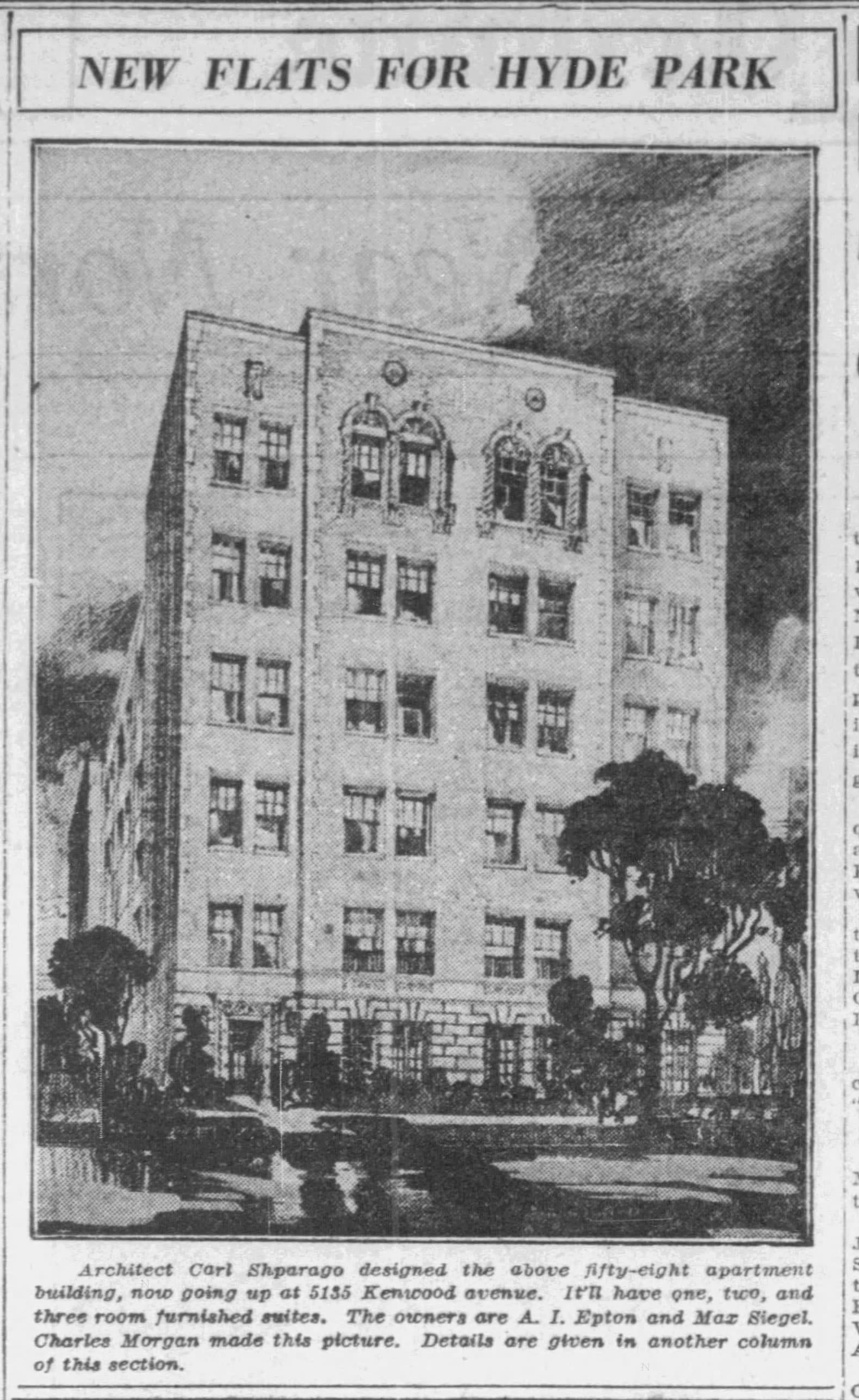
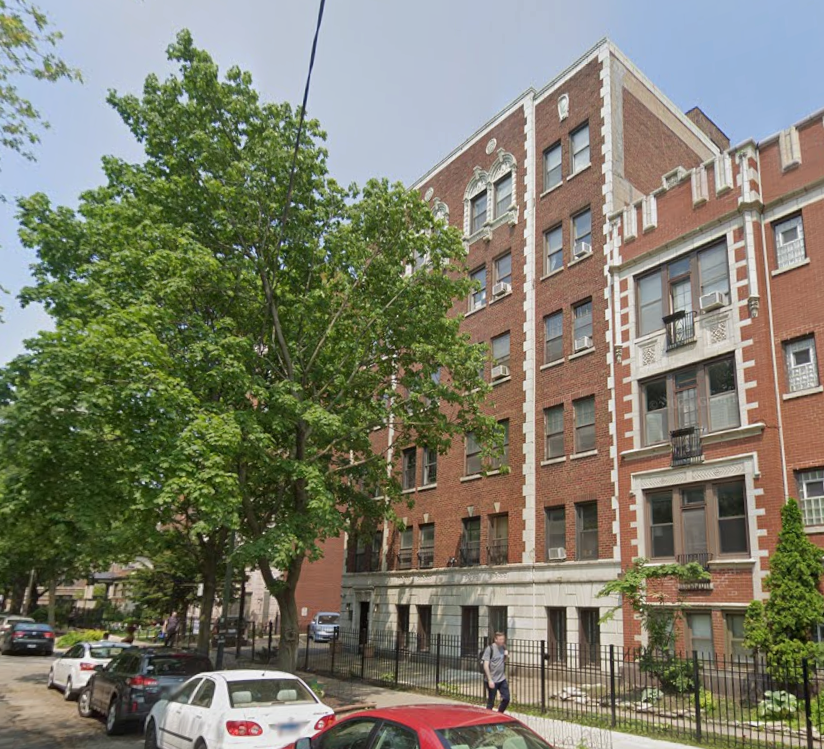
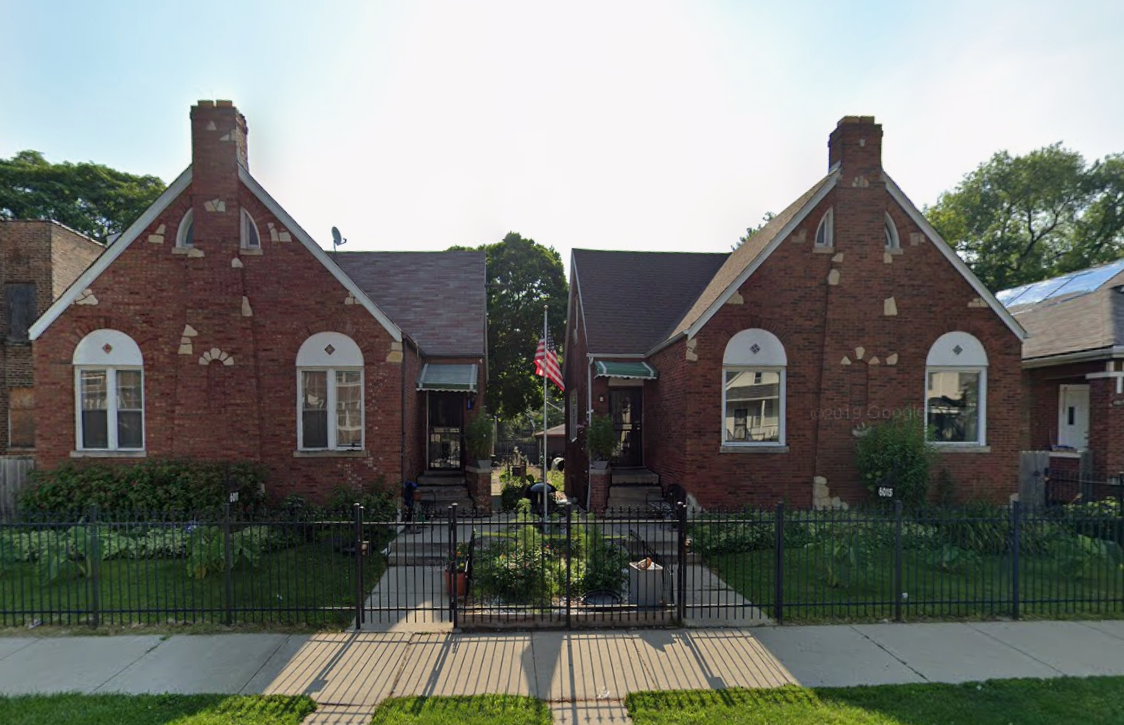
1928 rendering | 2019 Google Streetview | 6011 S. Loomis Boulevard, 2018 Google Streetview
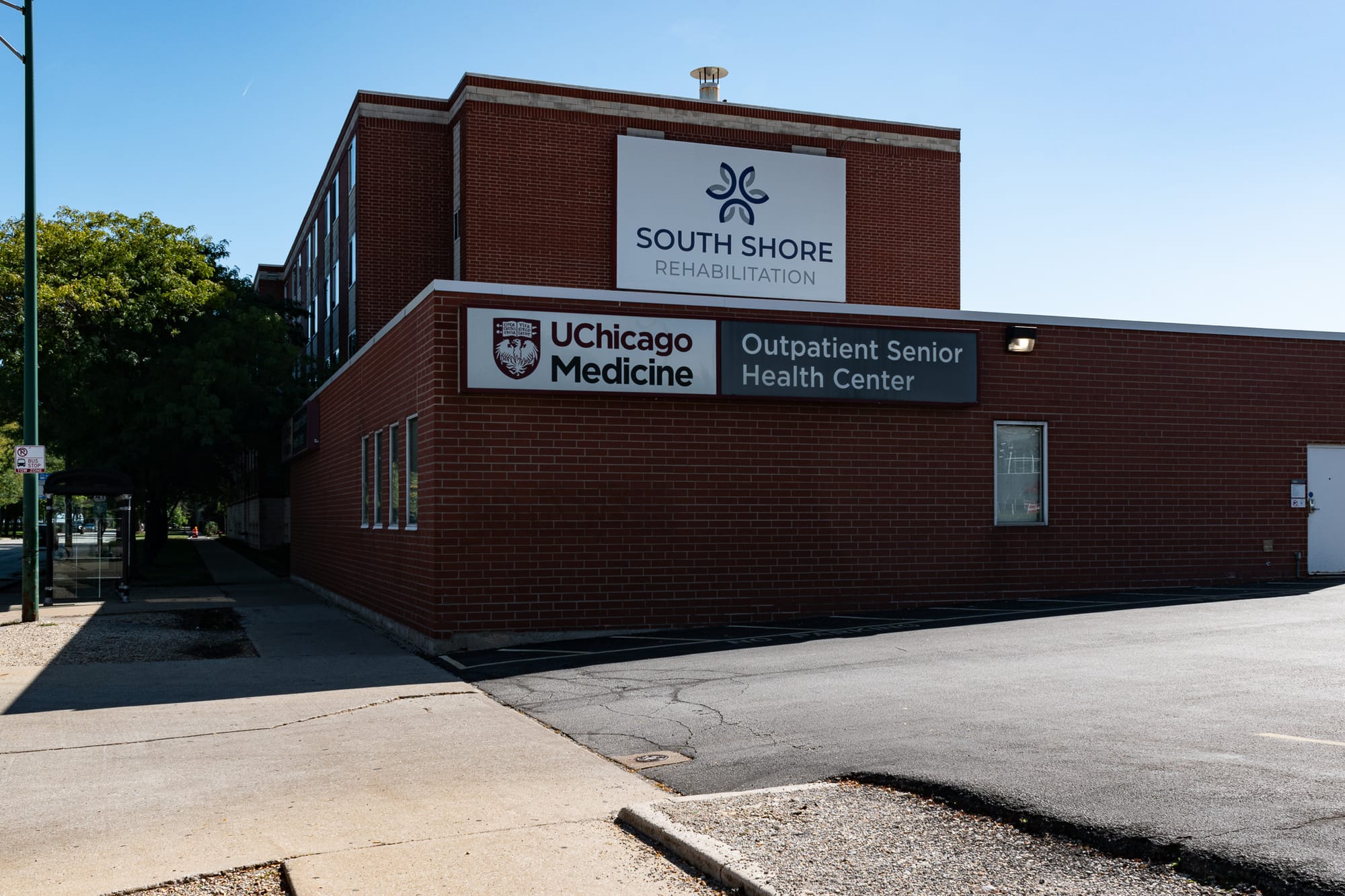
Here is where I took the photo from.
Member discussion: